
Researchers have genetically modified a cyanobacterium to consume carbon dioxide and produce the liquid fuel isobutanol, which holds great potential as a gasoline alternative.
Argonne creates green home for world-class nanotechnology research
The U.S. Department of Energy's (DOE) Argonne National Laboratory is more than just a hub of prizewinning science. It's also the home of award-winning - and green - architecture.
The mechanism behind superinsulation may lead to new types of electronics
Scientists have discovered the microscopic mechanism behind the phenomenon of superinsulation, the ability of certain materials to completely block the flow of electric current at low temperatures.
15 Days Away Gives Time for Perspective.
"Although there appears to be a clear relationship between UGT1A1 genotype and severe neutropenia (and some evidence of a relationship with severe diarrhea) there is no evidence to support or refute the hypothesis that a modified initial and/or subsequent dose of irinotecan will change the rate of these severe adverse drug reations." -EGAPP working group analysis of UGT1A1 testing
That is where most of personalized medicine (PM) is at today.
Why is this important? Because this precise clinical set of questions will be worked out over the next 10 years.
While I have been taking a break from posting some things have become crystallized.
The first thing: In an economic downturn, your genomic/PM product better have intrinsic value.
Chances are, if you have to have big celebrities and open bars to launch, you need to rethink the product.
The second thing: If you think you can take science to market in less than 5 years, then you need to do one of 3 things.
1. Immediately Cure Cancer
2. Prevent HIV infection
3. No, there are just 2 PM things that will work here.
Do I think there are products that don't involve direct basic science that will help personalize medicine which CAN go to market quicker than the 10 year revolution we are about to undergo?
Yes. But none involve PhD geneticists. They involve computer scientists, automation, email, etc.
This latest bubble of DTC Genomics existed just so the SV could cut their teeth on genetics for the big bite 5 years from now.
Why is the Sherpa such a naysayer?
I am not. I am a realist planning the ascent of the next tier.
That Tier is clinical utility. Yes we still have the missing heredity here. But let's say that will come in the next 5 years.....maybe We still have 5 to go.
Those 5 will be used for clinical studies, for outcome and guidance of therapies. But that is only the next tier.
Pragmatic physicians and scientists will demand replication, some will fail, ultimately casting doubt on the field as a whole.
This will further driving pragmatism and encourage naysayers.
Don't believe me. You have heard the new mammographic guidelines from USPSTF, right? Pragmatists have always said we don't need so many mammos....
Now so does Consumer Reports !!!
Many people place their trust in Consumer Reports. It is clear, they too see a case for overspending.
In an economic environment a savvy entrepreneur will look for targets like Asia.
As a doctor, I know most PM tools are on the horizon, so I pragmatically pick up my pen and pedigree.....
I am at my ICOB meeting today and am posting this from there. We will be going over several genes and variants. I am excited because OSUMC has now partnered with CPMC......there is no doubt this project will continue to grow in strength and importance as we have quite a cohort.
The Sherpa Says: Poor PM, attacks on every front. But don't worry, in the end, we win.

What about the SACGHS registry? Another missed opportunity?
Remember this? From GenomeWeb
“After extensive fact-finding, consultation, and analysis, the committee found significant gaps in the US system of oversight of genetic testing that can lead to harms,” SACGHS states in the report. “The committee also identified novel opportunities that would enhance oversight.”
What are these novel opportunities to enhance oversight?
"As reported by Pharmacogenomics Reporter in February, the establishment of a mandatory, web-based registry for all laboratory-developed tests is one of the main vehicles the committee is proposing in order to improve how the federal government regulates genetic tests [see PGx Reporter 02-20-2008]. "
The 21st Meeting of SACGHS will occur in February of 2010. I wonder if this recommendation has gone on deaf ears. With all the turmoil surrounding health reform, will HHS take genetic test regulation up? One of 3 or 4 things may happen.
1. Health reform happens, billions flow into HHS and they form a committee to set the SACGHS recommended registry up.
2. Health reform happens, they are so busy that this gets queued.
3. Health reform doesn't happen. Nor does the Registry.
4. Health reform doesn't happen, thus the HHS has the time and attention to set up this registry.
But what I really want to know is: "Will the HHS including DTC genomic testing give these companies a perceived seal of approval?"
Better yet, will these companies be listed?
PWC has said Personalized Medicine will grow at 11% (How the hell they come up with that figure g-d only knows) Do I think DTC genomics will be included in the growth? Probably not. This type of testing will not grow until it is less than 100 USD.
The Sherpa Says: Like I said before, unless PM can cure cancer or prevent HIV it is likely to be difficult to sell. No matter how many meetings Harvard/Scripps/Etc has. What needs to happen is promotion of physicians (like my group) who are actually implementing PM.

AJHG is in and my Favorite Muin is in it! But He Is NOT the Father!

"With breast cancer as an example, we examined the combined effect of uncertainties in population incidence rates, genotype frequency, effect sizes, and models of joint effects among genetic variants on lifetime risk estimates. We performed simulations to estimate lifetime breast cancer risk for carriers and noncarriers of genetic variants. We derived population-based cancer incidence rates from Surveillance, Epidemiology, and End Results (SEER) Program and comparative international data. We used data for non-Hispanic white women from 2003 to 2005. We derived genotype frequencies and effect sizes from published GWAS and meta-analyses. For a single genetic variant in FGFR2 gene (rs2981582), combination of uncertainty in these parameters produced risk estimates where upper and lower 95% simulation intervals differed by more than 3-fold. "
Did you get that?
They took a look at what it really means to give point estimates for lifetime risk of disease comparing with population risk data. In this case they chose breast cancer.......and FGFR2
Their conclusion?
Epidemiologic parameters involved in computation of disease risk have substantial uncertainty, and cumulative uncertainty should be properly recognized. Reliance on point estimates alone could be seriously misleading.
Do you get what they are saying? Let me break it down this way. When I see a patient for BRCA testing they always ask
"How high is my risk?"
I say: "Well.......it is a range."
Most people don't like ranges. In our little rat brains we think a range means uncertainty and probably a little guessing. Most patients don't like to go to doctors who give ranges or guesses.
Nor do people like buying things that don't give them "exacts" People very often, when left to their own devices would choose black and white over gray. They just don't like feeling uncertain.
That's precisely the big problem with how genetic testing has been marketed.
Think about it.
On TV: Maury Povic "You ARE the father of (insert name here)" and cut to a little dance
On 23andMe: Find your Norovirus resistance!!
OR
"The mutation in question is in a gene known as LRRK2 on chromosome 12. The single-letter change in the DNA code dramatically increases a person’s odds of developing Parkinson’s from one or two in a hundred to as much as eight in 10. One recent study found that a person who inherits the mutation has a 28% chance of developing Parkinson’s by the age of 59, 51% by the age of 69 and 74% by the age of 79."
Sounds pretty certain to me.....
Do you get it?
Well, the answer is simple. Nothing in life is certain. Nothing, except death and taxes.
This study shows that if your model relies on too many uncertainties, your risk model fails. This is the biggest problem with the DTC Genomics companies' models. They are based on too much uncertainty and as such fall in the realm of fortune teller rather than risk prognosticator.
This is precisely why I have said "Data is Data, but Data can be Garbage."
And Garbage In = Garbage Out.
The Sherpa Says: with any risk model there is uncertainty, no surprise there. But the real surprise is the marketing of it as CERTAINTY to an unsuspecting and primed for certainty public.

Stop. Breathe. Repeat. An analysis of the direction of DTC Genomics Field.
I have been railing the last few days so I want to take a step back and examine what exactly is happening in the DTC Genomics space. (By no means an exhaustive list)
Navigenics-Partnering with a concierge medicine group of Internal Medicine physicians, convincing them to use an unvalidated genome scan to practice predictive medicine. Also using clinical language and inferring that this service can be used as such. Also with the new CEO who used to be a muckety muck at Humana Insurance company.........Hmmmmm, add in the PR hype of partnering with Harvard to Educate the pathology residents about microarray testing without the knowledge of Harvard's Clinical genetics teams.....and you have some pretty nefarious stuff going down here.....in the quiet light of day.
Pathway Genomics-Funded by the PayPal Mafia and the Napster Wunderkid split their services into clinical and ancestry. Got grilled at the Institutes of Medicine conference and basically had no good answer for why their service was not the practice of medicine........
23andME-Partnered with anyone they can get their hands on, recently split their service lines into ancestry or clinical OR both......They have had 2 rounds of layoffs, lost one of their founders, moved into the googleplex, have employees leaking info about them online, have cut software engineers and kept the PR/marketing people, pissed off the NYS attorney general and now changed prices AGAIN
TruGenetics-Couldn't find funding and are in holding pattern........who knows what that means. But they did prompt a brief legal review of what would happen if one of the DTC companies goes bankrupt or is sold......Basically, all bets are off and your data will likely be sold off without your consent.
Knome-George Church's vanity plate is still alive and kicking. Partnering with SeqWright and Beijing they are positioned to take care of the rest of the worlds billionaires.......until the price of genome analysis comes plummeting down........
Scientific Match-Still making matches one MHC group at a time.....luckily they don't test for medical conditions.....
DNADirect-Wow! Has Ryan managed to drive under this radar! I am so amazed at what DAN Direct has morphed into. They are in essence a medical practice who also directly competes with generation health on the GBM side. They are also serving as a telegenetics consultation service. In all honesty, DNADirect is the true bellwether here. They have been around since 2004 and have weathered all the shitstorms. Which means, many other companies are likely to follow suit, in a matter of years and at a matter of costs.
DeCode-What was their stock price again???
DNADynasty-Enough Said
There are others, but I think this is a good list to review and think about where they are in the life cycle of direct to consumer genetic testing.
The most interesting of these is DNA Direct. Ryan Phelan started out with a message of:
"You deserve direct access to your genes"
Then became, "We partner with doctors to give you the best care of your genes"
Now is that PLUS, "We help your insurer save money by directing how you pay for your genes"
What has occurred? Well, they saw the law, they also saw that they couldn't survive with just computer science engineers or marketing and PR folk.
Ryan saw that the real growth potential is in caring for people. Why is that important? Because genomic medicine is about medicine and people. Not stock photos and flashy websites.
She is right. I am always amazed by her prescience here. Despite my wailing about here over the years, she has come around to my side....
Will the other companies follow suit? One thing is for sure, Ryan isn't around just because she has raised lots of capital....
The Sherpa Says: I have been here climbing the personalized medicine mountain for a while now. I have seen 'em come and go, but Ryan is a seasoned climber. More of these companies would do better pay attention to her rather than silly price changes....

Hey DTC genomics, Stay Private, Stay Alive, Go Public and Die
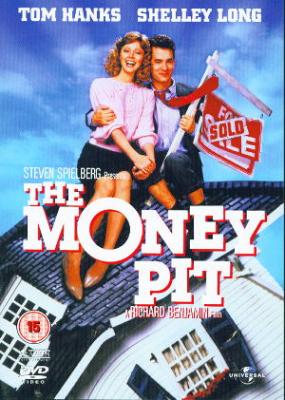
Today's lesson in start up business in the field of DTC Genomics is this.....
Stay Private and Stay Alive. IPO and doom yourself to a painful and public death.
Huh? Ah, yes our first DTC Genomics venture is going to be restructured to someone else and the thought experiment will become a reality.
"When a DTC Genomics bust, what happens to the data?"
Well, someone else can buy it, at a rock bottom price. Hell, the selling company can even violate YOUR TERMS OF AGREEMENT!
Daniel, posts a great email from some sucker who bought DeCodeMe......or maybe just an "Early Adopter"
" there has also been filed with the court an offer by Saga Investments LLC to purchase deCODE's Icelandic subsidiary, Islensk Erfdagreining (IE). IE, which is not declaring bankruptcy, carries out all of deCODE's human genetics work and and provides deCODEme."
So, Saga Investments, a private firm will be taking over in Iceland and likely will be handed the keys to a bunch of genotypes.....
"For this reason, we do not expect this to have any impact on your deCODEme account. As ever, our commitment at deCODEme is to keep you in the forefront of progress in understanding the human genome and what it means for you and your health."
What did this achieve? Well, it took the DTC DeCodeme out of the publicly owned realm. Which is probably a good thing. Let me tell you why.
Publicly owned companies shares are extremely liquid and can be crushed pretty easily, where as rich ol' moneybags (SergeandMe) can keep throwing money into the kitty and outlast this economic downturn and premature launch of these companies, hoping to innovate his way out of this money pit.
This reason is probably why DeCodeme went private and will likely give up control of their data. They need some sucker to keep pouring money into a boondoggle that has no exit for at LEAST the next 15 years if at all.
The moral of the story for start ups is "Stay Private, Lose Investor's Money, Live, Innovate (gulp)"
The Sherpa Says: Now I want to know how many people will file a class action against DeCode for selling the data? Any ideas? Because that could really make the genetic data an unwanted commodity.

You can’t have it both way. Either scared your genome is sold off or not.
I recently read a Times blog post by Mark Henderson because it was referenced by Dan Vorhaus on Twitter. I have to say, I am blown away by the cognitive dissonance here......
entitled " The end of deCODE genetics: are you worried about who holds your DNA?" I was interested in to see whether this was a slash job on deCode or not.....
"Does this worry me? Not really. First of all, as Dr Stefansson pointed out to me yesterday, deCODE was a publicly traded company, listed on the NASDAQ. It was always up for sale, and in a manner of speaking its ownership was changing all the time."
Is he serious? Minor shareholders having access to a company's intellectual property and a hostile board takeover? That is what it would have taken to get the control.....or bankruptcy. Which is yet again another reason why a doctor would be able to protect this data better than a corporation.
Will there be any more doozies in this?
What I found was a hard pill for most to swallow. The end conclusion:
"What's more, though, I've yet to be convinced that there is anything particularly sensitive about an individual's genetic information. For the moment, at least, the sort of genotype data held by deCODEme isn't very useful to anybody other than me -- and even then, its chief value lies in satisfying my curiosity. I'd be much more worried if it was my financial data that was changing hands"
Ok, so here is the problem. Either you believe or you don't believe that your genome will hold useful information that may help predict your risk for disease.
If you do believe, then how could you not be scared about some discovery down the road that may be used against you by the "new owners" of your data?
If you don't believe it is a big deal, then why in the hell did you have the scan in the first place? To write a "news" story? Sorry, I mean PR piece......
In fact that's it. The people who bought these DTC tests were SV tech junkies and piss poor journalists who couldn't get anything else published. Now that they have all used up the story, there is no one left to buy decodeme.......et.al.
I do agree with the writer on one thing: There will be more failures. No amount of PR can fix that.
The Sherpa Says: Either you believe or you don't. For those who do, DeCode's failure should shake you. I am certainly glad I chose the IRB approved Coriell Personalized Medicine Collaborative to do my SNP scan.......

Long QT Syndrome, location matters

I just saw a family who had Long QT with a KCNQ1 mutation ripping through them. Which is why I loved this email I received from one of my long time readers the day after I saw them.
One of my favorite lines from this paper was
"Nothing tests the tools of clinical risk prediction quite like sudden death."
Ummmm......Uh Huh.
They go on to say
"The difficulties encountered in the clinical application of genetic data, even in inherited conditions such as the long-QT syndrome (LQTS), in which the transmitted risk of sudden death is several hundred-fold greater than that in the general population, highlight some of the hurdles that must be overcome if DNA diagnosis is ever to transform cardiovascular medicine. "
The reader then went on to send me a release from ScienceDaily
But I should probably give you some background.
Long QT syndrome is a condition where the electrical activity in your heart is faulty. In fact, the conduction system has dangerous delays that can lead to dangerous heart rhythms which cause sudden death.
It is so serious that in every single patient I see, I ask "Has anyone in your family died suddenly or in their sleep? Has anyone had any crib death? Any sudden unexplainable car accidents?"
This is my lay screen for Sudden Cardiac Death (SCD).
Long QT is one of the causes of SCD. The rate is about 1 in 2000 or so. In 10% of people roughly, the first symptom is sudden death. This can be due to exertion, stress, auditory triggers.
A multicenter study was performed to evaluate genetic "noise" in 1400 controls and approximately 400 subjects (Far more than the Norovirus resistance gene for 22andSerge)
What did they find? They found some noise......of course.
This noise was present in about 4% of controls. This is surprisingly low in my estimate......
What else did they find? They found a genotype/phenotype correlation. Which in Autosomal Dominant disease is also no big surprise. Which likely will be augmented with modifier genes.
What is the "noise rate" for other genes? That, my friend is a good question.
What is noise? It could be anything we haven't classified as for certain pathogenic or benign. For BRCA we call these changes "Variants of Uncertain Significance" or affectionately known as VUSes
The VUS rate for BRCA is anywhere between 10 and 15 percent. Which is why I was so surprised about the LQTS study. Heck, there are more than 2 genes involved in LQTS
So why is this noise such a big deal? As we reach the precipitously dropping cost of the genome, we will be able to have a whole bunch of noise......
In fact, I think it will take us at least 20 years to sort out that noise. Add on layers of epigenetics and we may have another 20 years.......
Why so glum? We do have pretty valid clinical testing for Sudden Cardiac Death. It works, MOST of the time. Whole Genome Scanning?
Well, that may be a different story. I have harped on the Incidentalome several times on the blog, but this bears repeating.........
" If practitioners pursue these unexpected genomic findings without thought, there may be disastrous consequences. First, physicians will be overwhelmed by the complexity of pursuing unexpected genomic measurements. Second, patients will be subjected to unnecessary follow-up tests, causing additional morbidity. Third, the cost of genomic medicine will increase substantially with little benefit to patients or physicians (but with great financial benefits to the genomic testing industry), "
-Zak Kohane
"Mathematicians modeled sequencing the whole genome. As they get up to sequencing 10.000 people they find that the fraction of the population with a false positive result skyrockets up to 60%. What does this mean? Well, we have to carefully select who we test. Or better yet we need an immense database of "Normal Variants". At a minimum we will need 1000s of "sequence specialists" or "computer sequence analysis programs" to evaluate and decide if the "work up" is indicated or not. Personal Genomics is very complex, even more than personalized medicine."
-Steven Murphy in 2007
The Sherpa Says: In Genomics, there is going to be a whole lotta maybes........which in case you are curious, computers handle very poorly....

Congratulations Generation Health. Nice pick up!

Is it any surprise that insurance companies have no clue what the hell is going on with genetic testing?
You see, there are a set of ICD9 codes that can mean 2C19 testing or hepatitis pcr........
The coding system doesn't allow the companies to run their algorithms accurately......
Insurers have no clue which is which and they are getting banged out for these tests.
Don't believe me, just take a look at what United has done with their BRCA testing (which BTW has their own codes)
"By instituting a prior notification policy and placing Myriad in charge of determining which patients get tested, United Healthcare can monitor more closely which of its policy holders are receiving testing on BRACAnalysis."
Add in the SGO guidelines which suggest a 5% BRCA carrier risk may be worthwhile and you can see why the companies are looking to stop the carnage or testing overuse.
Myriad on the other hand would beg to differ. They see years of under utilization as something to combat. And they are very successful at it, just check out MYGN.
The answer is somewhere in the middle. What is a responsible insurance company to do?
Answer: Generation Health.
What happens when genetic testing costs less than 100 bucks? Well, then maybe Generation Health will need to speak with me regarding a diversification company we are working on.....
With other PBM companies actively looking at new automated strategies for GBM (not glioblastoma multiforme) Generation Health is an interesting play.
I remember speaking with a certain player who also was involved with the DTC companies, who agreed with me. DTC is a bull$h!t play, benefits management of real testing, hyperlipids, HCM, etc are where the puck will be......From the Genome Web article (HT Turna Ray)
"The partnership will also “allow the companies to explore future programs in the medical diagnostics arena to encourage appropriate and cost-effective testing for certain hereditary diseases, and eliminate unnecessary testing where evidence for clinical validity and utility is lacking,” the collaboration partners said in a statement. "
We talked about this for some time (unnamed MD and myself) and then.....radio silence.......Only to show up with funding and some small hits.
They chose genetic counselors instead of my band of geneticists......
These guys are moving in the right direction. The industry is shaping up and guess what the killer app for genetic testing is?????
That's right, actual, honest, regulated medical testing........ Go figure.
Now, who gets what, how is it paid for, how is it used?
These are the questions that will need to be solved.
Until of course the accuracy and cost of a genome is less than 500 USD Which could be quite a while.
Meaning, Generation Health has about 10 years of life as the company it is right now. Not bad.
Imagine saving insurers millions per year, then taking 10-20% of those savings......... per year CVS/Caremark is a great partner and now owner/investor.........A very strategic investment.
My guess is that the DTC companies will fall in line or perish. Then labs will have to start marketing better, offer faster turnaround times and there will be "preferred" lab status.....per insurer.
Basically creating a super confusing land mine for physicians and patients. Just like radiology, just like surgery, just like chemo, just like......medicines
The Sherpa Says: Finally, corporations and investors are figuring out what IS important. Staying alive and having your medications work!!

An argument 23andSerge can’t win…23andme but not medicine

"As I had postulated before, in order to move towards a profitable direction the DTC companies would have to choose "Medically Relevant" or "Novelty Testing" From this recent email sent to me by a reader it is clear, 23andME is Choosing to become a clinical service, without accepting the clinical responsibility."
This from my post February 14 2009
That was the day the announced that they were doing BRCA testing. Since then we have created a little video that may now be running through the silicon valley.........
Why?
Because, at the Spittoon (brrrrrrr-ding) they have announced that they will be splitting their service into 2 different types of tests
The first "A Novelty Test" which will be solely for ancestry.
23andMe Ancestry Edition – $399
The second "A health test" which will be solely for medicine while still disclaiming it is not. 23andMe Health Edition – $429
"With the launch of the 23andMe Health Edition we are releasing 13 new carrier status reports. These reports will help you know more about what may be in store for the next generation. We are expanding our cystic fibrosis panel report to cover the full panel of mutations recommended by the American College of Medical Genetics, as well as several additional mutations. We will also be providing data for most of the mutations routinely screened for in the Ashkenazi Jewish population, including those associated with Tay-Sachs disease, Canavan disease and Bloom’s syndrome.
We are also continuing to expand our drug response offerings. The next report to come out, Pseudocholinesterase Deficiency, contains information for anyone who will be undergoing surgery."
Ok, a couple of things.
First-This health test IS a MEDICAL test. I have sent off CF carrier screening medically, I have also sent off for Malignant Hyperthermia testing as well.........
Each has their own limitations which I have had to counsel patients about........For an hour a piece.
Second and more importantly, this appears to be another price change for the 23andME service.
If it turns out this company gets eaten up by Google, I am certain google will then own your genome scan data.....So I have one thing to say to the consumer
"If you want google to own your genome data, then by all means buy a 23andMe test"
Buyer beware here, please. I only ask and beg the proper authorities to uphold the current laws and regulate appropriately to protect the public health and welfare.
Why do I say this? Because a BRCA test or a CF carrier screen which was inappropriate that has been performed already on the public, without medical regulation, or without proper medical guidance could cause harm.
Lastly, this is likely a salvage play to keep the ancestry service before the feds come sweeping in......shut the medical service down.
I am certain.
Well, at least they (Feds and 23andSerge) have heard us........we only grow stronger because we are correct and hold to the theory that "What's Important IS What Is Important"
The Sherpa Says: Democratization is important, but so is not dying.......Why mix hair color with BRCA testing? I am glad Serge sees that too.......But now that leaves the health test as "Not for Fun" Looks like quite a change in defense of Mountain View's medical practice without doctors.....

Welcome to Pest Control Exterminator Network
Pest Control Exterminator Network offers services in the areas of pest control, storage protection and disinfection (disease control). We develops customized pest control products and provides some of them also for sale. Pest Control Exterminator Network deals with new guidance (eg planning, conversions), training and expertise in all aspects of pest control. With bases in the whole of NYC, we are always in your area. This guarantees you a prompt service.
Our employees come from mainly artisanal occupations. In an intensive education and training they receive training from certified experts in the following areas:
? Biology of pests
? Active ingredients, products and their applications
? Technical equipment and its application
? Qualitative & Productive Work
? Hygiene Operating
We also advise the customer on vulnerable areas in the course of operations and prevent a possible infestation. While our work is to control of pest, bed bugs hence we are largely independent and contributes locally, the entire responsibility. We are able to identify pests safely and take the necessary measures. The staff are in daily contact with the headquarters in NYC, but work mainly in their neighbourhood of NYC. Regular exchange of experience and knowledge, operational and external training and technical assistance on site provide a comprehensive information.
This Is Not How You Sell a Computer Desk [Image Cache]
 It's fixed now on the Target website (updated product page here), but for a time, this was one very interesting product title. Yeah, it's super old, but still funny to those who haven't seen it. [Digg - Thanks Marco!]


The Largest Island for Sale in the World.
 Very few islands ever come on the market in Mexico and when they do they are often leasehold properties (as opposed to freehold). However, one island that recently came on the market and that is sure to catch the attention of the world is San Jose Island. The island is rumored to be about 2 million acres in size and is on the market for $150M. Private Islands Online the agency that is advertising the island has an extensive description about the island that you can read here. From the description it appears that the present plan is to develop the island as an ecopark.
Ashes to Ashes, Dust to Art [Art]
 When I see dust, I start cleaning like crazy. When Paul Hazelton sees dust, he collects it, and turns it into statues. Yes, this skeleton was really made out of a pile of dust bunnies, just like Hazelton's other art.
The artist explains that "humans were supposedly made from dust, so it is interesting to create other things with it," and he certainly takes to that task well. Or, if nothing, he must have some superpower that allows him to keep from sneezing long enough to make these statues:
Ashes to ashes, funk to funky. Am I the only one who somehow started thinking of Bowie after looking at Hazelton's art? [Saatchi Gallery via Metro]


Futurism News Bulletin, xvi
MOSAIC EDITION
- Guided tour in Alessandria highlights Severini’s mosaics
- More mosaics: the Palazzo delle Poste in La Spezia has restored two futurist mosaics by Prampolini and Fillia
- Mosaic by Severini in Tornareccio
OTHER NEWS
- Italian police seized works of art from the ex-director of Parmalat, Calisto Tanzi, including one by Umberto Boccioni (more)
- In case you didn’t hear yet, Alitalia finally sold its Futurist works to raise funds but NOT ‘Zeus Gave Birth to the Sun’ by Severini!
- Giuseppe Antonello Leone talks about his encounter with Marinetti at the Teatro di Avellino
- Play incorporates hand-painted costumes that look like Futurist Paintings
- Futurist Bottle Design Competition winner announced, see also Bru Bru Brunello wine
- Depero and Stella on art of the NYC subway
- More about the New Archives of Futurism
Reviews from PERFORMA 09 shortly….
Creative thinking lets you believe whatever you want
I thought I'd illustrate an important lesson with a link to a page called "the biblical evidence against evolution". It has some perfect examples of a lack of critical thinking ability, and demonstrates that humans are capable of using their own smartness against themselves. It also contains what I can probably only describe as the single most concentrated example of dark-side epistemology I have ever seen:
What About All of the Scientific Evidence?
If you still are not ready to put your complete faith and trust in God when it comes to science vs. Creation, it is probably because you are thinking some of these types of thoughts:"But what about the scientific evidence for the Big Bang (or the string theory, etc.) and the age of the universe? What about the fossil record and all of the scientific data that seems to be perfectly logical and seems to refute the Biblical account of Creation? What about the proven examples of evolution that are happening today? I can't just disregard all of the scientific facts that I have always been taught!"
When it comes to science, keep in mind that there are many scientists who believe in the Big Bang theory and the theory of evolution, but there are many other scientists who believe that the scientific evidence proves the Creation account in the Bible. Therefore, it all boils down to which set of scientists you choose to believe! It still comes down to a question of faith. For example, Dr. Kent Hovind has a website in which he says, "I have a standing offer of $250,000 to anyone who can give any empirical evidence (scientific proof) for evolution. My $250,000 offer demonstrates that the hypothesis of evolution is nothing more than a religious belief" (see http://www.drdino.com/Ministry/250k/index.jsp
). In over a decade, no-one has ever claimed the money. So the all-important question is whether our faith rests on the word of the non-Christian scientists, or whether our faith rests totally on God.
Now, don't get me wrong, I realize that some "evolutionary" and "Big Bang" scientists are Christians. Still, that doesn't change the fact that the Big Bang (or other scientific "origins" theories) and evolution are the only answers which the non-Christian scientists have, and when there is a conflict between what they say and what God says, I'll stand with God every time. Actually, I have studied the evidence for the Big Bang, the age of the universe, the theory of evolution, etc., and some of it sounds fairly convincing to my logical mind. I enjoy science, and I recognize that there can be changing varieties within the different kinds of plants, animals, and other organisms (which is why we have "superbugs" that are resistant to antibiotics, for example). However, this ongoing process that we see happening in the world around us is called "microevolution" by scientists, and it is defined as "the gradual accumulation of mutations leading to new varieties within a species" (Webster's American Family Dictionary). It is not macroevolution, which is defined as a "major evolutionary change of species" (Webster's American Family Dictionary). The examples of microevolution that we can demonstrate in the world around us do not prove the theory of evolution, as any scientist will tell you. I would be perfectly happy to believe that we humans were formed through evolution if that view agreed with the overwhelming testimony of Scripture. But it doesn't. The internal testimony throughout the entire Bible is completely consistent and is completely in opposition to man's scientific theories about the Big Bang and evolution and so on. Therefore, I choose to believe God's Word no matter how convincing some of the scientific evidence might be. God is always right!
If you really want to believe something, you can always find a way, no matter how strong or overwhelming the evidence against it is. There's always that one rogue scientist, that one possible argument in favor of your position (which stands up to scrutiny as long as you don't actually try to attack it at its weakest point).

Motorola’s Got Their Own Android Shop Cookin’ [Android]
 Well, lookee' here. Motorola's been building their own Android Marketplace, and someone found it out. It's been taken down since, but here's what Android and Me found before Moto pulled the plug.
The biggest addition is that it's web based. That's right, Android users. A store that's easily browsable on the desktop. Not to mention an application for desktop app management.
So that's all well and good, but why does Motorola have to even build a separate portal? This is all stuff that Google should really be on top of if they want to really win consumers over. The last thing that anyone wants is to have the Android Marketplace start getting segmented by manufacturer, so please Google, whenever you're done building your phone, add this stuff in to save us all the trouble. [Android and Me via Engadget]


Laurent Pichot on Moorea
During my recent trip to French Polynesia I met French blogger Laurent Pichot who also happened to be staying at Moorea Camping. Pichot is currently on leave from his job as an account manager with Google France in Paris and traveling around the world.