Coveted Object #438: Skull Memento Mori Locket Ring, 17th Century, Gold, Enamel, Diamonds and Ruby; For Sale at Masterpiece London 2013

SKULL MEMENTO MORI LOCKET RING
England, 17th century Gold, enamel, diamonds and ruby. Solid, narrow hoop terminating in scrolled shoulders each set with a diamond. The bezel consists of a relief modeled skull and crossbones. The eye sockets are filled with rose-cut diamonds and the nose cavity is set with a triangular step-cut diamond; the mouth is engraved with clenched teeth. Each of the femurs is set with 4 diamonds at the heads, trochanters and condyls. A hinge below the skull’s chin opens a locket within which is set a small heart-shaped ruby.

For sale at the Masterpiece London 2013 show running from 27 June – 3 July (with a Preview on 26 June) on the South Grounds of The Royal Hospital Chelsea, London SW3. You will find it at stand A10, the booth of a company called Les Enluminures. The price unclear; you can find out more here.

Thanks to Constanza Isaza Martinez for the tip!Source:
http://morbidanatomy.blogspot.com/2013/06/coveted-objects-438-skull-memento-mori.html

Morbid Anatomy Lecture Series at Last Tuesday Society in Yesterday’s "Hackney Citizen"

Kill time at death talks: Morbid Anatomy lecture series at Last Tuesday Society
Batty events for those with grave concerns take in such subjects as the Neapolitan cult of the dead and London’s folk medicine

The summer months have heralded the arrival of a new lecture series. 
The subject is death.

Proceedings at the Morbid Anatomy Lecture Series, which began last month and is continuing through July at The Last Tuesday Society in Mare Street, have included a “wax wound workshop” and a talk on the Neapolitan cult of the dead.

Still to come are talks on the “danse macabre” and London’s folk medicine, and there will be an opportunity to create your very own bat in glass dome – using a real dead bat....

Read the entire article--by Hannah Langworth in yesterday's Hackney Citizen--by clicking here.

Following is a list of the remaining events in the Last Tuesday Society's Morbid Anatomy Lecture Series; Hope to see you at one or more of these terrific events!

The image you see above is a fresco of "The Triumph of Death"  in Palermo, painted by an unknown artist around 1446 and seen in the Regional Gallery of Palazzo Abatellis.

________________________________ 
Bat in Glass Dome Workshop: Part of DIY Wunderkammer Series : With Wilder Duncan (formerly of Evolution Store, Soho) and Laetitia Barbier, head librarian at The Morbid Anatomy Library
29th June and 30th June 2013, 1 to 5pm
Ticket price £150; Tickets here (29th) and here (30th)
In this class, students will learn how to create an osteological preparation of a bat in the fashion of 19th century zoological displays. A bat skeleton, a glass dome, branches, glue, tools, and all necessary materials will be provided for each student, but one should feel welcome to bring small feathers, stones, dried flowers, dead insects, natural elements, or any other materials s/he might wish to include in his/her composition. Students will leave the class with a visually striking, fully articulated, “lifelike” bat skeleton posed in a 10” tall glass dome. This piece can, in conjunction with the other creations in the DIY Wunderkammer workshop series, act as the beginning of a genuine collection of curiosities! This class is part of the DIY Wunderkammer workshop series, curated by Laetitia Barbier and Wilder Duncan for Morbid Anatomy as a creative and pluridisciplinary exploration of the Curiosity Cabinet. The classes will focus on teaching ancient methods of specimen preparation that link science with art: students will create compositions involving natural elements and, according to their taste, will compose a traditional Victorian environment or a modern display. More on the series can be found here.
Wilder Duncan is an artist whose work puts a modern-day spin on the genre of Vanitas still life. Although formally trained as a realist painter at Wesleyan University, he has had a lifelong passion for, and interest in, natural history. Self-taught rogue taxidermist and professional specimen preparator, Wilder worked for several years at The Evolution Store creating, repairing, and restoring objects of natural historical interest such as taxidermy, fossils, seashells, minerals, insects, tribal sculptures, and articulated skeletons both animal and human. Wilder continues to do work for private collectors, giving a new life to old mounts, and new smiles to toothless skulls.
Laetitia Barbier is the head librarian at The Morbid Anatomy Library. She is working on a master’s thesis for the Paris Sorbonne on painter Joe Coleman. She writes for Atlas Obscura and Morbid Anatomy.
More here (29th) and here (30th).
________________________________ 
The Coming of Age of the Danse Macabre on the Verge of the Industrial Age: Illustrated lecture with Alexander L. Bieri
9th July 2013
Doors at 6:30 / Talk begins at 7:00 pm
Ticket price £7; Tickets here
During the middle ages, the danse macabre developed into an independent art form, most often in the shape of murals which adorned the walls of cemeteries. These depictions of death followed a strict rulebook and generally were a representation of the class system of the time, which was based on nobility or – to be more precise – the estate-based society. The advent of the bourgeois during the 1700s and the upcoming industrialisation put a question mark not only behind the societal system, but quite naturally also behind many of the established art forms. The danse macabre was widely regarded to be an outdated concept and a discussion evolved whether the skeleton still was the appropriate epitome for death. One of the proponents of this discussion was the Swiss artist Johann Rudolf Schellenberg, who created the first modern danse macabre in 1785, far away from the old class system, a work of art which still has an uncanny actuality and addresses many of the modern fears still extant in society at present. His trailblazing work updated the genre overnight and can be seen as the master source of all similar works of art to follow. A complete set of the plates is held by the Roche Historical Collection and Archive in Basel, which also holds one of the world’s oldest anatomical collections. The lecture not only discusses Schellenberg’s danse macabre in detail, but also gives an insight into the current fascination with vanitas and its depictions, especially focusing on the artistic exploitation of the theme and takes into consideration the history of anatomical dissection and preparation.
Alexander L. Bieri (*1976) is the curator of the Roche Historical Collection and Archive, a department within Roche Group Holdings. He assumes this position since 1999. Based in Basel, Switzerland but active as a consultant throughout the world, he has published many books and articles both on Roche-related and other themes. He also is responsible for a variety of Roche in-house museums and curated special exhibitions in Switzerland and abroad. In his ca
pacity as an expert for 20th century architecture and design, he is a member of ICOMOS. In 2012, he was appointed lecturer for exhibition design at the Basel University.
More here.
________________________________ 
Photo courtesy of
Tonya Hurley
Viva la Muerte: The Mushrooming Cult of Saint Death": Illustrated lecture and book signing with Andrew Chesnut
10th July 2013
Doors at 6:30 / Talk begins at 7:00 pm
Ticket price £7; Tickets here
The worship of Santa Muerte, a psuedo Catholic saint which takes the form of a personified and clothed lady death, is on the rise and increasingly controversial in Mexico and the United States. Literally translating to “Holy Death” or “Saint Death,” the worship of Santa Muerte–like Day of the Dead–is a popular form of religious expression rooted in a rich syncretism of the beliefs of the native Latin Americans and the colonizing Spanish Catholics. Worshippers of "The Bony Lady" include the very poor, prostitutes, drug dealers, transvestites, prison inmates and others for whom traditional religion has not served, and for whom the possibility of unpredictable and violent death is a very real part of everyday life. In the view of her worshippers, Santa Muerte is simply a branch of Catholicism which takes at its central figure the most powerful of all saints--Saint Death herself, the saint all must, after all, one day answer to.The Catholic Church sees it, however, as, at best, inadvertent devil worship, with the worship of death--and the manifestation of a saint from a concept rather than an individual--as heretical to its core tenants. Tonight, R. Andrew Chesnut, author of Devoted to Death: Santa Muerte, the Skeleton Saint and Chair in Catholic Studies at Virginia Commonwealth University, will detail his research into the history and ongoing development of this fascinating "new religion."
Copies of Devoted to Death: Santa Muerte, the Skeleton Sain will be available for sale and signing.
Dr. R. Andrew Chesnut earned his Ph.D degree in Latin American History from the University of California, Los Angeles in 1995 and joined the History Department faculty at the University of Houston in 1997 where he quickly became an internationally recognized expert on Latin American religious history. His most recent book is Devoted to Death: Santa Muerte, the Skeleton Saint (Oxford University Press, 2012). It is the first in-depth study of the Mexican folk saint in English.
More here
________________________________
From Blue Beads to Hair Sandwiches: Edward Lovett and London's Folk Medicine: An Illustrated lecture with Ross MacFarlane, Research Engagement Officer in the Wellcome Library
15th July 2013
Doors at 6:30 / Talk begins at 7:00 pm
Ticket price £7; Tickets here
During his life Edward Lovett (1852-1933) amassed one of the largest collections of objects pertaining to 'folk medicine' in the British Isles.  Lovett particularly focused his attention on objects derived from contemporary, working class Londoners, believing that the amulets, charms and mascots he collected - and which were still being used in 20th century London - were 'survivals' of antiquated, rural practices. Lovett, however, was a marginal figure in folklore circles, never attaining the same degree of influence as many of his peers.  Whilst he hoped in his lifetime to establish a 'National Museum of Folklore', Lovett's sizeable collection is now widely dispersed across many museums in the UK, including Wellcome Collection, the Science Museum, the Pitt Rivers Museum and the Cuming Museum.  This paper will offer an overview of the range of healing objects Lovett collected, the collecting practices he performed and recent efforts to rehabilitate his reputation.
Ross MacFarlane is Research Engagement Officer in the Wellcome Library, where he is heavily involved in promoting the Library's collections, particularly to academic audiences.  He has researched and given public talks on such topics as the history of early recorded sound and the collecting activities of Henry Wellcome and his members of staff.  Ross is a frequent contributor to the Wellcome Library's blog and has had led guided walks around London on the occult past of Bloomsbury and the intersection of medicine, science and trade in Greenwich and Deptford.
More here.
________________________________
The Vampires of London: A Cinematic Survey with William Fowler (BFI) and Mark Pilkington (Strange Attractor)
18th July 2013
Doors at 6:30 / Talk begins at 7:00 pm
Ticket price £7; Tickets here
This heavily illustrated presentation and film clip selection explores London's Highgate Cemetery as a locus of horror in the 1960s and 1970s cinema, from mondo and exploitation to classic Hammer horror.
William Fowler is curator of artists' moving image at the BFI National Archive and co-programmes the cult cinema strand at Flipside at BFI Southbank.
Mark Pilkington runs Strange Attractor Press and is the author of 'Mirage Men' and 'Far Out: 101 Strange Tales from Science's Outer Edge'. 
More here
________________________________
"Here's a Health to the Barley Mow: a Century of Folk Customs and Ancient Rural Games" Screenings of Short Films from the BFI Folk Film Archives with William Fowler
24th July 2013
Doors at 6:30 / Talk begins at 7:00 pm
Ticket price £7; Tickets here
Tonight, the British Film Institute's William Fowler will present a number of rare and beautiful short films from the BFI National Archive and Regional Film Archives showing some of our rich traditions of folk music, dance, customs and sport. Highlights include the alcoholic folk musical Here's a Health to the Barley Mow (1955), Doc Rowe’s speedy sword dancing film and the Padstow Mayday celebration Oss Oss Wee Oss (Alan Lomax/Peter Kennedy 1953).
The programme provides a taste of the BFI's 6-hour DVD release 'Here's a Health to the Barley Mow: a Century of Folk Customs and Ancient Rural Games', a rich and wide-ranging collection of archive films from around the UK.
William Fowler is curator of artists' moving image at the BFI National Archive and co-programmes the cult cinema strand at Flipside at BFI Southbank.
More here.
________________________________
Of Satyrs, Horses and Camels: Natural History in the Imaginative Mode: illustrated lecture by Daniel Margócsy, Hunter College, New York
25th July 2013
Doors at 6:30 / Talk begins at 7:00 pm
Ticket price £7; Tickets here
This talk argues that the creative imagination played a crucial role in the development of science during the scientific revolution. Modern, natural knowledge emerged from the interaction of painters, printmakers, artisans, cartographers, and natural historians. All these practitioners carefully observed, pictured and cataloged all the exotic naturalia that flooded Europe during the Columbian exchange. Yet their collaboration did not end there. They also engaged in a joint, conjectural guesswork as to what other, as yet unknown plants and animals might hide in the forests of New England, the archipelago of the Caribbean, the unfathomable depths of the Northern Sea, or even in the cavernous mountains of the Moon. From its beginnings, science was (and still is) an imaginative and speculative enterprise, just like the arts. This talk traces the exchange of visual information between the major artists of the Renaissance and the leading natural historians of the scientific revolution. It shows how painters’ and printmakers’ fictitious images of unicorns, camels and monkfish came to populate the botanical and zoological encyclopedias of early modern Europe. The leading naturalists of the age, including Conrad Gesner, Carolus Clusius and John Jonstonus, constantly consulted the oeuvre of Dürer, Rubens and Hendrick Goltzius, among others, as an inspiration to hypothesize how unknown, and unseen, plants and animals might look like.
Daniel Margocsy is assistant professor of history at Hunter College – CUNY. In 2012/3, he is the Birkelund Fellow of the New York Public Library’s Cullman Center for Scholars and Writers. He has co-edited States of Secrecy, a special issue of the British Journal for the History of Science on scientific secrecy, and published articles in the Journal of the History of Ideas, Annals of Science, and the Netherlands Yearbook of Art History.
More here.
________________________________ 
All talks and workshops take place at The Last Tuesday Society at 11 Mare Street, London, E8 4RP map here) unless otherwise specified; please click here to buy tickets. More on all events can be found here. Click on images to see larger versions.

Source:
http://morbidanatomy.blogspot.com/2013/06/morbid-anatomy-lecture-series-at-last.html

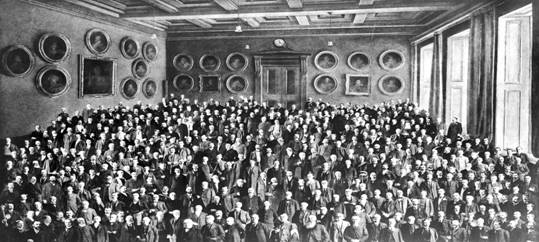
"Case Studies of Medical Portraiture Concluding Workshop," King’s College, London, July 12

Thanks so much to Anna Maerker for drawing my attention to the wonderful sounding "Case Studies of Medical Portraiture" workshop taking place at King's College on Friday, July 12. It features a  number of my scholars and is also, delightfully, free and open to the public; email douglas.james [at] kcl.ac.uk to register.

 Hope to see you there!And I highly recommend clicking on the above image; it gets a lot more interesting at a larger size!

Case Studies of Medical Portraiture concluding workshop
July 12th 2013
King’s College London
Strand Building, room S8.08

Programme

9:00 – Registration

9:30 – Panel 1

  • Keynote Address: Lucia Dacome (University of Toronto) – ‘The anatomy of the embroiderer: celebrity, domesticity and self-portraiture in eighteenth-century Italy’
  • Julia Rüdiger (University of Vienna) – ‘Surgeons’ Portraiture in historical context: monuments to Theodor Billroth

11:00 – Coffee

11:30 – Panel 2

  • John Harley Warner (Yale University) – ‘Posing with the Cadaver: Violence, Identity and Photographic Group Portraiture in American Medicine, 1880-1930’
  • Mary Hunter (McGill University) – ‘Hysterical Reality: Portraits, Performance and Procedures at the Salpêtrière Hospital’

13:00 – Lunch

13:45 – Panel 3

  • Michael Flexer (University of Leeds) – ‘Portraiture, Paralysis and Parallaxes in Charcot's nosological mission’
  • Harriet Palfreyman (University of Warwick) – ‘Patient Portraits at the London Lock Hospital, 1849-1851’
  • Mienke te Hennepe (Boerhaave Museum) – ‘Medical Photography on Display: Patients, portraits and the dilemma of privacy - a curator's perspective’

15:45 – Tea

16:15 – Round Table, Summing Up and Discussion

  • Keren Hammerschlag (KCL), Ludmilla Jordanova (KCL), Douglas James (KCL) and Anna Maerker (KCL)

To be followed by a drinks reception. Since places are limited, please contact douglas.james [at] kcl.ac.uk to register.  We are grateful to the Wellcome Trust for its generous support. Organisers: Keren Hammerschlag, Ludmilla Jordanova, Douglas James and Anna Maerker.

Image: Barclay Bros., A composite group portrait of the Fellows of the Royal College of Surgeons of Edinburgh, 1902, photogravure, 55.5 x 80.9cm (Wellcome Images).Source:
http://morbidanatomy.blogspot.com/2013/06/case-studies-of-medical-portraiture.html

Spine or Vertebral column | Spine bones joints | Human Spine Anatomy 3D animation | Elearnin – Video


Spine or Vertebral column | Spine bones joints | Human Spine Anatomy 3D animation | Elearnin
Spine or Vertebral column | Spine bones joints | Human Spine Anatomy 3D animation | Elearnin This video illustrates one of the main parts of human body, the ...

By: elearnin

Continue reading here:
Spine or Vertebral column | Spine bones joints | Human Spine Anatomy 3D animation | Elearnin - Video

Tonight and Beyond: Virtual Tour of the Vrolik Anatomical Museum! Galvani’s "Walking Dead" of 1803! The Influencing Machine! Madame Tussaud and the Guillotine! Bats in Glass Domes! The Morbid Anatomy Lecture Series This Week and Next at London’s Last Tuesday Society


Hello London Friends!

Are you interested in learning about the incredible holdings of Amsterdam's Vrolik Museum (top three images) with its "two skeletons of dwarves, rare Siamese twins, cyclops and sirens, dozens of pathologically deformed bones, the giant skull of a grown man with hydrocephalus, the skeleton of the lion once owned by king Louis Napoleon, as well as the organs of a babirusa, Tasmanian devil and tree kangaroo"? If so, then tonight's (Monday, June 24th) heavily illustrated lecture by its curator Laurens de Rooy flown in direct from The Netherlans is the night for you.

If this does not interest, perhaps you might be interested in a talk (and demonstration!) by The Science Museum's Phil Loring on Galvani's experiments to wake the dead in 19th century London? (Tomorrow night, Tuesday, June 25th) Or, failing that, perhaps we might be able to tempt you with an illustrated lecture by the incredible Mike Jay on James Tilly Matthews’ "influencing machine" (Wednesday, June 26th)? If this still does not suit, then perhaps you might wish to take in an illustrated lecture by Pamela Pilbeam--author of Madame Tussaud and the History of Waxworks-- on Madame Tussaud and the Guillotine (4th down; Thursday, June 27th).

Perhaps lectures are simply not your thing! In that case, perhaps you might like to attend a backstage tour of the zoological collections of The Natural History Museum (Friday June 28th) or a workshop on the crafting of bat skeletons in glass domes (bottom image; Saturday and Sunday, June 29th and 30th).

Full details and ticket links follow; most events cost £7 and take place at 7pm at London's Last Tuesday Society. Hope to see you at one or more!
________________________________
Face lift or face reconstruction? Redesigning the Museum Vrolik, Amsterdam's anatomical museum: An illustrated lecture with Dr. Laurens de Rooy, curator of the Museum Vrolik in Amsterdam
24th June 2013
Doors at 6:30 / Talk begins at 7:00 pm
Ticket price £7; Tickets here
Copies of the book Forces of Form: The Vrolik Museum will be available for sale and signing.
Two skeletons of dwarves, rare Siamese twins, cyclops and sirens, dozens of pathologically deformed bones, the giant skull of a grown man with hydrocephalus, the skeleton of the lion once owned by king Louis Napoleon, as well as the organs of a babirusa, Tasmanian devil and tree kangaroo – rare animals that died in the Amsterdam zoo ‘Artis’ shortly before their dissection. Counting more than five thousand preparations and specimens, the Museum Vrolikianum, the private collection of father Gerard (1775-1859) and his son Willem Vrolik (1801-1863), was an amazing object of interest one hundred and fifty years ago. In the 1840s and 50s this museum, established in Gerard’s stately mansion on the river Amstel, grew into a famous collection that attracted admiring scientists from both the Netherlands and abroad. After the Vrolik era, the museum was expanded with new collections by succeeding anatomists and the museum now houses more than 10,000 anatomical specimens.
Since 1984, the museum has been located in the academic Hospital of the University of Amsterdam. In 2009 the museum collections were portrayed by the photographer Hans van den Bogaard for the book Forces of Form. This book was the starting point for the creation of a new 'aesthetic' of the museum and its collection, eventually resulting in the grand reopening of the renovated and redesigned permanent exhibition in September 2012. For the first time since the death of father and son Vrolik, all of their scientific interests - the animal anatomy, the congenital malformations and the pathologically deformed human skeletons can all be viewed together, thus giving an impression of what that mid-19th century anatomy was all about. In this talk, Museum Vrolik curator will take you on a guided tour of the new museum, and give an overview of all the other aspects of the 'new' Museum Vrolik.
Dr. Laurens de Rooy (b. 1974) works as a curator of the Museum Vrolik in the Academic Medical Centre in Amsterdam. He studied Medical Biology, specializing in the history of science and museology. during his internship he researched the collection of father and son Vrolik. In 2009 he obtained his PhD in medical history.
More here.
________________________________
The Walking Dead in 1803: An Illustrated Lecture with Phil Loring,
Curator of Psychology at the Science Museum in London
25th June 2013
Doors at 6:30 / Talk begins at 7:00 pm
Ticket price £7; Tickets here
A visiting Italian startled Londoners at the turn of the 19th century by making decapitated animals and executed men open their eyes and move around, as if on the verge of being restored to life. This was not magic but the power of electricity from the newly inven
ted Galvanic trough, or battery. It was also the dawn of the modern neurosciences, as the thrust behind these macabre experiments was to understand the energy that moved through the nerves and linked our wills to our bodies. This talk will discuss a variety of historical instruments from the Science Museum's collections that figured in these re-animation experiments, including the apparatus used by Galvani himself in his laboratory in Bologna. This will be a partial preview of an upcoming Science Museum exhibition on nerve activity, to open in December 2013.
Phil Loring is BPS Curator of Psychology at the Science Museum in London. He has a Master's degree in Medical Anthropology from Harvard University and is currently completing his Ph.D. in the History of Science, also from Harvard, with a dissertation on psycho-linguists in Cambridge, Massachusetts, after the Second World War. Phil has been at the Science Museum since 2009, and during that time he has been particularly committed to sharing artefacts related to psychology and psychiatry with adult audiences. He's currently preparing an exhibition on the history of nerves, to open in December 2013.
More here
________________________________
The Influencing Machine: James Tilly Matthews and the Air Loom with Mike Jay
26th June 2013
Doors at 6:30 / Talk begins at 7:00 pm
Ticket price £7; Tickets here
Confined in Bedlam in 1797 as an incurable lunatic, James Tilly Matthews’ case is one of the most bizarre in the annals of psychiatry. He was the first person to insist that his mind was being controlled by a machine: the Air Loom, a terrifying secret weapon whose mesmeric rays and mysterious gases were brainwashing politicians and plunging Europe into revolution, terror and war. But Matthews’ case was even stranger than his doctors realised: many of the incredible conspiracies in which he claimed to be involved were entirely real. Caught up in high-level diplomatic intrigues in the chaos of the French revolution, he found himself betrayed by both sides, and in possession of a secret that no-one would believe…
Mike Jay is an author, historian and curator who has written widely on the history of science and medicine, and particularly on drugs and madness. As well as The Influencing Machine, he is the author of Emperors of Dreams: Drugs in the Nineteenth Century and High Society: Mind-Altering Drugs in History and Culture, which accompanied the exhibition he curated at Wellcome Collection.
More here.
________________________________
Madame Tussaud, the French and the Guillotine: Illustrated Lecture by Pamela Pilbeam Emeritus Professor of French History, Royal Holloway, University of London and author of Madame Tussaud and the History of Waxworks
27th June 2013
Doors at 6:30 / Talk begins at 7:00 pm
Ticket price £7; Tickets here
`You perceive that this is some sort of holy of holiest, the nearest Victorians got to a Cathedral, with its saints enniched within’. The chief saint in Madame Tussaud’s exhibition was Bonaparte, the chief villains were Robespierre and his revolutionary colleagues. When she arrived in Britain in 1802 for a short tour that lasted until she died in 1850, her exhibition was an exploration of the evils of the French Revolution. She had modelled the guillotined revolutionaries, as well as Louis XVI and Marie-Antoinette, from their severed heads- and brought a model of a guillotine and the Bastille fortress to expose the short comings of the French. The British, busily at war with their nearest neighbour, loved this critical exposure. Later the focus of her collection became her `Shrine to Napoleon’ consisted of two rooms dedicated to the Emperor. Napoleon had always had a leading role in her touring company, but in 1834, when she was a well-established figure in the world of entertainment and about to open a permanent museum in Baker Street, Madame. Tussaud began to amass large quantities of Napoleonic memorabilia. She built up a collection which Napoleon III acknowledged, when he tried abortively to buy it from the Tussauds, to be the best in the world. Madame Tussaud’s presentation of French politics and history did much to inform and influence the popular perception of France among the British. This paper will explore that view and how it changed during the nineteenth century.
Pamela Pilbeam is Emeritus Professor of French History, Royal Holloway, University of London.   She is the author of Madame Tussaud and the History of Waxworks.
More here.
________________________________
© The Natural History Museum,
London 2012. All Rights Reserved.
Backstage Tour of the Zoological Collection of the Natural History Museum with Miranda Lowe
28th June 2013
Limited to 10 participants; Time 3:00 - 4:00
Ticket price £20; Tickets here
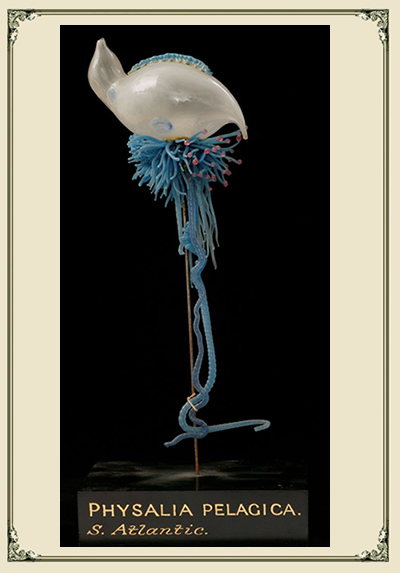
Today, ten lucky people will get to join Miranda Lowe, Collections Manager of the Aquatic Invertebrates Division, for a special backstage tour of The Natural History Museum of London. The tour will showcase the zoological spirit collections in the Darwin Centre, some of Darwin’s barnacles and the famed collection of glass marine invertebrate models crafted by Leopold and Rudolf Blaschka in the 19th and early 20th century.
Miranda Lowe is the Collections Manager of the Aq
uatic Invertebrates Division, Life Sciences Department, The Natural History Museum (NHM), London. Within Zoology Miranda specifically manages the Crustacea collections as well as the team of curators responsible for the Invertebrate collections. Darwin barnacles and the Blaschka marine invertebrate glass models are amongst some of the historical collections that are her interests and under her care. In 2006, she was part of the organising committee and invited speaker at the 1st international Blaschka congress held in Dublin. Miranda collaborated with the National Glass Centre, Sunderland, UK in 2008 to exhibit some of the Museum’s Blaschka collection alongside contemporary Blaschka inspired art. She also has an interest in photography, natural history - past and present serving on a number of committees including the Society for the History of Natural History (SHNH) and the Natural Sciences Association (NatSCA).
More here
________________________________ 
Bat in Glass Dome Workshop: Part of DIY Wunderkammer Series : With Wilder Duncan (formerly of Evolution Store, Soho) and Laetitia Barbier, head librarian at The Morbid Anatomy Library
29th June and 30th June 2013, 1 to 5pm
Ticket price £150; Tickets here (29th) and here (30th)
In this class, students will learn how to create an osteological preparation of a bat in the fashion of 19th century zoological displays. A bat skeleton, a glass dome, branches, glue, tools, and all necessary materials will be provided for each student, but one should feel welcome to bring small feathers, stones, dried flowers, dead insects, natural elements, or any other materials s/he might wish to include in his/her composition. Students will leave the class with a visually striking, fully articulated, “lifelike” bat skeleton posed in a 10” tall glass dome. This piece can, in conjunction with the other creations in the DIY Wunderkammer workshop series, act as the beginning of a genuine collection of curiosities! This class is part of the DIY Wunderkammer workshop series, curated by Laetitia Barbier and Wilder Duncan for Morbid Anatomy as a creative and pluridisciplinary exploration of the Curiosity Cabinet. The classes will focus on teaching ancient methods of specimen preparation that link science with art: students will create compositions involving natural elements and, according to their taste, will compose a traditional Victorian environment or a modern display. More on the series can be found here.
Wilder Duncan is an artist whose work puts a modern-day spin on the genre of Vanitas still life. Although formally trained as a realist painter at Wesleyan University, he has had a lifelong passion for, and interest in, natural history. Self-taught rogue taxidermist and professional specimen preparator, Wilder worked for several years at The Evolution Store creating, repairing, and restoring objects of natural historical interest such as taxidermy, fossils, seashells, minerals, insects, tribal sculptures, and articulated skeletons both animal and human. Wilder continues to do work for private collectors, giving a new life to old mounts, and new smiles to toothless skulls.
Laetitia Barbier is the head librarian at The Morbid Anatomy Library. She is working on a master’s thesis for the Paris Sorbonne on painter Joe Coleman. She writes for Atlas Obscura and Morbid Anatomy.
More here (29th) and here (30th).
________________________________ 
The Coming of Age of the Danse Macabre on the Verge of the Industrial Age: Illustrated lecture with Alexander L. Bieri
9th July 2013
Doors at 6:30 / Talk begins at 7:00 pm
Ticket price £7; Tickets here
During the middle ages, the danse macabre developed into an independent art form, most often in the shape of murals which adorned the walls of cemeteries. These depictions of death followed a strict rulebook and generally were a representation of the class system of the time, which was based on nobility or – to be more precise – the estate-based society. The advent of the bourgeois during the 1700s and the upcoming industrialisation put a question mark not only behind the societal system, but quite naturally also behind many of the established art forms. The danse macabre was widely regarded to be an outdated concept and a discussion evolved whether the skeleton still was the appropriate epitome for death. One of the proponents of this discussion was the Swiss artist Johann Rudolf Schellenberg, who created the first modern danse macabre in 1785, far away from the old class system, a work of art which still has an uncanny actuality and addresses many of the modern fears still extant in society at present. His trailblazing work updated the genre overnight and can be seen as the master source of all similar works of art to follow. A complete set of the plates is held by the Roche Historical Collection and Archive in Basel, which also holds one of the world’s oldest anatomical collections. The lecture not only discusses Schellenberg’s danse macabre in detail, but also gives an insight into the current fascination with vanitas and its depictions, especially focusing on the artistic exploitation of the theme and takes into consideration the history of anatomical dissection and preparation.
Alexander L. Bieri (*1976) is the curator of the Roche Historical Collection and Archive, a department within Roche Group Holdings. He assumes this position since 1999. Based in Basel, Switzerland but active as a consultant throughout the world, he has published many books and articles both on Roche-related and other themes. He also is responsible for a variety of Roche in-house museums and curated special exhibitions in Switzerland and abroad. In his capacity as an expert for 20th century architecture and design, he is a member of ICOMOS. In 2012, he was appointed lecturer for exhibition design at the Basel University.
More here.
________________________________ 
Photo courtesy of
Tony
a Hurley
Viva la Muerte: The Mushrooming Cult of Saint Death": Illustrated lecture and book signing with Andrew Chesnut
10th July 2013
Doors at 6:30 / Talk begins at 7:00 pm
Ticket price £7; Tickets here
The worship of Santa Muerte, a psuedo Catholic saint which takes the form of a personified and clothed lady death, is on the rise and increasingly controversial in Mexico and the United States. Literally translating to “Holy Death” or “Saint Death,” the worship of Santa Muerte–like Day of the Dead–is a popular form of religious expression rooted in a rich syncretism of the beliefs of the native Latin Americans and the colonizing Spanish Catholics. Worshippers of "The Bony Lady" include the very poor, prostitutes, drug dealers, transvestites, prison inmates and others for whom traditional religion has not served, and for whom the possibility of unpredictable and violent death is a very real part of everyday life. In the view of her worshippers, Santa Muerte is simply a branch of Catholicism which takes at its central figure the most powerful of all saints--Saint Death herself, the saint all must, after all, one day answer to.The Catholic Church sees it, however, as, at best, inadvertent devil worship, with the worship of death--and the manifestation of a saint from a concept rather than an individual--as heretical to its core tenants. Tonight, R. Andrew Chesnut, author of Devoted to Death: Santa Muerte, the Skeleton Saint and Chair in Catholic Studies at Virginia Commonwealth University, will detail his research into the history and ongoing development of this fascinating "new religion."
Copies of Devoted to Death: Santa Muerte, the Skeleton Sain will be available for sale and signing.
Dr. R. Andrew Chesnut earned his Ph.D degree in Latin American History from the University of California, Los Angeles in 1995 and joined the History Department faculty at the University of Houston in 1997 where he quickly became an internationally recognized expert on Latin American religious history. His most recent book is Devoted to Death: Santa Muerte, the Skeleton Saint (Oxford University Press, 2012). It is the first in-depth study of the Mexican folk saint in English.
More here
________________________________
From Blue Beads to Hair Sandwiches: Edward Lovett and London's Folk Medicine: An Illustrated lecture with Ross MacFarlane, Research Engagement Officer in the Wellcome Library
15th July 2013
Doors at 6:30 / Talk begins at 7:00 pm
Ticket price £7; Tickets here
During his life Edward Lovett (1852-1933) amassed one of the largest collections of objects pertaining to 'folk medicine' in the British Isles.  Lovett particularly focused his attention on objects derived from contemporary, working class Londoners, believing that the amulets, charms and mascots he collected - and which were still being used in 20th century London - were 'survivals' of antiquated, rural practices. Lovett, however, was a marginal figure in folklore circles, never attaining the same degree of influence as many of his peers.  Whilst he hoped in his lifetime to establish a 'National Museum of Folklore', Lovett's sizeable collection is now widely dispersed across many museums in the UK, including Wellcome Collection, the Science Museum, the Pitt Rivers Museum and the Cuming Museum.  This paper will offer an overview of the range of healing objects Lovett collected, the collecting practices he performed and recent efforts to rehabilitate his reputation.
Ross MacFarlane is Research Engagement Officer in the Wellcome Library, where he is heavily involved in promoting the Library's collections, particularly to academic audiences.  He has researched and given public talks on such topics as the history of early recorded sound and the collecting activities of Henry Wellcome and his members of staff.  Ross is a frequent contributor to the Wellcome Library's blog and has had led guided walks around London on the occult past of Bloomsbury and the intersection of medicine, science and trade in Greenwich and Deptford.
More here.
________________________________
The Vampires of London: A Cinematic Survey with William Fowler (BFI) and Mark Pilkington (Strange Attractor)
18th July 2013
Doors at 6:30 / Talk begins at 7:00 pm
Ticket price £7; Tickets here
This heavily illustrated presentation and film clip selection explores London's Highgate Cemetery as a locus of horror in the 1960s and 1970s cinema, from mondo and exploitation to classic Hammer horror.
William Fowler is curator of artists' moving image at the BFI National Archive and co-programmes the cult cinema strand at Flipside at BFI Southbank.
Mark Pilkington runs Strange Attractor Press and is the author of 'Mirage Men' and 'Far Out: 101 Strange Tales from Science's Outer Edge'. 
More here
________________________________
"Here's a Health to the Barley Mow: a Century of Folk Customs and Ancient Rural Games" Screenings of Short Films from the BFI Folk Film Archives with William Fowler
24th July 2013
Doors at 6:30 / Talk begins at 7:00 pm
Ticket price £7; Tickets here
Tonight, the British Film Institute's William Fowler will present a number of rare and beautiful short films from the BFI National Archive and Regional Film Archives showing some of our rich traditions of folk music, dance, customs and sport. Highlights include the alcoholic folk musical Here's a Health
to the Barley Mow (1955), Doc Rowe’s speedy sword dancing film and the Padstow Mayday celebration Oss Oss Wee Oss (Alan Lomax/Peter Kennedy 1953).
The programme provides a taste of the BFI's 6-hour DVD release 'Here's a Health to the Barley Mow: a Century of Folk Customs and Ancient Rural Games', a rich and wide-ranging collection of archive films from around the UK.
William Fowler is curator of artists' moving image at the BFI National Archive and co-programmes the cult cinema strand at Flipside at BFI Southbank.
More here.
________________________________
Of Satyrs, Horses and Camels: Natural History in the Imaginative Mode: illustrated lecture by Daniel Margócsy, Hunter College, New York
25th July 2013
Doors at 6:30 / Talk begins at 7:00 pm
Ticket price £7; Tickets here
This talk argues that the creative imagination played a crucial role in the development of science during the scientific revolution. Modern, natural knowledge emerged from the interaction of painters, printmakers, artisans, cartographers, and natural historians. All these practitioners carefully observed, pictured and cataloged all the exotic naturalia that flooded Europe during the Columbian exchange. Yet their collaboration did not end there. They also engaged in a joint, conjectural guesswork as to what other, as yet unknown plants and animals might hide in the forests of New England, the archipelago of the Caribbean, the unfathomable depths of the Northern Sea, or even in the cavernous mountains of the Moon. From its beginnings, science was (and still is) an imaginative and speculative enterprise, just like the arts. This talk traces the exchange of visual information between the major artists of the Renaissance and the leading natural historians of the scientific revolution. It shows how painters’ and printmakers’ fictitious images of unicorns, camels and monkfish came to populate the botanical and zoological encyclopedias of early modern Europe. The leading naturalists of the age, including Conrad Gesner, Carolus Clusius and John Jonstonus, constantly consulted the oeuvre of Dürer, Rubens and Hendrick Goltzius, among others, as an inspiration to hypothesize how unknown, and unseen, plants and animals might look like.
Daniel Margocsy is assistant professor of history at Hunter College – CUNY. In 2012/3, he is the Birkelund Fellow of the New York Public Library’s Cullman Center for Scholars and Writers. He has co-edited States of Secrecy, a special issue of the British Journal for the History of Science on scientific secrecy, and published articles in the Journal of the History of Ideas, Annals of Science, and the Netherlands Yearbook of Art History.
More here.
________________________________ 
All talks and workshops take place at The Last Tuesday Society at 11 Mare Street, London, E8 4RP map here) unless otherwise specified; please click here to buy tickets. More on all events can be found here. Click on images to see larger versions.

Source:
http://morbidanatomy.blogspot.com/2013/06/tonight-and-beyond-virtual-tour-of.html

Volvo Trucks – Testing Collision Warning with Emergency Brake – "Trucks’ Anatomy" (E01) – Video


Volvo Trucks - Testing Collision Warning with Emergency Brake - "Trucks #39; Anatomy" (E01)
In the first episode of Trucks #39; Anatomy we take a close look at the revolutionary Collision Warning with Emergency Brake system. Your host Peter Sundfeldt, o...

By: VolvoTrucks

The rest is here:
Volvo Trucks - Testing Collision Warning with Emergency Brake - "Trucks' Anatomy" (E01) - Video

Rebecca Wisocky Dishes on "Delicious" Devious Maids

Murder and mayhem mix as the class divide between the wealthy elite and close-knit group of maids working for the rich collides. Sex, secrets and murder combine with a fun outlandish tone that's sure to make Devious Maids the new guilty pleasure of the summer.

I recently spoke on the phone with Rebecca Wisocky about her character Evelyn Powell, a haughty member of high society Beverly Hills, and the employer of a murdered maid that sets the series in motion.

The actress enthusiastically dished on her "delicious" character, the fun, over the top tone of the season and what's in store for Lifetime's new show.

Read on for excerpts from our Q&A…

Rebecca Wisocky plays Evelyn Powell

TV Fanatic: How'd you end up coming about Devious Maids?

Rebecca Wisocky: It was a very busy pilots season last year, and I was really excited when I got the script and read the breakdown. She's a pretty delicious and juicy character that's been tremendous fun to play. So, yeah, I was pretty excited to meet [Show creator] Mark Cherry. I'm a fan.

TVF: Did you go in for Evelyn Powell initially?

RW: Yes. I went in for Evelyn, tested the next day and got the job. I could not have been happier.

TVF: How would you say Evelyn describes herself compared to how the maids would describe Evelyn?

RW: I'll say that I describe Evelyn as an evil bitch with a broken heart of gold. So, I think that answers both sides of your question. I think the challenge I find really fascinating in playing a villain is you can't judge her character, you can't believe that she's just an evil person, you know? I think Evelyn thinks that she has good intentions. I think she's morally questionable to say the very least. I think she walks through the world with a great deal of armor that appears to be very slick, regal and cruel, and both terrifying and ridiculous to people that cross her path.

But over the course of the season, you see her soften a bit and you see the reasons why the way she is … at least I hope you do because that's what we tried to bring to it. All of the characters become more complex as they intermingle, and you'll know more about them throughout the season.

TVF: What's it like playing Evelyn and getting to say such great lines like, "But who's going to clean up the mess?"

RW: You know the tone of the show you're dealing with, right off the bat with Mark Cherry. It's a soap, it's a satire. It's dangerous, it's campy, it's fun and I think relevant as well. He came in primary colors and then he lets them all bleed together. To say the very least, I have some delicious lines and dialogue with Tom Irwin who plays my husband, [Adrian Powell].

But yeah, I think the character begins in a very hard arch-way and then you'll see her soften.

I may have a slightly masochistic streak because I really enjoy playing those characters that are punished for their hubris. I like that. I think it's interesting. I'm a character, so I don't mind being unlikeable or unattractive to be the foil for someone else's story.

I think in Evelyn's outrageousness she can be delicious as well. I hope she will be a character that you love to hate.

TVF: Why does a tone like this work for the show?

RW: I think it allows you to flip the script a little bit. It's a satire. You can say absolutely outrageous things and put people in incredibly extreme over the top sexualized situations in order to tell a story, in order to teach a lesson, in order to show something from a different angle and get a conversation started.

TVF: Can you talk about Evelyn's relationship with her husband and then working with Tom Irwin?

RW: Well, I love Tom Irwin. He's one of the best scene partners I've ever had. He's become a very good friend, I love this relationship [between our characters]. It's kind of classic. You don't see a whole lot of this in the pilot, but he actually has a great deal of power of Evelyn. It's a love, hate relationship. I think you find out through the course of the season what keeps them together. They're their own worst enemies and the source of the greatest pain for one another. They are also the only people that can comfort one another.

TVF: Evelyn and her husband clearly have a lot of secrets. Is that something we're really going to delve into this season?

RW: Oh, yes. That house is big and has a lot of secrets inside of it. Lots will be revealed in that house, I'll say that.

TVF: Do you personally already know who the maid murderer is?

RW: You will know by the end of the season who killed Flora. The murder will be solved.

TVF: What's been the best part about working on the show?

RW: The cast. It's really true. It's been so fun and I hope we get to do more. There's so many people on this cast. I mean, Ana Ortiz [who plays Marisol Duarte] just raises the bar. She's so tremendously talented. Judy Reyes [who plays Zoila Diaz]? These people are incredibly talented and all so unique and from so many different backgrounds. I mean, there a lot of theater people that are on the cast. Tom is from the theater world, I come from the theater world, as well as Ana and Judy. That adds a lot.

TVF: Has there been anything that's surprised you?

RW: I've done a bunch of pilots. I've recurred on a bunch of shows. I've guest starred on a bunch of shows. I've been pretty lucky to play a wide range of characters, although I've often played a villainess. It's been my first experience in television having a role that can build and change throughout the course of the season.

TVF: What can you tease about the premiere?

RW: A lot of fun. A lot of mouths will be agape. A lot of outrageous behavior. Some comeuppance for people who deserve it and some for the people who do not. A lot of style and I think it's beautifully shot. The look of the show is gorgeous. … It's pure escapist heightened satire.

Dive into the delicious Devious Maids when it premieres Sunday, June 23 at 10 p.m. on Lifetime.

Source:
http://www.tvfanatic.com/2013/06/rebecca-wisocky-dishes-on-delicious-devious-maids/