
ASUSTek is on the verge of releasing a graphic user interface (GUI) BIOS for all users of the P5Q motherboard series. The new type of BIOS called an Extensible Firmware Interface (EFI) makes the transition from an older keyboard driven environment to something so much more appealing and easier t
Heron Island in Great Barrier Reef under new management
Heron Island in Australia’s Great Barrier Reef is among the Australian resorts recently acquired by Delaware North. Delaware North specializes in tourism in national parks and significant sites, including Yosemite National Park in the United States and Niagara Falls. The company is yet to announce its plans but hopefully it intends to improve on what’s there and not try to over-develop it. Likely there will be limits to what they can do anyway, since part of the island is protected by the Capricornia Cays National Park.

The pristine beaches of Heron Island
I loved my time on Heron Island back when it was owned by Voyages so I wanted to share some of the things that make it so special. Heron Island is a coral cay on the southern end of the Great Barrier Reef – the largest coral reef in the world. The tiny island is covered with dense vegetation, habitat to a vast array of bird life, and fringed with white sand beaches and shallow aquamarine waters filled with tropical fish.
The beach at Heron Island is also an important turtle nesting site. Early in the year, you might see huge mother turtles haul themselves out of the water and up the beach to lay their eggs by moonlight. By March and April, you could see hundreds of turtle hatchlings running to the sea as you take a sunset walk along the beach. We did and it was quite magical!
There are thousands of islands on the Great Barrier Reef and each is special in its own way. On Heron Island, you won’t find high-rise construction and vast swathes of concrete. The island has been left in as natural state as possible and guests are asked to help protect that, for example by closing the curtains at night so baby turtles don’t get confused by the light, and sticking to the pathways so you don’t accidentally collapse the nest of a ground-burrowing ‘mutton bird’ (or burrowing shearwater). All the buildings are low rise.

View of Heron Island from helicopter
Heron Island is a family-friendly holiday destination. Although it’s a small resort, there is plenty to do for adults and children alike – diving and snorkeling on the coral reef, swimming at the beach or in the pool, guided walks around the island and reef, and playing tennis (though they needed new balls when I was there). I recommend a package that includes meals since there are no other restaurants on the island. The closest mainland town is Gladstone on Queensland’s mid-north coast and you can reach Heron Island either by boat or helicopter transfer. If you can afford it, the helicopter ride is very cool!
Many flights to Australia from North America are via Sydney – and I certain recommend you check out the sights of Australia’s biggest city (and my hometown).
Photo credit: Caitlin Fitzsimmons. All rights reserved, used with permission. See more of Caitlin’s photos on Flickr.
***
Caitlin Fitzsimmons is a native Sydneysider currently based in San Francisco. She runs the travel and food blog Roaming Tales.


Should This Blog Re-Teach Climate Science? | The Intersection
Last week, in a post that drew over 200 comments, I asked where all the climate science “skeptics” who comment here so frequently were coming from. There were a vast array of different responses, but I was impressed by the fact that many of the “skeptics” seemed to have genuine doubts about the state of climate science, and seemed to be arriving here out of their interest in “ClimateGate”–which has made those doubts even stronger.
After many years of covering climate science as a journalist, I really don’t grasp well where they are coming from. They seem to be nitpicking around the edges of the big picture, mostly. But it almost calls for a review of the basics of climate science, the core reasons for why scientists are convinced humans are causing warming, and the consilience of evidence that makes this conclusion so strong.
Certainly it would be a lot of work to undertake, to lay all of that out. Plus, it would be work that has already been done by others–like the US EPA. I wonder, would trying to blog about this basic science be at all illuminating or useful? Or, perhaps I could offer refutations to the most standard “skeptic” claims? That, too, has been done over and over again, including by myself in various articles, and in my first book. Would doing it here be any different?

Classic Cars: Karl H. Martin's Wasp
What's amazing about automotive history is that in the first half of the 20th Century, when gazillions of backyard tinkerers thought they could be the next Henry Ford, there were automotive factories scattered all over the country, in just about every town that had an enterprising blacksmith.
Why are Multiple Load Cells Used in Weighing Systems?
Why sometimes 3 to 4 loadcells used in a weighing system to measure the weight instead of using a single loadcell?
This Week in Space With Miles O’Brien
 Keith's note: This Week in Space With Miles O'Brien is now online. Leroy Chiao, Ken Bowersox, and Mike Griffin are guests.

Book Excerpt: Walk in a Relaxed Manner
The author's efforts at letting go as she walked the Camino de Santiago in Spain.
Expedition 22 Lifts Off

The Soyuz TMA-17 rocket launches from the Baikonur Cosmodrome in Kazakhstan at 4:52 p.m. EST on Sunday, Dec. 20, carrying Expedition 22 NASA Flight Engineer Timothy J. Creamer of the U.S., Soyuz Commander Oleg Kotov of Russia and Flight Engineer Soichi Noguchi of Japan to the International Space Station.
View this site auto transport

What if Earth really did have rings? | Bad Astronomy
By now, you’ve probably seen this very interesting video. It imagines what it would look like if Earth had rings like those of Saturn!
This is a very cool idea, and it went viral pretty quickly when it came out a few weeks ago. And of course I’m for anything that increases people’s interest in astronomy.
But the nitpicker in me can’t resist thinking the idea through a little more. The video is accurate as far as it goes, discussing the geometry of the rings and the viewing angles. But it makes some assumptions that, in real life (if you can say such a thing), are worth investigating further. Note: some of this is speculation on my part, based on my knowledge of astronomy and some reading I’ve done on rings. I wouldn’t take this as gospel (I wouldn’t take anything as gospel); instead think of it as idle brain stimulation.
With this ring, I thee shred
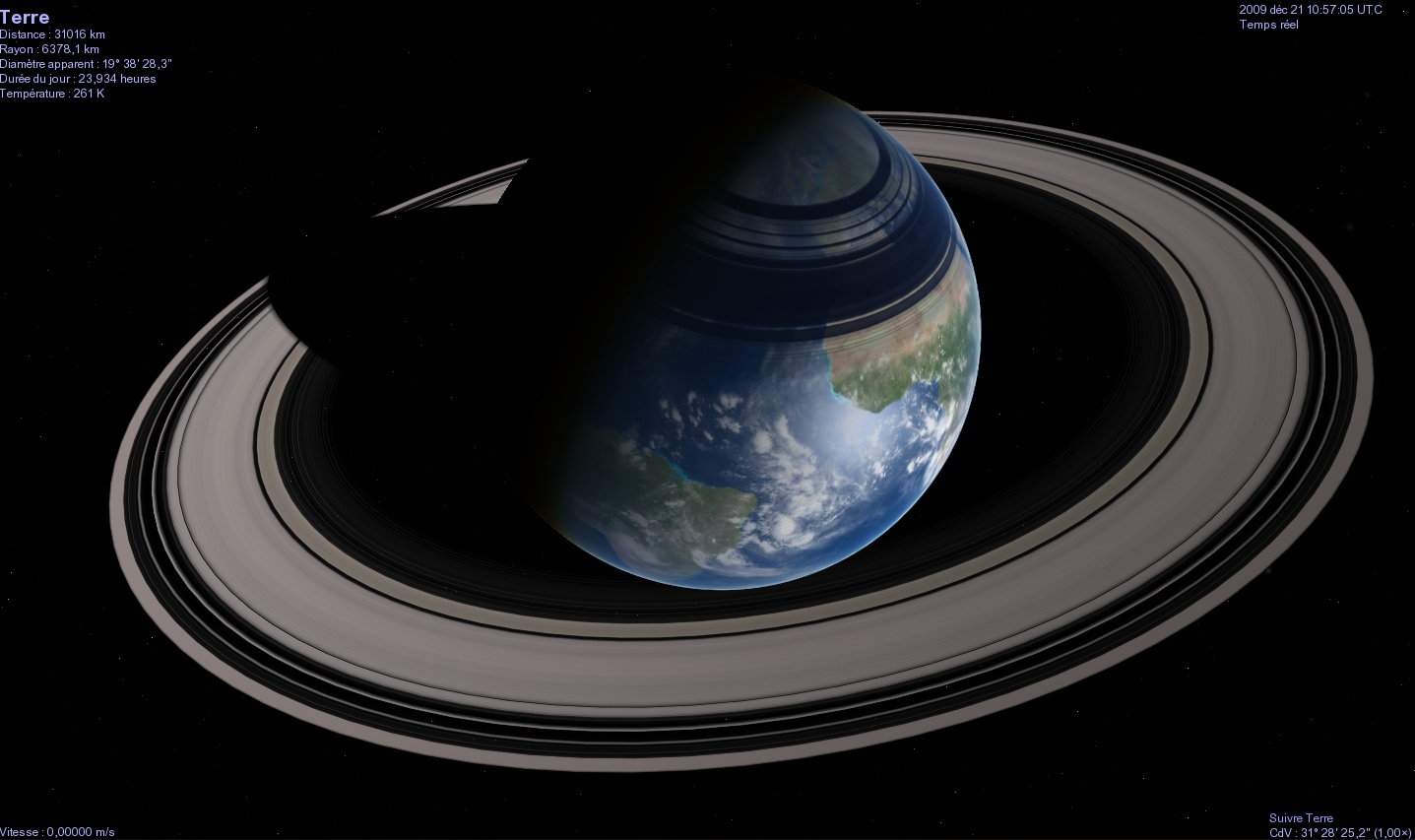 |
| Earth with rings image courtesy Damien Bouic. |
First, could Earth have rings? Sure! It’s unclear exactly how Saturn (or the other four outer giant planets) got their rings, but there is more than one mechanism to create them. A small moon could get hit by an asteroid or comet, shattering it. An impact on the Earth itself, if it were big enough, could create rings (the impact that formed the Moon billions of years ago may have done just that). That would kinda suck for us, though. Saturn’s moon Enceladus has geysers which may resupply the planet’s A and E rings (though that’s more of a replenishment than actually creating them).
Rings of rock and ice
OK, so Earth could have rings. But would they last? That’s an interesting question. Saturn’s rings are made of ice, but Saturn is 1.4 billion kilometers (850 million miles) from the Sun, where things are cold. At the Earth’s distance from the Sun, small ice particles would quickly be destroyed by sunlight (regular old sunlight would help sublimate the ice from a solid to a gas, and UV light would break apart water molecules). So if the Earthrings were made of ice like Saturn’s they’d disappear pretty quickly, certainly on a timescale far shorter than the age of the Earth.
If the Earthrings were made of rock they might last a longer time. Pressure from sunlight might be an important thing to think about for the smallest particles (though they would also be replenished as bigger particles grind together)… as well as perturbations from the Sun’s and Moon’s gravity. To be honest that’s a bit above my pay grade to do that calculation (and it looks like long-term stability would really be an issue), but let’s assume that small pebbles and such could last long enough to give Earth a ring system. Would Earthrings look like they did in that video?
Does this ring make me look fat?
 Well, yes and no. They would still be bright enough to see at night. Ice is shiny, which is one reason Saturn’s rings are so bright. Rock is much duller, so the Earthrings wouldn’t be quite so shiny. But the Moon is made of rock that is very dark, yet is incredibly bright in the night sky. It’s safe to assume the rings would be obvious at night then, too.
One interesting bit: the rings would look different if you were seeing sunlight reflected off them versus seeing the Sun through them. Sunlight seen through them would be reddened if the rings were dusty, just like a sunset looks very red if there is haze and junk in the air. Saturn’s rings look very different when Cassini has taken images showing them from the unlit side. So in the summer the rings might look one way when you see sunlight reflected off them, and different in the winter when they are seen from the unlit side.
Would they be visible during the day? I think so, since the Moon is easily visible during the day. Being close and broad, they should be bright enough to spot above the brightness of the sky itself.
God of the gaps
What about the structure? In the video they simply took Saturn’s rings and transposed them on the Earth. But that’s not really accurate, because of the gaps.
 |
| If Mimas really were a Death Star, clearing a gap in the rings would be a lot easier. |
Saturn’s rings are not a simple disk, but actually made up of thousands of separate rings. The big dark gap in the rings is called the Cassini Division, discovered by the astronomer Giovanni Domenico Cassini in the 17th century. Saturn’s moon Mimas is responsible for that gap; any particle in the Cassini Division orbits Saturn in half the time Mimas does, and so it feels a periodic tug from the moon (called a resonance). That pulls the particles clear from that region, carving a gap. Other broad gaps in the rings are from other moon resonances, while some of the narrow ones are from small moons in the gaps gravitationally clearing out nearby ring particles.
So the actual Earthrings would look substantially different than in the video. There may not be any major gaps in the rings, or there might be numerous smaller ones (which wouldn’t be hard to see from the ground). The color would be different, too.

Saturn’s rings, annotated with names and distance from the center of the planet. Click to embiggen beyond your wildest dreams.
One ring to rue them all
How would this affect life on Earth? They would be more than just pretty features! The shadow they cast would change the amount of sunlight reaching the ground; in the northern hemisphere summer the Earthring shadow would be cast on the southern hemisphere (where it would be winter), and vice-versa. That means winters in both hemispheres might be somewhat colder. Plants would have to adapt to the lessened amount of light. The actual diminution of light would depend on how wide and how thick the rings are, too.
Ground-based optical astronomy would be screwed pretty well. It’s hard enough to observe when the Moon is out; imagine a sky filled with rings! It would actually be difficult to see stars at all if you lived at latitudes where the rings ate up a goodly-sized piece of the sky. I wonder how legends and myths would be changed on such an Earth?
And the Earthrings would certainly affect space travel! They would be a major hazard to spaceflight; you really wouldn’t want to plow through them at several kilometers per second unless breathing vacuum is something you enjoy. Also, the rings would be located in the very worst possible place: right over the Earth’s equator. That’s the best place to put satellites — they’re easier to launch near the equator (you get a boost of 1600 kph from the Earth’s spin that way) and that’s where you want to put geosynchronous satellites for weather and communications. A lot of astronomical (and no doubt spy) satellites are in polar orbits, but again you wouldn’t want them plunging through the rings twice each orbit. Space debris is a bad enough problem now with all the junk in orbit; having billions of particles out there wouldn’t help any!
So the Earthrings would be incredible, and lovely, and ethereal, but they would come at a terrible cost: astronomy and space travel. I’m sure we’d figure out some way to launch rockets anyway — giant absorbing puffy shields around rockets, maybe — but that would come with its own cost of high mass, which makes getting to orbit that much harder.
Ringing off
So all in all, it’s fun to think about, and remarkable to simulate and actually see in an animation — what a sight they would be! — but all in all, I think I like the Earth the way it is.
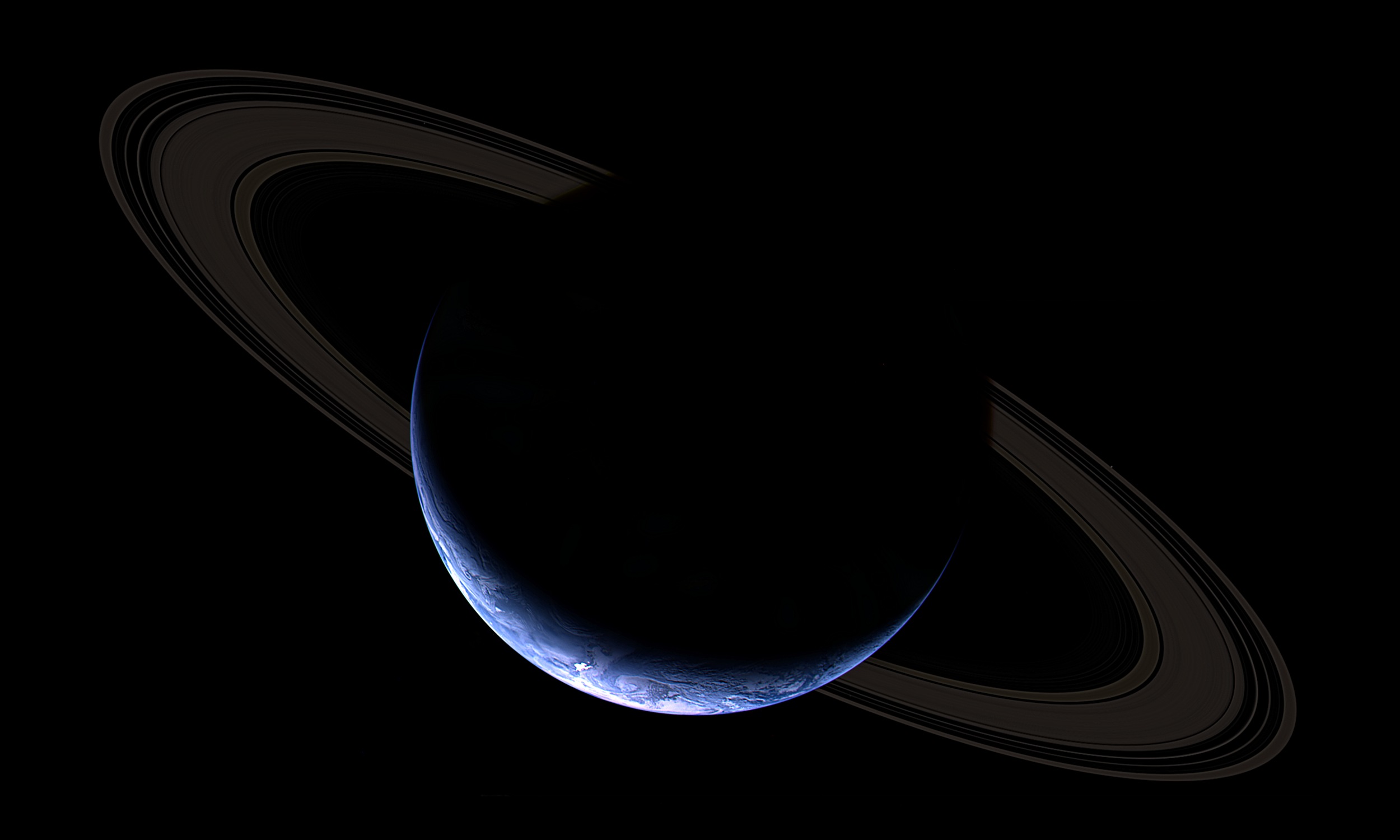 |
| Image courtesy Damien Bouic. |


What is a Phase Segregated Terminal Box?
what is phase segregated terminal box?
Sounds Familiar | The Intersection

Gingerbread Houses Designed by Architects
From Neatorama:
Sure, anyone can make a gingerbread house. But what would be the result if it was built by true professionals? The Vancouver-based art collective Creative Room held a charity art competition and asked for contributions by architectural firms. Their task was to bu
Dec. 21, 1898: The Curies Discover Radium
From Wired Top Stories:
1898: Radium is discovered by the husband-and-wife team of Pierre and Marie Curie. Sorbonne-bred physicist Pierre Curie had been noodling with crystals and magnetism since the early 1880s. He was a professor at the School of Physics in Paris when one of h
Wired Explains: How 3-D Movie Projection Works
From Wired Top Stories:
Every few years you've probably watched a mainstream movie through a pair of glasses that make creatures, people and explosions pop out of the screen. And if you've bought into the massive hype, you were probably lining up this past weekend for James Cameron
What Do You Need?
Every month there are symposia and conferences having to do with automation. There is also online training from numerous organizations. With all of these options, is there still something missing? Detail a training program or course that would help you do your job — one you haven't found onlin
Are You Feeling It?
JPMorgan's latest business report is showing light at the end of the manufacturing tunnel, with new orders and output increasing for the past five months. Is the upward trend real and will it continue?
The preceding article is a "sneak peek" from Plastics Fabrication, a newsletter from GlobalSpec.
Three-Phase Induction Motor – Voltage Across Slip Rings
a 6 pole 50 Hz Wound round Induction motor when supplied at rated voltage and frequency with slip rings open circuited devolped a voltage of 100v between any two slip rings. If rotor is driven by some external means at 1000 rpm opposite to the direction of stator Field what is the frequency of volat
Capacitor Ratings
We use capacitor of 5.6KVr for 16KVA transformer and 7KVr for 20KVA transformer.
Please tell me how we calculate the KVr ratings of a Capacitors.
Can I use Capacitor of 7kVr for both 16KVA and 20KVA transformers?
NASA Flight Tests Unique Jumbo Jet; Plane’s Airborne Telescope Will Be Used to Unlock Secrets of the Cosmos
A NASA jumbo jet that will help scientists unlock the origins of the universe with infrared observations reached a milestone Friday when doors covering the plane's telescope were fully opened in flight.
The Stratospheric Observatory for Infrared Astronomy, a modified 747 jet known as SOFIA, flew for one hour and 19 minutes, which included two minutes with the telescope's doors fully opened. The goal was to allow engineers to understand how air flows in and around the telescope. It was the first time outside air has interacted with the part of the plane that carries the 98-inch infrared telescope.
"Today we opened the telescope cavity door, the first time we have fully exposed the telescope and the largest cavity ever flown while in flight," said Bob Meyer, SOFIA program manager at NASA's Dryden Flight Research Center in Edwards, Calif. "This is a significant step toward certifying NASA's next great observatory for future study of the universe."
Besides these test flights of the airplane, two flights to operate and verify the scientific capabilities of the telescope assembly are planned for spring 2010. Telescope systems such as the vibration isolation system, the inertial stabilization system and the pointing control system will be tested during daytime flights.
These flights will prepare the telescope assembly for the first flight with the telescope operating. That first flight will be the initial opportunity scientists have to use the telescope and begin the process of quantifying its performance to prepare for SOFIA's planned 20-year science program.
SOFIA is a joint venture of NASA and the German Aerospace Center. NASA supplied the aircraft. The telescope was built in Germany.
Dryden manages the SOFIA program. The aircraft is based at NASA's Dryden Aircraft Operations Facility in Palmdale, Calif. NASA's Ames Research Center at Moffett Field, Calif., manages SOFIA's scientific program. The Universities Space Research Association, in Columbia, Md., and the German SOFIA Institute in Stuttgart, Germany, operate SOFIA's scientific program.
To see a picture of SOFIA with the doors to the telescope cavity open, visit:
http://www.nasa.gov/centers/dryden/multimedia/imagegallery/SOFIA/ED09-0279-07.html
Video from SOFIA's flight will air on NASA Television. For NASA TV streaming video, schedules, and downlink information, visit:
For more details about SOFIA and its mission, visit:
View this site car transport

Representative Quality Indicator (RQI)
I know what a image quality indicator is but do not know what a representative quality indicator is.
In radiographic Testing terms; what is a representative quality indicator?