My Favorite Aruba Beaches: 3 – Eagle Beach

Eagle Beach in Aruba

My husband and I just returned from Aruba, and Eagle Beach was directly across from the timeshare we stayed in called La Cabana Beach & Racquet Club. But, I can guarantee you that it was more than sheer laziness which prompted us to hang out on this beach every single day of our stay! Eagle Beach is pristine, beautiful and calm, and you can view some truly spectacular sunsets there as well. It’s located in Aruba’s Low-Rise area (as opposed to the High-Rise area with all of the big glitzy hotels).

Calm, warm waters on Aruba's Eagle Beach

The first thing we noted was that Eagle Beach has a plethora of palapas. However, snagging one of these delightfully shady, shaggy umbrellas requires getting to the beach by 7:30 in the morning, even in low season — by 9:00 in the morning, every single one was always sadly reserved. No matter, though — we decided to do sightseeing during the day and hang out at the island’s other beaches and come back to Eagle Beach around 6:30 to watch the sunsets. And what sunsets! By that time the palapas were all free and we happily slurped on tropical beverages while watching the sun dip below the horizon.

Stunning Sunsets on Aruba's Eagle Beach

We found Eagle Beach in Oranjestad, Aruba to be the perfect beach for all-around relaxing. There were small stands offering float and kayak rentals, and there weren’t any of the loud motorboats that crowd Palm Beach. There’s a bar serving up delicious drinks near the La Cabana beach entrance and plenty of lounge chairs to relax on. Eagle Beach isn’t where you want to be for the best snorkeling — for that, you should go to Boca Catalina or Baby Beach. But, if you’re looking for a large, chill beach with plenty of room to spread out, Eagle Beach is where it’s at.

My Favorite Aruba Beaches: #2 – Boca Catalina (Catalina Bay)

Chillin' on Boca Catalina Beach in Aruba

Starting from Aruba’s northwestern side, Boca Catalina is a very short bus ride just south of gorgeous Arashi Beach. Boca means “mouth” in Spanish, and the beach here does somewhat form a gentle yawn around the warm, shallow waters. My husband and I found Boca Catalina to have the best snorkeling on Aruba, though we didn’t spend as much time at Malmok Beach as we would have liked.

A school of colorful fish at Boca Catalina in Aruba

Boca Catalina has a lovely reef that’s popular with the island’s catamarans, sail boats and even pirate ship tours. It’s still very quiet and relaxed though, especially since there are generally very few speed boats. Closer to shore, you’ll find yourself in shallow water that’s not much more than 6-7 feet deep. There are plenty of fish here to keep you occupied (huge schools of fish will surround you!) But, when it’s particularly windy, the water can be choppy and the sand is kicked up quite a bit on the bottom, making the visibility in the more shallow areas a bit murky at times.

Swim out a good 200 feet though and you’ll be in 15-20 feet of water — this is where you should be for the best snorkeling.  The water here is very clear, the currents are not strong, and if you hover over the “dark spots” (where the reefs are), you’ll be able to admire more fish than you’ll know what to do with. If you don’t have an underwater camera, think about getting one before you go — it’s totally worth it. We saw starfish, barracudas, flounders and all sorts of tropical looking fish. Some of them can be a little mouthy at times, so watch the fingers! When you’re done with snorkeling for the day, don’t leave the beach without scouring the shoreline for shells – your efforts will be rewarded here.

IF YOU GO: Like most of Aruba’s beaches that are outside of the hotel areas, Boca Catalina doesn’t have restrooms, but the restaurants and hotels of the High Rise area and Palm Beach are a five minute bus ride away.  Hop on the Arubus for $1.30 one way or $2.60 round-trip. Take advantage of the shady palapas – have a beer and fall asleep to the sounds of gently rolling waves. Paradise.

Photos: Jenny Bengen-Albert

My Favorite Aruba Beaches: #1 – Arashi Beach

Gorgeous Arashi Beach

I’ve just returned from a one-week vacation in Aruba, and I now understand why every tourist we met there was on their 9th or 10th visit to the island. Gusty , persistent trade winds keep the island cool and dry in the summer months (and the pests at bay), the island is outside of the hurricane belt and there are gorgeous beaches at every turn.

If you drive up Aruba’s western coast to the very tip, you’ll come across a lovely patch of sand that fronts and even more lovely patch of water called Arashi Beach. You know you’ve arrived when you see the California Lighthouse; it’s a short walk away from the beach via a trail. Soft, white sand is not hard to find in Aruba, and you’ll find it here, too. For me, though, Arashi’s real draw was the water. It was clear – crystal clear. It felt like we were swimming in a giant bowl of water with sand at the bottom. And, despite the constant trade winds continually whipping across the sands, the waves were small and not remotely bothersome, and the sandy bottom was not stirred up. Just dazzling. Check out this picture:

Truly crystal-clear water at Aruba's Arashi Beach

I swear that was the seawater and not the hotel pool! Like many of Aruba’s beaches, Arashi is quite shallow for a ways out – no more 6-7 feet deep when you’re more than 200 feet from shore. Despite the ridiculous amounts of sunscreen I slathered on while at Arashi Beach, I still managed to get burned. Why? The water’s clarity transfixed me, and I was content to simply float around in the gentle waves like a dopey pelican. It took me some time to get over the fact that when looking through the water to the bottom, I could, in fact, tell which of my toes needed a touch-up from the pedicure I had gotten two weeks prior.

When I was finally able to tear myself from the water, I headed for some shade under the adorable palapas that line the beach. Palapa. I love that word. My husband and I want to build one in our backyard now — who cares if the only body of water we have is a $25 plastic pool from Target; it’s about the ambiance, right?

Palapas at Arashi Beach in Aruba. Can anything sum up "tropical" better?

The California Lighthouse at Arashi Beach in Aruba

Neither my husband nor myself were feeling particularly ambitious, but if we had been, we would have taken the short stroll up to the California Lighthouse, which can be reached via a trail from the beach.

The snorkeling at Arashi is ok, but nowhere near as good as it is a little south of there at beach called Boca de Catalina (Catalina Bay). (See my next post). Arashi is a quiet swimming hole – very few if any boats and no kite surfers or jet skis.

IF YOU GO: Don’t bother renting a car! Just hop on the Arubus, which is $1.30 one way or $2.60 round-trip. Arashi Beach is actually the end of the line for the bus, which does a U-turn in the parking lot. The bus hits all of the beaches on the island’s Western side and they come and go about every twenty minutes. May-December is low season in Aruba, so the beaches aren’t generally crowded. But, if you have your heart set on taking naps under a palapa, try to get to the beach by about 11:30.

Photos: Jenny Bengen-Albert

Coastal Wildlife Club Turtle Patrol

Most any stretch of beach in Florida with sea turtle egg-laying activity has volunteer caretakers who carefully monitor the nesting and keep careful records. The Coastal Wildlife Club in the Englewood, Florida area keeps track of the nests on the beaches in Lee, Charlotte and Sarasota Counties, including Manasota Key, Palm Island, Little Gasparilla Island [...]

Dr. Beach on Rip Currents

Probably the best and most informative video you’ll ever see on recognizing and dealing effectively with rip currents, from Dr. Stephen Leatherman. Thanks to Kenneth Wright for posting this on my FloridaBeachunter Facebook Page.

Wailoaloa Beach Nadi Fiji

Wailoaloa Beach at Nadi, Fiji, is for flashpackers what Denarau Island is for tourists on upscale South Pacific package tours. A half dozen reasonably priced places to stay grace Wailoaloa’s brown sands.

Its a big ‘un

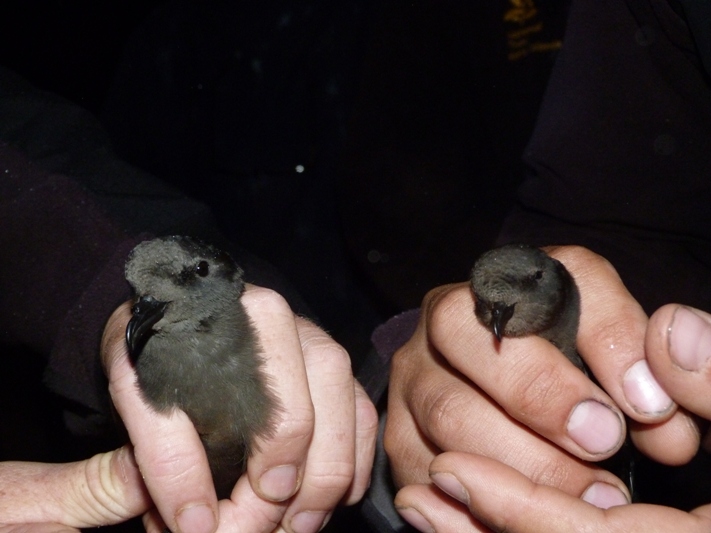
Leach (left), Storm (right) what a pair (Will Scott)

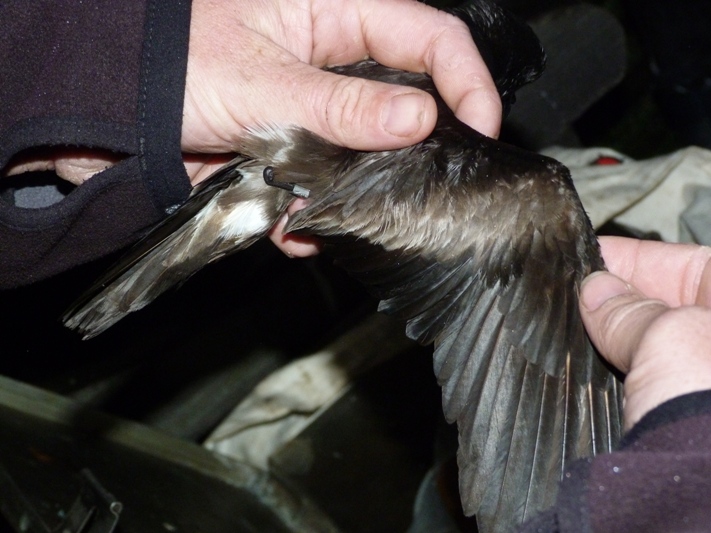
Wing of a Leach's (Will Scott)
Wednesday 27th July comments: The Farnes never appear to amaze me, even after all these years. Following an unprecedented influx of Storm Petrels – birds were still passing today, so it was decide to try overnight tape luring to ring individuals and try piece together the movements of these small oceanic wanderers.

So as darkness fell on Inner Farne, the nets were erected, the tape lure set up and soon after we were enjoying the delights of the first capture – a ringed bird from another part of the UK. Suddenly a second bird bounced into the net, another ringed individual. It was a great start. The night went on to produce a total of eleven of these amazing birds but the night was not complete.

As we passed 03:15, we decided it was time to call it a night and pack up for some well deserved sleep. However this was shattered as we discovered to our amazement a ‘Big Un’ in the nets. A Leach’s Petrel, the larger relative of the Storm Petrel had been caught the first ever trapped Leach’s in Farnes history.

What bird, what a night. The bird was ringed and processed and eventually released but not before the entire warden team had enjoyed the sight of this monster. It capped a great few days on the Farnes and only knows what the next few months may bring…

Four Seasons Maroons Guests on Private Island

4063322282_ba7d0616c7_zLike other high end hotel chains around the world, Four Seasons resorts has been expanding its holdings to include a number of private islands around the world.

Four Seasons recently developed a Robinson Crusoe experience in purchasing a private island near their five star resort in Langkawi. Guests of Four Seasons Resort Langkawi can slip away to their very own secret island, where they will be “marooned” in Four Seasons style. For couples looking for a romantic retreat or groups of friends and family wanting a playground all to themselves, it’s a perfect day in paradise.

Dotting the horizon in the near distance directly across from the Resort’s tranquil beach are three emerald islands that provide the seclusion and privacy so rarely discovered. Pulau Pasir, or Sand Island, is a natural sanctuary with a soft sand beach that can be reached only by boat or kayak, a quiet haven to hide away and enjoy some unhurried, private couple or family time.
The Robinson Crusoe Experience

Before arrival, staff will prepare a picnic spot with shade umbrella and blanket, or chairs and table if preferred. For a truly luxe experience, guests may also book a server, photographer and musician at extra cost.

To get to one’s own desert island, guests may choose to do as traditional islanders do, and paddle 30 minutes by kayak. Alternately, guests can be piloted on the Resort’s speed boat, arriving a world away in just five minutes, for an additional charge. A mobile phone is provided so that guests may call for transportation when they are ready to return to the Resort.

Source

Petrels Storm the Farnes

A Storm Petrel in the hand (from last season) Mark Breaks

Sunday 24th July comments: WHAT a day! Another day of strong northerly winds prevented boats from sailing (for the third consecutive day) but the island team went about business as usual. As well as the usual strimming and pond work, the team’s attention was drawn to the sea for a second day, as Storm Petrels took top billing with another impressive showing.

The strong northerly winds have pushed record numbers down the north-east coast and the Farnes logged an impressive 69 north today (with up to seven lingering). The birds which lingered showed amazingly well as they were observed dip feeding for several hours around the south end of the islands – an amazing sight to an amazing day (at times feeding just off the islands). All team members enjoyed the magic and I’m sure there is much more to follow as the autumn has just begun!

24th July highlights: Storm Petrel 69N plus six lingering throughout the day (record day count from the islands) Sooty Shearwater 12N, Manx Shearwater 153N, Arctic Skua 6N, Great Skua 8N, Velvet Scoter 3 male north.

Affordable Private Island Resorts

imagine-having-this-to-yourself-now-you-can_21378433A private island vacation doesn’t need to break the bank, there are literally dozens of affordable private island resorts located around the world that are affordable and offer a unique holiday opportunity. I want sun.uk recently featured a number of properties that wont leave you feeling the pinch. Here is a couple of islands they featured.


Chapwani Island Resort, Tanzania


Chapwani Island Resort is located a mile to the west of the Tanzanian spice island of Zanzibar. For as little as £99 a night you can share the whole 5 hectare island with just 19 other guests in this fantastic eco resort. Surrounded by a beautiful coral reef and crystal blue waters, the beaches are wide and deserted. The 10 rooms are colourfully decorated in African prints and the restaurant serves fresh seafood like squid and clawless lobsters. Ask at reception to take a spice tour or a sailing trip with a local fisherman.

Cooper Island Beach Club, British Virgin Islands
While the British Virgin Islands are a haven for millionaires and billionaires, it may come as a surprise to learn that beds on the islands start at £123! Cooper Island Beach Club is based on one of around 60 islands in this Caribbean archipelago, which only measures one and half miles by one and a half miles. There are only 11 rooms in the resort, and with no clubs, cars or shops on the island, you literally can have a slice of this paradise all to yourself. Sip the notorious Painkiller cocktail invented here, or spend your days scuba diving on the off-shore reefs.

Hofstra begins medical school classes with LIJ – YourNabe.com


HealthNewsDigest.com
Hofstra begins medical school classes with LIJ
YourNabe.com
“I think this partnership is a win-win” for Hofstra and the North Shore-LIJ Health System, said Dr. Lawrence Smith, dean of the medical school. “Coming together to build a medical school raises the bar for both. This is such a game-changer for both the ...
Hofstra North Shore-LIJ School of Medicine Welcomes Inaugural ClassPR Newswire (press release)

all 12 news articles »

Oregon’s first new medical school in 100 years opens in Lebanon – KVAL


KVAL
Oregon's first new medical school in 100 years opens in Lebanon
KVAL
Saturday was a day full of firsts for new medical student Julien Diegel. Diegel -- who lives in Eugene -- has always wanted to go to medical school. "My dream was to practice and learn medicine, go to medical school somewhere close to home," he said, ...
New Medical School in Lebanon Opens Doors, FutureKEZI TV
New Medical College Opens In LebanonOPB News

all 9 news articles »

UMass Medical School Selected to Provide Newborn Screening Services in Maine – Business Wire (press release)

UMass Medical School Selected to Provide Newborn Screening Services in Maine
Business Wire (press release)
(BUSINESS WIRE)--The University of Massachusetts Medical School (UMMS) today announced a new two-year contract to continue to provide newborn screening services to the state of Maine. The services will be provided by the New England Newborn Screening ...

and more »

University Of Kansas Opens New Medical School To Attract Rural Doctors – City Town Info Education Channel


New York Times
University Of Kansas Opens New Medical School To Attract Rural Doctors
City Town Info Education Channel
In order to address this, the University of Kansas opened a new campus in Salina to encourage medical students to stay local after graduating. With just eight students, the new campus is the smallest school in the country in terms of number of students ...
University of Kansas medical school opens smallest US campus to boost rural careBizjournals.com
Classes begin at K-U Med/SalinaKWCH
KU School of Medicine campus in Salina opensKansas City Star
New York Times -KAKE -KCUR
all 21 news articles »

CAM: The Beer Goggles of Medicine

It is summer, the kids are off, and time to write dwindles in the face of sun and golf.  Nonsense knows no season, and in my readings this week I came across the phrase “the undeniable power of the placebo.”  I will do my best to deny that power at least three times before the I crow my conclusion.

One of my first entries for SBM, back in the mists of time, was the Placebo Myth (0), where I argued that the placebo has no clinical effects,  has clinically irrelevant alleged physiology and at most leads to a slight change in perception on the part of the patient that they have less pain. Essentially placebo does nothing. It has no power.

Two studies this month continue that argument: demonstrating that placebo has no practical benefit and the crowing in the media mistakenly trumpets that it does. The headline on Medscape (1) reads “Placebo Effects Modest in Treating the Common Cold.” How modest?719 patients with new-onset common cold were randomly assigned to  no pills, placebo, blinded to echinacea, and open-label echinacea. Illness duration and  severity were the main study endpoints, and neutrophil count and interleukin 8 levels from nasal wash at enrollment and 2 days later were secondary endpoints.

No surprise that for the hard endpoint, WBC and interleukin levels, the sciency part of the study, there was no difference. Placebo and echinacea (as if there were a difference) had no effect on measurable reality.

There were no difference in the severity scores in any of the groups as well.

Those who thought they received eccinacea thought they were better faster (2.58 days, not statistically significant) than those who did not know they were getting echinacea.  As is usual with CAM studies, only when the patient believed they were getting a potentially effective treatment did the subjective aspects of their illness improve.

The authors said “Participants randomized to the no-pill group tended to have longer and more severe illnesses than those who received pills.”  What was the difference between 3 placebos and no treatment over an illness that lasted a week?

The  difference was 0.16 days.  Two decimal points.  That’s accurate. That would be 3 hours, 50 minutes, and 24 seconds faster improvement.  Seriously.  That is a clinically relevant number?  Is there anyone who can mark both the onset and end of a cold with that kind of precision? Over a week they improved  2.2% faster.  That is modest.  Is such an ‘improvement’ likely to be a real effect or part of random clustering seen in all studies.

So another study that demonstrates that the only effect of placebo is to change the perceptions of illness, not the illness itself.  Placebos of all kinds, and all CAM is placebo, do nothing for objective findings, only change the perception of diseases.  It is a curious phenomena.  If someones perceptions convinces them that they were abducted by aliens, or see ghosts, or witnessed a UFO,  or psychic phenomena, many would say, and rightly so, that perceptions are unreliable and that they are being mislead and misinterpreting what has occurred.  If the same thing happens with SCAM, we fund studies by the NCCAM.

The second study was the NEJM asthma report, already discussed at length at this blog.  Patients with mild asthma had no objective changes in their lung function, but were subjectively better if they had a placebo inhaler or sham acupuncture when compared to no treatment. Again, no objective change, only subjective change.

If a patient says they are subjectively better, then they are better even if they are objectively unchanged, right?

It is an interesting question, almost a Zen koan, the sound of one hand clapping, or if a tree falls in the forest and no one is there to hear it, does it make a sound  (2)?  If there was an over arching theme to TAM 9, it was that humans have an amazing ability to convince themselves that phenomena that have no basis whatsoever in reality are in fact real.  It may be UFO’s, or ghosts, or psychic abilities or libertarianism (3);  people believe these phenomena are real but they are only fooling themselves.  The placebo effect is not an effect,  but only a change in perception. Illness appears better through the beer goggles of placebo and CAM.  But in the morning, when you wake up, the disease is unchanged.

Virtually all SCAM’s have no effect beyond that of placebo. So I hearby declare a new law:  Since SCAM  effect= placebo  and Placebo effect = nothing, therefore  the SCAM effect= nothing.  Lets call it Crislip’s Law of the CAM Transitive Relationship ™, as I do so want something named after me, and, as Hanneman demonstrated, by declaring a random concept a Law, it imbues it with a fundamental validity.   Get it on the wikipedia this week, OK?

Both the AFP and NEJM have the same duh moment:  these studies “support the general idea that beliefs and feelings about treatments may be important and perhaps should be taken into consideration when making medical decisions.”

Of course it is important to take into consideration the patients beliefs and feelings when treating them.  The more involved the patient is with their treatment plan, the better the outcome.  A huge part of the practice of medicine is just that interaction.  After 25 years, most of the time my practice is not that difficult.    Most consults would take at most 15 minutes from start to finish if only my clinical needs were the issue: Me find bug, me kill bug, me go home.  It is really not that hard anymore.  The time in a consult is not in making the diagnosis and starting the treatment plan, its is talking with the patient and their family about all the ramifications of their diseases.

The NEJM, however, bordered on the ludicrous.  Most busy clinicians do not have the time or inclinations to read most articles critically.  We rely on a hierarchy of trust, and know from prior experience that some journals are more trusted than others.  The Annals of Internal Medicine lost my trust years ago, and I always read their articles with a grain of salt substitute, knowing that they can publish gullible nonsense.  First the acupuncture article, now the current asthma article, and the NEJM has fallen from trusted journal to read with suspicion.  I long ago was taught that you judge a person by the company they keep, and the NEJM has now been frequently spotted in the company of nonsense.

Look at the abstract, which is all most people will read:

“Although albuterol, but not the two placebo interventions, improved FEV1 in these patients with asthma, albuterol provided no incremental benefit with respect to the self-reported outcomes. Placebo effects can be clinically meaningful and can rival the effects of active medication in patients with asthma. However, from a clinical- management and research-design perspective, patient self-reports can be unreliable. An assessment of untreated responses in asthma may be essential in evaluating patient-reported outcomes. (Funded by the National Center for Complementary and Alternative Medicine.)”

Placebo effects can be clinically meaningful.  You are receiving a SCAM based/placebo based therapy.  You think you are better.  Your tumor, your HIV, your rheumatoid arthritis, your asthma is unchanged and the basic pathophysiology, with its physiological consequences, metastasis, immune destruction, joint damage, lung inflammation,  continues unabated and unchecked.  That is good?

The accompanying editorial has what has to be the most dumb ass straw man in the history of the NEJM.

“What is the more important outcome in medicine: the objective or the subjective, the doctor’s or the patient’s perception?  This distinction is important, since it should direct us as to when patient-centered versus doctor-directed care should take place.”

I am rarely insulted by the SCAM world; mostly I roll my eyes and give a snort of laughter.  However, this is the NEJM, a formally respected journal.

The goal of medicine always has been and always well be about both.  The heart of patient care is establishing a therapeutic relationship, and everything that is the placebo ‘effect’ is part of the patient -HCW interaction.  To suggest otherwise is both disingenuous and insulting.  The issue for as long as I have been in medicine is the best way, within time and financial constraints,  to apply and nurture the non-objective parts of medicine. What is not needed is to wrap up the patient-physician interaction in pseudomystical nonsense, lies or non reality based therapies that are SCAM.

“Maybe it is sufficient simply to show that a treatment yields significant improvement for the patients, has reasonable cost, and has no negative effects over the short or long term. This is, after all, the first tenet of medicine: “Do no harm.”

They are advocating for a form of Fernando medicine:  it is better to feel improved than to be improved.

I suppose not being effective is not considered a ‘negative effect over the short term or long term.’  And I always though the first tenet of medicine was “Heal the patient.”  If you can to that without harm, so much the better.

A positive subjective response plus no objective response yields nothing.
A negative subjective response plus a positive objective response yields a suboptimal clinical outcome.
A positive subjective response plus a positive objective response yields the best of clinical outcomes. It is what we, in real medicine, strive for.

SBM at its best offers the last, SCAM at its best offers only the first.  It offers nothing but beer goggles.

Footnotes

(0). Have I really been writing for this blog for over three years?  Where does the time go?

(1).  I am a paid Infectious Disease blogger for Medscape, and I realized during an interview with Rachael Dunlop that since Medscape is supported by pharmaceutical advertising, and I am paid by Medscape, I am, in fact, a paid Big Pharma Shill once removed.

(3) We know from the work of Elliot and Goulding that in fact it does not.

(3) The last is a joke. Please, do not send me copies of the Watchtower in an attempt to convince me of the righteousness of your cause.

Facebook Google Buzz Digg <!--<!--LinkedIn StumbleUpon LiveJournal Share

Consumer Reports drops the ball on alternative medicine

Ever since I was a teenager, I’ve intermittently read Consumer Reports, relying on it for guidance in all manner of purchase decisions. CR has been known for rigorous testing of all manner of consumer products and the rating of various services, arriving at its rankings through a systematic testing method that, while not necessarily bulletproof, has been far more organized and consistent than most other ranking systems. True, I haven’t always agreed with CR’s rankings of products and services about which I know a lot, but at the very least CR has often made me think about how much of my assessments are based on objective measures and how much on subjective measures.

Until now.

I just saw something yesterday on the CR website that has made me wonder just how scientific CR’s testing methods are, as CR has apparently decided to promote alternative medicine modalities by “assessing” them in an utterly scientifically ignorant manner. Maybe I just haven’t been following CR regularly for a while, but if there’s an article that demonstrates exactly why consumer product testing organizations should not be testing medical treatments; they are ill-equipped to do so and lack the expertise and knowledge. The first red flag was the title, namely Hands-on, mind-body therapies beat supplements. The second red flag was the introduction to the article:

A new survey of subscribers to Consumer Reports found that prescription drugs generally performed better than alternative therapies for 12 common health problems. But hands-on treatments such as chiropractic care and deep-tissue massage, as well as mind-body therapies such as yoga and meditation, held their own, especially for certain conditions. Far fewer said that dietary supplements helped a lot.

Prescription drugs helped the most for nine of the conditions we asked about: allergies, anxiety, colds and flu, depression, digestive problems, headache and migraine, insomnia, irritable bowel syndrome, and osteoarthritis.

But chiropractic care performed better than drugs for back pain, and deep-tissue massage beat drugs for neck pain. Massage was as also as good as drugs for fibromyalgia. Those hands-on therapies also scored near the top for osteoarthritis as well as for headaches and migraines.


Whatever rigorous testing methodologies CR might bring to various products, its editors clearly have zero clue when it comes to science- and evidence-based medicine if they think that a survey is the appropriate way to determine which treatments work or how well treatments work relative to each other. There was a perfect example of what that is so just the other day with the study that appeared in New England Journal of Medicine that was touted as evidence that the placebo effect is powerful but in reality what the study showed is that, while placebos can make patients think they feel better, they don’t actually do anything to change the underlying pathology of the disease for the better. That’s why science and randomized clinical trials are necessary to determine what therapies work, which ones do not, and which ones work better than others. Surveys are a notoriously unreliable and deceptive (as in self-deceptive) way of trying to assess the relative merits of various therapies, representing as they do, mainly an aggregation of testimonials. Yet that’s what CR is using to try to rank alternative medicine therapies.

Worse, CR concludes its introduction:

For details, see our full report on alternative therapies, including advice on how to find a good chiropractor, massage therapist, yoga instructor, or other alternative-medicine practitioner.

I would submit to you that any reputable testing organization should not–I repeat, should not–be providing advice on how to find alternative medicine practitioners. On the other hand, note the bait and switch. Massage therapy is not necessarily “alternative.” At least it’s not alternative until it’s infused with woo like talk of “life energies” and such. Ditto yoga instructors, given that yoga, stripped of its woo, is basically stretching exercises. As for chiropractors, my standards for what would constitute a “good” chiropractor would be a bit different than most; I’d choose chiropractors who function primarily as physical therapists, eschewing any suggestion that they can cure any disease or treat anything other than musculoskeletal complaints. Any chiropractor who still believes in those mystical, magical “subluxations” that only chiropractors can find or who promote the idea of “innate intelligence” would not be a “good” chiropractor in my book; he’d be a quack.

My scientific orientation aside, it is nonetheless rather interesting to peruse CR’s report on “alternative” treatments entitled Alternative treatments More than 45,000 readers tell up what helped. The first thing I noticed was a rather obvious logical fallacy in the form of argumentum ad populum (i.e., appeal to popularity):

Done anything alternative lately? If so, you have a lot of company. When we surveyed 45,601 Consumer Reports subscribers online, we found that three out of four were using some form of alternative therapy for their general health. More than 38 million adults make in excess of 300 million visits to acupuncturists, chiropractors, massage therapists, and other complementary and alternative practitioners each year in the United States.

One wonders how long it will be before quacks start quoting the figure of three quarters of CR readers using alternative medicine or subtly misrepresenting the figure as three-quarters of Americans. After all, “complementary and alternative medicine” (CAM) and “integrative medicine” (IM) practitioners try very, very hard to paint those of us who are skeptical of their claims as hopeless Luddites trying to resist the inevitable CAM wave washing over medicine. Argumentum ad populum is one of the strongest logical fallacies that CAM proponents use. In fact, CR virtually admits that its survey is utterly useless for telling its readers what does and doesn’t work (although no doubt that’s not how the editors see it) when it states:

A total of 30,332 survey respondents gave us their perceptions of the helpfulness of treatments for their most bothersome conditions over the past two years. The respondents were Consumer Reports subscribers, and our findings might not be representative of the general population. Respondents based their opinions on personal experience, so the results can’t be compared with scientific clinical trials. And our results do not take into account the power of the placebo effect, the tendency of people to find even simulated or sham interventions helpful.

None of these caveats stops CR, though, which bravely dives right into the pool of pseudoscience promoted by appeals to popularity.

Even though this survey is pretty much useless (as CR admits while carrying it out anyway) for providing guidance about what therapies to use, I do have to admit–grudgingly–that this article does provide some rather interesting information, chief of which is that its results show that those nasty, evil, reductionistic prescription drugs in general outperformed any alternative therapy, even in a subjective, self-reported, Internet survey of CR’s subscribers like this. For instance, for allergy, prescription medications and over-the-counter medications were listed by CR readers by far as the top two therapies that “helped a lot.” It’s also interesting to note that only 2% of its readers used chiropractic to treat allergies, although 41% said that it “helped a lot.” Surprisingly, even for conditions for which “mind-body” therapies might be considered effective, prescription medications ruled the roost, including depression and anxiety. Other favorite conditions for which alt-med is used and for which alt-med claims success even though its success is virtually all placebo response yielded to the power of big pharma: Irritable bowel syndrome, insomnia, headache, and colds and flu.

In fact, for only two conditions did any “alternative” modality beat or even come close to conventional medicine even in this biased, self-reported survey: back pain/neck pain (which I lumped together because they’re both the spine), osteoarthritis, and fibromyalgia. And what was effective? For neck/back pain chiropractic for neck/back pain, chiropractic and massage were reported to be as effective as or more effective than prescription medication, which is not surprising because conventional medicine prescribes physical therapy for these conditions anyway and for spine problems chiropractic is generally physical therapy with woo liberally sprinkled on top. For fibromyalgia deep tissue massage was in a dead heat with prescription medication, which is probably more an indication of the lack of good therapies for fibromyalgia right now than it is an indication that alternative therapies work. Ditto osteoarthritis, where the effectiveness of massage probably indicates the same thing.

There are three other results of this survey that are worth mentioning, for instance this passage:

For most conditions we asked about, the No. 1 reason respondents gave for choosing an alternative treatment was simply that they were “a proponent” of it.

“Some people use these therapies because it’s just the way they were raised,” says Richard Nahin, Ph.D., M.P.H., senior adviser for scientific coordination and outreach at the National Institutes of Health’s National Center for Complementary and Alternative Medicine.

Some say they have gone through a transformational process, such as a major illness that has caused them to look at their life in a different way, Nahin says. Others believe dietary supplements are safer than prescription medication because they’re natural, even though that’s not necessarily the case, he says.

In other words, CAM is belief-based medicine, not science-based medicine, and here we appear to have a senior advisor from NCCAM admitting just that.

The second thing is that this article once again tries to make the claim that conventional, scientific medicine is “embracing” CAM by including a section discussing doctors and CAM. Of course, the interesting thing about this section is that it actually portrays physicians who practice CAM as being relatively uncommon, while representing one as being a “brave maverick doctor” who practices acupuncture. Even though I’ve seen doctors who practice acupuncture before (I’m talking to you, Brian Berman), I still can’t figure out the mental contortions and cognitive dissonance that must be necessary to make that happen. Still, in this article, we have a family practitioner named Dr. Rick Hobbs sticking needles into people to realign their qi. He’s even a kindly-appearing, bespectacled old guy wearing a bow tie! Can it get any more Norman Rockwell than that? Not without extreme difficulty or resurrecting Norman Rockwell himself to paint something.

Finally, CR’s Hands-on and mind-body therapies: A user’s guide is depressing to behold. First, one notes the classic bait and switch, where therapies that could be considered part of science-based medicine, such as massage, yoga (which is just gentle stretching exercise), and meditation (which is more or less relaxation) are represented as “alternative” and then lumped in with quackery (acupuncture) as though the quackery were equivalent. Chiropractic itself would be a form of physical therapy if it were stripped of its vitalistic woo. In other words, not only has CR apparently decided that pointless Internet surveys where the respondents are all self-selected are a valid way to assess the efficacy of therapies, even while in essence admitting that they are not, but it’s apparently bought into the pseudoscientific world view at the heart of CAM. Whether it did so through belief or cynically in order to pander to a large, woo-loving segment of its audience, I don’t know and don’t care. What I do know is that CR has in this article utterly failed its readers and betrayed its history of rigorous product testing.

I hope it was worth it for CR to shoot its own credibility in the foot with such abandon.

Facebook Google Buzz Digg <!--<!--LinkedIn StumbleUpon LiveJournal Share