The Sun Never Sets on SoftLayer

We’ve always set our sights globally at SoftLayer and this week we’ve certainly achieved some key milestones. With our data center in Singapore going LIVE, we now have a “digital gateway” for providing our unique cloud, dedicated, and managed hosting solutions to the Asia-Pacific region.

What is even more remarkable is the speed at which we are deploying our new international data centers. In only a few months, all the meticulous planning, logistics and execution were done and customers could place orders. And we’re not slowing down. The trajectory path we’re on has us expanding faster and farther than we ever thought possible.

Next month we’re opening a new data center in Amsterdam, along with network Points of Presence (PoPs) in Amsterdam, London and Frankfurt. Each of these facilities is built and maintained by SoftLayer, and that organic growth is a huge differentiator. We didn’t go out and acquire a company to expand our capabilities, and because we’re doing the work on the ground, we’re able to guarantee the most consistent, best possible service. Every data center – whether it’s Singapore or San Jose – is exactly the same. Because of that consistency, our customers don’t have to worry about whether the services in the new facilities meet their expectations, and based on the phenomenal provisioning statistics we saw on day one in Singapore, they aren’t hesitating to order more.

International Expansion: Currency

Because our global expansion enables us to perform even better for the SoftLayer customers located outside of North America, we wanted to make it easier for those customers to do business with us. As of 8:01 a.m. Central Time today, we support and accept payment in 60+ currencies! This currency support allows our customers to price SoftLayer services in their native currency, and it lets them avoid those pesky exchange fees from their credit card.

Our BYOC (Cloud) and Dedicated Server order forms have been updated with a currency selection on their first page, so once you select a currency, your order form will reload with all pricing displayed in that currency. Existing customers are also able to pay for their existing servers with one-time or recurring payments in our customer portal.

Currencies Supported

ALL - Albanian lek
ARS - Argentine peso
AUD - Australian dollar
BSD - Bahamian dollar
BDT - Bangladeshi taka
BBD - Barbados dollar
BMD - Bermudian dollar
BOB - Boliviano
BZD - Belize dollar
CAD - Canadian dollar
CNY - Chinese Yuan
COP - Colombian peso
CRC - Costa Rican colon
HRK - Croatian Kuna
CZK - Czech koruna
DKK - Danish krone
DOP - Dominican peso
GTQ - Guatemalan quetzal
HNL - Honduran lempira
HKD - Hong Kong dollar
HUF - Hungarian forint
INR - Indian rupee
ILS - Israeli new sheqel
JMD - Jamaican dollar
JPY - Japanese yen
KES - Kenyan shilling
KRW - South Korean won
LBP - Lebanese pound
LVL - Latvian lats
LRD - Liberian dollar
LTL - Lithuanian litas
MOP - Macanese pataca
MYR - Malaysian ringgit
MXN - Mexican peso
MAD - Moroccan dirham
NZD - New Zealand dollar
NOK - Norwegian krone
PKR - Pakistani rupee
PEN - Peruvian Nuevo sol
PHP - Philippine peso
QAR - Qatari rial
RUB - Russian rouble
SAR - Saudi riyal
SGD - Singapore dollar
ZAR - South African rand
SEK - Swedish krona/kronor
CHF - Swiss franc
THB - Thai baht
TTD - Trinidad and Tobago dollar
AED - United Arab Emirates dirham
EGP - Egyptian pound
GBP - Pound sterling
YER - Yemeni rial
TWD - New Taiwan dollar
RON - Romanian new leu
TRY - Turkish lira
XCD - East Caribbean dollar
EUR - Euro
PLN - Polish z?oty
BRL - Brazilian real

It’s amazing to say that we are truly a global company operating on three continents. Our success and future growth are tied to these new international capabilities. We will move aggressively and open more data centers, so stay tuned. With our global aspirations taking flight, I’m reminded of the saying that, “the sun never sets on the British Empire.”

Speaking of flights, I’ve got to get to the airport … My flight to Amsterdam is leaving in a few hours.

-@gkdog

Citrusleaf: Technology Partner Spotlight

Welcome to the next installment in our blog series highlighting the companies in SoftLayer’s new Technology Partners Marketplace. These Partners have built their businesses on the SoftLayer Platform, and we’re excited for them to tell their stories. New Partners will be added to the Marketplace each month, so stay tuned for many more come.
- Paul Ford, SoftLayer VP of Community Development


Scroll down to read a guest blog from Citrusleaf’s Brian Bulkowski. Citrusleaf is a database technology company. They offers a new type of NoSQL database based on the best practices of proven database and distributed technology. The company’s NoSQL database platform, Citrusleaf 2.0, solves a key problem that challenges today’s most data intensive, mission-critical businesses: how to optimally store and access terabytes of schema free data in real-time, with high throughput, ACID compliance, and 24×7 uptime.

More Information
Company Website: http://citrusleaf.com/
Tech Partner Marketplace: http://www.softlayer.com/marketplace/citrusleaf

Citrusleaf and SoftLayer: Taking NoSQL to the Next Level

Citrusleaf is the NoSQL OLTP (transaction-oriented) database behind some of the world’s largest advertising platforms. Our record of reliability and performance is the reason our customers choose us over any other database. We specialize in low-latency transactions on terabyte sized, billion-object databases. We fit well with analytics systems such as Hadoop or SQL-based “ETL” analytics architectures. Since Citrusleaf is fully reliable like a traditional database and has the speed of a cache, complexity is greatly reduced which leads to higher reliability and substantial cost savings.

Customers store actionable data for their internet applications on our platform. A typical use case is a server-side user data store. The advertising industry has moved to server-based user information storage as end users have become concerned about “tracking cookies” and other browser-side storage. Sophisticated advertising platforms are capable of associating users even after cookies have been cleared – through logins at partner sites, IP addresses and browser fingerprints. In the case where the user has elected not to be “tracked,” session management techniques allow “frequency capping” to limit the repetition of ads.

Citrusleaf’s clear strengths in the high-volume advertising use case can also be applied to other scenarios like online social gaming and internet scale applications. Our interface is simple: primary key lookups, an extension of the memcache interface with sophisticated eviction, document orientation, and database scanning. The result of the interface’s simplicity is that powerful applications can be written and maintained quickly and easily.

One of the keys to our technology is the rapid adoption of fast transactional storage. With a database that is capable of millions of transactions per second – 300,000 per node, and linearly scalable – configurations with SSD storage are the most cost efficient. Since SSDs can’t be provisioned on a minute-by-minute basis like traditional cloud infrastructure (the disks can take over 20 minutes to clear), SSDs fit well with a dedicated or managed hosting approach. SoftLayer has aggressively rolled out SSD capabilities in their data centers, and we work closely with them to source the most appropriate SSD models and vendors.

SoftLayer’s mixture of managed hosting, dedicated and cloud infrastructure in the same data center allows the rapid provisioning of database machines alongside the flexibility of a cloud system. That kind of flexibility and power is what we absolutely need to be successful, and we’re happy to have found it at SoftLayer.

If you’ve ever been interested to learn a little more about NoSQL and how it might reinvent the way you look at databases, visit http://citrusleaf.com to learn a little and let us know if you have any questions.

-Brian Bulkowski, Citrusleaf

Books vs eBooks

ebook vs paperback

Although it may be a little too early to start thinking about Christmas gifts and all that, all the buzz around Amazon’s new Kindle Fire eBook/tablet is taking center stage. All the hype around it and other tablets like Apples successful iPad, signify a coming of age in a new breed of technology and information. Some people think that these so called tablets are nothing more than fancy eBook readers or web browsers. To many tech savvy folks out there, these gadgets are so much more than that. We live in a digital age, a modern day era of access to any and all information. Anything you could possibly want the answer to is available for you to search on the Internet with a quick Google search. Technologies such as crowd sourcing, cloud computing, and open source software are enabling the most creative technological advancements at an ever increasing speed.

Was The Kindle a Disruptive Technology?

The humble paperback is struggling to stay alive in this technologically hip day in age. Sales of paper books have been on the decline for years, no less thanks to Amazon and their innovative push to go digital with books. Amazon’s sales of eBooks now surpass those of sales of the paperback all the while brick and mortar Border’s files for bankruptcy. So was the Kindle a disruptive technology? One could argue that is the case. However, Amazon realized that they could capitalize on a market by selling digital content and saving on resources and ultimately costs by not having to deal with physical inventory and logistics for a portion of their business.

The benefit to the environment by the sale of digital assets are quite clear. All those millions of readers that are purchasing digital books and sparing thousands of trees could be viewed as modern day heroes. It’s really hard to quantify the amount of trees saved by people opting for eBooks rather than traditional paper books because of the different processes used to make paper. However, saving trees are saving trees. People sometimes buy books that barely even get used, or are read only once and then left on a bookshelf for years. For some people, especially environmentally conscious ones, that doesn’t make any sense. You wouldn’t buy a brand new pair of jeans only to wear it once and put it away to make your closet look full…right? That it is why it makes sense in this day in age to go green by choosing to go digital. Prices for eBook readers have never been cheaper since companies have been getting competitive with their offerings and prices. You don’t have to buy an expensive fancy iPad for $400 or anything like that, but rather a simple, cheaper offering is an Amazon Kindle that’ll run you a modest $79.

Books vs eBooks

The debate on whether or not eBook readers are greener than their paper versions are still being debated. Some say the carbon footprint of an iPad, Kindle, or Nook need to be taken into consideration. Sales of eBooks are still a low percentage of total paper book sales, although are gaining rapid ground. Reports in online media increasingly say that eBook sales are doubling year over year while paper book sales suffer double digit losses. Even so, paper books will most likely never fully disappear from the picture. Everyone does seem to agree that we will all convert to our technology more and more, while we forget about the traditional paper book. Books vs eBooks – sounds like the title of D-List nerd alert cinema film, but is more like the reality of the information age in which we live. The battle of the books is one fight the paper back is sure to lose by looking at the increasing sales of ebooks and the declining sales of paperbacks.

What are your thoughts on the transition to eBooks? What is your preference?

Asia Hit Hard by Natural Disasters

Global warming refugees

Asia is one the worst hit regions by sudden impact disasters; including floods, earthquakes, tidal waves, tropical storms, volcanic eruptions, and landslides. Floods are a type of natural disaster most frequently associated with sudden migration of large populations and food shortages. Earthquakes cause the greatest number of deaths and overwhelming infrastructural damage.

Asian countries including Pakistan face the greatest risk from severe climate change, which could force millions of people to flee their homes and trigger environmental migration, according to an Asian Development Bank report. The report titled “Climate Change and Migration in Asia and the Pacific” says Bangladesh, India, Maldives, and Pakistan face the greatest risk, but Indonesia, the Philippines, Thailand, Vietnam, Japan, China and South Korea are also especially vulnerable.

Global Warming Refugees?

Over 42 million people across the world and 30 million just from Asia were forced to flee due to Natural hazard’s disasters in 2010, according to a new study by the Norwegian Refugee Council (NRC)’s Geneva?based Internal Displacement Monitoring Centre (IDMC). In 2009, 17 million people were displaced by such disasters, and 36 million in 2008. Considering that figure, projections that 50 million people will be displaced by climate change globally by 2020 seems an optimistic projection. Reports from the International Organization for Migration say by 2050 there could well be 1 billion people driven from their homes.

The number of natural disasters reported has doubled from around 200 to over 400 a year over the past two decades. In 2010, over 90 per cent of disaster displacement within Asian countries was caused by climate?related hazards, primarily floods and storms.

Asia Hit Hard by Natural Disasters

In 2009 major floods of India and China which covered a huge area of the southern provinces, as well as some in central and even the north displaced over 15 million people. And in 2010 flood of Pakistan. In Pakistan in mid?2010, at least 11 million people were forced to leave their home areas, and had their homes and livelihoods destroyed by the flood waters.

“The scale of displacement is enormous. Every single number in this report is a person whose life is severely affected, and it is vital that those women, men and children who are being displaced by the impact of climate change and natural hazards receive the assistance and protection they need”, said NRC Secretary General Elisabeth Rasmusson at the launch. “This report provides us with evidence of the extent and urgency of the problem that we cannot ignore. We must increase collaborative efforts to prevent displacement by natural disasters, and do a better job of protecting those displaced”.

“Globally, eight to 10 countries with the largest number of people living in low-elevation coastal zones are in the region,” the report says. Bank warns that migration driven by environmental factors is emerging as a serious concern. “It’s not just a threat. It’s something we’ve already seen,” said Bart Edes, director of ADB’s Poverty Reduction, Gender, and Social Development Division, stressing the need for policymakers and leaders “to take action now in order to help address the problem.”

Some 26 million people worldwide currently live in situations of internal displacement as a result of conflicts or human rights violations. They were forced to flee their homes because their lives were at danger, but unlike refugees they did not cross international borders. Although internally displaced people now outnumber refugees by two to one, their plight receives far less international attention.

Data Shows Environmental Disasters Increasing

Heart breaking data results shows that natural disasters are all increasing with time. More refugees are moving from affected areas to safe places for their survival. In these disastrous conditions of flooding, storms, and earthquakes, a large number of contagious and epidemic diseases are spreading due to sanitation and water contaminations.

The need of the hour is to sensibly utilize energy resources and pre-plan for coming disaster changes. As many countries face already such destructive hazards, sometimes they learn nothing from their past experiences.

Written by: Naseem Sheikh

Cut Down on Junk Mail

junk mail

Ever go to your mailbox after a week or so and its overstuffed with junk mail and useless catalogs? And then you go through your mail and one by one toss it all in the garbage nearby. Well suppose you could do the environment a big favor by reducing the amount of junk mail you receive by 90%.

Cut down on junk mail you receive today to save energy, natural resource’s, landfill space, tax dollars and a lot of personal time. Here are some startling facts.

  • 5.6 million tons of catalogs and other direct mail advertisements end up in U.S. landfills annually.
  • The average American household receives unsolicited junk mail equal to 1.5 trees every year—more than 100 million trees for all U.S. households combined.
  • 44 percent of junk mail is thrown away unopened, but only half that much junk mail (22 percent) is recycled.
  • Americans pay $370 million annually to dispose of junk mail that doesn’t get recycled
  • On average, Americans spend 8 months opening junk mail in the course of their lives.

So if you decide to make the decision to cut junk mail out of your life there are a few ways to go about it. One being you can register your name on a “Do Not Mail” list at the Direct Marketing Agency (DMN). You can also go to OptOutPreScreen.com, which can enable you to remove your name from lists that mortgage, credit card and insurance companies use to mail you offers and solicitations. Surely this wont get rid of all the junk mail but you can get further information on it at JunkBusters.com to rid your life of the junk once and for all.

Thoughts, Comments, Questions…

Water – A Hotly Contested Resource for Survival and Development


Some rights reserved by mikebaird

Naseem Sheikh

Globally, the water crisis is much worse than most people realize. We are fast approaching a world in which the most hotly-contested resource for development and survival is not oil, but water.

Water sectors are likely to be the most sensitive to climate change. Fresh water availability is expected to be highly vulnerable to the anticipated climate change. While the frequency and severity of floods would eventually increase in river deltas. The arid and semi-arid regions
could experience severe water stress in countries like Pakistan, India, and the Philippines.

Water demand will be affected by many factors, including population growth, wealth, and distribution. Globally, it is estimated that between half a billion and two billion people are already under high water stress, and this number is expected to increase significantly
by 2025. The primary reason for the increase is population growth.

The consequences of climate change for water resources depend not only on possible changes in the resource base (supply)…but also on changes in the demand, both human and environmental, for that resource.

Water quality would suffer from the projected impacts of climate change. Poor water quality effectively diminishes the availability of potable water, and increases the costs associated with rendering water suitable for use. Changes in water quantity and water quality are inextricably linked. Lower water levels tend to lead to higher pollutant concentrations, whereas high flow events and flooding increase turbidity and the flushing of contaminants into the water system.

River flows are expected to become more variable in the future, with more flash floods and lower minimum flows. Both types of extremes have been shown to negatively affect water quality.

Warmer air temperatures would result in increased surface-water temperatures, decreased duration of ice cover and, in some cases, lower water levels. These changes may contribute to decreased concentrations of dissolved oxygen, higher concentrations of nutrients such as
phosphorus, and summer taste and odour problems.

Modern climate change is dominated by human influences, which are now large enough to exceed the bounds of natural variability. The main source of global climate change is human-induced changes in atmospheric composition. These perturbations primarily result from emissions associated with energy use, but on local and regional scales, urbanization and land use changes are also important.

Although there has been progress in monitoring and understanding climate change, there remains scientific, technical, and institutional impediments to planning for, adapting to, and mitigating the effects of climate change. There is still considerable uncertainty about the rates of change that can be expected, but it is clear that these changes will be increasingly manifested in important and tangible ways, such as changes in extremes of temperature and precipitation, decreases in seasonal and perennial snow and ice extent, and sea level rise.

Anthropogenic climate change is now likely to continue for many centuries. We are venturing into the unknown with climate, and its associated impacts could be quite disruptive.

The following list compiles important information related to water:

  • 3.575 million People die each year from water-related disease.
  • 43% of water-related deaths are due to diarrhoea.
  • 2.5 billion People lack access to improved sanitation, including 1.2 billion people who have no facilities at all.
  • The majority of the illness in the world is caused by faecal matter.
  • Lack of sanitation is the world’s biggest cause of infection.
  • At any one time, more than half of the poor in the developing world are ill from causes related to hygiene, sanitation and water supply.
  • About 2 in 3 people lacking access to clean water survive on less than $2 per day, with 1 in 3 living on less than $1. (WHO)
  • The water and sanitation crisis claims more lives through disease than any war claims through guns. (UNDHP)
  • 84 percent of water related deaths are in children ages 0-14. (WHO)
  • 1.4 million Children die every year from diarrhoea caused by unclean water and poor sanitation. That’s 4,000 child deaths a day or one child every 20 seconds. (UNICEF)
  • 98 percent of water-related deaths occur in the developing world (WHO)
  • Nearly one billion people – about one in eight – do not have access to clean drinking water.

Written by Naseem Sheikh

Mitsubishi MiEV Tours Portland, Ore.

Mitsubishi MiEV Tour in Portland, Oregon

Mitsubishi just happened to be touring in my neighborhood, the Pearl District in Portland, Oregon after eating lunch when I was asked to test drive the MiEV. I declined to test drive right then and there because I had to run home and get my camera and then rush back.

After snapping some photos of the beautiful MiEV, I handed over my driver’s license to prepare for the test drive. I was handed the keys as I hopped in, popped the keys into the ignition, and fired it up. With no gasoline engine I could barely tell the difference of whether the car was on or off, thankfully, I had the Mitsubishi folks pointing to the LED’s that showed me I was ready to roll.

The car has a rather large screen for a rearview camera in case of assistance needed in backing up. Needless to say, I just looked around my shoulder the good old fashion way which lead to my venture out of the parking lot. I drove the Mitsubishi i around the neighborhood for about 5 minutes and I couldn’t help but notice it runs whisper quiet. Driving around in that car just makes you feel special because you know that all that quiet is because of its eco status and zero emissions. Think back when everyone thought the Toyota Prius was hot stuff, and everyone you knew would make fun of how people could be such Prius snobs…well for a brief moment, I felt like a MiEV snob *snap*.

Now to the more serious stuff…

Nearly the first question that everyone asks about an electric vehicle is how far can it go on a single charge?
This eco bad boy has a driving range of 62 miles on a charge, but I was told if you drive it nicely that it could get up to 85 miles or so.

Another common question is how much does it cost in electricity to charge?
At the current national average of 12 cents per kilowatt hour (kWh), it costs approximately $3.60 for every 100 miles traveled to “fill up” the Mitsubishi i. On a yearly basis (if you drive about 15,000 miles) you’ll end up spending approximately $541 on electricity. Your costs could be significantly lower if “off peak” electricity pricing is available in your area. Portland General Electric charges between 10 and 11 cents per kWh so for Oregonians it would be slightly cheaper.

The MiEV or Mitsubishi i has a MPGe of 112.
MPGe stands for “miles per gallon equivalent.” It’s a new ranking system developed by the EPA to measure the efficiency of electric/alternative energy vehicles, much like “miles per gallon” explains the efficiency of gas-powered vehicles with a simple number. It means that the energy present in one gallon of gasoline (if you converted that gallon into electricity) can send the Mitsubishi i a whopping 112 miles. I think I heard a Mitsubishi rep brag that it has a higher MPGe than the Nissan Leaf, which is true after I checked online, it has a mere 99 MPGe.

If you were curious about seating and storage…
You’d be surprised at how amazingly roomy it felt inside the car. It has four doors and some cargo space in the back for groceries, suitcases, or whatever.

There are a million benefits to buying an EV, even at this early stage of the EV industry. I’m not going to list them all out to you, but some of the major reasons are zero emissions (so super awesome for the environment), federal, state, and local tax credits that reduce the upfront costs (super awesome for your wallet), and less maintenance due to less hardware and less long term fuel costs (another long term wallet saver).

Seeing and test driving the Mitsubishi i, made me feel giddy inside. Why? Because I love electric cars…they are the future, and I can’t wait for them to be mainstream. Unfortunately, there are some hurdles to overcome in the meantime such as the build up of a public network of charging stations and advancements in battery technologies that are needed to help curb range anxiety.

To test drive the Mitsubishi i (MiEV) for yourself (while they’re still in the Pacific Northwest), check out their tour schedule for Oregon and Washington. Also, definitely check out the rest of the site for all the awesomeness that is the Mitsubishi i (MiEV).

Biodiesel and Biofuels See Increases In Production

biodiesel crops

Biodiesel and biofuels report: The EPA is responsible for developing and implementing regulations to ensure that transportation fuel sold in the United States contains a minimum volume of renewable fuel. The Renewable Fuel Standard (RFS) program regulations were developed in collaboration with refiners, renewable fuel producers, and many other stakeholders.

The RFS program was created under the Energy Policy Act (EPAct) of 2005, and established the first renewable fuel volume mandate in the United States. As required under EPAct, the original RFS program (RFS1) required 7.5 billion gallons of renewable- fuel to be blended into gasoline by 2012.

Under the Energy Independence and Security Act (EISA) of 2007, the RFS program was expanded in several key ways:

  • EISA expanded the RFS program to include diesel, in addition to gasoline;
  • EISA increased the volume of renewable fuel required to be blended into transportation fuel from 9 billion gallons in 2008 to 36 billion gallons by 2022;
  • EISA established new categories of renewable fuel, and set separate volume requirements for each one.
  • EISA required EPA to apply lifecycle greenhouse gas performance threshold standards to ensure that each category of renewable fuel emits fewer greenhouse gases than the petroleum fuel it replaces.

Global production of biofuels increased 17 percent in 2010 to reach an all-time high of 105 billion liters, up from 90 billion liters in 2009. High oil prices, a global economic rebound, and new laws and mandates in Argentina, Brazil, Canada, China, and the United States, among other countries, are all factors behind the surge in production, according to research conducted by the Worldwatch Institute’s Climate and Energy Program.

The United States and Brazil remain the two largest producers of ethanol. In 2010, the United States generated 49 billion liters, or 57 percent of global output, and Brazil produced 28 billion liters, or 33 percent of the total. Corn is the primary feedstock for U.S. ethanol, and sugarcane is the dominant source of ethanol in Brazil. High oil prices were also a factor in Brazil, where every third car-owner drives a “flex-fuel” vehicle that can run on either fossil or bio-based fuels. Many Brazilian drivers have switched to sugarcane ethanol because it is cheaper than gasoline.

Although the U.S. and Brazil are the world leaders in ethanol, the largest producer of biodiesel is the European Union, which generated 53 percent of all biodiesel in 2010. Biodiesel and biofuels see increases in production worldwide and are advancing alternatives to petroleum.

In Argentina, the biodiesel industry grew not only because of favorable conditions for growing soybeans, but also in response to a new B7 blending mandate, which requires the fuel to be 7 percent biodiesel and 93 percent diesel.

Asia produced 12 percent of the world’s biodiesel in 2010, a 20-percent increase from 2009, mostly using palm oil feedstock in Indonesia and Thailand.

Virtually all of the 1.5 billion liters of Argentina’s biodiesel exports, representing 71 percent of total production, went to Europe.

Biodiesel became the first domestically produced fuel to qualify as an advanced biofuel under the RFS2 because it reduces greenhouse gas emissions by at least 50 percent over petroleum diesel. The RFS2 called for 1.15 billion gallons of biodiesel to be used in the United States by the end of 2010 and ensures the domestic use of at least 1 billion gallons of biodiesel annually beginning in 2012. By 2022, when the RFS2 will be fully implemented, the Environmental Protection Agency expects biofuels production to increase U.S. net farm income by $13 billion, or more than 36 percent.

Source: Environmental Protection Agency

Are You In Climate Change Denial?

Climate Change
Climate Change – The Environmental Blog

Wikipedia describes climate change denial as a term used to describe organized attempts to downplay, deny, or dismiss the scientific consensus on the extent of climate change, its significance, and its connection to human behavior, especially for commercial or ideological reasons. Typically, these attempts take the rhetorical form of legitimate scientific debate, while not adhering to the actual principles of that debate. Climate change denial has been associated with the energy lobby, industry advocates and free market think tanks, often in the United States.

Not everyone out there believes that global climate change is rapidly ascending on us. In fact, gallup polling revealed that just 51% of Americans saying they worry a great deal or fair amount about global warming. That number is significantly lower from the year 2000 when the same question was asked by gallup and 72% of Americans said they worried a great deal or fair amount about global warming. So the question begs…”Are you in climate Change denial?” Even if the answer is a resounding “NO”, you probably know a guy/gal or two who’d be more that willing to talk your head off over all the reasons that global warming is the biggest scam on earth.

Well if you’ve forgotten about climate change from the good old years of Al Gore…you’re not alone. Maybe you feel that climate change is exaggerated or that ‘nature is nature and will do what it does’. Other reasons still are shifts in short-term world temperature, the controversy over some scientists who deal with global warming data, the concerted effort to criticize global warming among some conservatives, and the bad economy.

Despite all the reasons that some people are skeptical about climate change in general, there is strong support for issues like renewable energy, increased automobile fuel efficiency, and reduced energy sources from coal or natural gas.

One way of explaining these reasons might be that even those who don’t believe in global warming see other good reasons to make the shift from fossil fuels to renewables — like getting off oil before it runs out, cleaning up the air their children and grandchildren will breathe, sending less money to foreign countries they don’t like, building a new growth sector for the U.S. economy, and so on.

It must be remembered that public debate over global warming would have been decided long ago if not for a massive lobbying drive by companies vested in business-as-usual energy systems — and, to a shameful degree, willing to rely on covert messengers and disinformation to defend them.

No doubt these tactics have helped to drive recent shifts in opinion on the simplest, true/false questions about global warming, at least temporarily. But on the campaign’s real objective — undermining public confidence in alternative energy, and building public opposition to greenhouse gas regulation — the battle isn’t going nearly so well since there is strong public support for these.

Newsflash, the science is mounting up, the evidence is getting louder and stronger.

Climate Deniers Caught

American Petroleum Institute – Recruited scientists who shared the industry’s views of climate science and trained them in public relations that convinced journalists, politicians and the public that the risk of global warming is too uncertain to justify controls on greenhouse gases. They were paid off to the tune of $5 Millon – New York Times

American Enterprise Institute - offered British, American, and other scientists $10,000, plus travel expenses, to publish articles critical of the Intergovernmental Panel on Climate Change (IPCC) assessment back in 2007. – The Guardian

ExxonMobil – gave $2.9 million to American groups that “misinformed the public about climate change,” 39 of which “misrepresented the science of climate change by outright denial of the evidence”. -The Guardian

Wyoming Pitches Cheap Wind Energy to California

wind power turbine
Wind Power Turbines – The Environmental Blog

In the burgeoning field of renewable energy, big state players in the United States are pitching for each others business. The great state of Wyoming is saying “Hey California, we have some wind energy for sale.”

California may give it a close look because last year California committed to obtaining one third of their electricity from renewable sources by the year 2020! It’s the most ambition renewable energy policy plan set forth by any city or state. As of now, the plan is for them to produce this power in state, but if time is running out and California isn’t able to meet their targets then perhaps they’ll consider the pitch from Wyoming.

Wyoming officials are calling attention to the study by the Western Electricity Coordinating Council. The report suggests that Wyoming could produce renewable energy in their remote regions and transmit it to California at a much cheaper cost than California could produce on its own.

Some long-distance transmission to access remote renewable resources appears to be costeffective when compared to some of the local renewable generation assumed in the Plan’s Expected Future

California’s electricity already costs about twice as much as in Wyoming, a state that ranks among what is now a minority without a renewable energy portfolio standard. Not to suggest that the act of having a renewable energy portfolio standard drives electricity costs upwards…but the higher upfront costs associated with starting on renewable energy isn’t as cheap as burning coal. In fact, shutting down coal plants are the “in” thing to do as exampled by Oregon shutting down its only coal plant early.

Yet to be built high-voltage, direct-current power lines are laid out as possible projects by 2020 in the WECC study which start in Wyoming and criss cross Washington, Oregon, Idaho, and California.

Nearly all of Wyoming’s renewable electricity generation is wind power. Although solar power is becoming more affordable, wind power remains much less expensive. Perhaps Oregon and other nearby states to California will make pitches of their own in California’s electricity rates start to increase by too much year over year in the coming decade.

Dwarf-tossing "re-legalization" bill introduced by FL Republican

It's all about Jobs for "little people"

From Eric Dondero:

Striking a blow against political correctness, Rep. Ritch Workman has introduced a bill to re-legalize a unique form of bar and nightclub entertainmnet.

From NBC Miami "Lawmaker Files Bill to Repeal State Ban on Dwarf Tossing in Bars":

House Bill 4063 would repeal Florida Statute 561.665, which bans establishments who sell alcohol from activities "involving exploitation endangering the health, safety, and welfare of any person with dwarfism."

Under the current statute, the state can fine or suspend the liquor license of bars that host dwarf tossing.

The cringe-inducing activity was outlawed in 1989, when national controversy over dwarf tossing prompted the Legislature to ban it in bars for safety reasons, the Current reports.

Further info from Blufftontoday.com "Lawmaker wants to re-legalize dwarf tossing," Oct. 5:

Rep. Ritch Workman of Melbourne filed House Bill 4063 on Monday.

"To me it's an archaic kind of Big Brother law that says, 'We don't like that activity,'" Workman told the Florida Current. "Well, there is nothing immoral or illegal about that activity. All we really did by passing that law was take away some employment from some little people."

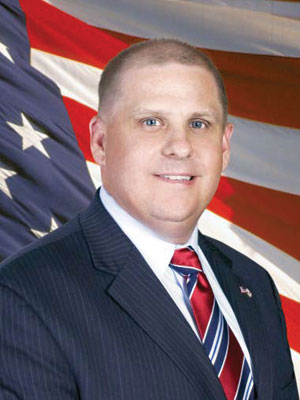
Note - Workman is a frequent speaker at Florida Tea Party rallies (video). He is also a US Army combat Veteran.

Editor's comment - Note the blatant editorializing by NBC-Miami, calling the activity "cringe inducing." For liberals perhaps, and other PC weenies? Ooh-rah! Ritch, Ooh-rah!! Photo credit - Inquistr.com

No Surprise: Unemployment stays at 9.1 percent

by Clifford F. Thies

In Germany, the unemployment rate is 6.1 percent and trending down. In the United States, the number released today is 9.1, and the number has been fluctuating in the low 9's for some time. There is a growing sense among my fellow economists that contributing to this difference is the solid financial shape of Germany, which has been running a deficit in the 2 to 3 percent range, relative to the U.S., which has been running a deficit of about 11 percent. In Germany, consumers, workers, employers and investors have more confidence in the future, while in the U.S. there is real concern. This, of course, has been my view for several years now.

Job growth in the U.S. remains enemic; overall, the demand for labor is down; and, there is a growing mis-match between the skills required for the jobs that are available and the skills among job applicants.

In the monthly estblishment survey of the Bureau of Labor Statistics, only 100,000 net new jobs were created during the past month, hardly enough to keep the unemployment rate from rising and not enough to cause the unemployment rate to fall. Looking at the monthly household survey of the BLS, the unemployment rate remained steady in spite of disappointing job creation because of continued weakness in labor force attachment. In addition, there were more people working part-time but wanting full-time work, which makes the stated unemployment rate less indicative of the actual difficulties faced by those seeking work.

According to the monthly survey of the Conference Board, the number of job openings listed on-line has fallen by about 500,000 over the past six months, so that today there are about 10 million more job seekers than jobs available .From 2005 to 2008, there was a rough eqyality in these figures. While overall job listings are down, job listings for healthcare professionals, especially nursing, are up; as is demand for technical workers. Demand for people in the construction area remains steady, but at a low level as compared to several years ago.

The disparity in the skills of job seekers with the skills required by job openings is indicated in the monthly survey of the National Federation of Independent Business. This year, the number of small businesses reporting unfilled job openings is about 50 percent higher than it was the prior two years.

Such mis-matching in the labor market is not unusal in recoveries nowadays. With the pace of change we now have, the economy that recovers from a recession is not the economy that fell into it. We saw this in the recoveries from the 1989 and 2001 recesssions. These were characterized as "jobless recoveries" as, for about two years after the start of the recovery, there was little net job creation. In this business cycle, we are now two and a half years from the end of the recession, with still no real indication of the start of a recovery.

CLIFFORD F. THIES is the Eldon R. Lindsey Chair of Free Enterprise Professor of Economics and Finance at Shenandoah Univ. in Virginia.Photo credit - WHIO radio

Democrat Anti-Nanny-State Hero? VA Senator fights District’s No Tolerance policy

Have expired tags in D.C. - Go straight to Jail

by Eric Dondero

We've had a lot of choice words (even vulgar at times) to say about Virginia Senator Jim Webb over the years. We were staunch supporters of his opponent George Allen 6 years ago. But we now must give credit where credit is due.

D.C. has recently been enforcing a code that calls for jailing of residents with expired registration tags. The code states that expired tags could result in up to a $1,000 fine, and up to 30 days in jail. The 30 days in jail part has never been enforced, until now. The administration of Mayor Vincent Gray is cracking down. Scores of mostly African-American drivers living in the District have already spent a night or two in the pokey.

From Fox News, "U.S. Senator to D.C. Mayor: 'No Justification' for Jailing Drivers With Expired Tags":

police arrested a mother on her way to pick up her child from school, with her younger child in the car.

Senator Webb - defacto Senator for the District - has written a strongly worded letter to Mayor Gray denouoncing the arrests stating in part:

"While drivers should be held accountable for such minor infractions, there is absolutely no justification for jailing citizens whose only offense is an expired tag,"

Senator Webb will not be seeking reelection in 2012.

What the future may hold for Sarah Palin – Draft Palin for VP Founder drops a few hints

Adam Brickley, The Daily Caller, "The Palin movement isn’t retreating, it’s reloading":

She has more than enough skill and support to engage in any number of ventures. We may well be referring to her as “Secretary Palin” in the near future — whether she’s tackling government’s biggest bureaucracy as President Cain’s Secretary of Health and Human Services, charging toward energy independence as President Romney’s energy secretary, or finally bringing some sense to environmental policy as President Perry’s EPA director.

Editor's note - Adam is a longtime friend and former contributing editor to LR. In early 2007, PA GOP activist and libertarian Republican Stephen Maloney and I assisted Adam in promoting Draft Palin for VP.

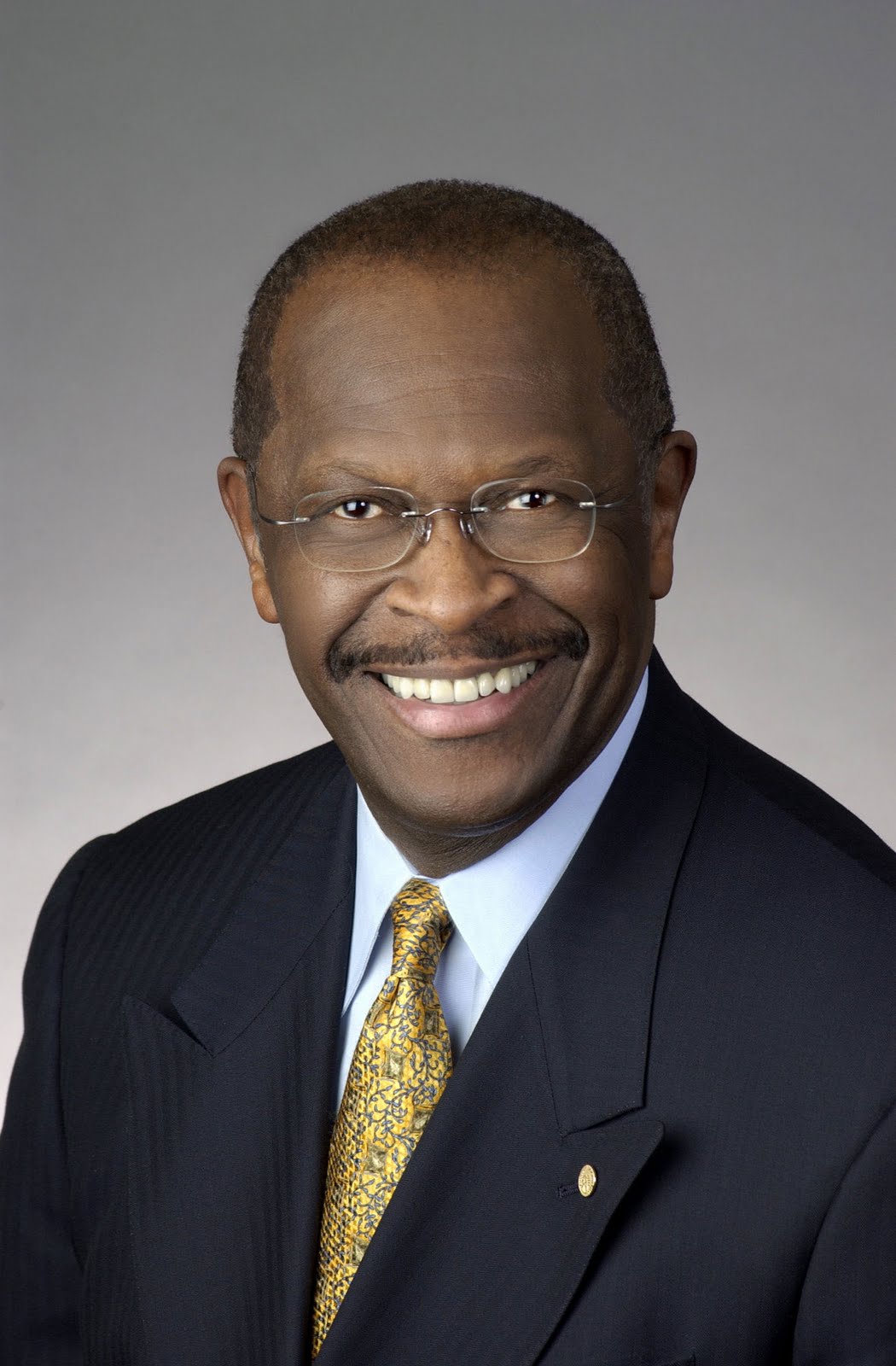
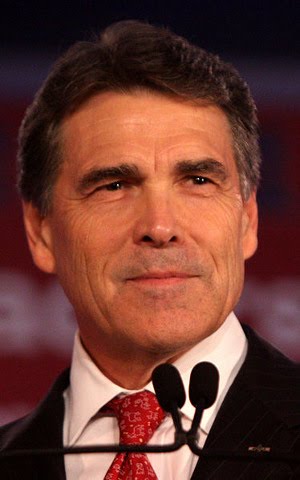
Cain reverses course: Now says he could support Rick Perry

From Eric Dondero:

Last week, Tea Party favorite Herman Cain seemingly suggested that he couldn't support Rick Perry if he were to win the nomination. He was quoted on CNN: "Today, I could not support Rick Perry as the nominee for a host of reasons."

Now, he's backing off, though still with reservations. From The Hill "Cain would support Perry as GOP nominee, 'but it won't be 100 percent'":

"Now if [the nominee is] one of those other candidates up there, I am going to support them 100 percent. If Governor Perry gets the nomination, I will still support him, but it won’t be 100 percent," Cain said on Hewitt's show.

Cain added that he is more convinced than ever that he will win the nomination, and eventually the White House, so he doesn't expect Perry will get the nomination.

Ed. comment - And as a possible VP selectee?

Newest rant by Wall Street Protesters: Blame it on the Jews!

"Fuckin' Jews... Wall Street Jews!"

From Eric Dondero:

Jewish passer-by confronts man holding Wall Street Bankers = Hitler sign. Calls him an Anti-Semite. The protester responds using Anti-Jewish slogans ala Nazi street protests of Berlin, Germany 1938.

"The Jews control Wall Street. The Jews control Wall Street. Google it!"

Later on he shouts - "Fuckin' Jews... Fox News, Fox News..."

H/t Weasel Z...

French Muslim enclave erupts in Flames – Whites advised "to hide" from the terror

OVERNIGHT NEWS FROM OVERSEAS!!

Riots by mostly Muslims from North Africa in Département français de Mayotte (French adminsitrative jurisdiction of Mayotte)

From estrepublicain.fr, - Mayotte, where demonstrations against high prices have evolved in urban guerrilla warfare. The "mzougous" (white men) have to lie low - "WE ARE TRAPPED":

What had remained a peaceful movement has degenerated into urban guerrilla warfare. Today, the 101st French department has sunk into total chaos.

Food stores have been looted, cars burned, and gas stations threatened by torch attacks.

[A] climate of insecurity prevails... illegal immigrants who creep into houses to rob in the day, "Djombo" (machetes) in hand.

"Mzougous" [White native French] have been advised to hide. They have become the enemy.

The poorest Mayotte [residents] , are fed up with the exorbitant prices of premium consumer products... a litre of gas at 30 euros... unaffordable rents...

Editor's note - Translation from French mine. H/t ImazPress, & Islam vs. Europe blog.

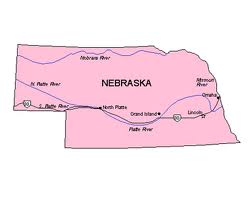
Shock Poll!! Republican pulls ahead for NE Senate

From Eric Dondero:

This is from Public Policy Polling a Democrat-leaning firm.

Via Hedgehog:

US SENATE – NEBRASKA (PPP)
Jon Bruning (R) 46%
Ben Nelson (D-inc) 42%

Don Stenberg (R) 41%
Ben Nelson (D-inc) 39%

Note - With George Allen comfortably ahead for the Virginia Senate, this leaves the GOP only one win shy of taking control. (Assuming Scott Brown can hold on in Mass.) Dem-held seats in Missouri and Montana are already tilting GOP. Current toss-ups held by Democrats - Wisconsin, New Mexico, North Dakota and Florida. Plus, outside shot for GOP win in Connecticut.(Source: Cook Report)

Feds out to destroy California Cannibas Clubs using the oldest trick in the book

IRS levies $2.3 million in back taxes, interest and penalties on SF marijuana dispensary

by Clifford F. Thies

Chief Justice Marshall put it succinctly. The power to tax is the power to destroy. The feds have found yet a new way to enforce the marijuana prohibition: through the tax code. A San Francisco medical marijuana dispensary has been found to be liable for millions of dollars of back taxes, interest and penalties, because it deducted the cost of the product it sells to its customers. This product is illegal under federal law, no matter that it is grown in California, bought and sold within California, and used in California, all in accordance with California law.

How is it that a completely intrastate product is subject to Congressional regulation?. Because if you grow and smoke your own marijuana, if means you won't go blind from glaucoma and thereby need federal government-regulated, interstate products that treat your blindness. Well, that's the theory of the U.S. Supreme Court. Now the Obama administration wants to take this theory of interstate commerce one step further. The Obama administration wants to require people to buy federal government-regulated health insurance on the basis that you might one avail yourself of health services which, of course either is either directly interstate commerce or is connected to something that is connected to something that is interstate commerce. This is called the "six degrees of separation" theory of interstate commerce. Anything or nothing at all is connected to interstate commerce by no more than six connections.

With regard to marijuana, back in the days of the adoption of the very Constitution today's justices are supposedly interpreting, marijuana, then usually referred to as hemp, was routinely grown for the purposes such as manufacturing rope for sailing ships. George Washington himself grew the stuff. It was perfectly our right as Englishmen to grow marijuana. Part of our liberty that we brought with us into the Union. And, there was no law on the federal books on marijuana until 1937 because prior to the FDR Administration, there couldn't have been. Nobody would have even thought the federal government had the power to regulate marijuana. But, starting with FDR, there was an accelerated discovery of all kinds of new powers for the federal government. Every year, we discover new powers. Like the President can, without due process, order the death of anybody he determines is a terrorist. And, marijuana, why that's just another form of terrorism that the federal government will keep us safe from, no matter what the stupid people in the stupid states might decide.

But, instead of using predator drones to take out the marijuana dispensaries of San Francisco, they've decided to use an even more effective weapon: the federal income tax. After all, it's the way they got Al Capone.

Source: MyFoxNY.com Photo credit - The Fresh Scent

UPDATE!!

From the Editor: Andrew Breitbart's BigGovernment.com is headlining a similar story today, "Obama Admin Launches Medical Marijuana Crackdown" by Publius. A commenter at Breitbart - Morgue MD - wrote:

I bet the stoners will blame Republicans and continue to vote for Democrats instead of looking up the word "Libertarian", and joining the GOP.