
GeneTree.com Unveils New Family Consultation Service in Interpreting Genealogical DNA Data

SALT LAKE CITY--(BUSINESS WIRE)-- GeneTree.com today unveiled the Family Consultation Service, an in-depth examination of genealogical and DNA data that is designed to assist avid genealogists with established family groups and those trying to identify ancestors in specific family lines.

To accent the Family Consultation service, GeneTree.com is offering a new DNA test, known as Y-19. The Y-19 test provides testing of additional DNA markers beyond the 46 markers typically used for ancestral testing, and brings an added layer of knowledge in identifying whether distant ancestors were siblings, cousins or even second cousins.

“We call the Y-19 test ‘the differentiator,’” said Scott Woodward, president of GeneTree.com. “We often recommend the test after a Family Consultation because it can provide so much additional detail about the relationship between a person’s ancestors and help narrow down research to specific genealogical lines.”

The Family Consultation Service comes at a point as more people turn to DNA testing in establishing their family lines. Yet understanding DNA data and how it fits in family history research can present a challenge even to the most experienced genealogists.

“GeneTree’s Family Consultation Service combines genetic data and genealogy work and shows how the two come together,” Woodward said. “Genetics are a relatively new science that can be extremely useful to genealogists, yet so many people get DNA tests and don’t know how to apply it to their family history research. This Family Consultation Service helps remove much of that mystery.”

Angela Taylor, a Utah resident, recently used the Family Consultation Service in interpreting her genealogical DNA data.

“Before the consultation, my data was just a bunch of numbers,” Taylor said. “GeneTree was able to able to walk me through the information and give me understanding of things that I didn’t know. This has opened up an entirely new world.”

After the consultation, Taylor elected to have the Y-19 test identify specific relationships between three of her ancestors who, in the mid-1800s, together migrated from Ireland to America. Taylor already knew that one of the men was her great-great grandfather. With GeneTree.com’s Y-19 test, she learned that her great-great grandfather traveled to America with his brother and a cousin.

The Family Consultation Service will be showcased at this year’s RootsTech family history conference in Salt Lake City Feb. 2-4 at the Salt Palace Convention Center. At the conference, GeneTree.com will offer free 10-minute consultations.

“People put a lot of money into DNA testing and into genealogy, but they are not doing a good job of combining the two,” Woodward added. “Many genealogists don’t know how to get the most out of the interpretation. For instance, there is a lot you can learn by one single little mutation that two people share. There are a lot of people who need someone to look at their genealogical DNA data and tell them what it means. GeneTree.com can help people design the right DNA test, interpret the results and point you in the right directions.”

Pricing and Availability

The Family Consultation Service starts at $49.99 and the Y-19 test is available for $94.99. To order a test or consultation, contact 866-740-6362.

About GeneTree.com

GeneTree.com (www.genetree.com), a wholly owned subsidiary of the non-profit Sorenson Molecular Genealogy Foundation, is a leading provider of genetic and family history services that unlock peoples' ancestral legacy. Powered by the world's largest, most comprehensive repository of genetic and genealogical information, GeneTree.com's best-in-class genetic testing, genetic genealogy consulting and family history research enables individuals and extended families alike to dramatically extend their families.

Read the original post:
GeneTree.com Unveils New Family Consultation Service in Interpreting Genealogical DNA Data

Posted in DNA

SLC police seek DNA match in 1995 cold case death

SALT LAKE CITY—Salt Lake City homicide detectives are seeking a DNA sample from a Colorado man in hopes they can thaw out the 17-year-old cold case of a man shot dead at a party.

A warrant seeks DNA from a Fort Collins man who had been interviewed in the months after John Wollshleger, 30, of Sandy was found shot in the head and lying in the bed of a pickup truck in July 1995.

In an interview in Wyoming, the man told detectives Wollshleger was shot at a party before another man dragged him by the feet and tossed him in a truck. Wollshleger was later found by two ambulance workers.

Detectives followed up in March with the man, who had moved to Colorado. He initially said he didn't remember the event, but later said he knew some details. After the interview, he refused to give a DNA sample.

Police interviewed another witness in April who said she believed Wollshleger had come to the party to buy cocaine. She said her boyfriend and another man dragged the body to a truck, and her boyfriend drove off to discard it.

Police collected a DNA sample from the woman's boyfriend, but it didn't match the DNA they'd found on Wollshleger's socks and shoes.

A warrant filed in December in Salt Lake City's 3rd District Court seeks samples from three men thought to be at the party.

Read this article:
SLC police seek DNA match in 1995 cold case death

Posted in DNA

Sharon Phillips named Oklahoma Outstanding Biology Teacher 2011

February 2, 2012 Sharon Phillips named Oklahoma Outstanding Biology Teacher 2011

Vanoss —  

Sharon Phillips, Vanoss High School biology teacher and science supervisor, is the recipient of the 2011 Outstanding Biology Teacher for Oklahoma.

The OBTA is given each year by the National Association of Biology Teachers (NABT) to a life science teacher in each state who demonstrates exemplary practice in the teaching of life science.  Phillips has been a science teacher and coach at Vanoss since 2002 and presently teaches anatomy, zoology, and Biology II.  She began her teaching career at Cashion Public Schools in 1984 and has taught at Kellyville and Lexington Public Schools and loves science education.  Her job, she says is to create the interest that will help students learn to think critically and biological science holds the key. Whether in the lab discussing what error was made during an experiment, or discussing the hottest topic in the world, problem solving is critical.

Phillips' enthusiasm and dedication to teaching biology is demonstrated in her following quote: “I believe biological science education is of the greatest importance. Teaching students to connect concepts, compare and contrast areas, and infer on subjects discussed is critical in the life science world.”

“Discussing subjects that arise in our rural community, state or national level, or at home on the personal level can bring out the best conversations and thinking skills in my classes.”  Her essay’s concluding paragraph sums up Sharon’s upbeat teaching philosophy and work ethic, “I love teaching, and I love the life sciences.  The influence I have on my students will affect the outcome of their lives.  Whether I make a difference in one student or a hundred students, it is worth every effort I put forth in the teaching profession,  With all the negativity surrounding the teaching field, each teacher must make a conscience choice to be positive.  I believe in my profession, I believe in my students, and I believe that a positive influence can make a difference.”

While she was Vanoss Teacher of the year for 2008-2009,  Phillips does not actively seek recognition for her enthusiasm and dedication to science education.  She simply believes her role is to bring the best she can to her classroom and be there for her students.   

Phillips credits her success to the support of her colleagues and friends. “Susie Stevens Edens has been a tremendous mentor and go-to person. She has been very supportive and helpful during times I have struggled learning new concepts” said phillips.

“Much of the credit needs to be given to my former superintendent Cheryl Melton, she encouraged me to start a program in the biotechnology field and we haven’t slowed down."

See the article here:
Sharon Phillips named Oklahoma Outstanding Biology Teacher 2011

'Grey's Anatomy' Preview: Who's Doing What in the Alternate Universe?

ABC/VIVIAN ZINK

"Grey's Anatomy's" Kate Walsh and Patrick Dempsey

"It's a great fantasy and device for the writers to turn characters on their head and for fans to be amused," guest star Kate Walsh says of Thursday's big "alternate universe" episode of Grey's Anatomy. In the hour, Meredith ponders what life could have been like had she grown up with a normal mother and made a series of different choices.

"As things start to unfold, we in the writers' room kept coming up with more and more things if Meredith had been a shiny, happy person," Grey's creator Shonda Rhimes tells The Hollywood Reporter, noting that Derek would have remained unhappily married to Addison (Kate Walsh).

Here's a character-by-character breakdown of who's up to what in the bizarro world.

Ellis (Kate Burton): She's happy, Alzheimer's free and chief at Seattle Grace and married -- to Richard! -- and runs a very tight ship while still being in control of Meredith, who still lives at home. "She's pushing her daughter to be better, to be more," Sara Ramirez tells THR. Talk about too much family time.

Richard (James Pickens Jr.): He's the nice guy to Ellis' fierce hand at the helm of the hospital, often the quiet confidant to others at the hospital, including Bailey. He also seems quiet content to be the family man and let Ellis take center stage at the hospital, despite not always agreeing with her choices.

STORY: 'Grey's Anatomy': Watch the First 10 Minutes of the Alt Universe Episode, 'If/Then' (Video)

Meredith (Ellen Pompeo): She's happy, peppy, perky and clad in pink. Plus engaged to Alex, who after some initial grousing has Ellis' blessing. Oh, and she's no longer Dr. Grey, instead going by Dr. Webber. "To me a happy Meredith, a chirpy girl who wears pink is a horror story to me. That girl is sort of horrifying," Rhimes says.

Derek (Patrick Dempsey): Kate Walsh tells THR that Derek "isn't at his best" in this world and isn't the top doc at Seattle Grace, with Ellis often picking on him. "I call him McDreary but he's not the happiest on the planet," the Private Practice star says with a laugh. And there's clearly no Mer-Der. Says Rhimes: "[In this world, Meredith] never would have been a girl in a bar, meeting a boy in a bar and that never would have happened. So if she'd never been in the bar, she never would have ended up with him. Which means when Addison showed up to get her husband back, she would have just gotten him back."

Addison (Kate Walsh): Walsh says Addison is pregnant with her and husband Derek's first child and that on the surface they seem to be the hospital's power couple. "Addison is pretty established in her career at this point and she's seven months pregnant and probably thinking more about family and her personal life more at this point," she says. In addition, she's very tight with Ellis and is sort of like a "class pet" for her. "It's great thing for fans who have fantasized about Addison and Derek staying together and what would have happened. It's a great fantasy and device for the writers to turn characters on their head and for fans to be amused."

STORY: 'Grey's Anatomy's' Shonda Rhimes and Sara Ramirez Ponder Destiny in 'If/Then'

Alex (Justin Chambers): Rhimes says Alex is "both horrifying and hilarious" in the alternate universe -- have you seen those glasses and that happy-go-lucky attitude? Understatement! Despite slipping a ring on Meredith's finger, the couple keeps their relationship private at the hospital even though Ellis has signed off on the union.

Callie (Sara Ramirez): Married. Three kids. Owen. And have you seen her kiss him? Ramirez says there are no matter what page you turn to, "at some point in your life, your destiny catches up with you and finds you no matter what." Without having ever met Erica Hahn, Rhimes says Callie never discovered she might have feelings for a woman. "She's pining for a woman and doesn't know why and she's sort of wistful but she's trapped," the showrunner says. "It's this really lovely moment. The part of the episode that I think is really magical is, can they all find their way back to who they should really be. That's sort of what you're watching. I think it's really delightful." Beyond her marriage and motherhood, Ramirez says Ellis has taken a particular interest the cardio surgeon and serves as a mentor to her.

Arizona (Jessica Capshaw): Capshaw tells THR that Arizona's sexuality "is not discussed" in the hour and that her relationship with Callie starts off on the wrong foot and progresses from there. "There is a growth -- there's the beginning where they lock heads over a medical situation and then there's the growth to an understanding and an affinity," she says. "But I don't think it's clear that there's something between them that's outside of that." Beyond Callie, Capshaw says viewers will see a different, "sexier, more sophisticated" Arizona in this world, who doesn't have a partner and is really just on her own.

STORY: 'Grey's Anatomy': Who's Kissing Whom in the Alt Universe? (Exclusive Video)

Owen (Kevin McKidd): He finally has the family that he's always wanted -- Ramirez says Owen is a "great dad" -- but he's still not happy. "[Callie and Owen] have no business being together: he's pining for somebody else, she's having all these unexplained feelings for Arizona," Rhimes says.

Teddy (Kim Raver): With Owen still suffering from PTSD, still Skypes with his "buddies" in Iraq -- including, as Callie believes, a guy named Teddy.

Bailey (Chandra Wilson): "Without Richard to spend the time mentoring her, Mandy Bailey might have stayed Mandy Bailey and never gotten to be the Nazi," Rhimes says. Indeed: She's incredibly timid and allows Ellis to snake a high-profile surgery right out from under her.

Cristina (Sandra Oh): In this world, Cristina is completely ostracized, with Callie never really getting her. "You're going to see Cristina struggle with a few things," Ramirez warns. "She's smart through and through but maybe her personality has been a little bit affected by making different choices."

April (Sarah Drew): Still single and, apparently accepting that her "person" -- Meredith -- is now engaged to her former crush, Alex, April now carries a torch for Charles (Robert Baker) who is still alive since the hospital shooting that claimed his life in the typical Grey's world never happened.

Jackson (Jesse Williams): So far, little has been revealed about Jackson's alternate universe persona, other than that he winds up treating a very different Lexie.

Lexie (Chyler Leigh): Little Grey, it turns out, appears to be the dark and twisty one, having come into Seattle Grace covered in tattoos and piercings as a patient suffering from an overdose of cocaine.            

Mark (Eric Dane): Mark never winds up coming to Seattle Grace, Rhimes says.

Izzie (Katherine Heigl) and George (T.R. Knight): Ramirez says the duo are mentioned briefly, while Rhimes teases that viewers will "understand where they went in this new world." Don't bet on seeing either.

Hit the comments wi
th whose story line are you most excited to see in the alternate universe. Grey's Anatomy airs Thursdays at 9 p.m. on ABC.

Email: Lesley.Goldberg@thr.com; Twitter: @Snoodit

More here:
'Grey's Anatomy' Preview: Who's Doing What in the Alternate Universe?

TWU’s Nutrition and Personal Health Coaching Certification Program Begins Today

COPPELL, Texas--(BUSINESS WIRE)-- It’s official. Mannatech, Incorporated (NASDAQ: MTEX), the provider of nutritional supplements and skin care products based on Real Food Technology® solutions, and the Texas Woman’s University (TWU) announced that the very first online classes for “Nutrition and Personal Health Coaching” will start today.

Taught by highly qualified TWU faculty, including Dr. Chandan Prasad, Professor and Chairman of the Department of Nutrition and Food Sciences at TWU, this 45-hour self-paced course will be available to both health professionals and members of the general public who want to know more about health and nutrition. There are three classes beginning today—made up of 77 students, representing eight different countries that include USA, Canada, Australia, Mexico, South Africa, Japan, Singapore and the Netherlands.

As part of TWU’s curriculum, Dr. Rob Sinnott, CEO and Chief Science Officer at Mannatech, will be guest lecturing on the Dietary Supplement Health and Education Act (DSHEA) of 1994. Check out the TWU video on Mannatech’s YouTube page to hear a little bit about the course directly from Dr. Prasad and Dr. Sinnott.

Dr. Rolando L. Maddela, Mannatech Manager of Clinical Research Administration, who has been working with Dr. Prasad on the startup of the program says, “As a consequence of acquiring more knowledge on nutrition and wellness and a training certificate, especially one provided by an established institution of learning, you’ll gain credibility and perhaps a stronger sense of professionalism. You will also likely gain confidence as you discover what it takes to stay compliant within the specific regulatory environment for supplements.”

Upon successful completion of this 45-hour, university-level program, participants will not only gain confidence and credibility, but they will earn a Certificate of Completion of Training as well as continuing education credit hours. Plus, they can feel good about making a difference in the lives of other students, as, in the spirit of social entrepreneurism, Dr. Prasad has stated that 80% of the proceeds from this class will be used to fund scholarships for the needy and deserving students in the Department of Nutrition and Food Sciences. The rest will support special classes, seminars and material development. It’s a real win for all involved.

For more details on this course and to sign up for future “Nutrition and Personal Health Coaching” classes, go to TWU.edu. The next official enrollment will begin February 10; new classes will be created as enrolled students reach 25 members.

About Mannatech

Mannatech, Incorporated, develops high-quality health, weight and fitness, and skin care products that are based on the solid foundation of nutritional science and development standards. Mannatech is dedicated to its platform of Social Entrepreneurship based on the foundation of promoting, aiding and optimizing nutrition where it is needed most around the world. Mannatech’s proprietary products are available through independent sales Associates around the globe including the United States, the United Kingdom, Canada, South Africa, Australia, New Zealand, Austria, Denmark, Germany, Norway, Sweden, the Netherlands, Japan, Taiwan, Singapore, Estonia, Finland, the Republic of Ireland, Czech Republic, the Republic of Korea and Mexico. Individuals interested in Mannatech’s products or exploring its business opportunity are encouraged to learn more at Mannatech.com.

Please note: This release contains “forward-looking statements” within the meaning of Section 27A of the Securities Act of 1933, as amended, Section 21E of the Securities Exchange Act of 1934, as amended, and the Private Securities Litigation Reform Act of 1995. These forward-looking statements generally can be identified by use of phrases or terminology such as “believe,” “intend” or other similar words or the negative of such terminology. Similarly, descriptions of Mannatech’s objectives, strategies, plans, goals or targets contained herein are also considered forward-looking statements. Mannatech believes this release should be read in conjunction with all of its filings with the United States Securities and Exchange Commission and cautions its readers that these forward-looking statements are subject to certain events, risks, uncertainties and other factors. Some of these factors include, among others, Mannatech’s inability to attract and retain Associates and Members, increases in competition, litigation, regulatory changes and its planned growth into new international markets. Although Mannatech believes that the expectations, statements and assumptions reflected in these forward-looking statements are reasonable, it cautions readers to always consider all of the risk factors and any other cautionary statements carefully in evaluating each forward-looking statement in this release, as well as those set forth in its latest Annual Report on Form 10-K and Quarterly Report on Form 10-Q, and other filings filed with the United States Securities and Exchange Commission, including its current reports on Form 8-K. All of the forward-looking statements contained herein speak only as of the date of this release.

Original post:
TWU’s Nutrition and Personal Health Coaching Certification Program Begins Today

Study of Alzheimer's-related protein in healthy adults may shed light on earliest signs of disease

The findings, published in the February 1, 2012 online issue of Neurology, the medical journal of the American Academy of Neurology, mark a crucial step toward being able to predict who may be at risk for developing Alzheimer's disease long before symptoms appear.

Relatively few studies have looked at levels of beta-amyloid in healthy living adults, as until recently, beta-amyloid levels could only be measured at autopsy. Few, if any, studies have looked at beta-amyloid levels in middle-aged and younger adults. Many investigators now believe that the beginning stages of Alzheimer's disease can precede symptoms of dementia by a decade or more, so data on middle-aged adults is critically important to understanding the transition from a healthy brain to a diseased brain.

In the new study, researchers measured levels of beta-amyloid protein in the brains of 137 cognitively healthy adults between the ages of 30 and 89 using an amyloid imaging agent. The researchers found that beta-amyloid levels increased with age across the entire age span and that about 20% of adults aged 60 and older had particularly high levels of beta-amyloid.

"We found that this high-amyloid group showed deficits in cognitive performance even though the individuals were well educated and scored normally on our standard tests of cognition," said Dr. Karen Rodrigue, a postdoctoral fellow at the Center for Vital Longevity and lead author of the study. On tests of processing speed, working memory, and reasoning ability—three major aspects of cognition—higher levels of beta-amyloid correlated with lower test scores.

That beta-amyloid burden has detectable effects on cognitive function even in adults with apparently good cognitive health underscores the need to better understand the recently proposed preclinical phase of Alzheimer's disease, which suggests that beta-amyloid deposits in healthy adults do not exert a strong effect on cognition for some time.

"Our findings suggest that subtle effects on cognition occur early," said principal investigator Dr. Denise Park, co-director of the Center for Vital Longevity and Distinguished University Chair in the School of Behavioral and Brain Sciences at UT Dallas. "These are important findings because imaging patients when they first show signs of very mild cognitive impairment could be essential to determining their risk of future disease."

Long-term follow-up studies led by Dr. Park as part of the Dallas Lifespan Brain Study, one of the nation's largest projects examining neural and cognitive aging across the entire adult lifespan, are already underway to help researchers determine whether high beta-amyloid burden in healthy people necessarily predetermines occurrence of Alzheimer's disease later in life.

"Knowing this information will help us determine at what stage potential interventions, once available, may be most critical and most effective," said Park. Many researchers believe that interventions to slow or halt the progression of Alzheimer's will be most effective during middle age, before irreparable damage to the brain is done. "Just as many adults take aspirin to lower their risk of heart disease or stroke, one day we may be able to help protect our brains and cognitive health by starting a treatment in our 40s or 50s," Park said.

Another of the study's interesting findings was that some people well into their 60s, 70s, and even 80s, had beta-amyloid levels as low or lower than people at middle age or younger.

"Another avenue of our future work will be to investigate what factors enable these individuals to maintain cognitive health well into old age, whether they be genetic factors, lifestyle factors, or environmental issues," said Park.

"Understanding how the brain and mind stay healthy and vital over the long term will help guide our efforts to delay or even prevent the devastation caused by diseases like Alzheimer's."

Provided by University of Texas at Dallas (news : web)

Read the original:
Study of Alzheimer's-related protein in healthy adults may shed light on earliest signs of disease

Longevity is one of the keys to 'NCIS' success

Richard Foreman

Gibbs (Mark Harmon) finds himself talking to his late friend Mike Franks (Muse Watson) on Tuesday's "NCIS," the series' 200th episode.

PASADENA, Calif. -- CBS's "NCIS" remains the No. 1 scripted drama this season and next week it hits the 200-episode mark, quite an achievement for a series that didn't become an indisputable hit until about five years into its current nine-season run.

Generally, TV shows are either successful out of the gate or grow into hits over the course of a season or two. Five years to become a hit? That's not the norm.

At a CBS press conference last month, "NCIS" star Mark Harmon attributed the show's ratings improvement so late in life to multiple factors.

'NCIS'

When: 8 p.m. Tuesday, CBS.

"From the very beginning, we were a show that wasn't good enough to get all that noticed and wasn't bad enough to get canceled," he said. "And we had a lot of time just to get to know each other and just to do this show and just to work on the foundation of what this show started as. And we've had changes along the way that have, in my opinion, greatly influenced us."

He points to the additions of cast members Sean Murray (in season one), Carnegie Mellon University alum Cote de Pablo (in season three) and Rocky Carroll (in season six) as significant in the life of the show and audience appreciation of it.

Actress Pauley Perrette said another factor in the show's longevity is the cast's attitude toward "NCIS."

"Part of what keeps it so alive and so fresh all the time is that we all love our show. That's such a big deal," she said. "When I tell [fans] we're having so much fun, they're, like, 'No. Everyone can tell.' That's huge because just bringing a sense of not only gratefulness, but joy to your workplace every single day [is important and] it's not just us; it's also our crew. We have the best crew on the planet who have been together so long. Everybody is excited when we come back from hiatus. We're excited when we start our first day of the season. It's like the first day of school. We're excited to see new scripts. And part of that is not only do we love each other, but we're all huge fans of our own show."

CBS Entertainment president Nina Tassler credits the show's success to the "NCIS" writers.

"We've added new cast members over the years, and that brings a tremendous amount of vitality," she said. "The writing staff is constantly challenging themselves, challenging the cast. They have really achieved a great balance in tone, style. So having a show that is mature and continues to build audience, even in its later years, I think it's a testament again to the writing of the show. They give the fans what they want."

The series' 200th episode (8 p.m. Tuesday, KDKA-TV) also will seek to treat longtime fans with past guest stars returning as Gibbs (Mr. Harmon) sees his life flash before his eyes when a gunman shows up at a diner while Gibbs has his morning coffee.

"There's a certain element to the season that's been about decisions that our characters have faced and decisions moving forward and decisions looking back," said "NCIS" executive producer Gary Glasberg. "As far back as last summer, I sort of had a sense of what I wanted the episode to be. And it starts with a pivotal moment for Gibbs that he faces. ... It literally looks back at key moments throughout nine years of 'NCIS' where decisions have had to be made and, had people gone one direction instead of another, how the world would have ended up. And it brings back familiar faces, old faces, faces fans don't think that they'd see again."

After the press conference, Mr. Glasberg, who wrote Tuesday's episode, said Lauren Holly, who played NCIS director Jenny Shepard for several years, won't be back. But he wouldn't answer a direct question about the possible return of actress Sasha Alexander, whose Caitlin Todd was gunned down at the end of the show's second season. (IMDB.com suggests she provides her voice, but she's not listed in credits CBS provides for the episode.)

"There are surprises to be had," he said. "There are all kinds of tricks up our sleeve for this episode."

A version of this story first appeared in Tuned In Journal blog at post-gazette.com/tv. TV writer Rob Owen: rowen@post-gazette.com or 412-263-2582. Follow RobOwenTV on Twitter or Facebook.

First published on February 2, 2012 at 12:00 am

Link:
Longevity is one of the keys to 'NCIS' success

DNA rules out Cotswolds 'big cat'

1 February 2012 Last updated at 20:07 ET

Scientists have failed to find any evidence that "big cats" killed two roe deer found dead in Gloucestershire.

The National Trust commissioned DNA tests after finding one deer on its land at Woodchester Park, in Stroud, and one a few miles away last month.

Warwick University experts said they had only found DNA relating to foxes and deer on the bodies of the animals.

Forty-five samples were tested for the saliva of any dog or cat-related species.

The National Trust had initially said the carcasses, which were found within a week of each other, had been eaten in a way "thought to be highly indicative of big cat activity".

'Local curiosity'

Tests found fox DNA on both carcasses.

David Armstrong, head ranger for the National Trust in Gloucestershire, said: "The story of the investigation of the dead deer has really sparked local curiosity with a lot of people coming out to Woodchester Park to explore.

"People love a mystery like this and although we haven't found a wild cat, many of our visitors clearly believe there might be something interesting living quietly hidden in Woodchester."

Rick Minter, a big cat researcher in Gloucestershire, said he still believed something could be out there, despite what the tests had revealed.

However, he said the latest research had been a "valuable input to this exercise".

He added: "The strong media interest suggests an appetite to look into this subject further, and recent community surveys in Gloucestershire have indicated a strong desire for big cat evidence to be researched carefully."

Read the rest here:
DNA rules out Cotswolds 'big cat'

Posted in DNA

DNA-collection bill addresses civil-liberties concerns

It took Richard Nixon to go to China, Bill Clinton to reform welfare and state Rep. Jeannie Darneille to push House Bill 2588.

That legislation, which passed out of the Public Safety & Emergency Preparedness Committee Tuesday, would require DNA samples to be collected from everyone booked for major felonies and two gross misdemeanors (stalking and violating a protection order).

Currently in this state, DNA samples are only taken upon conviction of major crimes. But in about half the other states, DNA is taken when a suspect is booked and then is entered into state and federal databases to see if it gets any matching “hits.” That system has led to solving numerous cold cases and even clearing the names of people wrongly convicted of crimes.

Darneille, a Tacoma Democrat and card-carrying member of the ACLU, has long been a champion of the underdog. She worked for years to make it easier for ex-cons to get back their voting rights, and she’s quick to challenge any proposed legislation that she thinks might have racist undertones or raise privacy concerns.

Back when she was chair of the House General Government Appropriations Committee, she shot down a previous version of the DNA sample bill she is now prime-sponsoring. After attending a seminar on the topic and doing more research, she says she had an “epiphany.” Now she understands how important taking DNA samples upon booking could be in solving cold cases, preventing new crimes, cutting law enforcement and judicial system costs, and eliminating innocent people from suspicion and even incarceration.

But what about privacy concerns? Because Washington’s constitution has been interpreted to offer greater privacy protection than the U.S. Constitution’s Fourth Amendment, Darneille says HB 2588 does something most other states don’t: It stipulates that the collected DNA can only be entered into state and federal databases after judicial review. At arraignment, a judge determines if there is probable cause for charging the suspect. If that happens, the DNA sample can be processed.

Suspects who are found not guilty or whose charges are reduced to a misdemeanor can ask that their DNA sample be destroyed and expunged from the DNA identification system.

The added cost of swabbing suspects’ cheeks for DNA and processing samples would be paid for by diverting 50 cents out of the $10 from every traffic ticket that goes to the Auto Theft Prevention Authority Account. That account is administered by the Washington Association of Sheriffs and Police Chiefs, which supports HB 2588.

This legislation would be an important tool for law enforcement, helping ensure that those who have committed crimes will answer for them and those who have been wrongly accused will be exonerated. It deserves passage this session.

Original post:
DNA-collection bill addresses civil-liberties concerns

Posted in DNA

Bogus biology teacher faked qualifications and worked as chief examiner for an A-Level board

By Emma Reynolds

Last updated at 10:11 AM on 2nd February 2012

A bogus biology teacher forged her qualifications to work as a chief examiner for an A-level exam board.

Julia Rawlinson, 44, duped her bosses by using a computer to forge a degree, doctorate and teaching certificates.

She then got a job at examination board Edexcel - marking thousands of A-level papers for students across Britain - before becoming a teacher at Westlands School in Torquay, Devon.

Cheating her way in: Julia Rawlinson duped education sector bosses but was caught after she started working at Westlands School in Torquay, pictured

She is now facing jail after pleading guilty to two counts of fraud by false representation and three forgery charges.

Rawlinson, from Brixham, Devon, admitted the charges relating to her work at the school, from February to September last year, at Torbay Magistrates' Court.

She told Westlands School she had a masters degree and doctorate in science psychology.


Prosecutor Alison Jordan said: 'On October 5, Westlands School contacted police to say one of their teachers, Julia Rawlinson, had provided false degrees in order to obtain a teaching position.

'The school contacted the university and was told those bore no resemblance to their certificates and were poor forgeries.'

Police arrested her and found the forged degrees at her home - a biochemistry degree from the University of Witwatersrand in South Africa, a fake doctorate from Glasgow Caledonian University and a fake teacher certificate from the General Teaching Council for England.

Giving out grades: Unqualified Ms Rawlinson marked thousands of A-Level papers for students across Britain when she worked for exam board Edexcel

She admitted to forging them using graphics from the Internet and said she had never completed a degree.

Her defence lawyer Jolyon Tuck said she had mental health issues but she has been sent to the Crown Court in Exeter later this month.

A spokesman for Edexcel said Ms Rawlinson had started work for them in 2007.

'We are appalled,' he said. 'She would have marked exam papers. She may have marked one or a small number or a larger number, we don’t know.

'She was getting away with it for a while.'

Westlands School headteacher Dr Colin Kirkman said: 'Julia was chief examiner for A level biology with the Edexcel exam board.

We are appalled. She would have marked exam papers. She may have marked one or a small number or a larger number, we don’t know. She was getting away with it for a while.
 

'The board offered us her help and support prior to the summer with A-level biology project work, which we accepted.

'We understand she also worked in at least two other schools in this area in this capacity.

'Julia was offered a temporary part-time contract to work at Westlands from September 1 teaching A-level science.

'The normal CRB checks were undertaken and references received prior to employment

'However we noticed that her exam certificates were photocopies. As a result, we immediately contacted the universities where she "gained" her qualifications to validate her certificates.

'We found they were forgeries and reported this to the police.

'Torbay children’s services commended us for the extensive checks that we made - the depth of the checks that exam boards and other organisations failed to make.'


More here:
Bogus biology teacher faked qualifications and worked as chief examiner for an A-Level board

Experimental Neurology Journal: BrainStorm’s NurOwn™ Stem Cell Technology Shows Promise for Treating Huntington’s …

NEW YORK & PETACH TIKVAH, Israel--(BUSINESS WIRE)-- BrainStorm Cell Therapeutics Inc. (OTCBB: BCLI.OB - News), a leading developer of adult stem cell technologies and therapeutics, announced today that the prestigious Experimental Neurology Journal, published an article indicating that preclinical studies using cells that underwent treatment with Brainstorm’s NurOwn™ technology show promise in an animal model of Huntington’s disease. The article was published by leading scientists including Professor Melamed and Professor Offen of the Tel Aviv University.

In these studies, bone marrow derived mesenchymal stem cells secreting neurotrophic factors (MSC-NTF), from patients with Huntington’s disease, were transplanted into the animal model of this disease and showed therapeutic improvement.

“The findings from this study demonstrate that stem cells derived from patients with a neurodegenerative disease, which are processed using BrainStorm’s NurOwn™ technology, may alleviate neurotoxic signs, in a similar way to cells derived from healthy donors. This is an important development for the company, as it confirms that autologous transplantation may be beneficial for such additional therapeutic indications,” said Dr. Adrian Harel, BrainStorm’s CEO.

"These findings provide support once again that BrainStorm’s MSC-NTF secreting cells have the potential to become a platform that in the future will provide treatment for various neuro-degenerative diseases," says Chaim Lebovits, President of BrainStorm. "This study follows previously published pre-clinical studies that demonstrated improvement in animal models of neurodegenerative diseases such as Parkinson’s, Multiple Sclerosis (MS) and neural damage such as optic nerve transection and sciatic nerve injury. Therefore, BrainStorm will consider focusing on a new indication in the near future, in addition to the ongoing Clinical Trials in ALS.”

BrainStrom is currently conducting a Phase I/II Human Clinical Trial for Amyotrophic Lateral Sclerosis (ALS) also known as Lou Gehrig’s disease at the Hadassah Medical center. Initial results from the clinical trial (which is designed mainly to test the safety of the treatment), that were announced last week, have shown that the Brainstorm’s NurOwn™ therapy is safe and does not show any significant treatment-related adverse events and have also shown certain signs of beneficial clinical effects.

To read the Article entitled ‘Mesenchymal stem cells induced to secrete neurotrophic factors attenuate quinolinic acid toxicity: A potential therapy for Huntington's disease’ by Sadan et al. please go to:

http://www.sciencedirect.com/science/article/pii/S0014488612000295

About BrainStorm Cell Therapeutics, Inc.

BrainStorm Cell Therapeutics Inc. is a biotech company developing adult stem cell therapeutic products, derived from autologous (self) bone marrow cells, for the treatment of neurodegenerative diseases. The company, through its wholly owned subsidiary Brainstorm Cell Therapeutics Ltd., holds rights to develop and commercialize the technology through an exclusive, worldwide licensing agreement with Ramot at Tel Aviv University Ltd., the technology transfer company of Tel-Aviv University. The technology is currently in a Phase I/II clinical trials for ALS in Israel.

Safe Harbor Statement

Statements in this announcement other than historical data and information constitute "forward-looking statements" and involve risks and uncertainties that could cause BrainStorm Cell Therapeutics Inc.'s actual results to differ materially from those stated or implied by such forward-looking statements, including, inter alia, regarding safety and efficacy in its human clinical trials and thereafter; the Company's ability to progress any product candidates in pre-clinical or clinical trials; the scope, rate and progress of its pre-clinical trials and other research and development activities; the scope, rate and progress of clinical trials we commence; clinical trial results; safety and efficacy of the product even if the data from pre-clinical or clinical trials is positive; uncertainties relating to clinical trials; risks relating to the commercialization, if any, of our proposed product candidates; dependence on the efforts of third parties; failure by us to secure and maintain relationships with collaborators; dependence on intellectual property; competition for clinical resources and patient enrollment from drug candidates in development by other companies with greater resources and visibility, and risks that we may lack the financial resources and access to capital to fund our operations. The potential risks and uncertainties include risks associated with BrainStorm's limited operating history, history of losses; minimal working capital, dependence on its license to Ramot's technology; ability to adequately protect its technology; dependence on key executives and on its scientific consultants; ability to obtain required regulatory approvals; and other factors detailed in BrainStorm's annual report on Form 10-K and quarterly reports on Form 10-Q available at http://www.sec.gov. The Company does not undertake any obligation to update forward-looking statements made by us.

Read more:
Experimental Neurology Journal: BrainStorm's NurOwn™ Stem Cell Technology Shows Promise for Treating Huntington's ...

Sanofi Canada focuses in on cancer research

Sanofi Canada President and CEO visits BC's Genetic Pathology Evaluation Centre 

Hugh O'Neill, Sanofi Canada's President and CEO (standing) and Dr. Torsten Nielsen, Co-Director of the Genetic …

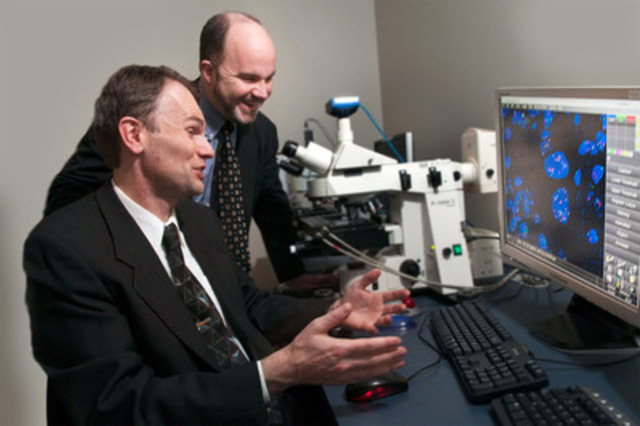
MONTREAL , Feb. 1, 2012 /CNW Telbec/ - Hugh O'Neill, Sanofi Canada's President and CEO (standing) and Dr. Torsten Nielsen ,Co-Director of the Genetic Pathology Evaluation Centre in Vancouver , BC, discuss the latest advances in microarray technology. Sanofi Canada has a ten-year research collaboration with the Centre, supporting their mission to improve cancer diagnosis, assessment and treatment.

Image with caption: "Hugh O'Neill, Sanofi Canada's President and CEO (standing) and Dr. Torsten Nielsen, Co-Director of the Genetic Pathology Evaluation Centre in Vancouver, BC, discuss the latest advances in microarray technology. Sanofi Canada has a ten-year research collaboration with the Centre, supporting their mission to improve cancer diagnosis, assessment and treatment. (CNW Group/Sanofi Canada)". Image available at: http://photos.newswire.ca/images/download/20120201_C8511_PHOTO_EN_9497.jpg

Read more here:
Sanofi Canada focuses in on cancer research

NinePoint Medical Announces Formation of Clinical and Technology Advisory Boards

CAMBRIDGE, Mass.--(BUSINESS WIRE)-- NinePoint Medical, Inc., an emerging leader in the development of medical devices for in vivo pathology, today announced the appointment of 11 leading experts to its newly formed clinical and technology advisory boards. These experts will support the continued growth of NinePoint Medical and will serve as strategic advisers to the company as it progresses a next-generation high-resolution optical imaging technology, the Nvision VLE Imaging System.

“We look forward to working closely with these distinguished experts as we continue to develop our groundbreaking technology, which we believe can dramatically improve patient care,” said Charles Carignan, M.D., president and chief executive officer of NinePoint Medical. “Their unique and diverse perspectives within the areas of endoscopy, pathology and imaging will be instrumental as we prepare to market the Nvision VLE Imaging System, which recently received 510(k) clearance from the FDA for use as an imaging tool in the evaluation of human tissue microstructure by providing two-dimensional, cross sectional, real-time depth visualization. These appointments will be invaluable as we focus our efforts on further developing the technology to improve the detection, diagnosis and treatment of mucosal and soft tissue diseases.”

The inaugural members of NinePoint Medical’s clinical and technology advisory boards include:

Clinical Advisory Board:

Blair A. Jobe, M.D., FACS, is the Sampson Family Endowed Professor of Surgery within the department of cardiothoracic surgery at the University of Pittsburgh School of Medicine. He currently serves as the director of esophageal research and director of esophageal diagnostics and therapeutic endoscopy within the division of thoracic and foregut surgery. Dr. Jobe’s areas of interest are in esophageal cancer, Barrett’s esophagus, esophageal preservation in the face of early malignancy, minimally invasive surgery, endoscopic therapy, esophageal motility disorders and complicated gastroesophageal reflux disease. Laurence Lovat, MBBS, Ph.D., is a consultant gastroenterologist at University College Hospital and reader in gastroenterology and laser medicine at University College London. Dr. Lovat’s research focuses on optical techniques for diagnosing and treating pre-malignant lesions arising within Barrett's esophagus. He developed photodynamic therapy for high-grade dysplasia in Barrett's and also worked on elastic scattering spectroscopy to detect dysplasia in patients undergoing endoscopic surveillance. He also serves as a specialist adviser to the UK Department of Health and NICE. Norman S. Nishioka, M.D., is a gastroenterologist at Massachusetts General Hospital and an associate professor of medicine at Harvard Medical School. Dr. Nishioka has special clinical interest in the diagnosis and treatment of gastroesophageal reflux disease (GERD), Barrett’s esophagus and early esophageal cancer. He has contributed to the clinical development of various optical imaging technologies including optical coherence tomography and optical frequency domain imaging in the gastrointestinal tract. Gary J. Tearney, M.D., Ph.D., is a co-inventor of NinePoint Medical’s optical imaging technology. As the associate director of the Wellman Center for Photomedicine at Massachusetts General Hospital and the optical diagnostics program leader at the Center for Integration of Medicine and Innovative Technology, Dr. Tearney’s research focuses on optical coherence tomography and other imaging modalities. He is also a professor of pathology at Harvard Medical School and an affiliated faculty member of the Harvard-MIT Division of Health Sciences and Technology. Michael Wallace, M.D., is a professor of medicine with the Mayo Clinic College of Medicine and is the director of research for the department of medicine and the division of gastroenterology and hepatology at the Mayo Clinic in Jacksonville, Fla. Dr. Wallace's areas of interest are in endoscopic ultrasound (EUS), gastrointestinal oncology, clinical research, advanced endoscopic imaging technologies, endoscopic mucosal resection and intestinal stent placement. In collaboration with the Massachusetts Institute of Technology, Dr. Wallace pioneered the development of light scattering spectroscopy which has now been applied to the detection of early cancer in Barrett's esophagus, colon cancer and other non-GI cancers. Kenneth Wang, M.D., is director of the Advanced Endoscopy Group and Esophageal Neoplasia Clinic and a consultant in the division of gastroenterology and hepatology at the Mayo Clinic. Additionally, Dr. Wang is editor in chief of the journal Diseases of the Esophagus and associate editor of the journal Clinical Gastroenterology and Hepatology. His areas of interest include laser therapy, Barrett's esophagus, esophageal cancer, photodynamic therapy, endoscopic ultrasonography, gastrointestinal bleeding, optical biopsy, laser confocal microscopy, radiofrequency abalation and endoscopic mucosal resection/dissection. Herbert Wolfsen, M.D., is a professor of medicine at the Mayo Medical School and chief of gastrointestinal endoscopy at the Mayo Clinic in Jacksonville, Fla. Dr. Wolfsen’s areas of interest include advanced endoscopic imaging for detection of Barrett’s disease, dysplasia and esophageal cancer, and endoscopic therapy for Barrett's disease, including radiofrequency ablation, photodynamic therapy and cryotherapy.

Technology Advisory Board:

Michael Becich, M.D., Ph.D., is a professor and chairman of the department of biomedical informatics at the University of Pittsburgh School of Medicine. He is also associate director of the University of Pittsburgh Cancer Institute and co-director of the Clinical and Translational Science Institute at the University of Pittsburgh School of Medicine. Dr. Becich's research interests are focused on the interface between clinical informatics, imaging informatics and bioinformatics. He has been an innovator and entrepreneur in the area of whole slide imaging and digital pathology, and their use in improving patient care and safety. Brett E. Bouma, Ph.D., is a co-inventor of NinePoint Medical’s optical imaging technology. He is a professor of dermatology and health sciences and technology at Harvard Medical School and an associate physicist at the Wellman Center for Photomedicine at Massachusetts General Hospital. Dr. Bouma’s research on optical technology has contributed to the development of imaging modalities such as optical coherence tomography, spectrally encoded confocal microscopy and spectrally encoded endoscopy. Sanjiv Sam Gambhir, M.D., Ph.D., is the Virginia & D.K. Ludwig Professor of Cancer Research and the chair of radiology at Stanford University School of Medicine. He also heads up the Canary Center at Stanford for Cancer Early Detection. An internationally recognized researcher in molecular imaging with more than $75 million of NIH funding as the principal investigator, Dr. Gambhir’s lab has focused on interrogating fundamental molecular events in living subjects. He has developed and clinically translated several multimodality molecular imaging strategies, including imaging of gene and cell therapies. Jacques Van Dam, M.D., Ph.D., is a professor of medicine at the University of Southern California and director of clinical gastroenterology at the USC University Medical Center. Dr. Van Dam’s areas of expertise include pancreatic, esophageal, gastric and colorectal cancer. Dr. Van Dam’s clinical expertise is in diagnostic and therapeutic endoscopy, advanced interventional endoscopy, and advanced endoscopic imaging including microendoscopy and optical biopsy.

About NinePoint Medical, Inc.

NinePoint Medical, Inc. is a transformational medical device company developing innovative, real-time, in vivo pathology devices focused on dramatically improving patient care. Through its proprietary Nvision VLE Imaging System, NinePoint intends to bridge the gap between the diagnosis and treatment of disease. The Nvision VLE Imaging System will enable physicians and pathologists, for the first time, to view real-time, high-resolution, volumetric images of organs and tissues up to 3mm deep at less than 10 micron resolution. Initially, NinePoint is focusing on devices that enable real-time, endoscopic screening and surveillance of diseases of the mucosa of various tissues that are often precancerous. Eventually, the company intends to develop medical devices that provide physicians with immediately actionable information and that will allow them to diagnose and treat patients during the same procedure. This convergence of access, diagnosis and treatment during one procedure is expected to improve patient experiences and outcomes, improve the efficiency of care and provide important savings to the health care system. Headquartered in Cambridge, Mass., NinePoint is backed by Third Rock Ventures and Prospect Venture Partners. For more information, please visit http://www.ninepointmedical.com.

Originally posted here:
NinePoint Medical Announces Formation of Clinical and Technology Advisory Boards

Nutrition Labels Being Ignored By Consumers

Editor's Choice
Main Category: Nutrition / Diet
Also Included In: Regulatory Affairs / Drug Approvals
Article Date: 31 Jan 2012 - 10:00 PST

email to a friend   printer friendly   opinions  

Current Article Ratings:

Patient / Public: Healthcare Prof:
The key outcome of the FLABEL conference (Food Labeling to Advance Better Education for Life) in November 2011 was reported to be that even though nutrition labeling is commonly used throughout Europe, consumers pay insufficient attention and lack motivation to use them. FLABEL Scientific Advisor, Professor Klaus G. Grunert, will present the final findings of this three-and-a-half-year project in a webinar today.

Nutrition labels provide consumers with the option to choose healthier foods, however, scientific studies on using these labels in real-life shopping situations are limited. According to the FLABEL project, consumers do understand the information presented in nutrition labels and use it to opt for healthier choices. Most of the consumers were able to correctly rank foods according to its health rating, when given information on key nutrients, such as fat, saturated fat, sugar and salt, as well as energy for a variety of products.

The key finding of the FLABEL research shows that consumer's choices are affected by their lack of motivation and attention in terms of nutrition labeling. Professor Grunert says that these important hurdles need to be overcome, explaining, that: "consumers need to be motivated to engage with nutrition information - for instance, by having a health goal - in order to pay attention to nutrition labels".

Lack of attention also has a negative impact on nutrition labels' choices on healthy foods. For instance, researchers tracked consumer's eye movements in a mock grocery store experiment when people were shopping for food. According to the data, the consumers only scanned the nutrition labels for an average of between just 25 and 100 milliseconds, insufficient to process the information provided.

The attention consumers' pay to read the nutrition information provided on the labels can be improved by motivating the consumer, however, the most promising option for doing so, including using the labels to make healthy choices is to consistently provide information on key nutrients and energy on the front of the pack. According to Grundert:

"Complementing this information with a health logo can also increase attention to, and use of, the information, especially when the consumer is under time pressure. The use of color-coding can increase attention and use in certain situations, although the effects are not strong."

Participants in the FLABEL project reported they prefer and would like to use more complex labels, which offer the entire information of a product. The data also indicates that whether or not consumers' prefer certain products depend on previous exposure or familiarity with the label.

The findings of the project evidently demonstrated a very high presence of nutrition information on food labels in Europe.

In an investigation conducted in the EU 27 and Turkey, researchers evaluated more than 37,000 products in five product categories, including sweet biscuits, breakfast cereals, chilled pre-packed ready meals, carbonated soft drinks and yoghurts, and established that the majority (85%) of food products displayed nutrition information on the back of the pack, with almost half (48%) of the products showing nutrition information on the front packaging.

A table with a list of nutrition proved to be the most common method of labeling for the back of the pack (84%) whilst Guideline Daily Amounts (GDA) labels and nutrition claims were the most frequent method on packaging fronts. Both types of labeling were found on a quarter of all products.

The webinar was held today, from 9:30-10:20 CET (8:30-9:20 GMT), this link provide the full study results, including their policy implications.

Written by Petra Rattue
Copyright: Medical News Today
Not to be reproduced without permission of Medical News Today

Visit our nutrition / diet section for the latest news on this subject. Please use one of the following formats to cite this article in your essay, paper or report:

MLA

Petra Rattue. "Nutrition Labels Being Ignored By Consumers." Medical News Today. MediLexicon, Intl., 31 Jan. 2012. Web.
1 Feb. 2012. <http://www.medicalnewstoday.com/articles/240983.php&gt;

APA

Please note: If no author information is provided, the source is cited instead.


Rate this article:
(Hover over the stars then click to rate) Patient / Public:
or Health Professional:

Please note that we publish your name, but we do not publish your email address. It is only used to let you know when your message is published. We do not use it for any other purpose. Please see our privacy policy for more information.

If you write about specific medications or operations, please do not name health care professionals by name.

All opinions are moderated before being included (to stop spam)

Contact Our News Editors

For any corrections of factual information, or to contact the editors please use our feedback form.

Please send any medical news or health news press releases to:

Note: Any medical information published on this website is not intended as a substitute for informed medical advice and you should not take any action before consulting with a health care professional. For more information, please read our terms and conditions.


Read the original post:
Nutrition Labels Being Ignored By Consumers

Research and Markets: France Baby Food & Paediatric Nutrition Market: Analysis & Forecast (2007 – 2017)

DUBLIN--(BUSINESS WIRE)-- Research and Markets(http://www.researchandmarkets.com/research/09b8df/france_baby_food) has announced the addition of the "France Baby Food & Paediatric Nutrition Market: Analysis & Forecast (2007 - 2017)" report to their offering.

This Report Provides A Holistic View To The Overall France Baby Food And Paediatric Nutrition Market With Over View Of Western Europe Market And 11 Year Market Data & Forecast Based On Following Segmentation:

By Product

Bottled Baby Food Baby Cereals Baby Snacks Baby Soups Canned & Frozen Baby Foods

By Type

Dried Baby Food Milk Formula Prepared Baby Food Other Baby Food

Key Topics Covered:

Chapter 1 Introduction 1.1 Objectives & Coverage 1.2 Report Description 1.3 Scope And Definitions 1.3.1 Segmentation & Analysis 1.4 Stakeholders 1.5 Data Sources, Methodology & Forecasting

Chapter 2 Western Europe Baby Food & Pediatric Nutrition Market 2.1 Overview 2.2 Demographic Trends 2.3 Drivers 2.4 Inhibitors 2.5 Opportunities 2.6 Market Size & Growth 2.7 Market Trend 2.8 Future Prospect 2.9 Market Forecast 2.10 Competitive Landscape

Chapter 3 France Baby Food & Pediatric Nutrition Market 3.1 Market Size & Growth 3.2 Market Trend 3.3 Future Prospect 3.4 Market Forecast 3.5 Competitive Landscape

For more information visit http://www.researchandmarkets.com/research/09b8df/france_baby_food

Continued here:
Research and Markets: France Baby Food & Paediatric Nutrition Market: Analysis & Forecast (2007 - 2017)