Why we’re making a map of the brain

Allan Jones: A map of the brain

STORY HIGHLIGHTS

Allan Jones: We understand very little about how the brain works He says his organization is trying to unravel the secrets of this incredibly complex organ The institute is mapping activity in the human brain as a tool for researchers He says the work's practical benefits may include developing and understanding drugs

Editor's note: Allan Jones is chief executive of the Allen Institute for Brain Science. He holds a bachelor's of science in biology from Duke University and a Ph.D. in genetics and developmental biology from Washington University School of Medicine. He spoke at the TED Global conference in Edinburgh, Scotland, last year. TED is a nonprofit dedicated to "Ideas worth spreading," which it makes available through talks posted on its website.

(CNN) -- The brain is one of the last great frontiers of science. For all it does for us -- driving our thoughts, actions, perceptions and making us who we are -- we understand very little about how it works, its underlying biochemistry.

We know a fair amount about what parts of the brain are involved in particular functions from studies that track blood flow to reveal the locations of brain activity during certain behaviors or processes. We know that the back of the brain, the cerebellum, keeps us upright and is involved in coordinated movement.

We know that the sides of the brain, the temporal cortex, is involved in primary auditory processing, allowing us to hear words and send them into higher language processing centers. And we know the area toward the front of the brain is where complex thought and decision-making occur.

But taking a deeper look into the brain, beyond these broad areas of function, there is a great deal that is far less understood. The brain is incredibly complex, with about 86 billion nerve cells, called neurons, forming about 100 trillion connections, all working in concert to drive our thoughts, emotions, reactions and interactions with the world around us.

Each neuron is largely unique, driven by fundamental properties of its underlying biochemistry -- proteins controlling everything the nervous system has to do. All these proteins are encoded by our genome, comprising roughly 25,000 genes encoded in our DNA. The nature and activity of a given neuron is dictated by which of these 25,000 genes are turned on and to what level.

TED.com: A light switch for neurons

How does it all work? What are the roles of each neuron and how are they connected to our ultimate experience with the world? To answer these questions, we are seeking to understand which of our 25,000 genes are turned on in the brain, and where.

To this end, we have created a free online resource accessible to anyone, anywhere, anytime: the Allen Human Brain Atlas. The brain mapping process is complex and visually captivating, starting with a fresh, whole brain in the lab through to the molecular magnets that detect activity, or expression, of individual genes, and the subsequent informatics used to render this information into a meaningful piece of software that can be used to analyze the brain in more detail than we have ever had access to.

In 2006 we completed a map of the mouse brain. The mouse is the most common model for studying the mammalian brain, with the same basic parts and organization. The Allen Mouse Brain Atlas is used every day by thousands of scientists around the world. Creating this atlas put us in the unique position to tackle the challenges inherent in mapping the human brain.

Our laboratory receives fresh human brains that satisfy strict criteria -- no history of neurologic or psychiatric disease, no drug or alcohol abuse, and no brain damage occurring at death, among other criteria. We collect 3-D, MRI-based images of each whole brain to serve as a "scaffolding" from which we later map the gene expression information. Brains must be evaluated, imaged and frozen within 24 hours after death to preserve the signal we need to measure.

The brain is then sliced very thinly — 25 micrometers thick, thinner than a human hair — and sections are transferred to microscope slides, which are stained and analyzed for clusters and distributions of brain cells that provide a reference, kind of like a rough road map, to identify distinct regions in the brain.

TED.com: How to re-engineer a brain

We then take samples from each of these distinct regions (more than 1,000 of them), purify the RNA -- the signal indicating if a gene is turned on -- and obtain a readout of the level of activity of each gene for each area.

This method gives us roughly 50 million data points for each human brain. We put all that together into a single interactive database with meaningful search and visualization tools that are all freely available online at human.brain-map.org.

The goal is that this database will speed discovery, launching us into a new era of understanding of the human brain. Direct applications will be fruitful in areas like drug discovery, enhancing efficacy and reducing side effects of drugs for mental illness and disease. Further, we can start to connect the "what" to the "where" of gene expression in the brain, elucidating common pathways and beginning to unravel the mysteries of the inner workings of the brain's underlying biochemistry.

Follow CNN Opinion on Twitter

Join the conversation on Facebook

The opinions expressed in this commentary are solely those of Allan Jones.

Here is the original post:
Why we're making a map of the brain

Book Review | Anatomy of Injustice: Law student’s efforts reveal botched case

By  Margaret Quamme

For The Columbus Dispatch Sunday February 19, 2012 5:55 AM

Anatomy of Injustice is both a fascinating and disturbing study of a single case in which a man was condemned to death for a murder that he most likely didn’t commit. It is also a dexterous look at the legal ramifications of capital punishment in the United States during the past century.

Raymond Bonner examines the case of Edward Lee Elmore, a black handyman who was tried and convicted in 1982 of the murder of Dorothy Edwards, an elderly white widow for whom he had done a few chores.

Bonner, a former lawyer and investigative journalist, follows the investigation, the first trial and subsequent ones, the appeals, and the ultimate outcome of the case.

Edwards of Greenwood, S.C., was found dead on a Sunday morning by Jimmy Holloway, a neighbor with whom many believed Edwards had been having an affair. Her body was covered with shallow stab wounds and had been stuffed into a bedroom closet. The surfaces of the house had been wiped clean. A pair of bottle tongs protruded from a kitchen drawer, and a bloody, serrated cake spatula was placed neatly atop a chest of drawers upon which were “several sweaters, all neatly folded; a bra; and several family photos in silver frames.” Edwards’ wedding ring and other jewelry were in clear sight; nothing seemed to have been stolen.

On the slimmest of evidence — one fingerprint on the back door and a check written to Elmore for gutter cleaning and window washing in December — Elmore was arrested and convicted.

Elmore, whose only previous troubles with the law had stemmed from minor fights with his girlfriend, was a physically slight man of limited intelligence who had grown up in poverty, and was described by those he worked for as “polite, deferential, sweet-natured” and “not at all physically threatening.”

In matter-of-fact, well-researched prose, Bonner details the many ways, deliberate or just plain sloppy, in which justice was botched in Elmore’s case. During Elmore’s first trial, his lawyers — one evidently an alcoholic and another who told friends he didn’t care much for work — “did virtually nothing” to clear their client: They consulted no experts, interviewed no neighbors or witnesses, and allowed the county prosecutor — “a Greenwood institution” who was “renowned, powerful, and feared” — to introduce whatever evidence he wanted. In this and subsequent trials, evidence was apparently tampered with or hidden.

The hero of Bonner’s story is Diana Holt, who took on Elmore’s case in 1995, when she was 36 and finishing law school after many personal struggles of her own, including an abusive stepfather and problems in school.

Holt followed Elmore through appeal after appeal, taking a personal interest in making sure he didn’t get lost in the system.

Bonner makes it clear that Elmore’s case isn’t necessarily typical of capital punishment appeals, many of which are conducted on the basis of “legal innocence” as opposed to “factual innocence”: In other words, many of the defendants may have committed a crime but been badly defended, whereas Elmore appears not to have committed a crime at all. But Bonner’s description of decades of bungling is an appalling reminder of the ways class and race can shape outcomes in the American legal system.

margaretquamme

@hotmail.com

Follow this link:
Book Review | Anatomy of Injustice: Law student’s efforts reveal botched case

Bipolar Drug May Spur Weight Gain, Thyroid Problems: Review

(HealthDay News) -- A new medical review finds that lithium, a common treatment for bipolar disorder, can lead to weight gain and causes high rates of abnormalities in the thyroid and parathyroid glands.

But the researchers found few signs of a link to skin problems or hair loss, and a suspected connection to birth defects hasn't been proven, according to the report published in the Jan. 20 online edition of The Lancet.

Overall, the findings reaffirm lithium's role as "a treatment of choice for bipolar disorder," two doctors wrote in an accompanying editorial.

While lithium is less popular than it was in the 1970s and '80s as a treatment for bipolar disorder, it's probably the most effective available mood stabilizer, said Dr. Bryan Bruno, acting chairman of the department of psychiatry at Lenox Hill Hospital in New York City, who was not involved with the review but is familiar with the findings.

"It remains very beneficial, and it's still a first-line agent for bipolar disorder," Bruno said.

But lithium has a variety of possible side effects, noted the authors of the review, led by Dr. John Geddes of the University of Oxford, Warneford Hospital in Oxford, England. Their analysis included 385 studies. Read more...

Cardiofy Heart Care Supplement

Source:
http://anti-aging-for-today.blogspot.com/feeds/posts/default?alt=rss

Summer 2012 Internships with Imaginations:

Looking for an adventure this summer?
Check out Summer 2012 Internships with Imaginations!
Imaginations is a student-run, nonprofit organization that allows students to experience the beauty of Thailand, Peru and Indonesia while working and living amongst the local people!? Our organization is committed to improving the quality of life of children and families through sustainable health and education initiatives at home and abroad.?? Applications are due Friday, March 2nd.??For more information: Check out our website: http://www.imaginationsinc.org/.?
PERU - Summer 2012 INTERNSHIPS
•Clinical Medicine
•Social Work
•Teaching English?
THAILAND - Summer 2012 INTERNSHIPS
•Clinical Medicine
•Global Health
•Elephant Conservation
•Buddhist Immersion
•Hill Tribe Conservation
•Teaching English ?
INFORMATION SESSIONS:?Monday, February 20, 2012 at 2pm, Sabino Room (SUMC)
Monday, February 27, 2012 at 5pm, Copper Room (SUMC)
Tuesday, February 28, 2012 at 6pm, San Pedro Room(SUMC)??
Learn about our programs, costs, and application process at http://www.imaginationsinc.org/.?? For more information, check out these links!?
Thailand Project Summer 2011 ?"Like Us" on Facebook! ?Follow us on Twitter. Also, feel free to email info@imaginationsinc.org with any questions! The deadline to apply is quickly approaching!? Applications are due by 11:59PM, Friday, March 2nd!

Source:
http://physiologynews.blogspot.com/feeds/posts/default?alt=rss

CBLPath Offers Only FDA-Approved BRAF Companion Diagnostic In-House After Approval From New York State Department of Health

Test Determines Which Melanoma Patients Are Candidates for Zelboraf(R)

  RYE BROOK, NY, Feb 16, 2012 (MARKETWIRE via COMTEX) --
CBLPath announced that it received approval from the New York State Department of Health to perform in-house the cobas(R) 4800 BRAF V600 Mutation Test for metastatic melanoma.
The laboratory is one of a few in the U.S. that is offering the test.

The BRAF V600 companion diagnostic is the sole test approved by the U.S. Food and Drug Administration (FDA) for Zelboraf(R) (vemurafenib), and aids physicians in making the best treatment decisions for patients with inoperable or metastatic melanoma who may be candidates for the drug.

The test detects the BRAF V600E mutation in the BRAF proto-oncogene from human melanoma tumor specimens, which is necessary to identify patients who are eligible for Zelboraf treatment. About half of all melanoma patients test positive for the BRAF mutation. BRAF V600 has shown improved sensitivity and accuracy when compared to other commonly used, unapproved detection methods.

"The approval by the State of New York provides CBLPath with a state-of-the-art diagnostic tool designed to deliver more timely, expert medical care to melanoma patients not only in New York, but also across the country," said Chief Medical Officer Carlos D. Urmacher, M.D., FCAP, FASCP. "It's another step in CBLPath's commitment to remain at the forefront of personalized medicine tailoring healthcare practices to individual patients. By offering tests such as this, we truly help to make a qualitative difference in patients' lives."

Melanoma is the deadliest and most aggressive form of skin cancer. Only modest response rates are typically seen with treatment options available for patients with advanced melanoma. Zelboraf provides a new and more effective treatment for late-stage melanoma, and works by inhibiting the mutated form of BRAF protein. It is the first and only FDA-approved targeted therapy shown to improve survival in patients with BRAF V600E mutation-positive metastatic melanoma.

FDA approval was given to Roche Molecular Systems for the new cobas 4800 BRAF V600 Mutation Test and concurrently to Genentech, a member of the Roche Group, for Zelboraf. CBLPath is offering the test through its affiliation with Roche Diagnostics.


Source:
http://feeds.feedburner.com/DigitalPathologyBlog

Back to the Future: Video Telepathology


Btfstill

The following non-bolded text that appears are excerpts from an upcoming book chapter to be published shortly.  

Preparation for the book chapter pre-dated now a couple of looks at Remote Meeting Technologies "Anytime, anywhere, anything!" technology that makes the claim "No specimen is too big or too small for iMedHD™ and our Be There Anywhere™ telemedicine solutions. Even gross specimens, autopsy, gram stains, and transbronchial needle aspirations can be safely and securely broadcasted to another location on site, across town, across the country, or across the world! The compact iMedHD™ is the ideal solution for cost effective, real-time High Definition sharing of images over the internet. iMedHD™ is compatible, flexible, and will enable collaboration on multiple applications throughout the pathology department and laboratories including Consultations, Gross, Intraoperative, Tumor Boards and FNA & TBNA".

Reviewing slides and gross images in high-definition got me to thinking about the first experiences with telepathology and video microsocopy: 

Telepathology is the practice of pathology at a distance, obtaining macroscopic and/or microscopic images for transmission along telecommunication links with remote interpretations (telediagnosis), second opinions or consultations (teleconsultation), and/or for educational purposes. “Tele” is a Greek prefix that means “distant.” Various terms that have been used in conjunction with telepathology include digital microscopy, remote robotic microscopy, teleconferencing, teleconsultation, telemicroscopy, video microscopy, virtual microscopy, and whole slide imaging. In the practice of telepathology, the original material (tissue, glass histology slide, etc) is separated by distance from the remote consultant (telepathologist). Remotely viewed digital or analog images, or digital whole slides, get interpreted by the telepathologist on a computer monitor (or even a cell phone screen) rather than through conventional light microscope eyepieces. Today, virtually ubiquitous access to the Internet, or to other broadband telecommunications linkages, on many continents, facilitates nearly global image sharing. As a result, telepathology has been used to aid a growing number of laboratories in providing pathology services over great distances, and has even been used by others to increase the efficiency of services between hospitals less than a mile apart.

With increasing sub-specialization in pathology, the use of telepathology to access subspecialists (e.g. neuropathologists, dermatopathologists) is also on the upswing and is proving to be cost-effective in at least certain settings. The practice of telepathology is not only limited to rendering diagnoses, but can also play important roles in quality assurance (e.g. re-review of cases), teaching, and research. When telepathology is widely viewed as an acceptable ancillary technique, it will likely become a common tool integrated into mainstream diagnostic pathology.

Pathology and oncology, just as the rest of medicine is becoming increasingly subspecialized, particularly in community settings.

Dr. Ron Weinstein introduced the term “telepathology” into the English language in 1986. In the late 1960’s, he was a pathology resident at the Massachusetts General Hospital (MGH) when the first real-time “television microscopy” service was established between the Logan Airport Medical Station and the MGH in Boston, Massachusetts.  He observed early demonstrations of the technology and became aware of the limitations of video microscopy when microscopic field selection was performed by a nurse or a medical technologist at the Logan Airport clinic.  The vast majority of cases did not require an on-site pathologist, since most of the clinical cases involved remotely viewing blood smears and urines. This Logan Airport television microscopy system was not used for surgical pathology cases.

Nearly two decades later, Weinstein differentiated video microscope technologies, including “television microscopy” and “video microscopy,” from “telepathology” for good reason. He proposed that the “practice of telepathology” would require that a “telepathologist”, who would be rendering a telediagnosis, should be able to control remotely all relevant light microscope functions (e.g., using a motorized, robotically controlled light microscope) in order to use telepathology for surgical pathology cases.  Ideally, selection of the diagnostic microscopic fields would be made by the remote telepathologist, using some type of dynamic telepathology system that would accentuate inclusive microscope field selection at a range of viewing magnifications.

Now, thanks to Remote Meeting Technologies, true high-definition, brilliant color, high-definition video is possible for pathology for both gross and microscopic imaging.  True 1920 x 1080p resolution shared very quickly over standard networks. 

No scanning, uploading or downloading required.  Point-to-point connectivity with browser-based viewer for ease of use and easy to control.  

Perfect technology for remote consultations, frozen sections, cytology evaluations, gross review at a distance, etc...

This is not to suggest you can avoid purchasing a whole slide scanner as well for the complete imaging platform but I think there is going to be a renewed trend towards live non-robotic imaging between pathologists, although the lack of stitching here to create an image is a nice point from the regulatory perspective, like, not subject to it...

True 1080p microscopy to share with colleagues, cinicians and patients with brilliant monitors to show every detail.  

If you are looking for real-time imaging with high-def video, check out Remote Meeting Technologies.  Combined with very low-cost high-speed networks you can share diagnostic quality images quickly and easily.

So now, more than 25 years after the first telepathology demonstration in this country, forget about low resolution of 300 lines over expensive satellite networks and the like,  and see pathology in high-definition.

It is fun to look back and to the future.  What will the next generation of this latest technology look like? Perhaps teleport to the bedside without the Delorean?

Back-tofuture-delorean-660


Telepathology became a newsworthy item in 1986 with the first public demonstration of a satellite-linked color-video dynamic telepathology system. Fort William Beaumont Army Medical Center in El Paso, Texas, and Washington DC were linked for the demonstration. The dynamic-robotic telepathology system used for the demonstration was designed and fabricated by Weinstein’s group at Rush Medical College, in Chicago in partnership with Corabi International Telemetrics, Inc., a Rush University spin-off company located in a nearby Illinois state-owned biotechnology incubator facility, in west Chicago. The Corabi patented technology combined the use of digital and analog video imaging for the first time. Digital imaging was used to produce a small tissue map, which was captured and displayed, in a low resolution digital image format, on a navigation system monitor. This auxiliary imaging system was used by the remote telepathologist to manage the robotic motorized microscope’s functions. The telepathologist always knew exactly where the motorized microscope’s objective was positioned in relation to the actual tissue section mounted on the glass slide.  Use of the auxiliary navigation system also helped ensure that each entire slide was imaged by the telepathologist-system operator in the course of a telepathology diagnostic session. The magnitude and expense of the effort to create this external navigation system reflected Weinstein’s high level of concern that the Achilles heel of telepathology could turn out to be inadequate histopathology image sampling. His concern proved to be well founded as “limiting sampling” static image telepathology (i.e., sampling of one or only a few fields), was practiced in early commercial static image telepathology systems. Such systems are no longer marketed in the United States. Real-time analog imaging was used for viewing the images of the slide during the diagnostic session in the Texas-Washington, D.C. robotic telepathology demonstration. 

The story appeared on page 7 of the Metro section in the Washington Post:

Nextbestthingtobeingthere


For the actual Texas-to-Washington, D.C. proof-of-concept demonstration of robotic-dynamic telepathology, a histopathology slide of a hematoxylin and eosin (H&E)-stained breast frozen section, was processed into a low resolution whole slide digital image, using a low resolution camera mounted on a light box. After the navigation system digital slide was produced, the same breast tissue frozen section slide was remounted on the stage of an Olympus remotely controllable motorized photo-microscope. A stream of analog video images, viewed on a larger monitor, was used for rendering the diagnosis. The analog video images were transmitted, via satellite, to the boardroom of COMSAT Corporation, in Washington, D.C. A telepathologist, Dr. Alexander Miller, seated at a Corabi prototype workstation, was able to control all of the functions of the motorized microscope in Texas, including stage movements, magnification, focus and illumination, while viewing the real-time images, at 525 lines of resolution, with a video monitor refresh rate of 30 frames per second. The navigation system, positioned near the large video monitor, displayed tissue mapping parameters.  Superimposed over the low resolution digital image of the breast frozen section, displayed on the navigation system screen, was a small box-shaped icon indicating the location and size of the field-of-view (FOV) of the glass slide being actively displayed on the main video monitor. Velocity of the stage movements, displayed as lateral movements of the small FOV box, showed the exact relationship of the light microscope’s objective lens to the underlying tissue section. The location of FOV was automatically updated as Dr. Miller, in Washington, D.C., robotically repositioned the glass slide on the microscope’s motorized stage in Texas. Changes in magnification initiated by Dr. Miller, by the press of a button, appeared natural. Focus was easily controlled during scanning of the slide, and readily re-established with each change in magnification. Two-way audio communication was maintained between the laboratory in Texas and the Washington, D.C. COMSTAT boardroom throughout the dynamic telepathology diagnostic session. Technicians and doctors in Texas were in constant communication with Dr. Miller.


Source:
http://feeds.feedburner.com/DigitalPathologyBlog

Political debacle with “doc fix” continues…

Now the "doc fix" to address permanently the SGR formula is getting bundled with payroll and unemployment monies, or "programs" as they are sometimes referred to.  Conveniently, Congress can stall the issue further, "kick the can down the road", respond to physician advocates by not repealing the SGR once and for all and continue to add to uncertaintly in the healthcare morass.  But do not fret providers and patients, Congress will take a holiday of their own after the vote Friday paid for by our taxes.

Really good thing the government is not involved with healthcare and a payor system until the Healthcare Law goes into full effect...

The deal on the Medicare "doc fix" received widespread coverage, both in print and online, but mostly in the context of it being part of a larger deal involving extensions of both the payroll tax holiday and unemployment benefits. The AP (2/16, Taylor) reports congressional negotiators worked "into Wednesday night ironing out final details of an agreement to extend a cut in the payroll taxes paid by most Americans. The legislation also would renew jobless benefits for millions more."

The Washington Post (2/16, Kane) says the plan "includes a temporary fix for Medicare's payment plan, which, left unchecked, would lead to a 27 percent drop in fees paid to doctors who treat elderly patients."

In a front-page story, the New York Times (2/15, A1, Steinhauer, Subscription Publication) reports, "A vote on the measure would most likely happen by Friday, when Congress is set to recess for a week."

Deal Would Include $11.6 Billion In Cuts To Healthcare Law. CQ (2/16, Reichard, Subscription Publication) reports, "The tentative agreement House and Senate negotiators reached on Medicare physician payments would block cuts through 2012 and offset part of the cost with $11.6 billion in cuts to the health care law, a GOP aide said Wednesday." The federal health "law cuts would take $5 billion from the $15 billion fund created under the measure to boost programs to prevent chronic diseases, the aide said." Meanwhile, "Medicaid spending for hospitals that treat a disproportionate share of low-income patients would be cut by $4 billion."

The Kaiser Health News (2/16, Carey) "Capsules" blog reports that additionally, "Louisiana would not receive $2.5 billion in additional Medicaid funds included in the health law, according to" the "GOP aide." Lawmakers also "plan to take $9.6 billion from areas that include payment cuts for clinical laboratory services and Medicare 'bad debt,' payments Medicare makes to hospitals and nursing homes when patients cannot pay for their medical care."

Medscape (2/16, Lowes) reports, "Assuming that both the House and the Senate approve the measure, physicians could face another doc-fix drama in the lame-duck Congress that follows the November 6 general election." As of "January 1, 2013, the scheduled Medicare pay cut would top 27.4%, as calculated by the program's sustainable growth rate (SGR) formula." MedPage Today (2/16, Walker) also covers the story.

 CQ (2/16, Reichard, Subscription Publication) reports that "despite concerted efforts by Sen. Jon Kyl, R-Ariz., to apply war savings, it appears that the latest temporary 'doc fix' to block Medicare physician payment cuts under the 'Sustainable Growth Rate' (SGR) physician payment formula without getting rid of the formula itself have come to naught." Some physician groups were critical of the move. In a statement, the American Osteopathic Association said, "It is troubling that Congress continues to operate the nation's largest and most influential health care programs on an ad hoc basis." Meanwhile, American Medical Association President Peter W. Carmel said, "We are deeply disappointed that Congress chose to just do another patch - kicking the can, growing the problem and missing a clear opportunity to protect access to care for patients."

Modern Healthcare (2/16, Zigmond, Subscription Publication) reports that in a statement, Dr. Susan Turney, president and CEO of MGMA-ACMPE, formerly the Medical Group Management Association, said, "We are deeply disappointed that Congress has missed a unique opportunity to repeal the SGR once and for all and instead has chosen political expediency over patients." Dr. Turney also said in the statement, "Group practices are telling us that this congressional decision exacerbates an already unhealthy environment that limits their ability to plan for the future and balance their practice's fiscal health with their desire to continue to serve Medicare beneficiaries."


Source:
http://feeds.feedburner.com/DigitalPathologyBlog

Specialists On Call Renews Joint Commission Accreditation

Courtesy of Business Wire:

Specialists On Call, Inc. (SOC), the nation's leading provider of clinical telemedicine, announced today that it has completed its 2012 Joint Commission review and maintained their accreditation. SOC provides hospitals nationwide with immediate 24/7 access to board certified specialty physicians via telemedicine and delivers over 1,500 emergency consultations each month.

"This is a very big deal for Specialists On Call," commented Dr. Joe Peterson, CEO of SOC. "We've always distinguished ourselves by the clinical quality we offer hospitals and renewing our Joint Commission accreditation validates that commitment to excellence. Completing this Joint Commission Survey with no findings is rare and furthers our leadership position within the industry."

Specialists On Call was the first free-standing and commercial telemedicine service to earn Joint Commission accreditation and this latest evaluation was SOC's third formal review. To date, SOC has helped more than 40,000 patients and their family members with time sensitive clinical consultations via telemedicine.

SOC's growth plan for 2012 includes multiple new telemedicine service lines that address the nation's growing specialty physician shortage. Last year Specialists On Call launched an emergency telepsychiatry service for hospitals that are hard pressed to provide 24/7/365 psychiatric on-call coverage in their emergency room. Thus far, the telepsychiatry service has produced six times the consult volume that SOC's long-established teleneurology service generated during its first year.

About Specialists On Call

Specialists On Call, Inc. (SOC), is a Joint Commission-accredited organization that is changing emergency medicine. As the leading provider of emergency telemedicine consultations, SOC gives hospitals vital 24/7/365 access to more than 50 board certified, fellowship trained academic specialists, each with a minimum of 10 years experience. With operations on both coasts, SOC provides more than 1,500 emergency consultations per month for hospitals nationwide and hospital systems such as Vanguard Health Systems, HCA, Inc. and Tenet Healthcare Corporation.

For more information please visit http://www.specialistsoncall.com

Source: Specialists On Call, Inc.


Source:
http://feeds.feedburner.com/DigitalPathologyBlog

Long-Travel Piezomotors: New Innovations, New Solutions

This newly announced technology has the potential to be a disruptive game-changer for creating a new generation of ultra-fast, “personal” WSI scanners. Stay tuned for more on this.

Read full story.

by Scott Jordan and Stefan Vorndran, PI (Physik Instrumente) L.P., http://www.pi-usa.com; posted by Chris Warner | Tuesday, February 7, 2012 (ECN)

In a variety of fields, applications are placing conflicting demands on structural and motion subassemblies. Increasingly, positions must be controlled in more degrees of freedom with higher dynamic and static accuracy, yet faster throughputs and longer travels are necessary to meet financial metrics. Compactness is prized, yet high speeds are demanded. These conflicting requirements have, until recently, had no solution. Application examples abound: 

• Optic assemblies of escalating sophistication require multiple axes of nano-precision alignment, yet they must remain aligned for months of around-the-clock use. 

• Emerging nanoimprint lithographies demand exquisite positioning and trajectory control, yet they must retain alignment integrity under significant physical and thermal stresses. 

• Applications ranging from cell-phone cameras to endoscopy and fluid 
delivery require exceedingly small but stiff and responsive and reliable positioning of optics, probes, shutters and other small loads. 

Fortunately, a confluence of new piezo-based approaches has breathed new capability into the nano- and micro-positioning world. Some of these represent significant incremental advancement of essentially traditional mechanisms; others represent significant forks in the road of positioning technology. 

Read full story.

Source:
http://feeds.feedburner.com/DigitalPathologyBlog

The Moon in 3D! Absinthe-Drenched Lunar-Themed Fund Raiser! Tomorrow and Saturday at Observatory

Hope to see you at our lunar themed Observatory double header tomorrow and Saturday night! Full details follow.

The Moon and Its Closest Associates: A 3-D Slideshow with 3-D Legend Gerald Marks
Date: Friday, February 17
Time: 8:00
Admission: $5
Presented by Morbid Anatomy

The Moon and its relationship to our earth has been a prominent feature in the work of artist Gerald Marks for the past four decades. Tonight, join this 3-D legend and former San Francisco Exploratorium artist in residence for an all 3-D ode to our dear satellite. Some of the images premiered at Marks' 2000 presentation at the American Museum of Natural history as part of their "Rockets in Sprockets" festival, honoring the first anniversary of the new Rose Center for Earth & Space. Also included will be Marks’ panoramic 3-D images of New York City, taken during the January 2001 Lunar Eclipse, from the top of the World Trade Center.

Gerald Marks is an artist working along the border of art and science, specializing in stereoscopic 3-D since 1973. He may be best known for the 3-D videos he directed for The Rolling Stones during their Steel Wheels tour. He has taught at The Cooper Union, The New School for Social Research, and the School of Visual Arts, where he currently teaches Stereoscopic 3-D within the MFA program in Computer Art. He was artist in residence at San Francisco's Exploratorium and a Visiting Scholar at the MIT Media Lab, where he worked with computer-generated holography. His Professor Pulfrich's Universe installations are popular features in museums all over the world, including the Exploratorium, The N. Y. Hall of Science, and Sony ExploraScience in Beijing & Tokyo. He has done 3-D consulting, lecturing & design for scientific purposes for The American Museum of Natural History, the National Institutes of Health, and Discover Magazine. He has created a large variety of 3-D artwork for advertising, display, and pharmaceutical use, as well as broadcast organizations Fox and MTV. He has designed award winning projections and sets at the N.Y. Public Theater, SOHO Rep, Kaatsbaan International Dance Center and the Nashville Ballet, where he created stereoscopically projected sets. He created the 3-D mural in the 28th Street station of the #6 train in New York City’s subway. He did 3-D imaging of dance around the New York shoreline as part of an iLAB grant from the iLAND Foundation for using the arts to raise environmental consciousness.

Image: "Moon Viewing," from the series "Artistic, Aesthetic and Poetic Tastes of the Japanese," by Gerald Marks, as featured in our current Lunation exhibition. Put on 3-D glasses for full experience.

Observatory's Lunar-Themed 3rd Anniversary Fundraiser Party
Yes, friends, we're over the moon about our 3rd Anniversary! Come celebrate with us, and help support your favorite interdisciplinarian art, science, & occult event space.
Date: Saturday, February 18th
Time: 8pm
Admission: $20

Check out our art show, Lunation: Art on the Moon, and then trip out to a Moon Phantasmagoria show by VJ Fuzzy Bastard. We'll also be screening episodes from the Midnight Archive, a show featuring your favorite Observatory masterminds.

Libations will be provided courtesy of La Fée Absinthe.

There will also be:

The luminous MC Lord Whimsy!

Stellar giveaways courtesy of Kikkerland!

Out-of-this-world raffle prizes, including:

Gift certificates from the scrumptious SweetWolf's and the delectable Palo Santo!

Moonrise Perfume from Herbal Alchemy!

30 Minute Divination Session with Kathy Biehl - Tarot or Astrology - your choice!

Audiobooks from Hachette!

Occult Book Set including an autographed copy of Mitch Horowitz's Occult America (Bantam), and Manly P. Hall's The Secret Teachings of All Ages (Tarcher/Penguin)!

Abraxas International Journal of Esoteric Studies with accompanying occult music CD!

Lunavision Ritual Tea Set from Rebis Remedies!

And so! much! more! We look forward to seeing you there.

You can find out more here.

Source:
http://morbidanatomy.blogspot.com/feeds/posts/default?alt=rss

Happy Valentine's Day!!!

Der Vivisektor (The Vivisector), 1883
Gabriel von Max
Oil on canvas
39 ¾ x 65 ¾ in. (101 x 167 cm)
Ernst von Siemens Kunststiftung, Munich, on permanent loan to the Städtische Galerie im Lenbachhaus und Kunstbau, Munich, inv. no. FH 551

Throughout his life, Max was outspokenly opposed to the practice of vivisection (dissection of living animals), that was common at the time for scientific research. A famous painting, The Vivisector comments on this (seen above). He depicts a contemplative doctor with Lady Justice standing behind him. Her scales contain a brain and a heart, with the heart weighing heavier. Max died in 1915 in Munich.

From Explore Seattle.

Source:
http://morbidanatomy.blogspot.com/feeds/posts/default?alt=rss

"Morbid Curiosity: The Richard Harris Collection," Through July 8, Chicago Cultural Center


I am pleased to announce an exhibition showcasing the collection of friend-of-Morbid Anatomy Richard Harris--one of the foremost collectors of all things death related--on view through July 8 at the Chicago Cultural Center. This looks to me amazing; full info follows, from the press release:

Chicago Cultural Center Brings Death To Life In Unprecedented New Exhibition
Morbid Curiosity: The Richard Harris Collection
January 28 – July 8, 2012

Exhibit Explores the Iconography of Death, Showcases Nearly 1,000 Works From Richard Harris’ Collection – by Rembrandt, Mapplethorpe, Du?rer, Goya, Jasper Johns and Many Other Notable Artists

CHICAGO (November 2, 2011) – A deadly obsession takes hold of the Chicago Cultural Center this winter when one of its largest exhibitions to date, Morbid Curiosity: The Richard Harris Collection, opens Saturday, January 28, 2012.

Presented by the Chicago Department of Cultural Affairs and Special Events in partnership with the Chicago Office of Tourism and Culture, Morbid Curiosity: The Richard Harris Collection showcases the wild and wonderfully eclectic selection of nearly 1,000 works of fine art, artifacts, massive installations and decorative objects, including creations by many of the greatest artists of our time, that explore the iconography of death across a variety of artistic, cultural and spiritual practices from 2000 B.C.E. to the present day.

Richard Harris, a resident of Riverwoods, Ill. who has been an art collector for 40 years, has gathered his provocative collection from all corners of the world to share with Chicago. Morbid Curiosity will fill two exhibition spaces, the 4th floor Exhibit Hall and Sidney R. Yates Gallery, at the Chicago Cultural Center, 78 E. Washington St., and will run through Sunday, July 8, 2012.

“We are all born to die. The questions that fascinate me are how we will die, where will we die and when will we die,” said Richard Harris. “At the age of 74, I believe it is incumbent upon me to make my collection a paean to death in all its many visages.”

The two major components of this exhibition are the “War Room,” highlighting the atrocities of war in notable works from the 17th century to present day in the 4th floor Exhibit Hall; and the “Kunstkammer of Death,” a modern-day “cabinet of curiosities” housed in the Sidney R. Yates Gallery, featuring a wide-ranging survey of mortality across cultures and spiritual traditions. The centerpiece of the “War Room” is Mr. Harris’ rare collection of five great war series, featuring prints by Jacques Callot, Francisco Goya, Otto Dix, the Chapman Brothers and Sandow Birk, which he has acquired over the past 30 years. This exhibition marks the first time that all five series will be exhibited together in their entirety.

“The scope, quality and diversity of Mr. Harris’ collection is unprecedented,” said Michelle T. Boone, Commissioner of the Chicago Department of Cultural Affairs and Special Events. “Morbid Curiosity will fill two gallery spaces on the 4th floor to cover a total of 14,000 sq. ft. during its six-month run, making it one of our largest and longest-running exhibitions to date.” “We look forward to hosting an exciting array of music, theater and art programming in conjunction with the exhibition, further engaging the public in a conversation about difficult themes that continue to fascinate humankind,” added Commissioner Boone.

“War Room”
Mr. Harris presents his rare collection of five great war series, arguably the most remarkable interpretations of war in art, evoking the ongoing cycle of human cruelty and destruction over centuries. Chronologically, the first of the series features Jacques Callot’s 17th century Miseries of War prints, followed by Francisco Goya’s extraordinary 18th century Disasters of War. The two masterpieces of the 20th century include Otto Dix’s Der Kreig and Jake and Dinos Chapman’s Disasters of War, both of which are heavily influenced by Goya. Completing the series is the 21st century The Depravities of War by Sandow Birk featuring massive woodblock prints depicting the Iraq war.

“Kunstkammer of Death”
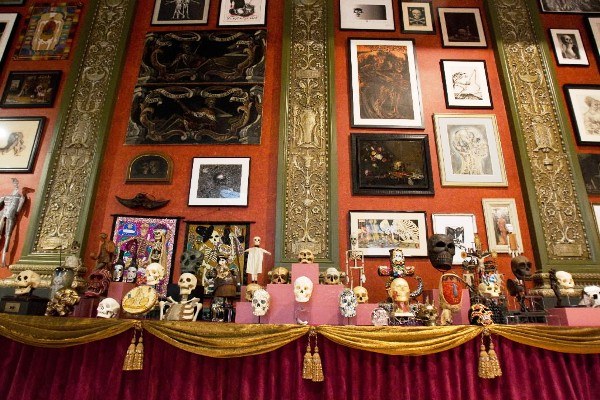
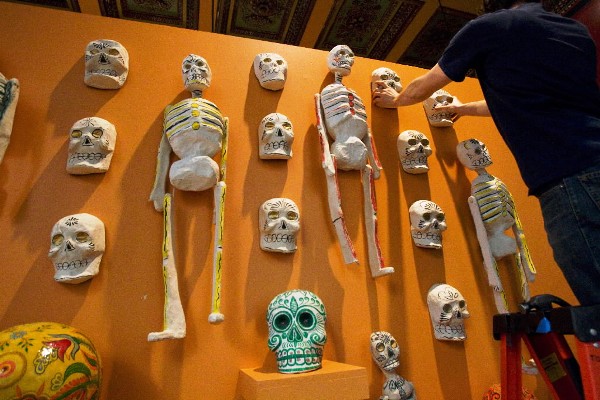
The Italianate Sidney R. Yates Gallery will have its own distinct flavor within the exhibition as it is transformed into the style of a 17th century “Kunstkammer of Death.” (“Kunstkammer” is the precursor of the Public Museum as we know of them today. One of the greatest examples of a Kunstkammer was established by Peter the Great in Russia in 1727. Peter’s museum was a “cabinet of curiosities” dedicated to preserving natural and human curiosities and artistic rarities from across the globe as a means of acquiring a comprehensive knowledge of the world.) Featured in the “Kunstkammer of Death” will be works that explore death in all aspects from the spiritual to the scientific. Incredible works by such artists as Laurie Lipton, Chicago artist Marcos Raya and the Argentinean collective, Mondongo, bring to life the Mexican Holiday, Day of the Dead. Additionally, the gallery will be filled with a vast assortment of artistic styles and genres including the Dance of Death, a late-medieval allegory on the universality of death and Vanitas, a type of art that employs symbolic elements, such as hourglasses, rotting fruit and skulls, to signify the brevity of life.

Additional highlights of Morbid Curiosity: The Richard Harris Collection include:

  • Works by notable artists including Rembrandt, Albrecht Du?rer, Hans Bellmer, Odilon Redon, Pavel Tchelitchew, James Ensor, Jasper Johns and Robert Mapplethorpe.
  • Breathtaking 13 ft. high chandelier made of 3,000 handcrafted plaster bones by contemporary British artist Jodie Carey. The piece directly engages the viewer with the irony or contradictions implicit in the decay/beauty aesthetic.
  • Visually stunning large-scale installation, “Tribute,” from Guerra de la Paz entirely built from colorful used clothing that commemorates the Holocaust.
  • Specimens, medical charts and ephemera.
  • Work by contemporary artists such as Andres Serrano, Vik Muniz and Hugo Crosthwaite, including his commissioned 10 x 25 ft. site-specific mural, “Death March,”among others.
  • Ethnographic artifacts and art from other cultures, particularly Tibet, Mexico, Africa and New Guinea.

“Ironically, the object that best personifies my own curiosity towards the subject of death can be seen in a 1927 photograph that is probably the least expensive object in the collection, costing me $5,” said Mr. Harris. “It is a photograph of a woman named Phebe Clijde surrounded by friends in the backyard of Phebe’s home in the suburbs of San Diego. In this neighborly scene, Phebe is holding a human skull. ‘What could she be thinking? Who’s skull is this? How did the person die?’ are some of the questions that ignite Phebe’s and my curiosity.”

Richard Harris has been collecting for more than 40 years. Previous shows that have exhibited his works are The Slought Foundation, Philadelphia, Pa., Strictly Death (Jan. 23 – Mar. 13, 2010); Th
e Figge Art Museum, Davenport, Iowa, Dancing Towards Death (Sept, 18, 2010 – Jan. 9, 2011); and Loyola University Museum of Art (LUMA), Chicago, The Richard Harris Collection: Balint Zsako Collages (Feb. 3 – May 1, 2011).

You can find out more by clicking here. Thanks to Richard Harris and Pam Grossman for alerting me to this exhibition!

Images: The Chicago Tribune

Source:
http://morbidanatomy.blogspot.com/feeds/posts/default?alt=rss

DNA Sequencing To Go

Oxford Nanopore says it will begin selling by the end of the year a disposable DNA sequencer about the size of a USB memory stick that can be plugged directly into a laptop or desktop computer and used to perform a single-molecule sensing experiment. The device is expected to sell for $900, according to the company. 

The company also unveiled a larger benchtop version of the technology. It says a configuration of 20 of the benchtop instruments could completely sequence a human genome in 15 minutes.

The technology is based on a radically different sequencing method that has been in the work for more than a decade at Oxford University, Harvard and the University of California, Santa Clara. DNA strands are pulled through nanopores embedded in a polymer. As the DNA passes through the nanopore, specific sequences are identified based on varying electronic signals from the different bases. As a result, the technology can read DNA sequences directly and continuously. The company says double-stranded DNA can be sensed directly from blood.

The announcement comes at a time when the cost and time of DNA sequencing is dropping dramatically. Earlier this year, Life Technologies showed off a benchtop sequencer that it says can decode a human genome in one day for less than $1,000. By making sequencing far cheaper and faster, the new generation of instruments could finally make personalized medicine a reality. 

More:
DNA Sequencing To Go

Posted in DNA

Anatomy of the Greek debt negotiations

(ATHENS) - Eurozone finance ministers are to meet Monday in Brussels and might approve a financial bailout package for Greece that would involve contributions from the European Union and International Monetary Fund.

The overall rescue framework for Greece also involves a major, unprecedented write-down of debt held by private banks and financial institutions.

Here are the main issues at stake:

- WHAT THE TALKS COVER

The unprecedented PSI (Private Sector Involvement) talks are classic debt restructuring negotiations, under which private creditors should accept a cut of at least 50 percent on the 200 billion euros ($260 billion) in Greek debt they hold and considerably longer repayment schedules.

Greece's debt totals some 350 billion euros.

For the first time however, a eurozone member is concerned and the talks are taking place to prevent Greece, which is on the brink of bankruptcy, from having to declare a debt default.

A Greek sovereign default could raise market pressure on countries like Portugal and possibly larger economies like Italy, Spain and even France, and increase the chances of a prolonged recession in the 17-nation eurozone.

That in turn could well undermine the global economy.

As a result, many countries around the world and the International Monetary Fund (IMF) have a keen interest in the crisis being resolved.

- WHY HAVE THE TALKS DRAGGED ON ?

Banks, insurers and private investors wanted to stick to an EU October summit deal that called for a 50-percent debt writedown (a 100-euro bond to be replaced by a 50-euro bond), with additional debt relief coming via the interest rate to be paid on the replacement bonds, which are to be repaid at considerably later dates.

Germany and the IMF insisted meanwhile that Greece's overall debt burden be reduced to 120 percent of gross domestic product in 2020 from the current 160 percent to ensure that it is sustainable over the longer term.

Italy's debt is currently worth around 120 percent of its GDP.

The success of a Greek accord with private creditors is tied to wider talks on the conditions of a second bailout of 130 billion euros that the eurozone pledged in October.

Greece has already benefitted from a 110-billion-euro rescue approved in May 2010 by the EU and the IMF.

Greece has had to accept stringent austerity measures, along with reforms aimed at getting its recession stuck economy back on track.

Greek political parties argued until the last minute over replacing extra pension cuts with cuts elsewhere in the budget but finally made the sums add up.

The EU is now considering opening an escrow account for Greece, which would block a portion of state revenues to guarantee repayment of bailout loans, a top EU official said Thursday.

EU economic affairs commissioner Olli Rehn said the suggestion was "one possibility for reinforcing surveillance and effectively implementing the programme."

- THE INTERNATIONAL STAKES IN THE NEGOTIATIONS

In the short term, the aim is to avoid bankruptcy by a eurozone member that could set off an unpredictable chain of events across the bloc.

Because the single currency is Europe's biggest project to date, a eurozone failure could have wider repercussions across the 27-member EU, one of the world's biggest economic regions.

In the absence of an accord, Greece could default from March 20, when it has to repay 14.5 billion euros to creditors.

If talks failed at the eurozone level, Athens might be forced to leave the bloc to be able to devalue its currency and loosen the debt stranglehold.

- WHAT ARE THE RISKS FOR GREECE ?

Under the terms of an expected deal with the EU and IMF, Greece will suffer in social terms given the efforts required, which include cuts in public sector salaries and pensions.

If Greece defaults or has to leave the eurozone, analysts warn that its borrowing costs would soar, making it even more difficult to straighten out its finances.

Most economists calculate the ultimate cost of such a scenario as much higher than that of the debt rescheduling agreements now under discussion.

- WHERE DOES THE ECB FIT IN ?

The European Central Bank has faced calls to write off some of the value of its own Greek bonds to help finalise a debt deal.

According to one eurozone central bank official, the ECB holds 45 billion euros in Greek bonds.

On Friday, sources told AFP the ECB had embarked on a debt swap programme in what could mark a crucial step towards a much wider deal.

But the central bank must take care not to create a situation that would generate lawsuits from private creditors contesting ECB moves to exempt itself from losses.

German central bank chief Jens Weidmann is also worried that investors could lose confidence in the eurozone, as similar debates might arise concerning bonds issued by countries like Portugal, worsening the crisis, a source said.

- WHY IS THE IMF PRESSURING THE ECB ?

The IMF has had trouble getting non-European shareholders to back a second debt bailout for to Greece, and the Fund's statutes prevent it from helping a country whose debt is unsustainable.

If the ECB balks and PSI does not reduce Greece's debt enough, the Fund has threatened to cut loans to Greece.

- AND IF ALL GOES WELL

Now that Greek political parties have agreed to swallow the latest radical austerity measures, a PSI accord is expected to be signed.

Before March 20, half of the debt held by private creditors should be erased and the first payments of some 85 billion euros in new European loans be made to meet the debt default deadline.

Up to 2015: continued austerity in Greece, which must still reform its economy if it is to compete successfully on a global level.

Text and Picture Copyright 2012 AFP. All other Copyright 2012 EUbusiness Ltd. All rights reserved. This material is intended solely for personal use. Any other reproduction, publication or redistribution of this material without the written agreement of the copyright owner is strictly forbidden and any breach of copyright will be considered actionable.

View original post here:
Anatomy of the Greek debt negotiations

Elizabeth Gilbert on Schopenhauer and the Secret to Happiness

In January of 2010, PBS aired a fascinating series titled This Emotional Life, exploring cutting-edge insights from cognitive and behavioral science to explain some of the "why" behind a wide range of mental illness and mental health, from addiction to depression to resilience. The series featured a number of prominent authors, psychologists, clinicians, and other public figures, discussing the science and everyday grit of these complex issues.

Among them was Elizabeth Gilbert, who authored Eat, Pray, Love and gave one of the best TED talks of all time. Gilbert relays the porcupine dilemma made famous by German philosopher Schopenhauer -- a beautiful metaphor for how we choose to go through the world and relate to others, in a quest to master the intricate balance of protective self-containment and the vulnerability necessary for the warmth of true intimacy.

For a deeper dive, see Deborah Luepnitz's Schopenhauer's Porcupines: Intimacy and Its Dilemmas.

This post also appears on Brain Pickings, an Atlantic partner site.

Read more:
Elizabeth Gilbert on Schopenhauer and the Secret to Happiness

Inside the lab: identifying remains through DNA

As the Department of Justice DNA Data Bank waits for the human remains found at an abandoned well in San Joaquin County, the media toured the facility to see how scientists receive and process evidence.

In a training lab on Friday, criminalist specialists displayed an adult femur.

"We get remains that have been out in the elements for weeks to months to years so we get them looking like everything imagineable," Senior Criminalist Theresa Wheeler said. "Some of them are really brittle, dry, bleached out from the sun and others have been buried under dirt for a really long time."

In the lab, technicians remove any contaminants from bones or fragments.

Part of the bone is then put into an impactor where it is shaken and becomes dust; the texture is similar to flour in your kitchen. A chemical is added to separate the DNA from other materials in the bone - the amount of DNA depends on the condition of the remains.

"The challenge is that there's not a lot of DNA present in bone to begin with and then over time there's even less DNA present so we're faced with a very minute amount of DNA to work with," Department of Justice  Criminalist Supervisor Dr. John Tonkyn said.

In another lab, scientists extract the DNA.

Forensic scientists then make multiple copies of the DNA fragments, creating called amplified DNA fragments. They do this because the amount of DNA is small and scientists need enough DNA to be detected by their instruments, according to Tonkyn.

In some cases, the lab uses DNA samples from family members to compare DNA with the unidentified remains.

The process could take weeks or months to identify the victims.

"We can't rush the science," said Tonkyn. "We don't want to compromise any of the quality measures that we have so the processes that we have set up for DNA extraction typing do take time."

News10/KXTV

You Might Be Interested In

Read more:
Inside the lab: identifying remains through DNA

Posted in DNA

Tech-Driven Job Growth

The Washington Post this week says advances in nanotechnology and synthetic biology, among other fields, may provide "a solution to the unemployment puzzle."

The World Economic Forum's Global Agenda Council on Emerging Technologies' Javier Garcia-Martinez and Sang Yup Lee write in the Post that "from nanotechnology to synthetic biology, these [emerging] technologies are beginning to show their potential in the lab if not already in the market whether in sun block, planes or sports equipment."

The authors add that advances in synthetic biology are sure to drive job growth, saying:

We can now develop new biological processes and organisms designed to serve specific purposes, including the conversion of renewable biomass to chemicals, fuels and materials, producing new therapeutic drugs, or protecting the body against infectious diseases. The biotech industry, already a worldwide job-creator, will greatly benefit from advances in synthetic biology, metabolic engineering, and modelling of complex biological systems.

Overall, though, technology development along is not enough. "Commercialization is key to creating new jobs," Garcia-Martinez and Lee write.

Excerpt from:
Tech-Driven Job Growth

3 Reasons to Fall in Love with Soy For American Heart Month

CHESTERFIELD, Mo., Feb. 17, 2012 /PRNewswire/ -- Nutrition science has regarded soy as a superfood with many health benefits for decades. In fact, "25 grams of soy protein per day, as part of a diet low in saturated fat and cholesterol, may reduce the risk of heart disease," according to the FDA.

Science continues to uncover more evidence of soy's superfood status. And now researchers have discovered the "nutritional magic" behind soy's heart health benefits: a soy peptide called lunasin.

If you haven't taken a closer look at soy lately, here are a few reasons to fall in love with it all over again during American Heart Month.

1) Soy is a heart-healthy, complete protein.
Soybean protein is the only plant-based protein that provides all the essential amino acids in the amounts needed for human health. Soy is beneficial to overall cardio health because it is high in polyunsaturated (good) fats, low in saturated fat and naturally cholesterol-free. When you substitute animal protein with soy in your diet, you're replacing saturated fats and cholesterol with a much healthier protein for your heart.

In addition, soy has been shown to improve blood vessel elasticity — a measure of how "hardened" your blood vessels are.

2) Fiber + Protein = A Powerful Pair.
Fiber sticks to cholesterol and prevents it from being absorbed into the body, where it could have gone on to clog your arteries. Studies have shown that a high fiber diet lowers your risk of heart disease.

Plants are the only food containing fiber, essential to any healthy diet. However, most plants are low in protein. Soy is unique because it combines the benefits of fiber and protein in one healthy source.

3) Soy's lunasin peptide is "nutritional magic" for your heart.
Lunasin is a naturally occurring peptide found in soy that disrupts production of cholesterol in the liver and clears LDL from bloodstream.

"A growing body of research shows that the lunasin peptide is one of the most important bioactive components of soy," said Dr. Alfredo Galvez, who first discovered lunasin while studying soy in 1996. He explains, "Among other benefits, lunasin demonstrates superior support for cardiovascular health and exhibits significant anti-inflammatory properties."

Over 80% of cholesterol comes from the liver, so the most effective way to lower LDL (bad) cholesterol is to control the liver's internal production. The lunasin peptide does so in two ways:

a.    selectively disrupts a step in the production of an enzyme key to cholesterol synthesis in the liver

b.    increases the number of receptors available in liver cells to clear LDL cholesterol from the bloodstream

"The soy peptide, lunasin, can actually work better than statin drugs to improve cholesterol," said Dr. Galvez. "This is because lunasin works at an earlier stage in the body's internal cholesterol production process. Lunasin reduces the production of the cholesterol synthesis enzyme, whereas statins block the enzyme after it has already been produced. Blocking too much of the enzyme can lead to serious side effects."

Soy Much Better!
Soy has come a long way since tofu first entered the mainstream decades ago. Today, a breakthrough soy powder from Reliv International is revolutionizing the soy supplement world. Reliv worked with SoyLabs, LLC to develop LunaRich™ — the first soy powder on the market to fully harness the power of lunasin.

LunaRich contains five to ten times more lunasin than ordinary soy powders. Reliv announced today that it has incorporated LunaRich into its cutting-edge essential nutrition product, Reliv Now®.

"Reliv Now has always provided optimal amounts of vitamins, minerals, antioxidants and soy protein. By adding LunaRich, we've taken the product to a new level of effectiveness," said Dr. Carl Hastings, Reliv's chief scientific officer. "It's very exciting to be the first and only company to offer this extraordinary nutritional breakthrough."

"With LunaRich, Reliv is leading the way in bringing lunasin to the consumer market. LunaRich is unlike any soy powder available anywhere else," said Ryan Schmidt, SoyLabs' chief executive officer.

What does all of this mean to you? It means nutrition scientists had it right about soy all along. So, fall in love with soy all over again. Your heart will love you for it!

About Reliv International, Inc.
Reliv International, Inc. (NASDAQ: RELV - News), produces nutritional supplements that promote optimal nutrition along with premium skincare products. Reliv supplements address essential nutrition, weight loss, athletic performance, digestive health, women's health, anti-aging and healthy energy. The company sells its products through an international network marketing system of independent distributors in 15 countries. Learn more about Reliv at reliv.com, or on Facebook, Twitter or YouTube.

See the original post here:
3 Reasons to Fall in Love with Soy For American Heart Month

Microbiology 101

Bacteria

Bacteria are both the largest group of food pathogens and microorganisms. They may be single-cell organisms, but it is within this group of microorganisms that some of the most deadly food pathogens exist.

“They are very important to the food processor,” Cutter said. Only a few cells are needed to infect a consumer with a major, hospitalizing illness.

There are a variety of different types of bacteria, categorized by shape such as rods or spirals and formation of cell wall such as gram-positive or negative.

Bacteria reproduce by binary fission, which is when one cell divides itself into two identical cells. Each cell has this ability, so once bacteria begin growing, they grow exponentially. Some bacteria, such as Bacillus and Clostridium, are able to produce endospores when conditions are inhospitable. These endospores are resistant to heat, drying, and chemicals — waiting until conditions are right before they start growing.

“This division occurs when there’s enough food, enough time, when the cells are happy,” Cutter said. “You need to realize that when these conditions are right, these cells can grow in only a few minutes. Once they take off and start to grow, those two cells become four, become eight, and so forth. We want to do everything we can to control them in the lag stage — the time before they start growing.”

Fungi

Molds are multi-cellular fungal organisms. They propagate by spores transported by air, insects, and animals. The biggest concern for molds in foods is related to spoilage, but molds also produce mycotoxins, toxins that are released by the growth of molds that can sicken consumers.

Yeasts are one-cell fungi that reproduce by budding. They are mainly a problem in causing spoilage, particularly in hot dogs and ham.

Viruses

Viruses are submicroscopic, meaning they are very, very small — smaller than bacteria. They’re also technically not a cellular organism. They’re referred to as acellular in that they contain DNA or RNA inside a protein coat but that does not contain cellular processes. They are parasitic, infecting cells, including one-cell microorganisms.

In slaughter facilities, viruses of most concern are enteric viruses, such as Hepatitis A or Norwalk virus or Rotovirus, which are brought in by humans.

“We do know that these viruses can be transmitted by food,” Cutter said, “most likely from people working in the plant.”

Viruses can be easily controlled by promoted good personal hygiene, such as frequent hand-washing, as well as making sure that no one is allowed to work at the plant if they are ill.

Factors in Pathogen Growth

Because each class of microorganism is different, it should not be surprising that each pathogen has different growth requirements and therefore controlling pathogens is not a one-size-fits-all scenario.

Such factors that influence pathogen growth include:

• Available Nutrients — This would be the living cells that the pathogen is infecting.

• pH Range — Bacteria like a 4.0-8.8 pH, yeast like from 2.0-8.0, and molds like from 1.0-11.0.

• Temperature — Microorganisms that cause spoilage like the environment to be 68-86 degrees F, human pathogens are more likely at 68-113 degrees F, but some food pathogens are able to proliferate in temperatures as low as 32 degrees F up to 113 degrees F.

• Available Oxygen — Some microorganisms require free oxygen, while others like Clostridium need an oxygen-free environment to grow; still, there are some such as Lactobacillus and yeast that can grow with or without oxygen.

• Available Free Moisture — Microorganism growth can be discouraged by dehydrating meats, such as with jerky, but some processing techniques that add sugar actually encourage growth. To give perspective, water in its free-flowing, liquid state represents a free moisture value of 1.0. Raw chicken or tomatoes would have a value of 0.95, cocoa powder at 0.40, and dried milk at 0.20. Bacteria like the environment to rate at 0.90-0.99, yeasts like it to be about 0.87, and molds like it to be 0.70. This is why chemical preservatives such as sodium benzoate in foods is used widespread, and why it’s important to use a sanitizer on surfaces, Cutter said.

Of course, pathogen control is much more complicated than going down a checklist pertaining to each of these factors. “You have to look at each of these factors together, how microbial load, temperature, and time work together or temperature, pH, and water,” Cutter said.

Specific Pathogens 

All food pathogens are important to be aware of, but there are a few — mainly bacteria — that food processors have to pay particular attention to. These are the pathogens that cause the most concern leading to food recalls or national food safety warnings:

• Salmonella — This bacterium causes fever, vomiting, diarrhea, and sometimes arthritis. The infective dose can be as little as 20 cells. Onset of illness is typically 12 to 14 hours after ingestion of the infected meat. Symptoms usually last two or three days, but some people can get a case of reactive arthritis two to three months later. Salmonella is associated with undercooked meat, poultry, eggs, cereal, peanut butter, and produce; it can survive in dry and/or refrigerated foods for prolonged periods of time. This pathogen can grow with or without oxygen and in a wide range of pH, 4.5-9.5, and temperature, from 35-129 degrees F. Salmonella’s primary source of contamination is the intestinal tract of animals, but another source is birds, insects, and contaminated eggs and produce.

• E. coli O157:H7 — This bacterium causes bloody diarrhea and sometimes kidney failure due to hemolytic uremic syndrome. This is an extremely deadly strain of E. coli; in fact, half of all people infected by this pathogen require dialysis. It is associated with undercooked beef, particularly ground meat, contaminated with manure. This pathogen can grow with or without oxygen, and meat needs to be cooked to a high temperature in order to kill the bacteria. It’s important to prevent cross-contamination between manure and the carcass or meat cuts.

• Camphobacter — This bacterium causes bloody diarrhea, fever, and sometimes partial paralysis. It is associated with meat and poultry. This pathogen is very difficult to grow in a laboratory setting, because it requires very low amounts of oxygen and is very sensitive to drying. Contamination sources include rodents and birds, livestock, and water.

• Listeria — This bacterium causes meningitis, septicemia, and abortion. In particular, risk groups are pregnant women and immune-suppressed individuals. It is associated with deli meats, ice cream, and cabbage. It likes environments that are cold and moist, with a low pH, and contamination sources can be any animals, plants, or water. Listeria won’t grow in high-salt situations, such as in brine solutions, but it will still survive, waiting for a more ideal environment. To control this hardy pathogen, it’s important to evaluate transfer points in the facility, as it often enters the plant on the underside of workers’ shoes. It’s also important to control moisture, getting rid of any standing water. And, Cutter said, keep in mind that freezing will not kill this pathogen.

• Spoilage Organisms — While some of these pathogens have the potential to sicken consumers, the bigger concern is that they shorten shelf life. In this category are bacteria such as Streptococcus, Lactobacillus, Lactococcus, Pediococcus, and Clostridium; yeasts; and molds.

Meat Processors

The best strategy for controlling pathogen growth is prevention, and the number-one tool in prevention is testing the meat, equipment, and other surfaces around the facility for pathogens, said Bucknavage. There are two types of tests considered standard — one that tests for the presence or the absence of pathogens, and the other that goes for an actual count of pathogens.

Counts, such as the Aerobic Plate or the Fecal Coliform, are better for detecting aerobic pathogens, those requiring oxygen to grow, but are not great at assessing spoilage. Presence/absence analyses, such as ELISA or PCR or PFGE, are better for testing of various locations around the plant; the majority of testing will be done on phones, forklifts, or the slaughter equipment, although random sampling should also be done of food products, surfaces, people, and even air.

“The larger number of samples you take, the greater chance you have to find a pathogen,” Bucknavage said. For example, taking 15 samples versus 60 increases the risk of missing a pathogen by 50 percent.

The purpose of testing is to determine how to move forward with a sanitation plan, Bucknavage said. “We can start to see trends, if counts start to pop up.”

Go here to read the rest:
Microbiology 101

Tech Beat: Toy makers give new products longevity through apps

New toys are looking to capitalize on the high-tech market with unique takes on the iPad and Android devices. YNN’s Adam Balkin filed the following report.

  To view our videos, you need to
enable JavaScript. Learn how.
install Adobe Flash 9 or above. Install now.

Then come back here and refresh the page.

No matter how cool a new toy is, oftentimes a child would likely still pick up a device like an iPad or iPod Touch if given the choice. So it's no wonder so many developers at the American International Toy Fair are using devices like iPads or iPod Touches as part of their new toys.

Mattel is launching a new line of what it's calling Apptivity Toys, physical toys you hold in your hand that interact somehow with companion apps.

“Every toy is unique and designed for the brand for the game, so whether it's Barbie, where you're unlocking potentially parts of a closet, or Hot Wheels, where it's a challenge or a race or a quest or accumulate points and unlock things,” says Chuck Scothon of Mattel.

Out this fall, they range from about $10 to $20 apiece.

The $50 TeeGee out this summer is a more traditional toy, but where it breaks from tradition, you stick an iPhone or iPod Touch in its back and it becomes the brains of the monkey, so to speak.

“You're able to download age appropriate apps, so as your child gets older, you can evolve the experience for your child and you don't have to buy other toys. You can sing songs with TeeGee, arithmetic, Spanish, English, grammar,” says Christopher Ahn of TeeGee.

Or finally, if it's just the actual tablet or smartphone your kids want but you don't want to give them yours, the Kurio is a fully functioning Android tablet for kids.

The only thing that really makes it different from other Android tablets on the market is that parents can pretty much control every single thing their kids do on it. Parents set up profiles for up to eight users and then each user gets certain rights. For starters, parents can determine what types of websites can be visited.

“We have an online service that will everyday update inappropriate sites for kids and families, and by category, you can determine based on your own value system which categories are appropriate for your child,” says Eric Levin of TechnoSource.

You can also designate which user can access which apps. Kurio is out early summer for about $200.

Go here to read the rest:
Tech Beat: Toy makers give new products longevity through apps