Oropharyngeal carcinoma increased by 22% in 6 years, related to rise in HPV

Head and neck cancer is the sixth most common cancer. Despite an overall marginal decline in the incidence of most head and neck cancers in recent years, the incidence of oropharyngeal squamous cell carcinoma has increased greatly, especially in the developed world.

In the United States, the incidence of oropharyngeal squamous cell carcinoma increased by 22% between 1999 and 2006.

The increase in incidence of oropharyngeal squamous cell carcinoma seems to be accounted for by a rise in human papillomavirus (HPV) related oropharyngeal carcinoma.

References:

Oropharyngeal carcinoma related to human papillomavirus. BMJ 2010; 340:c1439 doi: 10.1136/bmj.c1439 (Published 25 March 2010).
Image source: HPV types and associated diseases, Wikipedia, public domain.
Twitter comments:
@travispew (Travis Pew): So get your kids the HPV shot.

Posted at Clinical Cases and Images. Stay updated and subscribe, follow us on Twitter and connect on Facebook.


There are 25,400 scientific journals and their number is increasing by 3.5% a year

More scientific and medical papers are being published now than ever before. Is it possible to be an expert nowadays, asks BMJ.

Every doctor has an ethical duty to keep up to date. Is this just getting more difficult or has it already become impossible? Since Alvin Toffler coined the phrase “information overload” in 1970, the growth of scientific and medical information has been inexorable.

There are now 25?400 journals in science, technology, and medicine, and their number is increasing by 3.5% a year; in 2009, they published 1.5 million articles. PubMed now cites more than 20 million papers.

One response of the medical profession to the increasing scientific basis and clinical capacity of medicine has been to increase subspecialisation. This may restrict the breadth of knowledge of the ultraspecialist, but can such subspecialists still maintain their depth of expertise?

I described my approach in 5 Tips to Stay Up-to-Date with Medical Literature:

1. RSS Feeds for Medical Journals.
2. Podcasts.
3. Persistent Searches on PubMed, Google News and Google.
4. Text-to-speech (TTS) for journal articles.
5. Blogs and Twitter accounts.

If you have a blog or Twitter account, you can try to deal with the information overload from blogs, RSS and Twitter more efficiently by using this:


The circle of online information (click to enlarge).

References:
On the impossibility of being expert. BMJ 2010; 341:c6815 doi: 10.1136/bmj.c6815.

Posted at Clinical Cases and Images. Stay updated and subscribe, follow us on Twitter and connect on Facebook.


Electronic medical record (EMR) – review of pros and cons in Cleveland Clinic medical journal

Some negatives regarding the use of EMR:

- So far, electronic systems are not interconnectable
- Do electronic records improve or worsen the quality of care?
- Accuracy vs copying and pasting
- A third party in the examination room
- Devoid of real medical thought

A contrasting view:

- Connectivity will improve
- Staying focused on the patient, even with a computer in the room
- Doctor-doctor communication is enhanced

References:
The electronic medical record: Diving into a shallow pool? CCJM.
The electronic medical record: Learning to swim. CCJM.

Posted at Clinical Cases and Images. Stay updated and subscribe, follow us on Twitter and connect on Facebook.


Current school system is failing boys – how to re-engage them in learning – TED video

At TEDxPSU, Ali Carr-Chellman pinpoints 3 reasons boys are tuning out of school in droves, and lays out her bold plan to re-engage them: bringing their culture into the classroom, with new rules that let boys be boys. The first part of the talk points to some eye-opening facts about how the current school system is failing boys.

Posted at Clinical Cases and Images. Stay updated and subscribe, follow us on Twitter and connect on Facebook.


Blogs read by 20% of UK medical students, but only 8% write their own

A wide range of social media tools has become readily available in recent years, to the extent that the use of Facebook in particular is perceived as "second nature" by many students. There is increasing interest in the possibilities of using this social media services for medical education - blogs, wikis, Twitter and Facebook.

This UK study included a self-administered questionnaire survey of 212 first year medical students.
Over 90% used instant messaging. Social networking sites were also highly used - by 70%. There was no significant difference between males and females.
Blogs were read by 20% of students and a small number (8%) wrote their own blogs.
20% of males were users of media sharing and contributed to wikis.
Social bookmarking was rarely used by either gender.
Medical educators need to recognise the potential of social software in medical education but it is essential that students maintain the informality and privacy of these sites. The challenge is how to integrate social software into current curricula and institutional Virtual Learning Environments.

References:
Web 2.0 and social software: the medical student way of e-learning. Sandars J, Homer M, Pell G, Crocker T. Med Teach. 2010 Jun 18.

Comments from Twitter:

@DrVes I didn't expect that 8% of med students in the study wrote blogs - this is not my experience from teaching students and residents at Cleveland Clinic, Case Western and Creighton University.

@sandnsurf Medical education blog vs tumblr/posterous blog possibly. My students are at 10% for blog writing but 1% are actually medical.

@DrVes This is way higher than the stats here in the U.S. "Everybody's on Facebook, nobody has a blog"... 🙂

@doctorwhitecoat Not to jump mid convo, but at my school, I can say that most don't have blogs... at most maybe 3-5% and those that do... don't update.

@DrVes 2-5% is high. There was only one blogging student at Cleveland Clinic medical school who stopped after 1-2 years.

Image source: Blogger.com.

Posted at Clinical Cases and Images. Stay updated and subscribe, follow us on Twitter and connect on Facebook.


Acute bronchitis: Many patients expect to be treated with antibiotics and cough meds but this differs from guidelines


Mind map of differential diagnosis of cough. See more Allergy and Immunology mind maps here.

Cough is the most common symptom bringing patients to the primary care physician's office. The most common diagnosis in these patients is acute bronchitis, according to a recent review in the official journal of AFP, American Family Physician.
Acute bronchitis should be differentiated from other common causes of cough such as pneumonia and asthma - because the therapies are clearly different.
Symptoms of acute bronchitis typically last 3 weeks. As we already know, the presence of colored (e.g., yellow or green) sputum does not reliably differentiate between bacterial and viral lower respiratory tract infections.
Viruses cause more than 90% of acute bronchitis, and therefore, antibiotics are generally not indicated. They should be used only if pertussis is suspected to reduce transmission or if the patient is at increased risk of developing pneumonia (e.g., patients 65 years or older).
The typical therapies that have been traditionally used for managing acute bronchitis symptoms have been shown to be ineffective. The U.S. Food and Drug Administration recommends against using cough and cold preparations in children younger than 6 years.
The supplement pelargonium may help reduce symptom severity in adults.
Many patients expect to be treated with antibiotics and cough medications but this differs from evidence-based recommendations.
The CNN video below tries to decipher what hides behind the names of common cough and cold medications:

References:
Diagnosis and treatment of acute bronchitis. Albert RH. Am Fam Physician. 2010 Dec 1;82(11):1345-50.

Posted at Clinical Cases and Images. Stay updated and subscribe, follow us on Twitter and connect on Facebook.


25% of medical students use Facebook for education – with mixed success

This Australian study aimed to evaluate how effectively medical students may be using Facebook for education.
Researchers surveyed 759 medical students at one Melbourne university, and explored the design and conduct of 4 Facebook study groups.
25.5% of students reported using Facebook for education-related reasons and another 50.0% said they were open to doing so.
The case studies showed conservative approaches in students' efforts to support their development of medical knowledge and mixed successes.
The study authors concluded that Facebook as part of learning and teaching is as much of a challenge for many students as it may be for most educators.
References:
Medical students' use of Facebook to support learning: Insights from four case studies. Gray K, Annabell L, Kennedy G. Med Teach. 2010;32(12):971-6.

Posted at Clinical Cases and Images. Stay updated and subscribe, follow us on Twitter and connect on Facebook.


People who brush their teeth less than twice a day have a 70% increased risk of heart disease

A Scottish national population based survey examined if self reported toothbrushing behaviour is associated with cardiovascular disease and markers of inflammation (C reactive protein) and coagulation (fibrinogen).

Participants were 12,000 men and women, mean age 50. Oral hygiene was assessed from self reported frequency of toothbrushing. There were a total of 555 cardiovascular disease events over an average of 8 years of follow-up, of which 170 were fatal.

Participants who reported poor oral hygiene (never/rarely brushed their teeth) had an increased risk of a cardiovascular disease event (hazard ratio 1.7).

They also had increased concentrations of both C reactive protein and fibrinogen.

Poor oral hygiene is associated with higher levels of risk of cardiovascular disease and low grade inflammation, though the causal nature of the association is yet to be determined.

References:
Toothbrushing, inflammation, and risk of cardiovascular disease: results from Scottish Health Survey. BMJ 2010;340:c2451.

Image source: Cross-section of a tooth with visible gums, or gingiva, Wikipedia, GNU Free Documentation License.

Posted at Clinical Cases and Images. Stay updated and subscribe, follow us on Twitter and connect on Facebook.


iPad use by medical residents gets rave reviews, increases productivity

View more videos at: http://www.nbcchicago.com.

The Internal Medicine Residents at the University of Chicago Medical Center are now equipped with iPads as their primary device for clinical use.

In the summer of 2010, the Internal Medicine Residency (IMR) program began piloting a project to study the use of iPads on the inpatient wards. Initiated by the Chairman's Office, the project was intended to enhance efficiency of patient care activities on the wards with the goals of improved patient care and more robust conference attendance.
The pilot was overwhelmingly positive and has led to broader use of the devices for all IMR residents. The DOM Internal Medicine Residency program is the first training program in the country to utilize the device.

As an Assistant Professor at University of Chicago, I work with the residents on a daily basis and I can confirm that they love their iPads.

References:
University of Chicago Medical Center
iPads Helping Doctors. NBC.

Posted at Clinical Cases and Images. Stay updated and subscribe, follow us on Twitter and connect on Facebook.


SHAKE may be common in hospitals: Supplement-associated Hyperammonemia After Cachectic Episode

High-protein dietary supplements were started for 2 patients, who had a period of anorexia before hospital admission but no history of liver disease. Subsequent altered mental status with ataxia developed in both patients.

Hyperammonemia was noted, while liver function test results remained normal.

Removal of the high-protein dietary supplements led to reversal of symptoms and normalization of the ammonia level.

With the ubiquity of nutrition supplement use, SHAKE (supplement-associated hyperammonemia after c[k]achetic episode) syndrome may be common in modern hospitals.

References:
Iatrogenic Hyperammonemia After Anorexia. Emily Welsh, BA; Jan Kucera, MD; Michael D. Perloff, MD, PhD. Arch Intern Med. 2010;170(5):486-488.
Image source: sxc.hu.

Posted at Clinical Cases and Images. Stay updated and subscribe, follow us on Twitter and connect on Facebook.


Reasons to stop blogging

I know medical bloggers who stopped blogging or closed their Twitter accounts for similar reasons to those summarized below:

"He says in his final blog post that while he intended the personal blog to be a place where he could talk about ideas, his posts had started to “spark whole conversations that I never intended to start in the first place, conversations that leech precious time and energy while contributing precious little back.”

More related thoughts:

"So many things can go wrong (with social media) if you don’t do it right. You can get stampeded and lose the game. Playing on the sidelines is more appealing.

If you run a hospital and decide to establish a vast living presence on the Web, people will say bad things about your doctors, your nurses, your waiting times in the ER, your food. You’ll have to deal with HIPAA. There’s also a chance that you’ll say something you’ll regret. Playing on the sidelines is more appealing."

On the other hand, consider this:


Duty calls. Image source: Xkcd.com, Creative Commons license.

See a perfect example why you must read medical blogs in this post by a practicing electrophysiologist: The first 4 months of a new era - anticoagulation with dabigatran. You can't find this first-hand real-life experience in any textbook or medical journal.

References:

Posted at Clinical Cases and Images. Stay updated and subscribe, follow us on Twitter and connect on Facebook.


Screening for Familial Hypercholesterolemia – CDC Expert Commentary

Screening for Familial Hypercholesterolemia - CDC Expert Commentary (video). Renée M. Ned, PhD, MMSc discusses the benefits of cascade screening to identify familial hypercholesterolemia, a common genetic disorder that causes high levels of low-density lipoprotein (or LDL) cholesterol.

Posted at Clinical Cases and Images. Stay updated and subscribe, follow us on Twitter and connect on Facebook.


Barrett’s esophagus – Mayo Clinic video

Mayo Clinic: Millions of people know what it's like to have to run for the antacids after a big pasta dinner. Most of the time heartburn is harmless, but people who suffer from chronic heartburn are at increased risk of a condition called Barrett's esophagus. And if you have it, your chances of getting esophageal cancer go up.

Doctors at Mayo Clinic studied whether or not burning away the Barrett's cells with heat from radiofrequency ablation gets rid of the problem. What they found was encouraging.

Posted at Clinical Cases and Images. Stay updated and subscribe, follow us on Twitter and connect on Facebook.


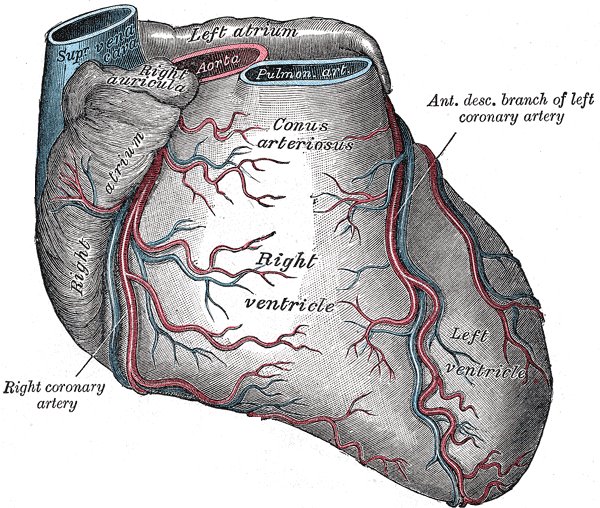
A Heart Has Endured 67 Stents and 28 Coronary Angiograms – How Much is Too Much?

A 56-year-old male with coronary artery disease (CAD) presented with angina, nonspecific electrocardiographic (ECG) changes, and elevated troponins.

Coronary angiography revealed total occlusion of a stent in the circumflex artery, where another was deployed—his 67th stent.

The patient had 28 catheterizations over 10 years, with stents placed in his native coronary arteries as well as in 3 bypass grafts. All stents were placed to relieve his angina, refractory to maximal medical treatment and transmyocardial laser revascularization.
Stents can be a great tool to help revascularization and relieve symptoms; unfortunately, they are prone to thrombosis and restenosis. If they fail while medical management is maximized unsuccessfully, alternative tools are lacking.

This case raises many questions, among them: "How much is too much?"

Clearly, this is not an example of standard of care. Should we be concerned that this case is indicative of a system that has lost its way?

References:

A Heart With 67 Stents. J Am Coll Cardiol, 2010; 56:1605, doi:10.1016/j.jacc.2010.02.077
67 stents, 28 coronary angiograms, and a crippled healthcare system. Eric Topol, 2010.
Image source: Gray's Anatomy, 1918, public domain.
Comments from Facebook and Twitter:
Talk about a full metal jacket! Baby!
One thing's for sure, no surgeon is going to touch him now for bypass. I did note, however, that he still does not have an LV lead for biV pacing, so he might not be done with procedures yet! 🙂
Surgeons are smart these days, they separate stent struts and graft! There is definite scope for a Combo device .
This case is indicative of system , that is addicted to invasive interventoin I suppose...Nevertheless it's quite interesting.
Not to mention the radiation.

Posted at Clinical Cases and Images. Stay updated and subscribe, follow us on Twitter and connect on Facebook.


Social Media in Medical Education: What are the Burning Questions?

The 2011 Association for the Study of Medical Education (ASME) conference will take place in Edinburgh in July.

The conference organizers are asking all the right questions:

- Is a WordPress blog more useful than a Blackboard module?

- How social is social bookmarking?

- How can social media help medical education researchers?

- How can we manage and develop our own digital identity?

Networked Teacher Diagram - Update
The Networked Teacher - Diagram, Flickr http://goo.gl/CVddi

References:
Social Media and Networks in Medical Education: Workshop at ASME

Posted at Clinical Cases and Images. Stay updated and subscribe, follow us on Twitter and connect on Facebook.


New U.S. Diet Guidelines: No more than 1.5 gm of sodium/day, get off your "SoFAS" – Solid Fats and Added Sugars

This is a summary of the Cleveland Clinic commentary on the new U.S. Diet Guidelines via their Twitter account, provided by the dietitian Kristin Kirkpatrick:

Decrease in salt consumption

The main recommendation is a decrease in salt consumption. New recommendation is below 1,500 mg/day for at-risk populations. At-risk populations include African-Americans, people with high blood pressure or kidney disease, and people over 51. Americans not at risk can consumer up to 2,300 mg of salt per day (for now, until the next update of the guidelines - commentary of the blog author). Kristin Kirkpatrick: I think the 1,500 mg/day recommendation should apply to the entire population for many reasons. There is strong scientific evidence that limiting salt can help prevent heart attacks and stroke. The problem with the current recommendations is that nearly everyone will enter the at-risk population at some point in their lives. In order to decrease your risk for a number of chronic diseases, it is advisable to consume as little salt as possible.

How to cut salt?

77% of sodium consumption in the US is obtained through processed foods.

Limit any food that can sit on your shelf for two years and still taste great when prepared. Try to only consume foods that will eventually rot if not eaten in 10 days or so.

Learn how to cook! Take a cooking class or experiment at home. Use spices, herbs for flavor instead of salt.

Investigate your eating-out choices beforehand. A typical restaurant meal averages 3,500 mg/salt.

Don't purchase canned soup - make your own! Most canned soup is very high in sodium.

Sea salt has more minerals and is less processed, but it contains the same level of sodium (or more) as iodized salt.

Get off your "SoFAS" - decrease Solid Fats and Added Sugars

Another recommendation is to replace solid fats with fats that are liquid at room temperature.

Read your labels and keep any foods with partially hydrogenated oils out of your shopping cart. Partially hydrogenated oils are linked to increased "bad" LDL cholesterol and decreased good "HDL" cholesterol

Focus more on consuming plant-based foods than animal-based foods to decrease saturated fat intake.

Don't forget that any kind of fat - good or bad - has, on average, 100 calories per teaspoon.

Good fats include avocado, seeds and nuts, olive and canola oil. Keep good fats to 20-25% of total caloric intake per day.

Vary protein sources in the diet - add seafood

Another recommendation is to vary protein sources in the diet.

It is recommended people consume 8-12 oz. of seafood per week. That's about 2 servings. Aim for seafood choices that provide omega-3 fatty acids like wild salmon, sardines, halibut, and trout. Pregnant women want to avoid higher mercury fishes like shark, swordfish, and king mackerel.

Eat a variety of fruits and vegetables

Another recommendation is to eat a variety of fruits and vegetables. Make sure to include dark green, red and orange vegetables in your diet. Kale, peppers and beets are good examples.

Food fact: The darker the color of the vegetable, the higher the antioxidant content.

Aim to consume five handfuls of fruit per day. When possible, keep the skins on for extra fiber.

Consume half of grains as whole grains

Another recommendation encourages Americans to consume half of their grains as whole grains. It is better to consume all of your grains as whole grains, however. Consume breads that contain 100% whole grain or whole wheat. Read the labels! Switch white rice to brown rice.

Check your pasta! The only ingredient should be 100% whole wheat. If "whole" or 100% isn't in front of "wheat", put it back. Pasta doesn't need to be wheat-based. You could also consume brown rice pasta. Brown rice pasta is gluten-free.

Practice healthy eating EVERY day

Most importantly, practice healthy eating patterns every day.

Eat together as a family, and turn off the TV and smartphone during meals. Distracted eating causes you to eat 40% more. Stay within your individual caloric needs. With all these recommendations, portion control is still key.

References:
Dietary Guidelines for Americans. USDA.

Posted at Clinical Cases and Images. Stay updated and subscribe, follow us on Twitter and connect on Facebook.


Protecting the brain from concussion: $20-helmet is a good way to protect $100,000 education

Neuropsychologist Kim Gorgens makes the case for better protecting our brains against the risk of concussion -- with a compelling pitch for putting helmets on kids: A $20-helmet is a good way to protect $100,000 education. "Mind your (brain) matter."

Related:

Posted at Clinical Cases and Images. Stay updated and subscribe, follow us on Twitter and connect on Facebook.


Is coffee a "health food" now?

Health Benefits of Coffee - MarketWatch video.

Coffee is not usually thought of as health food, but some recent studies suggest that it can be beneficial.

A 2005 JAMA meta-analysis concluded that habitual coffee consumption was consistently associated with a lower risk of Type 2 diabetes. However, caffeine, seems to have little to do with it. In fact, caffeine (C8H10N4O2) is the natural pesticide of coffee beans, paralyzing and killing insects that try to feed on them.

A Norwegian study found that women who drank 1-3 cups a day reduced their risk of cardiovascular disease by 24% compared with those drinking no coffee at all.

Antioxidants in coffee may decrease inflammation, reducing the risk of disorders related to it, like cardiovascular disease. A typical serving of coffee contains more antioxidants than typical servings of grape juice, blueberries, raspberries and oranges.

References:
Health Benefits of Coffee - WebMD.
Coffee as a Health Drink? Studies Find Some Benefits - New York Times, 2006.

Posted at Clinical Cases and Images. Stay updated and subscribe, follow us on Twitter and connect on Facebook.


Romiplostim for Treatment on Immune Thrombocytopenia (ITP)

Romiplostim, a thrombopoietin mimetic, increases platelet counts in patients with immune thrombocytopenia, with few adverse effects.

In this open-label, 52-week study (funded by Amgen), 234 adult patients with immune thrombocytopenia, who had not undergone splenectomy, were randomized to receive the standard of care or weekly subcutaneous injections of romiplostim.

The rate of a platelet response in the romiplostim group was 2.3 times that in the standard-of-care group.

Patients receiving romiplostim had a significantly lower incidence of treatment failure [11%] than those receiving the standard of care [30%].

Splenectomy also was performed less frequently in patients receiving romiplostim [9%]) than in those receiving the standard of care [36%].

The romiplostim group had a lower rate of bleeding events, fewer blood transfusions, and greater improvements in the quality of life.

Romiplostim is a fusion protein analog of thrombopoietin. It is marketed under the trade name Nplate through a restricted usage program. Romiplostim was designated an orphan drug by the FDA in 2003, as the chronic ITP population in the USA is under 200,000.
In 2008, the FDA approved romiplostim as a long-term treatment for chronic ITP in adults who have not responded to other treatments, such as:
- corticosteroids
- intravenous immunoglobulin (IVIG)
- Rho(D) immune globulin
Image source: Nplate.com

Posted at Clinical Cases and Images. Stay updated and subscribe, follow us on Twitter and connect on Facebook.


Cars Decide If Driver Is Drunk – Video

Associated Press: An alcohol-detection prototype that uses automatic sensors to instantly gauge a driver's fitness has the potential to save thousands of lives, but could be a decade away from everyday use in cars.

Motorists under the influence of drugs are a growing threat on U.S. roads. If you think about driving on a Friday or Saturday evening about 16% of the vehicles - one in six of the cars - the driver will be under the influence of an illicit or licit drug.

"Drugged driving" hampers judgment, reaction time, driving skills and memory.

Related:
16% of motorists may be under the influence of drugs during weekends - one in six of the cars

Posted at Clinical Cases and Images. Stay updated and subscribe, follow us on Twitter and connect on Facebook.