The Edward Gorey Auction, Bloomsbury Auctions, New York, Thursday December 9th, 11 AM


Ooooooh... This is very exciting: An Edward Gorey Auction, featuring a broad variety of one-of-a-kind objects drawn from The Great Man's personal collection. A few of the 60 lots can be viewed above, full details on auction and objects can be found below:

The Edward Gorey Sale
New York, 9 December 2010, 11am

To be held on premises at 6 West 48th Street, New York, NY 10036
View sale online or download a pdf.
Live Bidding to be held on-site, absentee bids acccepted, free internet bidding via liveauctioneers.com and the-saleroom.com

Bloomsbury Auctions New York is very pleased to announce an auction devoted entirely to the author and illustrator Edward Gorey (1925-2000). Known for his whimsically macabre illustrations and intensely unique personal illustration style, this sale will feature an array of items owned by Gorey, as well as a large selection of his published books, original artwork, and personal jewelry.

The central focus of the sale will be 14 fur coats once owned, worn (and one also designed) by Edward Gorey from the 1950’s to early 1980’s. While gentlemen wearing fur coats were hallmarks of Gorey’s early pen and ink illustrations, Gorey himself had a change of heart in the 1980’s, putting the fur coats into storage – never to be worn again. Always well cared for, all coats have been in storage for well over 30 years. Mr. Gorey left the entirety of his estate to the care and welfare of animals. The proceeds from the sale of the coats will benefit the Edward Gorey Charitable Trust, whose sole mission is the care and welfare and animals, and the Edward Gorey House in Yarmouth Port, MA, which celebrates Gorey’s life and work through public exhibitions. Each coat is accompanied by a letter confirming the provenance as well as a custom label with an original Gorey design which has been sewn to the inside lining.

Other noted items include the original hand-penned and colored front cover illustration by Gorey for Edward Fenton’s book Penny Candy, a turquoise onyx skull pendant, two Gorey hand crafted bean bag -like creatures, Gorey’s illustrating fountain pen and approximately 50 signed, first, or interesting editions of Gorey’s classic books.

For all inquiries, please contact us at newyork@bloomsburyauctions.com or 212.719.1000.

For further information on the fur coats only, you may also contact the Edward Gorey House at 508.362.3909 or info@edwardgoreyhouse.org.

Exhibition Times:
Saturday, December 4, 10am-3pm
December 6, 7, 8 10am-5pm
Thursday, December 9 9am

You can find out more, peruse the full 60 lots, and find out how to bid by clicking here.

All images drawn from the auction website. Object descriptions and price estimates, top to bottom:

  1. Silver Bat Silver cloth with shoe-button eyes; stuffed with rice (190 x 360 mm). Bean bag toy designed and hand-stitched by the artist. Provenance: James Marshall. The versatile Gorey designed and personally made bean bag animals such as bats, frogs, rabbits and elephants. He stuffed the earliest ones with rice. He usually made them for friends like the children's book illustrator James Marshall; and only rarely were they sold to the general public. $1000 – $1500
  2. Fur Coat owned and worn by Edward Gorey Lynx coat, below knee, big lapels, brown silk lining, extra large collar. Label sewn in celebrating the 2010 Annual Goreyfest and Gala. Provenance: Edward Gorey to the Edward Gorey Charity Trust, Accompanied by a letter signed by Andreas Brown, Co-Trustee, confirming the ownership. $800 – $1200
  3. Skull Necklace A skull neclace on a string, possible onyx, turquoise, or Abyssinian. Provenance: Edward Gorey to the Edward Gorey Charity Trust, Accompanied by a letter signed by Andreas Brown, Co-Trustee, confirming the ownership. A FINE EXAMPLE OF THE ECCENTRIC JEWELERY WORN BY EDWARD GOREY. $500 – $800
  4. The Listing Attic New York: Duell, Sloan & Pearce, [1954]. Original pictorial boards, in the original unclipped dust jacket. Condition: edges lightly darkened, very faint old dampstain at top edge and to verso of jacket, cloth and jacket lightly rubbed at corners with a short tear to the upper panel of the jacket. FIRST EDITION OF GOREY'S SECOND BOOK. $150 – $200
  5. The Vinegar Works New York, Simon & Schuster, 1963. 3 volumes, comprising: "The Gashlycrumb", "The West Wing" and "The Insect God." Square 4to. Original pictorial boards, housed in original slipcase. Condition: "The Gashlycrumb" somewhat shaken, spines darkened, light rubbing to corners; slipcase lightly chipped along extremities and soiled. FIRST EDITIONS; FIRST PRINTINGS. $250 – $300

Recent posts of interest: A Visit to The Edward Gorey House Museum, Yarmouth Port, Massachusetts

Thanks so much to Colin Dickey and his very follow-able Twitter feed for alerting me to this!

"Cadmus et Hermoine," The First French Opera from 1673, Period Reproduction by Vincent Dumestre and Benjamin Lazar


I just discovered a most amazing cultural artifact: Vincent Dumestre and Benjamin Lazar's 2008 resurrection of Jean-Baptiste Lully's Metamorphoses-inspired "Cadmus et Hermoine," the first French opera, which premiered on April 27, 1673 and has long since faded into obscurity.

This 21st Century revival of a baroque original is like a magnificent, life-sized toy theatre come to glorious and uncanny life, and functions as more like time-travel than performance, with its lavishly reproduced stage machinery, sets, costumes, makeup, mannered performance style, dance sequences, and completely candle-lit stage all painstakingly based on baroque originals. The music, too, is unforgettable; hauntingly lovely and slightly alien, yet, somehow, utterly familiar at the same time.

The complete production (Christmas gift, anyone?) is available in DVD form from Amazon.com, which describes it thusly:

The event of the year! The team led by conductor Vincent Dumestre and Benjamin Lazar has produced the very first French opera, composed in 1673 by Lully with a libretto by Quinault. With reconstructed sets and costumes, this entirely candle-lit production is a landmark in the rediscovery of baroque opera, providing a unique opportunity to discover a musical masterpiece that has fallen into oblivion over the last 3 centuries. Performers include Andre Morsch, Claire Lefilliatre, Arnaud Marzonati, Jean-Francois Lombard, Isabelle Druet, Arnaud Richard, and Camille Poul with the Orchestra, Choir, & Dancers of Le Poeme Harmonique.
Vincent Dumestre directs this performance of Jean-Baptiste Lully's CADMUS ET HERMOINE. Composed in the 17th century, this libretto is a classic example of a musical tragedy and is known as the first French opera.

Click here to find out more, or purchase the DVD. Click here (highly recommended!) to view many more segments on the Oedipus at Versailles You Tube station. You can find out more about the history of the Cadmus et Hermoine opera here.

Recent related posts: Drottningholm Court Theatre, 1764-1766, Stockholm

Via Le Divan Fumoir Bohémien

“Death and the Lady," Vaudeville, Turn of the Century


In 1906 The Journal of the English Folk Song Society published a piece on the old English ballad “Death and the Lady.” Some enterprising female entertainer encountered the article and realized the story might be used as a great vaudeville piece about the evils of card play and alcohol. Touring performers were always searching for material that would play well in the sticks. The city folks would enjoy the Grand Guignol staging, the traditional song, and the vocal technique. Here Joseph Hall, the Brooklyn born photographer who had made a career on baseball pictures and theatrical production stills, captured the sequence of the action, providing a peculiarly detailed & rare view of the progress of a single vaudeville performance.

Click on images to see larger, richer versions; you can see the complete series of photos on the Historical Ziegfeld website by clicking here.

Via Turn of the Century.

Tomorrow Night, December 7th! 5th-Annual Carnivorous Nights Taxidermy Contest, The Bell House, Brooklyn


This is going to be good... hope to see you there!

The Secret Science Club's 5th-Annual Carnivorous Nights Taxidermy Contest
Date: Tuesday, December 7
Time: Lecture at 8 PM; Contest begins at 8:30 PM
Location: The Bell House, Brooklyn

Judges: Mike Zohn of Obscura Antiques and Oddities and star of The Discovery Channel's Oddities; Robert Marbury of the Minnesota Association of Rogue Taxidermists; Dorian Devins, co-founder and curator of the Secret Science Club; Melissa Milgrom, author of Still Life: Adventures in Taxidermy.
(149 7th St., between 2nd and 3rd avenues in Gowanus, Brooklyn)

The beasts are back!
The Secret Science Club presents the 5th-annual “Carnivorous Nights TAXIDERMY CONTEST” at the Bell House, Tuesday, December 7 @ 8 pm, $5 cover

Calling all science geeks, nature freaks, and rogue geniuses! Your stuffed squirrel got game? Got a beaver in your brownstone? Bring your beloved beast to the Bell House and enter it to win!
Eligible to enter: Taxidermy (bought, found, or homemade), biological oddities, articulated skeletons, skulls, jarred specimens—and beyond, way beyond

Show off your moose head, jarred sea cucumber, rabbit relics, snake skeleton, fish fangs, and other specimens. Compete for prizes and glory!

The contest will be judged by our panel of savage taxidermy enthusiasts, including Robert Marbury of the Minnesota Association of Rogue Taxidermists; Dorian Devins, co-founder and curator of the Secret Science Club; and beast mistress Melissa Milgrom, author of Still Life: Adventures in Taxidermy.

JUST ADDED: Purveyor of scientific wonders and star of the inimitable new show Oddities on the Discovery Channel, Mike Zohn joins the judging panel and presents an illustrated lecture on (yes!) taxidermy.

Plus!
--Groove to wildlife-inspired tunes and video
--Imbibe ferocious specialty drinks! (They’ll bring out the animal in you.)
--Special guests and surprises!

Entrants: Contact secretscienceclub@gmail.com to pre-register. Share your taxidermy (and its tale) with the world!

Spectators: Don’t miss a beastly second of this wild night!
Doors and Pre-show at 7:30 pm
Taxidermy Lecture at 8 pm
TAXIDERMY CONTEST at 8:30 pm

This specialty edition of the Secret Science Club meets Tuesday, December 7 @ the Bell House, 149 7th St. (between 2nd and 3rd avenues) in Gowanus, Brooklyn, p: 718.643.6510 Subway: F to 4th Ave; R to 9th St; F or G to Smith/9th. Please bring ID: 21+. $5 cover.

For information: contact secretscienceclub@gmail.com Or visit us on the Web at http://secretscienceclub.blogspot.com

Contest Background: The Carnivorous Nights Taxidermy Contest is hosted by the Secret Science Club, an organization dedicated to exploring scientific discoveries and potent potables. The contest was started in 2005 by two of the Secret Science Club’s co-founders to shamelessly promote their taxidermy-inspired book Carnivorous Nights: On the Trail of the Tasmanian Tiger. The event has since taken on a life of its own, with first-year winners Andrew Templar and Jim Carden—co-owners of the Bell House—now providing a permanent home for this beastly annual smack-down. Special thanks to Robert Marbury of the Minnesota Association of Rogue Taxidermists, the Rump Ape, and Poe the Crow.

Don't miss this beastly event on Tuesday, December 7, 8 pm @ the Bell House, 149 7th St. (between 2nd and 3rd avenues) in Gowanus, Brooklyn, p: 718.643.6510 Subway: F to 4th Ave; R to 9th St; F or G to Smith/9th

More here. The image you see above is the Hamlet Mouse by Mouse Angel/Jeanie M. You can purchase your very own Hamlet Mouse--or Angel, or Punker Rocker, or Mousealope, or Pope--at The Morbid Anatomy Library; click here or email me here for details.

Tonight at Observatory! The Amazing Zoe Beloff and "Albert Grass Adventures of a Dreamer," Illustrated Lecture and Book Signing


Tonight at Observatory, the inimitable Zoe Beloff!

Full details below. Hope very much to see you there!

Albert Grass Adventures of a Dreamer: An Illustrated Lecture and Book Signing with Zoe Beloff
Date: Monday, November 29th

Time: 8:00 PM

Admission: $5


“Adventures of a Dreamer” is a hand-drawn prototype for a comic book, that appears to have been created by Albert Grass, founder of the Coney Island Amateur Psychoanalytic Society in the 1930’s. It seems possible that he originally intended “The Dreamer ” to be hero in the mold of “The Spirit”, or even “Superman” with extraordinary powers but this conception quickly changed. By episode three “The Dreamer” looses his ability to fly, landing on the ground with a loud “ouch!”. He remains earthbound and the work becomes a more serious investigation into his own psychic life.

Many of Albert Grass’ anxieties speak directly to us today. He suffered the aftereffects of a brutal war. He worried about his neighbors being evicted. He felt the guilt of an artist who feels he should be more deeply engaged in a struggle for social justice. Previously unpublished, this facsimile edition makes available for the first time what appears to be an early attempt to use the language of the comic book to graphically manifest the unconscious.

Zoe Beloff is an artist who elides the roles of archivist and creator. Her work has been featured in international exhibitions and screenings at venues including the Whitney Museum of American Art and the Museum of Modern Art in New York, the Freud Dream Museum in St. Petersburg and the Pompidou Center in Paris. Known for her multimedia installations incorporating film and video, Beloff aims to connect the present with the past and to call into question the assumed boundaries between historical fact and creative interpretation. In celebration of the centennial of Sigmund Freud’s visit to Coney Island in 1909, Beloff resurrected the world of the Coney Island Amateur Psychoanalytic Society, along with the visionary ideas of its founder, Albert Grass. Beloff’s publications include The Coney Island Amateur Psychoanalytic Society and Its Circle and The Somnambulists: A Compendium of Source Material.

You can find out more about this event on the Observatory website by clicking here. You can find out more about Zoe Beloff and her work by clicking here. You can find out more about Albert Grass The Adventures of a Dreamer--and purchase a copy!--by clicking here. You can get directions to Observatory--which is next door to the Morbid Anatomy Library (more on that here)--by clicking here. You can find out more about Observatory here, join our mailing list by clicking here, and join us on Facebook by clicking here.

Help Keep "Oddities" on the Air!


"Oddities," Morbid Anatomy's new favorite television program, is in danger! Below is a plea from Mike Zohn, co-proprietor of Obscura Antiques and Oddities, the antique shop which is at the center of this new and wonderful Discovery Channel reality show:

Fans of Oddities...We need your help.....First, thank you for all the kind words and all. We appreciate all of it. It seems that for some reason Discovery has not run any TV ads for our show. Our ratings have been OK, but most people don't know there are 2 episodes back to back...and many more don't even know about the show. Seems it might be hard to build an audience and a following without some TV advertising......

So, what can you do to help?

  • You can watch! Oddities airs on the Discovery Channel on Thursday nights, from 8-9 PM; At 8:00 PM, catch a screening of last week's episode; stay tuned for a new episode at 8:30.
  • Lodge a complaint to Discovery Channel asking for commercials and better promotion! You can do so (as I just did!) by clicking here.
  • Spread the word; if you like the show, tell your friends!
  • "Friend" them on Facebook! This is also a great way to keep apprised of the latest "Oddities" and shop information. You can find them on Facebook by clicking here.
  • Come to our "Oddities" screening party on December 9th at 8:00 PM! You can find out more details about that by clicking here or here.

Thanks everyone for your help in saving this new and wonderful television show!

Artist Zoe Beloff Returns to Observatory with "Albert Grass Adventures of a Dreamer," Illustrated Lecture and Book Signing, Monday, November 29th


Next Monday, November 29th, Morbid Anatomy favorite artist Zoe Beloff--she of the unforgettable hysteria theaters and last years installation at the Coney Island Musuem on the Coney Island Amateur Psychoanalytic Society--will be returning to Observatory to deliver an illustrated lecture based on her newest publication Albert Grass The Adventures of a Dreamer. Books will also be available for sale and signing.

Images from said publication above; full details below. Hope to see you there!

Albert Grass Adventures of a Dreamer: An Illustrated Lecture and Book Signing with Zoe Beloff
Date: Monday, November 29th

Time: 8:00 PM

Admission: $5


“Adventures of a Dreamer” is a hand-drawn prototype for a comic book, that appears to have been created by Albert Grass, founder of the Coney Island Amateur Psychoanalytic Society in the 1930’s. It seems possible that he originally intended “The Dreamer ” to be hero in the mold of “The Spirit”, or even “Superman” with extraordinary powers but this conception quickly changed. By episode three “The Dreamer” looses his ability to fly, landing on the ground with a loud “ouch!”. He remains earthbound and the work becomes a more serious investigation into his own psychic life.

Many of Albert Grass’ anxieties speak directly to us today. He suffered the aftereffects of a brutal war. He worried about his neighbors being evicted. He felt the guilt of an artist who feels he should be more deeply engaged in a struggle for social justice. Previously unpublished, this facsimile edition makes available for the first time what appears to be an early attempt to use the language of the comic book to graphically manifest the unconscious.

Zoe Beloff is an artist who elides the roles of archivist and creator. Her work has been featured in international exhibitions and screenings at venues including the Whitney Museum of American Art and the Museum of Modern Art in New York, the Freud Dream Museum in St. Petersburg and the Pompidou Center in Paris. Known for her multimedia installations incorporating film and video, Beloff aims to connect the present with the past and to call into question the assumed boundaries between historical fact and creative interpretation. In celebration of the centennial of Sigmund Freud’s visit to Coney Island in 1909, Beloff resurrected the world of the Coney Island Amateur Psychoanalytic Society, along with the visionary ideas of its founder, Albert Grass. Beloff’s publications include The Coney Island Amateur Psychoanalytic Society and Its Circle and The Somnambulists: A Compendium of Source Material.

You can find out more about this event on the Observatory website by clicking here. You can find out more about Zoe Beloff and her work by clicking here. You can find out more about Albert Grass The Adventures of a Dreamer--and purchase a copy!--by clicking here. You can get directions to Observatory--which is next door to the Morbid Anatomy Library (more on that here)--by clicking here. You can find out more about Observatory here, join our mailing list by clicking here, and join us on Facebook by clicking here.

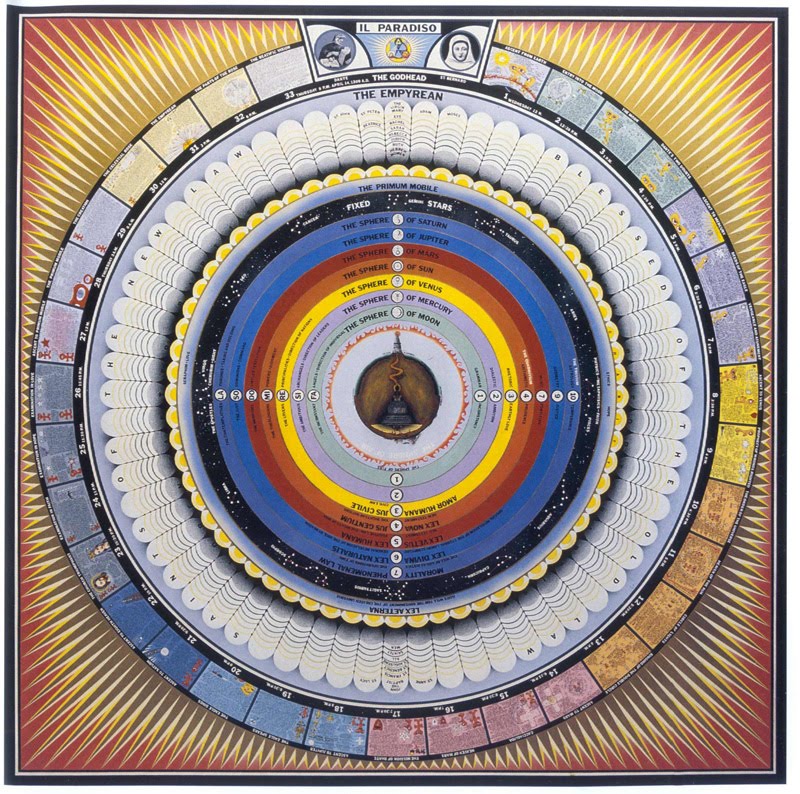
Upcoming Observatory Double Feature "Beyond the Sphere: Getting Lost with Dante" and the Music of Helen Gillet, Monday, November 22


Next Monday at Observatory, Paradiso Contapasso presents a fantastic double feature: the haunting cello music of New Orleans-based Helen Gillet followed by an illustrated lecture about Dante's trip to hell and back by medievalist Nicola Masciandaro. All for just $5.

The music begins at 7 and the lecture at 8.

Full details below; hope to see you there!

A Paradiso Contapasso Double Feature:
Beyond the Sphere: Getting Lost with Dante and the Music of Helen Gillet
An illustrated lecture with professor of medieval literature Nicola Masciandaro preceded by the a performance by Helen Gillet
Date: Monday, November 22
Time: 7:00 for music; 8:00 for lecture
Admission to both: $5

Everyone knows that Dante went to hell and back. “Non vedi tu come egli ha la barba crespa e il color bruno per lo caldo e per lo fummo che è là giù?” [Do you not see how his beard is crisped and his color browned by the heat and smoke that this there below?], a lady is reported by Boccaccio to have said upon seeing the poet in Verona.

The underworld is written all over the author’s image. In many circles, from video game consoles to college lecture halls, the Divine Comedy is virtually synonymous with Inferno. The “Paradiso Contrapasso” concept presents a liberation from this stygian fixation. A contamination of paradise with the essential principal of divine punishment? A saturation of eternal torment with celestial, empyreal bliss? Or maybe something more radical than either. The damnation and perdition of the very idea of paradise? Or a penalty that would itself comprise it?

The word paradise, from ancient Persian, signifies an enclosed or walled garden. The divine punishment of paradise might then be imagined as the annihilation of its constitutive boundary, an exposure of the garden to what is beyond it. Does paradise disappear? Or does everything become a paradise?

Tonight’s lecture will take this theme as an invitation to read Dante as a radically paradisical poet, one for whom the original and ultimate state of being is never somewhere else, before or after, but is something that must always, and precisely in its absence, always be here.

Nicola Masciandaro is Associate Professor of English at Brooklyn College (CUNY) and a specialist in medieval literature.

To find out more about the lecture, click here; to find out more about the music of Helen Gillet, click here. You can get directions to Observatory--which is next door to the Morbid Anatomy Library (more on that here)--by clicking here. You can find out more about Observatory here, join our mailing list by clicking here, and join us on Facebook by clicking here.

Reading and Book Signing: "Sleeping Beauty III Memorial Photography: The Children," Stanley Burns of the Burns Archive


Tonight, at the Merchant's House Museum, as part of the exhibition “Memento Mori: The Birth and Resurrection of Postmortem Photography" blogged about recently here:

Wednesday, November 17, 7 p.m.
Reading: Sleeping Beauty III Memorial Photography: The Children
Merchant's House Museum
29 East Fourth Street, New York, NY 10003
The Museum is located between Lafayette Street and Bowery
Free, space is limited.

Dr. Stanley Burns of The Burns Archive will speak about the practice of postmortem photography from the 19th century until today, and sign copies of his latest book in the renowned Sleeping Beauty series. A reception to meet the author will follow.

To RSVP Call 212-777-1089

To read more about postmortem photography at The Burns Archive click here.

Stay tunes for a similar event Morbid Anatomy Presents event at Observatory sometime in the new year!

Image: ©2010 The Burns Archive, found here.

Nothing says "Merry Christmas" Like Victorian Baby Talk: Edison's Monstrous Talking Doll, circa 1890


Nothing says "Merry Christmas" like Victorian baby talk. Especially when it sounds like this.

More, from the Go Report website:

While we may never know what the ‘must have’ Christmas gift was in 1890, we do know that it most assuredly wasn’t Thomas Edison’s talking doll.

Using miniature phonographs embedded inside, these “talking” baby dolls were toy manufacturers’ first attempt at using sound technology in toys. They marked a collaboration between Edison and William Jacques and Lowell Briggs, who worked to miniaturize the phonograph starting in 1878.

Unfortunately, production delays, poor recording technology, high production costs, and damages during distribution all combined to create toys that were a complete disaster, terrifying children and costing their parents nearly a month’s pay.

Edison would later refer to the dolls as his “little monsters.”

To hear this wee monstrous baby reciting, we are led to believe, "Little Jack Horner," click here. To read the entire story from which the above excerpt is drawn, click here. Sound from Archive.org.

Thanks to my lovely friend Matt Murphy for this charming holiday tale about a rare Edison commercial misfire.

Tomorrow Night: "The Vast Santanic Conspiracy: Is St. Nick the Tool of a Plot too Monstrous to Mention?" With Cult-Author Mark Dery at Observatory


Tomorrow night at Observatory. So hope to see you there!

The Vast Santanic Conspiracy: Is St. Nick the Tool of a Plot too Monstrous to Mention?
An illustrated lecture with cult author and cultural critic Mark Dery, followed by a Krampus/Solstice-themed after party with music, specialty cocktails, and more
Date: Tuesday, December 21 (Winter Solstice)
Time: 8:00 PM
Admission: $10
Presented by Morbid Anatomy

Canceled, last year, by an act of Cthulhu–the Mother of All Blizzards, which dumped 20 inches of snow across the Northeast–Dery’s wickedly witty lecture, “The Vast Santanic Conspiracy: Is St. Nick the Tool of a Plot too Monstrous to Mention?,” is sure to inspire Christmas jeer.

Few Americans know that Santa descends from the mock king who held court at Saturnalia, the Roman festival celebrating the winter solstice. Or that he shares cultural DNA with the Lord of Misrule who presided over the yuletide Feast of Fools in the Middle Ages—lewd, blasphemous revels that gave vent to underclass hostility toward feudal lords and the all-powerful church.

In “The Vast Santanic Conspiracy: Is St. Nick the Tool of a Plot too Monstrous to Mention?,” Dery, a cultural critic and book author, takes a look at the Jolly Old Elf’s little-known role as poster boy for officially sanctioned eruptions of social chaos, as well as his current status as a flashpoint in “the Christmas Wars”—cultural battles between evangelicals, atheists, conservatives, and anti-consumerists over the “true” meaning of Christmas. Along the way, Dery considers New Age theories that Santa is a repressed memory of an ancient Celtic cult revolving around red-capped psychedelic mushrooms; Nazi attempts to re-imagine Christmas—a holiday consecrated to a Jewish baby, for Christ’s sake—as a pre-Christian invention of tree-worshipping German tribes, in some misty, Wagnerian past; and the suspicious similarities between Satan and Santa, connections that have fueled a cottage industry of conspiracy theories on the religious right.

Mark Dery (http://www.markdery.com) is a cultural critic. He is best known for his writings on the politics of popular culture in books such as The Pyrotechnic Insanitarium: American Culture on the Brink and Escape Velocity: Cyberculture at the End of the Century. Dery is widely associated with the concept of “culture jamming,” the guerrilla media criticism movement he popularized through his 1993 essay “Culture Jamming: Hacking, Slashing, and Sniping in the Empire of the Signs”; “Afrofuturism,” a term he coined and theorized in his 1994 essay “Black to the Future” (included in the anthology Flame Wars: The Discourse of Cyberculture, which he edited); and the Pathological Sublime, which he introduced in The Pyrotechnic Insanitarium. He has been a professor in the Department of Journalism at New York University, a Chancellor’s Distinguished Fellow at UC Irvine, a Visiting Scholar at the American Academy in Rome, a blogger for True/Slant (http://trueslant.com/markdery/) and Thought Catalog (http://thoughtcatalog.com/) and a guest blogger at Boing Boing. A Portuguese-only collection of his recent essays, Não Devo Pensar Em Coisas Ruins (I Must Not Think Bad Thoughts), has just been published in Brazil by Editora Sulina.

You can find out more about this event on the Observatory website by clicking here. You can get directions to Observatory--which is next door to the Morbid Anatomy Library (more on that here)--by clicking here. You can find out more about Observatory here, join our mailing list by clicking here, and join us on Facebook by clicking here.

Oddities, Obscura Antiques and Oddities, Discovery Channel, Premiere Report


Oddities--the previously discussed reality show [sic] based on my favorite store in the world, Obscura Antiques and Oddities--premiered last night on The Discovery Channel. I am very happy to report that I actually quite liked the show, which came to me as some surprise as I am, in general, no fan reality television. Oddites is actually a television show I would--and will!--watch, and I am so proud of all my friends whose knowledgeable, thoughtful, and non-histrionic participation is elevating it well above the usual reality television fare!

You can view my favorite clip from last night's episode--which stars a very charismatic playwright and Obscura regular named Edgar and his encounter with a straitjacket--by clicking here. Note: you will have to sit through an obligatory commercial to get to the good stuff, but it is definitely worth it.

Oddities will be airing Thursday nights at 8:00 PM on the Discovery Channel; I highly highly highly recommend you find a way to check it out (I surely will be...). You can find out more--and view many more clips!--on the Oddities home page (pictured above) by clicking here.

"Lantern Slides: Looking Glass through History" Margaret Mead Film & Video Festival, Saturday November 13


Next Saturday, November 13th, join American Museum of Natural History archivist (and friend of Morbid Anatomy) Barbara Mathé for an illustrated presentation about the museum's vast collection of magic lantern slides as part of the Margaret Mead Festival. Entitled "Lantern Slides: Looking Glass through History," the presentation will, in the words of the press release, "share the behind-the-scenes history of the lantern slides, photographs of Museum employees painting the original slides, and [detail] the fascinating story of their journey from AMNH to a basement in Staten Island and back again."

Having been so fortunate as to be allowed a tiny peek at the riches of the archives of AMNH--where I once had the honor of working--I simply cannot wait for this presentation and the opportunity to find out more about this seriously incredible collection!

Full details follow; hope very much to see you there!

Lantern Slides: Looking Glass through History
Margaret Mead Film & Video Festival
American Museum of Natural History, New York City
November 13, 2010 | 1:30 pm
Kaufmann Theater
$12 General admission / $10 Members, students, seniors

Join the Mead for an urban dig through the American Museum of Natural History’s library archives. Once the foundation of a long-running and wildly popular series of lectures by zoologist and AMNH founder Albert Bickmore, the Museum’s collection of more than 40,000 glass lantern slides were used as an educational tool starting in the late 1800s and were later circulated throughout New York City’s public school system. Often hand-colored these slides depict myriad subjects, such as landscapes, scientific specimens, and field expeditions captured around the world by the Museum’s own scientists. In celebration of the recovery of about 20,000 of these rare artifacts, the Festival presents the opportunity to view these unique historical documents and stunning works of art through the eyes of in-house archivist Barbara Mathé. She will share the behind-the-scenes history of the lantern slides, photographs of Museum employees painting the original slides, and the fascinating story of their journey from AMNH to a basement in Staten Island and back again. Historian Constance Areson Clarke and media historian Alison Griffiths will also be on hand to discuss the wider history of lantern slides and educational media.

Co-presented by International Center of Photography and the New York Stereoscopic Society.

For more information--and to find out about other offerings of this year's Mead festival--go to amnh.org/mead.

"Dermographisme – Démence précoce catatonique," Nouvelle Iconographie de la Salpêtrière, Paris, 1904


Dermographisme [aka dermographism, dermatographismm or "skin writing] - Démence précoce catatonique, from Nouvelle Iconographie de la Salpêtrière, Paris, 1904.

From the Wellcome Collection Skin exhibition website (which featured this image):

Démence Précoce Catatonique Dermographisme. L Trepsat, 1893. From 'Nouvelle Iconographie de la Salpêtrière', 1904.

During the second hald of the 19th century, the belief spread that the phenomenon of dermatographism (or 'dermographism', or 'skin writing') was linked to hysteria and other mental or nervous disorders. Here a female patient at the Salpêtrière hospital in Paris has had her diagnosis 'Démence précoce' (dementia praecox) 'written' on her back.

Click on image to see larger version.

Via Rrosehobart Tumblr.

"Science and Curiosities at the Court of Versailles," Through February 2011


Thanks so much to my friend Megan for letting me know about the super exciting looking exhibition that will be on view at Versailles Palace in France through February of next year.

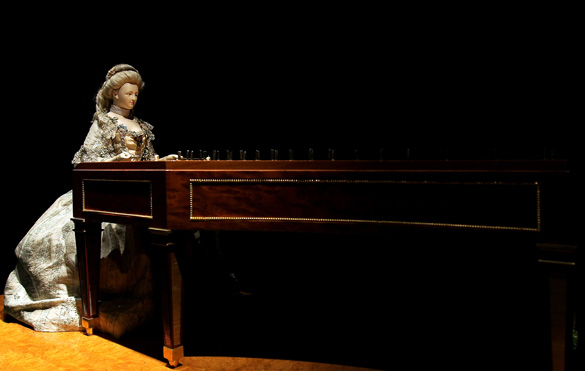
The show--entitled "Science and Curiosities at the Court of Versailles"--will tell the story of scientific inquiry, rational amusement, and natural and artificial curiosities at the grand royal court of Versailles. To illustrate this worthy topic, the exhibition will gather and display--for the first time ever--a variety of artifacts that once comprised part of the monolithic "royal collection" and are now--post French Revolution and disciplinary divides--housed in a variety of anatomical, anthropological, natural historical, and art museums around France.

The artifacts will reveal "a new, unexpected face of Versailles as a place of scientific inquiry in its most various forms," trace the stories of the relationship between natural philosophers and the royal court, and bring "together works and instruments from the old royal collections, spectacular achievements of beauty and intelligence, for the first time."

Good stuff!

Here is the full description from the website:

[Science and Curiosities at the Court of Versailles] reveals a new, unexpected face of Versailles as a place of scientific inquiry in its most various forms: the Hall of Mirrors electricity experiment, Marley Machine on the banks of the Seine, burning mirror solar power demonstration, etc. It brings together works and instruments from the old royal collections, spectacular achievements of beauty and intelligence, for the first time.

Versailles is the place where control over science was exercised. At the urging of Jean-Baptiste Colbert, Louis XIV's "prime minister", the royal authority became aware of the benefits of scientific research. In 1666 Colbert founded the Academy of Science, establishing a new contract between the government and scientists. Many "natural philosophers", as they were known at the time, including some of the most famous, assiduously frequented the Court as physicians, army engineers, tutors, etc. The physicists Benjamin Franklin and Abbot Nollet compared their theories in front of the king and the encyclopaedists Diderot and D’Alembert met in the office of Dr. Quesnay, physician to Madame de Pompadour, Louis XV's favourite. Some courtiers were real experts.

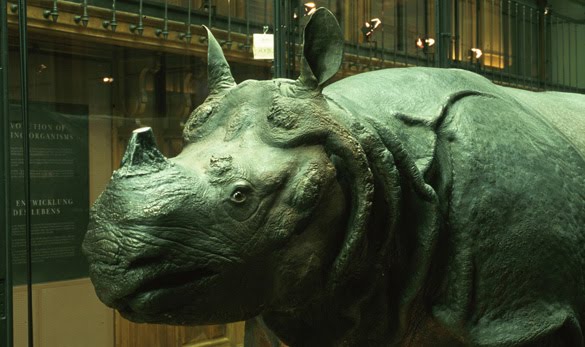
The Château de Versailles offered many research resources. Anatomists and zoologists could study the menagerie's ostriches, pelicans, rhinoceroses and other rare animals, botanists and agronomists the plants on the grounds of the Trianon and "hippiatrists", the forerunners to veterinarians, the horses in the Grand Stables.

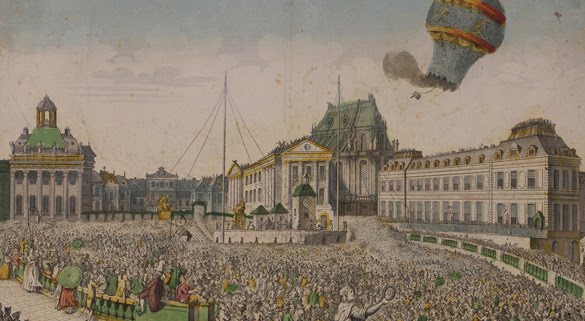
Educators developed new teaching methods using cutting-edge tools for the royal children and the kings' personal practice. While Louis XIV considered himself a protector of the arts and sciences without practicing them, his successors, Louis XV and Louis XVI, became true connoisseurs. A presentation to the king or demonstration before the Court was the highest honour, equivalent to winning a Nobel Prize. Many people know about the first hot-air balloon flight, but numerous other events have fallen into oblivion, such as the burning mirror demonstration in front of Louis XIV or the electricity experiment in the Hall of Mirrors under his successor's reign.

You can find out more on the exhibition website--which will be on view until February of next year--by clicking here. You can see the Tympanum Player Automaton in full automaton action by pressing play on the Youtube viewer above.

If anyone makes it to this exhibition, I would love to see images/hear a report!

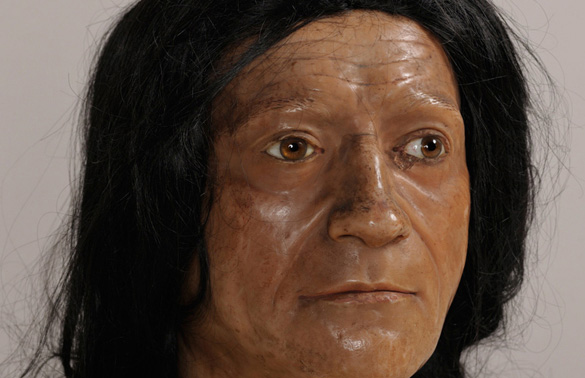
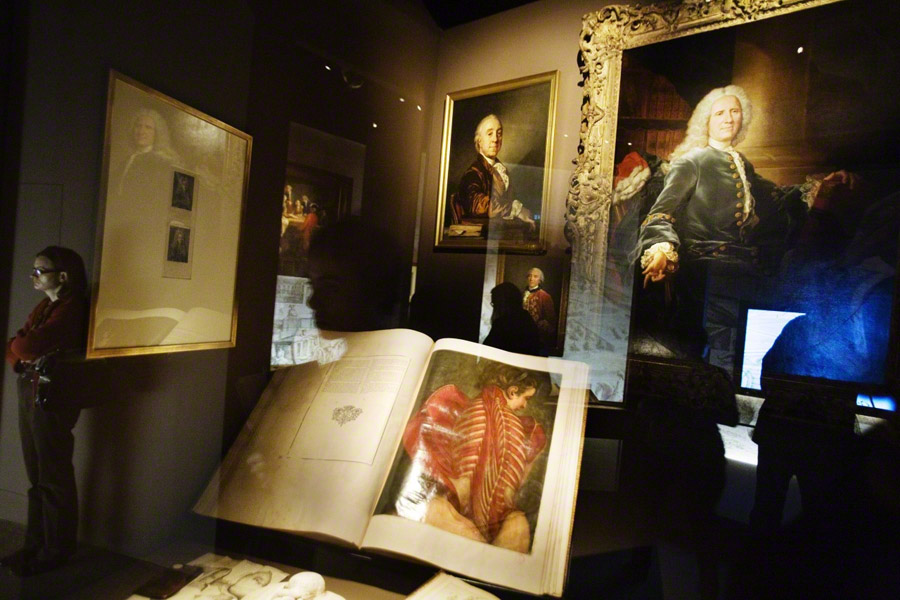
Top two images are installation views of the exhibition from the Corbis Images Blog. The rest of the images from the exhibition website and are captioned, top to bottom:

  • The Tympanum Player Automaton; Peter Kintzing (1745-1816) and David Roentgen (1743-1807)
  • Rhinoceros gifted in 1769 to King Louis XV by the French governor of Chandernagore
  • Waxen Indian head from the Cabinet of the Marquis de Sérent; originally on display in a window of the Marquis de Sérent's ethnographical cabinet in Rue des Réservoirs at Versailles acquired for the princes' education.
  • 18th C Artwork depicting Étienne de Montgolfier's aerostatic experiment at Versailles
  • Watercolour drawing by Philippe-Etienne Lafosse (1738-1820), intended for the study of Farriery, or the art of treating the ailments of horses

Via my wonderful friend Megan Fitzpatrick who found it via Jezebel.

"Very Bad Things" and The Morbid Anatomy Library in Newsweek, Article and Video

The Morbid Anatomy Library has just been featured in a Newsweek Magazine article entitled "Very Bad Things," which is essentially a meditation on why people collect the unspeakable, from "hipbones to wallets made of human skin to babies in jars." The piece was inspired by Mark Jacobson's new and excellent book (about which he just spoke at Observatory) The Lampshade: A Holocaust Detective Story from Buchenwald to New Orleans. Good friend Evan Michelson of the incomparable Obscura Antiques and Oddities--who is also co-star of the new reality show "Oddities" (as mentioned in yesterday's post), and Morbid Anatomy Library Scholar in Residence--also makes a characteristically well-spoken and thoughtful appearance.

Accompanying the article is a video tour of The Morbid Anatomy Library which the magazine describes as "A Peek Inside a 'Morbid' Museum;" You can view the video above if you so choose.

You can read the article--and see the video in context!--by clicking here. For more about The Morbid Anatomy Library, click here. To find out more about Mark Jacobson's book The Lampshade--or purchase a copy!--click here. To find out about his recent Morbid Anatomy Presents lecture at Observatory, click here. To find out more about Obscura Antiques and Oddities and the new program "Oddities," click here and here, respectively.

Mütter Museum Day of the Dead Party Today!


Today, the incomparable Mütter Museum of Philadelphia will be hosting an epic Day of the Dead party. Stop by at noon or four PM to catch me expounding on medical museums, memento mori, and morbidity as keynote speaker; stay for the party, complete with food, drink, music and sugar skulls!

Hope very much to see you there.

The Mütter Museum’s 3nd Annual Day of the Dead Festival
Come celebrate this traditional Mexican holiday with an all-day event at the Mütter Museum! Decorate sugar skulls, enjoy traditional food and drink, visit the Museum, hear from guest speaker, artist Joanna Ebenstein and see an exclusive show by local personality Grover Silcox!

- 10AM: Museum opens and sugar skull decorating begins
- 12PM and 4PM: Talk by Artist Joanna Ebenstein
- 5 - 6:30PM: Guided museum tour, exclusively for Friends of the Mütter
- 6:30 - 8PM: Exclusive performance by Grover Silcox

Sponsored by the Mütter Museum of The College of Physicians of Philadelphia

(NOTE: Registration is not required for daytime festivities and is free with Museum admission; registration IS required, with additional cost for admission, to Silcox production.)

For more information on the Mütter Museum 3rd Annual Day of the Dead Festival, click here.

Image: "The Mütter Museum : Philadelphia, Pennsylvania, Human skulls, backroom; 19th Century" From Anatomical Theatre Exhibition

"Oddities," Obscura Antiques and Oddities, Discovery Channel, Premiering Next Thursday at 9:30 on Discovery Channel

Wow. Its for real.

"Oddities," the new reality TV show (that's right, REALITY TV SHOW) based on Morbid Anatomy's favorite shop Obscura Antiques and Oddities in New York City's East Village. Seen above, in moving images and sound, in the just-released trailer. The show features shop proprietors and good friends Evan Michelson (aka Morbid Anatomy Library Scholar in Residence) and Mike Zohn, who recently dignified us with a wonderful lecture on Automata at Observatory.

Wow. Wow! Somehow I did not expect to see so many familiar faces.

"Oddities" premieres Nov. 4 at 9:30 p.m. on Discovery Channel; after the launch, it will air Thursdays at 8 PM. You can find out more about Obscura Antiques and Oddities by clicking here; you can see a recent MA Post on the story by clicking here. For more on the show--including a link to a story in the New York Post--see this recent post.

Tonight at Observatory: "Tall Tales of the Totem Pole: The Intercultural Biography of an Icon" with Aaron Glass


"Tall Tales of the Totem Pole: The Intercultural Biography of an Icon" with Aaron Glass tonight at Observatory! Hope to see you there.

Tall Tales of the Totem Pole: The Intercultural Biography of an Icon
An illustrated talk by anthropologist Aaron Glass

Date: TONIGHT! Sunday, October 24

Time: 8:00 PM

Admission: $5
Books will be available for sale and signing

To mark the release of The Totem Pole: An Intercultural History, co-author Aaron Glass will discuss how carved heraldic monuments from the Northwest Coast have become central symbols for the Native American at large. Dispelling many common myths, he reconstructs the intercultural history of the art form from the late 1700s—when Europeans first arrived on the coast—to the present, and describes how two centuries of colonial encounter transformed these indigenous carvings into a category of popular imagination and souvenir kitsch. Glass presents theories on the origin of the totem pole; its spread from the Northwest Coast to World’s Fairs and global theme parks; the history of tourism and its appropriation as a signifier of place; the role of governments, museums, and anthropologists in collecting and restoring poles; and the part that these carvings have continuously played in Native struggles for sovereignty over their cultures and lands. From the (many) world’s tallest totem pole(s) to the smallest, from depictions of whites on poles to the use of poles in advertising, this talk will explore the multifarious histories of these iconic forms.

Books will be available for purchase and signing.

Aaron Glass is an anthropologist and artist who works with indigenous people in British Columbia and Alaska. His past research, along with a companion film “In Search of the Hamat’sa” examined the ethnographic representation and performance history of the Kwakwaka’wakw “Cannibal Dance.” He has published widely on various aspects of First Nations art, media, and performance on the Northwest Coast, and was recently involved in the restoration of Edward Curtis’s 1914 silent film, “In the Land of the Headhunters.” Glass is currently an Assistant Professor at the Bard Graduate Center in New York City, where he is curating the exhibit “Objects of Exchange,” opening in January 2011.

To find out more, click here. You can read more about "The Material Transformation of a Cultural Icon" on Aaron Glass' blog Material World by clicking here. You can get directions to Observatory--which is next door to the Morbid Anatomy Library (more on that here)--by clicking here. You can find out more about Observatory here, join our mailing list by clicking here, and join us on Facebook by clicking here.

Image: Model pole by Charlie James, now in the UBC Museum of Anthropology, via Material World.

Journey Through the Afterlife: The Ancient Egyptian Book of the Dead, Exhibition, British Museum


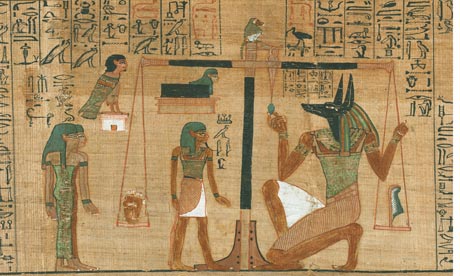
I have just been alerted to the launching of a new exhibit at the British Museum, "Journey Through the Afterlife: The Ancient Egyptian Book of the Dead." The exhibit, as the British Museum website explains, will show not only examples of the Book of the Dead never before seen, but also funerary figures, statues and coffins illustrating "the the many stages of the journey from death to the afterlife, including the day of burial, protection in the tomb, judgement, and entering the hereafter," all with the aim of discovering "the important mythical and spiritual ideas of ancient Egyptian life and death."

Following is the full text description from the British Museum Website:

Journey Through the Afterlife:
The Ancient Egyptian Book of the Dead

Follow the ancient Egyptians’ journey from death to the afterlife in this once-in-a-lifetime exhibition focusing on the Book of the Dead.

The ‘Book’ was not a single text but a compilation of spells designed to guide the deceased through the dangers of the underworld, ultimately ensuring eternal life.

Many of the examples of the Book of the Dead in the exhibition have never been seen before, and many are from the British Museum’s unparalleled collection. These beautifully illustrated spells on papyrus and linen were used for over 1,000 years, and the oldest examples are over 3,500 years old.

This is a once-in-a-lifetime opportunity to see these fascinating and fragile objects on display.

In addition to the unique works on papyrus and linen, superbly crafted funerary figurines (shabtis), amulets, jewellery, statues and coffins illustrate the many stages of the journey from death to the afterlife, including the day of burial, protection in the tomb, judgement, and entering the hereafter.

Digital media and recent research will be used to interactively interpret the Book of the Dead and complete scrolls will be reassembled and presented in their original form for the first time.

Journey with the Book of the Dead to discover the important mythical and spiritual ideas of ancient Egyptian life and death.

You can find out more about the exhibit--which runs from November 4 until March 6-- on the British Museum homepage by clicking here, can watch a short video introduction to the exhibition by clicking here, and can read more about it in today's Guardian by clicking here.

Image: Depiction of the weighing of the heart ritual from the papyrus of Ani, c1275 BC. © The Trustees of the British Museum; from The Gaurdian