Tattooed Teeth

Tooth tattoos

Tooth tattoos

Tooth tattoos

Tattoos on your teeth! This detailed artwork is done in Utah by ToothArtist. There are many more examples on their site and details on how you can get your own tooth tattoos!

It can be a little pricey, but tattoos are permanent and a good tattoo is worth the price.

This is so fascinating and bizarre to me. I wish I still had my teeth from when I was younger. I would so get Chairy from Pee-wee’s Playhouse tattooed on a molar.

[myloveforyou]

Darkstar’s Gold Music Video

Darkstar: Gold from Evan Boehm on Vimeo.

Sembler, a design group “focused on sound and vision in a spatial context,” created this music video for Darkstar’s “Gold” off their new album, North.  They used a combination of specialized 3D lighting, “Gold” code, and data from the Visible Human Project to represent the concept of an idea infecting multiple hosts.  The “idea” is represented by gold particles in the music video.

The cool thing is that all of the code used to make this video is available to the public.  So you can go ahead and make a video just like this.  Good luck!

Oddities, Obscura Antiques and Oddities, Discovery Channel, Premiere Report


Oddities--the previously discussed reality show [sic] based on my favorite store in the world, Obscura Antiques and Oddities--premiered last night on The Discovery Channel. I am very happy to report that I actually quite liked the show, which came to me as some surprise as I am, in general, no fan reality television. Oddites is actually a television show I would--and will!--watch, and I am so proud of all my friends whose knowledgeable, thoughtful, and non-histrionic participation is elevating it well above the usual reality television fare!

You can view my favorite clip from last night's episode--which stars a very charismatic playwright and Obscura regular named Edgar and his encounter with a straitjacket--by clicking here. Note: you will have to sit through an obligatory commercial to get to the good stuff, but it is definitely worth it.

Oddities will be airing Thursday nights at 8:00 PM on the Discovery Channel; I highly highly highly recommend you find a way to check it out (I surely will be...). You can find out more--and view many more clips!--on the Oddities home page (pictured above) by clicking here.

"Lantern Slides: Looking Glass through History" Margaret Mead Film & Video Festival, Saturday November 13


Next Saturday, November 13th, join American Museum of Natural History archivist (and friend of Morbid Anatomy) Barbara Mathé for an illustrated presentation about the museum's vast collection of magic lantern slides as part of the Margaret Mead Festival. Entitled "Lantern Slides: Looking Glass through History," the presentation will, in the words of the press release, "share the behind-the-scenes history of the lantern slides, photographs of Museum employees painting the original slides, and [detail] the fascinating story of their journey from AMNH to a basement in Staten Island and back again."

Having been so fortunate as to be allowed a tiny peek at the riches of the archives of AMNH--where I once had the honor of working--I simply cannot wait for this presentation and the opportunity to find out more about this seriously incredible collection!

Full details follow; hope very much to see you there!

Lantern Slides: Looking Glass through History
Margaret Mead Film & Video Festival
American Museum of Natural History, New York City
November 13, 2010 | 1:30 pm
Kaufmann Theater
$12 General admission / $10 Members, students, seniors

Join the Mead for an urban dig through the American Museum of Natural History’s library archives. Once the foundation of a long-running and wildly popular series of lectures by zoologist and AMNH founder Albert Bickmore, the Museum’s collection of more than 40,000 glass lantern slides were used as an educational tool starting in the late 1800s and were later circulated throughout New York City’s public school system. Often hand-colored these slides depict myriad subjects, such as landscapes, scientific specimens, and field expeditions captured around the world by the Museum’s own scientists. In celebration of the recovery of about 20,000 of these rare artifacts, the Festival presents the opportunity to view these unique historical documents and stunning works of art through the eyes of in-house archivist Barbara Mathé. She will share the behind-the-scenes history of the lantern slides, photographs of Museum employees painting the original slides, and the fascinating story of their journey from AMNH to a basement in Staten Island and back again. Historian Constance Areson Clarke and media historian Alison Griffiths will also be on hand to discuss the wider history of lantern slides and educational media.

Co-presented by International Center of Photography and the New York Stereoscopic Society.

For more information--and to find out about other offerings of this year's Mead festival--go to amnh.org/mead.

Of Sound and Vision

Alex Cherry Remorse for the Dead

Remorse is for the Dead, 2008

Alex Cherry We Live No More

We Live No More, 2007

Alex Cherry Hellbound

Hellbound, 2008

Alex Cherry Heaven Beside You

Heaven Beside You, 2009

Alex Cherry the Pot

The Pot, 2008

I am loving the work by Los Angeles based illustrator, Alex Cherry.  His linework, use of texture, and ink splatter bring an urban vibe to a lot of his pieces.  Alex’s finds inspiration in music and if you take a close look, the titles of his pieces actually come from song titles from bands like Tool, Radiohead, Converge, and more.  See more of Alex’s work on his portfolio site ofsoundandvision.com.

[spotted by Ryan Jones and Peter Balla]

"Science and Curiosities at the Court of Versailles," Through February 2011


Thanks so much to my friend Megan for letting me know about the super exciting looking exhibition that will be on view at Versailles Palace in France through February of next year.

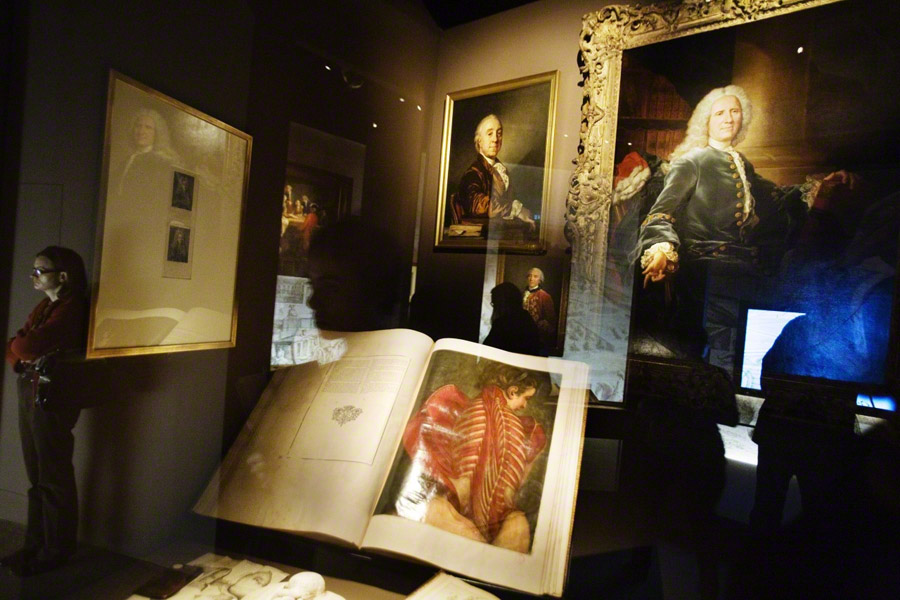
The show--entitled "Science and Curiosities at the Court of Versailles"--will tell the story of scientific inquiry, rational amusement, and natural and artificial curiosities at the grand royal court of Versailles. To illustrate this worthy topic, the exhibition will gather and display--for the first time ever--a variety of artifacts that once comprised part of the monolithic "royal collection" and are now--post French Revolution and disciplinary divides--housed in a variety of anatomical, anthropological, natural historical, and art museums around France.

The artifacts will reveal "a new, unexpected face of Versailles as a place of scientific inquiry in its most various forms," trace the stories of the relationship between natural philosophers and the royal court, and bring "together works and instruments from the old royal collections, spectacular achievements of beauty and intelligence, for the first time."

Good stuff!

Here is the full description from the website:

[Science and Curiosities at the Court of Versailles] reveals a new, unexpected face of Versailles as a place of scientific inquiry in its most various forms: the Hall of Mirrors electricity experiment, Marley Machine on the banks of the Seine, burning mirror solar power demonstration, etc. It brings together works and instruments from the old royal collections, spectacular achievements of beauty and intelligence, for the first time.

Versailles is the place where control over science was exercised. At the urging of Jean-Baptiste Colbert, Louis XIV's "prime minister", the royal authority became aware of the benefits of scientific research. In 1666 Colbert founded the Academy of Science, establishing a new contract between the government and scientists. Many "natural philosophers", as they were known at the time, including some of the most famous, assiduously frequented the Court as physicians, army engineers, tutors, etc. The physicists Benjamin Franklin and Abbot Nollet compared their theories in front of the king and the encyclopaedists Diderot and D’Alembert met in the office of Dr. Quesnay, physician to Madame de Pompadour, Louis XV's favourite. Some courtiers were real experts.

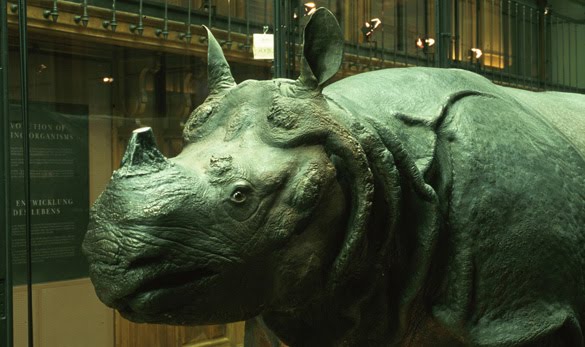
The Château de Versailles offered many research resources. Anatomists and zoologists could study the menagerie's ostriches, pelicans, rhinoceroses and other rare animals, botanists and agronomists the plants on the grounds of the Trianon and "hippiatrists", the forerunners to veterinarians, the horses in the Grand Stables.

Educators developed new teaching methods using cutting-edge tools for the royal children and the kings' personal practice. While Louis XIV considered himself a protector of the arts and sciences without practicing them, his successors, Louis XV and Louis XVI, became true connoisseurs. A presentation to the king or demonstration before the Court was the highest honour, equivalent to winning a Nobel Prize. Many people know about the first hot-air balloon flight, but numerous other events have fallen into oblivion, such as the burning mirror demonstration in front of Louis XIV or the electricity experiment in the Hall of Mirrors under his successor's reign.

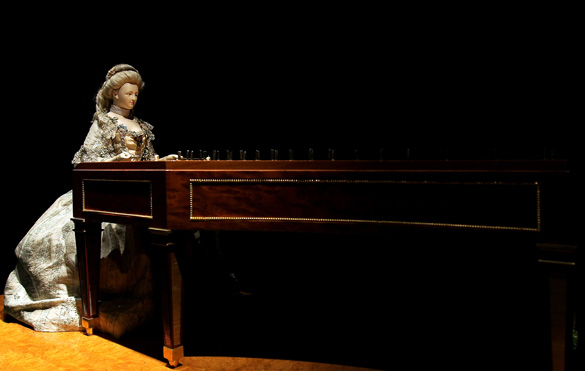
You can find out more on the exhibition website--which will be on view until February of next year--by clicking here. You can see the Tympanum Player Automaton in full automaton action by pressing play on the Youtube viewer above.

If anyone makes it to this exhibition, I would love to see images/hear a report!

Top two images are installation views of the exhibition from the Corbis Images Blog. The rest of the images from the exhibition website and are captioned, top to bottom:

  • The Tympanum Player Automaton; Peter Kintzing (1745-1816) and David Roentgen (1743-1807)
  • Rhinoceros gifted in 1769 to King Louis XV by the French governor of Chandernagore
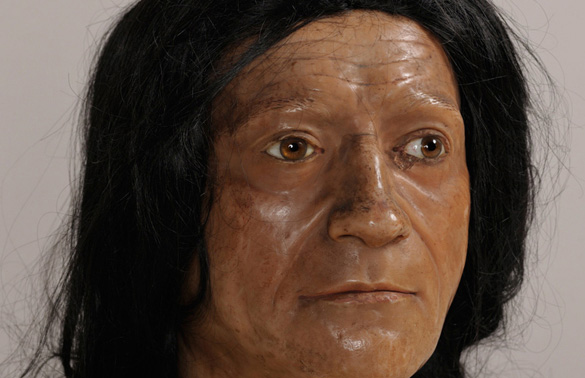
  • Waxen Indian head from the Cabinet of the Marquis de Sérent; originally on display in a window of the Marquis de Sérent's ethnographical cabinet in Rue des Réservoirs at Versailles acquired for the princes' education.
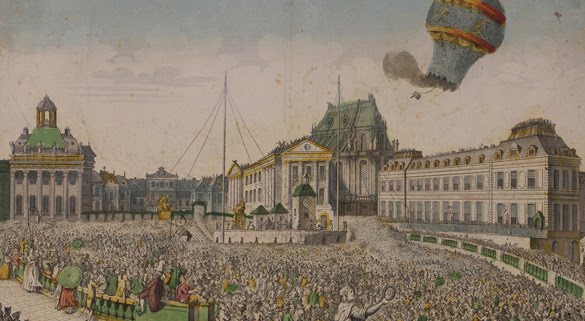
  • 18th C Artwork depicting Étienne de Montgolfier's aerostatic experiment at Versailles
  • Watercolour drawing by Philippe-Etienne Lafosse (1738-1820), intended for the study of Farriery, or the art of treating the ailments of horses

Via my wonderful friend Megan Fitzpatrick who found it via Jezebel.

"Dermographisme – Démence précoce catatonique," Nouvelle Iconographie de la Salpêtrière, Paris, 1904


Dermographisme [aka dermographism, dermatographismm or "skin writing] - Démence précoce catatonique, from Nouvelle Iconographie de la Salpêtrière, Paris, 1904.

From the Wellcome Collection Skin exhibition website (which featured this image):

Démence Précoce Catatonique Dermographisme. L Trepsat, 1893. From 'Nouvelle Iconographie de la Salpêtrière', 1904.

During the second hald of the 19th century, the belief spread that the phenomenon of dermatographism (or 'dermographism', or 'skin writing') was linked to hysteria and other mental or nervous disorders. Here a female patient at the Salpêtrière hospital in Paris has had her diagnosis 'Démence précoce' (dementia praecox) 'written' on her back.

Click on image to see larger version.

Via Rrosehobart Tumblr.

"Very Bad Things" and The Morbid Anatomy Library in Newsweek, Article and Video

The Morbid Anatomy Library has just been featured in a Newsweek Magazine article entitled "Very Bad Things," which is essentially a meditation on why people collect the unspeakable, from "hipbones to wallets made of human skin to babies in jars." The piece was inspired by Mark Jacobson's new and excellent book (about which he just spoke at Observatory) The Lampshade: A Holocaust Detective Story from Buchenwald to New Orleans. Good friend Evan Michelson of the incomparable Obscura Antiques and Oddities--who is also co-star of the new reality show "Oddities" (as mentioned in yesterday's post), and Morbid Anatomy Library Scholar in Residence--also makes a characteristically well-spoken and thoughtful appearance.

Accompanying the article is a video tour of The Morbid Anatomy Library which the magazine describes as "A Peek Inside a 'Morbid' Museum;" You can view the video above if you so choose.

You can read the article--and see the video in context!--by clicking here. For more about The Morbid Anatomy Library, click here. To find out more about Mark Jacobson's book The Lampshade--or purchase a copy!--click here. To find out about his recent Morbid Anatomy Presents lecture at Observatory, click here. To find out more about Obscura Antiques and Oddities and the new program "Oddities," click here and here, respectively.

Mütter Museum Day of the Dead Party Today!


Today, the incomparable Mütter Museum of Philadelphia will be hosting an epic Day of the Dead party. Stop by at noon or four PM to catch me expounding on medical museums, memento mori, and morbidity as keynote speaker; stay for the party, complete with food, drink, music and sugar skulls!

Hope very much to see you there.

The Mütter Museum’s 3nd Annual Day of the Dead Festival
Come celebrate this traditional Mexican holiday with an all-day event at the Mütter Museum! Decorate sugar skulls, enjoy traditional food and drink, visit the Museum, hear from guest speaker, artist Joanna Ebenstein and see an exclusive show by local personality Grover Silcox!

- 10AM: Museum opens and sugar skull decorating begins
- 12PM and 4PM: Talk by Artist Joanna Ebenstein
- 5 - 6:30PM: Guided museum tour, exclusively for Friends of the Mütter
- 6:30 - 8PM: Exclusive performance by Grover Silcox

Sponsored by the Mütter Museum of The College of Physicians of Philadelphia

(NOTE: Registration is not required for daytime festivities and is free with Museum admission; registration IS required, with additional cost for admission, to Silcox production.)

For more information on the Mütter Museum 3rd Annual Day of the Dead Festival, click here.

Image: "The Mütter Museum : Philadelphia, Pennsylvania, Human skulls, backroom; 19th Century" From Anatomical Theatre Exhibition

"Parasites: A User’s Guide" Screening by Radiolab Affiliate Sharon Shattuck, TONIGHT!


Radiolab's Sharon Shattuck on parasites tonight at Observatory! Full details below; hope to see you there.

Parasites: A User’s Guide
A Short Film Screening with Filmmaker and Ecologist Sharon Shattuck, Radiolab Affiliate
Date: Tuesday, October 26
Time: 8:00
Admission: $5

The word “parasite” comes with loads of vile connotations, but in nature, nothing is purely good or evil. In the 27-minute experimental documentary “Parasites: A User’s Guide,” filmmaker Sharon Shattuck embarks on a journey to decode some of the most misunderstood creatures on earth.

The dramatic rise in autoimmune diseases, asthma, and allergies since the turn of the last century has confounded scientists, but some researchers think they have uncovered the key to controlling the skyrocketing rates: tiny parasitic worms called ‘helminths.’ Using a blend of handmade and digital animation, film, and music, Sharon dives headlong into the controversial discourse surrounding ‘helminthic therapy,’ with help from scientific researchers, proactive patients and a renegade entrepreneur named Jasper Lawrence. Through the seeming oxymoron of the ‘helpful parasite,’ Sharon questions the nature of our relationship with parasites–and suggests a new paradigm for the future. “Parasites: A User’s Guide” is a film about ecology, healing, and worms.

The screening will be followed by a Q&A with the filmmaker and an active helminth patient.

Check out the film’s website for more info: http://www.parasites-film.com

Bio: Before moving to Brooklyn, Sharon Shattuck studied tropical botany, and worked as a researcher with the Field Museum and the Smithsonian Institute in Panama. Following a grad stint in documentary media, she now works as an animator with Wicked Delicate Films (producers of “King Corn,” 2007) in Brooklyn, and is a contributor to the WNYC science show ‘Radiolab.’ Now, Sharon is touring the mainstream film fest circuit with her quirky science film “Parasites: A User’s Guide,” demonstrating that science can be both informative AND entertaining.

You can find out more about this event on the Observatory website by clicking here. You can get directions to Observatory--which is next door to the Morbid Anatomy Library (more on that here)--by clicking here. You can find out more about Observatory here, join our mailing list by clicking here, and join us on Facebook by clicking here.

A Very Morbid Anatomy Dia de los Muertos/Day of the Dead!


Morbid Anatomy is very excited to announce two wonderful Day of the Dead celebrations taking place this upcoming Day of the Dead and Halloween weekend!

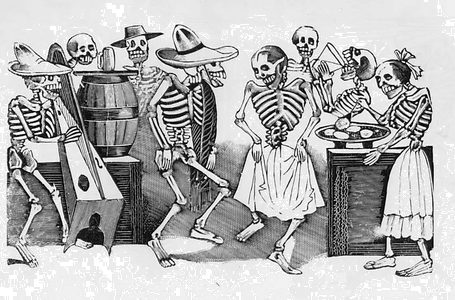
On Saturday October 30th, Philadelphia's incomparable Mütter Museum will be hosting their 3rd Annual Day of the Dead Festival, where I will be giving two lectures as keynote speaker. The very next day--Sunday October 31st, aka Halloween proper--Morbid Anatomy will be co-hosting the Second Annual Observatory Day of the Dead Party, replete with authetic Red Hook Latin food vendors, a death piñata, traditional food and drinks, sugar skulls, a José Posada (see above) inspired community altar, costumes, Negra Modelo, live music and much, much more.

Hope to see you at one or both of these fantastic events (detailed below)! But either way, Feliz Dia de Muertos from Morbid Anatomy at our favorite time of the year!

Saturday October 30th [link]
The Mütter Museum’s 3nd Annual Day of the Dead Festival

Come celebrate this traditional Mexican holiday with an all-day event at the Mütter Museum! Decorate sugar skulls, enjoy traditional food and drink, visit the Museum, hear from guest speaker, artist Joanna Ebenstein and see an exclusive show by local personality Grover Silcox!

- 10AM: Museum opens and sugar skull decorating begins
- 12PM and 4PM: Talk by Artist Joanna Ebenstein
- 5 - 6:30PM: Guided museum tour, exclusively for Friends of the Mütter
- 6:30 - 8PM: Exclusive performance by Grover Silcox

Sponsored by the Mütter Museum of The College of Physicians of Philadelphia

(NOTE: Registration is not required for daytime festivities and is free with Museum admission; registration IS required, with additional cost for admission, to Silcox production.)

Dia de Muertos (Day of the Dead) Party
Admission: $5
Date: Sunday, October 31st
Time: 5 PM - ?
Please R.S.V.P. to salvador.olguin@gmail.com for party planning purposes.

Dia de Muertos (Day of the Dead) is celebrated annually in Mexico during the last days of October and the first days of November. It is a party to honor the dearly departed by presenting offerings to them, building an altar, and inviting them to reunite with the living in a nightly feast including their favorite dishes and drinks. It has deep roots in ancient, pre-Hispanic celebrations, but it also integrates the Christian traditions brought to the country by the Spanish –the main celebration takes place on November 2nd, coinciding with All Saints Day.

On Sunday, October 31th, and for the second year in a row, Morbid Anatomy and Observatory will host a Day of the Dead party in tandem with author and scholar Salvador Olguin. This year, we will build an altar dedicated to the Economy. Traditionally, the Day of the Dead altar is dedicated to a person whose death is deeply felt by the people building it; in spite of some hopeful reports by some cheerful voices, our global Economy does not seem to be recovering quickly enough from its recent collapse. This year, we will bring her some offerings, attract her with a few bottles of tequila, and lure her back to the realm of the living with the fragrant smell of incense and marigolds. Feel free to collaborate with our altar building by bringing objects that express how deeply felt the departure of the Economy was for you and your close ones. We want to entice the ghost of the Economy to walk again among the living, to come back from the afterworld and celebrate with us, Mexican style.

Many of this year’s features are based in the art of Jose Guadalupe Posada, a Mexican printer and illustrator who worked around the time of the Mexican Revolution (1910), and who used his art to satirize prominent figures of his era. His best-known works are his calaveras (skulls), etchings depicting dancing skeletons, skulls dressed up as Revolucionarios and politicians, etc. Since this November we celebrate the 100th anniversary of the Mexican Revolution, it felt natural to honor Posada by having a live version of one of his most famous calaveras: La Catrina. Made by Posada as a depiction of the skeleton of a rich lady, La Catrina has come to represent a satirical version of Death herself in Mexico. At our party, La Catrina will mingle with our guests, and people will be able to have their picture taken with her, in front of our altar.

At this year’s Dia De Muertos party, you will also find pan de muerto, champurrado (a traditional Mexican beverage), sugar skulls, marigolds, Negra Modelo, traditional foods and crafts, a community altar, a piñata of death herself to dash to bits, live traditional music, a death themed slide show produced by Morbid Anatomy, and, of course, Redhook vendors taco truck supplying delicious and authentic foodstuffs. If you would like to dress appropriately for the occasion, you only need to take an old suit or dress, or wear the clothes of a person whose death means something for you, or simply wear your everyday clothes: everything works, as long as you add a touch of the hereafter to it –some make up to look a little pale, a skeleton suit, some dirt under your fingernails. Or you can go all the way and dress up like one of Posada’s Calaveras.

We hope you can join us! Feliz Dia de Muertos!

Salvador Olguin’s work has been published in magazines both in Mexico and in the US. He is the author of Seven Days, a multimedia theatrical piece that celebrates the convergence of traditions and hybridism that characterizes Mexico’s fascination with mortality. He has worked extensively with Mexican cultural artifacts related with death. He is currently performing research on the metaphoric uses of prostheses in literature and the visual arts, at New York University, as well as writing poems about the life of plants and the genealogy of intelligent machines. He was born in Monterrey, Mexico and is currently based in Brooklyn.

For more information on the Mütter Museum 3rd Annual Day of the Dead Festival, click here; for more information about the Observatory Dia de Muertos party, click here. To see photos from last year's Dia de Muertos Observatory Party--which will give you a sense of what you're in for--click here.

Images: Top: “Happy Dance and Wild Party of All the Skeletons,” by José Guadalupe Posada, via Radio Free Mike. Mütter image: From Anatomical Theatre Exhibition

"Oddities," Obscura Antiques and Oddities, Discovery Channel, Premiering Next Thursday at 9:30 on Discovery Channel

Wow. Its for real.

"Oddities," the new reality TV show (that's right, REALITY TV SHOW) based on Morbid Anatomy's favorite shop Obscura Antiques and Oddities in New York City's East Village. Seen above, in moving images and sound, in the just-released trailer. The show features shop proprietors and good friends Evan Michelson (aka Morbid Anatomy Library Scholar in Residence) and Mike Zohn, who recently dignified us with a wonderful lecture on Automata at Observatory.

Wow. Wow! Somehow I did not expect to see so many familiar faces.

"Oddities" premieres Nov. 4 at 9:30 p.m. on Discovery Channel; after the launch, it will air Thursdays at 8 PM. You can find out more about Obscura Antiques and Oddities by clicking here; you can see a recent MA Post on the story by clicking here. For more on the show--including a link to a story in the New York Post--see this recent post.

Tonight at Observatory: "Tall Tales of the Totem Pole: The Intercultural Biography of an Icon" with Aaron Glass


"Tall Tales of the Totem Pole: The Intercultural Biography of an Icon" with Aaron Glass tonight at Observatory! Hope to see you there.

Tall Tales of the Totem Pole: The Intercultural Biography of an Icon
An illustrated talk by anthropologist Aaron Glass

Date: TONIGHT! Sunday, October 24

Time: 8:00 PM

Admission: $5
Books will be available for sale and signing

To mark the release of The Totem Pole: An Intercultural History, co-author Aaron Glass will discuss how carved heraldic monuments from the Northwest Coast have become central symbols for the Native American at large. Dispelling many common myths, he reconstructs the intercultural history of the art form from the late 1700s—when Europeans first arrived on the coast—to the present, and describes how two centuries of colonial encounter transformed these indigenous carvings into a category of popular imagination and souvenir kitsch. Glass presents theories on the origin of the totem pole; its spread from the Northwest Coast to World’s Fairs and global theme parks; the history of tourism and its appropriation as a signifier of place; the role of governments, museums, and anthropologists in collecting and restoring poles; and the part that these carvings have continuously played in Native struggles for sovereignty over their cultures and lands. From the (many) world’s tallest totem pole(s) to the smallest, from depictions of whites on poles to the use of poles in advertising, this talk will explore the multifarious histories of these iconic forms.

Books will be available for purchase and signing.

Aaron Glass is an anthropologist and artist who works with indigenous people in British Columbia and Alaska. His past research, along with a companion film “In Search of the Hamat’sa” examined the ethnographic representation and performance history of the Kwakwaka’wakw “Cannibal Dance.” He has published widely on various aspects of First Nations art, media, and performance on the Northwest Coast, and was recently involved in the restoration of Edward Curtis’s 1914 silent film, “In the Land of the Headhunters.” Glass is currently an Assistant Professor at the Bard Graduate Center in New York City, where he is curating the exhibit “Objects of Exchange,” opening in January 2011.

To find out more, click here. You can read more about "The Material Transformation of a Cultural Icon" on Aaron Glass' blog Material World by clicking here. You can get directions to Observatory--which is next door to the Morbid Anatomy Library (more on that here)--by clicking here. You can find out more about Observatory here, join our mailing list by clicking here, and join us on Facebook by clicking here.

Image: Model pole by Charlie James, now in the UBC Museum of Anthropology, via Material World.

"Oddities," Obscura Antiques and Oddities, Discovery Channel


Yes, the rumors, bizarre as they are, are true. Obscura Antiques and Oddities--my absolute favorite store in the world, see images above--is now the base, inspiration, location, and cast-provider for "Oddities," a new reality TV show (sic) that will be shown on The Discovery Channel starting next Thursday. The show stars not only friends and friends-of-the-blog Evan Michelson (Morbid Anatomy Library scholar in residence) and Mike Zohn--the proprietors or the inimitable Obscura Antiques--but also an array of other fascinating friends and collectors who travel in their circle.

With this cast, setting, and array of possible situations, "Oddities" will doubtless make unusually compelling reality television. I, for one--and please note, I generally HATE reality TV!--can't wait to see it!

More about the show--which premieres next Thursday, November 4th--from today's New York Post (which, although it seems to miss the point somewhat, provides a good description of the action):

Manhattan's own Obscura Antiques & Oddities and its owners, Mike Zohn and Evan Michelson, are the focus of a new series, "Oddities," premiering Nov. 4 at 9:30 p.m. on Discovery Channel. It'll air Thursdays at 9 p.m. thereafter.

The shop, located at 280 East 10th (between 1st Avenue and Avenue A) has a cornucopia of just-plain-weird stuff, like human gallstones, late 19th century poison bottles and bizarre medical instruments. And Zohn and Michelson seem just as colorful (he's a "creative taxidermy" winner; she's into Victorian mourning jewelry and was in a "Goth fetish band," whatever that is).

In the first episode, Mike finds a mummified cat in the private collection of "an eccentric artist" (ya think?) but worries it might be putrefying. Yeeeccchh. He also informs a customer, who thought he had a collection of musket balls, that they're actually something else entirely. I won't spoil it for you.

The second episode finds Evan encountering a puppeteer who's looking for a prosthetic limb, and a customer who has what appears to be a dead body in the trunk of his car.

Good times.

The show premieres Nov. 4 at 9:30 p.m. on Discovery Channel; after the launch, it will air Thursdays at 9 PM. You can find out more about Obscura Antiques and Oddities by clicking here; you can see a recent MA Post on the story by clicking here.

Thanks to Lord Whimsy for alerting me to the official announcement.

Tomorrow Night at Observatory! Mark Jacobson on "The Lampshade: A Holocaust Detective Story from Buchenwald to New Orleans"


Tomorrow night at Observatory, join Mark Jacobson--author of the new book The Lampshade: A Holocaust Detective Story from Buchenwald to New Orleans--as he details the story of his journey into the world of myth, madness and history prompted by the delivery of a lampshade made of human skin upon his doorstep.

You can read an excerpt from the book (which will be available for sale and signing at the event) in New York Magazine by clicking here.

Full details follow; hope very much to see you there!

The Lampshade: A Holocaust Detective Story from Buchenwald to New Orleans
An illustrated lecture and book signing with Mark Jacobson, author

Date: Friday, October 22

Time: 8:00

Admission: $5

Books will be available for sale and signing

Few growing up in the aftermath of World War II will ever forget the horrifying reports that Nazi concentration camp doctors had removed the skin of prisoners to makes common, everyday lampshades. In The Lampshade, bestselling journalist Mark Jacobson tells the story of how he came into possession of one of these awful objects, and of his search to establish the origin, and larger meaning, of what can only be described as an icon of terror.

Jacobson’s mind-bending historical, moral, and philosophical journey into the recent past and his own soul begins in Hurricane Katrina–ravaged New Orleans. It is only months after the storm, with America’s most romantic city still in tatters, when Skip Henderson, an old friend of Jacobson’s, purchases an item at a rummage sale: a very strange looking and oddly textured lampshade. When he asks what it’s made of, the seller, a man covered with jailhouse tattoos, replies, “That’s made from the skin of Jews.” The price: $35. A few days later, Henderson sends the lampshade to Jacobson, saying, “You’re the journalist, you find out what it is.” The lampshade couldn’t possibly be real, could it? But it is. DNA analysis proves it.

This revelation sends Jacobson halfway around the world, to Yad Vashem in Jerusalem and to the Buchenwald concentration camp in Germany, where the lampshades were supposedly made on the order of the infamous “Bitch of Buchenwald,” Ilse Koch. From the time he grew up in Queens, New York, in the 1950s, Jacobson has heard stories about the human skin lampshade and knew it to be the ultimate symbol of Nazi cruelty. Now he has one of these things in his house with a DNA report to prove it, and almost everything he finds out about it is contradictory, mysterious, shot through with legend and specious information.

Through interviews with forensic experts, famous Holocaust scholars (and deniers), Buchenwald survivors and liberators, and New Orleans thieves and cops, Jacobson gradually comes to see the lampshade as a ghostly illuminator of his own existential status as a Jew, and to understand exactly what that means in the context of human responsibility.

Mark Jacobson has been a staff writer and contributing editor at the Village Voice, Esquire, Natural History, Rolling Stone. He is currently contributing editor at New York Magazine. He is the author of many books including the novels Gojiro and currently, The Lampshade: A Holocaust Detective Story From Buchenwald to New Orleans, as recently featured in a recent issue of New York Magazine. To find out more, click here.

To find out more, click here. You can get directions to Observatory--which is next door to the Morbid Anatomy Library (more on that here)--by clicking here. You can find out more about Observatory here, join our mailing list by clicking here, and join us on Facebook by clicking here.

Journey Through the Afterlife: The Ancient Egyptian Book of the Dead, Exhibition, British Museum


I have just been alerted to the launching of a new exhibit at the British Museum, "Journey Through the Afterlife: The Ancient Egyptian Book of the Dead." The exhibit, as the British Museum website explains, will show not only examples of the Book of the Dead never before seen, but also funerary figures, statues and coffins illustrating "the the many stages of the journey from death to the afterlife, including the day of burial, protection in the tomb, judgement, and entering the hereafter," all with the aim of discovering "the important mythical and spiritual ideas of ancient Egyptian life and death."

Following is the full text description from the British Museum Website:

Journey Through the Afterlife:
The Ancient Egyptian Book of the Dead

Follow the ancient Egyptians’ journey from death to the afterlife in this once-in-a-lifetime exhibition focusing on the Book of the Dead.

The ‘Book’ was not a single text but a compilation of spells designed to guide the deceased through the dangers of the underworld, ultimately ensuring eternal life.

Many of the examples of the Book of the Dead in the exhibition have never been seen before, and many are from the British Museum’s unparalleled collection. These beautifully illustrated spells on papyrus and linen were used for over 1,000 years, and the oldest examples are over 3,500 years old.

This is a once-in-a-lifetime opportunity to see these fascinating and fragile objects on display.

In addition to the unique works on papyrus and linen, superbly crafted funerary figurines (shabtis), amulets, jewellery, statues and coffins illustrate the many stages of the journey from death to the afterlife, including the day of burial, protection in the tomb, judgement, and entering the hereafter.

Digital media and recent research will be used to interactively interpret the Book of the Dead and complete scrolls will be reassembled and presented in their original form for the first time.

Journey with the Book of the Dead to discover the important mythical and spiritual ideas of ancient Egyptian life and death.

You can find out more about the exhibit--which runs from November 4 until March 6-- on the British Museum homepage by clicking here, can watch a short video introduction to the exhibition by clicking here, and can read more about it in today's Guardian by clicking here.

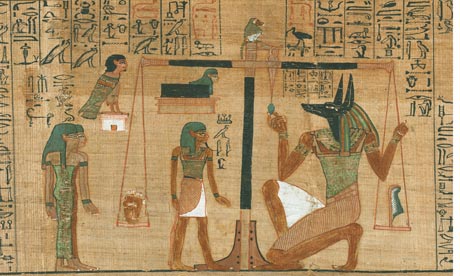
Image: Depiction of the weighing of the heart ritual from the papyrus of Ani, c1275 BC. © The Trustees of the British Museum; from The Gaurdian

Of Dolls and Murder

According to its site, Of Dolls and Murder “explores a haunting collection of dollhouses with a criminal element.” The film is still in production, but as you can see above, it has a trailer. It looks pretty fascinating and “promises to take you places you’ve never dreamed of.”

You can also get more information on their Facebook page.

The Brothers Quay at the Mütter Museum


This just in from the New York Times: The Brothers Quay--creators of so many memorable films including "The Phantom Museum," their homage to the Wellcome Collection--are in the process of producing a "as-yet-untitled documentary on the [Mütter] museum and its adjoining 340,000-volume library!" Better yet, when it is completed, the final film will be screened as part of a symposia to be hosted in turn by the Mütter Museum, New York's Museum of Modern Art, and the incomparable Museum of Jurassic Technology.

Click here to read the entire story, entitled "Animators Amok in a Curiosity Cabinet" in today's New York Times.

Thanks, Alison, for sending this my way!

Image: Evi Numen/College of Physicians of Philadelphia, via the New York Times.

Recently Announced Morbid Anatomy Presents Events at Observatory for October and November!

Radiolab-related parasite film! Observatory's 2nd Annual Day of the Dead party! Pathology collections from Amsterdam! Forgotten surrealist film featuring mannequins with thematic after-party! Centuries of visions of the brain!

Full details for these recently announced events follow; Hope to see you at one or more of these wonderful presentations!

Also, if anyone out there might like to be considered as a volunteer at future Morbid Anatomy Presents events in exchange for free admission and an endless cup of wine, please contact me at morbidanatomy@gmail.com.

“Parasites: A User’s Guide:”
A Short Film Screening with Filmmaker and Ecologist Sharon Shattuck, Radiolab Affiliate
Date: Tuesday, October 26
Time: 8:00
Admission: $5

The word “parasite” comes with loads of vile connotations, but in nature, nothing is purely good or evil. In the 27-minute experimental documentary “Parasites: A User’s Guide,” filmmaker Sharon Shattuck embarks on a journey to decode some of the most misunderstood creatures on earth.

The dramatic rise in autoimmune diseases, asthma, and allergies since the turn of the last century has confounded scientists, but some researchers think they have uncovered the key to controlling the skyrocketing rates: tiny parasitic worms called ‘helminths.’ Using a blend of handmade and digital animation, film, and music, Sharon dives headlong into the controversial discourse surrounding ‘helminthic therapy,’ with help from scientific researchers, proactive patients and a renegade entrepreneur named Jasper Lawrence. Through the seeming oxymoron of the ‘helpful parasite,’ Sharon questions the nature of our relationship with parasites–and suggests a new paradigm for the future. “Parasites: A User’s Guide” is a film about ecology, healing, and worms.

The screening will be followed by a Q&A with the filmmaker and an active helminth patient.

Check out the film’s website for more info: http://www.parasites-film.com

Bio: Before moving to Brooklyn, Sharon Shattuck studied tropical botany, and worked as a researcher with the Field Museum and the Smithsonian Institute in Panama. Following a grad stint in documentary media, she now works as an animator with Wicked Delicate Films (producers of “King Corn,” 2007) in Brooklyn, and is a contributor to the WNYC science show ‘Radiolab.’ Now, Sharon is touring the mainstream film fest circuit with her quirky science film “Parasites: A User’s Guide,” demonstrating that science can be both informative AND entertaining.

Dia de Muertos (Day of the Dead) Party
Admission: $5
Date: Sunday, October 31st
Time: 5 PM - ?
Please R.S.V.P. to salvador.olguin@gmail.com for party planning purposes.

Dia de Muertos (Day of the Dead) is celebrated annually in Mexico during the last days of October and the first days of November. It is a party to honor the dearly departed by presenting offerings to them, building an altar, and inviting them to reunite with the living in a nightly feast including their favorite dishes and drinks. It has deep roots in ancient, pre-Hispanic celebrations, but it also integrates the Christian traditions brought to the country by the Spanish –the main celebration takes place on November 2nd, coinciding with All Saints Day.

On Sunday, October 31th, and for the second year in a row, Morbid Anatomy and Observatory will host a Day of the Dead party in tandem with author and scholar Salvador Olguin. This year, we will build an altar dedicated to the Economy. Traditionally, the Day of the Dead altar is dedicated to a person whose death is deeply felt by the people building it; in spite of some hopeful reports by some cheerful voices, our global Economy does not seem to be recovering quickly enough from its recent collapse. This year, we will bring her some offerings, attract her with a few bottles of tequila, and lure her back to the realm of the living with the fragrant smell of incense and marigolds. Feel free to collaborate with our altar building by bringing objects that express how deeply felt the departure of the Economy was for you and your close ones. We want to entice the ghost of the Economy to walk again among the living, to come back from the afterworld and celebrate with us, Mexican style.

Many of this year’s features are based in the art of Jose Guadalupe Posada, a Mexican printer and illustrator who worked around the time of the Mexican Revolution (1910), and who used his art to satirize prominent figures of his era. His best-known works are his calaveras (skulls), etchings depicting dancing skeletons, skulls dressed up as Revolucionarios and politicians, etc. Since this November we celebrate the 100th anniversary of the Mexican Revolution, it felt natural to honor Posada by having a live version of one of his most famous calaveras: La Catrina. Made by Posada as a depiction of the skeleton of a rich lady, La Catrina has come to represent a satirical version of Death herself in Mexico. At our party, La Catrina will mingle with our guests, and people will be able to have their picture taken with her, in front of our altar.

At this year’s Dia De Muertos party, you will also find pan de muerto, champurrado (a traditional Mexican beverage), sugar skulls, marigolds, Negra Modelo, traditional foods and crafts, a community altar, a piñata of death herself to dash to bits, live traditional music, a death themed slide show produced by Morbid Anatomy, and, of course, Redhook vendors taco truck supplying delicious and authentic foodstuffs. If you would like to dress appropriately for the occasion, you only need to take an old suit or dress, or wear the clothes of a person whose death means something for you, or simply wear your everyday clothes: everything works, as long as you add a touch of the hereafter to it –some make up to look a little pale, a skeleton suit, some dirt under your fingernails. Or you can go all the way and dress up like one of Posada’s Calaveras.

We hope you can join us! Feliz Dia de Muertos!

Salvador Olguin’s work has been published in magazines both in Mexico and in the US. He is the author of Seven Days, a multimedia theatrical piece that celebrates the convergence of traditions and hybridism that characterizes Mexico’s fascination with mortality. He has worked extensively with Mexican cultural artifacts related with death. He is currently performing research on the metaphoric uses of prostheses in literature and the visual arts, at New York University, as well as writing poems about the life of plants and the genealogy of intelligent machines. He was born in Monterrey, Mexico and is currently based in Brooklyn.

Come and See: The Amsterdam Anatomical Collection Dissected
An illustrated lecture and book signing with Dr. Laurens de Rooy, Curator of the Museum Vrolik in Amsterdam
Date: Thursday, November 11
Time: 8:00
Admission: $5

Books will be available for sale and signing.

Two skeletons of dwarfs, rare Siamese twins, cyclops and sirens, dozens of pathologically deformed bones, the giant skull of a grown man with hydrocephalus, the skeleton of the lion once owned by king Louis Napoleon, as well as the organs of a babirusa, Tasmanian devil and tree kangaroo – rare animals that died in the Amsterdam zoo ‘Artis’ shortly before their dissection.

Counting more than five thousand preparations and specimens, the Museum Vrolikianum, the private collection of father Gerard (1775-1859) and his son Willem Vrolik (1801-1863), was an amazing object of interest one hundred and fifty years ago. In the 1840s and 50s this museum, established in Gerard’s stately mansion on the river Amstel, grew into a famous collection that attracted admiring scientists from both the Netherlands and abroad.

After the Vrolik era, the museum was expanded with new collections by succeeding anatomists. What motivated the Vroliks and their successors to collect all these anatomical specimens, skulls, skeletons, and monstrosities? were did their material come from? How did these collections help to built up their views on the origins of life forms?

Since 1984 the museum is located in the academic Hospital of the University of Amsterdam. Recently the museum collections were portrayed by the photographer Hans van den Bogaard for the book Forces of Form. These images will form an essential part in this talk, a ‘dissection’ of the Amsterdam anatomical collection.

Dr. Laurens de Rooy (b. 1974) works as a curator of the Museum Vrolik in the Academic Medical Centre in Amsterdam. He studie Medical Biology, specializing in the history of science and museology. during his internship he researched the collection of father and son Vrolik. In 2009 he obtained his PhD in medical history.

Screening: Hans Richter’s “Dreams That Money Can Buy” and “Ghosts Before Breakfast”
A screening of Hans Richter’s 1947 surrealist film “Dreams that Money can Buy,” introduced by filmmaker Ronni Thomas and followed by a thematic after party
Date: Saturday, November 13th
Time: 8:00 PM
Admission: $8

Tonight, join filmmaker Ronni Thomas as he presents a screening of the rarely shown and grossly unknown 1947 dada/surrealist film “Dreams That Money Can Buy.” The film was the brainchild of surrealist Hans Richter and features segments produced in collaboration with some of the great surrealists of the day including Marcel Duchamp, Man Ray, Max Ernst and John Cage. Though experimental, the film does have a narrative; the overarching story is a loosely film noir-styled story about a ‘dream detective’ and his various clientèle. This narrative structure makes the film more accessible than many experimental films, with elements of fantasy, science fiction, crime and horror which give the film a real driving edge. The film is a clear influence on filmmakers such as David Cronenburg, Jean-Pierre Jeunet and David Lynch.

There will be a short introduction to the film by Thomas followed by a thematic after party with specialty drinks and music.Thomas will also screen Richter’s short film “Ghosts Before Breakfast” before the feature film.

Portraits of the Mind: Visualizing the Brain from Antiquity to the 21st Century
An illustrated lecture and book signing with Carl Schoonover, author of Portraits of the Mind: Visualizing the Brain from Antiquity to the 21st Century
Date: Thursday, November 18
Time: 8:00
Admission: $5

Books will be available for sale and signing.

Tonight author Carl Schoonover will discuss his new book Portraits of the Mind: Visualizing the Brain from Antiquity to the 21st Century (Abrams). Join us for a fascinating exploration of the brain through images. These beautiful black-and-white and vibrantly colored images, many resembling abstract art, are employed daily by scientists around the world, but most have never before been seen by the general public. From medieval sketches and 19th-century drawings by the founder of modern neuroscience to images produced using state-of-the-art techniques, we are invited to witness the fantastic networks in the brain. The result is a peek at the mind’s innermost workings, helping us to understand, and offering clues about what may lie ahead. Books will be available for purchase and signing.

Carl Schoonover graduated from Harvard College in 2006 with a degree in philosophy and is currently a doctoral student in Neurobiology and Behavior at Columbia University Medical Center. He has written on neuroscience for the general public in such publications as Le Figaro, Commentaire, and LiveScience. In 2008 he cofounded NeuWrite, a collaborative working group for scientists, writers, and those in between. He hosts the radio show Wednesday Morning Classical on WCKR 89.9 FM, which focuses on opera, classical music, and their relationship to the brain.

You can find out more about these events on the Observatory website by clicking here. You can get directions to Observatory--which is next door to the Morbid Anatomy Library (more on that here)--by clicking here. You can find out more about Observatory here, join our mailing list by clicking here, and join us on Facebook by clicking here.