

Beautiful work by the handsome Italian artist, Pierluigi Fracassi.



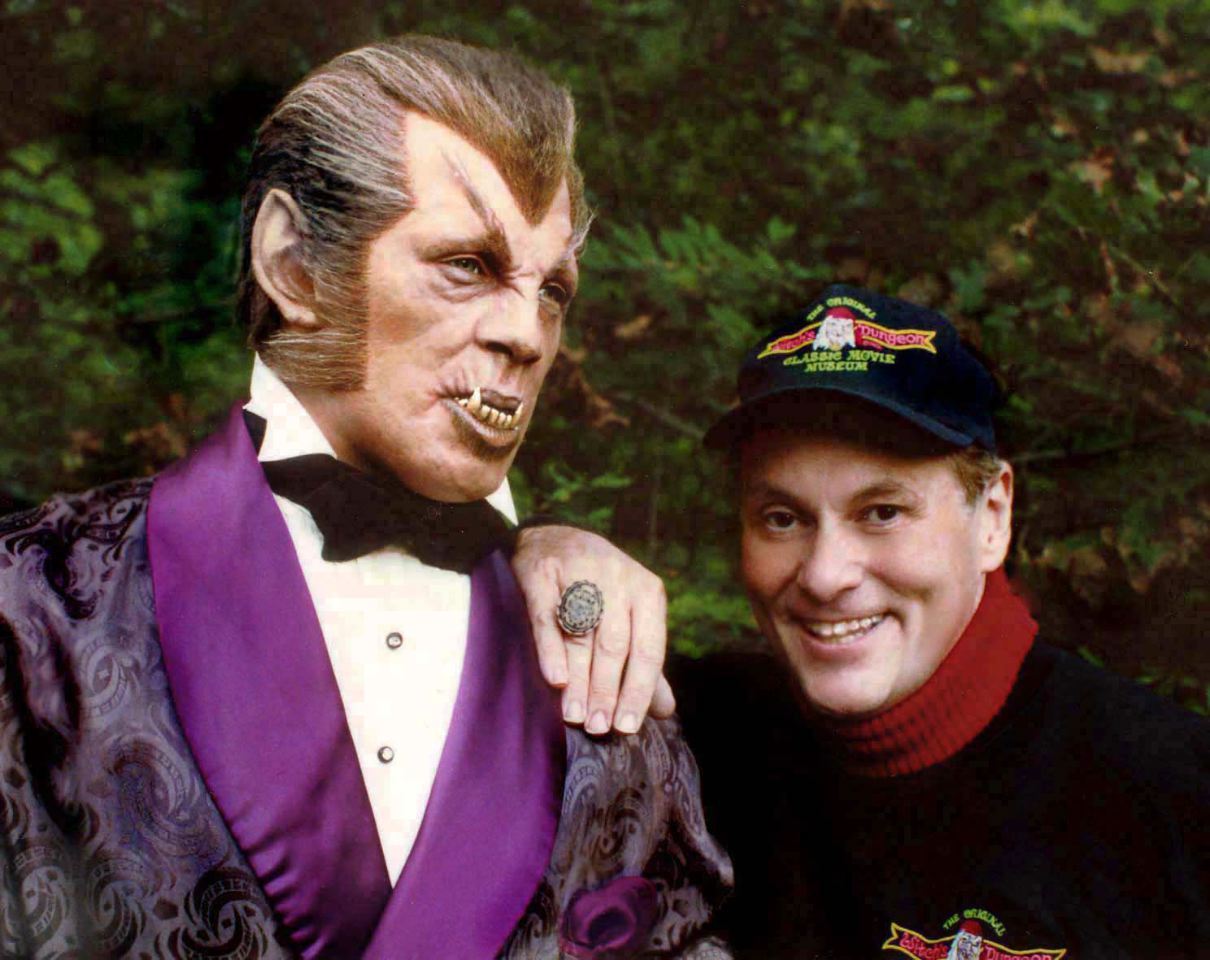
This Friday at Observatory, please join Morbid Anatomy in welcoming collector and museologist Cortland Hull as he shares some artifacts from his private museum of classic movie monster artifacts, shows some film clips, and provides a visual history of the actors & makeup artists behind the classic monsters. This event is part of the new Out of the Cabinet: Tales of Strange Objects and the People Who Love Them series.
Full details follow; hope to see you there!
The Witch's Dungeon
An illustrated lecture and show and tell with collector, artist, and proprietor of "The Witch's Dungeon" Cortlandt Hull
Date: Friday, May 20th
Time: 8:00 PM
Admission: $5
Part of Out of the Cabinet: Tales of Strange Objects and the People Who Love Them, presented by Morbid Anatomy and Evan MichelsonFriday, May 20th may be a dark and stormy night. Brave souls normally catch the coach at midnight from the Borgo Pass to access the lawless and far off lands of Bristol, CT, spoken about in hushed tones as the home of the Witch's Dungeon. But on this rare occasion the stars have aligned and like the Baba Yaga's chicken-footed cabin, the Witch's Dungeon is coming to Observatory!
Tonight, Cortlandt Hull will be speaking about his life's work: the creation and evolution of The Witch's Dungeon, a museum consisting of life size reproductions of classic film monsters. Growing up during the 1960's monster boom, Cortlandt began construction of the Witch's Dungeon 45 years ago in the back yard of his parent's house. Over its near half century in existence, the Witch's Dungeon has continually creaked open its doors, striking chords with patrons, becoming a true piece of Americana, and attracting many of the actors and filmmakers commemorated in the museum.
Cortlandt will also be screening clips of his multiple documentary films, providing a visual history of the actors & makeup artists who created the classic films. Original head props from fantasy films will be on display along with samples of Cortlandt's work from the Witch's Dungeon.
Cortlandt Hull--artist, museologist, and film historian--began "THE WITCH'S DUNGEON CLASSIC MOVIE MUSEUM" when just 13. in 1966. It is now considered the longest running tribute to the makeup artists & actors from classic horror films. Featuring accurate life-size figures of Boris Karloff, Vincent Price, Lon Chaney, Bela Lugosi, and many others. Many of the figures are made from the actual life casts of the actor's faces Cortlandt has produced documentaries on the history of classic horror & fantasy films. Actor, Henry Hull ("Werewolf of London") was Cortlandt's great uncle, and Josephine Hull ("Arsenic & Old Lace") was his great aunt, so fantasy & horror is "in the blood"! He has lectured at universities, and film festivals, across the country, and has written for books and magazines.
You can find out more about this event on the Observatory website by clicking here; you can access this event on Facebook here. You can get directions to Observatory--which is next door to the Morbid Anatomy Library (more on that here)--by clicking here. You can find out more about Observatory here, join our mailing list by clicking here, and join us on Facebook by clicking here.
Image: Cortlandt Hull with figure of his great uncle, Henry Hull, "The Werewolf Of London"


Unveiling of a brand new 19th Century style disaster amusement! Free Hendrick's Gin! Disaster tunes of yester-year! Lord Whimsy! Stars of TV's Oddities! Vintage Coney Island films curated by Zoe Beloff! Rare appearance of the old Dreamland Bell!
All this and more await you next Friday at our Centennial Celebration of the Great Dreamland Fire. Please, come celebrate the end of an era with us!
Full invite below. Hope very much to see you there!!!
Centennial Celebration of the Great Dreamland Fire Featuring the Opening of Coney Island’s Newest Cosmorama
Presented by The Coney Island Museum, The Morbid Anatomy Library, and Atlas Obscura
Date: Friday May 27, 2011
Time: 7:00 PM
Admission: $25 (Tickets at the door, or purchase here)
Location: The Coney Island Museum, 1208 Surf Avenue, Brooklyn (map here)Next Friday, May 27th, you are cordially invited to a party commemorating the "awful splendor" of The great Dreamland fire of May 27, 1911, the most devastating disaster to hit New York City in the pre-9-11 era, a fire which devastated a never-to-be-rebuilt-Dreamland 100 years ago on this day.
This event will mark the premiere of the Cosmorama of the Great Dreamland Fire, a 360 degree immersive cosmorama telling the story of the great fire in pictures, sound, and light. Based on Coney Island’s great immersive disaster spectacles, the cosmorama is the product of months of labor, thousands of dollars, and the expertise of artists and artisans from the Metropolitan Opera, and uses real boards from the original Coney Island boardwalk in its construction.
The party will also feature a complementary gin bar with custom cocktails, disaster tunes of yester-year curated by The Foppinton Brothers, vintage Coney Island films, a rare appearance of the old Dreamland Bell, celebrity appearances, anatomical give-aways, myriad performances, and much more!
Full line-up:
- Complimentary Gin Bar (!!!) courtesy of Hendrick’s Gin and Atlas Obscura
- Our incomparable host, Lord Whimsy, author of The Affected Provincial’s Companion, Volume 1
- Special guest appearance by Ryan Matthew, Evan Michelson and Mike Zohn of TV’s “Oddities”
- A rare appearance of the long submerged bell of the Dreamland Pier, 100 years after its climactic plunge into the depths of the cold Atlantic
- Puppet Vaudeville from Jonny Clockworks and "The Cosmic Bicycle" of "The ClockWorks Puppet Theatre"
- Vintage Coney Island Films from the collection of artist Zoe Beloff
- Giveaways of anatomical puzzle and other sundries complements of Kikkerland Design
- Custom Cocktails and Early 20th Century disaster tunes complements of The Foppinton Brothers
- The Accordion stylings of Matt Dallow
- “Reconstruction,” a performance featuring contortionist Jonathan Nosan and with musical accompaniment by Gordon Beeferman, Composer/Pianist
- Sword Swallowing, burlesque and Coney Island entertainment
- 19th Century waxworks, freak animals, and a real shrunken head
- Unlimited access all night long to the newly unveiled Cosmorama of the Great Dreamland Fire
- And, of course, More!
Tickets are available by clicking here or purchasing at the door. See you there!


Tea party time! We’ve featured pieces sold by {far4} before, but these pieces solidify how much I like their store. With eclectic beauties like this, what’s not to like? Artist Trevor Jackson has a collection of 5 skulls for sale; some are sculptures and other teapots. This Delft-style teapot, at $1200, probably won’t make it onto my next afternoon party table, but a lady can dream.


The Annals of Eugenics--now The Annals of Human Genetics--has just made its 1925-1954 journal content available online for researchers in the history of science and medicine. Their current issue also features four specially commissioned articles that contextualizing the content, and highlighting the ways in which Eugenics "embodies the history of human genetics as a scientific enterprise and exemplifies the complex relationship of this discipline with wider society [as well as] the somber role that human genetics played in providing what was taken to be a scientific framework to social prejudice during the period."
This is sure to be some fascinating stuff.
Full details, as told by Advances in the History of Psychology:
The Annals of Human Genetics (AHG), formerly named Annals of Eugenics, has recently made its 1925-1954 journal content available online for researchers. Among the now controversial eugenics research appearing throughout these issues, researchers can also expect to find statistical publications by mathematician Karl Pearson, whose work at University College London concerned the widely used Pearson Product-Moment Correlation Coefficient, the Pearson Chi-Square test, and P-value.
The AHG editorial cites “ongoing use and reference to materials”… “and the somewhat limited availability of the original printed copy” as justification for making the content available online. Furthermore,
"Online access to the Annals of Eugenics archive will also be of interest to historians of science. In many ways, the history of the Annals embodies the history of human genetics as a scientific enterprise and exemplifies the complex relationship of this discipline with wider society. The somber role that human genetics played in providing what was taken to be a scientific framework to social prejudice during the period of “Eugenics” is a well-known case of the complex interaction between science and society. The present issue of the journal includes four specially commissioned articles that attempt to contextualize the online publication of the Annals of Eugenics archive. To exemplify some of the major scientific contributions made during that period, the article by J. Ott highlights key papers on linkage analysis published by the journal. The contributions by K. Weiss, G. Allen, and D. Kevles deal with aspects of the history of eugenics and of human genetics, and explore their relevance to ongoing debates regarding the social implications of human genetics research."
You can read the full article by clicking here.


Rebecca Ladds has exhaled these wonderful Soft Anatomies. As, according to Ladds, seeing the beauty in all things makes creating as natural a process as breathing. Only in her first year at the Ontario College of Art & Design, her lungs are still pink and ready to breathe new life into the world of anatomical art.
To check out her collection and purchase a print of your own, head to her Etsy!


While I like to sew (and refuse to knit), my quilting has never gotten this interesting. I think I’ve been inspired. Artist Katrin Rodegast created this large quilt that was exhibited in Dortmund, Germany. On her site, you can see the details of all the figures she’s incorporated, many of them anatomical. Brains, hearts, skeletons, you name it, have earned their spot.
It is coated with a pattern of 270 illustrations observing the social reality. With my quilt I connect traditional quilt art and modern computer technology.
Something like this would be too pretty to sleep with, and def too large for my apartment. I’m so glad to find this unique piece to gaze at!


The BBC Radio 4’s In Our Time has just produced an episode about Robert Burton's 17th masterwork The Anatomy of Melancholy; the book is essentially a 17th Century multi-disciplinary investigation of what was then known as melancholy, and, as the BBC describes, brings together "almost two thousand years of scholarship, from Ancient Greek philosophy to seventeenth-century medicine. Melancholy, a condition believed to be caused by an imbalance of the body’s four humours, was characterised by despondency, depression and inactivity. Burton himself suffered from it, and resolved to compile an authoritative work of scholarship on the malady, drawing on all relevant sources."
Can't wait to give this a listen!
You can listen to the episode by clicking here. Found on the Advances in the History of Psychology website; click here to read full post.
Image: Frontspiece to Robert Burton’s The Anatomy of Melancholy, or The Anatomy of Melancholy, What it is: With all the Kinds, Causes, Symptomes, Prognostickes, and Several Cures of it. In Three Maine Partitions with their several Sections, Members, and Subsections. Philosophically, Medicinally, Historically, Opened and Cut Up, 1621


While at the AAHM meeting in Philadelphia a few weeks ago, I met a number of fascinating folks, among them Rachel Ingold, the curator of the History of Medicine Collections at the Duke Medical Center Library & Archives. She was telling me about a wonderful exhibition on flap anatomies (images above) that will be on view there until July of this year; here is what she had to say about it:
Animated Anatomies explores the visually stunning and technically complex genre of printed texts and illustrations known as anatomical flap books. This exhibit traces the flap book genre beginning with early examples from the sixteenth century, to the colorful “golden age” of complex flaps of the nineteenth century, and finally to the common children’s pop-up anatomy books of today. The display—which includes materials from the Rare Book Manuscript and Special Collection Library at Duke University, the Duke Medical Center Library & Archives’ History of Medicine Collections, and from the private collections of the curators of the exhibit—highlights the history of science, medical instruction, and the intricate art of bookmaking.
Through the hands-on process of exposing layer after layer of anatomical illustrations, flap books mimic the act of human dissection, inviting the viewer to participate in a virtual autopsy, so to speak. Whether it’s a sixteenth-century hand-colored treatise on the layers of the eye or a nineteenth-century obstetrical guide in 3-D for performing cesareans, these books draw the viewer in. Over time, as advances in both science and printing promoted more widespread medical kno
wledge, anatomical flap books began to appeal to more general audiences eager to learn about their own bodies’ inner workings. Technological developments in machine printing also allowed for more colorful and precise illustrations than the hand-colored treatises of the early modern period.
A symposium was held on April 18 and we hope to have videos posted from this event soon. To learn more about the symposium, exhibit, see photos of anatomical flap books, and watch videos of them in action, visit the exhibit website. For more information, contact Meg Brown at meg.brown@duke.edu or Rachel Ingold at rachel.ingold@duke.edu. The exhibit will be up through July 17, 2011, and is free and open to the public.
This fantastic looking exhibition will be on display in the Perkins Gallery, Perkins Library, at Duke University, Durham, North Carolina, until July 17, 2011, and in the History of Medicine Gallery in the Medical Center and Archives Library from April 13-July 17, 2011. To find out more--or to pay a virtual visit!--check out the exhibition website by clicking here.


The Brooklyn-based Morbid Anatomy Library is currently seeking a volunteer to watch over the library on Saturdays from 12-6, do a bit of book cataloging, and take on assorted odd jobs. The position would begin the weekend of May 21-22; Class credit can be worked out if applicable.
For those who have not yet visited, the Library (see photo above) is an open-to-the-public research library and private collection housing books, photographs, artworks, ephemera, and artifacts relating to medical museums, anatomical art, cabinets of curiosity, death and dying, arcane media, collectors and collecting, and curiosity and curiosities broadly considered. You can find out more information about the library here.
If interested, please email me at morbidanatomy [at] gmail.com.
Thanks!
Above photo of the library by Shannon Taggart.


...“The Immortalization Commission” is a fascinating piece of intellectual history, exploring the intersection of science, religion, mysticism and a kind of philosophical curiosity that made the early 20th century so much more intellectually dynamic, so much more open-minded and eclectic, so much more magical than either philosophy or science is today. If contemporary god-builders — seeking to stave off death with blue-green algae, Bikram yoga and cryogenics — are more crass and materialistic than those in Gray’s story, ultimately they fail to appreciate the same point: that life seems to get much of its meaning from the fact that it ends. --The Scientific Revolt Against Death, review of John Gray's The Immortalization Commission, The New York Times Book Review
You can read the entire review of John Gray's fascinating The Immortalization Commission: Science and the Strange Quest to Cheat Death in today's New York Times by clicking here. You can find out more about the book--and purchase a copy--by clicking here.
Thanks, Aaron, for sending this review my way.
Image: Getty Images, captions reads:The search for eternal life: Even Charles Darwin hedged his bets and attended a seance; found at The Daily Mail.


As many of you know, I have been hard at work on an exhibition called The Great Coney Island Spectacularium, which opened just a few weeks ago at The Coney Island Museum (more on that here).
As part of the exhibition, we are--with the help of scenic painters, lighting designers and prop builders from the theater and opera world--in the midst of building a new component for the exhibition, an 19th Century-style panorama/cosmorama that will allow visitors to experience the 1911 complete destruction of Dreamland by fire in an immersive 360 degree sound, sight, and light spectacular. This component is set to premiere on May 27th, the centenary of the disaster, and is inspired by the immersive disaster spectacles so popular in Coney Island around the turn of the century.
Here's the rub: immersive amusements of this sort, as we are learning the hard way, are quite expensive to produce--probably a large reason that they were put out of business by cinema!--and we are, sadly, seriously under budget.
If 19th Century-style immersive spectacles of this sort are the kind of thing you would like to experience, and you would like to help contribute towards making this project a reality, we would be so pleased to welcome your contribution! Tax-deductable donations to Coney Island USA--our mother institution--can be made by clicking here and then hitting the "Donate" button. No amount too small! All donations appreciated.
Whether you are able to donate or not, please mark your calendar for the cosmorama opening party, which will take place on the centenary of the great disaster on Friday, May 27th, 2011. Or, come experience it later; The Comorama and the rest of The Spectacularium will be on view to the public at the Coney Island Museum until April 29th, 2012.
You can find out more about The Cosmorama by clicking here. You can join our mailing list to get updates about the opening party and other events by entering your email under "events mailing list" on the upper right hand side of the webpage. You can join our Facebook group by clicking here.
Thanks, and see you at Coney!
Joanna


Graphis recently awarded Pyper Paul + Kenney for their trio of advertisements for Tires Plus in their Best of Advertising 2011 awards. While the eye completely freaks me out, all three are enticing and certainly effective. I’d love to see a heart made out of real mechanic parts. We’re all becoming robots.
Nice job.


Student Stephanie Kuga has created a series of package designs to promote organ donation. An entire series of organs, complete with facts and colored plush anatomy was created; you can see more work on her site, stephaniekuga.com.
Less than 30% of Americans are registered organ donors. These boxes would be given to potential donors to encourage them to give “the gift of life.” Current organ donation statistics, messages from patients on the waiting list, and a symbolic donor sticker behind the stuffed organs inform the new donor of the impact their decision will have on the lives of others.
Every organ donation marketing pitch I’ve seen has always been wildly creative. I wish more of them could be put into production!


For 340 bones, 5.75 inches of bad ass could be yours! These rhinestone pumps are made to order and each is custom painted by Taylor Reeves. I’m tempted to say that only Kat Von D can pull these off, but if you want to prove me wrong head to Reeves’ Etsy to order up a pair of your own.
There are also plenty of other (slightly) less flashy options, be sure to check them out!


British band Morcheeba‘s lemon hearted gig posted for their Canadian visit to the Imperial Quebec.
[retrieved via gig posters]


Tattoo and fine artist, Michele Gonzalez, sent in this beautiful print of a recent watercolor painting she created, entitled Rose of My Heart. I always find it fascinating to see the works of tattoo artists that aren’t on skin.
Michele has been tattooing at Empire State Studio in Long Island since 2007.
View all of her gorgeous work at michelegonzalezart.com. Buy the print featured above on Etsy.


Jason Freeny is making anatomy cool in ways no one else has done and his formula is simple: carefully dissect an iconic childhood toy, build in the underlying anatomy, and then display it to the wonder of children and adults everywhere.
I caught up with Jason, in between chasing his two-year-old around, and was able to get his thoughts on anatomy, the popularity of his work, self-promotion, and more.
Q Medical illustrators covet great anatomical references. What anatomical references, if any, do you use when you begin to dissect a toy?
First off please let me say that my anatomical toy sculpts and illustrations cover the most basic of anatomical elements. While medical illustrations are targeted toward the medical industry for the most part, my work is aimed at a broader, more mainstream, less anatomically savvy audience.
With that said, I use whatever references I can get a hold of. The local bookstore is my destination of choice when it comes to finding reference. My children’s anatomy books are great. There are some fantastic books out there aimed at teaching the laymen about anatomy with very detailed color plates. The Internet is another fine place to find reference, especially for animals other than humans. Some of my work approaches animals that either don’t exist or are mutated to the point where traditional anatomy won’t suffice. Some anatomies are a fusion of several different mammals.
Q You definitely make anatomy more attractive and digestible for the layperson. Would you ever consider taking it a step further and doing your own children’s anatomy book?
One thing I know about myself is my limitations. I’ve never felt stories or character development was a strong trait. This could change in the future. I can’t tell you how many artists I’ve seen try to move too far outside their element and just make themselves look bad. Actors trying to be singers etc… I have a pretty good feel for what I am good at and what I am not so good at…

Q During the Street Anatomy gallery show I observed a father and his 9- year-old daughter looking at your pieces titled, Micro Schematic and Kitty Half. The father was reminiscing about his childhood playing with Lego’s and the daughter was thrilled over the cuteness of the Hello Kitty, despite half its skeleton and guts showing. Why do you think you’ve managed to capture the imaginations of people across many generations simply by exposing anatomical features?
This is always the most difficult question I get asked. I’ll answer it as best as I can. It’s not a simple answer…One I don’t believe I’ve figured out…
For the father, it’s perhaps being hit with the possibility that all those toys, characters, and imaginary friends from their youth could have quite possibly been real. And for a few moments, all the imagination and fantasy abandoned yearsago come gushing back.
For the child, it’s being introduced to a new dimension to these characters. Perhaps solidifying their reality. One thing I have never seen in a child’s reaction is fear. It’s always amazement, wonder, and wanting to explore the image. Fear of anatomy and guts is a learned reaction. It’s always the parents who are uneasy. Uneasy about how a child will react, then, seem shocked when they aren’t frightened, but instead are excited.

Q While many artists, including most medical illustrators, are trying to protect their work online, you actually promote the reposting of your images through this key line at the bottom of your site, “All images ©Jason Freeny except where noted, feel free to link to this site as well as repost images on the web. No images may be reproduced or used in printed format without consent.” Has this open approach helped the viral spread of your work? Have you ever had an issue with people reposting your work and not giving you credit? Would you suggest other artists be less restrictive with the reposting of their work online?
I don’t see my work as true medical illustration, with respect to actual medical illustrators, it’s more of a novelty. There is no truth behind my work, my anatomies are hypothetical, this is strictly art.
All my promotions are based on viral word of mouth. Hence, my stance on sharing. I let the collective voice of the Internet decide its worth. Some pieces go up and the response is tremendous, sometimes I just get the sounds of crickets. This method works for me and I have no idea how it would work for others. Since I work with a lot of popular characters, people relate to it pretty easily. Not sure how it would go with someone’s still life’s of “fruit in a bowl.”
My work has become pretty embedded throughout the web and even if credit is not given, it’s pretty obvious it’s mine. I’m not all that much a stickler for policing blogs and such with my work. There are a lot of good people out there that do it for me. I love my fans and wouldn’t be where I am without them. I guess the only thing that offends me is when a site takes my image and puts their own watermark on it, it’s just rude. As long as no one is directly profiting off one of my images I don’t have any problems with it. The more eyes that see it the better 

Q Have you run into any copyright or licensing issues with the toy characters you’ve dissected? Have any of the toy companies approached you to create a line of dissected toys after seeing the response to any of the sculpts you created?
I have yet to be approached by any of the IP holders of any of the sculpts. I have been approached from some of the IP holders from my illustrations. I’ve only had copyright issues from the illustrations solely because I offer prints. There is nothing wrong with creating any of the sculpts or images I have done. The problems arise when I begin to mass produce and sell.
So far the IP holders that have contacted me have been very kind. They see the art in what I do and as long as I limit my production to a small amount they don’t have issue. They legally have the right to keep me from selling anything more than one. Like I said, they have been VERY kind.
Q What’s next for Jason Freeny? Even if you were to stop doing dissections of iconic toys, will anatomy still be a part of your work?
I’m always looking for new things to create. A time will come when something else will come up and I’ll move on, but I’m sure anatomy will always pop up and make another appearance. Perhaps in another form…
View all of Jason’s work on his site, Moist Production.
Follow Jason on Facebook and see his creations in progress!


Anyone who knows me knows that I love my house music. So when I discovered this track by Russian DJ, Korablove, entitled Street Anatomy, I said to myself “no way!”
Take a listen above—it’s a great Saturday morning deep house track to play over mimosas at brunch.


My good friend Petra Lange-Berndt at University College London would like to invite all of you London-based folks out there to a free and fascinating sounding lecture--as part of an equally fascinating sounding series--by one of my favorite contemporary artists, Mark Dion.
Full details on both the lecture and the series follow; hope you can make it!
"My Taxidermy Taxonomy"
Mark Dion (Visual Artist, USA)
Venue: Museum of Natural History, London, Darwin Center, Attenborough Studio
Time: Thursday, 12 May 2011, 5pm
The lecture is free and open to all - but please phone to book tickets on
+44 (0)20 7942 5725Mark Dion is one of the world's foremost ecological artists. He is best known for investigating and intervening into the cultures of natural history collections through site-sensitive installations. In this slide lecture Dion will examine the ways in which dominant ideologies and public institutions shape our understanding of history, knowledge, and the natural world. The artist will address more specifically the politics of taxidermy, the preservation of animal skins, and its many practices. What kind of stories, curiosities and oddities can be unearthed from the archives of the natural history museum? How is taxidermy linked to extinction and colonialism? And what is the role of the museum in contemporary society?
This lecture is part of the AHRC Research Network "The Culture of Preservation" series, at the UCL History of Art Department, run by Petra Lange-Berndt and Mechthild Fend in collaboration with the Natural History Museum London, The Hunterian Museum, and the Grant Museum of Zoology, London.
More about this series:
Prepared specimens appear in many guises: as monstrous or typical organs preserved in formaldehyde and kept in glass jars not unlike pickled food, as stained and fixed tissue slices, or as skilfully arranged stuffed animals. They may be found in cabinets of curiosities, in the laboratories of histologists, in anatomy theatres or in natural history collections, but nowadays equally in art galleries and the shop windows of fashionable boutiques. This project is concerned with such kinds of preserved natural objects, in particular with anatomical wet preparations and taxidermy. It explorses the hybrid status of these objects between nature and representation, art and science and studies their fabricaton, history and display.Events
Workshop 1: Taxidermy: Animal Skin and Colonial Practice
12 May 2011, 5pm
Keynote Lecture – free and open to all but please telephone to book tickets on +44 (0)20 7942 5725 –13 May 2011 Workshop
Workshop 2: Wet Preparations: Anatomy, Pathology and the Body Contained
9 June 2011, 6 pm Keynote Lecture – free and open to all –
10 June 2011 Workshop
For further information please contact Mechthild Fend m.fend(@)ucl.ac.uk or Petra Lange-Berndt p.lange-berndt(@)ucl.ac.uk
The network is a collaboration between the UCL History of Art department, UCL collections, in particular the Grant Museum of Zoology, the Hunterian Museum, London and the Natural History Museum London.
The lecture is free and open to the public, but you will need to make reservations; you can do so by calling +44 (0)20 7942 5725. You can find out more about the event and the series by clicking here.
Image: Mark Dion: An Account of Six Disastrous Years in the Library for Animals (detail), Installation at the Centrum Sztuki Wspólczesnej, Zamek Ujazdowski, Warsaw 1992


