From Votives to Venuses: A Brief History of the Human Anatomical Model, July 5th, The Science Museum, London


Hi All! Next Tuesday, July 5th, I will be giving a lecture at London's Science Museum in the museum's lecture theatre. The lecture if free and open to the public.

Full details follow; If you are free and in the neighborhood, why not stop by?

From Votives to Venuses: A Brief History of the Human Anatomical Model
An Illustrated Lecture by Joanna Ebenstein of The Morbid Anatomy Library
Date: 5th July
Time: 4 PM - 5 PM
The Science Museum’s Lecture Theatre
Exhibition Road, South Kensington, London SW7 2DD (Map here)
Admission: Free and open to the public

In the 1690s, surgeon Guillaume Desnoues commissioned wax-worker Gaetano Zumbo to create a life-sized wax copy of one of his most important--and sadly deteriorating--human dissections. This partnership launched a long tradition of collaboration between artists and medical practitioners in the creation of extraordinary and uncannily lifelike anatomical models intended to preserve important anatomical preparations in perpetuity and to instruct and incite wonder in medical students and laypersons alike. Today, join artist and independent researcher Joanna Ebenstein for a lavishly illustrated walk through the world of these fascinating artifacts that are equal parts art and science and which flicker enticingly on the edges of relic and specimen, mysticism and medicine, life and death. This talk will discuss the histories of these objects and their makers as well as their uses and contexts of display; introduce you to many of the amazing museums that house these artifacts; and consider the ways in which these objects relate to a long tradition of religious, allegorical, and artistic approaches to mortality, supplication, and the quest for bodily immortalization.

To download a PDF with more on this and other associated talks, click here. You can find out more about The Science Museum by clicking here. For more information, please contact Selina Pang, Curatorial Coordinator at CuratorialServices@sciencemuseum.org.uk.

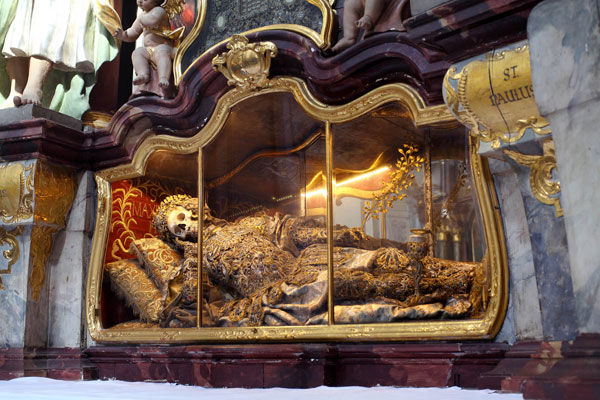
Image: "The Slashed Beauty," full-length anatomical model in the Josephinum Collection, Vienna, Austria; Wax model with human hair in rosewood and Venetian glass case; Workshop of Clemente Susini of Florence, 1781-1786 Photographed by Joanna Ebenstein

Field Trip, Anyone? or, a Day of Brains in Jars, Old Libraries, and Underground Crypts in New Haven, Connecticut


Anyone fancy a chartered bus trip to view the legendary Cushing Collection (pictured above), an underground crypt, and a couple of libraries thrown in for good measure? Yeah; me too! Hope very much to see you there.

FIELD TRIP: Day of Brains in Jars, Old Libraries, and Underground Crypts in New Haven, Connecticut
A chartered bus field trip to New Haven, Connecticut with guided tours of The Cushing Brain Collection, The Institute Library, and The Center Church Crypt and an unguided visit to the Beinecke Rare Book and Manuscript Library
Date: Saturday, July 16th
Time: 10:00 AM- 7 PM
Admission: $60
Presented by Morbid Anatomy

*** 28 Person Limit; MUST RSVP to morbidanatomy [at] gmail.com

On Saturday, July 16th join Observatory and Morbid Anatomy for a special field trip to New Haven, Connecticut. Our first stop will be the amazing Cushing Collection, with its over 500 human brains in glass jars and haunting pre- and post-operative photographs amassed by "father of modern neurosurgery" Dr. Harvey Cushing. We will be introduced to this collection-- newly open to the public--via a guided tour by Terry Dagradi, curator of the collection. Our next stop will be the historic and lovely Institute Library (founded 1826), Connecticut's oldest living independent literary institution and one of the last remaining membership libraries in North America, where director Will Baker will give us a tour followed by an opportunity for unguided exploration and lunch. Next, we will be treated to a special after-hours tour of the Center Church Crypt, an underground cemetery featuring 137 grave stones of New Haven's founders and earliest citizens going back to 1687. Our final stop will be an unguided visit to the incredible Beinecke Rare Book and Manuscript Library before hopping on the bus for our return home.

Trip Details: The $60 event cost of this event includes round trip transportation on a special chartered bus from Observatory to New Haven and back again as well as tour costs. Please bring your lunch, which we will have an opportunity to eat at our second stop. The bus will pick up and drop off in front of the 543 Union Street (at Nevins Street) entrance to Observatory. Pick up is 10:00 AM sharp and drop off approximately 7:00 PM depending on traffic.

There is a 28 person limit for this trip, so please RSVP to morbidanatomy [at] gmail.com if interested.

Images: Of and from The Cushing Collection as featured in The New York Times.

Vanitas Remix

Julie N Hascoet Vanitas II

Julie N Hascoet Vanitas II

Julie N Hascoet Vanitas II

Julie N Hascoet Vanitas II

A talented young French photographer, Julie N. Hascoët’s still life’s of death symbols, or vanitas, mix in prosthesis and wigs that seem to create tension between the organic and synthetic.  It reminds you that many of the things humans use to enhance their bodies long outlast the owner.

View more of Julie’s work on her site, experiments.fr.


iBoobies

iBoobies iPhone case and stand

Is it wrong to say this made my morning? I laughed out loud, it reminds me of Forehead Tittaes, real mature. Can’t say I’m an iPhone user myself, but I can’t imagine this fits well in your back pocket. But for those of you who are willing to try it out, you can actually get this iBoobies iPhone case and stand on Amazon.com. Just don’t pull it out at your next big client meeting and expect to take notes or it or something… Hmmm, I wonder if they have it for iPad? Or, dare I say, a male counterpart?

[via designyoutrust]


Pressure by Heather Tompkins

Educate yourself on the bodies natural pressure points through this gorgeously delicate screen print by award winning illustrator, designer, filmmaker, and Street Anatomy team member, Heather Tompkins. The anatomical illustration seems to float upward in the expanse of blue paper as the small descriptive words draw you in closer.

Available for $40 at the Street Anatomy store. [Update] Only 8 left!

Pressure screenprint by Heather Tompkins

30"x22" 6 color screen print by Heather Tompkins

Pressure screenprint detail by Heather Tompkins

30"x22" 6 color screen print detail by Heather Tompkins

Pressure screenprint detail by Heather Tompkins

'Pressure' head detail

Pressure screenprint detail by Heather Tompkins

'Pressure' anatomy detail

Pressure screenprint detail by Heather Tompkins

'Pressure' type detail


Pressure screenprint detail by Heather Tompkins

'Pressure' type detail

Pressure screenprint signed and numbered by Heather Tompkins

'Pressure' signed and numbered by Heather Tompkins

  • 30″x22″ 6 color screen print, 2011
  • Printed on light blue Magnani Pescia, mouldmade in Italy from 100% cotton with two natural deckles and two tear deckles
  • Limited edition of 10 prints, numbered and signed by the artist

All of the separations, including the type, were hand drawn in ink on large sheets of clear Dura-lar. Absolutely no digital separations or images were used in the process. All illustrations and all aspects of the printing process were done by Heather, the hand written type was done by Colleen Stockmann (who has exceptional penmanship). It can also be noted that Colleen also did all the hand written type for our other collaborative effort, Of These Bones and Branches, that was featured in the first Street Anatomy show.

Inspiration and text courtesy of The People’s Common Sense Medical Adviser in Plain English; or, Medicine Simplified by R.V Pierce, MD. circa 1918.

Heather says of the inspiration for the piece:

The book is filled with old school medical advise mixed with testimonials about how awesome Pierce’s Invalid’s Hotel and Surgical Institute that he established is. It’s basically a big ad for his hospital/hotel, it’s pretty entertaining/interesting and has some fascinating descriptions and old etchings in it. It reminds me of the bizzar things we saw at the Museum of surgical science where SA was. I got together with some anatomy loving friends over drinks one night and we decided that together we would make old medical inspired artwork. I think our next project will be to illustrate the portraits of doctors who have had fancy sounding procedures named after them. There are bound to some epic muttonchops and mustaches involved.
This is an extremely high quality print with tremendous attention to detail created by our own Heather Tompkins.

New Lot of Amazing, Lavishly Illustrated, Hard-to-Find Books on Victorian Anthropomorphic Taxidermist Walter Potter for Sale!


For those of you who, like I, are fascinated by the kitten tea parties, bunny schoolhouses, and kitten croquet matches of the undisputed king of Victorian anthropomorphic taxidermy Walter Potter, I have good news! Henceforth, Morbid Anatomy will be distributing the amazing (and very difficult to find!) book Walter Potter and his Museum of Taxidermy written and published by collector and taxidermy scholar Pat Morris.

There are two versions of the book available: the hardcover (see top image)--which sports a handsome stamped canvas cover and an extra signature of 8 full-color pages--and the paperback (see second image down). Both versions are large scale and lavishly illustrated in full-color with scores of nearly impossible-to-find photographs of Potter's unforgettable works, archival photographs of the early museum, and antique and vintage ephemera related to the museum (see bottom two images for examples; click on image to see larger size). The book is also extremely well researched, providing a through biography or Mr Potter, a detailed history of his museum of curious taxidermy, and the stories behind the making of his iconic pieces of anthropomorphic taxidermy.

Books can be purchased on Amazon.com; click here to purchase the hardcover, which goes for $50, and here to purchase the soft cover, which goes for $35. But order quickly: I only have about 8 hardback remaining, and 7 paperback, and these books tend to sell out fast!

And one more thing: I am also distributing the paperback version of Pat Morris' new book A History of Taxidermy: Art, Science and Bad Taste; you can find out more about this book by clicking here. if you are interested in purchasing a copy of this book, you can email me at morbidanatomy [at] gmail.com.

Bones with Bling: The Amazing Jewelled Skeletons of Europe, The Fortean Times


The trend for jewelled skeletons began in the late 16th century. The Roman catacombs, which had been abandoned as burial sites and largely forgotten about, were rediscovered in 1578 by vineyard workers. This coincided with the initial phase of the Counter-Reform­ation; the Council of Trent, called to formulate the Catholic response to the Protestant Reformation, had just concluded, and one of the areas of concern was affirming the efficacy and belief in relics against attacks by their detract ors. Since the remains in the catacombs dated from the second to fifth centuries AD, it was possible, with a bit of wishful thinking, for Church leaders to romant icise the bones as belonging to almost any famed early Christian saint or martyr. In the newfound cache they saw a potential tool to bolster their supply of relics and promote their power.

--From "Bones with Bling: The amazing jewelled skeletons of Europe," by Paul Koudounari for The Fortean Times, June 2011

Click here to read this entire article--a nice walk through the art and history of extraordinary European jewel and bone relics--on The Fortean Times website. All images sourced from the article and taken by author Paul Koudounari.

Thanks so much to Suzanne Gerber over at Wurzeltod for alerting me to this wonderful piece!

Images top to bottom:

  • Relics of St Pancratius, Church of St Nicholas, Wil
  • St Clemens, Church of Sts Peter and Paul, Rott-am-Inn, Germany
  • Holy Martyr Theodosius, Waldsassen
  • The remains of St Maximus, Basilica of Waldsassen

The Skeletal Man

Marco sent in this video, produced by Jeff Lowe, that showcases the 4 hours of outlineing and 6 hours of shading to create an entire skeleton on his back. Fascinating.


Dead Cities! Victorian Hair Scrapbooks! Automata Demonstrations! This Week and Beyond at Observatory!

I am very excited to announce a whole slew of Morbid Anatomy Presents events taking place at Observatory, this week and beyond. Tonight, join Colin Dickey--author of Cranioklepty: Grave Robbing and the Search for Genius--as he attempts to "conjoin a history of the necropolis with a history of ghost towns and abandoned urban landscapes." This Thursday, join Collector David Freund for a demonstration and discussion of Victorian scrapbooks holding everything "from inventive collages to seaweed compositions to artistically arranged feathers to advertising fragments to human hair to basically anything else that could be glued down." In July, make mummies at one of our popular mummy workshops, take in some “Theatrum Mundi,” investigate postmodern mermaidia, parse the politics of taxidermy, and/or witness antique automatons go through their motions live and in person!

Full list follows; hope very much to see you at one or more of these fantastic events!


Dead Cities / Cities of the Dead: An illustrated lecture by Colin Dickey, author of Cranioklepty: Grave Robbing and the Search for Genius
Date: TONIGHT: Monday, June 20th
Time: 8:00 PM
Admission: $5

Tonight, author Colin Dickey will conjoin a history of the necropolis with a history of ghost towns and abandoned urban landscapes. The necropolis has always been a vital feature of the city, from its earliest incarnations to today. The dead body has long been regarded as both sacred and polluting, so what does a community do with thousands of bodies? From medieval chapels literally bursting with the bones of the dead to the sanitized splendor of the modern funeral industry, how we treat the dead reveal much about how we view the living. How we treat dead cities--from California ghost towns to Ukraine's Pripyat, just outside of Chernobyl--begs a different question: what do we abandon, and why? What does all this urban ruin say about our future? Colin Dickey will intertwine these two forms of urban death to see what it all adds up to.

Colin Dickey is the author of Cranioklepty: Grave Robbing and the Search for Genius, and the co-editor (with Nicole Antebi and Robby Herbst) of Failure! Experiments in Aesthetic and Social Practices. His fiction and nonfiction have appeared in Cabinet, TriQuarterly, and The Santa Monica Review. A native of the San Francisco Bay Area, he now lives in Los Angeles. This is a return visit for Colin, who lectured on Cranioklepty earlier this year at Observatory to great acclaim; more on that lecture can be found here.

Image: The Metropolitan Sepulcher, a plan for a London cemetery circa 1820

dollhouse
Home-Made Visual Albums: An Artifact-Based Lecture with Collector David Freund
Date: THIS THURSDAY June 23
Time: 8:00 PM
Admission: $5
Part of the Out of the Cabinet: Tales of Strange Objects and the People Who Love Them Series, presented by Morbid Anatomy and Morbid Anatomy Scholar in Residence Evan Michelson

Home-Made Visual Albums were incredibly popular productions between the the mid-nineteenth to the mid-twentieth century; these scrap books contained artful arrangements of a wide range of materials, from inventive collages to seaweed compositions to artistically arranged feathers to advertising fragments to human hair to basically anything else that could be glued down. More than simply collections or scrap books, these albums can also be seen as diaries, and project a sense of their absent makers through imaginative content, arresting design, obsession, and, above all, narrative.

Collector and artist David Freund has been collecting--and classifying, into over 40 categories of his own invention-- these enigmatic and fascinating artifacts over the last 30 years. Tonight, join Mr. Freund as be discusses the history and taxonomy of these artifacts and presents a number of exquisite examples from his collection for your delight and perusal.

David Freund earned his MFA from the Visual Studies Workshop after a BA in Theater at UC Davis. Professor Emeritus of Photography at Ramapo College of New Jersey, he chaired its Visual Arts for twenty years. He also taught at Pratt and was a Dayton-Hudson Distinguished Visiting Artist at Carleton College. His NEA photographs showed gas station environments nationwide. Other grants included New York’s CAPS program and NYC’s Institute for Art and Urban Resources. During a Light Works residency Freund curated a regional photo post card exhibition, Penny Publishing. Exhibitions include Light Gallery and Eastman House. Among collections with his work are MOMA, the Corcoran, MFA Houston, and the Bibliotheque Nationale.

Image: Detail from one of David Freund's collection of home-made visual albums from the 19th and early 20th Century

And onward and upward in the weeks to come:


You can find out more about these events on the Observatory website by clicking here. You can get directions to Observatory--which is next door to the Morbid Anatomy Library (more on that here)--by clicking here. You can find out more about Observatory here, join our mailing list by clicking here, and join us on Facebook by clicking here.

From the Street Anatomy Store

Signature cyclops skull on wood by the prominent Chicago street artist SARO

Untitled yellow 12"x11" on 1" thick wood - $50


Signature cyclops skull on wood by the prominent Chicago street artist SARO

Untitled purple 12"x11" on 1" thick wood - $50


Signature cyclops skull on wood by the prominent Chicago street artist SARO

Untitled blue 12"x11" on 1" thick wood - $50

I’m almost tempted to keep these fantastic boards for myself!

Signature cyclops skulls on wood by the prominent Chicago street artist, SARO.
“These were originally intended for the street as they are painted on the very style and size wood that I’ve used in my 100+ boards I’ve put up here in Chicago.” —SARO


Read our recent interview with SARO to learn more about the street artist and his process.


Tomororrow Night at Observatory: Exhibition Opening Party for "The Corrigan Family Oddments," Curated by G. F. Newland

Tomorrow night! Hope to see you there!

Exhibition Opening Party for "The Corrigan Family OddmentsCurated by G. F. NewlandDate: Tomorrow, Friday, June 17Time: 7-10pmGreetings Art fans! In celebration of Father’s Day, the Observatory Things-That-Move Dept. invites you all to take a peek at procreation! In nature, talents can be predisposed, and passed on from generation to generation. Families like the Gentileschis, the Peales, the Bachs, the Wyethes, and most recently, the Kominsky-Crumbs have all made a strong case for this heredity thing; the Bush presidencies, not so much, but hey, it’s a crap shoot! Anyway, our latest show is about a wee dynasty of painters named Corrigan, and through their family oddments, we will examine art, eccentricity, and the vagaries of genetic code.The Corrigan Family Oddments features the work of Dennis Corrigan and his two adult daughters, Sara and Becky. Dennis Corrigan–the family patriarch–rose to prominence in the art world of the late 1960s after returning from his tour of duty in the Philippines during the Vietnam war. He continues to pursue an active studio life involving the production of intricate and creepy yet humorous paintings, and film projects based on puppet characters derived from those paintings. His work resides in museums and galleries around the world, including the Metropolitan Museum or Art and the Brooklyn Museum. Sara, his oldest daughter, is a filmmaker and film-editor who has worked with such luminaries as Woody Allen; her fine art work consists of bizarre images of an imaginary and desperate Marilyn Monroe wannabe. These delightful yet deranged little paintings are created in oil on canvas. Becky, the youngest daughter, works as a singer-songwriter and physical therapist while creating very simple line drawings of ludicrous characters and more complex oil portraits of people on the edge.This promises to be a most enjoyable show revealing the concepts and skills, similarities and differences of a very talented and humorous family of artists.

You can find out more about this event on the Observatory website by clicking here. You can get directions to Observatory--which is next door to the Morbid Anatomy Library (more on that here)--by clicking here. You can find out more about Observatory here, join our mailing list by clicking here, and join us on Facebook by clicking here.Image: Satisfied Nicotine Freaks, Dennis Corrigan, Oil on Canvas

TODAY at the Coney Island Museum: "Portrait of a Dime Museum: The Niagra Falls Museum (1827-1999)," a Lecture with Collector Bill Jameison

Today! Hope to see you at this lecture about the historical, curious, and amazing Niagara Falls Museum (est. 1827) from the mouth of its new keeper, Bill Jamieson, surrounded by an assortment of astounding objects from the museum as installed in The Great Coney Island Spectacularium!And a very special thanks is due to my good friend Mike Zohn of Obscura Antiques and Oddities and TV's Oddities for introducing us to Bill and for making both our exhibition--and this lecture--possible! We hope very much to see him there today.Full details follow; VERY much hope to see you there!

Portrait of a Dime Museum: The Niagra Falls Museum (1827-1999)A Lecture by Historian, Museologist, and Collector Bill Jamieson, Owner of The Niagara Falls Museum CollectionLocation: The Coney Island Museum, 1208 Surf AvenueDate: Sunday, June 19Time: 1:00 PMAdmission: $5Part of the Out of the Cabinet: Tales of Strange Objects and the People Who Love Them SeriesIn the 19th and early 20th Centuries, popular museums--many of them charging a dime for admission, and thus often referred to as “dime museums”-- were a beloved part of the amusement landscape. In the U.S., these attractions were pioneered by Charles Willson Peale's Philadelphia Museum (est. 1784) and P. T. Barnum's American Museum (est. 1842). These early museums exhibited a dizzying array of curiosities including live menageries, animal and human freaks, taxidermy, artworks, waxworks, cosmoramas, temperance plays, trained bears, the tree under which Jesus’ disciples sat, Jenny Lind, General Tom Thumb, Chang and Eng, and Barnum’s infamous Feejee Mermaid.The Niagara Falls Museum--Canada's oldest museum--was an important early dime museum founded in 1827 and open to the public until 1999. The collection is unique for being a remarkably intact early dime museum collection, showing the kind of breadth and variety rarely seen in the museums of today. Over the course of its tenure, it was notable for hosting such wonders as the mummy of pharaoh Ramses I (repatriated in 2003), early Wild West Shows starring General Custer’s scout “Wild Bill” Hickock and local Woodland Indians, and a number of artifacts from the Pan American Exposition of 1901 including the shell and coral collection famous naturalist Dr. Louis Agassiz. It was also renowned for its strong natural history collection with a focus on local fauna and freak animals living and dead.Over its lifetime, the museum changed location and hands several times, and many collections were added or discarded. It was ultimately purchased by Bill Jamieson--a private collector in Toronto--with the hopes of one day restoring the museum to its original splendor. This year, Mr. Jamieson loaned an assortment of astounding artifacts--including 19th Century waxworks, the remains of Skipper the two-legged dog, taxidermy, Native American artifacts, and seaweed artwork-- from The Niagara Falls Museum to be exhibited as part of The Great Coney Island Spectacularium; these objects are currently on view as part of this exhibition at The Coney Island Museum through April 2012.This Father's Day afternoon, please join us at The Coney Island Museum for a unique opportunity to learn about about the historical, curious, and amazing Niagara Falls Museum surrounded by an assortment of astounding objects from the collection.Bill Jamieson is a historian, ethnologist, museologist, ancient and tribal art dealer and collector. Bill’s interests evolve around the forgotten cultures and customs of the South Pacific, Indonesian, African, South and North American Indians, and Egyptian. His fascination with artifacts from these cultures, as well as oddities and curiosities from around the globe, especially objects of the Macabre. Bill’s fieldwork amongst the Shuar in Ecuador and Peru has helped him with much knowledge of this tribal group. His expertise has been drawn upon by National Geographic’s documentary production unit for a series Headhunting, Human Sacrifice, and Cannibalism as well as by numerous museums and researchers. He has been a member of the Canadian Chapter of the New York Explorers Club since 1997. Bill is active in loaning and donating to such Toronto institutions as the Royal Ontario Museum and Art Gallery of Ontario. Bill is presently working on a pilot for a series for History Television.

LEGO My Skeleton

Clay Morrow LEGO skeleton front

Clay Morrow LEGO skeleton back
Clay Morrow LEGO skeleton skull

Clay Morrow LEGO skeleton organs

Fabulous LEGO skeleton created by Clay Morrow.  I can only imagine how challenging it was to find all the right little pieces to make it look just right. Now if we could only get instructions!

See more angles of the skeleton and Clay’s work on his Flickr site.


Lomography Camera Launch Party and Grand Store Reopening (with Mermaid!), Thursday June 16th, Free

Lomography--a company championing low-tech, low-fi film photography--is launching a new nautical-themed analog camera, and have invited me to be an experimental first user! So, look forward to lots of charmingly imperfect images--such as the one you see above, produced on one of their cameras--in the days and weeks to come.Also of interest: this new camera will be officially unveiled at a launch party taking place at their Greenwich Village shop this Thursday, and will feature free snacks (!) and drinks (!!!) AND a live mermaid (what is it about mermaids these days?)Full details for the launch party follow. Hope to see you there!

Camera Launch Party and Grand Store ReopeningDate: Thursday, June 16Time: 7:00pm - 10:00pmLocation: Lomography Gallery Store41 W 8th Street, New York, New YorkThe Lomography Gallery Store NYC Greenwich will be returning like a siren as we celebrate an updated shop and a brand new camera while we unveil the first ever Lomography Fish Market!The tide is coming in and it’s bringing a new product ashore! Join us at our Greenwich Village location on Thursday, June 16th at 7pm for a huge party to celebrate our latest catch and tons of new shop features.We will need all hands on deck as we give our guests the chance to win this new mystery product & “go fishing” for film & other analog goodies. We will have a real-live mermaid in attendance as well as musical entertainment by SUPERCUTE! Not to mention drinks and snacks galore.So prepare the sails and bait your hooks! We’ll see you on Thursday, June 16th at 7pm.

More about the event can be found here. You can RSVP on Facebook by clicking here.Image was sourced here.

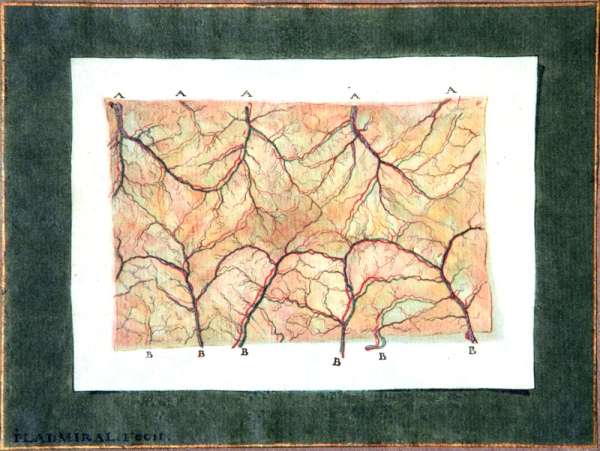
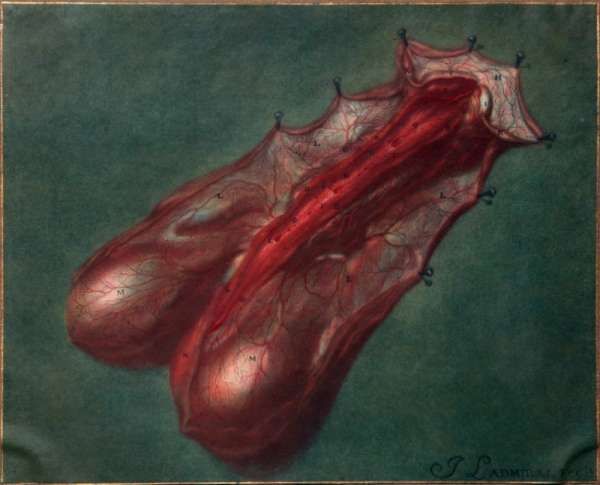
Jan Ladmiral (1698 – 1773)

I just discovered the amazing anatomical mezzotints of 18th Century artist Jan Ladmiral (see above) via, of all things, a humorous blog post flaming Congressman Anthony Weiner on a blog called Booktryst. The work is gorgeous, and remind me of another of my favorite anatomical artists, Jacques Fabian Gautier d'Agoty; see this recent post for more on that.A bit about Jan Ladmiral, from the original Booktryst post:

Jan Ladmiral (1698 - 1773) was a pupil and assistant to the great anatomical illustrator Jacob Christoph Le Blon (1670 - 1741). Afterward, Ladmiral, apparently, presumed ownership of Le Blon's secret invention for coloring mezzotint engravings, a process using three different impressions of primary colors (blue, yellow, and red) for one image and thus able to produce different color values without the use of black."Ladmiral offered his services in the making of colored anatomical representations to the famous anatomist, Albinus in Leyden. This anatomist put his (Ladmiral's] invention to the test and even permitted him to use two posthumous drawings by Ruysch…" (Choulant and Streeter, History and Bibliography of Anatomic Illustration, p. 267).Between 1736 and 1741 Ladmiral created six colored mezzotints of anatomical subjects that made his reputation and remain highly regarded as amongst the finest examples ever produced. Three of those mezzotints are seen here. The initial print in the series, Muscularis mucosae of the intestine, from 1736, is a milestone, the first use of color printing in a medical or scientific book...

You can read the entire piece in context by clicking here.Images top to bottom:

  1. Brain of an Unborn Child (1738)
  2. Muscularis mucosae of the intestine (1736)
  3. Human penis (1741)

This Sunday at the Coney Island Museum: "Portrait of a Dime Museum: The Niagra Falls Museum (1827-1999)," a Lecture with Collector Bill Jameison

This Father's Day Sunday: a unique opportunity to learn about about the historical, curious, and amazing Niagara Falls Museum (est. 1827) from the mouth of its new keeper, Bill Jamieson, surrounded by an assortment of astounding objects from the museum as installed in The Great Coney Island Spectacularium!This event is seriously not to be missed! Full details follow; VERY much hope to see you there!

Portrait of a Dime Museum: The Niagra Falls Museum (1827-1999)A Lecture by Historian, Museologist, and Collector Bill Jamieson, Owner of The Niagara Falls Museum CollectionLocation: The Coney Island Museum, 1208 Surf AvenueDate: Sunday, June 19Time: 1:00 PMAdmission: $5Part of the Out of the Cabinet: Tales of Strange Objects and the People Who Love Them, presented by Morbid Anatomy and Scholar in Residence Evan MichelsonIn the 19th and early 20th Centuries, popular museums--many of them charging a dime for admission, and thus often referred to as “dime museums”-- were a beloved part of the amusement landscape. In the U.S., these attractions were pioneered by Charles Willson Peale's Philadelphia Museum (est. 1784) and P. T. Barnum's American Museum (est. 1842). These early museums exhibited a dizzying array of curiosities including live menageries, animal and human freaks, taxidermy, artworks, waxworks, cosmoramas, temperance plays, trained bears, the tree under which Jesus’ disciples sat, Jenny Lind, General Tom Thumb, Chang and Eng, and Barnum’s infamous Feejee Mermaid.The Niagara Falls Museum--Canada's oldest museum--was an important early dime museum founded in 1827 and open to the public until 1999. The collection is unique for being a remarkably intact early dime museum collection, showing the kind of breadth and variety rarely seen in the museums of today. Over the course of its tenure, it was notable for hosting such wonders as the mummy of pharaoh Ramses I (repatriated in 2003), early Wild West Shows starring General Custer’s scout “Wild Bill” Hickock and local Woodland Indians, and a number of artifacts from the Pan American Exposition of 1901 including the shell and coral collection famous naturalist Dr. Louis Agassiz. It was also renowned for its strong natural history collection with a focus on local fauna and freak animals living and dead.Over its lifetime, the museum changed location and hands several times, and many collections were added or discarded. It was ultimately purchased by Bill Jamieson--a private collector in Toronto--with the hopes of one day restoring the museum to its original splendor. This year, Mr. Jamieson loaned an assortment of astounding artifacts--including 19th Century waxworks, the remains of Skipper the two-legged dog, taxidermy, Native American artifacts, and seaweed artwork-- from The Niagara Falls Museum to be exhibited as part of The Great Coney Island Spectacularium; these objects are currently on view as part of this exhibition at The Coney Island Museum through April 2012.This Father's Day afternoon, please join us at The Coney Island Museum for a unique opportunity to learn about about the historical, curious, and amazing Niagara Falls Museum surrounded by an assortment of astounding objects from the collection.Bill Jamieson is a historian, ethnologist, museologist, ancient and tribal art dealer and collector. Bill’s interests evolve around the forgotten cultures and customs of the South Pacific, Indonesian, African, South and North American Indians, and Egyptian. His fascination with artifacts from these cultures, as well as oddities and curiosities from around the globe, especially objects of the Macabre. Bill’s fieldwork amongst the Shuar in Ecuador and Peru has helped him with much knowledge of this tribal group. His expertise has been drawn upon by National Geographic’s documentary production unit for a series Headhunting, Human Sacrifice, and Cannibalism as well as by numerous museums and researchers. He has been a member of the Canadian Chapter of the New York Explorers Club since 1997. Bill is active in loaning and donating to such Toronto institutions as the Royal Ontario Museum and Art Gallery of Ontario. Bill is presently working on a pilot for a series for History Television.

Sutured But Not Healed

Suture arm Photo by Øystein Horgmo

Photo by Øystein Horgmo © All Rights Reserved. Click for larger image.


Suture arm Photo by Øystein Horgmo

Photo by Øystein Horgmo © All Rights Reserved. Click for larger image.


Suture arm Photo by Øystein Horgmo

Photo by Øystein Horgmo © All Rights Reserved. Click for larger image.

As a medial photographer, Øystein Horgmo, captures some of the most interesting subjects imaginable.  This specimen, found in a medical student’s practical skills center, is covered in the attempts to heal fleshy lacerations which many of them are, as Øystein says, “sutured, but none of them healed.”

But really, this reminds me of my arm after a few minutes of playing with my cat.

View more of Øystein‘s work on his fascinating blog, The Sterile Eye.


MizEnScen

MizEnScen ribcage

MizEnScen heart

I stumbled upon these gems on tumblr. I don’t know much about the artist, MizEnScen, but I do know that you can purchase the ribcage print from Society6 (16 – 26 bones depending on the size).