Intellecta AI-Driven And Multichannel Analytics From OnviSource Delivers Automation For Workforce Optimization, CX Management And Content Management -…

Powered by Companys Proprietary AI, Intellecta Analyzes 100% of Customer Interactions across Multiple Touch Points, Channels and Languages; And Offers Big Data and Content Management, Automated Quality Assurance/Compliance, and a Range of Analytics in Customer Sentiment, Intents, Trends and Behavior

OnviSourceannounced Companys continuous success in expanding the capabilities of itsIntellecta Multichannel Analyticsfor intelligently automated analysis of 100% of customer interactions across varied channels. Advantages of Intellecta are three-fold in that organizations are realizing benefits in the areas of big data and content management, workforce optimization, and customer experience management and improvement through discovery of customer behavior, sentiment, intents and trends.

Todays enterprises have realized that in order to effectively optimize the performance of their contact center workforce, and successfully manage and improve their customer experience, they need to capture and analyze all of their customer interactions across all channels and touch points. This is an impractical task unless solutions powered by AI, advanced multichannel analytics, and automation technologies are utilized capabilities that are fully delivered by Intellecta, enabling organizations to transform their internal static and process-driven approach to a dynamic and data-driven model.

Recommended AI News: RPA in Healthcare: The Key to Scaling Operational Efficiency

Intellecta is powered by iMachine, Companys proprietary and multi-engine AI technologies offering Natural Language Processing/Understanding (NLP/NLU), Machine Learning (ML) and Deep Learning (DL) artificial intelligence. Its voice analysis technologies include speech-to-text, speaker separation/identification/authentication, and a range of voice analysis features. Intellecta also uses multiple analytics engines including phonetics, text and desktop analytics for an optimized analysis of multichannel interactions.

First, Intellecta manages and optimizes the big data generated through capturing all interactions from all channels by converting and unifying multichannel interactions to optimized text-based contents that are addressable, archivable, and optimized for storage. Its content analytics then categorizes and clusters the contents based on supervised (user-defined) or unsupervised (Named Entity Recognition, mostly mentioned, discovered topics) guidelines. It also applies user-defined compliance, such as PCI and other sensitive data protection rules, in order to manage data security compliance.

Second, Intellecta offers a range of capabilities to automate the analysis of customer interactions in multiple languages and generate actionable knowledge required to optimize the performance of contact center workforce. It processes 100% of all interactions and automates most of quality assurance and compliance management tasks, first call resolution improvements, and more. Its analytics capability can discover and notify critical events in real time and provide agents with automated coaching, guidelines and reminders.

Finally, Intellectas advanced analytics provide comprehensive solutions in discovering customer sentiments, intents, behavior and trends critical to managing and improving customer experience. Complex behaviors and sentiments by customers or agents can be more accurately analyzed using Intellectas iMachine AI engine augmented by specific training models. Results of such analysis are depicted visually to assist rapid interpretation of situations during interactions. It also delivers speaker-separated transcriptions with the option of redaction of sensitive data in both the text and the original media.

Recommended AI News: Outsourcing 2.0? Automation Offers A Powerful Alternative

Multichannel analytics automatically provides big data management through topical categorization and clustering of data. This includes the detection of subjects, topics and trends that are either known and defined by users or those that are unknown, saidArt Yri, OnviSource CTO. Managing data in this way and discovering what is not already known to companies is a game changer for shaping their future branding, sales programs, processes and services.

Intellecta is currently utilized by OnviSource customers as on-site software licenses, subscription models such as SaaS and managed services, or a combination. Companys Intellecta SaaS is currently processing millions of minutes of recorded calls per month for a variety of enterprise applications. Intellecta can offer its own multichannel interaction capture solutions or utilize third party and existing recorded calls and contents. Its highly affordable prices, combined with Companys customer success programs that offer consultation, proof-of-concepts and 30-day hands-on operation assistance have made Intellecta affordable and usable by companies of all sizes.

Recommended AI News: TCS Records $5,586 Million in Revenue for Q3 2019; Trains 327k+ Employees in Digital Technologies

View original post here:

Intellecta AI-Driven And Multichannel Analytics From OnviSource Delivers Automation For Workforce Optimization, CX Management And Content Management -...

Automation as a Service Market by Component, Business Function, Enterprise Size, and Industry Vertical: Global Opportunity Analysis and Industry…

New York, Feb. 06, 2020 (GLOBE NEWSWIRE) -- Reportlinker.com announces the release of the report "Automation as a Service Market by Component, Business Function, Enterprise Size, and Industry Vertical: Global Opportunity Analysis and Industry Forecast, 20192026" - https://www.reportlinker.com/p05844086/?utm_source=GNW

Automation as a Service (AaaS) is a set of disruptive technologies that provide professional services to industries that are willing to adopt automation in their day-to-day processes. Plethora of software applications and rise in need to automate certain processes with redundant responses is a major factor that drives the growth of the market among major social networking players. For instance, in 2018, IFTTT Inc. adopted AaaS to provide end users with instant responses by automating processes with applications such as Twitter, Facebook, OneDrive, and WordPress. These processes are able to automatically execute various tasks when specific conditions are met and are known as recipes. Connected devices are proliferating the traction of AaaS solutions as these devices provide easy data access. IoT and smartphones are key connected devices that propel the adoption of automation as a service at a significant rate. Primarily, robotics plays a vital role in optimizing manual work processes, especially in warehouses that require tireless working with heavy loads. However, concerns associated with data security and privacy as automation requires sharing of data at a high pace, which is expected to hamper the growth of the market to a certain extent. The automation as a service market is segmented on the basis of component, business function, enterprise size, industry vertical, and region. By component, it is categorized into solution and services. On the basis of business function, it is divided information technology, sales and marketing, operations, finance, human resources, and others. On the basis of enterprise size, it is divided into large enterprises and small & medium enterprises. Depending on industry vertical, it is categorized into BFSI, telecom & IT, retail, healthcare, manufacturing, government & defense, energy & utilities, media & entertainment, transportation & logistics, and others. Based on region, the market is analyzed across North America, Europe, Asia-Pacific, and LAMEA. The market players operating in the automation as a service market include Automation Anywhere, Inc., Blue Prism Limited, HCL Technologies Limited, Hewlett Packard Enterprise Company, International Business Machines Corporation, Kofax Inc., Microsoft Corporation, NICE Robotic Automation, Pegasystems Inc., and UiPath.

KEY BENEFITS FOR STAKEHOLDERS The study provides an in-depth analysis of the market current & future trends to elucidate the imminent investment pockets. Information about key drivers, restraints, and opportunities and their impact analyses on the global automation as a service market size is provided. Porters five forces analysis illustrates the potency of the buyers and suppliers operating in the global automation as a service industry. The quantitative analysis of the market from 2018 to 2026 is provided to determine the global automation as a service market potential.

KEY MARKET SEGMENTS

By Component Solution Services

By Business Function Information Technology Sales and Marketing Operations Finance Human Resources Others

By Enterprise Size Large Enterprises Small & Medium Enterprises

By Industry Vertical BFSI Telecom and IT Retail Healthcare Manufacturing Government and Defense Energy and Utilities Media and Entertainment Transportation and Logistics Others

By Region North America o U.S. o Canada Europe o Germany o France o UK o Rest of Europe Asia-Pacific o Japan o China o India o Rest of Asia-Pacific

LAMEA o Latin America o Middle East o Africa

KEY MARKET PLAYERS Automation Anywhere, Inc. Blue Prism Limited HCL Technologies Limited Hewlett Packard Enterprise Company International Business Machines Corporation Kofax Inc. Microsoft Corporation NICE Robotic Automation Pegasystems Inc. UiPath

Read the full report: https://www.reportlinker.com/p05844086/?utm_source=GNW

About ReportlinkerReportLinker is an award-winning market research solution. Reportlinker finds and organizes the latest industry data so you get all the market research you need - instantly, in one place.

__________________________

Link:

Automation as a Service Market by Component, Business Function, Enterprise Size, and Industry Vertical: Global Opportunity Analysis and Industry...

The Challenge of Automation in Strawberries – AG INFORMATION NETWORK OF THE WEST – AGInfo Ag Information Network Of The West

With California Ag Today, Im Tim Hammerich.

A couple of weeks ago, we were able to report that the strawberry crop outlook was very optimistic for California growers. While supply and demand both look strong, farmers are still wrestling with a big challenge: labor.

Heres California Strawberry Commission Communications Director Carolyn ODonnell.

ODonnellWell, definitely one of the biggest concerns that they see is the ability to be able to plant, weed, and harvest to their crop. Because all of those things are done by hand. There are some efforts going underway to find different ways to use automation or mechanical ways to do this, but because it's such a delicate fruit and it's picked on the plant and packed directly into the clamshell where you buy it in the grocery store. There's finding machinery that can mimic, not only the touch of a hand, which can adjust itself to how firm things are. But also something that doesn't damage the plant because they're harvesting from the same plants two, sometimes three times a week, over a number of months. So you want to keep the plants intact.

ODonnell says its not just the fact that human labor is more delicate with the fruit and the plants. Its also the art of identifying and picking only those fruit that are ready for market.

ODonnellThe other thing is that being able to judge. Is this Barry ready and ripe to be picked? So having the optics that are able to be able to judge what's right for picking.

The future is likely a combination of skilled labor and new technologies to help our strawberry growers remain competitive.

Here is the original post:

The Challenge of Automation in Strawberries - AG INFORMATION NETWORK OF THE WEST - AGInfo Ag Information Network Of The West

Robotic Process Automation Market Procurement Intelligence Report | Evolving Opportunities with Blue Prism and UiPath in the Robotic Process…

SpendEdge has been monitoring the global robotic process automation market and the market is poised to experience spend growth of more than USD 4 billion between 2019-2024 at a CAGR of more than 30% during the forecast period. Request Free Sample Pages.

This press release features multimedia. View the full release here: https://www.businesswire.com/news/home/20200206005567/en/

Read the 130-page research report with TOC and LOE on "The Global Robotic Process Automation Market Procurement Intelligence Report, Pricing Outlook in Geographies that include APAC, North America, South America, and MEA, top suppliers, supplier selection and negotiation strategies, and insights into best practices to optimize procurement spend."

Buyers from the banking sector are exhibiting an extensive adoption of RPA software that is functional in reducing errors while verifying and sending loan applications to concerned departments. In a bid to limit reliance on the offshore employee, a majority of the leading enterprises are adopting RPA software. These factors are exerting a positive influence on spend growth in the global robotic process automation market.

In terms of regional spend, factors such as the presence of robust cloud infrastructure, employees with high skill sets, reliable cybersecurity regulations, and strong awareness about emerging technologies among businesses are driving adoption in the robotic process automation market in North America.

Subscribe to our procurement platform to get instant access to over 1000 market-ready procurement intelligence reports without any additional costs or commitment.

The Top Robotic Process Automation Service Providers Enlisted in this Report:

The development of RPA software is essentially dependent on the skills of professionals. To hire and retain such highly skilled professionals, service providers tend to hike their salaries which become key cost components of their OPEX. This will ultimately impact buyers procurement expenses in the robotic process automation market. Considering this probability, this report has listed the top robotic process automation service providers, SLA agreement insights, and the selection and negotiation strategies that buyers must undertake to achieve optimal and cost-effective procurement in this market. Insights into some of the service providers are given below:

Blue Prism - Blue Prism is among the service providers who have made significant investments in the developing markets of South America and MEA that have a low impact on the demand for RPA. The presence and the prominence of this service provider will have a positive impact on the adoption in these regional markets.

UiPath - Procurement of this technology is a costly proposition that makes it pertinent for buyers to ascertain the application of this software in their operational framework. Buyers are advised to run live pilot projects with this robotic process automation service provider to test the solution in a live environment for an extended period to assess its true capabilities.

Kryon System - Buyers are advised to insist on receiving complete information regarding the prices that this service provider will charge as per the resources utilized, depending on their needs. It is imperative for buyers to actively negotiate for performance guarantees in the contract, which will help them avail the best possible service even during the period of high demand.

Buy 1 report and get the second for 50% off. Buy 2 reports and get the third for free. Download the free sample of this report on the robotic process automation market.

Some of the key topics covered in this report are:

Free sample of reports that you may like:

About SpendEdge:

SpendEdge shares your passion for driving sourcing and procurement excellence. We are the preferred procurement market intelligence partner for 120+ Fortune 500 firms and other leading companies across numerous industries. Our strength lies in delivering robust, real-time procurement market intelligence reports and solutions. To know more, https://www.spendedge.com/request-free-proposal

View source version on businesswire.com: https://www.businesswire.com/news/home/20200206005567/en/

Contacts

SpendEdgeAnirban ChoudhuryMarketing ManagerUS: +1 630 984 7340UK: +44 148 459 9299https://www.spendedge.com/contact-us

See the rest here:

Robotic Process Automation Market Procurement Intelligence Report | Evolving Opportunities with Blue Prism and UiPath in the Robotic Process...

Intelligent Automation Will Boost India’s Economy to US 5 Trillion By 2024-25 – THE WEEK

(Eds: Disclaimer: The following press release comes to you under an arrangement with PR Newswire. PTI takes no editorial responsibility for the same.)- New report reveals RPA and AI are crucial to India's economic growth

NEW DELHI, Feb. 7, 2020 /PRNewswire/ -- Intelligent automation will catapult Indian economy to US $5 trillion dollars in the next five years, up from $2.7 trillion dollars, according to a new study commissioned by Automation Anywhere, a global leader in Robotic Process Automation (RPA.)

Today, automation is driving efficiencies for enterprises, resulting in dramatic productivity gains in the back office and enhanced customer experiences in the front office. According to the study conducted by Ernst and Young India (EY,) the country will experience a significant boost to its economy to reach US $5 trillion by as early as 2024.

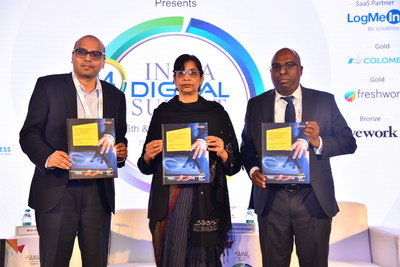
The research, presented today at the IAMAI's India Digital Summit 2020, examined the economic impact of automation and found that large-scale adoption of automation technologies, such as RPA, artificial intelligence, natural language processing and machine learning will drive increased efficiencies and new jobs resulting in economic growth in the next few years.

"Our research shows that intelligent automation and RPA, in particular, will make businesses more efficient by automating business processes end-to-end, allowing organizations to become true digital enterprises," said Kamalanand Nithianandan, Partner, Advisory Services, EY India. "As more organizations adopt intelligent automation at scale, this will eventually create more high-skilled jobs providing more economic opportunities for everyone."

According to the report, automation is driving intrinsic growth in every sector of the Indian economy and is influencing every activity of the workforce by creating higher skilled jobs, resulting in more opportunities for workers and higher economic output.

Banking, insurance and financial services have emerged as key industry adopters of intelligent automation as they experience the benefits of lowering costs of business transactions and providing a differentiated customer experience.

Telecom, retail-consumer packaged goods, oil and gas, logistics and transportation organizations have also increased efforts to automate core business functions, driven by mandates to cut costs and improve customer experiences. According to the research, public sector and government institutions are deploying automation to enable the digital transformation of citizen touchpoints, which will ultimately reduce paperwork and improve the citizen - a key goal in further enhancing economic growth across the country.

"As an Indian heritage company, Automation Anywhere is uniquely positioned to make an impact as our complete intelligent platform empowers businesses to bridge the gap between the front office and back office, making businesses more efficient and agile," said Milan Sheth, Executive Vice President, IMEA, Automation Anywhere. "We are helping thousands of government and industry entities embark on their automation journeys to unlock business productivity, thereby enabling India to catapult its economic growth."

For more information, download the full report here.

Interact with Automation Anywhere:

Visit our website: https://www.automationanywhere.com/Check out our monthly webinar series BotVisions :https://www.automationanywhere.com/company/webinarsFollow us on Twitter: @AutomationAnyIN Explore with us on Instagram: https://www.instagram.com/automationanywhere/Connect with us on LinkedIn: https://www.linkedin.com/company/automation-anywhere

About Automation Anywhere

Automation Anywhere is a global leader in Robotic Process Automation (RPA), empowering customers to automate end-to-end business processes with software bots - digital workers that perform repetitive and manual tasks, resulting in dramatic productivity gains, improved customer experience and more engaged employees. The company offers the world's only web-based and cloud native intelligent automation platform combining RPA, artificial intelligence, machine learning and analytics right out of the box, to help organizations rapidly start and scale their process automation journey. With offices in more than 40 countries and a global network of 1,400 partners, Automation Anywhere has deployed over 1.8 million bots to support some of the world's largest enterprises across all industries. For additional information, visit http://www.automationanywhere.com.

Photo: https://mma.prnewswire.com/media/1087590/LaunchofthereportatIAMAI.jpg

PWRPWR

Read this article:

Intelligent Automation Will Boost India's Economy to US 5 Trillion By 2024-25 - THE WEEK

The Age of Automation is coming to a MLB strike zone near you – Motor City Bengals

It was announced a few weeks back Major League Baseball will be experimenting with an automated strike zone at nine facilities during Spring Training in 2020. This comes after game usage in 2019 in the Atlantic League and the Arizona Fall League. Its pretty clear, Commissioner Rob Manfred wants Robo-Umps at home plate. It seems a very safe bet theyll be used more, the technology will improve and well see an MLB system implemented within the next three seasons. Is it good? Bad? No difference? Lets look at a few things.

The first thing needing to be discussed is the authormeis an amateur umpire. I work in high school baseball and 14U travel baseball. Its a very fun side-hustle which Id recommend to many folks. The money is decent, you meet plenty of nice people, youre outdoors, and youre still involved in the game we all love. Its 90% fun and 10% listening to someone in the stands wonder what the infield fly rule is, or an obstruction call theyre certain you got wrong even if theyve never cracked open a rule book.

However, being an amateur umpire just makes you someone interested in umpiringnot an expert on umpiring. Big difference. My opinion is just another guys thoughts. Lets look at things anyhow.

I hold major league umpires in the highest regard. Some of the calls they get correct are mind-blowing to someone like me. The speed and size of the players they officiate and the bang-bang nature of so many calls they get right are amazing. As someone who mightmightsee one kid per year hit 90-mph with a heater, the most impressive thing is how big league (and NCAA) umps deal with the 95+ velocity and wicked breaking stuff on a nightly basis. They get 95% of calls right by most reports. They also do it from March through October with a relentless meat-grinder schedule. As an Average Joe on the couch you might think you could do what they dosorry, you cant.

So why change to an automated system? Mankind, in general, has a natural urge to improve. Technology often gets rushed into action to improve on what humans already do well. Watching some video from the Atlantic League and the AZ Fall League (which there isnt a ton of) you can see the technology will get most pitches right. But you can also find some examples where the Robo-umps calibration is going to call some pitches strikes that are not generally accepted as a strike in todays game. The pitch sometimes nicks the zone and dive into the dirt causing some definite consternation from the hitter.

How long will it take MLB hitters and pitchers to adjust to this? Hard to say. It wont be easy.

Even if the zone changes some if the robo-ump can even just match the human umps accuracy it does eliminate any claims of bias from one team or another. The common refrain of call em both ways and we dont get that pitch and are you kidding me?! will be become useless since the automated system wont have ears.

It wont totally alleviate the home plate umpire from the burden of bench jockeying though. The Atlantic League allowed umpires to overrule the robo-ump if they felt the system really missed a pitch badly. Arguments happened when the ump declined to change a pitch. If MLB does something similar you could see plenty of benches whining for the umpire to make a call on borderline pitches.

Then consider how the NFL refused, for the most part, to overrule pass interference calls this season. It could be easy to imagine an MLB umpire not really looking to split hairs over a nasty slider nipping the black or being an inch or two outside. Theyll let the system call all but the most egregious misses.

The plate umpire will still be a popular target from the bench in those instances.

The plate umpire will still have plenty of work to do back there. Foul tips, check swings, fair or foul calls, plays at the plate, timing plays, covering other bases in rotation, putting the ball back in play after a dead ball, calling balks, calling various types of interference and obstruction, etc. The job wont go away. But its definitely going to change.

Is it a good thing? Im not going to cry about the game losing the human element. Itll still be there and in due course, well adapt as fans just as the umpires, players, and managers will adapt.

There is no doubt the implementation will have its rough edges. How could it not? Conspiracy theorists will have a field day for instance. Especially if MLB has to recalibrate its strike zone as it tries to find a way to solve the current scourge in the game of too many strikeouts and not enough balls in play.

Or the system could malfunction (in Iowa Caucus fashion!)perhaps in a playoff game. The howling would be deafening.

The technology isnt going away thoughits close. They are dipping the MLB toe in the water this Spring. The Robo-ump will be doing a cannonball into the pool in the first half of this decade.

Link:

The Age of Automation is coming to a MLB strike zone near you - Motor City Bengals

Benefits and challenges of automated processes for wildlife trade in poor countries – Trade for Development News

The Trade Facilitation Agreement (TFA) of the World Trade Organisation (WTO) entered into force in 2017. Implementation of the TFA is expected to help developing and least developed countries (LDCs) reduce border inefficiencies and cut trade costs, facilitating their realisation of benefits from global commerce. The agreement sends a message that members are ready for the gradual modernisation and harmonisation of export and import processes.

Trade in wildlife whether live plants and animals or their parts and derivatives is no exception to this effort. The Convention on International Trade in Endangered Species of Wild Fauna and Flora (CITES) has been in force since 1975 and regulates international trade in specimens of animals and plants through a unique system of trade permits and certificates. CITES aims to ensure legal, sustainable and traceable trade. The relationship between CITES and WTO agreements has been based on mutual supportiveness.

Discussions on modernising the CITES permit issuance and management via an electronic system were initiated at the 13th meeting of the Conference of the Parties in 2004. Technological advances have since made the system and its potential benefits more available and affordable, not only for developed but also LDCs.

The road to implementation is contingent on ensuring that parties understand the benefits and purpose of an automated system. For many parties, improving trade in CITES-listed wildlife is more about ensuring the legality of trade rather than expediting the movement and clearance of goods.

A particularly important matter in the context of wildlife trade is therefore to carefully strike a balance between the incentives for efficiency and law enforcement concerns.

Early supporters of the electronic system are importing countries of high-value sectors such as luxury goods like furs and reptile leathers, and some high-volume traders such as timber and horticultural plants for which there is a business interest in reducing transaction costs for compliant traders.

Wildlife trade suffers from considerable illegal activity both in terms of fraudulent or unregulated trade and smuggling in restricted or banned specimens. A recent World Bank report estimates the annual cost of these illegal activities at US$1-2 trillion, of which over 90% consists of lost ecosystem services that are not currently priced by the market. Direct costs of illegal trade in wildlife (excluding marine species and timber) is estimated to be up to US$20 billion per year and attracts highly organised transnational criminal groups due to the high value that certain CITES-listed species can reach.

To effectively monitor and regulate trade in wildlife assets, many authorities would benefit from automated processes and modern information management tools not least in developing and LDCs that are often range states of multiple high-value CITES-listed species.

While recognising the challenges regarding the costs of transitioning to an automated system, the CITES Secretariat has joined forces with various partners to develop an eCITES implementation package intended to facilitate the adoption of electronic permits worldwide.

The package contains a CITES ePermitting Toolkit with data standards and norms developed by UN/CEFACT and the World Customs Organization (WCO); an eCITES Implementation Framework with recommendations on how to plan and implement an automated/electronic CITES permitting system; an eCITES BaseSolutiondeveloped by UNCTAD which provides parties with a standards-based, low-cost software solution for the automation of CITES permit systems and electronic permit exchanges; and capacity building and advisory services provided by the CITES Secretariat to extend technical and project support associated with implementation of these tools.

Many CITES parties are currently at an early stage of implementation, and an increasing number have expressed interest in starting a project or in exploring further requirements of the package, including LDCs such as Mozambique and Vanuatu. This may be driven by moves towards the development and implementation of their national single window, as stipulated in Article 10.4 of the TFA.

Accordingly, CITES Decision 18.125 on Electronic Systems and Information Technologies, adopted at the 18th meeting of the CITES Conference of the Parties in 2019, calls on parties to consider the eCITES Implementation Framework when implementing electronic permit systems. Parties are further invited to establish ongoing collaboration between their CITES management authorities and national customs and border agencies to implement risk-based control systems for trade in CITES-listed species, which is in line with TFA Article 7.4 on risk management.

As a growing number of countries consider the automation of their CITES permitting processes, some important challenges remain.

First, CITES trade transactions are low in volume compared to many other commodity sectors. At the same time, they contain a relatively high level of specificity. Many LDCs issue somewhere between a few hundred to a few thousand permits per year for which it may be difficult to justify a high-end solution.

The UNCTAD eCITES BaseSolution was developed to address this challenge and is currently at the initial stages of rollout. Continued efforts are needed, however, to explore how best to provide access to electronic permit solutions for parties, especially poor countries, with low permit volumes but a strong need for secure and streamlined systems.

Second, parties need support in establishing risk-based electronic control systems in international trade in order to realise the full law enforcement potential of automated CITES permitting processes. Article 7.4 of the TFA stipulates that WTO members shall adopt or maintain a risk management system for customs control and concentrate customs control [] on high-risk consignments and expedite the release of low-risk consignments.

The CITES Secretariat is working with relevant partners, particularly through the International Consortium on Combating Wildlife Crime (ICCWC) to address this challenge. The WCO leads the development of various tools and training opportunities on risk management and profiling techniques for identifying high-risk consignments.

Automated and simplified systems can be a powerful tool for all parties, including the poorest, to advance the CITES objective of ensuring legal, sustainable and traceable international wildlife trade.

The main challenges are threefold: strengthening the case for investing in a system where cost recovery may not be straightforward; carefully balancing trade facilitation efforts with law enforcement needs through solid risk-based control systems; and ensuring that the different solutions adopted by parties remain interoperable.

The CITES Secretariat is committed to explore how best to deliver the potential benefits while addressing these challenges. This requires creating a critical mass of countries with automated permitting and information exchange systems that weigh law enforcement cooperation with trade facilitation.

LDCs willing to explore automation are particularly important partners in this endeavour. The CITES community, with its partners, will continue to consider the most effective means to provide capacity support for these countries to realise the benefits of modernised tools and processes.

-------

Haruko Okusu is Chief, Knowledge Management and Outreach Services, at the CITES Secretariat. The author would like to thank Markus Pikart (UNECE) for his efforts during his tenure at the CITES Secretariat in 2016-2019 and for his contribution to this article.

Continue reading here:

Benefits and challenges of automated processes for wildlife trade in poor countries - Trade for Development News

Watch how to program automation in Ableton Live 10 – MusicTech

Once mastered, automation can be an easy way to add variation and progression to instruments, tracks, groups and projects as a whole. Ableton Livehas some interesting automation, including creating fades that a human could never achieve. Our new Ableton Live Tutorials video, presented by our expert Liam OMullane, breaks down the basics of Live 10s automation, providing a contextual example of how evolving a sound can add flair to a track.

Other lessons in our Ableton Live Tutorials series so far include:

Those of you who already know Live inside and out, but are looking to explore other DAWs may want to check out ourLogic Tips Series, following a similar pattern to this course.

Liam OMullane is an Ableton Live expert and has been working with us for quite some time now, and was even previously Features Editor for MusicTech. He has offered his expertise over at dBs Music and Ask Audio, and has played out as a DJ on BBC 1Xtra radio and won many DJ competitions under the alias The Scratch Technician.

Continued here:

Watch how to program automation in Ableton Live 10 - MusicTech

Savesor Presents a KNX Hotel Automation Kit and Innovative Bundle for Airbnb Hosts at ISE 2020 – KNXtoday

Stand 9-B145, ISE 2020

Savesor specialises in hotel and short-term rental automation solutions. The company has two innovative offers:

Hotel room automation kit Short-term rental automation kit for Airbnb hosts

At ISE 2020 you can see how these products make hospitality operations more efficient while reducing energy bills and increasing security and convenience. If you have not registered for the ISE free pass, the invitation code is available on http://www.savesor.com.

Hotel room automation kit

The Hotel room automation solution from Savesor promises simplicity and 5 minutes of installation. Case studies collected from real-life installations show energy savings of up to 40%. With Savesor hotel housekeeping staff dont need to knock at every room to find if it is unoccupied and ready for cleaning. Savesor uses IoT technology to enable Housekeeping teams to do things that matter.

Short-term rental automation solution for Airbnb hosts

The short-term rental automation solution addresses common pain points of Airbnb hosts: key delivery, high heating/cooling utility bills, and lack of security. Savesor bundled keyless access, energy-saving, and security system in a simple package. Furthermore, with instant messaging applications integration, hosts no longer need to make international calls, try to communicate in different languages, or send SMS messages to their guests. All key delivery processes are handled by the Savesor Cloud via Apple Business Chat, Messenger, Skype, Telegram, Viber, SMS, and e-mail.

Savesors solutions are delivered in the form of easy to install kits. Short term rental package for Airbnb hosts requires a SaaS membership to function.

http://www.savesor.com

Here is the original post:

Savesor Presents a KNX Hotel Automation Kit and Innovative Bundle for Airbnb Hosts at ISE 2020 - KNXtoday

How automated workflows increase the capacity and scale of a – SelectScience

Join this webinar to learn how you can implement the dragonfly discovery platform to improve the throughput and efficiency of your drug discovery process

Achieving greater workflow efficiencies is a target we all understand. But how do you scale up without losing quality or overburdening your teams? One option is to add automation but designing the optimal process is paramount.

Join this webinar to hear how SPT Labtechs dragonfly discovery liquid handling platform has empowered the team at Merck to support more projects and has been utilized as an assay robot as well as a key instrument for assay development.

You will also find out how you can implement the dragonfly discovery platform to improve the throughput and efficiency of your drug discovery process.

Presented by Scott Mosser, Director of Pharmacology, Assay Operations, and scientist Christina Minnick, from Merck,this webinar will explore:

Who should attend:

The live webinar takes place on Thursday, February 20, 2020, at:

16:00 GMT11:00 EST08:00 PST17:00 CET

Scheduling conflict? No matter, register to receive an on-demand link to watch later>>

Read the original post:

How automated workflows increase the capacity and scale of a - SelectScience

Perfecto by Perforce Releases 2020 State of Test Automation Report – Yahoo Finance

Survey of over 100 leading digital enterprises reveals that web and mobile app test automation rates remain low. However, many organizations are looking to invest in automation solutions within the year.

MINNEAPOLIS, Feb. 6, 2020 /PRNewswire/ -- Perfectoby Perforce, market leader in cloud-based automated mobile and web application testing solutions, today announced the release of its 2020 State of Test Automation Report, which outlines trends in testing, automation rates across the industry, and testing concerns and priorities for 2020.

Perforce Software (PRNewsfoto/Perforce Software)

To better understand web and mobile app testing today, Perforce and Gatepoint Research partnered up to survey DevOps professionals across industries. Over 100 digital enterprises were surveyed.

Equipped with the data from this survey, along with expert insights and recommendations from Perfecto, the 2020 State of Test Automation Report takes a pulse on automation across industries including the average rate of automation, the importance of mobile testing across all verticals, how testing is done, the adoption rate of "shift left," and top challenges faced by leading organizations today.

Test Automation Is Critical, but Rates of Adoption Vary It's no secret that test automation is an essential element to the SDLC. Without it, testing becomes the bottleneck and slows down software application releases.

More than ever, test automation propels teams to test at DevOps speed, without holding up the cycle. But it is still a huge obstacle the average rate of test automation is less than 50%. Organizations without a cloud testing platform, such as Perfecto, will fall behind and fail to realize their full potential.

However, as shown in the report, test automation rates vary from team to team. Almost 40% of teams are still automating fewer than a quarter of their test cases. Only 9% automate three-fourths of their test cases. And by far, manual testing is still the most time-consuming activity for teams.

"The data shows us that in most organizations, QA is responsible for testing. But QA often lacks the more technical skillsets required of test automation," said Eran Kinsbruner, Chief Evangelist of Perfecto. "This creates a need for a solution that can match a variety of skill levels."

Key Findings From the 2020 State of Test Automation Report

For more information and to download the full report, please click here.

Additional Resources Chief Evangelist, Eran Kinsbruner, will be leading a webinar to discuss the results of the report and provide actionable insights for organizations looking to improve their test automation.

Reserve your seat for this upcoming webinar at 1 p.m. ET on February 19th.

Register for the Webinar

About Perforce Perforce powers innovation at unrivaled scale. With a portfolio of scalable DevOps solutions, we help modern enterprises overcome complex product development challenges by improving productivity, visibility, and security throughout the product lifecycle. Our portfolio includes solutions for Agile planning & ALM, API management,automated mobile & web testing,embeddable analytics, open source support, repository management, static & dynamic code analysis, version control, and more.With over 15,000 customers, Perforce is trusted by the world's leading brands to drive their business critical technology development. For more information, visitwww.perforce.com.

Story continues

About Perfecto Perfecto by Perforceenables exceptional digital experiences and helps you strengthen every interaction with a quality-first approach for web and mobile apps through a cloud-based test platform. comprised of real devices and real end-user conditions, giving you the truest test environment available. Our customers, including 50 percent of the Fortune 500 companies across banking, insurance, retail, telecommunications, and media rely on Perfecto to deliver optimal mobile app functionality and end-user experiences, ensuring their brand's reputation, establishing loyal customers, and continually attracting new users. For more information about Perfecto, visit perfecto.io.

Media Contacts

PERFORCE GLOBALColleen KulhanekPerforce SoftwarePh: +1 612 517 2069ckulhanek@perforce.com

PERFORCE UK/EMEAMaxine AmbroseAmbrose CommunicationsPh: +44 118 328 0180perforcepr@ambrosecomms.com

PERFORCE USMichael DrazninWaters CommunicationsPh:+1 917 921 1039perforcepr@waterscomms.com

View original content to download multimedia:http://www.prnewswire.com/news-releases/perfecto-by-perforce-releases-2020-state-of-test-automation-report-301000352.html

SOURCE Perforce Software

Visit link:

Perfecto by Perforce Releases 2020 State of Test Automation Report - Yahoo Finance

Iris Automation Announces First Beyond-Visual-Line-of-Sight (BVLOS) Drone Waiver In South Africa – PRNewswire

SAN FRANCISCO, Feb. 7, 2020 /PRNewswire/ --Iris Automation today announced that customer United Drone Holdings (UDH) has been granted the first BVLOS flight approval by the South African Civil Aviation Authority (SACAA) to conduct long-range commercial flights with vertical take-off and landing (VTOL) aircraft.

The SACAA's approval for the flight was granted based on the utilization of the Iris Automation Casia onboard detect-and-avoid system, which was demonstrated during live flight operations that included the Casia system making automatedmaneuvers to avoid collisions with manned aircraft. The approval from the SACAA requires no visual observers or ground-based radars, enabling BVLOS flights with only two crew members.

Iris Automation unlocks commercial drone operations by enabling Unmanned Aircraft Systems (UAS) to fly BVLOS. The Iris Automation Casia system is a plug-and-play turnkey solution that detects, tracks and classifies other aircraft and makes intelligent decisions about the threat they may pose to the drone. It then triggers automated maneuvers to avoid collisions, and alerts the pilot on the ground in command of the mission. The industry-leading collision avoidance system helps drones see and react to the world in the same way pilots do.

"I'm proud to see that our Casia system has been validated once again by gaining BVLOS approval from the regulator in South Africa, which comes in addition to the multiple permissions our technology has already received in the United States," said Iris Automation CEO Alexander Harmsen. "Iris Automation currently has customers operating in a dozen countries around the world and we continue to work closely with global regulators both directly and through our customers."

UDH utilizes drones to conduct long-range infrastructure inspection, mapping and surveillance for customers throughout South Africa. The company also provides certified training, SACAA-approved operations, equipment supply and hosts one of Africa's largest drone conferences.

"Iris Automation's Casia detect-and-avoid system is a game-changer for this industry and enables countless commercial opportunities," said United Drone Holdings CEO Sean Reitz. "I set out to find a solution that regulators trusted and that was also light and practical enough for everyday use. Being able to comply with the strict regulations put in place by the South African Civil Aviation Authority and unlocking BVLOS has allowed us to conduct daily missions."

About Iris Automation:Iris Automation is building a computer-vision-based collision avoidance system that helps drones see the world how pilots do. The company is based in San Francisco and is led by a team with experience at NASA, Boeing, and Nvidia, including PhDs in computer vision. Iris is a key partner on multiple FAA UAS Integration Pilot Programs, a participant of NASA's Unmanned Traffic Management program and a participant of Transport Canada's BVLOS Technology Demonstration Program. Visit http://www.irisonboard.com

SOURCE Iris Automation

http://www.irisonboard.com

Read the original here:

Iris Automation Announces First Beyond-Visual-Line-of-Sight (BVLOS) Drone Waiver In South Africa - PRNewswire

Zapier now connects 2,000+ apps–more than any other automation tool – Yahoo Finance

Market leader doubles the number of integrations in just two years

SAN FRANCISCO, Feb. 6, 2020 /PRNewswire/ -- Zapier the leader in workplace automation today announced more than 2,000partner apps on its platform. Zapier is the easiest and fastest solution for companies to bring automation to their users and now offers the largest number of integrations available in the market, spanning a wide range of industries.

Zapier (PRNewsfoto/Zapier)

"Getting work done today often requires coordination across several applications at any given time," said Aidha Shaikh, product manager for G Suite. "We share the same goal as Zapier to help simplify user workflows, and we think users will get a lot out of the Hangouts Chat chatbot integration, helping our users create automated notifications from Zapier's 2,000+ integration partners."

With integrations across multiple categories, Zapier offers partners and their customers unrivaled connectivity and powerful automation capabilities.

"Automation is one of the most pivotal topics of the next decade. People and businesses are proactively seeking smarter, better ways to drive tangible results in less time," said Wade Foster, co-founder and CEO of Zapier. "By offering easy-to-use and powerful integrations with over 2,000 of the top software companies in the world, we're able to give businesses of all sizes valuable time back in their day so they can focus on their most important goals."

In 2019, Zapier added 600new integration partners, including Quora Lead Ads, Google Ads, Microsoft Teams and Outlook, DocuSign and Any.do.

"Zapier allows us to bring our service to market without getting buried in the technical details of managing hundreds of direct integrations, making it an integral part of our business at Paperform," said Dean McPherson, co-founder and CTO of Paperform. "On top of that, we find Paperform users that connect Zapier are likely to stay customers much longer than those who don't, which is a fantastic indicator that our customers love Zapier as much as we do."

Zapier, a graduate of Y Combinator, was founded in 2011 and raised $1.2 million in seed round funding in 2012. The company has been profitable since 2014.

About Zapier:Founded in 2011, Zapier helps more than five millionpeople grow their businesses with the power of automation. The company connects over 2,000 apps to help people be more productive at work, saving customers up to 20 hours per week. For more information, visit zapier.com.

View original content to download multimedia:http://www.prnewswire.com/news-releases/zapier-now-connects-2-000-appsmore-than-any-other-automation-tool-300999607.html

SOURCE Zapier

Visit link:

Zapier now connects 2,000+ apps--more than any other automation tool - Yahoo Finance

Automation Anywhere Backing Arrow McLaren SP – SPEED SPORT

INDIANAPOLIS McLaren Racing has announced that Automation Anywhere has extended its partnership to include the NTT IndyCar Series with the Arrow McLaren SP team.

As part of the partnership, Automation Anywhere, a leader in intelligent automation, will work closely with Arrow McLaren SP to drive performance at the race track through workflow and analysis of racing data, to improve race strategy and team operations.

In December, McLaren Racing and Automation Anywhere, announced a Formula One partnership that will integrate artificially intelligent software robots into the teams race operations.

We are delighted to welcome Automation Anywhere to the team and to start our technology partnership from this season, said Zak Brown, CEO of McLaren Racing. As a current partner of the McLaren Racing Formula One team, we are already aware of Automation Anywhere s innovative spirit and ability to help drive performance. We look forward to continuing to see this partnership grow with implementation into Arrow McLaren SP as we take on the 2020 season and beyond.

This partnership is an exciting step for the Arrow McLaren SP team, said Sam Schmidt, co-owner of Arrow McLaren SP. Automation Anywhere and Arrow McLaren SP are both driven by technology and performance making this partnership a natural fit. We are eager to get started and look forward to working together from the 2020 season.

Link:

Automation Anywhere Backing Arrow McLaren SP - SPEED SPORT

Vineland names new head of automation – Greenhouse Canada

Vineland Research and Innovation Centre (Vineland) has hired a new director of automation. In his new role, Hussam Haroun will oversee Vinelands activities related to automation, artificial intelligence and digital agriculture technologies.

Haroun launched his own start-up after patenting and commercializing new technology during graduate school. As CEO, he secured more than $3 million in seed investment and grew the company to 30 employees with multimillion dollar annual revenues.

Haroun holds a Master of Engineering, Entrepreneurship and Innovation from McMaster University and has experience in the telecommunications industry, managing multimillion dollar projects with Rogers Communications as a senior design engineer.

Harouns technical, business and leadership experience will provide an excellent foundation for his role at Vineland in leading the automation team to success, says Tania Humphrey, PhD, vice president, Research & Development. Automation is key for Canadian growers to address rising costs, labour accessibility and more efficient resource management. Vineland is proud to be a leader in this developing field.

Vineland is home to a national automation research cluster supported by Agriculture and Agri-Food Canada. Vineland researchers are leading three projects focused on horticulture: developing smart wireless irrigation technologies for potted plants, automating greenhouse cucumber harvest and developing a robotic solution for automated mushroom harvesting.

Vineland holds a leading role in the Canadian Agri-Food Automation and Intelligence Network (CAAIN), which was announced last year by Innovation, Science and Economic Development Canada to bring together academia, research institutions and the private sector to accelerate automation and digitization in Canadian agriculture.

See original here:

Vineland names new head of automation - Greenhouse Canada

CRM’s ‘Automated Virtual Agents’: Coming Soon to an Office Near You – Toolbox

"Automated Virtual Agents" available in a wide variety of forms and called artificial humans by some developers are coming soon to your company.

But how will these intelligent bots interact with your customers, sales agents and executives?

How will they fit in with your sales-focused customer relationship management platform?

And how will they likely affect your companys overall prospects?

Automated Virtual Assistants and their cousins, so-called Intelligent Assistants, count amongthe growing universe of bots that will be deployed to supplement your CRM platform and other work.

Early-generation examples include Google Now, Amazon Echo, Cortana, Siri, BlackBerry Assistant, and a host of others. Tech companies are spending billions of dollars annually on virtual assistants an estimated $2 billion globally in 2019 alone, up from $600 million in 2016.

The sales pitch from technologists is that inserting robots in the workplace can free humans to perform high-value tasks where their involvement is more of a requisite. The bots which do not create personnel problems, demand high salaries and bonuses or insist on benefits can look after the rest.

Early-stage work with bots in CRM platforms focused on addressing frequent customer questions and routing other queries to humans. Since then, more sophisticated interfaces have been deployed, and some bots are now filling out forms and addressing more sophisticated technical problems with products or services.

This situation has allowed managers to use several different bots to deal with common tasks, saving the business thousands of man-hours and dollars which can be channeled elsewhere. Despite the high costs of development, with some bigger firms helping out with development from scratch, bots are saving businesses a lot of money.

There's also the additional level of efficiency the bots can bring, acting as an interface between the customer and the CRM and staying on the job 24 hours a day, 365 days of the year.

Customer trends are also driving the uptake of the virtual assistants. Some customers prefer to interact with companies via bots or online and younger workers seem more comfortable with it.

Much of the technology has been tailored or simply set up to meet specific needs. Most companies using virtual assistants have also tended to place them in 'silos' the bots don't interact with each other although they may feed data back to a centralized CRM platform.

Choosing this level of automation is an important and increasingly necessary decision for a company. Much will be determined by what your existing technology stack looks like and which platforms you're using at the core of your CRM operations.

From there it is worth consulting the team involved in your day-to-day call center operations and direct customer interaction because your customers will provide the best feedback for your automated workplace, its virtues and its flaws.

Key takeaways:

Read more here:

CRM's 'Automated Virtual Agents': Coming Soon to an Office Near You - Toolbox

Bill that would extend freedom of speech to student journalists amended in committee – Fauquier Times

House Bill 36 would grant student journaliststhe right to exercise freedom of speech and freedom of the press. The legislation originally applied toschool-sponsored media at public middle and high schools, as well as institutions of higher education, but the bill was amended this week to remove language about middle and high school students.

The latest text of the bill defines a student journalist as a student enrolled at a public institution of higher education who gathers, compiles, writes, edits, photographs, records, or prepares information for inclusion in school-sponsored student media. All mention of middle and high school students was removed.

The amended bill was voted out of committee 20 to 2, on Feb. 3. There was bipartisan support for the legislation; the no votes were both Republicans. The bill now will move to the full House for a vote.

Patronedby former WDBJ journalist Del. Chris Hurst, D-12th, ofMontgomery, HB 36 also protects advisers working with thestudent journalists.

Hursts bill would allow schooladministrationsto intervene and exercise restraint only in situations of slander, libel, privacy, danger or violations of federal or state law.

Excerpt from:

Bill that would extend freedom of speech to student journalists amended in committee - Fauquier Times

In a small state of poetry: Why poets are on the front lines of the free-speech fight – The Providence Journal

Guest columnist Steven Brown, executive director of the American Civil Liberties Union of Rhode Island, looks at poetry's long and distinguished history of censorship, from Ovid to Shel Silverstein.

2020, like every election year, is an especially good time to think about the First Amendment. There are few rights Americans hold more sacred than freedom of speech. Poets, like many artists, often serve as barometers of cultural and political change. That's why they are the first to be imprisoned or silenced in dictatorships or when governments take a turn toward totalitarianism. It's also why Plato deemed the poet "akin to the thief" not because we steal, but because ideas are dangerous and poetry is, as Mary Ruefle put it, "an act of the mind."

If prison is a way to control the body, then censorship is a means to control the mind or, at least, to control what a mind has access to. Sadly, every society employs some form of censorship, but as Steven Brown, executive director of the American Civil Liberties Union of Rhode Island, points out, if you flip the script, it can be a joy to resist.

Tina Cane, Poet Laureate of Rhode Island, tinacane.ink

The Joy of Censorship

I saw the best minds of my generation destroyed by madness, starving hysterical naked

Allen Ginsberg, Howl

I am the Lorax who speaks for the trees, which you seem to be chopping as fast as you please!

Dr. Seuss, The Lorax

Although these two works would not, at first or even second or third glance, seem to have much in common, they both acutely demonstrate, in their own way, the awesome power of poetry to tackle contemporary mores and challenge the status quo. Their power and their success in that respect are evident, because they garnered one of arts greatest badges of honor: the government sought to censor them.

Ginsberg was famously brought to trial and acquitted on obscenity charges for the profanity-filled and sexually explicit content of "Howl." "The Lorax" was banned in at least one California school district for its allegedly negative portrayal of the logging industry, a major employer in the community.

Like prose, poetry has a long and distinguished history of censorship behind it. The Roman poet Ovid was purportedly exiled in 8 A.D. because of his risqu poetry, and the work of Sappho was ordered burned on more than one occasion.

In case anyone thinks weve made progress over the centuries, it is sobering to learn that Shel Silversteins famous childrens poetry collection, "A Light in the Attic," enraged enough hypersensitive folks that it ranked number 51 on the American Library Associations list of the most frequently challenged books in the 1990s. My favorite reason: one of the poems was accused of encourag[ing] children to break dishes so they wont have to dry them.

Of course, the poetry of music hasnt escaped the censors thumb of disapproval either. Whether its President Richard Nixons effort to encourage radio stations to censor songs with references to drugs or Tipper Gores 1980s crusade against explicit lyrics, there has never been a shortage of taste arbiters ready to keep dangerous musical stanzas at bay.

Rhode Island earns a dubious spot in that censorship hall of fame. In 1990, the ACLU had to sue the Westerly Town Council when it sought, for alleged public safety reasons, to revoke the license of a nightclub owner who invited the controversial rap group 2 Live Crew to perform. Among the towns stated safety concerns was the unprotected shore of the Atlantic Ocean on the beach adjacent to the club. In a victory for both free speech and common sense, the court was not persuaded.

While we may laugh at such amateurish attempts to squelch free speech, we must realize that it is an ever-present danger. At the same time, though, lets celebrate the meaning of such heavy-handed tactics: when the government seeks to censor a poem, it acknowledges its power to move people, to persuade them, to make them think.

Best of all, it does one other thing: it tempts people to taste the forbidden fruit. As Mark Twain gloated to his editor when a library in Concord, Massachusetts, banned "The Adventures of Huckleberry Finn" as trash, the censorship will sell us another 25,000 copies for sure!

Its winter. Enjoy it by snuggling up with a good book of poetry and, in doing so, quietly chalk up another victory against the bluenoses and censors in our midst.

Poetry contest

Enter your original poetry in a new statewide contest, sponsored by The Public's Radio, R.I. Poet Laureate and R.I. Youth Poetry Ambassador. Details are available at ribook.org.

Youth poetry group

Youth poets are invited to join an ongoing poetry group with the deputy youth ambassador, Tyler Cordeiro. It meets Saturdays at 2 p.m. at Brooklyn Coffee & Tea House, 209 Douglas Ave., in Providence.

Read the original here:

In a small state of poetry: Why poets are on the front lines of the free-speech fight - The Providence Journal

Editorial: Ohio Senate bill on free speech goes further than it should – The Columbus Dispatch

This editorial represents the opinion of the Dispatch editorial board, which includes the publisher, editor, editorial page editor and editorial writers. Editorials, like opinion columns, represent a particular viewpoint and are not to be confused with news stories.

There are good reasons the Ohio General Assembly should prod the states public universities to update their free speech policies to guarantee free and robust discussion of ideas.

But Senate Bill 40, approved unanimously last week by the Ohio Senate, is a poorly conceived and undeserved bludgeon. The Ohio House should be more judicious.

Sponsored by Sen. Andrew Brenner, R-Powell, the bill would prohibit Ohios 14 public universities from taking any action or enforcing any policy that limits or restricts the free expression rights of its students, student groups, faculty, staff, employees, and invited guests in public areas of campus.

The legislation declares all outdoor areas of campus to be public forums and would prohibit universities from charging security fees to a student or student group based on the content of expression or the anticipated reaction to that content.

It also would require universities to keep an updated, online record of how it is complying with the bills provisions and to report any alleged infractions. And much more.

In sponsor testimony, citing no Ohio examples, Brenner said the law is needed because, In recent years, the rigor with which opposing views have been presented has lessened on college campuses. Our students are being taught what to think instead of how to think. In particular, it has been conservative ideologies that have been stifled by the administrations of colleges and universities due to bias, fear or both.

However, in an interview with The Dispatch, Brenner said the bill was inspired by the University of Californias (Berkeley) 2017 decision to cancel a speaking invitation to right-wing provocateur Milo Yiannopoulos.

In seeing what was going on in other states and other universities throughout the United States, we felt (the bill) was needed to be brought here to Ohio so we can protect the freedom of speech for students on campus, Brenner said.

Its true some of Americas colleges and universities, in adopting anti-harassment and anti-bullying policies, were overzealous and went too far in limiting speech.

Over many decades, in dozens of cases, the U.S. Supreme Court has reinterpreted the First Amendment to sometimes narrow but more often broaden free speech protections.

Not until 1939, nearly a century and a half after the birth of the First Amendment, did the Supreme Court rule public places must be open for assembly, allowing citizens to discuss public questions freely. Authorities could reasonably regulate access, but not discriminate.

In 1969, the court held authorities could limit student free speech only by showing it constituted significantly disruptive conduct that would interfere with the schools educational process.

In 1999, in an Ohio case, the court ruled speech could be prohibited only when incitement could reasonably lead to violence.

Case law on free speech will continue to evolve. For this reason alone, its unwise to embed in state law any current First Amendment understanding or practice.

The General Assembly would do far more good to enact a law giving firm but simple directives to Ohios public universities, such as:

Adopt a free speech policy consistent with updated case law on the First Amendment and regularly educate faculty, students and staff on it.

Prohibit so-called free speech zones that limit where public demonstrations and protests are permitted.

Go here to see the original:

Editorial: Ohio Senate bill on free speech goes further than it should - The Columbus Dispatch

Faculty asked Zimmer for an open forum to discuss UChicago’s free speech policy. Here’s what they got instead. – The Chicago Maroon

In the spring of 2018, as the Universitys famed "Chicago Principles on free speech were gaining traction nationwide, a group of University of Chicago faculty members asked President Robert Zimmer for a public forum on campus to debate the Principles.

It is our belief in the importance of freedom of expression and freedom of inquiry that leads us to call for addressing these issues in a public venue, they wrote, in a letter to the editor about the invitation published later in The Maroon.

The president never granted the request. Instead, he offered the professors a few private, invite-only discussions at locationsincluding the Neubauer Collegium and the Quadrangle Club.

One of those faculty members, English professor Kenneth Warren, had also helped write the Chicago Principles as a member of the Committee on Free Expression. In a recent interview withThe Maroon, Warren described Zimmers move as part of the administrations unwillingness to meet with faculty and students in open, ongoing discussions...in some sense, to assess whether or not the document is doing what it was supposed to do.

The incident, new details of which have come to light through recent interviews with faculty members, highlights professors struggle with communicating with an administration they feel has stonewalled them.

This is, faculty say, a contradiction of the very doctrine the Principles enshrine: the Universitys solemn responsibility to promote...lively and fearless freedom of debate and deliberation.

The Chicago Principles and the Universitys free speech brand

Concerns about civility and mutual respect can never be used as a justification for closing off discussion of ideas, reads the Chicago Principles, the statement issued in 2014 as a crystallization of UChicagos ideals regarding free speech.

The original document was titled, simply, the Report of the Committee on Free Expressionthe seven professors tasked by President Robert Zimmer with drafting it. The report gained the Chicago Principles moniker as it was exported nationwide.

According to the nonprofit Foundation for Individual Rights in Education (FIRE), eighty-two American universities have since adopted or endorsed variants of the Principles.

Free speech has become, in many ways, a cornerstone of UChicagos public personaas much a part of the schools hallowed history as neoclassical economics or the first nuclear chain reaction. Outlets from The Washington Post to The Economist have covered the Principles.

The topic shot up in national prominence during the summer of 2016, after Jay Ellison, Dean of Students in the College, sent incoming first-year students a made-for-the-headlines letter denouncing trigger warnings and safe spaces.

A year later, New York Times columnist Bret Stephens (A.B. 95) dubbed Zimmer Americas Best University President because of his stance on free speech. Since the Principles publication, Zimmer has toured campuses from Ohio to Colorado to tout them.

The desire for a public forum

Mathematics professor Denis Hirschfeldt was one of the six professors who sent the original invitation to Zimmer.

Given the role that Bob Zimmer has had in advocating a very particular viewand...given that this is not uniformly embraced by members of the community, including in the faculty, we think that there should be a discussion of this, Hirschfeldt told The Maroon.

One of the reasons we wanted this...is because absent a discussion, theres a feeling on the part of a lot of people that a lot of whats happening with President Zimmers advocacy is publicity.

The professors envisioned a forum that would see Zimmer onstage in conversation with a slate of faculty members who hold diverse opinions on free speech. They asked administrators if Zimmer would be available sometime over the next two quarters, or over the full year.

The administration responded with a no. What Zimmer wanted, Hirschfeldt said, was instead a series of closed conversations with groups of faculty who would be handpicked by top administrators to attend.

All six professors were invited, as were several other faculty members drawn from across the University. The invitees received an email from Zimmers secretary, Susan Huie, giving a date, time, and location.

As Hirschfeldt tells it, when he realized the conversation would replacenot precedean open debate, he opted not to attend. He sent a note to Huie saying so.

If these conversations are a preliminary to having a public [conversation], something where you were going to figure out what the parameters should be, then thats great, then Id come, Hirschfeldt told The Maroon. The problem is that this was instead of [the public event].

Hirschfeldts email received no response. Since then, no on-campus public conversation about the Chicago Principles implementation has materialized.

The closest approximation to one would be a student forum in International House in April 2018. After Student Governments request for a public conversation with Zimmermade with support from the six professorsadministrators consented to a moderated public event for students to ask questions about free speech.

But the event was far from the open forum with faculty and student voices that the professors had envisioned. Zimmer took questions alongside Dean of the College John Boyer, who discussed free expression in relation to the philosophy of liberal education undergirding the Universitys Core Curriculum. The event was moderated by Institute of Politics Director David Axelrod, whereas the six professors had pressed for the inclusion of faculty who have divergent views on what constitutes real freedom of speech on university and college campuses.

The rare public appearance by Zimmer, open only to College students, drew large numbers of graduate student protesters. Inside the event, students clamored to bring up other concernsmost notably the shooting of a student, just two days earlier, by a UCPD officer.

Discussion behind closed doors

Meanwhile, faculty were attending the series of one-hour events the administration had scheduled.

English professor Elaine Hadleyanother of the professors who had, with Warren, invited Zimmer to discuss free speechwas invited to a session held at the Quadrangle Club, a social club for University faculty and affiliates.

Much of the initial lecture at the faculty discussions, by Zimmer and University Provost Daniel Diermeier, focused on the national context for the Chicago Principles, not their implementation on campus.

One example, discussed at length, was the 2017 student protest at Middlebury College that shut down a lecture by conservative author Charles Murraybest known for The Bell Curve, the controversial 1994 book that linked race to IQ.

Several of the invitees were unsure what the event was, let alone why theyd been selected.

It was clear, from some of the remarks of people in the room, that many of them werent quite sure why they had been anointed, Warren said.

Hadley said, A few seemed to know little to nothing about the Free Speech policythe purpose of the discussion.

The professors were drawn from across a variety of divisions and schools. Some were glad for the opportunity, like philosophy professor Gabriel Lear. Im interested in free speech issues and have thought about them in the context of my interest in Platos and Aristotles theories of civic virtue, but I rather doubt the President and Provost knew about that, Lear told The Maroon. She added that the discussions offered the chance to speak with colleagues from parts of the University I dont normally interact with about a topic I think is quite important.

Some points of contention did surface. At the event they attended, Warren and Hadley brought up the question of unionization, which the professors had cited in their April 2018 public letter about the proposed forum.

I said something like, for me, free speech also encompasses the right of students to vote to unionize, and once the vote is overwhelmingly yes, the university should recognize an election they sanctioned, Hadley told The Maroon. And [Zimmer] said, I dont think thats about free speech. And he said it very forcefully.

Warren said he was interested in discussing the risks of the Universitys growing dependence on wealthy donorswhether that represented, in some sense, a potential threat to freedom of expression. Diermeiers response was that it didnt.

It had, in his view, not been the case that the experience of the university with respect to donors trying to determine what happens with the money that they put forward on campus was an issue, Warren said.

UChicagos free speech brand has itself become a lure for major donors.

Citadel founder Ken Griffin, for example, cited the Universitys shunning of safe spaces and trigger warnings as one motivation for his $125 million gift to the economics department in November 2017.

The Chicago Principles as the facilitator of broader conversation

The broader question at the heart of the open-forum proposal, faculty say, is what role the Chicago Principles themselves should play in discourse on higher education. To what extent is the document specific to UChicago, and furthermore, how should it be used in setting University policies?

Warren described in stark terms the administrations response to the Principles, which he helped to write. Especially as the statement has increased in visibility nationally, its been used in ways that I think are inimical to the values it wants to promote, he said.

Furthermore, the document was promulgated with the presumption that it was actually going to support the values expressed within it, Warren added. And that expectation requires ongoing evaluation and discussion. Are students feeling that they have a clearer sense of what values they are expected to uphold? Do those values work in practice? That seems to me to require ongoing discussion and review. And thats not what weve seen here on campus.

To Warren, this has in part stemmed from FIREs instant latching on to the document. That endorsementfollowed by a flood of support from other institutionshas lent it a sort of legitimacy hes not sure it warrants.

The call from FIRE for other institutions to adopt the document has given it more of a status of a kind of loyalty oath than a support for freedom of expression, he said.

Apart from Zimmer, perhaps the Universitys major figurehead of free speech is Law School professor Geoffrey Stone, who has authored several books on the First Amendment and who led the drafting of the Chicago Principles as the committees chair.

Stone said that he has been amused and delighted, if initially surprised, by the documents national fame. He also doesnt feel the Universitys marketing of free speech poses a threat to varied opinions about the topic on campus.

Nothing stands in the way of students or faculty who want to talk about these issues, he said. Thats completely okay, thats at the very heart of what the Principles are about.

He noted that he was completely unfamiliar with the professors public forum proposal and the closed faculty discussions, though he described the six professors who made the inviteapart from Warren, whom he knows wellas leftwingers with a restrictive view of what constitutes free speech.

I dont think this administration, at this university, would be reluctant at all [to hold a public forum], Stone said.

That doesnt mean that the administration would organize this, but if faculty members wanted to do it, theyd be perfectly free to do it. And if they wanted to invite the Provost and the President to come and speak and they were available, I assume they would.

Stone added, however, that in planning a public debate, I dont think theyd get very far, frankly. My sense is that the substantial majority of faculty members endorse [the Chicago Principles].

The document itself, Stone said, reflects one hundred years of campus history and is meant to be a longstanding principle to guide the University. This is perhaps a different interpretation than the purpose Warren gestures toward: an engine of further dialogue, to be continually revisited as it plays out on campus.

If it feels Im dancing around the word hypocrisy, its only because I think that the upper administration feels that its commitment to freedom of expression is genuine, Warren said.

I think they take that seriously. But in practice, they have worked very hard to limit the scope of what kind of discussion we can have on campus regarding those principles.

Lee Harris contributed reporting.

Continue reading here:

Faculty asked Zimmer for an open forum to discuss UChicago's free speech policy. Here's what they got instead. - The Chicago Maroon