"Ecstatic Raptures and Immaculate Corpses: Visions of Death Made Beautiful in Italy" Exhibition Opening Party, This Thursday, September 6


This Thursday, if you are in London or environs, please join Morbid Anatomy and The Last Tuesday Society for a free and gin-drenched opening party for my new exhibition "Ecstatic Raptures and Immaculate Corpses: Visions of Death Made Beautiful in Italy"! Full details follow. Hope very much to see you there!

"Ecstatic Raptures and Immaculate Corpses: Visions of Death Made Beautiful in Italy" Exhibition Opening Party
Date: Thursday September 6
Time: 6:00-8:00 PM
Location: The Last Tuesday Society
Address: ***Offsite at 11 Mare Street, London, E8 4RP

Admission: FREE
Produced by Morbid Anatomy
Click here to download Invitation

This Thursday, September 6, if you find yourself in London town, please join us for an opening party for an exhibition of photographs by Joanna Ebenstein of the Morbid Anatomy Blog, The Morbid Anatomy Library and Observatory with waxworks by Eleanor Crook and Sigrid Sarda.

In her many projects, ranging from photography to curation to writing, New York based Joanna Ebenstein utilizes a combination of art and scholarship to tease out the ways in which the pre-rational roots of modernity are sublimated into ostensibly "purely rational" cultural activities such as science and medicine.Much of her work uses this approach to investigate historical moments or artifacts where art and science, death and beauty, spectacle and edification, faith and empiricism meet in ways that trouble contemporary categorical expectations.In the exhibition "Ecstatic Raptures and Immaculate Corpses" Ebenstein turns this approach to an examination of the uncanny and powerfully resonant representations of the dead, martyred, and anatomized body in Italy, monuments to humankind's quest to eternally preserve the corporeal body and defeat death in arenas sacred and profane.The artifacts she finds in both the churches, charnel houeses and anatomical museums of Italy complicate our ideas of the proper roles of--and divisions between--science and religion, death and beauty; art and science; eros and thanatos; sacred and profane; body and soul.

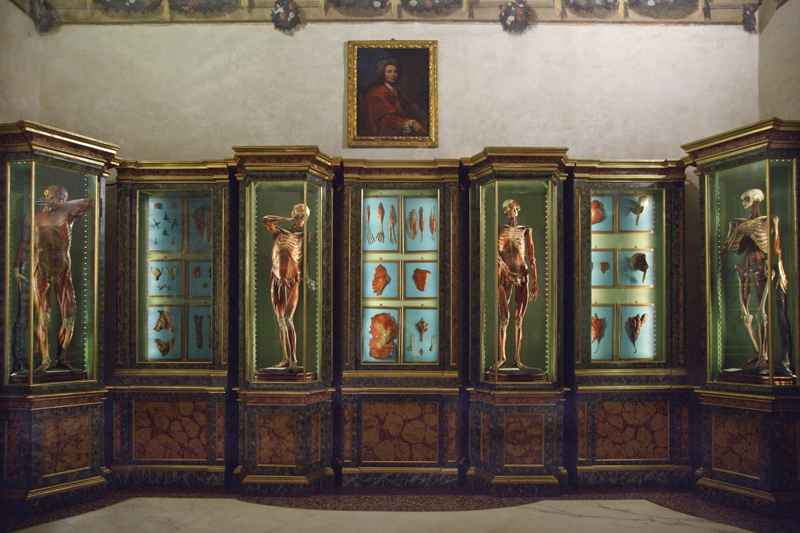
In this exhibition, you will be introduced to tantalizing visions of death made beautiful, uncanny monuments to the human dream of life eternal. You will meet "Blessed Ismelda Lambertini," an adolescent who fell into a fatal swoon of overwhelming joy at the moment of her first communion with Jesus Christ, now commemorated in a chillingly beautiful wax effigy in a Bolognese church; The Slashed Beauty, swooning with a grace at once spiritual and worldly as she makes a solemn offering of her immaculate viscera; Saint Vittoria, with slashed neck and golden ringlets, her waxen form reliquary to her own powerful bones; and the magnificent and troubling Anatomical Venuses, rapturously ecstatic life-sized wax women reclining voluptuously on silk and velvet cushions, asleep in their crystal coffins, awaiting animation by inquisitive hands eager to dissect them into their dozens of demountable, exactingly anatomically correct, wax parts.

You can find out more about the show here, and view more images by clicking here.

Source:
http://morbidanatomy.blogspot.com/feeds/posts/default?alt=rss

Two Conferences on Death, Art and Culture: Calls for Papers

I have just been alerted to two fabulous looking death and culture conferences both of which are now soliciting papers! Full info for each follows. Apply away!

1) Art and  Death: A Series of Three Workshops
1 November 2012, 21 February and 23 May 2013

The Courtauld Institute of Art, Somerset House, Strand, London WC2R 0RN

Call for Papers
Submission by 20 September 2012 for workshop 1 (1 November 2012): Anticipation and Preparation

A series of three workshops will be held at the Courtauld Institute of Art in 2012-2013 to explore the inter-relationship between art and death. These workshops have arisen from an informal group of doctoral students with shared interests in funerary monuments. The workshops will be structured to recognize that the certainty of death is accompanied by the foreknowledge and uncertainty of what may come after, and that visual representations of these phases have varied over time and between countries. The first workshop will focus on the images and objects related to the impact that the certainty of death has on individuals and the community; the second on art in the context of dying, death and burial; and the final one on representations of the perceived fate of body and soul after death, as well as the continuation of a relationship (if only in memory) between the living and the dead.

Subjects for the workshops could include, but are not limited to:

Workshop 1 (1 November 2012): Anticipation and Preparation
•    Death insurance? Religious gifts and foundations
•    Protective objects and amulets
•    Tombs commissioned during a lifetime, testamentary desire and fulfilment
•    Contemplating images of death, warnings to the living
•    The cult of the macabre, images of illness and decay
•    Apocalyptic visions

Workshop 2: (21 February 2013): Death and Dying
•    A ‘good death’
•    War and violence
•    Funerals/Professional mourners
•    Funerary monuments, memorial architecture, cemetery design
•    Post-mortem portraits
•    Images of the corpse in painting, sculpture, film, photography, etc
•    Crucifixion imagery
•    Death in museum collections

Workshop 3 (23 May 2013) Life after Death
•    Images of the soul /resurrected or re-incarnated body
•    Depictions of the afterlife
•    The incorruptible body, saints, relics and reliquaries
•    Remembering the dead, commemoration in art and/or performance
•    The ‘immortality’ of the artist, post-mortem reputations

Format and Logistics:
•    Length of paper: 20 minutes
•    Four papers per workshop
•    Location: Research Forum, The Courtauld Institute of Art
•    Timing: 10am-midday
•    Expenses: funds are not available to cover participants’ expenses

We welcome proposals relating to all periods, media and regions (including non-European) and see this as an opportunity for doctoral and early post-doctoral students to share their research.

Please send proposals of no more than 250 words to: Jessica.Barker[at]courtauld.ac.uk and Ann.Adams[at]courtauld.ac.uk by the following dates:

•    20 September 2012 for workshop 1 (1 November 2012): Anticipation and Preparation
•    10 January 2013 for workshop 2 (21 February 2013): Death and Dying
•    11 April 2013 for workshop 3 (23 May 2013): Life after Death

For planning purposes, it would be helpful to have an indication of interest in the later workshops, in advance of submission of a proposal.

Organised by Jessica Barker and Ann Adams (The Courtauld Institute of Art)

2) Graduate Student Conference: “Death: the Cultural Meaning of the End of Life”
January 24–25, 2013
LUCAS (Leiden University Centre for Arts in Society)

This conference aims to explore how death has been represented and conceptualized, from classical antiquity to the modern age, and the extent to which our perceptions and understandings of death have changed (or remained the same) over time. The wide scope of this theme reflects the historical range of LUCAS’s (previously called LUICD) three research programs (Classics and Classical Civilization, Medieval and Early Modern Studies and Modern and Contemporary Studies), as well as the intercontinental and interdisciplinary focus of many of the institute’s research projects.

The LUCAS Graduate Conference welcomes papers from all disciplines within the humanities. The topic of your proposal may address the concept of death from a cultural, historical, classical, artistic, literary, cinematic, political, economic, or social viewpoint.

Questions that might be raised include: How have different cultures imagined the end of life? What is the role of art (literature, or cinema) in cultural conceptions of death? How might historical or contemporary conceptualizations of death be related to the construction of our subjectivity and cultural identity? What is the cultural meaning(s) of death? To what extent has modern warfare changed our perceptions of death? How is death presented in the media and how has this changed? In what ways has religion influenced our reflections on death and the afterlife?

Please send your proposal (max. 300 words) to present a 20-minute paper to lucasconference2013[at]gmail.com.

The deadline for submissions is November 15, 2012.

For further information on the first workshop, click here. For further information on the second conference, click here. Special thanks to Lisa Kereszi for turning me onto the latter!

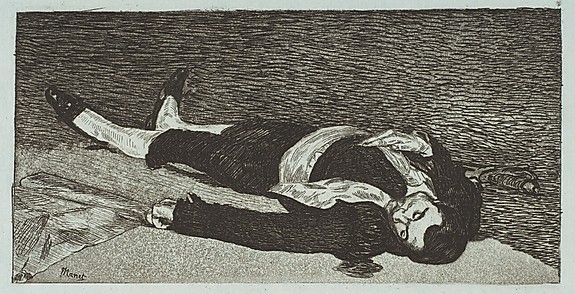
Image: Dead Toreador (Torero Mort). Édouard Manet (French, Paris 1832–1883 Paris)

Source:
http://morbidanatomy.blogspot.com/feeds/posts/default?alt=rss

Immaculate Corpses, The History of Medical Museums, Rogue Taxidermists, and A Congress for Curious Peoples: This Week’s Morbid Anatomy Presents at London’s Last Tuesday Society

Tonight marks the beginning of the Morbid Anatomy residency at London's fantastic Last Tuesday Society; this week, join us for a Granta magazine medicine issue launch; an illustrated lecture by Rogue Taxidermist Robert Marbury and another by Hunterian Museum director Sam Alberti on the history of medical museums; a free, gin-drenched opening party for my exhibition "Ecstatic Raptures and Immaculate Corpses: Visions of Death Made Beautiful in Italy (from whence the above image); and a London-edition of "The Congress for Curious Peoples: a one-day symposium featuring a host of scholars, writers, and practitioners exploring in panels, illustrated lectures and discussion the intersections explored by the exhibition "Ecstatic Raptures and Immaculate Corpses: Visions of Death Made Beautiful in Italy."

More on all events below; and please note: all events will take place at The Last Tuesday Society, 11 Mare Street, London, E8 4RP (map here). Hope to see you at one or more of these terrific events!

------------------------------------------------------------------------------

Monday 3rd September 2012
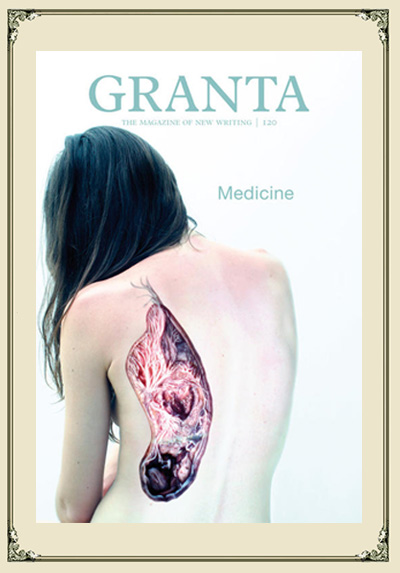
Granta Magazine - Medicine Issue Launch: A Spoonful of Fiction: A Granta Salon
Doors at 6 pm, Show commences at 7 pm.

In this special edition of Liars’ League, actors from the live fiction salon perform stories of addiction, healing and the history of medicine by Rose Tremain and Suzanne Rivecca, as featured in Granta 120: Medicine. Then, writer and broadcaster Colin Grant (Bageye at the Wheel, I & I: Marley, Tosh and Wailer), in conversation with a Granta editor, tells how he pursued and then quit medical school and reads from his new autobiographical novel extracted in granta.com.

Admission price includes a copy of "Granta 120: Medicine and Hendrick's Gin and Tonic."
------------------------------------------------------------------------------

Tuesday 4th September 2012
Robert Marbury - Rogue Taxidermy in the Digital Age
Doors at 6 pm, Talk commences at 7 pm

When Robert Marbury was 19 years old, he necked with Ricki Lake on camera. At age 29, he spent a year sailing in Indonesia, where he says his ship was attacked by pirates.Four years later, he was one of the three co-founders of the Minnesota Association of Rogue Taxidermists.

Known as a vegan taxidermist, Robert Marbury documents the existence of little known wild and feral plush animals inhabiting our urban environments. With tongue firmly in cheek, through his Urban Beast Project, Marbury hopes to garner attention and general concern for the plight of such strange creatures. As he describes on his webpage: while most of the Urban Beasts exhibited on his site "have met the end of their species, it is our hope that with exposure and attention many other Beasts will be saved."

Tonight's talk will touch on image sharing, legal limitations, collecting, renewed interest in gaff and travel taxidermy as well as death and the impulse to make contact.

Robert Marbury is an artist from Baltimore Maryland. He is the Director and co-Founder of the Minnesota Association of Rogue Taxidermists.
------------------------------------------------------------------------------

Wednesday 5th September 2012
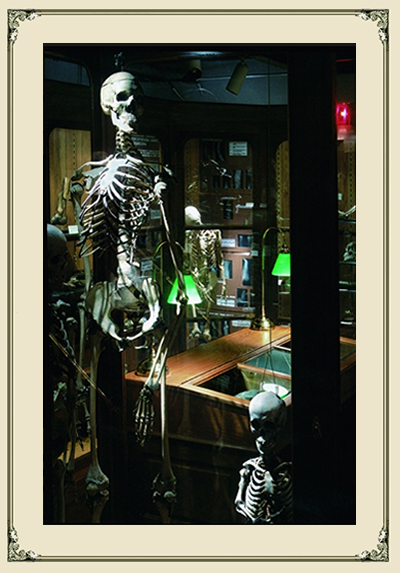
Dr Sam Alberti of The Hunterian Museum on the History of Medical Museums
Doors at 6 pm, Talk commences at 7 pm

In the first comprehensive study of nineteenth-century medical museums, Morbid Curiosities traces the afterlives of diseased body parts. It asks how they came to be in museums, what happened to them there, and who used them. This book is concerned with the macabre work of pathologists as they dismembered corpses and preserved them: transforming bodies into material culture. The fragmented body parts followed complex paths - harvested from hospital wards, given to one of many prestigious institutions, or dispersed at auction. Human remains acquired new meanings as they were exchanged and were then reintegrated into museums as physical maps of disease. On shelves curators juxtaposed organic remains with paintings, photographs, and models, and rendered them legible with extensive catalogues that were intended to standardize the museum experience. And yet visitors refused to be policed, responding equally with wonder and disgust. Morbid Curiosities is a history of the material culture of medical knowledge in the age of museums.

Sam Alberti is Director of Museums and Archives at the Royal College of Surgeons of England, which includes the renowned Hunterian Museum. He is interested in the past, present and future of medical and natural history collections. His books include Nature and Culture: Objects, Disciplines and the Manchester Museum (2009), The Afterlives of Animals: A Museum Menagerie (2011) and Morbid Curiosities: Medical Museums in Nineteenth-Century Britain (2011).
------------------------------------------------------------------------------

Thursday 6th September 2012
Opening Reception for "Ecstatic Raptures and Immaculate Corpses: Visions of Death Made Beautiful in Italy" An exhibition of photographs by Joanna Ebenstein with waxworks by Eleanor Crook and Sigrid Sarda.
Free and open to the public
6-8 pm

In this exhibition, you will be introduced to tantalizing visions of death made beautiful, uncanny monuments to the human dream of life eternal. You will meet "Blessed Ismelda Lambertini," an adolescent who fell into a fatal swoon of overwhelming joy at the moment of her first communion with Jesus Christ, no
w commemorated in a chillingly beautiful wax effigy in a Bolognese church; The Slashed Beauty, swooning with a grace at once spiritual and worldly as she makes a solemn offering of her immaculate viscera; Saint Vittoria, with slashed neck and golden ringlets, her waxen form reliquary to her own powerful bones; and the magnificent and troubling Anatomical Venuses, rapturously ecstatic life-sized wax women reclining voluptuously on silk and velvet cushions, asleep in their crystal coffins, awaiting animation by inquisitive hands eager to dissect them into their dozens of demountable, exactingly anatomically correct, wax parts.

------------------------------------------------------------------------------

Saturday 8th September
'Congress for Curious People' One-Day Seminar - London Edition
11am - 5:30 pm

A one day symposium featuring a host of scholars, writers, and practitioners exploring in panels, illustrated lectures and discussion the intersections explored by the exhibition "Ecstatic Raptures and Immaculate Corpses: Visions of Death Made Beautiful in Italy." Themes discussed will include enchantment and enlightenment, or the sublimation of the magical into the rational world; the secret life of objects, or the non-rational allure of objects and the psychology of collecting; and beautiful death and incorruptible bodies, or the shared drive to immortalize the human body and aestheticize death in both medicine and Catholicism. 

11-12:Introduction by Moderator Joanna Ebenstein
Keynote panel: Enchantment and Enlightenment
(20 minute presentations followed by moderated discussion)
Moderated by Joanna Ebenstein
•        David L. Martin, Curious Visions of Modernity: Enchantment, Modernity and the Sacred
•        Simon Werrrett, Fireworks: Pyrotechnic Arts and Sciences in European History

12-1: Lunch

1-2:30 The Secret Life of Objects: The Allure of Objects and the Psychology of Collecting
(20 minute presentations followed by moderated discussion)
Moderated by Ross MacFarlane, Wellcome Library
•        Ross MacFarlane, The Wellcome Library
•        Petra Lange-Berndt, University College London
•        Kate Forde, The Wellcome Collection

2:30-3:00 break

3:00-5:30 Beautiful Death and Incorruptible Bodies: Eternal Life and aestheticized death in medicine and Catholicism
(15 minute presentations followed by moderated discussion)
Moderated by John Troyer, Center for Death and Society, University of Bath
•        Eleanor Crook, Wax artist
•        John Troyer, Center for Death and Society, University of Bath
•        Gemma Angel, PhD Student ad UCL History of Art
•        Anna Maerker, Model Experts: Wax Anatomies and Enlightenment in Florence and Vienna, 1775–1815
•        Simon Chaplin, Wellcome Library
•        Sigrid Sarda, Wax artist
•        William Edwards, The Gordon Museum

And onward and upward in the weeks to come:

You can find out more--and order tickets--for all events, click here.

Image: The "Venerina" or "little Venus," Anatomical Venus by Clemente Susini, 1782, Palazzo Poggi, Bologna; on view as part of the "Ecstatic Raptures and Immaculate Corpses: Visions of Death Made Beautiful in Italy"exhibition opening this Thursday. © Joanna Ebenstein, 2012

The piece is described on the museum website thusly: "The agony of a young woman is represented in her last instant of life as she abandons herself to death voluptuously and completely naked. The thorax and abdomen can be opened, allowing the various parts to be disassembled so as to simulate the act of anatomic dissection."

Source:
http://morbidanatomy.blogspot.com/feeds/posts/default?alt=rss

Proteomic analysis reveals resistance mechanism against biofuel hexane in Synechocystis sp. PCC 6803

Background:
Recent studies have demonstrated that photosynthetic cyanobacteria could be an excellent cell factory to produce renewable biofuels and chemicals due to their capability to utilize solar energy and CO2 as the sole energy and carbon sources. Biosynthesis of carbon-neutral biofuel alkanes with good chemical and physical properties has been proposed. However, to make the process economically feasible, one major hurdle to improve the low cell tolerance to alkanes needed to be overcome.
Results:
Towards the goal to develop robust and high-alkane-tolerant hosts, in this study, the responses of model cyanobacterial Synechocystis PCC 6803 to hexane, a representative of alkane, were investigated using a quantitative proteomics approach with iTRAQ - LC-MS/MS technologies. In total, 1,492 unique proteins were identified, representing about 42% of all predicted protein in the Synechocystis genome. Among all proteins identified, a total of 164 and 77 proteins were found up- and down-regulated, respectively. Functional annotation and KEGG pathway enrichment analyses showed that common stress responses were induced by hexane in Synechocystis. Notably, a large number of transporters and membrane-bound proteins, proteins against oxidative stress and proteins related to sulfur relay system and photosynthesis were induced, suggesting that they are possibly the major protection mechanisms against hexane toxicity.
Conclusion:
The study provided the first comprehensive view of the complicated molecular mechanism employed by cyanobacterial model species, Synechocystis to defend against hexane stress. The study also provided a list of potential targets to engineer Synechocystis against hexane stress.Source:
http://www.biotechnologyforbiofuels.com/rss/

Cytosolic re-localization and optimization of valine synthesis and catabolism enables increased isobutanol production with the yeast Saccharomyces cerevisiae

Background:
The branched chain alcohol isobutanol exhibits superior physicochemical properties as an alternative biofuel. The yeast Saccharomyces cerevisiae naturally produces low amounts of isobutanol as a by-product during fermentations, resulting from the catabolism of valine. As S. cerevisiae is widely used in industrial applications and can easily be modified by genetic engineering, this microorganism is a promising host for the fermentative production of higher amounts of isobutanol.
Results:
Isobutanol production could be improved by re-locating the valine biosynthesis enzymes Ilv2, Ilv5 and Ilv3 from the mitochondrial matrix into the cytosol. To prevent the import of the three enzymes into yeast mitochondria, N-terminally shortened Ilv2, Ilv5 and Ilv3 versions were constructed lacking their mitochondrial targeting sequences. SDS-PAGE and immunofluorescence analyses confirmed expression and re-localization of the truncated enzymes. Growth tests or enzyme assays confirmed enzymatic activities. Isobutanol production was only increased in the absence of valine and the simultaneous blockage of the mitochondrial valine synthesis pathway. Isobutanol production could be even more enhanced after adapting the codon usage of the truncated valine biosynthesis genes to the codon usage of highly expressed glycolytic genes. Finally, a suitable ketoisovalerate decarboxylase, Aro10, and alcohol dehydrogenase, Adh2, were selected and overexpressed. The highest isobutanol titer was 0.63 g/L at a yield of nearly 15 mg per g glucose.
Conclusion:
A cytosolic isobutanol production pathway was successfully established in yeast by re-localization and optimization of mitochondrial valine synthesis enzymes together with overexpression of Aro10 decarboxylase and Adh2 alcohol dehydrogenase. Driving forces were generated by blocking competition with the mitochondrial valine pathway and by omitting valine from the fermentation medium. Additional deletion of pyruvate decarboxylase genes and engineering of co-factor imbalances should lead to even higher isobutanol production.Source:
http://www.biotechnologyforbiofuels.com/rss/

Elucidation of the effect of ionic liquid pretreatment on rice husk via structural analyses

Background:
In the present study, three ionic liquids, namely 1-butyl-3-methylimidazolium chloride ([BMIM]Cl), 1-ethyl-3-methylimidazolium acetate ([EMIM]OAc), and 1-ethyl-3-methylimidazolium diethyl phosphate ([EMIM]DEP), were used to partially dissolve rice husk, after which the cellulose were regenerated by the addition of water. The aim of the investigation is to examine the implications of the ionic liquid pretreatments on rice husk composition and structure.
Results:
From the attenuated total reflectance Fourier transform-infrared (ATR FT-IR) spectroscopy, X-ray diffraction (XRD) and scanning electron microscopy (SEM) results, the regenerated cellulose were more amorphous, less crystalline, and possessed higher structural disruption compared with untreated rice husk. The major component of regenerated cellulose from [BMIM]Cl and [EMIM]DEP pretreatments was cellulose-rich material, while cellulose regenerated from [EMIM]OAc was a matrix of cellulose and lignin. Cellulose regenerated from ionic pretreatments could be saccharified via enzymatic hydrolysis, and resulted in relatively high reducing sugars yields, whereas enzymatic hydrolysis of untreated rice husk did not yield reducing sugars. Rice husk residues generated from the ionic liquid pretreatments had similar chemical composition and amorphousity to that of untreated rice husk, but with varying extent of surface disruption and swelling.
Conclusions:
The structural architecture of the regenerated cellulose and rice husk residues showed that they could be used for subsequent fermentation or derivation of cellulosic compounds. Therefore, ionic liquid pretreatment is an alternative in the pretreatment of lignocellulosic biomass in addition to the conventional chemical pretreatments.Source:
http://www.biotechnologyforbiofuels.com/rss/

Fight Aging! Newsletter, September 3rd 2012

FIGHT AGING! NEWSLETTER
September 3rd 2012

The Fight Aging! Newsletter is a weekly email containing news, opinions, and happenings for people interested in aging science and engineered longevity: making use of diet, lifestyle choices, technology, and proven medical advances to live healthy, longer lives. This newsletter is published under the Creative Commons Attribution 3.0 license. In short, this means that you are encouraged to republish and rewrite it in any way you see fit, the only requirements being that you provide attribution and a link to Fight Aging!

______________________________

CONTENT

- A Perspective on Progress in Longevity Science
- What’s Really Delaying the Defeat of Aging?
- Absent Optimism
- Everyone Has a Plan to Save Medicare
- Discussion
- Latest Headlines from Fight Aging!
    - SIRT6 Overexpression Reverses DNA Repair Decline in Aging Mice
    - A Good Lifestyle Makes a Difference Even Late in Life
    - Impact of Mid-Life Fitness on Later Risk of Age-Related Disease
    - No Extension of Average Lifespan in Primate Study of Calorie Restriction
    - A View of Diet and Aging
    - Work on Blocking Damage in Brain Injury
    - More on DNA Methylation and Human Longevity
    - Cytomegalovirus and Type 2 Diabetes Risk
    - How Long Do You Want to Live?
    - Wiring Up Engineered Tissue

A PERSPECTIVE ON PROGRESS IN LONGEVITY SCIENCE

Here is an overview of some of what I see when looking out on the world of research and development relating to engineered longevity, spurred by someone who asked whether it was plausible for aging to be defeated by 2029:

http://www.fightaging.org/archives/2012/08/an-outline-of-progress-in-longevity-science.php

“The bottom line is that the research community and state of the field today is very different from that of even a mere ten years ago. This is a time of rapid change and progress: far more is known and far more impressive feats of medicine can be performed in the lab and the clinic. There is every reason to believe that ten years from now we’ll be able to say the same thing. Costs in biotechnology and life science research are falling rapidly, and with that trend more research can be accomplished in each new year.

“That said, however, the only way that we’ll see significant inroads into the defeat of aging by 2029 is for the SENS Foundation and its attendant research community to undergo the same sort of growth over the next decade as has been exhibited in recent years by regenerative medicine, calorie restriction research, or study of the genetics of longevity. A growth to billions in funding and thousands of researchers, in other words. It will require at least that and a decade of time in order to have a 50/50 shot at reversing aging in old mice in the lab – which is to say something that can make them live at least twice as long as they otherwise would have done.

“Of all the items covered in this post, only SENS provides a path towards achieving this end. Even regenerative medicine and complete control over stem cells can’t offer the possibility of reversing aging in and of itself – it is only the way to reverse one component of aging, the decline of tissue maintenance and frailty that results from stem cells shutting down. You will still get nailed by your own mitochondria and the build up of metabolic byproducts even if your stem cells are perfectly restored.

“[So], no, there is no plausible road to the defeat of aging by 2029. But there is a plausible road to the first laboratory demonstrations of real, meaningful, but partial age reversal by then, ways to actually repair the root biological causes of aging rather than just slow it down. Whether that happens or not depends absolutely on funding – there are more than enough scientists and research groups out there who would work on the SENS vision for rejuvenation biotechnology if given a budget, but as of yet not enough funding sources to make it a reality.”

WHAT’S REALLY DELAYING THE DEFEAT OF AGING?

Aubrey de Grey of the SENS Foundation answers this question in an open access editorial from the Rejuvenation Research journal:

http://www.fightaging.org/archives/2012/08/whats-really-delaying-the-defeat-of-aging.php

“In the mid-1990s, when I decided to switch from computer science to gerontology, I recognized that the creation of a credible assault on aging would require solving three basic problems: (1) Creating a credible plan; (2) getting the people best placed to implement it to be interested in doing so; and (3) giving them the financial resources to get on with the job.

“I broke the back of the first problem in mid-2000, when I realized that regenerative medicine – repairing the accumulating damage of aging – will probably be far simpler and easier to implement than the alternative followed by most biogerontologists, namely slowing the creation of that damage. By that time, I had also done most of the heavy lifting of item 2 (as I continued to do thereafter), by connecting with leading researchers worldwide, mostly face to face at conferences, and improving their understanding of how their expertise could be productively applied to aging. By way of illustration, quite a few of the most prestigious such people are named on the front cover of this journal as associate editors, and they accepted such a position for that reason. But what about item 3?

“Unfortunately, I cannot tell so positive a story with respect to financial resources. Nearly a decade ago, I began to make public predictions of how soon we would achieve success in our crusade. I did so, as I still do, in the manner that (for better or worse) preoccupies the general public, namely in terms of longevity, but I have always been careful to incorporate two key caveats: (1) The level of uncertainty of the time frames, even if only scientific uncertainty is considered, and (2) the reliance of such estimates on adequate funding.

“The first of these caveats is often elided, but it is simple: I estimate that we have a 50% chance of achieving the milestone of “robust human rejuvenation” (essentially, the rejuvenation of 60 year olds comprehensively enough that they won’t be biologically 60 again until they’re chronologically 90) within 25 years, but I also estimate that we have at least a 10% chance of not getting there in 100 years. But…that is all subject to the second caveat, namely funding.

“Tragically, the level of funding that has been forthcoming during the past decade is only a few percent (at most) of what is necessary. The rate of progress in research to defeat aging has been quite amazing in view of that, but nonetheless, I estimate that it has been only about one-third of what could have been achieved with 10-20 times more money.”

ABSENT OPTIMISM

Our culture is far too short-sighted, focused on what is, and pessimistic, and that harms the prospects for progress:

http://www.fightaging.org/archives/2012/08/absent-optimism.php

“For a society in the midst of accelerating, rapid, and evident technological progress, public discussion and attitudes show a surprising lack of optimism for the future. Optimism of course exists, but nowhere near as widely as it should. It seems self-evident at this point that a golden era lies ahead in which we defeat disease and aging, colonize the solar system, and expand the limits of what it means to be human. We and our descendants will discard pain and suffering along the way, just as we have already discarded so much of the pain and suffering that our ancestors bore. … The upward ramp of the necessary underlying technology is within our grasp. But you wouldn’t think this from listening to the public. Much of the world seems convinced that nothing but collapse and catastrophe lies ahead: their view of the future is the ever-mistaken Malthusian collection of beliefs revolving around static resources that are exhausted. They fail to see the dynamism of resource generation and progress that proved past Mathusians just as wrong as the present crop.”

EVERYONE HAS A PLAN TO SAVE MEDICARE

There are any number of people out there putting forward their proposals:

http://www.fightaging.org/archives/2012/08/everyone-has-a-plan-to-save-medicare.php

“Having a plan to save Medicare is somewhat like wearing a tie or cufflinks, in that it is somewhat de reigueur in some parts of society – but ultimately a cultural signal of belonging, of little value otherwise. The economic future of the US is somewhat grim; the decline of an empire is inevitable as its increasingly unaccountable elite class debauch the currency, centralize power, and regulate all aspects of a citizen’s life. They tax and waste ever more of the flow of resources whilst destroying the freedom and competition needed for the creation of those resources – in much the same way as a cancer is parasitic to its host but ultimately destroys both host and itself. This is an inexorable progression of society, built upon the foundation of human nature and the individual actions and interactions of millions of people. It has happened over and again and is just about as likely as the tide to be turned aside.

“So having a plan to save Medicare is rather like having a plan to save a part of your cancer. That portion in the lower left, perhaps. Medicare is but one part of the network of regulation, perverse incentives, and regulatory capture that causes medicine in the US to be ever more expensive, wasteful, and poor in quality. It’s large enough to be considered in the context of the more general economic decline across the board, which occurs for roughly the same set of reasons, and is just as hard to turn back. Medicine is in a more advanced state of socialist decrepitude than most other US industries, but the same process operates throughout society.

“From there let me segue into a discussion of responses to shortage. Regulation inevitably creates shortage and rationing: we see this in the provision of medicine in countries like Canada and the UK, where regulators set up waiting systems or simply forbid treatment, especially to the old. Much of the public discussion that results from this state of affairs looks at what to do about the shortages – though of course without a great deal of reflection on how they came to exist in the first place, sad to say. There are two broad lines of thinking here: firstly, use less of whatever is rationed; secondly try to create more of whatever is in short supply.

“One of the defining and frankly rather sorry aspects of our age is that public debates veer towards cutting back on use far more often than towards creating abundance. See the bulk of the environmentalist or other Malthusian movements for example – they have little to say about building more of whatever it is they think is in short supply.

“When it comes to Medicare, and given that very few people are calling to get rid of the whole system and let freedom and free markets rule the day, the two sides of the coin look much like (a) a call for increased rationing of services to ensure that people use less in the way of medicine, and (b) a call for ways to create greater health such that people use less in the way of medicine. There are of course many different approaches to either of these paths, but both ultimately sidestep the real issue, the real cause of the problem – and this again is absolutely characteristic of debate over societal organization and politics in our age.”

DISCUSSION

The highlights and headlines from the past week follow below. Remember – if you like this newsletter, the chances are that your friends will find it useful too. Forward it on, or post a copy to your favorite online communities. Encourage the people you know to pitch in and make a difference to the future of health and longevity!

______________________________

LATEST HEADLINES FROM FIGHT AGING!

SIRT6 OVEREXPRESSION REVERSES DNA REPAIR DECLINE IN AGING MICE
Friday, August 31, 2012
http://www.fightaging.org/archives/2012/08/sirt6-overexpression-reverses-dna-repair-decline-in-aging-mice.php
This interesting research result adds a little more to the debate over whether nuclear DNA damage is relevant to aging beyond its effects on cancer risk – though I think it’s still a bit early to point to differences in DNA repair as the definitive cause of SIRT6-related longevity in mice: researchers “found that the decline in a cell’s ability to repair DNA during aging coincided with a global reduction in the levels of proteins involved in the repair process. [They] tried to reverse the age-related decline in DNA repair efficiency by restoring the proteins to their original levels and found only one protein, SIRT6, did the trick. … [Other research results have shown] that overexpressing the SIRT6 protein extended the lifespans of mice. Our research looked at DNA repair and found a reason for the increased longevity, and that is SIRT6′s role in promoting more efficient DNA repair. … The next step [is] to study the factors that regulate SIRT6, in an effort to learn more about the early stages of the DNA repair process. … multiple groups are trying to develop drugs that activate SIRT6, and [researchers hope] that this research will one day lead to therapies that help extend a person’s lifespan and treat cancer. … SIRT6 plays a critical role in repairing the most dangerous type of DNA damage: double-strand breaks. DNA is a two-stranded molecule, and breaks can occur to one strand of the molecule or to both. In the case of single-strand breaks, the unbroken strand guides the repair process and the DNA molecule is typically restored to its original state. However, double-strand breaks, in which both strands are severed, are particularly hazardous because they are more difficult to repair and can lead to a rearrangement of the cell’s genetic material.”

A GOOD LIFESTYLE MAKES A DIFFERENCE EVEN LATE IN LIFE
Friday, August 31, 2012
http://www.fightaging.org/archives/2012/08/a-good-lifestyle-makes-a-difference-even-late-in-life.php
Keeping up on the health basics makes a difference even in the last years of life: “It is well known that lifestyle factors, like being overweight, smoking and heavy drinking, predict death among elderly people. But is it uncertain whether these associations are applicable to people aged 75 years or more. So a team of researchers based in Sweden measured the differences in survival among adults aged 75 and older based on modifiable factors such as lifestyle behaviours, leisure activities, and social networks. The study involved just over 1,800 individuals who were followed for 18 years (1987-2005). Data on age, sex, occupation, education, lifestyle behaviours, social network and leisure activities were recorded. During the follow-up period 92% of participants died. Half of the participants lived longer than 90 years. Survivors were more likely to be women, be highly educated, have healthy lifestyle behaviours, have a better social network, and participate in more leisure activities than non-survivors. The results show that smokers died one year earlier than non-smokers. Former smokers had a similar pattern of survival to never smokers, suggesting that quitting smoking in middle age reduces the effect on mortality. Of the leisure activities, physical activity was most strongly associated with survival. The average age at death of participants who regularly swam, walked or did gymnastics was two years greater than those who did not. Overall, the average survival of people with a low risk profile (healthy lifestyle behaviours, participation in at least one leisure activity, and a rich or moderate social network) was 5.4 years longer than those with a high risk profile (unhealthy lifestyle behaviours, no participation in leisure activities, and a limited or poor social network). Even among those aged 85 years or older and people with chronic conditions, the average age at death was four years higher for those with a low risk profile compared with those with a high risk profile. In summary, the associations between leisure activity, not smoking, and increased survival still existed in those aged 75 years or more, with women’s lives prolonged by five years and men’s by six years, say the authors. These associations, although attenuated, were still present among people aged 85 or more and in those with chronic conditions.”

IMPACT OF MID-LIFE FITNESS ON LATER RISK OF AGE-RELATED DISEASE
Thursday, August 30, 2012
http://www.fightaging.org/archives/2012/08/impact-of-mid-life-fitness-on-later-risk-of-age-related-disease.php
How you manage your health in earlier parts of your life will have an effect further down the line: “To examine the association between midlife fitness and chronic disease outcomes in later life, participant data from the Cooper Center Longitudinal Study were linked with Medicare claims. We studied 18,670 healthy participants (21.1% women; median age, 49 years) who survived to receive Medicare coverage from January 1, 1999, to December 31, 2009. Fitness estimated by Balke treadmill time was analyzed [according] to age- and sex-specific quintiles. Eight common chronic conditions were defined [and] associations between midlife fitness and the number of conditions were assessed. … After 120,780 person-years of Medicare exposure with a median follow-up of 26 years, the highest quintile of fitness [was] associated with a lower incidence of chronic conditions [in men and women]. After multivariate adjustment, higher fitness [was] associated with a lower risk of developing chronic conditions in [men and women]. … In this cohort of healthy middle-aged adults, fitness was significantly associated with a lower risk of developing chronic disease outcomes during 26 years of follow-up. These findings suggest that higher midlife fitness may be associated with the compression of morbidity in older age.”

NO EXTENSION OF AVERAGE LIFESPAN IN PRIMATE STUDY OF CALORIE RESTRICTION
Thursday, August 30, 2012
http://www.fightaging.org/archives/2012/08/no-extension-of-average-lifespan-in-primate-study-of-calorie-restriction.php
A discussion on published results from this primate study suggest that both it and a comparison study are different in ways that make it harder to pull rigorous conclusions from the data – beyond the fact that diet clearly has influence, and the effects of calorie restriction on life span (average and maximum) are expected to be smaller in longer-lived species versus shorter-lived speces: “Scientists have found that calorie restriction – a diet composed of approximately 30 percent fewer calories but with the same nutrients of a standard diet – does not extend years of life or reduce age-related deaths in a 23-year study of rhesus monkeys. However, calorie restriction did extend certain aspects of health. … The survival results in the study reported [by] NIA researchers differ from those published in 2009 by NIA-supported investigators at the University of Wisconsin-Madison. The Wisconsin study followed two groups of rhesus monkeys for 20 years and found that monkeys on a calorie-restricted diet lived longer than those on a standard diet. Beyond longevity, the parallel NIA and Wisconsin studies have reported similar beneficial health effects of calorie-restriction. Both studies found that certain age-related diseases – including diabetes, arthritis, diverticulosis and cardiovascular problems – occurred at an earlier age in monkeys on the standard diet compared to those on calorie restriction. However, this observation was not statistically significant in the NIA study. NIA researchers did find that monkeys started on calorie restriction at an early age had a statistically significant reduction in cancer incidence. NIA researchers also found that while calorie restriction had a beneficial effect on several measures of metabolic health and function in monkeys who were started on the special diet regimen during old age (at 16 to 23 years), it did not have the same positive outcome for monkeys started on calorie restriction at a young age (less than 14 years). In the Wisconsin study, all the monkeys were 7 to 14 years when started on calorie restriction. … Differences in the monkeys’ meal and other nutritional factors were cited as possible explanations for NIA’s and Wisconsin’s different outcomes. Both studies used a similar percentage of calorie restriction with their intervention groups; however, the Wisconsin monkeys in both the calorie restricted and control groups were eating more and weighed more than the matched NIA monkeys. … NIA researchers cited genetics as another possible reason for their differing results. NIA monkeys had a greater genetic diversity, originating from China and India. Wisconsin’s monkeys came only from an Indian colony.”

A VIEW OF DIET AND AGING
Wednesday, August 29, 2012
http://www.fightaging.org/archives/2012/08/a-view-of-diet-and-aging.php
A review paper: “Nutrition has important long-term consequences for health that are not only limited to the individual but can be passed on to the next generation. It can contribute to the development and progression of chronic diseases thus effecting life span. Caloric restriction (CR) can extend the average and maximum life span and delay the onset of age-associated changes in many organisms. CR elicits coordinated and adaptive stress responses at the cellular and whole-organism level by modulating epigenetic mechanisms (e.g., DNA methylation, posttranslational histone modifications), signaling pathways that regulate cell growth and aging (e.g., TOR, AMPK, p53, and FOXO), and cell-to-cell signaling molecules (e.g., adiponectin). The overall effect of these adaptive stress responses is an increased resistance to subsequent stress, thus delaying age-related changes and promoting longevity. In human, CR could delay many diseases associated with aging including cancer, diabetes, atherosclerosis, cardiovascular disease, and neurodegenerative diseases.”

WORK ON BLOCKING DAMAGE IN BRAIN INJURY
Wednesday, August 29, 2012
http://www.fightaging.org/archives/2012/08/work-on-blocking-damage-in-brain-injury.php
Some of the damage that occurs in brain injury is secondary to the initial trauma and takes place at the level of cellular components. Researchers here demonstrate a possible way to stop that from happening: “Treatment with an agent that blocks the oxidation of an important component of the mitochondrial membrane prevented the secondary damage of severe traumatic brain injury (TBI) and preserved function that would otherwise have been impaired. … For the study, the research team conducted a global assessment of all the phospholipids in rat brain cells. This revealed that damage from TBI was nonrandom and mostly involved cardiolipin, a phospholipid that is found in the membranes that form mitochondria, the cell’s powerhouse. They noted that in the healthy animal, only 10 of the 190 cardiolipin species were modified by oxygen, but after a brain injury, the number of oxidized species rose many-fold. The researchers then developed an agent, called XJB-5-131, which can cross the blood-brain barrier and prevent the oxidation of cardiolipin. Using an established research model of severe TBI, the agent or a placebo was injected into the bloodstream of rats five minutes and again 24 hours after head injury. In the weeks that followed, treated animals performed akin to normal on tests of balance, agility and motor coordination, learning, and object recognition, while placebo-treated animals showed significant impairment. The results indicate that blocking cardiolipin oxidation by XJB-5-131 protected the brain from cell death. … a targeted oxidation-blocker might also be beneficial in the treatment of other neurological disorders, such as Parkinson’s disease, amyotrophic lateral sclerosis, or ALS, and stroke.”

MORE ON DNA METHYLATION AND HUMAN LONGEVITY
Tuesday, August 28, 2012
http://www.fightaging.org/archives/2012/08/more-on-dna-methylation-and-human-longevity.php
A great deal of data is being generated on patterns of DNA methylation, aging, and variations in human longevity: “(1) we evaluated the DNA methylation from peripheral leukocytes of 21 female centenarians, their 21 female offspring, 21 offspring of both non-long-lived parents, and 21 young women … (2) we compared the DNA methylation profiles of these populations … We observed an age-related decrease in global DNA methylation and a delay of this process in centenarians’ offspring. Interestingly, literature data suggest a link between the loss of DNA methylation observed during aging and the development of age-associated diseases. Genome-wide methylation analysis evidenced DNA methylation profiles specific for aging and longevity: (1) aging-associated DNA hypermethylation occurs predominantly in genes involved in the development of anatomical structures, organs, and multicellular organisms and in the regulation of transcription; (2) genes involved in nucleotide biosynthesis, metabolism, and control of signal transmission are differently methylated between centenarians’ offspring and offspring of both non-long-lived parents, hypothesizing a role for these genes in human longevity. Our results suggest that a better preservation of DNA methylation status, a slower cell growing/metabolism, and a better control in signal transmission through epigenetic mechanisms may be involved in the process of human longevity. These data fit well with the observations related to the beneficial effects of mild hypothyroidism and insulin-like growth factor I system impairment on the modulation of human lifespan.”

CYTOMEGALOVIRUS AND TYPE 2 DIABETES RISK
Tuesday, August 28, 2012
http://www.fightaging.org/archives/2012/08/cytomegalovirus-and-type-2-diabetes-risk.php
Cytomegalovirus (CMV) is a persistent and very common herpesvirus that is thought to be a major contributor to the age-related decline of the immune system, due to an ever increasing portion of its limited number of cells becoming specialized to CMV and thus unavailable for other duties. Various past studies have linked CMV with forms of age-related frailty, but here the researchers find an association with type 2 diabetes – which is interesting and perhaps somewhat unexpected, given that type 2 diabetes is essentially a lifestyle disease: “Cytomegalovirus (CMV) infection has been reported to contribute to the pathogenesis of type 1 diabetes and post-transplantation diabetes. However, CMV infection has not been evaluated as a possible risk factor for type 2 diabetes. Our aim was to investigate potential associations between CMV seropositivity, CMV IgG antibody level and glucose regulation in the oldest old. … CMV seropositive subjects were more likely to have type 2 diabetes (17.2% vs 7.9%), had a higher level of HbA1c and higher non-fasting glucose in the oldest olds. These associations remained significant after adjustment for possible confounders. CMV IgG antibody level was not significantly associated with glucose regulation … In the oldest old, CMV seropositivity is significantly associated with various indicators of glucose regulation. This finding suggests that CMV infection might be a risk factor for the development of type 2 diabetes in the elderly.”

HOW LONG DO YOU WANT TO LIVE?
Monday, August 27, 2012
http://www.fightaging.org/archives/2012/08/how-long-do-you-want-to-live.php
Here is an example to show that the urge to conform is somewhat stronger than the urge to live, and never mind the urge to think critically. People will tend to say that they want to be in the majority position now, no matter what that might be, and depending on how you phrase the question, the vast majority will tell you that they want to age to death and have a life that is no longer than that of their parents. Yet if longer lives were already common, those very same people would answer that they wanted to live those longer lives. It is frustrating, to say the least, the degree to which people live in the moment and blind themselves to what might be created: “How many years might be added to a life? A few longevity enthusiasts suggest a possible increase of decades. Most others believe in more modest gains. And when will they come? Are we a decade away? Twenty years? Fifty years? Even without a new high-tech ‘fix’ for aging, the United Nations estimates that life expectancy over the next century will approach 100 years for women in the developed world and over 90 years for women in the developing world. (Men lag behind by three or four years.) Whatever actually happens, this seems like a good time to ask a very basic question: How long do you want to live? Over the past three years I have posed this query to nearly 30,000 people at the start of talks and lectures on future trends in bioscience, taking an informal poll as a show of hands. To make it easier to tabulate responses I provided four possible answers: 80 years, currently the average life span in the West; 120 years, close to the maximum anyone has lived; 150 years, which would require a biotech breakthrough; and forever, which rejects the idea that life span has to have any limit at all. I made it clear that participants should not assume that science will come up with dramatic new anti-aging technologies, though people were free to imagine that breakthroughs might occur – or not. The results: some 60 percent opted for a life span of 80 years. Another 30 percent chose 120 years, and almost 10 percent chose 150 years. Less than 1 percent embraced the idea that people might avoid death altogether. These percentages have held up as I’ve spoken to people from many walks of life in libraries and bookstores; teenagers in high schools; physicians in medical centers; and investors and entrepreneurs at business conferences. I’ve popped the question at meetings of futurists and techno-optimists and gotten perhaps a doubling of people who want to live to 150 – less than I would have thought for these groups. Rarely, however, does anyone want to live forever, although abolishing disease and death from biological causes is a fervent hope for a small scattering of would-be immortals.”

WIRING UP ENGINEERED TISSUE
Monday, August 27, 2012
http://www.fightaging.org/archives/2012/08/wiring-up-engineered-tissue.php
This is interesting, the early stirrings of something that may change the tenor of future tissue engineering if carried through to its logical conclusions. Why build a plain heart if you can build a sensor-laden heart with its own embedded network for monitoring and medical intervention? From the release: “A multi-institutional research team has developed a method for embedding networks of biocompatible nanoscale wires within engineered tissues. These networks – which mark the first time that electronics and tissue have been truly merged in 3D – allow direct tissue sensing and potentially stimulation, a potential boon for development of engineered tissues that incorporate capabilities for monitoring and stimulation, and of devices for screening new drugs. … One of the major challenges in developing bioengineered tissues is creating systems to sense what is going on (e.g., chemically, electrically) within a tissue after it has been grown and/or implanted. Similarly, researchers have struggled to develop methods to directly stimulate engineered tissues and measure cellular reactions. … In the body, the autonomic nervous system keeps track of pH, chemistry, oxygen and other factors, and triggers responses as needed. We need to be able to mimic the kind of intrinsic feedback loops the body has evolved in order to maintain fine control at the cellular and tissue level. … With the autonomic nervous system as inspiration, [scientists] built mesh-like networks of nanoscale silicon wires – about 80 nm in diameter – shaped like flat planes or in a ‘cotton-candy’-like reticular conformation. The networks were porous enough to allow the team to seed them with cells and encourage those cells to grow in 3D cultures. … Previous efforts to create bioengineered sensing networks have focused on 2D layouts, where culture cells grow on top of electronic components, or on conformal layouts where probes are placed on tissue surfaces. It is desirable to have an accurate picture of cellular behavior within the 3D structure of a tissue, and it is also important to have nanoscale probes to avoid disruption of either cellular or tissue architecture.”

______________________________

Source:
http://www.longevitymeme.org/newsletter/latest_rss_feed.cfm

Source:
http://www.longevitymedicine.tv/feed/

What’s Really Delaying the Defeat of Aging?

By way of following on from yesterday’s thoughts on progress in longevity science, I’ll point out that the August 2012 issue of Rejuvenation Research is available online. The leading editorial by Aubrey de Grey of the SENS Foundation covers much the same set of topics and is presently open access – so head on over and read it while that lasts.

What’s Really Delaying the Defeat of Aging?

In the mid-1990s, when I decided to switch from computer science to gerontology, I recognized that the creation of a credible assault on aging would require solving three basic problems: (1) Creating a credible plan; (2) getting the people best placed to implement it to be interested in doing so; and (3) giving them the financial resources to get on with the job.

I broke the back of the first problem in mid-2000, when I realized that regenerative medicine – repairing the accumulating damage of aging – will probably be far simpler and easier to implement than the alternative followed by most biogerontologists, namely slowing the creation of that damage. By that time, I had also done most of the heavy lifting of item 2 (as I continued to do thereafter), by connecting with leading researchers worldwide, mostly face to face at conferences, and improving their understanding of how their expertise could be productively applied to aging. By way of illustration, quite a few of the most prestigious such people are named on the front cover of this journal as associate editors, and they accepted such a position for that reason. But what about item 3?

Unfortunately, I cannot tell so positive a story with respect to financial resources. Nearly a decade ago, I began to make public predictions of how soon we would achieve success in our crusade. I did so, as I still do, in the manner that (for better or worse) preoccupies the general public, namely in terms of longevity, but I have always been careful to incorporate two key caveats: (1) The level of uncertainty of the time frames, even if only scientific uncertainty is considered, and (2) the reliance of such estimates on adequate funding.

The first of these caveats is often elided, but it is simple: I estimate that we have a 50% chance of achieving the milestone of “robust human rejuvenation” (essentially, the rejuvenation of 60 year olds comprehensively enough that they won’t be biologically 60 again until they’re chronologically 90) within 25 years, but I also estimate that we have at least a 10% chance of not getting there in 100 years. But…that is all subject to the second caveat, namely funding.

Tragically, the level of funding that has been forthcoming during the past decade is only a few percent (at most) of what is necessary. The rate of progress in research to defeat aging has been quite amazing in view of that, but nonetheless, I estimate that it has been only about one-third of what could have been achieved with 10-20 times more money.

Which is much as I said yesterday: there are now plenty of researchers and research groups who would work on building real rejuvenation biotechnology as described in the SENS vision if they were given a budget to do so. That budget is, however, sadly lacking at this time. Millions of dollars are going to SENS and SENS-like research programs these days (which is a big improvement over their non-existence ten years ago) – but a hundred times that flow of resources would be needed to achieve earnest progress at the best possible rate.

One of the logical conclusions emerging from this point of view is that longevity science remains in that stage of growth wherein advocacy and education are the primary drivers of progress. There is sufficient buy-in from the scientific community to make institutional investment in research the bottleneck to progress, and obtaining that funding is a matter of persuasion.

In one sense this is encouraging: it is a characteristic state of affairs during a rapid shift in priorities for any field of human endeavor. Organizations with large sums to place into research tend to be the most conservative portions of their community, and thus among the last to heed the changing winds of knowledge and priority. This present stage, in which researchers are now interested and supportive but lacking in sources of funding that will allow them to actually work on the problem at hand, is a natural, albeit frustrating, part of the process. It is a considerable step up from the previous era in which few researchers had any interest in working on the biotechnologies of engineered human longevity, and even talking about it in public was discouraged.

Source:
http://www.longevitymeme.org/newsletter/latest_rss_feed.cfm

Source:
http://www.longevitymedicine.tv/feed/

Undergraduate Research Assistants

Dr. Raison (FSHD & College of Medicine, Psychiatry) is looking for Undergraduate Research Assistants to help on a research study that will examine the effect of exposure to infrared light on major depressive disorder (MDD). As an Undergraduate Research Assistant you will: - Gain invaluable research experience, which is important for those of you interested in applying to Graduate School - Be able to register for up to 3 units of Directed Research under Dr. Raison What is required from you: -Up to 10 hours per week (flexible) -1 year commitment (Fall 2012 and Spring 2013) *Undergraduates who have had a course in research methods are preferred. IF INTERESTED: please email Elizabeth Gleason (egleason@psychiartry.arizona.edu), Project Coordinator, with a current resume no later than Monday, September 10th. Please be sure to include your Undergraduate G.P.A. on your resume. In the email please: (1) describe any relevant research experience you may have and (2) why you are interested in joining the lab and gaining research experience.

Source:
http://physiologynews.blogspot.com/feeds/posts/default?alt=rss

Baylor’s Cancer Genetics Laboratory at CAP ’12

CGL Logo

The Cancer Genetics Laboratory (CGL) is a combined effort of multiple departments at Baylor College of Medicine. The CGL provides cancer genetic testing along with expert interpretations of the test results. Our extensive menu ranges from karyotyping and FISH analysis to next-generation sequencing and cancer chromosomal microarrays.

Please
look for Baylor College of Medicine’s Cancer Genetics Laboratory (CGL) at the
upcoming College of American Pathologists Annual Meeting in San Diego
(September 9-12 Booth #616).  CGL invites
all to visit the booth and learn more about their new services.  Members of the CGL clinical team will be
available to discuss CGL’s options for clinical pathology testing including:

  • Oncology
    Microarrays
  • Cancer
    Sequencing Panels Using Next-Generation Technology
  • Cancer
    Exome Sequencing

Dr.
Federico Monzon, CGL’s Director of Molecular Pathology will be available to
discuss current & future offerings.

To
schedule a meeting with Dr. Monzon please email Scott Johnson at scottj@bcm.edu.  

Search for tests by name
# A B C D E F G H I J K L M N O P Q R S T U V W X Y Z
Quick Links


Source:
http://feeds.feedburner.com/DigitalPathologyBlog

Translational Imaging Impacting Personalized Health. From Cell, To Whole Animal, To Tissue

The World Molecular Imaging Congress (WMIC) 2012 Annual Meeting in being held in Dublin, Ireland this week (September 5 - 8, 2012).


PerkinElmerLearn more about pathway characterization, therapeutic effect and treatment at the cellular, whole body and tissue level through PerkinElmer's translational imaging solutions. Our broad offering of imaging and analysis solutions enables you to see and understand more in every area of research — from cellular imaging, to in vivo imaging, to pathology. With intuitive, high-performance software, broad portfolio of in vivo imaging reagents and leading imaging systems, effectively translate your research from the bench top and beyond. Visit PerkinElmer at booth #404 at WMIC to experience our translational imaging technologies first-hand.

Hear from Kevin Hrusovsky, SVP & President, PerkinElmer on Translational Imaging Impacting Personalized Health-An Academic and Industry Partnership, September 7, 2012, 6:15 PM - 7:45 PM at WMIC.

Join the WMIC Gala Event on September 8th at the Guinness Storehouse, with music by PerkinElmer's own Molecular Groove. Return to the 80's with us including special guest appearances.

Register for the Gala Event

LEARN MORE AT IN VIVO UNIVERSITY

Visit http://www.perkinelmer.com/tissueimaging for PerkinElmer’s Digital Pathology tools.

Source:
http://feeds.feedburner.com/DigitalPathologyBlog

Journal of Pathology Informatics – New Articles Published


Cover Cover Cover
Utilization and utility of clinical laboratory reports with graphical elements

Brian H Shirts, Nichole Larsen, Brian R Jackson
J Pathol Inform 2012, 3:26 (25 August 2012)
[ABSTRACT]   [HTML FULL TEXT]   [PDF]   [Mobile HTML Full text ]   [EPub]

Diagnosis of dysplasia in upper gastro-intestinal tract biopsies through digital microscopy
Dorina Gui, Galen Cortina, Bita Naini, Steve Hart, Garrett Gerney, David Dawson, Sarah Dry
J Pathol Inform 2012, 3:27 (25 August 2012)
[ABSTRACT]   [HTML FULL TEXT]   [PDF]   [Mobile HTML Full text ]   [EPub]

Dynamic nonrobotic telemicroscopy via skype: A cost effective solution to teleconsultation
Sahussapont J Sirintrapun, Adela Cimic
J Pathol Inform 2012, 3:28 (25 August 2012)
[ABSTRACT]   [HTML FULL TEXT]   [PDF]   [Mobile HTML Full text ]   [EPub]

Experience with CellaVision DM96 for peripheral blood differentials in a large multi-center academic hospital system
Marian A Rollins-Raval, Jay S Raval, Lydia Contis
J Pathol Inform 2012, 3:29 (25 August 2012)
[ABSTRACT]   [HTML FULL TEXT]   [PDF]   [Mobile HTML Full text ]   [EPub]

Different tracks for pathology informatics fellowship training: Experiences of and input from trainees in a large multisite fellowship program
Bruce P Levy, David S McClintock, Roy E Lee, William J Lane, Veronica E Klepeis, Jason M Baron, Maristela L Onozato, JiYeon Kim, Victor Brodsky, Bruce Beckwith, Frank Kuo, John R Gilbertson
J Pathol Inform 2012, 3:30 (30 August 2012)
[ABSTRACT]   [HTML FULL TEXT]   [PDF]   [Mobile HTML Full text ]   [EPub]

A core curriculum for clinical fellowship training in pathology informatics
David S McClintock, Bruce P Levy, William J Lane, Roy E Lee, Jason M Baron, Veronica E Klepeis, Maristela L Onozato, JiYeon Kim, Anand S Dighe, Bruce A Beckwith, Frank Kuo, Stephen Black-Schaffer, John R Gilbertson
J Pathol Inform 2012, 3:31 (30 August 2012)
[ABSTRACT]   [HTML FULL TEXT]   [PDF]   [Mobile HTML Full text ]   [EPub]

Use of a wiki as an interactive teaching tool in pathology residency education: Experience with a genomics, research, and informatics inpathology course
Seung Park, Anil Parwani, Trevor MacPherson, Liron Pantanowitz
J Pathol Inform 2012, 3:32 (30 August 2012)
[ABSTRACT]   [HTML FULL TEXT]   [PDF]   [Mobile HTML Full text ]   [EPub]


Jpi_blogJpi_blogJpi_blog

Source:
http://feeds.feedburner.com/DigitalPathologyBlog

PerkinElmer and Massachusetts General Hospital Pathology Collaborate to Develop a Complete Sequencing Informatics System for Cancer Research

Global leader in life sciences to help leading research hospital advance innovation in cancer research

WALTHAM, Mass., Aug 28, 2012 (BUSINESS WIRE) -- PerkinElmer, Inc., a global leader focused on improving the health and safety of people and the environment, today announced that it has entered into a collaboration with Dr. John Iafrate and Dr. Long Le of the Massachusetts General Hospital (MGH) Pathology Department and Cancer Center to develop a sequencing informatics system for profiling the genetic changes in tumors for use in advanced cancer research.

Based on PerkinElmer's Geospiza(R) informatics platforms, the new system is expected to help guide the development of cancer treatments by enabling genotype analysis to define key genetic targets from which clinically relevant information can be leveraged. Under the terms of the agreement, PerkinElmer will develop a highly automated sample preparation and data analysis system suitable for cancer genotyping in clinical research at the MGH Pathology Department and Cancer Center. PerkinElmer's Geospiza GeneSifter(R) Laboratory and Analysis edition software platform will be enhanced with sophisticated variant detection algorithms. The new system will also integrate existing laboratory processes and equipment with enhanced LIMS and data analysis capabilities.

The informatics system will support the cancer research of Dr. Long Le and Dr. John Iafrate of the MGH Pathology Department and Cancer Center. "A key challenge presented by next generation sequencing applications in clinical research is not only maintaining high efficiency and throughput via automation solutions, but also ensuring that the informatics driving the instrumentation provides transparency and traceability for the entire process," said Dr. Le.

Kevin Hrusovsky, president of Life Sciences & Technology at PerkinElmer, said, "Working with the MGH Pathology Department and Cancer Center to support their critically important cancer research is a deeply rewarding collaboration and is consistent with our goal to help researchers eradicate this deadly disease. We are delighted to provide MGH with a complete next generation sequencing informatics and sample preparation solution to help advance their medical research."

The MGH Pathology Department and Cancer Center are currently using the high quality service and data from PerkinElmer's DNA Sequencing Services group and deploys PerkinElmer's Sciclone(R) automated liquid handling platform and the NGS Express(TM) Workstation for benchtop sequencers.

For more information on PerkinElmer's Geospiza informatics offering, please visit http://www.geospiza.com

About PerkinElmer, Inc.

PerkinElmer, Inc. is a global leader focused on improving the health and safety of people and the environment. The Company reported revenue of approximately $1.9 billion in 2011, has about 7,000 employees serving customers in more than 150 countries, and is a component of the S&P 500 Index. Additional information is available through 1-877-PKI-NYSE, or at http://www.perkinelmer.com .

SOURCE: PerkinElmer, Inc.

Source:
http://feeds.feedburner.com/DigitalPathologyBlog

More technology, better learning resources, better learning? Lessons from adopting virtual microscopy in undergraduate medical education.


Institution: Center for Learning Research, Department of Teacher Education, Faculty of Education, University of Turku, Turku, Finland. lhelle@utu.fi.

Abstract

The adoption of virtual microscopy at the University of Turku, Finland, created a unique real-world laboratory for exploring ways of reforming the learning environment. The purpose of this study was to evaluate the students' reactions and the impact of a set of measures designed to boost an experimental group's understanding of abnormal histology through an emphasis on knowledge of normal cells and tissues. The set of measures included (1) digital resources to review normal structures and an entrance examination for enforcement, (2) digital course slides highlighting normal and abnormal tissues, and (3) self-diagnostic quizzes. The performance of historical controls was used as a baseline, as previous students had never been exposed to the above-mentioned measures. The students' understanding of normal histology was assessed in the beginning of the module to determine the impact of the first set of measures, whereas that of abnormal histology was assessed at the end of the module to determine the impact of the whole set of measures. The students' reactions to the instructional measures were assessed by course evaluation data. Additionally, four students were interviewed. Results confirmed that the experimental group significantly outperformed the historical controls in understanding normal histology. The students held favorable opinions on the idea of emphasizing normal structures. However, with regards to abnormal histology, the historical controls outperformed the experimental group. In conclusion, allowing students access to high-quality digitized materials and boosting prerequisite skills are clearly not sufficient to boost final competence. Instead, the solution may lie in making students externally accountable for their learning throughout their training. Anat Sci Educ. © 2012 American Association of Anatomists.

Copyright © 2012 American Association of Anatomists.

Anat Sci Educ. 2012 Aug 28. doi: 10.1002/ase.1302. [Epub ahead of print]

Logo_en

Source:
http://feeds.feedburner.com/DigitalPathologyBlog

Morbid Anatomy Library Open Hours This Weekend, September 8th and 9th, 11-7, As Part of the Brooklyn Museum's "Go" Open Studio Project

This weekend--Saturday September 8th and Sunday September 9th--the Morbid Anatomy Library (seen above) will be open from 11-7 as part of the Brooklyn Museum's Go Open Studio Project. So please stop by for a perusal of the stacks, a turn through the drawers, and a conversation with the lovely and very clever Morbid Anatomy Library interns Kelsey Kephart and Dru Munsell.
The Morbid Anatomy Library is located at 543 Union Street at Nevins, Brooklyn, buzzer 1E. To view a map, click here. To For more about the Morbid Anatomy Library and for directions and other such information, click here. For more about the Go Open Studio Project--and to see a full list of participating artists--click here.
Photo of The Library by Shannon Taggart

Source:
http://morbidanatomy.blogspot.com/feeds/posts/default?alt=rss

Congress for Curious Peoples One-Day Symposium: London Edition, Last Tuesday Society, This Saturday, September 8

 This Saturday, September 8, you are cordially invited to join myself and a host of distinguished scholars, makers, and museum folk as we investigate, via a one day symposium termed "The Congress for Curious Peoples," some of the provocative intersections explored in the exhibition "Ecstatic Raptures and Immaculate Corpses: Visions of Death Made Beautiful in Italy," on view at the London-based Last Tuesday Society until the end of the month.

This first ever UK edition of The Congress for Curious Peoples will feature participants from The Wellcome Collection, The Wellcome Library, and The Gordon Museum of Pathology, as well as some of my very favorite artists, thinkers and scholars, and will take on such heady topics as enchantment and enlightenment, or the sublimation of the magical into the rational world; the secret life of objects, or the non-rational allure of objects and the psychology of collecting; and beautiful death and incorruptible bodies, or the shared drive to immortalize the human body and aestheticize death in both medicine and Catholicism, and will

Full info follows; hope very very much to see you there!

Congress for Curious Peoples: London Edition
Date: Saturday September 8

Time: 11am - 5:30 pm
Admission: £15.00 (Tickets here)
Location: The Last Tuesday Society
Address: 11 Mare Street, London, E8 4RP

Produced by Morbid Anatomy

11-12: Introduction by Morbid Anatomy's Joanna EbensteinKeynote panel: Enchantment and Enlightenment (20 minute presentations followed by moderated discussion)

12-1: Lunch

1-2:30 The Secret Life of Objects: The Allure of Objects and the Psychology of Collecting (20 minute presentations followed by moderated discussion)

2:30-3:00 Break

3:00-5:30 Beautiful Death and Incorruptible Bodies: Eternal Life and Aestheticized Death in Medicine and Catholicism (15 minute presentations followed by moderated discussion)

You can find out more by clicking here, and purchase tickets by clicking here.

Source:
http://morbidanatomy.blogspot.com/feeds/posts/default?alt=rss

"Ecstatic Raptures and Immaculate Corpses: Visions of Death Made Beautiful in Italy" Exhibition Opening Party, This Thursday, September 6


This Thursday, if you are in London or environs, please join Morbid Anatomy and The Last Tuesday Society for a free and gin-drenched opening party for my new exhibition "Ecstatic Raptures and Immaculate Corpses: Visions of Death Made Beautiful in Italy"! Full details follow. Hope very much to see you there!

"Ecstatic Raptures and Immaculate Corpses: Visions of Death Made Beautiful in Italy" Exhibition Opening Party
Date: Thursday September 6
Time: 6:00-8:00 PM
Location: The Last Tuesday Society
Address: ***Offsite at 11 Mare Street, London, E8 4RP

Admission: FREE
Produced by Morbid Anatomy
Click here to download Invitation

This Thursday, September 6, if you find yourself in London town, please join us for an opening party for an exhibition of photographs by Joanna Ebenstein of the Morbid Anatomy Blog, The Morbid Anatomy Library and Observatory with waxworks by Eleanor Crook and Sigrid Sarda.

In her many projects, ranging from photography to curation to writing, New York based Joanna Ebenstein utilizes a combination of art and scholarship to tease out the ways in which the pre-rational roots of modernity are sublimated into ostensibly "purely rational" cultural activities such as science and medicine.Much of her work uses this approach to investigate historical moments or artifacts where art and science, death and beauty, spectacle and edification, faith and empiricism meet in ways that trouble contemporary categorical expectations.In the exhibition "Ecstatic Raptures and Immaculate Corpses" Ebenstein turns this approach to an examination of the uncanny and powerfully resonant representations of the dead, martyred, and anatomized body in Italy, monuments to humankind's quest to eternally preserve the corporeal body and defeat death in arenas sacred and profane.The artifacts she finds in both the churches, charnel houeses and anatomical museums of Italy complicate our ideas of the proper roles of--and divisions between--science and religion, death and beauty; art and science; eros and thanatos; sacred and profane; body and soul.

In this exhibition, you will be introduced to tantalizing visions of death made beautiful, uncanny monuments to the human dream of life eternal. You will meet "Blessed Ismelda Lambertini," an adolescent who fell into a fatal swoon of overwhelming joy at the moment of her first communion with Jesus Christ, now commemorated in a chillingly beautiful wax effigy in a Bolognese church; The Slashed Beauty, swooning with a grace at once spiritual and worldly as she makes a solemn offering of her immaculate viscera; Saint Vittoria, with slashed neck and golden ringlets, her waxen form reliquary to her own powerful bones; and the magnificent and troubling Anatomical Venuses, rapturously ecstatic life-sized wax women reclining voluptuously on silk and velvet cushions, asleep in their crystal coffins, awaiting animation by inquisitive hands eager to dissect them into their dozens of demountable, exactingly anatomically correct, wax parts.

You can find out more about the show here, and view more images by clicking here.

Source:
http://morbidanatomy.blogspot.com/feeds/posts/default?alt=rss

Two Conferences on Death, Art and Culture: Calls for Papers

I have just been alerted to two fabulous looking death and culture conferences both of which are now soliciting papers! Full info for each follows. Apply away!

1) Art and  Death: A Series of Three Workshops
1 November 2012, 21 February and 23 May 2013

The Courtauld Institute of Art, Somerset House, Strand, London WC2R 0RN

Call for Papers
Submission by 20 September 2012 for workshop 1 (1 November 2012): Anticipation and Preparation

A series of three workshops will be held at the Courtauld Institute of Art in 2012-2013 to explore the inter-relationship between art and death. These workshops have arisen from an informal group of doctoral students with shared interests in funerary monuments. The workshops will be structured to recognize that the certainty of death is accompanied by the foreknowledge and uncertainty of what may come after, and that visual representations of these phases have varied over time and between countries. The first workshop will focus on the images and objects related to the impact that the certainty of death has on individuals and the community; the second on art in the context of dying, death and burial; and the final one on representations of the perceived fate of body and soul after death, as well as the continuation of a relationship (if only in memory) between the living and the dead.

Subjects for the workshops could include, but are not limited to:

Workshop 1 (1 November 2012): Anticipation and Preparation
•    Death insurance? Religious gifts and foundations
•    Protective objects and amulets
•    Tombs commissioned during a lifetime, testamentary desire and fulfilment
•    Contemplating images of death, warnings to the living
•    The cult of the macabre, images of illness and decay
•    Apocalyptic visions

Workshop 2: (21 February 2013): Death and Dying
•    A ‘good death’
•    War and violence
•    Funerals/Professional mourners
•    Funerary monuments, memorial architecture, cemetery design
•    Post-mortem portraits
•    Images of the corpse in painting, sculpture, film, photography, etc
•    Crucifixion imagery
•    Death in museum collections

Workshop 3 (23 May 2013) Life after Death
•    Images of the soul /resurrected or re-incarnated body
•    Depictions of the afterlife
•    The incorruptible body, saints, relics and reliquaries
•    Remembering the dead, commemoration in art and/or performance
•    The ‘immortality’ of the artist, post-mortem reputations

Format and Logistics:
•    Length of paper: 20 minutes
•    Four papers per workshop
•    Location: Research Forum, The Courtauld Institute of Art
•    Timing: 10am-midday
•    Expenses: funds are not available to cover participants’ expenses

We welcome proposals relating to all periods, media and regions (including non-European) and see this as an opportunity for doctoral and early post-doctoral students to share their research.

Please send proposals of no more than 250 words to: Jessica.Barker[at]courtauld.ac.uk and Ann.Adams[at]courtauld.ac.uk by the following dates:

•    20 September 2012 for workshop 1 (1 November 2012): Anticipation and Preparation
•    10 January 2013 for workshop 2 (21 February 2013): Death and Dying
•    11 April 2013 for workshop 3 (23 May 2013): Life after Death

For planning purposes, it would be helpful to have an indication of interest in the later workshops, in advance of submission of a proposal.

Organised by Jessica Barker and Ann Adams (The Courtauld Institute of Art)

2) Graduate Student Conference: “Death: the Cultural Meaning of the End of Life”
January 24–25, 2013
LUCAS (Leiden University Centre for Arts in Society)

This conference aims to explore how death has been represented and conceptualized, from classical antiquity to the modern age, and the extent to which our perceptions and understandings of death have changed (or remained the same) over time. The wide scope of this theme reflects the historical range of LUCAS’s (previously called LUICD) three research programs (Classics and Classical Civilization, Medieval and Early Modern Studies and Modern and Contemporary Studies), as well as the intercontinental and interdisciplinary focus of many of the institute’s research projects.

The LUCAS Graduate Conference welcomes papers from all disciplines within the humanities. The topic of your proposal may address the concept of death from a cultural, historical, classical, artistic, literary, cinematic, political, economic, or social viewpoint.

Questions that might be raised include: How have different cultures imagined the end of life? What is the role of art (literature, or cinema) in cultural conceptions of death? How might historical or contemporary conceptualizations of death be related to the construction of our subjectivity and cultural identity? What is the cultural meaning(s) of death? To what extent has modern warfare changed our perceptions of death? How is death presented in the media and how has this changed? In what ways has religion influenced our reflections on death and the afterlife?

Please send your proposal (max. 300 words) to present a 20-minute paper to lucasconference2013[at]gmail.com.

The deadline for submissions is November 15, 2012.

For further information on the first workshop, click here. For further information on the second conference, click here. Special thanks to Lisa Kereszi for turning me onto the latter!

Image: Dead Toreador (Torero Mort). Édouard Manet (French, Paris 1832–1883 Paris)

Source:
http://morbidanatomy.blogspot.com/feeds/posts/default?alt=rss

NovoPath Showcases Smartphone App at CAP ‘12


PRINCETON, NJ, September 4, 2012 – NovoPath, Inc., a leader in Anatomic Pathology (AP) Best-of-Breed Software Solutions, announces the first smartphone apps for Android and Apple users, enabling secure on-the-go access to full-length AP reports.  The implementation of NovoNotifier Mobile means clinicians receiving AP reports from NovoPath partner laboratories now have a unique tool at their disposal, assisting in their quest to provide the very best care to their patients.  NovoNotifier Mobile will be featured on the NovoPath booth (#602) at the CAP ’12 Meeting, September 9-12, in San Diego.
 
According to a recent report from iPharma Connect 2012, over 80% of physicians are currently using smartphones, with adoption increasing at a tremendous rate.  Via NovoNotifier Mobile, Anatomic Pathology reports are now available in a continuous real-time portable format to many of these doctors.  NovoNotifier Mobile places results directly into the hands of the busy clinician, regardless of their location – be it in a point-of-care setting, at home, or anywhere in between.  This immediate access to lab generated anatomic pathology test results, enabled by mobile AP reporting, empowers the clinician to respond quicker – a significant improvement for the patient anxiously awaiting their diagnostic or prognostic outcome.
 
To access NovoNotifier Mobile, the clinician (working with a pathology lab using the NovoPath AP LIS Software Solution Version 8.0) is provided secure discreet user ID-based access to their patient’s anatomic pathology reports.  Following initial setup, AP reports are automatically sent via unattended delivery, with a “signal” sent to their smartphone notifying the physician that new reports are awaiting their review, at their convenience.  After viewing the report, the clinician has the option to preserve or delete the file – knowing it will be maintained on the lab’s website.  This affords clinicians the flexibility provided by immediate access, without tying up all the memory in their handheld.
 
Wally Soufi, NovoPath CEO, commented, “Mobile access means our partner lab’s clinicians no longer need to schedule time in their busy day to view web-based patient reports.  Via NovoNotifier Mobile, these same clinicians can now view AP reports in their entirety – in the same customized format developed by their pathology laboratory – anytime, anyplace.  The mobile view is 100% identical to the reports they have come to rely upon on their desktop. NovoPath is pleased to be the first to provide instant access to portable AP reports, and believes that this decrease in turn-around-time will translate to even better patient outcomes.”
About NovoPath, Inc.
 
NovoPath, Inc. develops and markets software solutions for the Anatomic Pathology Laboratory market segment that includes local, regional, national, in-house laboratories as well as community and university teaching hospitals and medical centers. Since the release of its flagship product in 1999, NovoPath, Inc. has focused exclusively on Anatomic Pathology. NovoPath's mission is to provide unique and unparalleled solutions and services to all aspects of the Anatomic Pathology sector in a way that improves workflow, reduces the probability of human error, ensures results accuracy for greater patient safety, protects patient confidentiality, and above all, produces more precise and informative diagnostic outcomes. More information is available at http://www.NovoPath.com.

Source:
http://feeds.feedburner.com/DigitalPathologyBlog