‘Magnificent and Unrivaled Exhibition of Illuminated Chemical Dioramas’, a 19th Century ‘Optical Entertainment’: Lecture with Suzanne Wray at The Coney Island Museum, Thursday, June 28

This Thursday at The Coney Island Museum:

Ask the Experts - Suzane Wray on Magnificent and Unrivaled Exhibition of Illuminated Chemical Dioramas
Date: This Thursday, June 28th
Time: 7:30 pm
Location: The Coney Island Museum, 1208 Surf Ave.
Admission: $5 General Public, Free for Coney Island USA Members.
Advance tickets here

Showman Robert Winter painted chemical dioramas “in the style of Daguerre.” He came to New York in 1843, showing his “chemical paintings” in Manhattan and Brooklyn, and for the next 20 years he traveled widely, eventually adding a magic lantern to his show. Historian Suzanne Wray has been researching Mr. Winter's show for several years and the Coney Island Museum is thrilled to finally be able to share her work with the public. 

You can find out more--and purchase advance tickets--by clicking here.

Image: Le Dyorama, an engraving by Marlet of Daguerre’s Diorama, 1824 found at dwellstudio.com.

Source:
http://morbidanatomy.blogspot.com/feeds/posts/default?alt=rss

Final Lineup and Schedule for "RESURRECTION! A Gala Benefit to Rebuild The Morbid Anatomy Library," This Saturday, June 30th, at 8:00 PM!

As most of you have no doubt already heard, on Good Friday of this year, The Morbid Anatomy Library suffered a mighty and devastating deluge. This Saturday, June 30th, Morbid Anatomy and Observatory will host an epic and underground-star-studded rebuilding gala, and we would love to see you there.

Following is a somewhat finalized schedule. The party begins at 8, and the performance begins at 9; tickets will be sold on a first come, first served basis. Hope to see you there!

RESURRECTION! A Gala Benefit to Rebuild The Morbid Anatomy Library
Date: Saturday, June 30
Time: 8:00
Admission: $25

Location: Observatory (543 Union Street at Nevins, Brooklyn; Enter via Proteus Gowanus) (DIRECTIONS)

8:00: Doors, drinks, and music
9:00: Introductory remarks by our MCs Evan Michelson of The Science Channel's "Oddities" and cult writer and luminary Mark Dery
9:10: World Premiere of Morbid Anatomy episode of The Midnight Archive, directed by Ronni Thomas
9:20: A Series of 5-minute "Odes to Material Culture:"

Following will be complimentary cocktails, music by Friese Undine, screenings of The Midnight Archive, performances by Jonny Clockworks, and droll giveaways from the design firm Kikkerland. Attendees are encouraged to dress "Obscurely."

Throughout the night, you will also be invited to bid on objects in our silent auction which included works by such amazing artists and makers as:

You can find out more here. Hope very, very much to see you there!

And, if you can not join us at the benefit and are interested in aiding in rebuilding efforts, here are a few things you can do:

  • Make a monetary donation; to do so, simply click on the black "Donate Here" button on the top right hand side of this blog
  • Sponsor a book; Click hereto see a list of damaged books; books purchased here will automatically ship directly to The Library and populate our sadly empty shelves.
  • Help spread the word!
  • Donate new books or artifacts for the collection: Mailing Address: Joanna Ebenstein, c/o The Morbid Anatomy Library, 543 Union Street #1E, Brooklyn, NY 1121

Thanks so much! And hope to see you soon at a bigger, better Morbid Anatomy Library very very s
oon!

Source:
http://morbidanatomy.blogspot.com/feeds/posts/default?alt=rss

Old Machines–The Tim Mullen Collection: An All New Episode of The Midnight Archive

The first episode of Season 2 of The Midnight Archive--that wonderful web-based documentary series centered around Brooklyn's Observatory--has just gone live! It features friend of Morbid Anatomy Tim Muller--whose collection you might remember from my recent exhibition Private Cabinets--and his amazing collection of quirky, arcane, and often terrifying machines.

To watch the episode, simply press play in the viewer above. More on Tim and his collection, in the words of director/creator Ronni Thomas:

Old Machines: The Tim Mullen Collection - This episode takes a look at the collection of NYC's Tim Mullen, an engineer with a soft spot for Antique Machinery... His amazing apartment is LITTERED with Machines from before the turn of the century and onwards. The scope of it was pretty hard to capture on film but i hope we did a good job of it. X-Ray Machines, Victorian hospital devices, Old TVs and Radios, and my favorite - a funeral fan (complete with burning Jesus lighting) are just a few of the many amazing items in this electrifying collection. Tim is always on the lookout for 'new' old stuff so if you have anything in your basement - drop him a line!

For more on the series, to see any of the episodes, or to sign up for the mailing list and thus be alerted to future uploads, visit The Midnight Archive website by clicking here. You can also "like" it on Facebook--and be alerted in this way--by clicking here.

Source:
http://morbidanatomy.blogspot.com/feeds/posts/default?alt=rss

Saint Victoria and Saint Wittoria in Rome, or The Difficulties of Researching Catholic Artifacts


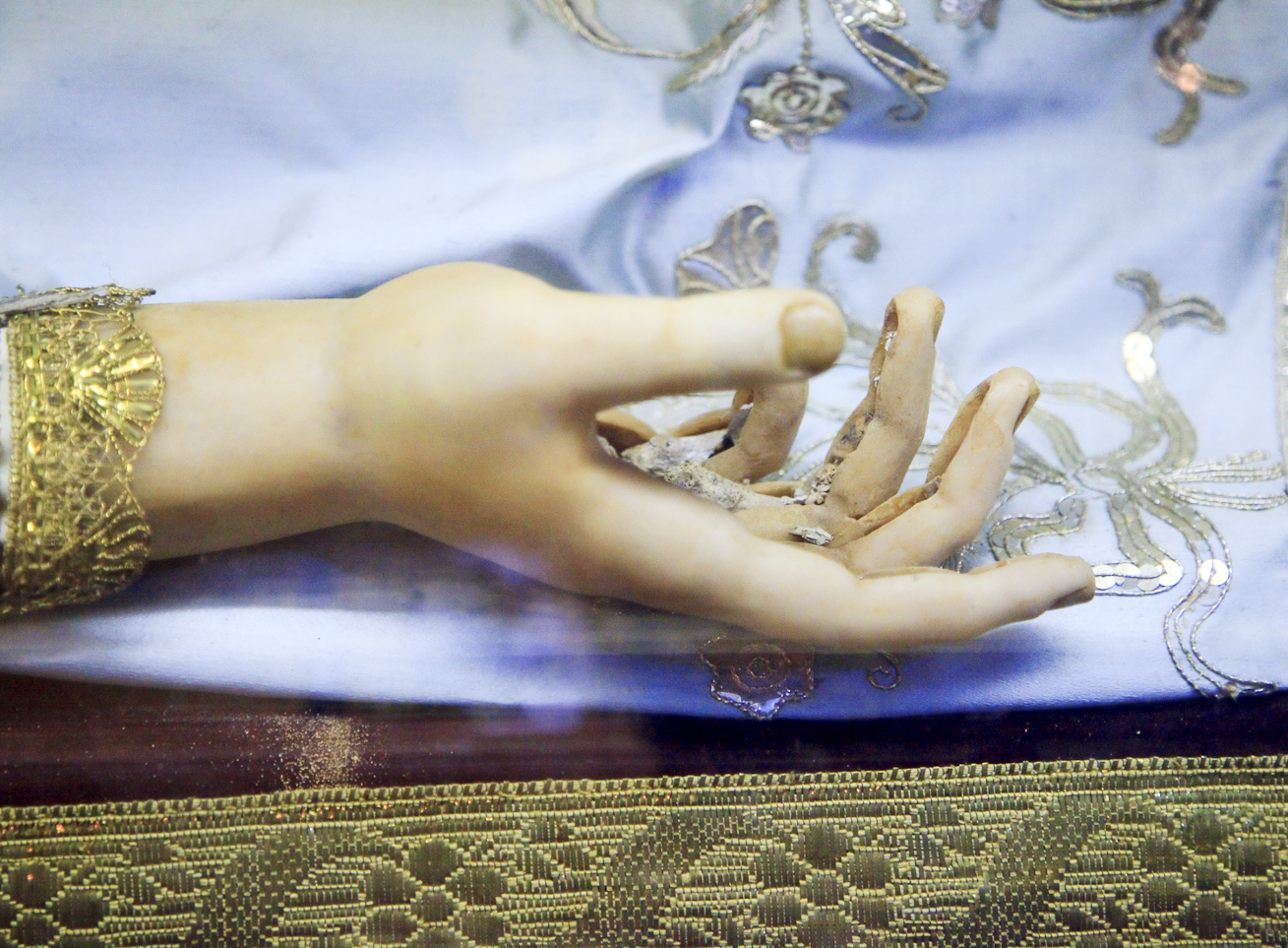
A few of the most wonderful things I saw on my recent trip to Italy with Evan Michelson were the two saints seen above, both to be found in Rome, the last stop on our tour. The first is Saint Vittoria, or Victoria, on view in the church of Santa Maria della Vittoria, directly across from that Bernini's masterwork The Ecstasy of Saint Theresa (top 3); The second is a wonderful reliquary preparation of "S. Wittoria, Martire" fantastically posed and costumed, and showcased in a gold and glass coffin in the Basilica of Saint Mary Sopra Minerva (bottom 2 images).

I am not sure if these two representations might possibly depict the same saint (Wittoria being an alternate/old fashioned spelling for Vittoria?), or two separate ones. I have been able to find nothing official on the Internet about a Saint Wittoria, though Vittoria seems to be a depiction of the Roman Saint Victoria, "virgin and martyr of the catacombs." I also am not sure if there are human bones embedded in the wax of St. Victoria, though Marina Warner asserts this is the case in her wonderful book Phantasmagoria, and the close-up photo above of her hand seems to support this assertion.

Regardless of the problems with research, I hope you agree with me that these are astoundingly amazing and fascinating artifacts. These Saints--and many more, both sacred and profane--will be featured in my upcoming exhibition at Viktor Wynde's Fine Arts in London this September. They will also feature in a book I am working on with friend, Morbid Anatomy Library Scholar in Residence and co-star of The Science Channel's "Oddities" Evan Michelson. Stay tuned for more on that!

Source:
http://morbidanatomy.blogspot.com/feeds/posts/default?alt=rss

Just a Few More Slots Left: "Drawing from the Bestiary: Animal Anatomy of Real and Imagined Creatures," Class with Artist Saul Chernick, Observatory, June 25-July 16

We still have a few more slots available for the class "Drawing from the Bestiary: Animal Anatomy of Real and Imagined Creatures" with one of our favorite artists, Saul Chernick. This class will teach students--via illustrated lectures and in-class projects including paper puppets and the creation of bestiary pages--"to use observational and imaginative drawing skills in tandem to capture the essential qualities of their subject" and "learn to draw animals (real, mythic, and otherwise) with greater skill and sensitivity."

You can see some of Chernick's wonderful artworks above; you can see more of them by clicking here. The class will take place on 4 consecutive Mondays, starting tomorrow night June 25 and running until July 16th. The full class description follows. Also, please note that the class size is limited to 15, so if you are interested, please RSVP as soon as possible to morbidanatomy [at] gmail.com.

Drawing from the Bestiary: Animal Anatomy of Real and Imagined Creatures with Saul Chernick
A 4-part class with Artist Saul Chernick, M.F.A., Rutgers University
Dates: Mondays June 25, July 2, July 9 and July 16th (4 consecutive Mondays)
Time: 6:30-9:00 PM
Class Fee: $120
***Class size limited to 15; Must RSVP to morbidanatomy [at] gmail.com
This class is part of The Morbid Anatomy Art Academy

Contemporary artist and arts educator Saul Chernickis renowned for gorgeous artworks featuring convincingly corporeal depictions of imaginary or mythical creatures rendered in the style of Medieval and early Renaissance woodcuts from Northern Europe. Observatory is very pleased to announce a new workshop developed by Saul Chernick specially for the Morbid Anatomy Art Academy. In this class, Chernick will teach students--via illustrated lectures and in-class projects including paper puppets and bestiary pages--"to use observational and imaginative drawing skills in tandem to capture the essential qualities of their subject" and "learn to draw animals (real, mythic, and otherwise) with greater skill and sensitivity."

Full class description follows; you can see more of Chernick's fantastic work by clicking here. Class size limited to 15; Please RSVP to morbidanatomy [at] gmail.com.

Course Description
Open to artists of all levels, the goal of this workshop is help participants learn to draw animals (real, mythic, and otherwise) with greater skill and sensitivity. Through exercises in drawing and paper puppetry, participants will gain a deeper understanding of the skeletal/muscular structures of most mammals, reptiles, and birds. Participants will also learn to use observational and imaginative drawing skills in tandem to capture the essential qualities of their subject and create works of convincing visual fiction!
What to expect

  • Participants will cull images from the web to create a dossier on the animal(s) that interest them
  • Participants will fashion movable paper puppets to understand how their chosen animal moves
  • Participants will draw studies of the skeletal and muscular structures of animals
  • Participants will use the medium of their choice to create a Bestiary page entry that depicts an animal situated in an environment

Materials
What to bring to the first class:

  • Choose 1-3 animals and gather pictures on the web. Be sure to get images of their skeletons in profile. Please print these as they may be hard to use on a phone screen.
  • 3-5 sheets of Bristol Board Paper 9" x 12" or larger
  • Pencils & erasers
  • Scissors
  • Xacto or utility knife
  • Glue

What to bring for subsequent classes:

  • White or tinted drawing paper 16" x 20" or 18" x 24"
  • Tracing paper (same size as drawing paper)
  • Mechanical and/or regular pencils (2h, hb, 2b, 4b)

Optional:

  • Markers, watercolors, gouache, ink, brushes, chalk/oil pastels, colored pencils, Caran D’Ache, collage papers, etc (we’ll discuss further in detail!)

Saul Chernick, M.F.A., Rutgers University, is a visual artist and educator. Chernick has exhibited internationally in galleries and museums including the Aldrich Museum of Contemporary Art, the Bronx Museum of Art, the Jewish Museum of Art, as well as Max Protetch and Meulensteen Galleries in New York City. He has taught art for the public school system, the 92nd Street Y, Cooper Union, Parson's School of Design, and the Museum of Modern Art. He is currently the Professional Development Coordinator for the Joan Mitchell Foundation where he coaches New York artists in teaching art to young people throughout city. His work can be seen at http://www.saulchernick.com.

All images are by Saul Chernick and include, top to bottom:

  1. Field Urchin, 2011, from a series of studies in which he attempted to impose the proportions of cherubs onto horses.
  2. Desktop 2013, 2010, Ink, Watercolor, & Opaque White on Paper
  3. Heavenly Touch , 2009, Ink, Watercolor, & Opaque White on Paper
  4. Guilty Pleasures, 2010, Ink, Watercolor, & Opaque White on Paper
  5. Ars Gratia Artis, 2010, Ink on Paper

You can found out more here. As mentioned above, class size is limited to 15, so if you are interested, please RSVP as soon as you are able to morbidanatomy [at] gmail.com.

Source:
http://morbidanatomy.blogspot.com/feeds/posts/default?alt=rss

Enriched Skim Milk Good for Gout, Study Suggests

(HealthDay News) -- If you have gout, drinking enriched skim milk may help reduce the frequency of painful flare-ups, new research suggests.

The new study included 120 patients who had experienced at least two flare-ups in the previous four months. They were divided into three treatment groups that consumed either lactose powder, skim milk powder or skim milk powder enriched with glycomacropeptide (GMP) and G600 milk fat extract (G600).

Gout, a common form of arthritis, is caused by uric acid buildup in blood. Often, the big toe is the first place where gout strikes. Previous research has shown a higher risk for gout among people who consume fewer dairy products, and earlier work suggested that GMP and G600 tone down the inflammatory response to gout crystals.

The powders were mixed in roughly 8 ounces of water as a vanilla-flavored shake and consumed once a day. The patients recorded their flare-ups and went to a rheumatology clinic once a month. Read more…

Cardiofy Heart Care Supplement

Source:
http://feeds.feedburner.com/integratedmedicine

Speaker offers insights into Parkinson’s

FAIRMONT – It wasn’t until celebrities such as Michael J. Fox and Muhammad Ali announced they had Parkinson’s Disease that the public began to learn more about this life-altering disease.

While not a terminal illness, Parkinson’s does affect the quality of life for those diagnosed.

“About one in 100 people over the age of 60 are diagnosed with Parkinson’s Disease,” said Rose Wichmann, manager of Struthers Parkinson’s Center in Golden Valley. “It goes to two in 100 people over the age of 70. That’s more than MS, more than muscular dystrophy and more than ALS-Lou Gehrig’s Disease.”

Wichmann was in Fairmont on Thursday speaking to a Parkinson’s support group at Grace Lutheran Church. She mentioned there are several different types of Parkinson’s Disease, and that every person diagnosed has slightly different symptoms.

“Not everyone has the tremors that people associate with Parkinson’s,” Wichmann said. “We have an acronym called ‘TRAP’ that lists the four main symptoms, and two or more of these need to be confirmed before receiving a diagnosis.”

While tremors are well-associated with Parkinson’s, other symptoms are less noticeable, such as rigidity and stiffness in the muscles. There is also the absence or slowing of movements, and posture changes, such as curling over instead of sitting or standing up straight.

“There are about 15 percent of those diagnosed with Parkinson’s that never have a tremor,” Wichmann said. “But what causes Parkinson’s is a group of cells at the base of the brain that produce dopamine. As we age, those cells start to disappear, and about 60 to 80 percent of those disappear before displaying symptoms of Parkinsons.”

Dopamine is a chemical that allows the delivery of messages through the brain. Lack of dopamine means signals are not moving as smoothly.

“We say that automatic is broken,” Wichmann said. “Those movements you don’t even think about, like walking, or rolling over in your sleep. Blinking also goes away, so Parkinson’s sufferers have more of a stare. There is a loss of facial expressions because you don’t think about if you’re going to smile. It’s easy for Parkinson’s people to be misunderstood because you can’t read their facial expressions anymore.”

There are also problems with balance.

The rest is here:
Speaker offers insights into Parkinson's

Source:
http://www.longevitymedicine.tv/feed/

Higher Parkinson’s Risk Linked to Certain Solvents

Increased risks for Parkinsons disease have been linked to some solvents. Parkinsons disease is a progressive, degenerative central nervous system disorder that typically affects motor skills and speech, among other functions and, while not fatal, complications can be deadly. The cause is unknown and there is no cure.

Samuel M. Goldman, M.D., M.P.H., of The Parkinsons Institute in Sunnyvale, California, and colleagues, conducted a so-called discordant twin pair design study involving 99 pairs of twins. The study was conducted to determine if exposure to specific solvents is linked to increased risks for Parkinsons disease. Participant interviews involved task-specific and lifetime occupation and hobby questions, said Medical Xpress. The study was published in the Annals of Neurology.

The researchers found that exposure to trichloroethylene (TCE) was associated with a significantly increased risk of Parkinsons disease and saw a trend for significance for exposure to the chemicals perchloroethylene (PERC) and carbon tetrachloride (CCl4). Although the present work focused on occupational exposures, solvents are ubiquitous in the environment, and this is particularly true for those implicated in this studyTCE, PERC, and CCl4, the authors wrote, according to Medical Xpress. Our findings require replication in other populations with well-characterized exposures, but the potential public health implications are considerable, the team authored.

Weve also written that over the past several years, the agricultural pesticide paraquat has been linked to Parkinsons, posing a risk to agricultural workers who toil in fields where the pesticide is sprayed, as well as to people living near the fields.

Other research revealed that people exposed at their workplaces to ziram, maneb, and paraquat tripled their risk of Parkinsons; workplace exposure to both ziram and paraquat nearly doubled Parkinsons risk; and people who worked with either paraquat or the pesticide rotenone were 2.5 times likelier to develop Parkinsons disease.

Another study found that some medications, notably the amphetamines Benzedrine or Dexedrine, used to treat attention deficit hyperactivity disorder (ADHD) and help patients achieve more defined focus and increase clarity and awareness, could also place those patients at risk for Parkinsons disease.

We recently wrote that another study found an association with glyphosate, the active ingredient in Monsatos Roundup, and Parkinsons disease and Parkinsons-related brain disorders. According to a report from the Organic Authority, Roundup is the best-selling pesticide in the world and is the companion chemical application to many of the companys genetically modified seeds including corn, soy, canola and cotton.

According to Digital Journal, this is just the latest study to find a link between glyphosate and Parkinsons-like disorders. For example, a 2011 report published in the journal Parkinsonism Related Disorders, detailed the case of a 44-year-old women with Parkinsons-like symptoms after sustaining long-term chemical exposure to glyphosate for three years as a worker in a chemical factory.

Read more here:
Higher Parkinson’s Risk Linked to Certain Solvents

Source:
http://www.longevitymedicine.tv/feed/

BUSM researchers identify role of FOXO1 gene in Parkinson’s disease

Public release date: 28-Jun-2012 [ | E-mail | Share ]

Contact: Jenny Eriksen Leary jenny.eriksen@bmc.org 617-638-6841 Boston University Medical Center

(Boston) A recent study led by researchers at Boston University School of Medicine (BUSM) revealed that the FOXO1 gene may play an important role in the pathological mechanisms of Parkinson’s disease. These findings are published online in PLoS Genetics, a peer-reviewed open-access journal published by the Public Library of Science.

The study was led by Alexandra Dumitriu, PhD, a postdoctoral associate in the department of neurology at BUSM. Richard Myers, PhD, professor of neurology at BUSM, is the study’s senior author.

According to the Parkinson’s Disease Foundation, 60,000 Americans are diagnosed with Parkinson’s disease each year and approximately one million Americans are currently living with the disease.

Parkinson’s disease is a complex neurodegenerative disorder characterized by a buildup of proteins in nerve cells that lead to their inability to communicate with one another, causing motor function issues, including tremors and slowness in movement, as well as dementia. The substantia nigra is an area of the midbrain that helps control movement, and previous research has shown that this area of the brain loses neurons as Parkinson’s disease progresses.

The researchers analyzed gene expression differences in brain tissue between 27 samples with known Parkinson’s disease and 26 samples from neurologically healthy controls. This data set represents the largest number of brain samples used in a whole-genome expression study of Parkinson’s disease to date. The novel aspect of this study is represented by the researchers’ emphasis on removing possible sources of variation by minimizing the differences among samples. They used only male brain tissue samples that showed no significant marks of Alzheimer’s disease pathology, one of the frequently co-occurring neurological diseases in Parkinson’s disease patients. The samples also had similar tissue quality and were from the brain’s prefrontal cortex, one of the less studied areas for the disease. The prefrontal cortex does not show neuronal death to the same extent as the substantia nigra, although it displays molecular and pathological modifications during the disease process, while also being responsible for the dementia present in a large proportion of Parkinson’s disease patients.

Results of the expression experiment showed that the gene FOXO1 had increased expression in the brain tissue samples with known Parkinson’s disease. FOXO1 is a transcriptional regulator that can modify the expression of other genes. Further examination of the FOXO1 gene showed that two single-nucleotide polymorphisms (SNPs), or DNA sequence variations, were significantly associated with age at onset of Parkinson’s disease.

“Our hypothesis is that FOXO1 acts in a protective manner by activating genes and pathways that fight the neurodegeneration processes,” said Dumitriu. “If this is correct, there could be potential to explore FOXO1 as a therapeutic drug target for Parkinson’s disease.”

###

Excerpt from:
BUSM researchers identify role of FOXO1 gene in Parkinson's disease

Source:
http://www.longevitymedicine.tv/feed/

Research and Markets: Handbook of Parkinson’s Disease – Blue-Ribbon Guide

DUBLIN–(BUSINESS WIRE)–

Research and Markets (http://www.researchandmarkets.com/research/lb6wfj/handbook_of_parkin) has announced the addition of the “Handbook of Parkinson’s Disease” book to their offering.

This blue-ribbon guide has long prevailed as one of the leading resources on Parkinson’s Disease (PD). Fully updated with practical and engaging chapters on pathology, neurochemistry, etiology, and breakthrough research, this source spans every essential topic related to the identification, assessment, and treatment of PD. Reflecting the many advances that have taken place in the management of PD, this source promotes a multidisciplinary approach to care and supplies new sections on the latest pharmacologic, surgical, and rehabilitative therapies, as well as essential diagnostic, imaging, and nonmotor management strategies for PD.

Key Topics Covered:

Early Iconography of Parkinson’s Disease

Epidemiology of Parkinsonism

Differential Diagnosis of Parkinsonism

Pathophysiology and Clinical Assessment of Parkinsonian Symptoms and Signs

Autonomic Dysfunction and Management

Sleep Dysfunction in Parkinson’s Disease

Originally posted here:
Research and Markets: Handbook of Parkinson's Disease – Blue-Ribbon Guide

Source:
http://www.longevitymedicine.tv/feed/

New approach to reverse multiple sclerosis in mice models

ScienceDaily (June 28, 2012) Mayo Clinic researchers have successfully used smaller, folded DNA molecules to stimulate regeneration and repair of nerve coatings in mice that mimic multiple sclerosis (MS). They say the finding, published June 28 in the journal PLoS ONE, suggests new possible therapies for MS patients.

“The problem has been to find a way to encourage the nervous system to regenerate its own myelin (the coating on the nerves) so nerve cells can recover from an MS attack,” says L. James Maher III, Ph.D., Mayo Clinic biochemist and senior author on the paper. “We show here that these small molecules, called aptamers, can stimulate repair in the mice we are studying.”

More than 200,000 people have multiple sclerosis. There is no cure and no effective therapy to stop progression or repair damage to the myelin sheath that surrounds and protects the nerves. Without that protection, nerve fibers will be damaged, leading to declining mobility and cognitive function, and other debilitating complications.

MS researchers, including Mayo neurologist Moses Rodriguez, M.D., a co-author on this paper, have focused on monoclonal antibodies in mice to stimulate myelin repair. The Rodriguez and Maher teams, working together, have determined that the aptamers are not only effective, but they are easy and cheap to synthesize — an important point for drug developers. They also are stable and not likely to cause an immune response. This new approach must be validated in other mouse models to see if it might be a candidate for human clinical trials.

The monoclonal antibodies used in earlier research are large and complex, but were shown to promote both cell signaling and remyelination of central nervous system lesions in mice. The aptamers used in this study are less than one-tenth the size of antibodies and are single-strands of DNA containing only 40 nucleotide units.

The research was supported by Mayo Clinic and the National Multiple Sclerosis Society. Co-authors include Branislav Nastasijevic, Brent Wright, Ph.D., John Smestad, and Arthur Warrington, Ph.D., all of Mayo Clinic.

Share this story on Facebook, Twitter, and Google:

Other social bookmarking and sharing tools:

Story Source:

The above story is reprinted from materials provided by Mayo Clinic.

Here is the original post:
New approach to reverse multiple sclerosis in mice models

Source:
http://www.longevitymedicine.tv/feed/

Mayo Clinic Uses New Approach To Reverse Multiple Sclerosis In Mice Models

Mayo Clinic researchers have successfully used smaller, folded DNA molecules to stimulate regeneration and repair of nerve coatings in mice that mimic multiple sclerosis (MS). They say the finding, published today in the journal PLoS ONE, suggests new possible therapies for MS patients.

“The problem has been to find a way to encourage the nervous system to regenerate its own myelin (the coating on the nerves) so nerve cells can recover from an MS attack,” says L. James Maher III, Ph.D., Mayo Clinic biochemist and senior author on the paper. “We show here that these small molecules, called aptamers, can stimulate repair in the mice we are studying.”

More than 200,000 people have multiple sclerosis. There is no cure and no effective therapy to stop progression or repair damage to the myelin sheath that surrounds and protects the nerves. Without that protection, nerve fibers will be damaged, leading to declining mobility and cognitive function, and other debilitating complications.

MS researchers, including Mayo neurologist Moses Rodriguez, M.D., a co-author on this paper, have focused on monoclonal antibodies in mice to stimulate myelin repair. The Rodriguez and Maher teams, working together, have determined that the aptamers are not only effective, but they are easy and cheap to synthesize an important point for drug developers. They also are stable and not likely to cause an immune response. This new approach must be validated in other mouse models to see if it might be a candidate for human clinical trials.

The monoclonal antibodies used in earlier research are large and complex, but were shown to promote both cell signaling and remyelination of central nervous system lesions in mice. The aptamers used in this study are less than one-tenth the size of antibodies and are single-strands of DNA containing only 40 nucleotide units.

The research was supported by Mayo Clinic and the National Multiple Sclerosis Society. Co-authors include Branislav Nastasijevic, Brent Wright, Ph.D., John Smestad, and Arthur Warrington, Ph.D., all of Mayo Clinic.

SOURCE: Mayo Clinic

Originally posted here:
Mayo Clinic Uses New Approach To Reverse Multiple Sclerosis In Mice Models

Source:
http://www.longevitymedicine.tv/feed/

Cancer Risk Lower In Multiple Sclerosis Patients

Editor’s Choice Main Category: Cancer / Oncology Also Included In: Colorectal Cancer;Multiple Sclerosis Article Date: 28 Jun 2012 – 9:00 PDT

Current ratings for: Cancer Risk Lower In Multiple Sclerosis Patients

3 (2 votes)

The study, conducted by researchers at the University of British Columbia and Vancouver Coastal Health, is published in the journal Brain.

Lead author of the study Elaine Kingwell, a postdoctoral fellow in the UBC Faculty of Medicine and Brain Research Center at UBC and VCH Research Institute, explained:

After comparing diagnoses of cancer in MS patients in British Columbia with those of the general public, the researchers discovered that MS patients were less likely to develop cancer. In particular MS patients had a lower risk of developing colorectal cancer. However, the team found that these patients had a slightly increased risk of developing brain and bladder cancer, although this increase was not significant. Furthermore, the risk for non-melanoma skin cancer was significantly higher among patients with relapsing-onset MS.

The researchers note that further studies are required in order to understand why MS patients have a reduced overall risk of developing cancer.

The researchers also found that MS patients who developed cancer usually had larger tumors at time of diagnosis. They state that more researcher is needed to find out why some tumors might be caught later in individuals with MS.

Helen Tremlett, associate professor in the UBC Faculty of Medicine, said: “Because the symptoms of MS can be broad and include feelings of fatigue, it’s possible the symptoms of cancer are being masked or overlooked.”

Tremlett states that MS patients and their physicians should continue to follow cancer screening guidelines, regardless of the study findings. A follow-up study is planned in order for the researchers to determine if cancer mortality rates are altered in MS patients.

Read more here:
Cancer Risk Lower In Multiple Sclerosis Patients

Source:
http://www.longevitymedicine.tv/feed/

Dementia has robbed me of my freedom, says Thunderbirds creator Gerry Anderson

He said he did not even know his mental condition was deteriorating and described how the diagnosis came as a shock.

I dont think I realised at all, he told BBC Berkshire.

I don’t think I realised at all. It was my wife Mary who began to notice that I would do something quite daft like putting the kettle in the sink and waiting for it to boil.

“Finally I was persuaded to go and see the doctor and eventually I was confronted with the traditional test – a piece of paper with drawings on it, taking a pencil and copying them.

“I thought ‘Why are they doing this? A child could do this’.

“But when I started to copy the drawings, that wasn’t the case.

“I started to get in a muddle. That’s when I began to realise that there was something wrong.”

He said not being able to drive anymore was the bitterest blow of all because he could not get to Pinewood from his home in Henley-on-Thames.

This depressed me enormously because my film work was my life.

Suddenly my life was cut off. Since I’ve had Alzheimer’s I’ve realised how debilitating it is. It can affect your life in so many ways that you don’t think about, he said.

See the original post:
Dementia has robbed me of my freedom, says Thunderbirds creator Gerry Anderson

Source:
http://www.longevitymedicine.tv/feed/

Dementia: Not a normal part of aging

By GARY LEBLANC | Common Sense Caregiving Published: June 28, 2012 Updated: June 28, 2012 – 12:00 AM

I recently had a conversation with a fellow caregiver that is caring for his elderly mother who is suffering from some type of dementia. He told me that her primary physician diagnosed her with “Old Brain.” I almost fell out of my chair. What kind of medical diagnosis is that?

Dementia is not a normal part of aging. For example, my own mother is 93 years old and as sharp as a whip! I believe this is the way we are all meant to live out our golden years.

If our loved ones show signs of dementia, something is causing it and if their doctors aren’t going to investigate it, I suggest we take them to a neurologist right away. In the case of Alzheimer’s Disease, it’s the disease that has brought on the symptoms of dementia. (Yes. Dementia is a symptom.)

A good analogy to use when explaining the term dementia is “fever.” Fever refers to an elevated temperature, indicating that the person is sick, but it does not explain what is causing the sickness. So, simply stated, dementia is not a disease; it is one of the symptoms of a disease.

Lewy Body Dementia, Parkinson’s Disease, Huntington’s Disease I could go on and on, but in all cases it’s the diseases themselves that have created the symptom of dementia.

The goal of any truly caring doctor is to discover what is causing it, and the sooner the better. There are even some cases such as Vascular Dementia which can be reversed if caught early enough.

Around the age of 60, everyone starts to develop a little brain shrinkage. This may cause some absent mindedness, but this should not necessarily be mistaken for dementia.

Here are a couple of scenarios to consider; we all misplace our keys once in a while, but when we’re holding our car keys in our hand and forget what they are for . . . or if we forget something in our bedroom and we walk back in there and don’t recognize the room we’re standing in, that’s concern for dementia!

If you or your loved one are experiencing this symptom, please see a doctor right away. Now, don’t let the word “Alzheimer’s” be the first thing to pop into your head. There are many probable causes including: vitamin B deficiency, medication side-effects, depression, just to name a few. All avenues should be explored right away.

The rest is here:
Dementia: Not a normal part of aging

Source:
http://www.longevitymedicine.tv/feed/
ABC News Profiles BalanceWear® and the Benefits for Multiple Sclerosis Patients

SAN FRANCISCO–(BUSINESS WIRE)–

Wow, Its like looking at a miracle, isnt it, said Cheryl Jennings, co-anchor of ABC 7 News. She was referring to reporter Carolyn Johnsons Health & Science segment on BalanceWear, a semi-custom made orthotic that has helped dramatically improve stability in patients with MS, Parkinsons disease, stroke, TBI, ataxia and other Sensory Based Motor Disorders (SBMD).

View Full Story Online

For patients suffering from multiple sclerosis or other degenerative diseases, just controlling their own bodies can be a challenge. But now, a simple device invented in the Bay Area is helping a growing number of those patients move far more smoothly, Johnson says as she introduces viewers to Mary Spencer, a woman who suffers with balance issues caused by Multiple Sclerosis and to physical therapist Cindy Gibson-Horn, creator of BalanceWear.

“You can’t tell what direction is what. Your body doesn’t know what’s up or down,” says Mary.

Directional loss is a symptom of several Sensory Based Motor Disorders. As the patient walks, he or she becomes preoccupied with their movements, trying to compensate with every step in order to keep from falling. Gibson-Horn discovered that small, strategically placed weights applied to BalanceWear helps to adjust directional loss. Her research led to the discovery of Balance-Based Torso Weighting (BBTW), a breakthrough that has been noticed by doctors and researchers. Recently, a National Institutes of Health Recovery Grant of just under $400,000 was awarded to Samuel Merritt University (SMU) Physical Therapy Professor Dr. Gail Widener, PT, and Dr. Diane Allen at San Francisco State University to continue research into Balance-Based Torso Weighting (BBTW) and its effects on Multiple Sclerosis (MS) mobility challenges. The first phase of the study validates previous research funded by the National MS Society. The research is currently in its second phase and has led to documented evidence of the efficacy of prior clinical observations.

“If you think about balance, it’s the foundation of movement. So you couldn’t even sit, unless you had balance,” Gibson-Horn tells Johnson. “If the patient has a balance problem, and we can identify the directional losses of balance, then we can treat those imbalances by strategically placing light weights in BalanceWear and immediately you’ll know whether or not your patient is going to experience balance improvement.”

Steve Cookston, CEO of Motion Therapeutics, the company that manufactures and markets BalanceWear, has spent years in the medical device field. BalanceWear has the remarkable ability to change a persons life by simply being fitted for the vest, says Cookston. It requires no downtime, drugs or special care. It is designed and manufactured to insure that the patients balance is dramatically improved immediately and that is what makes us all enthusiastically committed to this product.

Says Johnson, For Spencer, the results have already been life changing.

“I have the freedom to move without thinking, ‘Where do I need to be? How do I need to stand?’” Spencer explains.

Read more here:
ABC News Profiles BalanceWear® and the Benefits for Multiple Sclerosis Patients

Source:
http://www.longevitymedicine.tv/feed/

Nighttime leg cramps hurt patient

Dear Dr. DonohueI have leg cramps at night quite often. They wake me up, and I have to straighten my leg slowly. I do 15 bends, squats, modified push-ups and sit-ups every night. What causes these cramps? What can I do to stop them? I am physically fit and healthy at age 80. R.C.

AnswerNighttime leg cramps are the bane of a significant number of older people. What causes them is a question to which no one has come up with an answer. That hasn’t stopped people from suggesting a number of possible causes: low magnesium, low potassium, too little calcium. None of these has been proved.

Some medicines have been implicated as possible causes. Water pills (diuretics) have been cited, as have long-acting beta-2 agonists used for asthma control.

Peripheral artery disease, a common malady of the elderly, is said to be common among people who suffer from nighttime cramps. That’s the circulatory problem where there’s obstruction to blood flow to the legs because of clogged arteries. The various kinds of arthritis also are said to contribute to nighttime cramping.

Ways to end cramps include doing exercises before going to bed. Leg exercise is particularly important. If you have a stationary bike, it might be one way to conquer cramps. Stretching exercises for the leg muscles also are important. If the calves are cramping, then stand on a stair with your heels projecting off the stair. Lower your heels, and hold that position for 10 seconds. Repeat 10 times at bedtime, and do this exercise three times during the day.

Medicines sometimes can be helpful if nothing else is working. Examples are gabapentin (Neurontin), diltiazem (Cardizem) and a multivitamin containing a mix of B vitamins. Tonic water, because of its quinine content, often is offered as a preventive step.

The booklet on restless leg syndrome and nighttime cramps offers more tips. Readers can obtain a copy by writing: Dr. Donohue No. 306, Box 536475, Orlando, FL 32853-6475. Enclose a check or money order (no cash) for $4.75 with the recipient’s printed name and address. Please allow four weeks for delivery.

Dear Dr. DonohueMy husband was diagnosed with ataxia. What is it? R.A.

AnswerAtaxia is uncoordinated muscle movement. For most ataxia patients, it indicates a stumbling walk.

Follow this link:
Nighttime leg cramps hurt patient

Source:
http://www.longevitymedicine.tv/feed/

Grover Beach boy will get service dog thanks to fundraiser; more that 400 attend event

By Mike Hodgson/Associate Editor Email a friend Printer friendly

Lucas Appleton, right, plays with Tony Boy during a fundraiser Sunday at Mangos Saloon in Grover Beach. //Phil Klein/Contributor

A Grover Beach boy stricken with Friedreichs ataxia will get his service dog as a result of a fund-raiser that drew more than 400 people Sunday.

Nine-year-old Lucas Appleton, who suffers from the progressively crippling form of muscular dystrophy, managed to spend five hours at the event at Mongos Saloon, said his godmother, Linda McClure, who organized the barbecue that included a prize drawing, musical performances and a bake sale.

It was a huge success, McClure said. Lucas was so happy and so was his brother (William) and mother, Casandra.

We raised enough to get him a dog, with a small amount left over for a van, and were working on that now, she said.

A trained service dog, which costs $12,000 to $15,000, will help Lucas maintain his balance, turn on lights for him, pick up things hes dropped, help him through the familys narrow bathroom door and just be a companion.

McClure said about 450 people and a host of dogs attended the event that started at 10:30 a.m. and continued until Mongos closed that night.

She noted Lucas had asked to have a golden retriever or black Labrador retriever for a service dog, which might not be possible.

But a golden retriever club heard about his request and showed up with all their dogs.

See the rest here:
Grover Beach boy will get service dog thanks to fundraiser; more that 400 attend event

Source:
http://www.longevitymedicine.tv/feed/

Boy will get service dog thanks to fundraiser

By Mike Hodgson/Associate Editor Email this story Print this story

Lucas Appleton, right, plays with Tony Boy during a fundraiser Sunday at Mangos Saloon in Grover Beach. //Phil Klein/Contributor

A Grover Beach boy stricken with Friedreichs ataxia will get his service dog as a result of a fund-raiser that drew more than 400 people Sunday.

Nine-year-old Lucas Appleton, who suffers from the progressively crippling form of muscular dystrophy, managed to spend five hours at the event at Mongos Saloon, said his godmother, Linda McClure, who organized the barbecue that included a prize drawing, musical performances and a bake sale.

It was a huge success, McClure said. Lucas was so happy and so was his brother (William) and mother, Casandra.

We raised enough to get him a dog, with a small amount left over for a van, and were working on that now, she said.

A trained service dog, which costs $12,000 to $15,000, will help Lucas maintain his balance, turn on lights for him, pick up things hes dropped, help him through the familys narrow bathroom door and just be a companion.

McClure said about 450 people and a host of dogs attended the event that started at 10:30 a.m. and continued until Mongos closed that night.

She noted Lucas had asked to have a golden retriever or black Labrador retriever for a service dog, which might not be possible.

But a golden retriever club heard about his request and showed up with all their dogs.

Read the original post:
Boy will get service dog thanks to fundraiser

Source:
http://www.longevitymedicine.tv/feed/

Brain scans may detect autism in babies and toddlers

One study examines the brain’s organization of white matter, while another measures its electrical activity — in both cases, to detect autism.

Two separate studies published this month indicate that it may be possible to use brain imaging techniques to reliably detect autism in children as young as 6 months of age.

In the first study, published in the American Journal of Psychiatry, researchers from across North America working on the larger and ongoing Infant Brain Imaging Study used a type of MRI called diffusion tensor imaging to study 92 6-month-olds deemed high risk because their older siblings had been diagnosed with autism.

What they found is that the organization of white matter in the brain plays a key role. Specifically, they looked at fractional anisotropy (FA), which in this case measured white matter organization using the movement of water through tissue. They found that FA values were higher in 6-month-old infants who went on to develop autism, but then underwent a dramatic drop over the ensuing months and were ultimately lower than the values of those without autism when measured again at 2 years of age.

“Infancy is a time when the brain is being organized and connections are developing rapidly,” Dr. Alan Evans, co-investigator out of McGill University in Montreal, said in a news release. “Our international research team was able to detect differences in the wiring by six months of age in those children who went on to develop autism.”

Meanwhile, a larger study published in the journal BMC Medicine investigated patterns of electrical activity in the brains of almost 1,000 children between the ages of 2 and 12. Using electroencephalograms (EEGs) consisting of caps of 24 electrodes, researchers identified 33 patterns they say can reliably distinguish children who have autism from those who do not.

The majority of the 33 patterns revealed decreased brain activity — particularly on the left side of the brain, which is responsible for communication — but roughly a third of the patterns showed increased activity.

“They may be the brain’s attempt to overcompensate for the regions that should be working together,” Frank Duffy, a developmental neurophysiologist at Boston Children’s Hospital and an associate professor at Harvard Medical School, told WebMD. “There’s also a high association of autism with seizure disorders. An over-connected brain may be more prone to seizures than an under-connected brain.”

Researchers from both studies say they hope their methods and findings will pave the way to the very early detection of autism, as early intervention could in turn help improve children’s outcomes later in life.

View original post here:
Brain scans may detect autism in babies and toddlers

Source:
http://www.longevitymedicine.tv/feed/