Age-Related Visual Impairment in Decline

Steady progress in medicine has led to an ongoing reduction in many age-related conditions over the past few decades. Such as this, for example: "Today's senior citizens are reporting fewer visual impairment problems than their counterparts from a generation ago, according to a new [study]. Improved techniques for cataract surgery and a reduction in the prevalence of macular degeneration may be the driving forces behind this change, the researchers said. ... From 1984 until 2010, the decrease in visual impairment in those 65 and older was highly statistically significant. There was little change in visual impairments in adults under the age of 65. ... The [ study] shows that in 1984, 23 percent of elderly adults had difficulty reading or seeing newspaper print because of poor eyesight. By 2010, there was an age-adjusted 58 percent decrease in this kind of visual impairment, with only 9.7 percent of elderly reporting the problem. There was also a substantial decline in eyesight problems that limited elderly Americans from taking part in daily activities, such as bathing, dressing or getting around inside or outside of the home ... there are three likely reasons for the decline: (a) Improved techniques and outcomes for cataract surgery. (b) Less smoking, resulting in a drop in the prevalence of macular degeneration. (c) Treatments for diabetic eye diseases are more readily available and improved, despite the fact that the prevalence of diabetes has increased "

Link: http://www.northwestern.edu/newscenter/stories/2012/06/seniors-eyesight.html

Source:
http://www.longevitymeme.org/newsletter/latest_rss_feed.cfm

Alcor 40 Conference, October 19th 2012

Cryonics provider Alcor is holding a 40th anniversary conference in October, and the presently announced program looks much like this: "Sebastian Seung on testing how well cryopreservation (and alternatives) preserves the connectome. Todd Huffman on brain scanning. Panel discussion on long-term financial planning, including investing strategies, inflation protection, and personal trusts. Aschwin and Chana de Wolf from Advanced Neural Biosciences on advances in cryonics-relevant research. Greg Fahy from 21st Century Medicine on advances in cryoprotection. Aubrey de Grey from the SENS Foundation. Joshua Mitteldorf on programmed aging. Anders Sandberg on 'Handling the unknowable and undecidable: rational decision making about future technology.' Catherine Baldwin on advances at Suspended Animation. Panel on medical monitoring devices for improving your chances of a quick response in case of a critical physiological failure. Max More on how to improve your prospects for an optimal cryopreservation."

Link: http://www.alcor.org/conferences/2012/

Source:
http://www.longevitymeme.org/newsletter/latest_rss_feed.cfm

Early Medical Nanorobots Will Look Like Cells and Bacteria

If I mention medical nanorobotics, you might think of the designs put forward by Robert Freitas and others: molecular machines constructed largely from carbon that bear little relation to the cells and cellular system they are intended to interact with. Or you might think of the crude forerunners of those designs presently being tested in the laboratory, such as targeted nanoparticles and nanocontainers used to deliver drug compounds more precisely to where they are needed.

But you and I are built out of nanorobots: each of our cells is effectively a structured collection of cooperating, programmable nanoscale robots. They are evolved rather than designed, but still represent a vast preexisting parts library for researchers interested in building the first generation of medical nanorobots. While it is true that there are good reasons for reinventing this wheel, such as gaining far greater performance than is possible from anything similar to our present biology, given that time is of critical importance in developing the next generation of medicine, why not use these existing designs?

It seems likely that the first medical nanorobots (well, microrobots in this case) will be highly modified or even completely artificial cells. Why ignore the working blueprint that's right in front of you, after all?

Researchers are already building the prototypes, far more advanced than simple targeted nanoparticles. Here, for example, is news of progress towards nanofactories. These are programmable, artificial bacteria-like entities that can be set up to manufacture specific drug compounds in response to their local environment, or to signals from outside the body such as light or ingested chemicals.

Scientists are reporting an advance toward treating disease with minute capsules containing not drugs - but the DNA and other biological machinery for making the drug. ... development of nanoscale production units for protein-based drugs in the human body may provide a new approach for treating disease. These production units could be turned on when needed, producing medicines that cannot be taken orally or are toxic and would harm other parts of the body. Until now, researchers have only done this with live bacteria that were designed to make proteins at disease sites. But unlike bacterial systems, artificial ones are modular, and it is easier to modify them. That's why [this research group] developed an artificial, remotely activated nanoparticle system containing DNA and the other "parts" necessary to make proteins, which are the workhorses of the human cell and are often used as drugs.

They describe the nanoscale production units, which are tiny spheres encapsulating protein-making machinery like that found in living cells. The resulting nanoparticles produced active proteins on demand when the researchers shined a laser light on them. The nanoparticles even worked when they were injected into mice, which are stand-ins for humans in the laboratory, producing proteins when a laser was shone onto the animals.

The sky is the limit once biotechnology really takes off - and we're still in the early stages of this phase of progress. Much more is yet to come.

Source:
http://www.longevitymeme.org/newsletter/latest_rss_feed.cfm

A Step Towards Better Blood

Why not aim to improve on blood? Its primary function is to carry oxygen, and it has evolved to do the bare minimum necessary on this front - separate any part of the body from a supply of oxygen for a minute or so and you're in trouble. It would be nice, for example, to have blood with a reserve capacity of a few hours, achieved using nanomachines that store the surplus oxygen that the body doesn't otherwise extract from air breathed in. Even if the heart stopped or blood stopped flowing in some vital tissue, you'd have those few hours to seek medical help. Here is a gentle first step towards the technologies of better blood: researchers "designed tiny, gas-filled microparticles that can be injected directly into the bloodstream to quickly oxygenate the blood. The microparticles consist of a single layer of lipids (fatty molecules) that surround a tiny pocket of oxygen gas, and are delivered in a liquid solution. ... report that an infusion of these microparticles into animals with low blood oxygen levels restored blood oxygen saturation to near-normal levels, within seconds. When the trachea was completely blocked - a more dangerous 'real world' scenario - the infusion kept the animals alive for 15 minutes without a single breath, and reduced the incidence of cardiac arrest and organ injury. The microparticle solutions are portable and could stabilize patients in emergency situations, buying time for paramedics, emergency clinicians or intensive care clinicians to more safely place a breathing tube or perform other life-saving therapies. ... The microparticles would likely only be administered for a short time, between 15 and 30 minutes, because they are carried in fluid that would overload the blood if used for longer periods ... the particles are different from blood substitutes, which carry oxygen but are not useful when the lungs are unable to oxygenate them. Instead, the microparticles are designed for situations in which the lungs are completely incapacitated. ... Intravenous administration of oxygen gas was tried in the early 1900s, but these attempts failed to oxygenate the blood and often caused dangerous gas embolisms. ... We have engineered around this problem by packaging the gas into small, deformable particles. They dramatically increase the surface area for gas exchange and are able to squeeze through capillaries where free gas would get stuck."

Link: http://www.eurekalert.org/pub_releases/2012-06/chb-ilo_1062212.php

Source:
http://www.longevitymeme.org/newsletter/latest_rss_feed.cfm

Demonstrating Genetically Corrected Stem Cells as a Therapy

This demonstrated technology platform has wide-ranging uses beyond muscular dystrophy. The ability to generate altered versions of a patient's own stem cell populations and then deliver them as needed could be a useful therapy for many conditions: "scientists have turned muscular dystrophy patients' fibroblast cells (common cells found in connective tissue) into stem cells and then differentiated them into muscle precursor cells. The muscle cells were then genetically modified and transplanted into mice. ... In this study, scientists focused on genetically modifying a type of cell called a mesoangioblast, which is derived from blood vessels and has been shown in previous studies to have potential in treating muscular dystrophy. However, the authors found that they could not get a sufficient number of mesoangioblasts from patients with limb-girdle muscular dystrophy because the muscles of the patients were depleted of these cells. Instead, scientists in this study 'reprogrammed' adult cells from patients with limb-girdle muscular dystrophy into stem cells and were able to induce them to differentiate into mesoangioblast-like cells. After these 'progenitor' cells were genetically corrected using a viral vector, they were injected into mice with muscular dystrophy, where they homed-in on damaged muscle fibres. The researchers also showed that when the same muscle progenitor cells were derived from mice the transplanted cells strengthened damaged muscle and enabled the dystrophic mice to run for longer on a treadmill than dystrophic mice that did not receive the cells."

Link: http://www.sciencedaily.com/releases/2012/06/120627142514.htm

Source:
http://www.longevitymeme.org/newsletter/latest_rss_feed.cfm

Another Study Suggests that Sedentary Behavior Adds Up

You might recall a recent Australian study that put forward a correlation between time spent sitting and mortality rate, independent of other factors - i.e. the claim there being that if you sit a lot but exercise moderately then you have a lower life expectancy than if you spent less time in a chair. My thought at the time was that this sort of result ties back into levels of activity:

This is not the first study to propose this correlation, of course. There are a range of others from past years. One has to wonder what the mechanism is here, however - my suspicion is that it actually does all come back down to the level of physical activity in the end. In these massive studies the level of exercise and activity is reported by the participants. A person who stands and works is going to be somewhat more active than a person who sits and works, even though that time may not be categorized as physical activity, or reported differently.

Here is a different study that proposes much the same sort of thing. These researchers - like the authors of another recent study on Alzheimer's disease and activity - used data gathered from worn accelerometer devices rather than the self-reporting of study participants, which in theory should lead to far more confidence in the results.

Association of Sedentary Time with Mortality Independent of Moderate to Vigorous Physical Activity:

Low physical activity levels are a well-known risk factor of mortality. Previous studies have shown that people who do not meet the physical activity recommendations or those who report less moderate to vigorous activity (MVPA) are at increased risk of death. Sedentary behavior has emerged as a potential risk factor independent of MVPA and is defined as engaging in behaviors during the waking day that are done while sitting or reclining and that result in little energy expenditure above rest, such as using the computer, watching television, driving a car, or sitting at a desk.

Recent studies with objectively measured sedentary time data have shown that prolonged time in sedentary behaviors is a cardiometabolic risk factor independent of moderate to vigorous physical activity. Additionally, self-reported sedentary time in several domains including sitting, riding in a car, and TV watching is positively associated with mortality.

...

7-day accelerometry data of 1906 participants aged 50 and over from the U.S. nationally representative National Health and Nutrition Examination Survey (NHANES) 2003-2004 were analyzed. All-cause mortality was assessed from the date of examination through December 31, 2006.

...

This study shows that time spent in sedentary behavior is positively associated with mortality in this representative sample of adults aged 50 and older. Participants in the highest quartile of percentage of time spent sedentary, which corresponds to more than 73.5% of time in men and more than 70.5% in women, had more than 5 times greater risk of death compared to those in the lowest quartile. Importantly, these associations were independent of MVPA.

At some point in the future we won't really have to worry too much about things like this, as medical science will progress to the point at which maintenance of long-term health regardless of lifestyle becomes as much a non-issue as protection from the infectious diseases that plagued our ancestors. But we have a way to go towards that goal, and in the meanwhile it doesn't seem wise to sit back and assume that biotechnology will rescue you from casual negligence. Maybe you'll get lucky, but for those of us in the middle stages of life it looks uncertain indeed. The coming decades are on the cusp between the era of aging as a fact of life and aging as a treatable and reversible medical condition - a lot of deaths will fall on the wrong side of that line, so why not try to shift the odds on whether yours is one of them? Every year gained is big deal in this sort of situation.

The flip side of that coin is, of course, helping to make rejuvenation biotechnology come about more rapidly. If you like being alive and in good shape, it makes sense to work on both (a) common sense health basics like exercise and calorie restriction, and (b) assisting scientific progress. You live in an age in which you can easily accomplish both of these things, thanks to a wealth of health knowledge at your fingertips, and the spread of volunteer, philanthropically funded organizations like SENS Foundation and Methuselah Foundation.

Source:
http://www.longevitymeme.org/newsletter/latest_rss_feed.cfm

Comments on Chemopreservation Versus Cryopreservation

There is some ongoing interest in plastination (or chemopreservation) as a possible alternative to cryonics (or cryopreservation) - though not yet enough for an initiative to arise that offers that service. Here is commentary on this topic: "Even if chemopreservation can be demonstrated to preserve the intricate wiring of the brain, it can be safely assumed that there will not be a massive change in demand for brain preservation technologies ... As a consequence, providers of chemopreservation will most likely operate in the same environment as providers of cryonics. That means that, as a general rule, there will be a delay between pronouncement of legal death and the start of procedures. ... There is an understandable tendency to compare brain preservation protocols under ideal conditions and favor the method that produces the best preservation. But support for either technology cannot be solely based on results produces under controlled lab conditions. Personal survival technologies should be evaluated under conditions that are most likely to be encountered by organizations that will offer them. ... One interesting aspect of the cryonics vs chemopreservation debate, though, is that it appears that some people simply feel more comfortable with one of the approaches. People who have shown the slightest interest in human cryopreservation can get really excited about the idea of chemical brain preservation. This indicates that if both approaches would be pursued actively, the growth of chemopreservation would not necessarily be at the expense of cryonics but there would be a growth in the total number of people making bio-preservation arrangements aimed at personal survival. [But] chemopreservation is not at the stage where it can be responsibly offered. The growth of this field requires a committed group of individuals who will research, develop, and implement this program. Chemopreservation does not need to be perfected before being offered (neither was cryonics) but so far most advocacy has been mostly at the conceptual level."

Link: http://www.evidencebasedcryonics.org/2012/06/20/chemopreservation-in-the-real-world/

Source:
http://www.longevitymeme.org/newsletter/latest_rss_feed.cfm

Calorie Restriction Reduces Loss of Synaptic Plasticity

Another of the many benefits of calorie restriction is outlined in this paper: "The author focused on the functional decline of synapses in the brain with aging to understand the underlying mechanisms and to ameliorate the deficits. The first attempt was to unravel the neuronal functions of gangliosides so that gangliosides could be used for enhancing synaptic activity. The second attempt was to elicit the neuronal plasticity in aged animals through enriched environmental stimulation and nutritional intervention. Environmental stimuli were revealed neurochemically and morphologically to develop synapses leading to enhanced cognitive function. Dietary restriction as a nutritional intervention restored the altered metabolism of neuronal membranes with aging, providing a possible explanation for the longevity effect of dietary restriction. These results obtained with aging and dementia models of animals would benefit aged people."

Link: https://www.jstage.jst.go.jp/article/pjab/88/6/88_PJA8806B-04/_article

Source:
http://www.longevitymeme.org/newsletter/latest_rss_feed.cfm

Perverse Incentives and Underestimations of Future Longevity

We life in an age of change and rapid scientific innovation in medicine. That in and of itself might be enough to explain why historical actuarial predictions of longevity have been low in comparison to the actual outcome: extrapolation of existing trends tends to do poorly in the face of consistently unpredictable innovation.

Nonetheless, a large industry is focused on getting these numbers right, or as close to right as is possible, as vast sums are promised to older folk, either as political entitlements or honestly obligated as a result of insurance contracts. Betting against increasing longevity seems like a fool's game, but nonetheless there is a lot of money to be made in that business - many large entities want to be protected from what is known as longevity risk, the risk that life spans will rise faster than expected and thus financial obligations will spiral out of control. Large entities are willing to pay for that insurance service, and taking on risk for a percentage is very much the core business of finance.

In theory the people taking on that risk for a percentage know what they are doing, and they are the ones funding efforts to understand the risk - which in this case means models for future increases in human longevity due to advances in medicine and biotechnology. In practice? The risk gets sliced and diced and parceled out among the players in finance, that much is true. But I'm sure we all see the present results of that undertaking in other large industries, such as housing: when there is enough money involved the business becomes one of lies and politics, the fine art of pocketing profits, taking on unknown risks for short term gain, steering government policies, and raiding the public treasury to cover losses when it all goes south. When buying politicians and policy is a reasonable cost judged against the cost of contracts, buying politicians and policy becomes a part of doing business - and very lucrative, since it allows risk-bearers to try for the upside with the expectation that they will be bailed out if it fails.

Thus a web of perverse incentives grows, benefiting the connected few at the expense of the many. In the course of all of this, there is an increasing pressure (and ability) to obscure or water down unfavorable data, especially when the interests of profiteers and government appointees coincide. Again, we've all seen this come to pass numerous times in recent years and prior decades. It is the way of the world, and just as much so when it comes to the future of human longevity:

In 1981, the United Kingdom (UK) Office for National Statistics estimated that male life expectancy at birth would rise to 74 by 2031. It hit that age in 1994. In 2002, the 2031 estimate was 81, but we are now expected to pass that in 2019. This systematic underestimation of official life expectancy increases occurs around the world. It is not an accident. It is deliberate. Politicians put pressure on official agencies to do this, so that the full cost of longevity increases does not fall on them or the current generation of voters. The reason is clear: If more accurate and hence higher projection of life expectancy were produced today, then social security contributions would have to rise now rather than later - and this would be politically very unpopular.

The powers that be and their predecessors have accomplished what powers that be always manage in the end: to set up a system of wealth transfers and entitlements that is both unsustainable and stands in opposition to true progress. Thus the modern spectacle of people trying to argue that increases in human longevity are a bad thing! The collapse will come, the promises that cannot be kept will be broken, that much is certain - although it is true that modern innovations in fiat currencies have allowed the game to go on for a good deal longer and become a good deal more destructive than was usually the case in the past. But eventually they will run out of other people's money to loot. Along the way to that end those who are trying to prop up the house of cards will undoubtedly build a great deal more in the ways of lies, waste, and other unpleasantness.

Source:
http://www.longevitymeme.org/newsletter/latest_rss_feed.cfm

Enriched Skim Milk Good for Gout, Study Suggests

(HealthDay News) -- If you have gout, drinking enriched skim milk may help reduce the frequency of painful flare-ups, new research suggests.

The new study included 120 patients who had experienced at least two flare-ups in the previous four months. They were divided into three treatment groups that consumed either lactose powder, skim milk powder or skim milk powder enriched with glycomacropeptide (GMP) and G600 milk fat extract (G600).

Gout, a common form of arthritis, is caused by uric acid buildup in blood. Often, the big toe is the first place where gout strikes. Previous research has shown a higher risk for gout among people who consume fewer dairy products, and earlier work suggested that GMP and G600 tone down the inflammatory response to gout crystals.

The powders were mixed in roughly 8 ounces of water as a vanilla-flavored shake and consumed once a day. The patients recorded their flare-ups and went to a rheumatology clinic once a month. Read more…

Cardiofy Heart Care Supplement

Source:
http://feeds.feedburner.com/integratedmedicine

Top medicine articles for June 2012

Here are my suggestions for some of the top articles in medicine for June 2012:

Open access to research is inevitable, says Nature editor-in-chief http://goo.gl/N3OEU

Diagnosis, treatment, and management of echinococcosis | 2012 BMJ review http://goo.gl/r65Nd

How to be a cool headed clinician. Imperturbability is an essential characteristic for doctors, but how compatible is it with empathy? BMJ http://goo.gl/X7l5y

A doctor's guide to E/M coding - How to minimize lost revenue and likelihood of an audit - ModernMedicine http://goo.gl/RT6OC

Forgotten notebooks shed light on controversial discovery of streptomycin, the first antibiotic to cure TB http://goo.gl/1au0m

Apps for the Traveler With Medical Issues - NYTimes http://goo.gl/vFJzE

Statin Use Linked to Fatigue in Randomized Trial http://goo.gl/4xv0I and http://goo.gl/U2cMh

Thiazolidinedione use is associated with increased risk for diabetic macular edema http://goo.gl/1O0Tz

"Superbug" gonorrhea, becoming untreatable, accounts for 10% of STDs in Europe - doubling since last year http://goo.gl/y5aWr

Rapid Saliva Test for Laryngopharyngeal Reflux (LPR) http://goo.gl/LEsMO and http://goo.gl/GCean

Journal offers flat fee for ‘all you can publish’ Whereas PLoS ONE charges $1,350 per paper, PeerJ users pay $299 http://goo.gl/0kArd

Ipratropium linked to increased risk of stroke in COPD, especially with concomitant use of SABAs or theophylline http://goo.gl/CEr25

Chagas Disease is “The New HIV/AIDS of the Americas” claims the journal PLoS Neglected Tropical Diseases http://goo.gl/1P1qu

Cleveland Clinic summit on Patient Experience shares presentation slides - a must-read for those interested in #HCSM http://goo.gl/EnMbK

Doctors are using electronic records more - but liking them less - Washington Post http://buff.ly/Lpb8SY

Only 6.7% of office-based physicians routinely email with patients http://buff.ly/PPdusu

5 Key Benchmarks That Could Make or Break a Physician Practice http://buff.ly/LpbskH

90% of patients prefer web-based access to health information and education. 88% want to receive email reminders when it is time for preventive or follow-up care. 72% would like to use online services to book, change or cancel physician appointments. http://buff.ly/L0jjQS

The articles were selected from my Twitter and Google Reader streams. Please feel free to send suggestions for articles to clinicalcases@gmail.com and you will receive acknowledgement in the next edition of this publication.

Posted at Clinical Cases and Images. Stay updated and subscribe, follow us on Twitter and connect on Facebook.


Source:
http://feeds.feedburner.com/CasesBlog

Genital ulcers – 2012 review from Am Fam Physician

Here is an excerpt from a review article in the official AAFP journal American Family Physician:

Causes of genital ulcers

Herpes simplex virus (HSV) infection and syphilis are the most common causes of genital ulcers in the U.S.

Other infectious causes include:

- chancroid
- lymphogranuloma venereum (LGV)
- granuloma inguinale (donovanosis)
- secondary bacterial infections
- fungi

Noninfectious etiologies of genital ulcers include:

- sexual trauma
- psoriasis
- Behçet syndrome
- fixed drug eruptions

CDC Streaming Health | This video, produced by Be Smart. Be Well., raises awareness of Sexually Transmitted Diseases (STDs): 1) What are they? 2) Why they matter? and, 3) What can I do about them? Footage courtesy of Be Smart. Be Well. http://www.besmartbewell.com, featuring CDC's Dr. John Douglas, Division of Sexually Transmitted Disease Prevention.

Diagnosis

The following tests should be considered in all patients:

- serologic tests for syphilis and darkfield microscopy or direct fluorescent antibody testing for Treponema pallidum
- culture or polymerase chain reaction test for herpes simplex virus (HSV)
- culture for Haemophilus ducreyi in settings with a high prevalence of chancroid

No pathogen is identified in up to 25% of patients with genital ulcers.

Treatment

The first episode of herpes simplex virus infection is usually treated with 7-10 days of oral acyclovir (5 days for recurrent episodes). Famciclovir and valacyclovir are alternative therapies.

One dose of intramuscular penicillin G benzathine is recommended to treat genital ulcers caused by primary syphilis.

Treatment options for chancroid include a single dose of intramuscular ceftriaxone or oral azithromycin, ciprofloxacin, or erythromycin.

Lymphogranuloma venereum and donovanosis are treated with 21 days of oral doxycycline.

Treatment of noninfectious causes of genital ulcers varies by etiology, of course. Topical wound care for ulcers caused by sexual trauma. Subcutaneous pegylated interferon alfa-2a is considered for ulcers caused by Behçet syndrome.

References:

Diagnosis and management of genital ulcers. Roett MA, Mayor MT, Uduhiri KA. Am Fam Physician. 2012 Feb 1;85(3):254-62.

Posted at Clinical Cases and Images. Stay updated and subscribe, follow us on Twitter and connect on Facebook.


Source:
http://feeds.feedburner.com/CasesBlog

Acute low back pain: What to do? What works and what doesn’t?

Here is an excerpt from a recent review article in the official AFP journal American Family Physician:

Acute low back pain is one of the most common reasons for adults to see a physician. Most patients recover quickly with minimal treatment.

"Red flags"

Serious "red flags" include:

- significant trauma related to age (i.e., injury related to a fall from a height or motor vehicle crash in a young patient, or from a minor fall or heavy lifting in a patient with osteoporosis or possible osteoporosis)
- major or progressive motor or sensory deficit
- new-onset bowel or bladder incontinence or urinary retention
- loss of anal sphincter tone
- saddle anesthesia
- history of cancer metastatic to bone
- suspected spinal infection

Diagnosis

Without signs of serious pathology, imaging and laboratory testing often are not required.

Treatment

Patient education, nonsteroidal anti-inflammatory drugs (NSAIDs), acetaminophen, and muscle relaxants are beneficial.

Bed rest should be avoided, if possible.

Exercises directed by a physical therapist, such as the McKenzie method and spine stabilization exercises, may decrease recurrent pain.

Spinal manipulation and chiropractic techniques are no more effective than established medical treatments.

No substantial benefit has been shown with:

- oral steroids
- acupuncture
- massage
- traction
- lumbar supports
- regular exercise programs

References:

Diagnosis and treatment of acute low back pain. Casazza BA. Am Fam Physician. 2012 Feb 15;85(4):343-50.

Image source: Different regions (curvatures) of the vertebral column, Wikipedia, public domain.

Posted at Clinical Cases and Images. Stay updated and subscribe, follow us on Twitter and connect on Facebook.


Source:
http://feeds.feedburner.com/CasesBlog

Anatomy in Music: Nirvana

If you paid even the slightest attention to Nirvana you would quickly notice a common theme—anatomy and various deviations from the bodily “norm”.

Their early album Incesticide is well…titled Incesticide and the cover art gave an early glimpse into front man Kurt Cobain’s fascination with the body.  Included on the album are “(New Wave) Polly”, about the abduction, torture, and rape of a young girl in Washington state; “Molly’s Lips”, a Vaselines cover presumably about Scottish actress Molly Weir’s lips; and “Aneurysm.” All of these songs deal with some sort of distortion to or fascination with the human body, accidental or forced.

nirvana incesticide front

Later, Nirvana released In Utero, again, a title that quickly made clear the interest in anatomy. The album cover was designed with an anatomical statue as well as Cobain’s own art work that shows a fetus and other body parts. In addition, the song “Heart-Shaped Box” was accompanied by a video that highlights various stages of the body’s growth and eventual decay.

Nirvana inuetero

Nirvana inutero back cover

Another stand out track from In Utero is “Scentless Apprentice.” The song references Patrick Suskind’s character Jean-Baptiste Grenouille from his novel Das Parfum. Grenouille is a perfumer in France obsessed with the idea of capturing human scent and begins brutally murdering women in order to preserve their scent and create the perfect perfume.

Finally, aside from their music and album artwork, Cobain created his own pieces that often referenced the human body as seen below.

Hyper laurie fistula kurt cobain painting

Seahorse and figure Kurt Cobain


Source:
http://feeds.feedburner.com/streetanatomy/OQuC

Stelarc’s Third Ear

Stelarc third ear left forearm

I was sitting in GV Art Gallery, London last week when this sweet-looking older man walked in.  The gallery director introduced him as Stelarc and urged him to show us his art.  Stelarc humbly agreed and proceeded to tell us who he was while he started to remove his coat.  As he slipped his left arm out, he lifted up his forearm and revealed to us his third ear.  My jaw dropped.

Stelarc Ear on Arm photo by Nina Sellars
Photography by the very talented Nina Sellars

Stelarc is a legendary Australian performance artist who has, for over four decades, used his body as his art medium, using everything from robotic third arms to full body hook suspensions.  His Ear on Arm project began in 2006 by using a skin expander to create excess skin on his left forearm.  A biocompatible scaffold was then surgically inserted into his left forearm and the skin suctioned around it to create the shape of the ear.  After all of these years he’s still perfecting the shape using stem cells and surgery to make the ear more prominent. Eventually Stelarc wants to insert a Wi-Fi enabled microphone in the ear of which he says, “if you’re in San Francisco and I’m in London, you’ll be able to listen in to what my ear is hearing, wherever you are and wherever I am.

Stelarc put his coat back on.  It was his birthday and he was off to dinner with the gallery.  I was left thinking, “did that really just happen?

View more of Stelarc’s work via stelarc.org.  Read more about him in a recent WIRED article.


Source:
http://feeds.feedburner.com/streetanatomy/OQuC

Tomorrow Night: Resurrection! A Gala Benefit to Rebuild the Morbid Anatomy Library! Silent Auction Items Now on View!

A final gentle reminder: tomorrow night at 8:00 at Observatory, we hope very much to see you at RESURRECTION! A Gala Benefit to Rebuild The Morbid Anatomy Library!

The full schedule of the evening's festivities follows, but here are a few highlights listed for your convenience:

The party begins at 8, and the performance begins at 9; tickets will be sold on a first come, first served basis. Full details for the event follow. Hope very much to see you there!

RESURRECTION! A Gala Benefit to Rebuild The Morbid Anatomy Library
Date: Saturday, June 30
Time: 8:00
Admission: $25

Location: Observatory (543 Union Street at Nevins, Brooklyn; Enter via Proteus Gowanus) (DIRECTIONS)

8:00: Doors, drinks, and music

9:00: Introductory remarks by our MCs Evan Michelson of The Science Channel's "Oddities" and cult writer and luminary Mark Dery

9:10: World Premiere of Morbid Anatomy and Evan Michelson episodes of The Midnight Archive, directed by Ronni Thomas

9:20: A Series of 5-minute "Odes to Material Culture:"

Following will be complimentary cocktails, music by Friese Undine,  performances by Jonny Clockworks, and droll giveaways from the design firm Kikkerland. Attendees are encouraged to dress "Obscurely."

Throughout the night, you will also be invited to bid on objects in our silent auction which included works by such amazing artists and makers as:

And, if you can not join us at the benefit and are interested in aiding in rebuilding efforts, here are a few things you can do:

  • Make a monetary donation; to do so, simply click on the black "Donate Here" button on the top right hand side of this blog

  • Sponsor a book; Click hereto see a list of damaged books; books purchased here will automatically ship directly to The Library and populate our sadly empty shelves.

  • Help spread the word!

  • Donate new books or artifacts for the collection: Mailing Address: Joanna Ebenstein, c/o The Morbid Anatomy Library, 543 Union Street #1E, Brooklyn, NY 1121 To see more artworks available in the silent auction, click here.

You can find out more here. Hope very, very much to see you there!

Source:
http://morbidanatomy.blogspot.com/feeds/posts/default?alt=rss

"Obsessed: Taxidermy," Rachel Poliquin, The Huffington Post

...There is something sufficiently peculiar (read unexpected, off-putting, or downright disturbing) about the lively posturing of animal skins that suggests only an aficionada could possibly write a book on the subject. If I had written a history of slavery, no one would assume any such thing. I don't love taxidermy. I don't collect taxidermy. But for six years of my life, I found it irresistible.

My taxidermy years didn't grow from love, but they did begin with an unsettling sort of fascination. Like a moth irresistibly drawn towards a bare bulb, I have been all-consumed. Some might say obsessed. I've visited natural history museums and private collections across the western world. I've written about taxidermy, curated exhibits about taxidermy, photographed, blogged and talked about taxidermy. I've seen the beautiful, the devastating and the repugnant from haunting works of contemporary art to ancient animal remains lost in almost-forgotten museums. Through my website Ravishing Beasts, I've corresponded with lovers, haters, activists, and kooks (one reader let me know he had smoked the ashes of his dead cat), all because of the unnerving charisma of long dead animals. For me, obsession and fascination don't equate with love and adoration, and a thing can only fascinate for as long as it retains its inexplicable magnetism.

I'm sure you've all had an encounter with taxidermy, whether it was with a museum specimen, a hunting trophy, or a piece of contemporary art. If you gave the animal more than a passing glance, you know something of taxidermy's uncanny mesmeric presence, the way it draws your eyes and demands attention. You can't ignore a stuffed parrot on the mantelpiece in the way you might overlook a ceramic vase, and my fascination with taxidermy was really an obsessive quest to explain why. Why does the artistic recreation of an animal using the animal's own skin (undeniably a very odd practice) create such eerie animal-things? 

--"Obsessed: Taxidermy," Rachel Poliquin, The Huffington Post

You can read the whole article--in today's Huffington Post by Rachel Poliquin, proprieter of the fantastic Ravishing Beasts blog and author of the new book The Breathless Zoo: Taxidermy and the Cultures of Longing--by clicking here. If this is of interest and you are in the New York area, come see Poliquin speak--and purchase signed copies of her brand new book!--at Observatory on Friday, August 17th; more details on that can be found here.

All images are from her book, and found on the Huffington Post Slideshow; you can find out more about them by clicking here.

Source:
http://morbidanatomy.blogspot.com/feeds/posts/default?alt=rss

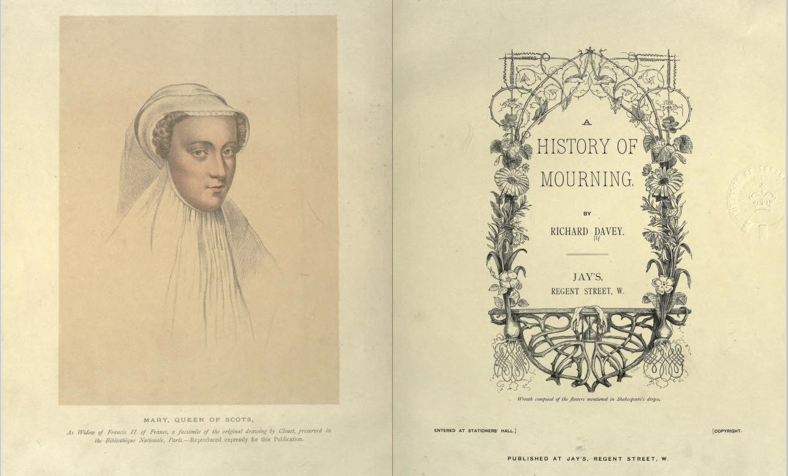
"A History of Mourning" Richard Davey, 1890

“The body of Inez was lifted from the grave, placed on a magnificent throne, and crowned Queen of Portugal. The clergy, the nobility, and the people did homage to her corpse, and kissed the bones of her hands. There sat the dead Queen, with her yellow hair hanging like a veil round her ghastly form. One fleshless hand held the sceptre, and the other the orb of royalty. At night, after the coronation ceremony, a procession was formed of all the clergy and nobility, the religious orders and confraternities which extended over many miles each person holding a flaring torch in his hand, and thus walked from Coimbra to Alcobaga, escorting the crowned corpse to that royal abbey for interment. The dead Queen lay in her rich robes upon a chariot drawn by black mules and lighted up by hundreds of lights.”

Text and images drawn from A History of Mourning, by Richard Davey, 1890, as found on the wonderful Public Domain Review website.

Click on images to larger, more detailed images. Click here to peruse the entire book. And thanks so very much to Aaron Beebe for sending this along.

Source:
http://morbidanatomy.blogspot.com/feeds/posts/default?alt=rss

"Bone," The Florence Nightingale Museum, London, July 19th thorugh August 31

Exiting upcoming exhibit alert just in from my friend Natasha McEnroe at the Florence Nightingale Museum:

BONE?
19 July – 31 August 2012
Florence Nightingale Museum
2 Lambeth Palace Road London SE1 7EW

This summer, the Florence Nightingale Museum will host an eclectic exhibition of around 60 objects that explores the rich history and substance of bone, across cultures, throughout time and between disciplines.

Mobile Studio Architects will transform part of the museum allowing visitors to explore objects including an x-ray of Sigmund Freud's head, a cat skeleton to ward off evil spirits, a skull shaped candle made for Marilyn Manson's wedding, a contemporary apothecary jar showing the effects of syphilis on bone, cutting edge medical bone imaging and Florence Nightingale’s pet tortoise ‘Jimmy’.

The exhibition will reflect bone’s intriguing and multi-faceted story in its objects as well as through live performances and demonstrations by biomedical researchers and clinicians, forensic archaeologists, bone carvers, dancers, historians, artists and other professional bone users.

Simon Gould, BONE Curator says:
“I am so excited to be bringing together some of the most extraordinary objects from more than a dozen of London’s museums and collections along with remarkable medical expertise and acclaimed contemporary artists. Bone is an astonishing material and this exhibition promises to bring this to life for the visitor.”

Natasha McEnroe, Director of the Florence Nightingale Museum says:
“In the heart of London’s Southbank in this Olympic year, we are thrilled to be hosting BONE and to offer our visitors an even more inspiring experience. Following the museum’s hugely successful refurbishment in 2010, this multi-disciplinary exhibition will further establish the Florence Nightingale Museum’s position on London’s cultural and scientific map”.

More can be found here.

Images, top to bottom:

  1. It is 19th bone china, that has been “up-cycled” by Melody Rose to add the skull image. “Reproduced by Courtesy of Melody Rose.”  
  2. 1908 x-ray of Parissien woman in a whalebone corset.

Source:
http://morbidanatomy.blogspot.com/feeds/posts/default?alt=rss