FDA warns against multiple sclerosis treatment

WASHINGTON An experimental treatment for multiple sclerosis has caused death, strokes, nerve damage and abdominal bleeding and has no proven benefits for sufferers of the disease, the Food and Drug Administration warned Thursday.

Known as liberation therapy, the treatment targets chronic cerebrospinal venous insufficiency or CCSVI a narrowing of the veins in the head and neck. It involves inserting balloons or stents into veins to widen them in an attempt to relieve the symptoms of MS.

The FDA received reports in 2011 of a patient who died from bleeding in the brain after undergoing the treatment and another who was left permanently paralyzed by a stroke. Those incidents prompted the formal warning.

Other serious adverse effects from the procedure have been reported in medical journals.

The FDA has not approved any devices for use in liberation therapy, but doctors can offer the procedure to their patients. Doctors and other experts estimate that thousands of Americans have had the treatment, but the exact number is not known, because there is no central registry of patients.

Tim Coetzee, chief researcher for the National Multiple Sclerosis Society, said the link between the condition and MS was not yet well understood, nor were the potential side effects of liberation therapy.

“We’re still determining the risks associated with this,” he said.

MS is an autoimmune disease with a wide range of symptoms that include physical disability and chronic pain. Drugs can treat the symptoms, but there is no cure.

Paolo Zamboni, an Italian researcher, first proposed the link between CCSVI and MS in 2009. Zamboni published research showing that poor blood drainage from the brain and spinal cord aggravated nerve damage caused by MS. Surgically widening veins could help blood flow, he argued, alleviating symptoms of the disease.

Zamboni’s findings seemed to promise an effective treatment for MS and generated widespread interest among patients and doctors. Subsequent research tempered the enthusiasm, and the potential of liberation therapy is still being investigated.

More here:
FDA warns against multiple sclerosis treatment

Source:
http://www.longevitymedicine.tv/feed/

UCLA Alzheimer’s and Dementia Care Program Gets $3.2m HHS Award

Newswise U.S. Department of Health and Human Services Secretary Kathleen Sebelius announced today that UCLA’s new Alzheimer’s and Dementia Care program has been awarded $3,208,540 as part of the agency’s Health Care Innovation awards program.

The awards, made by possible through the Patient Protection and Affordable Care Act, support innovative projects nationwide aimed at saving money, delivering high-quality medical care and enhancing the health care workforce. The 26 awardees announced today are expected to help reduce health care spending costs by $254 million over the next three years.

“We can’t wait to support innovative projects that will save money and make our health care system stronger,” Sebelius said. “It’s yet another way we are supporting local communities now in their efforts to provide better care and lower cost.”

The new projects include collaborations among leading hospitals, doctors, nurses, pharmacists, technology innovators, community-based organizations, patient advocacy groups and other organizations located in urban and rural areas. The Health and Human Services awards initiative allows applicants to come up with their best ideas to test how the quality and affordability of health care can be improved quickly and efficiently. The awarded projects will begin work this year to address health care issues in their local communities.

UCLA’s Alzheimer’s and Dementia Care program, which launched in March, provides comprehensive care, as well as resources and support, to patients and their caregivers.

“UCLA already provides outstanding geriatrics, neurology, psychiatry and primary care clinical services,” said Dr. David Reuben, chief of UCLA’s geriatrics division and leader of the program. “With the launch of this new program, we now have a comprehensive, coordinated dementia care program that spans across UCLA clinical centers and reaches into the community to meet the needs of these patients and their families. We are honored to receive this award, which will help us further our mission of caring for this ever-growing population.”

The Health Care Innovation award will allow UCLA to expand the new program to provide efficient patient- and family-centered care for approximately 1,000 Medicare and Medicaid beneficiaries with Alzheimer’s disease or other forms of dementia in Los Angeles County. By training and deploying professional and non-professional workers and unpaid volunteers, expanding a dementia registry, conducting patient-needs assessments, and creating individualized dementia care plans, the program will reduce and shorten hospital stays, reduce emergency room visits and improve patient health, caregiver health and quality of care, with an estimated savings of approximately $6.9 million.

Over the three-year award period, the UCLA Alzheimer’s and Dementia Care program will train an estimated 2,500 workers. These workers will include nurse practitioners, who will be trained as dementia care managers; they, in turn, will help train primary care providers and patient caregivers in dementia care.

The awardees were chosen for their innovative solutions to the health care challenges facing their communities and for their focus on creating a well-trained health care workforce equipped to meet the need for new jobs in the 21st-century health system. The Bureau of Labor Statistics projects that the health care and social assistance sector will gain the most jobs between now and 2020.

The 26 Health Care Innovation awards announced today total $122.6 million. The Center for Medicare and Medicaid Innovation within the Centers for Medicare and Medicaid Services at HHS administers the awards through cooperative agreements.

See original here:
UCLA Alzheimer's and Dementia Care Program Gets $3.2m HHS Award

Source:
http://www.longevitymedicine.tv/feed/

Autism-friendly ‘Guys and Dolls’ at Saratoga Civic Theatre

Live theater is something many people find enjoyable and stimulating, but for those with sensory defects it can be uncomfortable and even painful.

Now South Bay Musical Theatre is offering an autism-friendly performance during its upcoming run of Guys and Dolls.

The performance takes place on May 31 at 7:30 p.m. and marks the first effort of a Bay Area theater company to offer an autism-friendly show.

In October 2011, Disney Theatrical Productions worked with the nonprofit Theatre Development Fund to stage an autism-friendly performance of The Lion King on Broadway in New York. It was so successful it is doing a second staging of the show in September; at the end of April it did a performance of Mary Poppins.

The SBMT production is at the urging of Anita Hsiung Carey, a vocal director and pianist with the theater company.

Carey’s 8-year-old son has severe autism, but enjoys attending rehearsals with his mother.

Knowing how much he enjoys the rehearsals made Carey suggest the company try doing the special performance.

During the May 31 performance, house lights will be brighter, there will be no strobe lights, the sound will be lowered and audience members will be able to walk around the theater and talk during the show. Extra staff will be on hand to help.

Tickets for the special performance are $20 for adults and $10 for children. SBMT is donating proceeds from that show to Wings Learning Center, which

Regular performances of Guys and Dolls run May 19 to June 9 at Saratoga Civic Theatre, 13777 Fruitvale Ave., Saratoga. For information and tickets to any of the performances visit http://www.southbaymt.com or call 408.266.4724.

Read the original here:
Autism-friendly 'Guys and Dolls' at Saratoga Civic Theatre

Source:
http://www.longevitymedicine.tv/feed/

Local students with autism write book

COLUMBUS, GA –

Recent studies show 1 in 88 children are diagnosed with autism in the United States.

A group of Columbus students are not letting their diagnosis hold them down, andthey can now say they are authors after penning the pages of a new book.

The short stories and pictures of animals inA is for Autismwereall written and illustrated by students with autism, like 16-year-old Keveran McDonald. Keveran’s father, Mark, says it is overwhelming to see the pages A is for Autism.

“I’m very proud of his accomplishments. Sometimes you don’t think things like this would be possible, but they surprise you. Just makes me really proud,” said McDonald.

Rebecca Gristina, the President of the Board of Directors at Bridges Learning Center in Columbus, a school that focuses on helping autistic children, says this three-year project allowed a group of their students to channel their emotions.

“A lot of the kids struggle with building relationships and friendships with peers. Traditionally developing peers, and these stories are mostly about friendship,” said Gristina.

All of the proceeds from book sales will go back to the school where 75% of the students have some kind of financial aid. That money will go to close that gap as well as help with therapy for the students.

“We involve our students in hypo-therapy which is horseback riding and water therapy. We also have a computer program called brain jog which focuses the kids on their eye movement in order to build that eye contact,” said Gristina

McDonald says because of this school, his son has a chance to thrive.

Here is the original post:
Local students with autism write book

Source:
http://www.longevitymedicine.tv/feed/

Utah autism treatment pilot struggles for funding

Health Legislator is confident of funding, but expected donations from UHC, Zions are elusive.

Despite assurances during the Legislative session that major insurance companies and a bank would donate $1 million toward a new autism treatment pilot, the state has not yet received any money.

That could halve one part of the program, set to begin this summer, at a time when a study of a small area in Utah indicated the state could have the highest autism rate in the nation.

“As of right now there is no money,” said Marc Babitz, director of the Division of Family Health and Preparedness at the Utah Department of Health. “I am not aware of one private donation.”

But Rep. Ronda Menlove, R-Garland, who sponsored the bill to create the pilot, says there is “no question” that money is on its way.

“Weve been working with the entities this past week working out the details,” she said.

Expected donor Zions Bank did not immediately comment. Intermountain Healthcare says it plans to provide financial support although the details are still being finalized.

The two-year pilot program is expected to pay for therapy for about 350 children between the ages of 2 and 6, through a combination of Medicaid, state and private dollars.

Three groups of children will be served, including up to 50 covered by the Public Employees Benefit and Insurance Program; at least 200 kids covered by Medicaid, supported by $4.5 million in Medicaid dollars; and up to 100 from the autism fund, paid in part with private dollars. Those children may be on private insurance or be uninsured.

Babitz said he remained hopeful the private money would still materialize; $1 million in state dollars will become available in July.

Read the original here:
Utah autism treatment pilot struggles for funding

Source:
http://www.longevitymedicine.tv/feed/

Doctor-Patient Talk May Help Blacks With Hypertension

(HealthDay News) -- Black patients with high blood pressure often seem to struggle to communicate with their doctors, potentially leading to worse disease outcomes, a North Carolina study suggests.

"It seems that in general, blacks talk less overall to their physicians than white patients," study author Dr. Crystal Wiley Cene, an assistant professor at the University of North Carolina School of Medicine in Chapel Hill, said in a university news release. "As a result, communication about specific topics occurs less often."

Cene noted that there may be several reasons for the poor communication. Black patients might not trust their physicians or somehow feel disconnected from them. Physicians, perhaps reacting to their quiet patients, may feel less inclined to talk to them.

In the study, researchers analyzed data from 226 high blood pressure patients and 39 physicians at 15 primary-care practices in Baltimore. Specifically, they listened to audio recordings of patients' visits to their doctors. The study authors noted the length of the visits, the number of medically focused statements made and the overall banter between doctors and patients.  Read more…

Source:
http://anti-aging-for-today.blogspot.com/feeds/posts/default?alt=rss

Doctor-Patient Talk May Help Blacks With Hypertension

(HealthDay News) -- Black patients with high blood pressure often seem to struggle to communicate with their doctors, potentially leading to worse disease outcomes, a North Carolina study suggests.

"It seems that in general, blacks talk less overall to their physicians than white patients," study author Dr. Crystal Wiley Cene, an assistant professor at the University of North Carolina School of Medicine in Chapel Hill, said in a university news release. "As a result, communication about specific topics occurs less often."

Cene noted that there may be several reasons for the poor communication. Black patients might not trust their physicians or somehow feel disconnected from them. Physicians, perhaps reacting to their quiet patients, may feel less inclined to talk to them.

In the study, researchers analyzed data from 226 high blood pressure patients and 39 physicians at 15 primary-care practices in Baltimore. Specifically, they listened to audio recordings of patients' visits to their doctors. The study authors noted the length of the visits, the number of medically focused statements made and the overall banter between doctors and patients.  Read more…

Source:
http://anti-aging-for-today.blogspot.com/feeds/posts/default?alt=rss

Definiens Expands Functionality of Its Leading Solution for Quantitative Digital Pathology with Gene Probe Analysis

Definiens Tissue Studio Now Supports the Detection of Spot-like Signals from In Situ Hybridization Assays 

Definiens-300x73Munich, Germany, May 10, 2012 — Definiens®, the leading provider of image analysis and data mining solutions for quantitative digital pathology, today announced that Definiens Tissue Studio® 3.5 now supports the automated analysis of in situ hybridization assays, including SISH, CISH, FISH and dual-ISH. The unique combination of flexibility and ease-of-use that characterizes Definiens Tissue Studio® significantly facilitates the detection of spot-like signals originating from gene probes (or any other stain with spot-like appearance) on a cell-by-cell basis. Definiens Tissue Studio® supports the detection of gene probe signals in both brightfield and immunofluorescene imaging. 

The novel functionality complements the robust detection of regions of interest and the comprehensive quantification of cellular parameters and biomarker expression profiles. Definiens Tissue Studio® can be used to analyze images from any solid tissue with any stain, acquired by any scanner or microscope, and in any common file format. With these technological advances, pathologists and researchers can adapt preconfigured solutions to their specific assays with just a few clicks in no more than 30 minutes. 

Straightforward workflow, intuitive configuration, as well as flexibility and robustness, have established Definiens Tissue Studio as the leading image analysis solution for quantitative digital pathology. Definiens Tissue Studio opens new dimensions in quantification by significantly reducing study times in translational research, preclinical safety, tissue-based biomarker development and clinical trials around the world. The new version includes a range of improvements that make it easier to use and more powerful than ever. 

“Definiens has developed significant experience in the analysis of in situ hybridization assays in recent years,” said Thomas Heydler, CEO of Definiens. “In Definiens Tissue Studio® 3.5, we now make this available to our customers in a very easy-to-use workflow that supports virtually any type of 2D ISH assay. This further strengthens Definiens Tissue Studio’s position as the most comprehensive software package for quantitative digital pathology.” 

With just a single configuration, Definiens Tissue Studio® automates the detection of regions of interest and has the capacity to distinguish individual cells and subcellular structures even in heterogeneous tissues samples. The software provides quantitative readouts on morphological characteristics and molecular expression profiles of nuclear, cytoplasmic and membrane biomarkers. In addition, Definiens Tissue Studio® supports robust detection of vessels for automated angiogenesis assays as well as extensive multiplexing for the quantification of numerous parameters from the same tissue sample in immunofluorescence assays. 

Visit tissuestudio.definiens.com to learn more or watch the recordings of an introductory webinar series on Definiens’ YouTube channel


Source:
http://feeds.feedburner.com/DigitalPathologyBlog

Sermo Reveals Results from its Real-Time Medicine™ Mobile App for Physicians

Another clear example of the power of 2.0 technologies, mobile computing, hand-held communications, ability to harness collective intelligence rapidly and accurately for best decision making.  When will we in Pathology be included on the list of providers and studies included in this powerful collaboration on a broad scale?

Data Shows App Speeds Treatment and Saves Lives in Urgent Care Situations

Cambridge, MA - May 9, 2012 - Sermo, Inc., the largest online community in the United States exclusive to physicians, today announced results from the mobile app it launched ten months ago. Sermo Mobile, which allows physicians to access the country's greatest concentration of medical knowledge in real-time, builds on Sermo's current web platform, where 125,000 U.S. physicians in 68 specialties discuss and consult with each other to provide the highest quality care to their patients.

Perhaps the most valuable feature of the app, iConsult, allows physicians to take or add a photograph at a patient’s bedside, choose a suitable question from the available list (e.g. How would you treat this?) and then immediately send it to relevant specialists on Sermo. Members can view and respond instantly, offering unparalleled access to shared medical expertise.

The app's many successes to date include:

  • Physicians across more than 30 specialties have used iConsult to crowdsource opinions on dermatological conditions, EKG readings, findings from MRIs, X-rays and other imaging tests, and lab results.

  • 77% of iConsults are answered within an hour with response times often as quick as 1 minute.

  • iConsults average 12 responses, often by physicians across multiple specialties, demonstrating the complexity and multidisciplinary nature of many medical conditions.

  • iConsults are usually resolved in less than 2 hours and as quickly as 2 minutes.

  • The youngest patient helped by an iConsult was 5 weeks old.

  • Sermo physicians use the mobile app in addition to and not instead of the website, illustrating the added benefit of online collaboration tools at the point of care.

  • After only 10 months, Sermo Mobile accounts for 45% of total traffic on the Sermo platform.

"Every minute counts in an emergency medical situation, and Sermo Mobile immediately reaches physicians who are in the best position to help," said Jon Michaeli, VP of Marketing and Membership for Sermo. "The variety of cases and speed with which they are being resolved is remarkable, and a true testament to the power of crowdsourcing in a vibrant, professional community like Sermo. We've observed hundreds of iConsults where Sermo members have ensured patients immediately receive the proper care, speeding their recovery, and in some cases, saving their lives."

One cardiologist on Sermo commented, "A few weeks ago I used iConsult to post a brief cardiology case of a young patient with congestive heart failure. His echocardiogram showed a rare condition called non impaction of the left ventricle. Several colleagues immediately posted responses. iConsult is a very valuable tool due to the large number of accessible Sermo members, which ensures instant feedback."

Sermo Mobile is available for Apple iOS devices, including iPhone, iPod Touch and iPad. Physicians can download Sermo Mobile for free at http://www.sermo.com/mobile.


Source:
http://feeds.feedburner.com/DigitalPathologyBlog

CAP ’12 Brings You Special Transformation Programming

Register Now

Home_page_header

Join us for breakfast and an early morning of free programming (for residents and daily, global, or networking pass registrants) specifically designed to provide you with information you can use now and in the future to continue your transformation!

Tuesday, September 11

TP200  Breakfast Workshop – Digital Pathology: Making a Difference in Your Practice 

 
6:30–7:45 am
CME/CE Not Applicable

This workshop focuses on digital pathology, highlighting the work of the CAP Transformation Program Office Module 4 Emerging Technology team. This session will describe current and emerging digital pathology applications. It will provide insights from current adopters and their reasons for adoption, which vary by practice setting. Additionally, workshop leaders will describe CAP resources for digital pathology practice adoption.

Presenters
Eric F. Glassy MD, FCAP
Eric E. Walk MD, FCAP

Home_page_header


Source:
http://feeds.feedburner.com/DigitalPathologyBlog

Journal of Pathology Looking for Manuscripts on Next Generation Sequencing

 
The Journal of Pathology
 
Call for papers: Next generation sequencing studies with relevance to the understanding of disease mechanisms
 
The Journal of Pathology

IMPACT FACTOR:
7.274

 The coupling of pathology with massively parallel sequencing studies provides a unique opportunity to further our understanding of the pathophysiological and pathogenetic mechanisms of human disease, a major interest of The Journal of Pathology.

The Journal is now soliciting submissions of primary research based on massively parallel sequencing taking advantage of novel insights into the genetic basis of human diseases, including but not restricted to, the identification of new genotype-phenotype associations and novel driver mutations, characterisation of patterns of genetic instability, and on the topic of intra-tumour genetic heterogeneity.

We have recently published a number of such studies:


A whole-genome massively parallel sequencing analysis of BRCA1 mutant oestrogen receptor-negative and -positive breast cancers Natrajan R, Mackay A, Lambros MB, et al., Volume 227, Issue 1, pages 29-41, May 2012

Integrated genome and transcriptome sequencing identifies a novel form of hybrid and aggressive prostate cancer Wu C, Wyatt AW, Lapuk AV, et al., Volume 227, Issue 1, pages 53-61, May 2012

Using next-generation sequencing for the diagnosis of rare disorders: a family with retinitis pigmentosa and skeletal abnormalities Schrader KA, Heravi-Moussavi A, Waters PJ, et al., Volume 225, Issue 1, pages 12-18, September 2011

Why publish your next generation sequencing study in The Journal of Pathology?

  • Impact Factor: 7.274
  • Your manuscript will be fast-tracked and expertly peer-reviewed
  • We aim to give a final decision within 14 days
  • We aim for an initial online publication within 7 days of acceptance
  • Your article will be made free to view online for 6 months, facilitating dissemination within the community.

Submission Process

Submissions should report studies that use massively parallel sequencing technology to address important questions in the pathobiology of disease. Manuscripts should offer new approaches to considering such data, clinically relevant findings and/or functional insights with validation. Timely reviews and perspectives would also be considered.

In your covering letter, please mention that the submission is a response to the “massively parallel sequencing studies call”. Please note that the massively parallel sequencing data included in the manuscript must be made publicly available by the time of publication, and full details of the analysis methods should be provided either in the main manuscript or as supplementary methods.


Submit your research for publication today at
mc.manuscriptcentral.com/jpath

Find out more in the author guidelines and use the manuscript submission checklist.

http://www.thejournalofpathology.com


Source:
http://feeds.feedburner.com/DigitalPathologyBlog

DIGITAL PATHOLOGY ASSOCIATION LAUNCHES WEBINAR SERIES TITLED “BARRIERS TO THE ADOPTION OF DIGITAL PATHOLOGY”

DPAsmallWhile the support and understanding of digital pathology is growing, there are still some cultural, financial, technical, and regulation obstacles that are limiting the adoption of digital pathology. All of these obstacles will be addressed in the Digital Pathology Association’s (DPA) upcoming webinar series entitled “Barriers to the Adoption of Digital Pathology”.

The topics addressed in this series of four webinars will act as a bridge to the workshops and discussions that will take place at the DPA’s annual conference, Pathology Visions. Pathology Visions will take place October 28-31, 2012 in Baltimore, Maryland. Aside from preparing for Pathology Visions, the DPA also wants to continue educating and generating awareness for the field of digital pathology. That’s why they’ve partnered with the Association for Pathology Informatics (API) and CAP Today to host the webinar series.

The first webinar in the series will take place this Wednesday, May 9, 2012 from 11 AM to 12 Noon EDT. The main focus of this webinar is “Cultural and Strategic Barriers to the Adoption of Digital Pathology”. President of the DPA, Dirk Soenksen of Aperio, will be a contributing speaker during the webinar, as well as Dr. Sylvia Asa and Dr. Keith Kaplan.

The remaining three webinars will take place at the same time, 11 AM to 12 Noon EST, on the following dates and focus on the following topics:

July 25 | Financial Barriers to the Adoption of Digital Pathology

September 19 | Technical Barriers to the Adoption of Digital Pathology

November 14 | Regulatory Barriers to the Adoption of Digital Pathology

Participation in each of the webinars is free, but advance registration is required. To register now, please click here. If you are unable to tune in live to the webinars they will be archived on the DPA website. However, these archives will only be available to DPA members. To learn more about what benefits a DPA membership offers or to join today please click here.

About the DPA

The Digital Pathology Association, located in Indianapolis, IN, was founded in 2009. DPAsmall Its mission is to facilitate education and awareness of digital pathology applications in healthcare and life sciences. Members will be encouraged to share best practices and promote the use of technology among colleagues in order to demonstrate efficiencies, awareness, and its ultimate benefits to patient care.


For more information about the webinar series and how to register for the Digital Pathology Association’s Pathology Visions Conference visit: http://digitalpathologyassociation.org/pathology-visions-conference.


Source:
http://feeds.feedburner.com/DigitalPathologyBlog

Ventana Receives FDA Clearance for p53 (DO-7) Image Analysis and Digital Read Applications

Ventana announces another FDA cleared image analysis application for use with their p53 clone, scanner and software to determine p53 expression levels in breast cancer. VentanaRoche_0

Ventana Medical Systems, Inc. (Ventana), a member of the Roche Group, received 510(k)clearance from the U.S. Food and Drug Administration (FDA) for the VENTANA Companion Algorithm p53 (DO-7) image analysis application using the VENTANA iScan Coreo Au scanner and VIRTUOSO software.  Currently, Ventana is the only company offering an FDA-cleared p53 image analysis algorithm for determining p53 expression levels in breast cancer patients.  Ventana is offering the p53 (DO-7) image analysis algorithm in addition to the company’s FDA-cleared algorithms for HER2 (4B5), PR (1E2), and Ki-67 (30-9).

“As a market leader and long-term innovator in anatomic pathology, Ventana is committed to improving the lives of cancer patients,” says Mara G. Aspinall, President, Ventana Medical Systems, Inc.  “We provide the most clinically-validated, FDA-cleared digital pathology algorithms in the market today.  When you combine this with our broad portfolio of instruments and assays, and our expertise in laboratory knowledge management and workflow, it is clear that Ventana is positioned to deliver the most comprehensive digital pathology solutions available globally.”

The p53 (DO-7) image analysis algorithm assists pathologists in the detection and semi-quantitative measurement of p53 (DO-7) protein in formalin-fixed, paraffin-embedded normal and neoplastic tissue.  When the p53 (DO-7) algorithm is used in conjunction with the CONFIRM anti-p53 (DO-7) Primary Antibody, it may be used as an aid in the assessment of p53 expression in breast cancer patients (but is not the sole basis for treatment).  The FDA clearance includes all of the components of the VENTANA laboratory workflow solution when used as a system, including the company’s BenchMark XT slide stainer, p53 clone DO-7, iView and ultraView DAB detection systems, VENTANA iScan Coreo Au slide scanner, and Virtuoso image management software.

Steve Burnell, PhD, VP, Ventana Digital Pathology and Workflow states, “As is the case for Ki-67, Ventana is the only company offering a 510(k)-cleared algorithm for p53 today. Our increasing Companion Algorithm portfolio of FDA-cleared products is evidence both of our unique capabilities in this field as well as our commitment to empower our customers to deliver the highest standards of patient care through the most robust digital pathology solutions available.”

In conjunction with this clearance, Ventana also received FDA clearance for the digital read application that allows pathologists to interpret p53 (DO-7) stained slides as images on a computer monitor using the iScan Coreo Au scanner with VIRTUOSO software.

About Ventana Medical Systems, Inc.
Ventana Medical Systems, Inc. (“VMSI”) (SIX: RO, ROG; OTCQX: RHHBY), a member of the Roche Group, innovates and manufactures instruments and reagents that automate tissue processing and slide staining for cancer diagnostics. VENTANA solutions are used in clinical histology and drug development research laboratories worldwide. The company’s intuitive, integrated staining, workflow management platforms, and digital pathology solutions optimize laboratory efficiencies to reduce errors, support diagnosis and inform treatment decisions for anatomic pathology professionals. Together with Roche, VMSI is driving Personalized Healthcare through accelerated drug discovery and the development of “companion diagnostics” to identify the patients most likely to respond favorably to specific therapies.

Visit http://www.ventana.com to learn more.

Source: Ventana


Source:
http://feeds.feedburner.com/DigitalPathologyBlog

“Cancer Flashlight” May Reduce Need for Biopsies

New technology could reduce or even eliminate the need for clinical pathology laboratories to utilize tissue biopsies in the diagnosis of certain cancers

“Cancer flashlight” is the nickname some have given to a system that uses novel spectroscopic techniques to detect pre-cancerous cells in the colon. Developed by bioengineers at Duke University, the device may offer an alternative to current biopsy methods for detecting cancer and pre-cancer by anatomic pathologists.

Read more: Duke University Researchers Demonstrate that Non-invasive Optical Biopsy Detects Cancer | Dark Daily http://www.darkdaily.com/duke-university-researchers-demonstrate-that-non-invasive-optical-biopsy-detects-cancer-50712#ixzz1uBpDybhf


Duke1

Full story.


Source:
http://feeds.feedburner.com/DigitalPathologyBlog

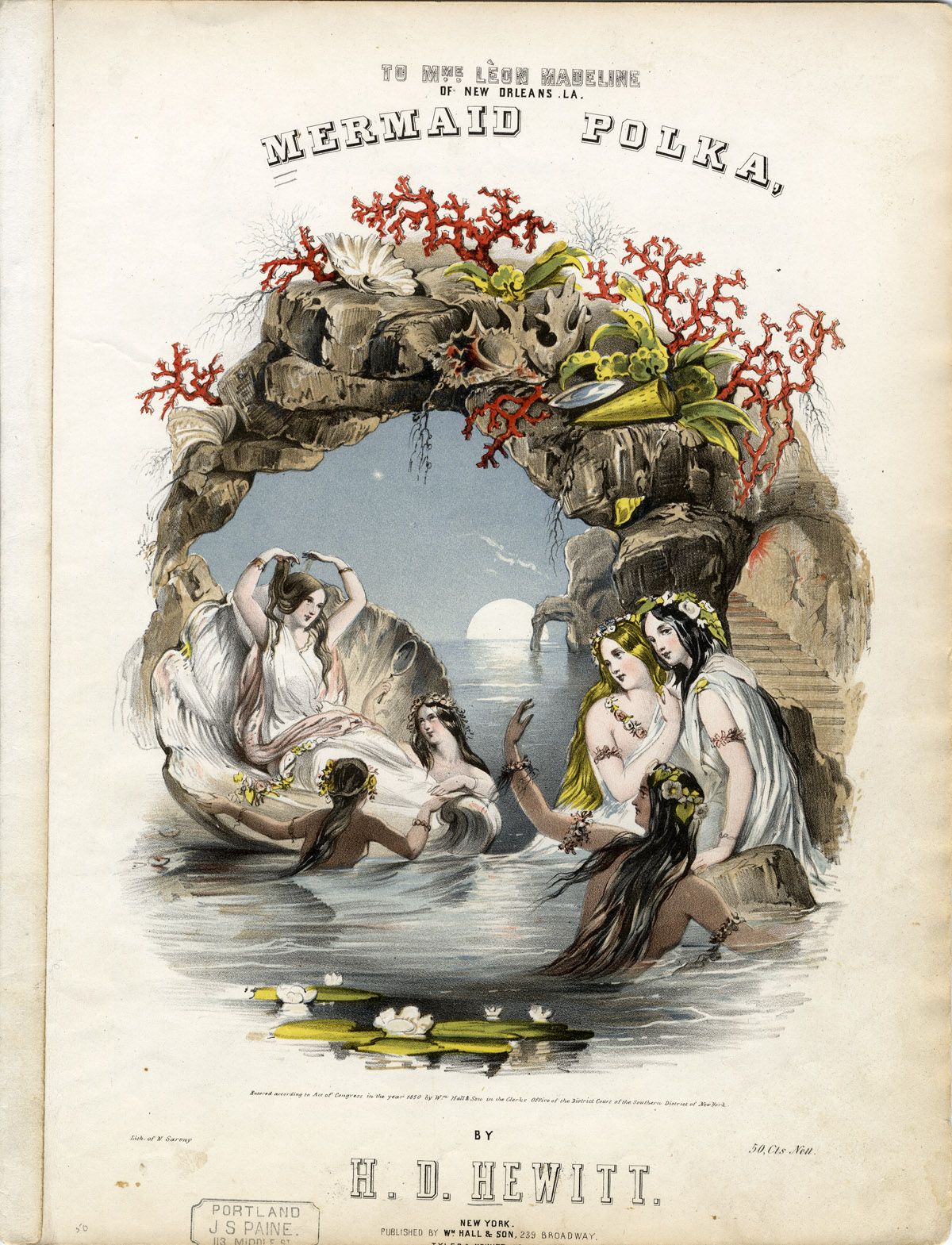
Mermaid Polka, Sheet Music,1850

I love these delectable creatures of the nautical sublime, especially their seaweed bracelets and headdresses. As described on the Beauty, Virtue and Vice online exhibit of the American Antiquarian Society website (from which the images is also sourced):

Mermaid Polka. Lith. of Napoleon Sarony, 1850. [H. D. Hewitt]

In the nineteenth century, informal musical entertainments were a very common American pastime, and the piano was a common presence in American parlors. The piano’s rise in popularity coincided with advances in printing technology, and a booming sheet music industry was one result of these simultaneous developments.

American consumers purchased particular pieces of music for various reasons. Certainly, popular songs of the American musical stage became bestselling sheet music, but it is clear that sheet music publishers recognized that American consumers would buy even unfamiliar music if the cover art was appealing enough. Pictorial sheet music covers did double duty within the household: displayed above a keyboard even when a piano wasn’t in use, they functioned as decorative art.

Nineteenth-century pictorial sheet music covers capitalized on an endless array of already popular subjects, ideas, and themes in order to capture buyers’ attention. Over the course of the nineteenth century, sheet music images of beautiful women remained the most consistently popular type of illustration. In Mermaid Polka, these nude and loosely robed young women are graceful, demure, and carefree. They embody various ideas about women’s nature, with a titillating erotic accent. This lavish visual fantasy of beautiful young sea nymphs frolicking in the moonlight was meant to appeal to a wide variety of potential buyers. While women and men alike might have enjoyed this image for its pictorial beauty and expression of innocent romantic pleasure, men might also have associated it with antebellum dancing-girl performances (which were enjoyed by overwhelmingly male audiences) and European paintings like Botticelli’s celebrated fifteenth-century work, The Birth of Venus.

More here. Click on image to see much finer, larger version.

Source:
http://morbidanatomy.blogspot.com/feeds/posts/default?alt=rss

"Rogue Taxidermy Biennial Taxidermy Show;" La Luz de Jesus Gallery, Los Angeles, Through May 27th

I am very excited to announce a wonderful looking new exhibition curated by friend-of-Morbid-Anatomy and Minnesota Rogue Taxidermist Robert Marbury. With the ever increasing popularity of taxidermy in the fine arts world, this "Rogue Taxidermy Biennial Taxidermy Show"comes not a second too soon, and features the work of such creative-taxidermic luminaries as Sarina Brewer (top, "Sweet Dreams"), Adam Wallacavage, Jeanie M. (center, "Arabian Squirrel on a Flying Carpet"), Jessica Joslin, and our own Daisy Tainton (bottom, "A Patient's Despair"), teacher of Saturday's Anthropomorphic Insect Shadowbox workshop (more on that here).

If I was in Los Angeles, I would be on my way to see this right now! For those of you in the area, full info follows:

ROGUE TAXIDERMY
Our Biennial Taxidermy Show
La Luz de Jesus Gallery
May 4th – 27th, 2012

The Rogue Taxidermy 2012 Biennial, curated by Robert Marbury, features 25 of the most interesting artists working in taxidermy today. Rogue Taxidermy, a mixed-media art utilizing taxidermy materials, is more closely related to surrealism than to mainstream taxidermy. The work in this show spans genres and materials to expresses the individual artist's approach to and love of natural history and preservation.

There are some great photos from the opening here.
All members of the MINNESOTA ASSOCIATION OF ROGUE TAXIDERMISTS implicitly pledge by merit of their membership to abide by the following ethical regulations:

1. All members pledge to continually strive to make efficient use of the animals and parts of animals employed in the creation of their art. Wastefulness is strongly discouraged.

2. Animals shall be procured in a manner that does not require their termination for the explicit purpose of mounting or displaying. Collecting road-kill, accepting, purchasing animals from supply companies and from grocery stores are all considered to be acceptable, ethical means of procuring animals. Recycling and re-use are primary tenets of the association.

3. Please note that it is your responsibility to check with your local Department of Natural Resources and fish & wildlife authorities regarding your taxidermy activities. Be aware that endangered, threatened and protected species (including, but not exclusive to, raptors and songbirds) can only be mounted for museums and educational institutions providing all necessary permits. Roadkill is not excluded from these regulations. Additionally, in accordance with state and federal law, anything utilizing waterfowl, crows, or other restricted birds can only be mounted for the client who provides the animal with all attending permits.

4. If approached to create a custom mount which is generally considered to be a specialty of another M.A.R.T. member, it is strongly suggested that you recommend the services of that member to the potential customer before accepting the commission.

5. Members are greatly encouraged to participate in the care and conservation of living animals.

6. M.A.R.T. seeks to create an open dialogue about the place of animals in our culture. Protests, slander, and admonitions shall be greeted with an attempt to foster conversation. Reacting to criticism in a cruel or indignant way is considered antithetical to the M.A.R.T. mission statement.

You can find out more about this exhibiiton by clicking here. If you are interested in signing up for Daisy Tainton's class, click here for more.

Source:
http://morbidanatomy.blogspot.com/feeds/posts/default?alt=rss

Anthropomorphic Insect Shadowbox Workshop with Former AMNH Senior Insect Preparator Daisy Tainton at Observatory: Open Slots for This Saturday's Class!

Anthropomorphic Insect Shadowbox by Daisy Tainton, teacher of Saturday's workshop

I am very excited to announce a few open slots in this Saturday's long sold-out Anthropomorphic Insect Shadowbox Workshop with Former AMNH Senior Insect Preparator Daisy Tainton, part of The Morbid Anatomy Art Academy at Observatory. Full details for the class follow; send an email to morbidanatomy [at] gmail.com to be added to class list. First come, first served!

Anthropomorphic Insect Shadowbox Workshop with Former AMNH Senior Insect Preparator Daisy Tainton
With Daisy Tainton, Former Senior Insect Preparator at the American Museum of Natural History
Date:
This Saturday, May 12
Time: 1 - 4 PM
Admission: $65

***Must RSVP to morbidanatomy [at] gmail.com to be added to class list
This class is part of The Morbid Anatomy Art Academy

Rhinoceros beetles: nature's tiny giants. Adorable, with their giant heads and tiny legs, and wonderful antler-like protrusions. If you think they would be even more adorable drinking tiny beers and holding tiny fishing poles, we have the perfect class for you! In today's workshop, students will learn to make--and leave with their own!--shadowbox dioramas featuring carefully positioned beetles doing nearly anything you can imagine. An assortment of miniature furniture and foods will be made available to decorate your habitat, but students are strongly encouraged to bring any dollhouse props they would like to use. 1:12 scale is generally best.

Daisy Tainton was formerly Senior Insect Preparator at the American Museum of Natural History, and has been working with insects professionally for several years. Eventually her fascination with insects and  love of Japanese miniature food items naturally came together, resulting in cute and ridiculous museum-inspired yet utterly unrealistic dioramas. Beetles at the dentist? Beetles eating pie and knitting sweaters? Even beetles on the toilet? Why not?

You can find out more about this class here, and more about The Morbid Anatomy Art Academy by clicking here.

Source:
http://morbidanatomy.blogspot.com/feeds/posts/default?alt=rss