The Skills Room

Cristiana Montis Skills Room (5)

Cristiana Montis Skills Room

Cristiana Montis Skills Room (4)

Cristiana Montis Skills Room (2)

Cristiana Montis Skills Room (3)

Cristiana Montis Skills Room (1)

London-based photographer, Cristiana Montis created this series of photographs based off of the manikins used in the Canterbury Christ Church University skills labs.  Cristiana’s compositions create a sense of sadness and isolation around the manikins in each photograph.

She says of her experience,

The adult and young person manikins are life-size and are unsettlingly similar to the real thing in both appearance and touch.

All in all the skills labs provide an insightful and odd environment where real and pretend merge into a life-size ‘doll-house’ where the cycle of life and death is played out day after day by life-less objects.

View her entire series at cristianamontis.com


Source:
http://feeds.feedburner.com/streetanatomy/OQuC

Riemsdyk’s Gravid Uterus Tattoo

Riemsdyk Gravid Uterus Tattoo Plablo Xno

Jan van Riemsdyk Gravid Uterus 1774
Illustration via Dream Anatomy

This is one historical anatomical illustration that I have yet to see inked on someone’s body until now!  Rodrigo down in Mexico City sent me his Riemsdyk tattoo saying, “People think I’m crazy but I really like Riemsdyk`s drawings and the history behind them.”  The illustration was originally drawn by Jan van Riemsdyk, in Anatomia uteri human gravidi (The Anatomy of the Human Gravid Uterus), by anatomist William Hunter (1774).

Tattoo by Pablo Xno, Mexico City.


Source:
http://feeds.feedburner.com/streetanatomy/OQuC

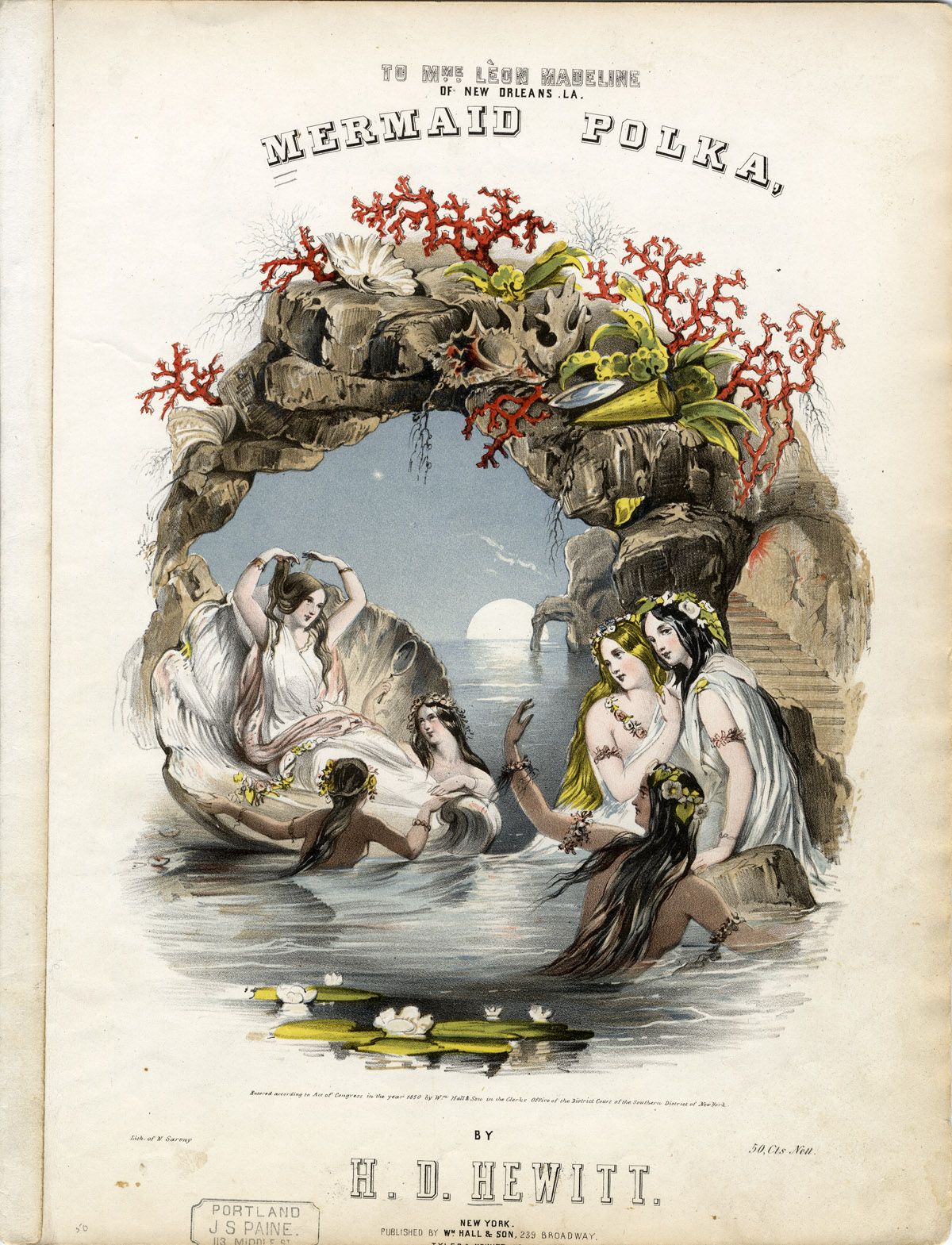
Mermaid Polka, Sheet Music,1850

I love these delectable creatures of the nautical sublime, especially their seaweed bracelets and headdresses. As described on the Beauty, Virtue and Vice online exhibit of the American Antiquarian Society website (from which the images is also sourced):

Mermaid Polka. Lith. of Napoleon Sarony, 1850. [H. D. Hewitt]

In the nineteenth century, informal musical entertainments were a very common American pastime, and the piano was a common presence in American parlors. The piano’s rise in popularity coincided with advances in printing technology, and a booming sheet music industry was one result of these simultaneous developments.

American consumers purchased particular pieces of music for various reasons. Certainly, popular songs of the American musical stage became bestselling sheet music, but it is clear that sheet music publishers recognized that American consumers would buy even unfamiliar music if the cover art was appealing enough. Pictorial sheet music covers did double duty within the household: displayed above a keyboard even when a piano wasn’t in use, they functioned as decorative art.

Nineteenth-century pictorial sheet music covers capitalized on an endless array of already popular subjects, ideas, and themes in order to capture buyers’ attention. Over the course of the nineteenth century, sheet music images of beautiful women remained the most consistently popular type of illustration. In Mermaid Polka, these nude and loosely robed young women are graceful, demure, and carefree. They embody various ideas about women’s nature, with a titillating erotic accent. This lavish visual fantasy of beautiful young sea nymphs frolicking in the moonlight was meant to appeal to a wide variety of potential buyers. While women and men alike might have enjoyed this image for its pictorial beauty and expression of innocent romantic pleasure, men might also have associated it with antebellum dancing-girl performances (which were enjoyed by overwhelmingly male audiences) and European paintings like Botticelli’s celebrated fifteenth-century work, The Birth of Venus.

More here. Click on image to see much finer, larger version.

Source:
http://morbidanatomy.blogspot.com/feeds/posts/default?alt=rss

"Rogue Taxidermy Biennial Taxidermy Show;" La Luz de Jesus Gallery, Los Angeles, Through May 27th

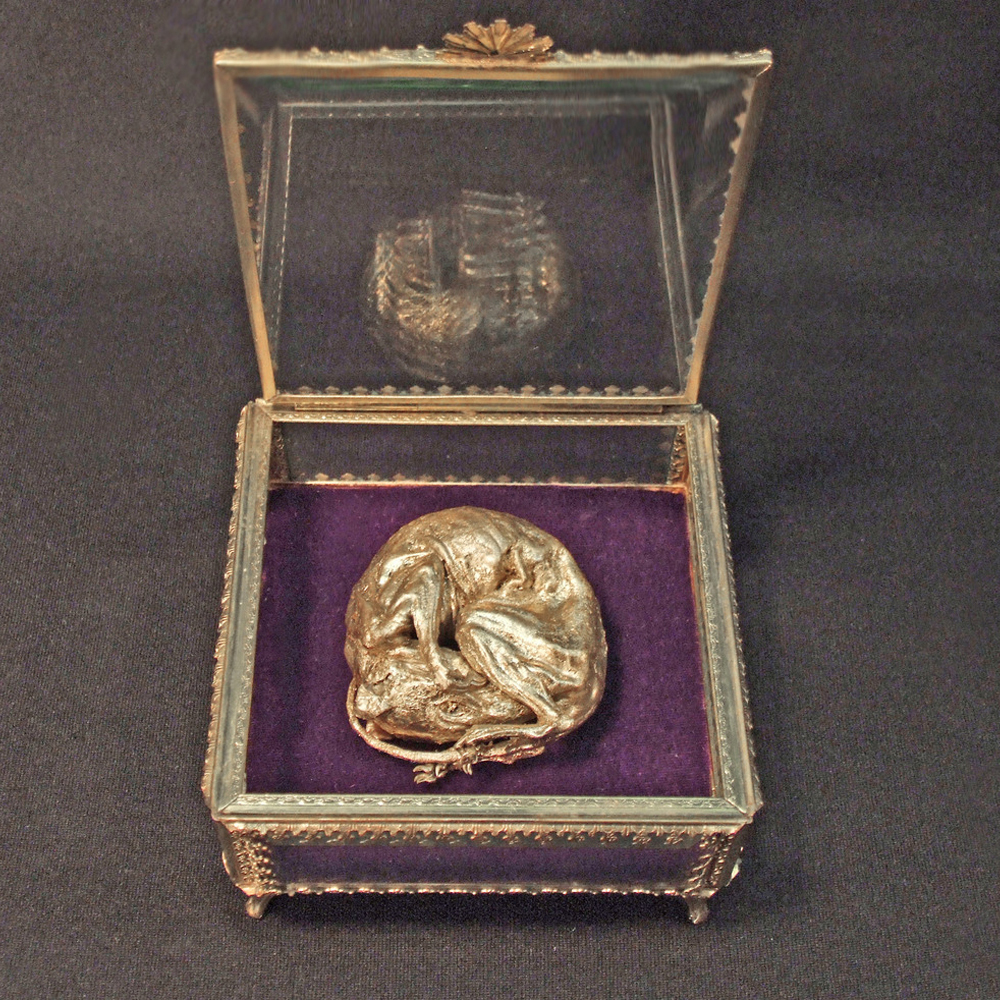
I am very excited to announce a wonderful looking new exhibition curated by friend-of-Morbid-Anatomy and Minnesota Rogue Taxidermist Robert Marbury. With the ever increasing popularity of taxidermy in the fine arts world, this "Rogue Taxidermy Biennial Taxidermy Show"comes not a second too soon, and features the work of such creative-taxidermic luminaries as Sarina Brewer (top, "Sweet Dreams"), Adam Wallacavage, Jeanie M. (center, "Arabian Squirrel on a Flying Carpet"), Jessica Joslin, and our own Daisy Tainton (bottom, "A Patient's Despair"), teacher of Saturday's Anthropomorphic Insect Shadowbox workshop (more on that here).

If I was in Los Angeles, I would be on my way to see this right now! For those of you in the area, full info follows:

ROGUE TAXIDERMY
Our Biennial Taxidermy Show
La Luz de Jesus Gallery
May 4th – 27th, 2012

The Rogue Taxidermy 2012 Biennial, curated by Robert Marbury, features 25 of the most interesting artists working in taxidermy today. Rogue Taxidermy, a mixed-media art utilizing taxidermy materials, is more closely related to surrealism than to mainstream taxidermy. The work in this show spans genres and materials to expresses the individual artist's approach to and love of natural history and preservation.

There are some great photos from the opening here.
All members of the MINNESOTA ASSOCIATION OF ROGUE TAXIDERMISTS implicitly pledge by merit of their membership to abide by the following ethical regulations:

1. All members pledge to continually strive to make efficient use of the animals and parts of animals employed in the creation of their art. Wastefulness is strongly discouraged.

2. Animals shall be procured in a manner that does not require their termination for the explicit purpose of mounting or displaying. Collecting road-kill, accepting, purchasing animals from supply companies and from grocery stores are all considered to be acceptable, ethical means of procuring animals. Recycling and re-use are primary tenets of the association.

3. Please note that it is your responsibility to check with your local Department of Natural Resources and fish & wildlife authorities regarding your taxidermy activities. Be aware that endangered, threatened and protected species (including, but not exclusive to, raptors and songbirds) can only be mounted for museums and educational institutions providing all necessary permits. Roadkill is not excluded from these regulations. Additionally, in accordance with state and federal law, anything utilizing waterfowl, crows, or other restricted birds can only be mounted for the client who provides the animal with all attending permits.

4. If approached to create a custom mount which is generally considered to be a specialty of another M.A.R.T. member, it is strongly suggested that you recommend the services of that member to the potential customer before accepting the commission.

5. Members are greatly encouraged to participate in the care and conservation of living animals.

6. M.A.R.T. seeks to create an open dialogue about the place of animals in our culture. Protests, slander, and admonitions shall be greeted with an attempt to foster conversation. Reacting to criticism in a cruel or indignant way is considered antithetical to the M.A.R.T. mission statement.

You can find out more about this exhibiiton by clicking here. If you are interested in signing up for Daisy Tainton's class, click here for more.

Source:
http://morbidanatomy.blogspot.com/feeds/posts/default?alt=rss

Anthropomorphic Insect Shadowbox Workshop with Former AMNH Senior Insect Preparator Daisy Tainton at Observatory: Open Slots for This Saturday’s Class!

Anthropomorphic Insect Shadowbox by Daisy Tainton, teacher of Saturday's workshop

I am very excited to announce a few open slots in this Saturday's long sold-out Anthropomorphic Insect Shadowbox Workshop with Former AMNH Senior Insect Preparator Daisy Tainton, part of The Morbid Anatomy Art Academy at Observatory. Full details for the class follow; send an email to morbidanatomy [at] gmail.com to be added to class list. First come, first served!

Anthropomorphic Insect Shadowbox Workshop with Former AMNH Senior Insect Preparator Daisy Tainton
With Daisy Tainton, Former Senior Insect Preparator at the American Museum of Natural History
Date:
This Saturday, May 12
Time: 1 - 4 PM
Admission: $65

***Must RSVP to morbidanatomy [at] gmail.com to be added to class list
This class is part of The Morbid Anatomy Art Academy

Rhinoceros beetles: nature's tiny giants. Adorable, with their giant heads and tiny legs, and wonderful antler-like protrusions. If you think they would be even more adorable drinking tiny beers and holding tiny fishing poles, we have the perfect class for you! In today's workshop, students will learn to make--and leave with their own!--shadowbox dioramas featuring carefully positioned beetles doing nearly anything you can imagine. An assortment of miniature furniture and foods will be made available to decorate your habitat, but students are strongly encouraged to bring any dollhouse props they would like to use. 1:12 scale is generally best.

Daisy Tainton was formerly Senior Insect Preparator at the American Museum of Natural History, and has been working with insects professionally for several years. Eventually her fascination with insects and  love of Japanese miniature food items naturally came together, resulting in cute and ridiculous museum-inspired yet utterly unrealistic dioramas. Beetles at the dentist? Beetles eating pie and knitting sweaters? Even beetles on the toilet? Why not?

You can find out more about this class here, and more about The Morbid Anatomy Art Academy by clicking here.

Source:
http://morbidanatomy.blogspot.com/feeds/posts/default?alt=rss

Glass Sea Creatures! Blood Transfusions! Lord Whimsy’s Mysterious River Journeys! This Week and Next at Observatory

This week and next at Observatory! Hope to see you there.

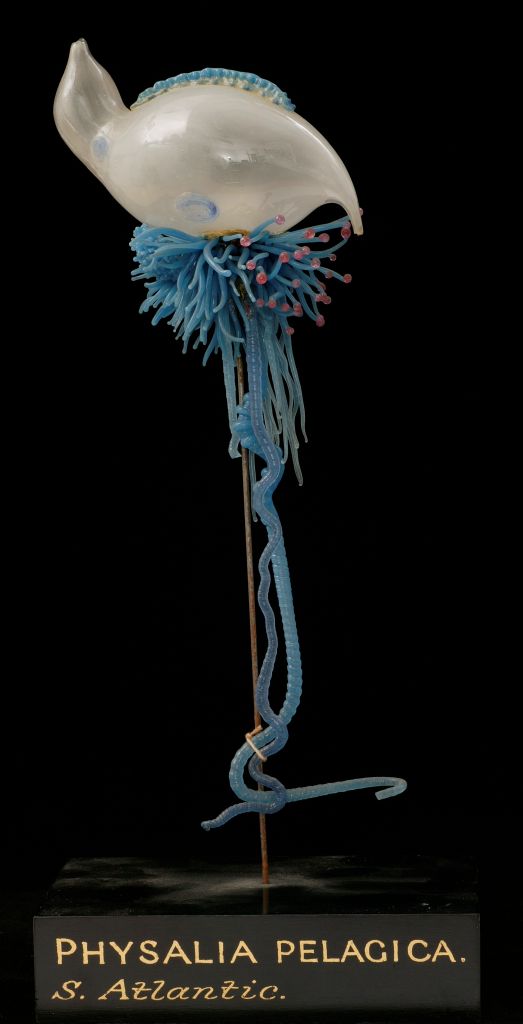
Blaschka: Glass creatures of the Ocean – An Illustrated History of The Natural History Museum (NHM), London Collection
 Illustrated lecture with Miranda Lowe, The Natural History Museum (NHM), London Curator
Date: Thursday, May 10
Time: 8:00
Admission: $8

Presented by Morbid Anatomy

Although more famously know for the making the glass flowers exhibited at the Harvard Museum of Natural History, the father and son partnership of Leopold (1822-1895) and Rudolf (1857-1939) Blaschka also made numerous marine invertebrate glass models. Some of the first models they made were sea anemones in the early 1860’s. The Natural History Museum (NHM), London purchased their first set around 1865 and holds over 185 Blaschka glass models consisting of anemones, sea slugs, jellyfish, octopus, squid, protozoans and corals representing their entire model making career. The models were made in a variety ways with many formed over wire skeletons (known as armatures) with the glass fused together or glued. Profiled in various scientific sales catalogues such as Henry A. Ward’s they were to sold museums, universities and private collectors by the Blaschkas themselves and various agents who worked on their behalf worldwide. In the past these models were of scientific importance in teaching but as trends change their significance as works of art are also being highlighted. Each glass model is a unique blend of art, science and craftsmanship looking more life-like than real specimens whose natural colours may fade when stored in jars of preservation fluid over time. This highly illustrated lecture will give a fascinating insight to this collection housed at one of the major natural history museums in the world.

Miranda Loweis the Collections Manager of the Marine Invertebrates Division, Zoology Department, The Natural History Museum (NHM), London. Within Zoology Miranda specifically manages the Crustacea collections as well as the team of curators responsible for the Invertebrate collections. Darwin barnacles and the Blaschka marine invertebrate glass models are amongst some of the historical collections that are her interests and under her care. In 2006, she was part of the organising committee and invited speaker at the 1st international Blaschka congress held in Dublin. Miranda collaborated with the National Glass Centre, Sunderland, UK in 2008 to exhibit some of the Museum’s Blaschka collection alongside contemporary Blaschka inspired art. She also has an interest in photography, natural history - past and present serving on a number of committees including the Society for the History of Natural History (SHNH) and the Natural Sciences Association (NatSCA).

Image: © The Natural History Museum, London 2012. All Rights Reserved.

L0000096 A early blood transfusion from lamb to man

A Most Unexpected History of Blood Transfusion (1660 - 1820s)
Illustrated lecture with Paul Craddock
Date: Monday, May 14
Time: 8:00
Admission: $5

Presented by Morbid Anatomy
Those living in Britain (who owned a television set) about ten years ago might remember Sean Bean before he became a famous movie star. Apart from his appearance in Sharpe, he starred in a television advertisement for the National Blood Foundation, prompting people in his thick Yorkshire accent to 'do something amazing today'; 'save a life' by giving blood. The foundation's message is still the same, though Sean Bean has moved onto other projects such as Lord of the Rings. In any case, this illustrated lecture is about just that: the transfusion of blood and its many meanings. But it focuses on a much earlier (and stranger) period of transfusion history when saving a life was only one reason to transfuse blood - from the sixteenth century to the nineteenth.

The association between blood and life is a very easy one to make and seems to span all cultures and time periods, as does the very idea of swapping blood from one person to another. But what it meansto swap one being's blood with another's - and why this might be attempted - has radically changed. It is only very recently, (around the turn of the twentieth century), that blood was transfused in order to purposefully replace lost blood. For the majority of this history, this was most certainly not the case. In the seventeenth century, transfusions of lamb's blood were made to calm mad patients and, in the nineteenth century, blood was transfused in order to restore a portion of an invisible living principle living inside of it. This lecture explores from where these ideas came and the ways in which bits of them might linger in our own ideas of transfusion.
On one last note: Paul Craddock commissioned a medical instrument maker to produce some early nineteenth century transfusion equipment. He hopes to demonstrate them at work if he can get them past customs!

Paul Craddock is currently writing on pre-20th century transplant surgery and transfusion at the London Consortiumworking under Prof. Steven Connor (University of London) and Prof. Holly Tucker (Vanderbilt University, Nashville). After a brief time studying music and performing arts, living in rural China, and working for the National Health Service, Paul made the switch to cultural and medical history. He has never had a transplant and never received a transfusion - his interest in these procedures come from thinking about generally how we relate to the material world by making bodily transactions. He has lectured around the UK and Europe, and last year he spoke at the Observatory Gallery on skin grafting. Currently based in London, Paul is the Director of London Consortium Television, the audio-visual arm of the London Consortium (www.londonconsortium.tv).  He is also the Guests' Secretary for the University of London's Extra Mural Literature Association.  In another professional life, he produces films for medical establishments and museum exhibitions.

Image: An early blood transfusion from lamb to man, ca 1705. From "Tryals Proposed by Mr. Boyle to Dr. Lower, to be Made by Him, for the Improvement of Transfusing Blood out of One Live Animal into Another," Mr. Boyle

6026610110_a5b7e169bf_o1 
The Hidden River Expedition: A Re-Exploration of the Post-industrial Wilderness along Philadelphia's Rivers
An Illustrated Lecture and Film Screening with Allen Crawford (aka Lord Whimsy)
Date: Friday, May 18
Time: 8:00
Admission: $5
Presented by Morbid Anatomy

In August of 2011, Allen Crawford (aka Lord Whimsy) left his house to embark on a three-day, forty-mile s
olo kayak trek from Mount Holly, NJ to Bartram's Garden, in West Philadelphia. This May 18th, Crawford will present a video using footage shot from his kayak during this trek. He will also give a slideshow presentation, highlighting the strange history along these rivers he traversed: fugitive slave enclaves, floating churches, Civil-War era submarines, and derelict aircraft carriers all await you. This expedition was a re-exploration of Philadelphia's landscape, and an investigation of how its built and grown environments have affected each other over time. This landscape is not pristine, but it is wild--and perhaps most important, it's new. The "local frontier" exists!

Lord Breaulove Swells Whimsy(a.k.a. Victor Allen Crawford III), After twenty long years, has at last achieved his dream: unemployability. He is an artist, designer, author, re-explorer, failed dandy, tin grandee, gentleman trespasser, bushwhacking aesthete, parenthetical naturalist, pseudo-intellectual, and a middle-aged dilettante. Having taken a solemn vow to do as little in life as possible, Whimsy was dismayed one morning to discover that he had accidentally wrote, designed, and illustrated The Affected Provincial’s Companion, Volume One(Bloomsbury 2006), which has been optioned for film by Johnny Depp’s production company, Infinitum Nihil. His face and his words have graced the hallowed pages of The New York Times, Interview, Frieze, Vice, Tin House, and Art in America. He and his wife are proprietors of the design and illustration studio Plankton Art Co. Their most notable project to date is the collection of 400 species identification illustrations that are on permanent display at the American Museum of Natural History’s Hall of Ocean Life. A devoted enthusiast, lower-case adventurer, and explorer of what he calls “the local frontier,” Whimsy spends most of his time among the nooks and margins of the forgotten, the curious, and the speculative that is found beneath, around, and between the everyday. He smells like gusto.

More on all events can be found here.

Source:
http://morbidanatomy.blogspot.com/feeds/posts/default?alt=rss

Tonight at Observatory: The Odditorium: The Architecture and Allure of Extremes, Illustrated lecture and booksigning with Melissa Pritchard, author of "The Odditorium"

Tonight at Observatory! Hope to see you there.

The Odditorium: The Architecture and Allure of Extremes
Illustrated lecture and booksigning with Melissa Pritchard, author of The Odditorium
Date: Monday, May 7
Time: 8:00
Admission: $5

Presented by Morbid Anatomy

Tonight, please join--Melissa Pritchard, award winning fiction writer, essayist and journalist--for an illustrated lecture on some of the more extreme and unusual historical personalities and architectures featured in her highly praised new collection of stories, The Odditorium. From the enigma of the German feral child, Kaspar Hauser, to St. Pelagia, Russian "holy fool," to Robert Ripley of Believe it or Not fame and the Wild West Show's sharpshooter Annie Oakley, Pritchard will discuss her own fascination with the bizarre, the haunted, the fantastic and the grotesque, including short excerpts from several stories while asking of herself and her audience the bigger question: What lies behind our cultural obsession with extremes, from the tragic to the sublime, from the monstrous to the transcendent?

Melissa Pritchardis a Flannery O’Connor, Janet Heidinger Kafka, and Carl Sandburg Award-winning author. She has also been an embedded journalist in Afghanistan, where she befriended Ashton Goodman, a young soldier she memorialized for O, The Oprah Magazine, and authored a biography of Virginia Galvin Piper that US Supreme Court Justice Sandra Day O’ Connor called “a delight to read.” Founder of the Ashton Goodman Fund and a member of the Afghan Women’s Writing Project, helping to promote literacy and education for Afghan women and girls, she teaches at Arizona State University.

More here.

Source:
http://morbidanatomy.blogspot.com/feeds/posts/default?alt=rss

Evolutionary engineering strategies to enhance tolerance of xylose utilizing recombinant yeast to inhibitors derived from spruce biomass

Background:
One of the crucial factors for a sustainable and economical production of lignocellulosic based bioethanol is the availability of a robust fermenting microorganism with high tolerance to inhibitors generated during the pretreatment of lignocellulosic raw materials, since these inhibitors are known to severely hinder growth and fermentation.
Results:
A long-term adaptation in repetitive batch cultures in shake flasks using a cocktail of 12 different inhibitors and a long-term chemostat adaptation using spruce hydrolysate were used as evolutionary engineering strategies to improve the inhibitor tolerance in the metabolically engineered xylose utilizing Saccharomyces cerevisiae strain, TMB3400. The yeast was evolved for a period of 429 and 97 generations in repetitive batch cultures and chemostat cultivation, respectively. During the evolutionary engineering in repetitive batch cultures the maximum specific growth rate increased from 0.18 h-1 to 0.33 h-1 and the time of lag phase was decreased from 48 h to 24 h. In the chemostat adaptation, after 97 generations, the specific consumption rates of HMF and furfural were found to be 3.5 and 4 folds higher respectively, compared to rates after three generations. Two evolved strains (RK60-5, RKU90-3) and one evolved strain (KE1-17) were isolated from evolutionary engineering in repetitive batches and chemostat cultivation, respectively. The strains displayed significantly improved growth performance over TMB3400 when cultivated in spruce hydrolysate under anaerobic conditions, the evolved strains exhibited 25 to 38% increase in specific consumption rate of sugars and 32 to 50% increased specific ethanol productivity compared to TMB3400. The evolved strains RK60-5 and RKU90-3 were unable to consume xylose under anaerobic conditions, whereas, KE1-17 was found to consume xylose at similar rates as TMB3400.
Conclusion:
Using evolutionary engineering strategies in batch and chemostat cultivations we have generated three evolved strains that show significantly better tolerance to inhibitors in spruce hydrolysate and displayed a shorter time for overall fermentation of sugars compared to the parental strain.Key words: Lignocellulose, Inhibitors, Evolutionary engineeringSource:
http://www.biotechnologyforbiofuels.com/rss/

Dcm methylation is detrimental to plasmid transformation in Clostridium thermocellum

Background:
Industrial production of biofuels and other products by cellulolytic microorganisms is of interest but hindered by the nascent state of genetic tools. Although a genetic system for Clostridium thermocellum DSM1313 has recently been developed, available methods achieve relatively low efficiency and similar plasmids can transform C. thermocellum at dramatically different efficiencies.
Results:
We report an increase in transformation efficiency of C. thermocellum for a variety of plasmids by using DNA that has been methylated by Escherichia coli Dam but not Dcm methylases. When isolated from a dam+ dcm+ E. coli strain, pAMG206 transforms C. thermocellum 100-fold better than the similar plasmid pAMG205, which contains an additional Dcm methylation site in the pyrF gene. Upon removal of Dcm methylation, transformation with pAMG206 showed a four- to seven-fold increase in efficiency; however, transformation efficiency of pAMG205 increased 500-fold. Removal of the Dcm methylation site from the pAM205 pyrF gene via silent mutation resulted in increased transformation efficiencies equivalent to that of pAMG206. Upon proper methylation, transformation efficiency of plasmids bearing the pMK3 and pB6A origins of replication increased ca. three orders of magnitude.
Conclusion:
E. coli Dcm methylation decreases transformation efficiency in C. thermocellum DSM1313. The use of properly methylated plasmid DNA should facilitate genetic manipulation of this industrially relevant bacterium.Source:
http://www.biotechnologyforbiofuels.com/rss/

Bioconversion of biodiesel refinery waste in the bioemulsifier by Trichosporon mycotoxinivorans CLA2

Background:
The microbial bioemulsifiers was surface active compounds, are more effective in stabilizing oil-in-water emulsions. The yeasts have been isolated to produce bioemulsifiers from vegetable oils and industrial wastes.
Results:
Trichosporon mycotoxinivorans CLA2 is bioemulsifier-producing yeast strain isolated from effluents of the dairy industry, with ability to emulsify different hydrophobic substrates. Bioemulsifier production (mg/L) and the emulsifying activity (E24) of this strain were optimized by response surface methodology using mineral minimal medium containing refinery waste as the carbon source, which consisted of diatomaceous earth impregnated with esters from filters used in biodiesel purification. The highest bioemulsifier production occurred in mineral minimal medium containing 75 g/L biodiesel residue and 5 g/L ammonium sulfate. The highest emulsifying activity was obtained in medium containing 58 g/L biodiesel refinery residue and 4.6 g/L ammonium sulfate, and under these conditions, the model estimated an emulsifying activity of 85%. Gas chromatography and mass spectrometry analysis suggested a bioemulsifier molecule consisting of monosaccharides, predominantly xylose and mannose, and a long chain aliphatic groups composed of octadecanoic acid and hexadecanoic acid at concentrations of 48.01% and 43.16%, respectively. The carbohydrate composition as determined by GC-MS of their alditol acetate derivatives showed a larger ratio of xylose (49.27%), mannose (39.91%), and glucose (10.81%). 1 H NMR spectra confirmed by COSY suggested high molecular weight, polymeric pattern, presence of monosaccharide's and long chain aliphatic groups in the bioemulsifier molecule.
Conclusions:
The biodiesel residue is an economical substrate, therefore seems to be very promising for the low-cost production of active emulsifiers in the emulsification of aromatics, aliphatic hydrocarbons, and kerosene.Source:
http://www.biotechnologyforbiofuels.com/rss/

Thermoanaerobacterium thermosaccharolyticum beta-glucosidase: a glucose-tolerant enzyme with high specific activity for cellobiose

Background:
beta-Glucosidase is an important component of the cellulase enzyme system. It does not only participate in cellulose degradation, it also plays an important role in hydrolyzing cellulose to fermentable glucose by relieving the inhibition of exoglucanase and endoglucanase from cellobiose. Therefore, the glucose-tolerant beta-glucosidase with high specific activity for cellobiose might be a potent candidate for industrial applications.
Results:
The beta-glucosidase gene bgl that encodes a 443-amino-acid protein was cloned and over-expressed from Thermoanaerobacterium thermosaccharolyticum DSM 571 in Escherichia coli. The phylogenetic trees of beta-glucosidases were constructed using Neighbor-Joining (NJ) and Maximum-Parsimony (MP) methods. The phylogeny and amino acid analysis indicated that the BGL was a novel beta-glucosidase. By replacing the rare codons for the N-terminal amino acids of the target protein, the expression level of bgl was increased from 6.6 to 11.2 U/mg in LB medium. Recombinant BGL was purified by heat treatment followed by Ni-NTA affinity. The optimal activity was at pH 6.4 and 70oC. The purified enzyme was stable over pH range of 5.2-7.6 and had a 1-h half life at 68oC. The activity of BGL was significantly enhanced by Fe2+ and Mn2+. The Vmax of 64 U/mg and 120 U/mg were found for p-nitrophenyl-beta-D-glucopyranoside (Km value of 0.62 mM) and cellobiose (Km value of 7.9 mM), respectively. It displayed high tolerance to glucose and cellobiose. The Kcat for cellobiose was 67.7 s-1 at 60oC and pH 6.4, when the concentration of cellobiose was 290 mM. It was activated by glucose at concentrations lower that 200 mM. With glucose further increasing, the enzyme activity of BGL was gradually inhibited, but remained 50% of the original value in even as high as 600 mM glucose.
Conclusions:
The article provides a useful novel beta-glucosidase which displayed favorable properties: high glucose and cellobiose tolerance, independence on metal ions or EDTA indicated, and high hydrolysis activity on cellobiose.Source:
http://www.biotechnologyforbiofuels.com/rss/

Google’s Sergey Brin Takes Big Role in Parkinson’s Fight

Sergey Brin, a co-founder of Google, has contributed $132-million to the battle against Parkinsons disease, support work that is encouraging drug companies to accelerate treatment efforts, Bloomberg writes.

Mr. Brin, 38, began donating to Parkinsons research in 2005, three years before he learned that he carries a flawed gene that gives him a 50 percent change of contracting the progressive brain disease, which afflicts his mother.

His giving, most of it to the Michael J. Fox Foundation for Parkinsons Research, has helped create a database of 7,000 patients DNA and advanced research into the genetic causes of the disease. Pharmaceutical firms Pfizerand GlaxoSmithKline are drawing on that work in pursuing a new class of medicines that could become the first to slow the progress of the disease.

On the basis of their Parkinsons giving, Mr. Brin and his wife, Anne Wojcicki, ranked 25th on The Chronicle of Philanthropys list of 2011 top donors.

See more here:
Google’s Sergey Brin Takes Big Role in Parkinson’s Fight

Source:
http://www.longevitymedicine.tv/feed/

My Town: KSU Professor Receives Grant for Parkinson’s Research

KENT, Ohio A Kent State University professor received a grant to continue groundbreaking Parkinsons research and seeks participants for a clinical study.

Parkinsons disease affects about 1.5 million Americans and often leads to decreased independence and increased reliance on caregivers and the healthcare system for individuals living with it. However, research conducted by Kent State Universitys Angela Ridgel, Ph.D., shows reduced symptoms of the disease with the use of exercise using motorized bicycles.

Ridgel, Ph.D., an assistant professor in exercise science/physiology at Kent State, recently received a two-year, $390,900 grant from the National Institutes of Health to continue her work to design and test smart motorized bicycles, which could access individual effort, performance, skill level and therapeutic value in order to maximize the benefit.

Ridgel and her research collaborators, Kenneth Loparo at Case Western Reserve University and Fred Discenzo at Rockwell Automation, are seeking people, ages 50 to 79 years old, with a clinical diagnosis of idiopathic Parkinsons disease to partake in a clinical trial that will be held over a one-week period at Kent State. There is no cost for participants.

After we complete this study, we anticipate that participants will be able to move better for a period of time after the exercise, Ridgel said. Furthermore, the information gathered from this research will allow for future exercise recommendations for individuals with Parkinsons disease and other neurological disorders.

For more information or to see if you are a candidate to participate in the clinical study, contact Ridgel at (330)672-7495.

Read the original post:
My Town: KSU Professor Receives Grant for Parkinson’s Research

Source:
http://www.longevitymedicine.tv/feed/

Vitamin K2: New hope for Parkinson’s patients?

Public release date: 11-May-2012 [ | E-mail | Share ]

Contact: Patrik Verstreken 32-497-422-165 VIB (the Flanders Institute for Biotechnology)

Neuroscientist Patrik Verstreken, associated with VIB and KU Leuven, succeeded in undoing the effect of one of the genetic defects that leads to Parkinson’s using vitamin K2. His discovery gives hope to Parkinson’s patients. This research was done in collaboration with colleagues from Northern Illinois University (US) and will be published this evening on the website of the authorative journal Science.

“It appears from our research that administering vitamin K2 could possibly help patients with Parkinson’s. However, more work needs to be done to understand this better,” says Patrik Verstreken.

Malfunctioning power plants are at the basis of Parkinson’s.

If we looked at cells as small factories, then mitochondria would be the power plants responsible for supplying the energy for their operation. They generate this energy by transporting electrons. In Parkinson’s patients, the activity of mitochondria and the transport of electrons have been disrupted, resulting in the mitochondria no longer producing sufficient energy for the cell. This has major consequences as the cells in certain parts of the brain will start dying off, disrupting communication between neurons. The results are the typical symptoms of Parkinson’s: lack of movement (akinesia), tremors and muscle stiffness.

The exact cause of this neurodegenerative disease is not known. In recent years, however, scientists have been able to describe several genetic defects (mutations) found in Parkinson’s patients, including the so-called PINK1 and Parkin mutations, which both lead to reduced mitochondrial activity. By studying these mutations, scientists hope to unravel the mechanisms underlying the disease process.

Paralyzed fruit flies

Fruit flies (Drosophila) are frequently used in lab experiments because of their short life spans and breeding cycles, among other things. Within two weeks of her emergence, every female is able to produce hundreds of offspring. By genetically modifying fruitflies, scientists can study the function of certain genes and proteins. Patrik Verstreken and his team used fruitflies with a genetic defect in PINK1 or Parkin that is similar to the one associated with Parkinson’s. They found that the flies with a PINK1 or Parkin mutation lost their ability to fly.

Upon closer examination, they discovered that the mitochondria in these flies were defective, just as in Parkinson’s patients. Because of this they generated less intracellular energy energy the insects needed to fly. When the flies were given vitamin K2, the energy production in their mitochondria was restored and the insects’ ability to fly improved. The researchers were also able to determine that the energy production was restored because the vitamin K2 had improved electron transport in the mitochondria. This in turn led to improved energy production.

Read more:
Vitamin K2: New hope for Parkinson's patients?

Source:
http://www.longevitymedicine.tv/feed/

Tobacco could provide cure for Parkinson’s, Alzheimer’s

by WHAS11

WHAS11.com

Posted on May 10, 2012 at 5:50 PM

Updated yesterday at 6:02 PM

LOUISVILLE, Ky. (WHAS11) New research could provide hope for millions of Americans suffering from Alzheimers and Parkinson’s disease.

Every day there is a new challenge for Derek Duncan, 44, of Jeffersontown.

I thought, Im too young, but at the same time I thought at least I know what this is now,” said Derek Duncan.

Duncan has Parkinson’s disease. He started showing symptoms of tremors and balance issues at the age of 38. He takes steps every day to stay healthy and keep up on the latest research.

“If it takes the last breath in my body, we are gonna keep fighting. said Duncan.

New research happening in Louisville could give Parkinson’s patients like Derek and others new hope. The research is centered around a virus sometimes found in Kentucky’s big crop, tobacco.

Continued here:
Tobacco could provide cure for Parkinson's, Alzheimer's

Source:
http://www.longevitymedicine.tv/feed/

Google’s Brin Makes Strides in Hunt for Parkinson’s Cure: Health

By Robert Langreth – Fri May 11 04:00:01 GMT 2012

Sergey Brin, co-founder of Google Inc.

Sergey Brin, co-founder of Google Inc. Photographer: Tony Avelar/Bloomberg

Mark Tuschman via Bloomberg.

Michael J. Fox, actor and Parkinson’s activist of the Michael J. Fox Foundation, center stage, participates in a question and answer session with 23andMe Inc. employees at their offices in Mountainview, California on April 26, 2012. Photographer: Mark Tuschman via Bloomberg.

Michael J. Fox, actor and Parkinson’s activist of the Michael J. Fox Foundation, center stage, participates in a question and answer session with 23andMe Inc. employees at their offices in Mountainview, California on April 26, 2012. Photographer: Mark Tuschman via Bloomberg. Photographer: Mark Tuschman via Bloomberg.

Mark Tuschman via Bloomberg.

Michael J. Fox; actor and Parkinson’s activist of The Michael J. Fox Foundation speaks to Anne Wojcicki, chief executive officer of 23andMe Inc., during a visit to their offices in Mountainview, California on April 26, 2012.

Michael J. Fox; actor and Parkinson’s activist of The Michael J. Fox Foundation speaks to Anne Wojcicki, chief executive officer of 23andMe Inc., during a visit to their offices in Mountainview, California on April 26, 2012. Photographer: Mark Tuschman via Bloomberg.

Sergey Brin, the 38-year-old co- founder of Google Inc. (GOOG), is making strides in his quest to find a cure for Parkinsons, a progressive disease his DNA and family history suggest may afflict him as early as 10 years from now.

Original post:
Google’s Brin Makes Strides in Hunt for Parkinson’s Cure: Health

Source:
http://www.longevitymedicine.tv/feed/

FDA Warns MS Patients Against Unproven Stent Procedure

By Michelle Fay Cortez – Thu May 10 22:26:00 GMT 2012

The U.S. Food and Drug Administration warned doctors and patients against the use of an unproven procedure known as liberation therapy that some physicians have touted as a treatment for multiple sclerosis.

The procedure uses a balloon-tipped catheter or a metal device called a stent to prop open narrowed blood vessels in the neck and chest that some investigators claim may exacerbate or even cause multiple sclerosis, a degenerative disease of the brain and spinal cord. The therapy has been linked to strokes, migration of the metal stents, damaged veins, blood clots, abdominal bleeding and death, the FDA said in a statement.

The unapproved treatment is used for chronic cerebrospinal venous insufficiency, which some doctors say may worsen multiple sclerosis by hindering blood flow from the brain and spinal cord, the agency said. No studies have conclusively linked multiple sclerosis to the condition and there is no accepted method to diagnose it, the FDA said.

There is no reliable evidence from controlled clinical trials that this procedure is effective in treating MS, said William Maisel, deputy director for science in the FDAs Center for Devices and Radiological Health, who called for study of the link between multiple sclerosis and narrowed veins. Patients are encouraged to discuss the potential risks and benefits of this procedure with a neurologist or another doctor familiar with the procedure, he said in a statement.

Multiple sclerosis, a chronic inflammatory disease, affects about 400,000 Americans, according to National Multiple Sclerosis Society. It stems from damage to the myelin sheath, fatty tissue that protects nerve fibers in the brain and spinal cord used to conduct electrical impulses that control movement.

The condition is currently treated with medications, including Biogen Idec Inc. (BIIB)s Avonex and Tysabri and Teva Pharmaceutical Industries Ltd. (TEVA)s Copaxone.

To contact the reporter on this story: Michelle Fay Cortez in Minneapolis at mcortez@bloomberg.net

To contact the editor responsible for this story: Reg Gale at rgale5@bloomberg.net

Follow this link:
FDA Warns MS Patients Against Unproven Stent Procedure

Source:
http://www.longevitymedicine.tv/feed/

Local Entrepreneur Mom Launches Family Apparel Business to Raise Awareness for Multiple Sclerosis

WILLIAMSTOWN, N.J.–(BUSINESS WIRE)–

Eva & Estela Wear Ur Love (http://www.evaandestela.com), a local, family-owned business, today announced the launch of its line of t-shirts and family apparel designed to raise awareness for multiple sclerosis.

Eva & Estela Wear Ur Love is the entrepreneurial endeavor of Kristen Sitarski-Munoz of Williamstown, NJ. In 2010, Sitarski-Munoz and her husband Ryan faced the simultaneous struggle of job losses and Ryans diagnosis of multiple sclerosis. Determined to overcome both challenges with courage and determination, Sitarski-Munoz created Eva & Estela Wear Ur Love, which is named for the couples two young daughters. The organization designs and sells t-shirts with the messages of family, hope, and love. Five percent of the proceeds will go directly to the Multiple Sclerosis Society.

According to the National Multiple Sclerosis Society, approximately 400,000 Americans have multiple sclerosis, a chronic, unpredictable disease of the central nervous system. Each week, about 200 more people are diagnosed with the disease.

Through the strength of our family unit, we were able to confront the challenges of multiple sclerosis and financial hardships with courage and determination, said Kristen Sitarski-Munoz, Founder & CEO of Eva & Estela Wear Ur Love. The result is Eva & Estela Wear Ur Love, which serves as a reminder to all families to support each other, celebrate each other, and most importantly, Wear Ur Love.

Eva & Estela Wear Ur Love currently offers five lines of t-shirts for infants, children and adults, including: Boys Club Tee, Family Words Design, Girls Club Tee, Heart/Key Tee Design, and the XO Design.

Eva & Estela Wear Ur Love

Eva & Estela Wear Ur Love is a growing, family-owned t-shirt and apparel business created to raise awareness for multiple sclerosis. Eva & Estela Wear Ur Love is the entrepreneurial endeavor of Kristen Sitarski-Munoz of Williamstown, NJ. Sitarski-Munoz and her husband Ryan faced the simultaneous struggle of job losses and Ryans diagnosis of multiple sclerosis. Determined to overcome both challenges with courage and determination, Sitarski-Munoz created Eva & Estela Wear Ur Love in honor of the couples two young daughters. The organization designs and sells t-shirts with the messages of family, hope, and love. Five percent of the proceeds go directly to the Multiple Sclerosis Society. For more information on Eva & Estela Wear Ur Love, please visit: http://www.evaandestela.com.

Read more:
Local Entrepreneur Mom Launches Family Apparel Business to Raise Awareness for Multiple Sclerosis

Source:
http://www.longevitymedicine.tv/feed/

Veterinary Q&A: Outdoor plants and your pets

Lilies are highly toxic to cats. It is safest to avoid all lilies — both as cut flowers as part of a bouquet or as a garden plant.

Dr. Denise Petryk, an emergency medicine vet and co-owner of the Animal Emergency Clinic / Puget Sound Veterinary Referral Center in Tacoma, answers this week’s question.

Answer: Spring in our Pacific Northwest is so beautiful. With a little careful planning, it is very easy to create a pet-safe garden. There are two main factors to consider when putting together our spring plantings:

— Foxglove (Digitalis purpurea), pictured right — vomiting, diarrhea, weakness, cardiac failure, death.

— Japanese Yew (Taxus cuspidata) — tremors, difficulty breathing, vomiting, seizures, death.

— Jerusalem cherry (Solanum pseudocapsicum) — vomiting, seizures, depression, trouble breathing.

— Lily of the Valley (Convallaria majalis) — vomiting, heart trouble, disorientation, coma, seizures.

— Lily (Lilium species) — kidney failure in cats — ALL parts of the plant, even in small amounts.

— Morning Glory (Ipomea sp.) — vomiting, diarrhea, agitation, tremors, disorientation, ataxia, anorexia.

— Nightshade (Atropa belladonna) — drooling, vomiting, diarrhea, depression, slow heart, weakness.

See the original post here:
Veterinary Q&A: Outdoor plants and your pets

Source:
http://www.longevitymedicine.tv/feed/

Tennis and Multiple Sclerosis: Tips to Maintaining Your Tennis Equipment

Tennis is a sport that can cost a lot of money to be involved in. The cost of tennis equipment is not cheap, but you can make your tennis equipment last. For me this is of the utmost importance since I was diagnosed with multiple sclerosis, and live on a very tight budget. Over time I have learned some tricks to maintaining my equipment so I do not have to replace it as often.

This is the reason I bring you my top five exclusive tricks and tips to maintaining your tennis equipment.

Don’t abuse your tennis racquet

By keeping a cool head after you lose a tennis match and not slamming your racquet on the ground you will not break or damage your racquet. I know this can be hard I have broken a few tennis racquets myself by slamming my tennis racquet on the ground after losing a hard fought match. This is why this tip made my top five tips lists.

Keep your tennis racquet in a case

The carrying case for your racquet should be an actual tennis racquet case, because this will keep you from throwing other items in the case with the racquet. Keeping your racquet in a backpack is sure to eventually lead to damage to the racquet, because other heavier items will eventually be thrown in the backpack as well. Yes, I have done this before too, which the reason that I know how the human mind works. This is the reason that this tip made my top five exclusive tips lists.

Regrip your tennis racquet often

This is one of the most important tips for any tennis player, because the old grip will get sweaty and dirty. This is the reason that you need to grip your tennis racquet often. This is actually a pretty easy process, which means that you can do it yourself. All you have to do is take off the grip that you are replacing first.

Then you take the new grip and undo the adhesive side of the new so that you can begin wrapping the new grip around the handle of your racquet. You should leave about half an inch of spacing between the wraps. You will have to repeat this twice, but it will save you money in the long run, which is why this tip made my top five lists.

Tennis ball maintenance

Original post:
Tennis and Multiple Sclerosis: Tips to Maintaining Your Tennis Equipment

Source:
http://www.longevitymedicine.tv/feed/