Not in the hilarious sense, of course, but in market cap. Turns out the iPad-pumping, MacBook Air-refreshing Cupertino company is on track to surpass profit-happy Exxon Mobil as "most valuable company" if the iPhone 5 is a hit. "If." [Electronista] More »
Monthly Archives: July 2011
Captain America Gets Enhancement Right | Science Not Fiction
Captain America is not a serious scientific film. Nearly every piece of technology is furious hand-waving. Vibranium? Vita-rays? Rocket-powered propellers? The cosmic cube? Awesome, yes, but not real. These, however, are narrative tools, not attempts at hard scientific prediction and therefore not something to be critiqued. What the comic-book-tech of Captain America allows for is an exploration of the ethics of enhancement. Here, more than perhaps any other fictional film I’ve seen, Captain America displays striking balance and nuance – it gets enhancement right.
Based on your knowledge of the film and/or comics, this post may contain *spoilers*, so consider yourself warned. And if you’re looking for review of why it’s a fun movie, A.O. Scott in the NYT captures my sentiments about the film perfectly: pulpy Nazi-punching goodness. Now, on to enhancement!
There are three major factors that make the enhancement of Steve Rogers and his crimson domed antithesis, the Red Skull, unique among comic book lore. The first is that Steve Rogers was deliberately enhanced by someone. There is no accident, no crisis-as-catalyst-and-crucible event, no mystic charm, and no superhuman heritage to explain or justify Rogers’ ...
Anders Behring Breivik a Populist?
Familiarity with the Nolan Chart of Political ideologies
From Eric Dondero:
Anders Behring Breivik might prove to be less of a conservative, and more of a populist.
This from FoxNews Twin Cities:
"He recently claimed that politics today was not about socialism vs. capitalism but nationalism vs. internationalism."
Blogger Doug Sanders has contacts in Norway. They have offered a rough translation of some "collective writings" on the internet of Anders Behring Breivik.
There are some references to libertarians and conservatives which could be interpreted as him expressing positive viewpoints on both groups. At one point he even mentions the US Tea Party.
However, there's also this passage which suggests that he may have been more socially conservative yet economically left-liberal, i.e. Populist.
From DougSanders.net:
The main axis is the economy and culture. They were right-wing culturally but leftwing economically. Liberals like of course to tag them as right wing as well as anti-socialists refer to them as leftextreme.
The third axis authoritarian vs liberal is inappropriate to use as a marker.
Quite bizarrely, he seems to have a knowledge of American politics, and at one point makes the statement "a Republican in the U.S. is a libertarian..." and goes on to separate European ideologies from those of America. Breivik also seems to be critical of the libertarian-leaning Norwegian Progress Party, and some in the Party who have become more moderate.
He goes on to rant against multi-culturalism, a "drug" culture, the British Tories, and oddly, the Japanese and Koreans, who he compares to "Nazis."
Perhaps the most telling aspect of the document, at one point late in the text he seems to offer praise for a philosophy of "nationalist-oriented" anarchism.
Editor's note - The strongest of cautions on these very early findings. They could turn out to be complete fabrications. If so, we shall report a follow-up.

What Name Would You Pick for Pluto’s Newly-Discovered Moon?
NASA'S Hubble Discovers Another Moon Around Pluto
"The new moon is the smallest discovered around Pluto. It has an estimated diameter of 8 to 21 miles (13 to 34 km). By comparison, Charon, Pluto's largest moon, is 648 miles (1,043 km) across, and the other moons, Nix and Hydra, are in the range of 20 to 70 miles in diameter (32 to 113 km)."
Keith's note: If you had a chance to name this new moon what would you name it - and why did you pick that name? Oh yea, the IAU claims to have a monopoly on naming objects and features in our solar system - and beyond. But there is nothing legally binding to the names they decide to use. Everyone just goes along with them because ... well ... because. And who gave them this role anyways? Answer: they appoint themselves. So why can't the rest of us have a say in naming the things in our universe? The IAU is so 20th century. Its time to change this process.
What Should We Name Pluto's New Moon?, Space.com
"It's called P4 for the time being," said Trent Perrotto, public affairs officer at NASA headquarters. "It'll get a name, but it's not up to NASA to decide on it." As usual with newly discovered astronomical objects, he explained, P4's name will be subject to a tough selection process overseen by an organization called the International Astronomical Union."
Keith's note: Hmmm... then why do the Mars rover people name all the surface features that they encounter along the way? Why bother if IAU is just going to ignore the names and change them? Why not let the actual discoverers - and the people who pay for these missions - have a chance to name things - and not some self-appointed group whihc answers only to itself?
What Should We Call Pluto's New Moon?, Facebook Poll
The U.S. Debt Would Make One Sweet $114.5 Trillion Skyscraper [Charts]
Video games made him do it?
Bloody Horror shows on HBO, Showtime?
From Eric Dondero:
We are still hours and days away from finding out the true motive of the suspected Norwegian mass killer 32-year old Anders Behring Breivik. It could very well turn out to be a right-winger who hated the Labor Party. And there are strong indications that this may be the case.
But another media angle is emerging, which could be troubling for advocates of personal liberty and free speech. He seems to have been addicted to video games and horror movies.
From London Daily News (via reflector site):
[He]claims to be a fan of... bloody cinema like, “300,” and “Gladiator,” on his Facebook page.
He also claims on a page to be a fan of a young HBO vampire drama, “True Blood,” and a sequence torpedo show, “Dexter.”
On his Facebook page, Breivik describes himself as a fan of shoot-em’-up video games like “Modern Warefare 2,” as good as a anticipation epic, “World of Warcraft.”
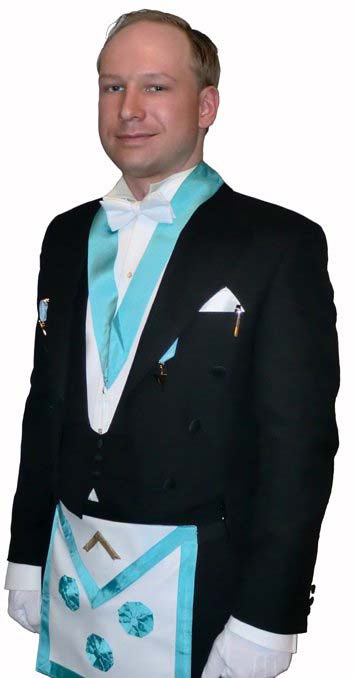
And this odd piece of information emerging. He was a member of the Freemasons. He even appears in a Facebook post in full Freemason dress.
There is also news breaking of a possible second suspect.
Time lapse: Journey through canyons | Bad Astronomy
I love astronomy (duh), I love geology, and I love meteorology, so if you combine all three in a high-definition time lapse video, well, I’ll love it:
Very pretty! It’s by someone who goes by the name Metron, who also has a pretty cool video of lava flowing from Kilauea.
I like watching the stars move in sweeping arcs in these videos. So that’s why at about three minutes in, when the video shows a wall off hoodoos* with the stars over it, I was baffled for about two seconds when I noticed one wasn’t moving. I wondered if it was a piece of dust on my screen… then I smiled sheepishly when I figured out just which star it was.
Just goes to show you, sometimes you have to focus on the big picture.
Tip o’ the lens cap to Tim Deem.
* I bet most of my readers didn’t know those wind-eroded towers that look like minarets are called that! The more you know.
Related posts:
- Time lapsed: the Moon plunges into shadow
- Time lapse video: from North Carolina to the galactic center
- Gorgeous Milky ...
New Vaccine Curbs Heroin Addiction in Rats | 80beats
What’s the News: Researchers at the Scripps Research Institute have now created a vaccine that prevents a heroin high in rats. The vaccine, detailed in a recent study in the Journal of Medicinal Chemistry, stimulates antibodies that can stop not only heroin but also its derivative psychoactive compounds from reaching the brain.
How the Heck:
Developing a vaccine for heroin addiction has been a goal of research for some time, but a major issue has been that the drug quickly metabolizes into 6-acetylmorphine, morphine, and the much less active 3-monoacetylmorphine, so any vaccine must work against all four of the compounds.
This research team solved the problem by creating a drug cocktail that slowly degrades in the body, all the while exposing the immune system to the different psychoactive metabolites of heroin. They also created a control vaccine that only targeted morphine.
When the researchers injected several booster shots of the dynamic vaccine into ...
Parkinson's Disease Guidelines (Part 1)
About the Video: Experts in Parkinson's Disease have revised the guidelines for diagnosing and treating the disease in order to help people receive the best care. In this two-part program, Dr.
Original post:
Parkinson's Disease Guidelines (Part 1)
Parkinson’s Disease Guidelines (Part 1)
About the Video: Experts in Parkinson's Disease have revised the guidelines for diagnosing and treating the disease in order to help people receive the best care. In this two-part program, Dr.
Original post:
Parkinson's Disease Guidelines (Part 1)
Ataxic Cerebral Palsy
http://www.cerebralpalsylawdoctor.com or call 1-866-452-9362 in the US. Ataxic Cerebral Palsy often caused by damage to cerebellum of the newborn, occurs in approx.
More here:
Ataxic Cerebral Palsy
Meet Singer/songwriter Kathy Banta – An Autism Hangout Special Report
Singer/songwriter Kathy Banta knows a lot about how autism can affect a life...
Read the rest here:
Meet Singer/songwriter Kathy Banta - An Autism Hangout Special Report
Multiple Sclerosis – The Nebraska Medical Center
Multiple Sclerosis is an autoimmune disease of the central nervous system.
Dementia Case Presentations
Dr. Berneet Kaur of UC Davis, Department of Neurology gives case presentations on dementia. Series: UC Grand Rounds [6/2010] [Health and Medicine] [Professional Medical Education] [Show ID: 18365]
David Blair – Spinocerebellar Ataxia
Interview with David and his wife Karen
Continued here:
David Blair - Spinocerebellar Ataxia
“Autistic Like Me; The Documentary”
This clip is a "teaser" from a documentary film that is currently in production. ALM is a documentary/advocacy film that explores the impact on families, particularly fathers, when learning that their child is autistic
View original post here:
"Autistic Like Me; The Documentary"
This clip is a "teaser" from a documentary film that is currently in production. ALM is a documentary/advocacy film that explores the impact on families, particularly fathers, when learning that their child is autistic
View original post here:
"Autistic Like Me; The Documentary"
Alzheimer’s Disease: Spotlight on Stem Cell Research – Rod Shankle
(Part 3 of 4) Rodman Shankle, MD spoke at the "Spotlight on Alzheimer's disease", an educational event presented at the CIRM Governing Board meeting on December 10, 2008. Shankle reviewed clinical data, which indicates that stem cells from the fat pad of the intestines have the capacity to repair damaged brain tissue found in Alzheimer's disease and other neurological disorders.
Originally posted here:
Alzheimer's Disease: Spotlight on Stem Cell Research - Rod Shankle
Alzheimer's Disease: Spotlight on Stem Cell Research – Rod Shankle
(Part 3 of 4) Rodman Shankle, MD spoke at the "Spotlight on Alzheimer's disease", an educational event presented at the CIRM Governing Board meeting on December 10, 2008. Shankle reviewed clinical data, which indicates that stem cells from the fat pad of the intestines have the capacity to repair damaged brain tissue found in Alzheimer's disease and other neurological disorders.
Originally posted here:
Alzheimer's Disease: Spotlight on Stem Cell Research - Rod Shankle
Three Studies on the Genes and Biochemistry of Human Longevity
I'll point out three recently published papers today, all of which are the fruits of the ongoing studies of long-lived people. There are a fair number of these efforts at the present time, a combination of decades-long longitudinal studies which now consist of a cohort of exceptionally old survivors, combined with new studies launched over the past decade as academic interest in the genetics of human longevity grew. As it turns out, long-lived human lineages differ from the rest of us in a number of identifiable ways - and given that it's really only been a handful of years that these sorts of study have been underway, I would imagine that many more characteristic genetic differences remain to be identified.
We conducted a case-control genome-wide association study (GWAS) of human longevity, comparing 664,472 autosomal SNPs in 763 long-lived individuals (LLI; mean age: 99.7 years) and 1085 controls (mean age: 60.2 years) from Germany. ... Our GWAS failed to identify any additional autosomal susceptibility genes [beyond the APOE gene]. One explanation for this lack of success in our study would be that GWAS provide only limited statistical power ... A recent GWAS in Dutch LLI independently confirmed the APOE-longevity association, thus strengthening the conclusion that this locus is a very, if not the most, important genetic factor influencing longevity.
Mitochondrial Haplogroup X is associated with successful aging in the Amish
Mitochondrial lineages described by patterns of common genetic variants ("haplogroups") have been associated with increased longevity in different populations. We investigated the influence of mitochondrial haplogroups on [health in later life] in an Amish community sample. ... [Healthier old people] were more likely to carry Haplogroup X (OR = 7.56, p = 0.0015), and less likely to carry Haplogroup J (OR = 0.40, p = 0.0003). Our results [suggest] that variants in the mitochondrial genome may promote maintenance of both physical and cognitive function in older adults.
Caloric restriction (CR) is the most robust and reproducible intervention for slowing aging, and maintaining health and vitality in animals. Previous studies found that CR is associated with changes in specific biomarkers in monkeys that were also associated with reduced risk of mortality in healthy men. In this study we examine the association between other potential biomarkers related to CR and extended lifespan in healthy humans. .... Based on the Baltimore Longitudinal Study of Aging, "long-lived" participants who survived to at least 90 years of age (n=41, cases) were compared with "short-lived" participants who died between 72-76 years of age (n=31, controls) in the nested case control study. Circulating levels of ghrelin, insulin, leptin, interleukin 6, adiponectin and testosterone were measured from samples collected between the ages 58 to 70 years. ... At the time of biomarkers evaluation (58-70 yrs), none of the single biomarker levels was significantly different between the two groups. However, after combining information from multiple biomarkers [the] global score differentiated the long- and short-lived participants.
While interesting, and probably the basis for what will eventually be a massive industry of drug development aimed at gently slowing down the aging process, this sort of work is still something of a sideshow. Understanding the contributions of metabolic differences to the pace of aging and resistance to frailty and degeneration will not lead to a true cure for aging. Repair and reversal of aging, the foreseeable biotechnologies that can make the old young once again, can only come from lines of research like those undertaken by the SENS Foundation.