Selenium against Prostate Cancer Risk

A study conducted by researchers from the Ohio State University found that selenium can reduce specific markers that increase the risk of prostate cancer.

The Dreaded Prostate Cancer

The average age of prostate cancer diagnosis is 67 years old.  This is according to the National Cancer Institute Surveillance and Epidemiology and End Results Center; this is based on the incidence of prostate cancer in the United States from 2003 to 2007. Based on the same data, more than 16 percent of men will be diagnosed with prostate cancer in their lifetime. In the United States alone, it is estimated that more than 210,000 men will be diagnosed of prostate cancer and over 32,000 will die of the dreaded condition.

There are no assured means of preventing prostate cancer. But making smart choices in the foods that you eat and avoiding the risk factors associated with it can help in preventing the disease. Like other types of cancer, prostate cancer starts when cells begin to behave abnormally. It is clear that this behavior of the cells is caused by the mutation of the genes but researchers are still trying to better understand what causes and what triggers the mutation.

Lowering the risk of prostate cancer will take a little more than just diet modification. Taking bigger steps like changing your lifestyle and avoiding cancer-inducing habits may help in reducing your risk. Studies show that lifestyle intervention is the best approach in preventing prostate cancer and other diseases for people with heightened risk.

Natural Ways to Lower Your Risk

The nutritional guidelines for preventing prostate cancer is yet to be established. But so far, studies show that specific eating habits are linked to a lowered risk of developing the disease. Eating a variety of fruits and vegetables can supply the body with essential nutrients that helps in preventing different kinds of cancer.  Food sources rich in cancer-fighting substances like folate, vitamin B complex and diindolylmethane, which is found in cruciferous vegetables like kale, cabbage and broccoli, are well-recommended.  Sensible eating means balancing your calorie intake according to your body’s requirement.

The incidence of prostate cancer varies in different countries. Studies show that the highest rate appears in populations with the highest intake of fat. Foods rich in saturated fats, like those found in red meats, can increase the risk of developing prostate cancer. Eating whole-grain foods like whole-wheat breads and brown rice while limiting the consumption of refined sugar and white flour can also help in preventing the disease.

Eating foods rich in omega-3 fatty acids is also linked to a lower risk of developing prostate cancer. Omega-3 is found in salmon, mackerel, herrings and other cold-water fishes. Although there are mixed scientific evidence regarding the potency of omega-3 in lowering the risk of developing cancer, adding foods rich in the nutrient into your daily diet offers other health benefits like the prevention of cardiovascular disease.

Soybean products and other legumes are rich in phytoestogens, an enzyme found in plants that act like estrogen in the body. These chemicals can help reduce the risk of prostate cancer. A good evidence for this is the low incidence of prostate cancer in Asian countries where soybeans and soybean products are popular food choices.

Green tea contains various antioxidants like polyphenols that has been found to lower the risk of developing cancer. Vitamin D, on the other hand, has also showed strong potential in lowering the risk of developing prostate cancer. Foods rich in vitamin D are egg yolks, and fish liver oil. Exposing the skin to the sun for a few minutes a day will also trigger the production of vitamin D in the body.

The high incidence of prostate cancer drives state and privately-funded studies to determine better ways to prevent the disease. Researchers are also looking at the potency of some nutrients in fighting prostate cancer risk. A study conducted by researchers from the Ohio State University found that the supplementation of selenium can lower the levels of prostate cancer markers such as prostate specific antigen (PSA) and help in reducing the risk of the disease.

Selenium to Lower the Risk of Prostate Cancer

A study published in the Nutrition Research journal showed that selenium glycinate can improve the activities of plasma enzymes and reduce the levels of prostate cancer markers. The researchers from the Ohio State University said that the regular supplementation of selenium in a group of 30 middle-aged Americans resulted to a reduced risk of developing prostate cancer. They added that their study contradicts the popular notion that selenium cannot improve the activity of blood glutathione peroxides and lower the risk of prostate cancer.

Head researcher Dr Robert DiSilvestro of the Department of Human Nutrition and his co-authors said that if selenium has the ability to lower prostate-specific antigens in study participants, it can also lower the risk of prostate cancer.  This could be better achieved by introducing the nutrient in daily diet. They used a certain form of selenium called selenium glycinate which has not been used in previous studies. The researchers added that selenium glycinate has significantly high bioactivity.

The researchers reported that the supplementation of selenium raised the levels of erythrocyte and plasma activities in study participants. They also found that cancer risk marker serum PSA was lowered by selenium glycinate. But they added that the reduction in prostate cancer markers does not necessarily mean a lower risk of developing the disease.

Health Benefits of Selenium

Selenium is a mineral present in the soil and which appears in small amounts in some foods and in water. The nutrient plays an important role in metabolism and recent studies show that selenium has strong antioxidant properties. Although there are some evidences suggesting that high levels of selenium can increase the risk of skin cancer, regulated levels of the nutrient can result to a lower risk of developing various diseases. Population studies show that selenium deficiency is rare in healthy people.

The Recommended Dietary Intake of selenium for adults and children aged 14 years and above is 55 to 70 micrograms in a day. For the prevention of prostate cancer, men can take as much as 200 micrograms a day. But the threshold for selenium intake should be no more than 400 micrograms; anything beyond this is considered an overdose. Selenium has been used as a treatment for asthma, infertility and arthritis. But more importantly, selenium can act as an antioxidant which neutralizes cancer-causing free radicals and at the same time improve the potency of other antioxidants.


Sources

nutraingredients.com
webmd.com
webmd.com
mayoclinic.com
seer.cancer.gov

Discuss this post in Frank Mangano’s forum!

Eating Pecans Promote A Healthier Heart

A study published in the Journal of Nutrition showed that the antioxidants in pecans can lower the risk of heart disease.

Heart Disease

Heart disease is a term used to refer to a variety of health conditions that involves the heart. It is often interchanged with cardiovascular disease which is commonly used to define the condition involving the narrowing of the blood vessels that can lead to chest pains, heart attack and stroke. Unlike cancer and other chronic diseases wherein the causes remain to be unclear, the causes of heart diseases are well-established and the condition can be prevented by making healthy lifestyle choices.

Most diseases are caused by the damage caused by the accumulation of fatty plaques in the arteries. The arteries are responsible for carrying nutrients and oxygen to different parts of the body. In order to properly perform these tasks, the arteries need to stay strong and flexible. Aging and poor, unhealthy habits can put too much pressure in the arteries and make the walls stiff, weak and thick with fatty plaques. This disorder will lead to the insufficient distribution of blood in organs and tissues. Because of this, nutrition and oxygenation are compromised.

Atherosclerosis, or the hardening of the arteries caused by deposition of fatty plaques, is the most common cardiovascular disease. The other heart conditions are heart arrhythmia, or abnormal heart rhythms, cardiomyopathy or the enlargement and thickening of the heart muscle, heart infection and valvular heart diseases.

Although heart diseases are caused by different factors, studies show that they are primarily due to unhealthy diet and habits, and lack of exercise.

The Risk Factors of Heart Disease

Getting older increases the risk of heart disease. The heart and blood vessels become more at risk of damage. Men are also more at risk of developing the disease than women although a woman’s risk is increased after menopause. Certain heart diseases are also caused by genetic factors. The condition can run in the family and some individuals can be more inclined of developing the condition than others.

Smoking has always been proven to be bad for the health. Nicotine in tobacco can constrict the blood vessels, making blood flow difficult resulting to an increase in blood pressure, while its carbon monoxide content can damage the lining and make them more at risk of damage. Population studies show that the incidence of heart disease is higher in smokers than in non-smokers.

A diet rich in sodium and harmful fats can lead to the development of heart disease. Hypertension, or chronically high blood pressure, can cause the blood vessels to become thick and hard. The accumulation of cholesterol plaques on the walls of the arteries can inhibit the healthy flow of blood and cause serious complications. The other risk factors of heart disease are obesity and diabetes – two health conditions that share similar risk factors: the lack of exercise, poor eating habits and high stress levels.

The risk factors of developing heart disease can be countered by healthy lifestyle choices. Eating the right kinds of food, for example, will supply the body with the nutrients needed to maintain a healthy heart and prevent damage. A study conducted by researchers from Loma Linda University School of Public Health found that the antioxidants in pecans can contribute in the prevention of heart disease.

Pecans Against Heart Disease

The study published in the Journal of Nutrition showed that pecans contain potent antioxidants flavan-3-ol and gamma-tocopherol that helps in lowering the risk of heart disease. The researchers said that these compounds can double the amount of antioxidants in the blood plasma and inhibit the oxidation of LDL cholesterol by more than 30 percent. Head researcher Dr Ella Haddad said that the consumption of pecans can improve the levels of antioxidants in the body and added that antioxidants are needed in order to prevent diseases like cancer and heart disease.

The researchers explained in their study that pecan is a good source of various kinds of vitamin E, especially in the form of tocopherols. This is in addition to its phenolic content which also has antioxidant properties. Formation of plaque on the surface of the blood vessels is primarily due to the high concentration of oxidized LDL cholesterol in the blood. The antioxidants in pecan can help in lowering oxidized LDL cholesterol levels by preventing oxidation. The researchers said that the bioactive content of pecans like flavan-3-ol monomers and gamma-tocopherol exhibit strong antioxidant action in vitro but it has not been established whether this is the case in the human body. The study aimed to investigate and measure the antioxidant effects of pecans after ingestion.

Blood and urine samples were taken from 16 study participants. Prior to these, they were randomly assigned three meals with pecans blended with water, whole pecans and a control meal with equivalent nutritional content. And in between each treatment was one week of washout period.  Study participants who ate meals with whole and blended pecans doubled their gamma-tocopherol blood levels after eight hours. The researchers also observed that the oxidation of LDL cholesterol was reduced by 33 percent after 3 hours. The researchers concluded that their findings are another addition to the health benefits of pecans in preventing various diseases and that the antioxidants in pecans can be absorbed and used by the body.

Natural Ways to Lower Heart Disease Risk

Eating foods rich in dietary fiber and antioxidants, low in sodium and LDL cholesterol, and regular exercise are a few of the lifestyle choices you can make in order to lower your risk of developing heart disease. Dietary fiber helps prevent the absorption of cholesterol.

A high sodium diet can make the blood thicker and increase blood pressure. It has also been linked to a higher risk of developing cardiovascular disease. According to the American Heart Association, the recommended sodium consumption should not be greater than 2,300 milligrams or approximately 1 teaspoon a day. For those with existing heart conditions, only 1500 milligrams of sodium is recommended. Avoiding foods and processed products that are rich in sodium as well as carefully avoiding the use of condiments that are sodium-rich can help in reducing your sodium intake.

Avoid foods rich in saturated and trans fats. These foods can increase the LDL cholesterol levels in your blood which is a strong risk factor of heart disease. Regular exercise also helps in keeping the heart healthy and strong while promoting the healthy flow of blood through the blood vessels.


Sources

nutraingredients.com
disabled-world.com
mayoclinic.com
mayoclinic.com

Discuss this post in Frank Mangano’s forum!

Cases Against Cryonics

In a recent post at Depressed Metabolism Aschwin de Wolf discusses arguments against cryonics - the low temperature storage of the deceased that aims to preserve the data contained in the brain. For example, what would be needed to make a rational, scientific case against cryonics?

What is striking about cryonics is that those who have taken serious efforts to understand the arguments in favor of its technical feasibility generally endorse the idea. Those who have not made cryonics arrangements usually give non-technical arguments (anxiety about the future, loss of family and friends, etc), lack funding or life insurance, or are (self-identified) procrastinators. In contrast, those who reject cryonics are almost invariably uninformed. They do not understand what happens to cells when they freeze, they are not aware of vitrification (solidification without ice formation), they think that brain cells "disappear" five minutes after cardiac arrest, they demand proof of suspended animation as a condition for endorsing cryonics, etc.

his does not mean that no serious arguments could be presented. [For example, it could be argued that] memory and identity are encoded in such a fragile and delicate manner that cerebral ischemia, ice formation or cryoprotectant toxicity irreversibly destroy it. Considering our limited understanding of the nature of consciousness, and the biochemical and molecular basis of memory, this cannot be ruled out.

Cryonics advocates can respond to such a challenge by producing an argument that pairs our current understanding of the neuroanatomical basis of identity and memory to a cryobiological argument in order to argue that existing cryonics procedures are expected to preserve it. An excellent, knowledgeable, response of this kind is offered in Mike Darwin's Does Personal Identity Survive Cryopreservation? Cryonics skeptics in turn could produce evidence that existing cryonics procedures fall short of this goal.

To my eyes, the weight of evidence presently favors low temperature vitrification being an adequate methodology to preserve the data of the brain. The practice could be greatly improved upon in many ways, such as by eliminating the toxicity of chemicals that must presently be used. There is always room for revolutionary improvement in any technology, but vitrification as it stands seems to be up to the bare essentials of the job: preserve the data sufficiently well for later restoration of a human mind.

Sadly most of the arguments made against cryonics are far from scientific and rational, and in this it is in a similar position to research into the biotechnologies of engineered human longevity. Most people argue against radical life extension from the gut, not the head, when they are first introduced to the concept. It is an instinctive rejection of anything that looks like change: one of the less helpful aspects of human nature at work. People are fiercely defensive of the norm, whatever the norm might happen to be, even when it involves ongoing preventable deaths on a massive, staggering scale.

The human death toll in the Year 2001 from all 227 nations on Earth was nearly 55 million people, of which about 52 million were not directly caused by human action, that is, not accidents, or suicides, or war. They were "natural" deaths.

Targeting Inflammation in Neurodegenerative Diseases

Neurodegeneration has an inflammatory component, and some research groups use that as a starting point for treatment: "Neurodegenerative diseases like Alzheimer's and Parkinson's are partly attributable to brain inflammation. Researchers [now] demonstrate [that] a well-known family of enzymes can prevent the inflammation and thus constitute a potential target for drugs. Research suggests that microglial cells - the nerve system's primary immune cells - play a critical part in neurodegenerative diseases, such as Alzheimer's and Parkinson's. The over-activation of these cells in the brain can cause inflammation, resulting in neuronal death. Scientists [have] now found a way to prevent the activation of the microglia and consequently the inflammation they cause. The key is the blocking of enzymes called caspases, which the team has shown control microglial activation. ... By studying cell cultures and mice, the researchers show that certain caspases (3, 7 and 8) activate rather than kill microglial cells, which triggers an inflammatory reaction. Mice given caspase inhibitors displayed fewer activated microglia and less inflammation and cell death in the surrounding neurons."

Link: http://ki.se/ki/jsp/polopoly.jsp?d=130&a=118749&l=en&newsdep=130

Manipulating Stem Cells to Treat Vascular Disease

An example of a class of stem cell medicine that involves manipulation of existing populations of cells in the body: "Circulating through the bloodstream of every human being is a rare and powerful type of cell, one that can actually create new blood vessels to bypass blockages that cause heart attacks and peripheral artery disease. Though everyone has these cells - called endothelial progenitor cells - they are often dysfunctional in people prone to vascular disease. Now researchers [have] discovered that a molecule - called Wnt1 - can improve the function of endothelial progenitor cells, increasing the blood flow to organs that previously had been cut off from the circulation. The finding could enhance clinical trials already testing these powerful cells in patients hospitalized with cardiac arrest. ... A number of studies in the past few years have suggested that genes that play an important role during early development and get 'turned off' during adulthood may also get 'turned on' or expressed again in response to injury, such as heart attack. [Researchers] found that one gene in particular, Wnt1, was expressed during development of blood vessels, shut off during adulthood and then re-expressed in angiosarcoma, a cancer of endothelial cells. ... treating these special cells with Wnt1 not only greatly increased their function but also their number. Next, [researchers] investigated what effect the protein would have on a mouse model of peripheral artery disease, an illness in humans caused by decreased blood flow to the extremities. They found that treating these animals with a single injection of the Wnt1 protein resulted in almost three fold increase in blood flow in the affected areas."

Link: http://news.unchealthcare.org/news/2011/march/wnt1

The Short End of the Gender Stick

Here is some data for you to mull over today: the not so great odds that come with being male.

[The] disparity in mortality rates for males and females does not just occur in late adolescence/young adulthood. Males have a higher mortality rate at young ages (e.g. ages 1-4 the death rate for males is 12% higher than it is for females the same age) and older ages (e.g. ages 65-74 the death rate is 33% higher than it is for females that age). Considering the inequality in mortality rates between the genders across the lifespan makes it clear that it is not "nurture" alone that explains why males are more likely to die in every single age category, from the first year of life to age 85+.

The disparity between male and female life expectancy is well known and widely studied, but not definitively understood. What this means in practice is that there exists a very wide range of theories to explain some or all of the gender longevity gap:

Differing smoking rates, stem cell effectiveness, mitochondrial effectiveness, and the possible effects of hormones on the immune system are all on the list. [As well as the theory] that hormones influence the expression and activity of known longevity genes

Which is not to mention the raft of subtly different takes on evolutionary arguments to explain shorter male life spans, such as the debate over disposable soma theories as they apply to the genders.

On the one hand it is fascinating that we stand upon the verge of being able to repair aging, yet at the same time we cannot answer what appears to be a simple question about the nature of aging. On the other hand, this is an apt illustration that sometimes what appear to be simple questions are in fact very complex questions. In this case, the answer to why men and women exhibit different mortality rates and life expectancies must involve the summed interactions of all the systems of human biology, subject to the statistical blurring of a million different lifestyles lived concurrently by billions of people.

The path from epidemiology to clear vision of biological mechanisms is a long, tough trek - and in the end it will do no more for us than to make it easier to work on ways to change that biology. Which is all the more reason to place less of an emphasis on that and more of an emphasis on the path to repairing the forms of molecular damage that cause aging - which are already known and enumerated.

More on Hypoxia-Related Mechanisms and Longevity

It is known that the hypoxic response at a cellular level is involved in the longevity induced by calorie restriction, and works like most forms of hormesis - by stimulating cells to greater housekeeping efforts. Here is an open access paper on the subject: "A mild reduction in mitochondrial respiration extends the life span of many species, including C. elegans. We recently showed that hypoxia-inducible factor 1 (HIF-1) is required for the acquisition of a long life span by mutants with reduced respiration in C. elegans. We suggested that increased levels of reactive oxygen species (ROS) produced in the respiration mutants increase HIF-1 activity and lead to this longevity. In this research perspective, we discuss our findings and recent advances regarding the roles of ROS and HIF-1 in aging, focusing on the longevity caused by reduced respiration. ... Many interesting questions remain unanswered. Which tissues and functional target genes are important in the regulation of aging by HIF-1? How can both up-regulation and down-regulation of HIF-1 promote longevity? What is the molecular mechanism by which mitochondrial ROS stimulates HIF-1 activity? ... Since many aging-regulatory processes are conserved between C. elegans and mammals, these studies may also provide insights into the regulatory mechanisms of aging in mammals, including humans. Moreover, in addition to aging, HIF-1 and mitochondrial impairment have been implicated in various human diseases such as cancer, diabetes, and neurodegenerative diseases. Thus, we believe that these future studies will help us better understand the pathophysiology of these diseases."

Link: http://www.impactaging.com/papers/v3/n3/full/100292.html

Advances in Induced Pluripotency

EurekAlert! passes on an advance in the technology of reprogramming cells: "In the past few months, a slew of papers have indicated that the therapeutic potential of a promising type of stem cell, called induced pluripotent stem (iPS) cells, might be limited by reprogramming errors and genomic instability. iPS cells are engineered by reprogramming fully differentiated adult cells, often skin cells, back to a primitive, embryonic-like state. Given these problems, a team of researchers [wondered] if there might be a better way to regenerate lost tissue to treat conditions like heart disease and stroke. ... they outline a method to obtain a new kind of stem cell they call 'induced conditional self-renewing progenitor (ICSP) cells.' ... It's amazingly cool that we can dial adult cells all the way back to embryonic-like stem cells, but there are a lot of issues that still need to be addressed before iPS cells can be used to treat patients. So we wondered... if we just want to treat a brain disease, do we really have to start with a skin cell, which has nothing to do with the brain, and push it all the way back to the point that it has potential to become anything? In this study, we developed ICSP cells using a cell from the organ we're already interested in - the nervous system, in this case - and pushed it back just enough so it continued to divide, giving us a quantity that we were able to apply efficiently, safely and effectively to treat stroke injury in a rodent model. ... the [reprogramming gene] used here is conditionally expressed. This means that ICSP cells can only produce [the gene] when the researchers add a compound called tetracycline to laboratory cultures. When tetracycline is removed, the cells cease dividing and start differentiating. Then, once transplanted into to an animal model, ICSP cells are no longer exposed to tetracycline and take their growth and differentiation cues from their new environment."

Link: http://www.eurekalert.org/pub_releases/2011-03/smri-ans030711.php

Aubrey de Grey at the iLabs Singularity Summit in Milan

The iLabs Singularity Summit was held this past weekend in Milan, Italy - it's always good to see more of this sort of event happening on that side of the Atlantic. There was a strong focus on longevity science:

Biological ageing is a progressive, degenerative process. As a side-effect of the everyday metabolic activities, cells in our body are damaged: year after year, the cumulative effect of this micro-damages considerably diminishes the overall efficiency of the system, leading eventually to death. ... We die mainly because of ignorance: we do not know how to measure our health, we do not understand completely the side-effects of our therapies and we can't explain the complex interplay between mind and body.

Doing something about these technological and scientific inadequacies should be far higher on most people's to-do lists than it in fact is - we all age, we all suffer the degenerations caused by low-level biological damage. We should all be highly motivated to deal with the problem before it sucks away our ability to live, and then kills us. Alas, the present state of affairs is far from this ideal, and most people do not know or believe that the defeat of aging really is within reach. But it won't happen soon enough unless a great many more people work hard to make it happen.

Amongst the presenters at the summit was the familiar face of Aubrey de Grey, biomedical gerontologist, SENS Foundation cofounder, and outspoken advocate for the development of rejuvenation biotechnology. Here is a video interview made by David Orban and thoughtfully uploaded to YouTube:

I caught up with Aubrey de Grey at the iLabs Singularity Summit in Milan, Italy on March 5. In this video he talks about the progress SENS made in securing funding sources, the latest scientific results, and the need to further its perception as a sound research program all over the world.

Singularity Hub on Artificial Retinas

Another in a series of articles on this topic from Singularity Hub: "The blind in Europe have reason to rejoice, the world's most advanced artificial retina has just received the CE Mark, approved for use in new patients. The Argus II, developed by Lawrence Livermore National Laboratory and marketed by Second Sight, is on sale in the EU, but still awaiting FDA approval here in the US. Luckily, clinical trials are already underway and we could get the amazing device here soon. With the Argus II, blind patients use an external camera to pick up video that is wirelessly transmitted to an electrode array surgically implanted in the eye. While full vision is not restored, the 60+ electrodes allow for some distinction of outlines and other basic shapes. Definitely an improvement over blindness. ... a camera embedded in a pair of glasses records the world in front of the patient. A wearable computer takes that image and transforms it into a basic series of impulses. That pattern is transmitted to the Argus II implant which rests inside the eye, and which is attached to the back of the eye through an electrode array. ... Although software improvements may arrive first, hardware upgrades are also on the horizon. The Argus II operates with about 60 electrodes in its array. That's 60 points of data for your eye to interpret. The Argus III, currently under development at LLNL, should have 200+ electrodes. Perhaps considerably more. It will take a thousand or so to make out human faces accurately, but the Department of Energy is pushing LLNL towards that goal, and beyond. As slow as the progress in artificial retinas has been, it shows no sign of stopping. There are other projects outside of the Argus series, at least two (one in MIT, another in Germany) show serious promise, and even have superior qualities to the Argus in some respects. I have no doubt that we could, eventually, reach a resolution that equals that of the human eye. Perhaps, with a different kind of interface, we could even see in greater detail than nature intended."

Link: http://singularityhub.com/2011/03/08/artificial-retina-that-lets-the-blind-see-again-more-great-videos-of-the-argus/

Enhancing Memory in Mice

Via ScienceDaily: "Even long after it is formed, a memory in rats can be enhanced or erased by increasing or decreasing the activity of a brain enzyme. ... Our study is the first to demonstrate that, in the context of a functioning brain in a behaving animal, a single molecule, PKMzeta, is both necessary and sufficient for maintaining long-term memory. ... Unlike other recently discovered approaches to memory enhancement, the PKMzeta mechanism appears to work any time. It is not dependent on exploiting time-limited windows when a memory becomes temporarily fragile and changeable - just after learning and upon retrieval - which may expire as a memory grows older. ... This pivotal mechanism could become a target for treatments to help manage debilitating emotional memories in anxiety disorders and for enhancing faltering memories in disorders of aging. ... In their earlier studies, [researchers] showed that even weeks after rats learned to associate a nauseating sensation with saccharin and shunned the sweet taste, their sweet tooth returned within a couple of hours after rats received a chemical that blocked the enzyme PKMzeta in the brain's outer mantle, or neocortex, where long-term memories are stored. In the new study, they paired genetic engineering with the same aversive learning model to both confirm the earlier studies and to demonstrate, by increasing PKMzeta, the opposite effect. They harnessed a virus to infect the neocortex with the PKMzeta gene, resulting in overexpression of the enzyme and memory enhancement. Conversely, introducing a mutant inactive form of the enzyme, that replaced the naturally occurring one, erased the memory - much as the chemical blocker did."

Link: http://www.sciencedaily.com/releases/2011/03/110304092111.htm

Revisiting Naked Mole Rats and their Lack of Cancer

As you might recall, naked mole rats are interesting to researchers not just because they live nine times longer than similarly sized rodents of other species, but because they don't seem to suffer cancer. At all. There's a primer or two on naked mole rats and cancer back in the Fight Aging! archives:

Naked Mole Rats Do Not Suffer From Cancer

No naked mole rat has been observed to suffer from cancer, a fact that is attracting interest from the cancer research community as this species becomes more widely studied. If the biochemistry that leads to this feat can be understood, it is possible there exists an economical way to port that cancer immunity to humans.

Mechanisms of Naked Mole Rat Cancer Immunity

Like many animals, including humans, the mole rats have a gene called p27 that prevents cellular overcrowding, but the mole rats use another, earlier defense in gene p16. Cancer cells tend to find ways around p27, but mole rats have a double barrier that a cell must overcome before it can grow uncontrollably.

It will be interesting to see whether this line of research pans out into something that looks like a gene therapy for humans. On this topic I see that there's a general interest article on mole rats and their cancer immunity in yesterday's Washington Post:

In the past few years, researchers have been teasing out the biological bases for this cancer resistance, which they say may help explain how naked mole rats manage to live almost 10 times longer than their house mouse and street rat cousins. When Old Man, the oldest known naked mole rat on the planet, died at the University of Texas Health Science Center in San Antonio in November, he was 32 years old.

...

Getting old without the usual diseases and diminishments of the aging process has always been an intriguing idea. Vera Gorbunova, a biologist and cancer researcher at the University of Rochester in New York, is among those scientists trying to find out how naked mole rats do it.

...

For many of the experiments her team wanted to do, they needed to grow naked mole rat cells in laboratory dishes, but this proved to be difficult. Whenever the cells touched one another, they stopped replicating. This was frustrating, but it also presented Gorbunova with a clue. She knew that normal mouse and human cells exhibit a less pronounced type of "contact inhibition" and that cancer cells grow into masses because they lack this inhibition.

"In naked mole rat cells," Gorbunova surmised, "we are seeing super contact inhibition." She wondered if there might be a linkage with the mole rats' immunity to cancer.

...

As Gorbunova sees it, living a long time and disease-thwarting mechanisms such as super contact inhibition go hand in hand. Mice are valuable animal models for studying cancer precisely because they get the disease so easily, she notes, and naked mole rats should become just as important for cancer research precisely because they never get the disease.

A similar line of thinking can be applied to the study of whales, species that must also be highly resistant to cancer, given their massive size and life spans that stretch out to more than 200 years in some cases:

Blue whales can weigh over a thousand times more than a human being. That's a lot of extra cells, and as those cells grow and divide, there's a small chance that each one will mutate. A mutation can be harmless, or it can be the first step towards cancer. As the descendants of a precancerous cell continue to divide, they run a risk of taking a further step towards a full-blown tumor. To some extent, cancer is a lottery, and a 100-foot blue whale has a lot more tickets than we do.

There is potentially much that can be learned from the mammalian species - like naked mole rats and the great whales - that share similar cellular biologies but nonetheless manage to be far more resilient or far longer lived than we humans.

Fixodent denture cream can cause nerve damage, says report

A recent ABC News investigation has identified a connection between the use of the popular denture cream Fixodent and permanent neurological disorders. Some Fixodent users allege that regular use of the cream has caused them to develop serious, debilitating nerve damage, which has sparked a class-action lawsuit against Proctor and Gamble (P&G), the maker of Fixodent.

"I started getting tingling in my fingertips," said Mark Jacoby, a Fixodent victim, to ABC News' 20/20 anchor Chris Cuomo. "I started getting weaker and, you know, I couldn't walk right, off balance and I'm at this point now."

The Fixodent ingredient in question is zinc, which unless taken along with copper, can rob the body of the necessary mineral over time and cause irreversible nerve damage. And since denture users affix zinc-containing creams to their gums every single day, their long-term absorption rates of zinc are much higher than normal than an average person's. Read more...

Ayurtox for Body Detoxification

Kenneth Aldrich, Executive Chairman of International Stem Cell Corporation, will make a public appearance on March 16th, 2011 on behalf of ISCO

OCEANSIDE, Calif. -- (March 10, 2011) -- International Stem Cell Corporation (OTCBB:ISCO), http://www.internationalstemcell.com, announced today that its Executive Chairman, Kenneth C. Aldrich, will present at the ROTH 23rd Annual Orange County Growth Stock Conference at the Ritz Carlton Laguna Niguel in Dana Point, CA. on Wednesday, March 16, 2011 at 10:30 AM PDT (1:30PM EDT). The webcast can be viewed live at: http://www.wsw.com/webcast/roth24/isco/. The presentation will be archived and viewable at the same link for 90 days. After the Roth Conference, a link to the presentation will also be posted to the ISCO website, http://www.internationalstemcell.com.

ABOUT INTERNATIONAL STEM CELL CORPORATION (ISCO.OB)

International Stem Cell Corporation is a California-based biotechnology company focused on therapeutic and research products. ISCO's core technology, parthenogenesis, results in creation of pluripotent human stem cells from unfertilized oocytes (eggs). These proprietary cells avoid ethical issues associated with use or destruction of viable human embryos and, unlike most other major stem cell types, can be immune matched and be a source of therapeutic cells with minimal rejection after transplantation into hundreds of millions of individuals of differing racial groups. ISCO also produces and markets specialized cells and growth media for therapeutic research worldwide through its subsidiary, Lifeline Cell Technology, and has developed cell based skin care products through its subsidiary, Lifeline Skin Care. ISCO is advancing novel human stem cell-based therapies where cells have been proven to be efficacious but traditional small molecule and protein therapeutics have not. More information is available on ISCO's website, http://www.internationalstemcell.com.

To subscribe to receive ongoing corporate communications please click on the following link: http://www.b2i.us/irpass.asp?BzID=1468&to=ea&s=0 .

Key Words: Stem cells, parthenogenesis, biotechnology, skin care

CONTACTS

International Stem Cell Corporation

Kenneth C. Aldrich, Executive Chairman

1-760-940-6383

kaldrich@intlstemcell.com

International Stem Cell Corporation Receives Important Approvals Towards Creating New Parthenogenetic Stem Cell Lines in the United States

International Stem Cell Corporation (OTCBB:ISCO), http://www.internationalstemcell.com, announced today the achievement of a major milestone in its efforts to establish a bank of immune-matched parthenogenetic stem cells in the United States by receiving the statutory approvals required to move forward with the next phase of its stem cell banking program.


An independent Stem Cell Research Oversight (SCRO) committee approved ISCO's program to obtain human oocytes (eggs) in California. The independent SCRO committee is responsible for reviewing the scientific rationale, ethics and compliance with State and Federal regulations and guidelines for studies involving human stem cells. This approval in combination with the earlier reported Institutional Review Board (IRB) clearance with regard to medical safety opens the way for ISCO's stem cell banking program to begin registering clinical investigators. ISCO's study is designed to produce new clinical-grade human parthenogenetic stem cell lines that can be immune matched to millions of individuals for use in the emerging field of regenerative medicine.


ISCO's breakthrough discoveries have resulted in unique stem cells carrying distinct advantages over other human pluripotent stem cells. ISCO uses unfertilized oocytes to create human "parthenogenetic" stem cells (hpSCs). Like human embryonic stem cells (hESCs), hpSCs are pluripotent, i.e. they have the capacity to become almost any cell type in the body, yet avoid ethical issues associated with use or destruction of viable human embryos. Unlike hESCs, hpSCs can be created in a form such that they can be immunologically matched to millions of individuals.


Currently ISCO has a collection of ten hpSC lines that are shared with collaborators and used for research purposes. Although these ten stem cell lines conform to all relevant US standards, they were derived outside the United States. New cell lines created under this study will be ISCO's first hpSC to be produced in the United States. ISCO's scientists, leaders the field of creating therapeutic cells from hpSC, will work with these lines targeting new treatments for human diseases. The company will also share these cells with other scientists to further clinical research. ISCO intends to derive and store these cells at its Oceanside facilities, which are designed to create cells suitable for clinical use.


Simon Craw, PhD, says, "These approvals, combined with our technology, make the establishment of a bank of immune matched stem cells practical and allow for the possibility of cell-based therapy to be economic for millions of people. We believe we are one of the first commercial entities in the United States to have progressed to this point."


ABOUT INTERNATIONAL STEM CELL CORPORATION (ISCO.OB):

International Stem Cell Corporation is a California-based biotechnology company focused on the therapeutic applications of human parthenogenetic stem cells and the development and commercialization of cell-based research and cosmetic products. ISCO's core technology, parthenogenesis, results in creation of pluripotent human stem cells from unfertilized oocytes (eggs). hpSCs avoid ethical issues associated with the use or destruction of viable human embryos. ISCO scientists have created the first parthenogenic, homozygous stem cell line that can be a source of therapeutic cells with minimal immune rejection after transplantation into hundreds of millions of individuals of differing sexes, ages and racial groups. This offers the potential to create the first true stem cell bank, UniStemCell™, while avoiding the ethical issue of using fertilized eggs. ISCO also produces and markets specialized cells and growth media for therapeutic research worldwide through its subsidiary Lifeline Cell Technology and cell-based skin care products through its subsidiary Lifeline Skin Care. More information is available at ISCO's website, http://www.internationalstemcell.com


To subscribe to receive ongoing corporate communications please click on the following link: http://www.b2i.us/irpass.asp?BzID=1468&to=ea&s=0.


FORWARD-LOOKING STATEMENTS

Statements pertaining to anticipated technological developments and therapeutic applications, the potential benefits of collaborations, and other opportunities for the company and its subsidiaries, along with other statements about the future expectations, beliefs, goals, plans, or prospects expressed by management constitute forward-looking statements. Any statements that are not historical fact (including, but not limited to statements that contain words such as "will," "should," "believes," "plans," "anticipates," "expects," "estimates,") should also be considered to be forward-looking statements. Forward-looking statements involve risks and uncertainties, including, without limitation, risks inherent in the development and/or commercialization of potential products and therapies, uncertainty in the results of clinical trials or regulatory approvals, need and ability to obtain future capital, application of capital resources among competing uses, and maintenance of intellectual property rights. Actual results may differ materially from the results anticipated in these forward-looking statements and as such should be evaluated together with the many uncertainties that affect the company's business, particularly those mentioned in the cautionary statements found in the company's Securities and Exchange Commission filings. The company disclaims any intent or obligation to update these forward-looking statements.


Key Words: Stem Cells, Biotechnology, Parthenogenesis


http://cts.businesswire.com/ct/CT?id=bwnews&sty=20110309005570r1&sid=14230&distro=ftp

International Stem Cell Corporation
Kenneth C. Aldrich, Chairman
760-940-6383
kaldrich@intlstemcell.com

Or
Simon Craw, PhD, Vice Pr
esident
760-940-6383
sc@intlstemcell.com

Investigating easy bruising in a child

From BMJ:

In a child, unusual bruising or bleeding out of proportion to the injury sustained should be investigated.

All children under investigation for easy bruising or a bleeding tendency should have:

- full blood count
- blood film (peripheral smear)
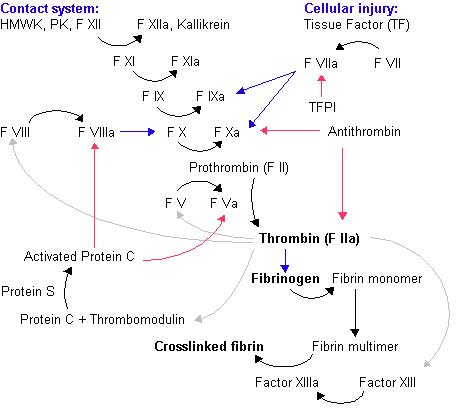
- coagulation screen including a thrombin time, in addition to a Von Willebrand factor assay and assays of factors VIII and IX

This is to ensure that mild forms of haemophilia are excluded even if the activated partial thromboplastin time is normal

In 30% of cases of haemophilia, there is no family history: it arises secondary to new genetic mutations


The coagulation cascade. Black arrow - conversion/activation of factor. Red arrows - action of inhibitors. Blue arrows - reactions catalysed by activated factor. Grey arrow - various functions of thrombin. Image source: Wikipedia

References:
Investigating easy bruising in a child. Anderson and Thomas 341, BMJ.

Posted at Clinical Cases and Images. Stay updated and subscribe, follow us on Twitter and connect on Facebook.


Collecting family history predicts cancer risk better than 23andMe genetic testing

Collecting family history predicts cancer risk better than 23andMe genetic testing, according to a recent study from the Cleveland Clinic:

As you're sharing fond family memories, don't forget to bring up family health history -- it's the best gift you can give. Dr. Charis Eng comments on a study she led looking at the important role of family history in predicting future disease risk.
Related reading
Beware the fortune tellers peddling genetic tests - BMJ http://goo.gl/F0DQt
FDA panel: genetic testing should not be available directly to consumers without what amounts to a "prescription". WebMD, 2011.
Comments from Twitter
@23andMe: See our perspective of Cleveland Clinic study - http://bit.ly/c373aj - bottom line is 2 aren't the same, so can't compare h2h. Also, we agree that family history is a very important piece, and believe it complements detailed genetic info.

Posted at Clinical Cases and Images. Stay updated and subscribe, follow us on Twitter and connect on Facebook.


There are 25,400 scientific journals and their number is increasing by 3.5% a year

More scientific and medical papers are being published now than ever before. Is it possible to be an expert nowadays, asks BMJ.

Every doctor has an ethical duty to keep up to date. Is this just getting more difficult or has it already become impossible? Since Alvin Toffler coined the phrase “information overload” in 1970, the growth of scientific and medical information has been inexorable.

There are now 25?400 journals in science, technology, and medicine, and their number is increasing by 3.5% a year; in 2009, they published 1.5 million articles. PubMed now cites more than 20 million papers.

One response of the medical profession to the increasing scientific basis and clinical capacity of medicine has been to increase subspecialisation. This may restrict the breadth of knowledge of the ultraspecialist, but can such subspecialists still maintain their depth of expertise?

I described my approach in 5 Tips to Stay Up-to-Date with Medical Literature:

1. RSS Feeds for Medical Journals.
2. Podcasts.
3. Persistent Searches on PubMed, Google News and Google.
4. Text-to-speech (TTS) for journal articles.
5. Blogs and Twitter accounts.

If you have a blog or Twitter account, you can try to deal with the information overload from blogs, RSS and Twitter more efficiently by using this:


The circle of online information (click to enlarge).

References:
On the impossibility of being expert. BMJ 2010; 341:c6815 doi: 10.1136/bmj.c6815.

Posted at Clinical Cases and Images. Stay updated and subscribe, follow us on Twitter and connect on Facebook.


Electronic medical record (EMR) – review of pros and cons in Cleveland Clinic medical journal

Some negatives regarding the use of EMR:

- So far, electronic systems are not interconnectable
- Do electronic records improve or worsen the quality of care?
- Accuracy vs copying and pasting
- A third party in the examination room
- Devoid of real medical thought

A contrasting view:

- Connectivity will improve
- Staying focused on the patient, even with a computer in the room
- Doctor-doctor communication is enhanced

References:
The electronic medical record: Diving into a shallow pool? CCJM.
The electronic medical record: Learning to swim. CCJM.

Posted at Clinical Cases and Images. Stay updated and subscribe, follow us on Twitter and connect on Facebook.


Kiva Ford – Heart in a Jar

Kiva Ford miniature heart in glass

Kiva Ford is a New York based glass artist mostly known for his goblets, miniatures, and jewelery. Above is a pendant available on his etsy page for $82. Also available are miniature vases and bowls as well as earrings and other necklaces. Kiva lists his interests in history, mythology, and the natural world as his influences. You can check out more of his work on his website, kivaford.com, including some amazing goblets and other pieces with tiny animals and figures encased in glass.

[via Super Punch]