Anti-Semitic Violence in Germany: Muslim Youths throw Stones at Jews during Dance Festival

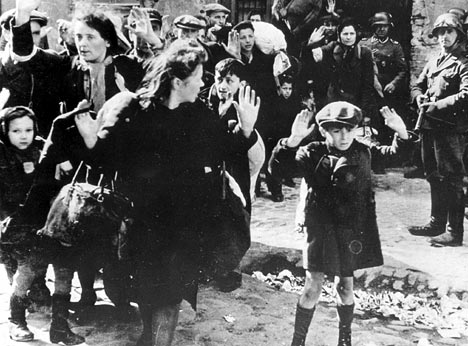
1939 Germany, all over again

From Eric Dondero:

Lower Saxony lies in the Northwestern region of Germany. It borders the North Sea and the Netherlands to the west. Hannover is one of the States' largest cities.

Hannover has a unique history in regards to the Jewish Holocaust. In 1938 the city was a major site of the famous Kristallnacht. A centuries old Jewish synagoge was burned to the ground. The local Jewish population were deported soon after. Most were eventually exterminated in German Death Camps, including at Auschwitz in Poland.

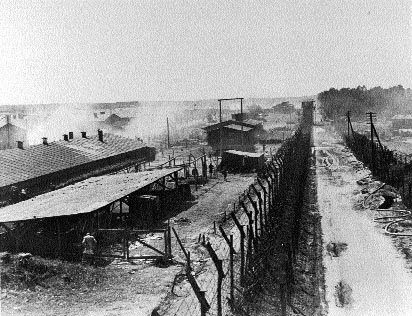
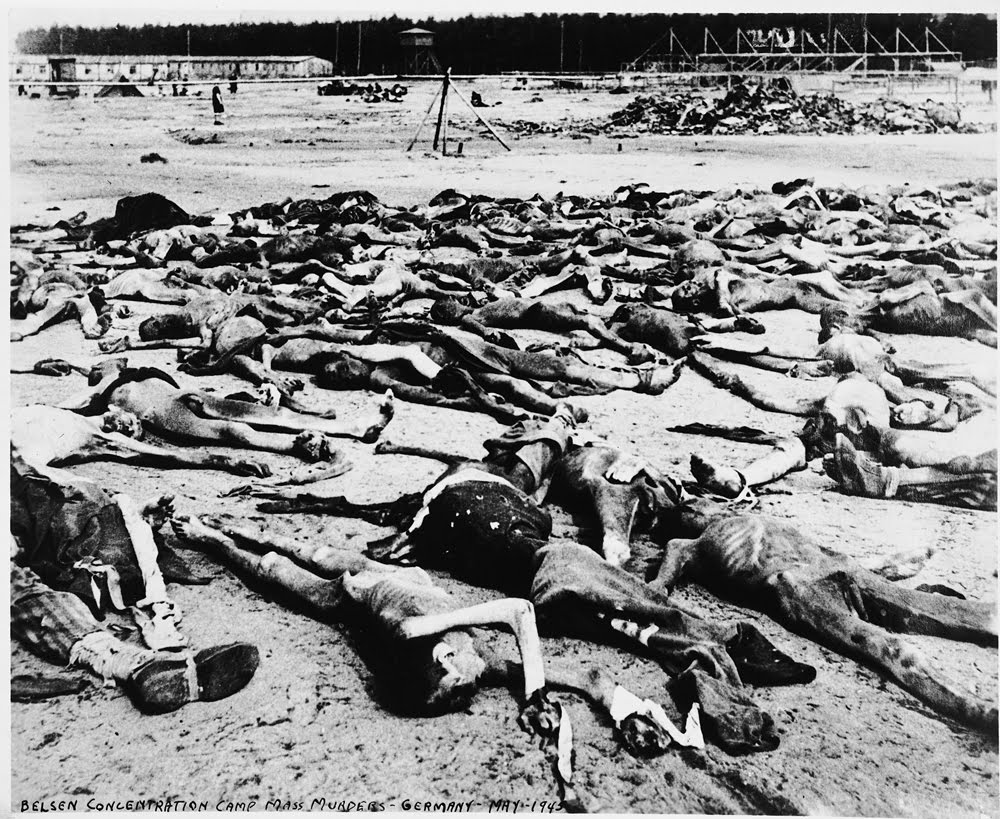
Hannover is the closest major city to the famous Bergen-Belsen concentration camp, where hundreds of thousands of German, Dutch, Polish, and Hungarian Jews were killed by the Nazis. Among the most famous of detainees at Bergen-Belsen, a young Dutch girl named Anne Frank.

Now this breaking news...

AP/Yahoo News: Youths attack Jewish dance group in Germany

BERLIN – Arab youths threw stones at a Jewish dance group during a street festival in Hannover, injuring one dancer and forcing the group to cancel its performance, German police and dance officials said Thursday.

The teenagers also used a megaphone to shout anti-Semitic slurs during the attack Saturday, Hannover police spokesman Thorsten Schiewe said.

"I don't remember such a dramatic attack in Germany in recent times," said Michael Fuerst, the head of the Jewish community of the state of Lower Saxony.

Six suspects have been identified — five Arabic immigrants and one German — and police are looking for the other three, police said.

An official with an association of German Jews, Stephan the Central Council of Jews, was quoted:

"This latest incident shows something we have not experienced before: A growing radicalization of young Muslims, which affects not only the Jewish community but the entire German community."

There are other reports that the Muslims were shouting "Juden Raus" (Jews get out), during the assault; taunts eerily similar to those lodged by German residents at Jews during the 1939 deportation.

Meanwhile, the Association of Jewish University Students in Germany is attributing the recent rise in Anti-Semitic violence to the unrest in the Gaza strip. They describe a marked increase in death threats and slurs on Facebook and by email in the last few weeks.

Pamela Geller, liberty champion and publisher of the Ayn Rand-oriented blog Atlas Shrugs, commented on the Jewish dance group stoning:

The Muslims are finishing the work of the Mufti al-Husseini, Hitlers allym and mass slaughterer of Jews during the the holocaust. Sixty years later it's the Muslims are dragging the rest of the world with them, in their genocidal dreams of annihilating goodness, creativity, production, inventiveness, benevolence, charity, medicine, technology and all of the gifts of the Jews.

Photos are of the camp at Bergen-Belsen. (H/t Wiki for Bergen-Belsen historical facts.)

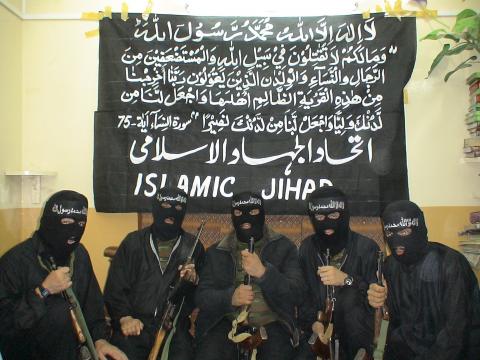
Radical Islamists murder rampages against Westerners, non-believers Worldwide

Muslim mob hacks up Fillipino Catholics with Machetes

From MSNBC June 20: Hooded gunmen kill 4 commuters in Philippines:

About 30 hooded attackers, believed to be Abu Sayyaf militants, shot and hacked horrified victims as they ran for their lives in the southern Philippines, police said Thursday. Four people died and six were wounded in the ambush on a village road.

“They were fired upon as they ran. One of the attackers hacked a 10-year-old boy, who survived,” Mendoza told The Associated Press.

“We found the bodies and survivors scattered outside the jeep. It’s sad, these outlaws don’t have any regard for life.”

The suspected al-Qaida-linked militants apparently were trying to divert government troops from a weekslong offensive in a nearby town...

Gun down "Westernized" Soccer fans in Somalia

From Reuters, June 16: Soccer Fans Executed For Watching World Cup

Gunmen believed to be from a radical Islamic group in northeast Mogadishu, Somalia, shot two people dead during an impromptu raid on a house where people were watching a World Cup match Saturday night, Reuters reports.

A witness told reporters that masked militants "stormed into the house" and open fired at the World Cup viewers, killing two instantly. The militants rounded up about 10 other fans, but left the bodies in the home, the witness said.

The incident came on the heels of a national ban on viewing "un-Islamic" World Cup games made by the local militia group al Shabaab, which controls much of south and central Somalia by force...

Slice Ukrainian boy's throat playing in a Sandbox

From Fox News June 19:

A 5-year-old Ukrainian boy was slaughtered by an alleged religious fanatic as he played in a sandpit with his friends, Pravda reported Tuesday.

The stranger strolled up to little Viktor Shemyakin before pointing to a tree and saying: “Look, there is a bird up there.”

When the youngster glanced upward the maniac plunged a knife into his throat, Pravda said.
The June 18 killing has threatened to ignite tension in the town of Dneprovka, in Ukraine’s Crimea region, after it emerged that the 27-year-old knifeman was a suspected Muslim fanatic, the Russian online newspaper reported.

“The man screamed Allahu Akbar (Arabic for 'God is great') when killing the boy, "said a shocked local. “The kid was slaughtered like a goat."

Editor's Comment - the attacker screamed "Allahu Akbar" while he was slicing the boy's throat, yet Fox describes him as an "alleged" religious fanatic.

Rand Paul: US has a "Special relationship" with Israel, support her right to defend herself

From Eric Dondero:

John Hawkins (photo), Editor and Publisher of Rightwingnews.com, is a longtime friend and past contributor of Libertarian Republican blog. He had an opportunity recently, to interview Republican candidate for US Senate Rand Paul. He asked a number of questions including NAFTA, Cap and Trade, Immigration, and Minimum Wage.

Pro-Defense Libertarians may be most interested in Paul's response on Israel, Nukes and Iran. Hawkins commented to Paul, that a concern he hears among fellow conservatives is that Paul might share the same rabidly non-interventionist views of his Father. Paul responds:

I think you know our national security and our defense is the most important thing the federal government does. It is an enumerated power and it's something that will always be first on my mind when considering what our government should be doing.

With regard to Israel, I think we do have a special relationship. They're a special ally. They're the only democracy in the Middle East and I will not vote to condemn Israel for defending herself. I think that summarizes it fairly well.

On Iran:

I think that Iran having nuclear weapons would destabilize the Middle East and it's not a good idea. I'm in favor of the U.S. not subsidizing corporations that do business with Iran. I'm also in favor of...not doing business with companies that do business in Iran....There's no reason we should be subsidizing companies that are doing business with a country that seems set on destabilizing things in the region.

Read the entire interview at - Rightwingnews.com

Supersonic Green Machine

Take a look at this:

NASA - Supersonic Green Machine

This came from a NASA news release today, and I thought it looked interesting.  Here’s what NASA has to say about it:

This future aircraft design concept for supersonic flight over land comes from the team led by the Lockheed Martin Corporation.

The team’s simulation shows possibility for achieving overland flight by dramatically lowering the level of sonic booms through the use of an “inverted-V” engine-under wing configuration. Other revolutionary technologies help achieve range, payload and environmental goals.

This supersonic cruise concept is among the designs presented in April 2010 to the NASA Aeronautics Research Mission Directorate for its NASA Research Announcement-funded studies into advanced aircraft that could enter service in the 2030-2035 timeframe.

I wonder what it’s fuel consumption would be, and if something like this would be available for civilian traffic.

What do you think about the Supersonic Green Machine?

If Only Oil Spills Would Evaporate Like Climategate | Cosmic Variance

Even if I’m on hiatus, there’s no reason not to post links to interesting things that I would be tweeting anyway. Blogs are still much better places to have conversations, whatever the Twitter triumphalists might think.

With that in mind: check out this story by Sharon Begley from Newsweek, on how media are slowly backing away from the Climategate hysteria. (Via PZ.) She very rightly highlights the real damage: the backing-away won’t undo all the misimpressions of scientific malfeasance that people absorbed when the story was at its height.


NCBI ROFL: A foot needs a nipple like a fish needs a bicycle. | Discoblog

footcensored[Uncensored photo below]

Case report: Ectopic nipple on the sole of the foot, an unexplained anomaly.

“Supernumerary nipples are common congenital anomalies, most often occurring along the embryonic milk lines. We present a patient with an ectopic nipple on the foot. We are unable to explain the aetiology of this anomaly; however, several theories have been proposed.”

foot_nipples

Bonus figures:

nipple_foot_images“The patient considered the lesion to be a cosmetic blemish and refused to have it excised. He was advised follow-up every 6-months or to seek consultation if any features of the nipple changed.”

Related content:
Discoblog: NCBI ROFL: No bra + Wringer washing machine = squished boob.
Discoblog: NCBI ROFL: Eye Tracking of Men’s Preferences for Female Breast Size and Areola Pigmentation.
Discoblog: NCBI ROFL: Bad news: you have a tumor. Good news: it’s really cute!

WTF is NCBI ROFL? Read our FAQ!


New Report Says a Fetus Can’t Feel Pain Before 24 Weeks | 80beats

24weeksIn a development that’s certain to stir passions in the abortion debate, the Royal College of Obstetricians and Gynaecologists in the UK published a report today on “fetal awareness.” The group states, citing a review of current research, that human fetuses cannot feel pain before 24 weeks.

The group’s reasoning, as described in a press release, is based on these points:

-The fetus cannot feel pain before 24 weeks because the connections in the fetal brain are not fully formed
-The fetus, while in the chemical environment of the womb, is in a state of induced sleep and is unconscious
-Because the 24 week-old fetus has no awareness nor can it feel pain, the use of analgesia is of no benefit
-More research is needed into the short and long-term effects of the use of fetal analgesia post-24 weeks [Royal College of Obstetricians and Gynaecologists]

This is certainly not the first debate over whether a fetus can feel pain. Fetal surgeries have led doctors to ask this question, as they determined whether anesthesia was appropriate and at what stage in development. As summarized in a 2008 New York Times Magazine article, researchers have looked at fetal flinch responses, heart rate, and levels of stress hormones. But any metric has remained controversial. Take stress hormones, for example. Do you say that any fetus that can release these hormones feels pain? Or do you wait until it develops the nervous system to register those hormones? Or do you say that an undeveloped nervous system makes the fetus more susceptible to pain, since it hasn’t developed the system to suppress it?

In April, Kanwaljeet Anand, director of the Pain Neurobiology Laboratory at the University of Tennessee Health Science Center in Memphis and an often-quoted researcher in the debate, described some of the issues:

When a fetus of that age [18 to 20 weeks] gets a blood transfusion, for example, changes in heart rate and blood pressure accompany shifts in circulation and spikes in stress hormones. A morphine-like drug calms all of those responses down. “The die-hards will say these are all reflexes,” Anand said. But new evidence, he argued, suggests that the very young brain is developed enough in the right places to take in those sensations and translate them into pain. [Discovery News]

The Royal College of Obstetricians and Gynaecologists’ report differs from Anand’s assessment, and argues that fetuses younger than 24 weeks don’t have the brain connections to register pain, and if they could register the chemical signals, they couldn’t make out what they mean.

The report on pain perception says: “It was apparent that connections from the periphery to the cortex are not intact before 24 weeks of gestation and, as most neuroscientists believe that the cortex is necessary for pain perception, it can be concluded that the foetus cannot experience pain in any sense prior to this gestation.” Even after 24 weeks, “it is difficult to say that the foetus experiences pain because this, like all other experiences, develops post-natally along with memory and other learned behaviours”. [The Gaurdian]

Understanding when a fetus can feel pain has implications for abortion laws, and groups on both side of the debate have weighed in on today’s reports.

As the BBC reports, those in the United Kingdom question the reports’ implications for the 1967 Abortion Act, which covers all parts of the UK apart from Northern Ireland, and caps legal abortion at 24 weeks (with some exceptions, regarding dangers to the life of the pregnant woman or evidence of serious fetal abnormality). Some activists had campaigned to reduce that timeframe, but UK government representatives have said that there are currently no plans to change the act.

A Downing Street spokeswoman said: “The Prime Minister’s view is that he will be led by the science.” She added: “At the moment there are no plans to change the policy.” [BBC]

Related content:

DISCOVER: When Does a Fetus Feel Pain?
80beats: Sex-Selective Abortions in China Have Produced 32 Million Extra Boys
80beats: Obama to Rescind “Conscience” Rule on Abortion and Birth Control
80beats: Federal Rule Lets Doctors Deny Medical Care Based on Religious Concerns
80beats: Leftover Embryos at Fertility Clinics Pose Troubling Questions for Patients

Image: flickr / Chris Denbow


First they came for Dave Weigel | Gene Expression

Dave Weigel of The Washington Post has resigned over his juvenile postings on an e-list. Basically the postings allowed for Weigel’s mask to slip, and showed him to be a vulgar and immature young man in some contexts. That’s no different from many of us in the proper context. The e-list is now defunct because of this information break.

Someone like Dave Weigel, a reporter who has to make a public pretense toward objectivity, and a somewhat public person, is atypical. But I think it’s the tip of the iceberg. People who know me in “real life” know that nothing they say to me will ever show up on this blog; it’s private, and my day to day interactions almost never intersect with the topicality here. If I want to introduce an idea or concept that someone else familiarized me with I will ask if I can do so, and credit them if they request. But that’s the nature of this blog, which draws more upon the scientific literature or reader feedback. Other outlets blur the line between private & public more explicitly, and if you meet someone with such an outlet, watch what you say, watch what you do. I’ve been on private e-lists where people say things that in public that could really compromise them. I’ve even gotten into disputes with people who were taking one stand in public which I knew could be easily undercut if I “exposed” what they’d said in private.

In the short term by breaking down barriers to information flow the internet is going to result in people retrenching to the narrowest and most trusted circles to “let their hair down.” In the long term I think we might have to reconceptualize what we think of as private or public. Soon enough a whole host of data on anyone you meet will be available on demand. And your data will also be available to them.

Buzz Aldrin Explains: How to Take a Whiz on the Moon | Discoblog

144832main_aldrin_bootprintCharged with writing to an astronaut, a five-year-old boy asked a burning question: How do you pee and poop in your astronaut suit?

In an interview with Buzz Aldrin just published in Vanity Fair, contributing reporter Eric Spitznagel finally got this answer:

“We were well skilled in the art of disposal waste. There was such a thing called a ‘blue bag,’ which was kind of messy. There was a stickum on it, and you could stick it around your posterior. For urinating we had an ego-buster, which was like a condom catheter. We were cautioned not to overestimate our size. (Laughs.) Because if the condom was too big, there might be a little leakage.”

The story continues: Aldrin describes in full detail what happens if you *do* have a little “leakage” (wiggle it out into a larger bag) and where astronauts flush those blue baggies. Aldrin tells Spitznagel about a newbie mistake of tossing the bags (during extra-vehicular activity) in a trajectory that brought them straight back at their capsule.

“We looked out the window and there were three bags in a row, heading straight for us.”

In case, Spitznagel isn’t the only one wondering about space crap, you should know that taking care of business has come a long way since blue bags. Astronauts potty train using simulators before their travels. The Space Shuttles and International Space Station both have air-flushing toilets, and the International Space Station recycles pee.

Related content:
Discoblog: California Lays Claim to Astronaut Garbage Left Behind on the Moon
Discoblog: Scientists Examine Underwear Astronaut Wore for a Month
Discoblog: Astronauts in Space Finally Enter the Intertubes
Discoblog: Yum! Silkworms Could Be the Next Astronaut Food
80beats: Strife on the Space Station: Russians Can’t Use the American Toilet

Image: NASA


How to Build a Working Rat Lung in a Lab | 80beats

rat-lungStep 1: Take a rat lung. Step 2: Strip away all of its living cells, leaving only a fibrous “scaffold” of connective tissue. Step 3: Bathe the scaffold in lung cells taken from newborn rats, and put the whole thing in a bioreactor to let the cells multiply and spread. Step 4: A few days later, when the reconstructed lung is again filled with blood vessels and alveoli, transplant the organ into a living rat. Step 5: Watch in awe as the lung begins to function.

That’s the short version of the experiment Yale University researchers just published in Science. The study was a result of a change in direction for lead researcher Laura Niklason:

Niklason spent several years trying to create a synthetic lung scaffold, but in the end concluded it was too difficult. “I decided I couldn’t do it, and probably nobody else could either,” she said. [National Geographic]

The proof-of-concept study showed that a lung reconstructed on a natural scaffold could serve its intended purpose in vivo at least temporarily, but the medical applications of this technology are far off. Theoretically, a fibrous collegen scaffold could be taken from a dead donor and put into a living patient without triggering an immune response, but living cells are another matter. To prevent the patient from rejecting the new lung, researchers will have to find a better source for the cells that would coat the scaffold.

Scientists could perhaps take healthy cells from a patient’s lungs, or they could take other cells from the patient and coax them back into a stem cell-like state, allowing them to grow into all the necessary forms of lung tissue.

“I clearly don’t think we’ve solved the whole problem, but I sort of feel like we’re laying train tracks into the mountains,” Niklason said. “We haven’t gotten to the other side of the mountain range yet, but when we do, I hope there’s a big bus of stem cells waiting for us.” [Los Angeles Times]

For a more thorough explanation of this work and its potential implications for human medicine, check out Ed Yong’s post at Not Exactly Rocket Science.

Related Content:
Not Exactly Rocket Science: Lungs Rebuilt in Lab and Transplanted Into Rats
80beats: Can Sight Be Restored With Stem Cells Grown on Contact Lenses?
80beats: Brain Reconstruction: Stem-Cell Scaffolding Can Repair Stroke Damage
80beats: Doctors Use a Patient’s Own Stem Cells to Build Her a New Windpipe
80beats: Researchers Could Grow Replacement Tissue to Patch Broken Hearts

Image: Science / Thomas Petersen, et al.


The Human Genome at 10: What It Did—and Didn’t—Deliver | 80beats

DNAHappy Birthday, human genome. On June 26, 2000 a group of scientists at the White House announced that they had a working draft of our genetic blueprints. They hadn’t sequenced all our genes; the Human Genome Project and its private-sector competitor Celera Genomics still had some gaps to fill in. Still, scientists believed this data might hold clues to the causes of certain diseases and could lead to new treatments.

Even before the project’s start, some scientists were skeptical: Was mapping our genome a waste of money and time? Even among public hoopla and presidential speeches, scientists cautioned that applying the results would take time. Now, ten years later, many are asking: What have we learned? Here we round up some opinions about the impact of the project.

The Bad?

Some see fewer medical treatments than advertised. Instead of simple relationships between common variants and specific diseases, sequencing uncovered sheer complexity. Researchers now think that intricate relationships between rare variants may cause many diseases.

The difficulties were made clear in articles by Nicholas Wade and Andrew Pollack in The Times this month. One recent study found that some 100 genetic variants that had been statistically linked to heart disease had no value in predicting who would get the disease among 19,000 women who had been followed for 12 years. The old-fashioned method of taking a family history was a better guide. Meanwhile, the drug industry has yet to find the cornucopia of new drugs once predicted and is bogged down in a surfeit of information about potential targets for their medicines. [The New York Times]

As genetic sequencing goes, what once took years and millions of dollars can now take months and thousands. Still, some worry that the drive to sequence more, faster has led to techniques that make reading results increasingly hard.

The advances in speed … have come at a cost. Only short stretches of DNA can be sequenced at a time, so the pieces have to be joined together by looking for overlaps between them. While early instruments sequenced pieces up to 900 base pairs long, most high-speed machines produce “reads” of less than 100 base pairs. That means the overlaps are much shorter, making it far harder to join the pieces together, so assemblers use existing genomes as a guide — which can lead to mistakes. [New Scientist]

The Good?

Though the Human Genome Project may have thus far yielded fewer advanced medical treatments than hoped for, the findings for biologists seem greater than expected. The complexity that frustrated those looking for practical, clinical applications has led to rich veins of research.

Nature News surveyed more than 1,000 life scientists, many who said that the sequenced genome had greatly benefited their work:

Almost all biologists surveyed have been influenced in some way by the availability of the human genome sequence. A whopping 69% of those who responded to Nature ’s poll say that the human genome projects inspired them either to become a scientist or to change the direction of their research. Some 90% say that their own research has benefited from the sequencing of human genomes — with 46% saying that it has done so “significantly”. And almost one-third use the sequence “almost daily” in their research. “For young researchers like me it’s hard to imagine how biologists managed without it,” wrote one scientist. [Nature News]

Some also praise the accessibility of genomic data from this research as a means to advance further research–among them, Francis Collins, current NIH director and former head of the Human Genome Project.

“For example, the search for the cystic fibrosis gene finally succeeded in 1989 after years of effort by my lab and several others, at an estimated cost of U.S. $50 million,” Collins writes in an opinion piece published in this week’s issue of the journal Nature. “Such a project could now be accomplished in a few days by a good graduate student. … ,” he writes. All the budding geneticist needs, Collins says, is the Internet, some inexpensive chemicals, a thermal cycling machine to amplify specific DNA segments, and access to a DNA sequencer, which “reads” DNA via light signals. [National Geographic]

Nature Newspoll also hints that scientists believe that a better understanding of the underpinnings of human genetics, better systems to analyze the sequenced data, and more information from other research like the Human Epigenome Project will help turn this biological knowledge into clinical applications–some argue within the next 10 to 15 years.

Others say we can only wait and see. That’s what Eric S. Lander, director of the Broad Institute, told The New York Times regarding a direct connection between sequencing and treatments.

“The only intellectually honest answer is that there’s no way to know,” Dr. Lander said. “One can prefer to be an optimist or a pessimist, but the best approach is to be an empiricist.” [The New York Times]

Related content:
80beats: Court Strikes Down Patents on Two Human Genes; Biotech Industry Trembles
80beats: IBM’s “DNA Transistor” Could Sequence Genomes on the Cheap
80beats: New Lawsuit Challenges the Patenting of Human Genes
80beats: Big Autism Study Reveals New Genetic Clues, but Also Baffling Complexity

Image: flickr / net efekt


Two teachers doing good work to promote science education | Bad Astronomy

I have two tales of teachers trying to teach, um, science (nuts, ran out of t words).

The first is about Joanne Manaster — you may remember her review of my book. She has set up a contest for kids to read science books and then create a short video based on the book. There are two levels: Kids Read Science aimed at ages 8-12, and Teens Read Science for ages 13-18.

This is a terrific idea! It’s a great way to get kids to read about science (and scientists!). She made a short video describing the project:

The deadline is 11 p.m. central time on September 22, 2010, so if you have a kid that age or know one, encourage them to participate — one of the prizes is a copy of my book!


The second tale is about Alan Leipzig, a middle school teacher in Florida. He contacted me a little while back to let me know he was trying to raise money to buy a class set of my book, Death from the Skies! Before I could even reply, he actually got all the money he needed, which is terrific! So now he’s looking to buy a second set so the students can bring the book home. If you’re interested in donating to him, he’s set up a link on Donor’s Choose, a terrific site that lets educators create donation pages for their individual projects. Remember: this is your chance to help kids read, learn about astronomy, and get the crap scared out of them. So give!


Is Louisiana’s Oil-Blocking Sand Berm Project Doomed? | 80beats

ChandeleurBuild a wall of sand: That was Louisiana Governor Bobby Jindal’s answer to protecting the state’s delicate marshlands when it became clear that BP wasn’t going to stop its gushing oil leak anytime soon. But now the federal government has put the kibosh on Louisiana’s construction, saying that the project to save one ecologically sensitive area will ruin another.

Scientists raised several objections to the state’s first proposal last month to build a long line of sand berms on 10 May. One key concern was that taking sand from in front of the Chandeleur Islands would make them more vulnerable to erosion. The state agreed to change its approach by taking sand from a site further away and then pumping it through pipes to build the berms [ScienceNOW].

However, that didn’t happen. Louisiana officials said they couldn’t get the pipes built in time, and asked the feds to let them dredge near Chandeleur at least until the other site was ready. OK, the Interior Department said—you’ve got a week. That week has lapsed, but Louisiana is still requesting more time to dredge near Chandeleur, promising to return the sand once the berm project has done its job.

That didn’t impress Tom Strickland, the Assistant Interior Secretary for Fish, Wildlife and Parks. He says dredging more material puts the already-eroding Chandeleurs at too much risk.

The Chandeleurs, in the Breton National Wildlife Refuge east of the Mississippi, are nesting grounds for species such as the brown pelican, and they are part of a diminishing natural hurricane barrier for Louisiana. Federal and state officials hope to someday fully restore the islands, which have been eroding for decades. Strickland said the berms are expected to last only about 90 days, maybe not even that long in an active hurricane season [BusinessWeek].

Even if you put the sand back there once you’re done with it, he says, it won’t be packed in or bonded like it was before, and might be washed away more easily.

The feds’ sudden outburst of concern failed to impress the already frustrated Gov. Jindal.

“We’ve been losing 300 feet every year off these islands — where has the federal government been?” he told reporters after touring the dredging site Wednesday. “All of a sudden when we’re building new land to protect our coast, they’re worried about a hypothetical” [CNN].

Previous posts on the BP oil spill:
80beats: Will Methane Gas in Gulf Waters Create a Massive Dead Zone?
80beats: From Marsh Grass to Manatees: The Next Wave of Life Endangered by BP’s Oil
80beats: Obama’s Speech on the Oil Spill: What Do You Think of His “Battle Plan”?
80beats: BP to Kevin Costner: We’ll Take 32 of Your Oil Clean-up Machines

Image: NASA Earth Observatory


Everybody Panic! Reusable Shopping Bags Harbor Bacteria | Discoblog

reusable-bagSo at some point you decided to do the right thing for the environment, and plonked down a couple of dollars for a reusable grocery bag. Bet you felt pretty good about yourself, huh? Well, some researchers have now come along to rain on your virtue parade. According to a new report (pdf), that bag is probably crawling with bacteria.

The researchers tested 84 bags, and found that all but one harbored bacterial colonies, and half contained coliform bacteria that suggest raw meat or uncooked food contamination. They also surveyed consumers about their use of these bags, and found that most people don’t keep separate bags for meat, and that they’re likely to tote clothes and all sorts of other things in these bags when they’re not grocery store-bound. Both these practices could allow for bacterial colonization.

But before you burn your reusable bags in a cleansing fire, consider this: The researchers also determined that either chucking a bag in the washing machine or rinsing it by hand reduced the bacterial counts to almost zero.

And The Washington Post dispassionately chimes in on another very relevant note:

The study was funded by the American Chemistry Council amid debate over a California bill that would ban single-use plastic bags. The council is opposed to that measure.

Related Content:
Discoblog: It’s In the Bag! Teenager Wins Science Fair, Solves Massive Environmental Problem
Discoblog: Got Too Many Plastic Bags? Recycle Them Into Nanotubes
80beats: Will California Be the First State to Ban the Plastic Shopping Bag?
80beats: Did Your Morning Shower Spray You With Bacteria?

Image: flickr/ foldablebags.com


What has Rome to do with Nairobi? | Gene Expression

rule-empires-those-who-built-them-timothy-parsons-hardcover-cover-artThere are very few books which would attempt to connect the experiences of the 1st century British who lived through Roman conquest with the French under the Vichy regime in World War II. The The Rule of Empires: Those Who Built Them, Those Who Endured Them, and Why They Always Fall by Timothy Parsons attempts to do just that. As John Emerson observed the subtitle is obnoxious; all states fall, not just empires. But in the author’s defense usually they are not the ones who decide upon the title, rather the publishers look for sentences which are catchy and can move some units. A grand explanation of why empires fall may appeal to the average reader. A disparate collection of descriptions of the imperial experience, filtered through a prism strongly shaped by 20th century perceptions and models of colonialism, perhaps not. The latter is what the The Rule of Empires is. The author is a professor of 20th century African social history, and the specter of the European colonialism of the Dark Continent haunts even the chapters on Roman Britain or Umayyad Spain. Though Parsons’ sympathy with the subjugated is obvious he restrains himself enough so that tiresome polemic does not interfere excessively with the collation of fact or the attempt to engage in objective analysis. Unfortunately the project of a grand theory of the rise and fall of empires, or more accurately the colonized experience, falls short of its goals. I was totally unpersuaded that the fall of Napoleonic Italy, Roman Britain, or British Kenya, were united in any deep way by inevitable social or institutional forces of history which thread together all empires. Though there are many interesting facts on display, it does seem to me that the author falls into a tendency to transform all imperialists into 20th century British, and all subjects into 20th century Kikuyu. The most recent imperial adventures serve as the models, or the skeleton, around which the grand theory is built, and that only distracts from the specific chapters which are rich with specific detail.


Consider the stab at describing and decomposing the British Celtic experience of Roman conquest and colonization. The reality is that we don’t know much about this experience, a reality which the author admits. Even the most gripping narrative nugget, the rebellion of Boudica and the Iceni against the depredations of the Romans, is historically fraught. To add firmness to this section Timothy Parsons engages in supposition and extrapolation. Some of it is rather stretched to the extreme. Like most social historians he cautions against back-projecting modern notions of nationhood to antiquity, but he can’t help but slipping this framework into his dyads of conqueror and conquered. For narrative purposes setting the Romans against the vague and incomprehensible welter of diffuse Celtic tribes and local affinities would be absolutely unreadable, and analytically intractable. And yet there was no singular British nation which was oppressed by a singular Roman nation. Ancient identity was somewhat different than modern identity. Parsons acknowledges this, and then periodically ignores it nonetheless.

More problematically the author makes some elementary errors in classical history which trouble me. He asserts as a theoretical truth that the distinction between conquered and conqueror must be maintained for proper order of empire through the text. One particular passage in the Roman chapter really jumped out at me:

…Caracalla bestowed blanket citizenship on all residents of the empire in A.D. 212. Those who prefer to imagine the Roman Empire as a civilizing force cite this mass enfranchisement as evidence of its benevolence, but it is more likely that Caracalla’s concession was a pragmatic acknowledgement that the boundaries of true subjecthood had blurred to the point where the Roman Empire was actually no longer an imperial institution by strict definition.

…the respectable and military classes of the empire had become so romanized that the distinction between citizen and subject no longer mattered at the elite level. This universal enfranchisement must have tempered the extractive power of the state and may have contributed to the financial crisis that best the later Roman Empire.

First, the evidence for the economic state of the later Empire is confused. Some scholars assert that after the 3rd century chaos the 4th century empire was nearly as robust as that of the 1st and 2nd centuries. In other words, there is no consensus that revenue extraction decline monotonically; the chaos of the 3rd century may have been an interregnum. It seems rather bizarre to assume a priori that blurred boundaries necessarily entailed lower taxation rates. In fact one of the rationales given for the ease of Arab conquest of the Byzantine Near East was that the Arabs imposed lower taxes than the Byzantines. Whether this is correct, the rate of taxation is subject to may variables and I am not convinced that the theoretical presupposition which Parsons holds to is strong enough to take it as a given.

But the bigger issue is that the description of the consequence of Caracalla’s granting of universal citizenship to free men in the Roman Empire totally ignores the conventional starting point: that it was an attempt to increase the Empire’s tax base! Or at least that is the reason given by Cassius Dio in his description of the edict. Whether this was correct or not, any discussion of this act’s impact on revenue should at least make note of this orthodoxy. I have to wonder then if the author was simply not aware of this basic fact.

Obviously to many this discussion may seem a bit pedantic, but The Rule of Empires is a book rich in fact and dense with data, and in many of the other chapters my own base of data was thinner so I would naturally rely on the author. But if such glaring problems of analysis are present in the section on Rome, a period with which I am familiar, I must admit to some caution at accepting the rest of the data at face value.

More abstractly it seems that the biggest failure of Timothy Parson’s framework is its economic ahistoricism. Prior to the industrial revolution the vast majority of humanity experienced life on the Malthusian margin, and the game of empire was a matter of elites stealing from each other’s human cattle. Additionally, if political orders are broken up into smaller units that would introduce multiplicity of function and possibly greater costs to the peasant producer. More plainly Roman conquest may have introduced economies of scale as well as greater peace in the life of the British peasant, who admittedly had little national identity as it was. This is not the story in The Rule of Empires, even though the author admits that there’s very little empirically to go on. With a unified theoretical framework from the 2nd to the 20th century one might presume that the Romans as rapacious alien conquerors with little sympathy for British peasants would increase taxation, but the 2nd century was a world where all elites were rapacious and had little sympathy for peasants, and the economic pie was notably stagnant in its extent.

In contrast Parsons correctly observes that the the European colonization of Africa was a negative sum affair. In an age of real economic productivity growth and demographic transitions, the gains to colonialism were of symbolism, as well as to a small minority of sub-elites whose primary aim was to exploit the natives for profit. A classic instance of socializing the losses of failed expeditions, and privatizing their gains. The density of the later chapters, and their analytical heft, is a sharp contrast with the often platitudinous regurgitations of secondary literature which seem to dominate the sections on antiquity and the medieval period. Timothy Parsons would have benefited from being less ambitious, and simply admitting that his definition of empire makes no sense before 1800.

Nairobi truly does have little to do with Rome.

The Large Cryogenic Gravitational-wave Telescope | Cosmic Variance

LCGT posterI am presently in Japan, participating in the Gravity and Cosmology workshop at the Yukawa Institute for Theoretical Physics on the Kyoto University campus. The big news here is that the Large Cryogenic Gravitational-wave Telescope (LCGT) was just approved for funding! I believe that this is the press release, as witnessed by the exclamation mark at the end of the title (a Japanese speaker will no doubt correct me if I’m wrong). Apparently they have been granted roughly half of their estimated price tag (of >$200 million). This is a critical step, and I am told that once the Japanese government commits funds, it is highly unlikely to change its mind down the road. So LCGT is a huge step closer to becoming a reality.

We have waxed poetic about gravitational-wave detectors before (here, here, and here). These instruments are truly amazing feats of engineering, with the power to unlock a whole new window on our Universe. LCGT would be even more impressive than the current instruments (LIGO and Virgo): it takes its 3-kilometer long power-recycled Fabry–Perot–Michelson interferometer arms, and places them one kilometer underground (to reduce seismic noise, which sets the low-frequency [<10 Hz] noise floor). As if that’s not enough, it also cools its mirrors to ~20 degrees above absolute zero (which reduces thermal noise, which sets the intermediate-frequency [10--100 Hz] noise floor).

As it happens, I am in the midst of finishing a project with Samaya Nissanke (at JPL) and Scott Hughes (at MIT), trying to determine how well various gravitational-wave networks detect gravitational-wave standard sirens (stellar mass black hole and/or neutron star binary inspirals; more on why these are interesting in a future post). In particular, we are finding that adding LCGT to the expected Advanced LIGO-Virgo network increases the number of detected binaries by 50%, and generates more uniform sky coverage. LCGT will substantially enhance our view of the gravitational-wave sky, and will improve the science coming out of all the upcoming gravitational-wave detectors. Congratulations to the Japanese for pushing this observatory forward!


Want Someone to Take a Decision Seriously? Hand Them Something Heavy | 80beats

fingerprintTouch comes first. It’s the first way that people interact with the world, MIT’s Josh Ackerman says, and touch can change the way you feel about the world or engage with it.

Ackerman and colleagues published a study in Science this week further uncovering the ways that what we touch influences what we think. In a series of experiments, his team demonstrated numerous examples of the tactile altering the mental, like people negotiating more stubbornly when sitting in hard, uncomfortable chairs, or taking decisions more seriously when holding a weighty object like a clipboard.

The idea, then, is that due to the strong connection between our senses and our thoughts, touching a surface can trigger feelings related to the metaphorical value we assign to it. Or, more simply, the feeling of weight makes us feel like a decision is more “weighty,” a harsh surface like sandpaper leads to harsh feelings toward other people, and the touch of smoothness makes us feel like things are going to smooth over.

“The tactile sensation is extremely important early in development. The idea that other associations would be built on that makes intuitive sense,” said Franklin & Marshall College psychologist Michael Anderson, who was not involved in the study. “Brain regions that may initially have been dedicated to one particular task, turn out to contribute to multiple tasks” [Wired.com].

For more on this, check out Ed Yong’s in-depth post at Not Exactly Rocket Science.

Related Content:
Not Exactly Rocket Science: Heavy, Rough, and Hard: How Things We Touch Affect Our Judgment And Decisions
80beats: In a Sensory Hack, What You Touch Affects What You See
80beats: Fingerprints Are Tuned to Amplify Vibrations and Send Info to the Brain
80beats: Warm Hands Give People a Friendly, Generous Outlook
80beats: Hand Washing After a Decision Scrubs Away Those Lingering Doubts

Image: Science/AAAS


A Long Unexpected Homecoming — and, “Why Truth Loses” | The Intersection

This morning I fly out to Buffalo, and then ride on to Amherst, New York, home to the Center for Inquiry -- the hub of Skeptical Inquirer magazine, Free Inquiry, and much else, including the Point of Inquiry radio show and podcast. This is the place I worked, for my very first job out of college, along with Matthew Nisbet in the summer of 1999. Also present back then: Derek Araujo, now Vice President and General Counsel of the Center for Inquiry, director of CFI’s legal programs, and CFI’s Representative to the United Nations; and Austin Dacey, a writer in New York and author of The Secular Conscience. The occasion is the Center for Inquiry On Campus Leadership Conference -- and, well, I'm reminiscing. It is hard to believe that ten years ago, I was in a secular humanist rock band with Araujo, Dacey, and a few other young skeptic/freethinkers called the House Judiciary Committee (it was the time of impeachment). I was the rhythm guitar player, though I didn't have any rhythm. One of our hits? An instrumental called "Hook, Quine, and Pinker." My goals in Amherst are several. First, I'm going to give a talk to the young freethought advocates. ...


Western US lunar eclipse June 26 | Bad Astronomy

There will be a partial lunar eclipse on Saturday, June 26, for folks in the central and western part of the United States. It’s in the morning, so you’ll have to get up early to see it. Here’s what it’ll look like, more or less, from the Mountain Time Zone (so mid-eclipse is at 06:38 central time or 04:38 Pacific):

lunareclipsejune262010

The folks at Stardate.org have more info.

A lunar eclipse is when the Moon passes into the shadow cast by the Earth. It can be seen by anyone as long as the Moon is up and visible when it’s in the shadow. In this case, the farther west you are the better; the Moon will set before the action really gets going for people on the east coast, and sets mid-eclipse for Central and Mountain timers. If you’re in Hawaii, you can see the whole thing.

Lunar eclipses are pretty, and they last for a long time, so you can get a decent chance of seeing it. They’re also pretty easy to photograph, so if you get some images online link to ‘em in the comments and let us ooooh and ahhh over them!


Heavy, rough and hard – how the things we touch affect our judgments and decisions | Not Exactly Rocket Science

Touch

When you pick up an object, you might think that you are manipulating it, but in a sense, it is also manipulating you. Through a series of six psychological experiments, Joshua Ackerman from the Massachusetts Institute of Technology has shown that the properties that we feel through touch – texture, hardness, weight – can all influence the way we think.

Weight is linked to importance, so that people carrying heavy objects deem interview candidates as more serious and social problems as more pressing. Texture is linked to difficulty and harshness. Touching rough sandpaper makes social interactions seem more adversarial, while smooth wood makes them seem friendlier. Finally, hardness is associated with rigidity and stability. When sitting on a hard chair, negotiators take tougher stances but if they sit on a soft one instead, they become more flexible.

These influences are not trivial – they can sway how people react in important ways, including how much money they part with, how cooperative they are with strangers, or how they judge an interview candidate.

First off, in two experiments reminiscent of another study I’ve written about, Ackerman showed that holding a light or heavy clipboard can affect a person’s decision-making. In a study of 54 volunteers, those who clutched the heavier board rated a job candidate more highly based on their resume, and thought that they displayed a more serious interest in the job. They even rated their own assessments as being more important! However, the boards didn’t affect the recruits’ judgments on areas unrelated to importance, such as the candidate’s ability to get along with others.

In a second test with 43 volunteers, those who held the heavier boards were more likely to call for government funds to be spent on serious social matters like setting air pollution standards, over more trivial affairs like public toilet regulations. Again, the mere feeling of weight appears to influence the importance we give to matters.

In the next experiments, Ackerman asked recruits to complete a puzzle with pieces that were either smooth and varnished, or covered in rough sandpaper. 64 volunteers were then asked to read a transcript of an ambiguous social interaction. Those who touched the rough pieces found the liaison to be harsher and more adversarial than those who touched the smooth pieces, but no less familiar.

This also affected the decisions they made. After completing the puzzle, Ackerman asked 42 people to play an Ultimatum game, where they had to decide how many lottery tickets to give to a (fake) partner, out of a total of ten. The catch is that if the partner refuses the offer, all the tickets are confiscated. Wary of this, players who touched the rough pieces (and were primed for harsh and difficult dealings) offered more tickets outright than those who touched the smooth pieces.

Ackerman also looked at the influence of an object’s hardness. He asked 49 volunteers to touch either a hard block of word or a soft blanket, under the pretence of examining objects to be used in a magic act. Afterwards, when they read an interaction between a boss and an employee, those who felt the wood thought the employee was stricter and more rigid than those who touched the blanket (but no less positive). It doesn’t have to be the hands that do the touching either – when he repeated the same task with 86 volunteers who sat in either a hard, wooden chair or a soft, cushioned one, he found the same results. “We primed participants by the seat of their pants,” he writes.

The chair experiment also gave Ackerman the opportunity to test the effect of hardness on decision-making. He asked his recruits to place two offers on a $16,500 car, the second following a straight refusal of the first by the dealer. While the volunteers offered the same average amount at first, those who sat on the softer seats offered far more on their second go than on their first. That’s consistent with the idea that hardness has connotations of rigidity and stability. People who feel hard sensations are less likely to shift in their decisions. Harder chairs made for harder hearts.

In all six experiments, the effects were very specific. People deemed conversations to be stricter after touching a hard object, but not more positive. Heavy boards make interview candidates seem more serious but not more sociable. As Ackerman says, “These findings emphasize the power of that unique adaptation, the hand, to manipulate the mind as well as the environment.” And the last study with the chair suggests that even our buttocks have some sway over our minds.

According to Ackerman, these effects happen because our understanding of abstract concepts is deeply rooted in physical experiences. Touch is the first of our senses to develop. In the earliest days of our lives, our ability to feel things like texture and temperature provides a tangible framework that we can use to understand more nebulous notions like importance or personal warmth. Eventually, the two become tied together, so that touching objects can activate the concepts that they are associated with.

This idea is known as “embodied cognition” and the metaphors and idioms in our languages provide hints about such associations. The link between weight and importance comes through in phrases such as “heavy matters” and the “gravity of the situation”. We show the link between texture and harshness when we describe a “rough day” or “coarse language”. And the link between hardness and stability or rigidity becomes clear when we describe someone as “hard-hearted” or “being a rock”.

Al l of the effects that Ackerman demonstrated were small but statistically significant. They’re sizeable enough to have serious implications for our day-to-day lives. The way we interact with our peers, our chances of getting a job, and maybe even our voting choices could all be influenced, quite literally, by whatever’s at hand. As Ackerman writes, “Perhaps the use of such “tactile tactics” will represent the next advance in social influence and communication.”

Reference: Science http://dx.doi.org/10.1126/science.1189993

Image by Chonophotos

More on embodied cognition:

Twitter.jpg Facebook.jpg Feed.jpg Book.jpg