
Arthur Green calling Jews to participation in movements for civil and human rights and environmental protection.
Monthly Archives: June 2010
Book Review: Radical Judaism
An enlightening mystical overview of radical Judaism and its interpretation of God, Torah, Israel, and God's image in all.
Book Review: Perfection
Examines the benefits and burdens of the quest for perfection.
Book Excerpt: Drive
Daniel H. Pink reporting on how 100 boomers in America turn 60 every 13 minutes and begin a serious quest for meaning and what they truly want.
Book Review: Drive
A research-based study of what boosts worker performance while creating greater life satisfaction.
Book Excerpt: Why Good Things Happen to Good People
Stephen Post and Jill Neimark on the many meanings and applications of compassion.
Book Excerpt: The Tao of Forgiveness
William Martin with a teaching story revealing that forgiveness cannot be earned.
Book Review: The Tao of Forgiveness
A fascinating and fruitful exploration of forgiveness through Taoist and Zen stories, poems, questions, and exercises.
Book Review: How Much Is Enough?
A scholarly collection of essays on Buddhist understanding of and approaches to the environment.
Book Excerpt: Upside-Down Zen
Susan Murphy on finding beauty and life in all things including concrete canyons, parking lots, and freeways.
SF clinic treats war stress in new way – San Francisco Chronicle
 San Francisco Chronicle | SF clinic treats war stress in new way San Francisco Chronicle "I had a fight with my girlfriend," he told Dr. Karen Seal at the San Francisco VA Medical Center. "She thinks I'm different since I got back from Iraq. ... |
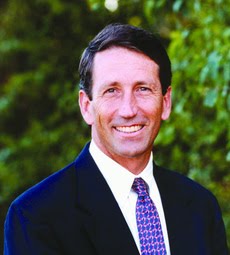
Libertarians offered South Carolina Gov. Mark Sanford to join Party
 LR EXCLUSIVE
From Eric Dondero:
Michael Roy Carmany, 2nd term State Chairman for the Libertarian Party of South Carolina has revealed to Libertarian Republican, that in October of 2009, the SCLP made an overture to Governor Mark Sanford that they would fully welcome him to join the Party. The offer was made during the height of the impeachment talk, in which many Republicans in the legislature participated.
The offer was made in a formal letter on SCLP stationary. Chairman Carmany made the offer at the time of his personal troubles, because he wanted the Governor to know that Libertarians have no problem with him on social issues. Carmany told Libertarian Republican, "it's a personal issue... what you do with your personal life is nobody's business."
Governor Sanford's formal reply to the SCLP was that he was "going to remain a Republican," [because he] "believes in the Republican platform."
Additionally, that he intended to remain a Republican til the remainder of his term.
Carmany also told LR that the Libertarian Party of SC continues to support his fiscal policies, and that the offer still remains on the table.
Carmany added that if Sanford were to consider running for President on the Libertarian ticket in 2012, "we would welcome it."

Rand Paul new poll post Civil Rights comments, comfortably ahead
 From Eric Dondero:
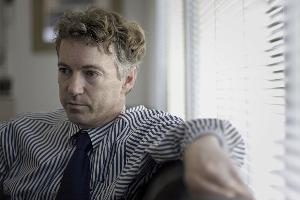
Rand Paul's civil rights comments from last week, after his election victory, and an appearance on the MSNBC Rachel Maddow show, appear not to have caused any long-term damage, at least in Kentucky.
From Survey USA (via Rightosphere):
SurveyUSA Kentucky Senatorial Survey
•Rand Paul (R) 51%
•Jack Conway (D) 45%
•Undecided 4%

It’s Time To Get Behind Peter Schiff
 SPECIAL GUEST EDITORIAL
by Josiah Schmidt
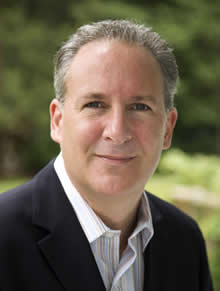
Those of you following Connecticut's Republican Senate race are aware that, last week, one of the two establishment candidates bowed out, leaving only the establishment-endorsed Linda McMahon and the Tea Party-endorsed Peter Schiff.
As libertarian Republicans, we ought to be aware of some of the distinctions between Schiff and McMahon:
Peter Schiff opposes all bailouts. Linda McMahon does not oppose all bailouts. Peter Schiff is against TARP. Linda McMahon "supported TARP in its original form."
Peter Schiff is against cap-and-trade. Linda McMahon claims to oppose cap-and-trade, but only "in its current form," meaning she would be open to compromising on it and supporting
it.
Peter Schiff wants Roe V Wade overturned. Linda McMahon supports Roe V Wade.
Peter Schiff will devote all his time in the US Senate to forcing an immediate end to deficit spending, by leading a filibuster of the raising of the national debt ceiling and fighting every big spending bill that comes across the Senate floor. Linda McMahon does not want to go to Washington to really make a difference. She has said she would have voted to go along with raising the national debt ceiling by $3 trillion.
Peter Schiff is a millionaire with wide and deep support, who energizes the grassroots. Linda McMahon is just a millionaire.
Peter Schiff has been endorsed by all the Tea Party organizations in CT, as well as the 9 largest CT-based conservative grassroots organizations. Linda McMahon was endorsed by the establishment. Peter Schiff is a committed Republican.
Linda McMahon has donated to many Democratic politicans (including Rahm Emanuel) and was speaking at Democratic events for quite some time before deciding to run in the Republican primary. In fact, the organization who has received the most money from McMahon is the DCCC.
Peter Schiff is incredibly intelligent, is an expert on the biggest issue of the day (the economy) who predicted the 2008 recession in great detail, and can make Richard Blumenthal look like a fool in the debates. Linda McMahon has little-to-no detailed knowledge of any issues and will not be able to hold her own in an indepth debate with Blumenthal.
But I'm not touting Peter Schiff only because he is more in line with our issue positions than Linda McMahon is. I'm touting Peter Schiff, because I have come to the sincere conclusion that he is the only one with the knowledge, the credibility, the persuasiveness, the forcefulness, the courage, and the convictions necessary to get our country back on the right track.
There are very few politicians who I actually believe, when they say that they want to "bring change to government," or "shake up Washington." Even Ron and Rand Paul, who I have nothing but respect for, do not seem to me to be the type of politician that wants to be a powerful force for revolutionizing the way things are done in government. Most free marketeer politicians want to "set an example," or "encourage debate" regarding lofty, esoteric, philosophical issues. Peter Schiff, on the other hand, wants to use every tool at his disposal, to actively bring the big government machine in Washington to a grinding, screeching halt. While I have no doubt that a Senator Schiff would spark some very healthy debates over public policy and leave behind a sterling voting record, Schiff really wants to do battle with the federal government. For instance, one of his main goals is to lead a filibuster of the raising of the national debt ceiling. In the past, when Republicans have threatened to do so, the Democrats cry that such a thing would cause the federal government to have to be shut down. Peter's response? "Let them shut it down, because if we don't shut the government down, the government is going to shut the country down." Peter understands that only if we cut off the funding to the beast, will the beast be forced to start living within its means and making meaningful cuts.
Why do we need a free market warrior in Congress right now, more than we need a free market philospher? Because if policies continue on their current trajectory, this country is headed for a disaster of unprecedented magnitude. Mountains of malinvestments have amassed within our economy as a result of the ongoing attempts to keep bad businesses afloat with an unending stream of ridiculously cheap credit. When these malinvestments meet the fiery reality of consumer demand, this will result in massive bankruptcies, job losses, and credit restrictions (yes, even more). The Federal Reserve is spewing new money with reckless abandon, and when the dam of Chinese/Japanese/Saudi lending bursts, demand for the dollar crashes, and the value of our money plummets, prices will skyrocket and economic pandemonium will break loose. Somebody needs to be in the US Senate, not merely to sit back and make well-intentioned speeches, warning the government not to do the wrong thing in response to this disaster, but to stand up and use every legislative tactic and tool to force the government not to do the wrong thing in response to this disaster. And not only that, but somebody needs to be in the US Senate with the relentless persuasiveness and credibility needed to convince other Congressmen and Senators to do the right thing as well.
With all due respect to Linda McMahon, who would be nowhere near as bad a Senator as Richard Blumenthal, I don't see how anyone can believe, by any stretch of the imagination, that a Senator Linda who would fight tooth and nail to stop the raising of the national debt ceiling (which she has already said she would have voted to raise), or the next wave of bailouts (when she already said she would have supported the first wave of bailouts), or the horrible government policies that threaten to make our situation so much worse (when her
website is littered with promises to make all the same mistakes that got us into this mess in the first place). Even if Linda McMahon had the loyalty to free market principles that Peter Schiff has, I simply couldn't see her going from door to door down the corridor of Senator offices, and hammering each of them with raw logic over and over until they agree do the right thing.
Perhaps some years ago, before the size and severity of the coming crisis had been made clear, I wouldn't have fought so fervently against nominating someone like Linda McMahon. But the nature of our problem is now so grave, that we must take a chance at trying to
nominate the one person who will truly fight, day and night, for us in Washington--Peter Schiff. Schiff is aware that the average Senator spends 40% of her time trying to get re-elected (and in a blue state like Connecticut, a Republican Senator would have to spend a lot more than just 40% of their time securing re-election), which is why Schiff has pledged only one term. That means all of his time will be devoted to working for us. The fact that McMahon wants a healthy twelve years in the Senate means that she won't have the time to do the fighting Peter Schiff can do, and it shows that she doesn't understand the fact that this country's economy, as we know it, likely doesn't have more than six years left.
Peter Schiff can win the nomination, if we put all our efforts behind him, and he can make Dick Blumenthal look like a dunce on the biggest and most pressing issues of the day. But this election is about more than just denying a lowlife like Blumy a Senate seat. This election is our key to mitigating an enormous amount of the damage that the government will undoubtedly try to do, when the economy implodes and the Dollar collapses. It's time to get behind Peter Schiff.

Mark Hinkle wins National Chairman for Libertarian Party
 BREAKING NEWS!!
From Eric Dondero:
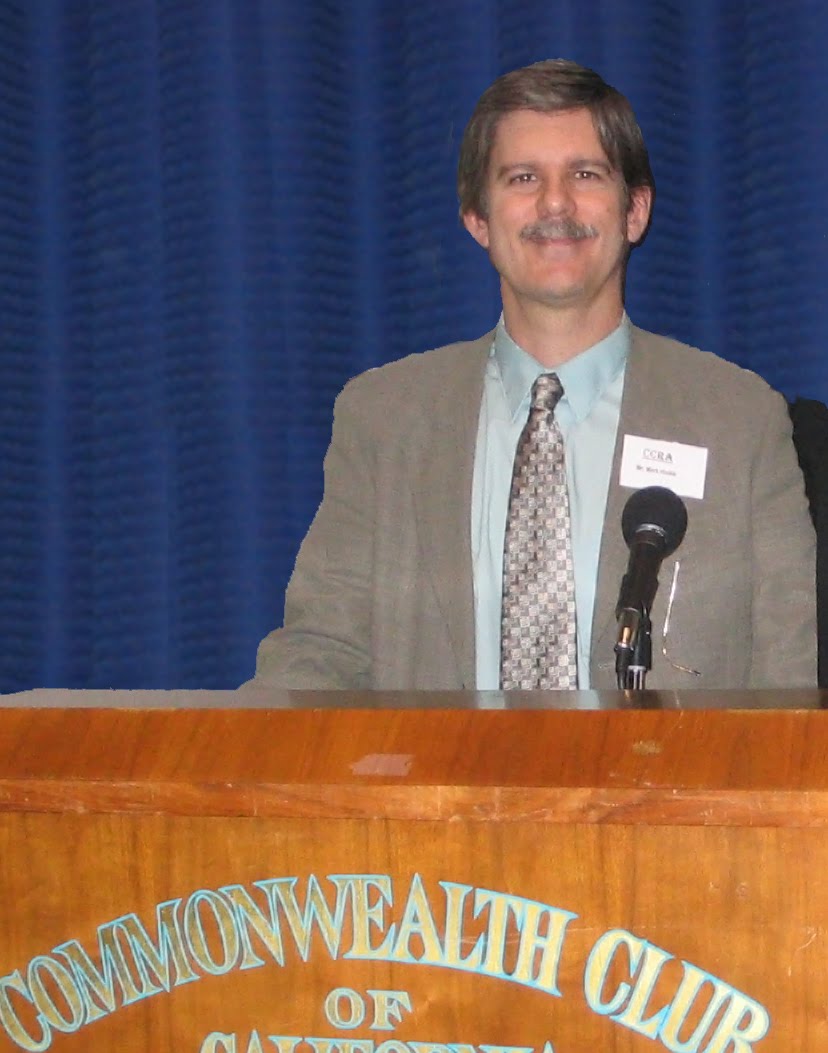
Meet the new National Chairman for the Libertarian Party. Mark Hinkle is from California. He's a very longtime LPC member, and has served in numerous capacities including running for statewide office on the Libertarian ticket.
Hinkle won on a third ballot beating Wayne Root 268 to 228.
In a brief interview with Libertarian Republican Hinkle said:
I think the delegates have spoken quite clearly that they want to unify the LP. They want the internal battles to cease. They want to go forward from this convention united in the cause of Liberty. I very much want to work with all liberty-minded groups, special groups that we share a common interest in.
In the last year I have gone to 5 or 6 Tea Party events, particularly in Silicon Valley. They are eschewing any political labels. They want to work with all groups who are concerned that government is too big, taxes are too high.
Root was very gracious to Hinkle with his victory, and pledged his full support.

Alabama Republican Video Contest
 From the Editor:
We are nearly on the eve of the Alabama Republican Primaries scheduled for Tuesday. For whatever reason, Alabama Republicans have been particularly rambunctious this election cycle. At least three candidates for major offices in the State have produced wild, in-your-face style YouTube videos. All three have received an enormous amount of attention and hits nationwide.
We thought it would be fun to see which one of the three comes out on top among Republicans nationwide.
After you've viewed the three following videos, go to our sidebar and cast your vote. And tell other Republicans you know to come on over to LibertarianRepublican.net to do the same.
VIDEO I
VIDEO II
VIDEO III
Alabama, show America you mean business. All three of these guys deserve to be elected, just on the basis of their videography skills alone. -- Eric - The Management

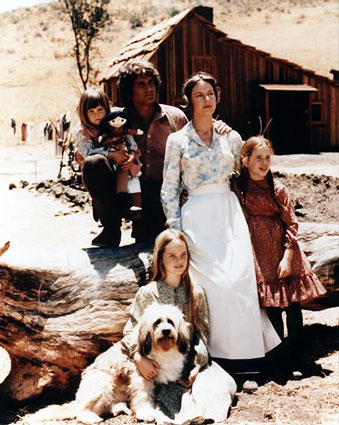
Rand Paul from the Laura Ingalls "Little House on the Prairie" wing of libertarians – with the other Rand he only shares a name
 Traditionalist Pioneer Spirit
by Clifford F. Thies
Commentators are taking notice that Rand Paul, who recently won the Republican nomination for the U.S. Senate from Kentucky, not only shares his last name with his father, the libertarian Republican Congressman from Texas, but has a first name that connects with Ayn Rand, the author of the once-again best-selling book Atlas Shrugged. Unfortunately for the name-callers, Rand Paul’s name is actually Randal, and Rand is only a nickname. And, what would it matter anyway? What if his middle name were Hussein? Would that matter?
Yes, Rand Paul is from the suddenly vibrant libertarian wing of the Republican Party. But, he is not from the Ayn Rand wing of libertarianism. If I can surmise from my long association with his father, Rand Paul is from the Laura Ingalls wing of libertarianism, a home-grown, All-American version of libertarianism.
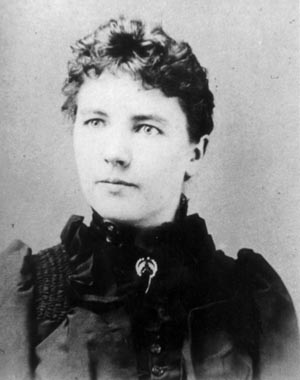
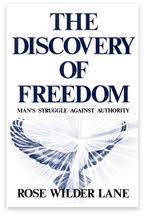 In the mid 20th century, in 1942, two books were published that provide a convenient way to differentiate between libertarians: Ayn Rand’s The Fountainhead (eventually made into a pretty good movie starring Gary Cooper and Patricia Neal) and The Discovery of Freedom by Rose Wilder Lane, the daughter of Laura Ingalls (photo). Most of us know Laura Ingalls through her series of children’s books, The Little House on the Prairie, continued first by her daughter and later by Roger MacBride, and by the television series co-produced by MacBride and Michael Landon.
Ayn Rand's atheistic libertarianism; Rose Wilder Lane's traditionalism
In The Fountainhead, a visionary architect resists the tendencies of the corporate world to suppress the individual, to force us all to conform, and to repress free expression. Years later, when the U.S. Postal Service honored Ayn Rand with a postage stamp, an imposing skyscraper provided the background for her image. At a time when just about every intellectual in the world was some kind of socialist, Rand boldly proclaimed the virtue of selfishness: that each of us has one life, and, for each of us, the choices of values we make gives sanctity to those values.
As it turns out, the heroes of Rand’s later works were men and women of enormous accomplishment. They were able, from sheer inner will, to triumph over the freedom-repressing establishment. This communicates a certain elitism to Rand’s version of libertarianism. But, I will point out that her earlier works were much more sweet, much more human. In her quasi-biographical novel, We the Living, her female hero is a young woman who finds herself in an impossible situation, who feels betrayed by the social institutions of her day. I am sorry if I am giving away the plot, but, in the end, this young woman chooses to reject those social institutions and to rely only on herself.
If Ayn Rand’s immortal soul was lost to atheism, whose fault was it? Hers, for choosing to be strong, or the church’s, that had accommodated itself to “semi-socialism,” and had replaced reason with ritual and mysticism. I thank God that I was inoculated against the faults of the church by my Italian grandfather. He told me, “I believe in the church, not in the priests.” I have never expected much of the church with regard to the issue of socialism versus freedom, and I have not been disappointed.
Some Background from the Editor - Dr. Thies was a close friend and political ally of 1976 Libertarian Party Presidential candidate Roger Lea MacBride. They served together for the first 5 years on the National Committee of the Republican Liberty Caucus. MacBride was Chairman, Thies was Vice-Chairman. Upon MacBride's untimely death in 1995, Thies assumed the Chairmanship.
MacBride was the adopted grandson of Rose Wilder Lane, and heir to the Little House on the Prairie fortune. Before his death MacBride authored 4 more books in the Little House series.

Ayn Randian challenges extremist liberal Russ Feingold Wisconsin Senate
 Who is Ron Johnson?
George Will's latest column highlights the candidacy of Ron Johnson, leading Republican challenger to incumbent ultra-liberal Democrat Sen. Russ Feingold in Wisconsin. Tommy Thompson opted out of a run for the seat. Johnson has since emerged.
Excerpts from Will, "Running Not Shrugging" at RCP:
MILWAUKEE -- Before what he calls "the jaw-dropping" events of the last 19 months -- TARP, the stimulus, Government Motors, the mistreatment of Chrysler's creditors, Obamacare, etc. -- the idea of running for office never crossed Ron Johnson's mind. He was, however, dry tinder -- he calls Ayn Rand's "Atlas Shrugged" his "foundational book" -- and now is ablaze, in an understated, upper-Midwestern way. This 55-year-old manufacturer of plastic products from Oshkosh is what the tea party looks like.
He is trim, gray-haired and suddenly gray-suited. For years he has worn jeans and running shoes to his office, but now, under spousal duress, he is trying to look senatorial -- "My wife upgraded me to brown shoes." He has been endorsed by the state party and will almost certainly win the September primary for the Republican nomination to run against Russ Feingold, who is seeking a fourth term in a year in which incumbency is considered a character flaw.
Later in the piece:
The theme of his campaign, the genesis of which was an invitation to address a tea party rally, is: "First of all, freedom."
"The most basic right," Johnson says, "is the right to keep your property." Remembering the golden age when, thanks to Ronald Reagan, the top income tax rate was 28 percent, Johnson says: "For a brief moment we were 72 percent free."

Finally:
What Samuel Johnson said of Milton's "Paradise Lost" -- "None ever wished it longer than it is" -- some readers have said of "Atlas Shrugged." Not Johnson, who thinks it is "too short" at 1,088 pages. Noting that Massachusetts "is requiring insurance companies to write polices at a loss," he says, "We're living it," referring to the novel's dystopian world in which society's producers are weighed down by parasitic non-producers.
From 2000 through 2008, sales of "Atlas Shrugged," which was published in 1957, averaged a remarkable 166,000 a year. Since Barack Obama took office, more than 600,000 copies have been sold. The novel's famous opening words -- "Who is John Galt?" -- refer to a creative capitalist, Rand's symbol of society's self-sufficient people who, weary of carrying on their shoulders the burden of dependent people, shrug. Ron Johnson would rather run.
The latest poll numbers from Rasmussen (via Rightosphere):
Rasmussen Wisconsin Senatorial Survey
•Russ Feingold (D) 46%
•Ron Johnson (R) 44%
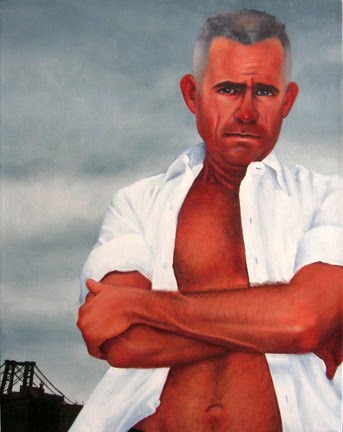
Editor's note - Graph of painting depiction of John Galt not Ron Johnson. Any resemblence is purely coincidental.

The Aurora
Click here to view the embedded video.
The sun is getting active again so it’s time to be watching for the aurora. Yesterday I was all excited because conditions were right to be able to see an aurora from here. That was until it got dark and the conditions went to the devil. Oh well, at least there is progress.
Oops, almost forgot the source.
A biological basis for acupuncture, or more evidence for a placebo effect? | Not Exactly Rocket Science

In the past, I have criticised science journalists for not providing enough background in their reports. Both news stories and scientific papers obviously focus on new events and achievements, but they do so in the knowledge that new discoveries stand on giant shoulders. For this reason, when I cover new papers for this blog, I try to describe some of the research that led up to it, a tactic that fits with the growing cries for more context in modern journalism.
And yet, it’s perhaps churlish to expect this to be a routine part of science journalism when many scientists themselves don’t take up the practice. I bring this up in the light of a new paper, published today in Nature Neuroscience, about the controversial topic of acupuncture. I was going to do this as a straight write-up but actually the omissions in the paper are probably just as interesting than the science within it.
The gist is this: Nanna Goldman from the University of Rochester Medical Center claims to have found a biological explanation for the pain-relieving effects of acupuncture. She worked with mice that had inflamed paws, and managed to alleviate their pain by using a needle to pierce a traditional acupuncture point near the knee. This painkilling effect only happened when she rotated the needles after insertion.
This effect depended on a chemical called adenosine, which typically surges in concentration after any stress or injury. Adenosine works by docking at a protein called the adenosine A1 receptor, which has well established roles in suppressing pain and is found on neurons that transmit pain signals. Indeed, other chemicals that stimulated this protein had the same pain-relieving effects as acupuncture. Drugs that prevent the body from breaking down adenosine led to even more potent pain relief. And mice that lacked the A1 receptor altogether experienced no pain relief from the needles.
Taken on its own merits, this is a nice piece of biochemistry. But what does it really tell us about acupuncture? Does it actually validate this ancient method as a way of relieving pain? After reading the paper, you might walk away with that idea that we’re one step closer to understanding how a treatment with real medical benefits really works. It’s littered with statements like “A1 receptor activation is both necessary and sufficient for the clinical benefits of acupuncture” and “medications that interfere with A1 receptors or adenosine metabolism may improve the clinical benefit of acupuncture”. In the study’s press release, lead scientist Maiken Nedergaard even says, “The new findings add to the scientific heft underlying acupuncture.”
But these results have to be considered in the light of those that came before it. As mentioned above, new scientific discoveries stand on the shoulders of giants and in the case of acupuncture – one of the most well-researched of all “alternative therapies” – those shoulders are particularly large.
Many trials have demonstrated that acupuncture does have some pain-relieving effects – that is not in doubt. And as Steven Novella notes, unlike things like homeopathy or reiki, with acupuncture “something physical is actually happening… so it is therefore not impossible that a physiological response is happening”. But the big questions are whether this effect is genuine of nothing more than a placebo.
To answer that, clinical trials have used sophisticated methods, including “sham needles”, where the needle’s point retracts back into the shaft like the blade of a movie knife. It never breaks the skin, but patients can’t tell the difference from a real, penetrating needle. Last year, one such trial (which was widely misreported) found that acupuncture does help to relieve chronic back pain and outperformed “usual care”. However, it didn’t matter whether the needles actually pierce the skin, because sham needles were just as effective. Nor did it matter where the needles were placed, contrary to what acupuncturists would have us believe.
Other trials have found similar results. Going beyond individual studies and looking at all of the available evidence doesn’t much change the verdict. Last year, scientists from the Nordic Cochrane review centre did an analysis of the available evidence and after considering the 13 trials that met their stringent quality criteria, they concluded:
“A small analgesic effect of acupuncture was found, which seems to lack clinical relevance and cannot be clearly distinguished from bias… Our findings question both the traditional foundation of acupuncture, which is based on the existence of meridians and Qi sensations, and the prevailing hypothesis that acupuncture has an important effect on pain in general. If this hypothesis is wrong, and our results point to that, then acupuncture would seem to be unlikely to have an effect on pain related only to certain conditions, but further studies may examine this question.”
Goldman doesn’t really address any of these points. The introduction to her paper focuses on acupuncture’s popularity, mentioning endorsements by the WHO, the NIH and, strangely, the US Internal Revenue Service. As to the bigger question about whether it is effective, there is no sign of the recent trials or reviews that I mentioned. Instead, she briefly says that the pain-killing effects of acupuncture are “well-documented” and that “Western medicine has treated acupuncture with considerable skepticism”, citing only an editorial published in 1972.
As I’ve said, this is not an area that’s lacking in earlier research to refer to or consider. The discussion is a bit better in that it at least references one trial which showed that acupuncture has no advantage over placebo sham-needle treatments. And if anything, the results seem entirely consistent with the idea of acupuncture as an elaborate placebo.
The tissue damage inflicted by the rotating needle triggers a local flood of adenosine. If the needle is stuck in the right general area, the extra adenosine reaches the receptors on the pain-transmitting neurons and shuts down their activity. There is no need to invoke ‘qi’ flowing through ‘meridians’. Indeed, all sorts of injuries and stresses will lead to a burst of adenosine. And Goldman even says that sham needles, by stimulating but not breaking the skin, could still trigger a burst of adenosine, leading to the same pain-killing effects.
There has been so much previous work in this area that the question “How does acupuncture work?” is better replaced by “Why are acupuncture’s effects largely indistinguishable from those of sham treatments?” The new study suggests some answers but it seems unfortunate to me that Goldman didn’t include any sham-needle controls in her experiments.
Brian Berman, who has been involved in previous Cochrane reviews of acupuncture, agrees. He described the study a “very interesting” but said that “some sort of a placebo control is needed”. Edzard Ernst, former professor of complementary medicine at the University of Exeter, has written extensively about acupuncture also concurs. He told me, “It’s an interesting study but it proves nothing. We need independent replication, better controls and studies in humans.”
This is the most frustrating part of what could have been a really fascinating study. Without building on the massive amount of work that’s already been done on acupuncture, it is hard to know what to make the new and admittedly interesting results. I also wonder whether your average health journalist will know how this study fits into the bigger picture – whether it vindicates the use of acupuncture or whether it actually fits with a skeptical stance. But I suspect we won’t have to wait long to find out.
PS: The paper notes that the authors have no competing financial interests that might have affected their work. However, it is worth noting that one of the co-authors, Jurgen Schnermann, is married to one Josephine Briggs. Briggs is the director of the National Center for Complementary and Alternative Medicine, an institute that has had its fair share of controversy in the past.
Update: Yeah, the mainstream media aren’t really covering themselves in glory here. See Stuff and Nonsense for a summary. The Times probably has the best piece, in that it actually mentions previous trial data and has some great commentary from Edzard Ernst.
Reference: Nature Neuroscience http://dx.doi.org/10.1038/nn.2562
More on pain:
- Racial bias weakens our ability to feel someone else’s pain
- When pain is pleasant
- The placebo effect affects pain signalling in the spine
- Doctors repress their responses to their patients’ pain
- Thinking about money soothes sting of social rejection and physical pain
- Itch-specific neurons discovered in mice
- Pain in the eye of the beholder


