Definiens Digital Pathology Webinar Announcement: SOX2 Evaluation in NSCLC using Definiens Tissue Studio

From Digital Pathology Insights

Date: June 10th, 2010

Time: 11am EDT / 4pm GMT

Join us for a webinar: SOX2 Evaluation in Non-small Cell Lung Cancer using Definiens Tissue Studio.

In this talk, a study on SOX2 amplification in non-small cell lung cancer with a special focus on IHC assessment using Definiens Tissue Studio image analysis software will be presented.

The aim of the study was to verify SOX2 amplification and protein over-expression in non-small cell lung cancers (NSCLC) and to compare these results with patient and tumor characteristics. A total of 940 NSCLCs from two independent population-based cohorts containing predominantly adenocarcinomas of the lung and squamous cell lung carcinomas, were assessed by fluorescence in-situ hybridization (FISH) and immunohistochemistry (IHC) to study SOX2 amplification and expression level. For protein expression analysis, the expression level was explored by utilizing Definiens Tissue Studio.

Speakers:

  • Sven Perner: Assistant Professor – Institute of Pathology, Comprehensive Cancer Center, University Hospital Tuebingen
  • Theresia Wilbertz: PhD Candidate – Institute of Pathology, Comprehensive Cancer Center, University Hospital Tuebingen
  • Peter Duncan: Director of Marketing and Business Development – Definiens

Space is limited. Reserve your webinar seat now at:

https://www2.gotomeeting.com/register/654854170

Telecytopathology for immediate evaluation of fine-needle aspiration specimens

I was recently asked to write an editorial for Cancer Cytopathology on "Telecytopathology for immediate evaluation of fine-needle aspiration specimens" for an upcoming edition of the journal when an article looking at implementing a solution for this purpose will be published.

This article has been published in electronic form ahead of print.  If you can access the journal the DOI is 10.1002/cncy.20079.

In the course of writing the editorial, I reference an article written by multiple authors about 10 years ago as part of a consensus panel with guideline for the practice of cytology with "new" technologies that existed then.  The questions raised by that group involved field selection, resolution, focus, z-stack focusing, liability concerns with diagnoses made at a distance, reporting requirements, etc...

While the technology is no longer "new" many of these issues and concerns persist unfortunately for the cytology community in particular.  The article the editorial is based on reviews nearly 500 FNA cases reviewed remotely with very high diagnostic concordance that is important for several reasons.  Namely, the inexpensive nature of the system, ease of use, and clear situations where false negative cases may be encountered. 

If I am able to do so, will provide copies of the articles when they are published.

Abstracts Solicited for the Pathology Informatics 2010 Conference in Boston on 19-22 Septembe

Courtesy of labsoftnews.com:

The Pathology Informatics 2010 (PI-2010) conference will take place in Boston. MA, on 19-22 September, 2010. Abstracts for scientific sessions and e-posters are being solicited in connection with the conference with a firm deadline of July 30 for both categories. PI-2010 is the largest and most comprehensive pathology informatics CME event in the country and has been created by the merger of two predecessor conferences of long standing, APIII in Pittsburgh and Lab InfoTech Summit in Pittsburgh. The former has a 14 year history in Pittsburgh and the latter was presented for 21 years and Las Vegas and Ann Arbor. The latter event was known as AIMCL. The conference web site is now up-and-running. Details about the three content tracks (applied informatics, imaging informatics, and advanced/experimental informatics), plenary lectures, and workshops are availableas well as on-line registration.

Here is an overview of the scientific sessions:

The Scientific Sessions will consist of a series of 15 minute talks, each of which is immediately followed by questions which are posed by the audience. Researchers interested in presenting as part of these sessions should submit a 350 word abstract. There is particular interest in submissions that focus on three main areas of sub-specialization: pathology informatics, biomedical informatics, molecular pathology and imaging. 

Here is a summary of the e-posters being solicited:

E-poster presentations are similar to traditional poster presentations but are presented directly from the Internet using a PC. E-posters may take several forms including a PC-driven PowerPoint presentation, a live demonstration of a Web site, or other Web-based media. 

A total of 36 exhibitor have now committed to participation in PI-2010 and it is anticipated that more that 40 or more will be present by the time of the event. Make your plans now to submit an abstract or register for this mega-event. I am a member of the conference planning group and am sure that you won't be disappointed.

A CEO’s Guide to Molecular Diagnostic Reimbursement: Navigating the Many Challenges of Reimbursement and Commercialization

FREE Special Edition White Paper

Download Your Report Now!

Download Your FREE White Paper Today! Simply Complete The Form Below

CEO's Guide to Molecular FREE White Paper

Reimbursement and commercialization are significant challenges in this era of personalized medicine and comparative effectiveness. Many traditional clinical laboratories and early stage startup companies are trying to enter this space and are struggling to evaluate both the market and its offerings. According to Gene Tests, a publicly funded medical genetics information resource, the availability of new diagnostic tests increases 10% annually. However, there is a 20% increase in the utilization of genetic tests per year versus a 1% to 3% increase in non-genetic diagnostic tests per year.

In 2007, for example, genetic tests cost Aetna 70 cents per member per month as an aggregate. These numbers are increasing. In 2005/2006 genetic testing comprised 17% of Aetna’s testing dollars; in 2006/2007 it was 21%.

Some view genetic testing technologies as disruptive to traditional physician practice patterns as well as to pharmaceutical companies, who may now have patient criteria limitations on their next potential blockbuster. Depending upon the source, it is believed that only between 9% and 21% of physicians use genetic tests. Many physicians say they don’t understand genetic tests well enough to use them effectively. It is imperative, therefore, that the molecular diagnostic industry improves its messaging and ability to educate physicians. There are many misperceptions regarding the capabilities of well validated genetic tests. Because genetic testing has proven to be valuable for the prognosis, diagnosis and management of many diseases, the commercial potential is quite significant.

The Dark Report is happy to offer our readers a chance to download our recently published White Paper “A CEO’s Guide to Molecular Diagnostic Reimbursement: Navigating the Many Challenges of Reimbursement and Commercialization” at absolutely no charge.

Download Your Report Now!

The following are some of the questions to consider when creating a business plan for commercialization of a genetic test:

  • How can clinical utility be established prior to launch?
  • What is the current environment in your targeted diagnostic area?
  • What is the fully loaded cost of goods?
  • What will your billing capabilities be?
  • What will your billing policies and rules include?
  • Diagnostic Kit or Laboratory Developed Test?

Download Your Report Now!

Table of Contents:

Preface - Page 3

Chapter 1. Considerations for Commercialization and Reimbursement of a New Molecular Diagnostic - Page 5

Chapter 2. The Road to Coverage - Page 10

Chapter 3. Reimbursement Options for Molecular Tests - Page 15

Chapter 4. Coverage and Contracting for Molecular Tests - Page 18

Chapter 5. Conclusions - Page 23

Appendices:

A-1 About Rina Wolf - Page 25

A-2 About XIFIN Inc. - Page 26 A-3 About DARK Daily - Page 27

A-4 About The Dark Intelligence Group, Inc., and THE DARK REPORT - Page 28

A-5 About the Executive War College on Laboratory Pathology Management - Page 29

A-6 About Karen Appold - Page 31

Terms of Use - Page 35 


Register here to download the White Paper NOW! Simply complete the form below and click on SUBMIT! If you have any problems please call: 512-264-7103 or email us

Diagnostic Kit or Laboratory Developed Test?

Download Your Report Now!

CBLPath Announces Department of Integrated Diagnostics

Saw this press release yesterday that looks interesting.  Admittedly I do not know much about CBLPath beyond what I saw on their website.  It seems they are a national subspecialty laboratory independent of a clinical facility associated with the laboratory.  While news such as this always seems exciting I often wonder how one gets from diagnosis through integrated diagnostics to personalized treatment at a distance from the bedside.  I am not being critical of the effort but certainly to do so from a free standing laboratory merging data and integrating that information without the convenience of "next door" communications and outcomes analysis seems like a challenge particularly in an effort to reduce redundancy with potential information being obtained from, resulted from and reported to numerous physicians and health care settings.  The flip side is with such models is that local pathologists and physicians may have access to many sources of disparate data that may be able to integrate in the care of an individual patient.

Look forward to seeing where this may go.

RYE BROOK, NY -- 05/17/10 -- CBLPath today announced the creation of its new Department of Integrated Diagnostics under the direction of Madeline Vazquez, M.D., who is based at the company's Manhattan Reading Station in New York City.

This new department provides a convergence of laboratory diagnostics, medical imaging and digital medicine solutions, resulting in improved patient care from diagnosis and prognosis through to treatment.

"By integrating electronic patient information from the laboratory and imaging systems, the process of diagnosis becomes faster and patient care becomes more cost effective, with a reduced possibility of redundant testing," said William W. Curtis, CBLPath Chairman and CEO. "The creation of our Integrated Diagnostics department is just one more way that CBLPath is providing novel solutions to support the convergence in the pathology market."

Chief Medical Officer Carlos D. Urmacher, M.D. concurs that the focus of this new offering is clearly on the patient. "Anatomic pathology is changing and the role of the pathologist is becoming more 'patient-centric,' moving the field beyond proficient diagnostic reporting to advanced integrated reporting," he said.

Although sharing similar aims with CBLPath's existing Histology and Cytology Departments, the Integrated Diagnostics Department will function independently with specific goals, objectives and expectations set forth by Dr. Vazquez in concert with the leadership of the laboratory, the Medical Department and Dr. Urmacher, who tapped Vazquez for her leadership ability and initiative.

"Under the direction of Dr. Vazquez over the past year, CBLPath's small reading station in Manhattan has experienced tremendous growth and exhibits great potential for expansion and achievement," Dr. Urmacher said. "We anticipate that this growth pattern as led by Dr. Vazquez will continue on with our Integrated Diagnostics Department."

Dr. Vazquez is well renowned and respected nationally and internationally for being at the forefront of her field. Prior to joining CBLPath, she was the Chief of Cytopathology at New York Presbyterian Hospital-Weill Cornell. She pursued her specialty training in the Aspiration Biopsy Services of New York University Medical Center and the Karolinska Hospital in Stockholm, Sweden.

In addition to her clinical work, Dr. Vazquez actively participates in a number of professional societies and organizations. She is a Committee Member of the American Society of Clinical Oncology/International Association for the Study of Lung Cancer (ASCO/IASLC) Consensus Conference on Bronchoalveolar Cell Carcinoma, a Member of the Steering Committee of the International Early Lung Cancer Action Program (I-ELCAP), a Contributor to the World Health Organization (WHO) Classification of Tumors, and an ELCAP Cytologist of the International Consensus on Screening for Lung Cancer.

Dr. Vazquez has served as guest lecturer at many national and international conferences and she is the author of numerous peer-reviewed articles, book chapters, and abstracts.

About CBLPath
CBLPath is a national specialty lab offering a full convergence of anatomic, molecular and digital pathology services. The company provides a one-stop solution for comprehensive sub-specialized diagnostics, and timely, accurate, patient-centered disease management guidance. Through its Best Practice™ Partnership Program, CBLPath partners with pathologists to help them grow their practices, while giving them the ability to stay independent and "keep medicine local." The company also provides sub-specialty physicians access to comprehensive, high-quality testing in their local market. Founded in 1988, CBLPath established a reputation for providing timely, highly accurate diagnoses along with extraordinary customer service and a true patient-centered commitment. For more about the company, please visit http://www.CBLPath.com.

Book Review- Lies The Government Told You

Book Review:  Lies The Government Told You – Myth, Power, and Deception in American History

Contrary to the famous quote by Mark Twain there are four, not three, types of lies. Twain’s famous trio is Lies, Damn Lies and Statistics. To his credit he never envisioned the Big Lie.  In short, the Big Lie can [...]

Smart Green Shopping in Short Supply

More junk for the landfill, or green choices?

There was a good article called “Going Green? Good Luck” about consumers really going green versus just thinking they are in the Star Tribune on Sunday.  It was based in part on an article in Discovery magazine by Thomas M. Kostigen about water use.

“Water is a precious resource, and there is embedded or “virtual” water in everything we consume. According to a Discover magazine article by Thomas Kostigen, “Virtual water is a calculation of the water needed for the production of any product from start to finish.”

Kostigen goes on to quote the virtual water for everything from a banana (27 gallons) to a cup of coffee (37 gallons) based on calculations from Waterfootprint.org, which has a virtual water footprint calculator that allows you to see how much water is in the food you are consuming.” — From The Lifecycle of Your Dinner, another related article.

Of course, American consumerism is a big source of CO2 emissions in the first place.  But our economic systems demands we shop or it all collapses.  So we should make choices in what we buy that are as smart as possible (or stop being capitalists, which is always an option).

The point of “Going green? Good Luck” is to show us how we never think of all the energy and water that goes into our great ideas that we think are “green”, when it turns out they are not.  For instance, in Canada there is a push, like everywhere else, to “eat local” food.  That involves eating locally grown tomatoes, which are grown in a giant 1,600 greenhouse covered in glass, even in the winter.  What they save in transportation costs to get tomatoes from California in the winter is completely overcome by the energy required to light and heat a greenhouse in Canada in the colder months of the year.  So there is a net rise in CO2 emissions overall from that locally-grown tomato.  “When you consider how much water is used in growing, processing, transporting and selling coffee, the virtual water use of a single cup of coffee is 37 gallons”.  That’s enough to make you think twice about throwing out that half pot of coffee that you don’t want to drink.  Maybe you could refrigerate it and drink it over ice later instead of making new coffee tomorrow.

How much water is used to make leather shoes?   This is shocking — 4,400 gallons.  Even the “green” shoes use hundreds of gallons of water to manufacture.  The greenest shoes are the ones you already own.  That goes for clothes, furniture, books, and other things that don’t use energy to operate.

Another example is going electronic with your books and other reading.  It seems like a no-brainer. With an e-reader you save paper, and trees,  and read on an electronic device.   It sounds like common sense.  But it’s not the greenest way to read [...]

Singularity Summit 2010 in San Francisco to Explore Intelligence Augmentation

Kevin: I’ve been volunteering for the Singularity Institute these last few months. Each year, the Singularity Institute hosts the Singularity Summit, a two-day conference in San Francisco this August that may be of interest to many of the readers of this blog.

Will it ever become possible to boost human intelligence using brain implants, or create an artificial intelligence smarter than Einstein? In a 1993 paper presented to NASA, science fiction author and mathematician Vernor Vinge called such a hypothetical event a “Singularity“, saying “From the human point of view this change will be a throwing away of all the previous rules, perhaps in the blink of an eye”. Vinge pointed out that intelligence enhancement could lead to “closing the loop” between intelligence and technology, creating a positive feedback effect.

This August 14-15, hundreds of AI researchers, robotics experts, philosophers, entrepreneurs, scientists, and interested laypeople will converge in San Francisco to address the Singularity and related issues at the only conference on the topic, the Singularity Summit. Experts in fields including animal intelligence, artificial intelligence, brain-computer interfacing, tissue regeneration, medical ethics, computational neurobiology, augmented reality, and more will share their latest research and explore its implications for the future of humanity.

“This year, the conference shifts to a focus on neuroscience, bioscience, cognitive enhancement, and other explorations of what Vernor Vinge called ‘intelligence amplification’ (IA) — the other route to the Singularity,” said Michael Vassar, president of the Singularity Institute, which is hosting the event.

Irene Pepperberg, author of “Alex & Me,” who has pushed the frontier of animal intelligence with her research on African Gray Parrots, will explore the ethical and practical implications of non-human intelligence enhancement and of the creation of new intelligent life less powerful than ourselves. Futurist-inventor Ray Kurzweil will discuss reverse-engineering the brain and his forthcoming book, How the Mind Works and How to Build One. Allan Synder, Director, Centre for the Mind at the University of Sydney, will explore the use of transcranial magnetic stimulation for the enhancement of narrow cognitive abilities. Joe Tsien will talk about the smarter rats and mice that he created by tuning the molecular substrate of the brain’s learning mechanism. Steve Mann, “the world’s first cyborg,” will demonstrate his latest geek-chic inventions: wearable computers now used by almost 100,000 people.

Other speakers will include magician-skeptic and MacArthur Genius Award winner James Randi; Gregory Stock (Redesigning Humans), former Director of the Program on Medicine, Technology, and Society at UCLA’s School of Public Health; Terry Sejnowski, Professor and Laboratory Head, Salk Institute Computational Neurobiology Laboratory, who believes we are just ten years away from being able to upload ourselves; Ellen Heber-Katz, Professor, Molecular and Cellular Oncogenesis Program at The Wistar Institute, who is investigating the molecular basis of wound regeneration in mutant mice, which can regenerate limbs, hearts, and spinal cords; Anita Goel, MD, physicist, and CEO of nanotechnology company Nanobiosym; and David Hanson, Founder & CEO, Hanson Robotics, who is creating the world’s most realistic humanoid robots.

You can watch videos from past summits and register at http://www.singularitysummit.com.

Sprint’s EVO Phone in a 4G Zone: How Fast Is It? – PC World


Washington Post
Sprint's EVO Phone in a 4G Zone: How Fast Is It?
PC World
Moving rightward across the chart, you can see the speeds (upload and download) that I recorded with the same phone in each of 14 testing locations--first ...
Video: Sprint HTC EVO 4G video recording quality testIntoMobile (blog)
Is the HTC EVO 4G on Sprint the best Android phone yet?ABC15.com (KNXV-TV)
Qik's premium services for EVO 4G detailedBoy Genius Report (blog)
NewsFactor Network
all 1,050 news articles »

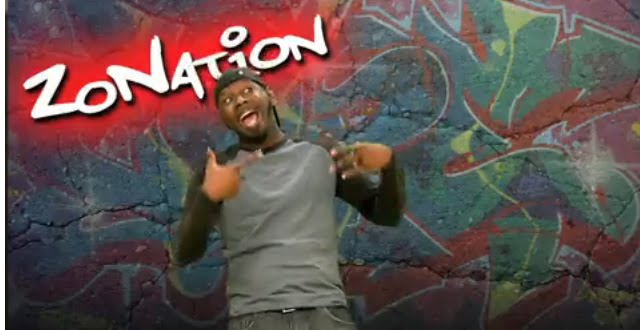
Alfonzo Rachel Guest on "Libertarian Politics Live"

Stop the bigotry of "stick it to the white man"

Always controversial, "Zo" takes Bill Mahr to task; he discusses Bush bashing by the Left. he talks about Obama; and asks, Is he really a "Black President?"

"95% of Blacks voted for Obama based on skin color... Obama is a puppet. He's a figurehead of the Socialists that put him in power."

Host - Andre Traversa from Chicago, Co-Host Jim "Right Guy" Lagnese.

America's Number One black conservative YouTube sensation makes a guest appearance on LR's radio show "Libertarian Politics Live."

Listen to the podcast (click radio button above.)

How to Change Your Profile

There are lots of different things that you can change on your profile and how you view things. This blog will tackle some of the most common questions that can be answered by editing your profile.

How to Navigate to "Edit Your Profile"

The easies

Can Physicists Make Quantum Entanglement Visible to the Naked Eye? | 80beats

handsA pair of quantum entangled photons sure makes a cute couple. Of course, the two might have opposite states–one might be spin up and another spin down, for example–but they promise they’ll always stay that way.

They’re also fiercely loyal, respecting their opposite-spin preferences no matter how long-distance their relationship. (That means that by checking the state of one entangled photon, you can instantly know the state of the other, distant photon, a handy way to “teleport” information.) Unfortunately, because the couple is merely two light particles, their shining example of old romance has been too dim for our eyes to see.

Until now. As announced in their recently published Arxiv.org paper, physicists led by Nicolas Gisin at the University of Geneva in Switzerland believe they have found a way to watch this love affair unfold: by boosting the light emitted by one member of a quantum entangled pair, they think they can make this quantum effect visible to a human eye.

Measuring quantum states such as spin up or spin down is like looking at whether a switch is on or off. This closely matches the concept of a bit, a single 1 or 0, in computing. With entangled photons, physicists call these on/off states quantum bits or “qubits.” What an observer would see while observing an entangled photon is really a choice between two states. The observer could then confirm entanglement by checking to see that the photon was loyal to its partner.

In the traditional set-up, two widely separated particle detectors are used to measure the entanglement of the two photons. But Gisin and his colleagues want to let the human eye do some of the work.

The researchers would send one photon to a standard detector and the other to a human observer in a dark room. The human would see a dim point of light in either the right or left field of view, depending on the photon’s quantum state. If those flashes of light correlate strongly enough with the output of the ordinary photon detector, then the scientists can conclude that the photons are entangled. [Wired]

But since the human brain won’t register the flash caused by one single photon, researchers need to increase the light coming to a person’s eye. More light requires more photons, but the original entanglement was a monogamous relationship. Gisin’s team proposes entangling a group of similar state photons with one member of the pair, creating enough light for a person to see.

First, Gisin and his colleagues will entangle a pair of photons, and then amplify these signals by entangling each of these photons with another ensemble of, say, 100 photons. In the arrangement they are currently developing, one pulse of photons would then be sent at a person, whereas the other would be sent at a conventional photon detector to test what the volunteer saw, Gisin says.[Scientific American]

The observer sees the group–what the researchers call a “macroscopic” qubit. One photon entangles with a second, and that second with the group. Though the observer won’t directly see the relationship between the first two photons, the second’s romantic indiscretions, it’s entanglement with the hoard of 100 or so photons, will be impossible to miss.

This probably won’t lead to any big scientific breakthroughs, Gisin admits.

“Why do we do it nevertheless?” he says. “We find entanglement fascinating.” [Wired]

Related content:
80beats: Tiny LEDs Pump out Quantum-Entangled Photons
80beats: Physicists Achieve Quantum Teleportation Across a Distance of 10 Miles
80beats: Quantum Physics’ Big News: Weird Quantum State Observed in the Largest Object Yet

Image: flickr / Katie Tegtmeyer


Congrats SpaceX !!

Click here to view the embedded video.

On Friday, June 4th, the Falcon 9 test rocket from the private company Space Exploration Technologies or SpaceX was  successfully launched from Cape Kennedy and reached orbit about 9 minutes later.

This is the first flight of the Falcon 9 and the first of three demo flights on tap for this year. The second demo flight is going to include the Dragon. The Dragon is an autonomous vehicle capable of carrying cargo OR astronauts to the ISS.

From the SpaceX website:

This “COTS 1” Dragon will perform several orbits of the Earth, followed by reentry and splashdown off the coast of Southern California. We will gather performance data and retire significant amounts of risk on key spacecraft systems, including Draco thrusters, the Dragon communication systems, PICA-X high performance heat shield material, and other critical navigation, reentry, landing and recovery systems.

Note: COTS stands for NASA’s Commercial Orbital Transportation Services program.

They even have cargo pricing on the site, if you have some time go poke around they have LOTS of information.

Perhaps the Shuttle to US human spaceflight void will not be very long.  If they can pull it off they (and the US) will have something nobody else in the world has – a functioning private space program.

Yes this is VERY good news.

Oh yeah, here’s the source for the video.

Jesse Jackson, Jr. has a Republican opponent

From Eric Dondero:

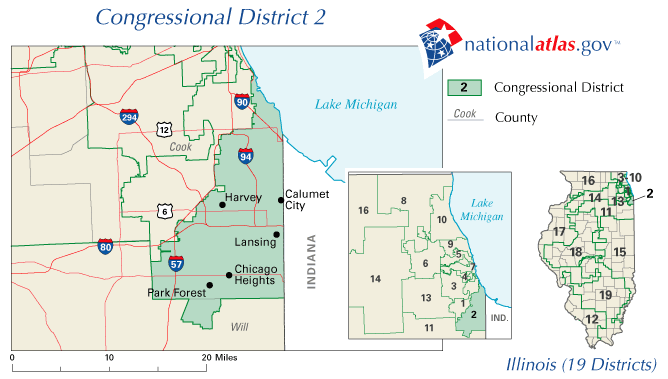
Meet Isaac Hayes. No, not that Isaac Hayes. The same name is purely coincidental. This Isaac Hayes is the Republican nominee for US Congress in Il CD-2. The District includes the southside of Chicago to the Indiana border.

Hayes is a graduate of ISU, a young entrepreneur and a staff minister for Youth Ministries.

He was recently interviewed by RedState radio:

We need someone who has honesty and integrity leading this district. He is the third consecutive congressman to be clouded in scandal in the 2nd congressional district. Gus Savage. Mel Reynolds before him. And now my opponent. We haven't had a break from corruption. We just need someone who can get through office without being caught up in scandal and corrpution.

Hayes's top issue: Education. He's a fierce proponent of vouchers and tuition tax credits:

The answer is not just more money. The answer is competition.

School vouchers open the door of possibility for our children to attend better and more racially integrated schools. Our legislators overwhelmingly send their children to private schools in DC because they can afford to. Even our current president enrolled his two daughters in private school. Unfortunately, the communities that are experiencing poor academic performance cannot afford to pay for alternative schools. School vouchers and tax credits can help to offset that disparity.

IsaacHayesforCongress.com