

Show your love to someone by giving them this hand-printed letterpress poster by Etsy artist rollandtumblepress. $25.00! So sweeeeet.



Show your love to someone by giving them this hand-printed letterpress poster by Etsy artist rollandtumblepress. $25.00! So sweeeeet.


Morbid Anatomy reader Gotthold is a long time collector of Fritz Kahn books and posters. He is currently selling two of his original posters (as pictured above) along with a "key booklet" as part of Sotheby's May 13 Vintage Posters Auction.
I asked Gotthold to tell me and the Morbid Anatomy readership a bit about this special collection he is actioning off in the hopes of helping it find a proper and loving home; here is his response:
Dear Morbid Anatomy readers:
I have been a keen reader of this blog since I discovered it about a year ago when searching for information on anatomical posters I bought for use in an art project.
My personal artistic fascination with death, pornography, science and religion has taken me on a strange and fascinating journey over the past year through the cavernous bookshop cellars of Vienna, the seedy sex shops of London’s Soho, and the wonderful Morbid Anatomy blog in search of new materials and ideas. In my search for materials to use for my work, I spend a seemingly senseless amount of time and money looking for rare, obscure, and interesting materials to use and take inspiration from. It was on one of these escapades when visiting Vienna that I first stumbled upon the wonderful works of Fritz Kahn whose unique mechanical anatomy illustrations have earned much attention on this very blog (recent posts here, here, and here).
Since this initial discovery, I have managed to amass an extensive collection of Fritz Kahn's books, all featuring his wonderful illustrations, and have also had the luck to acquire a few original posters, including the famed ‘Der Mensch als Industriepalast’ or 'Man as Industrial Palace' of 1926 as seen above, top; you can found out more about that piece here.
Conducting more commercially oriented research around these works, I stumbled upon Morbid Anatomy for the first time to read a post on a Christies ‘Anatomy as Art’ auction in New York where this poster sold for some $3,500. The financially conscious side of myself forced me to reluctantly get in touch with Christies in London regarding a sale. I was informed by their experts there was no specialist auction coming up anytime soon but that I could still consign the poster to a ‘Vintage Posters’ auction in May. I chose to sell the two posters and a ‘key’ booklet together as a lot; I still believe this is extremely unique, given that the key booklet acts as an index to the numerical and alphabetical indicators on the poster without which it is difficult to fully comprehend the intended meaning of the illustrations.
The marketing around this auction has been weak, and there isn’t much explanation of the uniqueness of the key booklet or even an image of the second poster in the lot (as seen above, bottom). When I looked at the other posters for sale at this the auction I realized that my item is out of place and I doubt that it will strike the right chord with the bidders.
I have still however decided to proceed with the auction, not in the least because I need the proceeds of this sale to help further my artistic pursuits. I therefore implore anyone who knows relevant collectors to spread the word about the auction, and encourage anyone who’s interested to bid on these items as they are impeccable (the nice thing about Christies auctions is that anyone can place bids from anywhere in the world online). You can see the lot on the auction website by clicking here.
So please, any and all of you medical art aficionados out there, check out (and bid on!) Gotthold's Sotheby's lot on May 13th; you can find out more about the lot by clicking here and more about the auction by clicking here. And yes, online/remote bidding is very much a possibility! Also, please feel free to forward this post to any interested parties!
If you are interested in learning more about Fritz Kahn and seeing more of his incredible work, I highly recommend the beautiful, lavishly illustrated book Fritz Kahn: Man Machine / Maschine Mensch, which comes complete with a frame-worthy poster-sized reproduction of ‘Der Mensch als Industriepalast’ ('Man as Industrial Palace'). Good stuff!


Tonight! Michael Johns on all things Terror Management Theory! 8:00! Observatory!
Full details follow. Hope to see you there!
Experimenting with Death: An Introduction to Terror Management Theory
An Illustrated Lecture by Michael Johns, Former Assistant Professor of Psychology at the University of Wyoming
Date: Thursday, May 6
Time: 8:00 PM
Admission: $5
Presented by Morbid AnatomyIn his Pulitzer Prize-winning book, Denial of Death, cultural anthropologist Ernest Becker attempted to develop a unified theory of human behavior. He argued that it was the human capacity to grasp and contemplate our own mortality–and our need to suppress this knowledge–that was at the root of human culture and behavior, from genocide to altruism, religion to philosophy. Terror Management Theory (TMT) is a psychological theory directly based on Becker’s work, developed by a group of social psychologists interested in testing Becker’s assertions about death as a core motivator of human behavior. Over the last 25 years, psychologists in the North America, Europe and the Middle East have conducted hundreds of studies to test hypothesis derived from Becker’s work and the Terror Management Theory it inspired. This body of research compellingly supports Becker’s thesis and reveals the ways in which mortality salience influences behaviors ranging from aggression and stereotyping to creativity and sexuality. Using segments from the documentary “Flight from Death: The Quest for Immortality,” this lecture will introduce Terror Management Theory and discuss the often clever experiments that have been conducted to test its tenets.
Michael Johns is a social psychologist and works as a research scientist in the NYC Department of Health. He has published numerous research articles and book chapters on a variety of topics, including Terror Management Theory. Before moving to Brooklyn, Mike was an Assistant Professor of Psychology at the University of Wyoming.
You can find out more about this presentation here. For more on Ernest Becker's wonderful book Denial of Death, click here; for more on the film "Flight From Death - The Quest for Immortality," click here. You can get directions to Observatory--which is next door to the Morbid Anatomy Library--by clicking here. You can find out more about Observatory here, join our mailing list by clicking here, and join us on Facebook by clicking here.

This is not an easy blog to write. Doctors Novella and Gorski want the entries to be formal, academic, referenced, with a minimum of snark.
For the most part I comply. But sometimes. Sometimes. It is hard, so hard, not to spiral into sarcastic diatribes over the writings that pass for information on the interwebs. How should one respond to profound ignorance and misinformation? I wish, sometimes, that I could be an irascible computer as well.
What brings on this particular bit of angst is a bit of whimsy on the Internet called “9 Questions That Stump Every Pro-Vaccine Advocate and Their Claims.” by David Mihalovic, ND. Mr. Mihalovic identifies himself as “a naturopathic medical doctor who specializes in vaccine research.” However, just where the research is published is uncertain as his name yields no publications on Pubmed. BTW. I specialize in beer research. Same credentials.
The nine questions show up frequently on the interwebs, similar to questions on what to ask when you want to stump an evolutionist. Similar to the supposed stumpers for evolution, the vaccine questions are grounded in misinformation, ignorance or laziness. Let’s go through them one at a time.
1. Could you please provide one double-blind, placebo-controlled study that can prove the safety and effectiveness of vaccines?
One trial? It took me 55 seconds to find ”Efficacy of 23-valent pneumococcal vaccine in preventing pneumonia and improving survival in nursing home residents: double blind, randomised and placebo controlled trial” and that included time to boot the browser and mis-spell the search terms. ’Vaccine’, ‘efficacy’, ’randomized’ and ’placebo control trial’ results in 416 Pubmed references; add ’safety’ to the search terms, you get 126 returns. 416 is easily more than one. Of course, to find them you have to look.
Of course, I am a highly educated adult who constantly searches the web for medical information. For hoots and giggles, I asked my 12 year old son, whose passions are basketball and filming comedy videos, to find me a reference that met the same criteria and I timed him.
Twenty two seconds, not including boot time, to find “Randomized, Placebo-Controlled Trial of Inactivated Poliovirus Vaccine in Cuba” from the NEJM. Can anyone beat my son?
12 yo one, Mihalovic 0. Served.
As long as we are on the topic, since he evidently place great store in science, could Mihalovic please provide one double-blind, placebo-controlled study that can prove the safety and effectiveness of naturopathy? I would be happy at this point to know just to know he was able to do a pubmed search correctly just to make me look the fool.
2. Could you please provide scientific evidence on ANY study which can confirm the long-term safety and effectiveness of vaccines?
Long term is vague. What is long term? Smallpox disappeared in 1977 thanks to the vaccine. I have not seem a case of smallpox in my medical career, which now on it’s 31st year. No reported long term toxicities of the smallpox vaccine and the eradication of smallpox appears to me to represent reasonable evidence for long term safety and effectiveness. But it would.
No vaccine has 100% efficacy, and whether infected naturally or by a vaccine, immunity wanes with time. In earlier times, people would have their immunity boosted by exposure to disease and maintain their antibody levels. It is not the initial infection that leads to better immunity from natural infections, as posited by some antivaccine people, but the the fact that people were constantly re-exposed to wild type disease.
It is interesting what is occurring with shingles. Everyone used to get chickenpox as a child, and then, as they raised their kids and grand kids, were re-exposed to the virus and boosted their immunity. Currently, due to the chickenpox vaccine and a change in the way children are raised, older adults are not getting exposed naturally to chickenpox, immunity is waning, and there is an increase in shingles in older adults. Part of why they need the zoster vaccine.
Clever conspiracy to increase the use of the zoster vaccine, huh?
Unless exposed to new infection, immunity, as measured by antibody levels directed against the infecting agent, can decline over time. That is to be expected. The nice thing about the immune system, unlike water, is that it remembers the infection. It is primed so that if exposed again at a later date, it can almost instantly produce large amounts of antibody to nip an infection in the bud. So rather than prevent infection, in some people far removed in time from the vaccine, they may instead have a shorter, less severe illness and be infectious for a shorter period of time, thereby decreasing spread.
There is a nice review in the NEJM on duration of immunity (first search in Pubmed using duration of immunity vaccine, results in 17 seconds, including correcting typos. Seriously, just how hard is it to find this information? As would be expected, it depends on the disease and the vaccine (live better than killed). They estimated the half-life for the varicella zoster virus immunity at 50 years, 200 years for measles and mumps, and 11 years for tetanus. If you peruse the references, you can find other studies that show variable but sustained response to vaccines, for example 90% maintain immunity to smallpox up to 75 years after vaccination.
Long term safety was more difficult, 5 years was the limit of time I could find for safety studies of Hepatits B. Most vaccine toxicities are found in the first week or two after the inoculation and the studies follow most patients for a year. Probably would not cut it as long term for Mihalovic.
BTW, could you please provide scientific evidence on ANY study which can confirm the long-term safety and effectiveness of naturopathy?
3. Could you please provide scientific evidence which can prove that disease reduction in any part of the world, at any point in history was attributable to inoculation of populations?
Smallpox? Smallpox? Smallpox? Anyone? Smallpox? Buehler? Buehler?
Again I get back to the whole binary, black and white approach that characterizes many with whom we cross medical swords. The decrease in infectious diseases has been multifactorial, due to improved nutrition, improved hygienic (lets hear it for the flush toilet) and understanding the epidemiology of diseases. Knowing how a disease is spread has always been critical in decreasing its spread. Note that none, none, none of the interventions that have decreased the spread of infections in the last 200 years or so have come from naturopathic tradition.
The teasing out the effects of vaccines on populations is always fraught with potential controversy. There are always multiple confounders. The best example of the beneficial effects of vaccines was from JAMA.
“Objective To compare morbidity and mortality before and after widespread implementation of national vaccine recommendations for 13 vaccine-preventable diseases for which recommendations were in place prior to 2005.
Design, Setting, and Participants For the United States, prevaccine baselines were assessed based on representative historical data from primary sources and were compared to the most recent morbidity (2006) and mortality (2004) data for diphtheria, pertussis, tetanus, poliomyelitis, measles, mumps, rubella (including congenital rubella syndrome), invasive Haemophilus influenzae type b (Hib), acute hepatitis B, hepatitis A, varicella, Streptococcus pneumoniae, and smallpox.
Main Outcome Measures Number of cases, deaths, and hospitalizations for 13 vaccine-preventable diseases. Estimates of the percent reductions from baseline to recent were made without adjustment for factors that could affect vaccine-preventable disease morbidity, mortality, or reporting.
Results A greater than 92% decline in cases and a 99% or greater decline in deaths due to diseases prevented by vaccines recommended before 1980 were shown for diphtheria, mumps, pertussis, and tetanus. Endemic transmission of poliovirus and measles and rubella viruses has been eliminated in the United States; smallpox has been eradicated worldwide. Declines were 80% or greater for cases and deaths of most vaccine-preventable diseases targeted since 1980 including hepatitis A, acute hepatitis B, Hib, and varicella. Declines in cases and deaths of invasive S pneumoniae were 34% and 25%, respectively.”
Milhalovic, could you please provide scientific evidence which can prove that disease reduction in any part of the world, at any point in history was attributable to naturopathy?
4. Could you please explain how the safety and mechanism of vaccines in the human body are scientifically proven if their pharmacokinetics (the study of bodily absorption, distribution, metabolism and excretion of ingredients) are never examined or analyzed in any vaccine study?
There is, superficially, some truth in this statement. Most pharmacokinetics are done prior to the clinical efficacy trials. That is why there are phase 1 and phase 2 trials. The assumption being that if you exam influenza vaccine pharmacokinetic studies in one group it can be extrapolated to similar populations. I think that is reasonable. So no, there are no pharmacokinetic studies in the clinical efficacy trials, those were done prior to the efficacy trials. But it is not hard to find the phase 1 and 2 trials if you are so moved.
Milhalovic, could you please explain how the safety and mechanism of naturopathic nostrums in the human body are scientifically proven if their pharmacokinetics (the study of bodily absorption, distribution, metabolism and excretion of ingredients) are never examined or analyzed in any naturopathic nostrum study?
Is this getting old? There is something to be said for repetition.
5. Could you please provide scientific justification as to how injecting a human being with a confirmed neurotoxin is beneficial to human health and prevents disease?
I presume the issue is mercury. Maybe aluminum. The latter is not in most vaccines, although as been discussed at length on this blog, the amount of mercury and aluminum found in vaccines is minimal and, at the dosing and formulation, has never been demonstrated to cause neurotoxicity from vaccines. Of course, I am old school and think there is a dose response effect of drugs, and that a greater amount leads to a greater response. Most naturopaths receive extensive training in homeopathy, where the less the amount, the greater the response. So I would presume arguments based on chemistry would have little meaning to an ND, although I would not want my appletini made by a practitioner of homeopathy.
Of course, it is not the ‘neurotoxin’ that is being used to prevent disease, but the antigens of the potential infection. That is assuming that the author of the nine questions does not consider the antigens to be neurotoxins, and to judge from his understanding of disease later in the post, I am not so certain he warrants the benefit of the doubt.
Could you please provide scientific justification as to how applying naturopathy to a human being is beneficial to human health and prevents disease?
6. Can you provide a risk/benefit profile on how the benefits of injecting a known neurotoxin exceeds its risks to human health for the intended goal of preventing disease?
Since there is no longer mercury in most vaccines, I will assume, for the sake of argument, he is referring to aluminum. Risk from aluminum in the H. influenza type b vaccine, where aluminium is used as a adjuvant: zero.
“From eight trials, the protective efficacy of the Hib conjugate vaccine was 84% (OR 0.16; 95%CI 0.08-0.30) against invasive Hib disease, 75% (OR 0.25; 95%CI 0.08-0.84) against meningitis, and 69% (OR 0.31; 95%CI 0.10-0.97) against pneumonia. Serious adverse events were rare.”
Seems a good trade off. No risk from aluminum, significant decrease in morbidity and mortality from disease.
7. Could you please provide scientific justification on how bypassing the respiratory tract (or mucous membrane) is advantageous and how directly injecting viruses into the bloodstream enhances immune functioning and prevents future infections?
Well, things really get off the rails here. Vaccines are not injected into the blood stream, they are infected into the soft tissues. At a simple level, an infection enters to body, the body makes a variety of antibodies to the constituent parts of the infecting organism and next time the patient is exposed, the pre-existing antibody can, if there is a match with new strain, inactivate the new infection.
It doesn’t matter how the antigen is presented to the immune system, the response is the same. Natural influenza, inhaled influenza vaccine, or injected influenza vaccine, the same antibody will be made to the proteins.
Mihalovic says later
“All promoters of vaccination fail to realize that the respiratory tract of humans (actually all mammals) contains antibodies which initiates natural immune responses within the respiratory tract mucosa. Bypassing this mucosal aspect of the immune system by directly injecting viruses into the bloodstream leads to a corruption in the immune system itself. As a result, the pathogenic viruses or bacteria cannot be eliminated by the immune system and remain in the body, where they will further grow and/or mutate as the individual is exposed to ever more antigens and toxins in the environment which continue to assault the immune system.”
This is what we call in the trade, gibberish. At least it makes no sense to me. I will leave to the readers to search, Bible Code style, for truthiness in the above selection.
8. Could you please provide scientific justification on how a vaccine would prevent viruses from mutating?
That is actually a very interesting question. It has nothing to do with why we give vaccines and I fear our intrepid ND does not have a firm grasp on what he is talking about as he says
“Despite the injection of any type of vaccine, viruses continue circulating through the body, mutating and transforming into other organisms. The ability of a vaccine manufacturer to target the exact viral strain without knowing its mutagenic properties is equivalent to shooting a gun at a fixed target that has already been moved from its location. You would be shooting at what was, not what is!”
Mutating and transforming into other organisms. Sigh. Either the author is a sloppy writer (sloppy writing (not typos, but logic and word selection) reflects a sloppy mind) or his understanding of microbiology is so profoundly mistaken it boggles the mind that he takes care of patients. And in Oregon he would allowed by the state to prescribe antibiotics and other pharmaceuticals.
If you have a population of viruses and a specific antibody against the virus, then those naturally occurring mutants that are not recognized by the antibody should have a replication advantage. It is possible that the vaccine can help select for new strains of an infection, but not new organisms.
Vaccines selecting for new mutants has been looked at for the Hepatitis B vaccine, and found not to be a issue.
In HIV, there is an ongoing interaction between the immune response and the virus, driving mutations that escape the immune system and, in some patients leads to a marked increase in HIV replication and a clinical decline decline. Oh wait, this is a natural infection. That shouldn’t happen. It is the vaccines that do this.
There is nothing unique about the vaccine response acting as environmental pressure on the evolution of infections; the response from the natural infections should be the same. I would wonder, since the response to a natural infection is broader, with antibodies made to numerous parts of the infection, rather than the few key antibodies provided by the response to the vaccine, whether a natural infection would lead to a faster mutation rate. As a rule in the microbial world, the more intense the stress, the faster and more varied the mutations. More antibiotics leads to faster development of resistance in E. coli, not its delay.
9. Could you please provide scientific justification as to how a vaccination can target a virus in an infected individual who does not have the exact viral configuration or strain the vaccine was developed for?
Mr. Black and White. Antibody response is not all or nothing, there is a gradient of response between the developed antibody and the site to which it is directed. A good example is the H1N1 influenza. People exposed to the strains from the first half of the century had antibody that was partially protective for the 2009 strain. The reason?
“The pandemic influenza virus (2009 H1N1) was recently introduced into the human population. The hemagglutinin (HA) gene of 2009 H1N1 is derived from “classical swine H1N1″ virus, which likely shares a common ancestor with the human H1N1 virus that caused the pandemic in 1918, whose descendant viruses are still circulating in the human population with highly altered antigenicity of HA. However, information on the structural basis to compare the HA antigenicity among 2009 H1N1, the 1918 pandemic, and seasonal human H1N1 viruses has been lacking. By homology modeling of the HA structure, here we show that HAs of 2009 H1N1 and the 1918 pandemic virus share a significant number of amino acid residues in known antigenic sites, suggesting the existence of common epitopes for neutralizing antibodies cross-reactive to both HAs. It was noted that the early human H1N1 viruses isolated in the 1930s-1940s still harbored some of the original epitopes that are also found in 2009 H1N1. Interestingly, while 2009 H1N1 HA lacks the multiple N-glycosylations that have been found to be associated with an antigenic change of the human H1N1 virus during the early epidemic of this virus, 2009 H1N1 HA still retains unique three-codon motifs, some of which became N-glycosylation sites via a single nucleotide mutation in the human H1N1 virus. We thus hypothesize that the 2009 H1N1 HA antigenic sites involving the conserved amino acids will soon be targeted by antibody-mediated selection pressure in humans. Indeed, amino acid substitutions predicted here are occurring in the recent 2009 H1N1 variants. The present study suggests that antibodies elicited by natural infection with the 1918 pandemic or its early descendant viruses play a role in specific immunity against 2009 H1N1, and provides an insight into future likely antigenic changes in the evolutionary process of 2009 H1N1 in the human population.”
Oops. Not simple.
“Over 75% of confirmed cases of novel H1N1 occurred in persons < or = 30 years old, with peak incidence in the age range 10-19 years. Less than 3% of cases occurred in persons over 65, with a gradation in incidence between ages 20 and 60 years.The sequence data indicates that novel H1N1 is most similar to H1N1 viruses that circulated before 1943. Novel H1N1 lacks glycosylation sites on the globular head of hemagglutinin (HA1) near antigenic regions, a pattern shared with the 1918 pandemic strain and H1N1 viruses that circulated until the early 1940s. Later H1N1 viruses progressively added new glycosylation sites likely to shield antigenic epitopes, while T-cell epitopes were relatively unchanged.
CONCLUSIONS: In this evolutionary context, Original Antigenic Sin exposure should produce an immune response increasingly mismatched to novel H1N1 in progressively younger persons. We suggest that it is this mismatch that produces both the gradation in susceptibility and the unusual toxicity”
The better the antibdy fit for the epitope (where the antibody binds) the better the effect, but it doesn’t have to be all or nothing. Mihalovic would probably ask, what good is half an eye, why have half a wing, or half a brain?
He finishes,
“I have never encountered one pro-vaccine advocate, whether medically or scientifically qualified, who could answer even 1 let alone all 9 of these questions. One or all of the following will happen when debating any of the above questions:
- They will concede defeat and admit they are stumped.
- They will attempt to discredit unrelated issues that do not pertain to the question.
- They will formulate their response and rebuttal based on historical arguments and scientific studies which have been disproved over and over again. Not one pro-vaccine advocate will ever directly address these questions in an open mainstream venue.”
I am neither stumped not defeated. I know how to search Pubmed for medical information.
My response directed specifically to the questions.
My arguments are based on modern studies that a 12 year old can find in less than a minute, none of which have been disproved once, much less over and over.
SBM is an open mainstream venue.
I do feel like I just had won Jeopardy playing against Prof. R.J. Gumby; where is the honor in that?
And people wonder why I question the wisdom of allowing naturopaths to function as primary care providers.
![[StumbleUpon]](http://euvolution.com/futurist-transhuman-news-blog/wp-content/plugins/wp-o-matic/cache/2b0e7_stumbleupon.jpg)
Seems like we don’t pay much attention to the 7th planet. We know it’s out there, and it’s blue (but not as blue as Neptune). We know it’s cold, and a gas giant, and … well … it’s cold, and blue, and it’s the 7th planet…

NASA/JPL, Voyager II 1986 image of Uranus
While it’s not a media star like Jupiter and Saturn, and doesn’t even get the attention Neptune and Pluto receive, Uranus is certainly no slouch when it comes to beauty or mystery. While the 1986 Voyager II image is wonderful (lovely, startling, mysterious, remote), the Hubble has been showing us some even more breath-taking views of this magnificent giant. Take a look at this:

This of course shows the rings and moons of Uranus, along with the false coloration to show altitude and atmospheric features. And speaking of those rings, William Herschel (who discovered Uranus) described a possible ring system around the planet in 1789. For the next 200 years, nobody else saw the rings around Uranus until 1977, when they were “discovered”. We have so far counted 13 rings in the Uranian system, and 27 moons. Quite a complex system.

Uranian ring system with inner moons, Image in public domain
Uranus has an axial tilt like none other in the solar system; it’s almost 98 degrees, making Uranus “lay over” on its side. Its poles are positioned where its equator should be. Scientists speculate that the dramatic axial tilt was caused by Uranus being impacted with an Earth-sized protoplanet early in the life of the solar system.

NASA/JPL Uranus/Earth to scale - Uranus showing true color variation
Although Uranus is visible to the unaided eye, just barely, it was not recognized as a planet because it’s so dim and its orbit is so slow. It was the first planet to be discovered by telescope, March 13, 1781, but William Herschel thought he had discovered a comet or a new star. It takes Uranus a little over 84 years to complete an orbit. With the way its axial tilt works, each pole spends about 42 years in either total darkness or total sunlight. Of course, Uranus only receives a tiny percentage of the sunlight the Earth receives.

NASA/ESA Hubble ST 2005, Uranus, natural color, showing rings and clouds
I’ve barely touched the surface of the mystery and beauty of our 7th planet. We all knew it was out there, but hopefully we’ll take a longer look at this ancient Greek god of the sky. It’s certainly worth our awe and our interest.
Emotional and persuasive perception of fonts. "The aim of this study was to explore the latent affective and persuasive meaning attributed to text when appearing in two commonly used fonts. Two satirical readings were selected from the New York Times. These readings (one addressing government issues, the other education policy) were each printed in Times New Roman and Arial fonts of the same size and presented in randomized order to 102 university students, who ranked the readings on a number of adjective descriptors. Analysis showed that satirical readings in Times New Roman were perceived as more funny and angry than those in Arial, the combination of emotional perception which is congruent with the definition of satire. This apparent interaction of font type with emotional qualities of text has implications for marketing, advertising, and the persuasive literature." Photo: flickr/micahdowty Related content:
Discoblog: NCBI ROFL: How extraverted is honey.bunny77@hotmail.de? Inferring personality from e-mail addresses.
Discoblog: NCBI ROFL: Why Facebook is ruining your marriage.
 I waited until the series was complete so you could see all the posts at once: Nancy Atkinson of Universe Today has written a very cool series called 13 Things That Saved Apollo 13 (link goes to #13, which has links to the previous 12). From the team itself to measles to duct tape, this is a pretty interesting look into NASA’s most successful failure, and a great reminder of what NASA accomplished 40 years ago.
Just how fast is Google's Web browser, Chrome? According to a new video from these absurd and talented Google people, this is how fast: Related Content:
Discoblog: Book-Balancing, Rubik’s Cube-Solving, Pi-Reciting Geek Girl Goes Viral
Discoblog: The Mother of all Rube Goldberg Machines!
 We know that skimping on sleep gives many of us heavy eyes and sends us on an early afternoon run for a large coffee (or, for those with an iron stomach who don’t mind ingesting 8,300 percent of our daily value of vitamin B12, an energy drink). But studies out this week outline possibly dire health consequences for depriving ourselves of lengthy slumber.
A small study In the Journal of Clinical Endocrinology and Metabolism says that even a single of night of sleep deprivation can cause the body to show signs of insulin resistance, a warning sign of diabetes. And in the journal Sleep, a long-term study by a different team chillingly suggests that continuously snoozing less than six hours per night can increase your risk for an early death.
First, the insulin study: Esther Donga and colleagues examined nine patients, first after the patients had slept a full eight hours and then again after they’d slept just four. The scientists say that insulin sensitivity was reduced by as much as 25 percent when the patients were sleep deprived.
“Our data indicate that insulin sensitivity is not fixed in healthy (people), but depends on the duration of sleep in the preceding night,” Donga wrote in the study. “In fact it is tempting to speculate that the negative effects of multiple nights of shortened sleep on glucose tolerance can be reproduced, at least in part, by just one sleepless night.” A study by U.S. scientists published last year found that people who slept less than six hours a night were 4.5 times more likely to develop abnormal blood sugar readings in six years compared with those who slept longer [Reuters].
Overeating typically takes the rap for contributing to the ballooning number of people with diabetes. But the scientists speculate that if their findings on insulin resistance in this small subset of people can be extrapolated to most people, then perhaps another unhealthy aspect of this modern life—sleeping too little—could contribute as well.
And then the second study, which deals with early death: British and Italian researchers compiled 16 studies done all over the world in the course of a quarter-century to see if there was a discernible connection between sleeping too little and the risk of dying too soon. They studies they looked at surveyed people about their sleep habits and then tracked when they met their bitter end. In all, more than 1,300,000 people were part of this meta-study.
It found that those who generally slept for less than six hours a night were 12% more likely to experience a premature death over a period of 25 years than those who consistently got six to eight hours’ sleep. Evidence for the link was unequivocal, the researchers concluded [The Guardian].
Some researchers outside the study, though, wondered whether sleep was truly the factor causing early death.
Professor Jim Horne, of the Loughborough Sleep Research Centre, said other factors may be involved rather than sleep per se. “Sleep is just a litmus paper to physical and mental health. Sleep is affected by many diseases and conditions, including depression,” he said [BBC News].
Indeed, the researchers involved with the study concluded the same thing might be at work with their other finding—that not only will too little sleep raise your risk for early death, too much sleep will also up the risk. But, they say, that “too much”—more than 9 hours—might just be a symptom of something else that’s already wrong.
If you’re a DISCOVER fan, check us out on Facebook.
Related Content:
80beats: Lack of ZZZZS Linked To Alzheimer’s in Mice
80beats: Sleep Experiment Shows the “Graveyard” Shift Is Aptly Named
80beats: Rare Genetic Mutation Lets People (And Fruit Flies) Get By with Less Sleep
DISCOVER: 20 Things You Didn’t Know About… Sleep
Image: iStockphoto


I missed this late yesterday in Slate, but it is priceless. Among other things, Lithwick shows that Cuccinelli's investigation holds no benefit for Virginia taxpayers:
...State Sen. Donald McEachin estimates that the Cuccinelli lawsuit will cost Virginia taxpayers between $250,000 and $500,000 if it goes all the way to the Supreme Court. Spending half a million dollars of taxpayer funds to possibly recover some part of half a million dollars of misspent grant money doesn't even begin to make sense. But it's not just Mann on the hook here. "With a weapon like this in Cuccinelli's hands, any faculty member at a public university in Virginia has got to be thinking twice about doing politically controversial research or communicating with other scholars about it," says Rachel Levinson, senior counsel with the American Association of University Professors. UVA environmental science professor Howard Epstein, a former colleague of Mann's, puts it this way: "Who is going to want to be on our faculty when they realize Virginia is the state where the A.G. investigates climate scientists?" If researchers are really afraid to do cutting-edge research in Virginia, the state's flagship university is in enormous trouble.
Well, yeah. But is UVA standing up for itself and ...
 The media-savvy eco-pirates of the Sea Shepherd Conservation Society have a new target in their sights: commercial fishing boats that illegally scoop endangered bluefin tuna out of the sea.
The Sea Shepherd activists have become famous for harassing Japanese whaling ships; a reality TV show about their exploits documented the many tricks the activists used to slow down the whalers, including shooting stink bombs onto their ships and attempting to disable their propellers. With their new project, dubbed Operation Blue Rage, the activists hope to bring the same level of attention to the fight to save endangered tuna.
Stocks of bluefin tuna have fallen by roughly 85% since the industrial fishing era began…. Yet despite quotas that are arguably too high to begin with, quotas are still being ignored in many places [Ecopolitology].
Conservationists suffered a major setback this spring, when an international meeting failed to pass new protections for the bluefin tuna, which is highly valued by sushi chefs. In light of this political inaction, Sea Shepherd decided to act. Its flagship, the Steve Irwin, is now en route to the Mediterranean to begin a harassment campaign against ships that are illegally pulling the endangered fish from the sea.
Steve Irwin First Officer Locky Maclean acknowledges that it will be somewhat difficult to find tuna poachers among those fishing boats that comply with the lax laws, but says there are a few tricks the activists can use.
First, the legal season for bluefin tuna is just 30-days. “Where we come into play, where we can operate and enforce, is on vessels fishing outside that season, after the June 15th cutoff or before the May 15th start date. If we come across vessels purse seining outside of that time frame…we’re in a position to enforce [the law].” Second, there is the ICCAT list of vessels, “enables us to know the names of the vessels which cannot fish in that area” [Treehugger].
Related Content:
80beats: Is the Anti-Whaling Activist Who Boarded a Japanese Whaling Ship a Pirate?
80beats: Videos Show Collision Between Japanese Whaling Ship & Protesters
80beats: Bluefin Tuna Is Still on the Menu: Trade Ban Fails at International Summit
80beats: Scientists Say Ban Atlantic Bluefin Tuna Trade–and Sushi Chefs Shudder
Image: Wikimedia


What does it look like to stare into infinity? Like this:
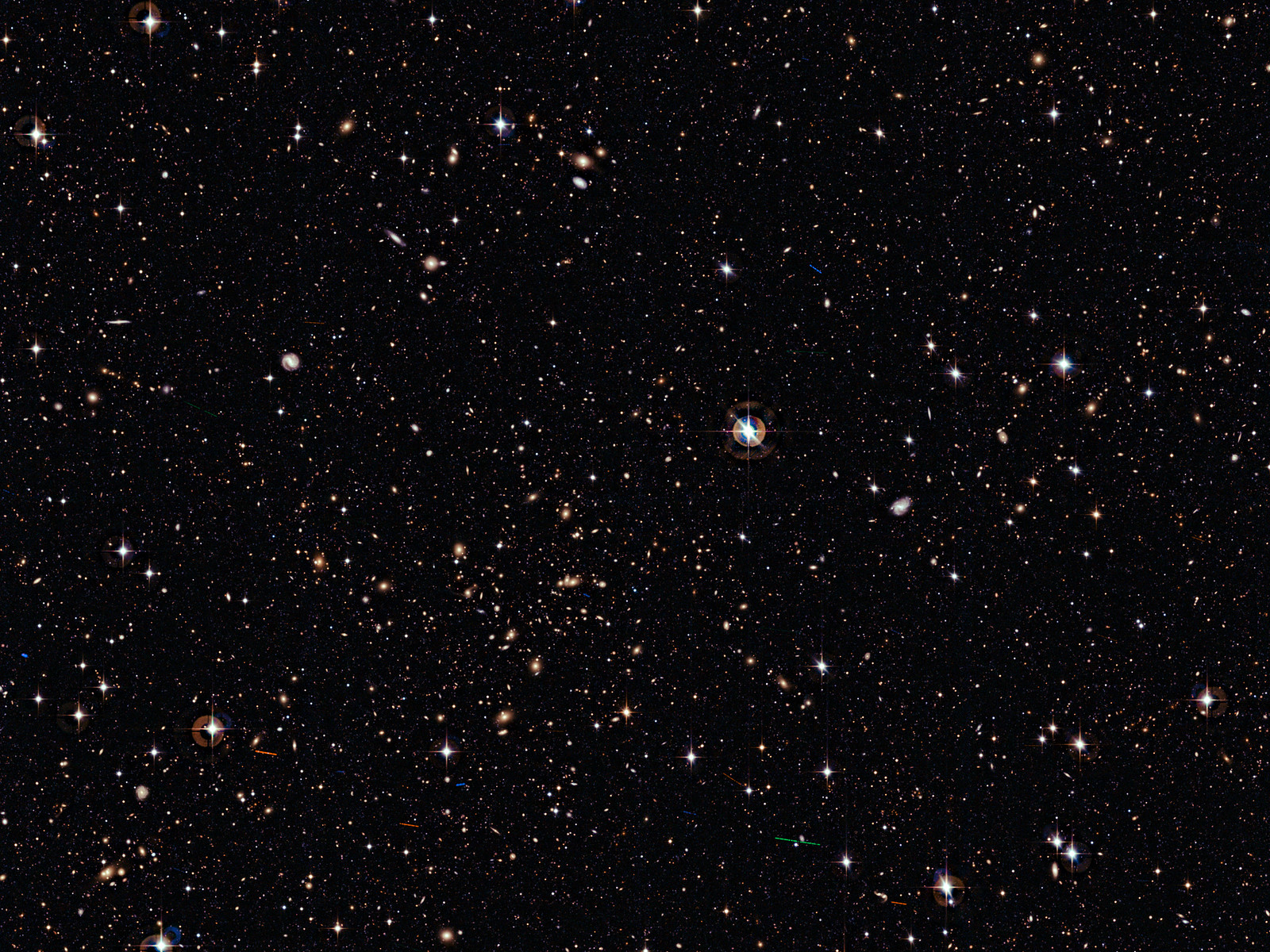
Oh yes, you need to click that to see it in its glory. Because there’s a lesson here…
When you look up at night, you might see a thousand stars. With binoculars, you might see tens of thousands. With a decent telescope, that number goes up to a seemingly amazing tens of millions.
This one image shows tens of thousands of trillions of stars. A million stars for every man, woman, and child on Earth, with more to spare. And it’s only one small part of the sky.
The stars are contained in thousands of galaxies, each so far away that their might and power is reduced to a smudge. Some are big enough to reveal some structure, a pretty splash of a spiral or a delicate swirl, but most are so distant they are mere points of light.
The image is dominated by Abell 315, a cluster of galaxies located two billion light years away. It’s a sprawling city of galaxies, hundreds of island universes bound by their mutual gravity. If each has 100 billion stars — a fair guess — then there are trillions of stars visible here in a glance… and that’s dwarfed, crushed, by the other galaxies scattered in this cosmic portrait.
The picture was taken by the European Southern Observatory’s 2.2-meter telescope at the La Silla Observatory in Chile. Incredibly, this picture is the combination of only about 2.5 hours’ worth of exposures! There are a handful of individual stars in the image; they are located in the foreground, in our own galaxy. They might be a few hundred or even a few thousand light years away. Everything else in the picture is millions or billions of light years away.
 … or, almost everything. See those colored streaks, the red, green, and blue lines? Those are asteroids, rocks a couple of kilometers across. They have different colors because this image is a composite of three separate exposures using a red, green, and blue filter. During each exposure, the asteroids moved a bit compared to the background stars and galaxies due to the combined motion of the rocks and the Earth, leaving streaks. The color of the streak corresponds to the filter used in the exposure.
Assuming these are main belt asteroids, they are perhaps 100 – 200 million kilometers away. Our space probes take months or years to get that far from Earth, yet these are the nearest objects by far in this picture! The most distant galaxy you can find in this image is something like 100,000,000,000,000 times farther away.
Every now and again, as does everyone, I find myself consumed with the drama in my life. Personal interactions, local troubles, global issues. These are all important, sometimes even crucial. But when I can, I try to remember to leverage myself out, to try to gain some perspective.
Gazing into the depths of space, plummeting into the environs of a hundred quadrillion suns… that’s where true perspective can be found.
Credit: ESO/J. Dietrich
...apparently. A viewer sends this picture. The Australian Broadcasting Corporation is airing a talk I gave in March at the National Press Club in Canberra, as the keynote address for the Science Meets Parliament annual event hosted by the Federation of Australian Scientific and Technological Societies. The talk, composed in a burst of inspiration on the flight across the Pacific, is one I've never given before or since--but I'm kinda proud of it. I am going to see if it will be available in any watchable format stateside, and then I may say some more about the subject matter.
 Is the Roundup Ready revolution coming to a close? In the early 1990s, agribusiness giant Monsanto introduced its line of genetically modified crops that could tolerate the pesticide Roundup, allowing farmers to spray it far and wide without worrying about damaging their product.
Now, reports are bubbling up about the increased resistance some weeds are showing to Roundup, which could be the source of great worry, as 90 percent of the soybeans and 70 percent of corn currently grown in the United States are the Roundup Ready varieties.
[F]armers sprayed so much Roundup that weeds quickly evolved to survive it. “What we’re talking about here is Darwinian evolution in fast-forward,” Mike Owen, a weed scientist at Iowa State University, said [The New York Times].
And for the environmentally-minded, here’s something else to consider:
That threatens to reverse one of the agricultural advances bolstered by the Roundup revolution: minimum-till farming. By combining Roundup and Roundup Ready crops, farmers did not have to plow under the weeds to control them. That reduced erosion, the runoff of chemicals into waterways and the use of fuel for tractors [The New York Times].
For an in-depth take, and a historical reminder of how weeds have always evolved to thwart our means of killing them, check out DISCOVER blogger Carl Zimmer’s post.
Related Content:
The Loom: How To Make a Superweed
80beats: Biotech Potato Wins European Approval; May Signal a Larger Shift on GM Crops
80beats: India Says No to Genetically Modified Eggplants
80beats: GM Corn and Organ Failure: Lots of Sensationalism, Few Facts
80beats: Bee Killer Still at Large; New Evidence Makes Pesticides a Prime Suspect
DISCOVER: “Frankenfoods” That Could Feed the World
Image: flickr / Peter Blanchard


There’s new paper in Genome Biology (tip: Dienekes) which doesn’t present too much in terms of new results, Characterizing the admixed African ancestry of African Americans, but has really, really, good visualization of the data:
Results
From cluster analysis, we found that all the African Americans are admixed in their African components of ancestry, with the majority contributions being from West and West-Central Africa, and only modest variation in these African-ancestry proportions among individuals. Furthermore, by principal components analysis, we found little evidence of genetic structure within the African component of ancestry in African Americans.Conclusions
These results are consistent with historic mating patterns among African Americans that are largely uncorrelated to African ancestral origins, and they cast doubt on the general utility of mtDNA or Y-chromosome markers alone to delineate the full African ancestry of African Americans. Our results also indicate that the genetic architecture of African Americans is distinct from that of Africans, and that the greatest source of potential genetic stratification bias in case-control studies of African Americans derives from the proportion of European ancestry.
I want to emphasize the part about lack of utility of uniparental markers. These were the first markers which became widely used in scientific genealogy, and African Americans made a great deal of recourse to these so as to identify the tribe from which their ancestors came. There are obvious historical reasons why this would have more valence for this group than for others, as their ancestral identity was consciously erased during the period of slavery.
But even though generating trees of mtDNA or Y markers is more tractable using a coalescent model, and it gives you a clean answer, it’s only a tiny slice of your ancestry. And not necessarily a representative one. Perhaps better than nothing 10 years ago, but in the days of 450 K SNP chips probably outdated. As I said above I think the paper is interesting mostly because the graphical representation is really good. Most of the time I add labels, but this figure needs no additional explanatory editing!
The blue represents European ancestry in individual African Americans, and in the text they note that the frappe bar plot nearly perfectly aligns with the distribution on the PCA plot. Remember that the two axes on the PCA plot represent the two largest axes of variation, with the first component (largest) on the x, and the second component (second largest) on the y. The largest component naturally separates Europeans from the African groups, while the second largest component separates the various African groups. The difference between the two Pygmy groups is not surprising, the Biaka have been found to be much more admixed with their Bantu neighbors than the Mbuti. I wouldn’t put too much weight in the closeness of the San and Mbuti on the plot, because you’re seeing only a two-dimensional view of the total genomic variation, the two largest dimensions as evaluated by looking at the total range of variation of genes among the set of individuals (European, African American and African) within the data set. The relationships may differ if you constrain the sample space of genetic variation to African genotypes only, and other dimensions may also indicate different relationships.
Here are the estimates of ancestral quanta for African Americans by region against different potential ancestral groups. They had 136 African Americans, so I wouldn’t put too much weight on the interregional differences.

22% of the ancestry of African Americans in the sample is European, with a standard deviation of 12%. It seems that around 10% of the African American population is more than half European in ancestry. Interestingly, in Henry Louis Gates Jr.’s Faces of America, all three of the people with black ancestry, two of whom clearly identified as African American, were more than 50% European in ancestry.* When it comes to African ancestry the affinity with the region of the west of the Bight of Benin seems clear if you view the data through a more granular lens.

The Mandenka are from the western fringe of West Africa, while the Bantu are a linguistic group which seems to have emerged just to the east of Nigeria, and swept east and south with the spread of a particular agricultural lifestyle until pushed up against the Nilotic and Khoisan groups of East and South Africa respectively. But this is on the population level. Could it be that individuals exhibit variance by African region, as they do on European ancestry? Not too much (at least beyond a level of noise, and perhaps a few outliers).
The two figures below are based on African genotypes within the African American population.

Note the contrast with the linear topology evident when European ancestry is added into the mix. Verbally what is clear is that while some African Americans have more European ancestry than others, on an individual level very few are reasonably identified as Yoruba people, or Mandenka people. Rather, individual African Americans exhibit a mix of African lineages in proportion to the various weights of sources in the slave trade.
Why might this be? I have observed before that the vast majority of the ancestry of African Americans is likely colonial. Though a few African American communities, such as the Gullah of coastal South Carolina, preserve distinctive regional African folkways, by and large black Americans as a culture are American, and derive many of their distinctive aspects from elaborations on Anglo norms or a novel synthesis of African ones (in particular, it seems clear that black Americans have been strongly influenced by the two Southern British settler folkways in their speech and religion). The deep history of African Americans within this country means that a great deal of time has elapsed whereby people of Yoruba, Mandenka or Kongo ancestry could have intermarried. Without positive assortative mating by tribe the various ancestral quanta would have become intermixed in subsequent generations. The Gullah exception supports this model, because they lived in relative isolation from whites. The rice agriculture which they practiced required less direct supervision than cotton or tobacco to extract economic productivity, and the South Carolina coastal country was notoriously unhealthful for whites. The relatively humane nature of rice agriculture as opposed to cotton (and especially sugar) also manifested in the more stable family life of the ancestors of the Gullah. So the relationship between white planters and Africans in this region was closer to that between lord and serf than owner and property, and the ancestors of the Gullah could develop their culture in America more organically than African Americans elsewhere.
 In contrast, white ancestry does exhibit a great deal of individual variation. Why? There are two obvious ones that jump out. First, much of the ancestry may be much more recent. Recent ancestry has less time to be “dispersed” across the population through intermarriage. Though certainly whites and blacks mixed genetically in the colonial era, the process continued uninterrupted down to emancipation, while the addition of new African ancestry ceased in near totality by 1810 (there was some trade in slavery which reached the United States of America after this period, but not much), and had greatly diminished in the decades before 1810. The endogenous population growth of the black American community was sufficient to provide slaves for the new cotton lands of the early 19th century. After 1865 white-black relations were more surreptitious but continued nonetheless (e.g., Malcolm X’s mother’s father was white). Second, there is naturally the reality that there was, assortative mating for European features (e.g., “good hair”, skin lighter than “a brown paper bag”) among the African American elite. Though ancestry and phenotype can become decoupled, this takes time, and as I suggest above much of the European ancestry is recent. The image above is of a black American Congressman, Adam Clayton Powell Jr. I assume most readers are aware that W. E. B. Du Bois’ “Talented Tenth” were disproportionately what in other societies would be recognized as people of mixed-race, but who in the United States were classed within the general black population because of the white Southern paradigm of hypodescent.
Overall, nothing too new in the paper, but really great charts!
Citation: Zakharia F, Basu A, Absher D, Assimes TL, Go AS, Hlatky MA, Iribarren C, Knowles JW, Li J, Narasimhan B, Sidney S, Southwick A, Myers RM, Quertermous T, Risch N, & Tang H (2009). Characterizing the admixed African ancestry of African Americans. Genome biology, 10 (12) PMID: 20025784
* Gates is more than 50% European, while Elizabeth Wright is 65% European in ancestry. This aligns with intuition based on physical appearance. Malcolm Gladwell, who may not identify as African American (his father was a white Englishman, his mother a mixed-race Jamaican, and he is a Canadian immigrant), is likely to be ~75% European, though the number was not noted in the special.
Image Credit: Library of Congress
The necessary parts: one salad spinner, some hair combs, a yogurt container, plastic lids, and a glue gun. The finished product: a manual, push-pump centrifuge that could be a lifesaver in developing world medical clinics. Its name: the Sally Centrifuge.
A team of college students invented this low-cost centrifuge, which can be built for about $30, as a project for a global health class at Rice University. The teacher challenged them to build an inexpensive, portable tool that could diagnose anemia without access to electricity, and the tinkerers got to work.
The students, Lila Kerr and Lauren Theis, found that spinning tiny tubes of blood in the device for 10 minutes was enough to separate the blood into heavier red blood cells and lighter plasma. Then they used a gauge to measure the hematocrit, the ratio of red blood cells to the total volume. That information tells a doctor whether a patient is anemic, which can in turn help to diagnose conditions like malnutrition, tuberculosis, HIV/AIDS, and malaria.
In a press release, Rice University listed some of the advantages of the Sally Centrifuge:
It requires no electricity - just a bit of muscle. "We've pumped it for 20 minutes with no problem," Theis said. ...
As neuroscientists refine their techniques for imaging the brain, scans like the fMRI keep creeping toward the courtroom and getting closer to joining to polygraph tests as means to sort liars from truth-tellers through physiology. In Brooklyn, lawyer David Levin is now offering the fMRI brain scan of a witness as proof of her honesty. If the court accepts it, it could be the first time such a brain scan was ever admitted as evidence. For what would be a legal breakthrough, the case is a rather minor one: Levin's client, Cynette Wilson, claims she was treated poorly at her job at a staffing center after filing a sexual harassment complaint. The lawyer found a coworker of Wilson's to corroborate her story, but wanted to bolster his credibility. Wired.com reports:
So, Levin had the coworker undergo an fMRI brain scan by the company Cephos, which claims to provide “independent, scientific validation that someone is telling the truth.”
Laboratory studies using fMRI, which measures blood-oxygen levels in the brain, have suggested that when someone lies, the brain sends more blood to the ventrolateral area of the prefrontal cortex. In a very small number of studies, researchers have identified lying in study subjects (.pdf) with ...
 "A Trajectory to Nowhere" by Scott "Doc" Horowitz
"The current debate has nothing to do with technical/programmatic issues, it is completely politically motivated and being driven by a few people in the current administration, e.g., Lori Garver, NASA Deputy Administrator, Jim Kohlenberger, Office of Science and Technology Policy Chief of Staff, and Paul Shawcross, Chief of the Science and Space Branch at the Office of Management and Budget. Their objective is to cancel the "Bush" program and punish the states (Alabama, Texas) that "didn't vote for us anyway".
 Keith's note: Of course, Scott Horowitz, who certainly seems to enjoy the breeze of that revolving door, is utterly hypocriticial when it comes to deriding decisions as being "political" in Washington DC (ohmygosh, politics in Washington. I wonder who knew this was going on!?) given that he is still a registered lobbyist for ATK (paid $30K in 2008 and 2009, and $10K thus far in 2010), and has been interacting with NASA in that capacity. Does he bother to disclose this when he posts these little one-sided missives? Of course not. Pot, kettle, black, Scott.
Meanwhile, back in our universe ...
Constellation Program Cost and Schedule Will Remain Uncertain Until a Sound Business Case Is Established, GAO, August 2009
"The Constellation program has not yet developed all of the elements of a sound business case needed to justify entry into implementation. Progress has been made; however, technical and design challenges are still significant and until they are resolved NASA will not be able to reliably estimate the time and money needed to execute the program. In addition, cost issues and a poorly phased funding plan continue to hamper the program. Consequently, NASA is changing the acquisition strategy for the Orion project as the agency attempts to increase confidence in its ability to meet a March 2015 first crewed launch. However, technical design and other challenges facing the program are not likely to be overcome in time to meet the 2015 date, even with changes to scope and requirements."

 Keith's note: NASA civil servant Nick Skytland is one of the Education and Public Outreach Officers for NEEMO-14. He is overtly using his Twitter account for the performance of his official duties - yet he still blocks specific taxpayers from following his postings. I have to wonder when NASA CIO Linda Cureton will finally put a social media policy in place at NASA that deals with such flagrant abuses of one's position as a NASA employee.
 How space exploration helps us on Earth
"The international space station's research capabilities are now available after years of construction and $100 billion of investment. It offers opportunities to conduct research in an environment unavailable on Earth and it must be sustained, but not just for the sake of science. One problem in the president's proposal is that it does not address the risk to the station that will result from retiring the space shuttle and canceling the Constellation replacement program at the same time. A healthy and viable space station is critical to the emergence of the commercial space industry that the president's proposal relies on. If the space station is lost, the primary reason to send humans into space in the next decade will be lost."
Bipartisanship key for the future of space program
"While we are encouraged the president showed a willingness to make some changes to his proposal for NASA during his visit to Florida, members of Congress from both parties still have concerns. These concerns include the readiness of the commercial space industry to fill the role the president envisions, and how to minimize the risk to the International Space Station, which after more than a decade of construction and $100 billion in investment is about to realize its full research potential."

![[Slashdot]](http://euvolution.com/futurist-transhuman-news-blog/wp-content/plugins/wp-o-matic/cache/d7922_favicon.ico)
![[Reddit]](http://euvolution.com/futurist-transhuman-news-blog/wp-content/plugins/wp-o-matic/cache/648db_favicon.ico)
![[Technorati]](http://euvolution.com/futurist-transhuman-news-blog/wp-content/plugins/wp-o-matic/cache/2b0e7_favicon.ico)


