The case of John Lykoudis and peptic ulcer disease revisited: Crank or visionary?

One of the themes of SBM has been, since the very beginning, how the paradigm of evidence-based medicine discounts plausibility (or, perhaps more appropriately, implausibility) when evaluating whether or not a given therapy works. One of our favorite examples is homeopathy, a therapy that is so implausible on a strictly scientific basis that, for it to work, huge swaths of well-established science supported by equally huge amounts of experimental and observational evidence would have to be found to be all in serious error. While such an occurrence is not per se impossible, it is incredibly unlikely. Moreover, for scientists actually to start to doubt our understanding of chemistry, biochemistry, pharmacology, and physics to the point of thinking that our understanding of them is in such serious error that homeopathy is a valid description of reality, it would take a lot more than a bunch of low-quality or equivocal studies that show no effect due to homeopathy detectably greater than placebo.

On Friday, Kim Atwood undertook an excellent discussion of this very issue. What really caught my attention, though, was how he educated me about a bit of medical history of which I had been completely unaware. Specifically, Kim discussed the strange case of John Lykoudis, a physician in Greece who may have discovered the etiology of peptic ulcer disease (PUD) due to H. pylori more than a quarter century before Barry Marshall and Robin Warren discovered the bacterial etiology of PUD in 1984. One reason that this story intrigued me is the same reason that it intrigued Kimball. Lykoudis’ story very much resembles that of many quacks, in particular Nicholas Gonzalez, in that he claimed results far better than what medicine could produce at the time, fought relentlessly to try to prove his ideas to the medical authorities in Greece at the time, and ultimately failed to do so. Despite his failure, however, he had a very large and loyal following of patients who fervently believed in his methods. The twist on a familiar story, however, is that Lykoudis may very well have been right and have discovered a real, effective treatment long before his time.

Kimball is right to point out that discoveries require context. Medicine can be prone to dogma. Of that, there is no doubt. Sometimes, physicians resist challenges to prevailing medical dogma. Of that, too, there is no doubt. However, reading the story of John Lykoudis, I couldn’t help but wonder the full context of his activities and efforts to convince the Greek medical authorities of the 1950s and 1960s that he was on to something. It also allows me to indulge myself in a bit of my surgical training, the bulk of which, ironically enough, occurred during the time period when the discoveries of Warren and Marshall were first revolutionizing the treatment of PUD and becoming increasingly accepted in the 1990s. When evaluating a story like that of Dr. Lykoudis and why he was unable to convince the medical profession of 50 years ago that his findings had merit, it’s very important to understand (1) the prevailing notion at the time of PUD etiology and, even more importantly, (2) how PUD was diagnosed and treated in the 1950s and 1960s.

Throughout most of the 20th century, PUD was thought to be caused by stress and dietary factors. The primary treatment for disease that had not yet developed complications was bed rest and prescription of bland diets. Towards the mid-20th century it became increasingly appreciated that gastric acid is a major factor in the etiology of PUD, and increasingly antacids, then later H2 receptor antagonists like cimetidine and ranitidine, and then still later proton pump inhibitors like omeprazole. Cimetidine and ranitidine were the mainstays of PUD treatment when I was a medical student and a resident. For complicated PUD that either was not adequately managed by drugs, sometimes surgery would be necessary. Endless were the discussions and arguments among surgeons fo the time what operation was best for PUD management, a Bilroth I or Bilroth II, vagotomy and pyloroplasty, and, at the time I was finishing my residency, the highly selective vagotomy. Then, of course, there were the discussions of what to do in the case of a bleeding ulcer that couldn’t be stopped using endoscopy or what operation to perform in the case of a perforated ulcer.

One must also remember that in the 1950s and 1960s, the diagnosis of PUD was much different than it was even in Marshall and Warren’t time in the 1980s. That’s because in the 1970s and 1980s fiberoptic endoscopy became the dominant method of diagnosing PUD. Not only did it allow for direct visualization of the ulcer, but it also allowed for potential therapy without laparotomy. More relevant for purposes of this discussion, endoscopy allows isolation of the H. pylori that causes PUD. Prior to that, the methods of diagnosis were not as accurate. In general, PUD would be diagnosed by history, physical, and then an upper GI X-ray series, in which the patient would swallow barium-containing slurries, after which fluoroscopy would visualize the stomach and duodenum.

Consequently, if you imagine yourself back in the 1950s and 1960s, the time when Dr. Lykoudis practiced, the diagnosis of PUD was less certain than it was in the 1980s. Unless it was severe, it might not even show up on upper GI series, given the limitations of the imaging technology of the time. It wasn’t always possible to distinguish between gastritis and true PUD. Consequently, a lot of diagnosis and treatment of PUD in pre-endoscopy times ended up being a lot more empiric than it is now. The diagnosis was arrived at clinically, and it was symptomatic relief that was used as the main measure of treatment success.

So what would it have taken to demonstrate, given the technology of the time, that Dr. Lykoudis’ treatment was effective? It would have taken pretty much what it would take today, minus the use of endoscopy. Consequently, we could envision a clinical trial in which standard of care at the time (bland diet, antacids, etc.) was tested against the standard of care plus Dr. Lykoudis’ antibiotic regimen. The design would be simple: Two groups, one receiving standard of care plus placebo, one receiving standard of care plus antibiotics. Alternatively, although it probably wouldn’t be considered ethically acceptable now, back in the 1960s, it probably would have been considered ethical to do an alternative study, directly comparing the then standard of care to Dr. Lykoudis’ antibiotic regimen. Whichever design were chosen, before entry in the study, each patient would have to undergo upper GI to document the presence of PUD and measure its severity. They would also have to undergo upper GI at the end of the study to document healing. Throughout the study, pain scores would be measured, and patient outcomes tracked to see what proportion of patients end up requiring surgery for their PUD and which proportion can go back to eating a regular diet. Unfortunately, Dr. Lykoudis didn’t have data anywhere near that level of rigor.

On the other hand, what I’m describing above is the equivalent of what we would call today a phase III clinical trial. In general, phase III trials aren’t started without preliminary data. But what sort of preliminary data are usually needed to provide adequate scientific justification for a phase III trial? Today, we require preclinical evidence in the form of cell culture and animal studies, as well as lesser levels of clinical evidence, such as smaller trials like phase I or phase II trials. The preclinical data provide scientific justification and plausibility, and the human data bolster that. Of course, we can’t apply today’s standards to the science of 50 years ago. Back then, the methodology and ethics of randomized clinical trials were not as advanced and well-worked out as they are today.

So what happens if we look at Dr. Lykoudis’s story and whether he might have had enough data to justify a large phase III-like clinical trial in the time in which he was practicing? By today’s standards, he probably did not. As Kimball pointed out, although plausibility does not mean understanding the mechanism, it does mean that there should be a potentially plausible mechanism, as there does not exist, for example, for homeopathy. The concept that there might be a bacterial cause of PUD is not, on the surface, incredibly implausible. But was it plausible enough to justify a clinical trial of the sort that Dr. Lykoudis proposed? What would it take? This is what Dr. Lykoudis proposed:

In 1967, Lykoudis succeeded in getting the attention of the Prime Minister’s office. His correspondence with the Minister of Health on 21 August, 1967, a sad document indeed, is revealing. He registers his frustration that medications with apparently no effect on PUD were approved, whereas Elgaco was repeatedly rejected. He proposes, in essence, a phase III trial: 100 PUD patients to be treated at a State hospital by the eminent professors, 50 with conventional treatment and 50 with Elgaco. ‘Their refusal to approve it is understandable, but their refusal to test it is not!’ he writes.

A not unreasonable assertion. Unfortunately, as Kimball pointed out, the technology to isolate and culture H. pylori didn’t exist at the time. Absent that, providing strong evidence for a bacterial etiology for PUD would require an obvious and strong response to antibiotics in the form of unambiguous symptom relief and healing documented on followup upper GI imaging studies. Even if Lykoudis had had that, he would have been unable to culture the organism responsible for PUD, which would have left scientists in a quandary. Response to antibiotics is storngly suggestive of an infectious etiology, but, absent an organism, one can never determine for sure whether it is in fact a bacteria causing a disease or the antibiotic has an activity other than its ability to kill bugs, an additional activity. For example, erythromycin increases GI motility. Thus, in the context of the time, it’s not surprising that Lykoudis’ ideas were considered highly implausible, and it would have required very strong evidence to make the idea seem plausible.

Steve Novella made a cogent observation:

But taken at face value, I think the real lesson is that process is more important than whether or not one turn’s out to be correct. Science is about process.

The problem with Lykoudis is that his behavior was indistinguishable from the myriad quacks and charlatans that existed then and exist today. That in hind sight one turned out to be on the right track is not all that surprising, and their contemporaries should not be faulted for their inability to predict the future.

The question is – what did Lykoudis do to convince the scientific community of his claims. Did he perform carefully controlled double-blind placebo-controlled trials? Did he attempt to enlist the help of a microbiologist to try to isolate the organism? Or did he just expect people to take his word for it?

What did he do to deserve being taken seriously? Being right in the hindsight of history is not enough.

And I think that this is the key point. Science is a process. It is by its very nature constrained by what is known at any given time in history. In the context of Dr. Lykoudis’s time and given what was known then, it is not surprising that his idea would have encountered heavy resistance from the scientific orthodoxy of the time. Another issue to consider is regional variation in physicians’ attitudes. One example I like to use to illustrate this is the reaction of European physicians to the ideas of Ignaz Semmelweis. Semmelweis, as most readers will recall, first demonstrated that the high rate of puerperal fever in the obstetrics ward run by physicians was due to physicians not washing their hands after doing autopsies, going straight from the morgue to the delivery room. Semmelweis’ findings were far more favorably received in England, for example, than they were on the continent. It is possible, although by no means assured, that Lykoudis’ ideas might have been better received if he had lived in a different part of the world.

Here’s one final consideration. Science is performed by human beings. Although it is a process designed to overcome human biases, communicating the results of scientific research is subject to the same idiosyncracies to which any human communication is subject. Anyone who’s ever been to a scientific conference knows that. It is quite possible to be right and, to put it bluntly, to piss off the very scientists that need to be convinced so much that they harden their positions protecting the scientific consensus. One example is Semmelweis himself. Sherwin Nuland, in his book The Doctors’ Plague: Germs, Childbed Fever and the Strange Story of Ignac Semmelweis, suggested that if Semmelweis had communicated his findings more effectively and managed not to antagonize the medical establishment so thoroughly he might not have been marginalized and dismissed in the manner that he was. At the very least, he may not have been met with as much hostility. Galileo, although apparently not intentionally, alienated the Pope at the time by putting his words in the mouth of a character named Simplicio defending the Aristotelian Geocentric view in Dialogue Concerning the Two Chief World Systems. Reading between the lines, one can see echoes of this sort of antagonism in Lykoudis’s story. Indeed, Michael Phillips of St. Vincent’s Medical Center wrote in an letter to The Lancet:

I propose a less dramatic metaphor: medicine is a marketplace of ideas, with sellers and buyers. Sellers (innovators with new ideas) advertise their intellectual property to potential buyers (other physicians). This buying public is highly sophisticated and sceptical. Quite correctly, physicians will only accept the highest quality new ideas because the lives of their patients are at risk. So physicians buy only when they see the hallmark of quality: publication in a respected peer-reviewed journal.

That in a nutshell explains the tragedy of John Lykoudis. He had a wonderful intellectual product: the insight that peptic ulcer disease is infectious, supported by the evidence that it can be cured with antibiotics. But he lacked the ability (or the training) to sell this insight to his colleagues. He was a retail trader who treated individual patients instead of targeting the wholesale market of other physicians.

Of course, this is the problem. Most physicians are not scientists, and many physicians are very prone to being swayed by anecdotal evidence. Without well-designed clinical trials based on the best basic and translational science available, way to validate or refute anecdotal data. I find Lykoudis’s story to be a cautionary tale. Whether he was correct and thus the true “Galileo” of H. pylori, rather than Warren and Marshall or whether he was just another crank, his story demonstrates that we scientists should be very careful to guard against excessive smugness. As has been repeated by many skeptics in many variants over the years, it is not sufficient to claim the mantle of Galileo as a persecuted martyr for science. You must also be right. Even though it is not clear whether, taken in the context of the time, Lykoudis was a crank or a misunderstood physician who was ahead of his time, Warren and Marshall’s vindication of his ideas that PUD is bacterial in etiology reminds us that not all who claim the mantle of Galileo are necessarily cranks. The vast majority usually are, but on very rare occasions we do see a real Galileo.


[Slashdot]
[Digg]
[Reddit]
[del.icio.us]
[Facebook]
[Technorati]
[Google]
[StumbleUpon]

Brief Note: Followup on Spinal Decompression Machines

In September 2008 I wrote a post on Misleading Ads for Back Pain Treatment. with particular attention to the bogus claims for the DRX 9000.

The Canadian Broadcasting Company (CBC) show “Marketplace” has just done a scathing exposé of so-called nonsurgical spinal decompression treatment with machines like the DRX 9000 and of some of the unscrupulous practitioners who offer it.  Between the hidden camera footage and the weasel words of the chiropractor they interview, it’s quite entertaining.


[Slashdot]
[Digg]
[Reddit]
[del.icio.us]
[Facebook]
[Technorati]
[Google]
[StumbleUpon]

Does Libertarian for NY Gov. Kristin Davis, have a bit of a "conservative" streak?

From Eric Dondero:

Former Manhattan Madame, and media celebrity Kristin Davis, currently seeking the Libertarian nomination for New York Governor, issued a press release Wednesday, praising California's initiative to legalize marijuana.

Said Davis:

"Californian's have figured out what New Yorker's need to figure out. Marijuana is a $10 billion a year industry in New York State. Its legalization and taxation will help New York's current financial crises."

But in an interview with NY NewsBlaze, Davis took a very unique approach to legalization, giving it a bit of a conservative twist.

From NewsBlaze:

Davis said she would strongly support an Opt-Out clause where localities could opt by local vote not to sell marijuana in that locality. "I believe in home rule and local option. Some counties may choose to allow legal pot sales, others may not."

Such a view could come as a relief to more socially conservative Upstate towns and localities. And could win her some critical Upstate voting support.

Blue Collar Republican files for MO State Rep. against his own Wife

Livin' Lovin'... Heartbreaker??

From Cliff Thies:

Missouri state Representative Linda Fischer, a Democrat, is running for re-election this November. She is being challenged by her husband, John Fischer, who has re-registered as a Republican.

This might be funny if it weren’t so sad. The two are involved in a messy court proceeding. Their marriage was probably already over. Also, Mr. Fischer had been formerly employed for almost thirty years in Chrysler Corporation automobile assembly plants, before he took early retirement.

He was just a Regular Joe forklift drive; she a powerful state legislator

He says he is running for the workers of Missouri and, actually, this could be true. Our economy is in a shambles. A lot of people are hurting. Workers, small business, investors, people in our cities and our rural places, people reflecting the great diversity of our country.

From KMOV.com:

"I figured if I'm going to be on my own, then I'm going to have to do what suits me," he said. "I'm standing up for people who lost their job. I don't think they're being represented fairly in this state because they do not take care of the working man."

We need leaders who speak to our shared interest in reviving our economy, not people who speak about redistributing of what remains of our wealth.

In Missouri District 107 (east central MO - Bonne Terre) Vote Republican!

What does the Health Care Freedom of Choice Act actually do?

The Act is sponsored by the American Legislative Exchange Council,(ALEC) a coalition of conservative, moderate and libertarian state legislators who support "Limited Government, Free Markets and Federalism."

The main objectives of the legislation:

• Ensuring Access to Health Services—Without Waiting Lists. When consumers control the dollars, they make the decisions. On the other hand, a single-payer health care —which forces patients to enroll in a one-size-fits-all plan with rich benefits and weak cost-sharing—will cause spending to skyrocket and policymakers to ration care as a cost-containment measure.

• ALEC's Freedom of Choice in Health Care Act ensures a person's right to pay directly for medical care. Single-payer systems, like in Canada, make it illegal for citizens to go outside the government's health care plan and contract for their own medical services. Cost overruns require most single-payer plans to restrict patient choices, and instead mandate an "evidence-based" treatment schedule that standardizes care.

• ALEC's Freedom of Choice in Health Care Act would block legislation that imposes costly, bureaucratic penalties for choosing to obtain or decline health coverage. This provision strikes at the heart of an individual mandate—implemented in Massachusetts and elsewhere—that penalize individuals and businesses for failing to purchase health insurance.

Where does it stand?

According to ALEC, legislation has been filed in 35 states:

Alabama, Alaska, Arizona, Arkansas, Delaware, Florida, Georgia, Idaho, Illinois, Indiana, Iowa, Kansas, Kentucky, Louisiana, Maryland, Michigan, Minnesota, Mississippi, Missouri, Nebraska, New Hampshire, New Jersey, New Mexico, North Dakota, Ohio, Oklahoma, Pennsylvania, South Carolina, South Dakota, Tennessee, Virginia, Washington, West Virginia, Wisconsin, and Wyoming. (Arizona's HCR 2014, a revised version of the ALEC model, will be put on the ballot in 2010.)

The legislation has since passed and been signed into law in Idaho, and is on the verge of becomming the law of the land in Virginia and Oklahoma.

In Texas there are calls for Gov. Rick Perry to call a special session of the legislature for HCFCA.

Georgia Senate overwhelmingly passes Health Care Freedom of Choice Act

All Republicans vote in favor

If this is not repealed "there will be virtually no activity by a state, a citizen, or a business that the feds would not someday be able to regulate." -- Bob Barr, 2008 Libertarian Presidential candidate

From Eric Dondero:

Encouraging news out of Georgia. The State Senate has just passed the Health Care Freedom of Choice Act by an overwhelming margin of 31 to 17. All Republicans voted for the measure. They were joined by only one single Democrat.

The bill was sponsored by members of the Georgia Senate Liberty Caucus, including Sen. Judson Hill of Marietta who called it the "best way to protect Georgians from the Democrat-led Congress' attempt to socialize health care through their public option health care mandate."

From Quarterdeck blog:

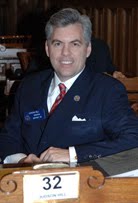
Georgia Senator Judson Hill (photo) was joined by 29 other Senate Republicans last Thursday passing legislation protecting Georgians’ rights to choose their own health care. Senator Hill authored Senate Bill 317 and has been working the past year to prohibit any government, state or federal, from forcing its citizens to participate in any health care system.

Under Senate Bill 317 Georgia’s citizens would be protected from being forced by the government to purchase health care.

The Bill now goes on to the House. Republican Governor Sonny Perdue is fully expected to sign the law once it passes the House.

Fmr. Georgia Republican Congressman and 2008 Libertarian Presidential candidate Bob Barr wrote in the Atlanta Journal-Constitution "States must challenge Health Care law":

Governor Sonny Perdue, for example, worries how the Peach State will fund what he estimates will be an additional billion dollars of Medicaid spending each year. Private companies, which will be subject to numerous mandates by virtue of the law, face daunting fiscal challenges as well.

Governor Perdue has indicated he will pursue a challenge using lawyers other than the state attorney general, [Democrat] Thurbert Baker, who has refused to lend his office and his name to the project. Perdue, unlike Baker, correctly understands the importance of such a lawsuit; for if the federal government is permitted to enforce mandates such as those in this new law, then there will be virtually no activity by a state, a citizen, or a business that the feds would not someday be able to regulate.

For a full list of GA Senate Liberty Caucus members visit GARLC.org

Public Sector employees causing Higher Private Sector Unemployment

NEW FROM REASON TV!

Nick Gillespie, Reason Editor, looks at the economic pie, and how the increasing size of public sector employment is causing private sector employees to lose jobs.

Noted: Public sector employees now make about $8,000 more than their private counterparts.

More than 8 million private sector jobs have been lost in the Obama recession, while the public sector saw a net gain of at least 100,000 jobs.

POLL SHOCKER FROM ZOGBY!! Democrats now backing away from Israel; Republicans overwhelmingly support Jewish State

92% of Republicans on Israel's side; only 42% of Democrats

From Eric Dondero:

In 2008, 78% of all American Jews voted for Barack Hussein Obama for President. Many of the 22% of Jews who voted against him, warned of a coming catastrophe in American foreign policy against Israel, if he were to be elected. The 22% have proven to be correct:

Obama administration pushback against Israeli warnings over the threat of an Iranian nuclear arsenal.

Benjamin Netanyahu insulted by Obama at a recent White House visit. Obama walked out of the room in the middle of their meeting, with the excuse, I'm going to have dinner "with Michele and the kids."

The very latest; threats by the US to vote "present" for the very first time, in the UN Security Council against Israel, in regards to calls to halt further Israeli housing in East Jerusalem.

And now this breaking news from Zogby:

The poll’s findings also highlight the deep partisan gap that continues to grow between Republicans and Democrats, with Democrats having an unfavorable rating of Israel for the first time.

•42% of Democrats had a favorable rating of Israel compared to 92% of Republicans resulting in a 50% gap between the parties.

•While the gap is higher in this poll, the finding is consistent with a recent Gallup poll that had 53% of Democrats with a favorable view compared to 80% of Republicans.

Will this help Republican candidates with the Jewish community heading into the November elections?

Despite repeated attempts, pollster John Zogby was unavailable to provide Libertarian Republican with a comment on this question.

However, Joe Sciarrino, Spokesman for the National Republican Congressional Comm. commented to LR:

"The United States has had a long-standing and strategic partnership with Israel, and over the past year we’ve seen this Administration neglect that relationship. Democrats in Congress who agree with this decision to alienate such a key ally may risk alienating voters come November.”

Photo Minn. Cong. Michele Bachmann addressing the Republican Jewish Coaltion.

Libertarian Wayne Root to Larry King: Yes, Abolish Social Security

Republicans who defend SS risk losing votes to Libertarian, Tea Party

From Eric Dondero:

While mainline Republicans are defending Medicare and Social Security, a growing number of disaffected Tea Party Patriots and Libertarians are saying "hold on a minute!" We actually do want to abolish the program, or at the very least privatize it through a gradualist approach.

The Libertarian Party, which originated the Tea Party protests in 2008, has long advocated abolishment of Social Security.

From the LP Platform:

Retirement planning is the responsibility of the individual, not the government. We favor replacing the current government-sponsored Social Security system with a private voluntary system. The proper source of help for the poor is the voluntary efforts of private groups and individuals.

On Monday night, 2008 Libertarian Vice-Presidential candidate, and potential 2012 LP Presidential standardbearer Wayne Root appeared on Larry King. He was joined by local St. Louis Tea Party leader Dana Loesch, who has increasingly become a media spokesman for the nationwide Tea Party movement.

Partial transcript from YouTube video:

KING: We had to pay Social Security. That was a socialist concept. Republicans voted against it at the time.

LOESCH: Oh, I agree. Yeah.

KING: Would anyone turn away Social Security now? Would you do away with it?

LOESCH: I would, yeah.

KING: Would you do away with it?

LOESCH: Yes.

KING: Would you do away with it Wayne?

ROOT: Well, I'd certainly like to. At best I'd do away with it, cause I could find better ways to save and invest my own $15,000 a year... If you put it up for a vote today a majority would want to keep it, but they'd certainly want to privatize a small portion of it... I think I can do better with my $15,000 a year, and I'd like it to be mine. It's mine.

Mainline Republicans who continue to defend failed government entitlement programs risk losing votes to Libertarian Party candidates in 2010. A loss of 3 to 4% in a close Congressional race for instance, to a Libertarian candidate who is advocating privatization, could prove disastrous to many GOP campaigns.

Liberal Columnist Howard Fineman warns Democrats in for "Colossal losses"

Howard Fineman of NewsWeek offers a stunning assessment of Democrats chances for Congress: After surveying the latest polls on Health Care, Fineman finds that the Dems may be in for spectacular losses in November.

From NewsWeek "The numbers don't lie":

On the day the president signed into law the "fix-it" addendum to the massive health-care measure, two new polls show just how fearful and skeptical Americans are about the entire enterprise. If the numbers stay where they are—and it's not clear why they will change much between now and November—then the Democrats really are in danger of colossal losses at the polls.

The first week of salesmanship by the Democrats and the president hasn't done any good. According to the new Rasmussen poll, only 41 percent of Americans think the law is "good for the country," compared with 50 percent who see it as "bad for the country." Last week the ratio was 41–49 percent. Sixty percent think the measure is "likely to increase the deficit"—also a figure unchanged from last week.

In Gallup's new poll... Americans think the law will harm the U.S. economy (44–34 percent), the overall quality of health care in the U.S. (55–29 percent), and the federal balance sheet (61–23 percent).

Fineman also quotes an un-named Democratic Senator who called the bill "political folly."

(H/t Memeo)

The Thomas Jefferson Question: Interview with Texas Freedom Network’s Dan Quinn over Textbook controversy

FROM THE EDITOR: Libertarian Republican was fortunate to have the opportunity to interview Dan Quinn, Communications Director, Texas Freedom Network on the recent Textbook controversy concerning the Texas Board of Education. We appreciate Mr. Quinn taking the time to answer these important questions that greatly affect liberals, conservatives and libertarians.

LIBERTARIAN REPUBLICAN: Mr. Quinn, Texas Board of Education members are disputing your assertion that Jefferson was removed from history textbooks. Gail Lowe and Cynthia Duncan have said in national interveiws that what actually happened is that discussion of TJ was moved from the Enlightenment period to the American Revolution. Do you care to dispute that fact?

DAN QUINN: We haven't asserted that the board removed Jefferson from history books. From our live-blogging of the meeting on March 11:

TFNInsider.org

9:27 – The board is taking up remaining amendments on the high school world history course

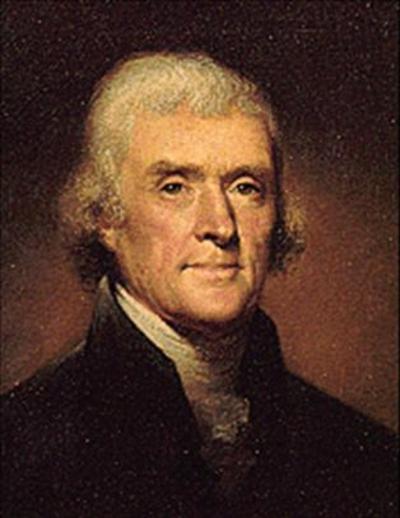
9:30 – Board member Cynthia Dunbar wants to change a standard having students study the impact of Enlightenment ideas on political revolutions from 1750 to the present. She wants to drop the reference to Enlightenment ideas (replacing with “the writings of”) and to Thomas Jefferson. She adds Thomas Aquinas and others. Jefferson ’s ideas, she argues, were based on other political philosophers listed in the standards. We don’t buy her argument at all. Board member Bob Craig of Lubbock points out that the curriculum writers clearly wanted to students to study Enlightenment ideas and Jefferson . Could Dunbar’s problem be that Jefferson was a Deist? The board approves the amendment, taking Thomas Jefferson OUT of the world history standards

9:40 – We’re just picking ourselves up off the floor. The board’s far-right faction has spent months now proclaiming the importance of emphasizing America ’s exceptionalism in social studies classrooms. But today they voted to remove one of the greatest of America ’s Founders, Thomas Jefferson, from a standard about the influence of great political philosophers on political revolutions from 1750 to today

9:45 – Here’s the amendment Dunbar changed: “explain the impact of Enlightenment ideas from John Locke, Thomas Hobbes, Voltaire, Charles de Montesquieu, Jean Jacques Rousseau, and Thomas Jefferson on political revolutions from 1750 to the present.” Here’s Dunbar ’s replacement standard, which passed: “explain the impact of the writings of John Locke, Thomas Hobbes, Voltaire, Charles de Montesquieu, Jean Jacques Rousseau, Thomas Aquinas, John Calvin and Sir William Blackstone.” Not only does Dunbar ’s amendment completely change the thrust of the standard. It also appalling drops one of the most influential political philosophers in American history — Thomas Jefferson.

From our March 12 press release:

TFN.org

"Even as board members continued to demand that students learn about "American exceptionalism," the board stripped Thomas Jefferson from a world history standard about the influence of Enlightenment thinkers on political revolutions from the 1700s to today. In Jefferson 's place, the board's religious conservatives succeeded in inserting Thomas Aquinas and John Calvin. They also removed the reference to "Enlightenment ideas" in the standard, requiring that students should simply learn about the influence of the "writings" of various thinkers (including Calvin and Aquinas)."

We repeated that paragraph in a March 13 blog post summarizing the worst changes the board made:

TFNinsider.org

And if you check our other blog entries, you will note that we have been careful to explain that Jefferson was deleted from that world history standard, not from the "history books."

LIBERTARIAN REPUBLICAN: Mr. Quinn, as you probably know, Thomas Jefferson is a great hero to libertarians. Initially, we libertarians were quite concerned that conservatives were reported to have removed him from history textbooks. In fact, many of us were outraged. But after learning the truth of the matter, our outrage turned to liberal bloggers who initially mis-reported the story. Could you clarify for us the origination of reports that Jefferson had been removed from history textbooks? Did TPM and other liberal bloggers just miscontrue the facts, or were they purposely trying to split libertarians from conservatives by spinning the news?

DAN QUINN: If others have misreported what happened, you'll have to talk with them. But keep in mind that other bloggers were not at the meeting and in many cases were relying on possibly imprecise reports from elsewhere -- much as conservative bloggers were reacting to false reports last year that Christmas had been taken out of social studies textbooks in Texas . Sadly, some people are permitting Lowe and Dunbar to distract them with a red herring. This isn't a contest about how many times Jefferson is listed in the standards, whether those references are in American history or elsewhere. The question is why board members don’t want students to learn that Jefferson, who argued (among other things) that a "wall of separation between church and state" as essential to freedom, was an influential Enlightenment thinker who inspired people around the world struggling for freedom. Moreover, why did the board change the thrust of the standard altogether by removing even the reference to the Enlightenment and replacing Jefferson with Thomas Aquinas, John Calvin and William Blackstone? We have been monitoring this board for 15 years, and the answers to those questions are certainly no mystery to us. This board is controlled by a faction that is hostile to the separation of church and state. In fact, during the same meeting they rejected a proposed standard that would have required students to “examine the reasons the Founding Fathers protected religious freedom in America by barring government from promoting or disfavoring any particular religion over all others.” The board knew that removing other references to Jefferson would be politically impossible. But removing him from a standard about the influence of his ideas on people struggling for freedom around the world, they thought, would be easier. Moreover, it doesn't surprise us in the least that this board would want to water down the influence of Enlightenment thinking on political revolutions from the 1700s to the present. Enlightenment philosophies run counter to their own worldview.

LIBERTARIAN REPUBLICAN: As you're probably aware, a great many libertarians are Darwinists, even Social Darwinists, and are not comfortable with some of the more extreme elements of the Religious Right. We are concerned that some religious conservatives might seek to give parity to Darwinism with theories based on a Creationist view. However, given the misreporting of the Jefferson story, and the misinformation put out by liberal groups based mainly in Austin , how should libertarians trust such reports in the future?

DAN QUINN: As in all things in life, choose your sources carefully, and be particularly wary of politicians spinning wildly in an attempt to justify the indefensible. I note that you mention Talking Points Memo specifically. This is what TPM reported:

TPMMuckracker.talkingpointsmemo.com

“According to TFN: ‘the board stripped Thomas Jefferson from a world history standard about the influence of Enlightenment thinkers on political revolutions from the 1700s to today. In Jefferson 's place, the board's religious conservatives succeeded in inserting Thomas Aquinas and John Calvin. They also removed the reference to 'Enlightenment ideas' in the standard, requiring that students should simply learn about the influence of the 'writings' of various thinkers (including Calvin and Aquinas).”

You didn’t mention Huffington Post, but they reported essentially the same thing, linking back to our blog:

HuffingtonPost.com

Part of the problem here is that Lowe, Dunbar and their supporters want everyone to believe that the bulk of the reporting on what they did has been inaccurate. In fact, much of it hasn’t been. But it serves them to suggest that the reporting has been inaccurate because then bloggers will challenge their critics for supposedly being untruthful. On this point, I highly recommend the following piece:

http://www.texastribune.org

In short, trusting what you hear from these state board members is perilous.

Regarding science, this board did, in fact, insert creationist/"intelligent design" arguments into our science standards last year in an attempt to challenge the validity of evolutionary theory. One such argument has students study whether the fossil record supports evolutionary theory. The other has students study the complexity of the cell to decide whether natural selection could account for changes in the development and diversity of life. Both are textbook creationist/"intelligent design" arguments ("gaps in the fossil record," "irreducible complexity").

LIBERTARIAN REPUBLICAN: Thank you very much for your time Mr. Quinn.

Don’t Just Say “No”

Voters!
You must step back and look at the big picture.
You must look at the actions and not the words of our current one party political system.
The big picture is that both the Republicans and Democrats mean to grow government and control your lives in ways that were unimaginable even 20 years ago.  They are now [...]

Portland Plans to Spend $600 million on Master Bike Plan


Portland, Oregon is leading the nation with a 2030 master bike plan that calls to spend up to $600 MILLION! Talk about a lot of money for bicycles! The more people that get out of their cars, the more livability will improve and hopefully improved air quality.

The city of Portland has already committed to spending $20 million this year for bike boulevards. Portland is taking some cool steps toward making travel via bike more safe and easy. The newly implemented techniques in the video below show how the city is taking steps to improve the experience for cyclists and drivers. The greenest city in America has also installed several "swales" alongside many city streets to filter street water run off, which also double as barriers between pedestrians and auto traffic. Implementations like these are only a few of the strategies Portland has taken to make alternative travel fun and safe for even those who are new to biking in the city. Along with the title of Greenest City in America Portland has claimed the #1 spot for most bicycle friendly city in the nation.

On the Right Track from Mayor Sam Adams on Vimeo.

Thoughts, Comments, Questions...

My NCCAM Wish List

For a number of reasons, well-argued many times here on SBM, it would be beneficial to American citizens if the National Center for Complementary and Alternative Medicine (NCCAM) were abolished. This does not seem to be in the cards anytime soon. Here, then, are my suggestions for making the Center less dangerous and less of a marketing tool for pseudomedicine than it has been since its inception. Some suggestions might even make the Center somewhat useful. They are listed in order of priority. The Center should:

1. Abandon all unethical trials, beginning with the Trial to Assess Chelation Therapy (TACT, which is under the joint auspices of the NHLBI). This should be done in a very public manner. The reasons for abandoning the TACT, in summary, are as follows.

  • The TACT was conceived and approved not because of any scientific or medical promise, but because of pressure from a powerful demagogue in Congress, Rep. Dan Burton (R-IN). Burton was acting on behalf of a tiny, fringe group of physicians whom the editor of Chest and Archives of Internal Medicine had correctly called “pseudoscientific zealots” whose practices were “an abuse of the physician’s freedom of choice.” Barely 15 years later, TACT literature emanating from the NIH renamed the same practitioners “respected experts.” Their organization, the American Association for Advancement in Medicine (ACAM), actively lobbied for the TACT.
  • The TACT Principal Investigator (PI) made numerous false statements in his application for the grant and in his subsequent protocol submission, the effect of which was to give the erroneous impression that chelation is a promising treatment for coronary artery disease. I believe that those false statements constitute scientific misconduct. If the PI had offered an accurate review of the existing literature, any scientific review board or IRB worth its salt would have refused to approve the trial. In the event, the “Special Emphasis Panel” that the NCCAM convened to review the application included the very practitioner who, as President of the ACAM, had been instrumental in securing Rep. Burton’s influence. That practitioner was also named, in the application that he reviewed, as a member of a TACT committee, and would shortly thereafter become a TACT investigator. This is a violation of the NIH conflict of interest policy.
  • We have shown, and both the federal Office of Human Research Protections (OHRP) and the University of Miami IRB have acknowledged, that the TACT proceeded with a misleading consent form—so misleading that any change now, more than 6 years after the trial began, couldn’t possibly reverse the damage already done. Misleading statements in the consent form included a strong implication that the study drug was the relatively less dangerous calcium-sodium ETDA, not the very dangerous disodium EDTA used in the trial. The consent form also failed to state important risks, including death.
  • Almost 2 years ago the FDA withdrew its approval for disodium EDTA, which it had previously approved only for emergency treatments of digitalis toxicity and hypercalcemia. The FDA cited the dangers of the drug, including recent deaths associated with unapproved uses by ACAM members. Thus there is now no point in studying this drug because it is, for practical purposes, illegal.
  • We also showed, and the OHRP and U. Miami IRB also agreed, that many of the investigators in the TACT have criminal records, histories of discipline by state medical boards, histories of membership in IRBs disciplined by the FDA, and other indications of incompetent practices or worse. They are the pseudoscientific zealots mentioned above. I have argued on SBM that at least 2 deaths of human subjects in the TACT can be attributed to incompetent care at the hands of such investigators.
  • The TACT protocols, including far-too-biased investigators, inadequate blinding methods, multiple primary and secondary endpoints, and more (discussed here), are so tainted that whatever the reported outcome, it is unlikely that it will solve the very problem that it was intended to solve. The outcome will likely be equivocal, but even if it is reported as confirming or disconfirming, either conclusion will almost certainly be rejected by those who disagree.
  •  This suggestion—to abandon the TACT—isn’t really optional, although I am not so naïve as to think that NIH policy-makers will agree. It is not optional because the TACT violates numerous tenets of internationally recognized human studies ethics and numerous articles of the U.S. Federal Code of Regulations, and those violations are not retroactively remediable. As Henry Beecher wrote in his seminal article on human studies ethics, “an experiment is ethical or not at its inception; it does not become ethical post hoc…”

Thus to continue the trial, now that such violations are known, is not an ethically viable option for the NIH. Nor should the NIH succumb to political pressure framed as the “legislative mandate” of the NCCAM, which is its usual justification for such mischief. The reason is found in the Helsinki Declaration:

Physicians should consider the ethical, legal and regulatory norms and standards for research involving human subjects in their own countries as well as applicable international norms and standards. No national or international ethical, legal or regulatory requirement should reduce or eliminate any of the protections for research subjects set forth in this Declaration.

The NCCAM should also publicly address the horribly unethical trial of the Gonzalez regimen for cancer of the pancreas, even though that trial is over. It was spawned by much the same political pressure as was the TACT, it involved NIH-sponsored torture of hapless subjects, and its disconfirming outcome has done nothing to dissuade Gonzalez himself or his champions, including Burton and long time NCCAM advisee (and “Harkinite”) Ralph Moss.

Finally, the NCCAM must reconsider one of its recurrent public justifications for such trials: popularity. I have written about this several times (including in both the TACT article linked above and the Gonzalez regimen series here on SBM, also linked above) so I won’t go into detail here. In summary, “popularity”—which is almost always exaggerated, as it was in both of those cases—is a weak basis for a human trial: it should not trump a lack of scientific promise, and it never trumps welfare of individual subjects.

2. Stop using its public information function as an advertisement for fanciful, implausible claims. That it does this is apparent from even a passing glance at its website, but if examples are sought I refer you to a previous discussion.

3. Start using its public information function for some good, such as informing citizens that homeopathy is nonsense, or that those who claim a vaccine-autism link are both wrong and dangerous. It needs to confront the longstanding, close affiliation between “CAM” proponents and antivax hysteria.

4. Stop putting the cart before the horse by giving grants to medical schools to create “integrative medicine” centers, and stop promoting puff treatments of “CAM” for medical students.

5. Stop funding studies of “CAM” use and popularity, and begin trying to find out why it is that some people are drawn to implausible treatments, even in the face of compelling, contradictory evidence. Such investigations might begin by looking at the work of Beyerstein and Alcock, for example.

That’s it for now.


[Slashdot]
[Digg]
[Reddit]
[del.icio.us]
[Facebook]
[Technorati]
[Google]
[StumbleUpon]

All American Properties: Eagle Island

Eagle IslandWhen many American’s are looking for a private island, they look to the Caribbean or overseas. It is unfortunate that more prospective island owners don’t see the amazing variety of islands that are available on our own doorstep. One of my favorite islands is Eagle Island

This pristine 6.8 acre wooded island is located on Lake Antoine, one the largest four seasons recreational lakes in Michigan.   Located just 5 minutes from downtown Iron Mountain in Michigan’s Upper Peninsula the entire property is over 7 acres and has over 3700 feet of lake frontage.

The island in its present state is undeveloped. However, the development opportunities are unlimited. The island could be turned into a private retreat or a multi home compound. Really this is one of the best advantages of purchasing an American island, they are purchased freehold and often the development laws are  lax.

For more information on this property visit Private Islands Online.

Car Challenge: Hummers vs. Unimog

Never let it be said we don't listen to suggestions. Frequent Hemmings Six Degrees of Automotive Separation Challenge participant marmer recently told us he'd like to see an occasional return to the "classic" Six Degrees format, in which you find as many different possible connections between

The new ‘Miami Medical’ on CBS is a Friday TV pick – Seattle Times


Los Angeles Times
The new 'Miami Medical' on CBS is a Friday TV pick
Seattle Times
"Jamie Oliver's Food Revolution," 9 pm (ABC): The school's director of food services allows Jamie to cook for Huntington High School; Jamie asks some ...
The outdated 'Miami Medical' is a TV trauma all on its ownUSA Today
CBS debuts a medical showPhiladelphia Inquirer
Northam makes 'Miami Medical' worth watchingSt. Louis Post-Dispatch
Ottawa Citizen
all 85 news articles »