
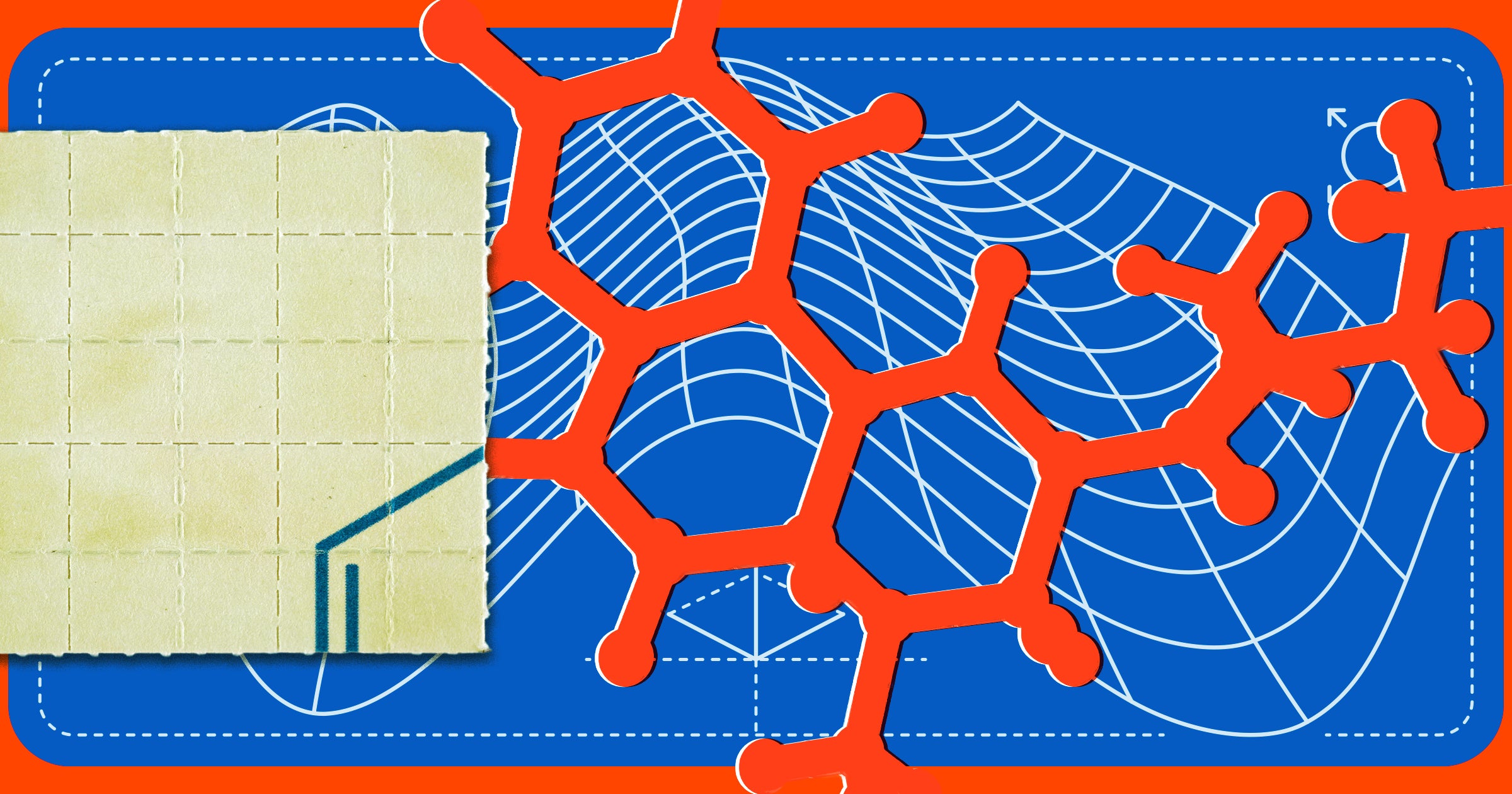
Scientists Tweaked LSD’s Molecular Structure and Created a Wild New Brain Drug

Researchers made small tweaks to the molecular structure of LSD to see if it could be turned into an effective brain-healing treatment.

A team of researchers at the University of California, Davis, made small tweaks to the molecular structure of lysergic acid diethylamide (LSD) to see if it could be turned into an effective brain-healing treatment for patients that suffer from conditions like schizophrenia — without risking a potentially disastrous acid trip.

As detailed in a new paper published in the journal Proceedings of the National Academy of Sciences last month, the researchers created a new compound called JRT by shifting the position of just two atoms of the psychedelic's molecular structure.

With the two atoms flipped, the new drug could still stimulate brain cell growth and repair damaged neural connections, while simultaneously minimizing psychedelic effects, in mice.

"Basically, what we did here is a tire rotation," said corresponding author and UC Davis chemistry professor David Olson in a statement. "By just transposing two atoms in LSD, we significantly improved JRT’s selectivity profile and reduced its hallucinogenic potential."

In experiments involving mice, the team found that JRT improved negative symptoms of schizophrenia without worsening other behaviors associated with psychosis.

While it's still far too early to tell if JRT could be effective in humans as well, the team is hoping that the new drug could become a powerful new therapeutic, especially for those suffering from conditions like schizophrenia.

"No one really wants to give a hallucinogenic molecule like LSD to a patient with schizophrenia," said Olson. "The development of JRT emphasizes that we can use psychedelics like LSD as starting points to make better medicines."

"We may be able to create medications that can be used in patient populations where psychedelic use is precluded," he added.

Olsen and his colleagues hope their new drug could provide an alternative to drugs like clozapine, a schizophrenia treatment, without negative side effects like an inability to feel pleasure and a decline in cognitive function.

Interestingly, it also proved a powerful antidepressant in early experiments involving mice at doses 100-fold lower than ketamine, a popular anesthetic used for the treatment of depression and pain management.

But before it can be tested in humans, the team still has plenty of work to do.

"JRT has extremely high therapeutic potential," Olsen said in the statement. Right now, we are testing it in other disease models, improving its synthesis, and creating new analogs of JRT that might be even better."

More on LSD: Former CEO Sues Company That Fired Him for Microdosing LSD in an Investor Meeting

The post Scientists Tweaked LSD’s Molecular Structure and Created a Wild New Brain Drug appeared first on Futurism.

Follow this link:
Scientists Tweaked LSD’s Molecular Structure and Created a Wild New Brain Drug

Scientist Testing Spider-Man-Style Web Shooters He Accidentally Made in Lab

Tufts University biotech researcher Marco Lo Presti accidentally discovered a

With Great Power

Tufts University biotech researcher Marco Lo Presti made an astonishing discovery while investigating how silk and dopamine allow mussels to stick to rocky surfaces.

"While using acetone to clean the glassware of this silk and dopamine substance," he told Wired, "I noticed it was undergoing a transition into a solid format, into a web-looking material, into something that looked like a fiber."

Lo Presti and his colleagues immediately got to work, investigating whether the sticky fibers could be turned into a "remote adhesive."

The result is an astonishingly "Spider Man"-like silk that can be shot not unlike the superhero's wrist-mounted web shooters, as detailed in a paper published in the journal Advanced Functional Materials last year.

While it won't allow an adult person to swing from skyscraper to skyscraper any time soon, the results speak for themselves. Footage of the team's experiments shows strands of the material being dripped onto a number of objects from several inches above, forming a solid connection in a matter of seconds and allowing the object to be carried away.

The researcher's collaborator, Tufts engineering professor Fiorenzo Omenetto, recalled being caught off guard by the accidental discovery.

"You explore and you play and you sort of connect the dots," he told Wired. "Part of the play that is very underestimated is where you say 'Hey, wait a second, is this like a Spider-Man thing?' And you brush it off at first, but a material that mimics superpowers is always a very, very good thing."

Comes Great Responsibility

Intriguingly, Lo Presti explained that no spider has the ability to "shoot a stream of solution, which turns into a fiber and does the remote capturing of a distant object."

In other words, the discovery appears to be entirely new, despite initially being inspired by nature.

The fibers also have an impressive tensile strength.

"We can now catch an object up to 30 or 35 centimeters away, and lift an object of around 15 to 20 grams," Lo Presti told Wired.

But scaling it up could prove difficult.

"Everybody wants to know if we're going to be able to swing from buildings," Omenetto added, stopping short of hazarding a guess as to when or if that's possible.

"I mean you could probably lift a very heavy object, but that’s one of the big questions — what can you lift? Can you remotely drag something?" he added. "Silk is very, very strong, it’s very tough, it can lift incredible weights but this is silk in its natural form whether it’s from the spider or the silkworm."

More on the silk shooters: Researchers Create Real-Life "Spider-Man" Web-Slinging Tech

The post Scientist Testing Spider-Man-Style Web Shooters He Accidentally Made in Lab appeared first on Futurism.

Visit link:
Scientist Testing Spider-Man-Style Web Shooters He Accidentally Made in Lab

Scientists Intrigued by Planet With Long Tail

Astronomers have discovered an unusual exoplanet with a long

Being Tailed

Astronomers have discovered an unusual exoplanet with a long "tail" of gas trailing behind it, not unlike a giant comet.

As NASA details in a recent article about the discovery, the planet, dubbed WASP-69 b, is steadily shedding its atmosphere of hydrogen and helium particles, which are being shaped into the astonishing tail by harsh stellar winds blowing its way.

WASP-69 b is a hot Jupiter, which means it's a gas giant roughly the mass of Jupiter but orbits its host star in the Aquarius constellation — some 164 light-years away from earth — at a much shorter distance, causing its surface temperatures to soar.

The sheer amount of radiation from its host star causes lightweight gases including hydrogen and helium to "photoevaporate" into outer space, trailing the planet in an epic wake.

"Strong stellar winds can sculpt that outflow in tails that trail behind the planet," University of California astrophysicist Dakotah Tyler, lead author of a paper published in the journal The Astrophysical Journal, told NASA.

Image credit: NASA/JPL-Caltech/R. Hurt (IPAC)

Breaking Wind

Tyler and his colleagues found that the exoplanet is losing an estimated 200,000 tons of gas per second. While that may sound like a lot, we're talking about planetary scales; every one billion years, the team found, the planet is losing the mass equivalent to planet Earth, which means it's unlikely to ever run out of gas in its atmosphere (WASP-69 b is roughly 90 times the mass of Earth.)

The exoplanet's tail is astonishingly long, extending more than 7.5 times its radius behind it, or 350,000 miles, which is roughly 1.5 times the distance between the Earth and the Moon.

But as the stellar winds shift, WASP-69 b's unusual appendage's size and shape can change, and astronomers are only beginning to understand this unusual phenomenon.

"Studying the escaping atmospheres of highly irradiated exoplanets is critical for understanding the physical mechanisms that shape the demographics of close-in planets," the paper reads.

More on exoplanets: Cornell Astronomer Hoping the James Webb Will Confirm Alien Life in 2025

The post Scientists Intrigued by Planet With Long Tail appeared first on Futurism.

Continue reading here:
Scientists Intrigued by Planet With Long Tail

Doctors Intrigued by Treatment That Makes Dead Brains Show Signs of Life

Scientists were astonished to find that recirculating preserving agents through a severed pig's head caused its brain to show signs of life.

Scientists were astonished to find that recirculating a cocktail of preserving agents through a severed pig's head caused the animal's brain to show signs of life.

As New Scientist reports, basic cellular functions were restored in the dismembered brain — something that was previously thought impossible following the cessation of blood flow.

While the pig brain wasn't exactly oinking at the farm after the treatment, in scientifically significant ways it was seemingly brought back from the brink of death — a ghoulish experiment that could have implications for future efforts to reanimate a dead human brain as well.

In fact, Yale School of Medicine neuroscientist Zvonimir Vrselja and his colleagues are looking to try the technique on human brains — efforts, needless to say, that could have thorny ethical ramifications.

For one, the definition of when a person has died has remained a lively debate among health practitioners.

"We are trying to be transparent and very careful because there’s so much value that can come out of this," Vrselja told New Scientist.

Some argue that death occurs when the heart stops beating. Others define it as the point when the brain's functions cease entirely.

Things get murkier when you consider that neuroscientists have already found that brain activity can extend far beyond cardiac arrest. In fact, research has found that the brain can even light up when the heart stops beating.

"The dying brain actually starts this massive rescue effort," University of Michigan neuroscientist Jimo Borjigin told New Scientist.

Borjigin found in a 2023 study that the brain "appeared to be on fire" after four dying people were taken off of life support.

"If we can better understand what’s going on at this point, I believe we could resuscitate it," he added.

Vrselja and his colleagues are at the forefront of those efforts, having developed a special drug cocktail called BrainEx that stops the brain from being damaged by the sudden surge of oxygen-rich blood following brain death.

In a 2019 experiment involving pig brains, the researchers managed to bring some activity back four hours after decapitation.

But even getting remotely near the point of consciousness with a donated human brain could have major ethical ramifications, forcing the team to tread carefully.

"We had to develop new methods to make sure no electrical activity is occurring in an organized way that might reflect any kind of consciousness," Vrselja told New Scientist.

For now, they're using their invention to test out treatments for Alzheimer's and Parkinson's.

Similar techniques could also be used to prolong the shelf life of donor organs, which could save lives.

More on death: Professor of Medicine Says Death Appears to Be Reversible

The post Doctors Intrigued by Treatment That Makes Dead Brains Show Signs of Life appeared first on Futurism.

Read the rest here:
Doctors Intrigued by Treatment That Makes Dead Brains Show Signs of Life