The search for dark matter gets a speed boost from quantum technology – The Conversation US

Nearly a century after dark matter was first proposed to explain the motion of galaxy clusters, physicists still have no idea what its made of.

Researchers around the world have built dozens of detectors in hopes of discovering dark matter. As a graduate student, I helped design and operate one of these detectors, aptly named HAYSTAC. But despite decades of experimental effort, scientists have yet to identify the dark matter particle.

Now, the search for dark matter has received an unlikely assist from technology used in quantum computing research. In a new paper published in the journal Nature, my colleagues on the HAYSTAC team and I describe how we used a bit of quantum trickery to double the rate at which our detector can search for dark matter. Our result adds a much-needed speed boost to the hunt for this mysterious particle.

There is compelling evidence from astrophysics and cosmology that an unknown substance called dark matter constitutes more than 80% of the matter in the universe. Theoretical physicists have proposed dozens of new fundamental particles that could explain dark matter. But to determine which if any of these theories is correct, researchers need to build different detectors to test each one.

One prominent theory proposes that dark matter is made of as-yet hypothetical particles called axions that collectively behave like an invisible wave oscillating at a very specific frequency through the cosmos. Axion detectors including HAYSTAC work something like radio receivers, but instead of converting radio waves to sound waves, they aim to convert axion waves into electromagnetic waves. Specifically, axion detectors measure two quantities called electromagnetic field quadratures. These quadratures are two distinct kinds of oscillation in the electromagnetic wave that would be produced if axions exist.

The main challenge in the search for axions is that nobody knows the frequency of the hypothetical axion wave. Imagine youre in an unfamiliar city searching for a particular radio station by working your way through the FM band one frequency at a time. Axion hunters do much the same thing: They tune their detectors over a wide range of frequencies in discrete steps. Each step can cover only a very small range of possible axion frequencies. This small range is the bandwidth of the detector.

Tuning a radio typically involves pausing for a few seconds at each step to see if youve found the station youre looking for. Thats harder if the signal is weak and theres a lot of static. An axion signal in even the most sensitive detectors would be extraordinarily faint compared with static from random electromagnetic fluctuations, which physicists call noise. The more noise there is, the longer the detector must sit at each tuning step to listen for an axion signal.

Unfortunately, researchers cant count on picking up the axion broadcast after a few dozen turns of the radio dial. An FM radio tunes from only 88 to 108 megahertz (one megahertz is one million hertz). The axion frequency, by contrast, may be anywhere between 300 hertz and 300 billion hertz. At the rate todays detectors are going, finding the axion or proving that it doesnt exist could take more than 10,000 years.

On the HAYSTAC team, we dont have that kind of patience. So in 2012 we set out to speed up the axion search by doing everything possible to reduce noise. But by 2017 we found ourselves running up against a fundamental minimum noise limit because of a law of quantum physics known as the uncertainty principle.

The uncertainty principle states that it is impossible to know the exact values of certain physical quantities simultaneously for instance, you cant know both the position and the momentum of a particle at the same time. Recall that axion detectors search for the axion by measuring two quadratures those specific kinds of electromagnetic field oscillations. The uncertainty principle prohibits precise knowledge of both quadratures by adding a minimum amount of noise to the quadrature oscillations.

In conventional axion detectors, the quantum noise from the uncertainty principle obscures both quadratures equally. This noise cant be eliminated, but with the right tools it can be controlled. Our team worked out a way to shuffle around the quantum noise in the HAYSTAC detector, reducing its effect on one quadrature while increasing its effect on the other. This noise manipulation technique is called quantum squeezing.

In an effort led by graduate students Kelly Backes and Dan Palken, the HAYSTAC team took on the challenge of implementing squeezing in our detector, using superconducting circuit technology borrowed from quantum computing research. General-purpose quantum computers remain a long way off, but our new paper shows that this squeezing technology can immediately speed up the search for dark matter.

Our team succeeded in squeezing the noise in the HAYSTAC detector. But how did we use this to speed up the axion search?

Quantum squeezing doesnt reduce the noise uniformly across the axion detector bandwidth. Instead, it has the largest effect at the edges. Imagine you tune your radio to 88.3 megahertz, but the station you want is actually at 88.1. With quantum squeezing, you would be able to hear your favorite song playing one station away.

In the world of radio broadcasting this would be a recipe for disaster, because different stations would interfere with one another. But with only one dark matter signal to look for, a wider bandwidth allows physicists to search faster by covering more frequencies at once. In our latest result we used squeezing to double the bandwidth of HAYSTAC, allowing us to search for axions twice as fast as we could before.

Quantum squeezing alone isnt enough to scan through every possible axion frequency in a reasonable time. But doubling the scan rate is a big step in the right direction, and we believe further improvements to our quantum squeezing system may enable us to scan 10 times faster.

Nobody knows whether axions exist or whether they will resolve the mystery of dark matter; but thanks to this unexpected application of quantum technology, were one step closer to answering these questions.

See the original post here:

The search for dark matter gets a speed boost from quantum technology - The Conversation US
Microsofts Big Win in Quantum Computing Was an Error After All – WIRED

Whatever happened, the Majorana drama is a setback for Microsofts ambitions to compete in quantum computing. Leading computing companies say the technology will define the future by enabling new breakthroughs in science and engineering.

Quantum computers are built from devices called qubits that encode 1s and 0s of data but can also use a quantum state called a superposition to perform math tricks not possible for the bits in a conventional computer. The main challenge to commercializing that idea is that quantum states are delicate and easily quashed by thermal or electromagnetic noise, making qubits error-prone.

Google, IBM, and Intel have all shown off prototype quantum processors with around 50 qubits, and companies including Goldman Sachs and Merck are testing the technology. But thousands or millions of qubits are likely required for useful work. Much of a quantum computers power would probably have to be dedicated to correcting its own glitches.

Microsoft has taken a different approach, claiming qubits based on Majorana particles will be more scalable, allowing it to leap ahead. But after more than a decade of work, it does not have a single qubit.

From the fuller data, theres no doubt that theres no Majorana.

Sergey Frolov, University of Pittsburgh

Majorana fermions are named after Italian physicist Ettore Majorana, who hypothesized in 1937 that particles should exist with the odd property of being their own antiparticles. Not long after, he boarded a ship and was never seen again. Physicists wouldnt report a good glimpse of one of his eponymous particles until the next millennium, in Kouwenhovens lab.

Microsoft got interested in Majoranas after company researchers in 2004 approached tech strategy chief Craig Mundie and said they had a way to solve one problem holding back quantum computersqubits flakiness.

The researchers seized on theoretical physics papers suggesting a way to build qubits that would make them more dependable. These so-called topological qubits would be built around unusual particles, of which Majorana particles are one example, that can pop into existence in clumps of electrons inside certain materials at very low temperatures.

Microsoft created a new team of physicists and mathematicians to flesh out the theory and practice of topological quantum computing, centered on an outpost in Santa Barbara, California, christened Station Q. They collaborated with and funded leading experimental physicists hunting for the particles needed to build this new form of qubit.

Kouwenhoven, in Delft, was one of the physicists who got Microsofts backing. His 2012 paper reporting signatures of Majorana particles inside nanowires started chatter about a future Nobel prize for proving the elusive particles existence. In 2016, Microsoft stepped up its investmentand the hype.

Everything you ever wanted to know about qubits, superpositioning, and spooky action at a distance.

Kouwenhoven and another leading physicist, Charles Marcus, at the University of Copenhagen were hired as corporate Majorana hunters. The plan was to first detect the particles and then invent more complex devices that could control them and function as qubits. Todd Holmdahl, who previously led hardware for Microsofts lucrative Xbox games console, took over as leader of the topological quantum computing project. Early in 2018, he told Barrons he would have a topological qubit by the end of the year. The now-disputed paper appeared a month later.

While Microsoft sought Majoranas, competitors working on established qubit technologies reported steady progress. In 2019, Google announced it had reached a milestone called quantum supremacy, showing that a chip with 53 qubits could perform a statistical calculation in minutes that would take a supercomputer millennia. Soon after, Microsoft appeared to hedge its quantum bet, announcing it would offer access to quantum hardware from other companies via its cloud service Azure. The Wall Street Journal reported that Holmdahl left the project that year after missing an internal deadline.

Microsoft has been quieter about its expected pace of progress on quantum hardware since Holmdahl's departure. Competitors in quantum computing continue to tout hardware advances and urge software developers to access prototypes over the internet, but none appear close to creating a quantum computer ready for prime time.

Continue reading here:

Microsofts Big Win in Quantum Computing Was an Error After All - WIRED

New EU Consortium shaping the future of Quantum Computing USA – PRNewswire

Europe has always been excellent in academic research, but over the past few decades commercializing research projects has been slow compared to international competition. This is starting to change with quantum technologies. As one of the largest efforts in Europe and worldwide, Germany announced 2 Billion funding into quantum programs in June 2020, from which 120 Million are invested in this current round of research grants.

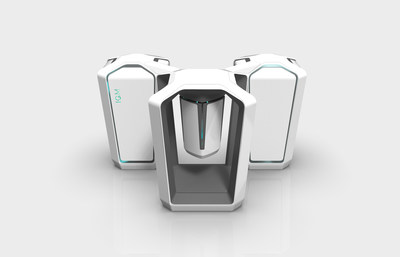
Today, IQM announced a Quantum project consortium that includes Europe's leading startups (ParityQC, IQM), industry leaders (Infineon Technologies), research centers (Forschungszentrum Jlich),supercomputing centers (Leibniz Supercomputing Centre), and academia (Freie Universitt Berlin) has been awarded 12.4 Million from the German Ministry of Education and Research (BMBF) (Announcement in German).

The scope of the project is to accelerate commercialization through an innovative co-design concept. This project focuses on application-specific quantum processors, which have the potential to create a fastlane to quantum advantage. The digital-analog concept used to operate the processors will further lay the foundation for commercially viable quantum computers. This project will run for four years and aims to develop a 54-qubit quantum processor.

The project is intended to support the European FET Flagship project EU OpenSuperQ, announced in 2018 which is aimed at designing, building, and operating a quantum information processing system of up to 100 qubits. Deploying digital-analog quantum computing, this consortium adds a new angle to the OpenSuperQ project and widens its scope. With efforts from Munich, Berlin and Jlich, as well as Parity QC from Austria, the project builds bridges and seamlessly integrates into the European quantum landscape.

"The grant from the Federal Ministry of Education and Research of Germanyis a huge recognition of our unique co-design approach for quantum computers. Last year when we established our office in Munich, this was one of our key objectives. The concept allows us to become a system integrator for full-stack quantum computers by bringing together all the relevant players. As Europe's leading startup in quantum technologies, this gives us confidence to further invest in Germany and other European countries" said Dr. Jan Goetz, CEO of IQM Quantum Computers.

As European technology leader, Germany is taking several steps to lead the quantum technology race. An important role of such leadership is to bring together the European startups, industry, research and academic partners. This project will give the quantum landscape in Germany an accelerated push and will create a vibrant quantum ecosystem in the region for the future.

Additional Quotes:

"DAQC is an important project for Germany and Europe. It enables us to take a leading role in the area of quantum technologies. It also allows us to bring quantum computing into one of the prime academic supercomputing centres to more effectively work on the important integration of high-performance computing and quantum computing. We are looking forward to a successful collaboration," said Prof. DrMartinSchulz, Member of the Board of Directors, Leibniz Supercomputing Centre (LRZ).

"The path towards scalable and fully programmable quantum computing will be the parallelizability of gates and building with reduced complexity in order to ensure manageable qubit control. Our ParityQC architecture is the blueprint for a fully parallelizable quantum computer, which comes with the associated ParityOS operating system. With the team of extraordinary members of the DAQC consortium this will allow us to tackle the most pressing and complex industry-relevant optimization problems." saidMagdalena Hauser & Wolfgang Lechner, CEOs & Co-founder ParityQC

"We are looking forward to exploring and realizing a tight connection between hardware and applications, and having DAQC quantum computers as a compatible alternative within the OpenSuperQ laboratory. Collaborations like this across different states, and including both public and private partners, have the right momentum to move quantum computing in Germany forward." saidProf. Frank Wilhelm-Mauch, Director, Institute for Quantum Computing Analytics, Forschungszentrum Jlich

"At Infineon, we are looking forward to collaborating with top-class scientists and leading start-ups in the field of quantum computing in Europe. We must act now if we in Germany and Europe do not want to become solely dependent on American or Asian know-how in this future technology area. We are very glad to be part of this highly innovative project and happy to contribute with our expertise in scaling and manufacturing processes." saidDr.Sebastian Luber, Senior Director Technology & Innovation, Infineon Technologies AG

"This is a hugely exciting project. It is a chance of Europe and Germany to catch up in the development of superconducting quantum computers. I am looking forward to adventures on understanding how such machines can be certified in their precise functioning." said Prof.Jens Eisert, Professor of Quantum Physics, Freie Universitt Berlin

About IQM Quantum Computers:

IQM is the European leader in superconducting quantum computers, headquartered in Espoo, Finland. Since its inception in 2018, IQM has grown to 80+ employees and has also established a subsidiary in Munich, Germany, to lead the co-design approach. IQM delivers on-premises quantum computers for research laboratories and supercomputing centers and provides complete access to its hardware. For industrial customers, IQM delivers quantum advantage through a unique application-specific co-design approach. IQM has raised 71 Million from VCs firms and also public grants and is also building Finland's first quantum computer.

For more information, visit http://www.meetiqm.com.

Registered offices:

IQM Finland OyKeilaranta 1902150 EspooFINLANDwww.meetiqm.com

IQM GERMANY GmbHNymphenburgerstr. 8680636 MnchenGermany

IQM: Facts and Figures

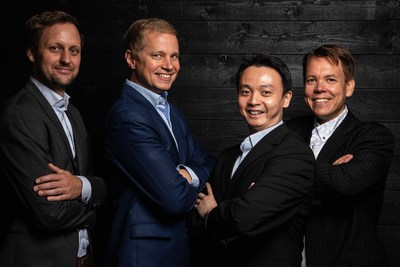
Founders:

Media Contact: Raghunath Koduvayur, Head of Marketing and Communications, [emailprotected], +358504876509

Photo - https://mma.prnewswire.com/media/1437806/IQM_Quantum_Computers_Founders.jpg Photo - https://mma.prnewswire.com/media/1437807/IQM_Quantum_computer_design.jpg Logo - https://mma.prnewswire.com/media/1121497/IQM_Logo.jpg

SOURCE IQM Finland Oy

http://meetiqm.com/contact/

More here:

New EU Consortium shaping the future of Quantum Computing USA - PRNewswire

Mutually unbiased bases and symmetric informationally complete measurements in Bell experiments – Science Advances

INTRODUCTION

Measurements are crucial and compelling processes at the heart of quantum physics. Quantum measurements, in their diverse shapes and forms, constitute the bridge between the abstract formulation of quantum theory and concrete data produced in laboratories. Crucially, the quantum formalism of measurement processes gives rise to experimental statistics that elude classical models. Therefore, appropriate measurements are indispensable for harvesting and revealing quantum phenomena. Sophisticated manipulation of quantum measurements is both at the heart of the most well-known features of quantum theory such as contextuality (1) and the violation of Bell inequalities (2) as well as its most groundbreaking applications such as quantum cryptography (3) and quantum computation (4). In the broad landscape of quantum measurements (5), certain classes of measurements are outstanding because of their breadth of relevance in foundations of quantum theory and applications in quantum information processing.

Two widely celebrated, intensively studied, and broadly useful classes of measurements are known as mutually unbiased bases (MUBs) and symmetric informationally complete measurements (SICs). Two measurements are said to be mutually unbiased if by preparing any eigenstate of the first measurement and then performing the second measurement, one finds that all outcomes are equally likely (6). A typical example of MUBs corresponds to measuring two perpendicular components of the polarization of a photon. A SIC is a quantum measurement with the largest number of possible outcomes such that all measurement operators have equal magnitude overlaps (7, 8). Thus, the former is a relationship between two different measurements, whereas the latter is a relationship within a single measurement. Since MUBs and SICs are both conceptually natural, elegant, and (as it turns out) practically important classes of measurements, they are often studied in the same context (914). Let us briefly review their importance to foundational and applied aspects of quantum theory.

MUBs are central to the concept of complementarity in quantum theory, i.e., how the knowledge of one quantity limits (or erases) the knowledge of another quantity [see, e.g., (15) for a review of MUBs]. This is often highlighted through variants of the famous Stern-Gerlach experiment in which different Pauli observables are applied to a qubit. For instance, after first measuring (say) x, we know whether our system points up or down the x axis. If we then measure z, our knowledge of the outcome of yet another x measurement is entirely erased since z and x are MUBs. This phenomenon leads to an inherent uncertainty for the outcomes of MUB measurements on all quantum states, which can be formalized in terms of entropic quantities, leading to so-called entropic uncertainty relations. It is then natural that MUBs give rise to the strongest entropic uncertainties in quantum theory (16). Moreover, MUBs play a prominent role in quantum cryptography, where they are used in many of the most well-known quantum key distribution protocols (1721) and in secret sharing protocols (2224). Their appeal to cryptography stems from the idea that eavesdroppers who measure an eigenstate of one basis in another basis unbiased to it obtain no useful information, while they also induce a large disturbance in the state that allows their presence to be detected. Furthermore, complete (i.e., largest possible in a given dimension) sets of MUBs are tomographically complete, and their symmetric properties make them pivotal for quantum state tomography (25, 26). In addition, MUBs are useful for a range of other problems such as quantum random access coding (2731), quantum error correction (32, 33), and entanglement detection (34). This broad scope of relevance has motivated much effort toward determining the largest number of MUBs that exist in general Hilbert space dimensions (15).

The motivations behind the study of SICs are quite similar to the ones discussed for MUBs. It has been shown that SICs are natural measurements for quantum state tomography (35), which has also prompted several experimental realizations of SICs (3638). In addition, some protocols for quantum key distribution derive their success directly from the defining properties of SICs (39, 40), which have also been experimentally demonstrated (41). Furthermore, a key property of SICs is that they have the largest number of outcomes possible while still being extremal measurements, i.e., they cannot be simulated by stochastically implementing other measurements. This gives SICs a central role in a range of applications, which include random number generation from entangled qubits (42), certification of nonprojective measurements (4346), semidevice-independent self-testing (45), and entanglement detection (47, 48). Moreover, SICs have a key role in quantum Bayesianism (49), and they exhibit interesting connections to several areas of mathematics, for instance, Lie and Jordan algebras (50) and algebraic number theory (51). Because of their broad interest, much research effort has been directed toward proving the existence of SICs in all Hilbert space dimensions (presently known, at least, up to dimension 193) (7, 8, 5255). See, e.g., (54) for a recent review of SICs.

In this work, we broadly investigate MUBs and SICs in the context of Bell nonlocality experiments. In these experiments, two separated observers perform measurements on entangled quantum systems that can produce nonlocal correlations that elude any local hidden variable model (56). In recent years, Bell inequalities have played a key role in the rise of device-independent quantum information processing where they are used to certify properties of quantum systems. Naturally, certification of a physical property can be achieved under different assumptions of varying strength. Device-independent approaches offer the strongest form of certification since the only assumptions made are space-like separation and the validity of quantum theory. The advent of device-independent quantum information processing has revived interest in Bell inequalities, as these can now be tailored to the purpose of certifying useful resources for quantum information processing. The primary focus of such certification has been on various types of entangled states (57). However, quantum measurements are equally important building blocks for quantum information processing. Nevertheless, our understanding of which arrangements of high-dimensional measurements can be certified in a device-independent manner is highly limited. We speak of arrangements of measurements because for a single measurement (acting on a quantum system with no internal structure), no interesting property can be certified. The task becomes nontrivial when at least two measurements are present and we can certify the relation between them. The simplest approach relies on combining known self-testing results for two-qubit systems, which allows us to certify high-dimensional measurements constructed out of qubit building blocks (58, 59). Alternatively, device-independent certification of high-dimensional structures can be proven from scratch, but to the best of our knowledge, only two results of this type have been proven: (i) a triple of MUBs in dimension three (60) and (ii) the measurements conjectured to be optimal for the Collins-Gisin-Linden-Massar-Popescu Bell inequality (the former is a single result, while the latter is a family parameterized by the dimension d 2) (61). None of these results can be used to certify MUBs in dimension d 4.

Since mutual unbiasedness and symmetric informational completeness are natural and broadly important concepts in quantum theory, they are prime candidates of interest for such certification in general Hilbert space dimensions. This challenge is increasingly relevant because of the broader experimental advances toward high-dimensional systems along the frontier of quantum information theory. This is also reflected in the fact that recent experimental implementations of MUBs and SICs can go well beyond the few lowest Hilbert space dimensions (38, 41, 62).

Focusing on mutual unbiasedness and symmetric informational completeness, we solve the above challenges. To this end, we first construct Bell inequalities that are maximally violated using a maximally entangled state of local dimension d and, respectively, a pair of d-dimensional MUBs and a d-dimensional SIC. In the case of MUBs, we show that the maximal quantum violation of the proposed Bell inequality device independently certifies that the measurements satisfy an operational definition of mutual unbiasedness as well as that the shared state is essentially a maximally entangled state of local dimension d. Similarly, in the case of SICs, we find that the maximal quantum violation device independently certifies that the measurements satisfy an analogous operational definition of symmetric informational completeness. Moreover, we also show that our Bell inequalities are useful in two practically relevant tasks. For the case of MUBs, we consider a scheme for device-independent quantum key distribution and prove a key rate of log d bits, which is optimal for any protocol that extracts key from a d-outcome measurement. For SICs, we construct a scheme for device-independent random number generation. For two-dimensional SICs, we obtain the largest amount of randomness possible for any protocol based on qubits. For three-dimensional SICs, we obtain more randomness than can be obtained in any protocol based on projective measurements and quantum systems of dimension up to seven. For low dimensions, we numerically show that both protocols are robust to noise, which is imperative to any experiment. The implementation of these two protocols involves performing a Bell-type experiment, estimating the outcome statistics and computing the resulting Bell inequality violation. The efficiency and security of the protocol is then deduced only from the observed Bell inequality violation, i.e., it does not require a complete characterization of the devices. Device-independent protocols can, in principle, be implemented on any experimental platform suitable for Bell nonlocality experiments, such as entangled spins (63), entangled photons (64, 65), and entangled atoms (66).

The task of finding Bell inequalities that are maximally violated by MUBs for d 3 has been attempted several times (6770) but with limited success. The only convincing candidate is the inequality corresponding to d = 3 studied in (67), and even then, there is only numerical evidence (no analytical proof is known). Some progress has been made in (60), which considers the case of prime d and proposes a family of Bell inequalities maximally violated by a specific set of d MUBs in dimension d. These inequalities, however, have two drawbacks: (i) There is no generalization to the case of nonprime d, and (ii) even for the case of prime d, we have no characterization of the quantum realizations that achieve the maximal violation.

In this work, we present a family of Bell inequalities in which the maximal quantum violation is achieved with a maximally entangled state and any pair of d-dimensional MUBs. These Bell inequalities have been constructed so that their maximal quantum violation can be computed analytically, which then enables us to obtain a detailed characterization of the optimal realizations. As a result we find a previously unidentified, intermediate form of device-independent certification.

We formally define a pair of MUBs as two orthonormal bases on a d-dimensional Hilbert space d, namely, {ej}j=1d and {fk}k=1d, with the property thatejfk2=1d(1)for all j and k. The constant on the right-hand side is merely a consequence of the two bases being normalized. To this end, consider a bipartite Bell scenario parameterized by an integer d 2. Alice randomly receives one of d2 possible inputs labeled by x x1x2 [d]2 (where [s] {1, , s}) and produces a ternary output labeled by a {1,2, }. Bob receives a random binary input labeled by y {1,2} and produces a d-valued output labeled by b [d]. The joint probability distribution in the Bell scenario is denoted by p(a, bx, y), and the scenario is illustrated in Fig. 1.

Alice receives one of d2 inputs and produces a ternary output, while Bob receives a binary input and produces a d-valued output.

To make our choice of Bell functional transparent, we will phrase it as a game in which Alice and Bob collectively win or lose points. If Alice outputs a = , then no points will be won or lost. If she outputs a {1,2}, then points will be won or lost if b = xy. More specifically, Alice and Bob win a point if a = y and lose a point if a=y, where the bar sign flips the value of y {1,2}. This leads to the scoreRdMUBx,yp(a=y,b=xyx,y)p(a=y,b=xyx,y)(2)where the sum goes over x = x1x2 [d]2 and y {1,2}.

At this point, the outcome a = might seem artificial, so let us show why it plays a crucial role in the construction of the game. To this end, we use intuition based on the hypothetical case in which Alice and Bob share a maximally entangled statedmax=1dk=1dk,k(3)

The reason that we consider the maximally entangled state is that we aim to tailor the Bell inequalities so that this state is optimal. Then, we would like to ensure that Alice, via her measurement and for her outcomes a {1,2}, remotely prepares Bob in a pure state. This would allow Bob to create stronger correlations as compared to the case of Alice remotely preparing his system is a mixed state. Hence, this corresponds to Alices outcomes a {1,2} being represented by rank-one projectors. Since the subsystems of dmax are maximally mixed, it follows that (a = 1x) = p(a = 2x) = 1/d x. Thus, we want to motivate Alice to use a strategy in which she outputs a = with probability p(a = x) = 1 2/d. Our tool for this purpose is to introduce a penalty. Specifically, whenever Alice decides to output a {1,2}, she is penalized by losing d points. Thus, the total score (the Bell functional) readsSdMUBRdMUBdx(p(a=1x)+p(a=2x))(4)

Now, outputting a {1,2} not only contributes toward RdMUB but also causes a penalty d. Therefore, we expect to see a trade-off between d and the rate at which Alice outputs a = . We must suitably choose d such that Alices best strategy is to output a = with (on average over x) the desired probability p(a = x) = 1 2/d. This accounts for the intuition that leads us to the following Bell inequalities for MUBs.

Theorem II.1 (Bell inequalities for MUBs). The Bell functional SdMUB in Eq. 4 withd=12d1d(5)obeys the tight local boundSdMUBLHV2(d1)(112d1d)(6)and the quantum boundSdMUBQd(d1)(7)

Moreover, the quantum bound can be saturated by sharing a maximally entangled state of local dimension d and Bob performing measurements in any two MUBs.

Proof. A complete proof is presented in the Supplementary Materials (section S1A). The essential ingredient to obtain the bound in Eq. 7 is the Cauchy-Schwarz inequality. Furthermore, for local models, by inspecting the symmetries of the Bell functional SdMUB, one finds that the local bound can be attained by Bob always outputting b = 1. This greatly simplifies the evaluation of the bound in Eq. 6.

To see that the bound in Eq. 7 can be saturated in quantum theory, let us evaluate the Bell functional for a particular quantum realization. Let be the shared state, {Px1}x1=1d and {Qx2}x2=1d be the measurement operators of Bob corresponding to y = 1 and y = 2, respectively, and Ax be the observable of Alice defined as the difference between Alices outcome-one and outcome-two measurement operators, i.e., Ax=Ax1Ax2. Then, the Bell functional readsSdMUB=xAx(Px1Qx2)d(Ax1+Ax2)1(8)

Now, we choose the maximally entangled state of local dimension d, i.e., =dmax, and define Bobs measurements as rank-one projectors Px1 = x1x1 and Qx2 = x2x2, which correspond to MUBs, i.e., x1x22 = 1/d. Last, we choose Alices observables as Ax=d/(d1)(Px1Qx2)T, where the prefactor ensures the correct normalization and T denotes the transpose in the standard basis. Note that Ax is a rank-two operator; the corresponding measurement operator Ax1 (Ax2) is a rank-one projector onto the eigenvector of Ax associated to the positive (negative) eigenvalue. Since the subsystems of dmax are maximally mixed, this implies dmax(Ax1+Ax2)1dmax=2/d. Inserting all this into the above quantum model and exploiting the fact that for any linear operator O, we have O1dmax=1OTdmax, we straightforwardly saturate the bound in Eq. 7.

We remark that for the case of d = 2 one could also choose 2 = 0 and retain the property that qubit MUBs are optimal. In this case, the marginal term is not necessary because in the optimal realization, Alice never outputs . Then, the quantum bound becomes 22, and the local bound becomes 2. The resulting Bell inequality resembles the Clauser-Horne-Shimony-Holt (CHSH) inequality (71) not only because it gives the same local and quantum values but also because the optimal realizations coincide. More specifically, the measurements of Bob are precisely the optimal CHSH measurements, whereas the four measurements of Alice correspond to two pairs of optimal CHSH measurements.

Theorem II establishes that a pair of MUBs of any dimension can generate a maximal quantum violation in a Bell inequality test. We now turn to the converse matter, namely, that of device-independent certification. Specifically, given that we observe the maximal quantum violation, i.e., equality in Eq. 7, what can be said about the shared state and the measurements? Since the measurement operators can only be characterized on the support of the state, to simplify the notation, let us assume that the marginal states of Alice and Bob are full rank. (Note that this is not a physical assumption but a mathematical convention that simplifies the notation in the rest of this work. Whenever the marginal state is not full rank, the local Hilbert space naturally decomposes as a direct sum of two terms, where the state is only supported on one of them. The measurement operators can only be characterized on the support of the state, and that is precisely what we achieve. This convention allows us to only write out the part that can be characterized and leave out the rest.)

Theorem II.2 (Device-independent certification). The maximal quantum value of the Bell functional SdMUB in Eq. 4 implies that (i) there exist local isometries that allow Alice and Bob to extract a maximally entangled state of local dimension d, and (i) if the marginal state of Bob is full rank, the two d-outcome measurements that he performs satisfy the relationsPa=dPaQbPaandQb=dQbPaQb(9)for all a and b.

Proof. The proof is detailed in the Supplementary Materials (section S1A). Here, we briefly summarize the part concerning Bobs measurements. Since the Cauchy-Schwarz inequality is the main tool for proving the quantum bound in Eq. 7, saturating it implies that the Cauchy-Schwarz inequality is also saturated. This allows us to deduce that the measurements of Bob are projective, and moreover, we obtain the following optimality conditionAx1=1dd1(Px1Qx2)(10)for all x1, x2 [d] where the factor d/(d1) can be regarded as a normalization. Since we do not attempt to certify the measurements of Alice, we can, without loss of generality, assume that they are projective. This implies that the spectrum of Ax only contains { + 1, 1,0} and therefore (Ax)3 = Ax. This allows us to obtain a relation that only contains Bobs operators. Tracing out Alices system and subsequently eliminating the marginal state of Bob (it is assumed to be full rank) leads toPx1Qx2=dd1(Px1Qx2)3(11)

Expanding this relation and then using projectivity and the completeness of measurements, one recovers the result in Eq. 9.

We have shown that observing the maximal quantum value of SdMUB implies that the measurements of Bob satisfy the relations given in Eq. 9. It is natural to ask whether a stronger conclusion can be derived, but the answer turns out to be negative. In the Supplementary Materials (section S1B), we show that any pair of d-outcome measurements (acting on a finite-dimensional Hilbert space) satisfying the relations in Eq. 9 is capable of generating the maximal Bell inequality violation. For d = 2,3, the relations given in Eq. 9 imply that the unknown measurements correspond to a direct sum of MUBs (see section S2C) and since, in these dimensions, there exists only a single pair of MUBs (up to unitaries and complex conjugation), our results imply a self-testing statement of the usual kind. However, since, in higher dimensions, not all pairs of MUBs are equivalent (72), our certification statement is less informative than the usual formulation of self-testing. In other words, our inequalities allow us to self-test the quantum state, but we cannot completely determine the measurements [see (73, 74) for related results]. Note that we could also conduct a device-independent characterization of the measurements of Alice. Equation 61 from the Supplementary Materials enables us to relate the measurements of Alice to the measurements of Bob, which we have already characterized. However, since we do not expect the observables of Alice to satisfy any simple algebraic relations and since they are not directly relevant for the scope of this work (namely, MUBs and SICs), we do not pursue this direction.

The certification provided in Theorem II.2 turns out to be sufficient to determine all the probabilities p(a, b x, y) that arise in the Bell experiment (see section S1C), which means that the maximal quantum value of SdMUB is achieved by a single probability distribution. Because of the existence of inequivalent pairs of MUBs in certain dimensions (e.g., for d = 4), this constitutes the first example of an extremal point of the quantum set, which admits inequivalent quantum realizations. Recall that the notion of equivalence that we use is precisely the one that appears in the context of self-testing, i.e., we allow for additional degrees of freedom, local isometries, and a transposition.

It is important to understand the relation between the condition given in Eq. 9 and the concept of MUBs. Naturally, if {Pa}a=1d and {Qb}b=1d are d-dimensional MUBs, then the relations (Eq. 9) are satisfied. However, there exist solutions to Eq. 9 that are neither MUBs nor direct sums thereof. While, as mentioned above, for d = 2,3, one can show that any measurements satisfying the relations (Eq. 9) must correspond to a direct sum of MUBs, this is not true in general. For d = 4,5, we have found explicit examples of measurement operators satisfying Eq. 9, which cannot be written as a direct sum of MUBs. They cannot even be transformed into a pair of MUBs via a completely positive unital map (see section S2 for details). These results beg the crucial question: How should one interpret the condition given in Eq. 9?

To answer this question, we resort to an operational formulation of what it means for two measurements to be mutually unbiased. An operational approach must rely on observable quantities (i.e., probabilities), as opposed to algebraic relations between vectors or operators. This notion, which we refer to as mutually unbiased measurements (MUMs), was recently formalized by Tasca et al. (75). Note that in what follows, we use the term eigenvector to refer to eigenvectors corresponding to nonzero eigenvalues.

Definition II.3 (MUMs). We say that two n-outcome measurements {Pa}a=1n and {Qb}b=1n are mutually unbiased if they are projective and the following implications holdPa=1Qb=1nQb=1Pa=1n(12)for all a and b. That is, two projective measurements are mutually unbiased if the eigenvectors of one measurement give rise to a uniform outcome distribution for the other measurement.

Note that this definition precisely captures the intuition behind MUBs without the need to specify the dimension of the underlying Hilbert space. MUMs admit a simple algebraic characterization.

Theorem II.4. Two n-outcome measurements {Pa}a=1n and {Qb}b=1n are mutually unbiased if and only ifPa=nPaQbPaandQb=nQbPaQb(13)for all a and b.

Proof. Let us first assume that the algebraic relations hold. By summing over the middle index, one finds that both measurements are projective. Moreover, if is an eigenvector of Pa, then Qb=PaQbPa=1nPa=1n

By symmetry, the analogous property holds if is an eigenvector of Qb. Conversely, let us show that MUMs must satisfy the above algebraic relations. Since aPa=1, we can choose an orthonormal basis of the Hilbert space composed only of the eigenvectors of the measurement operators. Let {eja}a,j be an orthonormal basis, where a [n] tells us which projector the eigenvector corresponds to and j labels the eigenvectors within a fixed projector (if Pa has finite rank, then j [tr Pa]; otherwise, j ). By construction, for such a basis, we have

Paeja=aaeja. To show that Pa = nPaQbPa, it suffices to show that the two operators have the same coefficients in this basis. SinceejanPaQbPaeka=naaaaejaQbeka(14)ejaPaeka=aaaajk(15)it suffices to show that nejaQbeka=jk. For j = k, this is a direct consequence of the definition in Eq. 12. To prove the other case, define =(eja+eieka)/2, for [0,2). Since Pa = , we have Qb = 1/n. Writing this equality out gives1n=12(2n+eiejaQbeka+eiekaQbeja)(16)

Choosing = 0 implies that the real part of ejaQbeka vanishes, while = /2 implies that the imaginary part vanishes. Proving the relation Qb = nQbPaQb proceeds in an analogous fashion.

Theorem II.4 implies that the maximal violation of the Bell inequality for MUBs certifies precisely the fact the Bobs measurements are mutually unbiased. To provide further evidence that MUMs constitute the correct device-independent generalization of MUBs, we give two specific situations in which the two objects behave in the same manner.

Maassen and Uffink (16) considered a scenario in which two measurements (with a finite number of outcomes) are performed on an unknown state. Their famous uncertainty relation provides a state-independent lower bound on the sum of the Shannon entropies of the resulting distributions. While the original result only applies to rank-one projective measurements, a generalization to nonprojective measurements reads (76)H(P)+H(Q)logc(17)where H denotes the Shannon entropy and c=maxa,bPaQb2, where is the operator norm. If we restrict ourselves to rank-one projective measurements on a Hilbert space of dimension d, then one finds that the largest uncertainty, corresponding to c = 1/d, is obtained only by MUBs. It turns out that precisely the same value is achieved by any pair of MUMs with d outcomes regardless of the dimension of the Hilbert spacec=maxa,bPaQb2=maxa,bPaQb2=maxa,bPaQbPa=maxaPa/d=1d(18)

A closely related concept is that of measurement incompatibility, which captures the phenomenon that two measurements cannot be performed simultaneously on a single copy of a system. The extent to which two measurements are incompatible can be quantified, e.g., by so-called incompatibility robustness measures (77). In the Supplementary Materials (section S2D), we show that according to these measures, MUMs are exactly as incompatible as MUBs. Moreover, we can show that for the so-called generalized incompatibility robustness (78), MUMs are among the most incompatible pairs of d-outcome measurements.

The fact that the maximal quantum violation of the Bell inequalities introduced above requires a maximally entangled state and MUMs and, moreover, that it is achieved by a unique probability distribution suggests that these inequalities might be useful for device-independent quantum information processing. In the task of quantum key distribution (3, 17, 18), Alice and Bob aim to establish a shared dataset (a key) that is secure against a malicious eavesdropper. Such a task requires the use of incompatible measurements, and MUBs in dimension d = 2 constitute the most popular choice. Since, in the ideal case, the measurement outcomes of Alice and Bob that contribute to the key should be perfectly correlated, most protocols are based on maximally entangled states. In the device-independent approach to quantum key distribution, the amount of key and its security is deduced from the observed Bell inequality violation.

We present a proof-of-principle application to device-independent quantum key distribution based on the quantum nonlocality witnessed through the Bell functional in Eq. 4. In the ideal case, Alice and Bob follow the strategy that gives them the maximal violation, i.e., they share a maximally entangled state of local dimension d and Bob measures two MUBs. To generate the key, we provide Alice with an extra setting that produces outcomes that are perfectly correlated with the outcomes of the first setting of Bob. This will be the only pair of settings from which the raw key will be extracted, and let us denote them by x = x* and y = y* = 1. In most rounds of the experiment, Alice and Bob choose these settings and therefore contribute toward the raw key. However, to ensure security, a small number of rounds is used to evaluate the Bell functional. In these rounds, which are chosen at random, Alice and Bob randomly choose their measurement settings. Once the experiment is complete, the resulting value of the Bell functional is used to infer the amount of secure raw key shared between Alice and Bob. The raw key can then be turned into the final key by standard classical postprocessing. For simplicity, we consider only individual attacks, and moreover, we focus on the limit of asymptotically many rounds in which fluctuations due to finite statistics can be neglected.

The key rate, K, can be lower bounded by (79)Klog(Pg)H(By*Ax*)(19)where Pg denotes the highest probability that the eavesdropper can correctly guess Bobs outcome when his setting is y* given that the Bell inequality value was observed, and H( ) denotes the conditional Shannon entropy. The guessing probability Pg is defined asPgsup{c=1dABE1PcEcABE}(20)where {Ec}c=1d is the measurement used by the eavesdropper to produce her guess, the expression inside the curly braces is the probability that her outcome is the same as Bobs for a particular realization, and the supremum is taken over all quantum realizations (the tripartite state and measurements of all three parties) compatible with the observed Bell inequality value .

Let us first focus on the key rate in a noise-free scenario, i.e., in a scenario in which SdMUB attains its maximal value. Then, one straightforwardly arrives at the following result.

Theorem II.5 (Device-independent key rate). In the noiseless case, the quantum key distribution protocol based on SdMUB achieves the key rate ofK=logd(21)for any integer d 2.

Proof. In the noiseless case, Alice and Bob observe exactly the correlations predicted by the ideal setup. In this case, the outcomes for settings (x*, y*) are perfectly correlated, which implies that H(By*Ax*) = 0. Therefore, the only nontrivial task is to bound the guessing probability.

Since the actions of the eavesdropper commute with the actions of Alice and Bob, we can assume that she performs her measurement first. If the probability of the eavesdropper observing outcome c [d], which we denote by p(c), is nonzero, then the (normalized) state of Alice and Bob conditioned on the eavesdropper observing that outcome is given byAB(c)=1p(c)trC[(11Ec)ABEABE](22)

Now, Alice and Bob share one of the postmeasurement states AB(c), and when they perform their Bell inequality test, they will obtain different distributions depending on c, which we write as pc(a, b x, y). However, since the statistics achieve the maximal quantum value of SdMUB and we have previously shown that the maximal quantum value is achieved by a single probability point, all the probability distributions pc(a, b x, y) must be the same. Moreover, we have shown that for this probability point, the marginal distribution of outcomes on Bobs side is uniform over [d] for both inputs. This implies thatPg=c=1dp(c)pc(b=cy=1)=1d(23)because pc(b=cy=1)=p(b=cy=1)=1d for all c.

We remark that the argument above is a direct consequence of a more general result that states that if a bipartite probability distribution is a nonlocal extremal point of the quantum set, then no external party can be correlated with the outcomes (80). The obtained key rate is the largest possible for general setups in which the key is generated from a d-outcome measurement. In addition, the key rate is optimal for all protocols based on a pair of entangled d-dimensional systems subject to projective measurements. This follows from the fact that projective measurements in d cannot have more than d outcomes. It has recently been shown that the same amount of randomness can be generated using a modified version of the Collins-Gisin-Linden-Massar-Popescu inequalities (61), but note that the measurements used there do not correspond to MUBs (except for the special case of d = 2).

Let us now depart from the noise-free case and estimate the key rate in the presence of noise. To ensure that both the guessing probability and the conditional Shannon entropy can be computed in terms of a single noise parameter, we have to introduce an explicit noise model. We use the standard approach in which the measurements remain unchanged, while the maximally entangled state is replaced with an isotropic state given byv=vdmaxdmax+1vd21(24)where v [0,1] is the visibility of the state. Using this state and the ideal measurements for Alice and Bob, the relation between v and SdMUB can be easily derived from Eq. 8, namelyv=12(1+SdMUBd(d1))(25)

Using this formula, we also obtain the value of H(By* Ax*) as a function of the Bell violation. The remaining part of Eq. 19 is the guessing probability (Eq. 20). In the case of d = 3, we proceed to bound this quantity through semidefinite programming.

Concretely, we implement the three-party semidefinite relaxation (81) of the set of quantum correlations at local level 1 (we attribute one operator to each outcome of Bob and the eavesdropper but only take into account the first two outcomes of Alice). This results in a moment matrix of size 532 532 with 15,617 variables. The guessing probability is directly given by the sum of three elements of the moment matrix. It can then be maximized under the constraints that the value of the Bell functional S3MUB is fixed and the moment matrix is positive semidefinite. However, we notice that this problem is invariant under the following relabeling: b (b) for y = 1, c (c), and x1 (x1), where S3 is a permutation of three elements. Therefore, it is possible to simplify this semidefinite program by requiring the matrix to be invariant under the group action of S3 on the moment matrix (i.e., it is a Reynolds matrix) (43, 82, 83). This reduces the number of free variables in the moment matrix to 2823. With the Self-Dual Minimization (SeDuMi) (84) solver, this lowers the precision (1.1 106 instead of 8.4 108) but speeds up the computation (155 s instead of 8928 s) and requires less memory (0.1 gigabytes instead of 5.5 gigabytes). For the maximal value of SdMUB, we recover the noise-free result of K = log 3 up to the fifth digit. In addition, we have a key rate of at least one bit when SdMUB2.432 and a nonzero key rate when SdMUB2.375. The latter is close to the local bound, which is SdMUB2.367. The resulting lower bound on the key rate as a function of the Bell inequality violation is plotted in Fig. 2.

We now shift our focus from MUBs to SICs. We construct Bell inequalities whose maximal quantum violations are achieved with SICs. We formally define a SIC as a set of d2 unit vectors in d, namely, {rj}j=1d2, with the property thatrjrk2=1d+1(26)for all j k, where the constant on the right-hand side is fixed by normalization. The reason for there being precisely d2 elements in a SIC is that this is the largest number of unit vectors in d that could possibly admit the uniform overlap property (Eq. 26). Moreover, we formally distinguish between a SIC as the presented set of rank-one projectors and a SIC-POVM (positive operator-valued measure), which is the generalized quantum measurement with d2 possible outcomes corresponding to the subnormalized projectors {1drkrk}k=1d2.

Since the treatment of SICs in Bell nonlocality turns out to be more challenging than for the case of MUBs, we first establish the relevance of SICs in a simplified Bell scenario subject to additional constraints. This serves as a stepping stone to a subsequent relaxation, which gives a standard (unconstrained) Bell inequality for SICs. We then focus on the device-independent certification power of these inequalities, which leads us to an operational notion of symmetric informational completeness. Last, we extend the Bell inequalities so that their maximal quantum violations are achieved with both projectors forming SICs and a single generalized measurement corresponding to a SIC-POVM.

Stepping stone: Quantum correlations for SICs. Consider a Bell scenario, parameterized by an integer d 2, involving two parties Alice and Bob who share a physical system. Alice receives an input labeled by a tuple (x1, x2) representing one of (d22) possible inputs, which we collectively refer to as x = x1x2. The tuple is randomly taken from the set Pairs(d2) {x x1, x2 [d2] and x1 < x2}. Alice performs a measurement on her part of the shared system and produces a ternary output labeled by a {1,2, }. Bob receives an input labeled by y [d2], and the associated measurement produces a binary outcome labeled by b {1, }. The joint probability distribution is denoted by p(a, b x, y), and the Bell scenario is illustrated in Fig. 3.

Alice receives one of (d22) inputs and returns a ternary outcome, while Bob receives one of d2 inputs and returns a binary outcome.

Similar to the case of MUBs, to make our choice of Bell functional transparent, we phrase it as a game played by Alice and Bob. We imagine that their inputs are supplied by a referee, who promises to provide x = x1x2 and y such that either y = x1 or y = x2. Similar to the previous game, Alice can output a = to ensure that no points are won or lost. However, in this game also, Bob can ensure that no points are won or lost by outputting b = . If neither of them outputs , then a point is either won or lost. Specifically, when a = 1, a point is won if y = x1 (and lost otherwise), whereas if a = 2, then a point is won if y = x2 (and lost otherwise). Let us remark that in this game, Bobs only role is to decide whether, in a given round, points can be won/lost or not. For this game, the total number of points (the Bell functional) readsRdSICx1

Let us now impose additional constraints on the marginal distributions of the outputs. More specifically, we require thatx:p(a=1x)+p(a=2x)=2dy:p(b=1y)=1d(28)

The intuition behind these constraints is analogous to that discussed for the case of MUBs. Namely, we imagine that Alice and Bob perform measurements on a maximally entangled state of local dimension d. Then, we wish to fix the marginals such that the measurements of Alice (Bob) for the outcomes a {1,2} (b = 1) remotely prepare Bobs (Alices) subsystem in a pure state. This corresponds to the marginals p(a = 1 x) = p(a = 2 x) = p(b = 1 x) = 1/d, which is reflected in the marginal constraints in Eq. 28. We remark that imposing these constraints simplifies both the intuitive understanding of the game and the derivation of the results below. However, it merely serves as a stepping stone to a more general subsequent treatment in which the constraints (Eq. 28) will be removed.

To write the value of the Bell functional of a quantum realization, let us introduce two simplifications. The measurement operators of Alice are denoted by {Axa}, and as before, it is convenient to work with the observables defined as Ax=Ax1Ax2. The measurements of Bob are denoted by {Byb}, but since they only have two outcomes, all the expressions can be written in terms of a single operator from each input y. In our case, it is convenient to use the outcome-one operator, and for convenience, we will skip the superscript,, i.e., we will write ByBy1 for all y. Then, the Bell functional evaluated on a specific quantum realization readsRdSIC=x1

Note that the Bell functional, in particular, when written in a quantum model, is much reminiscent of the expression RdMUB (Eq. 2) encountered for MUBs, with the key difference that the roles of the inputs and outputs of Bob are swapped. Let us consider a quantum strategy in which Alice and Bob share a maximally entangled state dmax. Moreover, Bobs measurements are defined as By = yy, where {y}y=1d2 is a set of unit vectors forming a SIC (assuming it exists in dimension d), i.e., y y2 = 1/(d + 1) for all y y. In addition, we define Alices observables as Ax=(d+1)/d(Bx1Bx2)T, where the prefactor ensures normalization. First, since the subsystems of Alice and Bob are maximally mixed and the outcomes a {1,2} and b = 1 each correspond to rank-one projectors, the marginal constraints in Eq. 28 are satisfied. Using the fact that for any linear operator O we have O1dmax=1OTdmax, we find thatRdSIC=d+1dx1

This strategy relying on a maximally entangled state and a SIC achieves the maximal quantum value of RdSIC under the constraints of Eq. 28. In the Supplementary Materials (section S3A), we prove that under these constraints, the tight quantum and no-signaling bounds on RdSIC readRdSICQd(d1)d(d+1)(31)RdSICNSd(d21)(32)

We remark that SICs are not known to exist in all Hilbert space dimensions. However, their existence in all dimensions is strongly conjectured, and explicit SICs have been found in all dimensions up to 193 (5355).

Bell inequalities for SICs. The marginal constraints in Eq. 28 allowed us to prove that the quantum realization based on SICs achieves the maximal quantum value of RdSIC. Our goal now is to remove these constraints to obtain a standard Bell functional. Analogously to the case of MUBs, we add marginal terms to the original functional RdSIC.

To this end, we introduce penalties for both Alice and Bob. Specifically, if Alice outputs a {1,2}, then they lose d points, whereas if Bob outputs b = 1, then they lose d points. The total number of points in the modified game constitutes our final Bell functionalSdSICRdSICdx1

Hence, our aim is to suitably choose the penalties d and d so that the maximal quantum value of SdSIC is achieved with a strategy that closely mimics the marginal constraints (Eq. 28) and thus maintains the optimality of Bob performing a SIC.

Theorem II.6 (Bell inequalities for SICs). The Bell functional SdSIC in Eq. 33 withd=1d,22dd+1d=d22d(d+1)(34)obeys the tight local boundSdSICLHV{4ford=2d2(d1)d(d2d1)dd+1ford3(35)and the quantum boundSdSICQd+2d,22d(d+1)(36)

Moreover, the quantum bound is tight and can be saturated by sharing a maximally entangled state of local dimension d and choosing Bobs outcome-one projectors to form a SIC.

Proof. The proof is presented in the Supplementary Materials (section S3B). To obtain the quantum bound in Eq. 36, the key ingredients are the Cauchy-Schwarz inequality and semidefinite relaxations of polynomial optimization problems. To derive the local bound in Eq. 35, the key observation is that the symmetries of the Bell functional allow us to notably simplify the problem.

The fact that the quantum bound is saturated by a maximally entangled state and Bob performing a SIC can be seen immediately from the previous discussion that led to Eq. 30. With that strategy, we find RdSIC=d(d1)d(d+1). Since it also respects (a = 1x) + p(a = 2x) = 2/d x, as well as p(b = 1y) = 1/d y, a direct insertion into Eq. 33 saturates the bound in Eq. 36. Note that in the limit of d both the local bound and the quantum bound grow quadratically in d.

We remark that for the special case of d = 2, no penalties are needed to maintain the optimality of SICs (which is why the Kronecker delta appears in Eq. 34). The derived Bell inequality for a qubit SIC (which corresponds to a tetrahedron configuration on the Bloch sphere) can be compared to the so-called elegant Bell inequality (85) whose maximal violation is also achieved using the tetrahedron configuration. While we require six settings of Alice and four settings of Bob, the elegant Bell inequality requires only four settings of Alice and three settings of Bob. However, the additional complexity in our setup carries an advantage when considering the critical visibility of the shared state, i.e., the smallest value of v in Eq. 24 (defining an isotropic state) for which the Bell inequality is violated. The critical visibility for violating the elegant Bell inequality is 86.6%, whereas for our Bell inequality, it is lowered to 81.6%. We remark that on the Bloch sphere, the antipodal points corresponding to the four measurements of Alice and the six measurements of Bob form a cube and a cuboctahedron, respectively, which constitutes an instance of the type of Bell inequalities proposed in (86).

Device-independent certification. Theorem II.6 shows that for any dimension d 2, we can construct a Bell inequality that is maximally violated by a SIC in that dimension (provided that a SIC exists). Let us now consider the converse question, namely, that of device-independent certification. In analogy with the case of MUBs (Eq. 9), we find a simple description of Bobs measurements.

Theorem II.7 (Device-independent certification). The maximal quantum value of the Bell functional SdSIC, provided that the marginal state of Bob is full rank, implies that his measurement operators {By}y=1d2 are projective and satisfyyBy=d1(37)andBy=(d+1)ByByBy(38)for all y y.

A complete proof, which is similar in spirit to the proof of Theorem II.2, can be found in the Supplementary Materials (section S3C). For the special case of d = 2, the conclusion can be made even more accurate: The maximal quantum violation of S2SIC implies that Bobs outcome-one projectors are rank-one projectors acting on a qubit whose Bloch vectors form a regular tetrahedron (up to the three standard equivalences used in self-testing).

Similar to the case of MUBs, we face the key question of interpreting the condition in Eq. 38 and its relation to SICs. Again, in analogy with the case of MUBs, we note that the concept of a SIC references the dimension of the Hilbert space, which should not appear explicitly in a device-independent scenario. Hence, we consider an operational approach to SICs, which must rely on observable quantities (i.e., probabilities). This leads us to the following natural definition of a set of projectors being operationally symmetric informationally complete (OP-SIC).

Definition II.8 (Operational SIC). We say that a set of projectors {Ba}a=1n2 is OP-SIC ifaBa=n1(39)andBa=1Bb=1n+1(40)for all a b.

This definition trivially encompasses SICs as special instances of OP-SICs. An argument analogous to the proof of Theorem II.4 shows that this definition is in fact equivalent to the relations given in Eqs. 37 and 38. Hence, in analogy with the case of MUBs, the property of Bobs measurements certified by the maximal violation of our Bell inequality is precisely the notion of OP-SICs.

Adding a SIC-POVM. The Bell inequalities proposed above (Bell functional SdSIC) are tailored to sets of rank-one projectors forming a SIC. However, it is also interesting to consider a closely related entity, namely, a SIC-POVM, which is obtained simply by normalizing these projectors, so that they can be collectively interpreted as arising from a single measurement. That is, a SIC-POVM on d is a measurement {Ea}a=1d2 in which every measurement operator can be written as Ea=1daa, where the set of rank-one projectors { aa }a forms a SIC. Because of the simple relation between SICs and SIC-POVMs, we can extend the Bell inequalities for SICs proposed above such that they are optimally implemented with both a SIC (as before) and a SIC-POVM.

It is clear that to make SIC-POVMs relevant to the Bell experiment, it must involve at least one setting that corresponds to a d2-outcome measurement. For the Bell scenario previously considered for SICs (see Fig. 3), no such measurement is present. Therefore, we supplement the original Bell scenario by introducing a single additional measurement setting of Alice, labeled by povm, which has d2 outcomes labeled by a [d2]. The modified Bell scenario is illustrated in Fig. 4. We construct the Bell functional TdSIC for this scenario by modifying the previously considered Bell functional SdSICTdSIC=SdSICy=1d2p(a=y,b=povm,y)(41)

This scenario modifies the original Bell scenario for SICs (see Fig. 3) by supplying Alice with an extra setting labeled by povm, which has d2 possible outcomes.

Hence, whenever Bob outputs and the outcome associated to the setting povm coincides with the input of Bob, a point is lost. Evidently, the largest quantum value of TdSIC is no greater than the largest quantum value of SdSIC. For the former to equal the latter, we require that (i) SdSIC reaches its maximal quantum value (which is given in Eq. 36) and (ii) that (a = y, b = povm, y) = 0 y. We have already seen that by sharing a maximally entangled state and Bobs outcome-one projectors {By}y forming a SIC, the condition (i) can be satisfied. By normalization, we have that Bobs outcome- projectors are By=>1By. Again, noting that for any linear operator O we have O1dmax=1OTdmax, observe that if Bob applies By, then Alices local state is orthogonal to By. Hence, if Alice chooses her POVM {Ea}, corresponding to the setting povm, as the SIC-POVM defined by Ea=1dBaT, the probability of finding a = y vanishes. This satisfies condition (ii). Hence, we conclude that in a general quantum modelTdSICQd+2d,22d(d+1)(42)and that the bound can be saturated by supplementing the previous optimal realization with a SIC-POVM on Alices side.

The fact that the Bell functionals SdSIC and TdSIC achieve their maximal quantum values with a SIC and a SIC-POVM, respectively, opens up the possibility for device-independent quantum information protocols for tasks in which SICs and SIC-POVMs are desirable. We focus on one such application, namely, that of device-independent quantum random number generation (87). This is the task of certifying that the data generated by a party cannot be predicted by a malicious eavesdropper. In the device-independent setting, both the amount of randomness and its security are derived from the violation of a Bell inequality.

Nonprojective measurements, such as SIC-POVMs, are useful for this task. The reason is that a Bell experiment implemented with entangled systems of local dimension d and standard projective measurements cannot have more than d outcomes. Consequently, one cannot hope to certify more than log d bits of local randomness. However, Bell experiment relying on d-dimensional entanglement implemented with (extremal) nonprojective measurements can have up to d2 outcomes (88). This opens the possibility of generating up to 2 log d bits of local randomness without increasing the dimension of the shared entangled state. Notably, for the case of d = 2, such optimal quantum random number generation has been shown using a qubit SIC-POVM (42).

Here, we use our Bell inequalities for SIC-POVMs to significantly outperform standard protocols relying on projective measurements on d-dimensional entangled states. To this end, we briefly summarize the scenario for randomness generation. Alice and Bob perform many rounds of the Bell experiment illustrated in Figure 4. Alice will attempt to generate local randomness from the outcomes of her setting labeled by povm. In most rounds of the Bell experiment, Alice performs povm and records the outcome a. In a smaller number of rounds, she randomly chooses her measurement setting, and the data are used toward estimating the value of the Bell functional TdSIC defined in Eq. 41. A malicious eavesdropper may attempt to guess Alices relevant outcome a. To this end, the eavesdropper may entangle her system with that of Alice and Bob and perform a well-chosen POVM {Ec}c to enhance her guess. In analogy to Eq. 20, the eavesdroppers guessing probability readsPgsup{c=1d2ABEApovmc1EcABE}(43)where {Ec}c=1d2 is the measurement used by the eavesdropper to produce her guess, the expression inside the curly braces is the probability that her outcome is the same as Alices outcome for the setting povm for a particular realization, and the supremum is taken over all quantum realizations (the tripartite state and measurements of all three parties) compatible with the observed Bell inequality violation =TdSIC.

We quantify the randomness generated by Alice using the conditional min-entropy Hmin(ApovmE)=log(Pg). To obtain a device-independent lower bound on the randomness, we must evaluate an upper bound on Pg for a given observed value of the Bell functional. We saw in the Application: Device-independent quantum key distribution section that if the eavesdropper is only trying to guess the outcome of a single measurement setting, we can, without loss of generality, assume that they are only classically correlated with the systems of Alice and Bob. As before, we restrict ourselves to the asymptotic limit of many rounds, in which fluctuations due to finite statistics can be neglected.

To bound the randomness for some given value of TdSIC, we use the hierarchy of quantum correlations (81). We restrict ourselves to the cases of d = 2 and d = 3. For the case of d = 2, we construct a moment matrix with the operators {(1,Ax)(1,By)(1,E)}{Apovm(1,By,E)}, neglecting the outcome. The matrix is of size 361 361 with 10,116 variables. Again, we can make use of symmetry to simplify the semidefinite program. In this case, the following permutation leaves the problem invariant: x1 (x1), x2 (x2), a f(a, x1, x2), a (a), y (y), and c (c), wheref(a,x1,x2)={a(x1)<(x2)2(x1)(x2)anda=11(x1)(x2)anda=2(x1)(x2)anda=(44)and S4. Using this symmetry reduces the number of free variables to 477. The trade-off between the amount of certified randomness and the nonlocality is illustrated in Fig. 5. We find that for sufficiently large values of T2SIC (roughly T2SIC4.8718), we outperform the one-bit limitation associated to projective measurements on entangled qubits. Notably, for even larger values of T2SIC, we also outperform the restriction of log 3 bits associated to projective measurements on entangled systems of local dimension three. For the optimal value of T2SIC we find Hmin(Apovm E) 1.999, which is compatible up to numerical precision with the largest possible amount of randomness obtainable from qubit systems under general measurements, namely, two bits. This two-bit limit stems from the fact that every qubit measurement with more than four outcomes can be stochastically simulated with measurements of at most four outcomes (88).

For the case of d = 3, we bound the guessing probability following the method of (87). This has the advantage of requiring only a bipartite, and hence smaller, moment matrix than the tripartite formulation. However, the amount of symmetry leaving the problem invariant is reduced because the objective function only involves one outcome. Concretely, we construct a moment matrix of size 820 820 with 263,549 variables. We then write the guessing probability as P(a = 1povm) and identify the following group of permutations, leaving the problem invariant: x1 (x1), x2 (x2), a f(a, x1, x2), a (a), and y (y), where S9 leaves element 1 invariant and permutes elements 2, ,9 in all possible ways. Taking this symmetry into account reduces the number of free variables to 460. To further simplify the problem, we make use of RepLAB, a recently developed tool that decomposes representations of finite groups into irreducible representations (89, 90). This allows us to write the moment matrix in a preferred basis in which it is block diagonal. The semidefinite constraint can then be imposed on each block independently, with the largest block size 28 28 instead of 820 820. Solving one semidefinite program with SeDuMi (84) then takes 0.7 s with <0.1 gigabytes of memory instead of 162 s/0.2 gigabytes without block diagonalization and fails because of lack of memory without any symmetrization (>400 gigabytes required).

Using entangled states of dimension 3 and corresponding SIC-POVMs, one can attain the full range of values for T3SIC. The guessing probability is independent of the outcome guessed by the eavesdropper, and we can verify that the bound that we obtain is convex, hence guaranteeing that no mixture of strategy by the eavesdropper must be considered (87). The randomness is then given in Fig. 6, which indicates that by increasing the value of T3SIC, we can obtain more randomness than the best possible schemes relying on standard projective measurements and entangled systems of dimensions 3,4,5,6, and 7. In particular, in the case of T3SIC being maximal, we find that Hmin(ApovmE) 3.03 bits. This is larger than what can be obtained by performing projective measurements on eight dimensional systems (since log 8 = 3 bits). It is, however, worth noting that this last value is obtained at the boundary of the set of quantum correlations where the precision of the solver is significantly reduced (in particular, the DIMACS errors at this point are of the order of 104). It is not straightforward to estimate the extent to which this reduced precision may influence the guessing probability, so it would be interesting to reproduce this computation with a more precise solver such as SDPA (91).

Acknowledgments: We would like to thank T. de Lima Silva and N. Gisin for fruitful discussions. We thank M. Arajo for helpful comments. Funding: This work was supported by the Swiss National Science Foundation (starting grant DIAQ, NCCRQSIT). A.T. acknowledges support from the Swiss National Science Foundation (Early PostDoc Mobility fellowship P2GEP2 194800). The project Robust certification of quantum devices is carried out within the HOMING programme of the Foundation for Polish Science cofinanced by the European Union under the European Regional Development Fund. M.F. acknowledges support from the Polish NCN grant Sonata UMO-2014/14/E/ST2/00020, the European Research Council (ERC) under the European Unions Horizon 2020 research and innovation programme ERC AdG CERQUTE (grant agreement no. 834266), the State Research Agency (AEI) TRANQI (PID2019-106888GB-I00/10.13039/501100011033), the Government of Spain (FIS2020-TRANQI; Severo Ochoa CEX2019-000910-S), Fundaci Cellex, Fundaci Mir-Puig, and Generalitat de Catalunya (CERCA, AGAUR). Author contributions: A.T. and J.K. proposed the basic concept. A.T., M.F., J.-D.B., and J.K. developed the theory and the proofs. D.R. developed a software that was used to facilitate particular computations. A.T., M.F., J.-D.B., and J.K. discussed the results and participated in the writing of the manuscript. Competing interests: The authors declare that they have no competing interests. Data and materials availability: All data needed to evaluate the conclusions in the paper are present in the paper and/or the Supplementary Materials. Additional data related to this paper may be requested from the authors.

Link:

Mutually unbiased bases and symmetric informationally complete measurements in Bell experiments - Science Advances

In Violation of Einstein, Black Holes Might Have ‘Hair’ – Quanta Magazine

Identical twins have nothing on black holes. Twins may grow from the same genetic blueprints, but they can differ in a thousand ways from temperament to hairstyle. Black holes, according to Albert Einsteins theory of gravity, can have just three characteristics mass, spin and charge. If those values are the same for any two black holes, it is impossible to discern one twin from the other. Black holes, they say, have no hair.

In classical general relativity, they would be exactly identical, said Paul Chesler, a theoretical physicist at Harvard University. You cant tell the difference.

Yet scientists have begun to wonder if the no-hair theorem is strictly true. In 2012, a mathematician named Stefanos Aretakis then at the University of Cambridge and now at the University of Toronto suggested that some black holes might have instabilities on their event horizons. These instabilities would effectively give some regions of a black holes horizon a stronger gravitational pull than others. That would make otherwise identical black holes distinguishable.

However, his equations only showed that this was possible for so-called extremal black holes ones that have a maximum value possible for either their mass, spin or charge. And as far as we know, these black holes cannot exist, at least exactly, in nature, said Chesler.

But what if you had a near-extremal black hole, one that approached these extreme values but didnt quite reach them? Such a black hole should be able to exist, at least in theory. Could it have detectable violations of the no-hair theorem?

A paper published late last month shows that it could. Moreover, this hair could be detected by gravitational wave observatories.

Aretakis basically suggested there was some information that was left on the horizon, said Gaurav Khanna, a physicist at the University of Massachusetts and the University of Rhode Island and one of the co-authors. Our paper opens up the possibility of measuring this hair.

In particular, the scientists suggest that remnants either of the black holes formation or of later disturbances, such as matter falling into the black hole, could create gravitational instabilities on or near the event horizon of a near-extremal black hole. We would expect that the gravitational signal we would see would be quite different from ordinary black holes that are not extremal, said Khanna.

If black holes do have hair thus retaining some information about their past this could have implications for the famous black hole information paradox put forward by the late physicist Stephen Hawking, said Lia Medeiros, an astrophysicist at the Institute for Advanced Study in Princeton, New Jersey. That paradox distills the fundamental conflict between general relativity and quantum mechanics, the two great pillars of 20th-century physics. If you violate one of the assumptions [of the information paradox], you might be able to solve the paradox itself, said Medeiros. One of the assumptions is the no-hair theorem.

The ramifications of that could be broad. If we can prove the actual space-time of the black hole outside of the black hole is different from what we expect, then I think that is going to have really huge implications for general relativity, said Medeiros, who co-authored a paper in October that addressed whether the observed geometry of black holes is consistent with predictions.

Perhaps the most exciting aspect of this latest paper, however, is that it could provide a way to merge observations of black holes with fundamental physics. Detecting hair on black holes perhaps the most extreme astrophysical laboratories in the universe could allow us to probe ideas such as string theory and quantum gravity in a way that has never been possible before.

One of the big issues [with] string theory and quantum gravity is that its really hard to test those predictions, said Medeiros. So if you have anything thats even remotely testable, thats amazing.

There are major hurdles, however. Its not certain that near-extremal black holes exist. (The best simulations at the moment typically produce black holes that are 30% away from being extremal, said Chesler.) And even if they do, its not clear if gravitational wave detectors would be sensitive enough to spot these instabilities from the hair.

Whats more, the hair is expected to be incredibly short-lived, lasting just fractions of a second.

But the paper itself, at least in principle, seems sound. I dont think that anybody in the community doubts it, said Chesler. Its not speculative. It just turns out Einsteins equations are so complicated that were discovering new properties of them on a yearly basis.

The next step would be to see what sort of signals we should be looking for in our gravitational detectors either LIGO and Virgo, operating today, or future instruments like the European Space Agencys space-based LISA instrument.

One should now build upon their work and really compute what would be the frequency of this gravitational radiation, and understand how we could measure and identify it, said Helvi Witek, an astrophysicist at the University of Illinois, Urbana-Champaign. The next step is to go from this very nice and important theoretical study to what would be the signature.

There are plenty of reasons to want to do so. While the chances of a detection that would prove the paper correct are slim, such a discovery would not only challenge Einsteins theory of general relativity but prove the existence of near-extremal black holes.

We would love to know if nature would even allow for such a beast to exist, said Khanna. It would have pretty dramatic implications for our field.

Correction: February 11, 2021The original version of this article implied that theorists are unable to simulate black holes closer than 30% away from being extremal. In fact, they can simulate near-extremal black holes, but their typical simulations are 30% away from being extremal.

Read more:

In Violation of Einstein, Black Holes Might Have 'Hair' - Quanta Magazine

Dont Tell Einstein, but Black Holes Might Have Hair – WIRED

Identical twins have nothing on black holes. Twins may grow from the same genetic blueprints, but they can differ in a thousand waysfrom temperament to hairstyle. Black holes, according to Albert Einsteins theory of gravity, can have just three characteristicsmass, spin and charge. If those values are the same for any two black holes, it is impossible to discern one twin from the other. Black holes, they say, have no hair.

In classical general relativity, they would be exactly identical, said Paul Chesler, a theoretical physicist at Harvard University. You cant tell the difference.

Yet scientists have begun to wonder if the no-hair theorem is strictly true. In 2012, a mathematician named Stefanos Aretakisthen at the University of Cambridge and now at the University of Torontosuggested that some black holes might have instabilities on their event horizons. These instabilities would effectively give some regions of a black holes horizon a stronger gravitational pull than others. That would make otherwise identical black holes distinguishable.

However, his equations only showed that this was possible for so-called extremal black holesones that have a maximum value possible for either their mass, spin, or charge. And as far as we know, these black holes cannot exist, at least exactly, in nature, said Chesler.

But what if you had a near-extremal black hole, one that approached these extreme values but didnt quite reach them? Such a black hole should be able to exist, at least in theory. Could it have detectable violations of the no-hair theorem?

A paper published late last month shows that it could. Moreover, this hair could be detected by gravitational wave observatories.

Aretakis basically suggested there was some information that was left on the horizon, said Gaurav Khanna, a physicist at the University of Massachusetts and the University of Rhode Island and one of the coauthors. Our paper opens up the possibility of measuring this hair.

In particular, the scientists suggest that remnants either of the black holes formation or of later disturbances, such as matter falling into the black hole, could create gravitational instabilities on or near the event horizon of a near-extremal black hole. We would expect that the gravitational signal we would see would be quite different from ordinary black holes that are not extremal, said Khanna.

If black holes do have hairthus retaining some information about their pastthis could have implications for the famous black hole information paradox put forward by the late physicist Stephen Hawking, said Lia Medeiros, an astrophysicist at the Institute for Advanced Study in Princeton, New Jersey. That paradox distills the fundamental conflict between general relativity and quantum mechanics, the two great pillars of 20th-century physics. If you violate one of the assumptions [of the information paradox], you might be able to solve the paradox itself, said Medeiros. One of the assumptions is the no-hair theorem.

The ramifications of that could be broad. If we can prove the actual space-time of the black hole outside of the black hole is different from what we expect, then I think that is going to have really huge implications for general relativity, said Medeiros, who coauthored a paper in October that addressed whether the observed geometry of black holes is consistent with predictions.

Perhaps the most exciting aspect of this latest paper, however, is that it could provide a way to merge observations of black holes with fundamental physics. Detecting hair on black holesperhaps the most extreme astrophysical laboratories in the universecould allow us to probe ideas such as string theory and quantum gravity in a way that has never been possible before.

One of the big issues with string theory and quantum gravity is that its really hard to test those predictions, said Medeiros. So if you have anything thats even remotely testable, thats amazing.

There are major hurdles, however. Its not certain that near-extremal black holes exist. (The best simulations at the moment typically produce black holes that are 30 percent away from being extremal, said Chesler.) And even if they do, its not clear if gravitational wave detectors would be sensitive enough to spot these instabilities from the hair.

Read the original here:

Dont Tell Einstein, but Black Holes Might Have Hair - WIRED

A Magnetic Twist to Graphene Could Offer a Dramatic Increase in Processing Speeds Compared to Electronics – SciTechDaily

Schematic of a valley-spiral in magnetically encapsulated twisted bilayer graphene. Credit: Jose Lado

By combining ferromagnets and two rotated layers of graphene, researchers open up a new platform for strongly interacting states using graphenes unique quantum degree of freedom.

Electrons in materials have a property known as spin, which is responsible for a variety of properties, the most well-known of which is magnetism. Permanent magnets, like the ones used for refrigerator doors, have all the spins in their electrons aligned in the same direction. Scientists refer to this behavior as ferromagnetism, and the research field of trying to manipulate spin as spintronics.

Down in the quantum world, spins can arrange in more exotic ways, giving rise to frustrated states and entangled magnets. Interestingly, a property similar to spin, known as the valley, appears in graphene materials. This unique feature has given rise to the field of valleytronics, which aims to exploit the valley property for emergent physics and information processing, very much like spintronics relies on pure spin physics.

Valleytronics would potentially allow encoding information in the quantum valley degree of freedom, similar to how electronics do it with charge and spintronics with the spin. Explains Professor Jose Lado, from Aaltos Department of applied physics, and one of the authors of the work. Whats more, valleytronic devices would offer a dramatic increase in the processing speeds in comparison with electronics, and with much higher stability towards magnetic field noise in comparison with spintronic devices.

Structures made of rotated, ultra-thin materials provide a rich solid-state platform for designing novel devices. In particular, slightly twisted graphene layers have recently been shown to have exciting unconventional properties, that can ultimately lead to a new family of materials for quantum technologies. These unconventional states which are already being explored depend on electrical charge or spin. The open question is if the valley can also lead to its own family of exciting states.

For this goal, it turns out that conventional ferromagnets play a vital role, pushing graphene to the realms of valley physics. In a recent work, Ph.D. student Tobias Wolf, together with Profs. Oded Zilberberg and Gianni Blatter at ETH Zurich, and Prof. Jose Lado at Aalto University, showed a new direction for correlated physics in magnetic van der Waals materials.

The team showed that sandwiching two slightly rotated layers of graphene between a ferromagnetic insulator provides a unique setting for new electronic states. The combination of ferromagnets, graphenes twist engineering, and relativistic effects force the valley property to dominate the behavior of the electrons in the material. In particular, the researchers showed how these valley-only states can be tuned electrically, providing a materials platform in which valley-only states can be generated. Building on top of the recent breakthrough in spintronics and van der Waals materials, valley physics in magnetic twisted van der Waals multilayers opens the door to the new realm of correlated twisted valleytronics.

Demonstrating these states represents the starting point towards new exotic entangled valley states. Said Professor Lado, Ultimately, engineering these valley states can allow realizing quantum entangled valley liquids and fractional quantum valley Hall states. These two exotic states of matter have not been found in nature yet, and would open exciting possibilities towards a potentially new graphene-based platform for topological quantum computing.

Reference: Spontaneous Valley Spirals in Magnetically Encapsulated Twisted Bilayer Graphene by Tobias M.R. Wolf, Oded Zilberberg, Gianni Blatter and Jose L. Lado, 4 February 2021, Physical Review Letters.DOI: 10.1103/PhysRevLett.126.056803

Read more:

A Magnetic Twist to Graphene Could Offer a Dramatic Increase in Processing Speeds Compared to Electronics - SciTechDaily

Staten Island wildlife suspected cause of outage that KOd power on South Shore – SILive.com

STATEN ISLAND, N.Y. A power outage that left more than 1,000 customers on the South Shore without service Tuesday morning is believed to be caused by a critter making contact with electrical equipment.

The outage started at 7:51 a.m. and affected 1,176 customers in an area roughly bounded on the north by Woodrow Road, on the south by Hylan Boulevard, on the east by Amboy Road and on the west by Arthur Kill Road, according to Allan Drury, a spokesman for Con Edison.

Power was restored at about 8:50 a.m.

The initial investigation indicated that the cause was animal contact with electrical apparatus and equipment failure. The spokesman was unable to say what type of animal was to blame, but squirrels are the usual suspects.

The outage affected the 10307, 10309 and 10312 ZIP codes, according to the citys Notify NYC alert system.

Its the second time a large outage affected the South Shore in a week.

A massive outage left about 32,900 customers without service on Feb. 9.

We had a brief outage this morning on Staten Island due to equipment issues, said Allan Drury, a spokesman for Con Edison, about the Feb. 9 power blip. Most customers were restored nearly immediately while some were out for seven minutes.

Go here to see the original:

Staten Island wildlife suspected cause of outage that KOd power on South Shore - SILive.com

15th MEU supports Operation Inherent Resolve from Makin Island ARG – Marines.mil

ARABIAN GULF --

The Makin Island Amphibious Ready Group and the 15th Marine Expeditionary Unit began air operations in support of Operation Inherent Resolve, February 13.

Close air support operations and defensive counter air support operations were carried out by Marine Medium Tiltrotor Squadron 164 (Reinforced), the aviation combat element of the 15th MEU, as part of broader U.S. Central Command counterterrorism operations in the region.

U.S. Marine Corps F-35B Lightning II aircraft departed from the amphibious assault ship USS Makin Island (LHD 8), flagship of the Makin Island Amphibious Ready Group, to execute the long-range strike.

Long range F-35B Lightning II strike operations demonstrate the ARG/MEUs ability to project air power well beyond the shore, said U.S. Marine Corps Col. Christopher J. Bronzi, the 15th MEU commanding officer. We look forward to exercising the capabilities in our arsenal while in theater and remain ready to deliver those capabilities at any time if called upon.

The Makin Island ARG transited through the Strait of Hormuz and into the Arabian Gulf on Feb. 8. The Makin Island ARG and 15th MEUs presence in the U.S. 5th Fleet area of operations demonstrates the U.S. and its regional partners commitment to the free flow of commerce, regional maritime security and freedom of navigation.

The MEUs ability to source combat sorties from the Makin Island, while simultaneously supporting training and operations, is a testament to the flexibility and responsiveness of our Navy and Marine Corps team,said U.S. Navy Capt. Stewart Bateshansky, Makin Island ARG commodore.

The Makin Island ARG and embarked 15th MEU provide the combatant commander with a responsive, flexible and forward-deployed asset capable of maritime power projection, contingency operations and crisis response, shaping the operational environment to protect the United States and allied interests in any threat environment.

We are proud and excited to be able to support missions in areas of the world where we are most needed, said U.S. Marine Corps Lt. Col. Christopher Kelly, VMM-164 (Rein.) executive officer. Conducting a long range strike mission with fifth generation F-35B fighters from amphibious assault ships demonstrates the versatility this platform brings to the joint force.

The U.S. 5th Fleet AOO encompasses about 2.5 million square miles of water and includes the Arabian Gulf, Gulf of Oman, Red Sea and parts of the Indian Ocean. The expanse is comprised of 20 countries and includes three critical choke points at the Strait of Hormuz, the Suez Canal and the Strait of Bab al Mandeb at the southern tip of Yemen.

See the original post here:

15th MEU supports Operation Inherent Resolve from Makin Island ARG - Marines.mil

F-35B Stealth Jets from USS Makin Island Begin Combat Missions Against ISIS – Times of San Diego

A Marine Corps F-35B prepares to launch from the USS Makin Island. Photo by Sgt. Sarah Stegall

F-35B stealth jets from the San Diego-based USS Makin Island began long-range air strikes in support of Operation Inherent Resolve over the weekend, the Marine Corps announced Tuesday.

The amphibious assault ship and accompanying vessels and Marines in its ready group are in the Persian Gulf as part of the U.S. Central Commands counterterrorism operations against ISIS in Syria and Iraq.

Long range F-35B Lightning II strike operations demonstrate the ARG/MEUs ability to project air power well beyond the shore, said Col. Christopher J. Bronzi, commanding officer of the Camp Pendleton-based 15th Marine Expeditionary Unit.

We look forward to exercising the capabilities in our arsenal while in theater and remain ready to deliver those capabilities at any time if called upon, he added.

The air operations also included missions by MV-22B Osprey tiltrotors from Medium Tiltrotor Squadron 164 at Pendleton.

The Makin Island ready group includes the amphibious transport dock ships USS Somerset and USS San Diego. Aboard the ships are 5,000 sailors and marines along with jets, helicopters and vehicles to support an amphibious landing.

Conducting a long range strike mission with fifth generation F-35B fighters from amphibious assault ships demonstrates the versatility this platform brings to the joint force, said Lt. Col. Christopher Kelly.

Show comments

See the rest here:

F-35B Stealth Jets from USS Makin Island Begin Combat Missions Against ISIS - Times of San Diego

18 years ago today: The Blizzard of 2003 slams Staten Island – silive.com

STATEN ISLAND N.Y. The two-day Blizzard of 2003 (also known as the North American Blizzard of 2003) lasted from Feb. 16-17, leaving Staten Island covered with nearly 20 inches of snow.

It spread heavy snow across the major cities of the Northeastern and Mid-Atlantic states, making it the defining snowstorm of the very snowy winter of 2002-2003.

From shoveling to sledding, Staten Island residents spent their day trying to maneuver through the snow.

As seen in the photos below, snow-covered cars and streets made this blizzard unforgettable.

It is one of the many storms that dumped 20-plus inches of snow on Staten Island, dating back as far as 1888.

Shoveling out

Custodian Ray Mazurek uses a snowblower to clear a sidewalk outside Paulo Intermediate School (IS 75) in Huguenot. (Staten Island Advance/Rob Sollett)staten island advance

Former Woman of Achievement, Luz Captain of oakwood, Guyon Ave takes a break to smile at the cameras she shovels her driveway. (Staten Island Advance/Jan Somma)staten island advance

A snowplow clears Guyon Ave. in Oakwood. (Staten Island Advance/Michael McWeeney)STATEN ISLAND ADVANCE

Blizzard conditions on Monday, Feb. 16, 2003, forced the owners of SportsFest, located at 55 Mill Rd., New Dorp, to take down the bubble-like structure as a precaution against the 40-mph wind gusts that ripped through the borough. The year-round sports center, home to indoor soccer leagues, is expected to be up and running in the next few days. (Staten Island Advance/Hilton Flores)Staten Island Advance

A machine clears snow from the tracks of the Staten Island Railway as a Sanitation truck plows the Beach Avenue overpass in New Dorp. Service on the railway was suspended shortly after noon when the snowfall buried the electrified third rail. Staten Island Advance/Frank J. Johns)Staten Island Advance

Snow-covered cars along Richmond Rd in Grasmere on Feb. 16, 2003. (Staten Island Advance/Rob Sollett)staten island advance

Maria and David Cheung dig out on Buchanan Avenue, Meiers Corners. Violations will cost homeowners, Sanitation Department says. (Staten Island Advance/Irving Silverstein)staten island advance

Dangerous Roads

Roadways around the island including the Staten Island Expressway were completely blanketed in snow, making islanders travel by foot to stores.

Stranded on Richmond Ave. These people seemed to have a hard time leaving the Shop-Rite on Richmond Ave. (Staten Island Advance/Rich Kane)Staten Island Advance

An Empty Costco seen behind this lonely snowplow clearing the gas station on Richmond Ave. (Staten Island Advance/Rich Kane)Staten Island Advance

February's blizzard buried streets with nearly 20 inches of snow and forced residents to do their shopping on foot. (Staten Island Advance/Michael McWeeney)STATEN ISLAND ADVANCE

Sand Lane was taken by Robin Rd. in South Beach. (Staten Island Advance/Frank J. Johns)Staten Island Advance

Snow day festivities

While some may have chosen to stay in their homes, others embraced the snowy weather.

Marco Lacertosa, 9, Angelina Lacertosa, 6, Tiffany Stawiarski, 8, and Joshua Schorr, 11, play on a snow pile at Stonegate in Grasmere. (Staten Island Advance/Hilton Flores)Staten Island Advance

Lyman Brothwell puts the finishing touches on a 20-foot snow dog outside his home in Mariners Harbor. The project took five hours to complete. (Staten Island Advance/Michael McWeeney)STATEN ISLAND ADVANCE

Dominick Cortese, 12, Jessica Kelly, 11, Brandon Ventrudo, 11, and Vito Cortese, 8, rear, enjoy a snowball fight on the hill off Martling Avenue in Clove Lakes Park. (Staten Island Advance)

Frank Peduto traversed through Arden Heights on his all-terrain vehicle (ATV). (Staten Island Advance/Jan Somma)staten island advance

Elias Pinedo plays with dog Lady along Targee St. in Grasmere. (Staten Island Advance/Rob Sollett)staten island advance

The sun sets on another day of digging out of the blizzard and wondering when smaller streets would be completely passable. (Staten Island Advance/Michael McWeeney)STATEN ISLAND ADVANCE

See the original post:

18 years ago today: The Blizzard of 2003 slams Staten Island - silive.com

Forecast maps show snowfall possibilities for Staten Island Thursday – SILive.com

STATEN ISLAND, N.Y. A winter storm barreling toward Staten Island is threatening to dump inches of snow on the borough beginning on Thursday.

The National Weather Services latest forecast issued Tuesday shows Staten Island and the surrounding boroughs are expected to receive around five inches of snow between Thursday morning and Friday night.

An AccuWeather forecaster told the Advance/SILive.com wed see about three to six inches.

The National Weather Service's high-end probability for the upcoming winter storm. (NWS graphic)

The National Weather Service said there is about a 10% chance Staten Island sees a higher snowfall amount of around six inches.

The predictive graphic shows the North Shore of Staten Island being hit harder in this scenario, with the South and East shores still seeing around five inches.

The National Weather Service includes experimental probabilistic snowfall models to show a range of snowfall possibilities to compliment its forecasts in an effort to better communicate uncertainty during winter weather events, including maps that show a range of potential weather outcomes.

The low-end prediction of the upcoming winter storm. (NWS graphic)

There is a 90% chance that Staten Island and the surrounding boroughs receive at least two inches of snowfall between Thursday and Friday, the National Weather Service predicts.

The storm comes on the heels of multiple snowstorms in recent weeks that have dropped significant snowfall on the borough, causing slick roads and plowed-in cars.

The National Weather Service's chance of snowfall graphic. (NWS graphic)

There is an extremely high chance that snowfall occurs on Thursday, according to the National Weather Service, with around a 95% probability that at least one-tenth of an inch falls on Staten Island.

The agency said snow will begin mainly after 1 p.m. on Thursday before accelerating into the evening. A mix of rain and snow is then expected to carry over into Friday, the National Weather Service said.

There is a high chance that Staten Island sees at least two inches of snow. (NWS graphic)

There is about an 80% chance that Staten Island experiences over two inches of snow, the National Weather Service forecasts.

That percentage is consistent across other parts of New York City, but falls slightly to 78% in the area around John F. Kennedy International Airport.

This National Weather Service predictive forecast illustrates the percentage chance that Staten Island experiences over four inches of snow. (NWS graphic)

The National Weather Service said there is about a 40% chance that over two inches of snow falls on Staten Island.

The North Shore, according to this illustration, has a higher likelihood of seeing more snowfall, while the brunt of the storm passes north of Staten Island.

There is almost no chance Staten Island sees more than six inches of snowfall, the National Weather predictive map indicates. (NWS graphic)

There is almost no chance that Staten Island sees more than six inches of snow during the aforementioned time frame, the National Weather Service forecasts.

There is a small chance 1% that Manhattan and the Bronx sees over this amount, but the areas surrounding Staten Island all register a 0% chance of that level of precipitation, according to the agency.

Continued here:

Forecast maps show snowfall possibilities for Staten Island Thursday - SILive.com

Driver flees on foot after Staten Island collision that left woman dead, man critically injured: police – WPIX 11 New York

BULLS HEAD, Staten Island Police on Wednesday said they were looking for a driver who fled the scene of a deadly collision on foot Tuesday evening in Staten Island.

Officers responded around 6:20 p.m. to a call for a motor vehicle collision at the intersection of Lamberts Lane and Elson Street, in the Bulls Head neighborhood, the NYPD said.

According to police, a preliminary investigation determined that a 2020 Honda Accord traveling northbound on Elson Street struck a Mercedes Benz traveling eastbound on Lamberts Lane, at the intersection.

Police believe the unidentified driver of the Honda fled the location on foot, leaving his vehicle behind.

EMS responded and rushed the two occupants of the Mercedes, a 70-year-old male driver and 68-year-old female passenger, to a nearby hospital.

The woman, identified by officials as Kauser Akhund, was pronounced dead at the hospital, authorities said.

The man behind the wheel of the Mercedes suffered head trauma and was listed in critical condition early Wednesday, according to police.

Officials said the crash occurred about a mile from the woman's home.

The NYPD Highway District's Collision Investigation Squad was investigating the deadly incident, police said Wednesday.

No further information about the Honda or its driver was immediately available.

Read this article:

Driver flees on foot after Staten Island collision that left woman dead, man critically injured: police - WPIX 11 New York

Hundreds of cold-stunned sea turtles rescued on South Padre Island amid severe winter weather – KRGV

Over the last three days, several hundred volunteers on South Padre Island have been braving the weather to try and save an endangered species washing up along the shores.

With temperatures dropping rapidly in the gulf, the weather becomes a matter of life and death for a gem of South Padre Islandsea turtles.

"As a result of that, they can't move their flippers, so they float to the top of the water, said Sea Turtle Inc.s Executive Director Wendy Knight. And even though their instinct tells them and they're awake, and they know they're supposed to lift their hands to breathe - they can't."

RELATED: Cold-stunned sea turtles found on South Padre Island following severe winter weather

Going through whats known as a cold stun, the turtles become lifeless: Some bob in the water, others wash ashore.

Knight says the nonprofit is doing everything they can to help as many turtles as they can, bringing about 1,500 sea turtles so far to the South Padre Island Convention Center.

The nonprofit is normally prepared for these type of events, but Knight says the power issues, compounded by time in the water, has already caused some losses.

"Today, we're seeing really severely cold stunned and a lot more DOA arrivals, Knight said. Just again because of the longevity. This is unprecedented weather for this area."

READ ALSO: Freezing temperatures damage local citrus crops

And its not just the rescues in danger. Longtime residents like Allisonthe first sea turtle to ever have a prosthetic after losing three limbsand Hang 10, are being dry docked to warm them up.

"We do dry dock when they're ill, especially, Knight said. So, like the cold stuns as we discussed, if we put them in water now they would drown. So, this is really something you do for a sick animal. And Hang-10 is not sick."

Knight says staff and volunteers are doing their best to get the turtles warm and back to the water soon, but the next crisis will be getting large tanks back to their normal operating temperatures.

Here is the original post:

Hundreds of cold-stunned sea turtles rescued on South Padre Island amid severe winter weather - KRGV

Island Falls to hold coin contest to mark 150th anniversary – The County

IMG_0883

The Island Falls Town Office. (Alexander MacDougall | Houlton Pioneer Times)

The Island Falls Town Office. (Alexander MacDougall | Houlton Pioneer Times)

The town of Island Falls is looking to celebrate its sesquicentennial anniversary in a unique way -- by holding a contest to design a commemorative coin.

ISLAND FALLS, Maine The town of Island Falls is looking to celebrate its sesquicentennial anniversary in a unique way by holding a contest to design a commemorative coin.

The small mill town will turn 150 years old in 2022, and is preparing to mark the occasion by holding a design contest for one side of a special commemorative coin. Anyone who lives in the RSU 50 school district (Southern Aroostook School) is eligible to enter a unique coin design, with three winners selected out of three age categories, including one adult category.

Prizes for all categories include $100 for first place, $75 for second and $25 for first. Winners will have their coins professionally minted, and then auctioned and sold as part of the towns 150th anniversary celebration. The announcement was made by the town office for Island Falls, and Town Manager Jutta Beyer.

Those wishing to apply can obtain application and submission materials from either the Island Falls and Dyer Brook town offices, or the Katahdin Public Library. It includes an entry form with a circle where the submitted coin design is to be placed.

In addition to individual applications, coin designs may be submitted by a team, such as from a family or from a classroom of students. A number will be assigned for each submission to ensure anonymity when being judged by a panel to decide the winner. Any artistic medium, including use of digital media, may be used in designing the coin.

This is not the first time that the town has marked an anniversary with commemorative coins. Fifty years ago, the town also made special coins to commemorate its 100th anniversary.

Submissions for the contest are due by March 31, and applications are to be dropped off at either the Island Falls Town Office, RSU 50 superintendents office, or the Katahdin Public Library. The school and town office have outside slots for submissions, as they are not currently open to the public due to the COVID-19 pandemic.

Thank you for reading your 4 free articles this month. To continue reading, and support local, rural journalism, please subscribe.

Read the rest here:

Island Falls to hold coin contest to mark 150th anniversary - The County

Staten Island Seawall Delayed Over Radiation Cleanup Fight, Years After Sandy – THE CITY

Radiation under a Staten Island park from a 1940s landfill and a fight over who should clean it up has again halted progress on the East Shore Seawall, a key climate resiliency project.

The radiation in the planned 5.3-mile seawalls path comes from Great Kills Park, where radium-226 was first found during an anti-terror aerial survey conducted by the NYPD in 2005. The vast majority of the park has been shut since 2009.

The seawall originally was supposed to be completed this year. But now more than eight years after Superstorm Sandy devastated parts of the borough and about six years after the project was announced, construction remains stalled as the feds, city and state differ on whos responsible for getting rid of the radiation.

Now it could be 2026 before the work gets done, officials say.

The Army Corps of Engineers (USACE) told its state and city partners in August that it couldnt undertake the planned removal of hazardous materials on the land without a policy waiver from the assistant secretary of the Army for civil works, according to various city and federal officials.

But the Army Corps would first have to recommend the policy waiver, which it hasnt done.

Given there is very little precedent for [radioactive waste] remediation work to be undertaken by USACE as part of a civil works project, there is no guarantee a waiver would be approved, Jennifer Gunn, a spokesperson for the Army Corps, told THE CITY last week.

Citing federal environmental protection laws, Gunn asserted that the contamination is ultimately not her agencys responsibility.

USACE is not a potentially responsible party for the contamination located within the project site, said Gunn.

Remediation [is] the responsibility of the non-federal sponsor, New York State. USACE has every expectation the non-federal sponsor will comply with the terms of the agreements they sign, said Gunn in a statement Friday.

The Army Corps, city and the state signed an agreement in 2019 that assigned clean-up duties to the state, Gunn noted. The Army Corps has also suggested that either Albany or City Hall could take on the hazmat effort, since it is on land owned by the city, officials told THE CITY.

First Deputy Mayor Dean Fuleihan told the Army in a January letter that making the city find a contractor to do the work would delay construction, currently set to end in 2025, by at least 12 months.

But Fuleihan affirmed that, as outlined in its 2019 agreement with the Army Corps, the city would pay for the entire cost of the Army Corps or state removing the radioactive waste.

Staten Islanders were devastated by Hurricane Sandy and must be protected from future storms without delay, Jainey Bavishi, director of the Mayors Office of Resiliency told THE CITY in a statement. The city, state, and both of New Yorks senators are united in urging the U.S. Army Corps of Engineers to undertake the radioactive waste remediation work that will allow this project to move forward.

The state Department of Environmental Conservations commissioner, however, didnt acknowledge any responsibility to clean the site and implored the Army Corps to take on the task in a Jan. 8 letter seeking to clarify New Yorks position regarding waste cleanup.

It was the understanding of New York State that USACE would manage any radioactive material that might be excavated during the construction of the levee/floodwall, DEC Commissioner Basil Seggos wrote, citing a project agreement.

A DEC spokesperson, Maureen Wren, pointed THE CITY to the letter when asked about the states responsibility to carry out the remediation.

Gunn said the Army Corps can provide technical oversight for clean-up sites, but it would still likely also need to contract out the work.

The urgency of the 5.3 mile seawall, which would stretch from the foot of the Verrazzano Bridge at Fort Wadsworth to Oakwood Beach, near Great Kills Park, is twofold for Staten Islanders.

The marine structure is intended to protect thousands of residents from potential rising waters, but it will also trigger immediate decreases in flood insurance premiums for East Shore homeowners once the project is half built.

Construction hasnt even started, according to Gunn. The original completion date for the project was 2021, but its been plagued by delays since its inception in 2015.

A formal contract among governmental partners wasnt signed until four years after the seawall project which includes a new boardwalk, drainage improvements, road elevation and tide gates was announced.

Staten Island Borough President James Oddo told THE CITY that this latest obstacle is especially frustrating because the city, state and federal agencies all knew about the issue of radiation when they entered into an official agreement in February 2019 to jointly execute the $615 million project.

The issue of the radiological material and the need for a clean up was not necessarily new news, said Oddo, who said that all parties were aware of this as far back as 2015.

Oddo said the key to forward momentum may lie with now U.S. Senate Majority Leader Chuck Schumer, who also implored the Army Corps to take on the clean-up in a December letter with fellow Democratic New York Senator Kristen Gillibrand

An inability of the Army Corps to move forward with remediation threatens to significantly delay completion of the seawall estimated to be at least two years, the senators and then-Rep. Max Rose (D-Staten Island, Brooklyn) wrote.

The stalemate likely means that the clean-up contract likely wont be awarded anytime soon, but the state and Army Corps will initiate construction at other segments, to expedite coastal storm risk reduction for this long-suffering, low-lying community.

New York City dumped about 15 million cubic yards of waste fill from 1944 to 1948 into the parks low lying wetlands. The National Park Service took over jurisdiction in 1972.

Chemical contaminants, including incinerator residue, sewage sludge and coal ash from a city-run incinerator used at the site are also present in the park, according to a 2017 report from NPS.

Sign up and get the latest stories from THE CITY delivered to you each morning

See the rest here:

Staten Island Seawall Delayed Over Radiation Cleanup Fight, Years After Sandy - THE CITY

WTA Phillip Island Trophy Quarterfinal Predictions Including Bianca Andreescu vs Irina-Camelia Begu – Last Word on Baseball

Although the tennis world may remain focused on the ongoing Australian Open, there should be no shortage of entertaining action across Melbourne Park at the WTA Phillip Island Trophy. As ever, we here at LWOT will be offering our predictions for every match on quarterfinals day, but who will book their place in the semifinals?

Head-to-head: Peterson 1-1 Collins

Danielle Collins, who made her name with a run to the Australian Open semifinals in 2019, will surely have been disappointed by her second-round exit from the 2021 edition, even if it did come at the hands of the sixth seed Karolina Pliskova. But she has bounced back impressively so far at the WTA Phillip Island Trophy, rallying from a set down to beat her compatriot Varvara Lepchenko before dismissing the challenge of Misaki Doi.

Rebecca Peterson, meanwhile, exited the Australian Open at the first hurdle, losing in three to Marketa Vondrousova, but she has looked sharp so far this week, picking up wins over Anastasia Potapova, Greet Minnen and Olivia Gadecki. That said, she has yet to face a player of Collins quality. The American is that much more comfortable stepping in and taking the ball early which should give her a decisive advantage on the fast, low-bouncing courts at Melbourne Park.

Prediction: Collins in 2Embed from Getty Images

Head-to-head: Martic 2-0 Kasatkina

This has the makings of an interesting match. Both Petra Martic and Daria Kasatkina could sorely use victory here to kickstart their 2021 campaigns, with both womens returns in 2020 below-par. Martic, who as the second seed enjoyed a first-round bye at the WTA Phillip Island Trophy, opened her campaign with a hard-fought win over Rebecca Marino, which she backed up by thrashing home hope Kimberly Birrell 6-1 6-3.

Kasatkina started her week by beating Katie Boulter for the second time in as many tournaments, before ousting her countrywoman Varvara Gracheva in straight-sets. Kasatkina then came back from a set down to beat Anastasia Pavlyuchenkova. And whilst she has lost both of her previous matches against Martic, she has looked marginally the sharper so far at the WTA Phillip Island Trophy. Expect Kasatkina to edge out the Croatian and secure a place in the semifinals.

Prediction: Kasatkina in 3

Jil Teichmann vs Marie Bouzkova

Head-to-head: first meeting

Marie Bouzkova did not look at her best in the first round at the WTA Phillip Island Trophy, but was spared a potential early exit when her opponent Danka Kovinic retired with the score at 6-3 0-5. The Czech, however, deserves credit for taking advantage of that possible reprieve, having found something closer to her best tennis to pick up back-to-back straight-sets wins over Zhu Lin and Gabriella Da Silva Fick.

Jil Teichmann, meanwhile, has been putting a dent in Romanian aspirations, having beaten Mihaela Buzarnescu, from a set down, Monica Niculescu and Patricia Maria Tig, via retirement, in succession. However, it is Bouzkova who has the superior hard-court record and the higher ceiling on this surface. Teichmann has enough power from the back of the court, particularly off the forehand side, to keep this close, but expect Bouzkova to be the one to reach the last four.

Prediction: Bouzkova in 3

Head-to-head: Andreescu 2-1 Begu

It was hard to know exactly what to expect of Bianca Andreescu on her return to action at the Australian Open, but upon reflection the Canadians second-round exit was not entirely unforeseeable. After all, a degree of ring rust was inevitable after such a lengthy absence from competitive action. But she has looked to be recovering her footing on the match court at the WTA Phillip Island Trophy, opening her account by battling past Madison Brengle.

Andreescu then benefitted from Zarina Diyas retirement, with the Kazakh pulling out after losing the first set of their second-round clash 1-6. Irina-Camelia Begu, meanwhile, has looked sharp since arriving in Australia, a first-round loss at the Australian Open aside that is. This should be a good test for Andreescu as a result, against a player she has twice had to go the distance to beat. But just as she did in Indian Wells and Miami in 2019, she should have enough to advance at Begus expense.

Prediction: Andreescu in 3

Main photo:Embed from Getty Images

Read more from the original source:

WTA Phillip Island Trophy Quarterfinal Predictions Including Bianca Andreescu vs Irina-Camelia Begu - Last Word on Baseball

Muppets Treasure Islands songwriters gave us an anthem for the current moment 25 years ago – The A.V. Club

Six weeks after setting sail for Treasure Island, and five days since the last breeze rolled through, boredom borders on madness for the crew of the Hispaniola. Cabin fever sets in, and the sun-baked sea-farers find themselves helplessly sambaing along to a bombastic musical number. No, this isnt your average pirate adventure; its a Muppet movie. And this isnt your average musical number; its Cabin Fever, an exuberant show-stopper of a song thats both bigger and weirder than you might remember.

This is a song that called for insanity, says Barry Mann, who, along with wife Cynthia Weil, penned the tunes for Muppet Treasure Island, The Jim Henson Companys typically whimsical take on Robert Louis Stevensons classic tale. That was probably the most fun I ever had writing a song. The composing duo rose to the occasion, meeting the spectacle and sheer lunacy of the films central number, which required 25 additional puppeteers on set to pull it off. Sung by an ensemble of some of the most uniquely strange Muppets ever created, Cabin Fever captures what is (these days) an all-too-familiar kind of madness: one resulting from too much time spent in one place. Even with decades of memorable musical moments under their felts, Cabin Fever stands out as one of the catchiestand most pertinentnumbers in the Muppet repertoire.

Ahead of Muppet Treasure Islands 25th anniversarythe film hit theaters on February 16, 1996Barry Mann reflected on the legacy of the oft-forgotten Muppet adventure (Weil was under the weather and could not participate). While he agrees Cabin Fever is an obvious quarantine anthem, he admits to not hearing much about the film of latedespite its charms, Treasure Island seems to have developed a reputation as one of The Jim Henson Companys most overlooked features.

Well before they became part of the Muppet family, Mann and Weil established themselves as a highly celebrated songwriting duo, having written hits for Dolly Parton (Here You Come Again), Mama Cass (Make Your Own Kind Of Music), and The Drifters (On Broadway), to name a fewMann even co-wrote Youve Lost That Lovin Feelin, said to be the most played song of the 20th century. They were also no stranger to the movies: A few years before MTI, the pair co-wrote Somewhere Out There for An American Tail, which garnered them an Oscar nomination, as well as two Grammy wins in 1988, including Song Of The Year.

After meeting with director Brian Henson (Jim Hensons eldest son), Mann says he and Cynthia had a crystal clear idea of what the studio was going for, and many of the songs came to them effortlessly: A lot of the melodies just talked to us. They got a kick out of writing the movies big ensemble numbers, blending sweeping, Broadway-worthy tunes with the humor of the Muppets; part of the fun was just seeing which creations from The Muppet Workshop would be singing their lines. The opening number [Shiver My Timbers] had a bunch of strange charactersnot the familiar Muppet ones. Theres snakes, a big crocodile, mosquitos all trading verses. While recording the soundtrack in London, Mann recalls getting to sing some of the tracks background vocals: I felt like an honorary Muppet.

Treasure Islands biggest emotional moments were saved for its main characters, human or otherwise. I loved Professional Pirate; that might be my favorite number, Mann says. The song is the sole musical showcase for Long John Silver, played with a gleeful commitment by Tim Curry, who clearly relished the opportunity to chew scenery opposite a ham like Miss Piggy. He really gave a lot of himself to that song, Mann recalls. It was just wonderful to see him [let loose] in that fashion. And while theyre more sidelined than usual for this movie, Kermit and Piggyas star-crossed lovers Captain Smollett and Benjamina Gunnstill get their chance to shine in a romantic duet, with a very Muppet twist: Hung upside down over a cliff by Silver and his pirate companions, the two are left to fall to their fate, but still make time for the ballad, Love Led Us Here. The way they set that song up was genius, Mann said. Theyre hanging upside down and singing about being swept off their feetthat line was all Cynthia, she can be so clever.

To add a sweeping sense of adventure, Henson Studios had brought on Hans Zimmerthen fresh off a Best Original Score Oscar win for the TheLion Kingto write the score. As the composer, Zimmer was set to produce Mann and Weils musical numbers, but he had faith that the songwriters could manage it themselves. I started working with him and then he said, Why dont you just produce this yourself?, Mann says with a laugh. And it worked out great! He was so terrifiche said, You do it and keep the money.

Whether the movie called for two dangling Muppets or an entire boat full of rowdy pirates, Mann was impressed by the craftsmanship brought to the table by the entire Henson crew. [Everyone involved] knew these characters backwards and forwards it was so much fun to watch them come to life. And though it was only Brian Hensons second directorial feature, he seemed at ease steering the ship. Hes very respectful and very collaborative, and just the organization itselfthey treat you really well!

Asked if theres anything hed change about his experience writing for Muppet Treasure Island, Mann says, I just wish a lot of the critics felt differently. Though the movie currently holds a 70% fresh rating on Rotten Tomatoes, he remembers a more muted responseRoger Ebert, for one, was outright apathetic. I do remember one critic really liking [the music] a lot they even mentioned the Academy Awards. While Mann and Weil wouldve faced stiff competition for the win at the 97 Oscarswith Madonnas original song for Evita and the titular tune from That Thing You Do! among the nomineesthe Academy did rob us all of the opportunity to have The Muppets perform a Treasure Island song live.

Twenty-five years on, will the tides turn for Muppet Treasure Island? Its easy to see why so many fans were put out when it first hit theaters in 96it takes Kermit nearly 30 minutes to show up on screen, and Miss Piggys grand entrance is over an hour into the movie. But what endures is a delightfully idiosyncratic experience, one that spotlights what a true ensemble effort a Muppet movie is; from the playful music to the ornate set design to the always game Curry, everyone is putting their best peg leg forward. And with its new streaming home on Disney+ alongside other Muppet favorites, its possible young fans will be drawn in by its lush style and cheerful sense of adventure. At the very least, Muppet Treasure Islands legacy lies in its infectious soundtrack of original songs from Barry Mann and Cynthia Weil. Revisiting a number like Cabin Fever feels like youre stumbling on buried treasure.

See the rest here:

Muppets Treasure Islands songwriters gave us an anthem for the current moment 25 years ago - The A.V. Club

Whodunnit grips tiny Italian island after dozens of thefts – The Guardian

Dozens of meticulously planned thefts on a remote island; all the inhabitants are potential suspects. In an investigation that would befit Agatha Christies sleuth, Hercule Poirot, the three police officers on Capraia, an island off Tuscany, must tread carefully as they hunt for the culprits among the population of about 400.

The islands mayor, Marida Bessi, told the newspaper Corriere della Sera that cracks were already starting to show in the otherwise close-knit community, with friends and neighbours eyeing each other suspiciously.

Most of the robberies, of homes and shops, have taken place during the winter, when visitors are absent from the island, which lies closer to Corsica than it does to mainland Italy and is only accessible by boat, weather permitting. In the most recent incident the thieves deactivated the CCTV camera in a tobacco shop before taking 60,000 (52,000) from the safe.

They also broke into the home of the deputy mayor, Fabio Mazzei, in November and made off with a safe containing cash and jewellery that had been hidden in some furniture. It is a very sad thing because there is the feeling of having a thief in the family, Mazzei told the newspaper. They struck on the right day, as they knew I was going to Pisa for a visit. They knew the house very well.

Most of the inhabitants keep their money at home, as the islands only bank closed last year. That the CCTV camera in the square is broken is proving to be another stumbling block in the investigation.

The inquiry has so far yielded many theories but no clues, Bessi said. The islands three police officers are very good, they are doing everything they possibly can, she told Corriere. But they should have more investigative tools as otherwise it really is an unsolvable crime story.

Two-thirds of the 19 sq km island was occupied by a penal colony until 1986, and inhabitants had lived peacefully until the recent thefts. The population swells to about 4,000 during the summer.

The risk now is that the sense of community we have always had will be damaged, Bessi said.

Link:

Whodunnit grips tiny Italian island after dozens of thefts - The Guardian

Silver Alert: Staten Island man, 69, went missing from hospital in Brooklyn – SILive.com

UPDATE: Salvador Padilla has returned home safe, police said Tuesday.

STATEN ISLAND, N.Y. Police are asking for the publics help to locate a 69-year-old man from Brighton Heights who was reported missing from a hospital in Brooklyn.

A Silver Alert has been issued for the man, who suffers from dementia and may be in need of medical attention, according to the citys Notify NYC alert system.

Salvador Padilla of Brighton Avenue was last seen on Monday at about 7 p.m. inside Maimonides Medical Center at 4802 10th Ave. in Brooklyn, according to a statement from the NYPDs Deputy Commissioner of Public Information.

Police described Padilla as weighing about 170 pounds.

He is Hispanic, has brown eyes, salt-and-pepper hair, a gray mustache, and is missing his top front teeth.

He was seen wearing a gray sweater, blue jeans, a blue baseball cap and black sneakers.

Anyone with information in regard to this incident is asked to call the NYPDs Crime Stoppers Hotline at 1-800-577-TIPS (8477) or for Spanish, 1-888-57-PISTA (74782). The public can also submit their tips by logging onto the CrimeStoppers website at http://WWW.NYPDCRIMESTOPPERS.COM, or on Twitter @ NYPDTips.

View post:

Silver Alert: Staten Island man, 69, went missing from hospital in Brooklyn - SILive.com