Elan was recently asked: Your workers or your private jet..guess what they chose?

A quick note: This month has seen me suffer a lot through the loss of my favorite feline Squeaky. This was predated with our failed efforts at using veterinary medicine to save him. I will be writing about this and my plans in detail. In addition, new deadlines and an extremely tight schedule are making posting quite tough!

Elan: This name means eagerness and earnest..as it turns out, the Irish pharmaceutical company chose to turn it into irony...

Companies like Elan are a staunch reminder that nothing has changed. Business, is as usual - an old boy's club. All everyone did was hold their breath for a little while and now, we are back to business. It doesn't matter that Boston Scientific just needs to pay $196mn. for the Guidant mess. Yeah, don't hold your breath with the lawsuit the Justice Department has filed.

It also doesn't matter that J&J's quality problems haven't found a bottom yet.

And yet, Elan comes out swinging as the worst. As it turns out, not only did they fire a bunch of their R&D folks, but flew on their private jet to let investors know how they are "saving money" and "on track" for 2011 growth..!

The result?

One irked investor claimed that while this was troublesome, Elan was a great company with a great molecule. Bravo!

Of course I could go on and on about the need for ethics and shareholder activism, but I thought I would just stop here, and rush back to dinner giving you some pause for thought..

"Do you really think pharmaceutical and medical device companies are going in the right direction?"

No, this is not about innovation that the President preaches, as if all that is holding innovation back is people's desire to jump out and start sketching on the white board...

Can companies survive, let alone thrive with such poor ethics and morals?

Until next month...

Blog Briefs: A great resource: The National Academies Press makes all pdf books free!

About Blog Briefs: Having become too busy to write a lot, I have decided to blog briefly, throwing out news and opinions that might interest people who stop by. Moving on...

The National Academies Press!

It is highly unlikely that you haven't heard about the NAP, a confluence of various US organizations that publish several reports a year. Whether you are in sciences, engineering, entrepreneurship or policy making, you would use any valuable information that comes your way for free, right? Well, I read this press release, and jumped on the NAP site to find out that there are over 4,000 books that are now downloadable for free!

I tested one and found it really simple to access a book by subject and launch the download. While you could register and access some of their deals and such, you could also just proceed as a guest..

Link: http://nap.edu

On Scott Brown’s unfactual rant…

It is like a scene from a bad cowboy movie. Or, a Chuck Norris episode, with GMC trucks and everything. Scott Brown was probably "coached" by his friends at some of the Biotech companies which have impressed on how they have to "train" FDA officials who are regulating them.

Equipped with this, he went and stood in front of a whole bunch of his Biotech friends in some dog and pony show in Massachusetts in his probably inimitable style, that gives no credence to facts or reality.

Here is a dose of what he is purported to have set. "Whether it’s the FDA, EPA or the “ABCDEFG, you name it — there’s so much overregulation right now,” he said. “When you go overseas, the processes are down, they’re set.”".

Too bad, entry into the U.S. Senate is not even under-regulated you say?

Well, according to Scott Brown's constituents, you have to drive certain vehicles, and take money from donors and recite what they ask you to say. See, the process are down, they're set!

Fighting with facts!

You may not like how the FDA regulates things. And if you choose to do so, you can fight in a way that doesn't make you look like a special-plastic smelling aficionado! Just don't do what Scotty here has done - ranting so poorly that one of the FDA spokespeople who he might deem "lacking in mental capability" was able to come out and say that Scott Brown is mostly, if not completely wrong - without having to try hard! As to mental capabilities, what do they say about it taking one to knowing...

Given that more devices and drugs have been approved over the past decade than ever before, and given that the US is still one of the safest bets as far as medical standards go, Scott Brown's statements make him look very eligible to hire himself out to children's parties for some quality entertainment, which some cynical people might deem all politicians to be eligible for...

Cacophony

Armed with the unfortunate ability that renders any ill-minded person to register "non-profits" in the US, a couple of them have engaged in all kinds of cacophony about "over regulation", "loss of competitiveness" and other terms that they can express without developing even a superfluous understanding for.

While the people of a state should observe and regulate their regulatory agencies, it has to be done without rants and forged reports. Bring up the facts, and urge patient-oriented action, not profit or donor oriented action.

Consulting "Experts" - the wrong way

On the other hand, Senator Franken got too excited and has asked the FDA to consult "experts" in the device industry before making changes to device approval processes. Er., should the cop stop you on the freeway and consult you on whether you were speeding or how much the ticket should cost you?

The right way

Health advocacy agencies that don't take money from biotech and device firms; consumer non-profits and other members of the public who have an understanding that goes beyond the sound-bites handed to US senators should be the ones most actively engaged in discussing any industry's state of regulations.

Senators, biotech companies and others have a right to fight regulations too, if they plan to do it with facts, sanity and coherence. That day, pigs plan to fly...

References:

1. http://www.bostonherald.com/business/technology/general/view/2011_0622fda_fends_off_browns_attacks/srvc=home&position=also

2. http://www.fiercebiotech.com/story/sen-brown-accuses-arbitrary-fda-crushing-biotechs/2011-06-22?utm_medium=nl&utm_source=internal

3. http://www.medcitynews.com/2011/06/sen-franken-to-shuren-get-industry-input-before-changing-510k-system/

A heartwarming story, a foundation and a few medical device challenges for the future

It bodes well for my spirit to take a break from the usual tug-of-war nonsense between the regulators and the regulated and all that other stuff and rehash a great story from San Jose Mercury News about a man who has found new life through a new limb...

The Story

San Jose Mercury News carried a very intriguing and interesting story about Johnny Nguyen, a local man who went through a terrific accident and suffered from severe burn injuries and had to lose his left arm, an elbow and all the fingers of his right arm in the consequential surgeries.

You should really read the rest of the story in the article referenced below. It is well written with a human touch, something that is rare in journalism nowadays.

Finding a prosthetic

Postulated severally in science fiction and future facing non-fiction, the 21st century is a time where losing a limb doesn't necessarily have to be permanent. However, this is easier said than done.

For one, development of efficient prosthetic devices that mimic a functional human arm, as opposed to a rudimentary hook (which is what Johnny started wearing initially following his surgeries) is very expensive.

Secondly, one has to find a way to afford these devices. Here are a couple of observations I made from the article, which, of course I cannot substantiate with proof from elsewhere:

1. Johnny's friends tried to contact several organizations that make such prosthetic devices. Enigmatically, the article mentions that the company from Scotland responded. I wonder what happened to all the US companies that were contacted. I also wonder how many companies develop prosthetic devices in the US....if there are enough companies developing such prosthetic devices locally, why have they not responded?

2. Johnny appears to have been someone that interested the company that did pay for his device, so that they could use his case to study how to use the prosthetic devices in situations involving other fire injury victims. Given the paucity of people within the US that normally sign up for any experimental therapies or in many cases, clinical trials at all, shouldn't local companies scramble to enroll people like Johnny as quickly as possible?

Bionic Touch Foundation

Johnny's friends who successfully teamed up to get him his prosthetic have realized the challenge that the device is going to be expensive for most people who will need them. They have a lofty goal of helping anyone in need of finding an upper limb. They are also offering academic help with regards to the writing needs of those who are looking for a prosthetic. All their efforts deserve a sound pat on the back.

Future Device Challenges

Now that we have gotten all the inspiring stuff out of the way, I thought it might be worthwhile taking a look at some of the challenges facing people who NEED the medical devices and not the ones that MAKE them. The ones that make them, have enough help from dubious "non-profits" already!

Most of the challenges have been discussed previously, but I thought there would be no harm in presenting them again:

1. Accepting the need for trials and experiments: If there is one place where people seem to especially fail, it is in enrolling in new trials. If enough people do not provide support to new procedures and new experiments, science, engineering and medicine cannot progress adequately. Treat yourself less as a victim, and more as a patient and try to find out how you can help yourself and at the same time, if possible, lay the course for the future.

2. Advocacy: I know, I am not making my points in an ideal order, but if more people had paid attention to the healthcare reform debate rather than saying "eh, politics is not for me", maybe things would be better. The cost of devices is dictated by several factors and many of these can be controlled by a conscious citizenry. In other countries, similar struggles will start soon enough. Keep your eyes and ears open, and act, not react. I came across a Chinese proverb that says, "Dig the well before you are thirsty" - enough said!

3. Identify the true leaders among companies: If it takes a company from Scotland to respond to customers with the customer's interest in mind, so be it. Such a company has risen above it's former peers and should be recognized thus. It is also really important to point out which companies fail to respond to customers, at least to provide information. This will let people make their own judgment on who leads and who follows the 90-day magical number dance...

4. Fundraising: All said and done, there will always be therapies and devices that will be necessary, will ride ahead of the reimbursement curve and will be expensive no matter what. Patients and their friends must look to creative ways to engage the local community and the wider populace in raising funds. Look to stories of success to emulate and improve upon with brainstorming.

5. Support Science and R&D: It is appalling that even in this day and age, science faces the same threat as it did in what some folks fondly like to try and forget as the "dark ages". Having politicians dictate science policy has very few tragic parallels in human behavior. Seek, demand and support sound science, research and funding that foster medical progress.

It is very heartening to read such stories of success, and one would hope to see fewer accidents and more success stories of the sort outlined here...

References:

1. San Jose Mercury News: http://www.mercurynews.com/ci_16932213?source=most_viewed&nclick_check=1

2. Bionic Touch Foundation: http://www.bionictouchfoundation.org/

3. Touch Bionics: http://www.touchbionics.com/

What will your 2011 medical device design resolutions be?

Well, 2011 is here, in some places already and where I am, it is slowly rolling in. Other than a couple of major resolutions/goals, I hit most of my spots in 2010, at least partly. I had similar results in 2009 and so on, so I am not averse to making goals and giving them a shot.

Remember goals are dreams with deadlines - and no, it's not corny. Maybe you have worn a bit with all the goal setting, but hey, what is wrong with dreaming and throwing some numbers or expectations on them? So, give it a shot!

Medical Device Design: You could be in sales, marketing or in non-profits that moan and groan about regulations all day - all important functions, but I thought I would make this post just about medical device design. After all, this is an example post and I am sure you can make your own goals up!

Oh, and look out for Goal 0 at the end!

Goal 1: Reveal your passions - to your conscious self!

Are you sure that medical devices is/are your passion? If so, what's your motivation? A personal event? Just the science, the challenge? Whatever it is, get to know it. And yeah, if you have been in it for a while and/or you have had some passion fatigue, it is still not a bad idea to take a couple of minutes recharging the "why" and the "how" of your participation in this mess...

Goal 2: Understand the disease/diagnostic/treatment area thoroughly

You probably already know this. You cannot effectively design for atrial fibrillation if you don't understand what the underlying disease is. And yes, sometimes we do not know exactly why something happens, but it is important to keep up with the latest and greatest theories and hypotheses behind a disease condition.

Yes, you may only be working on lung resection, but it behooves you to look into the cancer stem cell theory. You would be surprised at what you can glean.

Goal 3: Understand anatomy and physiology

Of course, goes without saying right? Just take care of it - maybe you should be taking a class, or taking that class again, or just going through the flash cards a second time...

Goal 4: What's that darn CFR 21, code say what?

Ah yes, those regulations. Well, maybe this year, we won't let someone else take care of it, especially since things are changing. The more you know, the better. And remember, the world and our times are changing. Don't stop with the US - look at EU, Japan and the developing world...

Goal 5: Read, read and then read again, learn and teach!

No matter how much you know, there is always room to grow. What do you know - that rhymes! There is so much to read out there - blogs, websites, regulations and so much more. How about a class on DFM? Maybe something about sustainability. Whatever it is that allows you to grow through change, go ahead....

Goal 0: Perk up!

Yes, someone got greedy, then they got bailed out and the economy is bad, the regulations are killing innovation (really, really, not), China is growing, and on and on and on it goes. If you have bought into any of this nonsense as the reason to sit and wait for "things to pick up", well, guess what, by the time you realize things actually have and by the time you start jogging, someone else will be running.

Write that executive summary, sharpen that presentation, test that prototype, get that resume reviewed - just get moving. What do they say - "Don't do something, just stand there!", right?

This is why Goal 0 is down here - because, let's end all this negativity, and this year on a high note, and that is how 2011 should begin. Yes, you will read this in 2011, so what?

This is time for change, time to push, time to run, walk, trod, jog and somehow get to that extra mile, maybe a mile and a half...and hopefully we see each other!

Wishing you all the success in 2011 and beyond!

Image Source: http://www.psdgraphics.com/file/happy-new-year-2011.jpg

Healthgamescamp – liveblog; part 2 – break time!

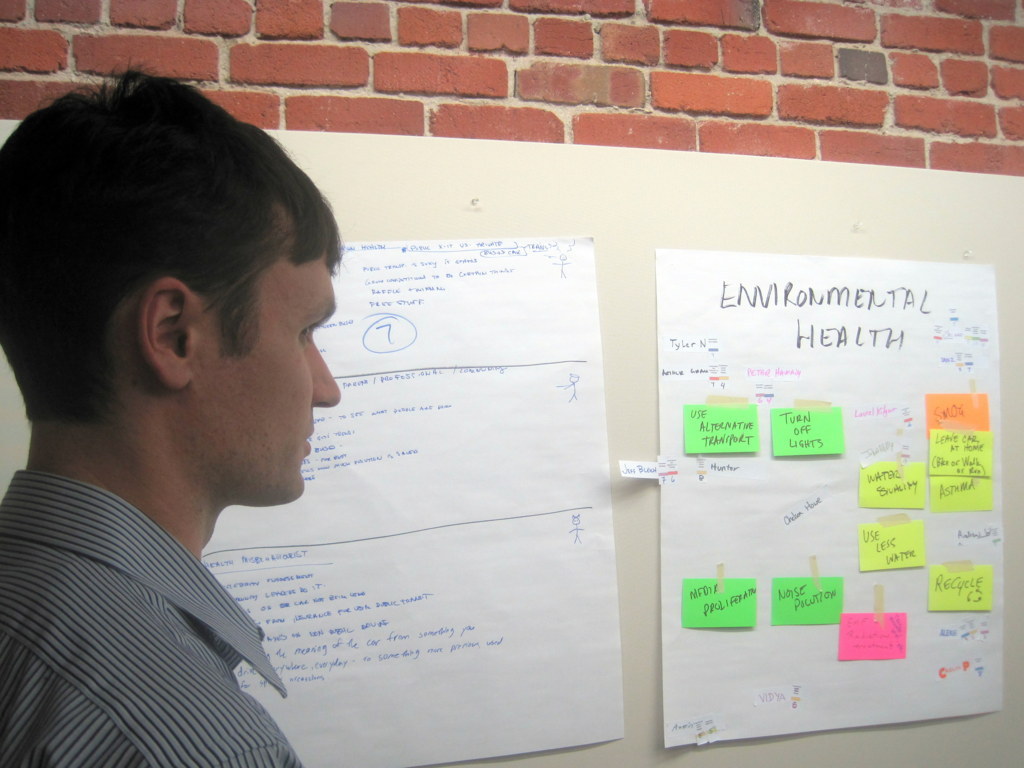
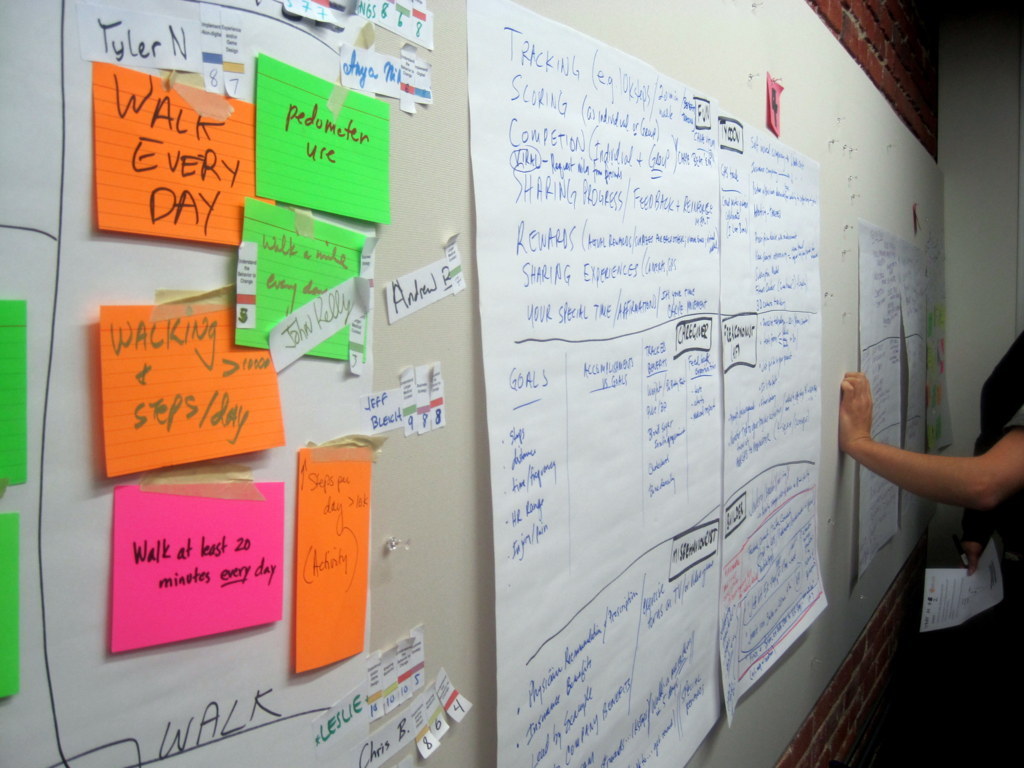
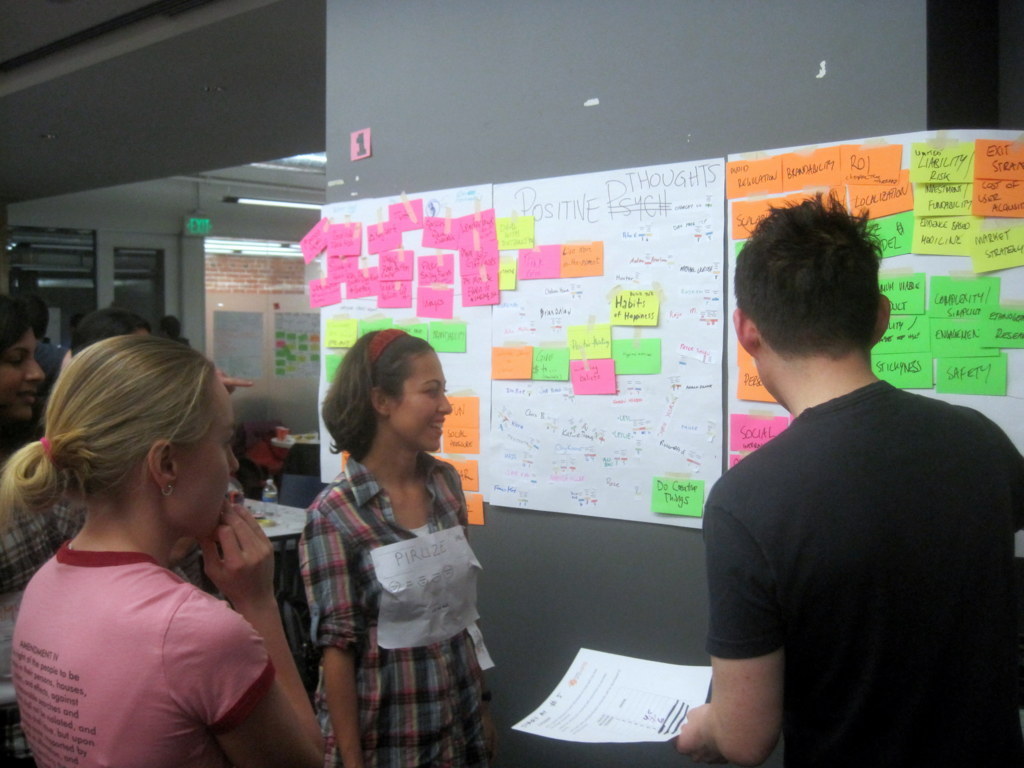
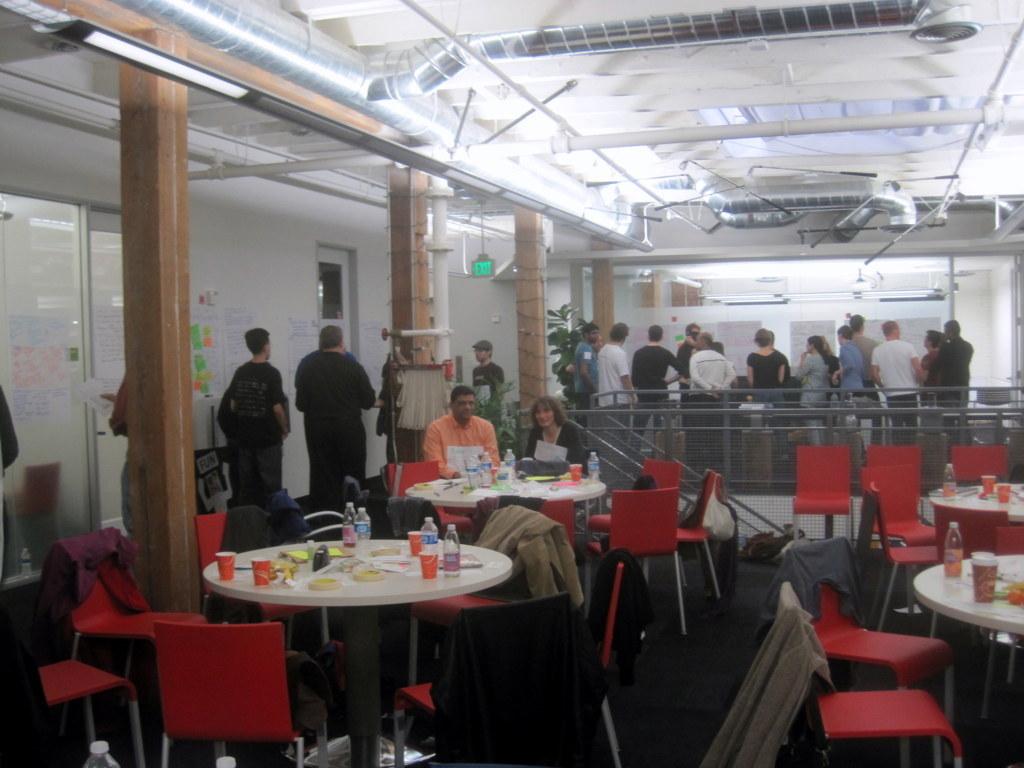
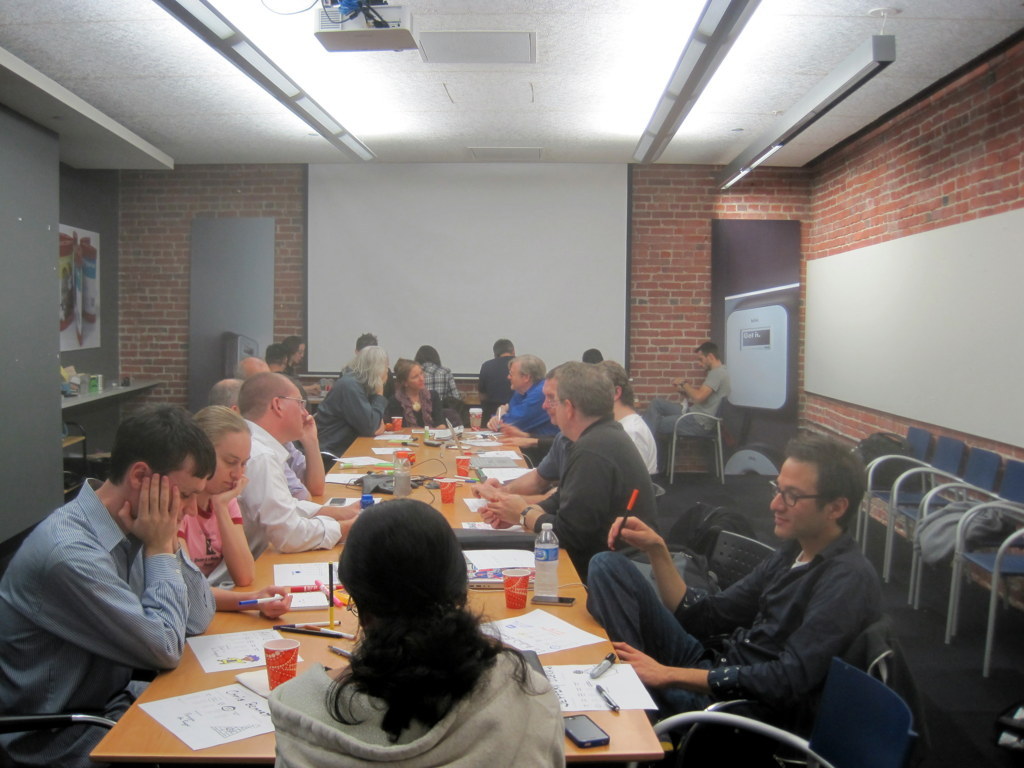
It's about 5:00pm now. And we are on a break...it has been so much fun playing. As part of the game, we broke off into many groups, working on problems ranging from environment health, where yours truly ended up to diabetes, stress reduction and positive thinking! It has been a great ride, looking at how to convince the various stakeholders including the fun lover, the caregiver, the freakonomist, the healthcare-misbehaviorist and the game builder among several other things. For each of these categories of stakeholders, we had to decide how we were going to do the convincing...and now here are some photos for you.

Entrepreneurship Opportunities: The Health 2.0 challenge for 2011 is announced

Preface - the perspectives

Depending on your perspective about things going on around you, you can basically take one of two approaches - you could go the "Advamed/NFIB" route, constantly groaning loudly across the internet about how bad things are going to get with the FDA's half-hearted attempts at fixing it's fast and loose ways of approving poorly designed devices...or you could simply hunker down, accept the fact that the economy is bad, and the better approach, especially when there are gaps in between career moves, that you could "try"!

The Health 2.0 Jazz

The Health 2.0 challenge is yet another Government conspiracy. The Department of Health and Human Services t(hat plans to help Congress pull the plug on the Grandma that you abandoned in Florida) supported the Community Health Data Initiative (CHDI) in announcing the Health 2.0 challenge. It works really easy - you either submit a challenge, or join a team working on a challenge and try to solve the challenge, online and offline.

The online part is where you work on the problems on an ongoing basis. If you go to the code-a-thons, then you are working on the offline part.

Fees and such

There are fees involved, but it looks like the fees get waived if you are a start-up that hasn't raised more than $1mn, or if you are an established company with more than $1mn in revenues.

And there it is, the first code-a-thon is on January 29, 2011 in the San Francisco Bay Area. Other events appear to take place in Washington DC and Boston (a fresh break from the FDA's "public" meetings). Of course, if you are simply reading this for paranoia, here is something you should know - the first code-a-thon will happen at the Mountain View Google campus! Wink, wink!

I have never cherished repeating basic facts verbatim, so I encourage you to visit the link at the end of this article. 

The Opportunity

If you are in the business of mulling health data across the internet, or in the EMR/EHR/HIT space, then such challenges are a great way to showcase your skills, the creativity, thought process and other assets. Competitions, games, barcamps, business plan contests etc, are a great way for you to boost your confidence, hone your skills, showcase your talents, seamlessly integrate this with that and fit square pegs into round holes...you get the idea!

And finally -

If you are participating in the 2011 challenge, give me a holler. I still feel bad missing the last one.

Until next time!

Reference:

http://health2challenge.org/

Quick Post: Are others (guests) allowed to post on this blog?

One of the many tools I use with this blog is "skribit". It is a really cool tool and I guess it's usage will grow over time. The tool, when installed as a widget allows readers and passers-by to leave notes on what they would see a blogger write about.

Of course, it appears that this tool seems to be growing gradually...or maybe not many of the readers here having been noticing..please do! Tell me what you want to write about (be decent now) and I will try to fit it in. It would be my pleasure to know what it is that people are looking for. I do look at the keyword searches that land people here, but that is not as accurate as someone saying.. "do this"!

To learn more about skribit, visit: http://skribit.com/

Are guest posts allowed?

Absolutely! We have already done this before, and I have learned a couple of lessons and I will state my sparse ground rules, but yes, given how busy I am, and my other web design and blogging demands, I would love guest posts!

The Rules

The first rule is, there are rules..alright, that's a bit much. Here goes:

1. Please keep things related to medical devices, biotechnology, bioengineering, entrepreneurship, synthetic biology or some such thing that people who read this blog might find relevant and interesting. It might be good if you and I discussed things beforehand.

2. No plagiarizing - no copying papers etc. Please provide sufficient references. You don't have to be an MLA expert or an "Endnote" jockey, just make sure you clearly mention where anything quoted comes from!

3. Keep it interesting and honest. Interesting is hard to define and is more a "post-production" revelation than anything else. Honesty is really important! If you want your product, service or company pitched, it is probably better to just ask me, and I will do it if it is credible and/or interesting. If you are posting for a class project, then mention it. Do let people know who you are and where any of your fiduciary responsibilities might be.

I always say, honesty may or may not be the best policy, but it is fairly good!

That's it -hopefully that was simple and useful. I will leave this as a sticky on the sidebar for future reference!

Until next time!

Are you an entrepreneur? A job seeker? Where are your major hurdles coming from?

A big hello to everyone. It has been a while since I have posted, but I am hoping to post more in the coming week. Remember, it is both the National Diabetes Month and the National Lung Cancer Month. More on this later. Last week, I fell behind my email and everything else, as it seems common nowadays.

A video on jobs - on or off topic?

Combing through and cleaning up, I came across an interesting video. I am not sure how accurate it is, and I am not sure if it is on-topic or off-topic. Personally, I feel that there are some lessons to be learned here, for any kind of entrepreneur, or for folks who are interested in real social change and not simply "mob by association".

First, the video

To preface, this video is very cynical and the Southern drawl appears to be accentuated to the point of entertainment, but the video provides you with examples ranging from the mundane to the bizarre, talking about how local and state governments hinder start-ups and the creation of jobs!

Watch it here:

Some thoughts for the entrepreneur

1. Let's go with my golden rule. Do not believe or trust anyone wholeheartedly. There are too many organizations out there that are extremely politicized.

2. As an entrepreneur, you can sit there and wish that all the paperwork and regulations would go away. However, you need to think in terms of what you can do in the near future and over time. In the near future, as you burn through precious, yet limited resources, you should make sure your success is not impeded by bureaucracy.

If you have a choice of location, then try to find out where you can locate your organization. If not, focus on working within your region's legal maze.

Get help, not rhetoric

Starting up? In most places, you are not alone. You can choose what you will have - rhetoric or real help. Nowadays, I see hundreds of formal and informal organizations crop up everywhere - ranging from meaningful non profits to informal online groups. Not all the advise you hear is right, relevant or good, but you can filter through the messages with enough effort. I have posted about a couple in the past and as and when I find relevant groups I will post them here. I am sure a web search will turn up more resources elsewhere as well.

3. The long term - what can you do?

Whether you succeed or fail, there is something that happens every 2 - 4 years (and if you are in other parts of the world, the message about bureaucracy still holds) - we call them elections. Make sure that you send a very clear message to your Congressperson, the state legislators, the mayors and councilors that your vote and the vote of like-minded entrepreneurs hinges on them making some real changes to "business as usual". This is so much better than empty rhetoric!

4. Who changes the world?

For every Gandhi (and yes, I have immeasurable respect for him) there are silent masses that followed them, motivated them and supplemented them to move the world forward. So it is indeed entrepreneurs and individual businesses that dictate change, not governments small or large or the parties that steal votes from them...so go out there and make those changes!

5. Read, read and read some more. This is the best way to keep yourself up to date on all that is going on around you - new law, new regulations and even stuff that people pull because they are insensitive to your difficulties. Since you are a small business owner, you don't have an army of lawyers to identify what affects you and what doesn't. So, prepare!

Reference:

http://ij.org/citystudies

Healthgamescamp, San Francisco is tomorrow, barcamps and more…

Healthgamescamp is a barcamp organized specifically to create digital and non-digital games specifically geared towards creating a positive change in people's health behavior. Any barcamp can be fun and of course this is truly fun for yours truly, so, yes, I am going and I thought I would do a "pre" post.

Of course, some of you are wondering...

Whatever is a barcamp?

In the spirit of open, barcamps have come to be "unconferences" or user-generated conferences. Of course, I could go on and on plagiarizing wikipedia and fatten this post, but I will link it here for you to read. Suffice it to say, the concept of open conferences, run by user generated ideas is a really cool thing. If you wish to disagree...well maybe you should pay thousands of dollars and fly to some island off-season.!

As usual, the first barcamp happened here in Palo Alto, and things have gotten, er big. They have also grown from one field to many. Learn more here:

http://en.wikipedia.org/wiki/BarCamp

HealthGamesCamp

HealthGamesCamp is organized by David Schafran, a great acquaintance with experience doing some excellent work for Villagro in India, and Julian Keith Loran of the Innovation Management Institute, whom I am yet to meet.

The idea of this specific unconference is to bring together all kinds of folks ranging from healthcare professionals to policy product managers to mHealth gurus and beyond. Of course, I am not aware of who the attendees are yet, but I will try to do a post-event blog and try to highlight all the exciting things I learn about!

Alright, only a few more hours left..

Healthgamescamp – liveblog: "It’s crazy and wild and fun"

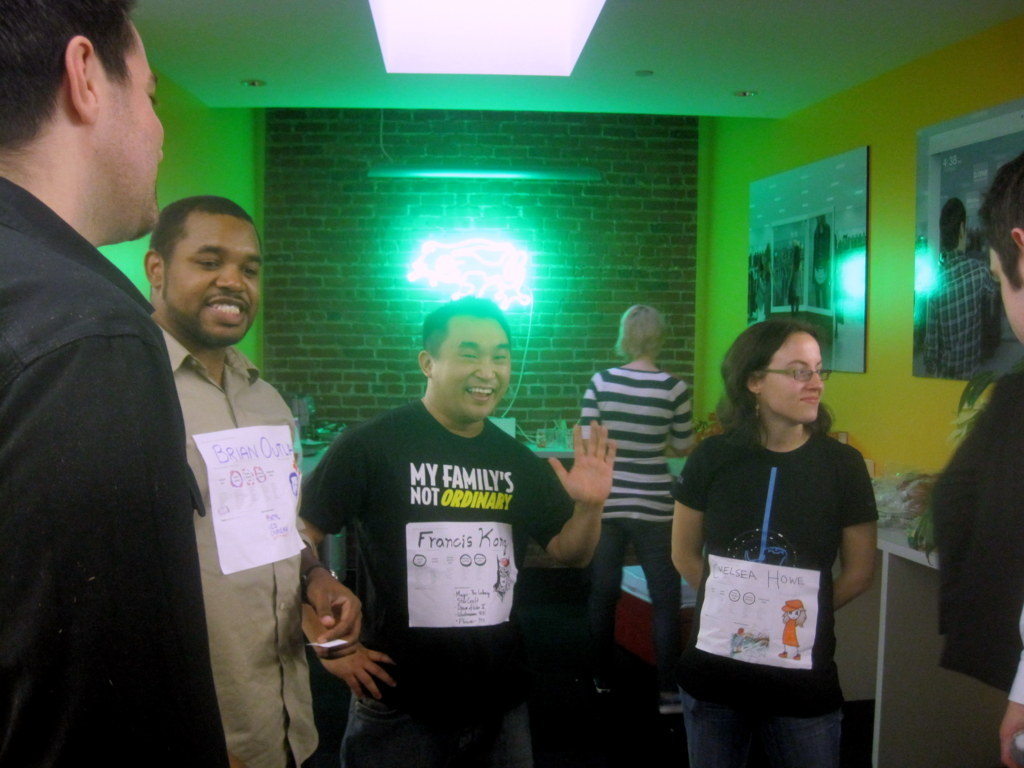
"It's crazy and wild and fun" - that is what David, one of the co-organizers has to say. I would agree. The event started at about 1:00pm, with the usual exercise where we all created "visual doodles" to paste on our upper bodies and carry on our selves as we walked around, chatted and engaged in making friends.

So far we had a couple of warm up exercises, including demo games from volunteers on converting first time customers into repeat, loyal customers and one on dating...go figure!

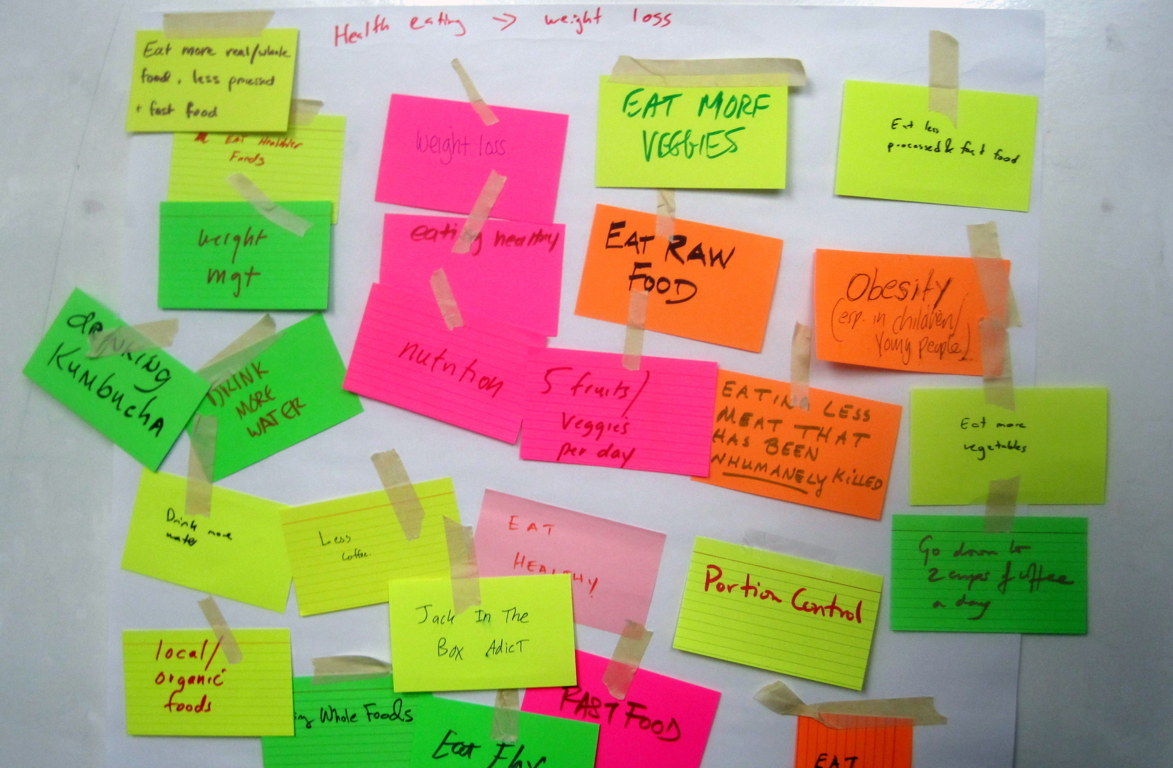
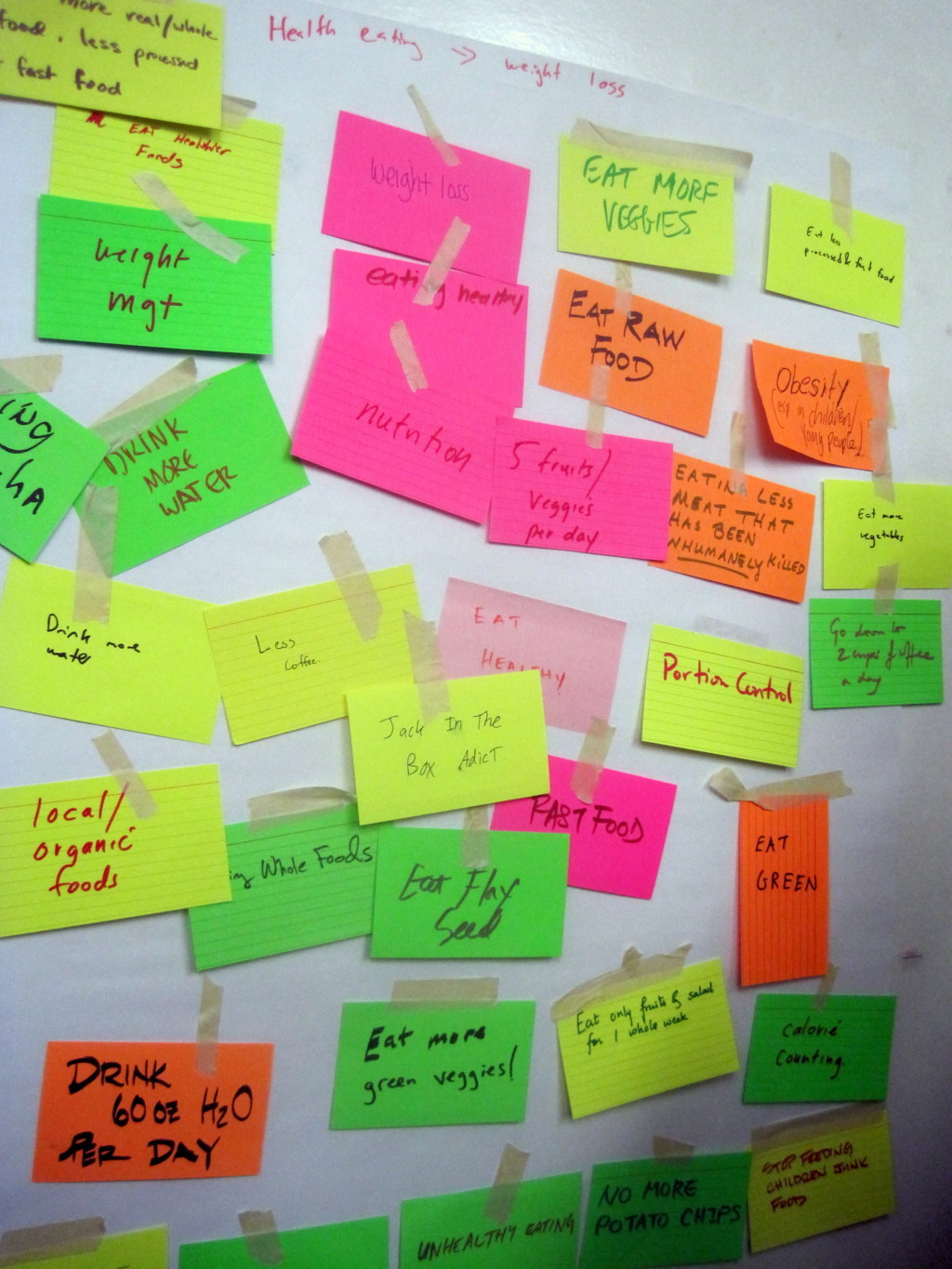
We followed up with an idea session, where we threw up ideas on 3x5s and now are going through a grouping exercise followed by a pitch of our skills in specific areas related to the groups of games...oh fun. Here are a few images for your reference.

More to follow! Watch this space

The Healthcare bill of rights is here…

Preface: Once again, I have to apologize for not being able to blog here, and this time it involves travel to the Seattle area, but I hope to get on my feet soon.

Introduction: I have signed up to receive updates from the local Congresswoman Anna Eshoo. Today, she forwarded me this set of rights, billed as, so to speak, "The Healthcare bill of rights". I thought it is fairly important for anyone involved in healthcare to go through them, so I am going to share them with you.

Oh, and these are the rights that the Republicans and the Tea Party would like to repeal, just so you know.

* Your health coverage cannot be arbitrarily cancelled.
The new law prohibits insurance plans from rescinding your coverage when you get sick, except in cases of fraud or an intentional misrepresentation of facts. (Applies to all insurance plans.)

* Your child cannot be denied coverage due to a pre-existing condition.
Insurance plans are prohibited from both denying coverage and limiting benefits for children based on a pre-existing condition. This applies to all employer plans and new individual plans.

* Your health plan cannot put a lifetime limit on your health coverage.
The new law outlaws lifetime limits. No longer will a family go broke or lose their home just because a loved one has an accident or becomes ill. This applies to all insurance plans.

* Your health plan’s annual limits will phase out.
Over the next three years, the new law phases out annual limits ensuring that the coverage of hundreds of thousands of Americans will no longer be cut off right when they need it most. This applies to all employer plans and new individual plans.

* Your child can stay on your health plan up to age 26.
Insurance plans that offer family coverage will be required to allow young people up to their 26th birthday to remain on their parents’ insurance plan, at the parent’s choice. This applies to young people who do not have access to their own employer-sponsored coverage.

* You have the right to choose your own doctor.
Patients are guaranteed their choice of primary care doctor within their plan’s network of doctors, including OB-GYNs and pediatricians without a referral. This applies to new plans.

* You have the right to access out-of-network emergency room care.
Insurance plans will not be able to charge higher cost-sharing for emergency services that are obtained outside of a plan’s network. This applies to new plans.

* You have the right to appeal denied coverage.
Insurance companies are prohibited from denying coverage for needed care without a chance to appeal to an independent third party. This applies to new plans.

Commentary: Essentially, I think this is a good set of rights and a good start. It will help coverage, and increase revenues for medical device companies, regardless of what Advamed would like to have you believe. In the long run, this will serve as a model of comparison for developing nations trying to implement healthcare reform.

Of course, post elections we will see some cheesy attempts to repeal the law, more display of testosterone and so on...until next time!

DIYBio gets a little more local…Bangalore just got one – is there one in your area?

You must be living in a cave disconnected from the internet, "smart" phones and Government paranoia, if you haven't heard of "DIY"bio...the new movement where citizens create fluorescent cats, third arms and pet Homo zombius'es...(there may be people trying to do these things, but this is not what the DIYBio movement is about, but hey, since logic and commonsense are not essential to our politicians or to those who do very little to serve or protect us..)

What is DIYBio?

Most revolutions in human science and society took off with home-grown innovations. While Kings commissioned large sums of money and bounties, it took James Watt with his steam engine, the Wright brothers with their flight, and the Curies with their home-grown chemistry lab (I mean literally, the innovation of a century in radiology was cooked up by the Curies working their asses off in a shack offered up by skeptical University folks). And then we have the perennial "garage start up" dream...so much so that now we have a company named "Willow Garage".

Yet, one field had lacked this spunk - enter a bunch of hitherto disparate folks trying to do a "garage" bio or life-science company. Like so many people blind to this, it took a report of Government paranoia (suits showing up at people incubating eggs and so on), I learned about the group through a string or articles that just multiplied the story to create a din loud enough for me to sit up and pay attention.

Since then, of course I have joined the groups, watched our local DIYBio group , "BioCurious" gain funding pledges and I have generally been enjoying the fraternity of research.

The essential idea, globally and locally is to cause revolutions in the life sciences that promote both basic research and cures. This spans the gamut, ranging from fundamental biology to genetics and personalized medicine!

Of course, there is more, however, I am not going to write a pompous essay - just visit the links at the end of this post to learn more about the DIYBio movement!

Bangalore DIYBio:

Localization is important to invite new people into the fore, get the intimidation and information overloads that the 21st century has wrought on us down to an acceptable level and allow for explosive growth. While local groups have been popping up everywhere, the Bangalore group, as far as I can tell, is a first for India. Congratulations to Deepan Chakravarthy for starting the group!

There is a lot of programming talent in India. I am sure the lifesciences in various forms are also attracting enough attention. Consequentially, I hope that this group can bring these folks together, locally in India.

The value of collective bargaining

When I first came to the US as a graduate student (and even a little before that), one of the clear causes for such success in the US became quite self-evident: "associations", "societies" and the whole lot.

Of course, there are times when groups such as NFIB and Advamed are up to no go..ahem, hmm, let's go back to the main topic.

Individually, it would be so hard for folks to do things. By grouping together, we can motivate each other, share ideas, and present forums that can be societal, technical and as it seems to be quite necessary with most endeavors nowadays, political as well!

India does have quite a handful of associations and societies. However, a lot more need to come up. I saw a handful pop up - HeadStart, the local barcamp groups, the OCC or Open Coffee Club groups and so on. With a population continuously hungry to put India on the 21st century map, I think such associations including the DIYBio Bangalore group, that may currently look small and frail are doing their job.

So my question to you: Do you have a DIY-Anything group locally?

Especially, do you have a DIYBio group that is local to where you live? If so, have you joined and contributed? How about starting one if it is necessary?

Do-It-Yourself-er, with a lot of friends, it's easy!

Setting up a new group is not tough. Here are a few things you could do to get started:

1. Find out if you have folks interested in starting one. Join the diybio group (link at the end of the post, I promise). Ask who else is working on "bio" stuff locally.

2. Find out if there are local Universities that have folks doing the same thing. Attend lectures, go to meetings and chat people up.

3. Simply start a group - then blog, tweet, holler and draft your friends as volunteers (that's right!) to either join, or get the word out.

4. Conduct simple meetings, demos, educational events - there is a lot on the playbook that the folks who have already done it at Biocurious and other organizations that can talk to you about - reach out!

So, let's get to some resources.

Resources

1. The DIYbio Google Group:

http://groups.google.com/group/diybio

2. DIYBio website:

http://diybio.org/

3. Find local DIYBio Groups:

http://diybio.org/local/

4. The Bangalore DIYBio Group:

http://groups.google.com/group/diybio-bangalore

5. DIYBio on Grouply:

http://diybio.grouply.com/

The World Diabetes Day is here

November is Diabetes Awareness Month (incidentally, it is also the Lung Cancer Awareness Month) and this year, November 14th is the World Diabetes Day.

Diabetes, or originally Diabetes Mellitus derived it's name from the sweet taste of urine that was used as a diagnostic by the Romans. As a disease, it is no stranger to human civilization and has afflicted humans for a while now.

Type 1: As an autoimmune disease, Diabetes Type I, is inherently a disease where the body simply cannot produce insulin via the "islets of Langerhans" thus unable to produce enough energy needed for subsistence. This disease is more prevalent in young children and in adults. Through insulin therapies, this disease can be managed, but is debilitating nevertheless.

Type 2: Diabetes Type 2, typically has an adult onset. In this condition, the body is simply unable to produce enough insulin to convert sugar into energy, or the cells do not use the insulin as expected. Type 2 is the more prevalent form, has been diagnosed in 24 million Americans (an estimate upped form 21 million) and is expected to afflict more people, who are probably simply unaware of it. In countries like India, and among Indians everywhere it has reached epidemic proportions as well.

Some of the causes include unhealthy life styles, eating and working habits and so on. People with rice based diets of Asian origin appear to be afflicted by this disease more often.

Type 3: Is there a type 3? New research has shown that a certain number of children with Type 1 Diabetes also show tendencies for Diabetes Type 2. This is a risky condition and thus, even though it has been statistically delineated, has been assigned it's own category. The "double diabetes" as it is known is attributed to patients being overweight and a general lack of awareness.

Apart from this, gestational diabetes refers to the onset of diabetes during pregnancy. Gestational diabetes may then prolong throughout the mother's lifetime and can become Type 2 diabetes at that point.

Awareness

The biggest gap, when it comes to diabetes stems form a lack of awareness. Diabetes would be diagnosed in a lot more people if only they were made aware of diabetes and the symptoms and the predispositions.

One has to remember that people with diabetes Type 2 may not even have the symptoms sometimes. Please refer to the American Diabetes Association (ADA) website for a list of symptoms to watch out for either type of diabetes:

http://www.diabetes.org/diabetes-basics/symptoms/

You should consider taking a Diabetes Risk Test:

http://www.diabetes.org/diabetes-basics/prevention/diabetes-risk-test/

The World Diabetes Day website also lists some risk factors:

http://www.worlddiabetesday.org/the-campaign/diabetes-education-and-prevention/diabetes-risk-factors

You should also look at some of the warning signs here:

http://www.worlddiabetesday.org/the-campaign/diabetes-education-and-prevention/diabetes-warning-signs

TuDiabetes:

My friends at TuDiabetes ( http://www.tudiabetes.org ) a non-profit organization focused on Diabetes Awareness, Actions and other Campaigns have a video for you!

Want to help out a biotech hackerspace AND learn about medical device regulations? Come to my class…

Yes, that's right...someone thought of a hacker-space for Biotechnology and Medical Device players! And, curiously enough, they named it "Biocurious". Yes, get over what the name reminds you about - after all, as a clever marketing ploy, it does make you sit up and notice..

Biocurious was founded by Eri Gentry, and it currently operates out of a garage while awaiting more founding support to mature into a full blown facility somewhere in the San Francisco Bay Area. Having been spoiled with hacker spaces, Maker Faires, Tech Shops and the like, yours truly, among many others has become very attracted to the idea.

Playing in the life science space is never as easy as developing a Facebook app and raking in millions, and it probably never will be. A lot of biotechnology labs and incubators have popped all over the place. They plan to take huge chunks of your company and cash, mostly because it does get that expensive sometimes.

Do-It-Yourself, cheaper...

A hacker space for life science companies is the appropriate experiment at this point. If you look at big pharmaceutical companies, they are stuck in their own rut of Ms and As with no real focus on any innovation. Venture Capital companies are minimizing risk by investing in "safe bets" while entrepreneurs pine away.

Imagine how much of an impetus it would be if you could rent a space very cheap, rent and share equipment and "schmooze" with like-minded folks. Biocurious is positioned appropriately to achieve this. You could be a serious entrepreneur, or someone who wants to make your cat fluorescent (okay, the last one is just a cruel joke), and you would find Biocurious the right space for you.

Of course Biocurious is well founded on the principles of "Safety First", open source and all that is well and good with hacker spaces.

To learn more, go here: http://biocurious.org/index.php?title=Main_Page

Education for hobbyists and entrepreneurs alike

Apart from providing space, equipment support, safety and good vibes, Biocurious also provides a framework for hobbyists and entrepreneurs to teach each other. You can see the list here:

http://biocurious.org/index.php?title=Classes

As you can see, I have volunteered to teach a class on FDA regulations, for life science companies and medical device companies alike. So, let's take a look. I am going to copy and paste the summary of what I wrote in there later, but here's the gist.

Introduction to FDA Regulations

This is an introductory class. So, if you know little or nothing, or simply want to come and help out Biocurious with more than the suggested minimum of $10 (I am not getting any of this!), then come and have a listen.

If you are wondering what you should do after receiving a Form-483 report, this may not be for you...

The idea is not to rant about how the FDA is out to kill innovation or any of that stuff. Our goal in this class will be to develop an idea of the ways and means by which you can work within the regulatory framework from the very beginning of your drug/device/biologic/diagnostic development process.

The goal is to layout the regulatory map and discuss any questions and answers.

Although it mostly repeats, here is the class summary:

The Business of Drug and Device Development – what you need to know about regulation and the approval process

Tuesday, June 22nd | 6:00 - 9:00 PM

Srihari Yamanoor

As an entrepreneur, one of the most important balls you will juggle will be regulation. As you get more serious about your endeavor and seek funds you will notice that investors and others will seek out your “regulatory plan”. It is key to develop a thorough understanding of the regulatory process, what the FDA looks for, and the strategies companies adopt to ensure as smooth an approval process as possible.

The class will discuss the approval processes primarily focused on drugs and medical devices. We will talk about the different stages of the approval process involved in therapeutics. This will be followed by a discussion on medical device approval process. We will discuss the various classes of medical devices, how to determine the classification of your device.

Frequently, your devices and drugs will go through clinical trials in Europe, Mexico and other locations. We will discuss the need for this, how to initiate clinical trials in these locations, and how to work with the FDA throughout the process to ensure that the trials meet the standards for safety and effectiveness, essential for approval.

We will also discuss the regulatory process that is in flux at the FDA.

Cost: $10 suggested contribution. All proceeds will be used to support the lab.

Stop By!

So, once again, if you are local to the Bay Area, consider marking off June 22nd on your calendar and stopping by! If you have any questions, let me know. I hope to see you come there and support Biocurious!!

Here is the link again: http://biocurious.org/index.php?title=Classes

A prototyping tip & a quick update

Hello everyone!

First, the update:

Yours truly is engrossed in more than one project, and has taken quite a break (I haven't posted in almost 2 months if you haven't noticed). I kept telling myself I will get back to blogging, but I have decided that isn't happening anytime soon. So, I thought I am going to jump in and start blogging again. I am also going to announce the "Summer of Blogging" shortly, but enough with the egotism...

Prototyping Tip - Don't throw away your failures!

Yours sincerely (thought I will try a variation on the previous paragraph, ahem) has recently had a chance to do a lot of prototyping - you know strutting around the lab, hurting yourself with things that look nothing like what your final product is going to be?

Anyway, cynicism aside, prototyping is always so much fun, next only to storming the brain for ideas of course. Part of the pleasure of prototyping is that you are typically breaking new ground, so many mistakes may occur.

20,000 non-bulb materials - the Edison cliche

Edison was arguably the biggest patent troll according to some people, intimidating peers and stifling innovation. However, he left a lot for us to delve in terms of cogitating about persistence, prototyping and such.

Though we may never know exactly what he said about never giving up on the path to inventing the light-bulb, but persistence in innovation is necessary. One has to stare failure in it's face and move on!

However, do we simply record our failures and discard them?

No! From your failures, you can learn a lot:

1. What exactly is the definition of failure in your prototype? Did it not fail to turn out at all? Did it fail to appear unlike what was expected out of it? Did the prototype fail in terms of functionality?

2. If your prototype failed under process/manufacture/putting it together, can you repeat it? Can you identify the flaws in your development process?

3. If your prototype failed functionally, what led to the failure? Is your failure related to how you built the device/application etc., or is it related to how you used it?

Record it anyway!

The very first thing you should be doing is answering those questions and recording those answers. These answers should go in your lab notebook. Two weeks from now, or six months from now, you don't want to be asking yourself what was going on.

Patent it anyway

A couple of years ago, I attended a meeting of the "Bio2Device" group locally and Karen Talmadge, the wizard of Kyphoplasty mentioned something to the following effect: "Don't simply patent your way of doing it, patent all the ways that could cause the same effect". In a simple sense, if you are thinking about using radiofrequency to burn the tumor, don't stop there - think of microwaves, photo therapy, embolization and so on...I hope you get the point. You may not get everything granted, so make sure your claims are constructed properly and you try to reduce things to practice appropriately.

The reason I brought this up, is because your prototype may not work because at the moment, you may not have the right method of building it, or the right set of steps to accomplish the functionality required of your device - and you can fend off someone else who might want to compete with you using one of your discarded ideas!

Lather, Rinse and Repeat

Finally, try to re-work your prototype! Don't take one failure as the final answer. If you made enough effort, maybe you will get it to work, or you will find out why it won't work...very valuable information!

Come join me for a workshop on "The Rules of Brainstorming"

Preface: Again, I apologize to everyone for the paucity in posts. As some of you might know, I have been working incessantly on a project and that has kept me from being able to gain any traction on blogging here. As the blogging gets tougher, I have decided to add a tweet specific to the blog so that I can still share quick updates on devices and such.

You can follow "devicology" on twitter:

Follow devicology on Twitter

Of course, there are not many tweets there yet, but watch the space for more.

Looking for innovative ideas?

Ideas, they say are dime a dozen. Well, who is to say what the current exchange rate is? If you are looking at a start-up or even a project that needs you to design a device, a mechanism, a set of mechanisms and/or processes and methods, you need innovative ideas. Many times you need to be innovative to beat your competition, and sometimes, simply because the solution demands creative thinking.

But, how do we get good ideas? Some people seem to have a practiced way of getting to ideas, so is "ideation" something that you are born with?

Wrong!

Brainstorming!

Brainstorming is the best way to open up your creativity and come up with innovative ideas for your projects, your companies and so on.

While there are many opinions floating around, the baseline is simple - encourage creativity and "out of the box" thinking, do not judge while the session is still on and do not "direct" the meeting.

Of course, I have a few other ideas that I would like to throw in - keep the topics broad first, narrow them later, or in later sessions, provide avenues for creative exploration through colors, toys and such, and feed your people!

Brainstorming is an exercise - so the more you train appropriately that is, the better you can get at it. Take it from me, I have seen this lead project ideas to great success in many different situations - this is the point of the workshop - practice, exercise!

Set at the Crossroads Cafe in San Francisco on September 13, 2010 thanks to the efforts of Eri Gentry, the founder of BioCurious ( http://biocurious.org/index.php?title=Main_Page ), we will discuss the rules for a couple of minutes, brainstorm a broad topic as a group exercise and then given enough interest, we will break into smaller groups and discuss further topics.

Here is the link for the event:

http://www.meetup.com/BioCurious/calendar/14576734/

I hope you can join us!

About BioCurious:

BioCurious is THE DIYBio group for Silicon Valley and in general, the Bay Area. Currently the group is seeking funding to find a near permanent home. You can find out more about them here:

Yours truly's previous FDA regulation class and pitch appear in the video as well...

MedTech: A great bioscience resource for folks in New York

Whether you are working on a medical device company, a biotechnology company or a pharmaceutical company, and regardless of your size, you will always need resources. You may not want to "fly" someone in a few times a year and fret about the bills. Everyone talks about networking, but it is always good to have a backbone to rely on.

Recently, I was contacted by Jill Zimmerman, the director of marketing and communications at MedTech, a non-profit trade association serving bioscience companies in New York. MedTech has an interesting model. There is a very clearly laid out strategy to serve bioscience companies in New York. Memberships are collected from participating organizations, rather than from individuals, which I guess makes for a more sustainable model with better outreach.

MedTech also has an impressive strategy to serve it's members, including public outreach, marketing and promotion of the industry and networking.

http://www.medtech.org/media/documents/2009/3/MedTech_Vision_Mission_Strategic_Priorities.pdf

So, if you are moving to the New York Area and starting afresh, it may not be a bad idea to check out and see if your organization already participates in MedTech.

Events and Such

You can never have enough life science events, ever. So, looking at the rather impressive roster of events that MedTech, I am a bit jealous, positively speaking :).

You can find out more here:

http://www.medtech.org/events/list.aspx?cat=0

If you are new to CAPA or just need a refresher, events like this might be for you:

http://www.medtech.org/news/mediaroom.aspx?recid=1566

They also listed a webcast coming up for 5/12. I almost never have time for these things even though I promise myself I will. I still signed up, and will try my best to make it to this one.

Conclusion

Networking in interdisciplinary bioscience fields is very, very important. Find organizations such as MedTech that serve you locally, and when you find them, don't let go. Do you know of other resources that would be useful to folks? Please share them with me!

Reference:

http://www.medtech.org/

Blog brief: Inventables – a nice resource for your medical device projects

Recently, I was contacted by Zach Kaplan, the CEO of "inventables.com", a clean, fast website that allows you to look for specific materials and technologies. They have a significant medical section that I did find interesting. It is not an exhaustive link, mind you, but I think it has great potential to get there.

To keep things very simple, I tested out some very simple keyword searches:

1. My favorite (not) "stent"

2. Bone cement

3. Camera (a pleasant surprise on the results) and so on.

With these tests I found some valuable information on the certain materials and manufacturing technologies. If you have been in the industry for a while, you may react with a yawn, but if you are new, I believe the site holds quite a bit of promise. Things load fast and the information is there to tag you.

When I hit larger terms such as phlebotomy or atria or even something mundane as heart, I did not get good results. I won't blame the website though, it is a factor of learning to search for stuff. As it is, many times, when you are working on device projects, you are at a loss as to where to start the search. The thing to note is, having inventables as one of the places to go to, might not be a bad idea.

When you do get search results, you are now in touch with vendors. If you are a small vendor trying to reach a wider market, this may not be a bad idea at all. I am sure there is a path to organic evolution where we will land on the right search results that will lead to the right products and/or information.

Conclusion:

I think like many of those emerging tools, inventables shows great potential!

Reference:

https://www.inventables.com/