Doctor Who Review: Trapped Like Flies in The World Wide Web

"The Bells of St. John" are ringing in Cumbria 1207, and Clara is phoning The Doctor to discover where the Internet might be. The Doctor didn't recognize her voice, after all of is divine thinking, but her password was "RYCBAR...", or run you clever boy and remember. How do they come up with this stuff?

There is something about Matt Smith as The Doctor with Clara that is just different. When he was getting excited over hearing her say "Doctor Who" he looked downright giddy. I got a smile bigger on my face than he had on his. Can anyone not laugh at his declaration that monks are not cool, while jumping into his signature outfit complete with bow tie? Cool indeed!

The bottom line is The Doctor is back, Clara is wonderful and that he is enamored with her is perfect. I am one happy fan girl.

Doctor and Clara

The premiere episode was full of action and adventure, covering the distant past and the near future with a vision of The Doctor as a monk as well as a half robotic mind claiming machine that harvests souls for its master. Really, a little something for everyone.

But, the one thing I did notice was we were put through, yet again, another beginning for Clara and The Doctor. That makes three. Not that I'm complaining too much, because Jenna Louise Coleman is an absolute doll and her chemistry with Matt Smith is incredible. I have no doubt they will make a wonderful team. I would just like to get through the "let's meet again" phase and onto the more daring adventures where Clara has a bit of an understanding of what she's in for.

The Doctor's continued intrigue with Clara will be interesting. He has no idea why she has been recurring through so many timelines, and he wants to find out. As long as the messages come in ways of hints such as the leaf not being in her book but being the first page of it, making him marvel at her mystery all the more, I'm in. I did have a thought after the first two encounters that we might be in for a relationship wherein every meeting met with her dying. I can't express enough how wrong I was with that.

Clara sees herself as a girl who got stuck after her mother died caring for children when their own mother passed, hardly the least bit interesting, but The Doctor has so much more knowledge about her history that he sees someone inside her that she never knew existed. They will each benefit from the partnership in ways the other wouldn't imagine, and if their exploits are anything like what we witnessed tonight, we're in for a hell of a ride.

It's always fun to see someone's first glimpse into the Tardis, and what I found even more engaging was how throughout the encounter into the airplane as The Doctor tried to keep it from crashing into her neighborhood, Clara held on tightly to her coffee cup, only letting it go after they landed the plane, were once again safely in the Tardis and she had finished her drink. Little things like that must be so difficult to do while filming such a rushed and chaotic scene.

The idea of our lives being overrun by the Internet, and our souls being harvested for food,

The Doctor: Human souls. Trapped like flies in the World Wide Web. Stuck forever. Crying out for help.
Clara: Isn't that basically Twitter? | permalink

is especially timely as social media permeates the world we live in and shows like Doctor Who premiere in the United States and the United Kingdom on the same nights. We're growing ever closer and ever farther apart through the power of the Internet. I was shocked more than once at the turns the story took because I get so wrapped up in what's happening that I'm not over-analyzing the storyline. In other words, I'm enjoying it for enjoyments sake.

Examples: Even though The Doctor was surrounded by the wireless souls in the cafe while Clara tried to find a way to stop the UNIT, I never for an instant realized it would be his own image that would be the one to capture her soul a second time. Until he was out on the balcony, behind himself, I somehow thought they had him trapped. I am such a sucker! Additionally, I had no idea he sent his soul-sucking self to take out the UNIT and was still sitting beside Clara's soulless body protecting her. But, where else would he be?

Finally, I kept thinking to myself this story would be so much more interesting if I knew who was doing this. Really? Granted, it's been three months (and about a hundred and fifty years) since "The Snowmen" but I couldn't pluck out THE GREAT INTELLIGENCE was behind it all? Seriously. On the plus side, it actually made me feel sorry for the people working for the UNIT and for Miss Kizlet in general. She had probably been plucked as a child and grown up under his control, having no idea what it as like to live a life. What on earth would she do now?

I'm super stoked for the remainder of the season, short as it may be. What did you think of the spring premiere and the third introduction of Clara and The Doctor?

Source:
http://www.tvfanatic.com/2013/03/doctor-who-review-the-bells-of-st-john/

Game Of Thrones Season 3: Anatomy Of A Scene – Daenerys Meets The Unsullied – Video


Game Of Thrones Season 3: Anatomy Of A Scene - Daenerys Meets The Unsullied
Don #39;t miss new episodes of season 3 on Sunday night #39;s at 9PM. For more on Game of Thrones, go to http://itsh.bo/HpR8b1. Watch Game of Thrones online at HBO G...

By: GameofThrones

See more here:
Game Of Thrones Season 3: Anatomy Of A Scene - Daenerys Meets The Unsullied - Video

Grimm Review: Curiosity

"Nameless" is filled with plenty of interesting side stories and plot development, but Grimm’s procedural story is better left forgotten.

A Wesen Killer

Juliette’s curiosity, and her slowly reemerging memories, is beginning to break her from her boring, season long shell. It’s a welcome change to witness the character I came to enjoy as Grimm Season 1 went towards its finale begin to come back. At this point, aside from Wu, everyone knows of Nick and his extracurricular activities, so Grimm isn’t the least bit afraid of Nick’s family secret getting out to immediate friends.

In terms of shocking reveals, the news that Nick comes from a long line of fairy tale ass kickers will probably be a little shocking to Juliette, but Juliette’s experience with the Wesen world is considerably deeper now; any more delays would just feel fraudulent, so she might as well join the pack.

Speaking of the pack, Juliette’s recruitment of Monroe and Rosalee into her recovery process brought up a detail that I never really thought about: Rosalee has never heard of (or been to) Nick’s trailer. It’s usually part of the welcoming committee, when one finds out Nick’s a Grimm and they join the team one of the perks of joining is getting to see the trailer.

It’s disappointing Rosalee missed out on this initiation process.

Renard’s conversations with his spy really began to shed some light on what is going on in the Royal Wesen world. The Royals are secretly trying to dissolve of the union and attempting to put themselves back in power, and, while Renard wants to continue on the resistances’ side his spy is growing increasingly wary of Meisner – a man who is only looking after himself.

Renard seems to be stuck in the middle of two sides that shouldn’t want power at all, and it begins to paint of picture of how Nick could be of such value to him. The Grimm are the enforcers of the Wesen world, making sure they do not prey on humans or other Wesen, and if Renard can bring about an alliance with Nick for all the Wesen world to see – after the Grimm basically cut ties with the Verrat and the Royals – could send a very powerful message to the Wesen world.

As for the case, it couldn’t hold my interest. The mixing of the Grimm world and the video game world sounds entertaining on paper, but the villain is mostly boring and the victims were mostly one note characters riddled with clichés. The only positive to come out of the case is Wu, who finally gets some screen time beyond calling for backup or making a quick one-liner.

A Few More Thoughts:

  • Is the episode number going to be on every apartment door from now on? I would be okay with that.
  • I like to imagine Wu heard Nick using the Grimm terminology on top of the roof.
  • Renard’s flash drive of names is reminding me of Arrow’s list.

Source:
http://www.tvfanatic.com/2013/03/grimm-review-curiosity/

Scandal Episode Preview: Twisty! Crazy! Good!

The question of who is a hero and who is a villain was raised on the latest intense episode of Scandal, "Snake in the Garden."

Next Thursday, meanwhile, the issue at stake will be what happens when Olivia and her team realize that details from an old case do not add up... especially when said details have the potential to place them in major peril.

Elsewhere, look for Olivia and Jake's relationship start really to heat up on "Molly, You In Danger, Girl," Fitz and Mellie head the opposite way.

Watch the official ABC promo now:

Source:
http://www.tvfanatic.com/2013/03/scandal-episode-preview-twisty-crazy-good/

Nikita Review: Return From Slippery Slope’s Edge

Division with Ryan at its helm has headed to the edge of the slippery slope of becoming the Old Division again. The original decision to apprehend the Dirty Thirty and shut down Division was easily expanded when the President called upon him to use Division's resources to help out the nation with sticky situations. And, again when Amanda starting causing problems.

In "Inevitability," Nikita and Alex disagreed over Division's mission and future. It was fortunate for both of them, the battle was fought with words and not fists. Ever since Alex returned from her three days with Amanda, she thrived on her independence and used every opportunity to go against Nikita, Ryan and Division. 

The Secrets of Division

The cause of Alex's angry demeanor is unknown and at least this time the conflict was worked out without Division or American lives being lost. Nikita went on the mission to assassinate the president of Chad with Sean and Owen covering her. While they were completing this off-the-book assassination, Alex and Birkhoff investigated Danforth.

The philosophical debate about what missions Division should and shouldn't be doing finally came to a head. It's been an ongoing issue over the last few missions with Ryan edging closer and closer to full-on Percy territory. It's been intriguing to see just how far he would go. Nikita has been by his side to temper some of his actions, but this time she was the one that was all for killing the leader of another country.

President Batouala was a bad guy. I don't think anyone doubted that, but where is the line drawn? One life for 300? Nikita also said she was free to choose this mission, but that really wasn't true. It just turned out in this case that she agreed with it. What would she have done if she didn't? Would she have risked the extermination of everyone at Division by challenging the American President?

Nikita had the right intentions in completing the mission. And, they all had the right motives for keeping the President's contingency plans secret. They were acting in the best interest of all involved in Division with the goal of getting everyone their freedom. The pressure of the President wasn't something that they all needed to contend with on a daily basis.

Alex broke rank by taking her plan of killing Danforth to the rest of Division, while revealing his plan to kill them all. It wasn't her place to do that. She undermined Ryan and Nikita by going around them. Nikita made the best decision that she could given Alex's betrayal. She remained calm and provided a better option: Get the list back, blame it on Zoe and get Division off the hit list. Then, go after Danforth and use him to secure their original plans to close down Division properly.

The situation at Division was closer to history repeating itself than any of them imagined with Danforth using the operatives to achieve his own goals rather than those of the President. His duplicitous behavior was uncovered before any real harm was done and ended up working in Division's favor by giving them the ammunition necessary to blackmail him into giving them their freedom.

Danforth went to the President and sought Division a reprieve. They can now go back to their original plan to bring in the Dirty Thirty and close down Division. Though, they will still have to contend with Amanda. She did something to Alex. And, Owen still wants to get his memories that she erased back. The Dirty Thirty episodes were on the boring side, so I hope that if Nikita goes back to that format the writers find a way to spice it up.

"Inevitability" was a tense hour of television. It all ended up working out, but at any moment so many different things could have gone wrong. Ryan used a Percy method to blackmail Danforth, will that be the end of the Old Division ways? Will they really be able to right the course to get rid of Division? Or, was their play on Danforth just another step towards a dark path? I'm excited to find out!

Odds and Ends

  • The list. Please don't ever have a plot about a stolen list of US operative names being stolen. It's been done and done and done again. It's boring. The writers have to be able to come up with a better reason to go after someone. 
  • Is there anyone Amanda isn't monitoring? It was convenient that she bugged Danforth's car. Like the list, that plot point was unrealistic, especially with no basis provided for why she would be listening in on him. It would have made more sense if she was monitoring Division's actions. Or, if she planted a bug on Alex during captivity.
  • Good for Owen that he expressed his shock at Nikita's Kill Order. Even better that he said he'd back her up on the mission.
  • Sean siding with Nikita over Alex? What?
  • Sean's elbow punch in the ambulance was the best moment of the episode. Kick-ass move!
  • Alex and Birkhoff should work together more often. Love those two together! New romance on the horizon? 
  • Birkhoff: Ever since you've been back, you've been "I am Alex. Hear me roar." | permalink
  • Birkhoff falling. Hilarious!
  • Nikita and Alex in their club clothes and hair was awesome.
  • Is Alex the Old Nikita? Is that a hint that Amanda programmed both of them? Nikita under the old Division? And, Alex more recently?


Source:
http://www.tvfanatic.com/2013/03/nikita-review-inevitability/

Happy Endings Review: Power

It's been a hot minute since Happy Endings has graced our television screens. "In the Heat of Noche" marked the return from its extended hiatus and all I have to say is "save Happy Endings!" 

I don't know about you guys, but I need to see Max and Penny tripping on Mexican sleeping medication every week!

Saving Chuckles & Huggs

That's right, it's all about the "Noche-Tussin." If there was really a drug that prevented people from over texting or drunk dialing a guy or girl in their lives, people would be selling kidneys on the black market to get their hands on it. That's just what happened in this technology addicted generation!

Max and Penny are always at their best when they play off of each other. They're best friends as well as a perfect comedic match. So what do you buy about the power struggle? Do you abide by the not texting or calling rule? How far would you go to regain the edge in that power struggle? 

Meanwhile, the rest of the gang was busy following Whoopi Goldberg's lead in Sister Act 2: Back in the Habit. Brad took his wifey Jane's advice in order to save Chuckles and Hugs. He put his business knowledge to work and hired his friends to help spice things up. Dave was the singing act, Alex did semi-illegal arts and crafts, and Jane...well Jane just tried to fit in with the kids.

Jane: You use your special skill to save the gym!

Brad: Wait how am I supposed to give fourteen consecutive orgasms to a brick building? | permalink

By the end of the episode everyone realized they had gone a little overboard. Max and Penny were hot messes who were hooked on illegal sleeping meds and Alex was running a child labor ring to make popular bracelets. Not the smartest idea.

Another thing I worry wasn't the smartest idea was ABC's decision to move this show to Fridays. I can only hope that people still tuned in after over a month without Happy Endings. Hit the comments and let us know what you thought of the comedy's return!


Source:
http://www.tvfanatic.com/2013/03/happy-endings-review-power/

Grimm Exclusive: Reggie Lee Teases "Rumpelstiltskin" Episode, A Puzzling Case

Violence in video games normally happens within the world of the game, but when you bring gaming into NBC’s Grimm, you kinda know things are going to get more involved than that.

In tonight’s “Nameless," a killer plays a deadly game and it’s a pleasant surprise that Sergeant Wu (Reggie Lee) is the one who ends up playing a vital role in solving the case.

Lee jumped on the phone with me yesterday to tease the episode, as well as what he knows about when Wu might find out about the beastly goings-on happening right under his nose, along with who in the cast he spends time with on the tennis court.

Reggie Lee Photo

TVF: Let’s talk “Nameless.” How would you describe the episode?
RL: This is their take on Rumpelstiltskin. The crime happens at a video gaming company and [the crime] happened in such a way that [the killer] is involved in one of the games that you play online. So we have to try to figure it out and he spurts out all these puzzles at us and I actually am the one to say, ‘Hey I love puzzles’ because what else does Wu do? [laughs] Nothing but puzzles in his life, apparently. And so I end up really kind of spearheading this investigation into solving the crime. And eventually you’ll see how it turns out and how we kind of solve it. But it’s kind of like the game within the game.

TVF: So we find out Sergeant Wu is into gaming and he hear about his cat.
RL: Last year I mentioned my cat, Samson, and we were only introduced in my apartment to this kitty condo. That’s all you saw. You never say Samson but now they reference him quite a bit. And, yeah, Wu is a gamer. This character is one of those characters that’s kind of the wild card of the show. You can kind of take him in any direction and put him in any direction. But in one respect that excites me but in another respect it scares the crap out of me because they can do anything with me.

TVF: Wu still doesn’t quite know what’s going on around him with the Grimm stuff and Renard but any chance is he going to clue into any of that before this season is over?
RL: You might see a little bit of it. I just got the last script, so I haven’t read that yet. He gets a little bit of a hint but I’m hoping. I mean, me as Reggie, I’m hoping. But for the writers I know that with these particular characters, as you can see even with Renard, it was a slow burn. But we’ve got great some great fan support and we’re hoping to go another season. It looks good. So, you know, I think for them to burn it off, I wouldn’t be surprised if they did not do it in this last episode only because I feel like they’re saving it.

A lot of the tweets that I have gotten have been ‘When is Wu going to find out because we really want to see that!’ They want to see his reaction. I think NBC is privy to that and I think they know that it will be a pretty big story point and they’re so focused on the mythology right now.

TVF: After all this time, have they still never said what Wu’s first name is?
RL: We did not pick a name at all. It’s interesting because I was like ‘Wu? I should be Lou.’

TVF: Lou Wu. [laughs]
RL: There was a rumor that NBC wanted to do a contest to try to figure out what Wu’s first name would be. And I don’t know if that’s going to happen. I’ve heard through the rumor mill that it’s going to be an upcoming story point. But, no, you have not missed a thing.

TVF: You’ve done so many things in your career along with Grimm. What would fans be surprised to know about you?
RL: I started on Broadway doing musical theater but before that, I actually was aspiring to be a professional tennis player. In fact, I still play tennis with Silas and with Sasha when we’ve got the little off time that we have. That was actually what I wanted to do. But, Jim, I did not grow beyond five eight and a half so that would never have worked in this day and age. Although Michael Chang did it quite well, but right now it wouldn’t work. But, yeah, tennis is a big passion. That and food and dessert but you probably already know about that. That’s all I tweet about is food and dessert.

Source:
http://www.tvfanatic.com/2013/03/grimm-exclusive-reggie-lee-teases-rumpelstiltskin-episode-a-puzz/

Premiere Dates Set for True Blood Season 6, The Killing Season 3

Set your summer vacations accordingly, TV Fanatics: a pair of cable dramas have released premiere dates.

True Blood Season 6 will kick off on June 16 at 9 p.m. This season will be comprised of 10 episodes, as opposed to the typical 12, and will revolve in at least some way around the world of politics, as Arliss Howard is on board the Governor of Louisiana.

The New BillKilling Phone Call

The Killing Season 3, meanwhile, will debut with a two-hour episode on June 2.

AMC has made it clear that the new season will center on a case wholly separate from the Rosie Larson murder.

“We learned so much from the first two seasons of The Killing,“ AMC prez Charlie Collier said in a statement. "And are thrilled to be bringing it back with the elements that the fans loved.”

Source:
http://www.tvfanatic.com/2013/03/premiere-dates-set-for-true-blood-season-6-the-killing-season-3/

American Idol Sings The Songs of Motor City: Download Now!

The songbook of Smokey Robinson, among other of Detroit's famous artists, was laid open for the American Idol Top 8 this week. 

Some contestants chose their tracks wisely. Others tried to show a different side of themselves. Nicki Minaj praised and panned with equal fervor.

Scroll down for a look at who sang what and then download your favorite songs from Motown Week now...

American Idol Final 8

SongArtist
I Heard It Through The GrapevineI Heard It Through The GrapevineCandice GloverBuy on iTunes
For Once In My LifeFor Once In My LifeLazaro ArbosBuy on iTunes
You Keep Me Hanging OnYou Keep Me Hanging OnJanelle ArthurBuy on iTunes
Tracks of my TearsTracks of my TearsDevin VelezBuy on iTunes
My Cherie AmourMy Cherie AmourBurnell TaylorBuy on iTunes
Shop AroundShop AroundAngie MillerBuy on iTunes
LatelyLatelyAmber HolcombBuy on iTunes
Don't Play That Song (You Lied)Don't Play That Song (You Lied)Kree HarrisonBuy on iTunes

Source:
http://www.tvfanatic.com/2013/03/american-idol-sings-the-songs-of-motor-city-download-now/

NCIS Round Table: "Squall"

Our NCIS review broke down "Squall," this week's episode, in detail.

Now, TV Fanatic staff members Steve Marsi, Douglas Wolfe and Christine Orlando have assembled for our weekly Round Table Q&A discussion of various events and topics from this installment.

Join in as we analyze another entertaining hour of TV's #1 show!

----------------------------------

1. Describe this episode in one word (or two, or three, or four).

Doug: Father issues.

Christine: Daddy Dearest.

Steve: Complex and emotional.

NCIS Round Table Logo NEW!

2. What was your favorite scene from "Squall?"

Doug: Jamey Sheridan did such a great job in making Admiral McGee an objectionable jerk whose son could do nothing right that I enjoyed watching Gibbs getting all paternal and taking him down a peg or two.   There was a visceral satisfaction with that.

Christine: I liked that Tony took the time to talk to Tim about his daddy issues and pointed out that he's not alone. That Tony and Ziva have had to deal with difficult father's too. The scene was a good reminder that no matter how much ribbing Tony dishes out to McGee, he still cares very much for him.

Steve: Had to be Gibbs laughing at McGee's plans. How many times have we seen that? Just one of many terrific Gibbs-McGee moments, as Doug touched upon, in what was a great episode for both.

3. What was your favorite quote (or Tony one-liner)?

Doug: Tony: "Well you’ve got a long list of juvie priors, a history of possessions and frankly a blood workout that makes Sid Vicious look clean." Wyath: "Sid who?" I laughed out loud at that one.

Christine: Tony's "There's no way that shaky the clown could have stabbed the Commander with that kind of precision."

Steve: Because I went with Gibbs in my previous answer, I'll take Tony on the basketball court, deploying his usual wit while also stepping in and taking command of the situation.

4. Biggest problem with the episode, if any?

Doug: Once again I had to laugh when Tony and Burley told Wyath to stop, and we saw Wyath’s wheels turning. He was going to make a run for it. But, to where, exactly? The ship was on lockdown. Did the writers intend to make him look that stupid? If so, they did a good job.

Christine: I agree with Doug. When Wyeth took off I kept thinking, "Where is he going? He's on a ship."

Steve: Only that the Admiral would think he could conceal Stage 4 cancer, or that his aide would resort to such drastic measures to meet his own agenda. The episode was very well-written overall, and I know it's TV, but how could either envision that they could get away with it?

5. How much do you love Tim?

Doug: I’ve got a lot of bro-love for the guy. He’s decent through and through and, despite his father’s reservations, the guy is a man, fully able to stand up for himself and read the riot act when required.

Christine: I always love McGee but I wanted to slap him when he talked about bailing on his "Little Brother."  He'd gotten so wrapped up in his own issues that he couldn't see how devastating that type of abandonment could be to that kid.

Steve: Always have, but even more so after this week. Good guy, McGee.

6. Tony-Ziva jealousy: Entertaining or overplayed?

Doug: Still entertaining, I think. They need to ramp it up though: these minor teasers can get irritating if they go on too long.

Christine: I'm honestly kind of annoyed by it because it seems to go no where.  They've teased this relationship for far too long. Either give us a Tony/Ziva payoff or let it go.

Steve: I go back and forth on this often. I understand that it's become a central facet of the show to keep us guessing, and to keep that tension going. That's fine, but when specific instances start to repeat themselves - as Tony even acknowledged with Stan the Man - it can start to feel a little stale.

7. It's been teased that The Admiral may play a role in the stretch run of NCIS Season 10. Do you want to see him again? How might he tie in?

Doug: Actually yes. Despite his horrible character I’d like to see him again. I’m not convinced he’s completely changed into the guy who should have had his son’s back all these years, and didn’t. He might prove to be the one guy who takes Bodnar down, at the cost of his own life, perhaps in defense of his son. He’s dying anyway so he might see it as a way to make up for old wrongs.

Christine: I wouldn't mind. I like that he brings out a more serious side to Tim and a viscerally paternal side of Gibbs.

Steve: They certainly left you wondering, didn't they? His walk with Tim at the end signified that part of him, deep down, wants to make it right, even if he doesn't know how. Despite his Stage 4 cancer, I get the sense there is still time for him to find redemption with both his son and the Navy.

8. Which NCIS team member would you want as your Big Brother or Sister?

Doug: Definitely Gibbs.

Christine: I'm a movie buff so I've got to go with Tony.

Steve: While a strong argument could be made for any of them, I'll go with Abby or Jimmy. Both are eccentric and different people, yet also warm and successful. They'd relate well and lead by example.

What's your take on these issues of the week on NCIS? Discuss below!

Source:
http://www.tvfanatic.com/2013/03/ncis-round-table-squall/

TV Fanatic Round Table: Spinoff Showdown!

Some combination of Christmas, Hanukah and July 4 came early for fans of Pretty Little Liars and The Vampire Diaries this year, as BOTH shows are in line for spinoffs in the fall:

Ravenswood has been confirmed by ABC Family as premiering in October, while a backdoor pilot for The Originals airs on April 25.

Which series has the TV Fanatic staff most excited? We answer that question below and then turn it over to our readers...

TV Fanatic Staff Round Table Logo

Miranda Wicker: The Originals. Elijah. Hopefully shirtless Klaus having hot hybrid sex with Hayley. Enough said.

Steve Marsi: PLL, because who Among us tv fAnAtics isn't enthrAlled with the concept of rAvenswood. Am I right y'All?

Carissa Pavlica: I'm looking forward to finally being able to enjoy The Vampire Diaries without The Originals, so that's a big NO for that series. As crAzy as Pretty Little Liars gets, they've never crossed me enough to tune out, so I'll be tuning into Ravenswood. Guaranteed.

Leigh Raines: Hmmm both shows are definitely guilty pleasures but I'm going with Ravenswood. The originals get a little too "brooding" for me at times.

Nick McHatton: I've never cared about Klaus or the other originals (aside from Elijah), so Ravenswood is my favorite new spinoff. Plus, can you imagine all the pretty people they'll pack into Ravenswood?

Matt Richenthal: Claire Holt will be on The Originals, right? And Phoebe Tonkin? So how is this a question?!?

YOUR turn, TV Fanatics: For which spinoff are you most excited?

Source:
http://www.tvfanatic.com/2013/03/tv-fanatic-round-table-a-spinoff-showdown/

Day of the Dead Sugar Skull Wallpaper Release


Photography by Nathan Pask

Medical illustrator Emily Evans has released a range of exciting Mexican Day of the Dead Sugar Skull wallpaper adding to her range of homewares. This includes a series of histology dessert plates which sold out within hours of going on sale at our Street Anatomy Gallery Store.

The elegant design of the Sugar Skull is representative of the Mexican ‘Day of the Dead’ celebrations, the folkloric skull an iconic symbol of life and death. The intricately illustrated skull has been given a sophisticated twist by replicating it in gold on a rich matt dark charcoal, making it a luxurious addition to any interior.


Available at the Street Anatomy Gallery Store!


Disclaimer:

Although we have tried our best to give the most accurate photographic representation of the wallpaper, we urge you to buy a sample to ensure you know what you are purchasing as returns will not be accepted unless the wallpaper is faulty. We are not liable for any damage or problems caused by faulty hanging. Hanging instructions are included with each purchase.
It is the responsibility of the customer to have correctly measured the amount of wallpaper needed, this is not a service we offer.


Source:
http://feedproxy.google.com/~r/streetanatomy/OQuC/~3/KcJrrNTVPyg/

Candace Couse – Waste

Candace Couse Waste (3)

Candace Couse Waste (4)

Candace Couse Waste (1)

Candace Couse Waste (2)

Candace Couse Waste (5)

We’ve featured the incredible embroidery of visual artist Candace Couse before, and she recently took some time to tell Street Anatomy about her new installation piece, titled Waste.  Installed in the Basement Gallery in Basel, Switzerland, Candace explains that Waste,

…explores ideas of malady, the body, relationships and loss through the internal, and deeply private realms of the body. Resembling something in between soft and tempting medical charts that beg to be touched, and the cross slices of anatomical studies, these organs form relationships that connect, disconnect and leave wounds in a montage typically reserved for the world beyond the skin.

It’s  a beautiful visually interactive piece. Candace succeeds at disjointing yet connecting the body at the same time.

View more of Candace Couse’s detailed anatomical embroidery at candacecouse.net!


Source:
http://feedproxy.google.com/~r/streetanatomy/OQuC/~3/6MK5oub7Udk/

Gary Farlow’s Heart of Glass

Gary Farlow Glass Anatomy heart

Gary Farlow Glass Anatomy circulation

Gary Farlow Glass Anatomy brain

Gary Farlow Glass Anatomy body

Anatomical glass blowing seems to be sweeping the globe. This next contribution, by Gary Farlow and his team at Farlow’s Scientific Glassblowing Inc., does more than please the SA reading eye. These beautiful anatomical glass models are designed to educate: simulating blood flow and teaching medical procedures and tests, such as correct placement of catheters and angioplasty devices.

All of Farlow’s products can be purchased from the company website, Farlowsci.com.
A full body set up is possible, but it’ll cost ya an arm and a leg.


Source:
http://feedproxy.google.com/~r/streetanatomy/OQuC/~3/T-swCNdwC_E/

"Lover’s Eyes" Lecture and Show and Tell! Taxidermy, Hair Art and Bat Skeleton in Dome Workshops! Bartitsu Victorian Self Defense System Demonstration! Rest in Pieces Book Party! This Week and Beyond at Morbid Anatomy Presents

"Lover's Eye" (see above) illustrated lecture and show and tell! Taxidermy, hair art, anthropomorphic insect shadow box and bat skeleton dome workshops! Bartitsu Victorian self-defense system demonstration! Rest in Pieces book party! This Week and Beyond at Morbid Anatomy Presents at Observatory.
____________________________________________________
Classic (Naturalistic) Mouse Taxidermy Class with Divya Anantharaman: Offsite at Acme Studio
Date: Saturday, March 30
Time: 1-5 PM
Admission: $110
***Please note: This class will be held offsite at Acme Studio : 63 N. 3rd Street, Williamsburg, Brooklyn
Advance Tickets Required; Click here to purchase.
Class limit: 10
This class is part of the Morbid Anatomy Art Academy
The natural world has long captivated human kind, and taxidermy has played a large role in our understanding and study of animals; the painstaking creation of life-like mounts take much attention and research, and requires and builds a deep appreciation of nature.
In this class, Divya Anantharaman--who learned her craft under the tutelage of famed Observatory instructor Sue Jeiven--will lead students in an investigation into the humble mouse. Students will create a fully finished classic mount of a mouse, on a base and in the natural setting of their choice. Students will learn everything involved in producing a finished mount, from initial preparation, hygiene and sanitary measures, fleshing, tail stripping, and dry preservation. The use of anatomical study, reference photos, and detailed observation will also be reviewed as important tools in recreating the nuanced poses and expressions that magically reanimate a specimen. Students are welcome to bring their own bases and accessories if something specific is desired. All other supplies will be provided for use in class.
Each student will leave class with a fully finished piece, and the knowledge to create their own pieces in the future.
Divya Anantharaman is a Brooklyn based artist whose taxidermy practice was sparked by a lifelong fascination with natural mythology and everyday oddities. After a journey filled with trial and error, numerous books, and an inspiring class (Sue Jeiven's popular Anthropomorphic Mouse Taxidermy Class at Observatory!), she has found her calling in creating sickly sweet and sparkly critters. Beginning with mice and sparrows, her menagerie grew to include domestic cats, woodchucks, and deer. Recently profiled on Vice Fringes, the New York Observer, and other publications, she will also be appearing in the upcoming season of Oddities-and is definitely up to no good shenanigans. You can find out more at http://www.d-i-v-y-a.com
Also, some technical notes:
  • We use NO harsh or dangerous chemicals.
  • Everyone will be provided with gloves.
  • All animals are disease free.
  • Although there will not be a lot of blood or gore, a strong constitution is necessary; taxidermy is not for everyone
  • All animals were already dead, nothing was killed for this class.
  • Please do not bring any dead animals with you to the class.
____________________________________________________
Anthropomorphic Mouse Taxidermy Class with Divya AnantharamanDate: Saturday, April 6
Time: 1-5 PM
Admission: $110
***Please note: This class will be held offsite at Acme Studio : 63 N. 3rd Street, Williamsburg, Brooklyn
Advance Tickets Required; Click here to purchase
Email divya.does.taxidermy at gmail dot com with questions or to be put on wait list
Class limit: 10
This class is part of the Morbid Anatomy Art Academy
Anthropomorphic taxidermy--in which taxidermied animals are posed into human attitudes and poses--was an artform made famous by Victorian taxidermist and museologist Walter Potter. In this class, students will learn to create--from start to finish--anthropomorphic mice inspired by the charming and imaginative work of Mr. Potter and his ilk. With the creative use of props and some artful styling, you will find that your mouse can take nearly whatever form you desire, from a bespectacled, whiskey swilling, top hat tipping mouse to a rodent mermaid queen of the burlesque world.
In this class, Divya Anantharaman--who learned her craft under the tutelage of famed Observatory instructor Sue Jeiven--will teach students everything involved in the production of a fully finished mount, including initial preparation, hygiene and sanitary measures, fleshing, tail stripping, and dry preservation. Once properly preserved, the mice will be posed and outfitted as the student desires. Although a broad selection of props and accessories will be provided by the instructor, students are also strongly encouraged to bring their own accessories and bases; all other materials will supplied. Each student will leave class with a fully finished piece, and the knowledge to create their own pieces in the future.
Divya Anantharaman is a Brooklyn based artist whose taxidermy practice was sparked by a lifelong fascination with natural mythology and everyday oddities. After a journey filled with trial and error, numerous books, and an inspiring class (Sue Jeiven's popular Anthropomorphic Mouse Taxidermy Class at Observatory!), she has found her calling in creating sickly sweet and sparkly critters. Beginning with mice and sparrows, her menagerie grew to include domestic cats, woodchucks, and deer. Recently profiled on
Vice Fringes, the New York Observer, and other publications, she will also be appearing in the upcoming season of Oddities-and is definitely up to no good shenanigans. You can find out more at http://www.d-i-v-y-a.com
Also, some technical notes:
  • We use NO harsh or dangerous chemicals.
  • Everyone will be provided with gloves.
  • All animals are disease free.
  • Although there will not be a lot of blood or gore, a strong constitution is necessary; taxidermy is not for everyone
  • All animals were already dead, nothing was killed for this class.
  • Please do not bring any dead animals with you to the class.
____________________________________________________
Class: The Victorian Art of Hair Jewelry with Art Historian and Master Jeweler Karen Bachmann
Date: Sunday, April 7
Time: 1-5 PM
Admission: $75
***Must RSVP to Laetitia [at] atlasobscura.com to be added to class list; 15 person limit
This class is part of The Morbid Anatomy Art Academy
Hair jewelry was an enormously popular form of commemorative art that began in the late 17th century and reached its zenith during the Victorian Era. Hair, either of someone living or deceased, was encased in metal lockets or woven to enshrine the human relic of a loved one. This class will explore a modern take on the genre.
The technique of "palette working" or arranging hair in artful swoops and curls will be explored and a variety of ribbons, beads, wire and imagery of mourning iconography will be supplied for potential inclusion. A living or deceased person or pet may be commemorated in this manner.
Students are requested to bring with them to class their own hair, fur, or feathers; all other necessary materials will be supplied. Hair can be self-cut, sourced from barber shops or hair salons (who are usually happy to provide you with swept up hair), from beauty supply shops (hair is sold as extensions), or from wig suppliers. Students will leave class with their own piece of hair jewelry and the knowledge to create future projects.
Karen Bachmann is a fine jeweler with over 25 years experience, including several years on staff as a master jeweler at Tiffany and Co. She is a Professor in the Jewelry Design Dept at Fashion Institute of Technology as well as the School of Art and Design at Pratt Institute. She has recently completed her MA in Art History at SUNY Purchase with a thesis entitled Hairy Secrets:... In her downtime she enjoys collecting biological specimens, amateur taxidermy and punk rock.
____________________________________________________
Bartitsu-The Victorian Self Defense System: A lecture and Demonstration by The Bartitsu Club of New York and Ghoul A Go Go’s Vlad Tsepis
Date: Sunday April 7th
Time: 8.00
Admission: $10
Bartitsu was a Victorian system of self defense. Taught in the late 1890s, it is regarded by some as the first mixed martial arts system. Originally learned by gentlemen, and gentle women, as a way to fend off footpads and other thugs of the day, Bartitsu is now seeing a revival.
The Bartitsu Club of New York is gearing up for a Spring seminar and invites you to Observatory for a preview. Introduced by Vlad Tsepis of Ghoul A Go-Go, the Bartitsu Club will present a basic introduction to Bartitsu and its founder, as well as the historical background of self defense in Victorian England. Some techniques will be demonstrated as a prelude to what you can learn more in depth. You will leave knowing "an excellent method of forcing an undesirable person out of your room."
____________________________________________________
Love’s Unknowable Eye: The Curious History and Mysterious Allure of 18th century “Lovers Eyes” Illustrated lecture and Genuine "Lover's Eye" Show and Tell with Artist Lauren Levato
Date: Thursday, April 11th
Time: 8.00
Admission: $8
Presented by Morbid Anatomy
Tonight at Observatory, we invite you to join us for a highly illustrated talk on what were historically called "eye miniatures," now called “lover’s eyes.” These beautiful portrait miniatures, featuring only the eye of the sitter, enjoyed a brief stint of outrageous popularity in the 18th century after a scandal involving the Prince of Wales, an illicit love affair, and a dramatic suicide attempt over the rejected love of a forbidden woman. Often created as tokens of memory for unsanctioned love, these gorgeous paintings—intensely intimate yet mysteriously anonymous—were lushly rendered on such media as ivory or copper. More than just treasures or statements of wealth, they were symbols of devotion, marriage, death, infidelity, memory, and promise. Nearly all of these enigmatic eyes are from lovers unknown, fictions that lure us with a fixed gaze, unyielding in its mystery and desire. Although the feverish mania for these objects ended nearly as quickly as it began, they continue to inspire, serving as muse to contemporary artists, photographers, painters and tattooists who explore the concept in thoroughly contemporary manners.
Tonight, Chicago based artist Lauren Levato--who curates a private collection containing thousands of objects of erotic affection, including several lover’s eyes set in brooches, rings, pill boxes, and bracelets--will trace the history and phenomenon of Lover’s Eyes, of which only an estimated 1,000 are known to still exist.
Lauren will also bring some authentic 18th century Lover’s Eyes for your delectation.
Lauren Levato is a visual artist and writer.  She is working on her exhibition for the International Museum of Surgical Science, opening in December, and has begun her own collection of lover’s eyes in tattoo form, as a type of signature of some of today’s best working tattooers.
Image: Unknown "Lover's Eye" on braided hair bracelet, Georgian period; Private collection
 ____________________________________________________
Raccoon Head Taxidermy Class with Rogue Taxidermist Katie Innamorato
Date: Sunday, April 14
Time: 12 – 6 PM
Admission: $350
***Class Limited to 5; Must RSVP to katie.innamorato [at] gmail.com
This class is part of The Morbid Anatomy Art Academy
This course will introduce students to basic and fundamental taxidermy techniques and procedures. Students will be working with donated raccoon skins and will be going through the steps to do a head mount. The class is only available to 5 students, allowing for more one on one interaction and assistance. Students will be working with tanned and lightly prepped skin; there will be no skinning of the animals in class. This is a great opportunity to learn the basic steps to small and large mammal taxidermy. All materials will be supplied by the instructor, and you will leave class with your own raccoon head mount.
Rogue taxidermist Katie Innamorato has a BFA in sculpture from SUNY New Paltz, has been featured on the hit TV show "Oddities," and has had her work featured at La Luz de Jesus gallery in Los Angeles, California. She is self and professionally taught, and has won multiple first place ribbons and awards at the Garden State Taxidermy Association Competition. Her work is focussed on displaying the cyclical connection between life and death and growth and decomposition. Katie is a member of the Minnesota Association of Rogue Taxidermists, and with all M.A.R.T. members she adheres to strict ethical guidelines when acquiring specimens and uses roadkill, scrap, and donated skins to create mounts.
Her website and blogs-
____________________________________________________
Bat in Glass Dome Workshop
Part of DIY Wunderkammer Series: With Wilder Duncan (formerly of Evolution Shop, Soho) and Laetitia Barbier, head librarian at The Morbid Anatomy Library
With Wilder Duncan (formerly of Evolution Store, Soho) and Laetitia Barbier, head librarian at The Morbid Anatomy Library
Date: Sunday, April 21
Time: 1 – 6 PM
Admission: $200
*** MUST RSVP to Laetitia [at] atlasobscura.com 
In this class, students will learn how to create an osteological preparation of a bat in the fashion of 19th century zoological displays. A bat skeleton, a glass dome, branches, glue, tools, and all necessary materials will be provided for each student, but one should feel welcome to bring small feathers, stones, dried flowers, dead insects, natural elements, or any other materials s/he might wish to include in his/her composition. Students will leave the class with a visually striking, fully articulated, “lifelike” bat skeleton posed in a 10” tall glass dome. This piece can, in conjunction with the other creations in the DIY Wunderkammer workshop series, act as the beginning of a genuine collection of curiosities!
This class is part of the DIY Wunderkammer workshop series, curated by Laetitia Barbier and Wilder Duncan for Morbid Anatomy as a creative and pluridisciplinary exploration of the Curiosity Cabinet. The classes will focus on teaching ancient methods of specimen preparation that link science with art: students will create compositions involving natural elements and, according to their taste, will compose a traditional Victorian environment or a modern display. More on the series can be found here.
Wilder Duncan is an artist whose work puts a modern-day spin on the genre of Vanitas still life. Although formally trained as a realist painter at Wesleyan University, he has had a lifelong passion for, and interest in, natural history. Self-taught rogue taxidermist and professional specimen preparator, Wilder worked for several years at The Evolution Store creating, repairing, and restoring objects of natural historical interest such as taxidermy, fossils, seashells, minerals, insects, tribal sculptures, and articulated skeletons both animal and human. Wilder continues to do work for private collectors, giving a new life to old mounts, and new smiles to toothless skulls.
Laetitia Barbier is the head librarian at The Morbid Anatomy Library. She is working on a master's thesis for the Paris Sorbonne on painter Joe Coleman. She writes for Atlas Obscura and Morbid Anatomy.
____________________________________________________
A Fate Worse Than Death: The Perils of Being a Famous Corpse with Bess Lovejoy, Author of Rest in Pieces
With Bess Lovejoy, author of Rest in Pieces
Date: Friday, April 26th
Time: 8pm
Admission: $10
Most of us know what our afterlives are going to be like: eternity in the ground, or resting in an urn on some relative’s mantelpiece. If we’re lucky, our children might occasionally bring us flowers or a potted plant, and that’s about as interesting as things are going to get.
Not so the famous deceased. For millennia, they’ve been bought and sold, worshipped and reviled, studied, collected, stolen, and dissected. They’ve been the star attractions at museums and churches, and used to found cemeteries, cities, even empires. Pieces of them have languished in libraries and universities, in coolers inside closets, and in suitcases underneath beds. For them, eternity has been anything but easy.
The more notable or notorious the body, the more likely it is that someone’s tried to disturb it. Consider the near-snatching of Abraham Lincoln, or the attempt on Elvis’s tomb. Then there’s Descartes, who is missing his head, and Galileo, who is spending eternity without his middle finger. Napoleon’s missing something a bit lower, as is the Russian mystic Rasputin, at least if the rumors are true. Meanwhile, Jesse James has had three graves, and may not have been in any of them, while it took a court case and an exhumation to prove that Lee Harvey Oswald was in his.
In this illustrated lecture, Bess Lovejoy will draw on her new book, Rest in Pieces, to discuss the many threats faced by famous corpses--from furta sacra ("holy theft" of saintly relics), to skull-stealing phrenologists, "Resurrection Men" digging up cadavers for medical schools, modern organ harvesters, the depredations of crazed fans, and much more.
Rest in Pieces will also be available for sale, and wine will be served in celebration of its release.

Bess Lovejoy
is a writer, researcher, and editor based in Seattle. She writes about dead people, forgotten history, and sometimes art, literature, and science. Her writing has appeared in The New York Times, The Believer, The Boston Globe, The Stranger, and other publications. She worked on the Schott’s Almanac series for five years. Visit her at BessLovejoy.com.

____________________________________________________
Anthropomorphic Insect Shadowbox Workshop with Former AMNH Senior Insect Preparator Daisy TaintonWith Daisy Tainton, Senior Insect Preparator at the American Museum of Natural History
Date: Saturday, May 11th
Time: 1 – 4 PM
Admission: $75
***Tickets MUST be pre-ordered by clicking here
You can also pre-pay in person at the Observatory during open hours.
This class is part of The Morbid Anatomy Art Academy

Today, join former AMNH Senior Insect Preparator Daisy Tainton for Observatory’s popular Anthropomorphic Insect Shadowbox Workshop. In this class, students will work with Rhinoceros beetles: nature’s tiny giants. Each student will learn to make–and leave with their own!–shadowbox dioramas featuring carefully positioned beetles doing nearly anything you can imagine. Beetles and shadowboxes are provided, and an assortment of miniature furniture, foods, and other props will be available to decorate your habitat. Students need bring nothing, though are encouraged to bring along dollhouse props if they have a particular vision for their final piece; 1:12 scale work best.

BEETLES WILL BE PROVIDED. Each student receives one beetle approximately 2-3 inches tall when posed vertically.

Daisy Tainton was formerly Senior Insect Preparator at the American Museum of Natural History, and has been working with insects professionally for several years. Eventually her fascination with insects and  love of Japanese miniature food items naturally came together, resulting in cute and ridiculous museum-inspired yet utterly unrealistic dioramas. Beetles at the dentist? Beetles eating pie and knitting sweaters? Even beetles on the toilet? Why not?


____________________________________________________
Date: Sunday, June 2
Time: 12-4 PM
Admission: $75
***Must pre-order tickets here: http://victorianmourningjewelry.bpt.me
This class is part of The Morbid Anatomy Art Academy
Hair jewelry was an enormously popular form of commemorative art that began in the late 17th century and reached its zenith during the Victorian Era. Hair, either of someone living or deceased, was encased in metal lockets or woven to enshrine the human relic of a loved one. This class will explore a modern take on the genre.
The technique of "palette working" or arranging hair in artful swoops and curls will be explored and a variety of ribbons, beads, wire and imagery of mourning iconography will be supplied for potential inclusion. A living or deceased person or pet may be commemorated in this manner.
Students are requested to bring with them to class their own hair, fur, or feathers; all other necessary materials will be supplied. Hair can be self-cut, sourced from barber shops or hair salons (who are usually happy to provide you with swept up hair), from beauty supply shops (hair is sold as extensions), or from wig suppliers. Students will leave class with their own piece of hair jewelry and the knowledge to create future projects.

Karen Bachmann
 is a fine jeweler with over 25 years experience, including several years on staff as a master jeweler at Tiffany and Co. She is a Professor in the Jewelry Design Dept at Fashion Institute of Technology as well as the School of Art and Design at Pratt Institute. She has recently completed her MA in Art History at SUNY Purchase with a thesis entitled Hairy Secrets:... In her downtime she enjoys collecting biological specimens, amateur taxidermy and punk rock. 
____________________________________________________
You can find out more on all events here

Source:
http://morbidanatomy.blogspot.com/2013/03/lovers-eyes-lecture-and-show-and-tell.html

"Spirt Photography" A New Midnight Archive by Ronni Thomas Featuring the Incomparable Shannon Taggart

I am so exited about the newest episode of The Midnight Archive, Ronni Thomas' fantastic documentary series centered around Brooklyn's Observatory and filmed in conjunction with Morbid Anatomy. This episode, entitled "Spirit Photography," features the incomparable Shannon Taggart--über talent, good friend, Observatory colleague--on the curiously entwined history of spiritualism and photography.

To watch the episode, simply press play in the viewer above, or click here. More on the episode, in the words of director/creator Ronni Thomas:

The Midnight Archive - Episode 16: Spirit Photography
Photographer Shannon Taggart explores the Victorian born art of ‘spirit photography’, a practice in which the spirit of a loved one or guide would appear in one’s photograph. Shannon takes a heartfelt and unconventional look at a topic that had been plagued with scandal. For more of her work, please visit her website shannontaggart.com.

For more on the series, to see any of the episodes, or to sign up for the mailing list and thus be alerted to future uploads, visit The Midnight Archive website by clicking here. You can also "like" it on Facebook--and be alerted in this way--by clicking here.Source:
http://morbidanatomy.blogspot.com/2013/03/spirt-photography-new-midnight-archive.html

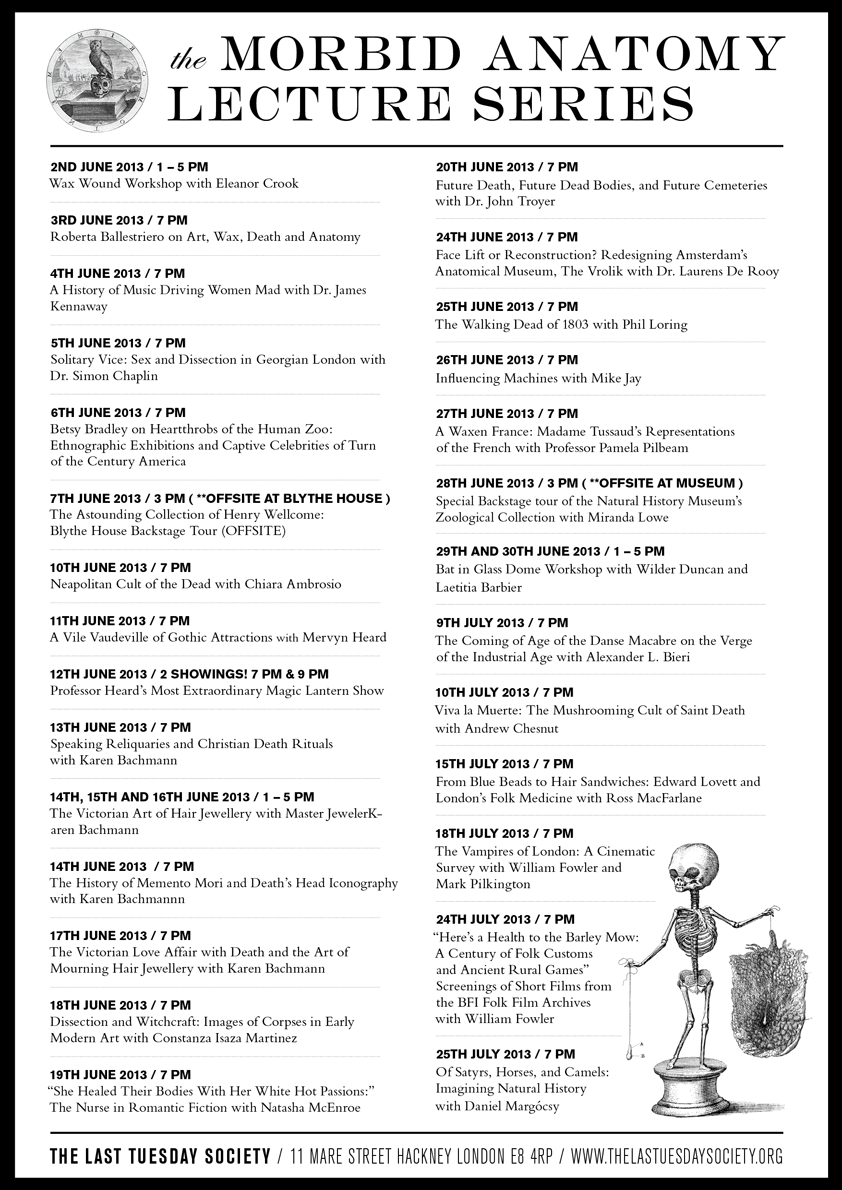
Morbid Anatomy Presents in London! This June and July at Hackney’s Last Tuesday Society

This June and July, Morbid Anatomy is delighted to announce a second series of London-based events, workshops, special tours, screenings and spectacles surveying the interstices of art and medicine, death and culture produced for Hackney's own Wunderkammer The Last Tuesday Society.

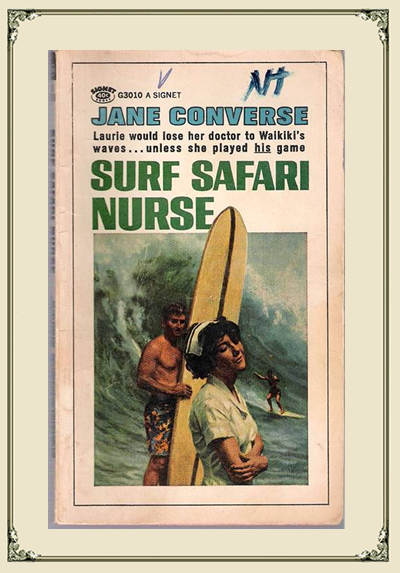
The series will feature Morbid Anatomy's signature mix of museum professionals, professors, librarians, artists, rogue scholars, and autodidacts--many flown in direct from Morbid Anatomy's base in Brooklyn, New York--to elucidate on a wide array of topics including (but not limited to!) The Neapolitan Cult of the Dead; "human zoos;" "speaking reliquaries;" why music drives women mad; eccentric folk medicine collections; Santa Muerte (or "Saint Death); dissection and masturbation; dissection and magic; Victorian memorial hair jewelry; the "hot nurse" in popular fiction; The Danse Macabre; "a cinematic survey of The Vampires of London;" and anatomical waxworks and death.

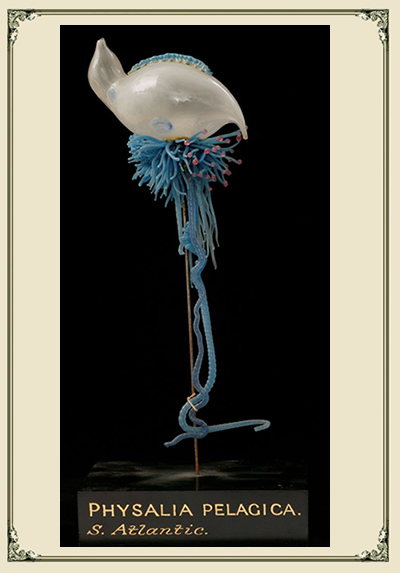
There will be also two special backstage tours: one of the legendary Blythe House, home of the vast and incredible collection of Henry Wellcome and the other of the Natural History Museum's zoological collection, featuring the famously gorgeous Blaschka invertebrate glass model collection; a special magic lantern show featuring "the weirdest, most inappropriate and completely baffling examples of lantern imagery" conjured by collector and scholar Professor Heard, author of Phantasmagoria- The Secret Life of the Magic Lantern; a screening of rare short films from the BFI National Archive documenting folk music, dance, customs and sport; and workshops in the creation of Victorian hair work, lifelike wax wounds, and bat skeletons in glass domes.

Our wide range of esteemed presenters include wax artist Eleanor Crook; Simon Chaplin and Ross Macfarlane of The Wellcome Library; James Kennaway of Oxford University; Mervyn Heard, author of Phantasmagoria-The Secret Life of the Magic Lanterns; Mike Jay, author of High Society: Mind-Altering Drugs in History and Culture; Mark Pilkington of Strange Attractor; Will Fowler of The British Film Instutute; The Florence Nightingale Museum's Natasha McEnroe; Laurens de Rooy of Amsterdam's Vrolik Anatomical Museum; The Science Museum's Phil Loring; Deputy Director of the Centre for Death and Society at the University of Bath John Troyer; Betsy Bradley, author of Knickerbocker: The Myth Behind New York; Patricia Philbeam, author of Madame Tussaud and the History of Waxwork; and CUNY's Daniel Margócsy.

The schedule as it now stands follows; there might very well be more additions as we near our launch date, so keep checking back here and here--and on this blog--for updates.
________________________________

Bubonic Plague by
workshop teacher
Eleanor Crook

Wax Wound Workshop with medical artist Eleanor Crook
2nd June 2013
1 to 5pm
Ticket price £120 - all materials included; Tickets here

Let acclaimed sculptor Eleanor Crook guide you in creating your very own wax wound. Crook has lent her experience to professionals ranging from forensic law enforcement officers to plastic surgeons, so is well placed to help you make a horrendously lifelike scar, boil or blister. More details to be confirmed shortly.

Eleanor Crook trained in sculpture at Central St Martins and the Royal Academy and makes figures and effigies in wax, carved wood and lifelike media. She has also made a special study of anatomy and has sculpted anatomical and pathological waxworks for the Gordon Museum of Pathology at Guy's Hospital, London's Science Museum, and the Royal College of Surgeons of England. She exhibits internationally in both fine art and science museum contexts. In the interest of making figures more lifelike than the living, using a generous grant from the Wellcome Trust she developed the incorporation of electronic animatronics systems into the sculptures so that her moribund and macabre creations now can twitch and mutter. She is artist in residence at the Gordon Museum of Pathology, a member of the Medical Artists' Association, runs a course in Anatomy drawing at the Royal College of Art and lectures on the M. A. Art and Science course at Central St Martins School of Art in London.

More here.
________________________________ 

Image: Wax Head by
Clemente Susini;
Copyright: University of
Cagliari, Italy

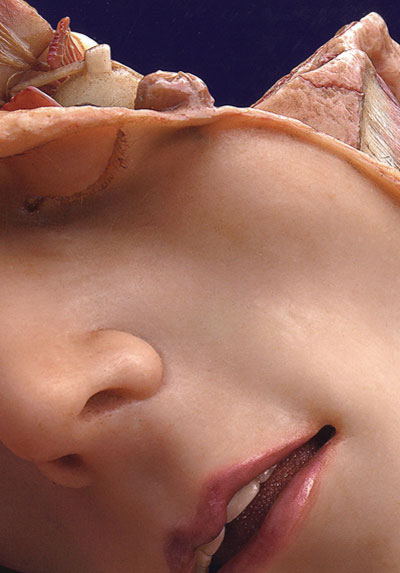
Art, Wax, Death and Anatomy : Illustrated lecture with art historian Roberta Ballestriero
3rd June 2013
Doors at 6:30 / Talk begins at 7:00 pm
Ticket price £7; Tickets here

Wax modelling, or ceroplastics, is of ancient origin but was revived in 14th century Italy with the cult of Catholic votive objects, or ex votos. With the rise of Neoclassicism this art became repulsive to artistic sensibilities; it did, however, continue to survive in a scientific environment, where it flourished in the study of normal and pathological anatomy, obstetrics, zoology and botany. Interest in anatomical wax models spread throughout Europe during the eighteenth century leading to the creation of beautiful collections where art and death harmonically cohabit. In today's illustrated lecture, Art Historian Roberta Ballestriero will discuss the art and history of wax modeling sacred and profane; she will also showcase many of i
ts greatest masterworks, such as the anatomical head by Clemente Susini (1754-1814) seen above.

Roberta Ballestriero is an associate lecturer in History of Art for the Open University, in U.K. She graduated from the Academy of Fine Arts of Venice, and had her a European PhD for the Complutense University of Madrid. Her research concerns the history of Ceroplastic and wax figures throughout the centuries, (with emphasis on the ‘body of wax’). She started her research on the art of ceroplastics in 1995 and since 2004 she has presented at numerous conferences and has published several articles on her thesis subjects.

More here.
________________________________ 

Music Driving Women Mad: The History of Medical Fears of its Effects on Female Bodies and Minds: Illustrated lecture with Dr. James Kennaway
4th June 2013
Doors at 6:30 / Talk begins at 7:00 pm
Ticket price £7; Tickets here

For many doctors since the eighteenth century, women's supposedly weak nerves made them especially vulnerable to over-stimulation, which could lead to a variety of complaints from the vapours to neurasthenia. One surprisingly common focus of these concerns was music. Over the past few centuries, countless physicians and writers have asserted that music could cause very serious medical problems for the 'weaker sex'. Not only could it bring on symptoms of nervousness and hysteria, it could also cause infertility, nymphomania and even something called 'melosexualism'. This talk will give an outline of this strange debate, using the raciest stories to be found in gynaecological textbooks.

Dr James Kennaway is a lecturer in the History of Medicine at the University of Oxford. He has previously held posts at Stanford University, the University of Vienna and the University of Durham. His book "Bad Vibrations: The History of the Idea of Music as a Cause of Disease" was published last summer.

More here.
________________________________

Solitary vice? Sex and Dissection in Georgian London Illustrated Lecture with Dr Simon Chaplin
5th June 2013
Doors at 6:30 / Talk begins at 7:00 pm
Ticket price £7; Tickets here

In his watercolour of a 'Persevering Surgeon' (see left), the British artist Thomas Rowlandson made no bones about the darkly erotic nature of anatomical dissection. Poised over the body of a naked woman, erect knife in hand, Rowlandson's anatomist conjured images of the other solitary vice that consumed later 18th century moralists and medical men. But like Rowlandson - who combined popular satirical illustration with a more discreet trade in pornographic imagery - anatomists maintained a delicate balance between personal pursuits and public propriety. In this lavishly illustrated lecture, Simon Chaplin explores the sexual undertones of the anatomy schools of Georgian London, in which students dissected grave-robbed bodies in the back-rooms of their teachers' houses, while their masters explored new strategies for presenting their work to polite audiences through museums and lectures.

Dr Simon Chaplin is Head of the Wellcome Library in London. Before joining the Wellcome he was Director of the Hunterian Museum in London, one of the world's oldest anatomy collections. His research interests include the history of anatomy, surgery and museums, and his doctoral thesis explored the relationship between dissection and display through the work of the Hunterian Museum's founder, the surgeon John Hunter (1728-1793).

More here.
________________________________

Heartthrobs of the Human Zoo: Ethnographic Exhibitions and Captive Celebrities of Turn of the Century America: An Illustrated Lecture with Betsy Bradley
6th June 2013
Doors at 6:30 / Talk begins at 7:00 pm
Ticket price £7; Tickets here

The ethnographic exhibitions that became popular in late Victorian Europe gave white visitors the chance to gaze upon entire villages of naturmenschen, temporarily imported from distant (usually colonial) lands and going about their daily lives in recreated habitats, much like their animal counterparts at the zoo. The Busby Berkeley scale of these colonial show-and-tells was designed to make a statement: instead of one displayed person, here were tribes of them, "villages negres," to quote the French. But the pointed anonymity of these living diorama could not prevent the media and the public from making stars out of their favorite "savages," particularly in the United States. From ransomed Congolese pygmies to winsome Eskimo babies, the American world's fairs and patriotic expositions  present history with a number of troubling ethnographic celebrities, and their stories offer a rare glimpse inside the psychology and culture of imperial America at the turn of a new century.

Betsy Bradley is a Brooklyn-based writer whose interests include the hidden histories of New York City and the intersection of literature, science, and American popular culture. She is the author of Knickerbocker: The Myth Behind New York, and a contributor to the Cambridge Companion to the Literature of New York, among other anthologies. She has written for Edible Manhattan, Edible Brooklyn, Bookforum, and The New York Times.  Bradley is the author of a forthcoming guidebook about New York to be published by Reaktion Books (UK) and is at work on a history of eugenics and its impact on American society, from sideshows to compulsory sterilization.

More here.
________________________________

The Astounding Collection of Henry Wellcome: Blythe House Backstage Tour with Selina Hurley, Assistant Curator of Medicine, The Science Museum
7th June 2013
This event is limited to only 15 participants and will begin at 15:00 at Blythe House, 23 Blythe Road, West Kensington
Ticket price £20; Tickets here

Henry Wellcome (1853 – 1936)----early pharmaceutical magnate and man behind the Wellcome Trust, Collection, and Library--was the William Randolph Hearst of the medical collecting world. Upon his death, he had collected over one million objects--many still in unopened crates in far-flung warehouses--related in the broadest sense to the history of medicine. His curators reduced that number by around to around 100,000 keeping only the very best. That collection, possibly the finest medical collection in the world, now resides in Blythe House, kept in trust by The Science Museum on permanent loan from the Wellcome Trust.

Today, a lucky fifteen people will get a rare chance to see this collection, featuring many artifacts of which have never before been on public view, in this backstage tour led Selina Hurley, Assistant Curator of Medicine at The Science Museum.

More here.
________________________________

Neapolitan Cult of the Dead with Chiara Ambrosio
10th June 2013
Doors at 6:30 / Talk begins at 7:00 pm
Ticket price £7; Tickets here

.. Naples, the most macabre of cities. Naples, the mouth of Hades. The dead are played with there like big dolls...
--The Necrophiliac, Gabrielle Wittkop

Naples is a unique city in which the sacred and the profane, Catholicism and paganism, beauty and decay blend and contrast in intriguing ways. No practice illustrates this tangle of ideas better than what is known as "The Neapolitan Cult of the Dead" in which devout Catholics--generally poor women--adopt anonymous skulls found in charnel houses and clean, care for, and sometimes house them, offering up prayers and offerings to shorten that soul's time in purgatory before reaching paradise, where, it is hoped, it will assist its earthbound caretaker with special favors. The macabre artifacts of this cult can be seen in the Cimitero delle Fontanelle (see above) and the crypt of the church of Saint Mary of Purgatory.

In tonight's illustrated lecture, Italian artist and filmmaker Chiara Ambrosio will elucidate this curious and fascinating "Neapolitan Cult of the Dead" and situate it within a the rich death culture and storied history of Naples.

Chiara Ambrosio is a visual artist working with video and animation. Her work has included collaborations with performance artists, composers, musicians and writers, and has been shown in a number of venues including national and international film festivals, galleries and site specific events. She also runs The Light and Shadow Salon is a place for artists, writers and audience to meet and share ideas about the past, present and future of the moving image in all its forms.

More here.
________________________________

I am Amazed and Know Not What to Say! - A Vile Vaudeville of Gothic Attractions: Illustrated lecture by Mervyn Heard, author of Phantasmagoria- The Secret Life of the Magic Lantern
11th June 2013
Doors at 6:30 / Talk begins at 7:00 pm
Ticket price £7; Tickets here

An illustrated talk in which writer and showman ‘Professor’ Mervyn Heard waxes scattergun- sentimental over some of the more bizarre, live theatrical experiences of the 18th, 19th and early 20th century – from the various ghastly manifestations of the phantasmagoria to performing hangmen, self-crucifiers and starving brides.

Mervyn Heard is the author of Phantasmagoria- The Secret Life of the Magic Lantern (2006), was responsible for designing the phantasmagoria intallation for the Tate Britain’s Gothic Nightmare (2006), and has staged bespoke magic lantern performances worldwide in playhouses, cinemas, department stores, museums, tents and dissecting theatres.

More here.
________________________________

Professor Heard's Most Extraordinary Magic Lantern Show with Mervyn Heard
12th June 2013
First performance begins at 7pm
Second performance begins at 9pm
Ticket price £10; Tickets here

Professor Heard is well known to patrons of the Last Tuesday Lecture programme for his sell-out magic lantern entertainments. In this latest assault on the eye he summons up some of the weirdest, most inappropriate and completely baffling examples of lantern imagery, lantern stories and optical effects by special request of Morbid Anatomy. These he will present on a magnificent mahogany and brass magic lantern projector perfectly suited for the purpose.

Mervyn Heard is the author of Phantasmagoria-The Secret Life of the Magic Lantern (2006), was responsible for designing the phantasmagoria installation for the Tate Britain’s Gothic Nightmare (2006), and has staged bespoke magic lantern performances worldwide in playhouses, cinemas, department stores, museums, tents and dissecting theatres.

More here.
________________________________

"Speaking Reliquaries" and Christian Death Rituals: Part One of "Hairy Secrets" Series With Karen Bachmann
13th June 2013
Doors at 6:30 / Talk begins at 7:00 pm
Ticket price £7; Tickets here

In this 3-part series on human relics and Victorian mourning jewelry--master jeweler and art historian Karen Bachmann will focus on what are termed "speaking" reliquaries: the often elaborate containers which house the preserved body parts--or relics--of saints and martyrs with shapes which reflect that of the body-part contained within. Bachmann will examine these fascinating objects from an art historical perspective, and discuss their relationship to concepts of human body parts as icons of the immortal. They will be put into the larger context of Christian death rituals, in particular the veneration of saints body parts as sacred and magical relics. Also discussed will be the
extremely odd proclivities of a variety of renaissance saints, such as Catherine of Sienna who drank pus from open sores. This will serve as the genesis in our further discussions of human hair, teeth, and nails as icons of the immortal.

Karen Bachmann is a fine jeweler with over 25 years experience, including several years on staff as a master jeweler at Tiffany and Co. She is a Professor in the Jewelry Design Dept at Fashion Institute of Technology as well as the School of Art and Design at Pratt Institute. She has recently completed her MA in Art History at SUNY Purchase with a thesis entitled “Hairy Secrets; Human Relic as Memory Object in Victorian Mourning Jewelry”. In her downtime she enjoys collecting biological specimens, amateur taxidermy and punk rock.

More here.
________________________________

Hair Art Workshop Class: The Victorian Art of Hair Jewellery With Karen Bachmann
14th, 15th, and 16th June 2013 from 1 - 5pm
Ticket price £50; Tickets here (14th June), here (15th June), and here (16th June)

Hair jewellery was an enormously popular form of commemorative art that began in the late 17th century and reached its zenith during the Victorian Era. Hair, either of someone living or deceased, was encased in metal lockers or woven to enshrine the human relic of a loved one. This class will explore a modern take on the genre. The technique of "palette working" or arranging hair in artful swoops and curls will be explored and a variety of ribbons, beads, wire and imagery of mourning iconography will be supplied for potential inclusion. A living or deceased person or pet may be commemorated in this manner. Students are requested to bring with them to class their own hair, fur, or feathers; all other necessary materials will be supplied. Hair can be self-cut, sourced from barber shops or hair salons (who are usually happy to provide you with swept up hair), from beauty supply shops (hair is sold as extensions), or from wig suppliers. Students will leave class with their own piece of hair jewelry and the knowledge to create future projects. 

More here.
________________________________

The History of the Memento Mori and Death's Head Iconography: Part Two of "Hairy Secrets" Series: Illustrated lecture with Art Historian and Master Jeweler Karen Bachmann
14th June 2013
Doors at 6:30 / Talk begins at 7:00 pm
Ticket price £7; Tickets here

In tonight's lecture--the second in a 3-part series on human relics and Victorian mourning jewelry--master jeweler and art historian Karen Bachmann will explore the development of the memento mori,objects whose very raison d'être is to remind the beholder that they, too, will die. Bachman will trace the symbolism and iconography of the memento mori and death's head imagery in both Medieval and Renaissance art, focusing on jewelry. She will also discuss the development of the "portable relic" -- a wearable form of body part reliquary, will be the focus of this lecture. The importance of hair in contemporaneous art of the period will be addressed, as well as the development of bereavement jewelry with hair.

More here
________________________________

The Victorian Love Affair with Death and the Art of Mourning Hair Jewelry and Part Three of “Hairy Secrets” Series: Illustrated lecture with Art Historian and Master Jeweler Karen Bachmann
17th June 2013
Doors at 6:30 / Talk begins at 7:00 pm
Ticket price £7; Tickets here

The Victorians had a love affair with death which they expressed in a variety of ways, both intensely sentimental and macabre. Tonight’s lecture–the last in a 3-part series on human relics and Victorian mourning jewelry–will take as its focus the apex of the phenomenon of hair jewelry fashion in the Victorian Era as an expression of this passion. Nineteenth century mourning rituals will be discussed, with a particular focus on Victorian hairwork jewelry, both palette worked and table worked. Also discussed will be the historical roots of the Victorian fascination with death, such as high mortality rates for both adults and children, the rise of the park cemetery, and the death of Queen Victoria’s beloved Prince Albert and her subsequent fashion-influencing 40-year mourning period. Historical samples of hair art and jewelry from the lecturer’s personal collection will also be shown.

More here.
________________________________

Dissection and Magic with Constanza Isaza Martinez
18th June 2013
Doors at 6:30 / Talk begins at 7:00 pm
Ticket price £7; Tickets here

This lecture examines images of human corpses in Early Modern European art in relation to two specific themes: the practice of ‘witchcraft’ or ‘magic’; and the emergent medical profession, particularly anatomical dissection. As the images demonstrate, the two practices were closely linked during this period, and the corpses were a source - albeit fraught with anxieties - of power and knowledge for the figures of the witch and the anatomist.

Constanza Isaza Martinez is an artist, photographer, and independent researcher. She gained her BA in Photographic Arts from the University of Westminster, and her MA in History of Art from the Courtauld Institute. Both her art and her research have frequently explored themes of mortality, mutability, death, and decay. For more information, please visit http://www.constanzaisaza.com.

More here.
________________________________

‘She Healed Thei
r Bodies With Her White Hot Passions’: The Role of the Nurse in Romantic Fiction with Natasha McEnroe: Illustrated lecture Natasha McEnroe, Director of the Florence Nightingale Museum

19th June 2013
Doors at 6:30 / Talk begins at 7:00 pm
Ticket price £7; Tickets here

“She stood by, handing him the required instruments while he stitched up an ice-pick stabbing that had by some miracle barely missed a woman’s heart. She heard the woman’s thick voice as she went under the anaesthetic: ‘My man didn’t really mean to hurt me, Doc. He was just mad account of I didn’t have him a meat supper when he got home from work.’” [Society Nurse, 1962].

Under such dramatic circumstances, it is no wonder that passion flares between the beautiful young nurse and her handsome doctor colleague. The figure of the nurse in romance fiction is a powerful one, her starched white apron covering a breast heaving with suppressed emotion. Victorian portrayals of the nurse show either a drunken and dishonest old woman or an angelic and devoted being, which changes to a 20th-century caricature just as pervasive – that of the ‘sexy nurse’. In this talk, Natasha McEnroe will explore the links between the enforced intimacy of the sickroom and the handling of bodies for more recreational reasons.

Natasha McEnroe is the Director of the Florence Nightingale Museum. Her previous post was Museum Manager of the Grant Museum of Zoology and Comparative Anatomy and Curator of the Galton Collection at University College London. From 1997 – 2007, she was Curator of Dr Johnson’s House in London’s Fleet Street, and has also worked for the National Trust and the Victoria and Albert Museum. Natasha has lectured widely at venues including the Royal Society, the British Museum and the Hunterian Museum.

More here.
________________________________

Future Death. Future Dead Bodies. Future Cemeteries: Illustrated lecture by Dr. John Troyer, Deputy Director of the Centre for Death and Society at the University of Bath
20th June 2013
Doors at 6:30 / Talk begins at 7:00 pm
Ticket price £7; Tickets here

Approximately 1500 people die every day across the United Kingdom, roughly one person a minute. And unless you are a person who works in a profession connected to the dying, chances are good you rarely (if ever) see any of these 1500 dead bodies. More importantly-- do you and your next of kin know what you want done with your dead body when you die? In the future, of course, since it's easier to think that way. Dr. John Troyer, from the Centre for Death & Society, University of Bath, will discuss three kinds of postmortem futures: Future Death, Future Dead Bodies, and Future Cemeteries. Central to these Futures is the human corpse and its use in new forms of body disposal technology, digital technology platforms, and definitions of death.

Dr. John Troyer is the Deputy Director of the Centre for Death and Society at the University of Bath. His interdisciplinary research focuses on contemporary memorialisation practices, concepts of spatial historiography, and the dead body?s relationship with technology. Dr. Troyer is also a theatre director and installation artist with extensive experience in site-specific performance across the United States and Europe. He is a co-founder of the Death Reference Desk website and a frequent commentator for the BBC. His forthcoming book, Technologies of the Human Corpse (published by the University of North Carolina Press), will appear in 2013.

More here.
________________________________

Face lift or face reconstruction? Redesigning the Museum Vrolik, Amsterdam's anatomical museum: An illustrated lecture with Dr. Laurens de Rooy, curator of the Museum Vrolik in Amsterdam
24th June 2013
Doors at 6:30 / Talk begins at 7:00 pm
Ticket price £7; Tickets here

Copies of the book Forces of Form: The Vrolik Museum will be available for sale and signing.

Two skeletons of dwarfs, rare Siamese twins, cyclops and sirens, dozens of pathologically deformed bones, the giant skull of a grown man with hydrocephalus, the skeleton of the lion once owned by king Louis Napoleon, as well as the organs of a babirusa, Tasmanian devil and tree kangaroo – rare animals that died in the Amsterdam zoo ‘Artis’ shortly before their dissection. Counting more than five thousand preparations and specimens, the Museum Vrolikianum, the private collection of father Gerard (1775-1859) and his son Willem Vrolik (1801-1863), was an amazing object of interest one hundred and fifty years ago. In the 1840s and 50s this museum, established in Gerard’s stately mansion on the river Amstel, grew into a famous collection that attracted admiring scientists from both the Netherlands and abroad. After the Vrolik era, the museum was expanded with new collections by succeeding anatomists and the museum now houses more than 10,000 anatomical specimens.

Since 1984, the museum has been located in the academic Hospital of the University of Amsterdam. In 2009 the museum collections were portrayed by the photographer Hans van den Bogaard for the book Forces of Form. This book was the starting point for the creation of a new 'aesthetic' of the museum and its collection, eventually resulting in the grand reopening of the renovated and redesigned permanent exhibition in September 2012. For the first time since the death of father and son Vrolik, all of their scientific interests - the animal anatomy, the congenital malformations and the pathologically deformed human skeletons can all be viewed together, thus giving an impression of what that mid-19th century anatomy was all about. In this talk, Museum Vrolik curator will take you on a guided tour of the new museum, and give an overview of all the other aspects of the 'new' Museum Vrolik.

Dr. Laurens de Rooy (b. 1974) works as a curator of the Museum Vrolik in the Academic Medical Centre in Amsterdam. He studied Medical Biology, specializing in the history of science and museology. during his internship he researched the collection of father and son Vrolik. In 2009 he obtained his PhD in medical history.

More here.
________________________________

The Walking Dead in 1803: An Illustrated Lecture with Phil Loring,
Curator of Psychology at the Science Museum in London

25th June 2013
Doors at 6:30 / Talk begins at 7:00 pm
Ticket price £7; Tickets here

A visiting Italian startled Londoners at the turn of the 19th century by making decapitated animals and executed men open their eyes and move around, as if on the verge of being restored to life. This was not magic but the power of electricity from the newly invented Galvanic trough, or battery. It was also the dawn of the modern neurosciences, as the thrust behind these macabre experiments was to understand the energy that moved through the nerves and linked our wills to our bodies. This talk will discuss a variety of historical instruments from the Science Museum's collections that figured in these re-animation experiments, including the apparatus used by Galvani himself in his laboratory in Bologna. This will be a partial preview of an upcoming Science Museum exhibition on nerve activity, to open in December 2013.

Phil Loring is BPS Curator of Psychology at the Science Museum in London. He has a Master's degree in Medical Anthropology from Harvard University and is currently completing his Ph.D. in the History of Science, also from Harvard, with a dissertation on psycho-linguists in Cambridge, Massachusetts, after the Second World War. Phil has been at the Science Museum since 2009, and during that time he has been particularly committed to sharing artefacts related to psychology and psychiatry with adult audiences. He's currently preparing an exhibition on the history of nerves, to open in December 2013.

More here

________________________________

The Influencing Machine: James Tilly Matthews and the Air Loom with Mike Jay
26th June 2013
Doors at 6:30 / Talk begins at 7:00 pm
Ticket price £7; Tickets here

Confined in Bedlam in 1797 as an incurable lunatic, James Tilly Matthews’ case is one of the most bizarre in the annals of psychiatry. He was the first person to insist that his mind was being controlled by a machine: the Air Loom, a terrifying secret weapon whose mesmeric rays and mysterious gases were brainwashing politicians and plunging Europe into revolution, terror and war. But Matthews’ case was even stranger than his doctors realised: many of the incredible conspiracies in which he claimed to be involved were entirely real. Caught up in high-level diplomatic intrigues in the chaos of the French revolution, he found himself betrayed by both sides, and in possession of a secret that no-one would believe…

Mike Jay is an author, historian and curator who has written widely on the history of science and medicine, and particularly on drugs and madness. As well as The Influencing Machine, he is the author of Emperors of Dreams: Drugs in the Nineteenth Century and High Society: Mind-Altering Drugs in History and Culture, which accompanied the exhibition he curated at Wellcome Collection.

More here.
________________________________

A Waxen France: Madame Tussaud’s Representations of the French: Illustrated Lecture by Pamela Pilbeam  Emeritus Professor of French History, Royal Holloway, University of London and author of Madame Tussaud and the History of Waxworks
27th June 2013
Doors at 6:30 / Talk begins at 7:00 pm
Ticket price £7; Tickets here

`You perceive that this is some sort of holy of holiest, the nearest Victorians got to a Cathedral, with its saints enniched within’. The chief saint in Madame Tussaud’s exhibition was Bonaparte, the chief villains were Robespierre and his revolutionary colleagues. When she arrived in Britain in 1802 for a short tour that lasted until she died in 1850, her exhibition was an exploration of the evils of the French Revolution. She had modelled the guillotined revolutionaries, as well as Louis XVI and Marie-Antoinette, from their severed heads- and brought a model of a guillotine and the Bastille fortress to expose the short comings of the French. The British, busily at war with their nearest neighbour, loved this critical exposure. Later the focus of her collection became her `Shrine to Napoleon’ consisted of two rooms dedicated to the Emperor. Napoleon had always had a leading role in her touring company, but in 1834, when she was a well-established figure in the world of entertainment and about to open a permanent museum in Baker Street, Madame. Tussaud began to amass large quantities of Napoleonic memorabilia. She built up a collection which Napoleon III acknowledged, when he tried abortively to buy it from the Tussauds, to be the best in the world. Madame Tussaud’s presentation of French politics and history did much to inform and influence the popular perception of France among the British. This paper will explore that view and how it changed during the nineteenth century.

Pamela Pilbeam is Emeritus Professor of French History, Royal Holloway, University of London.   She is the author of Madame Tussaud and the History of Waxworks.

More here.
________________________________

© The Natural History Museum,
London 2012. All Rights Reserved.

Backstage Tour of the Zoological Collection of the Natural History Museum with Miranda Lowe
28th June 2013
Limited to 10 participants; Time 3:00 - 4:00
Ticket price £20; Tickets here

Today, ten lucky people will get to join Miranda Lowe, Collections Manager of the Aquatic Invertebrates Division, for a special backstage tour of The Natural History Museum of London. The tour will showcase the zoological spirit collections in the Darwin Centre, some of Darwin??
?s barnacles and the famed collection of glass marine invertebrate models crafted by Leopold and Rudolf Blaschka in the 19th and early 20th century.

Miranda Lowe is the Collections Manager of the Aquatic Invertebrates Division, Life Sciences Department, The Natural History Museum (NHM), London. Within Zoology Miranda specifically manages the Crustacea collections as well as the team of curators responsible for the Invertebrate collections. Darwin barnacles and the Blaschka marine invertebrate glass models are amongst some of the historical collections that are her interests and under her care. In 2006, she was part of the organising committee and invited speaker at the 1st international Blaschka congress held in Dublin. Miranda collaborated with the National Glass Centre, Sunderland, UK in 2008 to exhibit some of the Museum’s Blaschka collection alongside contemporary Blaschka inspired art. She also has an interest in photography, natural history - past and present serving on a number of committees including the Society for the History of Natural History (SHNH) and the Natural Sciences Association (NatSCA).

More here
________________________________ 

Bat in Glass Dome Workshop: Part of DIY Wunderkammer Series : With Wilder Duncan (formerly of Evolution Store, Soho) and Laetitia Barbier, head librarian at The Morbid Anatomy Library
29th June and 30th June 2013, 1 to 5pm
Ticket price £200; Tickets here (29th) and here (30th)

In this class, students will learn how to create an osteological preparation of a bat in the fashion of 19th century zoological displays. A bat skeleton, a glass dome, branches, glue, tools, and all necessary materials will be provided for each student, but one should feel welcome to bring small feathers, stones, dried flowers, dead insects, natural elements, or any other materials s/he might wish to include in his/her composition. Students will leave the class with a visually striking, fully articulated, “lifelike” bat skeleton posed in a 10” tall glass dome. This piece can, in conjunction with the other creations in the DIY Wunderkammer workshop series, act as the beginning of a genuine collection of curiosities! This class is part of the DIY Wunderkammer workshop series, curated by Laetitia Barbier and Wilder Duncan for Morbid Anatomy as a creative and pluridisciplinary exploration of the Curiosity Cabinet. The classes will focus on teaching ancient methods of specimen preparation that link science with art: students will create compositions involving natural elements and, according to their taste, will compose a traditional Victorian environment or a modern display. More on the series can be found here.

Wilder Duncan is an artist whose work puts a modern-day spin on the genre of Vanitas still life. Although formally trained as a realist painter at Wesleyan University, he has had a lifelong passion for, and interest in, natural history. Self-taught rogue taxidermist and professional specimen preparator, Wilder worked for several years at The Evolution Store creating, repairing, and restoring objects of natural historical interest such as taxidermy, fossils, seashells, minerals, insects, tribal sculptures, and articulated skeletons both animal and human. Wilder continues to do work for private collectors, giving a new life to old mounts, and new smiles to toothless skulls.

Laetitia Barbier is the head librarian at The Morbid Anatomy Library. She is working on a master’s thesis for the Paris Sorbonne on painter Joe Coleman. She writes for Atlas Obscura and Morbid Anatomy.

More here (29th) and here (30th).
________________________________ 

The Coming of Age of the Danse Macabre on the Verge of the Industrial Age: Illustrated lecture with Alexander L. Bieri
9th July 2013
Doors at 6:30 / Talk begins at 7:00 pm
Ticket price £7; Tickets here

During the middle ages, the danse macabre developed into an independent art form, most often in the shape of murals which adorned the walls of cemeteries. These depictions of death followed a strict rulebook and generally were a representation of the class system of the time, which was based on nobility or – to be more precise – the estate-based society. The advent of the bourgeois during the 1700s and the upcoming industrialisation put a question mark not only behind the societal system, but quite naturally also behind many of the established art forms. The danse macabre was widely regarded to be an outdated concept and a discussion evolved whether the skeleton still was the appropriate epitome for death. One of the proponents of this discussion was the Swiss artist Johann Rudolf Schellenberg, who created the first modern danse macabre in 1785, far away from the old class system, a work of art which still has an uncanny actuality and addresses many of the modern fears still extant in society at present. His trailblazing work updated the genre overnight and can be seen as the master source of all similar works of art to follow. A complete set of the plates is held by the Roche Historical Collection and Archive in Basel, which also holds one of the world’s oldest anatomical collections. The lecture not only discusses Schellenberg’s danse macabre in detail, but also gives an insight into the current fascination with vanitas and its depictions, especially focusing on the artistic exploitation of the theme and takes into consideration the history of anatomical dissection and preparation.

Alexander L. Bieri (*1976) is the curator of the Roche Historical Collection and Archive, a department within Roche Group Holdings. He assumes this position since 1999. Based in Basel, Switzerland but active as a consultant throughout the world, he has published many books and articles both on Roche-related and other themes. He also is responsible for a variety of Roche in-house museums and curated special exhibitions in Switzerland and abroad. In his capacity as an expert for 20th century architecture and design, he is a member of ICOMOS. In 2012, he was appointed lecturer for exhibition design at the Basel University.

More here.
________________________________ 

Photo courtesy of
Tonya Hurley

Viva la Muerte: The Mushr
ooming Cult of Saint Death": Illustrated lecture and book signing with Andrew Chesnut

10th July 2013
Doors at 6:30 / Talk begins at 7:00 pm
Ticket price £7; Tickets here

The worship of Santa Muerte, a psuedo Catholic saint which takes the form of a personified and clothed lady death, is on the rise and increasingly controversial in Mexico and the United States. Literally translating to “Holy Death” or “Saint Death,” the worship of Santa Muerte–like Day of the Dead–is a popular form of religious expression rooted in a rich syncretism of the beliefs of the native Latin Americans and the colonizing Spanish Catholics. Worshippers of "The Bony Lady" include the very poor, prostitutes, drug dealers, transvestites, prison inmates and others for whom traditional religion has not served, and for whom the possibility of unpredictable and violent death is a very real part of everyday life. In the view of her worshippers, Santa Muerte is simply a branch of Catholicism which takes at its central figure the most powerful of all saints--Saint Death herself, the saint all must, after all, one day answer to.The Catholic Church sees it, however, as, at best, inadvertent devil worship, with the worship of death--and the manifestation of a saint from a concept rather than an individual--as heretical to its core tenants. Tonight, R. Andrew Chesnut, author of Devoted to Death: Santa Muerte, the Skeleton Saint and Chair in Catholic Studies at Virginia Commonwealth University, will detail his research into the history and ongoing development of this fascinating "new religion."

Copies of Devoted to Death: Santa Muerte, the Skeleton Sain will be available for sale and signing.

Dr. R. Andrew Chesnut earned his Ph.D degree in Latin American History from the University of California, Los Angeles in 1995 and joined the History Department faculty at the University of Houston in 1997 where he quickly became an internationally recognized expert on Latin American religious history. His most recent book is Devoted to Death: Santa Muerte, the Skeleton Saint (Oxford University Press, 2012). It is the first in-depth study of the Mexican folk saint in English.

More here
________________________________

From Blue Beads to Hair Sandwiches: Edward Lovett and London's Folk Medicine: An Illustrated lecture with Ross MacFarlane, Research Engagement Officer in the Wellcome Library
15th July 2013
Doors at 6:30 / Talk begins at 7:00 pm
Ticket price £7; Tickets here

During his life Edward Lovett (1852-1933) amassed one of the largest collections of objects pertaining to 'folk medicine' in the British Isles.  Lovett particularly focused his attention on objects derived from contemporary, working class Londoners, believing that the amulets, charms and mascots he collected - and which were still being used in 20th century London - were 'survivals' of antiquated, rural practices. Lovett, however, was a marginal figure in folklore circles, never attaining the same degree of influence as many of his peers.  Whilst he hoped in his lifetime to establish a 'National Museum of Folklore', Lovett's sizeable collection is now widely dispersed across many museums in the UK, including Wellcome Collection, the Science Museum, the Pitt Rivers Museum and the Cuming Museum.  This paper will offer an overview of the range of healing objects Lovett collected, the collecting practices he performed and recent efforts to rehabilitate his reputation.

Ross MacFarlane is Research Engagement Officer in the Wellcome Library, where he is heavily involved in promoting the Library's collections, particularly to academic audiences.  He has researched and given public talks on such topics as the history of early recorded sound and the collecting activities of Henry Wellcome and his members of staff.  Ross is a frequent contributor to the Wellcome Library's blog and has had led guided walks around London on the occult past of Bloomsbury and the intersection of medicine, science and trade in Greenwich and Deptford.

More here.
________________________________

The Vampires of London: A Cinematic Survey with William Fowler (BFI) and Mark Pilkington (Strange Attractor)
18th July 2013
Doors at 6:30 / Talk begins at 7:00 pm
Ticket price £7; Tickets here

This heavily illustrated presentation and film clip selection explores London's Highgate Cemetery as a locus of horror in the 1960s and 1970s cinema, from mondo and exploitation to classic Hammer horror.

William Fowler is curator of artists' moving image at the BFI National Archive and co-programmes the cult cinema strand at Flipside at BFI Southbank.

Mark Pilkington runs Strange Attractor Press and is the author of 'Mirage Men' and 'Far Out: 101 Strange Tales from Science's Outer Edge'. 

More here
________________________________

"Here's a Health to the Barley Mow: a Century of Folk Customs and Ancient Rural Games" Screenings of Short Films from the BFI Folk Film Archives with William Fowler
24th July 2013
Doors at 6:30 / Talk begins at 7:00 pm
Ticket price £7; Tickets here

Tonight, the British Film Institute's William Fowler will present a number of rare and beautiful short films from the BFI National Archive and Regional Film Archives showing some of our rich traditions of folk music, dance, customs and sport. Highlights include the alcoholic folk musical Here's a Health to the Barley Mow (1955), Doc Rowe’s speedy sword dancing film and the Padstow Mayday celebration Oss Oss Wee Oss (Alan Lomax/Peter Kennedy 1953).

The programme provides a taste of the BFI's 6-hour DVD release 'Here's a Health to the Barley Mow: a Century of Folk Customs and Ancient Rural Games', a rich and wide-ranging collection of archive films from around the UK.

William Fowler is curator of artists' moving image at the BFI National Archive and co-programmes the cult cinema strand at Flipside at BFI Southbank.

More here.
________________________________

Of Satyrs, Horses and Camels: Natural History in the Imaginative Mode: illustrated lecture by Daniel Margócsy, Hunter College, New York
25th July 2013
Doors at 6:30 / Talk begins at 7:00 pm
Ticket price £7; Tickets here

This talk argues that the creative imagination played a crucial role in the development of science during the scientific revolution. Modern, natural knowledge emerged from the interaction of painters, printmakers, artisans, cartographers, and natural historians. All these practitioners carefully observed, pictured and cataloged all the exotic naturalia that flooded Europe during the Columbian exchange. Yet their collaboration did not end there. They also engaged in a joint, conjectural guesswork as to what other, as yet unknown plants and animals might hide in the forests of New England, the archipelago of the Caribbean, the unfathomable depths of the Northern Sea, or even in the cavernous mountains of the Moon. From its beginnings, science was (and still is) an imaginative and speculative enterprise, just like the arts. This talk traces the exchange of visual information between the major artists of the Renaissance and the leading natural historians of the scientific revolution. It shows how painters’ and printmakers’ fictitious images of unicorns, camels and monkfish came to populate the botanical and zoological encyclopedias of early modern Europe. The leading naturalists of the age, including Conrad Gesner, Carolus Clusius and John Jonstonus, constantly consulted the oeuvre of Dürer, Rubens and Hendrick Goltzius, among others, as an inspiration to hypothesize how unknown, and unseen, plants and animals might look like.

Daniel Margocsy is assistant professor of history at Hunter College – CUNY. In 2012/3, he is the Birkelund Fellow of the New York Public Library’s Cullman Center for Scholars and Writers. He has co-edited States of Secrecy, a special issue of the British Journal for the History of Science on scientific secrecy, and published articles in the Journal of the History of Ideas, Annals of Science, and the Netherlands Yearbook of Art History.

More here.
________________________________ 

All talks and workshops take place at The Last Tuesday Society at 11 Mare Street, London, E8 4RP map here) unless otherwise specified; please click here to buy tickets. More on all events can be found here. Click on images to see larger versions.Source:
http://morbidanatomy.blogspot.com/2013/03/morbid-anatomy-presents-in-london-this_30.html

Finally! A Novel Based on 17th-century Sicilian Wax Modeler Gaetano Giulio Zumbo: "Secrecy," by Rupert Thomson


I seriously cannot wait to read Rupert Thomson's new novel Secrecy, which takes as muse the enigmatic work and mysterious life of one of my all time favorite artists, the 17th-century Sicilian abbot Gaetano Giulio Zummo aka Zumbo (1656 – 1701). It also seems to be a good book, or so at least asserts the review in The Guardian, which describes it as "a visionary tale of waxworks and court intrigue set in a sinister and baroque Florence" and mentions its author in same breath as JG Ballard, Dickens and Buñuel.
Zumbo--whom regular readers might remember from from these recent posts [1, 2]--was a fascinating character; before grandfathering the practice of anatomical waxes (see bottom image), he was already renowned for his obsessive, miniature wax memento mori-themed dioramas he called “Theatres of Death.” These tiny dioramas--featuring meticulously rendered representations of dead, decomposing and tortured human bodies and bearing titles such as “The Plague” (top image), “The Triumph of Time” (second image) “The Transience of Human Glory” (third image) and “Syphilis” (fourth image)--attracted the notice of such luminaries as the Marquis de Sade, Lord Byron and the Grand Duke of Tuscany Cosimo III. They also brought the attention of French surgeon Guillaume Desnoues, who commissioned Zumbo to create a wax simulacrum of a decaying medical preparation in what was to become the first wax anatomical teaching model.

The Financial Times has just run a really fascinating piece by the author in which he muses on his initiation into the wonders of anatomical waxes, details his discovery of Zumbo's work, and describes how he managed to research such an under-documented character and develop this research into a novel. 

Following is a short excerpt from this article; you can read it in its entirety--which I highly recommend!--by clicking here:

Fugitive pieces
By Rupert Thomson
How the macabre works of Gaetano Giulio Zumbo, a mysterious 17th-century Sicilian wax modeller, inspired Rupert Thomson’s new novel ‘Secrecy’

 
...Driving back to England two months later, I stopped in Florence. Opened in 1775, La Specola is the oldest scientific museum in Europe, and the first 24 rooms are filled with extraordinary zoological specimens. There is a 17th-century hippopotamus that the Grand Duke used to keep in the Boboli Gardens. For some reason, the taxidermist had given the hippopotamus what appeared to be the feet of a dog. There is also a manatee, and a basilisk in a jar. In the two months since the birth of my daughter I’d had little sleep, and I was so deeply tired that I felt at times as if I were hallucinating. I hurried on, eager to see the waxes Jan had spoken of. All I remember from that day is walking into a room that was dominated by three hip-high glass cases. Each case contained a life-size woman made of wax. They were naked except for delicate pearl necklaces, and their heads rested on satin pillows. They had real human hair, and eyes of coloured Venetian glass. Their skin, a sallow golden-yellow, gleamed as if they had just broken out in a light sweat. Though I knew nothing of their provenance or their purpose, they seemed distinctly ambiguous, walking a fine line between the medical and the erotic. I came away from La Specola fascinated by wax as a medium; the way it mimicked human flesh – in his Natural History, Pliny calls it “extreme resemblance” – was uncanny, disquieting.

Towards the end of that year, I went to the Spectacular Bodies exhibition at the Hayward Gallery in London. I still have the page of scribbled notes I made that day. Though I recorded the names of several wax artists – among them Joseph Towne, Anna Morandi, Petrus Koning and Clemente Susini (who had made the three women in La Specola) – almost a quarter of my notes related to Gaetano Giulio Zumbo, whose “Dissection of a Head” was on display, and who was described in the catalogue as an “eccentric Sicilian wax-modeller”. I learnt that several of Zumbo’s most important works were kept in La Specola, and felt stupid for not having noticed them in March. As I left the Hayward, I resolved to learn more.

I quickly discovered that Zumbo is perhaps most celebrated for his plague pieces, which are wooden cabinets – or teatrini – that are filled with the macabre yet oddly tactile bodies of the dead and dying. When I first saw them, as photographs, I was reminded of nativities – though their subject is obviously human not divine, death not birth. Zumbo’s figures sprawl on a rubble of broken tombs and scattered bones, and their flesh is green, yellow, brown or black, depending on the degree of decomposition. The detail is intricate, obsessive – rats tug at entrails, eyeballs are festooned with maggots – so much so that art historians suspect Zumbo of using a magnifying glass when he was modelling; there is a secret, hidden element to the work, just as there was in society, knowledge being the prerogative of the few in those pre-Enlightenment days. Each tableau Zumbo made contrives to be both rich and desolate, and each has a painted backdrop – one of his innovations – which affords the dying a “view” of the landscape beyond the grotto, a last glimpse of the world they are about to leave. Though most of the figures would fit on the palm of your hand, they look more like individuals than specimens, and have an unnerving flamboyance or sensuality that borders on exhibitionism.

Jorge Luis Borges once said that great art always has a certain ambiguity about it. Here, in that case, was great art. Here, also, was a conundrum. And, as a writer, that is precisely where a novel begins for me. Something seems to open out in front of me, something I feel driven to explore, and the only tools I have are sentence...

... By the late 17th century, the glories of the Renaissance were long gone. Florence had entered a profound economic slump – it was an age of austerity, not unlike our own – and the mood was neurotic, disapproving and suspicious. In order to survive, you had to dissimulate, cultivating a gap between your thoughts and actions. During his travels Zumbo may have come to see himself as an outsider but in Florence he was definitely a foreigner as well, and the graphic, gruesome nature of his plague pieces, which teetered on the brink of horror, would also have marked him out as an oddity. To Cosimo III, famously morbid, Zumbo’s work spoke of the transience of life – it was cautionary, meditative – but in centuries to come, opinions would differ wildly. Predictably, perhaps, it appealed to both Lord Byron and the Marquis de Sade. De Sade’s description of the plague pieces – their “fearful truth”, as he put it – was used in Juliette, or Vice Amply Rewarded, a context that mingled desire, cruelty and death. “So powerful is the impression produced by this masterpiece,” de Sade wrote, “that even as you gaze at it your other senses are played upon; moans audible, you wrinkle your nose as if you could detect the evil odours of mortality.” But Herman Melville, who mentioned Zumbo’s work in Journal up the Straits some 50 years later, took a different view: “A moralist, this Sicilian,” was his measured response. To this day, however, a sense of unease remains.

And what of Zumbo’s private life? The devil doesn’t appear in Zumbo’s work, and he makes no reference to salvation or paradise. His focus is specifically terrestrial. For Zumbo, the threat is not sin, but time. His anatomical pieces were forensic but they were also, quite clearly, sensual – or, as the art historian Roberta Panzanelli puts it, “love-letters to life itself”...

Excerpt and images from The Financial Times article "Fugitive Pieces;" You can read the entire piece by clicking here. The top four photos are drawn from the piece, and were taken by Nick Ballon, while the bottom image was sourced on the from Musesplorando website; Full captions follow, top to bottom. You can read The Guardian's review of the novel by clicking here. You can find out more--and order a copy of the book--by clicking here,.

Thanks so much to George Loudon and James Kennaway for bringing this amazing looking new book to my attention.

  1. Gaetano Giulio Zumbo’s miniature wax tableau ‘The Plague’
  2. ‘The Triumph of Time’
  3. ‘The Transience of Human Glory’
  4. ‘Syphilis’
  5. Anatomical head by Gaetano Giulio Zumbo; found here.

Source:
http://morbidanatomy.blogspot.com/2013/03/finally-novel-based-on-17th-century.html