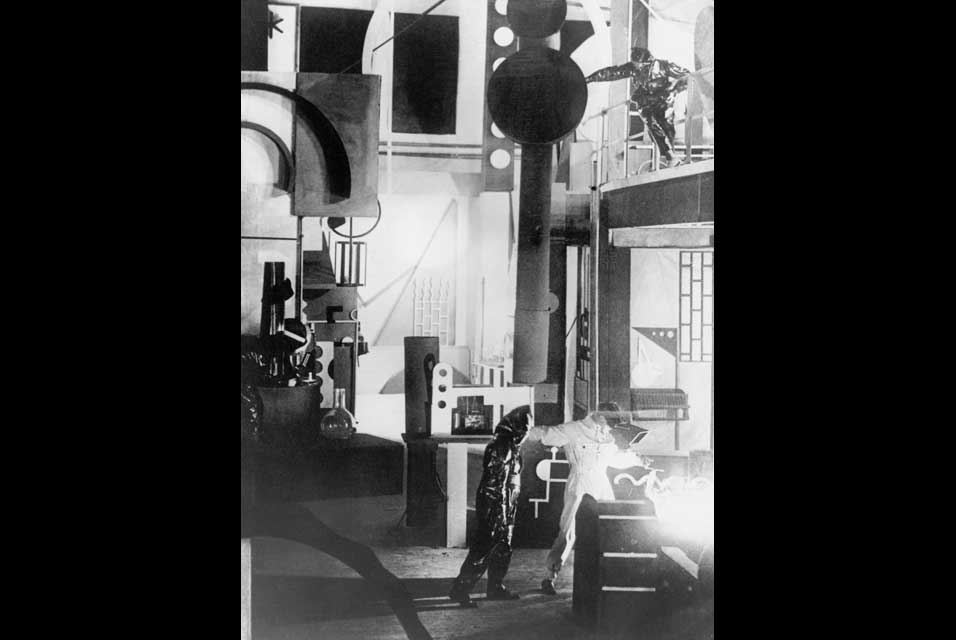
‘Beyond Futurism: F.T. Marinetti, Writer’ conference at Columbia (Nov. 12+13)

The Department of Italian at Columbia University in the City of New York is pleased to announce Beyond Futurism: F.T. Marinetti, Writer, a two-day international symposium on Thursday, November 12, 9:30am-6:00 pm in the Teatro of the Italian Academy for Advanced Studies in America at Columbia University and Friday, November 13, 9:30-12:30 pm at the Italian Cultural Institute in New York.

Thursday, November 12
9:30am-6:00 pm
Teatro of the Italian Academy
1161 Amsterdam Ave, New York, NY 10027
(212) 854-2306

Friday, November 13
9:30-12:30 pm
Italian Cultural Institute in New York
686 Park Avenue, New York, NY 10021
(212) 879 4242

Free and open to the public. RSVP: pc2159@columbia.edu

SCHEDULE

Wednesday, November 11, 2009
6:00pm & 9:00pm
Italian Academy

GIRLMACHINE

Featured in PERFORMA09, the renowned biennial for new visual performance art in New York City, GIRLMACHINE will inaugurate the symposium with two performances, one at 6:00pm and another at 9:00pm in the Teatro of the Italian Academy for Advanced Studies in America at Columbia University.
Thursday, November 12, 2009
9:30 - 10:30am
Italian Academy

Opening Remarks
Reading: Francesca Barbi, Manifesto del Futurismo
Preface: Paolo Valesio, (Columbia University), F. T. Marinetti and Extreme Literature

I Panel
Thursday, November 12, 2009
10:30am - 12:30pm
Italian Academy

Moderator: Ruth Ben-Ghiat (New York University)
1. Günter Berghaus (University of Bristol), Marinetti’s Volte-Face of 1920
2. Ricciarda Ricorda (Università di Venezia), Marinetti in viaggio: “Spagna veloce e toro futurista” e “Il fascino dell’Egitto”
3. Gianni Eugenio Viola (Università di Trieste e Siena), L’eco della letteratura del colonialismo nelle prose di Marinetti
Respondent: Millicent Marcus (Yale University)
Reading: Renato Miracco (IIC, New York), Parole in libertà

II Panel
Thursday, November 12, 2009
2:00 - 3:45 pm
Italian Academy

Moderator: Gino Tellini (Università di Firenze)
1. Alberto Bertoni (Università di Bologna), Metriche futuriste
2. Simone Magherini (Università di Firenze), Marinetti e “Lacerba”
Respondent: Amerigo Fabbri (Yale University)
Reading: Flora Ghezzo (Columbia University), Contro Venezia passatista
Graziella Sidoli (Convent of the Sacred Heart, CT), excerpts from Novelle con le labbra tinte
Renato Miracco (IIC, New York), Parole in libertà

III Panel
Thursday, November 12, 2009
4:00 - 6:00 pm
Italian Academy

Moderator: Andrea Malaguti (Columbia University)
1. Leonardo Clerici (Istituto di Skriptura, Bruxelles), F. T. Marinetti iconoclasta: sintassi & editio filologica
2. Cinzia Sartini-Blum (University of Iowa), Futurist Monsters: F. T. Marinetti’s Wireless Imagination in the Light of the Fantastic
3. Barbara Spackman (University of California, Berkeley), Touching the Future: Marinetti’s Haptic Aesthetic
Respondent: Paola Sica (Connecticut College)

Friday, November 13, 2009
9:30 - 12:30am
Italian Cultural Institute in New York

IV Panel
Friday, November 13, 2009
9:30am - 12:30pm
Italian Cultural Institute in New York

Opening Remarks: Renato Miracco
Reading: Davide Rondoni (Centro di Poesia Contemporanea, Bologna)
Moderator: Marjorie Perloff (Stanford University)
1. Gino Agnese (Quadriennale di Roma), Il “parlare scritto” di F. T. Marinetti
2. Beatrice Buscaroli (Fondazione Carisbo), I “Collaudi” alla Biennale di Venezia 2009
3. Matteo D’Ambrosio (Università di Napoli “Federico II”), Gli scritti di Marinetti sulle arti visive
Postface: Claudia Salaris, Marinetti, artista globale
Respondent: Stefano Albertini (New York University)
Reading: Gian Maria Annovi (Columbia University) excerpts from Ventre di donna

Organized by Paolo Valesio - Columbia University

Dedicated to the memory of Luce Marinetti Barbi (1932-2009)

The event will continue at Yale University in New Haven, CT, where the Beinecke Rare Book Library and the Departments of Italian, Slavic and Film Studies will host Futurismo/Futurizm: The Futurist Avant-Garde in Italy and Russia. The sister conference will take place on November 13-14, 2009.

For more information please visit the conference website.

Futurism and Cars at the Museo Nicolis

Futurismo 1909-2009: la velocità e il mito

October 31 - December 31, 2009
Museo Nicolis
di Villafranca (Verona)
*In collaboration with MART

Originals from the collection and numerous unpublished photos will be on display including a rare BENZ 8 20ps (1914), a Fiat 501 S Superclulasse Silvani (1924) and the motorcycle Premier 3 ½ hp (1913).

There will also be an video illustrating the exhibition “Futurismo 100: Illuminazioni. Avanguardie a confronto” which was on display at MART earlier this year.

more info

MoMA Film Series Marks Centenary of Futurism with Films

MoMA Film Series Marks Centenary of Futurism with Films

via Artdaily

NEW YORK, NY.- The Museum of Modern Art presents Nuts and Bolts: Machine Made Man in Films from the Collection, a series of films from the collection that reflect a vision of the mechanical being in the machine age: endlessly energetic, productive in the factory, free from sentimentality, immune to disease and death, and yet somehow reflective of the human condition. Created for Performa 09’s celebration of the centenary of Futurism, the series will screen at MoMA from November 1, 2009 through January 2, 2010. It includes a diverse selection of films ranging in date from 1917 to the present, from shorts to features, spanning genres from comedies to thrillers. Nuts and Bolts is organized by Anne Morra, Assistant Curator, the Department of Film, The Museum of Modern Art.

Throughout cinematic history mechanical creatures-robots, androids, cyborgs-have reflected both the discord and the connection between man and machine. In his essay “The Founding and Manifesto of Futurism,” published February 20, 1909, in the French newspaper Le Figaro, Italian poet Filippo Tommaso Marinetti (1876-1944) called for a mass cultural movement that would reject the sober and genteel conventions of the bourgeois world and embrace the speed, technology, and dynamism of the early twentieth century. Marinetti breathlessly announced the coming Futurist revolution, in which the heretofore-dark night would be “illuminated by the internal glow of electric hearts.” His veneration of a machine age continued in “War, the World’s Only Hygiene” (1911-15), wherein he averred that the automobiles, trains, and vast machines driving the technology of his day possessed “personalities, souls, or wills,” and presaged the “nonhuman and mechanical being.”

Nuts and Bolts: Machine Made Man in Films from the Collection is organized in collaboration with Performa 09, and was created after Performa Director RoseLee Goldberg approached MoMA about presenting a series of Futurist-related films from the Museum’s collection.

FUTUR1SM00GGI

FUTUR1SM00GGI: 100 ANNI DOPO IL FUTURISMO TORNA A FIRENZE

October 31, November 9, and December 4, 2009

Accademia di Belle Arti di Firenze

PROGRAMMA

sabato 31 ottobre 2009
Cinema Teatro Odeon
Ore 10.30-13
FUTURISMO OGGI
Giornata d’apertura
Saluti di Paolo Targetti, Presidente dell’Accademia di Belle Arti di Firenze
Introduzione del Direttore dell’Accademia di Belle Arti di Firenze
Presentazione del programma, Marco Cianchi
Conferenza di Achille Bonito Oliva
L’eredità del Futurismo nell’arte contemporanea
Intervento multimediale di Art Media Studio di Firenze.

lunedì 9 novembre 2009
Accademia di Belle Arti di Firenze
Ore 10-13
FIRENZE PASSATISTA. UN ARGOMENTO ANCORA APERTO
Serie di relazioni sulle difficoltà e le prospettive del contemporaneo a Firenze, quasi cent’anni dopo la famosa invettiva “Contro Firenze passatista” lanciata da Giovanni Papini nella serata futurista del 12 dicembre 1913 al Teatro Verdi.

Saluti e introduzione alla giornata con lettura di brani dal manifesto di Papini.

Interventi:
-Sergio Givone, Declinare la bellezza al futuro
-Graziella Magherini, Psicologia del contemporaneo a Firenze
-Gianni Pettena, Fenomenologia della pensilina
-Renato Ranaldi, Fuoriquadro senza sconti
-Sergio Risaliti, Il punto. Relazione sul contemporaneo a Firenze

Ore 15-17
IL FUTURO DEL CONTEMPORANEO
Incontro-dibattito su progetti, prospettive, impegni per lo sviluppo del contemporaneo a Firenze e in Toscana.
Organizzazione e coordinamento di Paola Bortolotti.
Hanno confermato la partecipazione:
-Paolo Cocchi, assessore alla cultura della Regione Toscana
-Giuliano Da Empoli, assessore alla cultura del Comune di Firenze
-Marco Bazzini, direttore artistico del Centro Luigi Pecci-Prato
-Arabella Natalini, curatore per EX3, Firenze
-Ludovico Pratesi, curatore scientifico per Palazzo Fabroni, Pistoia
-Sergio Risaliti, critico d’arte, curatore-organizzatore di mostre e eventi
-Alberto Salvadori, direttore artistico Museo Marino Marini e Villa Bardini, Firenze
-Angelika Stepken, direttore Villa Romana, Firenze

venerdì 4 dicembre 2009
Accademia di Belle Arti di Firenze
Ore 10-13.30
LE ARTI DEL FUTURISMO
Conferenza Cerchi chiusi-cerchi aperti sugli sviluppi e i riflessi nell’arte contemporanea della polemica Papini-Boccioni svoltasi nel 1914 sulla rivista fiorentina Lacerba a proposito dell’introduzione di oggetti d’uso e di materia grezza nella produzione artistica d’avanguardia.
Seguita da relazioni dei docenti dell’Accademia di Belle Arti di Firenze su vari episodi storici del Futurismo e le loro conseguenze nell’arte d’oggi.
Interventi:
-Marco Cianchi, Introduzione: Futuristi in piazza San Marco
-Giorgio Verzotti, Cerchi chiusi-cerchi aperti
-Susanna Ragionieri, Marisa Mori futurista
-Mauro Pratesi, Depero e i Balletti Russi
-Flavia Matitti, “Pittura dell’Avvenire”: Arnaldo Ginna tra futurismo ed esoterismo
-Cristina Giorgetti, L’innovazione del gilet futurista
-Marina Carmignani, Esiti del futurismo nella concezione odierna del corpo e dell’abito

VITA FUTURISTA o la Fuga dell’Arte
Mediometraggio di finzione scritto e diretto da Giovanni M. Rossi.
Produzione Movie&Sound per l’Accademia di Belle Arti di Firenze.
Basato sulla sceneggiatura dell’omonimo film di Arnaldo Ginna (1916; attori Marinetti, Corra, Settimelli, Balla ed altri; originale perduto) che fu interamente girato a Firenze e per la prima volta proiettato al teatro Niccolini il 28 gennaio 1917.
Al termine della lavorazione il film di G.M. Rossi sarà presentato in anteprima mondiale a Firenze.

more info

‘Futurism on Film’ Series this month in NYC

THE POLYEXPRESSIVE SYMPHONY: FUTURISM ON FILM

Anthology Film Archives (NYC)

Presented by Performa, for Performa 09. Although very little remains of early Italian avant-garde cinema, this film program will showcase several groundbreaking films from the 1910s, 20s, and 30s indebted to the Futurist movement, which declared that film was ‘the expressive medium most adapted to the complex sensibility of a Futurist artist.’ Artists to be featured include Marcel Fabre (Italy), Henri Chomette (France), Willy Otto Zielke (Germany), Eugene Deslaw (Ukraine), and Corrado D’Errico (Italy). The program will also present poetic Italian shorts documenting the rise of the mechanical age; rare, early science-fiction films; and the US premiere of the only surviving full-length Futurist film, THAIS (1916), a melodramatic love story made by Anton Giulio Bragaglia. In addition, a special screening of MARCH OF THE MACHINES (1929) - on Wednesday, November 11 - will feature a live performance inspired by its original score, by Futurist composer Luigi Russolo, on a reconstructed intonaromuri, or Futurist noise-intoners.

Curated by Lana Wilson (Performa). Performa 09 (November 1-22, 2009, New York City) is the third edition of the internationally acclaimed biennial of new visual art performance presented by Performa, a non-profit multidisciplinary arts organization dedicated to exploring the critical role of live performance in the history of 20th-century art and to encouraging new directions in performance for the 21st century.

Program 1: The Futurist Canon
November 3rd + 9th | 7pm

Tina Cordero, Guido Martina & Pippo Oriani
SPEED / VELOCITA
Italy, 1930, 13 minutes, video, b&w, silent.
One of the only Futurist films still existing, SPEED captures the dynamics of the city, with rotating views, whistling machines, articulated mannequins, and homages to 20th-century artists such as Boccioni, Mondrian, L?ger, and Kandinsky, all rhythmically collaged together by Futurist painter Oriani in collaboration with Futurist writers Cordero and Martina.

Corrado D’Errico
STRAMILANO
Italy, 1929, 14 minutes, video, b&w, sound.
A vibrant ‘city symphony’ showing a day in the life of Milan, from factories to farmers’ markets, skyscrapers, nightclubs, and beyond, with sound effects of human voices and machines. Although not officially ‘Futurist’, this film is directly related to Futurist ideas and works, such as SPEED.

Anton Giulio Bragaglia
THAIS
Italy, 1917, 54 minutes (incomplete), video, b&w, silent.
THAIS is considered to be the only surviving full-length Futurist film. In it, the title character plots to seduce her best friend’s crush, and the melodramatic chain of events that ensues leads to a Futuristic final sequence, shot against the visionary set designs of Futurist painter Enrico Prampolini.
Total running time: ca. 85 minutes.

Program 2: Futurist-Related Performance
November 3rd + 9th | 9pm

Luca Comerio
EXCELSIOR
Italy, 1914, 23 minutes, 35mm, b&w, silent.
A grand 1881 ballet that celebrates technology and progress through tableaux saluting turn-of-the-century technological innovations - electricity, the telegraph, and the Brooklyn Bridge, among them - EXCELSIOR was made into a film over 30 years later, as the worldwide interest in Futurism was taking off.

Marcel Fabre
LOVE AFOOT / AMOR PEDESTRE
Italy, 1914, 10 minutes, 35mm, b&w, silent.
The feet of three people act out an adulterous affair in LOVE AFOOT, the only filmed record of Futurist ‘reductionist performance’.

Jacques Feyder and Gaston Ravel
FEET AND HANDS / DES PIEDS ET DES MAINS
France, 1915, 18 minutes, video, b&w, silent.
A mechanical ballet of feet and hands influenced by Futurist ideas.

Claude Autant-Lara
A COLLECTION OF FACTS / FAIT-DIVERS
France, 1923, 20 minutes, video, b&w, silent.
Surrealistic short made early in the career of Autant-Lara, who would later become one of the French ‘directors of quality’ attacked by the New Wave filmmakers, in which a trio of actors (including Antonin Artaud!) jealously confront one another, set to an avant-garde score by Arthur Honegger and others.
Total running time: ca. 75 minutes.

Program 3: Man and Machine
November 4 + 11 | 7pm

Eugene Deslaw
MARCH OF THE MACHINES / LA MARCHE DES MACHINES
France, 1929, 9 minutes, 16mm, b&w, silent. With live performance by Luciano Chessa on November 11!
An abstract mechanical symphony with a score originally written by Futurist artist Luigi Russolo and now lost, this film will be shown with a special live soundtrack by composer and Russolo expert Luciano Chessa (Nov. 11 screening only). Taking Deslaw’s notes about the process of synching music to images developed by Russolo for this film into consideration, Chessa’s original score will be performed with his reconstructions of the incredible intonaromuri, or Futurist noise-intoners.

Francesco Di Cocco
THE GUT OF THE CITY / IL VENTRE DELLA CITTÀ
Italy, 1932, 13 minutes, 35mm, b&w, sound.
A poetic, experimental, industrial documentary.

André Deed
THE MECHANICAL MAN / L’UOMO MECCANICO
Italy, 1921, 46 minutes (incomplete), 35mm, b&w, silent.
A colossal robot runs wild in an unstoppable crime spree in this rare fantasy-horror epic by André Deed, protégé of George Méliès, that culminates in a wild showdown between the evil robot and another mechanical marvel.
Total running time: ca. 70 minutes.

Program 4: Trains, Trains, Trains
November 4 + 11 | 8:30pm

Corrado D’Errico
IMPRESSIONS OF LIFE #1: RAILWAY STATION RHYTHMS / RITMI DI STAZIONE, IMPRESSIONI DI VITA N. 1
Italy, 1933, 10 minutes, video, b&w, silent.
Gorgeous documentary depicting a day in the ‘iron world’ - a railway station - by intermingling the repetitive motions of machines with the mechanisms of human behavior.

Henri Chomette
PLAY OF REFLECTIONS AND SPEED / JEUX DES REFLETS ET DE LA VITESSE
France, 1925, 6 minutes, 16mm, b&w, silent.
A beautiful montage of sped-up shots taken from moving trains and boats, highlighting the play of light and motion through superimpositions, upside-down camerawork, and other experimental techniques, made by Chomette, brother of René Clair and a leader of the French ‘pure cinema’ movement.

Willy Otto Zielke
THE STEEL BEAST / DAS STAHLTIER
Germany, 1935, 75 minutes, 16mm, b&w, sound.
Daring collage of rhythms, abstractions, superimpositions, and wild shots of the railroad and other machines, made by the great German photographer Zielke, that was originally commissioned to celebrate the centennial of the Nuremburg-Furth railroad line, and later banned by the Third Reich for “decadent aesthetics.”
Total running time: ca. 95 minutes.

Program 5: The Futurist Impulse After Futurism
November 12 | 7:30pm

Curated by Robert Haller (Anthology).
The Futurist movement celebrated the changes wrought by early-20th-century technology: the cyclical energy of the machine, the new city, speed in trains and the automobile, the radiotelegraph, the dematerialization of the body and the erotic, and the transformations of space and time. By the end of the 1920s the Italian Futurist movement faded, but its recognition that a new phase of experience had arrived in the “acceleration of life” (Marinetti) was widely assimilated. This program presents films that were not made from an overtly Futurist sensibility, but which nonetheless acknowledge the revolution announced in Italy in the first years of the 20th century. While most of the Futurist films of the teens and twenties were lost or destroyed in World War II, the Futurist impulse has thrived. -R.H.

Henri Chomette
PLAY OF REFLECTIONS AND SPEED / JEUX DES REFLETS ET DE LA VITESSE
(1925, 6 minutes, 16mm, b&w, silent)
Ralph Steiner MECHANICAL PRINCIPLES (1931, 11 minutes, 35mm, b&w, silent)
Wheaton Galentine TREADLE AND BOBBIN (1954, 8 minutes, 16mm, color, sound)
Francis Thompson N.Y., N.Y. (1957, 15 minutes, 35mm, color, sound)
Hilary Harris HIGHWAY (1958, 5 minutes, 16mm, b&w, sound)
Paul Sharits DECLARATIVE MODE (1976, 20 minutes, 16mm, color, silent)
Bruce Elder SWEET LOVE REMEMBERED (1980, 13 minutes, 16mm, color, sound)
Amy Greenfield WILDFIRE (2003, 11 minutes, 35mm, color, sound)
Total running time: ca. 95 minutes.

Program 5: Futurist Life Redux
November 16 | 8pm

Commissioned by Performa with SFMOMA.
Co-presented by Performa and Anthology Film Archives for Performa 09.
The only officially ‘Futurist’ film ever made, VITA FUTURISTA (FUTURIST LIFE) was devised in 1916 by a committee of Futurist artists including Arnaldo Ginna, Giacomo Balla, Remo Chiti, Bruno Corra, and F.T. Marinetti. Comprised of eleven independent segments conceived and written by different artists - with the whole film shot, edited, and generally overseen by Ginna - FUTURIST LIFE directly took up several ideas proposed in “The Futurist Cinema” manifesto written earlier in the same year, contrasting the spirit and lifestyle of the Futurist with that of the ordinary man in a series of humorous sketches, many of which used experimental techniques such as split screens and double exposures. The final, 40-minute FUTURIST LIFE premiered at the Niccolini Theatre in Florence in 1917, as part of a program with four sintesi (very short plays) by Emilio Settimelli and Corra, and live poetry readings by Settimelli and Chiti of the works of several Futurist writers. It was a failure with the audience, who threw stones and other objects at the screen, and was generally forgotten soon after it came out. The only known copy of this film was lost several decades ago, and now all that remain are written accounts by Ginna and the journal L’ITALIA FUTURISTA, as well as a few still images.

Now, for the Performa 09 biennial, Performa and the San Francisco Museum of Modern Art (SFMOMA) have joined together to commission a diverse group of thirteen contemporary American film and video artists - Trisha Baga, Chamecki-Lerner, Martha Colburn, Ben Coonley, Lynn Hershman, George Kuchar, Shana Moulton, Shannon Plumb, Aida Ruilova, Matthew Silver & Shoval Zohar (The Future), and Michael Smith - to create their own, 3-5 minute versions of the eleven segments in VITA FUTURISTA, re-imagining this film in relation to our own future. These shorts will then be compiled into one, all-new version of FUTURIST LIFE for the 21st century, making its New York premiere at Anthology on this evening.

Curated by Lana Wilson (Performa) with Andrew Lampert (Anthology).
Special thanks to RoseLee Goldberg (Performa) and Frank Smigiel (SFMOMA).

DIY Star Trek Bluetooth Communicator Almost Makes Regular Bluetooth Headsets Look Stylish [DIY]

This DIY Star Trek Bluetooth Communicator instantly reminded me of a comment a dear reader left when I shared a Star Trek fantasy. He was right: Bluetooth is the ruin of Star Trek. But this is a fun quick-n-dirty project.

Basically you're cramming a Bluetooth module and a microcontroller into a toy Communicator and then pairing everything with your phone. As long as you've got voice dialing, you can leave your phone out of sight and be the snazziest Trekkie on the streets. Just don't come crying to me if someone stuffs you into a locker, trashcan, or wormhole. [Make]


This Week’s Best iPhone Apps [IPhone Apps]

In this week's never-gonna-switch-so-stop-asking app roundup: Free games, reinvented! Airplane anxiety, averted! Photos, wirelessly printed! Cool apps, discovered by other cool apps! Navigation, cheapened! Black Friday rush, preempted! Google Wave, appified! Screens, pointlessly tapped! And more!

The Best

Chorus: Hey, Apple, when people start making apps just to help people find new apps, take it as a sign that your App Store interface could use a little help. Chorus crowdsources the effort to cut through the endless jungle of trash:

Chorus is a bit like Apple's native App Store app, except with drastically shifted emphasis: instead of giving category "Top" lists, which rank apps by overall download numbers, Chorus only pitches you apps that've been explicitly recommended by someone. These someones could include other friends who use Chorus, nearby Chorus users, or a stable of "App Mavens"-online reviewers and tech journalists, mostly.

Free.


ZenApps: An even better sign that the App Store could offer more in the way of search tools, filters and sorting options than a company making an app-finding app? Two companies making app-finding apps. ZenApps takes a more traditional approach than the social network-y Chorus, aggregating review buzz from a list of app sites into a tag cloud, or a simple list. Also free.


Million Tap Challenge: Speaking of maybe worthless crap apps, Million Tap Challenge is a simple app with a simple goal: to be tapped. A million times. This makes the cut because unlike 99.99% of the spammy crap in the App Store, Million Tap Challenge has a sense of the absurd. It knows how ridiculous it is, and for just the right kind of person, it's a brilliant timekiller.


Flying Without Fear: My pops was a pilot, and the thought of being suspended 32,000 feet in the air in a tiny aluminum tube still freaks me the hell out. Flying without fear takes a two-pronged approach to soothing panicked passengers, with relaxation exercises on one side, and more importantly, detailed explanations of each step in typical airline flight, and the terrifying sounds that accompany them. Minor complaint #1: $5 seems a little steep for a branded app—this one is slathered in Virgin Atlantic's colors and logo. Minor complaint #2: Sir Richard Branson, who provides a video intro, is scarier than the worst transatlantic turbulence I've ever sat through. IT'S THE BEARD, BEARDO.


Gokivo: It's getting hard to keep track of all the iPhone navigation apps' names, much less their price structures, so here's what you need to know: Gokivo, the decent-but-too-expensive navigation app, has become Gokivo, the decent and now-not-too-expensive navigation app. The price has dropped from $5/mo to $5 dollars 30 days or $40 for the year. It's not as dirt-cheap as products like MotionX Drive and CoPilot, but solid text-to-speech and live traffic make this a deal.


Black Friday(s): This one comes in two parts, actually! Both FatWallet and Dealnews have put together apps that'll aggregate the best last-minute Black Friday deals come (almost) Thanksgiving. Neither is getting very good reviews right now, mostly due to their lack of deals. Today November 6th, so this is mildly mind-boggling. Patience!


LexPrint: Hey, remember Lexmark? They made printers! And evidently, they still make printers! Also, they've put together one of the better iPhone photo printing apps I've seen. Instead of shipping with grossly limited compatibility like other printing apps (seriously, everyone's got one now, but they're all pretty picky about which printers they talk with) Lexmark bridged the wireless gap with a PC client called Listener, which accepts print requests in lieu of a wireless radio on the actual printer. Kind of brilliant, if you have a Lexmark.


Waveboard: Google Wave is still invite-only, so it's a little strange to see a dedicated app this early on. That said, a sizable group of people are already power-using the shit out of this service that I don't think I'll ever fully understand, so Waveboard, which is marginally better than the stock Wave web interface, might be worth the one dollar entry fee.


Eliminate: This one lands in the top ten for two reasons. One is obvious: This is a fun, smooth-running FPS with intuitive controls—rare!—and solid gameplay. The other is a little counterintuitive: To get the full Eliminate experience, you probably need to shell out for Energy Cells via in-app purchases. This is good precisely because it's terrible, and provides a perfect example to other devs of how not to use the new in-app purchase system. It's fun while the free lasts, though! A cautionary tale.


TowerMadness Zero: TowerMadness used to be a better-than-average tower defense game, rendered in 3D and priced at about $3. Then, there was a lightning strike. A developer was zapped in the skull, collapsed, and three hours later awoke, dazed. As he stood up and surveyed his charred surroundings, he froze as if he was having a stroke; his eyes, though, twinkled. He had an idea. When he finally spoke, everyone around him was stunned: "TOWERMADNESS SHALL BE FREE," he bellowed, "AND IT SHALL BE SUPPORTED BY ADS THAT ARE NOT VERY ANNOYING." Then he died, from the burns. Pointlessly dramatic fake scenario aside, this kind of thing should happen more often.

Honorable Mentions

Cry Translator: This one purports to tell you what your baby's various gurgles, yelps and screams mean. This sounds implausible! Also implausible: That it's somehow worth $30. Just jingle your keys, try to feed it, and smell for poop. Parenting, done.

Family Guy: Hey look, it's a game based on a popular-but-well-past-its-prime television series! It's a bit Nintendo-like, which is charming, and the free version is worth a few minutes of you time, provided you don't hate Family Guy.

This list is in no way definitive. If you've spotted a great app that hit the store this week, give us a heads up or, better yet, your firsthand impressions in the comments. And for even more apps: see our previous weekly roundups here, and check out our Favorite iPhone Apps Directory. Have a great weekend, everybody!


The Queen of Google: "I Do Code All Night!" [Google]

This is Marissa Mayer, the queen of Google. Every Google thing that you use goes through her. And she's nerd. So she says, sitting on her red ball in that red dress:

"When people think about computer science, they imagine people with pocket protectors and thick glasses who code all night. I do code all night! I am the stereotype, but I also break the stereotype."

Oh, if only there were more of you, breaking stereotypes. [Glamour]


Steve Jobs and Sarah Jessica Parker Sittin’ In A Courthouse B-E-I-N-G S-U-E-D [Lawsuits]

In 1989, Franz A. Wakefield invented the iPod, the iPhone, and iTunes. Then the FBI stole his trade secrets and he confided in Sarah Jessica Parker and now he's suing her and Apple...and my head's spinning.

It's a tale of quite the nutter and I can barely keep the facts straight. Franz A. Wakefield, the injured party, wants to head into the courthouse and face Apple, Inc. and Sarah Jessica Parker, who will certainly be shaking in fear based on the lawsuit:

The suit claims that Wakefield [...] developed a friendship with Parker and "made a trade secret deal" with her to commercialize the iPod classic, nano, mini, shuffle, video, touch and photo, as well as iTunes and the iPhone. The supposed agreement would have granted Parker 2 percent of gross revenues from the products. Wakefield said he asked the FBI to watch over him to ensure the security of his inventions and deal with Parker.

Apparently sexy Sarah must've been talked into cutting freaky Frank out of the deal entirely and told suave Steve all about what would later become Apple's products.

Frank's pretty forgiving though, he even wrote Steve a sweet note:

This letter is to serve as a DEMAND for payment. Otherwise I will seek legal recourse for the immediate cease and desist from the manufacture, marketing, and sale of all the iPOD, iTunes, and Iphone lines; along with pursuing damages from the products sold to date, unjust enrichment caused by the theft, enforcement of the agreed 2% gross revenues on all sales, and any other applicable damages or compensation.

Such a nice guy. I'm sure he'll win. [Apple Insider]

Photo by Celebrity Pictures


The Next Room Eavesdropping Device Is Way Better Than a Drinking Glass [Surveillance]

Next Room is kind of like a mash up between a stethoscope, MP3 player and an old fashioned drinking glass. According to the product page, you can hear what is being said through wooden walls, doors, windows—even steel plates.

It features an internal sound amplifier, a 3.5mm jack for headphones and a USB port for recharging. Nice, but if you really want to take this whole scumbaggy espionage thing to another level, you go with the SIM card spy ear. [Chinagrabber via 7Gadgets via OhGizmo]


Wire Your House With Ethernet Cable For Better Home Networking [DIY]

I finally started watching Californication recently, but my big annoyance since then is that my—ahem—mostly-legally downloaded episodes take ages to transfer wirelessly from laptop to media center PC. Thankfully Lifehacker's got a DIY wiring solution for my troubles.

The instructions are actually pretty thorough and explain everything you need to know about running CAT 5e or CAT 6 cables through your home, walls, and attic without making a horrid mess, but please don't blame me if you somehow manage to destroy something anyway. [Instructables via Lifehacker]


OpenOfficeMouse Is An 18 Button Freak, But I Want It [Mouse]

18 programmable buttons. E-I-G-H-T-E-E-N! Forget the 512k of flash memory, analog Xbox 360-style joystick, basic scroll wheel and whatever-else-is-in-there. 18 buttons! Yes, I'm a button lover. Yes, I just had an orgasm. And yes, I will waste $75 on this.

Sure, it's not that attractive looking and it's probably awkward as all hell to use, but the prospect of programming all those buttons has me giddy. While the guy who designed the mouse thinks it'd be great for World of Warcraft or OpenOffice tasks, I know I won't be wasting a single button for either of those things. Anyone got better suggestions? [Open Office MouseThanks, Joel!]


Microsoft Confirms Improved Xbox 360 Warranty Seal [Blockquote]

In an email exchange earlier today, Microsoft indirectly admitted that Xbox 360s are receiving an updated tamper-resistant warranty sticker. From the company:

"We continually work on the security of our devices, including updates to the tamper seal. Beyond that, we have no further comment."

They also added that Steve Ballmer has always been a huge fan of stickers, having one of the most expansive collections in the world.


Google Promotes Droid Day With Rare Homepage Ad [Google]

Hey Google! I adore your celebration of Sesame Street's 40th anniversary and such things, but what are you doing sticking an ad on your homepage? An ad for Verizon's Droid of all things.

It's a simple text link that leads to Google's mobile partners page which then has a link to the actual Verizon Wireless site. But despite that extra click, it's still incredibly rare to see any sort of ad on the otherwise clean homepage. Especially when it kinda conflicts with Google's attempts to make the things even more minimalist lately. [TechCrunch]


Timing the Singularity

The Singularity.  The event when the rate of technological change becomes human-surpassing, just as the advent of human civilization a few millenia ago surpassed the comprehension of non-human creatures.  So when will this event happen?


There is a great deal of speculation on the 'what' of the Singularity, whether it will create a utopia for humans, cause the extinction of humans, or some outcome in between.  Versions of optimism (Star Trek) and pessimism (The Matrix, Terminator) all become fashionable at some point.  No one can predict this reliably, because the very definition of the singularity itself precludes such prediction.  Given the accelerating nature of technological change, it is just as hard to predict the world of 2050 from 2009, as it would have been to predict 2009 from, say, 1200 AD.  So our topic today is not going to be about the 'what', but rather the 'when' of the Singularity. 


Let us take a few independent methods to arrive at estimations on the timing of the Singularity.


1) Ray Kurzweil has constructed this logarithmic chart that combines 15 unrelated lists of key historic events since the Big Bang 15 billion years ago.  The exact selection of events is less important than the undeniable fact that the intervals between such independently selected events are shrinking exponentially.  This, of course, means that the next several major events will occur within single human lifetimes. 


772px-ParadigmShiftsFrr15Events_svg


Kurzweil wrote with great confidence, in 2005, that the Singularity would arrive in 2045.  One thing I find about Kurzweil is that he usually predicts the nature of an event very accurately, but overestimates the rate of progress by 50%.  Part of this is because he insists that computer power per dollar doubles every year, when it actually doubles every 18 months, which results in every other date he predicts to be distorted as a downstream byproduct of this figure.  Another part of this is that Kurzweil, born in 1948, is taking extreme measures to extend his lifespan, and quite possibly may have an expectation of living until 100 but not necessarily beyond that.  A Singularity in 2045 would be before his century mark, but herein lies a lesson for us all.  Those who have a positive expectation of what the Singularity will bring tend to have a subconscious bias towards estimating it to happen within their expected lifetimes.  We have to be watchful enough to not let this bias influence us.  So when Kurzweil says that the Singularity will be 40 years from 2005, we can apply the discount to estimate that it will be 60 years from 2005, or in 2065. 


2) John Smart is a brilliant futurist with a distinctly different view on accelerating change from Ray Kurzweil, but he has produced very little visible new content in the last 5 years.  In 2003, he predicted the Singularity for 2060, +/- 20 years.  Others like Hans Moravec and Vernor Vinge also have declared predictions at points in the mid/late 21st century. 


3) Ever since the start of the fictional Star Trek franchise in 1966, they have made a number of predictions about the decades since, with impressive accuracy.  In Star Trek canon, humanity experiences a major acceleration of progress starting from 2063, upon first contact with an extraterrestrial civilization.  While my views on first contact are somewhat different from the Star Trek prediction, it is interesting to note that their version of a 'Singularity' happened to occur in 2063 (as per the 1996 film Star Trek : First Contact). 


4) Now for my own methodology.  We shall first take a look at novel from 1863 by Jules Verne, titled "Paris in the 20th Century".  Set about a century in the future from Verne's perspective, the novel predicts innovations such as air conditioning, automobiles, helicopters, fax machines, and skyscrapers in detail.  Such accuracy makes Jules Verne the greatest futurist of the 19th century, but notice how his predictions involve innovations that occured within 120 years of writing.  Verne did not predict exponential growth in computation, genomics, artificial intelligence, cellular phones, and other innovations that emerged more than 120 years after 1863.  Thus, Jules Verne was up against a 'prediction wall' of 120 years, which was much longer than a human lifespan in the 19th century. 


But now, the wall is closer.  In the 3.5 years since the inception of The Futurist, I have consistently noticed a 'prediction wall' on all long-term forecasts, that makes it very difficult to make specific predictions beyond 2040 or so.  In contrast, it was not very hard to predict the state of technology in 1930 from the year 1900, just 30 years prior.  Despite all the inventions between 1900 and 1930, the diffusion rate was very slow, and it took well over 30 years for many innovations to affect the majority of the populationThe diffusion rate of innovation is much faster today, and the pervasive Impact of Computing is impossible to ignore.  This 'event horizon' that we now see does not mean the Singularity will be as soon as 2040, as the final couple of decades before the Singularity may still be too fast to make predictions about until we get much closer.  But the compression of such a wall/horizon from 120 years in Jules Verne's time to 30 years today gives us some idea of the second derivative in the rate of change, and many other top futurists have observed the same approaching phenomenon.  By 2030, the prediction wall may thus be only 15 years away.  By the time of the Singularity, the wall would be almost immediately ahead from a human perspective. 


So we can return to the Impact of Computing as a driver of the 21st century economy.  In the article, I have written about how about $700 Billion per year as of 2008, which is 1.5% of World GDP, comprises of products that improve at an average of 59% a year per dollar spent.  Moore's Law is a subset of this, but this cost deflation applies to storage, software, biotechnology, and a few other industries as well. 


If products tied to the Impact of Computing are 1.5% of the global economy today, what happens when they are 3%? 5%?  Perhaps we would reach a Singularity when such products are 50% of the global economy, because from that point forward, the other 50% would very quickly diminish into a tiny percentage of the economy, particularly if that 50% was occupied by human-surpassing artificial intelligence.   


Singularity We can thus calculate a range of dates by when products tied to the Impact of Computing become more than half of the world economy.  In the table, the columns signify whether one assumes that 1%, 1.5%, or 2% of the world economy is currently tied, and the rows signify the rate at which this percentage share of the economy is increasing, whether 6%, 7%, or 8%.  This range is derived from the fact that the semiconductor industry has a 12-14%% nominal growth trend, while nominal world GDP grows at 6-7% (some of which is inflation).  Another way of reading the table is that if you consider the Impact of Computing to affect 1% of World GDP, but that share grows by 8% a year, then that 1% will cross the 50% threshold in 2059.  Note how a substantial downward revision in the assumptions moves the date outward only by years, rather than centuries or even decades. 


We see these parameters deliver a series of years, with the median values arriving at around the same dates as aforementioned estimates.  Taking all of these points in combination, we can predict the timing of the Singularity.  I hereby predict that the Technological Singularity will occur in :


2060-65 ± 10 years


So the earliest that it can occur is 2050 (hence the URL of this site), and the latest is 2075, with the highest probability of occurance in 2060-65.  There is virtually no statistical probability that it can occur outside of the 2050-75 range (sorry, Ray). 


So now we know the 'when' of the Singularity.  We just don't know the 'what', nor can we with any certainty. 


Related :


The Impact of Computing


Are You Acceleration Aware?


Pre-Singularity Abundance Milestones


SETI and the Singularity

Mobile Broadband Surge : A Prediction Follow Up

Some of you may recall that over three and a half years ago, on February 4, 2006, I predicted that by 2013, at least 900 million people in emerging nations, 80% of whom had no Internet connection in 2006, would have access to a wireless broadband connection through their cellphones.  That seemed like a bold prediction at the time.


Mobile But in the Economist, there is a special report on mobile phones in the developing world, and this chart depicts the progress towards my prediction quite nicely.  Mobile broadband subscribers will go from nearly zero in early 2006 when the prediction was first made, to 1.4 billion by 2013 (of which 900 million can safely be assumed to be in emerging nations). 


It is often said that no other invention has done more for so many people so quickly than the mobile phone, given the large number of people who did not have even a landline phone prior to getting a mobile phone.  However, the inital deployment of rudimentary mobile phones was just the beginning.  As 3G broadband at speeds greater than 1 mbps spread to a billion people with no prior Internet access, the entire nature of their existence is transformed.  As per this second chart from the Economist report, the GDP boost from broadband Internet penetration is far higher than the already-impressive boost we have seen from simple mobile access, and we can thus expect another, stronger wave of human advancement as mobile broadband diffuses. Mobile2 Simultaneously, the entire nature of the Internet is also transformed.  Think of the massive developmental catalyst such a rapid technological diffusion would be.  Child literacy would rise as the educational materials of the full Internet will be available in locations where no libraries exist, making near-universal child literacy a reality within a decade.  Agricultural and fishery supply chains will shorten tremendously.  Disaster relief will become far easier, as will the apprehension of criminals.  The upliftment that once appeared to be a process of decades will now happen in mere years.   


We can thus proceed to the next prediction, which is that by 2020, 4 billion people will have 4G wireless broadband access on their handheld mobile phone, at speeds exceeding 100 Mbps.  In other words, a landline speed that even wealthy Americans could not have in 2005 will be available wirelessly to billions of the very poorest people just 15 years later, in 2020.  Imagine that. 

The Next Two US Recessions

Here at The Futurist, we maintain a track record of predicting bubbles, busts, and recessions long before they happen.  For example, the housing bubble was identified in April 2006, back when a person could be socially excommunicated for claiming that houses may not rise in value forever.  After that, I have identified when the current recession started, months before most economists, and have even predicted when the present recession will end, and at what level job losses would end at.  This track record will now lead me to set my sights on the next two troubles on the horizon, which will be the causes of the next two potential recessions. 


1) 2011 : The tax cuts enacted by President Bush are set to expire at the end of 2010, returning tax brackets to what they were in 2000.  Most middle class brackets will rise by 3%, and the top bracket will rise 4.6% from 35% to 39.6%.  This is effectively a tax increase that will be upon us in 14 months.  At the same time, the Fed Funds rate is at a record low near 0%, and has been for several months.  This low interest rate has ended the current recession, but virtually guarantees future inflation.  As the Federal Reserve is forced to raise interest rates, liquidity contracts again, the housing prices continue on the correction that was not allowed to complete itself in 2009.  A mere rise in the rate back up to 3% could push housing prices down another leg, battering household wealth yet again, and driving yet more people into negative net worth.  The housing correction is not fully complete until we have sustained a Fed Funds rate over 3% for at least a year.  The timing of this could combine with the tax increase, which would create a joint burden too heavy for the economy to bear, causing a new recession in 2011. 


This situation could be avoided easily, by reducing the budget deficit through the quaint notion of spending cuts instead of tax increases that stifle incentives and encumber small businesses.  However, barring a seismic shift in the 2010 congressional elections that dispose of many Democrats and replace them with fiscally conservative Republicans (themselves an endangered group within the Republican Party), I do not see the government taking prudent preventive action. 


2) ~2017 : For all the uninformed talk about a 'weak dollar', the damage of this will affect nations that export to the US more than the US itself.  However, when the PPP per capita GDP of China begins to exceed the world average (by about 2017), then Chinese currency will have to rise to achieve convergence with nominal GDP, effectively adding several trillion dollars to nominal World GDP.  This will lead to massive tectonic shifts in the global economy, none of which are destructive, but will result in confusion, for which the immediate reaction will be a US and EU recession (even amidst a rise in World GDP) until all of the following effects are sorted out :


a) The US will see a bout of inflation as prices of Chinese imports rise.  At the same time, US exports will surge.


b) Oil prices will spike above $120 as Chinese purchasing power of oil rises, effectively creating greater demand.  This will cause short-term pain, followed by longer-term good as described here.  Part of the good from an oil spike will be the collapse of many tyrannical petro-regimes, due to burning the candle at both ends, as detailed in the link.


c) Many of the developing countries that neighbor China (which are populated by an additional 2 billion people) will experience the gravitational pull of China's now huge economy, and see a forced currency appreciation long before they are ready.  This will cause an unexpected set of changes in India, Pakistan, Bangladesh, VietNam, the Philipines, and Indonesia (these 6 countries containing 2 billion people) as a massive adjustment process will have to occur in a very short time, toppling many industries and creating new ones within these countries. 


d) After everything is sorted out, the US and EU will be significantly smaller percentages of World GDP, but the US would see higher GDP growth rates due to a near-elimination of the trade-deficit.  Asia, as a region, would have a much larger economy than the EU or North America. 


So these are the two possible recessions that the US faces, the first in 2011 and the second in the latter half of the next decade.  Prudent fiscal management could sidestep the first, while the second is an inevitable byproduct of the adjustments borne of poverty reduction. 


In any event, investment opportunities, and, more importantly, bullet-dodging opportunities abound.  In the immediate term, however, if you are considering buying a home in an expensive US area such as New York or California, do not buy one.   


Related :


The Housing Bubble - 20-Year Gains May Never be Repeated


A Future Timeline for Economics


Why I Want Oil to Hit $120/Barrel