Buy Your Way In To Apple Betas for $100 [Software]

Aside from access to SDKs, Apple developers get access to new OSs for Apple's portables and computers before the public. Now, buying your way in to the Mac Developer Program costs about the same as MobileMe.

Formerly a $500 to $3500 proposition, Apple has combined development memberships on all their platforms into one $100/year offer. For developers, that means developing for OS X is really no more expensive than developing for the iPhone. For fanboys, that means you can download the next beta OS without the need of a torrent. [Apple via 9to5Mac and Macworld]


Microsoft’s Xbox Live Consolation Prize for Depressed Halo 2 Fanboys [Xbox Live]

Helloooo, sad people still clinging to Halo 2 on your original Xbox. As you know, Xbox Live for the OG Xbox is being turned off in 6 short weeks. Microsoft feels bad kinda about it! So they're giving you 400 Xbox Live points and 3 free months of Xbox Live to join the rest of us here in the present. And! And a Halo: Reach Beta invite. That's right, we have Halo in the present, too. [Xbox via Engadget]


Conflicting and Colliding Messages Regarding "Plan B"

Shelby has frank discussion with NASA Administrator, WAFF

"A frank discussion took place on Capitol Hill Thursday between Senator Richard Shelby and NASA administrator Charlie Bolden. It took place behind closed doors in Senator Shelby's office. Bolden and Shelby are very far apart on NASA's vision and therefore NASA's budget. In fact, many in Congress don't even see a vision for the space agency if there is no government owned and operated human space flight program , namely Constellation, once the shuttle retires."

A Strategic Retreat From Leadership, Rep. Mike Coffman, Huffington Post

"Seeking to put his stamp on America's storied adventures in rocketry and robotics, the president could have gone boldly in new directions, using past achievements as a springboard to new destinations. But his proposed budget for space exploration describes an approach that is both reckless and naïve."

New NASA plans developing in Congress and, reportedly, inside NASA itself, Huntsville Times

"Bolden said in a statement later Thursday that NASA isn't undercutting the White House plan. "The president's budget for NASA is my budget. I strongly support the priorities and the direction for NASA that he has put forward," Bolden said. "I'm open to hearing ideas from any member of the NASA team, but I did not ask anybody for an alternative to the president's plan and budget."

Aderholt "Extremely Pleased" NASA May Be Planning Alternatives To Ending Constellation

"I am extremely pleased that NASA may be considering a Plan B option to the President's proposal to cancel human space flight. Since the President announced his Budget last month, I and many of my Republican and Democrat colleagues have expressed our disapproval of the plan, along with our desire in continuing with Constellation. But the fight is not over. I will continue to work on this because I believe that human spaceflight and exploration beyond earth is the very reason for NASA's existence."

Massive Fight Under Way To Keep Shuttle Program, WESH

"On Thursday, NASA Administrator Charlie Bolden said he still supports the president's plan to end U.S. human spaceflight. However, when he meets with members of Congress, he is expected to at least discuss Plan B."

New hope for Ares, ATK / NASA may be considering compromise, standard.net

"Bishop, R-Utah, cited a news story in the Wall Street Journal that says a memo by a member of Bolden's staff is telling NASA officials to plan out "what a potential compromise might look like" to satisfy Obama administration critics of the Constellation program. Bishop said Thursday that congressional delegations from Utah, Alabama, Florida and Texas are joining forces to work with NASA to keep Constellation alive. He said the memo is a hint that NASA is starting to listen."

NASA Administrator Reaffirms Support for 2011 Budget, NASA

"I'm open to hearing ideas from any member of the NASA team, but I did not ask anybody for an alternative to the President's plan and budget."

Electric Panel Assembly Workbench

Dear all,

I am searching for/designing a workbench for the electrical assembly team in our factory. We usually assemble electrical panels for conveyors and machines (panel 3mx2m maximum size).

The panel must have vertical adjustment(motor power screw) and horizontal (angular) adjustmen

Geotraveler’s Niche

post thumbnail

Lola Akinmade combines her professions as a photojournalist, travel writer and volunteer worker with her personal experiences while on the road. Follow her journeys through her beautiful photographs and vibrant commentary at Geotraveler’s Niche.

The Evolution of The Intersection | The Intersection

It has been brought to my attention that a number of readers and science bloggers seem to be wondering if Monday’s post means I am retiring from the blogosphere. I’m not, but am glad to see that reflection on the devolving state of science blogs–and their tendency to be more sport and spectacle than science–seems to have resonated broadly with over 400 comments and counting. I will have more to say on science blogging shortly, but first a few words on why I’m posting less frequently…

Picture 6Foremost, blogging should not be a daily requirement. For me, it began in 2006 when I lost a bet with students–as Cornelia Dean explained in her terrific book. I found I enjoyed the interactive exchange and the way it helped me to make sense of all of the endless ideas spinning around in my head everyday. But a good blog post is the result of inspiration, and over time it started to feel like homework. I’d work a full day at Duke, or edit my book for hours, and scramble for something to get on the blog as an afterthought. Blogging stopped feeling cathartic and became more burdensome while juggling work, travel, talks, some semblance of a social life, and wedding planning. So I’ve decided it’s time to change the way I contribute. From now on, I’ll write only when inspired. This may happen a few times a week or a few times a day. We’ll see how it goes.

And more importantly, I’m busier than usual this month because David and I are headed to Austin, Texas! I’ll be very sad to leave the incredible Pimm Group at Duke, but I’m also so excited about what’s coming next! While I’ll always stay connected to the marine realm, there’s another crucial area I’ve been growing more and more interested to pursue and there’s no better place to do so than Texas. So here’s the big–related–announcement:

The Intersection is about to become an energy blog. I’ll have more to say on that soon so keep watching… you ain’t seen nothing yet!


Brain 'Hears' Sound of Silence

From Discovery News - Human News:

While we characterize silence as the absence of sound, the brain hears it as loud and clear as any other noise. In fact, according to a recent study from the University of Oregon, some areas of the brain respond solely to sound termination. Rath

Guess What? Google Fears the Next 'Google'

From Wired Top Stories:

There are millions of entrepreneurs who want to come up with the next Google. Maybe you are one of them. You almost certainly know one. Guess what? Google is afraid of you — haunted that the same disruptive forces which transformed the company from

The Need for Electrical Engineers

From IEEE Spectrum:

How can the U.S. National Highway Traffic Safety Administration oversee problems like the unintended acceleration that has forced the recall of hundreds of thousands of Toyota cars, when it has only 2 EEs and no software engineers? Maybe the U.S. government need

Spelunking the lunar landscape | Bad Astronomy

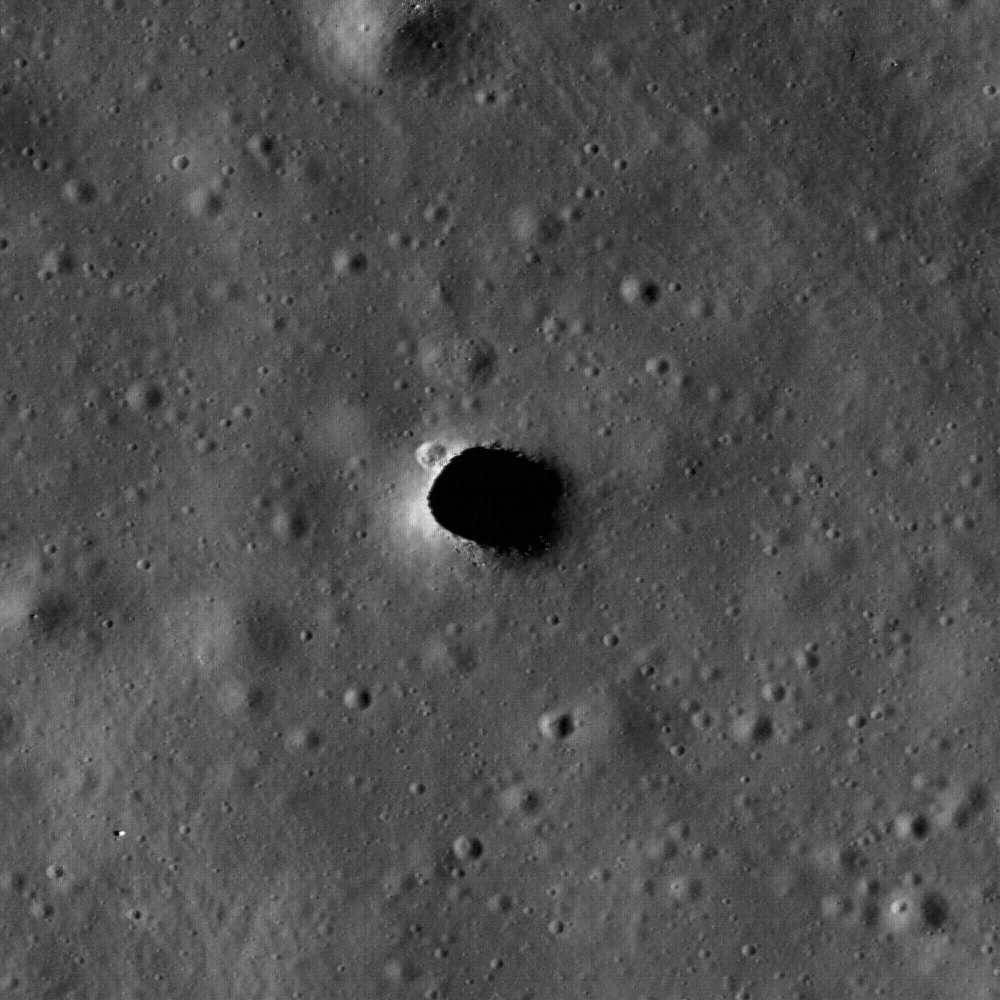
Need a little bit of jaw-droppiness today? Mwuahahaha. Let me show you something:
a hole in the Moon.

lro_skylight

[Don't tell anyone, but that's where they faked the Moon landings!]

This is an image from the Lunar Reconnaissance Orbiter, one of my favorite spacecraft in existence. It’s been mapping the Moon at an incredible 50 cm/pixel resolution — that’s 19 inches, my pretties — for a while now, and revealing one astonishing thing after another.

lro_skylight_rilleWhat you’re seeing here is indeed a hole in the Moon: what is almost certainly a skylight, a hole punctured in the roof of a lava tube, an underground tunnel carved by flowing molten material on the Moon. The hole is about 65 meters across — roughly 2/3rd the length of a football field. This region of the Moon is called Marius Hills, and is known to be volcanic in nature. The clincher is that the hole sits in a rille, a sinuous, snaking gully in the lunar surface.

The picture on the left provides a little context. The hole is the very dark feature near the top, and sunlight is coming from the left. The rille is pretty obvious here, snaking more or less top to bottom, and the hole is smack dab in the middle of it. The place is littered with craters, most of which are soft looking, with no rims and very smooth features, which are possible indicators of very great age (erosion from solar wind, newer impacts, and thermal stress from the large day/night temperature swings wear down sharp features over time), or perhaps the regolith (the ground up rocks making a loose soil-like composite) is just very thick here, softening the sides of craters.

Let me show you another view, a bit closer in:

lro_skylight_context

This section is about 1 km (3000 feet) across; in other words, it might take you about 10 minutes to walk across it (here on Earth, that is; in a spacesuit YMMV). The arrow at the bottom shows you the direction of sunlight; the Sun is coming from the left. That’s important, because our eyes get fooled easily if sunlight is coming from below; it makes craters look like domes and vice-versa. A lot of softer craters look like domes to my eye in this shot, so I marked a nice sharp crater with a 2 (the hole itself is labeled 1). See how the right side of the crater is bright? That makes sense if the Sun is on the left.

I marked the top of the rille with a 3, and the base of the sloping side with a 4. Think of it as the top and bottom of a riverbank. The other side of the rille is off the picture to the right.

OK, still with me? Now look at the hole again. The bright crescent around the hole on the right and the dark part on the left must be due to a slope leading into the hole, as if the whole thing is not just a hole punched into the surface, but more like a funnel pushed into it. The hole probably started out somewhat smaller, and the sides collapsed down a bit. Think of digging a hole in dry sand and you’ll get the picture.

This means there’s a lava tube under the rille, probably carved out by an older lava flow. Observations by the Japanese probe SELENE indicate the hole is about 90 meters deep, and the roof — the top part of the tube — is about 25 meters thick. That explains why it hasn’t collapsed under the eons of meteoric bombardment forming all the craters in it. The hole may be a collapsed section, or it may have been punched by a larger meteorite. Given the size of the hole, the impactor couldn’t have been bigger than a few meters across itself. Had it been much bigger, I’d think more of the roof would’ve collapsed.

Incredible! And useful, too: radiation from the solar wind may be a problem for future lunar colonists. A good solar flare could sicken or kill them, so they’ll need protection. Building underground is one way to do that, and here we have a pre-fab cave! It’s unfurnished, a bit of a fixer-upper, but ready for occupants, and priced to move.

You may think a colony on the Moon is fantasy, but I disagree. It’s a matter of realty. And of course, location location location.


Brief notes: Soyuz, Virgin, and… iCarly?

The news media has something of a case of amnesia when it comes to space tourism in Russia: they regularly, breathlessly report comments that Russia will stop flying space tourists on Soyuz flights to the ISS. Every few months, it seems, a Russian official makes comments to that regard, dutifully reported by the wire services and others. There’s a good reason why they’re not: the seats are all needed for ferrying crews to and from the ISS, particularly with the retirement of the shuttle. Also recall that Russia had made similar statements in the past only to have seats become available, as was the case with last year’s flight of Guy Laliberté. When that flight opportunity was first announced last year, Space Adventures’ Eric Anderson said he felt there still might be occasional flight opportunities even after the station goes to a six-person crew.

Virgin Galactic provided an update on their plans at a conference in Dubai this week, although the information they provided appears to be largely similar to what the company reported at a suborbital research conference in Boulder last month. Will Whitehorn did say that he didn’t believe the company didn’t need additional investment to complete development of SpaceShipTwo after Abu Dhabi’s Aabar Group invested $280 million into the company last year. Although Aabar has exclusive regional rights to SS2, Whitehorn said there were no plans for SS2 flights to take place there for the foreseeable future.

If you (or, rather, your kids) watch the Nickelodeon show “iCarly”, you might be interested in Friday’s episode, based on this description: “A quirky billionaire asks Carly and her friends to put on the first live Web show from outer space, so they undergo tests for space travel.” A billionaire who wants to send some kids into orbit to do a webcast is probably a little more than just “quirky”.

Christian libertarian Rick Green makes run-off for Texas Supreme Court

Almost the "anti-Lawyer"

The Texas Supreme Court is just weeks away from having a bonafide libertarian member-elect.

Rick Green finished first in a field of 6 in the March 2 primary.

From RightWingWatch (a site that regularly attacks libertarians and conservatives), March 3:

Now for the bad news, which is the Rick Green appears to have secured enough support that he will be in a run-off election for a seat on the Texas Supreme Court... he's also a Tea Party activist who rails against "socialists" like Barney Frank and Chris Dodd and announces that they are "firing the first shots of a second American Revolution right here in Texas"

From the Texas Tribune, March 3:

The wildcard looks to be Rick Green, who represented Dripping Springs in the state House from 1999 to 2003. Green has no judicial experience, but's he's been endorsed by conservative icon Chuck "Walker, Texas Ranger" Norris and a slew of conservative lawmakers, including state Rep. Warren Chisum, R-Pampa, and state Rep. Wayne Christian, R-Center.

George Christian (no relation), the president of the Texas Civil Justice League, says Green holds some appeal for the disaffected libertarian wing of the Republican Party. “He’s kind of running as the anti-lawyer," he says. "He’s almost running against the fact that the rest are judges.”

His campaign web site describes him as “an outspoken advocate of returning to the principles of the Declaration of Independence.” He frequently gives speeches on behalf of Wallbuilders, an Aledo-based organization focused on preserving America’s “moral, religious and constitutional heritage.”

Green will now face Debra Lehrmann in an April 13 run-off.

Is That Saturn’s Moon Titan or Utah?

Titan's Sikun Labyrinthus (artist's concept)
This artistic interpretation of the Sikun Labyrinthus area on Saturn's moon Titan is based on radar and imaging data from NASA's Cassini spacecraft and the descent imaging and spectral radiometer on the European Space Agency's Huygens probe. The relative elevations are speculative and organized around the assumption that fluids are flowing downhill.
› Larger view
› View related video
Planetary scientists have been puzzling for years over the honeycomb patterns and flat valleys with squiggly edges evident in radar images of Saturn's moon Titan. Now, working with a "volunteer researcher" who has put his own spin on data from NASA's Cassini spacecraft, they have found some recognizable analogies to a type of spectacular terrain on Earth known as karst topography. A poster session today, Thursday, March 4, at the Lunar and Planetary Science Conference in The Woodlands, Texas, displays their work.

Karst terrain on Earth occurs when water dissolves layers of bedrock, leaving dramatic rock outcroppings and sinkholes. Comparing images of White Canyon in Utah, the Darai Hills of Papua New Guinea, and Guangxi Province in China to an area of connected valleys and ridges on Titan known as Sikun Labyrinthus yields eerie similarities. The materials may be different - liquid methane and ethane on Titan instead of water, and probably some slurry of organic molecules on Titan instead of rock - but the processes are likely quite similar.

"Even though Titan is an alien world with much lower temperatures, we keep learning how many similarities there are to Earth," said Karl Mitchell, a Cassini radar team associate at NASA's Jet Propulsion Laboratory in Pasadena, Calif. "The karst-like landscape suggests there is a lot happening right now under the surface that we can't see."

Indeed, Mitchell said, if the karst landscape on Titan is consistent with Earth's, there could very well be caves under the Titan surface.

Work on these analogies was spearheaded by Mike Malaska of Chapel Hill, N.C., an organic chemist by trade and a contributor in his spare time to unmannedspaceflight.com, a Web site for amateur space enthusiasts to try their hand at visualizing NASA data. Malaska approached radar team member Jani Radebaugh at Brigham Young University in Provo, Utah, about collaborative work after meeting her at last year's Lunar and Planetary Science Conference.

"I've been in love with Titan since Cassini beamed down the first images of Titan's Shangri-La sand sea," Malaska said. "It's been amazing for the public to see data come down so quickly and get data sets so rich that you can practically imagine riding along with the spacecraft."

Radebaugh steered Malaska toward a swath of landscape imaged by the radar instrument on Dec. 20, 2007. Malaska traced out patterns in the landscape on his computer and classified them into different types of valley patterns. He saw that some of the valleys had no apparent outlets and wondered where the fluid and material went.

Searching geological literature, he found that such closed valleys were typical of karst terrain and was led to examples of karst in Papua New Guinea, Indonesia, Utah and China. He pulled down images of these places from Google Earth. He got input from other Cassini team members and associates, including Ralph Lorenz of the Johns Hopkins University Applied Physics Laboratory in Laurel, Md., and Tom Farr of JPL.

Malaska also wanted to make 3-D images and an animation of the area, so he collaborated with Bjorn Jonsson and Doug Ellison, two other "volunteer researchers" involved with the Web site. Malaska used a ruddy color palette derived from Cassini's imaging science subsystem and the descent imaging and spectral radiometer on the European Space Agency's Huygens probe. He also used some artistic license to model the elevations of the ridges and dendritic drainage basins, taking as his basic assumption that liquid flows downward.

"My artistic model seems to fit the current data," Malaska said. "Of course, Cassini could do another pass and blow the model away. I'm hoping it will be confirmed, though."

The Cassini-Huygens mission is a cooperative project of NASA, the European Space Agency and the Italian Space Agency. JPL manages the Cassini-Huygens mission for NASA's Science Mission Directorate. The Cassini orbiter was designed, developed and assembled at JPL. The radar instrument was built by JPL and the Italian Space Agency, working with team members from the United States and several European countries.

View my blog's last three great articles....


View this site auto transport car shipping car transport