Blogging the Eli Kintisch Point of Inquiry Show, I: A Quibble Concerning the Definition of Geoengineering | The Intersection

If you haven't yet, I encourage you to download or stream my fourth (and so far, I think, best) Point of Inquiry program--with Eli Kintisch on the subject of geoengineering. All this week on the blog, I'm going to be discussing issues raised on the show--so having heard it will be kind of an essential baseline. This post is to raise the first issue, which has to do with Eli's response to my question around minute 6, where I ask about the geoengineering techniques that scientists consider to have the most promise. In response, Eli provided a fairly encyclopedic answer that essentially broke geoengineering schemes into two categories: 1) carbon capture/removal techniques to get the stuff out of the air, by sucking it into machines, into the ocean, into trees and plants, etc; and 2) sunlight blocking techniques, which essentially reduce the total solar radiation being absorbed by the planet. My problem is that the carbon removal techniques (with perhaps the exception of iron fertilization) are relatively uncontroversial. Whereas the sunblocking techniques--and especially what Kintisch calls the "Pinatubo option"--are wildly so. So is it really wise to group them both together under the rubric of "geoengineering"? Don't we have a pretty big ...


A thrilling and terrifying time for NewSpace

Jeff Greason speaking at Space Access '10 on Friday

Jeff Greason speaking at Space Access '10 on Friday

“In some ways, the most dangerous thing that can happen to true believers is to give them everything that they’re asking for and watch them fail.” So said Jeff Greason, president of XCOR Aerospace, in his talk Friday at the Space Access ’10 conference in Phoenix. While supporters of NewSpace might argue that they haven’t gotten everything they’ve wanted yet, clearly there is more interest in, and scrutiny of, the commercial space industry in general and entrepreneurial space ventures in particular. “I am both thrilled and terrified at the magnitude of the opportunity that is now facing our industry,” he said.

Greason, in a panel on key technologies the previous night at the conference, had expressed concerns about the decline of the American space industrial base, which he reiterated in his longer speech. “The dinosaurs are dying off faster than we can evolve to fill their niches,” he said, referencing an old analogy that likens the old space industry to dinosaurs and NewSpace to mammals.

That is putting pressure on the industry to step up, something that he worries it might not be ready to handle. “I’m not sure we’re ready to do all the things the United States government is depending on this industry to be able to do,” he said. “That’s just too bad, because we’re going to have to do it anyway.”

That means, he said, that it’s time for the commercial space industry to mature. “It is time to grow up,” he said, saying that it needs to adopt the characteristics of more mature industries: “They are much more interested in growing the pie than they are in fighting over the scraps. They sell pieces to each other. They do not tear each others’ efforts down.” That extends to not just NewSpace companies but also established companies like Boeing and Lockheed Martin. “Like it or not, we are all now on the same team.”

Greason cited one example—without naming names—that demonstrated that NewSpace in particular wasn’t yet mature. “In a rational universe, what would happen is, if you have a program that has a vehicle and no engine, and you have other companies that are building vehicles and have engines, you would go and buy engines, because you would then have a vehicle and could make money,” he said. “For whatever reason that’s not happening. I would be glad to sell people engines, but they don’t want to buy them.”

Greason said one could argue that if a vehicle developer bought an engine from another vehicle developer, each would be enabling a competitor, but both would be making money as a result, “so who cares?” Greason said there will come a time when the industry will reach a tipping point and shift from vertical integration to horizontal integration. “That’s part of how we’ll know we’ve crossed an irrevocable threshold as an industry,” he said. “We’re not there yet.”

“So it’s a hard road, it’s a long road, but we’re getting there, and the size of the opportunity that we’re faced with is terrifying and wonderful,” he said. However, he also said that might be the last chance for the commercial space industry in the US to demonstrate its capabilities. “If we blow it this time, I don’t know that we’re going to get another chance, because I’m not sure there’s going to be a United States space industry for us to work for.”

EPA News and Acid Rain

EPA Faults California Waste Plant for Chemical Disposal

The Environmental Protection Agency has found that a major California waste facility linked to birth defects in nearby communities improperly disposed of hazardous chemicals. On Thursday, the EPA said Fresno’s Chemical Waste Management landfill had violated federal laws on disposing PCBs. The plant is the largest hazardous waste facility in the western United States. Nearby residents have blamed it for at least eleven birth defects since 2007. — from DemocracyNow

EPA Launches Blog on Acid Rain

April 8 – The U.S. Environmental Protection Agency is hosting a month-long online discussion to expand the conversation on acid rain. Acid rain is a serious environmental problem that affects large parts of the United States and is particularly damaging to lakes, streams, and forests and the plants and animals that live in these ecosystems. Sulfur dioxide (SO2) and nitrogen oxides (NOx), the pollutants that form acid rain, can cause serious respiratory illnesses and premature death.

Starting today (April 8th) , EPA is posting daily blogs to inform and engage the public in an interactive Web discussion. Topics will include an overview of acid rain and its effects, a description of the Acid Rain Program’s cap and trade policy, an explanation of how EPA monitors power plant emissions, and how air and water quality monitoring data are used to measure environmental improvements.

EPA established the Acid Rain Program 20 years ago under the 1990 Clean Air Act Amendments and it requires major emission reductions of sulfur dioxide SO2 and nitrogen oxide NOx from the electric power industry. The program sets a permanent cap on the total amount of SO2 that may be emitted by electric generating units in the United States, and includes provisions for trading and banking allowances. Since the first year of the program in 1995, SO2 and NOx emissions have each been cut by more than 60 percent.

For the kickoff Greenversations blog: http://blog.epa.gov/blog/

The Greenversations blog is nothing new.  In 2008, Climate Progress called Greenversations “the world’s blandest environmental blog,. . . . . paid for by your taxpayer dollar.  To be honest, in 2010 it’s still pretty bland.

Acid Rain has not gone away!  It is still connected to burning coal and other fossil fuels.  It’s still a very serious problem.   “In the US, About 2/3 of all SO2 and 1/4 of all NOx comes from electric power generation that relies on burning fossil fuels like coal.”

After the latest mine incident, we should be expediting the phase-out of coal burning as soon as possible. Why didn’t the media focus on why we are still using COAL in 2010?  It’s not 1810 anymore . . . yet the media was focused on noting that this is West Virginia’s “way of life”.  I even heard that coal mining is in the DNA of the people of West Virginia.  Oh really? That would be [...]

Mediterranean days

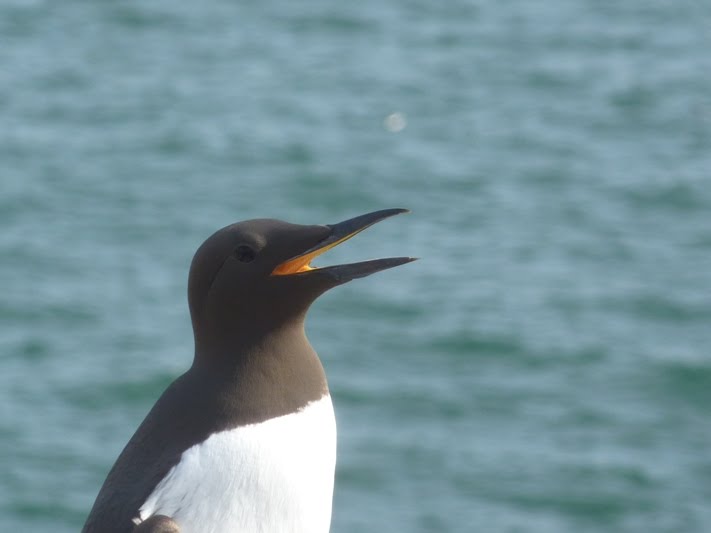
Second-summer Mediterranean Gull over the islands
Guillemot now eggs
Monday 12th April comments:
The fine, settled weather continued and at times, the North Sea resembled a pond – it was that calm. The breeding birds have continued to settle and the early start to the season continued – we’ve now got Guillemot on eggs! The first Guillemot eggs were seen on the cliffs of Inner Farne – some seventeen days earlier than two years ago! However more unexplainable was the lack of Puffins – the entire population departed for the open sea, disappointing the visiting public in the process. Despite the absence, it was still a very pleasant day to be on the islands.

On the migration front, the number of Mediterranean Gulls has increased – we’ve now got four with two second-summer birds (potential breeders). Other birds of note included a male Velvet Scoter through Inner Sound (with the lingering large Common Scoter flock) and some impressive Corvud passage.

Breastfeeding Is Good but Maybe Not THAT Good

An article entitled “The Burden of Suboptimal Breastfeeding in the United States: A Pediatric Cost Analysis,” by Bartick and Reinhold, was published in Pediatrics 2010 April 5. According to this news report, it showed that 900 babies’ lives and billions of dollars could be saved every year in the U.S. if we could get 90% of mothers to breastfeed for at least 6 months. It says breastfeeding has been shown to reduce the risk of stomach viruses, ear infections, asthma, juvenile diabetes, Sudden Infant Death Syndrome and even childhood leukemia.

This new study did not provide any new evidence. It simply took risk ratios from a three year old government report, extrapolated, and estimated the costs.

The report it is based on, the 2007 breastfeeding report from the Agency for Healthcare Research and Quality, examined 43 primary studies on infant health outcomes, 43 primary studies of maternal health outcomes, and 29 systematic reviews and meta-analyses that covered some 400 other studies. They found that

a history of breastfeeding was associated with a reduction in the risk of acute otitis media, non-specific gastroenteritis, severe lower respiratory tract infections, atopic dermatitis, asthma (young children), obesity, type 1 and 2 diabetes, childhood leukemia, sudden infant death syndrome (SIDS), and necrotizing enterocolitis.

They found

no relationship between breastfeeding in term infants and cognitive performance. The relationship between breastfeeding and cardiovascular diseases was unclear. Similarly, it was also unclear concerning the relationship between breastfeeding and infant mortality in developed countries.

So how could they take a study that showed no clear relationship with mortality and re-interpret it to predict that 900 lives a year could be saved? They used statistical skullduggery. They went to other statistical sources to find the rates of breastfeeding and the overall death rates from diseases like asthma. Then they used their imagination to estimate how many of these deaths involved non-breastfed children. Then they combined those estimated death rates together with the odds ratios from the AHRQ study to do their calculations. That’s not kosher.

There are other factors to consider. One of the reported adverse effects, necrotizing enterocolitis, is largely a disease of newborns who are premature and have low birth weights. Some of the diseases are treatable and not usually serious, like otitis media. And the risk of otitis in bottle fed babies can be decreased by not letting the child hold the bottle or take it to bed. For some conditions like atopic dermatitis, the risk depends on the family history: in this study  there was an increased risk of atopic dermatitis with breastfeeding when parents had no history of allergies.

It’s interesting to read all the caveats in the text of the AHRQ report, especially about the dangers of relying on systematic reviews and meta-analyses when the individual studies those reviews are based on may be flawed. 80% of the studies included in their analysis were surveyed only via these secondary sources. There are individual studies that contradict their findings for most of the conditions they studied. The report’s conclusion cautioned:

A history of breastfeeding is associated with a reduced risk of many diseases in infants and mothers from developed countries. Because almost all the data in this review were gathered from observational studies, one should not infer causality based on these findings. Also, there is a wide range of quality of the body of evidence across different health outcomes.

That’s not exactly a ringing endorsement of reliable data to base a cost assessment on.

One of the commenters on the news story said

There is no reason for a healthy well-fed mother not to breast feed her baby

I beg to differ. There are a lot of healthy well-fed mothers who have found what they think are valid reasons not to breastfeed. I chose not to breastfeed my babies because it was inconvenient, time-consuming, interfered with my sleep, and was incompatible with my job as a doctor working 24 hour shifts in the emergency room and as a flight surgeon on call. I suppose I could have pumped milk and planned ahead and found a way to do it, but it would have required heroic measures. I can imagine leaking breast milk all over my flight suit when I was on an emergency helicopter mission and simply couldn’t stop to pump. Moreover, I tried breastfeeding briefly with my first baby and frankly, I didn’t like it. All in all, I thought my babies were better off with a happy mother and a bottle.

This new study confirms what we already knew: that breastfeeding is better for a baby than bottle-feeding. The question is how much better, and this study really can’t answer that question. It consists of estimates based on estimates based on mixed data of varying quality. Considering the quality of the data and the pitfalls of epidemiological studies, it is likely that this new study overestimates the value of breastfeeding and the number of preventable deaths.

If we could accurately calculate the numbers needed to treat (NNT) with breastfeeding to save one baby’s life or prevent one ear infection, they would be very high numbers. Mothers should be given those numbers; but they should also understand that if they bottle-feed, the odds are good that their child will thrive.

Breastfeeding is clearly better for babies, and I strongly support it, but I think the facts leave us room to support those women who make an informed choice not to breastfeed. Some women can’t produce enough milk or have health problems that interfere with breastfeeding. Some women know the benefits of breastfeeding but choose not to do it. We may not agree with their choice, but we can respect their autonomy. Thank goodness we now have safe, nutritious infant formulas that give us a choice.


[Slashdot]
[Digg]
[Reddit]
[del.icio.us]
[Facebook]
[Technorati]
[Google]
[StumbleUpon]

Blotto: Space Miner! [Blotto]

HOW GOOD IS SPACE MINER. The answer is INCREDIBLE GOOD. It's probably the best original game to hit the iPhone. Imagine Nintendo made Asteroids, adding a mild upgrade path on top of extremely gratifying space flyingabout. IT IS FIVE SPACE DOLLARS and worth every penny, but there is a "LITE" version that will give you ample time to gauge your own proclivity towards shooting rotating rocks and watching them explode. [iTunes] More »


33M Island in Fiji

katafanga-island-fiji-1Got an extra $33M and would like to live adjacent to Mel Gibson. If so, you may be interested in a private island in Fiji is being sold online for $33.39 million  Located in the far east of Fiji within the Lau group, Blue Lagoon Island lies adjacent to U.S. actor Mel Gibson’s Mago Island.

The 225-acre island is one mile long and a third of a mile wide. It is encircled by a 5,000-acre lagoon that offers protection from extreme tides, providing the island with calm tranquil waters, which are said to offer clear views 200 feet underwater.

It is accessible via a 3,400-foot runway.

The scarcity of private islands coupled with the growing popularity of Fiji as a tourist attraction, increasingly favored by Americans and Europeans, has further increased demand for the ultimate seclusion that a “private” island ensures, according to eBay.

The island property was appraised at US$10 million in 1999, prior to any development according to the listing. Recently two accredited valuation companies concurred that the current value is estimated at $25 million euros.

The article doesn’t say what the neame of the island is, but according to sources it may be Katafanga Island which you can see here.

To read the full article visit here: http://www.allheadlinenews.com/articles/7018352576#ixzz0ko4tCjTr

Engineering and the Easy-Bake Oven (Part 2)

So does the Easy-Bake Oven of 2010 look the same as the original? And does it produce the same yummy treats that my eight-year-old self so cherished? I decided to find out and made a trip to my local Toys R Us. There, I purchased the oven for $25, including vanilla cake and sugar cookie mixes. For m

Should Unpaid Internships Be Illegal?

Throughout history, it has been commonplace for an apprentice to work alongside an experienced tradesperson without monetary compensation. These unpaid internships, as Americans dub them, have been used to gain invaluable knowledge, lead to possible job offers down the road, and provide networ

Will Commercial Whale Hunts Soon Be Authorized? | 80beats

400626710_c5fe97c48dAfter 24 years of championing a ban on commercial whaling, the International Whaling Commission (IWC) will soon weigh a proposal seeking to resume commercial whaling. The plan would let Japan, Norway and Iceland hunt the ocean giants openly despite a 1986 moratorium on commercial whaling. In return, whaling nations would agree to reduce their catch “significantly” over 10 years [AFP]. These pro-whaling nations have kept up their hunts either by officially objecting to the moratorium or by insisting that they’re killing whales for scientific research.

The proposal is due to be submitted before the body’s annual meeting in June in Morocco, leading some conservationists to complain that the IWC should “save whales, and not whaling.” The details of the proposal will made public on Earth day–April 22. Calling the withdrawal of the ban “the best chance to fight overfishing of these animals,” U.S Commissioner to the IWC Monica Medina said: “It’s a global problem, and needs global solutions” [Washington Post].

Making its case to pull back the ban, the IWC said that during the last few decades whale populations have substantially rebounded–with bowhead whale populations off Alaska increasing to between 8,200 and 13,500, eastern Pacific gray whale numbers rising to between 21,900 and 32,400 in 1999, and blue whale populations also rising. Conservationists, however, are seething, pointing out that 1,800 to 2,200 whales continue to be killed each year. “It’s great to be showing success, but should we be planting the flag and saying, ‘We’re there’?” asked Howard Rosenbaum, who directs the ocean giants program at the Wildlife Conservation Society. “We’re not out of the woods yet” [Washington Post].

They say that despite the rise in numbers, several species still struggle to survive. Just 130 or so western Pacific gray whales swim off the coast of Russia now — compared with at least thousands, if not tens of thousands, in the past — and they are still vulnerable to being caught in Japanese fishing nets and offshore energy projects. Even one of the populations that made major gains over the past few decades, the Southern right whale, is experiencing a sudden die-off. Since 2005, researchers have identified 308 dead whales in the waters around Argentina’s Peninsula Valdes, an important calving ground, and 88 percent of the dead were calves less than three months old [Washington Post].

Critics argue that the resumption of commercial whaling would not just endanger future whale populations but would also legitimize behavior by countries like Japan, which many accuse of overfishing the waters of the Southern Ocean sanctuary and which recently won a victory in Doha, Qatar where a proposed ban on the trade of the bluefin tuna was shot down. Norway and Iceland have already disregarded the IWC’s moratorium and have hunted whales commercially.

Australia, meanwhile, has been extremely vocal in its opposition to the proposal, with a spokesman for the Environment Ministry, Greg Hunt, saying it would set too dangerous a precedent. “It is not about protecting whales, it is about a shoddy deal which gives the green light to whaling and is a white flag on plans to end whaling,” he said [Australia Network News]. The United States, while opposed to commercial whaling, said it was waiting to see the final proposal. The proposal needs a three-quarters majority vote to go ahead. A number of IWC nations have yet to declare their position.

Related Content:
80beats:Bluefin Tuna Is Still on the Menu: Trade Ban Fails at International Summit
80beats: Videos Show Collision Between Japanese Whaling Ship & Protesters
80beats: Is the Whaling Ban Really the Best Way to Save the Whales?
80beats: Controversial Deal Could Allow Japan To Hunt More Whales

Image: Flickr / ahisgett