Too much Government, and way too many Bureaucrats

New from Dan Mitchell of the Cato Institute

America has too many bureaucrats and they are dramatically overpaid. This mini-documentary uses government data to show how federal, state, and local governments are in fiscal trouble in part because of excessive pay for a bloated civil service.

"Chris Christie Republican" Anna Little overcomes enormous odds to win

From Eric Dondero:

Bruce Springsteen's next Representative in Congress for his hometown district could be a Republican?

From the Asbury Park Press, last night:

In the 6th District, Republican conservative and Highlands Mayor Anna C. Little, a favorite of the Tea Party movement, challenged wealthy businesswoman and party fundraiser Diane Gooch for the chance to run against incumbent Democratic Rep. Frank Pallone.

By midnight, Little, who is also a former Monmouth County freeholder, held a 6,725-to-6,662 lead over Gooch, the owner and publisher of The Two River Times.

Little was outspent by Gooch $492,000 to $22,000.

Very latest numbers with 100% of the precincts reporting (minus outstanding provisional ballots), has Little ahead by 103 votes. The Gooch campaign is giving signals that they will call for a re-count.

Sharron Angle has some explaining to do before she gains full Libertarian Republican support

Is she really anti-Beer?

by Eric Dondero

Readers of Libertarian Republican may wonder why we have not highlighted the campaign of Tea Party-aligned candidate for US Senate Sharron Angle in Nevada. She is now the official GOP nominee against Harry Reid. She beat both Sue Lowden and Danny Tarkanian soundly, yesterday in the Nevada Republican primary.

She's solid on economics. In fact, 100% libertarian on taxes and spending issues, which has won her the label of "extremist" from the liberal media.

However, there are disturbing facts about her on the social side. And while Libertarian Republicans often look past social conservatives who emphasize fiscal conservativism, in Angle's case it may be too much to ignore.

From Steve Sebilius, Slash Politics blog, May 24:

Back in 2006, Angle gave an interview to the excretable execrable (and now defunct) Liberty Watch magazine, which covered politics when it wasn’t extolling the virtues of corrupt state senators, providing a forum for racist rants or profiling 9/11 Truthers. And that interview provides a little more insight into Angle’s conservatism.

Liberty Watch’s website isn’t up on the Internets any longer, but a version of the interview is helpfully posted on the website of the Republican Majority Campaign PAC. Here’s the relevant passage, from a discussion about medical marijuana:

“My greatest problem with marijuana is that it’s illegal, which gives Nevadans a false sense of security in this whole thing,” Angle said. “If the DEA has the manpower and wanted to go after this, there is no place in Nevada state law that can protect people because federal law supersedes state law.”

Her opinion, though, ignores states’ rights and individual freedom. Also, Angle’s faith quickly surfaced, extinguishing her argument that she disapproves of medical marijuana primarily on the elementary premise that it’s illegal.

“I would tell you that I have the same feelings about legalizing marijuana, not medical marijuana, but just legalizing marijuana,” Angle offered. “I feel the same about legalizing alcohol.

“The effect on society is so great that I’m just not a real proponent of legalizing any drug or encouraging any drug abuse,” she continued. “I’m elected by the people to protect, and I think that law should protect.”

Wait, what? Alcohol — which is currently legal — should be treated the same as marijuana — which is currently not legal? Is she serious? A candidate from the state of Nevada, which is practically sponsored by booze companies, is not a proponent of legal alcohol?

Make no mistake about it, we are 100% Pro-Beer at Libertarian Republican.

It goes without saying that Angle is by far the preferred candidate in the voting booth by anyone who cherishes liberty, over monstrous liberal Reid. However, the question is, how much are Libertarian Republicans willing to walk precincts for her, or give her campaign donations, or make phone calls on her behalf in the coming months. If she takes the time to address this "beer issue," and clarifies her views, that she's not in favor of any sort of prohibition, that she just finds it distasteful personally, she may find the libertarian wing of the GOP excited about her candidacy. If she moves on and leaves it hanging, she'll still win Libertarian Republican votes, but most assuredly not active support.

Wayne Root hearts fellow Tea Partier Sharron Angle

Republican-leaning Libertarian Wayne Allyn Root of Nevada, has a glowing editorial on his blog, extolling the win of Tea Party insurgent Sharron Angle over her GOP rivals Danny Tarkanian, and Sue Lowden.

Root asks "U.S. Senator Sharron who?" (RootforAmerica):

I TOLD YOU SO! The question on national political experts minds Wednesday morning is, “Sharon who?” Sharon Angle was the winner of the Republican U.S. Senate primary in Nevada. Few on the national scene saw this coming. But I did. As a Nevada Reagan Libertarian, Tea Party activist, and national political commentator, I’ve said for months that in a “Tea Party year” anything is possible- including the election of a political outsider like Sharon Angle.

When the public is angry and wants blood- all bets are off. Ask Utah Senator Bennett and Pennsylvania Senator Arlen Specter. Ask the voters of Massachusetts, Virginia and New Jersey, who all participated in big wins for maverick underdog candidates in the past year. Ask Nevada Governor Jim Gibbons, the first sitting governor ever defeated in a primary in Nevada history (also last night). Ask Arkansas Senator Blanche Lincoln who barely escaped with her life on Tuesday, only to face sure defeat in the general election in November. Ask the Lt. Governor of South Carolina, who got 17% of the vote against an unknown female candidate (Nikki Haley) endorsed by Sarah Palin. The new mantra is V.E.T.O.- Vote Everyone of Them Out!

Nevada is the canary in the coalmine. I predict all over this country the media will be stunned by this “new world order.” Conservative and Libertarian are back in vogue; “traditional” and “establishment” are dirty words; and radical is the new mainstream. The Reids (Harry and his son Rory) are in the wrong place, at the wrong time. All you have to do is “read the tea leaves” to know that. In this new world order, Sharron Angle may be just what the doctor ordered.

Root was recently elected to the Libertarian National Committee. He is a regular speaker on the Tea Party circuit and joined with Sarah Palin at the huge rally held in April in the Nevada desert to oppose Reid, sponsored by Tea Party Express.

The Stealth Libertarian campaign of Edward Gonzalez for Congress, as a Republican

From Eric Dondero:

The California primaries were yesterday. And Libertarian Republicans were paying close attention to one race in particular.

This from activist Mike "Mish" Shedlock sent out on his blog and in an email blast two days ago:

If you live in California District 16, please write in Edward Gonzalez. He only needs 2,053 Republicans write-in votes. If you are a Libertarian, do not check the Libertarian box, instead wrote-in Edward Gonzalez as a Republican.

Gonzalez is the Libertarian nominee. But he's simultaneously seeking the GOP nomination for Congress in an overwhelmingly Democrat district, near San Jose. His opponent is longtime incumbent, ultra-liberal Rep. Zoe Lofgren. There is no Republican candidate on the ballot for the race.

There is opposition to the efforts of the Gonzalez campaign. Establishment Republicans mounted their own last minute challenge for a write-in nomination to keep Gonzalez from having two ballot spots. Sources have told LR that the challenge came from the "religious right wing" of the local GOP, not from the Tea Party wing, and suprisingly not from the Arnold Schwarzenegger moderates.

The results should be known later today.

Note from the Editor - if you live in California and you find out the results, please contact LR immediately. Thanks

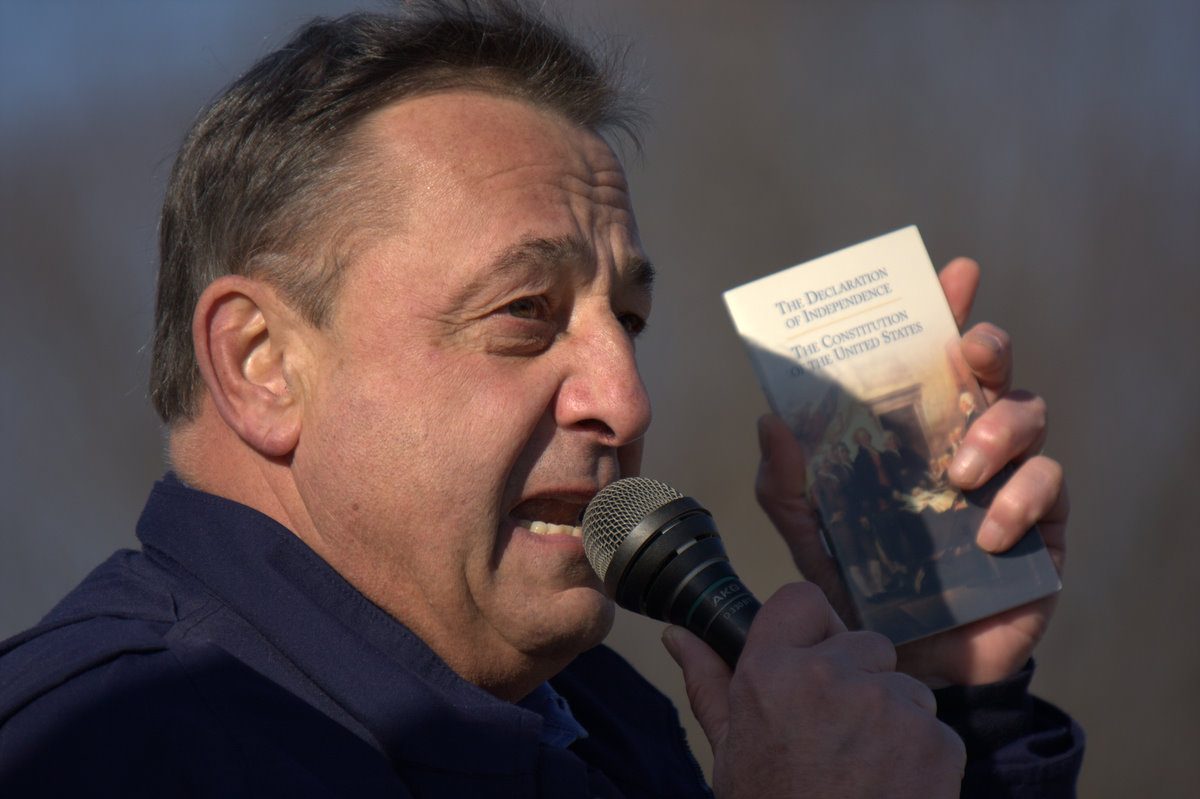
Maine gets a Republican for Governor who may be "more of a Libertarian"

Under the Radar Election

“We’re seeing our taxes go up and our freedoms eroded. The government is putting the shackles of economic slavery to each and every one of us. The Maine taxpayer has been put at an extreme disadvantage.” -- Paul LePage

He's been described as the "Tea Party candidate," and even "Far Right." He is the Mayor of Waterville, a working class town in the southeast coast. He has an entirely Democrat city council.

From the Bangor Daily News:

In Waterville, LePage lowered taxes 13 percent in six years, improved the city’s credit rating and increased the rainy day fund from $1 million to $10 million...

Continuing:

“I’ve heard that some people think I’m a nutcase or some kind of wacko conservative extremist,” said LePage during a recent interview at Waterville City Hall. “If those accomplishments are what makes a wacko, then I’m a wacko. I’m a fiscal conservative, and I’m not ashamed of it.”

Now this morning this description from RedDiva's Drivel, primary relection round-up:

The Democratic Primary winner, State Senator Elizabeth Mitchell, will face the Republican Primary winner, Paul LePage who is more Libertarian than Republican, and three Independent candidates in November.

He won a crowded primary field last night, with 8 candidates.

REPUBLICAN

Paul LePage – 20,393 (37.7%)

Les Otten – 9,302 (17.2%)

Peter Mills – 7,465 (13.8%)

He also leans libertarian on social matters. From the Bangor Daily News, June 9:

Casinos also trigger the debate between the libertarian perspective and the view that government must protect people from their worst instincts.

The casino question is instructive for voters weighing the candidates...

On the hot issue of a proposed Casino in Oxford County, continuing:

Paul LePage said he was conflicted, but supported it.

LePage was endorsed by the Republican Liberty Caucus. According to Pine Tree Politics (a libertarian-leaning Republican website) former State Rep. and current ME RLC Chair Ken Lindell sent out a "Liberty Compact" to all the GOP primary candidates asking them to sign. Three of them, including LePage, signed it. It reads as follows:

“I (name), pledge to the citizens of the State of Maine and to the American people that, as their elected representative I will work to:

Restore liberty, not restrict it; shrink government, not expand it; reduce taxes, not raise them; abolish programs, not create them; promote the freedom and independence of citizens, not the interference of government in their lives; and observe the limited, enumerated powers of our Constitution, not ignore them.”

LePage also won the all-important straw poll at the recent GOP State Convention.

Nikki’s Victory a Win for the "Libertarian/Sarah Palin wing"

"Libertarian" with a Capital 'L'

Nikki Haley finished with 49% of the vote in the GOP primary last night. Her nearest rival gained 22%, which makes the outcome of any run-off all-but-certain.

Her huge win is being heralded, even by the liberal media, as a victory for libertarians and most especially for libertarian-leaning kingmaker Sarah Palin.

From Google News via the AP "Haley weathers tryst accusations in SC gov race":

COLUMBIA, S.C. — South Carolina's Nikki Haley entered a runoff for the Republican gubernatorial primary with a substantial edge over her GOP rival, deflecting attacks on her marriage and her ethnicity using an antiestablishment message that resonated with the state's voters.

"We saw us push against the establishment, we saw us push against the power and push against the money and boy did they push back," Haley, a three-term state lawmaker and tea party headliner, said after coming close to winning the four-way race outright.

Continuing:

Haley blamed an entrenched "Good Old Boy" system for conspiring to derail a campaign that gained steam with a slew of television ads and a spirited endorsement by former Alaska Gov. Sarah Palin. She pivoted off the claims to underscore an antiestablishment message that has so far resonated.

Haley's politics are familiar to the state's conservative voters. She hews to the Libertarian, limited government policies favored by Sanford, though she distanced herself from him. He backed her candidacy and she won the endorsement of his ex-wife, popular former first lady Jenny Sanford.

And so it continues for Center-Right parties in Europe… This time it’s Spain

El marcado libre avanza por todas partes del mundo

From Cliff Thies:

Add Spain to the list of countries in the world indicating they are ready to shift from the socialist-left orientation to a center-right orientation. A recent survey gives the center-right Popular Party (better translated as People's Party) a ten point lead over the Socialist Workers' Party. In the last election, the Socialists eked out a thin, four point victory over the Popular Party.

(See chart for survey at electometro.com)

And this from Reuters, "Spain's Socialists pay high price for crisis":

(Reuters) - Spain's economic crisis has seen support for the minority Socialist government nosedive and increased doubts about its ability to remain at the helm of the eurozone's fourth largest economy.

A 15-billion-euro austerity bill scraped through parliament by just one vote on Thursday, narrowly avoiding setting off a vote of no-confidence.

And if there were any doubts about the national mood, opinion polls in the weekend papers put Prime Minister Jose Luis Rodriguez Zapatero's government as much as 10 points behind the conservative opposition Popular Party (PP).

The next Spanish general elections are due in 2012, but an early election is a possibility though not likely in the near-term...

The Popular Party and its leader Mariano Rajoy could muster sufficient support in parliament for a vote of no-confidence on any pretext, which would mean early elections.

"There's a high probability the PP will win the next election, no matter what, considering the current economy, but Spain really doesn't need an election right now," said professor of economics at Grenada University Santiago Carbo Valverde.

In addition to the two main parties, there are a number of smaller parties, including both center-right and socialist-left nationalist parties in the several "national" regions of Spain. Four governments ago, the Popular Party ruled in coalition with the center-right nationalist parties. Three governments ago, obtaining a majority in the Spanish parliament in its own name, the Popular Party ruled alone. Implementation of the kind of reforms that are needed would be helped by securing a large majority in the parliament, so that even if the Popular by itself won a majority, it should consider forging a coalition with the center-right nationalist parties.

Photo - Mariano Rajoy Brey, leader Popular People's Party

Inside Atlantis

Click here to view the embedded video.

I’ve seen many shuttle landings and the coverage always ends and the scene is a bunch of support trucks and people running around.

NASA put out a video showing some of what goes on after the camera’s go away.

Thank you NASA!

Source

BTW: This is not the post I intended;  there is a “soon to be visible comet” out there and I didn’t have a chance to nail down a few things.  I will put out better finders charts and times but if you just can’t wait, and I couldn’t check Seiichi Yoshida’s site (probably the best comet site out there IMHO).  I think it’s a mag 5.5 right now so you will need binoculars to see it.

Through the Wormhole with Morgan Freeman

Click here to view the embedded video.

This is a little “last minute” but I did want to mention there is a program coming on tonight featuring Morgan Freeman.  This sounds quite interesting so if you can you might want to check it out.  Hopefully you get the Science Channel, I do and love it.

From The Science Channel:

Academy Award®-winning actor and space enthusiast Morgan Freeman executive produces, hosts and narrates this exploration of the greatest mysteries of the universe. This new series, produced by Freeman’s Revelations Entertainment, seeks the answers to the big questions: Are we alone? Where did we come from? Is there life on other planets? From the latest work at NASA and private enterprise facilities to the latest theories from academics and researchers, this series looks at black holes, colonizing the planets, string theory and more.  Science Channel invites viewers on the journey as Morgan Freeman picks up where Carl Sagan’s “Cosmos” left off and explores the new frontiers of what is beyond Earth. Through the Wormhole with Morgan Freeman premieres Wednesday, June 9 at 10pm ET only on Science Channel.

NCBI ROFL: And you think your job is bad… | Discoblog

babyGas production by feces of infants.

“BACKGROUND: Intestinal gas is thought to be the cause abdominal discomfort in infants. Little is known about the type and amount of gas produced by the infant’s colonic microflora and whether diet influences gas formation. METHODS: Fresh stool specimens were collected from 10 breast-fed infants, 5 infants fed a soy-based formula, and 3 infants fed a milk-based formula at approximately 1, 2, and 3 months of age. Feces were incubated anaerobically for 4 hours at 37 degrees C followed by quantitation of hydrogen (H2), methane (CH4), carbon dioxide (CO2), hydrogen sulfide (H2S), methanethiol (CH3SH), and dimethyl sulfide (CH3SCH3) in the head-space. RESULTS: H2 was produced in greater amounts by breast-fed infants than by infants in either formula group, presumably the consequence of incomplete absorption of breast milk oligosaccharides. CH4 was produced in greater amounts by infants fed soy formula than by infants on other diets. CO2 was produced in similar amounts by infants in all feeding groups. Production of CH3SH was conspicuously low by feces of breast-fed infants and production of H2S was high by soy-formula-fed infants. CH3SCH3 was not detected. Only modest changes with age were observed and there was no relation between gas production and stool consistency, although stools were more likely to be malodorous when concentrations of H2S and/or CH3SH were high. CONCLUSIONS: Gas release by infant feces is strongly influenced by an infant’s diet. Of particular interest are differences in production of the highly toxic sulfur gases, H2S and CH3SH, because of the role that these gases may play in certain intestinal disorders of infants.”

baby poop

Photo: flickr/Amy L. Riddle

Related content:
Discoblog: NCBI ROFL: Finally, science brings you…the baby poop predictor (with alarm)!
Discoblog: NCBI ROFL: “Back and forth forever” (or, DIY poop therapy).
Discoblog: NCBI ROFL: At least my experiments don’t require fresh slug feces…

WTF is NCBI ROFL? Read our FAQ!


Big Autism Study Reveals New Genetic Clues, but Also Baffling Complexity | 80beats

DNAResearchers have published the largest-existing study on the genetic causes of autism, comparing 996 autistic individuals to 1,287 people without the condition. Their results, which appear today in Nature, may provide unexplored avenues for treatment research, but also show in new detail the disorder’s sheer genetic complexity. For example, they have found “private mutations” not shared between people with autism and not inherited from their parents.

According to The Centers for Disease Control and Prevention, one in 110 children in the United States has autism spectrum disorder, and that the prevalence of autism among eight-year-olds has increased 57 percent from 2002 to 2006. There is no known cure, although intensive behavioral therapy helps some kids.

Hilary Coon, Ph.D., a lead author on the study and research professor of psychiatry at the University of Utah School of Medicine, said while research shows scientists are making progress in understanding the causes of autism, it is increasingly clear that autism is a multifaceted disorder with both genetic and environmental causes. “We are whittling away at it,” Coon said. “But a brain-related disorder, such as autism, is amazingly complex. It’s not really one entity.” [University of Utah press release]

For this study, researchers at the international Autism Genome Project wanted a closer, more detailed picture of the over 100 genes commonly linked to autism. They looked for rare variants–small deletions or additions to the DNA sequences that make up these genes. They found that people with autism had a higher number of these variants than those without the disorder, and that some of these DNA differences were not inherited. That means these DNA changes occurred either in the egg cell, sperm, or in the developing embryo.

“Most individuals that [sic] have autism will have their own rare form,” genetically speaking, concludes senior author Stephen Scherer, a geneticist at the Hospital for Sick Children in Toronto, Canada. That said, the team found that genes deleted in autistic patients tended to perform similar tasks. Many were involved in aspects of cell proliferation, such as organ formation. A number participated in development of the central nervous system and others in maintaining the cytoskeleton, which protects the cell and helps it move. “These are not random hits in the genome” and clearly have some connection to autism, says Jonathan Sebat, a geneticist at Cold Spring Harbor Laboratory in New York state. [Science Now]

Some believe that looking more closely at these variants may eventually lead to novel treatments.

Two categories of genes were affected more frequently than others: those coding for the neural cell development, and those involved in the signalling or “communication” between cells. Many of these same genes are thought to play a role in other neuro-development disorders. There may even be some overlap with conditions such as epilepsy and schizophrenia, the researchers said. “These and other recent findings have very real potential to lead to the development of novel interventions and treatments for these disorder,” said Louse Gallagher, a professor at Trinity College Dublin, one of the universities in the consortium. [AFP]

So what’s the next step towards such treatments? For now, it’s more big genetics studies. The Autism Genome Project has enrolled another 1,500 families and hopes for their next testing phase to look at people’s complete genomes and exomes (the part of the genome that codes for RNA or protein), reports Nature’s blog The Great Beyond.

The study has been hailed as a positive step by researchers, though one can imagine the parents of autistic children still feeling frustrated by the slow pace of progress. Perhaps to avoid giving false hopes, Dr Gina Gomez de la Cuesta of The National Autistic Society was cautious in her assessment of the study, saying:

“This study furthers our understanding of genetic variation in autism, however there is a great deal more research to be done. Research into autism is constantly evolving but the exact causes are as yet still unknown. The difficulty of establishing gene involvement is compounded by the interaction of genes with the environment. Genetic testing for autism is still a long way off, given that autism is so complex.” [BBC]

Related content:
DISCOVER: Galleries / Six Degrees of Autism
DISCOVER: Why Does the Vaccine/Autism Controversy Live On?
DISCOVER: Autism: It’s Not Just in the Head

Image: flickr / net efekt


23andMe to Customers: Oh Wait, Those Are Somebody Else’s Genes | Discoblog

23andmeHad her baby been switched at birth in a hospital mishap? That’s what one mother thought after getting her child’s results from the personal genetics testing company 23andMe and finding that his genetic profile was inconsistent with the rest of the family’s. After she finished screaming and crying, she contacted the company. Sorry for the inconvenience, she was told–we just mixed up his sample.

The company that asks clients to spit in vials is now putting its foot in its mouth: it gave up to 96 customers a look at the wrong genes. 23andMe posted an apology, viewable only to clients, on their website.

The Los Angeles Times also published the statement, which blamed the snafu on a processing error at a contractor lab:

“Up to 96 customers may have received and viewed data that was not their own. Upon learning of the mix-ups, we immediately identified all customers potentially affected, notified them of the problem and removed the data from their accounts. The lab is now concurrently conducting an investigation and re-processing the samples of the affected customers and their accurate results will be posted early next week.”

23andme2The statement also says that, pending the results of their investigation, they will “adopt corrective action as warranted,” but states that “23andMe’s personal genetics service remains proven and sound.”

23andMe says the tests can show customers whether they’re at risk for certain diseases, and can reveal their ties to ancestors. While lab mix-ups happen, we’re thankful these tests were not used on impressionable college freshman, suspected cheating spouses, or for sentencing criminals.

Related content:
Discoblog: Welcome, UC Berkeley Freshmen! Now Hand Over Your DNA Samples
80beats: 5 Reasons Walgreens Selling Personal DNA Tests Might Be a Bad Idea
80beats: No Gattaca Here: Genetic Anti-Discrimination Law Goes Into Effect
DISCOVER: Who’s Your Daddy?

Image: flickr / nosha / juhansonan


Astrophotographer of the Year contest deadline approaches | Bad Astronomy

Fancy yourself a good photographer of the heavens? Got some dynamite images to back that up? Then submit them to the Royal Greenwich Observatory’s annual Astronomy Photographer of The Year contest! A whole pile of images have already been uploaded to Flickr for the contest. Click around those pictures; the competition is fierce. The images are lovely.

The winner receives a £1000 prize, and their shot will be displayed at an exhibition at the observatory. But hurry; the deadline for submission is noon (BST) on Friday, 16 July 2010. Get snapping!

Photo courtesy Andrew Stawarz on Flickr, from the contest’s photostream.


A good week for UK science journalism (despite one big fail) | Not Exactly Rocket Science

It’s been an interesting week for UK science journalism. On the one hand, we had a veteran science journalist laying out a manifesto for failure, by suggesting that reporters are messengers with no remit for analysis or fact-checking.

I’m still staring wide-eyed in disbelief over that, but a couple of noteworthy events today have lifted my spirits about the state of the country’s science journalism. For a start, we have Mark Henderson at the Times continuing to understand that the Internet offers interesting possibilities denied to print publication. His interview with our new science minister David Willetts was published in the Times, but also posted in a much fuller form on its blog.

At the Genetic Future blog, Daniel Macarthur broke a brilliant story about a screw-up at personal genomics company 23andme, which ended up with up to 96 people receiving the wrong data. It was a great example of excellent journalism emanating from the blogosphere and both New Scientist and Nature deserve credit for credting Daniel appropriately.

Nature once again shows why it produces some of the best science coverage out there by dissecting two reports that cast suspicion on the WHO’s pandemic response, suspicion that now seems unsubstantiated.

And most excitingly of all, the Guardian have launched the first of their Story Trackers – a new way of telling science stories that Alok Jha described to me as a “slow live-blog”. The idea is that they pick specific big stories and continuously update their coverage for a few days with reactions, comments and links, sourced from other coverage, blog posts, tweets and more. It’s an idea that stems from Alan Rusbridger’s “mutualisation of news” idea that he expounded in his Hugh Cudlipp lecture.

That is, the Guardian realises that there are plenty of other conversations going on about the stories it covers, often by people with more knowledge and expertise, and it is silly to ignore that. It’s the same idea that drove the unconference format so enjoyed by attendees at the ScienceOnline’10 conference. Quoting Rusbridger:

“We feel as if we are edging towards a new world in which we bring important things to the table – editing; reporting; areas of expertise; access; a title, or brand, that people trust; ethical professional standards and an extremely large community of readers. The members of that community could not hope to aspire to anything like that audience or reach on their own; they bring us a rich diversity, specialist expertise and on the ground reporting that we couldn’t possibly hope to achieve without including them in what we do.”

Spot on, and enter the story trackers. By pulling in material from all across the internet, they tap into this rich vein of expertise while providing the people who they’re quoting and linking to with extra traffic. It’s a win-win.

The trackers are also based on the idea of living stories. News stories don’t finish at the point of publication or the lifting of the embargo. There’s a huge amount of reaction and commentary that goes on long after the first words appear in print or pixels. That’s all part of the experience of reading modern news and, again, it’s silly to ignore it and wise to capitalise on it.

For all of the above, I’m feel really quite optimistic about the future of mainstream science journalism in the UK. There are good people doing good things and while my joy will almost inevitably be dashed tomorrow morning, I think it’s wise to highlight the best examples when we see them.

Saturn’s Rings May Have Birthed Its Small Moons—and More Could Be Coming | 80beats

SaturnBlueThey’re new, they’re small, and they didn’t make sense.

That’s what could be said for five of the littlest members of Saturn’s expansive satellite family. The largest of this group, Janus, measures barely more than 100 miles in diameter, but it’s the age of these little moons that’s the odd bit. Their clean, crater-free surfaces help reveal that they’re only 10 million years old, meaning they didn’t form the way the planet’s other moons did—from the accretion disk that formed mighty Saturn itself billions of years ago. This week in Nature, astronomers published evidence to support an explanation for that oddity: Those moons formed from Saturn’s rings.

Like so much new knowledge about the sixth planet and its moons, including Titan and Enceladus, the research team’s findings come from the Cassini mission:

Sailing past Saturn’s outer rings, it found lumps of ice up to 100 metres across, ten times bigger than the rings’ other icy particles. For some researchers, the discovery called to mind another intriguing fact: that the moons and the rings share a composition of the purest ice in the Solar System. “When you put all this together, you had the strange feeling that something is going on in the rings’ outer edge,” says Sébastien Charnoz at Paris Diderot University, who was involved in the latest research [Nature].

Some scientists had suspected this explanation, but they lacked the computer power to model how it could happen (even the most powerful machine would struggle to model the trillions of orbits in the solar system’s history). So the team created a simplified model with the ring as a single dimension, tested it out on our own planet and moon’s history, and then applied it to Saturn and its rings. At the out edge of the rings, it works: material can clump together.

“Disks in astrophysics are like pancakes—they spread,” [Charnoz] says, adding that collisions within the disk or ring drive the spreading detritus outward. Once the icy ring particles venture beyond about 140,000 kilometers from Saturn’s center, they become unstable, clumping into tiny protomoons and then moonlets [Scientific American].

As the clumps get bigger, Saturn’s gravity pushes them further out (our own moon is slowly receding from us). While it’s nice to have a workable answer to the puzzle, the bigger implication is that the solar system is alive. Says Charnoz:

“There are still new objects forming in the solar system today. We used to think everything was formed four, five billion years ago, but no! New objects are still forming today” [MSNBC].

Related Content:
DISCOVER: Hello, Saturn
80beats: Cassini Sends Back Ravishing New Photos of Saturn’s Rings
80beats: Cassini Probe Finds “Ingredients For Life” on Saturn’s Moon Enceladus
80beats: Cassini Spacecraft Snaps Pictures of Saturn’s Geyser-Spouting Moon

Image: NASA


World Science Festival: Untangling String Theory | Discoblog

string-theoryOn stage at the World Science Festival on Saturday night, festival co-founder Brian Greene recalled the early days of string theory–the theory that brings together competing ideas in physics by postulating that there exist six or seven extra dimensions beyond space and time.

Greene was a graduate student in physics when string theory got its start, and remembers waking up early each morning to run to the mailbox in search of news of harmony and peace; that is, for signs that the long, obdurate conflict between general relativity and quantum mechanics was resolving itself into a beautiful universe of tiny vibrating strings.

That was in the 1980s. Now, almost thirty years later, the conflict continues, and the strings—though beautifully imagined by artists and scientists—still haven’t made themselves apparent in the form of a testable prediction. This is a big problem for skeptics like Lawrence Krauss, who insist that untestable scientific theories are—well, not really science.

But Krauss, presumably out of deference to his host, didn’t say that on stage on Saturday. Instead, he took a soft approach, presenting the audience with a picture of an anthropological find, a 33,000-year-old wood carving of a half-man, half-lion creature. “Who knows what the artist was thinking when he—or she—created this?” he mused. Perhaps the artist had seen a lion before, and had also seen people, and had imagined the existence of a combination-type-creature.

“Maybe that’s what string theory will look like in another 33,000 years,” Krauss suggested.

Greene said he thought string theory was “a touch more well-motivated than the lion-human,” but agreed that human understanding is a pitiful thing (especially when limited by the senses).

The most effusive string theorist on the panel was Shamit Kachru, who described himself as “still excited”–more like the young, mailbox-happy version of Brian Greene, ever optimistic for the arrival of proof.

John Hockenberry, the panel’s moderator, asked Greene if he thought experimental evidence would come during his lifetime.

“I’d be surprised,” said Greene.

“And in your lifetime?” Hockenberry asked Kachru.

“…I’d be surprised,” conceded the young physicist reluctantly.

“I’d be surprised if we weren’t surprised,” concluded Krauss, before the lights went down.

Related Content:
Discoblog: World Science Festival: Will Scientists Ever Know Everything?
Discoblog: World Science Festival: Waiting for Einstein’s Gravity Waves
DISCOVER: The Man Who Plucks All the Strings, an interview with Brian Greene
DISCOVER: String Theory in Two Minutes or Less (videos)

Image: World Science Festival