Professional Integrity for Sale? “Sure,” Says Medscape!

Some chiropractors also practice homeopathy. According to Frank King, D.C., many more should be doing just that:

Homeopathy is an energetic form of natural medicine that corrects nerve interferences, absent nerve reflexes, and pathological nerve response patterns that the chiropractic adjustment alone does not correct. The appropriate homeopathic remedies will eliminate aberrant nerve reflexes and pathological nerve responses which cause recurrent subluxation complexes.

Not only does homeopathy correct nerve interferences, it empowers the doctor of chiropractic to reach the entire nervous system. What this means is that we can now better affect the whole person, and all of the maladies that affect us. Homeopathy’s energetic approach reaches deep within the nervous system, correcting nerve interferences where the hands of chiropractic alone cannot reach. Homeopathy is the missing link that enables the chiropractor to truly affect the whole nervous system!

But that’s not all:

Financial Rewards

Homeopathy means a multiple increase in business. Personally, I have been able to see and effectively help more patients in less time. The additional cash flow from broadening your scope of practice, increasing your patient volume and selling the homeopathic remedies is a wonderful adjunct. Better yet are the secondary financial benefits:

  • Homeopathy is like an extension of you that the patient can take with them to apply throughout each day in between visits. The actual therapeutic benefits of homeopathy along with the inner comforts of the patient as they connect you with each dose they take.
  • The dynamic broadening of your effective scope of practice multiplies the number of patients you can help and the multiple problems that each patient usually has. As you correct one set of problems, there are commonly other problems most patients don’t even tell their chiropractors. This doesn’t have to be the case anymore. Homeopathy empowers the chiropractor to correct conditions ranging from allergies to warts with incredible effectiveness!
  • Obviously, the rule of multiples will exponentially increase when a homeopathic procedure is properly implemented into your practice. Many of the conditions people are suffering with have no viable solution without the dynamic duo of chiropractic and homeopathy.

You can be the doctor people will seek out, travel long distances to see, and pay cash for your valuable services. Take it from someone who has experienced it first hand, it’s a great position to be in.

This is no surprise. Most chiropractors relinquished whatever ethical integrity they might have had when they bought into the “subluxation” myth, and the field as a whole has a fine tradition of “practice building.”

Naturopaths, likewise, don’t mind winking at practice ethics in order to make an extra buck. Nor do MD quacks, of course. Hey, it’s getting harder and harder to make a living just by slogging through the morass of needy patients, onerous third-party billing requirements, diminishing payments, increasingly cumbersome practice guidelines, next-to-impossible-to-keep-up-with (nothing to say of tedious and technical!) medical literature, and all the rest. Why not sprinkle your practice with a little ‘diagnostic’ sugar that will appease those clingy patients—for a while, anyway—and that you won’t have to find billing codes for (because there aren’t any)? Heck, why not check out this offering from “bio-pro, inc. Amazing Anti-Aging Solutions (Healthier Patients, More Patients)”:

HOWW TOOOO ….
The “must do” seminars for those who own or are managing a
Complimentary [sic] Medicine Practice.

Three day course teaches you:
How to relate to the patient, evaluate, test and diagnose
How to use solutions, mixtures, methods, supplies and equipment
How to protocol administration for Chelation, Oxidation, Chelox, TriOx, Ascorbates, UVBI
How to design and organize your office
How to hire and fire staff and to computerize
How to use public relations and marketing
How to manage compliance with Medicare, State Medical Boards and governmental regulatory agencies
 
Manuals included…
Each attendee receives one set of training materials, including:

Protocol Manual
Physicians Manual
Office Procedure Manual
Forms Book
Marketing Manual
Patient Results Manual
Employee Manual
Audio tapes
and other related material.

Bio-pro was founded in 1978 by the late Charles H. Farr, MD, PhD, the self-styled “father of oxidative medicine,” who was also a founder of the American College for Advancement in Medicine, the Mother of All Pseudomedical Pseudoprofessional Organizations (PPO).

But none of this is surprising, right? After all, quacks quack.

What may have come as a surprise to beleaguered physicians who still play by the rules was this offering, just a few days ago, from Medscape Business of Medicine

Six Ways to Earn Extra Income From Medical Activities

You’re chasing after claims but watching reimbursement sink.

It’s a common story, and primary care doctors and even specialists are keeping their ears to the ground for other ways to boost their bottom line. Luckily, doctors have some fairly lucrative options that can help them maintain their income — and perhaps even increase it.

We looked at 6 avenues that physicians have taken to earn extra revenue. None of these activities require a tremendous amount of time. Participating in just 1 or 2 activities can put enough money in your pocket to allow you to breathe a little easier when the bills come in. Here are several popular ones for consideration.

So what are those ‘6 avenues’? Let’s see:

  • Work with Attorneys
  • See Nursing Home Patients
  • Serve as a Medical Director 

So far, so not necessarily bad…

  • Team Up with Pharmaceutical Companies

What??! Team up with pharmaceutical companies? Couldn’t that mean, like, just doing legitimate research and trying like hell to do it right? Uh, nope:

Drug and device companies spend billions of dollars each year to discover and promote new medicines and treatments, and they rely heavily on doctors to participate in these endeavors whether through clinical trials or serving as a speaker or consultant. It’s not uncommon for physicians to earn a minimum of 5 figures a year either speaking or doing clinical studies within their medical practice. Some doctors make in excess of $100,000 annually — on top of their income from seeing patients.

O’course, you gotta watch out for those pesky ethics killjoys, warns Medscape: 

Although some extra money is nice, too much can turn heads — and not in a good way. In late January, The Boston Globe reported on an allergy and asthma specialist who was issued an ultimatum by his hospital, the prestigious Brigham and Women’s Hospital (Boston, Massachusetts): Stop moonlighting on behalf of pharmaceutical companies or resign from your staff position.

What it all comes down to is this:

Pros: With typical payments running about $1500-$2500 for a single talk, there’s substantial opportunity to supplement your regular income…

Cons: These arrangements are coming under increasing scrutiny from hospitals, legislators, regulators, and the media. In fact, some of the doctors whom we contacted for this article declined to talk about their involvement with drug companies.

Uh, no kiddin’. Funny that the “increasing scrutiny” doesn’t seem to come from organized medicine, medical schools, mainstream medical journals, state medical boards, or doctors in general. A couple of years ago I lamented the publication of a couple of book reviews, in the lofty New England Journal of Medicine, that had celebrated trendy pseudomedicine. Shortly thereafter I received this from an emeritus editor:

I think the incursion into the bastions of medicine has to do with the fact that everything nowadays—absolutely everything—has become a market. If quackery appeals to the readers of the NEJM, it will be there. ”Is it true?” is no longer the question anyone asks, but “Will it sell?” And I think that applies to the editors of most major journals, as well. 

True, dat. As for Medscape, this isn’t its first ethical gaff, and I agree with Bernard Carroll that it seems to have “a right hand – left hand problem.” Oh yeah: what were the other 2 “avenues”? Those would be: 

  • Become a Media Personality
  • Consult for Wall Street


[Slashdot]
[Digg]
[Reddit]
[del.icio.us]
[Facebook]
[Technorati]
[Google]
[StumbleUpon]

Human Extinction Possible in 100 Years, Says Scientist

A map of the world from an atlas which concentrates on population rather than land mass released last year. The Earth's population is due to hit 7bn by next year

Doomsday will be decided in 2014, not 2012, according to an Australian scientist who says that if we keep doing what we’re going, Drill-Baby-Drilling and having lots of babies, it’s the end of the human race in about 100 years.   Seriously, I wonder if we will last that long.  He also claims that attempts to stop climate change will not stop our extinction, only buy us time. Well he doesn’t have to worry about that, because the United States isn’t going to do anything about climate change, thanks to our obstructionist right-wing politicians.  Some of them are still busy denying climate change, like they deny evolution, and claim that dinosaurs lived with people.  In other words, they suffer from serious science-backwardness,  and the sheer force of it just might lead to our demise.   Here’s to “Livin’ la Vida Loca” while we still can. From the Daily Mail:

As the scientist who helped eradicate smallpox he certainly know a thing or two about extinction.

And now Professor Frank Fenner, emeritus professor of microbiology at the Australian National University, has predicted that the human race will be extinct within the next 100 years.

He has claimed that the human race will be unable to survive a population explosion and ‘unbridled consumption.’

Fenner told The Australian newspaper that ‘homo sapiens will become extinct, perhaps within 100 years.’

‘A lot of other animals will, too,’ he added.  ‘It’s an irreversible situation. I think it’s too late. I try not to express that because people are trying to do something, but they keep putting it off.’ Since humans entered an unofficial scientific period known as the Anthropocene – the time since industrialisation – we have had an effect on the planet that rivals any ice age or comet impact, he said.

Fenner, 95, has won awards for his work in helping eradicate the variola virus that causes smallpox and has written or co-written 22 books.

He announced the eradication of the disease to the World Health Assembly in 1980 and it is still regarded as one of the World Health Organisation’s greatest achievements  He was also heavily involved in helping to control Australia’s myxomatosis problem in rabbits.

Last year official UN figures estimated that the world’s population is currently 6.8 billion. It is predicted to exceed seven billion by the end of 2011.

Fenner blames the onset of climate change for the human race’s imminent demise. He said: ‘We’ll undergo the same fate as the people on Easter Island. ‘Climate change is just at the very beginning. But we’re seeing remarkable changes in the weather [...]

The Chairman speaks; the Nikki Haley and Tim Scott victories in South Carolina

From the Washington Post this morning, "Nikki Haley, Tim Scott win Republican primaries in South Carolina":

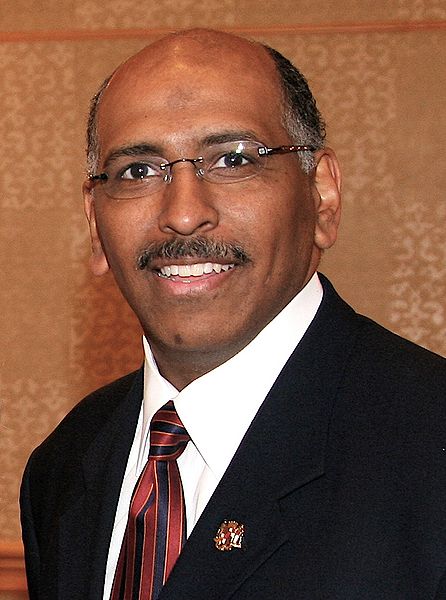
"Tonight, to me, is one of those pages you turn with a smile on your face," said Republican National Committee Chairman Michael S. Steele, who is black. "But it's also part of a longer narrative that the party has struggled to tell over the past 20 to 25 years. Within our ranks, among our grass-roots, are a number of very exciting and very engaging candidates who don't look like or sound like what people have come to expect to be typical Republicans. I'm very proud of that."

Note - Steele is a libertarian-leaning Republican, former Lt. Governor in Maryland.

Libertarian Republican was one of the first GOP sites to support his nomination for RNC Chair.

Libertarian wing of the GOP triumphs in Primary Elections

From Eric Dondero:

Last night was a clear victory for the libertarian wing of the Republican Party. Libertarian-backed candidates swept primary elections all around. The Tea Party, Club for Growth, Sarah Palin brigades and the Republican Liberty Caucus were all victorious from Utah to South Carolina.

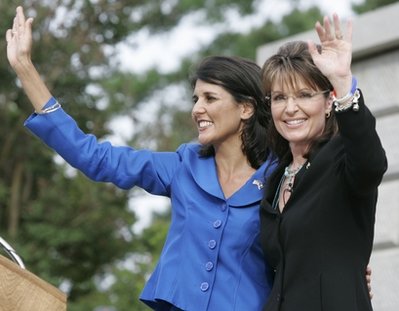
The biggest win was undoubtably Nikki Haley in South Carolina in the run-off with 65% of the vote. Her opponent was a traditionalist establishment SC politician Gresham Barret. She was dubbed the "Sanford libertarian" candidate. She had early backing from Sarah Palin. She also received the endorsement of the Republican Liberty Caucus.

Even HuffPo editorializes this morning:

Already, 2010 is shaping up to be an anti-establishment year with angry voters casting ballots against candidates with ties to Washington and the political parties.

Perhaps no other contest illustrated that better than Haley's. A state legislator with the backing of tea party activists and Sarah Palin, she overtook the old-boy network.

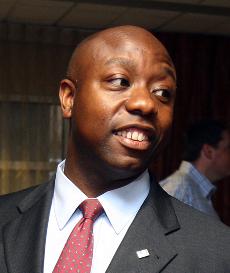
Another big SC win; Tim Scott for Congress. He was supported early on by the fiscally libertarian Club for Growth, Palin, and his former opponent Katherine Jenerette.

A strident Libertarian Republican, Jenerette is a friend of this website. Her campaign was managed in large part by LR contributor Stephen Maloney. Taking our cue from Katherine and Stephen, LibertarianRepublican.net did the same. Katherine commented on Scott' victory last night at FITS News (Will Folk's highly controversial website):

Great choice. The Libertarian Republican’s lined up behind Tim Scott as well!

Finally in SC, establishment GOPer incumbent Rep. Bobby Inglis lost his race to Tea Party favorite Trey Gowdy.

Dan Mitchell of the Cato Institute, and a sometimes contributor to Libertarian Republican comments on his International Liberty blog this morning:

There were closely-watched primaries yesterday in South Carolina and Utah. Most of the attention was on the Palmetto State, where an Indian-American woman won the GOP nomination for governor and an African-American won the nomination for the first district congressional seat. Both are positive developments since the respective candidates appear to be solid, limited-government conservatives. But the most important race, in my humble opinion, was the battle to unseat incumbent GOP Congressman Bob Inglis, who was a TARP-supporting, pro-tax Republican... he got completely stomped as voters wisely recognized that he had become a fan of big government.

Inglis received national notoriety for having dissed Glenn Beck at a town hall meeting, telling his constituents to "turn him off."

Outside of South Carolina the news was just as good for libertarian-leaning Republicans. Mike Lee won his GOP primary for US Senate in Utah with 52%. Lee campaigned on a platform of "Less is more in Washington." He is now virtually guaranteed to be the next Senator from the State. Political blogger Michael Stephens wrote this morning "TEA party wins again... everywhere!":

The TEA party won in every race in every primary again June 22!!! Utah is my favorite, with a close race. Mike Lee will be a new member of the senate in January. The GOP moved to the right.

The Victory Speech: A Republican Star is Born

Some Highlights:

Nikki makes a pointed reference to Governor Mitt Romney for coming out and supporting her before anyone else, when she was way down in 4th place.

She makes a heartfelt reference to Sarah Palin who endorsed her at a critical point in the campaign.

Bound to spark some controversy, she singles out Gov. Mark Sanford for inspiring her campaign and for giving her ideological direction for tax cuts and fiscal conservatism.

On a more personal note, perhaps the most touching moment, she thanks her husband for being her "rock" through the sometimes troubled times of the campaign. Husband Michael can be seen in the background, clearly getting emotional, red-eyed and welling up. (Approx. 3 minutes in).

A Tale of Two Generals: Shinseki got better treatment than McChrystal

by Clifford F. Thies

General Stanley McChrystal, commander of U.S. and allied forces in Afghanistan, is in trouble, supposedly, for an “interview” published in the rock music magazine “Rolling Stone.” More correctly, he is in trouble for his and his staff officers’ criticism of the civilian leadership of the U.S. government, at times personal. According to General McChrystal, the U.S. is not committing enough soldiers to Afghanistan to accomplish the mission, nor – reading between the lines – enough time.

There was another high-ranking officer who, not so long ago, criticized the civilian leadership. That officer was General Eric Ken Shinseki, Army Chief of Staff from 1999 to 2003. General Shinseki was publically critical of the Bush Administration for not deploying enough troops to Iraq during the early years of the occupation. President Obama rewarded General Shinseki, following his election, by naming him Secretary of Veterans Affairs. But, now, with the Army boot on the other foot, President Obama doesn’t like criticism of the civilian leadership.

In both cases, I appreciate the arguments made by the generals. Overwhelming force saves lives. Not only the lives of our soldiers, but also the lives of the civilian populations we are seeking to defend. But, in both cases, from where is this overwhelming force to come?

Following the Persian Gulf War, we incorrectly concluded that, in future engagements, we would be supported by the rest of the world. We therefore put our focus on high tech weaponry. Our ground units were made smaller, more strategically-deployable and more lethal, and we cut the number of ground soldiers almost in half.

As a consequence of this reconfigured force structure, when we invaded Iraq, we were able to achieve victory very quickly. The Army to the west and the Marines to the east pushed through to Baghdad, sweeping away the enemy. But, then, we had little ability to follow-up with a ground force large enough to occupy the country. We had thought blue-helmeted troops from the U.N. would do the job. But, they were scared off by the ferocity of the resistance.

We then had to require extraordinary sacrifices, in terms of length and frequency of deployments, from our regular military forces and we also called upon the Guard and Reserves . Eventually, a reconstituted Iraqi Army was able to stand up to and defeat the resistance.

The story in Afghanistan is both similar and different. We won the war in Afghanistan through the adroit use of partisan armies, special operations forces and the devastating firepower delivered by air forces. Sometime after this - don’t ask me when - the mission morphed into one of “reconstructing” the country. (Not that Afghanistan ever was “constructed” in any meaningful sense.)

After he was elected, President Obama and his staff, advised by the military, committed to a surge in Afghanistan, similar to what was done in Iraq. The idea was that the Afghani army would be made capable of defending the country. Well, this is just not happening according to plan, although in his most recent report, General McChrystal says that we are “still capable of winning.”

It is for President Obama to decide what to do now: either to withdraw our forces according to the timetable in the plan, or else to commit enough forces and time to get the job done. Obviously, no democratic leader wants to become associated with a long and costly war. Look what it did to the Republicans in 2006 and 2008.

Palin is now 9 to 3 in GOP Primary and Special Election wins

Sarah Palin's Golden touch

The Hill is headlining this morning:

Palin racks up two more wins

They note last night's two big election victories:

Palin had endorsed gubernatorial candidate Nikki Haley and publicly stuck with her amidst allegations of an extra-marital affair. She also endorsed Republican Tim Scott against Paul Thurmond in South Carolina's 1st congressional district.

In both elections, Palin-backed candidates were far from assured victors. The Palin record overall so far:

The three Palin-backed candidates who have lost this season: Tim Burns in Pennsylvania's special election, and GOP House candidates Vaughn Ward in Idaho and Cecile Bledsoe in Arkansas.

The nine who have won: Senate candidates Carly Fiorina in California, Rand Paul in Kentucky and Rob Portman in Ohio; gubernatorial candidates Terry Branstad in Iowa, Nikki Haley in South Carolina, Susana Martinez in New Mexico and Rick Perry in Texas; and congressional

Note - all except Branstad, have been enthusiastically backed by Libertarian Republican.

South Carolina – Haley, Scott wins; a look at the Numbers

PRIMARY ELECTION ANALYSIS

From Cliff Thies:

Based on nearly complete results, it is clear that the paths to victory were different for the two candidates we backed in South Carolina. In the Gubernatorial race, Nikki Haley won by basically getting the same number of people to vote for her in the run-off that she got to vote for her in the first round. Her opponent improved on his initial showing but only slightly. Nikki's percentage jumped from 49 to 65 percent because of the drop-off in voter participation by about 20 percent.

In the First Congressional District race, Tim Scott tremendously increased his vote count. Paul Thurmond also increased his vote, but by nowhere near as much. As the drop-off in votes was about the same in the 1st C.D. as statewide, there is no reason to think Scott's improvement was because of new found enthusiasm for him among the district's black votes, who constitute 20 percent of the electorate and who vote overwhelmingly Democratic. I would be interested in seeing if poll-watchers have any direct information regarding this. On the basis of the statistics, I would say that Scott simply got a lot of the Republicans who voted for other candidates in the first round to back him the second round.

Note - 4th place finisher Katherine Jenerette, a libertarian Republican, enthusiastically threw her support to Scott for the run-off.

The Scott Victory and what it means to Black Conservatives

Here's how Hip Hop Republican (a site for Black Conservatives), describes the Scott victory this morning:

It was a victory for conservative Republican insurgents and a sign of the changing of the guard in the South: Scott, a member of the South Carolina state House, defeated Paul Thurmond, son of the late Sen. Strom Thurmond, who retired from the Senate at age 100 in 2003. Thurmond ran for president in 1948 on a segregationist platform.

BookerRising.net, another top Black Conservative site called Scott a potential future "icon for the GOP," and added:

Mr. Scott will have only nominal Democratic opposition in November from perennial candidate Ben Frasier (who is also black). If Mr. Scott wins in November, he would become the first black Republican congressman to represent South Carolina in Congress in more than a century, since George Washington Murray of Sumter stepped down after two terms in 1897.

Scott was quoted after his win, in the Post and Courrier:

“The relevance of me being black is really, fortunately irrelevant. The voters voted for a guy who they felt represented their values and their issues and their philosophy.”

For his part, Thurmond said of his opponent's win:

“If some bridges are torn down because of this, that’s a great thing.”

Heartland Institute: Health Care Law’s Hidden Tax Provision: 1099s Could Quintuple in 2012

Written By: Neil deMause of the Heartland Institute
An until-now unnoticed provision of the new health care overhaul law could change the way U.S. businesses—including freelance workers—prepare for tax day, causing an avalanche of additional record keeping and reporting.
According to Section 9006 of the 2,409-page Patient Protection and Affordable Care Act, beginning [...]

Phoenix Mission Over

Two images of the Phoenix Mars lander taken from Martian orbit in 2008 and 2010. The 2008 lander image (left) shows two relatively blue spots on either side corresponding to the spacecraft's clean circular solar panels. In the 2010 (right) image scientists see a dark shadow that could be the lander body and eastern solar panel, but no shadow from the western solar panel. Image Credit: NASA/JPL-Caltech/University of Arizona

The caption on the image is right from the Phoenix site.  Here’s my question:  Could the super cold combined with the weight of the frozen out carbon dioxide really cause it to break? The article suggest hundreds of pounds of ice could have accumulated on the lander during the winter.  Seems like a lot of build up, they’re the experts.

Oh well, fun to think about if nothing else.  The outcome is the same and we all sort of knew it would end this way.  After all the little lander wasn’t designed to last a Martian winter.

The Phoenix lander is now pretty much a monument to the exploration efforts from another planet. Click the image for a larger version.

Here’s the press release at the Phoenix site.

Whooping cough now an epidemic in California | Bad Astronomy

Syringe, from http://www.flickr.com/photos/8499561@N02/2756332192/According to a statement just released by the California Department of Public Health, pertussis — whooping cough — is now officially an epidemic in California.

That’s right: an almost completely preventable disease is coming back with a roar in California. There have been well over 900 cases of pertussis in that state this year, over four times as many as this time last year (and 600 more suspected cases are being investigated). If this keeps up, California may see more cases in 2010 than it has in 50 years.

If that doesn’t anger and sicken you enough, then this most assuredly will: there have been five deaths this year from pertussis as well, all babies under three months of age.

Infants aren’t fully protected against pertussis until they have completed the first schedule of vaccinations, when they reach 6 months. Before then, they are vulnerable to the disease. The most likely reservoir for the bacterium? Unvaccinated people, including other children. If too many people go unvaccinated, the disease can find a host and survive long enough to infect others. If enough people are vaccinated, that chance drops. This effect is called herd immunity, and it’s the only thing that can keep this highly contagious and potentially fatal disease away from infants.

As reported in the San Francisco Chronicle:

There is no shortage of vaccines, which are provided for free to hospitals and participating counties by the state health department.

Emphasis mine. So why aren’t people getting vaccinated?

Of course, some people cannot be vaccinated due to allergies or other medical reasons. And it’s too early to say for sure if the antivax movement is behind this… but their shoulders have plenty of room for blame. [Note: some comments below are indicating that this outbreak is actually tied to the immigrant population in California. I want to be clear that I am not blaming the antivax movement for this particular epidemic, but that in many cases they can be directly or indirectly tied to lower vaccine rates. However, pending any evidence for this, which may yet be forthcoming, it is also premature to blame immigrants for this as well.] We know for a fact that in Sydney Australia, where the antivax movement was quite strong in recent years, pertussis gained strength, and several babies died, including Dana McCaffery. She was four weeks old when pertussis took her.

Four weeks.

Meryl Dorey, the head of the now-happily-defunct Australian Vaccination Network — a fringe but vocal vaccine denialist group — said all sorts of horrid things about vaccinations, all of which were incorrect. She distorted the truth, ignored evidence, and used every means at her disposal to terrify parents into not vaccinating.

Jenny McCarthy and the recently-disgraced Andrew Wakefield are also vocally spreading false information about vaccines. The result is that they are aggressively giving diseases like pertussis, measles, rubella, and even polio a chance to come back.

Vaccines work. They are one of the greatest medical inventions of all time. They have saved hundreds of millions of lives. They are inexpensive, easy to get, and may save not just your life and the lives of your children, but also those of children you’ve never even met.

This is America, this is the 21st century, and people are still dying of pertussis. It’s shameful, it’s unnecessary, and it’s completely preventable.

Syringe picture from ZaldyImg’s Flickr stream.


If You Want to Make a Brain Map, You Have to Slice up Some Brains | Visual Science

Jacopo Annese, Director of the Brain Observatory at the University of California at San Diego and his team are creating open-access, high-resolution, three-dimensional atlases of the human brain. This is done through a painstaking and exacting process of slicing brain specimens tissue thin, drying, staining, storing them, scanning each slice in stunningly high resolution and finally serving it all up digitally as a virtual model.

While shooting at the Brain Observatory at the University of California at San Diego, Spencer Lowell photographed floor-to-ceiling freezers loaded with brains in giant plastic buckets, high-tech slicers being used to dice frozen human brains, and laboratory assistants meticulously unfolding gauzy brain slices with paintbrushes onto glass slides. Lowell noted that the Brain Observatory Director Jacopo Annese came across as a humanitarian as well as a neurological anatomist. Lowell: “Jacopo Annese’s job may be to orchestrate the dissecting, preserving, categorizing, and digitally archiving the brains of his donors, but he seemed to genuinely care as much about what the donors were like while they were alive. Since he’s recording what a person’s brain looks like after having lived a life full of experiences, he stressed the importance of learning about those experiences and how they could have imprinted the brain.”

Indeed, much of the emphasis at the Brain Observatory and its related brain library project will be on finding donors who are able to participate in a monitoring, data-gathering program while they are still alive and healthy. The intended purpose would be to link this more personal information–an anonymous narrative biography, for example, to the scientific brain data to create a more complete picture.

Photograph by Spencer Lowell

Brain specimen at UCSD’s Brain Obervatory, Nov 18th, 2009

NCBI ROFL: Ridiculous abstract is ridiculous. | Discoblog

omgwtfbbq2Chronoastrobiology: proposal, nine conferences, heliogeomagnetics, transyears, near-weeks, near-decades, phylogenetic and ontogenetic memories.

“Chronoastrobiology: are we at the threshold of a new science? Is there a critical mass for scientific research?” A simple photograph of the planet earth from outer space was one of the greatest contributions of space exploration. It drove home in a glance that human survival depends upon the wobbly dynamics in a thin and fragile skin of water and gas that covers a small globe in a mostly cold and vast universe. This image raised the stakes in understanding our place in that universe, in finding out where we came from and in choosing a path for survival. Since that landmark photograph was taken, new astronomical and biomedical information and growing computer power have been revealing that organic life, including human life, is and has been connected to invisible (non-photic) forces, in that vast universe in some surprising ways. Every cell in our body is bathed in an external and internal environment of fluctuating magnetism. It is becoming clear that the fluctuations are primarily caused by an intimate and systematic interplay between forces within the bowels of the earth–which the great physician and father of magnetism William Gilbert called a ’small magnet’–and the thermonuclear turbulence within the sun, an enormously larger magnet than the earth, acting upon organisms, which are minuscule magnets. It follows and is also increasingly apparent that these external fluctuations in magnetic fields can affect virtually every circuit in the biological machinery to a lesser or greater degree, depending both on the particular biological system and on the particular properties of the magnetic fluctuations. The development of high technology instruments and computer power, already used to visualize the human heart and brain, is furthermore making it obvious that there is a statistically predictable time structure to the fluctuations in the sun’s thermonuclear turbulence and thus to its magnetic interactions with the earth’s own magnetic field and hence a time structure to the magnetic fields in organisms. Likewise in humans, and in at least those other species that have been studied, computer power has enabled us to discover statistically defined endogenous physiological rhythms and further direct effects that are associated with these invisible geo- and heliomagnetic cycles. Thus, what once might have been dismissed as noise in both magnetic and physiological data does in fact have structure. And we may be at the threshold of understanding the biological and medical meaning and consequences of these patterns and biological-astronomical linkages as well. Structures in time are called chronomes; their mapping in us and around us is called chronomics. The scientific study of chronomes is chronobiology. And the scientific study of all aspects of biology related to the cosmos has been called astrobiology. Hence we may dub the new study of time structures in biology with regard to influences from cosmo- helio- and geomagnetic rhythms chronoastrobiology. It has, of course, been understood for centuries that the movements of the earth in relation to the sun produce seasonal and daily cycles in light energy and that these have had profound effects on the evolution of life. It is now emerging that rhythmic events generated from within the sun itself, as a large turbulent magnet in its own right, can have direct effects upon life on earth. Moreover, comparative studies of diverse species indicate that there have also been ancient evolutionary effects shaping the endogenous chronomic physiological characteristics of life. Thus the rhythms of the sun can affect us not only directly, but also indirectly through the chronomic patterns that solar magnetic rhythms have created within our physiology in the remote past. For example, we can document the direct exogenous effects of given specific solar wind events upon human blood pressure and heart rate. We also have evidence of endogenous internal rhythms in blood pressure and heart rate that are close to but not identical to the period length of rhythms in the solar wind. These were installed genetically by natural selection at some time in the distant geological past. This interpretive model of the data makes the prediction that the internal and external influences on heart rate and blood pressure can reinforce or cancel each other out at different times. A study of extensive clinical and physiological data shows that the interpretive model is robust and that internal and external effects are indeed augmentative at a statistically significant level. Chronoastrobiological studies are contributing to basic science–that is, our understanding is being expanded as we recognize heretofore unelaborated linkages of life to the complex dynamics of the sun, and even to heretofore unelaborated evolutionary phenomena. Once, one might have thought of solar storms as mere transient ‘perturbations’ to biology, with no lasting importance. Now we are on the brink of understanding that solar turbulences have played a role in shaping endogenous physiological chronomes. There is even documentation for correlations between solar magnetic cycles and psychological swings, eras of belligerence and of certain expressions of sacred or religious feelings. Chronoastrobiology can surely contribute to practical applications as well as to basic science. It can help develop refinements in our ability to live safely in outer space, where for example at the distance of the moon the magnetic influences of the sun will have an effect upon humans unshielded by the earth’s native magnetic field. We should be better able to understand these influences as physiological and mechanical challenges, and to improve our estimations of the effects of exposure. Chronoastrobiology moreover holds great promise in broadening our perspectives and powers in medicine and public health right here upon the surface of the earth. Even the potential relevance of chronoastrobiology for practical environmental and agricultural challenges cannot be ruled out at this early stage in our understanding of the apparently ubiquitous effects of magnetism and hence perhaps of solar magnetism on life. The evidence already mentioned that fluctuations in solar magnetism can influence gross clinical phenomena such as rates of strokes and heart attacks, and related cardiovascular variables such as blood pressure and heart rate, should illustrate the point that the door is open to broad studies of clinical implications. The medical value of better understanding magnetic fluctuations as sources of variability in human physiology falls into several categories: 1) The design of improved analytical and experimental controls in medical research. Epidemiological analyses require that the multiple sources causing variability in physiological functions and clinical phenomena be identified and understood as thoroughly as possible, in order to estimate systematic alterations of any one variable. 2) Preventive medicine and the individual patients’care. There are no flat ‘baselines’, only reference chronomes. Magnetic fluctuations can be shown statistically to exacerbate health problems in some cases. The next step should be to determine whether vulnerable individuals can be identified by individual monitoring. Such vulnerable patients may then discover that they have the option to avoid circumstances associated with anxiety during solar storms, and/or pay special attention to their medication or other treatments. Prehabilitation by self-help can hopefully complement and eventually replace much costly rehabilitation. 3) Basic understanding of human physiological mechanisms. The chronomic organization of physiology implies a much more subtle dynamic integration of functions than is generally appreciated. All three categories of medical value in turn pertain to the challenges for space science of exploring and colonizing the solar system. The earth’s native magnetic field acts like an enormous umbrella that offers considerable protection on the surface from harsh solar winds of charged particles and magnetic fluxes. The umbrella becomes weaker with distance from the earth and will offer little protection for humans, other animals, and plants in colonies on the surface of the moon or beyond. Thus it is important before more distant colonization is planned or implemented to better understand those magnetism-related biological- solar interactions that now can be studied conveniently on earth. Thorough lifelong maps of chronomes should be generated and made available to the scientific world. Individual workers should not have to rediscover cycles and rhythms, which can be a confusing source of variation when ignored. By contrast, once mapped, the endpoints of a spectral element in chronomes can serve everybody, for instance for the detection of an elevation of vascular disease risk. Chronomic cartography from birth to death is a task for governments to implement, thereby serving the interests of transdisciplinary science and the general public alike. Governments have supported the systematic gathering of physical data for nearly two centuries on earth in order to serve exploration, trade, and battle on land and on the seas, and indeed agriculture. These government functions have been augmented enormously with satellite technology in more recent decades. The biological comparison with regard to government support and chronomic needs would be the mapping of the human genome. The complete sequences of DNA might have eventually become available due simply to countless individual laboratories publishing piecemeal results in scattered journals. But there would have been enormous redundancy and confusion in assembling and piecing the information together. The waste of time and money involved in the redundancy and confusion would have been considerable. (ABSTRACT TRUNCATED)

chronoastrobiology

Related content:
Discoblog: NCBI ROFL: Is there an unconcious conspiracy against informative abstracts?
Discoblog: NCBI ROFL: Don’t blame necrophiliacs–they’re just devolving into amoebae.
Discoblog: NCBI ROFL: You might want to put a condom on that symbolic penis.

WTF is NCBI ROFL? Read our FAQ!


Daily Data Dump – Wednesday | Gene Expression

GDP PPP inhabitant by European region. Combining Italy or the UK into one GDP number is deceptive. Lombardy has twice the GDP PPP of much of southern Italy. The regional differences are not nearly as stark in Spain, where poor regions like Andalusia and Galicia exhibit less of a gap from prosperous regions. By the way, does anyone know if there’s the ability in R to map these differences easily? I’ve only done USA mapping.

Separation Between Neanderthal and Homo Sapiens Might Have Occurred 500,000 Years Earlier, DNA from Teeth Suggests. Not sure if this makes any difference evolutionary genetic wise, though these sorts of issues are relevant for paleoanthropologists trying to reconstruct paleoecologies of hominins.

Mystery of the pregnant pope: New film reopens one of the Vatican’s most enduring wounds. I saw this film on a Lufthansa flight a few months back. I liked it. Though the article doesn’t make it clear enough that it’s 99.9% likely to be based on a legend concocted for purposes of propaganda.

New Nicaraguan sign language shows how language affects thought. As Joe Biden would say, this is a big f**king deal.

Anthrogenetics. A reader pointed me to this interesting weblog/review page. Feel free to point to other interesting science weblogs in the comments.

The bringer of fire, hiding in the rings | Bad Astronomy

After yesterday’s depressing picture, how about one that will make you smile?

The ever-amazing Cassini spacecraft sent back this pretty nifty shot of Saturn’s icy moon Rhea playing peekaboo in the rings:

cassini_rhea_prometheus

Beautiful, isn’t it? You can see that Rhea was on the other side of the rings from Cassini when this image was taken, and that the spacecraft was almost, but not quite, in the plane of the rings, too.

But there’s more to this shot… Take a closer look. What’s that, hiding in a gap in the rings, apparently hovering over Rhea’s terminator (the line dividing day and night)?

cassini_rhea_prometheus2Surprise! It’s Prometheus, a tiny potato orbiting the planet much closer in. It’s far smaller than Rhea, only about 120 km (75 miles) long versus Rhea’s 1530 km (950 miles) diameter. Rhea is Saturn’s second largest moon — only Titan is bigger — and one of the ten biggest moons in the entire solar system. Prometheus, on the other hand, is so small it wasn’t even discovered until the Voyager 1 probe spotted it in 1980.

Nice. And I’m sure there’s science galore to be extracted from this image, but sometimes I think pictures like this will have a more lasting impact because they are simply so amazingly cool.

Tip o’ the F Ring to CICLOPS imaging team leader Carolyn Porco. Credit: NASA/JPL/Space Science Institute.


Related posts:

- Cassini: 10 years and counting
- Dr. Tongue’s 3D House of Prometheus
- The real Pandora, and two mooning brothers


Eugenics Today: Do Ugly People Deserve Beautiful Children? | Discoblog

beautifulThink picking a date on looks alone is a little shallow? How about picking your kids? The owners of the dating site BeautifulPeople.com have no qualms on the subject–they’ve launched a “virtual sperm and egg bank” where users can select beautiful people’s beautiful genetics by signing up for their beautiful gametes.

Though the company won’t perform egg extractions or accept sperm donations, they will serve as matchmakers and then forward the interested parties to the proper clinics. The company says its exclusive dating site–you can only join if other members judge you attractive enough–is a magnificent resource for those looking to breed up.

As reported by ABC News, the site has decided to generously offer its services even to the beauty-challenged.

“Initially, we hesitated to widen the offering to non-beautiful people. But everyone–including ugly people–would like to bring good looking children in to the world, and we can’t be selfish with our attractive gene pool,” company founder Robert Hintze said in a statement.

Everyone from bioethicists to the professionals who run clinics are concerned about site visitors skipping over the proper medical and psychological screenings. There is also concern about the participants’ expectations–and perhaps basic understanding of genetics. Just because biological mummy and daddy have good looks, it doesn’t necessarily mean their offspring will. If BeautifulPeople.com doesn’t make that clear, things could get very ugly.

Related content:
Discoblog: Dating a Dud? Blame It on Biology
Discoblog: Worst Science Article of the Week? Women are getting “hotter”
Disoblog: In Japan, Your Blood Type Could Get You Hired…Or Fired
80beats: No Gattaca Here: Genetic Anti-Discrimination Law Goes Into Effect

Image: flickr / alainelorza


Weather Report From an Exoplanet Shows Winds of 4,300 M.P.H. | 80beats

OsirisThe most violent winds in our own solar system whip around the Great Dark Spot of Neptune at 1,200 miles per hour, making the worst storms here on Earth look like kid stuff. But when astronomers trained their telescopes on one of the longest-studied planets around another star, suddenly even Neptune didn’t look so impressive. This week in Nature, astronomers say that the exoplanet HD 209458 b has a super-storm whose winds rage at 3,000 to 6,000 mph.

The exoplanet (which we’ll call by its friendlier nickname, Osiris) sits 150 light years from here, in the neighborhood of the constellation Pegasus. It’s an old friend, too. Osiris was the first exoplanet seen transiting in front of its star back in 1999. A decade later, though, with technology a decade more advanced, the team could spy on Osiris with the a spectrometer at the Very Large Telescope in Chile and track its carbon monoxide signature.

In fact, the VLT’s data is so good that the astronomers could see not only the planet’s orbital speed, but also the relative speed of the gas on its surface, according to study author Ignas Snellen.

“We see this clear change in velocity” of HD 209458 b, Snellen says. “There’s also an offset—the gas during the transit seems to be moving toward us.” The carbon monoxide appears to be flowing at two kilometers per second, or roughly 7,000 kilometers [~4,350 miles] per hour [Scientific American].

Why so stormy? Osiris is dangerously close to its star, creating a huge temperature imbalance.

Because the planet circles its star at a distance only one-twentieth of the distance between Earth and the sun, the temperature of the upper atmosphere on HD 209458b’s sun-facing side is thought to be as high as 18,000 degrees Fahrenheit (10,000 degrees Celsius) while the dark side is much cooler. The upper layers of the atmosphere were observed rushing from the hot side to the cold side [MSNBC].

The team’s data produced a second effect that, while drier than a splendorous super-storm, is perhaps more important to science. Up to now, astronomers have guessed exoplanet mass indirectly—seeing a star move oh-so-slightly and computing the mass the orbiting planet would need to produce that effect. But these scientists managed to figure Osiris’ size directly once they determined its orbital velocity.

With relative ease, Snellen’s team was then able to calculate the masses of both star and planet using Newton’s law of gravitation, knowing also the velocity of the host star due to its orbit round the centre of mass of the system. “This is exactly the same method used to calculate the mass of binary star systems, except one of the bodies here is an exoplanet,” says Snellen [Physics World].

Related Content:
80beats: Astronomers Find Bevy of Exoplanets; Won’t Discuss Most Interesting Ones
80beats: First Ever Weather Report From an Exoplanet: Highs of 2240 Degrees
DISCOVER: How Long Until We Find a Second Earth?
DISCOVER: Neptune Rising
DISCOVER: Jupiter Grows (& Loses) a New Spot

Image: European Southern Observatory