
A prayer to be a beacon of peace by Rabbi Rami Shapiro.
Drug Legalization backed by Tea Party, at least in one Michigan affiliate
 Tea Party's roots likes in libertarian politics
From Eric Dondero:
Some libertarians often complain that social issues are absent on the Tea Party agenda, and that Tea Party rallies are "too dominated" by social conservatives. Not in one major Michigan affiliate.
From the Detroit Free Press, July 11, Tea party has GOP candidates' attention Groups have zeal, but will they back specific candidates?":
As Michigan heads to its Aug. 3 primaries, Republicans running for governor and Congress from the U.P. to southeast Michigan are paying attention and -- in some cases -- homage to the growing influence of the nascent, largely anti-government movement.
In Sault Ste. Marie, the tea partiers meet Wednesdays at Cup of the Day on Ashmun Street. Looks nice enough from the outside, but Tom Stillings -- a Republican candidate for Michigan's 1st Congressional seat -- says it's like facing the Spanish Inquisition in there.
It's easy to see why.When the members of the Northern Michigan Liberty Alliance start asking questions, they mean business: Which laws is the candidate prepared to get rid of? Which government agencies would go? Should people be allowed to carry a gun in church? And under what constitutional authority does the federal government pursue the war on drugs?
"They're very tough," Stillings said.
The article went on to note:
The tea party's roots lie in libertarian politics, strict constitutional constructionism and a belief that in recent years -- particularly since Democrats took control of Congress in 2007 and Barack Obama was elected president in 2008 -- that government has run amok.
The Northern Michigan Liberty Alliance lists supported groups such as the Cato Institute, Macinac Center, and Andrew Breitbart's BigGoverment.com. A major rally for Northern Michigan Tea Party Patriots is scheduled for July 17 in Escanaba.

Idaho Republicans take middle road on Marijuana Legalization proposal
 LR BREAKING NEWS!!
From Eric Dondero:
The greatest advancement for pro-marijuana legalization Republicans in the last few months has been in Idaho. Other positive developments have occured in other states.
For instance, pro-marijuana advocate Bob Ehrlich is the Republican nominee for Governor. He is now leading in his race over Democrat incumbent Martin O'Malley. (Ironically, RNC Chair Michael Steele served as Lt. Gov. under Ehrlich.) Maryland is also the state where a Republican State Senator managed to get passed through committee a medicinal marijuana bill.
There has been some progress on the medical marijuana front in the New Jersey legislature as well, with a few Republicans joining in.
But it is in Idaho where the widest amount of success has occured. State Rep. Tom Trail has seen his medicinal marijuana legislation receive major support in the legislature. Now comes word from a regular reader of Libertarian Republican, that the Idaho GOP may be moving closer to backing legalization.
From LR Reader Ryan Davidson, Idahoans for Liberty:
I was asked to submit a resolution to the Republican State Convention in support of Tom's bill. I, along with 9 other co-sponsors, filed a proposed resolution which was debated in the resolutions committee in Idaho Falls. I was unable to be there when the resolution came up, as I was serving on the credentials committee at the same time.
As I heard it, the medical marijuana resolution was not adopted, but it was not voted down. It was essentially voted "return to sender" for lack of information. The fact that it was not outright voted down is a positive sign, in my opinion.
This was a project that definitely could have used more coordination and effort in order to be successful. I simply did not have the time myself to coordinate the effort. One of the reasons the resolution was voted "return to sender" was because it referenced Tom Trail's bill, but a copy of his bill was not attached. None of the other 9 co-sponsored spoke in favor of the bill at the committee. (However, some resolution committee members spoke in favor.) Given the short amount of time the committee had to debate each resolution (they had 2 hours to vote on over 40 resolutions) its possible that even if we had prepared an effective presentation, we would not have been able to give it.
This does not mean that the issue is dead until the next convention. The Idaho Republican State Central Committee meets three times a year, and they also vote on resolutions. Their next meeting will be around the time the next Legislative session begins.

World Cup: Muslim Terrorist Bombing in Uganda; African Press reporting over 50 Dead; Three different locations, Restaurants, Rugby field
 40 Reported Dead at Kampala's Kyaddondo Rugby Grounds (photo)
The East Africa Daily Monitor is reporting that more than 50 people are dead as a result of three separate attacks on the Ugandan capital of Kampala. Those killed were watching the World Cup final on giant screens at crowded restaurants and at a sports stadium.
From The Daily Monitor:
Police confirmed that 13 people, more than half of them foreigners were killed at Ethiopian Village Restaurant in Kabalagala, a Kampala suburb, while Daily Monitor reporters counted about 40 bodies at Kyaddondo rugby grounds where a huge crowd was watching the Spain Vs Netherlands Word Cup final.
Another blast was reported to have gone off in Ntinda, another Kampala surburb, as more than 100 were reported admitted in hospitals and clinics in the capital including the national referral hospital - Mulago.
GRAPHIC PHOTO! of bombing victims at African Daily Monitor news site.
Meanwhile the AP (via Daily Caller) is reporting that Al-Shabab is most likely responsible:

Police Chief Kale Kaihura said he believed that Somalia’s most feared militia — al-Shabab, which has pledged loyalty to al-Qaida — could be behind the attacks.
Al-Shabab is Somalia’s most dangerous militant group, one that militant veterans of the Afghan, Pakistan and Iraq conflicts have helped train, according to international officials.
If Kaihura’s early suspicions that al-Shabab was responsible prove true, it would be the first time the group has carried out attacks outside of Somalia.
In Mogadishu, Sheik Yusuf Sheik Issa, an al-Shabab commander, told The Associated Press early Monday that he was happy with the attacks in Uganda.
UPDATE!
Channel 6 BNO News out of Kampala is now reporting "51 Dead," and "Hundreds injured."
UPDATE!
Jihad Watch is calling the attacks "synchronized," and is reporting that Al-Shabab had "threatened Uganda and Burundi in the last few days."
UPDATE!
Various media now reporting Death Toll has risen to 64.

DEACE: No turning back from change in the GOP: We’re not satisfied with leaders who put party above principle
From The Right Guy Show
of July 4
This appeared in the Washington Times today. Steve is a conservative talk radio show host in Des Moines. While we share a lot of views, Steve is pretty much a purist and I will leave it at that. Let's just say we don't exchange Christmas cards. Anyway, he has some good points here, but I would like to comment that what he describes as the ascendancy of the Tea Party hasn't led to a legitimate third party, or even a huge shift within the party, as Michael Steele tries to co-opt them in the same way the GOP did with the Socons. Unless the spine is ripped out of the GOP by Tea Party people or they become a third party that supplants the GOP, I don't see this as a long term prospect. Furthermore, as more people become enculturated by marxist professors and people that are Tea Party types die off, it will be seen as the last gasp of a free will political movement anywhere. I'd like to be wrong, but only time will tell. As far as the co-opting goes, look at Palin endorsing Branstad. Need I say more? If I am wrong, rationally show me how I am wrong.

What's going on in the Republican Party across the country isn't a civil war as much as it's a tale of two paradigms.
When you remove the names, personalities, egos, candidates and factions that are being discussed constantly, what this represents is a seismic shift in the political preferences of the Republican base as theGOP has squandered the power voters lavished upon it over the past decade.
Instead of taking their majorities in both houses of Congress and teaming with the presidency to stem the tide of pagan socialism incrementally implemented by the Democratic Party for generations, Republicans punted on nearly every cultural issue while simultaneously cashing the check at the taxpayers' expense, creating a sense of betrayal that many Americans - including the party's own grass-roots supporters - still haven't gotten over.
This is why people aren't buying into new top-down leadership, seeing it as a repackaged version of that in which they already have lost trust. Attempts to unify the party come across as clumsy or condescending, at best, without recognizing that both conservatives focused on economics and conservatives focused on social issues have seen their core beliefs trampled by leaders who claimed to be their champions.
Unification as it was defined in the previous era is impossible. Trust is gone. As is the case with the breakup of any long-term relationship, both sides try to exert pressure on each other to avoid the fear of what comes next before finally letting go.
To put it in Facebook vernacular, the relationship status of the oldReagan coalition in America could best be described by the phrase "it's complicated."
The old Reagan coalition was the last seismic shift in American politics, mainstreaming born-again Christians and their domestic concerns while rebuilding a tough containment policy in the Cold War. That renewed, confident America crushed the Soviet Union.
However, once that external threat was neutralized, those new activists in the Reagan coalition expected cultural threats from within to become a higher priority. Marxists on college campuses were every bit as dangerous as the ones in Moscow.
But ever since Pat Buchanan's infamous "culture war" speech at the 1992 Republican National Convention, the divide between the party establishment and grass-roots social conservatives has grown. Conservatives put aside their concerns in the days following Sept. 11, 2001, once again giving ground on their priorities to face down an external threat. As social conservatives saw their issues drift into the background, economic conservatives found their core values under assault by their own administration.
Now that many Americans no longer sense a clear and present danger from Islamic radicalism as the wars in Afghanistan and Iraq rage on and on with no end in sight, the cultural divide between traditional party-focused Republicans and issue-focused conservatives has returned with a vengeance.
This time, for the first time, both sides seem willing to see how life could be without the other.
The lines are being drawn, and everyone is going to be forced to choose which side he or she is on. Even some good people who have spent the past few years trying to bridge this divide are going to find themselves caught in the middle.
This is always what happens when paradigms clash within a movement. At first, those in favor of the new paradigm try being puritans, believing that those perpetuating the old paradigm are just misinformed and would see things the new way if the new-paradigm people established a rapport with them or shared the truth with them. After a while, though, it becomes obvious to those advocating a new paradigm that many in favor of the old one are financially vested in keeping failure alive, so the puritans eventually become separatists.
Here's what divides the party-focused old guard and the issue-focused new-paradigm conservatives, whose most visible expression is the stridently independent Tea Party movement:
Party unity
Old paradigm: The threat that Democrats pose to the country's future requires everyone to work together toward the common goal of defeating them.
New paradigm: If we're not going to stand for anything in stark contrast to the Democrats, what's the point?
Philosophy
Old paradigm: The person who is my 80 percent friend isn't my 20 percent enemy.
New paradigm: Electing people who don't share my core convictions is a loser - period.
Tactics
Old paradigm: In the real world, the Republican Party is the only weapon Americans have against the encroaching loss of liberty that occurs whenever Democrats win elections.
New paradigm: Because the Republican Party has demonstrated it won't defend Americans from Democrats, Americans may have to form their own movements independent of the Republican Partyin order to protect their liberty.
Ideology
Old paradigm: It's about the party platform.
New paradigm: It's about the Constitution.
Relationship
Old paradigm: Conservatives must take over the Republican Party from within and build it up over the long haul.
New paradigm: Instead of wasting our time with a party that doesn't want us, we'll just help specific candidates we like in spite of the party.
Social issues
Old paradigm: We need to chip away incrementally at what's happened to our culture.
New paradigm: We want to defeat evil, not regulate it.
Taxes
Old paradigm: Across-the-board tax cuts, tax credits and subsidies to corporate America stimulate economic development.
New paradigm: Get the government out of the business of choosing winners and losers and pass either the Fair Tax or the Flat Tax.
Judicial activism
Old paradigm: Legal positivism with "conservative" judges appointed by Republicans.
New paradigm: We need to limit the jurisdiction of the courts as our Founders intended and instead appoint judges who understand that any law that conflicts with God's Law is no law.
Leadership
Old paradigm: Chiefs are anointed to speak for their tribes and then given a seat at the table of power to represent their specific constituency while also making their constituents' decisions for them.
New paradigm: I think for myself and trust neither the party nor the "leaders" it selects to think for me.
Mouthpiece
Old paradigm: Rush Limbaugh.
New paradigm: Glenn Beck.
Heroes
Old paradigm: William F. Buckley Jr. and Milton Friedman.
New paradigm: Founding Fathers.
Elections
Old paradigm: It's all about winning in November.
New paradigm: If the right type of candidate doesn't win the primary, November is irrelevant.
Morality
Old paradigm: traditional values.
New paradigm: biblical worldview.
Eventually, this new paradigm is going to replace the old one - it's just a matter of time. Some of our closest allies and confidants will be among the last to make this transition because of old-paradigm inertia. But they will eventually come to the realization that what's past is prologue, too. They're going to need grace and patience from us, and the credibility they've earned fighting for righteousness under the old paradigm over the years grants them that.
Others will continue deceitfully to try to sell us on the old paradigm, but they had better cash the check now while they still can - because they're just whistling past the graveyard. You can't stop a force of nature.
In the meantime, the only unsolved mysteries are how long it will take for this new paradigm to take over, how many relationships will be damaged or lost in the process and whether it will be too late to save this republic by the time this new paradigm becomes the paradigm.
Steve Deace hosts the afternoon drive program on WHO-AM in Des Moines, Iowa, where Ronald Reagan was the station's first sports director.
© Copyright 2010 The Washington Times, LLC.

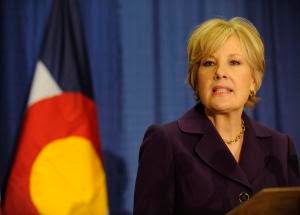
Colorado’s Jane Norton sides with Tancredo – Obama greatest threat to America
 Tea Party backing the wrong candidate?
From Eric Dondero:
In a stunning role reversal, the Colorado Republican candidate for US Senate, viewed as the more moderate of the two primary candidates, is siding with Tom Tancredo. The former Colorado Congressman said at a picnic rally last Thursday, that Obama was a greater threat to America than the former Soviet Union, or even Al Qaeda.
Ken Buck, the Tea Party favorite in the Senate primary was reserved. He was in attendence at the rally. Afterwards, he commented to a local reporter that although he is friends with Tancredo, he tends "to exaggerate" at times.
For her part, Norton released a statement on her Facebook page (via Fox 31 KDVR - Denver):
"There was a real measure of truth to what Tancredo said. Obama is spending this country into bankruptcy. Admiral Mullen said our debt is a greater threat than terrorism. It's time to end the culture of political correctness.
"Obama's brand of big government is a threat to America."

Episode 39 Prof Ora Israel The Utility of Hybrid Imaging
Episode 39 Prof Ora Israel The Utility of Hybrid Imaging
This podcast an interview with rof Ora Israel on the The Utility of Hybrid Imaging
She discusses guided biopsy, PET with high fat diet for cardiac and much more.
Direct link to itunes ??
Direct link to itunes, download itunes, install, then click this link to subscribe to podcast
Also I have updated our links and you can get the podcast page at both http://nuccast.com
And http://www.nuccast.com with the feed to put into iTunes or juice or your favorite podcast software can be found at http://molcast.com or http://www.molcast.com. The cardiac subset of the podcast can be found at http://cardiac.nuccast.com and the feed at http://cardiac.molcast.com.
And http://www.nuccast.com with the feed to put into iTunes or juice or your favorite podcast software can be found at http://molcast.com or http://www.molcast.com. The cardiac subset of the podcast can be found at http://cardiac.nuccast.com and the feed at http://cardiac.molcast.com.
Please pass on information about this podcast to your colleagues and to your CPD provider.
Remember you can get the podcast but going to itunes and entering the search term nuclear medicine best the way to subscribe is via this link
Or you can subscribe by entering your email address below and you will be informed of new episodes
Enter your email address:
Delivered by FeedBurner
The easiest way to remember to tell your colleagues about the podcast is via the web link at nuccast.com or molcast.com
Most importantly of all please help this podcast by contributing your opinions, Sound files, emails or phone calls details below:
You click on the little bird icon below and it will allow you to send me a voice mail from your computer.
If you don’t have a microphone then you can
1. Call toll-free anytime 24/7 in the USA at 1-888-65-GCAST (888-654-2278). If outside USA: +1-305-437-8719.
2. Enter the phone number 207-099-2527
then enter the PIN 1401
3. Record your message, don’t worry it wont go straight into the podcast unless you ask me too.
Please leave your name and email address in your message so I can get back to you.
You can email me at rob@nuccast.com
Or
nucmedpodcast@gmail.com
All contributions welcome, especially as sound files to nucmedpodcast@gmail.com.
Link link to mp3 file

New Spartanburg medical school hires 4 administrators – Spartanburg Herald Journal
New Spartanburg medical school hires 4 administrators Spartanburg Herald Journal The medical school, which broke ground in Spartanburg earlier this year, will mirror its Blacksburg, Va., campus in many ways, but there are plenty of ... |
Our Opinion: Med school still true to mission – The State Journal-Register
Our Opinion: Med school still true to mission The State Journal-Register “Dr. Moy doesn't want an ivory tower medical school in Springfield, sharply separated from the resident medical community — the so-called 'town-gown ... |
Life Extension: Science or Pipe Dream?
Wouldn’t it be great if we could find a way to prolong our lives and to keep us healthy right up to the end? Ponce de León never found that Fountain of Youth, but science is still looking. What are the chances science will succeed? How’s it doing so far?
In his new book The Youth Pill: Scientists at the Brink of an Anti-Aging Revolution, David Stipp tries to answer those questions. From the title of the book, I expected hype about resveratrol or some other miracle pill; but instead it is a nuanced, levelheaded, entertaining, informative account of the history and current state of longevity research. It makes that research come alive by telling stories about the people involved, the failures and setbacks, and the agonizingly slow process of teasing out the truth with a series of experiments that often seem to contradict each other.
Anti-aging can mean several things. Extending the average lifespan is not the same as extending the maximum life span. Extending lifespan is not the same as preventing the degenerative changes characteristic of aging.
We don’t even have a handle on why we die, why we deteriorate over time, or how it could benefit “selfish genes” for women to live past menopause. Several contradictory evolutionary explanations have been proposed. Comparisons with other species have not been helpful: every hypothesis has run up against counter-examples. Generally, the lifespan of animals correlates with body size; humans live longer for their size than expected. Some animals appear not to age. Naked mole rats are a fascinating anomaly: these animals that live in colonies underground and look like saber-toothed sausages live a long life for their size and appear not to show the usual changes of aging even though they have high levels of free radical damage and low levels of antioxidants (70 times less glutathione activity than mice).
Scientists hoped to find an aging gene that they could turn off. It’s not that simple. A large number of genes are involved in aging processes, and there are unpredictable interactions between them. Studying centenarians has provided inconsistent clues.
Antioxidants neutralize the free radicals that cause cell damage. They sounded promising, but their effect is modified by many factors, they can harm as well as help, and raising their levels with supplements may even turn off some of the body’s natural defenses.
Telomerase (the enzyme that keeps the ends of chromosomes from fraying as they age) was another false lead. Drugs that slow aging by boosting telomerase may cause cancer, and it turns out that telomere shortening isn’t the chief driver of body-wide aging.
The most promising idea is severe calorie restriction (CR). It prolongs life in several species, but this effect has not yet been verified in humans. And it is inconsistent and may have different effects at different ages and in different individuals. CR lowers body temperature and fertility and has other side effects. It is not an option most people would willingly choose.
Scientists have studied the chemical changes in CR humans and are looking for a pill that will cause those same changes while allowing people to eat unrestricted calories. Two main candidates have surfaced. Resveratrol (a substance found in red wine) seems to work: it allows overfed mice to live longer and stay healthier. It appears to have a number of benefits in lab animals, but human studies have not been done and it appears that very large doses will be required (comparable to the amount you would get by drinking 200 bottles of wine a day). Rapamycin extends the life of mice and prevents various diseases, but it also inhibits protein synthesis in the brain, suppresses immune function, and raises cholesterol. Researchers are trying to find related compounds that offer the benefits without the harms.
There are all too many variables that can interfere with the results of a study. In one experiment, the female mice lived longer with treatment but the males didn’t. They finally figured out that was because the males’ cagemates were killing them! Stipp does an excellent job of presenting the theoretical underpinnings, the experiments, and the difficulties of anti-aging research. The subject is overwhelmingly complicated, but he simplifies it enough to at least help the reader understand how very complicated it is.
There are longevity clinics and anti-aging products on the market offering all kinds of promises that go way beyond the knowledge. Futurist Ray Kurzweil takes handfuls of supplement pills and spends one day a week getting IVs and other treatments at a longevity clinic and he is convinced this regimen will keep him alive until science finds a way to keep him alive forever. The author of The Youth Pill is more conservative. He is enthusiastic about the promising research on pills like resveratrol and rapamycin, but he’s reluctant to start taking them “until enough clinical data are available to let me make a reasonably well-informed decision about optimal dosing.” Me too.
![[StumbleUpon]](http://euvolution.com/futurist-transhuman-news-blog/wp-content/plugins/wp-o-matic/cache/d0c8c_stumbleupon.jpg)
![[Slashdot]](http://euvolution.com/futurist-transhuman-news-blog/wp-content/plugins/wp-o-matic/cache/f1a0d_favicon.ico)
![[Facebook]](http://euvolution.com/futurist-transhuman-news-blog/wp-content/plugins/wp-o-matic/cache/d0c8c_favicon.ico)
Weight loss pills and supplements are fake, says a study – Celebrities With Diseases
 GMTV | Weight loss pills and supplements are fake, says a study Celebrities With Diseases The study to find out this fact has been done by experts from Peninsula Medical School at the University of Plymouth. The researchers came out with the ... Study Says Weight Loss Supplements Don't WorkCalorieLab Calorie Counter News Weight-loss pills are waste of money, claim diet expertsHerald Scotland Study Casts Doubt on Weight Loss SupplementsWebMD The Press Association -Softpedia -EurekAlert (press release) all 31 news articles » |
Microsoft and NASA Bring Mars Down to Earth Through the WorldWide Telescope

The High-Resolution Imaging Science Experiment aboard NASA’s Mars Reconnaissance Orbiter provides this view of Olympus Mons, the tallest known volcano in the solar system. Image credit: NASA/JPL/Microsoft/University of Arizona - Larger Image
Today, Microsoft Research and NASA are given that an entirely new experience to users of the WorldWide Telescope, which will allow visitors to interact with and investigate our solar system like never before. Viewers can now take elite interactive tours of the red planet, hear directly from NASA scientists, and view and explore the most absolute, highest-resolution coverage of Mars available. To experience Mars up close, Microsoft and NASA encourage viewers to download the new WWT|Mars experience at http://www.worldwidetelescope.org.

Dan Fay, director of Microsoft Research’s Earth, Energy and Environment effort, works with scientists around the world to see how technology can help resolve their research challenges. Since early 2009, he’s been working with NASA to bring imagery from the agency’s Mars and Moon missions to life, and to make their precious volumes of information more accessible to the masses.
“We wanted to make it easier for people everywhere, as well as scientists, to entrée these unique and valuable images,” says Fay. “NASA had the images and they were open to new ways to share them. Through the WorldWide Telescope we were able to construct a user interface at WWT|Mars that would permit people to take advantage of the great content they had.”
To create the new Mars experience in the WorldWide Telescope, Fay worked closely with Michael Broxton of the NASA Ames Research Center’s Intelligent Robotics Group (IRG). Broxton leads a team in the IRG easily called the Mapmakers, which applies computer vision and image processing to problems of cartography. Over the years, the Mapmakers have taken satellite images from Mars, the moon and elsewhere, and turned them into useful maps. Broxton says that getting the results of NASA’s work out to the public is an important part of his mission.
“NASA has a history of providing the public with access to our spacecraft imagery,” he says. “With projects like the WorldWide Telescope, we’re working to offer greater access so that future generations of scientists can discover space in their own way.”

It is the mission of Fay’s team at Microsoft to push the boundaries of technology in service of scientific discovery and proceed the state of the art in computer science overall. He explains that the approach to the Mars WorldWide Telescope project was to give information at your fingertips. As such, Fay says the WorldWide Telescope is as much a research project as a Web service — one that has resulted in a truly stellar experience for users.
“We were able to take the imagery from NASA, unite it with their altitude models and lay those onto the surface of the globe of Mars,” Fay says. “Now users of the WorldWide Telescope can zoom down and actually experience the surface-level detail of Mars. They can pan back and see the height of the craters or the depth of the canyons. The new Mars experience allows people to feel as though they’re actually there.”
In particular, there’s a new dataset from the University of Arizona’s High Resolution Imaging Science Experiment (HiRISE), a state-of-the-art, remote-sensing camera on NASA’s Mars Reconnaissance Orbiter. HiRISE collects incredible images of super high resolution — a quarter of a meter per pixel on average. Each HiRISE image is a gigapixel in size, containing 100 times as much information as a 10 megapixel off-the-shelf camera.
“Due to its size, the data set is too bulky for many people to work with,” notes Fay. “But that large data set is necessary to provide the most in-depth experience — the most beautiful images, which are full of information. We needed this immense level of data to even begin to attempt to create this unique Mars experience.”

To get those images out to the public in a new way, the team set an striving goal to take all of the HiRISE images, 13,000 or so, and stitch them onto a single coherent map. While HiRISE has only imaged about 1 percent of Mars, leaving vast regions of Mars still to be explored, all of the HiRISE images have now been geolocated on a single map, and connected with other global Mars data sets. Dotted with HiRISE images acquired so far, this new coherent map is the highest-resolution map of Mars’ surface ever constructed.
“Not only is it going to be amazing for the all-purpose public to see, but it’s actually something that scientists have never been able to see before,” Broxton says. “This particular feat has never been attempted.”
The reason for that, he says, is the technical challenge behind the project. The resolution of the images is so high and the files so large that NASA has been crunching the raw data for three years now. For anyone who’s ever tried to edit a picture from a digital camera and had the computer spin on it for several seconds, multiply that by 100, or more. And then multiply the number of images by 13,000. Multiply the number of tasks by an additional dozen and you can begin to see why the process has never been attempted. Broxton leveraged Nebula, NASA’s high-performance computing cloud, to process the image data. In all, the HiRISE mosaic took 14 days to process on 114 CPUs and constitutes the entire collection that has been taken by the orbiting camera as of May 2010.
“It’s an indispensible archive of information, but it’s not very easy to access unless you have an expertise in processing lots of data,” Broxton says. “Nebula allowed us to take the data, process it into a format appropriate for the WorldWide Telescope, and then make the entire catalog of NASA’s Mars information obtainable on desktops around the world through the WorldWide Telescope.”
The images themselves reside on the Nebula cloud at the NASA Ames Research Center, near San José, California. Fay says hosting the data offsite is not a new come near, but rather one that allows WorldWide Telescope to use imagery from just about anyone. Thanks to the magic of the cloud, other imagery on the site is hosted at Microsoft datacenters around the world. Hubble’s resides in Baltimore. The California Institute of Technology’s is in Pasadena.
“Anyone can really put up their own astronomical images and view them through WorldWide Telescope,” says Fay. “We’ve worked with folks at several other institutions to make their images available.”
Retrieving images from all over the world is as smooth as any experience on the Web today. The secret is a tiling system that uses the visitor’s desktop computer to practice the imagery. With such a huge amount of information contained in one coherent tool, users are able to browse and zoom into attractive locations as they please. Visitors to the WorldWide Telescope can now have the experience of flying though a 3-D rendering of Victoria Crater and Olympus Mons — a low valley and the highest peak in our solar system — and can experience firsthand the tremendous elevation and intricate features on the Martian surface.

“We take advantage of the computing power you have on your desktop to allow a smooth, 3-D experience,” explains Fay. “As you zoom in, it’s a really constant view of these images. You can now get a true sense for what the terrain looks like.”
Broxton says the 3-D effect is derived from information provided by an instrument called MOLA, the Mars Orbiter Laser Altimeter, which measured altitude along the surface of Mars from space from NASA’s Mars Global Surveyor orbiter. The team also shared that information with a stereo image-reconstruction process — taking two images from different angles and using that to build a 3-D model of the terrain.
“These images give you a predominantly visceral impression of, for example, the Mars Exploration Rover landing sites,” Broxton says. “You can see what it’s like in the hills there or zoom into surface craters. It’s really amazing stuff.”
For scientists and hardcore hobbyists, Fay’s team at Microsoft has urbanized another feature that puts the image in the context of the mission from which it was collected. Users can right-click on some of the images and find their original Web pages at NASA with additional details on the HiRISE project.
“So it’s not just the imagery, but bringing it together with the context,” Fay says. “We think that ability will make this an exciting tool for scientists and educators.”
So what is the surface of Mars like? According to Broxton, part of what’s striking about Mars is its resemblance to what we’re used to here on Earth. Mars shares many of the same Aeolian (wind), tectonic, volcanic and even water processes, the effects of which are visible on the planet’s surface.
“I often think of Mars as being a beautiful, barren, sculpted desert much like the American Southwest,” Broxton says. “On earth, most of our craters have been erased because we have a much more active tectonic and volcanic process, but aside from that, there’s a lot of similarity.”
Back on Earth, Fay and his team are already looking at ways to maintain building the WorldWide Telescope as a platform for advancing scientific learning, and a showcase for how technology can help assist understanding. He says that when he recently showed the new features to his son, the importance of that mission hit home.
“It gave my young son a sense of what the space mission is about, and why we as a nation invest in it,” he says. “I think that people who look at this will be amazed by these images and the detail of what these cameras can pick up. Seeing the solar system spinning in time, the details of the Martian planet, you could spend hours getting lost in space.”
For More information visit http://www.nasa.gov/topics/nasalife/features/microsoft_ww_telescope.html

LOADED VISIONS (DVD) – Film Threat
 Film Threat | LOADED VISIONS (DVD) Film Threat ... thought impossible to capture on film: the sensation when one lets go of preconceptions, and one is flooded with a feeling of spiritual enlightenment. ... |
Webinar Announcement – Introducing: Definiens Tissue Studio 2.0

Date: Wednesday, August 4, 2010
Time: 11:00 AM – 12:00 PM EDT / 4:00 PM – 5:00 PM GMT
Register Here:
https://www2.gotomeeting.com/register/738419971
The most advanced digital pathology image analysis solution for biomarker translational research – just got better.
New in Definiens Tissue Studio 2.0:
? Full immunofluorescence support: Nuclear, membrane & cell detection; Cell simulation; Biomarker co-localization; Tissue microarray core detection; Full multiparametric quantification of all objects (cells or sub-cellular compartments); 12-color channel support.
? Improved nucleus detection for bright field images
? User Defined Feature Selection for Definiens Composer Technology
? And – still simple to use!
Speakers:
Dr. Kai Hartmann - Product Manager, Definiens
Peter Duncan - Director, Marketing and Business Development, Definiens


Education grants aim to bolster health-care ranks – Washington Post
NBC13.com | Education grants aim to bolster health-care ranks Washington Post Howard and two other historically black schools, the Morehouse School of Medicine in Atlanta and the Meharry Medical College in Nashville, were recently ... Nurses Unite in Promise of Nursing CelebrationNurse.com |
When is a Jellyfish NOT a Jellyfish?
Question: When is a jellyfish NOT a jellyfish?
Answer: When it’s a siphonophore or a chondrophore.
Prefer to listen to this blog post rather than read it? Click the play button on the player below. It’s about 5 minutes of me blathering on about jellyfish:
Recently I was taken to task in a politely pedantic comment left by [...]
Case Western Reserve medical school wins $7.9M for malaria research – MedCity News
Case Western Reserve medical school wins $7.9M for malaria research MedCity News The CWRU medical school will lead 10 International Centers of Excellence for Malaria Research in the project to control malaria and eliminate it worldwide. ... Case Western Reserve University named International Center of Excellence for ...EurekAlert (press release) $11.2 Million For Tulane University To Lead International Malaria Research CenterMedical News Today (press release) |
What’s wrong with studying your own genes? – San Francisco Chronicle (blog)
MedCity News | What's wrong with studying your own genes? San Francisco Chronicle (blog) You may be wondering why Stanford Medical School's new genetic interpretation class - the one that offers medical students the opportunity to study their ... Stanford genotype class asks: What's your type?San Francisco Chronicle |
legless llamas can travel too.

Samantha (Sam) Lee writes about her thoughts and travel experiences on legless llamas can travel too. Looking at the photo on her site – that’s an iffy statement. (Though, it may be true…) Regardless, this native of Singapore has much to say – all enjoyable.
© Gretchen for TravelBlogs, 2010. |
legless llamas can travel too. |
No comment |
Post categories: Blogs
Post tags: Africa, Asia, cultural experiences, female travellers, South America, United States


Vitamin D deficiency increases the risk of cognitive decline in the elderly – EurekAlert (press release)
CBS News | Vitamin D deficiency increases the risk of cognitive decline in the elderly EurekAlert (press release) A research team from the Peninsula Medical School, University of Exeter, has established the first clear link between vitamin D deficiency and the ... ICAD: Physical Activity May Reduce Dementia Risk Adequate vitamin D, tea ...ModernMedicine Vitamin D deficiency 'early warning signal for dementia'WebMD.Boots.com Moderate Physical Activity Linked to Lower Dementia RiskMedscape Toronto Sun all 67 news articles » |