
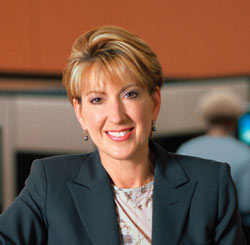
POLL SHOCKER!! Carly overtaking Barbara Boxer in new California poll

From Eric Dondero:

Not the top tier of polling firms, but SurveyUSA is the first to show Fiorina ahead of incumbent Democrat Senator Barbara Boxer.

From CBS 5 San Francisco:

A new SurveyUSA poll in California finds Carly Fiorina (R) edging Sen. Barbara Boxer (D) in the U.S. Senate race, 47% to 45%, a lead which is within the poll's four point margin of error.

Key finding: The poll found twice as many Democrats cross-over to vote Republican as Republicans who cross-over to vote Democrat in the race.

If all other current polls hold for the GOP Senate races, particularly key races in Nevada, Kentucky, and Florida, with a Boxer win that would secure the Senate for Republican control. (With Independent - Lieberman as a possible tie-breaker.)

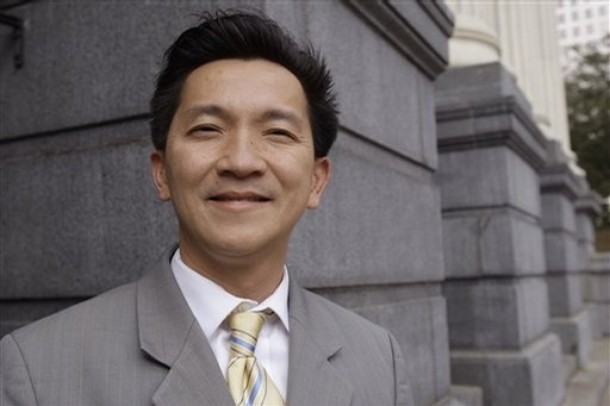
STUNNER! Louisiana’s Cao, ahead of all Dems for reelection in the heart of New Orleans

From Eric Dondero:

The only single incumbent Republican considered vulnerable for reelection in the entire country is first-termer Rep. Joseph Cao, who represents heavily Democrat New Orleans. Cao was elected in a bit of a fluke, after longtime incumbent Democrat William Jefferson was busted for taking bribes. ($90,000 stashed in his freezer.)

(Republicans may lose a House seat in Delaware, as Rep. Mike Castle is moving up to the Senate.)

Now this Total Shocker from The Hotline:

Conventional wisdome suggests Rep. Joseph Cao (R-LA) is the most vulnerable GOPer in Congress, seeking re-election in a heavily African-American district in which any scandal-free Dem should easily top half the vote. But conventional wisdom has been wrong before, and a new poll for Cao's campaign hopes to prove it wrong again.

Cao led state Rep. Cedric Richmond (D) by a 51%-26% margin, according to a survey conducted May 27-June 2 by LA pollster Verne Kennedy. Cao leads Richmond by a 67%-13% margin among white voters, and by a narrower 39%-36% margin among African American voters.

IMPORTANT NOTE!

The liberal media is spreading a wrong number needed for Republicans to win the House. The conventional line is 40, which is incorrect. Actually, only 39 seats are needed for Republicans to win control. And that number maybe 38, for a West Virginia conservative Democrat who is assured election to his first term, has already stated for the record that he would not vote to reelect Pelosi as House Speaker.

Reliability of Health Information on the Web

Last week at TAM8 some SBM colleagues (David Gorski, Kimball Atwood, Harriet Hall, Rachel Dunlop) and I gave two workshops on how to find reliable health information on the web. As part of my research for this talk I came across a recent and interesting study that I would like to expand upon further – Quality and Content of Internet-Based Information for Ten Common Orthopaedic Sports Medicine Diagnoses.

The fact that the article focuses on orthopedic diagnoses is probably not relevant to the point of the article itself, which was to assess the accuracy of health information on the web. They looked at 10 orthopedic diagnoses and searched on them using Google and Yahoo, and then chose the top results. They ultimately evaluated 154 different sites with multiple reviewers for quality of content and also for their HON rating.

For background, the HON rating comes from an independent organization, the Heath on the Net Foundation, that rates health care sites on a number of criteria. These include assessment of how authoritative the sources are, the level of transparency, and if opinions expressed are justified with evidence and references. While generally reasonable, the HON assessment does not necessarily involve a thorough assessment of the quality of the science on a given website, and many sites with what I would consider dubious information have earned the HON seal of approval.

Among other things, this new study evaluated how scientifically accurate health information on the websites they reviewed was, and also compared them to their HON ratings. They divided the websites evaluated into various types – non-profit, academic, commercial, and individually run. What they found was that the quality of information was significantly better on non-profit and academic sites than on commercial and individually run sites. This is not surprising – commercial sites are likely to be compromised by a desire to advertise or sell product. But “commercial” also refers to sites that monetize content – not necessarily selling products, but simply providing content as their product in order to sell advertising. This includes sites such as WebMD.

It is also not surprising that individual sites also scored relatively low on average. An individually run site is only as good as the individual running it, so there is bound to be a great deal of variability. Also, individuals are more likely to make mistakes or have missing information than groups.

Non-profit and academic sites are more likely to have editorial policies that emphasize quality and integrity of content. But also they are more likely to have some vetting process for information. At SBM (a non-profit site) for example, we carefully guard our editorial integrity and also provide some layer of editorial oversight.

But the study also provides reason to be cautious, even about the best sites. They rated quality of information on a 100 point scale and found a range of 45-61%. So even the best sites had a mediocre score. This is likely due to the fact that health information is complex and rapidly changing. Nothing short of a thorough editorial and peer-review process is likely to generate both reliable and thorough up-to-date information. This study is therefore reason for all providers of health information on the net to raise their game. There is definitely room for improvement.

The study also found that having the HON seal of approval did significantly correlate with higher quality and integrity scores. So the code does mean something, even if it is still not a guarantee of science-based content.

Conclusion

Further study of health information on the net is warranted as the results of this one study argue for caution. For providers it suggests we need to improve our filters and editorial process to improve the quality of our content. For consumers the results suggest that non-profit and academic health information sites are most reliable, while commercial and individual sites should be viewed with caution.

But further I would suggest to consumers of health information on the net that no single site or article should ever be relied upon for information. The best way to get a thorough and accurate treatment of a health topic is to look at multiple sites. Try to determine what the consensus of opinion and information is, and be very wary of outliers. This is generally good advice for any research, not just health information.


[Slashdot]
[Digg]
[Reddit]
[del.icio.us]
[Facebook]
[Technorati]
[Google]
[StumbleUpon]

Technical Hitches

Hi everyone!

David and his team are having some technical problems on the Farnes at the moment and can't get online. We hope to get this problem sorted soon after which you can log in for all the latest news and gossip from the Farnes... Thanks for being patient!

All the best,

Sadie
Communications Officer
National Trust, Yorkshire and the North East

City reverses medical marijuana ban near schools – Missoula Independent (blog)


Missoula Independent (blog)
City reverses medical marijuana ban near schools
Missoula Independent (blog)
"I had misinterpreted [Missoula City Attorney Jim Nugent's] indication that the Medical Marijuana Act did not exempt caregivers from the safe schools ...
1000-foot school zone buffer yet another gray area in rules for medical ...The Missoulian
Pot predicament Cities take varied approaches to medical marijuana rulesBattle Creek Enquirer
Mt. Pleasant Apothecary provides medical marijuanaThe Morning Sun

all 24 news articles »

Study: Low Vitamin D Levels Associated With Cognitive Decline – Voice of America


Daily Mail
Study: Low Vitamin D Levels Associated With Cognitive Decline
Voice of America
In tests conducted on more than 850 Italian adults ages 65 and older, scientists at Peninsula Medical School in England found that those with the lowest ...
Vitamin D Supplements May Protect BrainMental Health News (blog)
More good news on the sunshine vitaminSaga Health News
Vitamin D deficiency increases the risk of cognitive decline in the elderlyEurekAlert (press release)
WebMD.Boots.com -Medscape -Celebrities With Diseases
all 220 news articles »

Machines: A Beginning – Part I

Machines.  We have been dependent on them throughout human history.  The more advanced we’ve become, the more advanced have our machines become.  In the latter half of the 20th century, we developed computers.   Now, we live much of our lives with, and through, computers and other machines (a computer is really nothing but a machine…an interesting one, for certain, but a machine).  Many people wonder if we really control the machines, or if the machines control us.  I admit to being a fan of the Terminator and Matrix franchises, but I’m not going to tell you if I have any hacking skills until I check with an attorney.

This is the main fragment of the Antikythera Mechanism, believed to be an ancient mechanical computer designed to calculate anastromical postions. This is from about 150-100 BCE. Image by French Wiki User Marsyas, copyrighted, all rights reserved.

Three things have advanced our technology through the last 60 years; greed, war, and space exploration.  “Greed” because if you designed something newer/cooler/better/faster than your competitors, you got rich.  “War” because if your perceived enemy — the dreaded “THEM” — gets ahead of you in technology they can control you.  “Space exploration” because it was there.  No philosophical arguments about greed or war from me (or you, please).  They are with us, and we have to deal with them.  Shall we just accept for today that competitiveness and aggression is in our nature, and move on to what’s really interesting?  I’m talking about space exploration.

This is the IBM AN/FSQ7 (well, part of it). It's ONE computer. Built to detect bombers, it was in operation until 1979. Image by Debbie Vaters

When we were first developing the technology to go into space, I admit I had some serious doubts.  Remember, we’re talking about the very beginning of the 60′s.  If you suppose life then was much as it is now, you are sadly mistaken.  Let me think:  Okay, the telephones weighed five pounds and were permanently affixed to one spot.  There was no caller ID, no answering machines, no call waiting, no texting.  You had a black and white television (maybe) and three channels.  No cable, no satellites, no pocket calculators, no cell phones, and no home computers.  And we’re going to the moon.  Okey dokey.

The Apollo 11 Lunar Module - Taken by Neil Armstrong (that's Buzz Aldrin you see) NASA

Obviously we did it.  And kept doing it.  It cost a lot in money and lives, and not just in the United States.  People all over the world have paid the price, at the time most notably in the USSR and the US.  We did it because we developed the machines to take us where our two feet couldn’t.  A space ship is nothing but a machine designed to move you from one place to another, much like your automobile.  Granted it’s a bit more complicated than this year’s Honda, but the concept is the same.  We can trace our most advanced vehicles, I’d say the space shuttles, way back to the simple cart.  As soon as you get the concept down, and build the first machine for it, you can keep growing and improving from there.

A reproduction of the Model T Ford - PhotoBucket Public Domain image

Operating a machine in space brings on new and exciting challenges, of course.  For one, if your vehicle fails you have a whole boat load of problems in space that you don’t have on the ground.  Beyond that, we’ve now developed machines to go where we can’t go yet.  Our rovers on Mars, the Voyagers, Cassini, Messenger… we have a whole pack of them roaming around out there.  Sure, we have some (very) limited control over them, but basically we’ve designed machines to go out where we can’t and collect specific information for us.

Artist conception of the Spirit Rover on Mars - NASA

That’s the beginning.  That’s the concept.  This is part one of Trudy’s post, and tomorrow we’ll talk about the machines we use in space exploration.

No, methane from the BP oil leak won’t kill us all | Bad Astronomy

io9_logoWhile I was at TAM 8 a breathless story came out claiming that methane erupting from the oil leak in the Gulf of Mexico was going to cause a catastrophic global extinction event. I knew the story smelled bad right away* but was a bit busy at the meeting, so I couldn’t attack it.

Happily, my pal Annalee Newitz at io9 did. She talked to actual experts and found out there simply isn’t enough methane leaking from the oil plume to do much except to the local environment. In my humble opinion, this ecological disaster sucks enough without adding hysteria to it.

Tip o’ the top hat to Rob Sheridan and aeontriad.


* Yes, I made a fart joke (it’s not the first time). And yes, I know methane is odorless.


NCBI ROFL: On the distinction between yuppies and hippies. | Discoblog

hippieOn the distinction between yuppies and hippies: Individual differences in prediction biases for planning future tasks.

“The present study investigated variables related to errors in predicting when tasks will be completed. Participants (N = 184) responded to the Time Structure Questionnaire (TSQ; Jones, Banicky, Pomare, & Lasane, 1999) and Temporal Orientation Scale (TOS; Bond & Feather, 1988) and predicted when they would complete either a desirable or undesirable task. Factor analysis of the TSQ and TOS identified two factors: yuppie traits, which involved being hard-working and goal-oriented, and hippie traits that reflected “living for the moment”. Overall, individuals tended to underestimate when they would complete both tasks. However, for the undesirable task, yuppie traits corresponded with less prediction bias whereas hippie traits were associated with greater bias.”

Bonus excerpt from the Introduction:
“Kahneman and Tversky (1979) observed that individuals typically underestimated how much time they needed to complete their projects despite the fact that similar tasks in the past had taken longer than expected. They described this optimistic bias as the “planning fallacy” which subsequent research has shown to occur for predictions about the completion of many different tasks, including honors theses (Buehler, Griffin, & Ross, 1994), word puzzles, tax forms (Buehler, Griffin, & MacDonald, 1997), origami, furniture assembly (Byram, 1997), and computer programming (Connolly & Dean, 1997).”

yuppies

Thanks to David for today’s ROFL!

Photo: flickr/Wineblat Eugene – Portraits

Related content:
Discoblog: NCBI ROFL: And the March “No s**t, Sherlock” award goes to…
Discoblog: NCBI ROFL: If you think you don’t suck, you probably do.
Discoblog: NCBI ROFL: Pink Floyd hallucinations: not just for druggies.

WTF is NCBI ROFL? Read our FAQ!


The Growth of a Baby’s Brain Looks Like Human Evolution in Fast-Forward | 80beats

It’s what happens to your brain after you’re born that makes you human.

Jason Hill and colleagues were comparing the structure of newborn brains to those of adults when they came upon a striking find, documented this week in the Proceedings of the National Academy of Sciences. Clearly, the brain expands greatly as you grow from baby to adult. But the researchers discovered not only that the brain grows in a non-uniform way, but also that the parts of the brain that change most rapidly as people grow up are the same parts that changed the most as humans evolved away from our primate relatives.

The research revealed that brain regions involved in higher cognitive and executive processes—such as language and reasoning—grow about twice as much as regions associated with basic senses such vision and hearing…. “The parts of the [brain] that have grown the most to make us uniquely humans are the same regions that tend to grow the most postnatally,” Hill said [National Geographic].

But why would we be born with brains more like those of the apes? At birth, more basic abilities like the physical senses are more important for survival, the researchers say. Study author David Van Essen also hypothesizes that it could be advantageous for those brain regions to grow once you’re out of the womb, allowing, for instance, the extraordinary capacity of children to pick up language.

Lastly, there’s the more practical side of the birth process:

The limitations on brain size imposed by the need to pass through the mother’s pelvis at birth might also force the brain to prioritize, said study researcher Dr. Terrie Inder, professor of pediatrics at Washington University School of Medicine [LiveScience].

Related Content:
80beats: Mice with a Human Language Gene Have Altered Squeaks And Brain Structure
80beats: TV Can Slow Language Development, Even in the Background
The Loom: Babies with Grown-Up Brains
DISCOVER: Think Animals Don’t Think Like Us? Think Again

Image: iStockphoto


A Legit “Young Earth” Theory: Our Planet May Be Only 4.4 Billion Years Old | 80beats

103957main_earth8The bits that make up Earth apparently took their time pulling themselves together. New research hints that our home didn’t form as a fully-fledged planet until 70 million years after its currently accepted birth date, making the planet younger than scientists believed.

The evidence appears in Nature and looks at the Earth’s “accretion”–the swirling together of gas and dust that formed our planet. Researchers previously believed that the Earth’s accretion was a fairly steady process, happening in about 30 million years, but this study suggests that Earth took a lot longer to form.

“The whole issue hinges on working out how long it took for the core of the Earth to form, which is one of the big unknowns in this area of science,” said Dr. John Rudge, one of the authors at the University of Cambridge. “One of the problems has been that scientists usually presume Earth’s accretion happened at an exponentially decreasing rate. We believe that the process may not have been that simple and that it could well have been a much more staggered, stop-start affair.” [The Telegraph]

Specifically, the scientists compared isotopes in our planet’s mantle with those found in meteorites, which are as old as the solar system. The researchers used meteorites as samples of our embryonic planet’s materials, and by comparing the isotopes in these building materials to the final product–the earth’s mantle–they could make several computer models to determine how the planet formed.

After looking at models using different isotopes, the researchers believe that the planet had one great growth spurt (sticking together about two-thirds of the Earth’s current mass) followed by a period of long slow growth. They say the formation could have ended with a walloping by a planet-sized chunk of materials that gave us the last of our mass and also broke off a chunk to form the Moon.

“If correct, [this model] would mean the Earth was about 100 million years in the making altogether,” Dr. Rudge said. “We estimate that makes it about 4.467 billion years old–a mere youngster compared with the 4.537 billion-year-old planet we had previously imagined.” [BBC]

Related content:
80beats: Life May Have Formed on Earth Thanks to a Lush, Enveloping Haze
80beats: When the Sun Was Young, Did It Steal Comets From Other Stars?
80beats: Why Didn’t the Young Earth Freeze Into an Ice Ball?
80beats: Scientist Smackdown: Did a Nuclear Blast on Earth Create the Moon?
80beats: Young Earth May Have Had Tectonic Plates, Not Hellish Magma Oceans

Image: NASA


Texting While Diving? Buoy Allows Text Messages From Submarines | Discoblog

submarineWhen it comes to submarines, stealth is no longer an excuse for being anti-social. A 40-inch-long buoy may soon allow submarine captains to send text messages from under the sea.

After leaving the submarine’s trash chute, the buoy stays tethered to the vessel by miles of cables, LiveScience reports. Once sailors have texted to their hearts’ content, they can cut the buoy loose. Alternatively, Lockheed Martin, the system’s designer, also pictures buoys dropped from airplanes, which could receive submarine messages via an “acoustic messaging system” that resembles sonar and send them along in text message form.

By air or by garbage disposal, the buoys would improve current submarine communications, Rod Reints at Lockheed Martin told LiveScience.

“Currently, they have to go up to near periscope depth to communicate . . . . They become more vulnerable to attack as they get closer to the surface. Ultimately, we’re trying to increase the communication availability of the sailors while increasing their safety.”

If successful, one could only imagine the buoy’s other applications. Underwater robots, for example, could text us live updates about sunken vessels or oil leaks. Also, given that we can now text in caves and tweet in space, the buoy, by allowing people to text from miles under water, means that there is nowhere lft 2 escape.

Related content:
Discoblog: Submarine Sonar is Confusing Whales, British Military Says
Discoblog: Woman Receives First Ever PhD in Texting
Discoblog: Watch Those Thumbs Go! Champion Texter Wins $50,000
Discoblog: The New Defense Against Despotism: Text Messaging
Discoblog: Astronauts in Space Finally Enter the Intertubes

Image: U.S. Navy


Firefly 1980 | Bad Astronomy

I love stuff like this: what would the credits of "Firefly" have been like had the show been made in the 1980s? Pretty much like this:

This was done by Garrison Dean and my bud Charlie Jane Anders from io9.

I saw right away (like many others) that they left off Simon Tam from the credits! So what did they do? In a sense, they apologized but in a freaking brilliant and hilarious way:

Awe. Some. Makes me want to sit down with my DVD set of "Firefly", too. Into the black once more…

Tip o’ the Crazy Ivan to Wil.


Genes from Arctic bacteria used to create new vaccines | Not Exactly Rocket Science

Colwellia

Walk among the Arctic ice and you’ll sometimes encounter distinctive patches of red snow. They’re caused by a species of bacteria called Colwellia psycherythraea. It’s a cold specialist – a cryophile – that can swim and grow in extreme subzero temperatures where most other bacteria would struggle to survive. Colwellia’s cold-tolerating genes allow it to thrive in the Arctic, but Barry Duplantis from the University of Victoria wants to use them in human medicine, as the basis of the next generation of anti-bacterial vaccines.

Colwellia’s fondness for cold comes at a price – it dies at temperatures that most other bacteria cope with easily. By shoving Colwellia genes into bacteria that cause human diseases, Duplantis managed to transfer this temperature sensitivity, creating strains that died at human body temperature. When he injected these heat-sensitive bacteria into mice, they perished, but not before alerting the immune system and triggering a defensive response that protected the mice against later assaults. The Colwellia genes transformed another species of bacteria from a cause of disease into a vaccine against it.

A similar approach has been used for decades to create vaccines against viral diseases, including polio and influenza. Usually, scientists grow a virus at low temperature until they can isolate a strain that’s sensitive to heat and can be used as a vaccine. For bacteria, scientists usually resort to a different tack – they grow the bug under special conditions, or deliberately mutate it, until they get a strain that’s not very good at causing disease. Duplantis wanted to see if the heat-sensitive approach would work for bacteria as well as it does for viruses.

Duplantis used nine Colwellia genes to create heat-sensitive strains of Francisella tularensis, a bacterium that is often passed from animals to humans and can cause the potentially fatal disease tularaemia. Each of the nine genes worked on its own to varying degrees.

While some of the resulting strains were eventually able to evolve temperature-resistant forms, five of them couldn’t. This makes sense when you consider that cryophiles have been evolving in cold climes for several million years. Their adaptations are deeply rooted in their genes and it ought to take a combination of several mutations to create heat-resistant versions.

Duplantis injected these sensitive strains into rats and mice at cool parts of their bodies, like their ears or the base of their tails. While normal strains soon spread to other organs, the heat-sensitive ones didn’t. One strain in particular protected the rodents against later infections by normal bacteria. Three weeks later, Duplantis exposed the mice to a dose of regular Franciscella so large that it would normally kill them within a few days. It didn’t – they became less ill and lost less weight than unvaccinated mice and weeks later, they were still alive and well.

It was a promising result, and Duplantis thinks that the same approach should work for other species of dangerous bacteria. Using genes borrowed from Colwellia, he has already managed to create heat-sensitive versions of Salmonella enterica, which causes food poisoning, and Mycobacterium smegmatis, a relative of the species that causes tuberculosis. Whether these strains can be used to vaccinate mice, or indeed humans, is another matter.

And creating vaccines isn’t the only use for heat-sensitive bacteria. The most dangerous species are very difficult to study, and scientists need to do so in expensive facilities with stringent safety measures. But that might change if we managed to engineer strains that die at low temperatures. If the bacteria die at human body temperature, the risks of accidental infection suddenly become very low. And as Duplantis says, that would reduce the need for “full physical containment.”

Reference: PNAS http://dx.doi.org/10.1073/pnas.1004119107

Image by Richard Finkelstein

More on vaccines:

The Right Hardware for a Soft Martian Landing | Visual Science

Engineers hook up the data acquisition system before a test of the landing radar that will guide the next Mars rover, Curiosity, to the surface of the Red Planet in the summer of 2012. This past spring, the radar (you can see it here attached to the nose of helicopter) went through two months of flight tests over desert terrain in Southern California at different altitudes and angles intended to simulate trajectories under consideration for the Mars landing. Preliminary results show that the radar is performing as expected.

Photographer Spencer Lowell shot the recent test for Discover this spring at a small airport near NASA’s Jet Propulsion Labs. Lowell: “Steve Lee, the project manager, told me that the system they were so meticulously working on is the nervous system that is responsible for getting the rover safely to the Martian surface. The tests would run the radar through a variety of flight patterns while recording all the hard data which will be used to program the actual descent system. My only restriction while shooting was to not get within three feet of the radar. After asking if they would open the hangar doors (which they did) I backed up as I could to capture the entire scene. In this particular image you can see two of the main engineers checking the connections to the computer system. What I like most about shoots like this is that I get to see firsthand that very precise science, like sending craft to another planet, often starts off looking like a mess.”

Legal, Synthetic Marijuana Pleases Pot-Heads, Upsets State Governments | 80beats

k2Around the United States, state governments are rushing to enact bans on K2, the hot new (and still mostly legal) drug made with synthetic cannabinoids: lab-created compounds designed to mimic the effects of THC, the active ingredient in marijuana.

Often marketed as incense, K2 — which is also known as Spice, Demon or Genie — is sold openly in gas stations, head shops and, of course, online. It can sell for as much as $40 per gram. The substance is banned in many European countries, but by marketing it as incense and clearly stating that it is not for human consumption, domestic sellers have managed to evade federal regulation [The New York Times].

Missouri is the most recent state to move against K2, the origin of which dates back to the work of Clemson University scientist John Huffman, who was developing these synthetic compounds in the 1990s. Scientifically, the chemicals are interesting for their potential to mimic some of the pain-relieving aspects of marijuana, which advocates of medical marijuana legality point to, without the negative health effects that come with setting a plant on fire and inhaling the smoke. The chemical used in most varieties of K2 is called JWH-018.

Huffman was interviewed by The Guardian last year when K2 was spreading around Europe. Now in his late 70s, he seems to understand something that many politicians can’t seem to get through their heads: Risk-taking teenagers will go to about any length, legal or illegal, to get high. Huffman says he wouldn’t oblige the numerous enterprising types who asked him how to make his substances, and that the substances are always labeled not for human consumption. But he figured someone was going to figure it out sooner or later, especially considering the chemical doesn’t show up on drug tests.

JWH-018 was “nothing special”, Dr Huffman remembered, “but it was one of the more potent compounds we made, and it was quite easy to make from commercially available materials. Probably the reason it has now caught on…. My biggest surprise was that this all hadn’t happened sooner,” he told me. “All it needed was somebody with a reasonable understanding of science to see the papers we had published and think, ‘Aha!’” [The Guardian].

The hurry to ban K2 this year started after U.S. health officials began blaming the substance for more and more hospital visits.

There has been a significant bump in calls to poison centers concerning spice. Nationwide, the American Association of Poison Control Centers logged 567 cases across 41 states in which people had suffered a bad reaction to spice during the first half of 2010. Just 13 cases were reported in 2009 [Washington Post].

But the problem health officials and politicians keep running into is that there isn’t a single K2. What’s probably happening is that dealers buy a synthetic chemical online and then spray it on their own mix of herbs and leaves. They sell the result as K2, marketing it as incense with a wink and a nod, although both parties know it’s meant to be smoked.

Thus, it’s hard for medical responders to know what’s making all these people sick: It could be the dose of the chemical, its stability during combustion, how it’s metabolized, or something else in the mix. And if you’re trying to ban the stuff, how do you do it? If state legislatures outlaw JWH-018, there are scores if not hundreds of other synthetics there to take its place. Texas legislators may attempt to draft a bill that outlaws all possible synthetic cannabinoids, though how that wording will work is unclear.

Related Content:
80beats: 1st Medical Studies on Pot in 20 Years Find It Does Relieve Pain
80beats: A Toke a Day Might Keep Alzheimer’s Away
DISCOVER: Pot Helps an Imbalanced Mind
Discoblog: Forget About Pot’s Surprising Memory Boost

Image: Buy-K2-Incense


Setting the Record Straight on Ophelia Benson | The Intersection

We haven't said anything about Ophelia Benson on this blog in a long time. We stopped allowing Benson to comment here back in mid 2009, for very good reasons--among other things, she was sending us emails demanding to have other posters' comments deleted. We had a better solution. Lately, Benson has been clamoring to have her commenting status restored, based on the "Tom Johnson" flap. This doesn't make any sense, as the thread that led to her banning happened long before that affair. Still, we decided to look at what Benson was saying in favor of her restoration:
He or he and Sheril Kirshenbaum banned me from commenting at The Intersection soon after I began trying to get them to do a better job of justifying their claims and to criticize their energetic and often inaccurate bashing of new atheists. Commenters who agreed with them were not banned or even moderated, no matter how abusive their comments were. One “bilbo” repeatedly called me a liar after I posted a list of questions for M and K. Benson's banning had nothing to do with her positions. Moreover, how does she know who was or wasn't banned or moderated? We can't tell you how heavily we have had to ...