NCBI ROFL: Head banger’s whiplash. | Discoblog

headbang“OBJECTIVE: The current trend in dancing includes “head banging” with extreme flexion, extension, and rotation of the head and cervical spine. We suggest that dance-related severe pain in the cervical area may result from head banging. DESIGN: A cohort of 37 eighth graders ages 13 or 14 participated in a dance marathon for charity lasting 7 h. There were 26 girls and 11 boys. SETTING: During the dance marathon, three “heavy metal” songs were played during which head banging could be done. PATIENTS: The painful syndromes that relate to head banging were evaluated by a convenience sample of the 37 marathon dancers in the eighth grade. INTERVENTIONS: None. MAIN OUTCOME MEASURES: A self-selected age-matched control group is included since 17 adolescents participated in head banging and 20 did not. RESULTS: Of the head bangers, 81.82% of the girls and 16.6% of the boys had resultant cervical spine pain that lasted 1-3 days. Only 26.2% of non-head-banging girls and 0% of non-head-banging boys had cervical spine pain lasting 1-3 days. Of all the 8th-grade participants, 62.16% had pain somewhere. Other types of pain included leg pain, back pain, and headache. Only three adolescents took any medication for their pain. CONCLUSIONS: The head-banger’s whiplash is a self-limiting painful disorder. The easy resolution of the pain problem in adolescents is a tribute to the resilience of youth.”

head_banger_whiplash

Photo: flickr/kelsey_lovefusionphoto

Related content:
Discoblog: NCBI ROFL: Head and neck injury risks in heavy metal: head bangers stuck between rock and a hard bass.
Discoblog: NCBI ROFL: Injuries due to falling coconuts.
Discoblog: NCBI ROFL: I wonder if this paper was cheer-reviewed.

WTF is NCBI ROFL? Read our FAQ!


Crescent planet, crescent moonrise | Bad Astronomy

Oh. My.

Another lovely, stunning Cassini image: A thin crescent Enceladus rising over the sunlit cloud tops of Saturn:

cassini_enceladus_crescent

What a sight! As the spacecraft rounded into the dark side of Saturn, it turned back toward the planet (and the far more distant Sun). The top of Saturn’s atmosphere is still lit as seen from Cassini’s vantage point, but also lit was the moon Enceladus. The moon was between Saturn and Cassini, and so the geometry dictates it too was showing almost entirely its dark side to the spacecraft. The result is the thin crescent of the moon just over the (only partially seen) thinly lit crescent of its parent planet.

cassini_craters_tethysThis raw image (meaning it has not been processed to remove camera defects and other artifacts) is one of several available on the CICLOPS site. There are other shots of Enceladus which show its famous string of geysers, and incredible close-ups of craters on the moon Tethys — like the one shown here (click to embiggen).

The average density of Tethys is actually less than that of water, meaning it is mostly ice. Clearly, Tethys has had a rough past; the surface is saturated with craters (the weird lines on the right hand side are one of those camera artifacts I mentioned, and aren’t real). The moon is nearly 1100 km (660 miles) across, so clearly Penelope, the large crater you can see there, is enormous… and old, at least old enough to have suffered multiple peppering impacts in the time since it was created.

The other images on the CICLOPS site are wonderful, and you should look. Also, Emily Lakdawalla took a few of them and made animations which are particularly amazing. Zoom in on Enceladus, or watch it rise in front of Saturn!


Drives & Energy Efficiency (Cyclo, LCI, or VSI)

There are a number of variable speed drive technologies out there. While some have a uniform power factor close to unity across the operational range (such as the VSIs), others go from anywhere around 0.4 to 0.8 (such as the Cyclos).

So, is any one type of electrical variable speed drive SIGNIFIC

Emergency Power Distribution-Urgent

Hi, Everyone

We are planning that the power of 415V from several Diesel Generators will step up to 11KV switchgear and come back to 6.6KV switchgear through plant MV/LV transformer to start fire water pump for 6.6kV motor.

In this case, Somebody pointed out that this sceme(Step up and Step

"Still Life: The Art of Anatomy," Dunedin Public Art Gallery, Dunedin, New Zealand, Through September 12


I just found out about an excellent looking exhibition now on in Dunedin, New Zealand; the exhibition is called "Still Life: The Art of Anatomy," and it frames a variety of historical and contemporary anatomical teaching tools held in public and private hands--including models and illustrations--as artworks in a fine art setting.

Images of the exhibition above and full details below; if you are based in New Zealand, be sure to check this out!

Still Life: The Art of Anatomy
Saturday, 10 July 2010 - 12 September 2010
Dunedin Public Art Gallery
Dunedin, New Zealand

Noted Dunedin based filmmaker and medical doctor Paul Trotman, has worked closely with the Dunedin Public Art Gallery in researching Dunedin's rich collections towards the realization of Still Life: The Art of Anatomy. This exhibition brings together an array of historical and contemporary items, such as Dr John Halliday Scott's elegant anatomical drawings and old master prints, through to porcelain and wax casts of aspects of the body and the latest interactive computer generated 3D anatomical models. Still Life provides a stunning insight into this complex subject and also reveals the important lineage that science and art shares through the analysis, distillation and depiction of the human form.

You can find out more by clicking here or here.

Native American ancestry in African Americans | Gene Expression

That is, in the African American sample in the HapMap3 population set. I was just browsing the Admixture manual, and stumbled onto this plot:

hapmap3afswplot


CEU = Utah Whites, and YRI = Yoruba. They should be familiar from the previous versions of the HapMap. MEX = Mexican Americans from Los Angeles. K = 3, three ancestral populations. So what’s ASW? “African ancestry in Southwest USA.” I was struck by the high proportion of what seems to be Native American ancestry in some of the African Americans. This is a controversial aspect of scientific genealogy, as most researchers have found far less Native American ancestry within the African American population that had been the expectation within the community (Henry Louise Gates Jr. had to face criticism and skepticism when reporting this result from the black public). These results would conflict with that. But here’s the fine print on this sample. All you really need to know is this: “Principal Investigator for Community Engagement and Sample Collection: Morris Foster, University of Oklahoma, Norman, Oklahoma.” Oklahoma used to be called “Indian country,” and most Americans are aware that whites and blacks in this part of the country have more than the usual fraction of indigenous ancestry. Just something to keep in mind when encountering results that come out of HapMap3 populations.

Third World means nothing now | Gene Expression

I recently had an exchange on twitter about the term “Third World” (starting from a tweet pointing to the idea of “Third World America”). Here’s Wikipedia on the origins of the term:

The term ‘Third World’ arose during the Cold War to define countries that remained non-aligned or not moving at all with either capitalism and NATO (which along with its allies represented the First World) or communism and the Soviet Union (which along with its allies represented the Second World). This definition provided a way of broadly categorizing the nations of the Earth into three groups based on social, political, and economic divisions.

Although the term continues to be used colloquially to describe the poorest countries in the world, this usage is widely discouraged since the term no longer holds any verifiable meaning after the fall of the Soviet Union deprecated the terms First World and Second World. A term increasingly being used to replace “Third World” is “Majority World”, which is gaining popularity in the global south. The term was introduced in the early nineties by the Bangladeshi photographer and activist, Shahidul Alam.

I don’t think the term “Third World” has much utility, but I think it’s not useful to replace it with another dichotomous categorization which simply falls into the trap of a human cognitive bias. The bias seems universal, and doesn’t brook ideology. Racial nationalists and multiculturalist liberals both accept the dichotomy between “people of color” and whites. I believe most white liberals today would agree with the framework that white nationalist Lothrop Stoddard outlined in The Rising Tide of Color Against White World-Supremacy; they would simply invert the moral valence, looking positively upon developments which Stoddard viewed with concern. Many racial minorities in the West also buy into the white vs. non-white dichotomy for purposes of cooperation between different groups. Though it has tactical utility in white majority societies it’s frankly ignorant to presume that there’s any fundamental solidarity between “people of color.” I assume that dark-skinned South Asians and Africans who have lived in East Asia, or even the Gulf states, can confirm that racism is not necessarily conditional on the existence of white people.*

But there is also the problem that there’s a wide range of economic and social outcomes outside of the developed world. To give you a sense, here’s a chart from Google Data Explorer:

I wanted to show a two-dimensional chart to indicate that issues of development shouldn’t always be viewed in a scalar context. Many Asian nations do not have the political instability or issues with disease that African nations have, but, they’re far closer to the Malthusian limit. So in general Africans are actually relatively well fed, but that’s in part probably due to the high mortality in those regions. NGOs and relative political stability have resulted in a floor of the quality of life in very poor nations like Bangladesh (so that mass starvation is no longer a concern), but that floor is very low indeed. Low enough that South Asia is the world epicenter of nutritionally induced mental retardation in raw numbers.

And then you have nations such as Mexico or Brazil, which suffer from “contrast effect.” Mexico is next to the United States, and so it can not perceive itself as a rich nation. Brazil has long been the “Land of the Future,” and is gifted with a surplus of land, so its relative underperformance next to the USA grates. But on a world wide scale they’re both rather affluent. Mexico is the second-fattest nation after the United States. 1 in 10 Brazilians is obese. Obesity is not positive, but it is an indication that populations have moved above bare subsistence and large swaths now have a surfeit of calories.

Here’s a bar plot of malnutrition prevalence under the age of 5, with color-coding by region:

* Sometimes I feel that in terms of the model of how the universe works, white nationalists and non-white racial activists in the West can agree on the facts. Whites are supernatural creatures, the former simply view them as gods, the latter as demons. But any model which does not include whites is no model at all, for they are the Nephilim of our age. When I talk to people versed in post-colonial theory about history a history without whites does not compute. They say that love and hate are two sides of the same coin.

Macerating Pump

I'm looking for a cheap, low power single phase solution to chop/macerate material. The material will range from horse manure (with straw content) to bakery waste to vegetable waste etc so will need to be able to cope with a variety of products. Does anyone know of a solution that is out there?

Malfunctioning of Lenze Inverter.

Dear friends;

I have an electric tram in our Corrugator plant for transferring corrugated sheets from Corrugator machine to conversion machines. The tram has a 7.5kw 380V motor with 11kw inverter (Lenze 8218) for its movement back and forth. Now this inverter has malfunctioned and I wan

Documentary on micronations, featuring seasteading, premiering 9/11 at Toronto Film Festival

Jody Shapiro's new documentary "How To Start Your Own Country" features Patri Friedman in a centerpiece interview. Set to premiere September 11 at the Toronto Film Festival, it focuses on micro-nations, principalities, and freedom movements across the world and uses comedy to raise serious questions about what it means to be a country, a topic that will only become more relevant as the seasteading movements gains momentum.

read more

What a Sprosser!

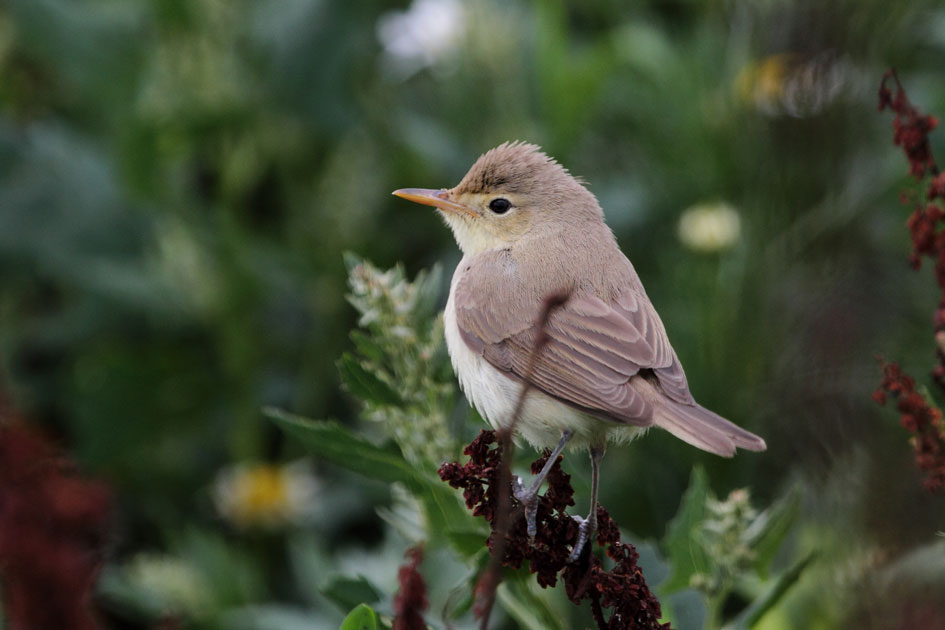
Melodious Warbler, first For Farnes and Northumberland (Mark Breaks)

One day wonder on Brownsman - Melodious Warbler (Mark Breaks)

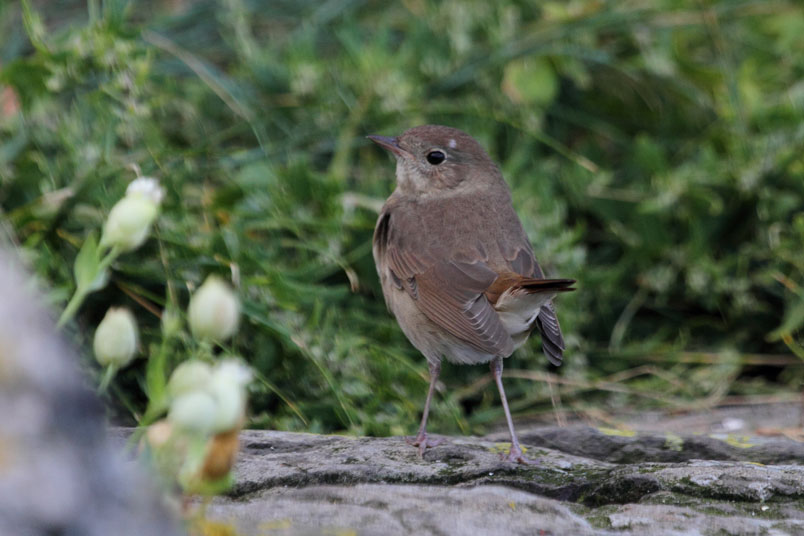
Second for the Farnes - Thrush Nightingale on Longstone (Mark Breaks)

First in Northumberland since 2002 - and that was on the Farnes as well! (Mark Breaks)
Sunday 15th August comments: The Farnes – its great, it really is. It’s an amazing place for breeding seabirds, it’s an incredible place to visit and for the privileged few, it’s an amazing place to live. It’s also very good for pulling in migrant birds – arguably one of the best in the north-east (seen as we stick 4 miles out to sea!)

So, why then, after ten years and all my knowledge of the place, did I decide to leave the islands for two weeks? I thought to myself, yeah, it’s early August, generally a quiet time for migrant birds and good to have a break to recharge batteries after another long season.

Big mistake.

What I wasn’t expecting was for the team, lead by Senior Warden Jason Moss, to go and find a load of rare birds – that wasn’t in the script (I'm sure they were trying harder....) The boys have worked hard but have played hard – finding not only a ‘second for the Farnes’ (Thrush Nightingale yesterday) but also a ‘first’ for the Farnes and Northumberland! (Melodious Warbler) Chuck in a few other good birds (adult Sabine's Gull etc) and yes, you’ll agree, I’ve made a mistake. When I return, I’m not leaving. If anyone is looking for me, I’ll be on the Farnes until December and will not be leaving until then.

On a serious note, it’s been a great week for the team as they have discovered a Melodious Warbler on Brownsman followed by a Thrush Nightingale on Longstone – both very rare birds and a great way to start the autumn migration. So well done team and I'm certain there will be more to follow (so long as I'm there!).