"Dermographisme – Démence précoce catatonique," Nouvelle Iconographie de la Salpêtrière, Paris, 1904


Dermographisme [aka dermographism, dermatographismm or "skin writing] - Démence précoce catatonique, from Nouvelle Iconographie de la Salpêtrière, Paris, 1904.

From the Wellcome Collection Skin exhibition website (which featured this image):

Démence Précoce Catatonique Dermographisme. L Trepsat, 1893. From 'Nouvelle Iconographie de la Salpêtrière', 1904.

During the second hald of the 19th century, the belief spread that the phenomenon of dermatographism (or 'dermographism', or 'skin writing') was linked to hysteria and other mental or nervous disorders. Here a female patient at the Salpêtrière hospital in Paris has had her diagnosis 'Démence précoce' (dementia praecox) 'written' on her back.

Click on image to see larger version.

Via Rrosehobart Tumblr.

"Science and Curiosities at the Court of Versailles," Through February 2011


Thanks so much to my friend Megan for letting me know about the super exciting looking exhibition that will be on view at Versailles Palace in France through February of next year.

The show--entitled "Science and Curiosities at the Court of Versailles"--will tell the story of scientific inquiry, rational amusement, and natural and artificial curiosities at the grand royal court of Versailles. To illustrate this worthy topic, the exhibition will gather and display--for the first time ever--a variety of artifacts that once comprised part of the monolithic "royal collection" and are now--post French Revolution and disciplinary divides--housed in a variety of anatomical, anthropological, natural historical, and art museums around France.

The artifacts will reveal "a new, unexpected face of Versailles as a place of scientific inquiry in its most various forms," trace the stories of the relationship between natural philosophers and the royal court, and bring "together works and instruments from the old royal collections, spectacular achievements of beauty and intelligence, for the first time."

Good stuff!

Here is the full description from the website:

[Science and Curiosities at the Court of Versailles] reveals a new, unexpected face of Versailles as a place of scientific inquiry in its most various forms: the Hall of Mirrors electricity experiment, Marley Machine on the banks of the Seine, burning mirror solar power demonstration, etc. It brings together works and instruments from the old royal collections, spectacular achievements of beauty and intelligence, for the first time.

Versailles is the place where control over science was exercised. At the urging of Jean-Baptiste Colbert, Louis XIV's "prime minister", the royal authority became aware of the benefits of scientific research. In 1666 Colbert founded the Academy of Science, establishing a new contract between the government and scientists. Many "natural philosophers", as they were known at the time, including some of the most famous, assiduously frequented the Court as physicians, army engineers, tutors, etc. The physicists Benjamin Franklin and Abbot Nollet compared their theories in front of the king and the encyclopaedists Diderot and D’Alembert met in the office of Dr. Quesnay, physician to Madame de Pompadour, Louis XV's favourite. Some courtiers were real experts.

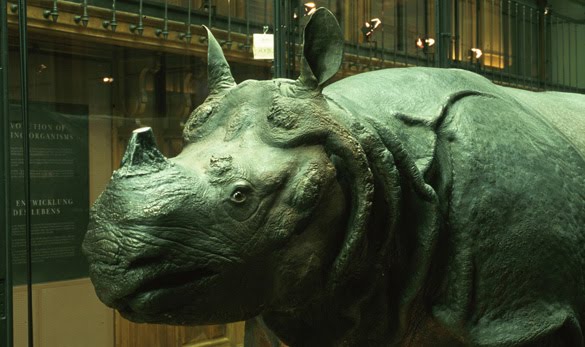
The Château de Versailles offered many research resources. Anatomists and zoologists could study the menagerie's ostriches, pelicans, rhinoceroses and other rare animals, botanists and agronomists the plants on the grounds of the Trianon and "hippiatrists", the forerunners to veterinarians, the horses in the Grand Stables.

Educators developed new teaching methods using cutting-edge tools for the royal children and the kings' personal practice. While Louis XIV considered himself a protector of the arts and sciences without practicing them, his successors, Louis XV and Louis XVI, became true connoisseurs. A presentation to the king or demonstration before the Court was the highest honour, equivalent to winning a Nobel Prize. Many people know about the first hot-air balloon flight, but numerous other events have fallen into oblivion, such as the burning mirror demonstration in front of Louis XIV or the electricity experiment in the Hall of Mirrors under his successor's reign.

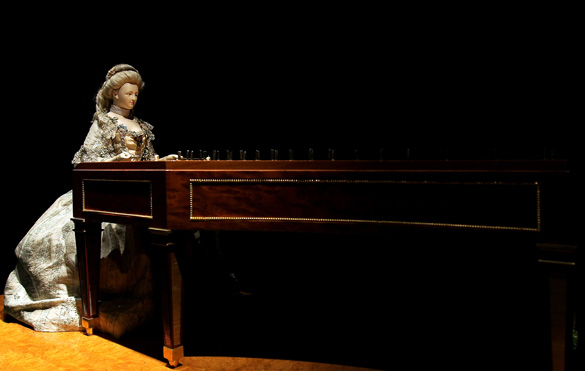
You can find out more on the exhibition website--which will be on view until February of next year--by clicking here. You can see the Tympanum Player Automaton in full automaton action by pressing play on the Youtube viewer above.

If anyone makes it to this exhibition, I would love to see images/hear a report!

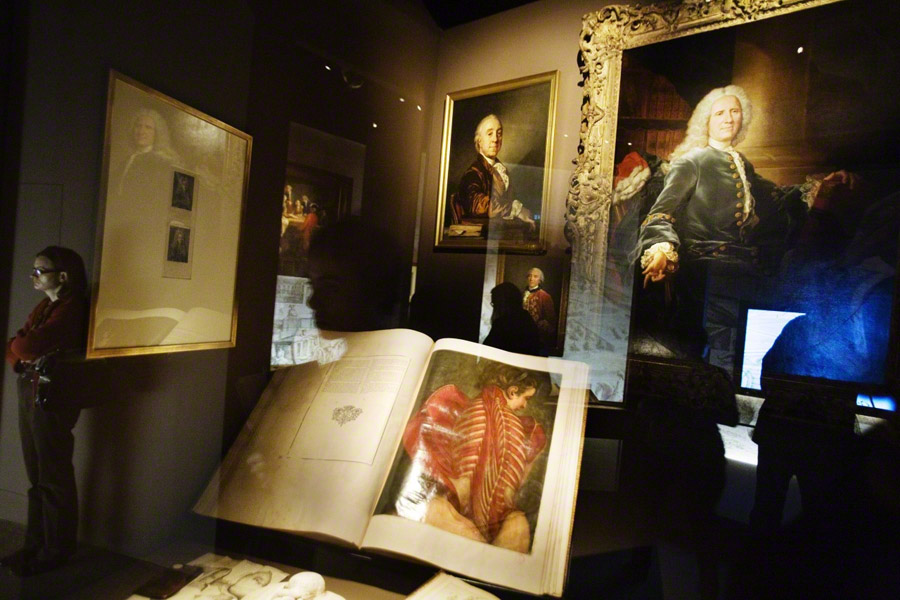
Top two images are installation views of the exhibition from the Corbis Images Blog. The rest of the images from the exhibition website and are captioned, top to bottom:

  • The Tympanum Player Automaton; Peter Kintzing (1745-1816) and David Roentgen (1743-1807)
  • Rhinoceros gifted in 1769 to King Louis XV by the French governor of Chandernagore
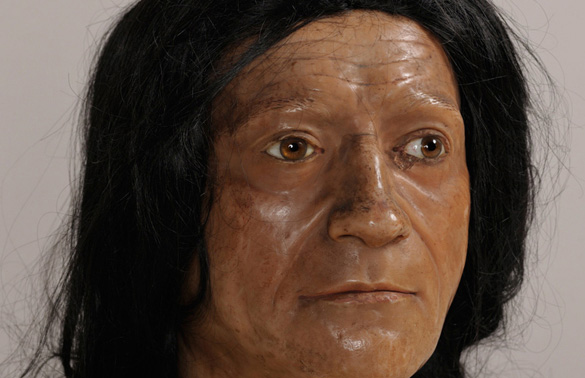
  • Waxen Indian head from the Cabinet of the Marquis de Sérent; originally on display in a window of the Marquis de Sérent's ethnographical cabinet in Rue des Réservoirs at Versailles acquired for the princes' education.
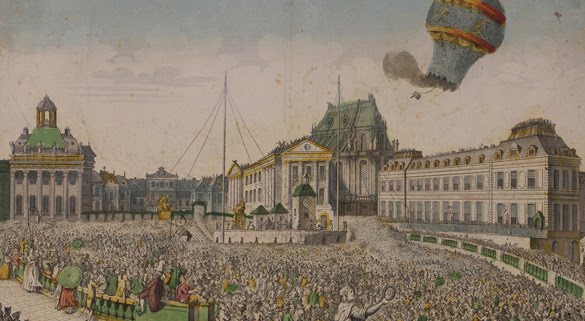
  • 18th C Artwork depicting Étienne de Montgolfier's aerostatic experiment at Versailles
  • Watercolour drawing by Philippe-Etienne Lafosse (1738-1820), intended for the study of Farriery, or the art of treating the ailments of horses

Via my wonderful friend Megan Fitzpatrick who found it via Jezebel.

"Very Bad Things" and The Morbid Anatomy Library in Newsweek, Article and Video

The Morbid Anatomy Library has just been featured in a Newsweek Magazine article entitled "Very Bad Things," which is essentially a meditation on why people collect the unspeakable, from "hipbones to wallets made of human skin to babies in jars." The piece was inspired by Mark Jacobson's new and excellent book (about which he just spoke at Observatory) The Lampshade: A Holocaust Detective Story from Buchenwald to New Orleans. Good friend Evan Michelson of the incomparable Obscura Antiques and Oddities--who is also co-star of the new reality show "Oddities" (as mentioned in yesterday's post), and Morbid Anatomy Library Scholar in Residence--also makes a characteristically well-spoken and thoughtful appearance.

Accompanying the article is a video tour of The Morbid Anatomy Library which the magazine describes as "A Peek Inside a 'Morbid' Museum;" You can view the video above if you so choose.

You can read the article--and see the video in context!--by clicking here. For more about The Morbid Anatomy Library, click here. To find out more about Mark Jacobson's book The Lampshade--or purchase a copy!--click here. To find out about his recent Morbid Anatomy Presents lecture at Observatory, click here. To find out more about Obscura Antiques and Oddities and the new program "Oddities," click here and here, respectively.

Mütter Museum Day of the Dead Party Today!


Today, the incomparable Mütter Museum of Philadelphia will be hosting an epic Day of the Dead party. Stop by at noon or four PM to catch me expounding on medical museums, memento mori, and morbidity as keynote speaker; stay for the party, complete with food, drink, music and sugar skulls!

Hope very much to see you there.

The Mütter Museum’s 3nd Annual Day of the Dead Festival
Come celebrate this traditional Mexican holiday with an all-day event at the Mütter Museum! Decorate sugar skulls, enjoy traditional food and drink, visit the Museum, hear from guest speaker, artist Joanna Ebenstein and see an exclusive show by local personality Grover Silcox!

- 10AM: Museum opens and sugar skull decorating begins
- 12PM and 4PM: Talk by Artist Joanna Ebenstein
- 5 - 6:30PM: Guided museum tour, exclusively for Friends of the Mütter
- 6:30 - 8PM: Exclusive performance by Grover Silcox

Sponsored by the Mütter Museum of The College of Physicians of Philadelphia

(NOTE: Registration is not required for daytime festivities and is free with Museum admission; registration IS required, with additional cost for admission, to Silcox production.)

For more information on the Mütter Museum 3rd Annual Day of the Dead Festival, click here.

Image: "The Mütter Museum : Philadelphia, Pennsylvania, Human skulls, backroom; 19th Century" From Anatomical Theatre Exhibition

"Oddities," Obscura Antiques and Oddities, Discovery Channel, Premiering Next Thursday at 9:30 on Discovery Channel

Wow. Its for real.

"Oddities," the new reality TV show (that's right, REALITY TV SHOW) based on Morbid Anatomy's favorite shop Obscura Antiques and Oddities in New York City's East Village. Seen above, in moving images and sound, in the just-released trailer. The show features shop proprietors and good friends Evan Michelson (aka Morbid Anatomy Library Scholar in Residence) and Mike Zohn, who recently dignified us with a wonderful lecture on Automata at Observatory.

Wow. Wow! Somehow I did not expect to see so many familiar faces.

"Oddities" premieres Nov. 4 at 9:30 p.m. on Discovery Channel; after the launch, it will air Thursdays at 8 PM. You can find out more about Obscura Antiques and Oddities by clicking here; you can see a recent MA Post on the story by clicking here. For more on the show--including a link to a story in the New York Post--see this recent post.

Private trade school students pile up debt across Sacramento region – Sacramento Bee


Modesto Bee
Private trade school students pile up debt across Sacramento region
Sacramento Bee
Recruiters told her the school had so many connections in the medical field that if she completed their program she'd be able to get a job right away making ...
Private trade school students pile up debt across Sacramento regionModesto Bee

all 2 news articles »

Hitachi Jackhammer component

Hello, The armature of the jackhammer burnt out. The speed controller followed. When i go back home, I will find some wire to recoil the armature. I unleashed a component out of the potting stuff that looks like a triac or thyristor. It has TOABO TB25 B6C21 10 printed on it. Can someone give m

Why did old telephone poles have lots of cables?

I have looked on the internet but can not find the answer to this simple question...On photographs from decades back I often see what look like phone poles but they carry six or eight horizontal bars at the top for holding the cables and often lots of cables attached to them. Why did they do this an