NASA Survey Suggests Earth-Sized Planets Are Common


Nearly one in four stars similar to the sun may host planets as small as Earth, according to a new study funded by NASA and the University of California.

The study is the most extensive and sensitive planetary census of its kind. Astronomers used the W.M. Keck Observatory in Hawaii for five years to search 166 sun-like stars near our solar system for planets of various sizes, ranging from three to 1,000 times the mass of Earth. All of the planets in the study orbit close to their stars. The results show more small planets than large ones, indicating small planets are more prevalent in our Milky Way galaxy.

"We studied planets of many masses -- like counting boulders, rocks and pebbles in a canyon -- and found more rocks than boulders, and more pebbles than rocks. Our ground-based technology can't see the grains of sand, the Earth-size planets, but we can estimate their numbers," said Andrew Howard of the University of California, Berkeley, lead author of the new study. "Earth-size planets in our galaxy are like grains of sand sprinkled on a beach -- they are everywhere."

The study appears in the Oct. 29 issue of the journal Science.

The research provides a tantalizing clue that potentially habitable planets could also be common. These hypothesized Earth-size worlds would orbit farther away from their stars, where conditions could be favorable for life. NASA's Kepler spacecraft is also surveying sun-like stars for planets and is expected to find the first true Earth-like planets in the next few years.

Howard and his planet-hunting team, which includes principal investigator Geoff Marcy, also of the University of California, Berkeley, looked for planets within 80-light-years of Earth, using the radial velocity, or "wobble," technique.

They measured the numbers of planets falling into five groups, ranging from 1,000 times the mass of Earth, or about three times the mass of Jupiter, down to three times the mass of Earth. The search was confined to planets orbiting close to their stars -- within 0.25 astronomical units, or a quarter of the distance between our sun and Earth.

A distinct trend jumped out of the data: smaller planets outnumber larger ones. Only 1.6 percent of stars were found to host giant planets orbiting close in. That includes the three highest-mass planet groups in the study, or planets comparable to Saturn and Jupiter. About 6.5 percent of stars were found to have intermediate-mass planets, with 10 to 30 times the mass of Earth -- planets the size of Neptune and Uranus. And 11.8 percent had the so-called "super-Earths," weighing in at only three to 10 times the mass of Earth.

"During planet formation, small bodies similar to asteroids and comets stick together, eventually growing to Earth-size and beyond. Not all of the planets grow large enough to become giant planets like Saturn and Jupiter," Howard said. "It's natural for lots of these building blocks, the small planets, to be left over in this process."

The astronomers extrapolated from these survey data to estimate that 23 percent of sun-like stars in our galaxy host even smaller planets, the Earth-sized ones, orbiting in the hot zone close to a star. "This is the statistical fruit of years of planet-hunting work," said Marcy. "The data tell us that our galaxy, with its roughly 200 billion stars, has at least 46 billion Earth-size planets, and that's not counting Earth-size planets that orbit farther away from their stars in the habitable zone."

The findings challenge a key prediction of some theories of planet formation. Models predict a planet "desert" in the hot-zone region close to stars, or a drop in the numbers of planets with masses less than 30 times that of Earth. This desert was thought to arise because most planets form in the cool, outer region of solar systems, and only the giant planets were thought to migrate in significant numbers into the hot inner region. The new study finds a surplus of close-in, small planets where theories had predicted a scarcity.

"We are at the cusp of understanding the frequency of Earth-sized planets among planetary systems in the solar neighborhood," said Mario R. Perez, Keck program scientist at NASA Headquarters in Washington. "This work is part of a key NASA science program and will stimulate new theories to explain the significance and impact of these findings."

NASA's Exoplanet Science Institute at the California Institute of Technology, Pasadena, Calif., manages time allocation on the Keck telescope for NASA. NASA's Jet Propulsion Laboratory, also in Pasadena, manages NASA's Exoplanet Exploration program office.

For More information visit http://www.nasa.gov/topics/universe/features/exoplanet20101028.html

Savulescu: Bioenhancement of math skills is ethically important

Julian Savulescu makes the case that the bioenhancement of mathematical ability is ethically important:

Kadosh and colleagues highlight the importance of enhancing ability with numbers. Around 20% of normal people have trouble with numbers. They write, “The negative impact of numerical difficulties on everyday life is manifested in the lack of progress in education, increased unemployment, reduced salary and job opportunities, and additional costs in mental and physical health.”

Such research is obviously important for the prospect of such people with poor numeracy. It shows the importance of advances in the biosciences and neurosciences for increasing the opportunities and well-being of normal people who fall at the lower end of the normal distribution curve of abilities.

But such research is important for at least two other reasons. Anders Sandberg has argued that having a sense of proportion and numeracy are more important to energy savings than having espoused green ethical commitments. Mathematical ability can have important general social effects.

Secondly, even those at the top end of mathematical ability might benefit from enhancement. If one takes those people in the top 1% of the population of IQ, the top quarter of that top 1% produce more than twice as many patents as the bottom quarter. So even if you are in the top 1%, enhancing your IQ might enhance your creativity and inventiveness. Kadosh and colleagues begin their article, “Dalton, Keynes, Gauss, Newton, Einstein, and Turing are only a few examples of people who have advanced the quality of human life and knowledge through their exceptional numerical abilities.” But if we were to enhance the ability of such geniuses by even a tiny per cent, problems would be solved that would otherwise be unlikely to be solved. Tiny improvements have great effect over large numbers of people over significant periods of time. An important problem that has remained unsolved or unrecognized could be solved. It is important to recognize that cognitive enhancement is an important social and economic issue.

More.


Revisiting the proto-transhumanists: Diderot and Condorcet

Think transhumanism is a relatively new social and intellectual phenomenon? Guess again.

Many of the ideas characteristic of the movement have already been bantered about for literally hundreds of years—whether it be such things as radical life extension or the construction of machine minds. The Enlightenment period in particular was a fruitful time for these ideas to take flight, mostly on account of the new sciences, the rise of rationalism and secular humanism, and the waning influence of religion. Two thinkers that best exemplified Enlightenment-era proto-transhumanism were Denis Diderot and Marquis de Condorcet, and their early contributions are worth revisiting.

Denis Diderot

Denis Diderot (1713-1784) was a French philosopher, art critic, and writer. He is probably best known for being the chief editor and contributor to the Encyclopedie, the world's first comprehensive and publically accessible encyclopaedia. But his legacy extends much further than this.

Early in his career he speculated about the connection between reason and the senses, and thought that the blind might be able to read through their sense of touch; he is thus considered a forefather of the Braile system.

In the same book, "Letter on the Blind," Diderot also rejected a number of religious tenants about nature and the place of man, and quite surprisingly, presented a very early and undeveloped concept about variation and natural selection. Specifically, he argued that organisms were the product of self-generation (what we today would call autonomous processes), and that these animals could change over time—and all without Creation and supernatural intervention.

Just as shockingly in terms of insight, he put forward the notion of "thinking matter." He was a materialist in the truest sense, and argued that cognition and consciousness arise from the material realm. Diderot flatly denied the existence of the soul. Needless to say, his ideas got him into serious trouble with the state and he was subsequently imprisoned for some months, often visited by his friend, none other than Jean Jacque Rousseau.

Many years later he wrote "D'Alembert's Dream" in which he once again speculated about the ultimate constitution of matter and the meaning of life. In this book he maintained a completely materialistic view of the universe and argued that human behavior was hereditary. It was here where he introduced his theory on life and nature, indicating that matter is not fixed but instead subject to evolution. Each species in existence transforms itself and gives birth to a new species.

Diderot also believed that the human species was not immune to this kind of evolution and contended that humanity might end up a society of free individuals just as easily as it could regress to a "single animal." In this sense he was no blind advocate of progress, and warned of potentially Borg-like dystopian futures. He wrote that humanity might eventually be able to redesign itself into a great variety of types “whose future and final organic structure it’s impossible to predict.” In Diderot’s dialogues, d’Alembert muses that human beings could devolve into “large, inert, and immobile sediment.” In other words we could, through accident or intention, lose faculties we value, such as our capacities for empathy, creativity, awe or reflection. Subsequently, argued Diderot, we need guidelines and policies to steer human evolution away from the dead ends of selfishness and addictive absorption, and towards greater sociability, self-awareness and reason.

And consistent with his materialism, Diderot also argued that consciousness was a product of brain matter. Consequently, he believed that the conscious mind could be deconstructed and put back together. He felt that science would eventually find a way to bring the dead back to life and redesign animals and machines into intelligent creatures.

Truly a man ahead of his time.

Marquis de Condorcet

Marquis de Condorcet (1744-1794) was a hugely influential Enlightenment era thinker who contributed significantly to the rise of secular humanism and helped plant the seeds of transhumanism. He is said to have best represented the ideals of the Enlightenment.

To this end, Condorcet advocated for a liberal economy, free and equal public education, and constitutionalism. He also advocated for the primacy of reason as way to liberate humanity from the church, authoritarianism, and nature.

He was a brilliant mathematician and political scientist; he forged the two disciplines together and became the first person in history to effectively use mathematical principles to study social science.

Condorcet speculated about utopian possibilities and wrote a piece on the perfectability of society. He gave no concrete definition of a "perfect" human existence, but he believed that the progression of the human race would inevitably continue throughout the course of its existence. His thoughts prompted Thomas Malthus to write his famous paper on unsustainable population growth.

His most influential work from a transhumanist perspective was his book, "Sketch for a Historical Picture of the Progress of the Human Mind", which he wrote when he was in hiding after the French Revolution and subsequently published posthumously.

In this book he argued that reason and science can and should be applied to better develop humanity's intellectual and moral faculties. He thought that all facets of nature should be re-evaluated and conformed to the needs of human intelligence. He wrote,

The time will therefore come when the sun will shine only on free men who know no other master but their reason; when tyrants and slaves, priests and their stupid or hypocritical instruments will exist only in works of history and on the stage; and when we shall think of them only to pity their victims and their dupes; to maintain ourselves in a state of vigilance by thinking on their excesses; and to learn how to recognize and so to destroy, by force of reason, the first seeds of tyranny and superstition, should they ever dare to reappear among us.

He pin-pointed a number of factors that he believed were responsible for the various inequalities and injustice that inflicted humans—a list that included disparities in wealth, status, education, and of interest to transhumanists—length of life.

Indeed, Condorcet was an early advocate of life extension and saw no reason why it shouldn't be a part of humanity's inexorable path towards perfectability.

As he wrote,

The real advantages that should result from this progress, of which we can entertain a hope that is almost a certainty, can have no other term than that of the absolute perfection of the human race; since, as the various kinds of equality come to work in its favor by producing ampler sources of supply, more extensive education, more complete liberty, so equality will be more real and will embrace everything which is really of importance for the happiness of human beings...

The Enlightenment era was truly a remarkable time and we're still coming to grips with its legacy. Consequently, it's important for many transhumanists to note that we are in fact standing on the shoulders of giants.


Forecasting filters

For you Fermi filter fanatics, be sure to check out Katja Grace's recent honour's thesis, "Anthropic principles agree on bigger future filters":

My main point was that two popular anthropic reasoning principles, the Self Indication Assumption (SIA) and the Self Sampling Assumption (SSA), as well as Full Non-indexical Conditioning (FNC) basically agree that future filter steps will be larger than we otherwise think, including the many future filter steps that are existential risks.

And be sure to check out the insights from Robin Hanson and Michael Anissimov.


The Forgotten Radicalism of the European Enlightenment [book]

A new book by Philipp Blom investigates the forgotten radicalism of the Enlightenment period and, among other things, reaffirms the importance of proto-transhumanist Denis Diderot. The book, titled "A Wicked Company", describes how today's New Atheism is a bit of a johnny-come-lately; philosophers of the Enlightenment regularly met together to deny the existence of God and the soul. Moreover, these Paris Salons were a way for them to express their unconventional views on society and the human condition. From the Economist's review:

Not only was their thinking radical, but expressing it was dangerous. Diderot was imprisoned for his writings, an experience, Mr Blom argues, that left him too scared to lay out his philosophy plainly, instead disguising it within numerous plays, novels and letters. Baron d’Holbach published most of his works under pseudonyms, which helped to keep him safe but also condemned him to centuries of philosophical obscurity (except in the officially godless Soviet Union). Even when the French revolution finally came, its self-appointed guardians had no place for the philosophy of the true radicals. For Maximilien Robespierre, chief architect of the reign of terror that followed the revolution, God and religion were far too useful in keeping the population in line.

Blom also goes on to describe how many Enlightenment thinkers have been given short shrift over the years. His book aims to correct that oversight:

Even today, and even in secular western Europe, the bald and confident atheism and materialism of Diderot and Holbach seems mildly shocking. We still cling stubbornly to the idea of an animating soul, a spiritual ghost in the biological machine. For Mr Blom, the modern, supposedly secular world has merely dressed up the “perverse” morality of Christianity in new and better camouflaged ways. We still hate our bodies, he says, still venerate suffering and distrust pleasure.

This is the message of Mr Blom’s book, hinted at but left unstated until the closing chapters. He believes the Enlightenment is incomplete, betrayed by its self-appointed guardians. Despite all the scientific advances of the past two centuries, magical thinking and the cultural inheritance of Christianity remain endemic.

Wow, some shockingly apt observations by Mr. Blum. The Enlightenment is indeed incomplete, but we transhumanists are working to correct that.


Gero Miesenboeck reengineers a fruit fly’s brain

In the quest to map the brain, many scientists have attempted the incredibly daunting task of recording the activity of each neuron. Gero Miesenboeck works backward -- manipulating specific neurons to figure out exactly what they do, through a series of stunning experiments that reengineer the way fruit flies percieve light.


Should we say yes to cognition enhancing drugs?

Gary Miller's paper in the Journal of Philosophy, Science and Law is worth checking out: Cognition Enhancing Drugs: Just Say Yes?

My goal is not, however, to persuade that cognition-enhancement is “good” or “bad” or “moral” or “immoral.” Nor is my goal to advocate policy change. Instead, thinking pragmatically about the ways other unconventional utilitarian initiatives have gained traction, my aim is to persuade academics and policy advocates that if their efforts to prompt change in regard to this issue are ever to succeed, they must first take account of the human cognitive flaws and motivational biases that may well lead a majority of the public to reject such a prospect. I argue that, regardless how miniscule the risks or how blatantly obvious the benefits, a majority of U.S. citizens is unlikely to support the unrestricted dissemination of cognition enhancing drugs, because each individual member of the majority will be led astray by cognitive biases and illusions, as well as logical fallacies.

If this premise is accurate, then the people of the United States may already be suffering an opportunity cost that cannot be recouped. While a minority of the U.S. electorate can challenge the constitutionality of a policy enacted by a majority, a minority cannot sue to challenge the legislature’s refusal to enact a specific policy. In other words, we in the minority have no way of claiming we were harmed by what “good” could have come—but did not come—due to the legislature’s inaction. We cannot claim the “opportunity cost to the greater good” as an injury, and we cannot compel a court to balance that opportunity cost of inaction against the individual interests that dissuaded the majority from action. Our only recourse is to compel the majority to change its stance via persuasion.

In Part I of this article, I will set out a descriptive account of human morality and rationality in order to explain why advocacy for cognition enhancement is met with moral indignation. Then, in Part II, I will discuss how a better understanding of human cognitive deficits sheds new light on the best strategies for persuading irrationally indignant opponents of utilitarian initiatives. The method of persuasion I will present is a form of moral entrepreneurism modeled on Cass Sunstein’s “libertarian paternalism” and further informed by evolutionary theories of morality, as well as empirical research on legal legitimacy, compliance, and the logic of social reciprocity.


Geoengineering ban looming

Nature is reporting that a moratorium on geoengineering, namely those schemes intended to reduce global warming, is right around the corner. Trouble is, however, that such a ban would clash with reports urging more research:

Last week, participants in the international Convention on Biological Diversity (CBD) made their views clear at a meeting in Nagoya, Japan. They included in their agreement to protect biodiversity...a moratorium on geo engineering "until there is an adequate scientific basis on which to justify such activities and appropriate consideration of the associated risks". The moratorium, expected to be in force by 2012, isn't legally binding, and given the preliminary nature of studies in the area it is unlikely to affect researchers in the near future. But some scientists fear that the CBD's stance will sow confusion and delay at a time when governments and research groups are exploring how geo engineering might feasibly be undertaken if global warming accelerates disastrously.

The CBD agreement coincides with the release of a pair of reports on geoengineering, including a US congressional analysis, published on 29 October, that calls for research across the federal government. In his foreword to the report, Bart Gordon (Democrat, Tennessee), the outgoing chairman of the House Committee on Science and Technology, highlights the dangers of stifling research and calls for a "rigorous and exhaustive examination" of geo­engineering strategies.

"If climate change is one of the greatest long-term threats to biological diversity and human welfare," says Gordon, "then failing to understand all of our options is also a threat." His report singles out the US National Nano technology Initiative — a programme that incorporates research at 13 federal agencies — as a possible model for coordinating research.

More.


The most significant technological developments of the next 20 years

Mondolithic Studios

I was recently interviewed by Christian Nesheim of the I Look Forward To blog who asked: "What will be the single most significant technological development of the next 20 years?" To which I responded:

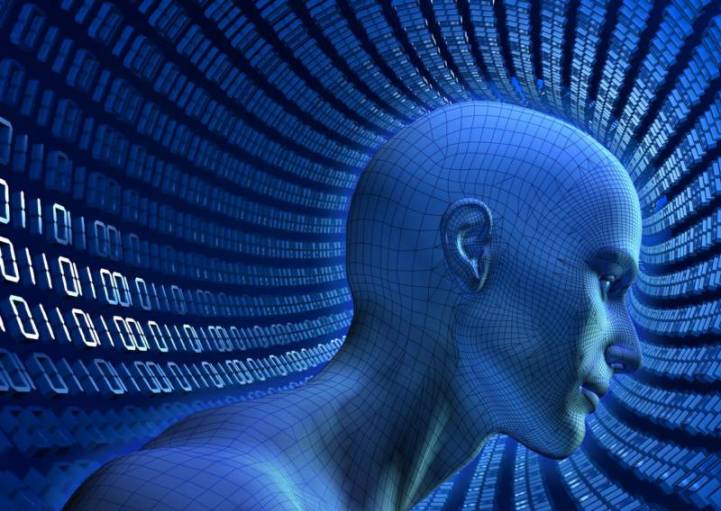
Interface technologies that bridge the gap between the human brain and the internet. In twenty years, our interaction with the web will be so seamless that it will be considered an exosomatic organ. Implications include ubiquitous access to all knowledge stores on the net and "techlepathy.

Indeed, it seems that with each passing year we are increasingly closing the gap. As amazing as our computers and hand-held devices are today, I already consider them clunky and even anachronistic relative to what I see coming down the pipes. As it stands, if I want to communicate with somebody or look something up, I have to go to my computer, launch a web browser, do a search, blah, blah, blah. It's tedious and boring—but most of all it's a waste of time.

In the future I'm imagining, this gap—the delay between needing something on the internet and actually getting it—as being seamless. Such a development will be the result of ongoing miniaturization of technologies, ubiquitous computing and more sophisticated interface devices, namely language user interfaces (LUI's) and even neural user interfaces (NUI's).

And once we're at the NUI phase we will have accomplished a rather remarkable thing: The unimpeded connection of the brain with the internet. At this stage, we will be able to navigate the Web and communicate with others through our subvocal commands and even our thoughts alone. When this happens, the internet will become less an external resource than an exosomatic organ. It'll be like an extension of our brain.

The internet is already very much like this, but as mentioned, the process of interacting with it is still rather primitive. Once we can access the Web in such an on-demand fashion, the speed with which we can access data and communicate with others will likely result in giant leap in terms of human capacities and performance. I suspect that collective IQs will rise dramatically, collaborative efforts will increase in scale and potency, and social networking will evolve to a new level. This might even usher in the much speculated age of the global mind in which we will have ubiquitous access to a chorus of friends, thinkers, and specialized groups.

A concern about all of this is that, given such a possibility, we will still be working with our limited paleolithic brains. It's an open question as to whether or not our minds will be able to handle all this busyness. I suspect that, in order to make sense of it all, we will have to employ sophisticated filtering, automated workflows, virtual agents, and ongoing data analytics. And this is before we get involved with actual cognitive enhancement—so there is hope.

Be sure to read the rest of the I Look Forward To article in which other futurists are interviewed, including David Pearce, Michael Anissimov, Phil Bowermaster, and Aaron Saenz.


The quantified self: 6 tools to help you get started

The quantified self movement is really starting to gain some steam, mostly on account of a slew of new technologies and services that are making personalized metrics easier and more meaningful. It's truly a case where the dream is coming true; in short order we will be able to track the most minute details of our body's functioning, have that data analyzed, and given a set of prescriptions to help us optimize our health based on a predetermined set of goals.

We're not totally there yet, but that day is quickly approaching. Imagine a system that can tell you your Omega 6 to Omega 3 ratio and what you need to do to get it in balance. It could let you know when your iron levels are too low. Or if your LDL cholesterol is too high and what you need to do to raise your HDL levels. A fully realized system will notify you of any problem and let you know what to do about it. When it comes to our health concerns, there will be no more fumbling in the dark.

But there's more to the quantified self movement than just tracking health factors: it's also about self-experimentation. People are looking to better understand their own bodies and behavior. This kind of self-evaluation can be as straight-forward as assessing your performance on or off caffeine, or something more profound like measuring the potential cognitive boosting effects of modafinil. With this empirical approach, the sky's the limit in terms of possibilities.

Regardless of your motives, there are some things you can do today to get started in your quantified self practices. Here are some suggestions:

1. Google Health

Google Health is an online central repository for you to store and share your medical data with whomever you want. You can act on all your health and wellness concerns, engage in data tracking, increase personalization and set and track progress toward health goals. It features an easy-to-use dashboard that brings together your health and wellness information in one place and makes it easier for you to organize and act on that information. Participants can track wellness and wellness goals, including the recording of daily experiences.

2. Personalized genetic testing

Despite some recent setbacks, the personalized genomics movement is steadily gaining in popularity. Companies like 23andMe are empowering individuals with the genetic information they need to better understand who they are and their potential health trajectory. For less than $500, you can learn about your genetic traits, vulnerabilities to inherited diseases, and even ancestry. Armed with this information, you can more knowingly set up preventive health programs for yourself and avoid potential problems later in life.

3. CureTogether
CureTogether provides free tools to help you track your sleep, weight, caloric intake, and exercise. You can also compare your symptoms and treatments for 212 conditions with the community of CureTogether members. In addition, anonymous, free, aggregate data is used for open source health research.

4. BodyMedia Armband

BodyMedia recently announced that its armband sensors will be able to communicate wirelessly with smartphones via Bluetooth. Its health sensors will be one of the first devices, other than ear buds, that link to smartphones with Bluetooth short-range communications. The device is poised to allows users to monitor a collection of nearly 9,000 variables—physical activity, calories burned, body heat, sleep efficiency and others—collected by the sensors in a BodyMedia armband in real-time, as the day goes by. The Bluetooth-enabled armband will cost $249 and the BodyMedia data service will cost $7 a month.

5. Zeo

Zeo is a program that is designed to help you analyze your sleep and improve it. It’s composed of a lightweight wireless headband, a bedside display, a set of online analytical tools, and an email-based personalized coaching program. It works accordingly to a three step process in which you sleep with the wireless headband, view the data that's recorded, and act on tips and assessments received through email-based coaching.

6. Fitbit

The Fitbit is a wearable device that tracks your calories burned, steps taken, distance traveled and sleep quality. It contains a 3D motion sensor like the one found in the Nintendo Wii. The Fitbit tracks your motion in three dimensions and converts this into useful information about your daily activities. The device can be worn on your waist, in your pocket or on undergarments. At night, you can wear the Fitbit clipped to the included wristband in order to track your sleep. Anytime you walk by the included wireless base station, data from your Fitbit is silently uploaded in the background to Fitbit.com.

So, what are you waiting for? Go quantify yourself!


Robots steadily replacing middle class jobs

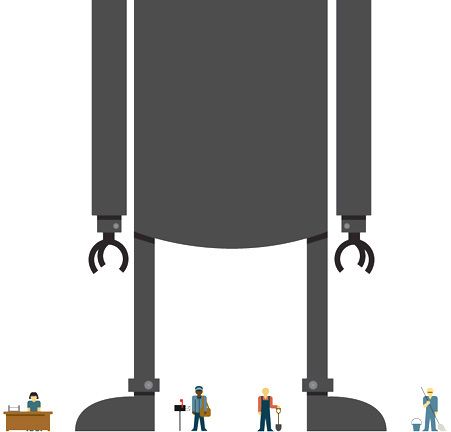
We are still a decade or two away from the next industrial revolution—one that will brought on by advances in molecular manufacturing, sophisticated AI and advanced robotics—but the early signs are already starting to be felt. According to GOOD magazine, the middle class is disappearing on account of increasing automation. The article quotes MIT economist David Autor who argues that:

...a leading explanation for the disappearance of the middle class is "ongoing automation and off-shoring of middle-skilled 'routine' tasks that were formerly performed primarily by workers with moderate education (a high school diploma but less than a four-year college degree)." Routine tasks, he explains, are ones that "can be carried out successfully by either a computer executing a program or, alternatively, by a comparatively less-educated worker in a developing country."

The culprit, in other words, is technology. The hard truth-and you don't see it addressed in news reports-is that the middle class is disappearing in large part because technology is rendering middle-class skills obsolete.

People say America doesn't make anything anymore, but that's not true. With the exception of a few short lapses, manufacturing output has been on the rise since the 1980s. What is true is that industrial robots have been carrying ever more of the manufacturing burden on their steely shoulders since they appeared in the 1950s. Today, a Japanese company called Fanuc, Ltd., has industrial robots making other industrial robots in a "lights out" factory. (That's the somewhat unsettling term for a fully automated production facility where you don't need lights because you don't need humans.) That's where we're headed.

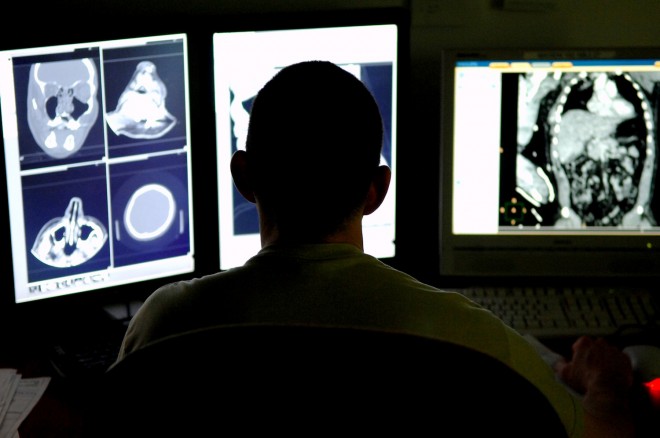
It's not just manufacturing, either. Automated call centers are replacing customer-service agents. Automated checkout stations are replacing grocery-store clerks. When the science of computer vision advances sufficiently, we'll have algorithms, not humans, evaluating X-rays at airport security checkpoints and screening user-generated content for sites like Facebook.

Read more.


And the elderly shall inherit the Earth

I've always suspected that the Baby Boomer generation will not go down quietly. While the Me Generation is currently content to maintain the status quo as it pertains to the treatment of the elderly, I strongly believe that they will eventually rail against traditional practices once they get there themselves.

Echoing this sentiment is Ted. C. Fishman who, in his new book, Shock of Gray, makes the case that people's increasing life spans could change everything from civil rights to globalization. He also addresses the potential for radically extended lifespans.

Salon recently interviewed Fishman:

As baby boomers start to approach the age of 65 in large numbers, do you foresee a civil rights movement for older adults, given that generation's history of activism?

There might be a civil rights movement, but people won't recognize it as a civil rights movement. They'll see it as an economic turf war. When you get the resources of a society, you get the respect. You can see this in Europe right now, where the population is somewhat older than it is here. The debt crisis has really caused a huge and quick reckoning with the crisis in pension funding and hundreds of thousands of people are coming into the street. They made promises to themselves and now they find that they can't keep those promises. In some ways, they're battling their past selves.

But they feel like they are fighting a younger generation.

Yeah, I think that's right. But in the long run the battle will not be for who gets what share of the public financing. It will be a more traditional civil rights issue, which is: Evaluate me on my abilities and my skills, not on my weaknesses. The older population is a hugely diverse one. If the image of an older person is going to be exclusively that of an enabled, sharp, cognitively with-it, older person who can work into their 70s and 80s, then we're ignoring a huge part of the population that will need our help.

----------

Well, that brings us to the primary tension of the book. On the one hand, we humans have become very effective at prolonging life. On the other hand, these prolonged lives are placing pressures on our resources that will become critical. So the question is, which should win, our prolonged lives or the resources?

I think the hands-down winner there is longer life. Especially longer, healthier life. So if you add up all the misgivings we have about a society that has far more older people and the challenges of age and ageism, they don't even compare to the gift of living longer and living healthier. This is what humankind has been devoted to since we could first mix a few herbs together. And we're there. So our challenge is to apply this kind of brilliance to the result that we've created, which is being an older society.

Our life span averages have leaped in the past century, as you point out, and I wonder if you think there's a point where we'll hit a ceiling. Now that you've read the science, is there really a possibility for immortality?

I only read the science as a layman and I can only tell you who I trust, which is based on emotional signals as much as empirical ones. I do think maybe eventually we'll be able to reengineer the human body so that it's some mix of mechanization and biological miracle and we live forever. But in the lifetime of anybody who's reading the book, I think there are big limits to the expansion of the human life span. Our genetic makeup is such that the genes that help us grow when we're young tend to turn against us as we get old.

More.


Air Force to use neuroweapons to overwhelm enemy minds

Wired is reporting how last month the Air Force Research Laboratory’s 711th Human Performance Wing revamped a call for research proposals examining "Advances in Bioscience for Airmen Performance." It’s a six-year, $49 million effort to deploy extreme neuroscience and biotechnology in the service of warfare.

Among their suggestions is the use of "external stimulant technology to enable the airman to maintain focus on aerospace tasks and to receive and process greater amounts of operationally relevant information."

And in addition to this:

...perhaps the oddest, and most disturbing, of the program’s many suggested directions is the one that notes: “Conversely, the chemical pathway area could include methods to degrade enemy performance and artificially overwhelm enemy cognitive capabilities.” That’s right: the Air Force wants a way to fry foes’ minds — or at least make ‘em a little dumber.

It’s the kind of official statement that’s seized on by anyone who is sure that the CIA planted a microchip in his head, or thinks that the Air Force is controlling minds with an antenna array in Alaska. The same could be said about the 711th’s call to “develo[p] technologies to anticipate, find, fix, track, identify, characterize human intent and physiological status anywhere and at anytime.”

The ideas may sound wild. They are wild. But the notions aren’t completely out of the military-industrial mainstream. For years, armed forces and intelligence community researchers have toyed with ways of manipulating minds. During the Cold War, the CIA and the military allegedly plied the unwitting with dozens of psychoactive drugs, in a series of zany (and sometimes dangerous) mind-control experiments. More recently, the Pentagon’s most revered scientific advisory board warned in 2008 that adversaries could develop enhancements to their “cognitive capabilities … and thus create a threat to national security.” The National Research Council and Defense Intelligence Agency followed suit, pushing for pharma-based tactics to weaken enemy forces. In recent months, the Pentagon has funded projects to optimize troop’s minds, prevent injuries, preemptively assess vulnerability to traumatic stress, and even conduct “remote control of brain activity using ultrasound.”


Can science investigate the supernatural?

Good discussion going on about whether or not science can investigate the supernatural.

Occasional Sentient Developments blogger Russell Blackford stirred the pot with his article, Boudry, Blancke, and Braeckman on methodological naturalism:

Of course, science cannot investigate the supernatural if we define "the supernatural" as "whatever cannot be investigated by science"! But once we define the supernatural in some other plausible way it is by no means apparent that science can't investigate it, just as it can investigate things that no longer exist (such as dinosaurs), things that are very distant (such as the moons of Jupiter), and things that are very small (such as atomic nuclei). None of the latter can be perceived directly with our senses, but they can interact with our senses in other ways - by leaving traces on the world that we can perceive, by interacting with scientific instruments to create images that we can perceive, by affecting experimental apparatus in predictable ways, and so on. In the end, we can use distinctively scientific means to investigate many things that interact with our senses only indirectly. Depending on the situtation, we can sometimes establish a lot about those things. We do, in fact, know a lot about the moons of Jupiter, dinosaurs, and atomic nuclei, even though none of these things have ever been directly observed with our senses (the moons of Jupiter have been observed via scientific instruments such as telescopes, and we have various reasons to think that these are reliable, but they have not been observed by unaugmented human eyes).

Blackford's article was followed by Christopher Schoen who asks, Is "dark matter" supernatural?:

At issue is the oldish question of whether science can probe into "supernatural" questions, the most famous of which is "Does God exist?" Traditionally, the question hangs on the distinction between two kinds of naturalism: methodological naturalism, which excludes supernatural phenomena as out-of-scope, (whether or not they actually exist), and philosophical naturalism, which assumes a priori that supernatural phenomena do not exist.

A number of scientists and philosophers are dissatisfied with these two options, since neither seems to permit the testing of the "God Hypothesis." The solution to this that both Russell and Jerry point to is presented in a new paper in Foundations of Science which proposes to further split Methodolological Naturalism into two more categories: Intrinsic Methodolological Naturalism (IMN) and Provisional Methodolological Naturalism (PMN). IMN is the old way of doing things; PMN the new, improved way, allowing for scientific study of supernatural phenomena, should they happen to pop up unexpectedly in the course of our research.

Nowhere do the authors of the paper define just what supernaturalism is supposed to mean. The word is commonly used to indicate that which is not subject to "natural" law, that which is intrinsically concealed from our view, which is not orderly and regular, or otherwise not amenable to observation and quantification. That right there should be a conversation-stopper, since these are science's stock and trade, and we've seemed to stumble on a simple logical end to the problem.

Also check out contributions to this discussion by Jerry CoyneJohn Pieret, and Massimo Pigliucci and the Cosmic Variance blog. And of course the article that started it all, the paper by Maarten Boudry, Stefaan Blancke, and Johan Braeckman.


Sleep right, extend healthy life

If you're serious about engaging in life extension practices, then you'd better include sleep in your list of lifestyle factors. Getting proper sleep is crucial to your health—and there's more to it than just getting "enough" sleep; you need to know exactly how much sleep to get (and not get) and under what conditions.

Specifically, studies have shown that there is a goldilocks zone for sleep duration each night, namely between seven and eight hours. And it's crucial you sleep in a completely pitch black room. Stick to these two rules of thumb and you could make a significant contribution to your overall health and longevity.

And yes, the research is in: Studies have shown that if people sleep less than seven hours a night, or more than eight hours a night, they have an increased risk of death. Specifically, researchers discovered that for short sleeping women the increase risk of death over a two decade span was 21% and for men 26%. In terms of oversleeping, increased risk of death increased 17% in women and 24% in men.

Uh, wow.

If these numbers are accurate—and the study appears to be legitimate—that is a rather shocking revelation. It's certainly possible that underlying conditions may cause undesired shifts in sleep duration, but it's clear that changes in sleep or unexplained short/long sleep duration should be taken seriously. But what is also known is that lack of sleep inhibits the production of prolactin and melatonin which can damage our immune systems and cause depression, diabetes, heart disease, and cancer.

And indeed, a separate study appears to corroborate these conclusions, but with a different minimal threshold. A UC San Diego School of Medicine study concluded that less than five hours a night is probably not enough, but that eight hours or more is probably too much.

Interestingly, it's also crucial that we sleep in pitch black rooms. Our brains and bodies are very carefully honed to the cycling of day and night, and many of our cognitive and hormonal processes are dependant on the preservation of that cycle. Because the circadian clock in humans has a natural day length of just over 24 hours, the clock must be reset to match the day length of the environmental photoperiod—that is, the light/dark or day/night, cycle. Mess that up and you get problems, including an impaired release of melatonin which is normally triggered by darkness. Melatonin has a number of benefits, including its role as a cancer fighting agent.

Negative effects of not sleeping in the dark can include disrupted sleep cycles, depression, and myopia. Women have also been told to sleep in the dark as there appears to be a correlation between inadequate sleep, artificial light, and breast cancer.

And yes, by sleeping in the dark that means sleeping in a completely dark room devoid of artificial light from night lights, bedside clocks, street lighting, and so on. You can always wear sleeping eye patches if you can't get the room dark enough.

Now, I realize that not everyone can get the required sleep each night. But if you're consistently getting less than six to seven hours of sleep each night you need to seriously reconsider your lifestyle and ask yourself if your health is really worth it. And turn out the lights!


New estimate for the number of habitable planets in the Milky Way: 2.5 billion!

Check out this article from Bad Astronomer: How many habitable planets are there in the galaxy?

By now you may have heard the report that as many as 1/4 of all the sun-like stars in the Milky Way may have Earth-like worlds. Briefly, astronomers studied 166 stars within 80 light years of Earth, and did a survey of the planets they found orbiting them. What they found is that about 1.5% of the stars have Jupiter-mass planets, 6% have Neptune-mass ones, and about 12% have planets from 3 – 10 times the Earth’s mass.

This sample isn’t complete, and they cannot detect planets smaller than 3 times the Earth’s mass. But using some statistics, they can estimate from the trend that as many as 25% of sun-like stars have earth-mass planets orbiting them!

His conclusion: There are over 2.5 billion habitable planets in our Galaxy. Whoa, my mind just melted.

Read more.


Anders Sandberg on the Active SETI risk

Anders Sandeberg, one of my favorite transhumanists and ETI theorists, has finally chimed in on the Active SETI debate (i.e. deliberate attempts to contact extraterrestrial intelligences to let them know about our existence). Active SETI has its fair share of detractors, most notably futurist, science fiction author (and occasional Sentient Developments contributor) David Brin who best articulated his concerns in the piece, Shouting at the cosmos: Or how SETI has taken a worrisome turn into dangerous territory. On the other side of the debate are thinkers like Dr. Alexander Zaitsev who believes we should in fact reach out and touch an alien someone.

Not surprisingly, Sandberg's contribution to the debate is unique and provocative. In his article, Inviting invasion: deep space advertisments and planetary security, Sandberg admits that it's hard to assess the risk, but that we might not like the answers:

There are two aspects to extraterrestrial risks: the probability that the signals will be received by somebody, and that we would (afterwards) wish the aliens did not receive them. Stephen Hawking argued that we should be cautious: to him the probability of aliens was relatively high, but he also thought the probability of them being risky was high...This risk might not be a direct invasion threat, but simply dangerous cultural transmissions: in the past some human societies have fared badly when in contact with more advanced societies. Even a radio signal might consist of an information hazard, for example containing infectious ideas or software. The aliens do not even have to be deliberately malicious: many humans would jump at the chance of converting non-believers to their favourite belief system, thinking they do them a great service.

While optimists about SETI tend to think communications would be benign, it is hard to assign a probability to it. The only thing we can say is that we have not seen any alien communications or even signs of them, which suggests that aliens either do not exist, we are not receiving anything from them (e.g. they are too far away or we are listening on the wrong wavelengths) or they are keeping quiet.

From a species survival perspective we should generally prefer the middle answer. Why? If we are the only ones it means that either intelligent life is exceedingly improbable and we are lucky, or that intelligent life is not so uncommon but something wipes it out before it starts to spam the universe. Bad news. If there are aliens and they keep quiet, then they must have a very good and consistent reason. This could again be something positive or neutral (e.g. they are too alien to communicate, they all do not wish to interfere with us) or something bad (e.g. civilizations that remain obvious fall prey to self-replicating weapons). Only the boring middle answer - that we simply cannot communicate for technical or distance reasons - implies safety.

Ouch. And I'm sure Sandberg would agree that the boring answer is also very likely the most improbable answer--particularly given all the recent evidence indicating that the Galaxy may be teaming with Earth-like planets.


Ben Goertzel dismisses Singularity Institute’s "Scary Idea"

AI theorist Ben Goertzel has posted an article in which he declares his rejection of the Singularity Institute for Artificial Intelligence's claim that "progressing toward advanced AGI without a design for "provably non-dangerous AGI"...is highly likely to lead to an involuntary end for the human race." Goertzel calls this their "Scary Idea" and attempts to show that the fear is largely overstated.

He breaks the SIAI argument down to four primary points:

  1. If one pulled a random mind from the space of all possible minds, the odds of it being friendly to humans (as opposed to, e.g., utterly ignoring us, and being willing to repurpose our molecules for its own ends) are very low
  2. Human value is fragile as well as complex, so if you create an AGI with a roughly-human-like value system, then this may not be good enough, and it is likely to rapidly diverge into something with little or no respect for human values
  3. "Hard takeoffs" (in which AGIs recursively self-improve and massively increase their intelligence) are fairly likely once AGI reaches a certain level of intelligence; and humans will have little hope of stopping these events
  4. A hard takeoff, unless it starts from an AGI designed in a "provably Friendly" way, is highly likely to lead to an AGI system that doesn't respect the rights of humans to exist

Taking these points into consideration, Goertzel pieces together what he feels is the SIAI's argument:

If someone builds an advanced AGI without a provably Friendly architecture, probably it will have a hard takeoff, and then probably this will lead to a superhuman AGI system with an architecture drawn from the vast majority of mind-architectures that are not sufficiently harmonious with the complex, fragile human value system to make humans happy and keep humans around.

Goertzel then expresses his particular concerns with this argument, including SIAI's Eliezer Yudkowsky's suggestion that we can get human values into an AGI system, what he calls Coherent Extrapolated Volition:

...I think this is a very science-fictional and incredibly infeasible idea (though a great SF notion). I've discussed it and proposed some possibly more realistic alternatives in a previous blog post (e.g. a notion called Coherent Aggregated Volition). But my proposed alternatives aren't guaranteed-to-succeed nor neatly formalized.

But setting those worries aside, is the computation-theoretic version of provably safe AI even possible? Could one design an AGI system and prove in advance that, given certain reasonable assumptions about physics and its environment, it would never veer too far from its initial goal (e.g. a formalized version of the goal of treating humans safely, or whatever)?

I very much doubt one can do so, except via designing a fictitious AGI that can't really be implemented because it uses infeasibly much computational resources. My GOLEM design, sketched in this article, seems to me a possible path to a provably safe AGI -- but it's too computationally wasteful to be practically feasible.

Oooh, it looks like we have the makings of a great debate, here. I'll be interested to see if the SIAI retorts and how they address Goertzel's concerns.