"La Santa Muerte" ("Saint Death"), Film Screening with Director Eva Aridjis, Observatory, Thursday, February 24th

In Mexico there is a cult that is rapidly growing--the cult of Saint Death. This female grim reaper, considered a saint by followers but Satanic by the Catholic Church, is worshipped by people whose lives are filled with danger and/or violence--criminals, gang members, transvestites, sick people, drug addicts, and families living in rough neighborhoods. Eva Aridjis' documentary film La Santa Muerte examines the origins of the cult and takes us on a tour of the altars, jails, and neighborhoods in Mexico where the saint's most devoted followers can be found.

Morbid Anatomy is extremely excited to announce a screening of the film "La Santa Muerte" ("Saint Death") followed by a moderated Q and A with Eva Aridjis, the film's director.

The event will take place this Thursday, February 24th at 8:00 PM; If interested, we suggest you arrive early, as this event looks poised to sell out.

Full details follow; hope to see you there!

"La Santa Muerte" ("Saint Death") Film Screening
A screening of the documentary film "La Santa Muerte" ("Saint Death") with the film's director Eva Aridjis
Date: Thursday, February 24th
Time: 8:00 PM
Admission: $5
Presented by Morbid Anatomy

In Mexico there is a cult that is rapidly growing--the cult of Saint Death. This female grim reaper, considered a saint by followers but Satanic by the Catholic Church, is worshipped by people whose lives are filled with danger and/or violence--criminals, gang members, transvestites, sick people, drug addicts, and families living in rough neighborhoods. Eva Aridjis' documentary film La Santa Muerte examines the origins of the cult and takes us on a tour of the altars, jails, and neighborhoods in Mexico where the saint's most devoted followers can be found.

Tonight, join Morbid Anatomy and Observatory for a screening of the film in its entirety. The film's director, Eva Aridjis, will be on hand to introduce the film and to answer questions.

Eva S. Aridjis is a Mexican filmmaker born in Holland. She studied Comparative Literature at Princeton University and received an MFA in Film and TV at New York University (1996–2001) where she produced a number of short films including Taxidermy: The Art of Imitating Life" and "Billy Twist", both of which played at the Sundance Film Festival and dozens of other festivals around the world. An activist for many of Mexico City's street children, in 2003 she made the film "Niños de la Calle" ("Children of the Street") to bring attention to the epidemic. Eva wrote and directed her first narrative feature film entitled The Favor, starring Frank Wood and Ryan Donowho, in 2004. Aridjis's second feature documentary, about a Mexican religious cult, is entitled "La Santa Muerte" ("Saint Death") and is narrated by Gael García Bernal. "La Santa Muerte" premiered at the Los Angeles Film Festival in 2007 and has screened at festivals all over the US, Latin America, and Europe. Aridjis is currently teaching Screenwriting in the Graduate Film department at New York University and preparing her next narrative feature.

You can find out more about this event on the Observatory website by clicking here and can can access the event on Facebook here. You can get directions to Observatory--which is next door to the Morbid Anatomy Library (more on that here)--by clicking here. You can find out more about Observatory here, join our mailing list by clicking here, and join us on Facebook by clicking here.

"The Carnival of Death: Perceptions of Death in Europe and the Americas," 3-Day Conference and Exhibition, University College London, Feb 24-26


"The Carnival of Death: Perceptions of Death in Europe and the Americas"--a 3-day exhibition and conference at University College London--launches today! The exhibition features the artwork of Laurie Lipton--who's "Santa Muerte" is shown above, just in time for tonight's event of the same name --as well as that of Matt Rowe, Sarah Sparkes and many more. The conference spans such topics as Helen Frisby's "revelry and rivalry in the nineteenth century English folk funeral," Adriana Bontea's "The Merry Epitaph and the Art of Memory," and our old friend John Troyer's (familiar sounding?) "Morbid Ink: Field Notes on the Human Memorial Tattoo."

The exhibition is free and open to the public; Although the interdisciplinary conference is also listed as free and open, registration was supposed to have taken place by Friday February 11th, so not sure if one can still beg their way in or not but, from a glance at the program, thinking it might be worth a try.

THE CARNIVAL OF DEATH
Perceptions of Death in Europe and the Americas
Conference and Exhibition dates: 24-26 Feb 2011
Venue: Institute of Germanic & Romance Studies, School of Advanced Study, University of London
Keynote speakers: Briony Campbell, Paul Preston, Laurie Lipton

Kindly sponsored by the John Coffin Trust Fund and the Office for Cultural and Scientific Affairs of the Embassy of Spain in London.

Please note that completed registration forms and fees MUST be received by Friday, 11th February 2011

The exhibition is free and open to all
Opening times: Thursday & Friday, 9am – 6pm, Saturday, 10am – 5pm
Venue: Jessel Room, Senate House South Block
Artists include Colette Copeland, David Glyn, Erik and Rune Eriksson, Spiros Jacovides, Laurie Lipton, Matt Rowe, Sarah Sparkes

In the most general terms death is defined as the final and irreversible cessation of the vital functions in an organism, the ending of life. However, the precise definition of death and the exact time of the transition from life to death differ according to culture, religion and legal system.

The essential insecurities and doubts over the nature and state of death have affected cultural production since the beginning of civilization. Likewise our attitude towards death is characterised by anxieties and ambiguities. ‘On the one hand the horror of death drives us off, for we prefer life; on the other an element at once solemn and terrifying fascinates us and disturbs us profoundly,’ writes George Bataille. Death can be ‘a consummation devoutly to be wished’ to say it with Hamlet, or ‘a wonderful gain’ to quote Schopenhauer. But while philosophers and poets explore the dark attraction of death, in everyday life we push all thought of it aside. Death, and above all our own death, must not impinge upon the living.

From the beginning of Modernism death and the dying have been pushed from the centre of family and community to the edges of society. The hygienic, clean and sterile spaces of hospitals, hospices and morgues have replaced the intimacy of the home, while cemeteries have been moved from the centre of town to the outskirts. The progress in medical science has lead to an increase in life expectancy in the Western world resulting in an ever ageing population – it seems as though we have almost found a cure for death. Medical apparatus now allow us to keep a body alive and prolong physical existence even after the brain has died – but what then does it mean to be human and how can we die in a humane way? Recent cases of assisted suicide of terminally ill people have sparked off discussions in the UK around the right to die and the dignity of death.

Meanwhile changes in religious believes and practices are turning ancient traditions into commercial enterprises and festivities such as Halloween parties or Mexico’s Día de los muertos or Rio de Janeiro’s carnival , which are marketed as major tourist attractions. Western societies no longer have the time or the space to mourn as they used to. Rather the public mourning and posthumous apotheosis of celebrities such as Princess Di or more recently Michael Jackson appear to have taken the place of the private. Here mourning has become public spectacle, international and accessible to all via TV, Youtube, Facebook and Twitter.

This conference sets out to look at death in the contemporary world and how changes in society since the turn of the 19th century have affected our perceptions of death. It consists of three broad themes which interconnect with each other: Death and Desire; Death and Power; and Rituals and Customs. We invite papers from a wide variety of disciplines and approaches such as: anthropology, art history, cultural studies, film studies, fine art, history, law, literary studies, philosophy, psychology, theology, etc.

F0r more info, and a full line-up, click here. To download the exhibition catalog, click here. Thanks to participant John Troyer and blogger Suzanne G for alerting me to this event.

Image: Santa Muerte by Laurie Lipton, charcoal & pencil on paper, 2011; click view larger, more detailed version.

Wooden Anatomical Eve, "Anatomie des Vanités" Exhibition, Brussels, Belgium, 2008


An astounding wooden Anatomical Eve from an unnamed private collection, as featured in the "Anatomie des Vanités" exhibit at The Erasmus House in Brussels, Belgium in 2008.

An overview of the exhibition, from the museum flyer:

The exhibition includes animals, Narwhal tusks, an anatomical Eve, a whale's penis, 'vanities', turned ivories, testimony to the masters' virtuosity an of the taste for curiosities that could be found in the 'Wunderkammern' of the 16th and 17th centuries. These historic objects are contrasted with contemporary art (Jan fabre, Marie-Jo Lafontaine) and with paintings of this Museum (Jerome Bosh, Quentin Massys, Hans Holbein). The artist Aida Kazarian has helped redesign the layout of the Museum, on the 75th anniversary of the foundation of Erasmus House. The highlight of the exhibition is a pregnant anatomical Eve, coming from a private collection. This exhibition on vanity, though in jubilant fashion, shows many representations of death, at the confluence of the traditional 'memento mori' of the Middles Ages and the birth of scientific thought in the curiosity cabinets.

More about the exhibition here. More about Erasmus House here.

Inspired by Elettrogenica.

"The Morton Skull Collection: Race, Science, and America’s Unburied Dead", TONIGHT at Observatory, Brooklyn!

fabian_cover
Tonight! Observatory! Hope to see you there!

The Morton Skull Collection: Race, Science, and America’s Unburied Dead
An illustrated lecture and book signing with professor Ann Fabian
Date: Monday, February 21st
Time: 8:00 PM
Admission: $5

When Philadelphia doctor Samuel George Morton died in 1851 he left behind collection of more than a thousand human skulls. Not the grisly leftovers of botched operations, but the fruit of 20 years’ work gathering up human remains from around the world. Friends sent Morton heads from Peru, Cuba, Mexico, and Liberia, from almshouses in Pennsylvania, swamps in Florida, beaches in Hawaii, gallows in Indonesia, tombs in Egypt, and battlefields in Texas. Naturalists like Morton collected plants and animals, but trafficking in human remains was something strange and different. Morton was sure that human skulls held clues to the riddles of race that troubled his generation. Were human beings all one species? After measuring skulls, Morton thought not.

In her new book The Skull Collectors: Race, Science, and America's Unburied Dead, professor Ann Fabian details the story of Morton's collection of skulls; in the process, she not only details Morton's problematic and flawed ideas about race and science, but also the stories behind the individual skulls comprising the Morton Skull collection, the remnants of which now reside in the storerooms of the University of Pennsylvania Museum of Archaeology and Anthropology. Whose skulls were these? How did they get to Philadelphia? And what has happened to this great collection of heads?

Tonight, join Morbid Anatomy and Professor Ann Fabian for an illustrated lecture based on the contents of Fabian's new book The Skull Collectors: Race, Science, and America's Unburied Dead. Copies of the book will be available for sale and signing.

Ann Fabian is a Professor of History and American Studies at Rutgers, the State University of New Jersey, where she recently completed a term as dean of humanities. She has published books on gambling and personal narratives, and written about the bodybuilding publisher Bernarr Macfadden, the ancient remains of Kennewick Man, and the dead bodies left floating in flooded New Orleans. She is working on a new book about ruins. The School for Advanced Research, the American Antiquarian Society, and the John Simon Guggenheim Foundation supported her research on The Skull Collectors: Race, Science, and America's Unburied Dead. She is pleased to talk about this curious business.

You can find out more about this event on the Observatory website by clicking here and can can access the event on Facebook here. You can get directions to Observatory--which is next door to the Morbid Anatomy Library (more on that here)--by clicking here. You can find out more about Observatory here, join our mailing list by clicking here, and join us on Facebook by clicking here.

"Carmina Burana" and Carl Orff's "Theatrum Mundi," 1936

I have always loved the music of Carl Orff's scenic cantata Carmina Burana, but until I saw the above video clip on the Cosmodromium Blog, I had no idea that the music was only a small part of Orff's overall theatrical conception, or the fascinating story of the source material which inspired the piece.

Carl Orff's Carmina Burana was completed in 1936 and premiered to great acclaim in Nazi-era Frankfurt in 1937; it was based on a manuscript of 254 medieval poems and dramatic texts written by students and clergy--many with a decidedly satirical tone towards the Catholic Church--that was uncovered at a Benedictine monastery in Bavaria in 1803.

The poems are mainly songs of morals and mockery, love songs, and drinking and gaming songs with additional songs of mourning, as well as "a satire, and two educational stories about the names of animals..." Within the collection are also descriptions of a raucous medieval paradise in which "the rules of priesthood include sleeping in, eating heavy food and drinking rich wine, and regularly playing dice games."

Carl Orff 's original conception of the staged Carmina Burana (as so provocatively shown above) included elements of dance, masks and costume, set design, and dramatic acting in a kind of theatrical gestalt he termed "Theatrum Mundi," a theatrical conception in which music, movement, and speech were all equal and essential pieces of a whole.

The movement you see above--drawn from a 1975 version Carmina Burana directed by Jean-Pierre Ponnelle--is entitled "O Fortuna" ("Fortuna Imperatrix Mundi"); it is the best known segment of Carmina Burana and it both begins and ends the piece. Lyrics follow, in English translation from Wikepedia:

O Fortune,
like the moon
you are changeable,
always waxing
or waning;
detestable life
now difficult
and then easy
deceive a sharp mind;
poverty
power
it melts them like ice.

Fate—monstrous
and empty,
you whirling wheel,
stand malevolent,
vain health
always dissolves,
shadowed
and veiled
you plague me too;
now through trickery,
my bare back
I bring to your villainy.

Fate, in health
and in virtue,
is now against me,
affection
and defeat
always enslaved.
So at this hour
without delay
pluck the vibrating string;
since Fate
strikes down the strong,
everyone weep with me!

You can find out more about this amazing performance--directed by Jean-Pierre Ponnelle for Munchner Rundfunkorchester Chor des Bayerischen Rundfunks and conducted by Kurt Eichhorn in West Germany--here and can purchase a copy by clicking here. You can watch much of the production--albeit in pixelated form--by clicking here.

Information via Wikipedia, 1 and 2; clip via Cosmodromium.

R-bar Pitch Maneuver

Click here to view the embedded video.


I just love to watch the R-Bar Pitch Maneuver, it’s just so graceful.

As far as I know the heat shield inspection goes, it’s all good, at least nothing glaring.  Photo analysis is continuing on the images taken during the Rendezvous Pitch Maneuver (aka: R-bar Pitch Maneuver).

Today’s activities will include: Cargo transfer and getting ready for the first spacewalk which will come tomorrow.  Steve Bowen and  Alvin Drew will be going over the procedures and tools for the spacewalk during which a power extension cable will be installed from Unity to  Tranquility, moving a failed pump modules from the payload attachment bracket to an external stowage platform, installing a wedge for camera post 3 (a wedge can be thought of as a mounting base for the camera) and installation of a starboard crew equipment and translation aid cart rail stubs.

Part of the preparation for the spacewalk will require Bowen and Drew camp out in the Quest airlock to reduce the nitrogen levels in their blood to reduce the possibility of getting the “bends”.

Next-Generation Suborbital Researchers Conference (NSRC-2011)

2011's Next-Generation Suborbital Researchers Conference (NSRC-2011), will be held in Orlando, Florida 28 February through 2 March.

NSRC-2011 promises to be a watershed gathering for researchers, educators, and industry/government. The meeting will provide a forum for the exchange of ideas about the application of these new vehicles to research and education objectives. The meeting will also provide important networking opportunities for researchers and educators to meet with colleagues, government officials, and representatives from the suborbital industry. This year's registrants include a significant number of internationals from Canada, Europe, and Asia, in addition to many, many from the United States.

Over 120 presenters--a 40% increase over 2010--will discuss everything from flight test progress to planned experiments in 7 different research fields to training and roles for research and educator payload specialists. In total, the meeting will feature 20 sessions, 4 discussion panels, a press conference, presentations or booths by 20 sponsors, and a public night presentation by Virgin Galactic CEO George Whitesides.

The meeting will also include invited talks by experts in diverse fields that include microgravity sciences, atmospheric science, space life sciences, planetary science, education, and crew training. NSRC-2011 is the place to be to learn how to marry your research, education, or business interests to next-generation suborbital spaceflight. For more information go to http://nsrc.swri.org/

There will be live updates on NSRC posted on Twitter at @NASAWatch

Could the Internet Ever be Shut Down in America?

Despite Egypt's sophisticated Internet infrastructure, the government was able to shut down online communications rather swiftly. Could the same be done here in the U.S.? Is it legal for the federal government to take such action? Several bills are already working their way through Congress that wou

Is Tap Water Safe Enough for You?

Headlines like "U.S. Drinking Water: Contaminated and Safe" probably don't allay many people's fears about the safety of their drinking water. You're more informed about this issue than the general public, so we'd like to know your view. Do you drink tap water on a regular basis? If the answer is ye

Can Do-Not-Track Mechanisms Work?

Consumers and rights groups are concerned that the stockpiles of personal information gathered by online tracking will be misused and individuals' privacy will be abused. But how do you determine which tracking is unwanted? Even if you could, the success of countermeasures in any form depends on Web

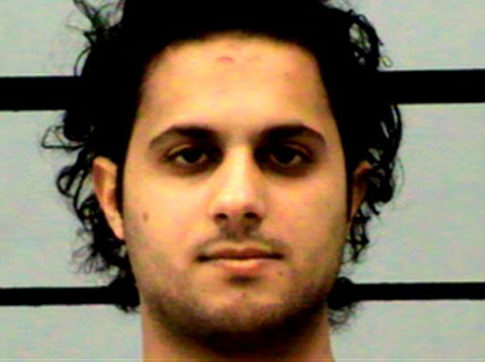
Two Major Media confirm LR’s discovery of Aldawsari’s lovesick obsession with Sarah Rice Stender

LR FOLLOW-UP

Both the NY Post and UK Daily Mail pick up on Lovesick Saudi Terrorist angle

From Eric Dondero:

Late Wednesday, hours after the Saudi - Texas Terrorist Khalid Ali-M Aldawsari story broke, LR along with Stacy McCain of TheOtherMcCain connected the dots to Sarah Rice Stender at Vanderbilt University.

We wrote here at LR early Thursday morning, "Confirmed! Aldawsari attended Vanderbilt in Tenn. from Oct. 2008 to Aug. 2009":

Stacy McCain and Libertarian Republican were the very first media in the entire Nation to connect the dots late last night, to a crush Aldawsari had on a Vanderbilt co-ed Sarah Rice Stender. (Photo from her Facebook Page). However, it was unclear how Aldawsari could have met her since she was at Vanderbilt, not Texas Tech.

Now, the Star-Telegram has confirmed his residency and other media confirmed his student status at Vanderbilt in Nashville.

Classmates describe "A loner," liked Bin Laden, wished for Martyrdom

And now this from the New York Post "Tour of evil duty
'Doll-bomber' scouted targets on NYC trip" Feb. 26:

Classmates of Aldawsari -- who prosecutors say was inspired by bin Laden's rhetoric as a boy in Saudi Arabia -- described him as a loner.
He sporadically posted on his blog, "FromFarAway," an odd mix of Arabic prayers and wishes for martyrdom, and mused about watching "Resident Evil" trailers on YouTube.

Studying English as a second language at Vanderbilt University, he fell in love with his conversation partner, Sarah Rice Stender, a 58-year-old former professor of medicine at the Nashville, Tenn., school.

"She is [so] gorgeous that I can't forget her just right away . . . I am asking Allah the Great to convert her to Islam and marry me," he wrote in 2009.

Stender did not return a call for comment.

Obviously, the Post gets the "58-year-ld former professor of medicine" part wrong.

Stender's Facebook Page taken down

The UK Daily Mail confirms it is indeed the woman in the photo that we broke here at LR, by running the same photo with their story, "Saudi terror suspect loved ultra-violent video game," and adds:

Aldawsari, who was arrested Wednesday and charged with attempted use of a weapon of mass destruction, also blogged about his love for Sarah Rice Stender, the student who helped teach him English

Miss Rice Stender was listed as one of Aldawsari's Facebook friends.

So, we scooped both the NY Post and the UK Daily Mail. LR's piece is the second link to come up on Google seach for "Sarah Rice Stender." So, there's little doubt where the Post and Daily Mail got this news from. Though, we did not receive any link or acknowledgement in either article.

One final intriguing note: Sarah Rice Stender's Facebook Page has been taken down.

Video: Robonaut-1: Balloon Burst and Freefall

Make sure watch in HD! More Robonaut-1 mission video and imagery will be released in conjunction with a presentation at the Next-Generation Suborbital Researchers Conference being held in Orlando 28 Februrary to 2 March.

Co-sponsored by the Challenger Center for Space Science Education, this mission is one in a series of flights conducted by Quest for Stars, a California-based non-profit educational organization that uses off-the-shelf hardware and a little ingenuity to allow students to place experiments at the edge of space at exceptionally low cost.

Quest for Stars and the Challenger Center for Space Science Education have now joined together to promote the use of these low cost delivery systems. This mission will be the first of what is hoped to be many future collaborations.

- First Photos: Shuttle Discovery's Trail Into Space As Seen from Over 70,000 Feet in a Balloon
- Robonaut-1 Balloon Mission Live Video and Mission Updates
- Challenger Center and Quest For Stars Chase Attempt to Photograph Discovery At The Edge of Space

More Muslim Violence against Coptic Christians in Egypt

Priest stabbed to death in his Home

From Eric Dondero:

We have been following the story of the continuing violence by Muslims on Christians in Egypt since the downfall of Mubarak.

See LR "Reports... At least 11 Christians killed by Muslim extremists in Egypt, including Children" Feb. 3.

Now this, from the Winnipeg Free Press "Coptic Christian priest killed in Egypt" Feb. 25:

ASSIUT, Egypt - A Coptic Christian priest has been killed in southern Egypt, triggering street demonstrations by several thousand Christians.

The priest was found dead in his home. A fellow clergyman, Danoub Thabet, says his body had several stab wounds. He says neighbours reported seeing several masked men leaving the apartment and shouting "Allahu akbar," or "God is great," suggesting the killing was motivated by the divide between Egypt's Muslims and its minority Coptic community.

The American media is giving very scant coverage to this story.