Dawn Opens its Eyes, Checks its Instruments

After a hibernation of about six months, the framing cameras on board NASA's Dawn spacecraft have again ventured a look into the stars. The spacecraft also powered up its visible and infrared mapping spectrometer, which investigates surface mineralogy, and the gamma ray and neutron detector, which detects elemental composition. The reactivation prepares the instruments for the May approach and July arrival at Vesta, Dawn's first port of call in the asteroid belt.

"Last week, we gently 'woke up' Dawn's three science instruments, which typically spend most of their time sleeping during the three-and-a-half-year journey to Vesta," said Robert Mase, Dawn project manager at NASA's Jet Propulsion Laboratory, Pasadena, Calif. "This activity confirms that Dawn is on track for the first close examination of one of the last unexplored worlds of the inner solar system."

The framing camera activities were led by scientists from the Max Planck Institute for Solar System Research in Katlenburg-Lindau, Germany. "The camera system is working flawlessly. The dry run was a complete success," said Andreas Nathues, lead investigator for the framing camera, based at the Institute.

The international team of Dawn scientists and engineers in Germany and the United States spent three days interacting with the camera system, confirming the excellent health of the mechanical and electrical components and updating the software.

In the months to come, the camera system will provide images needed to navigate the spacecraft to its rendezvous with Vesta, and will begin to image the asteroid's surface. These early images on approach will be the start of a campaign to systematically map Vesta's surface in detail and will provide tantalizing clues as to its mineralogical composition. In addition, the framing cameras will search for moons in Vesta's vicinity and look for evidence of past volcanic activity.

The full release on the framing camera from Max Planck is available at: http://www.mps.mpg.de/en/aktuelles/pressenotizen/pressenotiz_20110321.html .

The Dawn mission to Vesta and Ceres is managed by the Jet Propulsion Laboratory, a division of the California Institute of Technology in Pasadena, for NASA's Science Mission Directorate, Washington. The Dawn mission is part of the Discovery Program managed by NASA's Marshall Space Flight Center in Huntsville, Ala. UCLA is responsible for overall Dawn mission science. The framing cameras have been developed and built under the leadership of the Max Planck Institute for Solar System Research, Katlenburg-Lindau, Germany, with significant contributions by DLR German Aerospace Center, Institute of Planetary Research, Berlin, and in coordination with the Institute of Computer and Communication Network Engineering, Braunschweig. The framing camera project is funded by the Max Planck Society, DLR, and NASA. The visible and infrared mapping spectrometer was provided by the Italian Space Agency and is operated by Italy's National Institute for Astrophysics in collaboration with Galileo Avionica, where it was built. The gamma ray and neutron detector was built by Los Alamos National Laboratory and is operated by the Planetary Science Institute, Tucson, Ariz.

For more information visit http://www.jpl.nasa.gov/news/news.cfm?release=2011-089

Cassini Finds Saturn Sends Mixed Signals

Like a petulant adolescent, Saturn is sending out mixed signals.

Recent data from NASA's Cassini spacecraft show that the variation in radio waves controlled by the planet's rotation is different in the northern and southern hemispheres. Moreover, the northern and southern rotational variations also appear to change with the Saturnian seasons, and the hemispheres have actually swapped rates. These two radio waves, converted to the human audio range, can be heard in a new video available online at: http://www.nasa.gov/multimedia/videogallery/index.html?media_id=74390781

"These data just go to show how weird Saturn is," said Don Gurnett, Cassini's radio and plasma wave science instrument team lead and professor of physics at the University of Iowa, Iowa City. "We thought we understood these radio wave patterns at gas giants, since Jupiter was so straightforward. Without Cassini's long stay, scientists wouldn't have understood that the radio emissions from Saturn are so different."

Saturn emits radio waves known as Saturn Kilometric Radiation, or SKR for short. To Cassini, they sound a bit like bursts of a spinning air raid siren, since the radio waves vary with each rotation of the planet. This kind of radio wave pattern had been previously used at Jupiter to measure the planet's rotation rate, but at Saturn, as is the case with teenagers, the situation turned out to be much more complicated.

When NASA's Voyager spacecraft visited Saturn in the early 1980s, the radiation emissions indicated the length of Saturn's day was about 10.66 hours. But as its clocking continued by a flyby of the joint ESA-NASA Ulysses spacecraft and Cassini, the radio burst varied by seconds to minutes. A paper in Geophysical Research Letters in 2009 analyzing Cassini data showed that the Saturn Kilometric Radiation was not even a solo, but a duet, with two singers out of sync. Radio waves emanating from near the north pole had a period of around 10.6 hours; radio waves near the south pole had a period of around 10.8 hours.

A new paper led by Gurnett that was published in Geophysical Research Letters in December 2010 shows that, in recent Cassini data, the southern and northern SKR periods crossed over around March 2010, about seven months after equinox, when the sun shines directly over a planet's equator. The southern SKR period decreased from about 10.8 hours on Jan. 1, 2008 and crossed with the northern SKR period around March 1, 2010, at around 10.67 hours. The northern period increased from about 10.58 hours to that convergence point.

Seeing this kind of crossover led the Cassini scientists to go back into data from previous Saturnian visits. With a new eye, they saw that NASA's Voyager data taken in 1980, about a year after Saturn's 1979 equinox, showed different warbles from Saturn's northern and southern poles. They also saw a similar kind of effect in the Ulysses radio data between 1993 and 2000. The northern and southern periods detected by Ulysses converged and crossed over around August 1996, about nine months after the previous Saturnian equinox.

Cassini scientists don't think the differences in the radio wave periods had to do with hemispheres actually rotating at different rates, but more likely came from variations in high-altitude winds in the northern and southern hemispheres. Two other papers involving Cassini investigators were published in December, with results complementary to the radio and plasma wave science instrument -- one by Jon Nichols, University of Leicester, U.K., in the same issue of Geophysical Research Letters, and the other led by David Andrews, also of University of Leicester, in the Journal of Geophysical Research.

In the Nichols paper, data from the NASA/ESA Hubble Space Telescope showed the northern and southern auroras on Saturn wobbled back and forth in latitude in a pattern matching the radio wave variations, from January to March 2009, just before equinox. The radio signal and aurora data are complementary because they are both related to the behavior of the magnetic bubble around Saturn, known as the magnetosphere. The paper by Andrews, a Cassini magnetometer team associate, showed that from mid-2004 to mid-2009, Saturn's magnetic field over the two poles wobbled at the same separate periods as the radio waves and the aurora.

"The rain of electrons into the atmosphere that produces the auroras also produces the radio emissions and affects the magnetic field, so scientists think that all these variations we see are related to the sun's changing influence on the planet," said Stanley Cowley, a co-author on both papers, co-investigator on Cassini's magnetometer instrument, and professor at the University of Leicester.

As the sun continues to climb towards the north pole of Saturn, Gurnett's group has continued to see the crossover trend in radio signals through Jan. 1, 2011. The period of the southern radio signals continued to decrease to about 10.54 hours, while the period of the northern radio signals increased to 10.71 hours.

"These papers are important in helping to explain the complicated dance between the sun and Saturn's magnetic bubble, something normally invisible to the human eye and imperceptible to the human ear," said Marcia Burton, a Cassini fields and particles scientist at NASA's Jet Propulsion Laboratory, Pasadena, Calif., who was not involved in the work. "Cassini will continue to keep an eye on these changes."

The Cassini-Huygens mission is a cooperative project of NASA, the European Space Agency and the Italian Space Agency. JPL, a division of the California Institute of Technology in Pasadena, manages the mission for NASA's Science Mission Directorate, Washington, D.C. The Cassini orbiter and its two onboard cameras were designed, developed and assembled at JPL. The radio and plasma wave science team is based at the University of Iowa, Iowa City, where the instrument was built. The magnetometer team is based at Imperial College, London, U.K.

The Hubble Space Telescope is a project of international cooperation between NASA and the European Space Agency. NASA's Goddard Space Flight Center manages the telescope. The Space Telescope Science Institute conducts Hubble science operations. STScI is operated for NASA by the Association of Universities for Research in Astronomy, Inc., in Washington, D.C.

For More information visit http://www.nasa.gov/mission_pages/cassini/whycassini/cassini20110322.html

NASA’s Stardust: Good to the Last Drop

On Thursday, March 24 at about 4 p.m. PDT (7 p.m. EDT), NASA's Stardust spacecraft will perform a final burn with its main engines.

At first glance, the burn is something of an insignificant event. After all, the venerable spacecraft has executed 40 major flight path maneuvers since its 1999 launch, and between these main engines and the reaction control system, its rocket motors have collectively fired more than 2 million times. But the March 24 burn will be different from all others. This burn will effectively end the life of NASA's most traveled comet hunter.

"We call it a 'burn to depletion,' and that is pretty much what we're doing – firing our rockets until there is nothing left in the tank," said Stardust-NExT project manager Tim Larson of NASA's Jet Propulsion Laboratory in Pasadena, Calif. "It's a unique way for an interplanetary spacecraft to go out. Essentially, Stardust will be providing us useful information to the very end."

Burn to depletion will answer the question about how much fuel Stardust had left in its tank.

"We'll take those data and compare them to what our estimates told us was left," said Allan Cheuvront, Lockheed Martin Space Systems program manager for Stardust-NExT. "That will give us a better idea how valid our fuel consumption models are and make our predictions even more accurate for future missions."

Fuel consumption models are necessary because no one has invented an entirely reliable fuel gauge for spacecraft. Until that day arrives, mission planners can approximate fuel usage by looking at the history of the vehicle's flight and how many times and for how long its rocket motors have fired.

Stardust's burn to depletion is expected to impart valuable information, because the spacecraft has essentially been running on borrowed time -- for some time. Launched on Feb. 7, 1999, Stardust had already flown past an asteroid (Annefrank), flown past and collected particle samples from a comet (Wild 2), and returned those particles to Earth in a sample return capsule in January 2006 – and in so doing racked up 4.63 billion kilometers (2.88 billion miles) on its odometer. NASA then re-tasked the still-healthy spacecraft to perform a flyby of comet Tempel 1, a new, low-cost mission that required another five years and 1.04 billion kilometers (646 million miles). After all those milestones and all that time logged on the spacecraft, the Stardust team knew the end was near. They just didn't know exactly how close.

Prior to this final burn, Stardust will point its medium-gain antenna at Earth – some 312 million kilometers (194 million miles) away. As there is no tomorrow for Stardust, the spacecraft is expected to downlink information on the burn as it happens. The command from the spacecraft computer ordering the rockets to fire will be sent for 45 minutes, but the burn is expected to last only between a couple of minutes to somewhat above 10 minutes. It is estimated the burn could accelerate the spacecraft anywhere from 2.5 to 35.2 meters per second (6 to 79 mph). ?

"What we think will happen is that when the fuel reaches a critically low level, gaseous helium will enter the thruster chambers," said Larson. "The resulting thrust will be less than 10 percent of what was expected. While Stardust will continue to command its rocket engines to fire until the pre-planned firing time of 45 minutes has elapsed, the burn is essentially over."

Twenty minutes after the engines run dry, the spacecraft's computer will command its transmitters off. They actively shut off their radios to preclude the remote chance that at some point down the road Stardust's transmitter could turn on and broadcast on a frequency being used by other operational spacecraft. Turning off the transmitter ensures that there will be no unintended radio interference in the future.

Without fuel to power the spacecraft's attitude control system, Stardust's solar panels will not remain pointed at the sun. When this occurs, the spacecraft's batteries are expected to drain of power and deplete within hours.

"When we take into account all the possibilities for how long the burn could be and then the possible post-burn trajectories, we project that over the next 100 years, Stardust will not get any closer than 1.7 million miles of Earth's orbit, or within 13 million miles of Mars orbit," said Larson. "That is far enough from protected targets to meet all of NASA's Planetary Protection directives. "

Some planetary spacecraft, like the Galileo mission to Jupiter, are intentionally sent into the planet's atmosphere to make sure it is destroyed in a controlled way. Others have their transmitters shut off or just fade away, said Larson. "I think this is a fitting end for Stardust. It's going down swinging."

Stardust-NExT is a low-cost mission to expand the investigation of comet Tempel 1 initiated by NASA's Deep Impact spacecraft. JPL, a division of the California Institute of Technology in Pasadena, manages the Stardust-NExT project for the NASA Science Mission Directorate, Washington, D.C., and is part of the Discovery Program managed by NASA's Marshall Space Flight Center in Huntsville, Ala. Joe Veverka of Cornell University, Ithaca, N.Y., is the mission's principal investigator. Lockheed Martin Space Systems, Denver, built the spacecraft and manages day-to-day mission operations.

For more information visit http://www.jpl.nasa.gov/news/news.cfm?release=2011-094

Exploding Stars and Stripes

The discovery of a pattern of X-ray “stripes” in the remains of an exploded star may provide the first direct evidence that a cosmic event can accelerate particles to energies a hundred times higher than achieved by the most powerful particle accelerator on Earth.

This result comes from a very long observation of the Tycho supernova remnant with NASA's Chandra X-ray Observatory. It could explain how some of the extremely energetic particles bombarding the Earth, called cosmic rays, are produced.

“We've seen lots of intriguing structures in supernova remnants, but we’ve never seen stripes before,” said Kristoffer Eriksen of Rutgers University, who led the study. “This made us think very hard about what's happening in the blast wave of this powerful explosion.” This latest study from Chandra provides support for a theory about how magnetic fields can be dramatically amplified in such blast waves.

In this theory, the magnetic fields become highly tangled and the motions of the particles very turbulent near the expanding supernova shock wave at the front edge of the supernova remnant. High-energy charged particles can bounce back and forth across the shock wave repeatedly, gaining energy with each crossing. Theoretical models of the motion of the most energetic particles -- which are mostly protons -- are predicted to leave a messy network of holes and dense walls corresponding to weak and strong regions of magnetic fields, respectively.

The X-ray stripes discovered by the Chandra researchers are thought to be regions where the turbulence is greater and the magnetic fields more tangled than surrounding areas, and may be the walls predicted by the theory. Electrons become trapped in these regions and emit X-rays as they spiral around the magnetic field lines.

However, the regular and almost periodic pattern of the X-ray stripes was not predicted by the theory.

"It was a big surprise to find such a neatly arranged set of stripes," said co-author Jack Hughes, also of Rutgers. "We were not expecting so much order to appear in so much chaos. It could mean that the theory is incomplete, or that there's something else we don't understand."

Assuming that the spacing between the X-ray stripes corresponds to the radius of the spiraling motion of the highest energy protons in the supernova remnant, the spacing corresponds to energies about 100 times higher than reached in the Large Hadron Collider. These energies equal the highest energies of cosmic rays thought to be produced in our Galaxy.

Because cosmic rays are composed of charged particles, like protons and electrons, their direction of motion changes when they encounter magnetic fields throughout the galaxy. So, the origin of individual cosmic rays detected on Earth cannot be determined.

Supernova remnants have long been considered a good candidate for producing the most energetic cosmic rays in our Galaxy. The protons can reach energies that are hundreds of times higher than the highest energy electrons, but since they do not radiate efficiently like the electrons, direct evidence for the acceleration of cosmic ray protons in supernova remnants has been lacking.

These results also support the prediction that magnetic fields in interstellar space are greatly amplified in supernova remnants, but the difference between the observed and predicted structures means that other interpretations cannot be ruled out.

"We were excited to discover these stripes because they might allow us to directly track, for the first time, the origin of the most energetic particles produced in our galaxy," said Eriksen. "But, we're not claiming victory yet."

The Tycho supernova remnant is named for the famous Danish astronomer Tycho Brahe, who reported observing the supernova in 1572. Scientists think the explosion occurred when a white dwarf star grew in mass and exceeded its weight limit, forming a so-called Type Ia supernova. The Tycho remnant is located in the Milky Way, about 13,000 light years from Earth.

"Supernova remnants are our best cosmic laboratories for understanding how nature accelerates the highest energy cosmic rays," said Roger Blandford of Stanford University, a noted expert in this field who was not involved with these findings. "These careful measurements provide a very strong clue as to what actually happens at these giant shock fronts."

These results were published in the February 20th, 2011 issue of The Astrophysical Journal Letters. The other co-authors are Carles Badenes from Tel-Aviv University and the Weizmann Institute of Science in Israel, Robert Fesen from Dartmouth College, NH, Parviz Ghavamian from Space Telescope Science Institute, Baltimore, MD, David Moffett, from Furman University, Greenville, SC, Paul Plucinsky from Harvard-Smithsonian Center for Astrophysics (CfA), Cambridge, MA, Cara Rakowski from the Naval Research Laboratory, Washington, DC, Estela M. Reynoso from the Institute of Astronomy and Space Physics and University of Buenos Aires, Argentina and Patrick Slane from CfA.

NASA's Marshall Space Flight Center in Huntsville, Ala., manages the Chandra program for NASA's Science Mission Directorate in Washington. The Smithsonian Astrophysical Observatory controls Chandra's science and flight operations from Cambridge, Mass.

For more information visit http://www.nasa.gov/mission_pages/chandra/news/tycho.html

AMS to Focus on Invisible Universe

The Alpha Magnetic Spectrometer will revolutionize what we know about invisible cosmic rays the same way NASA's Hubble Space Telescope rewrote what we know about the visible universe says the intellectual force behind the instrument. The AMS is to launch on space shuttle Endeavour in April.

Those expectations are not lost on the team putting the finishing touches on the AMS and packing it for launch.

"This kind of has grains of Hubble, looking at the universe in a different perspective," said Boeing's Bob Hart, the payload flow manager for the AMS. "The science, the exploration potential that will come out of this makes it very exciting to be a part of."

Professor Sam Ting, a Nobel Prize winner for his 1974 discovery of a heavy elemental particle, sees the AMS as a revolutionary observatory to measure invisible cosmic rays as they traverse the universe.

The AMS is a 2-ton ring of powerful magnets and ultrasensitive detectors built to track, but not capture, cosmic rays. The 15,251-pound instrument will be connected to the outside of the International Space Station, braced on the orbiting laboratory's right hand truss and tilted a bit so it will not interfere with any of the station's mechanisms and storage platforms. It will be operated remotely from Earth and should not require any attention from astronauts in orbit.

"The astronauts on the space station have many things to do," Ting said. "We wouldn't dare bother them."

By recording the traces cosmic rays make as they pass through, the AMS might uncover a universe that is now invisible. Although Ting is hesitant to make predictions about what the instrument will find, he said the instrument was designed with dark matter and antimatter in mind. Very little is known about dark matter although it makes up an estimated 90 percent of the mass in the universe.

Although Earth-based facilities have been built to create powerful streams of subatomic particles, Ting said their limits are more than 14 million times weaker than the power produced by cosmic rays in space.

"No matter how large an accelerator you build, you're not going to compete with space," Ting told reporters recently. Ting offered the news media a close look at the AMS before it was packed for loading into Endeavour's cargo bay for launch.

How much of a difference is that? Well, according to the organization that operates the Large Hadron Collider near Geneva, Switzerland, a single trillion electron volt particle is about the same amount of energy produced by a mosquito in motion. The fastest cosmic ray yet observed was a subatomic particle with the force of a baseball, according to a University of Utah account of the observation.

The AMS going up on Endeavour is the second one built in the program. The first one was a prototype instrument that flew on shuttle Discovery during STS-91. It spent about two weeks in orbit proving the merits of the design. Even with that very short mission, the instrument provided enough information to make physicists reanalyze some of their theories. Four unique scientific papers were published following the mission, Ting said.

"None of the results we see can be explained by existing theory," Ting said of the findings.

The second AMS, the one flying on Endeavour, is designed to operate as long as the space station itself is operational. That's why Ting said the team opted to replace a ring of supercold magnets designed for a 3-year lifespan with a set of permanent, though weaker, magnets that can work 20 years.

"The longer you stay, the longer you learn," Ting said.

The AMS was assembled and tested in Europe, including calibration work in the Large Hadron Collider in Switzerland. It was flown aboard a U.S. Air Force transport plane to NASA's Kennedy Space Center in Florida in August 2010, and spent the next several months in a work stand in the Space Station Processing Facility where technicians went through the last steps of processing for flight.

The payload processing teams are used to dealing carefully with anything designed to go into space and many precautions are taken. Still, there is a new level of anticipation for the AMS.

"This is probably the most exciting one I've been on," said Joe Delai, payloads mission manager for STS-134.

For more information visit http://www.nasa.gov/mission_pages/shuttle/main/amsprocessing.html

Van Halen’s Sammy Hagar says his mind was infiltrated by aliens – The Guardian


New York Daily News
Van Halen's Sammy Hagar says his mind was infiltrated by aliens
The Guardian
Either a download or an upload. They were tapped into my brain and the knowledge was transferred back and forth. I could see them and everything while it was happening ... Like an experiment: '[Let's] see what this guy knows'. ...
Sammy Hagar Has Lost His Damn MindSynthesis
Sammy Hagar Claims He Was Abducted by AliensHollywood Reporter
Sammy Hagar Visited By AliensMusic Feeds

all 346 news articles »

Technological Transcendence: An Interview with Giulio Prisco – Institute for Ethics and Emerging Technologies

Technological Transcendence: An Interview with Giulio Prisco
Institute for Ethics and Emerging Technologies
Perhaps radical life extension and mind uploading will be developed soon enough for me, or probably not. Perhaps cryonics will help, and perhaps not. Perhaps future generations will be able and willing to retrieve me from the past and upload me to the ...

First sperm grown outside the body

After nearly a century of trying, researchers have successfully grown sperm outside the body. From Huffington Post:

Researchers from Yokohama City University in Japan were able to create working sperm from the testicular tissue of mice. The findings were reported in the online journal, Nature, this week.

If the technique proves transferable to humans, the discovery could help scientists identify solutions to male infertility, and provide options to young cancer patients whose treatment causes future infertility, experts say.

By gaining a better understanding of the molecular steps behind sperm formation, scientists could tap into important clues to make in-vitro fertilization possible for men.

For young boys who undergo cancer therapies that cause infertility, the ability to create sperm from human cells would be crucial. There is growing concern that treatments like radiation and chemotherapy could rob young cancer patients of the ability to have children in the future. While young adults have options -- banking sperm or freezing embryos or eggs -- at the moment children diagnosed before puberty don't.

Read more and found out how they did it.


Paul Root Wolpe: It’s time to question bio-engineering [TED]

At TEDxPeachtree, bioethicist Paul Root Wolpe describes an astonishing series of recent bio-engineering experiments, from hybrid pets to mice that grow human ears. He asks: isn't it time to set some ground rules?

I hate talks like this. Wolpe spends the first 17 minutes treading on painfully familiar (and tired) territory and the last two minutes asking the wrong questions. And worst of all, he offers absolutely no answers or directions in terms of next steps. Weak.


Have feminists forsaken the future? – A SentDev Classic

Wow, I thought I had lost this article forever. I wrote it back in 2002 and misplaced every copy I had of it. I recently found it and am now reproducing it here.
______

It’s hard to decide which is more frustrating, the proposal or the lack of uproar from women’s groups.

On November 1, 2002, the World Congress of Bioethics will conduct a special session in Brazil entitled "Towards an International Ethical, Social and Political Accord on Human Cloning and Human Species-Alteration."

A memorandum sent out to conference attendees in advance of the session explicitly targets women’s groups. "Supporters of women’s health and reproductive rights have particularly pressing reasons for concern over human cloning and inheritable genetic modification (IGM).1 Human cloning and IGM could not be developed without unethical experimentation on women and children," it notes.

"These technologies would diminish women’s control over their reproductive decisions, and subject them to pressures to produce the ‘perfect baby,’" it goes on. "Some advocates of cloning and IGM are attempting to appropriate the language of reproductive choice, blurring the critical difference between the right to terminate an unwanted pregnancy and the selection of a future child’s genetic makeup."

After reading the memorandum, I was flabbergasted. Are the authors—Richard Hayes, executive director of the Center for Genetics and Society, and Rosario Isasi, of the University of Toronto—actually suggesting that strict limitations and moratoriums on inheritable genetic modification will help women retain the rights necessary for reproductive choice and autonomy?

Few Feminists Fight

As far as I’m concerned, this is another affront to women’s entitlements to control their body’s reproductive processes. So why have so few women spoken out?

After seeing little feminist reaction to the Hayes and Isasi memorandum, I’m forced to acknowledge a dangerous vacuum in Transhumanist [one who believes human beings can be improved by science and technology] and progressive bioethicist circles: there are very few vocal feminists fighting for women’s rights to control the genetic makeup of their offspring.

The most well-known Transhumanist feminist I can think of is Donna Haraway, who in 1984 famously wrote "A Manifesto for Cyborgs: Science, Technology, and Socialist Feminism in the 1980s." In the manifesto, Haraway proposed that women use technology to further liberate themselves from limited and constraining biological processes. But only a few people jumped on board—such as Gill Kirkup, Linda Janes, Kathryn Woodward, Fiona Hovenden and Anne Balsamo.

Why such little interest in feminist bioethics? After thinking about the problem, I propose three possible reasons:

  1. Techno-culture: Transhumanism and other future-oriented movements tend to be dominated by educated white males that have been immersed in computer and related technology cultures. The dearth of women pursuing science and technology careers has contributed to this situation.
  2. Naturalistic focus: Contemporary feminism has been quite hostile and suspicious of futurists in general, preferring to celebrate naturalistic womanhood and female biological processes.
  3. Inadequate outreach: Perhaps most significantly, progressive bioethicists have done an inadequate job of reaching out to the feminist community. In many ways it is our fault—and not the fault of the feminists—that the use of future reproductive technologies has not become a feminist issue.

So, what should feminist bioethicists be concerned about? A quick run-through of the World Congress of Bioethics letter reveals several important issues and misconceptions that should be immediately addressed.

The Perfect-Baby Fallacy

The first is the perfect-baby fallacy. With human cloning and inheritable genetic modification, Hayes and Isasi are concerned that women will be compelled to have "perfect babies." In their mind, this would decrease women’s reproductive control and choice. In my mind, women should be more concerned about pressure from governments and misinformed special-interest groups that force them to reject progressive and beneficial health technologies. Through the extension and development of reproductive technologies, women will have more control over their bodies, not less.

Not only that, trying to achieve "perfect babies" is something women have always done, adapting new methods and technologies as they become available. Before and during pregnancies today, for example, women take folic acid to reduce the chance that their baby will be born with spina bifida. In addition, most women have prenatal screening, stop drinking and smoking, strive to eat a healthier and more balanced diet, take prenatal exercise classes, rest their bodies as much as possible and often take early maternity leave.

And even after babies are born, most women don’t stop wanting the best for them. They will read about the latest in parenting—in everything from psychology books to parenting magazines. They will also make efforts to socialize children as responsibly as possible, aiming to place their kids in the best available daycares and schools. And they will most likely have their kids vaccinated, see a doctor regularly for a checkup and see a specialist for any cognitive or physical problems.

Once more technologies are available to ensure healthy children, women using them will not be bowing down to social pressures to create "perfect babies." Rather, they will do what they have always done: they will endeavor to have the healthiest and fittest children as is medically possible.

Finding Little Difference Between Termination and Selection

The second thing feminist bioethicists should be concerned about is the distinction between termination and choice. Hayes and Isasi claim that there is a critical difference between the right to terminate an unwanted pregnancy and the selection of a future child’s genetic makeup. I am having great trouble trying to understand what this "critical" difference is.

Currently, couples have very little control over the makeup of their offspring. A child’s genetic characteristics are fixed at the point of conception, and prospective parents pray that he or she will be strong and healthy and won’t have genetic diseases.

If an embryo does show signs of disease, women can terminate a pregnancy. It seems only logical then that we should extend this right to the prevention of diseases in the first place—giving couples the control they have always sought but that to date has only been available in a crude form.

So despite what Hayes and Isasi claim, there is very little difference between termination and selection. They are on the same spectrum, and in some ways selection is merely a more proactive approach.

The Risks of an Outright Ban

Now, all this isn’t to say that I’m in favour of rampant cloning and genetic modification. As Hayes and Isasi rightfully point out, human cloning and inheritable genetic modification could lead to unethical experimentation on women and children. Also, both are grossly underdeveloped and even dangerous today.

But this is no reason to ban them outright. It is a reason for proper monitoring and development. An outright ban would only drive cloning and genetic modification underground, where it may hurt women in the same way as clandestine abortions.

Unless feminists get involved, however, a ban may very well be what we get, as conservative bioethicists use the veil of women’s rights to implement their agenda. The lack of vocal opposition gives the impression of agreement and support. Is this really in women’s best interest?

Footnotes

1. Human cloning involves the replacement of the DNA in a female egg with the DNA of another person. When this egg is implanted into the womb of the mother, as in in vitro fertilization, the embryo develops into a fetus and is born after nine months, just like any other baby. The cloned baby shares the same exact DNA as the person whose DNA was injected into the egg cell, not unlike identical twins. A couple that is unable to conceive and does not want to use the DNA of another person might choose to use the DNA of one parent; thus producing an identical twin of that parent. No case of human cloning has yet been officially documented. IGM alters the genes in early embryos. Parents who choose IGM may hope to prevent their child from inheriting a debilitating or deadly disease or perhaps even determine their child’s physical attributes such as hair or eye color.


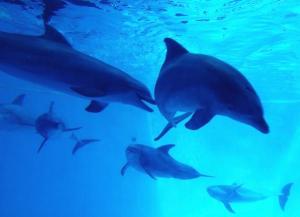
Dolphin diplomacy

Last year, a Spanish researcher and a Paraguayan scientist presented the most complete and detailed study into the repertoire of sounds used by bottlenose dolphins to communicate. The study revealed the complexity and our lack of understanding about the communication of these marine mammals.

One of the key findings in the study is that dolphins have the ability to talk their way out of conflicts. From Science Daily:

Until now, the scientific community had thought that whistles were the main sounds made by these mammals, and were unaware of the importance and use of burst-pulsed sounds. Researchers from the Bottlenose Dolphin Research Institute (BDRI), based in Sardinia (Italy) have now shown that these sounds are vital to the animals' social life and mirror their behaviour.

"Burst-pulsed sounds are used in the life of bottlenose dolphins to socialise and maintain their position in the social hierarchy in order to prevent physical conflict, and this also represents a significant energy saving," Bruno Díaz, lead author of the study and a researcher at the BDRI, which he also manages, said...

...According to the experts, the tonal whistle sounds (the most melodious ones) allow dolphins to stay in contact with each other (above all mothers and offspring), and to coordinate hunting strategies. The burst-pulsed sounds (which are more complex and varied than the whistles) are used "to avoid physical aggression in situations of high excitement, such as when they are competing for the same piece of food, for example," explains Díaz...

...According to Díaz, bottlenose dolphins make longer burst-pulsed sounds when they are hunting and at times of high aggression: "These are what can be heard best and over the longest period of time," and make it possible for each individual to maintain its position in the hierarchy.

The dolphins emit these strident sounds when in the presence of other individuals moving towards the same prey. The "least dominant" one soon moves away in order to avoid confrontation. "The surprising thing about these sounds is that they have a high level of uni-directionality, unlike human sounds. One dolphin can send a sound to another that it sees as a competitor, and this one clearly knows it is being addressed," explains the Spanish scientist.

Read more.


Chimp mom mourns the death of her baby [video]

Part of the struggle in getting people on board with the idea that some animals deserve to be recognized as persons is convincing them that the emotional responses, inner psychological life and social bonds of these animals are similar to our own. Because we lack the neuroscience to prove definitively that nonhuman persons have the cognitive toolkit required for these responses, we're stuck with empiricism: if it looks like a duck and quacks likes a duck, we have to conclude that it's a duck. Behaviorism is currently our best tool for assessing the psychological sophistication of animals—and to a certain degree our own. It's worth noting that we cannot prove humans have these capacities either. We just take it for granted that others feel the way we do.

Some behavioral studies are more powerful than others. The video below is a good example—even if it is difficult to watch. It shows a chimpanzee mother dealing with and apparently mourning the death of her 16-month-old child. This haunting footage challenges those who might question the extent to which animals experience the loss of a life:

This footage was captured by researchers from the Max Planck Institute for Psycholinguistics. A team led by Dr. Katherine Cronin sought to study the reaction of non-human primates encountering the realities of mortality.

"The videos are extremely valuable because they force one to stop and think about what might be happening in the minds of other primates," Dr. Cronin told CORDIS News. "Whether a viewer ultimately decides that the chimpanzee is mourning, or simply curious about the corpse, is not nearly as important as people taking a moment to consider the possibilities."

Their report describes what researchers observed:

Dr. Cronin and doctoral student Edwin Van Leeuwen monitored the behaviour of a female chimpanzee that had recently lost her 16-month-old infant. The mother carried the infant's dead body for more than 24 hours, and then laid it on the ground in a glade. She approached the body many times, and held her fingers against the infant's face and neck for several seconds. The mother then stayed close to the body for almost an hour, later carrying it over to a group of chimpanzees that began to examine the body. The mother no longer carried the body of the infant the next day.

When watching the video I was particularly struck with the mother's tenderness and the way she stroked the infant's face. Looking at her reactions, she appeared distraught, frustrated, and forlorn. She seemed quite upset over the idea of having to abandon the body, returning to it periodically in the hopes that the infant would show some signs of life.

A human mom in the same situation would likely act and respond in a similar way. It's worth noting that, like chimpanzees, humans are also members of the great ape family.

Via TreeHugger.


What do we mean by the "rights" of the nonhuman person?

A common objection I get to the suggestion that nonhuman persons should be granted human-level rights is the concern that these animals could never properly express their citizenship or take part in the social contract. I've actually had people ask me if it's my intention to give bonobos a credit card and the right to vote.

No, no, no — that's not what this is all about. The rights I'm talking about have to do with protections. Nonhuman animals, like humans, should be immune from undue confinement, abuse, experimentation, illicit trafficking, and the threat of unnatural death. And I'm inclined to leave it at that for now.

While these animals may not be as intelligent or knowledgeable as humans, their cognitive and emotional capacities are sophisticated enough to warrant special consideration. These are self-aware and self-reflexive animals. They are cognizant of other minds, exhibit deep emotional responses, and have profound social attachments. That's not to be taken lightly.

At the same time I acknowledge that there there has to be a realism applied to this issue. Nonhuman animals who qualify as persons cannot participate in society to the same degree that humans can. Thus, they should be considered and treated in the same manner that we do children and the developmentally disabled—which is that they still have rights! We would never experiment upon a 3-year old human child, nor would we force a mentally disabled person to perform in a circus. We believe this because we recognize that these individuals are endowed with (or have the potential for) the sufficient capacities required for personhood. Consequently, we protect them with laws.

Along similar lines, another objection is that animals who lack a moral understanding of their actions cannot be included in the broader social contract. Again, this argument is unpersuasive. Never minding children and the developmentally disabled, human sociopaths lack a moral understanding of their actions, yet we include them in our charter of rights and freedoms—unless they break the law, in which case they are imprisoned or treated for their disorder. But at no times are they stripped of their fundamental human rights. While imprisoned, sociopaths are no longer allowed to co-mingle with the rest of society, but they can still count on the state to protect them from such things as torture or undue process.

These distinctions are important, particularly if we are to get popular buy-in on this concept. Granting human-level rights is fundamentally about protections; for the time being we shouldn't interpret or extend it beyond that. At the same time however, we need to acknowledge the importance of personhood status. Anything can be protected with the right set of laws. What's crucially important here, however, is understanding the moral weight that personhood status carries. To kill a nonhuman person, for example, should be en par with murdering a human—and with it all the consequences of committing such an act.

So while we can talk of these rights as basic protections, they are also poised to serve as a set of negative rights for humans who have the capacity to morally comprehend their actions and who are capable of participating in the social contract. Simply put, there are just some things you cannot do to persons, human or otherwise.


U.S. Denies Visa to Afghan Woman Peace Activist

From Women Against Military Madness: Malalai Joya, a former Afghanistan parliament member, is scheduled to speak in Minneapolis on April 1st. She is currently being denied a visa to come into the United States for her book tour and speaking engagements. This will be the second WAMM program that Big Brother has pulled visa’s for. The program will go on as planned, via Skype if necessary. In the meantime, we are doing everything possible to get our government to allow her to come. We like to believe that freedom of speech is still in operation in this country, but we need your help to make it so. Congressman Keith Ellison from Minnesota has already signed on in support of McDermott’s letter below. Also below are listed some things that you can do to help. ACTION ALERT: Four Things YOU Can Do About Malalai Joya’s Visa Denial The U.S. Embassy this week denied famed Afghan women’s rights activist Malalai Joya a visa to the United States for an extensive speaking tour that was to kick off on Saturday March 19th. Americans are being denied the right to hear from an on-the-ground activist how the war is affecting ordinary Afghans, especially women. [...]