Okay Harold Camping, Start Talking | The Intersection

I went over to the WeCanKnow.com site: The countdown to rapture is at “0 months, 0 days.” The Family Radio site is also silent–as is the strangely unpopular Twitter feed, which I just followed.

So now it is time for some answers. Southern Baptist Ed Stetzer has put it well:

“Harold Camping, pls update http://www.family.radio.com w/your repentance statement & instructions to your now-broke followers,” Stetzer tweeted.

Like I said before, I don’t expect any repentance. I expect rationalization. But surely something needs to be said–fast. This false prediction drew massive media attention, and some very unfortunate people changed their lives–gave up their lives, basically–because of it. Prophets bear great responsibility–especially when they’re wrong.

P.S.: Gotta love the New York Times headline: “Despite Careful Calculations, The World Does Not End.”


Were You Overexposed?

The failure of Amazon's cloud service and the multiple breaches of Sony's entertainment site may have compromised more than 100 million users. The consequences will likely range from inconvenience to identity theft. Were you affected by either of these events? In what way? As an individual or as par

Indiana Democrat activist switched his Voter Registration to Wisconsin while on Vacation

Coincidentally, it was just in time for the Hotly-contested WI Supreme Court race

by Eric Dondero

In the 2008 presidential campaign, there were numerous allegations nationwide of college students voting by absentee ballot for Obama in two or more states. A handful even faced criminal charges after the elections. (LR article 2008).

Now, a Ft. Wayne, Indiana Democrat activist and city council candidate has put a new twist on the practice. He went on "vacation," and registered to vote in Wisconsin. All the time he was on the ballot as a Democrat candidate in Indiana for Ft. Wayne city council.

From the Ft. Wayne Journal-Gazette "Schrader off the fall ballot" May 21:

the Allen County Election Board voted unanimously to remove Schrader from the November ballot

Schrader is a perennial candidate and said he took a vacation to Wisconsin during the campaign season this year because he did not expect to win. He finished third in a five-way Democratic race for Fort Wayne City Council at large, securing one of the party’s three nominations.

He told the election board, however, that he registered to vote in Green Bay...

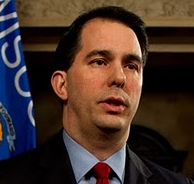
Of course, Wisconsin had a very hotly contested race for State Supreme Court during that time. The Court was 4 to 3 Republican. A loss for the GOP would have allowed the Democrats to overturn Governor Scott Walker's budget plan including reform of state worker pensions. The Republican David Prosser in the race beat Dane Country prosecutor JoAnne Kloppenburg by over 7,000 votes, after a recount.

Interestingly, the Ft. Wayne paper makes no mention of possible motives for Schrader registering to vote in Wisconsin.

And how many Democrat activists, from other nearby cities, say Chicago, also registered in WI temporarily to vote for Kloppenburg? How many others do this on a regular basis all over the US?

H/t alert reader at Hedgehog. Photo credits - Indiana News Center

Is Green Shale Gas Turning Black?

Shale gas is being heralded as the next best thing for reducing greenhouse gas emissions. Pundits claim that converting electrical generation from coal to gas will cut emissions by a third. In the U.S., shale gas is also touted as a worthwhile solution to ever-increasing transportation needs and ris

Breitbart’s going for the Tea Party candidate for ’12

West, Cain, Bachmann, or Palin

From Eric Dondero:

Top libertarian Republican Andrew Breitbart told The Hill in an interview that he's having fun with the 2012 GOP primary race. But wants the ultimate winner to be a "fighter." He gave some specific names for the first time:

I’m a Tea Party guy. I want the Allen Wests, the Herman Cains, the Michele Bachmanns, the Sarah Palins, to be the ones that emerge.

Note - West has categorically ruled out any run. Palin is giving very mixed signals.

Editor's comment - Cain/Bachmann or Bachmann/Cain? Two prize-fighters for the price of one. (My current two favorite candidates).

Kissing and cancer | Gene Expression

I recently listened to Paul Ewald talk about how a lot of cancer is due to infection on the radio. That wasn’t too surprising, Ewald has been making the case for a connection between infection and lots of diseases for a while. What jumped out at me is his claim that kissing can spread some of the viruses. Here’s something he told Discover a few years back:

D: How do we get infected with these dangerous pathogens?

PE: Two of the most powerful examples are sexual transmission and kissing transmission, and by that I mean juicy kissing, not just a peck on the cheek. If you think about these modes of transmission, in which it might be a decade before a person has another partner, you realize that rapidly replicating is not very valuable—the winning strategy for the microbe would be to keep a low profile, requiring persistent infections for years. So we would expect that disproportionately, the sexually transmitted pathogens would be involved in causing cancer, or chronic diseases in general. You can test this. Just look at the pathogens that are accepted as causing cancer—Epstein-Barr virus, Kaposi’s sarcoma–associated herpesvirus, human T lymphotropic virus 1—and find out whether they’re ...

Electromagnetic Field Collapse Principals.

Its been far too long since I had my electrical physics classes so I thought that I would ask around here for some info on what happens to the magnetic fields when a large iron core type electromagnet is turned off.

I am working on a large salvage yard crane electromagnet system and there are two v

Electronics, Field Service

Hi All,

I've got a problem with a receiver that receives PLC Digital info that is filtered off the power line. The 62khz information is being overwhelmed by a 62.5khz noise that is sporadic, intermittent and rises slowly and drops off slowly over a three to six hour period. The noise floor beco

Boston Globe sneaks a peek into the deep future

The Boston Globe asks: "What will happen to us?" To answer the question, writer Graeme Wood highlights the work of futurists Nick Bostrom, Sir Martin Rees, Sean Carroll and Ray Kurzweil. Highlights:

The community of thinkers on distant-future questions stretches across disciplinary bounds, with the primary uniting trait a willingness to think about the future as a topic for objective study, rather than a space for idle speculation or science fictional reverie. They include theoretical cosmologists like Sean Carroll of the California Institute of Technology, who recently wrote a book about time, and nonacademic technology mavens like Ray Kurzweil, the precocious inventor and theorist. What binds this group together is that they are not, says Bostrom, “just trying to tell an interesting story.” Instead, they aim for precision. In its fundamentals, Carroll points out, the universe is a “relatively simple system,” compared, say, to a chaotic system like a human body — and thus “predicting the future is actually a feasible task,” even “for ridiculously long time periods.”
---
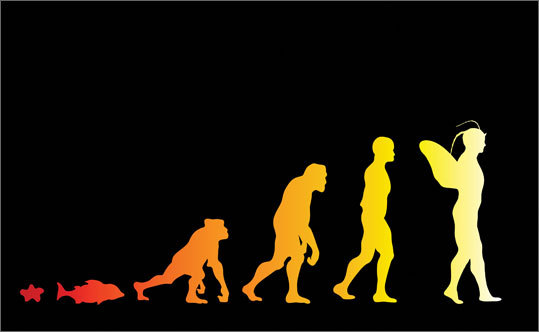
Also among the cosmologists is Rees, the speaker at the Royal Institution, who turned his attention to the end of time after a career in physics reckoning with time’s beginning. An understanding of these vast time scales, he contends, should have a large and humbling effect on our predictions about human evolution. “It’s hard to think of humans as anything like the culmination of life,” Rees says. “We should expect humans to change, just as Darwin did when he wrote that ‘no living species will preserve its unaltered likeness into a distant futurity.’ ” Most probably, according to Rees, the most important transformations of the species will be nonbiological. “Evolution in the future won’t be determined by natural selection, but by technology,” he says — both because we have gone some distance toward mastering our biological weaknesses, and because computing power has sped up to a rate where the line between human and computer blurs. (Some thinkers call the point when technology reaches this literally unthinkable level of advancement the “singularity,” a coinage by science fiction writer Vernor Vinge.)
---Bostrom, the Oxford philosopher, puts the odds at about 25 percent, and says that many of the greatest risks for human survival are ones that could play themselves out within the scope of current human lifetimes. “The next hundred years or so might be critical for humanity,” Bostrom says, listing as possible threats the usual apocalyptic litany of nuclear annihilation, man-made or natural viruses and bacteria, or other technological threats, such as microscopic machines, or nanobots, that run amok and kill us all.

This is quite literally the stuff of Michael Crichton novels. Thinkers about the future deal constantly with those who dismiss their speculation as science fiction. But Bostrom, who trained in neuroscience and cosmology as well as philosophy, says he’s mining the study of the future for guidance on how we should prioritize our actions today. “I’m ultimately interested in finding out what we have most reason to do now, to make the world better in some way,” he says.
---
There is, both in Bostrom’s scenarios and in Rees’s, the possibility of a long and bright future, should we manage to have any future at all. Some of the key technologies capable of going awry also have the potential to keep us alive and prospering — making humans and post-humans a more durable species. Bostrom imagines that certain advances that are currently theoretical could combine to free us some of the more fragile aspects of our nature, such as the ability to be wiped out by a simple virus, and keep the species around indefinitely. If neuropsychologists learn to manipulate the brain with precision, we could drug ourselves into conditions of not only enhanced happiness but enhanced morality as well, aiming for less fragile or violent societies far more durable than we enjoy now, in the nuclear shadow.

And if human minds could be uploaded onto computers, for example, a smallpox plague wouldn’t be so worrisome (though maybe a computer-virus outbreak, or a spilled pot of coffee, would be). Not having a body means not being subject to time’s ravages on human flesh. “When we have friendly superintelligent machines, or space colonization, it would be easy to see how we might continue for billions of years,” Bostrom said, far beyond the moment when Rees’s post-human would sit back in his futuristic lawn chair, pop open a cold one, and watch the sun run out of fuel.

There is one surprising survival scenario of particular worry for Bostrom, however — one that involves not a physical death but a moral one. The technologies that might liberate us from the threat of extinction might also change humans not into post-humans, but into creatures who have shed their humanity altogether. Imagine, he suggests, that the hypothetical future entities (evolved biologically, or uploaded to computers and enhanced by machine intelligence) have slowly eroded their human characteristics. The mental properties and concerns of these creatures might be unrecognizable.

“What gives humans value is not their physical substance, but that we are thinking, feeling beings that have plans and relationships with others, and enjoy art, et cetera,” Bostrom says. “So there could be profound transformations that wouldn’t destroy value and might allow the creation of any greater value” by having a deeper capacity to love or to appreciate art than we present humans do. “But you could also imagine beings that were intelligent or efficient, but that don’t add value to the world, maybe because they didn’t have subjective experience.”

Bostrom ranks this possibility among the more likely ways mankind could extinguish itself. It is certainly the most insidious. And it could happen any number of ways: with a network of uploaded humans that essentially abolishes the individual, making her a barely distinguishable module in a larger intelligence. Or, in a sort of post-human Marxist dystopia, humans could find themselves dragooned into soulless ultra-efficiency, without all the wasteful acts of friendship and artistic creation that made life worth living when we were merely human.

“That would count as a catastrophe,” Bostrom notes.


Size Of S.S Rollers For S.Cane Juicer

What should be the minimum size of 2 rollers used in small, home use sugar cane juicer/crusher. Please mention the measurement for diameter and length of each roller.

Should there be separate shafts bored into each of the rollers or the rollers should be made in one piece?

The size of the cane wil

New Scientist asks: When should we give rights to robots?

From the New Scientist article, "When should we give rights to robots?":

A more basic issue is that there is no agreed definition of consciousness. Perhaps in practical terms, a simpler answer to the question of machine rights might come from the way people treat them. We should put our faith in our own ability to detect consciousness, rather than look to philosophical discourse.

There is one obvious shortcoming of this approach: we will probably sense sentience before it is truly deserved because of our remarkable tendency to anthropomorphise. After all, we are already smitten by today's relatively dumb robots. Some dress up their robot vacuum cleaners. Others take robots fishing or go so far as to mourn their loss on the battlefield.

Even so, popular sentiment towards machines and robots will give a vivid feel for the degree of their sophistication. Franklin himself admits that even he referred to his original creation as "she", though he "did not feel at all bad" when he turned "her" off. But when he and a significant number of others do feel a pang of guilt as they flick the off switch, we might well have passed a milestone in artificial cognition: the birth of a machine that deserves rights.


What Stainless Steel For Cane Juice?

Hi there

I'm new to this forum with one question.

Which grade S.S is suitable for sugar cane juice? a juice that may occasionally contain lemon juice and ginger. Lemon is very acidic (PH~2) whereas sugar cane juice itself is acidic. I've read a research article describing that the S.S juice is pow