Behavior and Public Health – To Nudge or Legislate

As health care costs rise and great attention is being paid to the health care system in many countries (perhaps especially the US), the debate is heating up over how to improve public health. Many health problems are greatly increased by the lifestyle choices individuals make – smoking, weight control, and exercise to name a few. The problem is that it is notoriously difficult to change behavior.

There are different ways to approach the challenge of improving lifestyle choices to reduce chronic illness. We can take actions aimed at the individual or aimed at society. These actions can gentle or passive (the so-called “nudge theory”), or they can be more draconian, such as banning certain activity. We can, of course, do all of these things simultaneously, and may need to in order to have a significant impact.

Affecting Individual Behavior

A common criticism of mainstream physicians is that they do not have much impact on the lifestyle of their patients. This is largely true – although there is no convincing evidence that any practitioners have a significant impact on lifestyle. This is mainly the result of the fact that it is extremely difficult to get people to change their behavior.

The default tactic has been to give people information on the assumption that they will then be able to make a rational choice about their health. Psychologists have long known that we are much more likely to simply rationalize our behavior than take the more difficult path of changing it. This is true even of the “scared straight” approach – trying to frighten people with scary images or stories about lung cancer or diabetes.

It is true that physicians can affect patient behavior. For example, even brief physician counseling to quit smoking (less than 5 minutes) increases smoking cessation by 1.6 times. This sounds impressive, but this only increases the rate to 2-10%. Even if we use the higher number in that range, a 10% decrease in unhealthy behavior is very modest (worthwhile, but still modest). It seems that in general you can get about 5% of people to change their behavior with counseling alone.  Meanwhile, using medications to aid smoking cessation (nicotine patches and bupropion) can result in up to a 35% decrease in smoking.

The technology of changing individual behavior is advancing, however. The strategy of giving information and assuming rational behavior, while still useful, is highly limited and not sufficient. Psychologists recognize that the way to alter behavior is through psychosocial interventions – exploiting human psychology and peer pressure. One such technique is called motivational interviewing. Essentially, the patient is asked leading questions that gets them to to state their own health goals and concerns. Apparently we are better at persuading ourselves than being persuaded by others.

Sounds good, and generally the research shows that this approach is an improvement – but the effect size is still depressingly small. A systematic review of motivational interviewing for smoking cessation, for example, revealed only a 1.27 relative increase in cessation. So spending 5 minutes with a patient once improves smoking cessation by 1.6 times, and spending multiple 20 minutes sessions of motivational interviewing increases success a further 1.27 times. This is worthwhile in terms of public health outcomes, but it does look like such methods yield diminishing returns.

Motivational interviewing may be more effective for behaviors not related to addiction, such as weight loss and exercise. But still there is huge room for improvement.

Public Health Measures

It is increasingly looking like the way to have a huge impact on public health is at the societal, not individual, level. The goal is to make healthful lifestyle choices easier. Using heavy-handed legislation, however, is not popular (at least not in the US). Such strategies evoke images of a Big Brother nanny state trying to take away our freedoms. There are legitimate concerns about draconian state measures, especially if they are not rigorously science-based, but the looming health care crisis is making public health measures seem more attractive.

One approach is simply to ban unhealthy behavior. Outright bans of products, such as alcohol, have a disastrous history. Another alternative is to restrict the use of such products in certain locations and situations. The best example of this strategy is banning smoking in public locations. A systematic review of 10 studies indicates that such bans reduce the incidence of myocardial infarction in the population by an average of 17%. Banning smoking in public seems to be a clear public health win.

But banning unhealthy behavior gets more tricky when not dealing with addictive substances. Bans of fatty or high-calorie food, for example, are likely to meet much more resistance than restrictions on public smoking. New York City’s ban on trans fat, for example, has been highly controversial. Other states are considering laws to ban toys in kid’s meals, limit advertising, and limiting marketing behavior such as inviting fast food patrons to “go large.”

Resistance to heavy handed strategies has led to the proposal of the nudge theory – using more subtle legislation to influence behavior. Nudge strategies include printing the calories next to menu items. This is a situation in which information is likely to have a significant impact on behavior – because it addresses what may be a significant contributor to the increase in obesity. It is easy to consume far more calories than we think, especially when restaurants prepare menu items that are calorie dense in order to make them tasty and appealing. Having calorie information right in front of you when making menu choices does reduce caloric intake (in this study by 250 calories), although again, not as much as we might hope.

Another nudge approach is to make healthful choices the default choice. This still leaves consumers the freedom to choose what they want, but many more people will go with the healthier choice if it is the default.

Yet another approach is to regulate manufacturers. At present voluntary guidelines are being suggested, and the debate is ongoing about using legislation to require food manufacturers, for example, to produce healthier and lower calorie products. The public has been passively eating more calories simply because the products they buy contain more calories. They have also been lulled by false security – low fat products tend to make up their calories in carbohydrates, while low-carb products make up their calories with increased fat. Either way people eat more because they feel they are eating a healthier products.

Conclusion

It is clear that we need to take a long science-based look at public health and ways to improve lifestyle choices. We need to reverse the obesity epidemic and further reduce smoking. Doing so is not easy – there is no silver bullet to changing human behavior. It is likely that we will need to use a combination of strategies while researching new and better ways to influence behavior.

Facebook Google Buzz Digg <!--<!--LinkedIn StumbleUpon LiveJournal Share

Antidepressants and Effect Size

Antidepressant drugs have been getting a bad rap in the media. I’ll just give 3 examples:

  • On the Today show, prominent medical expert :-) Tom Cruise told us Brooke Shields shouldn’t have taken these drugs for her postpartum depression.
  • In Natural News, “Health Ranger” Mike Adams accused pharmaceutical companies and the FDA of covering up negative information about antidepressants, saying it would be considered criminal activity in any other industry.
  • And an article in Newsweek said  “Studies suggest that the popular drugs are no more effective than a placebo. In fact, they may be worse.”

Yet psychiatrists are convinced that antidepressants work and are still routinely prescribing them for their patients. Is it all a Big Pharma plot? Who ya gonna believe? Inquiring minds want to know:

  • Are antidepressants more effective than placebo?
  • Has the efficacy of antidepressants been exaggerated?
  • Is psychotherapy a better treatment choice?

The science-based answers to the first two questions are clearly “Yes.” The best answer to the third question is “It depends.”

In 2008, Erick Turner and four colleagues published an article in The New England Journal of Medicine (NEJM) entitled “Selective Publication of Antidepressant Trials and Its Influence on Apparent Efficacy.” The FDA is able to make sure that drug companies don’t pick and choose which trials, and which outcomes within those trials, get seen. Using clinical trial data from the FDA as a gold standard, Turner, et. al. examined how these same trials were reported in published journal articles, They found that:

…according to the published literature, the results of nearly all of the trials of antidepressants were positive. In contrast, FDA analysis of the trial data showed that roughly half of the trials had positive results.

And some of the negative trials were published with a “spin” that made them appear positive. The data did show that each drug was superior to placebo, but the true magnitude of that superiority was less than a diligent literature review would indicate. They warned that

By altering the apparent risk–benefit ratio of drugs, selective publication can lead doctors to make inappropriate prescribing decisions that may not be in the best interest of their patients and, thus, the public health.

Irving Kirsch has been outspoken about antidepressants’ alleged lack of efficacy. In a controversial meta-analysis published in 1998, he found that placebos provided approximately 75% of the improvement provided by active drug. He suggested that the other 25% is debatable and could be due to an enhanced placebo response when patients experience side effects that convince them they are getting an active drug. In a further study in 2002, he “questioned the clinical significance of antidepressants.”

Kirsch recently looked at the FDA data for 4 of the 12 drugs that Turner examined. In spite of the smaller sample, where Turner found an effect size of 0.31, Kirsch got 0.32. So they got almost exactly the same result. But it was their interpretations of that result that were very different. Kirsch concluded that antidepressants are ineffective, while Turner found that the drugs were indeed superior to placebo. As the figure below shows, each drug’s effect size was positive. Also, none of the confidence intervals overlapped zero. This means that, while there is some probability that the true effect size is zero, meaning that antidepressants and placebo are equal in efficacy, that probability is negligibly small.


The discrepancy between Turner’s and Kirsch’s interpretations hinges on what these effect size numbers mean in terms of clinical significance,. Values of 0.2, 0.5, and 0.8 were once proposed as small, medium, and large effect sizes, respectively. The psychologist who proposed these landmarks admitted that he had picked them arbitrarily and that they had “no more reliable a basis than my own intuition.” Later, without providing any justification, the UK’s National Institute for Health and Clinical Excellence (NICE) decided to turn the 0.5 landmark (why not the 0.2 or the 0.8 value?) into a one-size-fits-all cut-off for clinical significance. In an editorial published in the British Medical Journal (BMJ), Turner explains with an elegant metaphor: journal articles had sold us a glass of juice advertised to contain 0.41 liters (0.41 being the effect size Turner, et al. derived from the journal articles); but the truth was that the “glass” of efficacy contained only 0.31 liters. Because these amounts were lower than the (arbitrary) 0.5 liter cut-off, NICE standards (and Kirsch) consider the glass to be empty. Turner correctly concludes that the glass is far from full, but it is also far from empty. He also points out that patients’ responses are not all-or-none and that partial responses can be meaningful.

Incidentally, NICE is no longer using the 0.5 effect size cutoff.

If we followed Kirsch’s interpretation and rejected antidepressants, how would we treat depression? Psychotherapy avoids the side effects of drugs, but it has its own drawbacks: it is expensive, time-consuming, and variable in quality. How effective is psychotherapy? Psychotherapy trials also suffer from publication bias, just like antidepressant drugs. And when one weeds out low quality studies, psychotherapy has an effect size of only 0.22, lower than the value for antidepressants reported by Kirsch himself, So if we reject any treatment below the (arbitrary) 0.5 cutoff, when a mental health care provider is faced with a patient in need of help, is he or she to do nothing at all?

I don’t doubt that antidepressants have sometimes been over-prescribed and used inappropriately for lesser levels of depression where they are less effective or even ineffective, but this is probably true for psychotherapy, as well. On the other hand, it has been estimated that only about half of depressed patients are getting any kind of treatment. Severe depression is a life-threatening disease. A recent study showed that antidepressants reduced the risk of suicide by 20% in the long term. The risk/benefit ratios are still not clear cut for either form of treatment.

Once more, science fails to give us the black-and-white answers we crave. And once again we are reminded that we can’t rely on the media for accurate, nuanced information about medical science.

For his assistance in preparing this article and for providing the figure, I want to thank Erick Turner, M.D., Department of Psychiatry, Oregon Health and Science University; Staff Psychiatrist, Portland Veterans Affairs Medical Center; Former reviewer, FDA.


Facebook Google Buzz Digg <!--<!--LinkedIn StumbleUpon LiveJournal Share

Spin City: Using placebos to evaluate objective and subjective responses in asthma

As I type this, I’m on an airplane flying home from The Amazing Meeting 9 in Las Vegas. Sadly, I couldn’t stay for Sunday; my day job calls as I’ll be hosting a visiting professor. However, I can say—and with considerable justification, I believe—that out little portion of TAM mirrored the bigger picture in that it was a big success. Attendance at both our workshop on Thursday and our panel discussion on placebos on Saturday was fantastic, beyond our most optimistic expectations. There was also a bit of truly amazing serendipity that helped make our panel discussion on placebo medicine an even bigger success.

If there’s one thing about going away to a meeting, be it TAM or a professional meeting, it’s that it suddenly becomes very difficult for me to keep track of all the medical and blog stuff that I normally keep track of and nearly impossible to keep up with the medical literature. This is the likely explanation for why I had been unaware of a study published in the New England Journal of Medicine (NEJM) on Thursday that was so relevant to our discussion and illustrated out points so perfectly that it was hard to believe that some divine force didn’t give it to us in order to make our panel a total success.

Just kidding. It was TAM, after all. It was, however, embarrassing that I didn’t see the study until the morning of our panel, when Kimball Atwood showed it to me.

Before I get to the meat of this study and why it fit into our nefarious plans for world domination, (or at least the domination of medicine by science-based treatments), a brief recap of the panel discussion would seem to be in order. First, for the most part, we all more or less agreed that the term “placebo effect” is a misnomer and somewhat deceptive because it implies that there is a true physiologic effect caused by an inert intervention. “Placebo response” or “placebo responses” seemed to us a better term because what we are observing with a placebo is in reality a patient’s subjective response to thinking that he is having something active done having something done. In general, we do not see placebo responses resulting improvement in objective outcomes; i.e., prolonged survival in cancer. The relative contributions of components of this response, be they expectancy effects (if you expect to feel better you likely will feel better), conditioning, or one that is frequently dismissed or downplayed, namely artifacts of the design of randomized clinical trials and even subtle (or even not-so-subtle) biases in trial design. This issue of placebo responses being observed only in subjective patient-reported clinical outcomes (pain, anxiety, and the like) and not in objectively measured outcomes is an important one, and it is one that goes to the heart of the NEJM study that so serendipitously manifested itself to us. As Mark Crislip so humorously pointed out, the placebo response is the beer goggles of medicine (this is not a spoiler or stealing Mark’s line; several TAM attendees have already tweeted Mark’s line), and much of what is being observed are changes in the patient’s perception of his symptoms rather than true changes in the underlying pathophysiology. This study drove the point home better than we could.

Another point discussed by the panel is also quite relevant. As more and more studies demonstrate very convincingly that “complementary and alternative medicine” (CAM) or “integrative medicine” (IM) therapies do not produce improvements in symptoms greater than placebo. Moreover, multiple studies, including a famous NEJM meta-analysis and a recently updated Cochrane review, demonstrate, placebo responses probably do not constitute meaningful responses. In light of these findings, CAM apologists, driven by ideology rather than science and masters of spin, have begun to admit grudgingly that, yes, in essence their treatments are elaborate placebos. Not to be deterred, instead of simply concluding that their CAM interventions do not work, they’ve moved the goal posts and started to try to argue that it doesn’t matter that CAM effects are placebo effects because placebos are “powerful” and good and—oh, yes, by the way—there are a lot of treatments in science-based medicine that do little better than placebos. In other words, CAM advocates elevate the subjective above the objective and sell the subjective, and that’s exactly what they are doing with this study.

Perception versus physiology

The study under question was performed at Harvard, with Michael E. Wechsler as its first author and Ted Kaptchuk as its senior author. Studies done by groups including Ted Kaptchuk have actually presented us here at SBM with copious blog fodder before, all designed to promote placebo medicine, either through making an argumentum ad populum, claiming in a truly Humpty Dumpty moment that it is possible to have placebo effects without deceiving the patient, and or rebranding of exercise as “alternative” in the New England Journal of Medicine (NEJM) last year.

The current study is entitled, Active Albuterol or Placebo, Sham Acupuncture, or No Intervention in Asthma. Personally, I like this title. It’s a fine title, as it tells the reader in essence what the trial design is in only a few words. And it’s actually a reasonably good pilot study. Of course, it’s not so much the trial design that goes disastrously awry. Rather, it’s the interpretation of the results of the RCT that devolves into propaganda for quackademic medicine in which subjective improvement is used to argue that placebo medicine is good, even when no objective improvement is observed in a disease for which we have good drugs that produce objective improvements as well as subjective improvements.

This study basically compared four different interventions

  • Treatment with Albuterol
  • Sham acupuncture using the classic retractable needle (note that this was only single-blinded)
  • Placebo inhaler
  • No treatment at all

Inclusion criteria were as follows:

  • Men and women age>or= 18 with a diagnosis of asthma
  • Meet American Thoracic Society diagnostic criteria for asthma
  • Currently using a stable asthma regimen (no med. changes for 4 weeks)
  • Ability to withhold short-acting bronchodilators for 6 hours prior to each visit (see Spirometry description)
  • Ability to withhold long-acting bronchodilators for 48 hours prior to each visit (see Spirometry description)
  • Presence of reversible airflow obstruction as demonstrated by an improvement in FEV1 of at least 12 % following the inhalation of a ?-agonist after 10 am. at screening visit.

Exclusion criteria were straightforward:

  • Lung disease other than asthma
  • Respiratory tract infection within the last month
  • Active tobacco use
  • Asthma exacerbation requiring the use of systemic
  • corticosteroids within the past 6 weeks
  • Prior experience with acupuncture

These criterial guaranteed that the patients selected have only mild to moderate asthma with no complications from the asthma, such as pneumonia or pulmonary fibrosis. Of course, it would be highly unethical to take people with severe asthma off of their bronchodilators; so medical ethics pretty much prevents testing placebos on people with more severe disease. Still, I can’t help but wonder whether the results reported would have been different in more severe asthma and if the subjective improvement would have been nearly as great. In any case, this study ended up including 39 patients, after 79 were screened, 46 underwent randomization, and 7 dropped out during the protocol. Patients who completed the protocol underwent the following procedure:

These patients returned within a week and were assigned to a randomly ordered series of four interventions — active albuterol inhaler, placebo inhaler, sham acupuncture, or no-intervention control — administered on four separate occasions, 3 to 7 days apart (block 1) (Figure 2). This procedure was repeated in two more blocks of four visits each (blocks 2 and 3), during which the interventions were again randomly ordered and administered. Thus, each subject received a total of 12 interventions. Albuterol and the placebo inhaler were administered in a double-blind fashion and sham acupuncture in a single-blind fashion, and the no-intervention control was not blinded. As before, short-acting and long-acting bronchodilator therapy was withheld for 8 hours and 24 hours, respectively, before each intervention. The no-intervention control condition differs from the natural history of asthma, since it controls for nonspecific factors such as attention from study staff, responses to repeated spirometry, regression to the mean, natural physiological variation, and any effects arising from the hospital setting. Nonetheless, no-intervention controls are the best approximation of no treatment in an experimental design. The study was conducted in accordance with the protocol (available at NEJM.org).

I’m not entirely sure why Kaptchuk thought he had to place a comment in there about no-intervention controls being only an approximation of no treatment in an experimental design. After all, that’s the sort of thing that clinicians and clinical researchers simply know; it does not need to be pointed out to them, much as it shouldn’t need to be pointed out that an RCT is an intentionally artificial method designed to remove as many biases as possible. Be that as it may, one thing that is clear is that these patients could not have truly severe asthma. Ruling out anyone requiring steroids for an acute exacerbation in the recent past and only including patients who could be off their long-acting bronchodilators for 48 hours and their short-acting bronchodilators for 6 hours pretty much guaranteed that.

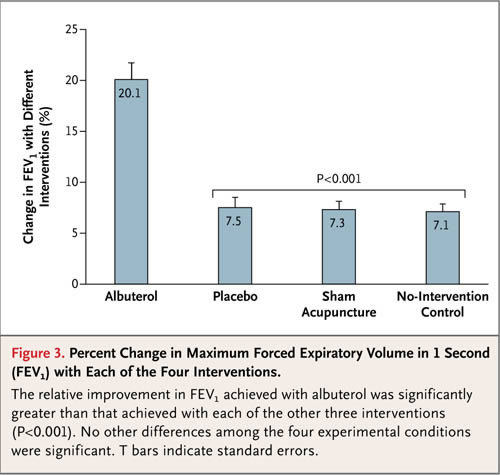
Everyone’s heard the old cliche that a picture is worth a thousand words, and this is exactly the sort of situation where that’s true. All I need to do is to show you two graphs, and instead of one of my usual 5,000 word blog posts, you can have a 4,000 word post. Funny how that works. In any case, for your edification, here a graph of the objective results of this study, namely the FEV1 for the four groups:


(Click to embiggen)

Not surprisingly, a known, effective bronchodilator had a very strong effect on the actual, objectively measured lung function of these patients. However, it should be noted that all groups improved, even the no-treatment group; it just improved much less than the albuterol group, and the sham acupuncture and placebo albuterol groups were indistinguishable from the no-treatment arm. In fact, in the supplemental data, there is also a table showing that in 32 of the patients exhaled nitric oxide (FENO) was measured, with identical results. Immediately after treatment, FENO increased in patients treated with double-blind albuterol by 5.9%, in contrast to patients treated with placebo inhaler, placebo acupuncture, and no treatment, all of whom demonstrated no significant change in FENO. This graph is about as clear and compelling evidence as there can be within the limits of a relatively small trial, that placebo responses do not change the underlying physiology of the disease of asthma or produce any objectively measurable improvements in lung function the way that real medicine does.

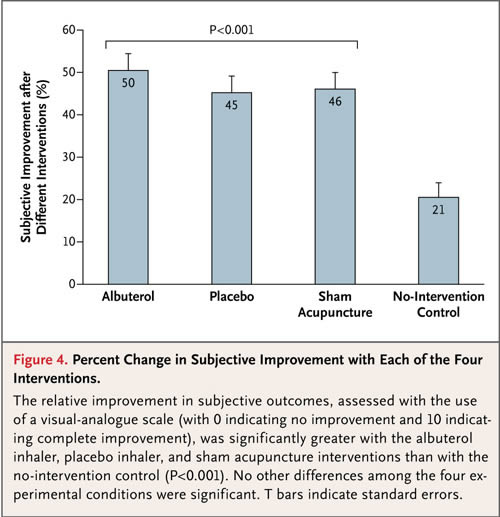
Now, for your edification and comparison, here is a graph of the self-reported subjective improvements.


(Click to embiggen.)

The results are pretty striking, aren’t they? They were so striking that Steve couldn’t resist flipping back and forth between these two graphs for several seconds in order to drive home the point to the audience. The albuterol, sham acupuncture, and placebo albuterol groups all demonstrated a significant improvement in symptoms, while the no-intervention control did not. However, here’s an important point. The scale used was a visual analog scale from 0 to 10 in which 0 means no improvement and 10 means complete resolution. So, again, even though the albuterol, sham acupuncture, and placebo albuterol groups all demonstrated subjective improvement, so did the no-treatment control arm, just less. In other words, all groups reported improvement, even those who received no treatment.

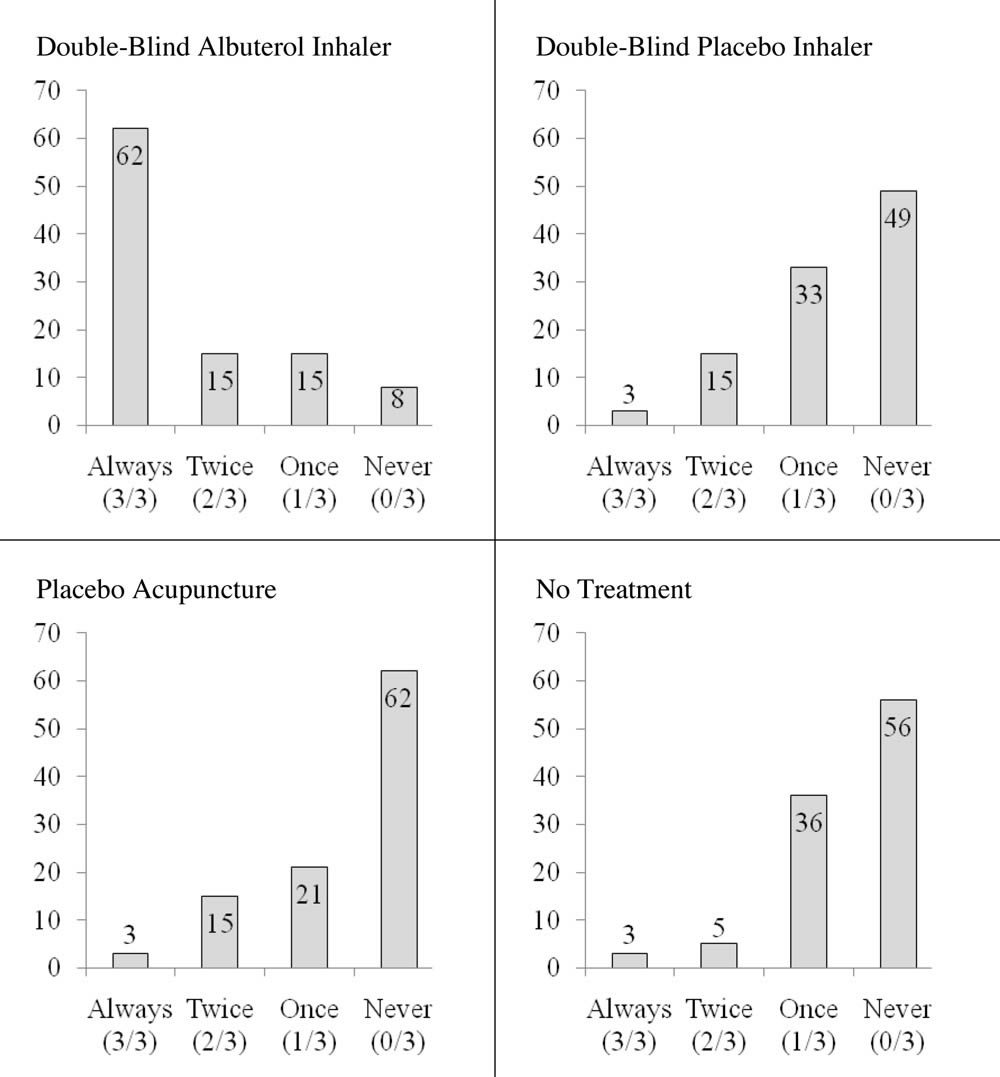
There’s another graph buried in the back of the supplemental data that I now wish we had also shown. Basically, it’s a look at how many patients responded objectively to treatment, as defined by an improvement in FEV1 of 12% or more, at each of the three sessions they did. The results and pattern are striking


(Click to embiggen.)

Notice that, as expected, the vast majority of the patients responded at each session to the albuterol (3/3 sessions). In contrast, only 3% of patients responded 3/3 times to placebo, sham acupuncture, or no treatment. In fact, what’s striking is how similar the three graphs look and how different they look from the graph of patient responses to albuterol. Again, the message is very clear: Real medicine produces real, objectively measurable changes in physiology towards a more normally functioning state. Placebo medicine does not. In any rational, science-based discussion, this would be the end of the story. Placebos don’t work in asthma.

But that’s not the message that was being spread about this story, and here’s where the NEJM, less than a year after its massive fail in publishing a credulous Michael Berman acupuncture article and a clever bait-and-switch article looking at Tai Chi in fibromyalgia, allowed quackademic language to try to make left right, up down, and a negative result an indication that placebo medicine is a good thing.

Spin, spin, spin, spin

As I read the discussion of this paper, I could almost hear the cracking of bones as Kaptchuk went into major contortions to try to explain his negative result. Even though nowhere did the authors really explicitly state their real hypothesis, the design of the study made it painfully clear to anyone who understands clinical research that their hypothesis going in was that placebo responses would result in changes in objectively measured lung function in asthma. They were sorely disappointed, and the contortions of language that went into the discussion were plain to see. The authors implied that it might have been their use of a new, not really validated, patient-reported measure of asthma improvement. Or maybe, they argue, FEV1 isn’t a good measure of the severity of constriction of the airways in asthma, even though spirometry has been a reliable, well-validated test for asthma severity for decades. This is especially true in an academic medical center with a lot of pulmonary specialists. While spirometry can be unreliable in primary care settings and other settings where there isn’t a lot of experience performing it, such a description does not apply to Harvard-affiliated hospitals. At least I would hope not.

Overall, the spin on this study is not that placeboes don’t result in objectively measurable improvements, which is the correct conclusion. Rather, the spin is that subjective symptoms are as important or more important than objective measures; so let’s use placeboes. In the paper itself, Kaptchuk doesn’t quite say that. He first makes a perfectly reasonable point that, if subjective and objective findings don’t correlate, go with the objective findings. Then he does some handwaving:

Indeed, although improvement in objective measures of lung function would be expected to correlate with subjective measures, our study suggests that in clinical trials, reliance solely on subjective outcomes may be inherently unreliable, since they may be significantly influenced by placebo effects. However, even though objective physiological measures (e.g., FEV1) are important, other outcomes such as emergency room visits and quality-of-life metrics may be more clinically relevant to patients and physicians.

My jaw dropped when I read this. “Other outcomes” besides objective measures of disease severity may be “more clinically relevant”? The spin goes way beyond that, though. I have to think that the reviewers kept the authors from getting too frisky with their desire to advocate placebo medicine and promote subjective outcomes as being more important than objective outcomes. No such restraint seemed to inhibit the author of the accompanying editorial, Daniel E. Moerman, Ph.D., who, alas, appears to be based practically in my back yard at the University of Michigan-Dearborn. I had never heard of him before; so I did what all bloggers do when they encounter an unknown. I Googled him. His CV is here, and this is what I found:

Daniel E. Moerman is the William E. Stirton Professor of Anthropology at the University of Michigan — Dearborn, so recognized for his distinguished scholarship, teaching, and professional accomplishments. Because of his work in the field of Native American ethnobotany, Professor Moerman often receives calls from the American Indian community, such as an inquiry from the Menominee in Wisconsin, asking him what kinds of plants they should include in the restoration of their indigenous ecosystem. He acknowledges that we are deeply indebted “to those predecessors of ours on the North American continent who, through glacial cold in a world populated by mammoths and saber-toothed tigers, seriously, deliberately, and thoughtfully studied the flora of a new world, learned its secrets, and encouraged the next generations to study closer and to learn more. Their diligence and energy, their insight and creativity, these are the marks of true scientists, dedicated to gaining meaningful and useful knowledge from a complex and confusing world.”

He’s also known for having written a book entitled Medicine, Meaning and the “Placebo Effect,” part of which can be found here, in particular this doozy of a quote:

There is much objection among physicians to the very existence of something called the placebo effect. It often seems to bother doctors enormously that the fact of receiving medical treatment (rather than the content of medical treatment) can initiate a healing process. Why? I think it is because medicine is rich in a particular kind of science. Medical education is filled with science. In the US, all students must score high on the “Medical College Admission Test” in order to be admitted to medical school. Students are allowed a total of 345 minutes to complete the exam. Eight five minutes are devoted to “verbal reasoning,” and 60 minutes to “writing sample.” The remaining 200 minutes (58.5%) are split evenly between “physical sciences” and “biological sciences.” It is apparently important that physicians understand levers, inclined planes, the acceleration of falling bodies, the life cycle of insects, and the process of photosynthesis. The kind of science that doctors have to learn is the simpler sort of science, the mechanical kind. Physicists worked out the mechanics of simple machines (levers, planes) in the seventeenth century. In our times, they have been working on much slipperier subjects: quarks, chaos, the “weak force,” and the oddest of quantum phenomena. Cause and effect are far less easy to detect in these matters than in the study of falling bodies…But it is the latter, not the former, in which physicians are schooled. And there is very little social science in medical education where one must address the complexities and subtleties of, say, emotion, or ritual, or culture.

If you detect shades of Deepak Chopra in there, you are correct, all with a dollop of utter contempt for Newtonian physics, which, I will remind you, are still accurate enough for most real-world purposes here, where few things we do reach relativistic speeds. Instead, Moerman invokes quarks, quantum theory, and other complexities and contrasts it to the “simpler” sciences that physicians apparently learn. One can almost feel the contempt for us poor, deluded physicians. Perhaps if I had known a bit about Professor Moerman, my jaw ouldn’t have dropped so far when I read this in the editorial accompanying the NEJM study:

What do we learn from this study? The authors conclude that the patient reports were “unreliable,” since they reported improvement when there was none — that is, the subjective experiences were simply wrong because they ignored the objective facts as measured by FEV1. But is this the right interpretation? It is the subjective symptoms that brought these patients to medical care in the first place. They came because they were wheezing and felt suffocated, not because they had a reduced FEV1. The fact that they felt improved even when their FEV1 had not increased begs the question, What is the more important outcome in medicine: the objective or the subjective, the doctor’s or the patient’s perception? This distinction is important, since it should direct us as to when patient-centered versus doctor-directed care should take place.

Apparently Moerman thinks that patient-centered care means inducing a patient through placebo responses to think that he feels better when in actuality the disease-impaired function of his organ (in this case, the lungs) puts him at risk for serious complications. He then goes on to write:

For subjective and functional conditions — for example, migraine, schizophrenia, back pain, depression, asthma, post-traumatic stress disorder, neurologic disorders such as Parkinson’s disease, inflammatory bowel disease and many other autoimmune disorders, any condition defined by symptoms, and anything idiopathic — a patient-centered approach requires that patient-preferred outcomes trump the judgment of the physician. Under these conditions, inert pills can be as useful as “real” ones; two inert pills can work better than one; colorful inert pills can work better than plain ones; and injections can work better than pills.

I find it hard not to notice that Moerman has cast a very wide net; virtually any condition outside of trauma could fit into his definition. I can’t help but think that, if I, for instance, had asthma and the severity of my symptoms didn’t correlate well with my objectively measured lung function as estimated by FEV1, then I would want my lung function tuned up. And if I didn’t want my lung function to be improved, I would hope that my doctor would be able to educate me as to why it is important to make my lungs function better, even though I feel OK. Moerman would seem to advocate telling me, “Oh, no, Dr. Gorski, don’t worry about those blue lips you have. That’s just an ‘objective’ finding. You feel OK, and, since I practice ‘patient-centered’ care, which teaches, among other things, that symptoms are the most important thing and the reason why you come to a doctor in the first place, your feeling better is all that matters!”

I’ll give you another example. Consider an epidural hematoma. If you crack your head hard enough, it can sheer or damage one of the epidural arteries. The typical clinical course is that the patient will be knocked unconscious due to head trauma. Later, he will regain consciousness and experience what is known in the biz as a “lucid interval” that can last several hours. What’s happening during that “lucid interval” is that the blood is still accumulating, but the hematoma hasn’t reached a large enough size yet to cause damage, but when it does the patient deteriorates rapidly. Frequently, one of those “objective findings” is a CT scan that shows a little epidural hematoma, which may or may not blossom into a life threatening epidural hematoma that can squash the brain against the inside of the skull. That’s an “objective” finding. Even though the patient feels well; that hematoma could expand and kill him in a few hours.

No doubt Professor Moerman or Ted Kaptchuk would claim that these are ridiculous and unfair examples. No doubt they would say that this is not what they’re talking about, and that’s probably true. I’ll even concede that the example of the epidural hematoma example was a bit over the top, but that was intentional.
However, whether they realize it or not, by elevating the subjective beyond the objective, and then offering placebo medicine for the subjective, these are exactly the sort of arguments they are making, when you strip them to their essence. No doubt Moerman or Kaptchuk would like to think that they would never, ever use such an approach for diseases with such potentially bad outcomes, but where do they draw the line? When, exactly, do we decide that subjective improvement is more important than objective improvement and by what criteria?Moerman makes a great show of saying, “First, do no harm”:

Do we need to control for all meaning in order to show that a treatment is specifically effective? Maybe it is sufficient simply to show that a treatment yields significant improvement for the patients, has reasonable cost, and has no negative effects over the short or long term. This is, after all, the first tenet of medicine: “Do no harm.”

Clearly implicit in Moerman’s statement is the assumption that not intervening in the abnormal physiology of some diseases (for instance, asthma) doesn’t do harm. He’s wrong. Sometimes doing nothing is harmful, as it allows the disease to continue unchecked, possibly resulting in permanent end organ damage or even the death of the patient, and placebo medicine does nothing to prevent that.

Let’s return to asthma, since that is the disease that this study examined. Even if a person with asthma seems to feel fine with a lowered FEV1, there is a price to be paid for leaving asthma untreated, which, let’s face it, is what placebo medicine is, leaving the functional disorder untreated. For instance, there is evidence that early treatment after the diagnosis is made can prevent the airway remodeling that occurs in chronic asthma, in which airway constriction and inflammation lead to further narrowing of the airway and further functional decline. Moreover, if a case of asthma’s severe enough, a patient could be walking on the proverbial tightrope, where all it would take is a small insult to push him over into a life-threatening asthma exacerbation or pneumonia, whereas if lung function in an asthmatic is tuned up as well as it can be, I’ll have a lot farther to deteriorate to reach that dangerous point. Let’s also not forget: Asthma can and does kill, some 250,000 deaths per year worldwide. Choosing alternative medicine over effective asthma treatment because placebo responses lead to feeling better without altering the underlying illness, could very well lead to preventable asthma deaths.

In the end, I’m a bit torn about this study. On the one hand, it irritates me to no end how it is being sold to the public as evidence of “powerful” placebo effects and as evidence that we physicians should be doing more placebo medicine. On the other hand, the fact that CAM advocates are reduced to spinning studies like this the way they are is pretty darned conclusive evidence that they now know that, from the standpoint of therapy, the vast majority of CAM modalities do nothing and are in fact placebo medicine. The problem is, in some diseases, such as asthma, placebos run the risk of allowing serious harm from lack of effective intervention that actually alters the course of disease. If the therapeutic relationship is so damaged in the U.S. that the beneficial effects of provider-patient interactions are not being realized, whether you want to refer to these effects at the “placebo response” or something else, the answer is to fix medicine to make it easier and more rewarding for physicians to spend that time with patients. The answer is not to embrace magical thinking like that behind acupuncture, homeopathy, and huge swaths of CAM. To argue otherwise is a false dichotomy.

Facebook Google Buzz Digg <!--<!--LinkedIn StumbleUpon LiveJournal Share

PHIL’s DC: A Tour of the Facility

In the second episode of my self-made documentary series about the birth of a revolution in hosting, I explained how Lance and I mutually decided that a better course of action would be to build a data center for the future’s future, and I sketched out the basics of effective data centering. Lance sent the keys to the new non-traditional facility, and I jumped at the chance to give a tour of the amazing digs.

Because I wanted to make sure to document as much of the process as I could for this documentary film (I’m coming for you, The Social Network), you’re experiencing the tour as I explore the space for the first time, so I hope you find it as magical as I did. Note: I took the liberty of acquiring suitable transportation to give you the most professional “tour” experience.

You’ll note that the facility features several important characteristics of the best data center environments:

  • Heightened Exterior Security
  • Data Center Operations Area
  • Weather Tracking Station
  • Tech Support Center
  • CEO Suite
  • Redundant Bandwidth Providers
  • Multi-phase Power
  • Power Generator
  • Built-in Cooling
  • Crash Cart Station
  • Vaulted Ceilings (for warm air circulation)

Now that I’ve got the lay of the land, it’s just a matter of drawing up some plans for server racks, plugging in some servers and getting some customers to experience the newest wave of hosting innovation!

-PHIL

Technology Partner Spotlight: Papertrail

Welcome to the next installment in our blog series highlighting the companies in SoftLayer’s new Technology Partners Marketplace. These Partners have built their businesses on the SoftLayer Platform, and we’re excited for them to tell their stories. New Partners will be added to the Marketplace each month, so stay tuned for many more come.
- Paul Ford, SoftLayer VP of Community Development


Scroll down to read the guest blog from Troy Davis of Papertrail, a SoftLayer Tech Marketplace Partner that helps customers detect, resolve and avoid infrastructure problems using log messages. To learn more about Papertrail, visit http://papertrailapp.com/.

Receive DB Slow Query Logs in Your Inbox

Want to wake up to important database and syslog messages with your bagel and coffee? Here’s how. It’s free and takes about 5 minutes.

Most of us run a database somewhere on our SoftLayer servers. Whether it’s MySQL, PostgreSQL, SQL Server, or another relational or NoSQL sibling, a responsive data store is critical to happy users. That’s why databases send slow queries to a log file. It’s much better than no logging at all, but as an engineer, I’d wanted more. I wanted to:

  • View all my query logs in one place, without SSHing to each server for tail and grep. My workload shouldn’t scale linearly as I add systems
  • Share log visibility with employees who don’t have server access or command-line knowledge (and email links to specific log messages to my developers and DBAs)
  • Receive log messages in my inbox – or send them to my team or monitoring service – when I know they need attention
  • Examine logs for related HTTP requests, daemon output, API invocations, and other parts of our stack — I can troubleshoot faster with start-to-finish logs on a single screen.

That’s where Papertrail was born. We built Papertrail to make log aggregation and log management effortless and usable. It’s the hosted log management service that we wanted as developers, systems engineers and tech entrepreneurs.

We know the hesitation you might have when approaching this kind of service, so our goal was to enable users to have Papertrail deliver those SQL slow query logs – or any other logs – to your inbox every morning for free:

1. Register a Papertrail log Repository
Hit https://papertrailapp.com/plans and sign up. You’ll land on a welcome page. From there, click the “Add System” link, and on the form shown, type the IP of your DB server and its name (like “db1″).

Papertrail will display a remote syslog destination for your logs and easy instructions for sending app log files and syslog. The steps below are customized for MySQL’s slow query log.

2. Send MySQL logs
Install a log sender. To install a tiny standalone binary that sends log file contents to Papertrail as they occur without any other system-wide configuration changes, with Ruby you can run the “gem” binary: sudo gem install remote_syslog

Next, locate your MySQL or other database slow query log file. Usually these are in the directory /var/mysql/log/ or /var/log/mysql/, usually with a filename containing “slow”. An example slow query log path is: /var/log/mysql/mysql-slow.log

If you don’t see one, try running “locate mysql | grep slow.log” (or to configure a slow query log, head here).

Next, tell remote_syslog the path to that file. Edit /etc/log_files.yml and add a single line:
files: [/var/log/mysql/mysql-slow.log]

Use the path to your slow query log (Example). Finally, run remote_syslog:
sudo remote_syslog

3. Set up Nightly Email
Now that you’ve completed those first two steps, you’re configured to send those slow query logs to Papertrail as soon as they happen. Hit Papertrail’s events viewer to watch them roll in. Because only slow queries are being logged, you may not see any events immediately.

To receive these messages in email, search Papertrail’s events viewer for ‘mysql’. Then click “Save Search” and give this search a name (like “MySQL slow queries”). Click the Dashboard link and you’ll see that search as a new choice. Click the Edit link next to it, and you’ll be prompted for the email address(es) which should receive these in email every night.

That’s it. Congrats! If you were hoping for more steps, I’d recommend that you get yourself a Doppelbock or porter as Step 4.

You have the ability to give co-workers access to these logs in Papertrail, and because Papertrail doesn’t charge a per-system fee, you can add other systems at will. With your SQL logs done, it only takes a few more minutes to aggregate Web server request logs and OS syslog results from your dedicated and CloudLayer systems (try “Add System” or “Quick Start”).

Enjoy!

- Troy Davis, Papertrail

Don’t Let IPv4 Exhaustion Sneak Up on You

A few month ago, IANA exhausted its unallocated IPv4 address pool when it gave the last /8‘s to regional registries around the world. That news got a fair amount of buzz. Last month, some of the biggest sites in the world participated in World IPv6 Day to a little fanfare as well. Following those larger flows of attention have been the inevitable ebbs as people go back to “business as usual.” As long as ARIN has space available (currently 4.93 /8s in aggregate), no one is losing sleep, but as that number continues decreasing, and the forced transition to incorporate IPv6 will creep closer and closer.

On July 14, I was honored to speak at IPv6 2011: The Time is Now! about how technology is speeding up IPv4 exhaustion and what the transition to IPv6 will mean for content providers. Since the session afforded me a great opportunity to share a high level overview of how I see the IPv4-to-IPv6 transition (along with how SoftLayer has prepared), it might be interesting to the folks out there in the blogosphere:

As time goes by, these kinds of discussions are going to get less theoretical and more practical. The problem with IPv4 is that the entire world is about to run out of free space. The answer IPv6 provides is an allocation pool that is not in danger of exhaustion. The transition from IPv4 to IPv6 isn’t as much “glamorous” as it is “necessary,” and while the squeeze on IPv4 space may not affect you immediately, you need to be prepared for the inevitability that it will.

-@wcharnock

Body of Nazi leader exhumed, cremated and ashes tossed into the sea

From Cliff Thies:

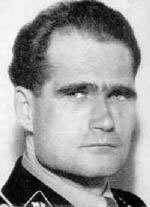
AP is reporting that, with the permission of the family, cemetery workers quietly exhumed the body of Rudolf Hess, once the #3 man in the Nazi hierarchy, cremated it, and scattered the ashes over an undisclosed lake, as the burial site had become a shrine to neo-Nazis.

Hess had apparently become mentally ill while in Hitler's inner circle and, delusional, set off to negotiate a peace between Germany and Great Britain. He was immediately arrested and spent time in the historic Tower of London before his trial at Nuremberg. At Nuremberg, he was found guilty of conspiracy to wage war (but not of war crimes or crimes against humanity) and was given a life sentence. He eventually died, at the age of 93, in Spandau Prison in Berlin (which itself was subsequently demolished so as not to become a neo-Nazi shrine).

How could such a horror come out of a cultured people like the Germans, we may never know. But, we will never forget.

BREAKING! Muslim Terrorists Car Bomb Oslo Norway Prime Minister’s Office

By Jim Lagnese, Ran and Eric Dondero

DEVELOPING! At least one car bomb rocked Oslo, Norway, Friday July 22, 2011. One person is confirmed murdered. At least eight people have been hurt. The attack appears to have been directed at Norwegian parliamentary buildings and the Prime Minister's office. There is an unconfirmed report of a second explosion.

Stacy McCain at The Other McCain has more.

Video at YouTube:

More here at You Tube.

More here at You Tube.

MASSACRE AT KIDS’ CAMP: More than 30 dead as terrorist opens fire at Norwegian summer camp

UPDATE: Via UK Daily Mail Online

Norway came under a double attack today in what is being described as the worst atrocity it has faced since the Second World War.

Terrorists are believed to be responsible for a massive car blast at a government office block in the capital Oslo and a man disguised as a police officer opened fire on an island hosting a youth summer camp.

. . .

More than 30 were killed - seven in Oslo and between 25 to 30 on Utoya Island, 50 miles north of the capital - where the prime minister Jens Stoltenberg had been due to attend the youth Labour Party event.

Coordinated multiple attack - much like Mumbai.

Photo credit: Allover Norway / Rex Features

Polling firm finds God has strong job approval ratings

From Cliff Thies:

A Democratic polling firm (PPP) has found that God has strong job approval ratings. "It," as they like to refer to God so as to be inoffensive, gets a relatively high approval rating of 56 percent in the area of animals, and a relatively low rating - for God - of only 50 percent in the area of natural disasters. I don't see any hypothetical match-ups in their survey, such as God versus Generic Human, but I'm thinking with these high approval numbers the "it" God doesn't have to worry too much about getting re-elected.

Awesome! Marco Rubio

From Eric Dondero:

Yesterday, on the Senate floor. Blasting Democrats non-proposals on the national debt.

In plain English... The debt limit is a problem. But it is the least of your problems. The bigger problem is the debt. And if all you do is pass a limit on the debt, and if you don't come with a serious, substantial plan to deal with the debt, you're in big trouble.

Finally, a tax Democrats want to cut

Tax-funded Parks should Honor all Vets - Yanks and Johnny Rebs

From Cliff Thies:

From Loop21.com:

Dixie ain’t dead! 150 years after the first shot rang out in the Civil War, Alabamans are still paying a little-known tax that was designed to take care of the veterans who fought in it.

The property tax once funded the Alabama Confederate Soldiers' Home, which closed down 72 years ago. Now, the tax is used to pay for Confederate Memorial Park, which sits on the same land as the old Soldiers’ home.

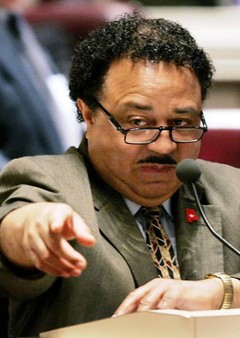
Tax experts have noted that they don’t know of any other taxes like this that are connected to the Civil War. One black legislator, State Rep. Alvin Holmes, has vowed to try and get rid of the tax.

We in the libertarian wing of the GOP (Republican Liberty Caucus - RLC.org) honor all those who fought honorably in war, both the Johnny Rebs and the Billie Yanks, and all those in our armies and in the armies of nations with which we were once at war, but it is time to bury the hatchet and smoke the peace pipe. We should not have a Confederate Memorial separate from any other memorial, and if the parks of a state are generally supported by contributions and trust funds, then this one should be as well. One more thing, our flag is the American flag.

Photo credit - AL.com

Muslim, AntiWar activist in US Army charged with Child Porn

From Eric Dondero:

From MSNBC "Army: Muslim soldier opposed to war is AWOL" July 21:

The Army says a Muslim soldier from Fort Campbell who won conscientious objector status but then was charged with possessing child pornography has gone AWOL.

Spokesman Rick Rzepka said Wednesday that Pfc. Naser Abdo has been absent without leave since the July 4th weekend.

Abdo, a 21-year-old infantry soldier, had applied for conscientious objector status last year saying his Muslim beliefs prohibited his service in any war.

On his refusal to be deployed to Afghanistan:

“As a Muslim, we stand against injustice, we stand against discrimination, and I feel it's my duty as an individual to do this.”

Abdo has been charged with possession of 34 images of child pornography on his personal computer.

Editor's comment - Let's see now? Places he might have fled too to avoid capture. Yemen? Somalia? Chechnya? Dearborn, Michigan? Berkely, California?

GREECE: When is default, not really a default?

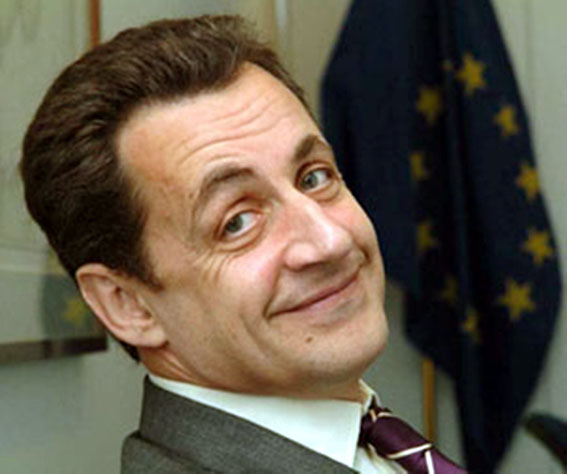
"If the rating agencies are using the word you just used (default), it is not part of my vocabulary. Greece will pay its debt," -- Nicolas Sarkozy

by Eric Dondero

Felix Salmon at Reuters is reporting this morning:

The latest Greek bailout is done, and it involves Greece going into “selective default,” which is, yes, a kind of default.

This is a bail-in as well as a bail-out: while Greece is getting the €109 billion it needs to cover its fiscal deficit, both the official sector and the private sector are going to take losses on their loans to the country.

Cranmer blog agrees:

When you examine the ‘aid’ package agreed last night to bail out bankrupt Greece (again) and keep the euro afloat, it amounts to a default. When you borrow cash on agreed terms and repayments cease because your bank account is empty, you’re not suffering a temporary cash-flow problem: you’re bankrupt. So if the lender should be stupid enough to lend you even more cash simply to enable you to go on paying him, it doesn’t take a dumbed-down GCSE in maths to work out that this money merry-go-round is a fiscal illusion. But this has been hailed as another great triumph of EU solidarity, and so Presidents Barosso, Van Rompuy and Papandreou drank champagne into the early hours of the morning, in awe of their economic flair and wonder at their political skill.

But while they call it ‘aid’, ‘restructuring’ and a ‘comprehensive agreement’, it amounts to default.

How will world markets greet the news in the coming hours and days is anyone's guess? Though, it may take a while to properly interpret the "euro-speak" for financial analysts to get a true grip on the situation.

Photo credit - UpdatesForo