
Researchers demonstrate switching of a perpendicularly magnetized cobalt dot driven by in-plane current injection at room temperature.
Samsung Adopts UniFire Metrology Tool for Advanced Wafer Scale Packaging Development
Nanometrics Incorporated, a leading supplier of advanced metrology systems, today announced that Samsung Electronics Co. Ltd. has accepted its UniFire 7900 metrology system for process control of advanced wafer scale packaging.
The future of seawater desalination: Energy, technology, and the environment
A new Yale University study argues that seawater desalination should play an important role in helping combat worldwide fresh water shortages once conservation, reuse and other methods have been exhausted. The study also provides insights into how desalination technology can be made more affordable and energy efficient.
National Instruments Donates Design Tools to MIT Department of Mechanical Engineering
National Instruments today announced that it is donating design tools to the Massachusetts Institute of Technology (MIT) to help expand the use of NI software and hardware in the MIT Department of Mechanical Engineering via 10 mechatronics, robotics, manufacturing, control and design courses over the next five years.
Engineers solve longstanding problem in photonic chip technology
Findings help pave way for next generation of computer chips.
Fluidigm Collaborates with BD Biosciences to Combine Cell Biology and Molecular Genetics for Single-Cell Research
Fluidigm Corporation announced today a collaboration with BD Biosciences, a segment of BD (Becton, Dickinson and Company), to co-host a public seminar series on the isolation and analysis of single cells.
Designing nanodiamond circuits for extreme environments
There is a new way to design computer chips and electronic circuitry for extreme environments: make them out of diamond.
Polymer’s hunt for nicotine
Newly synthesized polymer, fitted with molecular pincers of carefully tailored structure, effectively captures nicotine molecules and its analogues. The polymer can be used for fabrication of sensitive and selective chemical sensors to determine nicotine in solutions, and in the near future also in gases. Moreover, the polymer is suitable for slow, controlled release of nicotine, e.g., for therapeutic purposes.
Growth of graphene from food, insects and waste (w/video)
Rice University lab shows troop how any carbon source can become valuable graphene.
Thai scientists awarded 2011 Scientist Awards
Dr. Kajornsak Faungnawakij, Head of Nanomaterials for Energy and Catalysis Lab at NANOTEC is one of 4 researchers chosen by the Foundation for the Promotion of Science and Technology under the Patronage of His Majesty the King to receive the 2011 Young Scientist Award.
Personal nanoparticle respiratory deposition sampler streamlines exposure assessment
Until more information becomes available on the mechanisms underlying nanomaterial toxicity, it is uncertain what measurement technique should be used to monitor exposures in the workplace. Many of the sampling techniques that are available for measuring airborne nano aerosols vary in complexity but can provide useful information for evaluating occupational exposures with respect to particle size, mass, surface area, number concentration, and composition. Unfortunately, relatively few of these techniques are readily applicable to routine exposure monitoring. That's why researchers have now developed a unique new sampler design that collects nanoparticles separately from larger particles in a way that mimics the respiratory system.
Autopsy rates declining
There are a number of reasons for this, namely, ubiqutous pre-mortem imaging with improved techniques and detection of disease pre-mortem, lack of payment/reimbursement, more out of hosptial deaths and decreased number of physicians trying to obtain consent. I have seen the autopsy rate at some hospitals in my career as low as 8%. What is not clear to me is why/how JCAHO does not cite for these kinds of findings and why more is not done in clinical medicine to obtain consent for what is still widely considered the "gold standard" in medicine for clinicopathologic correlation and assessing effects of therapy and natural history of disease.
It is said the Virchow himself performed over 50,000 autopsies. I can't imagine doing that many, but these numbers are paltry.
The Wall Street Journal (8/4, Hobson) "Health Blog" reported that CDC statistics show that in 2007, autopsies were performed on 8.5% of deaths, compared with 19.3% of deaths in 1972. CDC scientist Donna Hoyert says this may be due to medical professionals believing that autopsies are unnecessary due to modern technology. However, doctors point out that autopsies can contradict imaging findings, and alert families to genetic conditions. The report also notes that the Joint Commission has removed a rule that hospitals must perform autopsies on 20% to 25% of deaths.
HealthDay (8/4, Preidt) reported that "in 1972, deaths due to disease accounted for 79 percent of autopsies, while deaths due to external causes such as injury or murder accounted for 19 percent. By 2007, the respective percentages were 46 percent and 50 percent, the investigators found. External causes of death -- including murder, accidental injury, suicide or undetermined cause -- accounted for nine of the 10 most frequently autopsied causes of death in 2007." The report also showed that "while the number of deaths among older people increased from 1972 to 2007, autopsied deaths were increasingly concentrated in the one to 34 and 35 to 64 age groups." WebMD (8/4, Hendrick) also covered the study.
http://blogs.wsj.com/health/2011/08/04/the-incredible-shrinking-autopsy/?mod=WSJBlog&mod=WSJ_health


PathXL BioBank Launched at SMi’s Biobanking Conference
Last month i-Path attended SMi’s Biobanking Conference in London and launched a new product, PathXL BioBank. During the two-day conference a number of thought leaders from around the world made presentations highlighting the exciting work of the biobanking industry.
A biobank is a facility to store and archive biological samples primarily for use in research. With each biobank taking their own approach to set up and operations, it is a dynamic and fast paced environment. Path XL BioBank allows users to store, track and check in / out tissue samples using a sophisticated web-based interface. Customers have the flexibility to use their own biobanking software whilst incorporating the PathXL image viewer or to use PathXL BioBank as their database and management software with virtual images integrated.
“Moving into the biobanking sector is an exciting step for i-Path, and we were delighted to see PathXL BioBank so well received at the Biobanking Conference.”
Phil Murray, i-Path Executive VP & Sales Director
Key benefits
• Immediate access to virtual slides, eliminating the inefficiency of physically retrieving slide
• Slide scanning conducted by i-Path experts who will guide you through the scanning options and QC all scans
• All virtual slides are hosted on a secure, high performance image server environment providing a fast reliable service
• Securely log in anytime from anywhere in the world to manage your tissue research project
• Share digital slides with collaborators anywhere in the world
“We integrated PathXL with our NI Biobank database to enable researchers to view our catalogue of samples online, from anywhere in the world. When a sample is added to the NI Biobank it immediately appears in our online catalogue. Researchers will then be able to select and order samples from the NI Biobank in full confidence that all the samples they receive will be useable in their research.”
Dr. Jacqueline James, Northern Ireland Biobank Scientific Lead


Earn CME at Pathology Visions – NEW this year
New this year -- CME will be offered to physicians attending the meeting. I know from personal involvement this was a team effort with a couple of pathologists involved with the Digital Pathology Association (DPA) and the DPA staff.
My sense from years past is that more pathologists would attend if CME were offered. Now it is.
Earn up to 13 hours at this meeting. The talks, combined with the exhibits and networking opportunities should place Pathology Visions high on your list of the many Fall meetings to attend.
I use to say that the Visions conference was a greet meeting in a great venue but now add on the CME and will only add to the meeting program and offerings.
My personal thanks to DPA staff -- in particular Lindsey M. and Michael W. for making this a reality.
Please see attached announcement.


Webinar from Aperio — August 23 — Select Topics in Image Analysis Series
Select Topics in Image Analysis:
Algorithm Tuning for IHC Analysis and An Introduction to Genie
August 23, 2011
8:00 am Pacific Time, 11:00 am Eastern Time
(4:00 pm London GMT / 10:00 am Mexico City Standard Time)
and
4:00 pm Pacific Time, 7:00 pm Eastern Time
(8:00 am Japan Time / 9:00 am Australia EST August 24)
Presenter:
Marc Friedman, Ph.D, Imaging Scientist and Digital Pathology Consultant, Aperio
In this 60-minute complimentary webinar, Dr. Friedman will present an overview of algorithm tuning for IHC probes, as well as an introduction to Genie and how it is used as a pre-processor for other image analysis algorithms.
To register for the 8 am PDT session, click here.
https://aperio.webex.com/aperio/onstage/g.php?d=768917066&t=a
To register for the 4 pm PDT session, click here.
https://aperio.webex.com/aperio/onstage/g.php?d=765740143&t=a
You may also register by visiting the Aperio Events page.
You will receive a confirmation email upon registration with a web link that will lead you to the online event. Simply visit the link at the assigned time. The session is secure and easy to access. If you have any questions or would like additional information, please contact the Aperio Events Team at events@aperio.comor 760.539.1192.


Curious, Anatomical, Obscure or Delicious Korea: Seeking Suggestions

Dear Morbid Anatomy readers:
In just a few days, I am off to live for one month (!!!) in Seoul, South Korea as part of the fantastic Apex Art Outbound Residency Program. For those of you who are interested, I will be documenting my Korean adventures on a special blog for Apex Art; you can check that out by clicking here. I arrive in Seoul on September 16th, so blog entries should begin soon after.
But I have a more pressing question for you, dear readers: do any of you out there have any suggestions for suggested Korean sights, sounds, and tastes? Of particular interest, of course, are museums and collections--especially old natural history or anatomical/medical--but any suggestions, from foods to markets to restaurants to shops to national parks to amusement parks to folk art to fine art to curiosities of any kind, would be very much appreciated!
Suggestions will be gratefully received at morbidanatomy [at] gmail.com. Thank you very very much in advance!
Image: House Swallow from the Ehwa Womans University Natural History Museum, Korea.

New Automata Book Now Available: "Musical Machines and Living Dolls" The Guinness Collection at The Morris Museum




The Murtogh D. Guinness Collection at the Morris Museum is an astounding collection of automata (mechanical toys popular in the 18th and 19th century) and mechanical musical instruments that can be visited in--of all surprising places--Morristown, New Jersey. The collection is mind-blowingly vast; it is, in fact, the largest such public collection in the U. S. and one of the largest in the world, with around 700 automata and mechanical musical instruments and over 5,000 programmed media, nearly all of which are were produced in the 19th Century.
The highlight of the Morris Collection--in my opinion, at least!--is its extensive lot of fine 19th Century European automatons. Most of the pieces are in excellent repair and still able to go through their uncanny motions, and the scale, quality, and range of the collection are simply flabbergasting, the kind of thing you might consider yourself lucky to find in France (where many automata producers were based) but certainly not here on the East Coast of the United States.
The Morris Museum has just published a new book devoted to this collection. Entitled Musical Machines and Living Dolls: Mechanical Musical Instruments and Automata from the Murtogh D. Guinness Collection, this book is a lovely little gem all its own; it is hardcover, full color throughout, beautifully printed, and well-researched. It also includes a well-researched overview of the history of automata from ancient times to the present and a biography of Murtogh D. Guinness, the heir to the Guinness beer fortune who amassed this collection and ultimately bequeathed it to the Morris Museum.
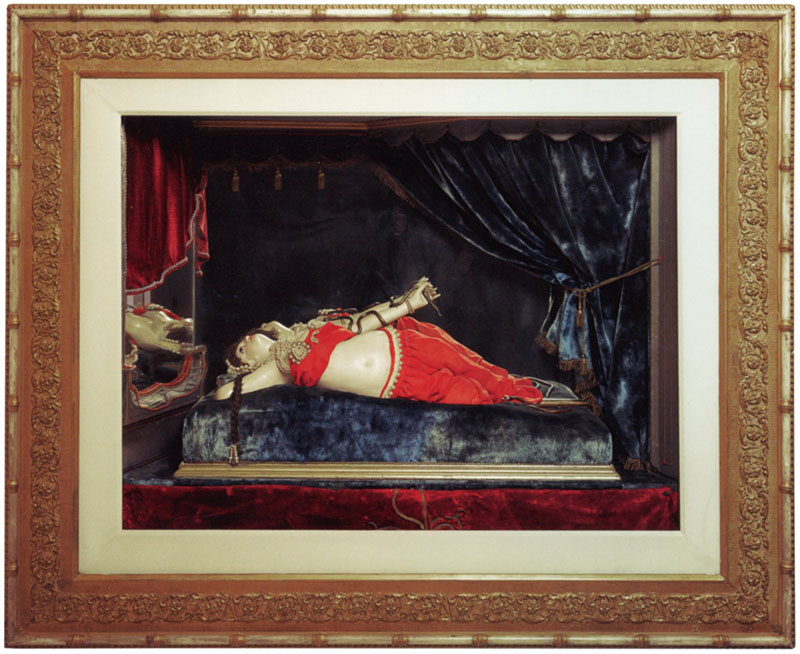
The book also--luckily for me!--features extensive text and scores of images (all images above are drawn from the book!) devoted to many of my favorite pieces in the collection, such as a number of 18th Century-style monkey dandies engaging in human activities (images 2, 3 & 4), 3 cats playing cards (image 5), a lute-playing Mephistopholes (image 7), an asp-suiciding Cleopatra (!!!) (image 6), performing tightrope walkers with orchestral accompaniment (image 9), a hookah-smoking Turk, singing birds, strutting peacocks, performing magicians, street vendors peddling their wares, and much, much more.
To give you a taste of the style and level of research to be found in this book, I include here the entire entry for the fascinating piece you see 6 images down, a late 19th century automaton entitled "The Suicide of Cleopatra":
The Suicide of Cleopatra
About 1880-90
Phalibois, Paris, France
37" x 45 1/2" w x 12 1/2" d
2003.18.236a-cSurrounded by a massive gilt frame, this animated scene would have dominated most parlors of the time. It depicts a highly sensual version of Queen Cleopatra of Egypt's supposed suicide in 30 B.C. When activated, her breast heaves, her eyelids blink--and an asp strikes.
Although made in the late 1800s, the scene reflects a long-standing Western fascination with Egypt, which had been renewed by Napoleon Bonaparte's occupation of the country at the turn of the nineteenth century. Along with tens of thousands of troops, Bonaparte brought with him scientists and scholars who recorded all that they saw. The Description de l'Egypte, which emerged from their research, became a source for artists, designers, architects, and others, and the ensuing widespread fascination spread from everything from furniture to parlor entertainment.
Morbid Anatomy is delighted to be assisting The Morris Museum in the distribution of this lovely and informative book, which contains images and information to be found nowhere else. The cost of the book is $40; shipping and handling within the United States is $5 and shipping and handling for international orders is $15. The book is 10 1/2" X 8 1/2" and runs to about 140 pages. As I am unable to get these books listed on Amazon.com, those interested in ordering a copy can contact me directly at morbidanatomy [at] gmail.com.
You can find out more about the Morris Museum--including how to visit the collection in person!--by clicking here. Also, stay tuned for a soon-to-be-announced second field trip to visit the collection. If interested in receiving an alert, subscribe to the Morbid Anatomy mailing list by adding your email address on the upper left-hand side of this blog under the header "Mailing List of Events, Happenings, and The Like."
All images are drawn from the book and picture, from top to bottom:
- Book Cover
- Barrel Reed Organ with Monkey Automata, about 1865
- Monkey Violinist, about 1855
- Monkey Dandy, about 1880
- Cats Playing Cards, about 1900
- Suicide of Cleopatra, about 1880-1890
- Mephistopholes (Model No. 1), about 1886-1900
- Barrel Organ with Animated Figures, about 1820-1840 (detail)
- Tightrope Dancer and Musicians, about 1875-1885 (detail)

The Story of Henry Wellcome on the BBC
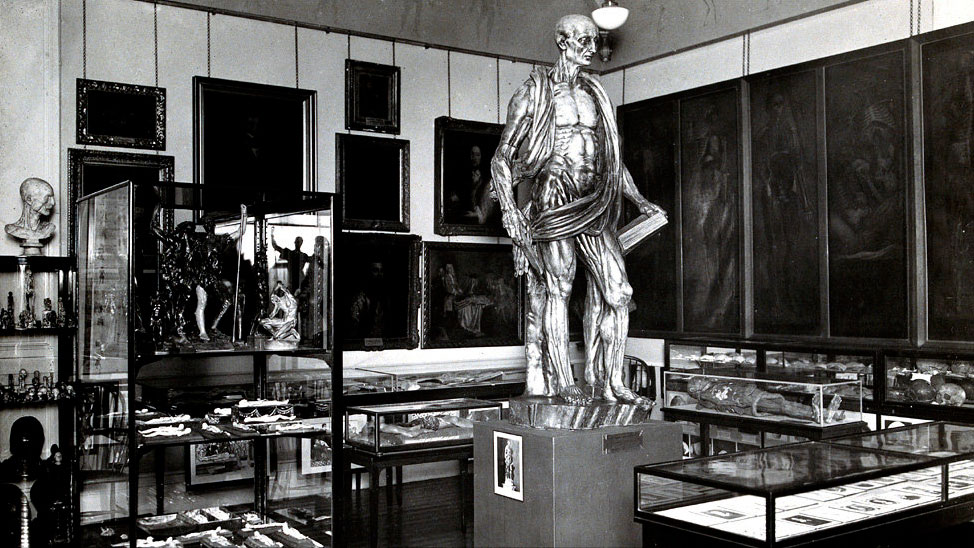

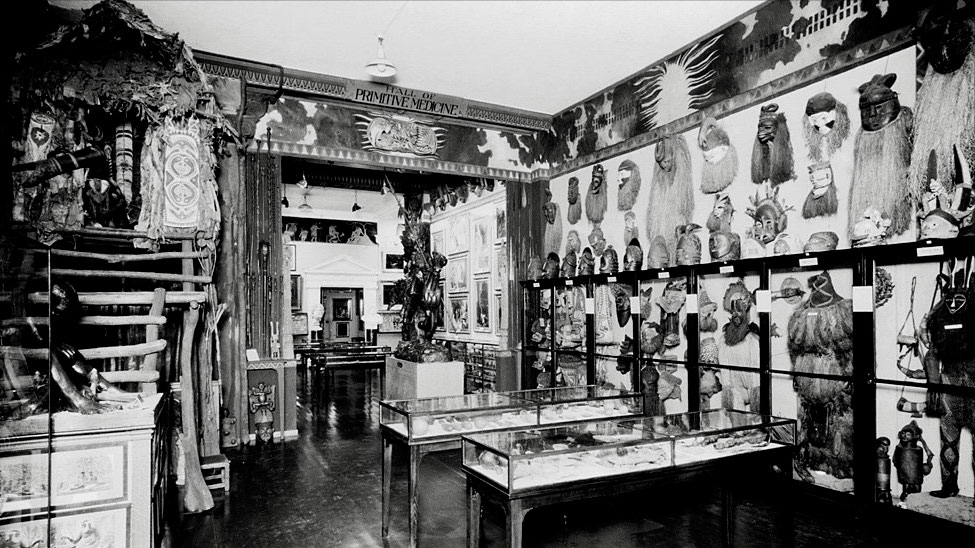
The BBC has just posted a lovely little narrated slide show about Henry Wellcome, founder of the Wellcome Trust and Library and compiler of one of the most extraordinary medical collections in the world. The piece is narrated by my friend Ross MacFarlane of the Wellcome Library, who is an unofficial specialist on Mr. Wellcome and his fabulous collection; you can check it out (highly recommended!) by clicking here.
All images taken from the slide show, and feature Wellcome's collection.

Trend: Apple Repeating Tablet Dominance In the Ultraportable Laptop Space [Blip]


Juno Launched
Click here to view the embedded video.
The Juno spacecraft is on its way to Jupiter after being launched on Friday at 11:25 am ET.
Funny thing about space, while going from point A to point B in a straight line maybe the shortest route this does not mean it is the most fuel efficient one. Jupiter at the time of launch is 445 million miles / 716 million km away, however Juno will make what amounts to a couple of loops that will take it on a 1.74 BILLION mile/2.8 BILLION km journey. See NASA’s cartoon of the path.
So in about two years (October 9, 2013) the spacecraft will actually fly past Earth again and at one point will only be 311 miles away. This is done in order to gain a gravity assist in order to boost the spacecraft’s speed by about 16,300 miles per hour. There will be another engine burn by the spacecraft to fine tune the trajectory after Juno is past Earth and all of these adjustments should put Juno into orbit on July 4, 2016.
The “DSM” you see on the graphic linked above is a Deep Space Maneuver, there are two and as far as I know one is to use the high gain antenna and checking and calibrating the science instruments.
And just for fun, when Juno gets to Jupiter we won’t know it for 48 minutes and 19 seconds as that is the time for the radio signals to traverse the one way distance from Juno to us.