Former Sun-like Star Is Now a Diamond Planet | 80beats

spacing is importantArtist’s concept of the pulsar and its planet. The system could fit into our Sun, represented by the yellow surface.

What’s the News: An international team of astronomers has found an exotic planet possibly made of diamond, located about 4,000 light-years away from Earth. The researchers believe that the unusual planet was once a sun-like star, transformed into its current state by its hungry stellar companion, a millisecond pulsar.

How the Heck:

When a massive star dies in a supernova, it sometimes collapses into a pulsar, a highly compacted stellar corpse that emits periodic beams of electromagnetic radiation from its poles. If a pulsar is part of a binary system, it can feed on its nearby stellar friend and speed up its spin to hundreds of rotations per second, effectively becoming a millisecond pulsar. (About 30% of millisecond pulsars found are solitary—astronomers don’t know how they formed.)
Astronomers detected the pulsar, known as PSR J1719-1438, during a large ...


How Scientists Are Predicting the Path of Hurricane Irene–And Why We’re Better At It Than Ever Before | 80beats

The Eastern Seaboard is warily watching the progress of Hurricane Irene, wondering what course the storm will take and just how ferocious it will be. Predicting the path of a hurricane still involves some guesswork—but thanks to rapidly improving computer models and data-gathering abilities, Tekla Perry reports in IEEE Spectrum, scientists are able to make more accurate forecasts farther in advance than they were even five or ten years ago. In fact, the predicted track of a hurricane over the next 48 hours today is as accurate as a prediction for the next 24 hours was 10 years ago—a day that can make a big difference for people deciding whether to evacuate and how to prepare before the storm. Boosts in computing power mean scientists can run more, faster, and more detailed simulations of the storm, and technologies like Dopper radar provide detailed data on wind speed, air pressure, and temperature as storms progress.

Irene has been a relatively easy storm to predict so far, Frank D. Marks Jr., a NOAA hurricane researcher, told Spectrum, but that doesn’t mean scientists are able to tell residents of any particular city exactly ...


Cassini visits a foamy moon | Bad Astronomy

I’ve said it before: Saturn’s moon Hyperion is seriously freaky. New images from the Cassini spacecraft flyby of the tiny moon don’t change my mind one bit:

[Click to enchronosenate.]

What a weird place! Hyperion is a lumpy chunk of ice only about 270 km (170 miles) across on average, but yesterday (August 25, 2011) Cassini passed about 25,000 km away from it, so it got a lot of high-resolution shots.

As you can see, it’s saturated with craters. But they look funny! The overwhelming impression I get is that Hyperion is made of resilient foam, like a packing peanut. I’m also fascinated by the ginormous crater that dominates this face of the moon. If Hyperion were made of stiff rock, an impact that size would’ve shattered it like a bullet hitting a pebble. But if the composition of the moon is able to compress and compact — like foam, or something with lots of pockets of empty space inside it — the impact would do pretty much what we see here. Lots of asteroids appear to be "rubble piles" — chunks of material held together by their own ...


Bad News for Roosters: If You Aren’t King of the Henhouse, Your Ejaculate Will Be Ejected | Discoblog

rooster
WHAT? Noooooooo!

If you haven’t heard about the corkscrew kookiness that is duck genitalia by now, you need to check that stuff out ASAP.

Ducks’ twisting vaginas and telescoping penises are well-known part of an evolutionary arms race between the sexes that’s been going on for millennia, with each side trying to exert control over which males’ sperm fertilize the female’s eggs—a battle that, especially in birds, is fierce, occasionally violent, and weird as all-get-out. The most recently discovered example of what biologists deem “sexual conflict,” a little behavior hens have developed called sperm ejection, upholds that fine tradition.

Hens, like many female birds, don’t always have a lot of control over who mates with them. Roosters tend to resort to “sexual coercion,” aka rape, and so a female might have any number of sexual partners that she didn’t get to choose. What’s a hen to do? Well, according to a new study in The American Naturalist, evolve a method for getting rid of sperm from males she didn’t particularly like, thus making sure her offspring are of the best quality.

Scientists had already noticed that hens tended to squirt out semen after some acts ...


Sea level rise has slowed… temporarily | Bad Astronomy

Over the past 10 years at least, sea levels have been rising relatively steadily. This is mostly due to melting glaciers and ice sheets, and is a natural — if detrimental — consequence of global warming. The rate of ocean level rise has been a little over 3 millimeters per year (about 1/8th of an inch per year)… until last year. The rate of increase suddenly reversed itself in 2010, and the sea levels actually dropped a bit, by about 6 mm. What happened?

La Niña happened. Equatorial ocean temperatures fluctuate on a cycle; when they are warmer it’s called an El Niño, and when they’re cooler it’s La Niña. As you might expect, this affects how water evaporates off the ocean surface, and therefore rainfall across the world as well. Right now we’re in a La Niña, characterized by drought conditions in the southern US (like in Texas), and heavier than usual rainfall in Australia, northern South America, and other locations:

That map is from the NASA/German Aerospace Center’s Gravity Recovery and Climate Experiment (GRACE) satellites, which map where water is on the Earth and how ...


Time Is Out of Joint | Cosmic Variance

Greetings from Norway, where we’re about to embark on what is surely the most logistically elaborate conference I’ve ever attended. Setting Time Aright starts here in Norway, where we hop on a boat and cross the North Sea to Copenhagen. The get-together is sponsored by the Foundational Questions Institute, although it came together in an unusual way; I was part of a group that was organizing a conference, and we applied to FQXi for funding, at which point they mentioned they were planning almost exactly the same conference at the same time. So we joined forces, and here we are. Unity ’11!

The topic, if you haven’t guessed, is time. That’s a big subject, one that can hardly be done justice by sprawling books with hundreds of (admittedly quite charming) footnotes. You can see why the conference has to spread over two countries. We’re trying an experiment in interdisciplinarity: while the conference is a serious event meant for researchers, we have a wide variety of specialties represented, including biologists, computer scientists, philosophers, and neuroscientists, as well as the inevitable physicists and cosmologists. (There is also a public event, for those of you who find yourselves in Copenhagen next week.) I can’t wait to hear some of these talks, it should be a blast.

My job is to open the conference with an introductory talk that hits on some of the big questions. Here are the slides, at least as they are right now; last-minute editing is always a possibility. I think I put enough in there to provoke almost everyone at the conference one way or another.


Star eaten by a black hole: still blasting away | Bad Astronomy

In late March of 2011, an extraordinary event occurred: a black hole in a distant galaxy tore apart and ate a whole star (I wrote about this twice at the time; here’s the original post, and a followup article including a Hubble image of the event).

Now, there’s more info: the black hole, lying at the center of a galaxy nearly 4 billion light years away, has about 8 million times the mass of the Sun. When it tore the star apart, about half the mass of the star swirled around the black hole, forming twin beams of matter and energy that blasted outward at a large fraction of the speed of light. The folks at NASA’s Goddard Space Flight Center made a great animation to show this:

The star was ripped apart by tides. The thing about black holes is, they’re small: this one was probably about 15 million kilometers across. A typical star is about a million km across (the Sun is 1.4 million kilometers in diameter, for comparison). This means the star could get really close to the black hole, and that’s why it was doomed. The force of ...


Institute of Medicine Slams Anti-Vaxxers, Again | The Intersection

A new report is out from the Institute of Medicine, a branch of the National Academy of Sciences, on vaccine safety. In the voluminous report, the committee of course does not find that every vaccine is perfectly safe for all time–there are certainly some risks. But it once again rejects the claim that the MMR (measles, mumps, rubella) vaccine causes autism–the evidence, the committee said, was more than adequate to reject this causal assertion.

You can read the report for free here. The New York Times report, titled “Vaccine Cleared Again as Autism Culprit,” is here.

Please note: Anti-vaxxers will not change their minds based on this major scientific consensus report. They will argue back and challenge its conclusions.

So it goes.


The less intelligent more likely to accept astrology as scientific | Gene Expression

Over at Culture of Science Sheril Kirshenbaum posts a figure from the NSF displaying what proportion of those without high school educations and those with college educations accept the scientific status of astrology. It’s pretty clear to me that this is the ASTROSCI variable from the General Social Survey. It asks:

Would you say that astrology is very scientific, sort of scientific, or not at all scientific?

It’s also nice that this question was only asked in the latter half of the 2000s. So it’s timely in terms of demographic breakdowns. Speaking of which, here are a whole host of classes and their attitudes toward astrology’s scientific status:

Very scientific
Sort of scientific
Not at all scientific

Male
5
26
69

Female
5
30
65

Age 18-34
8
34
58

Age 35-64
4
26
70

Age 65-
4
24
72

White
4
25
72

Black
11
38
51

Hispanic
8
40
51

Extreme liberal
7
31
62

Liberal
5
30
65

Slightly iberal
4
28
68

Moderate
5
34
61

Slightly conservative
5
25
70

Conservative
6
19
75

Extreme conservative
6
18
76

No high school diploma
9
41
50

High school diploma
7
32
62

Junior college
4
28
68

Bachelor
2
17
80

Graduate degree
1
13
85

Atheist and agnostic
6
23
71

Higher power
4
28
68

Believes in god sometimes
7
24
70

Believe in god, but with doubts
4
27
69

Know god exists
6
30
65

Protestant
5
27
68

Catholic
5
31
64

Jewish
6
16
78

No religion
7
28
65

Bible word of god
6
31
64

Bible inspired word of god
5
28
67

Bible book of fables
6
25
70

Human beings developed from animals
6
28
66

Human beings don’t develop from animals
5
26
69

But what about intelligence? To look at that I used the WORDSUM variable, which is a 10-question vocabulary test which has a 0.70 correlation with IQ. Below are the attitudes toward astrology by WORDSUM score (0 = 0 ...

M101 supernova update | Bad Astronomy

Images are starting to come in already of the new supernova in the nearby spiral galaxy M 101. Here’s a color image of the exploding star from the Faulkes North telescope on — wait for it — Haleakala:

[Click to embiggen.]

That’s color and very pretty, but I think this one is more impressive, showing the supernova gaining in brightness by a factor of six in a single day:

[Again, click to endeflagrate.]

That’s taken by the Palomar 48 inch telescope in California. The images show M 101 on August 22, 23, and 24. You can see (or not see in this case) how it wasn’t there on the first night, shows up on the second, and is now much brighter. It will get brighter yet, and may get into range of visibility using good binoculars! Certainly even a small telescope will be able to see this supernova once it reaches maximum brightness, which won’t happen for at least a week, if not more.

Right now, the Moon is a waning crescent, so it won’t be a problem for 10 ...


The divisibility of human ancestry | Gene Expression

The class human or H. sapiens refers to a set of individuals. On the grand scale it’s really not all that clear and distinct. When do “archaic” humans become “modern” humans? Taking into account human variation, what is a “human universal”? A set of organisms are given a name which denotes the reality that they may share common ancestry, and interact behaviorally, and are potential mates. But many of these phenomenon are fuzzy on the margins. Many of the same issues which emerge in the “species concept” debates are rather general up and down the scales of natural complexity. A similar problem crops up when we conflate the history of genes with the history of populations. Such a conflation has value and utility to a first approximation. The story of mitochondrial Eve was actually the history of one particular locus, the mitochondrial genome. But it did tell us quite a bit about the history of the human species, even if in hindsight it looks as if some scientists overinterpreted those findings. One of the major issues I’ve noticed over the past year, with the heightened likelihood of ...

Deleterious drag as a side effect of adaptation | Gene Expression

The Pith: Evolution is a sloppy artist. Upon the focal zone of creative energy adaptation can sculpt with precision, but on the margins of the genetic landscape frightening phenomena may erupt due to inattention. In other words, there are often downsides to adaptation.

A few weeks ago I reviewed a paper which suggests that Crohn’s disease may be a side effect of a selective sweep. The sweep itself was possibly driven by adaptation to nutrient deficiencies incurred by European farmers switching to a grain based diet. The reason for this is a contingent genomic reality: the positively selected genetic variant was flanked by a Crohn’s disease risk allele. The increment of fitness gain of the former happens to have been greater than the decrement entailed by the latter, resulting in the simultaneous increase in the frequency of both the fit and unfit variants. You can’t always have one without the other.

But that’s just focusing on one gene, though the authors did indicate that this may be a genome-wide feature. A new paper in PLoS Genetics argues that that is the case, at least to some extent. Evidence for Hitchhiking of Deleterious Mutations within the Human Genome:

Deleterious mutations reduce ...

NCBI ROFL: This little piggy went “Wee! Wee! Wee!” all while conducting electricity. | Discoblog

The conductivity of neonatal piglet skulls.

“We report the first measured values of conductivities for neonatal mammalian skull samples. We measured the average radial (normal to the skull surface) conductivity of fresh neonatal piglet skull samples at 1 kHz and found it to be around 30 mS m(-1) at ambient room temperatures of about 23 °C. Measurements were made on samples of either frontal or parietal cranial bone, using a saline-filled cell technique. The conductivity value we observed was approximately twice the values reported for adult skulls (Oostendorp et al 2000 IEEE Trans. Biomed. Eng. 47 1487-92) using a similar technique, but at a frequency of around 5 Hz. Further, we found that the conductivity of skull fragments increased linearly with thickness. We found evidence that this was related to differences in composition between the frontal and parietal bone samples tested, which we believe is because frontal bones contained a larger fraction of higher conductivity cancellous bone material.”

Photo: Will’s Skull Page

Related content:
Discoblog: NCBI ROFL: Pigs learn what a mirror image represents and use it to obtain information.
Discoblog:

Bad Universe to air on Discovery Latin America Friday! | Bad Astronomy

Starting Friday, my TV show "Bad Universe" will air on Discovery Channel Latinoamérica, which I think covers Central and South America. Check your local listings. The name has been translated to "Mitos Del Universo", which of course means "universal mites"; a clear reference to the second episode "Alien Attack"… which itself was translated to "¡Ataque extraterrestre!" But then, my Spanish isn’t very good.

I hope they got Antonio Banderas to dub my voice, though. That would be muy bonito.

Tip o’ the asteroide to eltiocesar.


AstroAlert: Type Ia supernova in M101! | Bad Astronomy

Attention all astronomers! There is a new Type Ia supernova that has been seen in the nearby spiral galaxy M101, and it’s very young — currently only about a day old! This is very exciting news; getting as much data on this event as possible is critical.

Most likely professional astronomers are already aware of the supernova, since observations have already been taken by Swift (no X-rays have yet been seen, but it’s early yet) and Hubble observations have been scheduled. Still, I would urge amateur astronomers to take careful observations of the galaxy.

[As an aside, I'll note that this supernova won't get bright enough to see naked eye and poses no threat at all to us here on Earth. It may be visible in decent-sized telescopes, though, and as you'll see this may be a very important event in the annals of astronomy.]

[UPDATE: Joseph Brimacombe took a very nice shot of the new supernova using a 20" telescope in New Mexico. Thanks to Surak who left a comment below about this.]

So why is this a big ...


A Ten-Year Check-Up Shows Gene Therapy Patients are Alive and Well | 80beats

genes

What’s the News: Medicine in the age of genes overflows with daring new techniques and treatments, from personalized chemotherapy to prenatal genetic testing, each heralded as a game-changer. But rarely do we get an assessment of a treatment’s long-term good, which is why recent papers following up on one of the most controversial genetic treatments, gene therapy, are making waves: though one patient developed leukemia from the treatment, 13 of 16 kids treated with gene therapy for a severe immune disorder at least 9 years ago have been cured, adding to the sense that the field is on its way to recovery from early setbacks.

The Backstory:

Gene therapy involves correcting errors in cells’ genetic code. In the case of some of these children, who had no functioning immune system due to X-linked SCID—severe combined immunodeficiency, or “bubble boy” syndrome—bone marrow transplants had been the only way to effectively treat the disease (for kids with ADA-SCID, caused by a missing enzyme, weekly enzyme injections are also possible, but bone marrow transplants are the only way to eliminate it). But marrow transplants require a matching donor, like a sibling, and when one isn’t available, the odds of ...


Did sex with Neanderthals and Denisovans shape our immune systems? The jury’s still out | Not Exactly Rocket Science

The Neanderthals may be extinct, but they live on inside us. Last year, two landmark studies from Svante Paabo and David Reich showed that everyone outside of Africa can trace 1-4 percent of their genomes to Neanderthal ancestors. On top of that, people from the Pacific Islands of Melanesia owe 5-7 percent of their genomes to another group of extinct humans – the Denisovans, known only from a finger bone and a tooth. These ancient groups stand among our ancestors, their legacy embedded in our DNA.

Paabo and Reich’s studies clearly showed that early modern humans must have bred with other ancient groups as they left Africa and swept around the world. But while they proved that Neanderthal and Denisovan genes are still around, they said little about what these genes are doing. Are they random stowaways or did they bestow important adaptations?

When I spoke to Reich about this earlier this year, he was starting to sift through the data. “To a first approximation, they are random,” he said. “It’s possible that modern humans could have used the Neanderthal or Denisovan material to adapt to their environment, but we ...

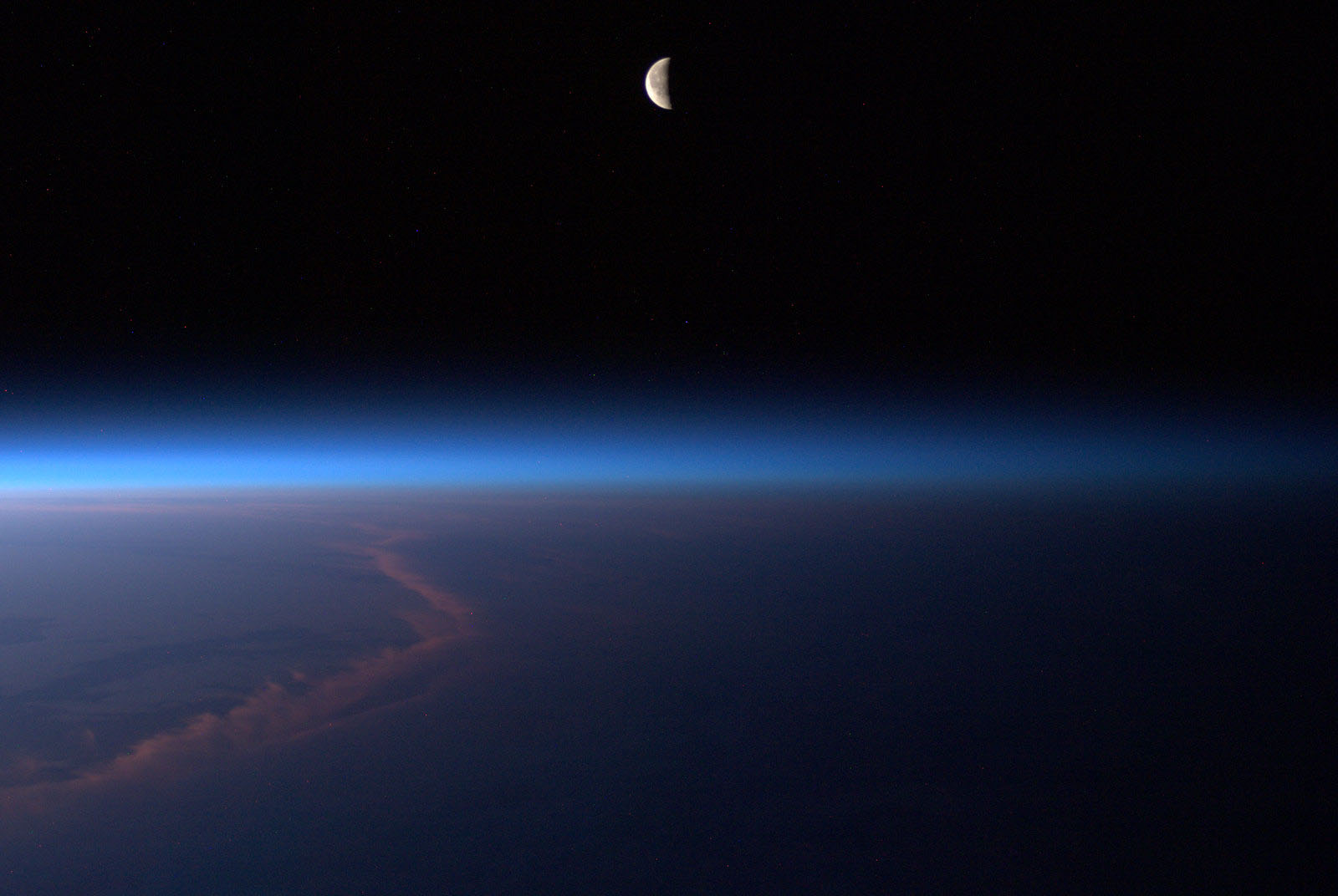
Moon over Afghanistan | Bad Astronomy

Posted without comment: the waning third quarter Moon over Afghanistan, as seen by astronaut Ron Garan on board the International Space Station:

[Click to embiggen.]

You can follow Ron on Twitter and see these amazing pictures as he posts them.

Image credit: NASA. Technically, I saw this on Nancy_A’s Twitter stream before I saw it on Ron’s, so tip o’ the spacesuit visor to her.

Related posts:

- Squishy moonrise seen from space!
- What a falling star looks like… from space!
- Crescent Moonset from space
- A puzzling planet picture from the ISS
- Followup: City lights from space


Questioning the Candidates on Dominionism | The Intersection

By Jon Winsor

Questions about Dominionism and national politics are now moving out of the muckraking exposés and the religion pages and into elite journalism. Yesterday, NPR’s Fresh Air devoted most of its air time to journalist Rachel Tabachnick on the topic of Dominionism. Now, NY Times Chief Editor Bill Keller is going there as well:

This year’s Republican primary season offers us an important opportunity to confront our scruples about the privacy of faith in public life — and to get over them. We have an unusually large number of candidates, including putative front-runners, who belong to churches that are mysterious or suspect to many Americans. Mitt Romney and Jon Huntsman are Mormons, a faith that many conservative Christians have been taught is a “cult” and that many others think is just weird. (Huntsman says he is not “overly religious.”) Rick Perry, Michele Bachmann and Rick Santorum are all affiliated with fervid subsets of evangelical Christianity, which has raised concerns about their respect for the separation of church and state, not to mention the separation of fact and fiction.

I honestly don’t care if Mitt Romney wears Mormon undergarments beneath his Gap skinny jeans, or if he believes that the stories of ancient American prophets were engraved on gold tablets and buried in upstate New York… Every faith has its baggage, and every faith holds beliefs that will seem bizarre to outsiders. I grew up believing that a priest could turn a bread wafer into the actual flesh of Christ…

In the last presidential campaign, Candidate Obama was pressed to distance himself from his pastor, who carried racial bitterness to extremes… I don’t see why Perry and Bachmann should be exempt from similar questioning…

To get things rolling, I sent the aforementioned candidates a little questionnaire.

Keller lists some of his questions in his op-ed (which you can read here).

Tuesday, conservative columnist Michael Gerson defended the conservative field from the criticisms on Dominionism, saying (sarcastically):

The Dominionist goal is the imposition of a Christian version of Shariah law in which adulterers, homosexuals and perhaps recalcitrant children would be subject to capital punishment. It is enough to spoil the sleep of any subscriber to The New Yorker. But there is a problem: Dominionism, though possessing cosmic ambitions, is a movement that could fit in a phone booth…

Many have become unhinged by the interpretive power of a simple idea. In the case of Dominionism, paranoia is fed by a certain view of church-state relations — a deep discomfort with any religious influence in politics: Even if most evangelicals are not plotting the reconstruction of Cromwell’s Commonwealth, they nevertheless want to impose their sectarian views on secular institutions. It is a common argument among secular liberals that the application of any religiously informed moral reasoning in politics is a kind of soft theocracy. Dominionism is merely its local extension. [My emphasis.]

But Bill Keller and others have been rightly asking what kind of reasoning? There shouldn’t be anything wrong with asking common sense questions about what someone’s “religiously informed moral reasoning” is:

Asking candidates, respectfully, about their faith should not be an excuse for bigotry or paranoia. I still remember, as a Catholic boy, being mystified and hurt by the speculation about John Kennedy’s Catholicism — whether he would be taking orders from the Vatican… And of course issues of faith should not distract attention from issues of economics and war. But it is worth knowing whether a candidate has a mind open to intelligence that does not fit neatly into his preconceptions.

This echoes what some of the exposé writers have been saying about Dominionism as a political phenomenon. Here is an excerpt from Sarah Posner’s piece at Slate:

The commenters who have jumped on the [New Apostolic Reformation] frequently overstate the size of its following… Most chilling, though, is the willingness to engage in what’s known in the Word of Faith world as “revelation knowledge,” or believing, as Copeland exhorted his audience to do, that you learn nothing from journalism or academia, but rather just from the Bible and its modern “prophets.” It is in this way that the self-styled prophets have had their greatest impact on our political culture: by producing a political class, and its foot soldiers, who believe that God has imparted them with divine knowledge that supersedes what all the evil secularists would have you believe.

In this way, Dominionism may be a prominent example of a certain dangerously Manichaen way of thinking. And you may not even need Francis Schaeffer or Dominionism to think that way–or even participate in a movement with Dominionist roots.  For instance, you could subscribe to Cleon Skousen’s strain of Mormonism. (See this article on the “Tea Party’s artist” John McNaughton, who was influenced by Skousen, and this one on Cleon Skousen and Glenn Beck).

Gerson is right that the public could seize on a “simple idea” about Dominionism, but that misses a critical point. In a complex, modern nation such as ours, it’s crucial for us to know how a candidate thinks–as Keller implies, whether they can think open-mindedly and empirically about important questions. If they’re trapped in dogma, or they toe the line for a certain passionate constituency trapped in dogma, voters need to know that before they cast their ballots.