Female Wigeon takes a break on Inner Farne pond (Graeme Duncan)
A Song Thrush on Brownsman Jetty (Graeme Duncan)
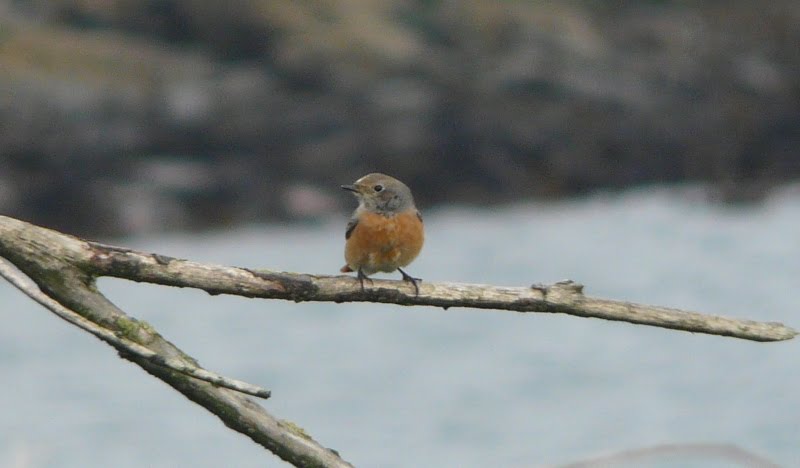
A visiting Redwing lingers on Inner Farne (Will Scott)
Friday 30th September comments: Our glorious leader and head warden David Steel left the islands today at 11am to visit Fair Isle for two weeks, in the company of several ex Farne wardens (his holiday blog posts to follow!) No sooner had he left than the islands sprung to life with visiting birds (as usual). Easterly-flavoured winds brought several passage thrushes and finches to the islands from Scandinavia.
Inner Farne's good autumn duck records continued, with a male Pintail passing west over the island, and a female Wigeon lingering on the pond, accompanying the resident female mallard and her newly born late brood of ducklings!
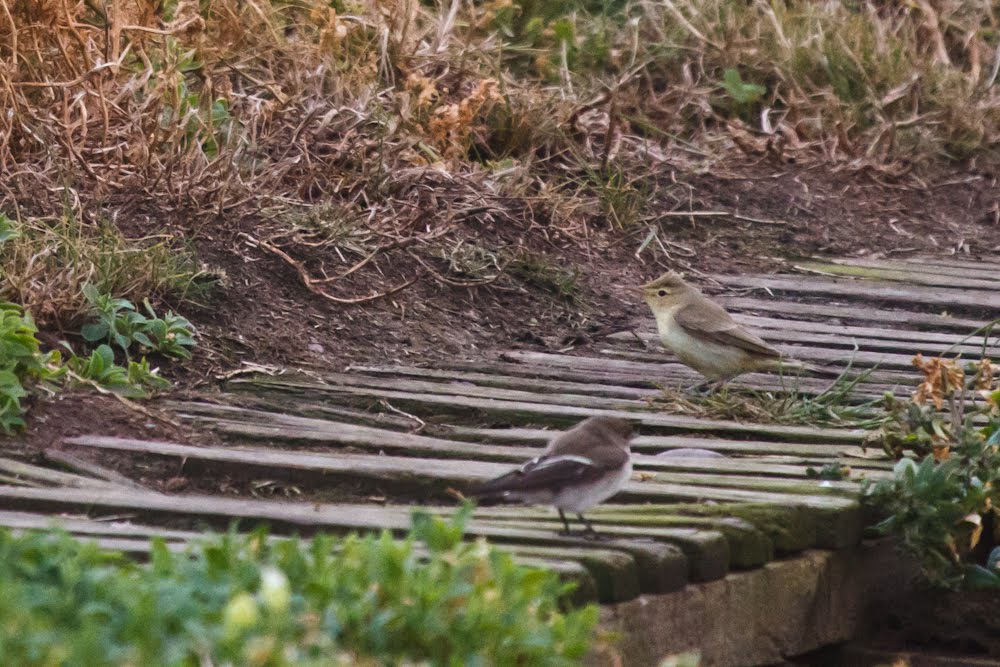
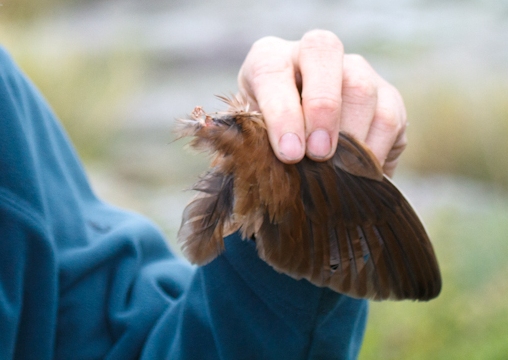
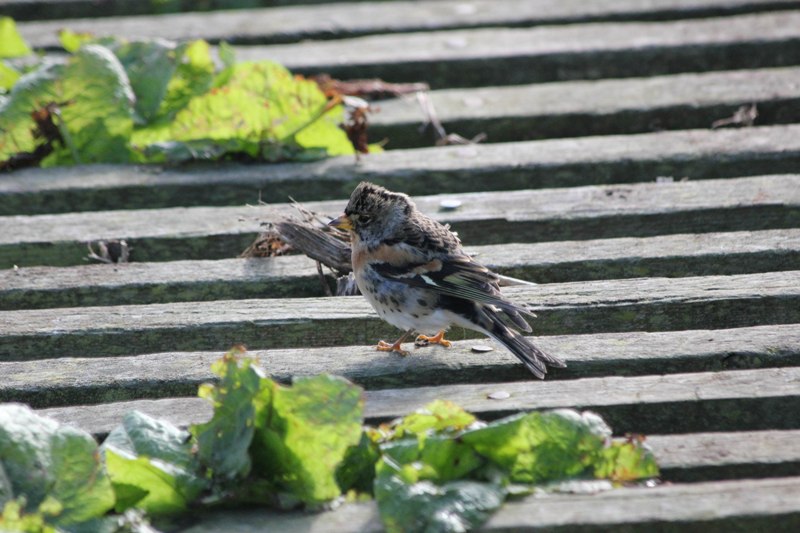
The islands also experienced their first real fall of Bramblings this autumn, with 11 of these cracking birds recorded across the islands, calling confidently and showing well to admiring wardens. 10 Redwing were recorded on the Farnes along with 3 Song Thrushes, hopefully a good sign of things to come. It won't be long until the Farnes hopefully experiences another year of busy thrush passage, as thousands of these birds come over the islands to spend the winter in Britain!
Shetland update: Saturday 1st October comments: Its Shetland time! The Farne Islands blog is now in the capable hands of Graeme Duncan and the team on the Farnes Islands as head warden, David Steel and assistant warden Jamie Coleman have travelled up to the northern isles.
The pair will bring news and views from Fair Isle, as they are staying in the world famous Fair Isle Bird Observatory. For those who are not aware, the bird observatory is now being run by ex-Farne Islands warden David Parnaby and his wife Susannah, whilst another ex-Farne Island warden Jason Moss is also employed there. The week will also see at least three other ex-Farne Islands wardens present on the island, so its rather a 'bus mans' holiday for Mr Steel and Coleman. We'll bring you the news of any wildlife sightings, seal pup births and how the northern isles compared as a seabird breeding against the Farnes this season this year. Its exciting times and keep reading....
Alive and well, out first Seal pup (Graeme Duncan)
A boy! (Graeme Duncan)
First of many (Graeme Duncan)
Thursday 29th September comments: The first Grey Seal pup of the Farnes is a boy and is doing well on the South Wamses. Its mother (a Cow seal) has visited on several occasions and with fine weather predicted, everything seems well in the world. This will be the first of many born across the islands over the next few months and as usual, I'll bring you all the news, views and photos from the island colonies.
Sweet dreams - a distance shot of our first Seal pup (sleeping)
I'll post close-up photos tomorrow (Graeme Duncan)
Yesterday's male Redstart (CiaranHatsell)
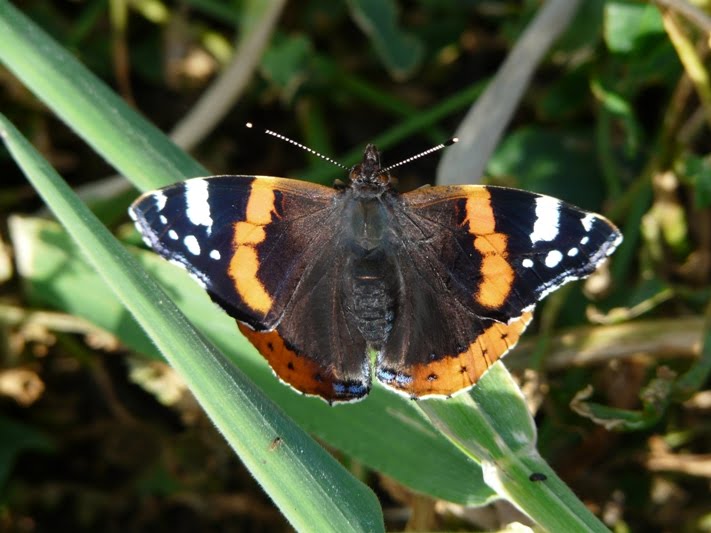
Sunny day brought out the butterflies (CiaranHatsell)
Wednesday 28th September comments: Its been a cracking day on the islands as the weather has improved and we've experienced some unseasonal sunny weather. The southerly based wind has brought lots of Silver-Y moths and plenty of butterflies as well as a few birds. Highlights included lingering Merlin, a fly-past Black-throated Diver and a flushed Short-eared Owl amongst others.
However our attention is turning to the Seals as the first pup was born the previous day on the South Wamses. When dawn broke across the islands this morning, there appeared to be no sign of the youngster and we feared the worst. With large autumn tides, we thought it may have been washed off the shingle bank and lost to the cruel mistress that is the North Sea.
However, our worst fears were dispelled later in the day, as the pup was discovered, with mother, back on the shingle bank. The little tinker must have been hiding during the early morning round, but at least it was fine and well. We're hoping to get across to check its health tomorrow and bring you some close-ups of our first Grey Seal pup. Its never dull on the Farne Islands.
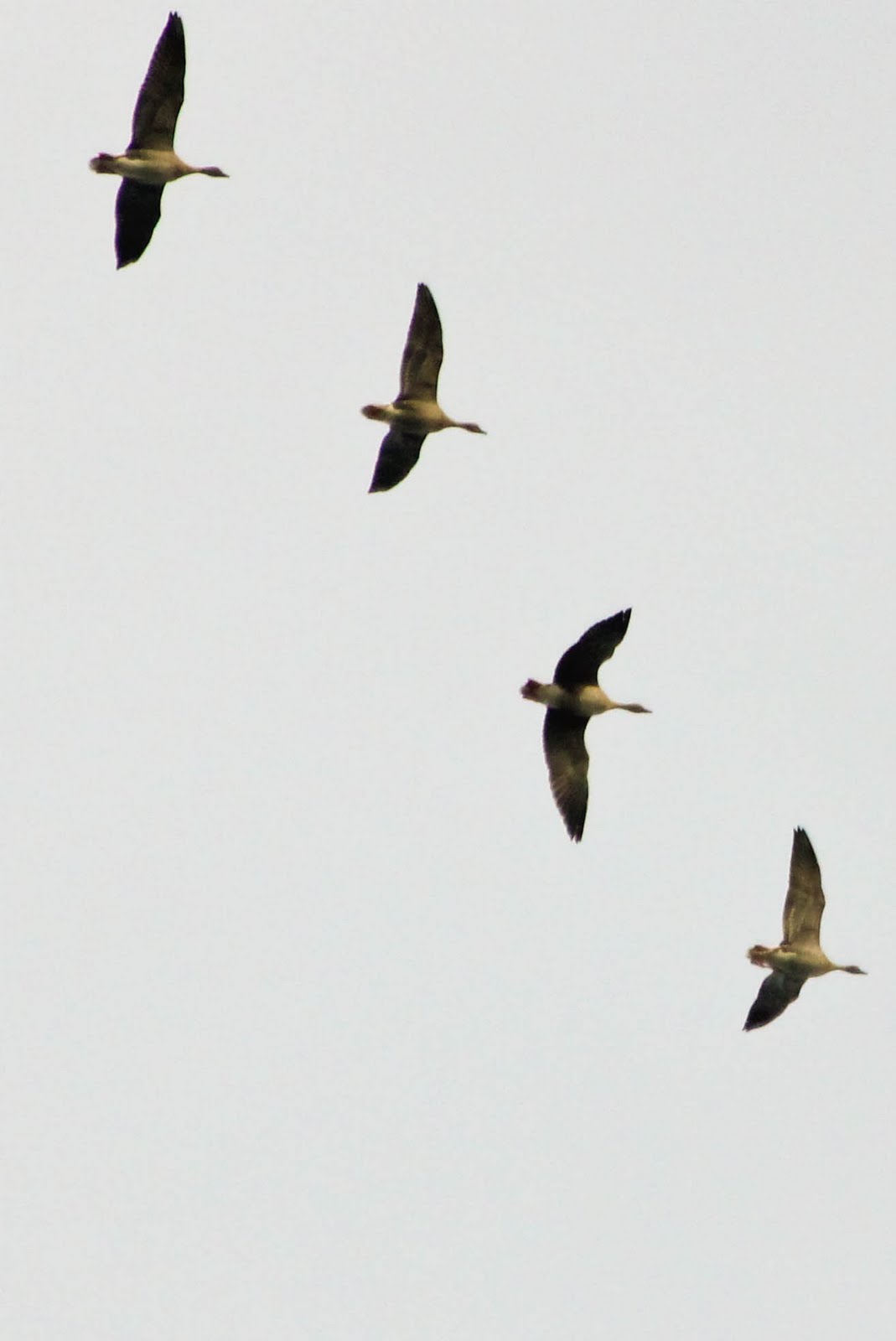
Welcome back - Pink-footed Geese heading to the mainland (Jamie Coleman)
Pink's heading over (Jamie Coleman)
Monday 26th September comments: Autumn has arrived. Today the wind eased and bird migration kicked in as 651 Pink-footed Geese moved west over the islands (in numerous skeins) heading towards wintering grounds further south, most likely ending up along the Norfolk coastline. Wave after wave crossed the north-sea, flying over the islands and onwards with their journey. It was great to see and hear them again and it reminded us all, that autumn is well and truly here.
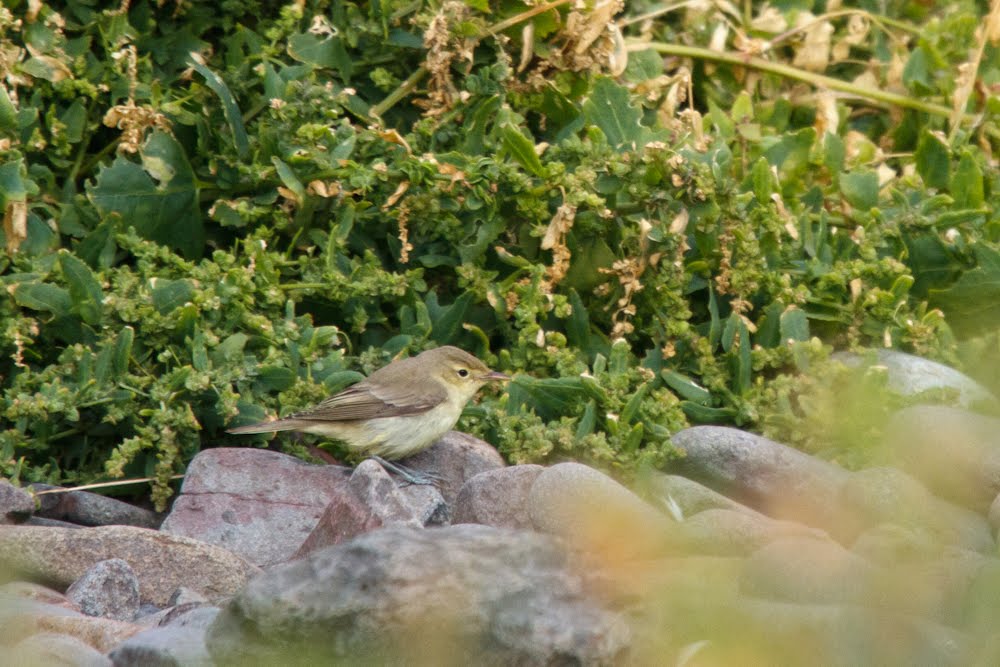
However summer hasn't completely gone as nine Swallows, two Sandwich Terns and even a late Swift reminded us that it really is the cross-over of seasons. Other highlights today included the lingering Icterine Warbler, present for its second day on Brownsman, whilst Whitethroat, two Chiffchaffs and two Tree Pipit added some spice.
On the Seal front, we still await our first pup of the autumn, but surely it is any day now, isn't it...
Just a quick update from this morning (Tuesday 27th September). Our first Grey Seal pup of the autumn has been born, discovered on the South Wamses. Now just 1,498 to go.....
Pied Flycatcher saying hello to the Icterine (Graeme Duncan)
One full Peregrine - remains of a Corncrake discovered (Graeme Duncan)
First Brambling of the autumn (Jamie Coleman)
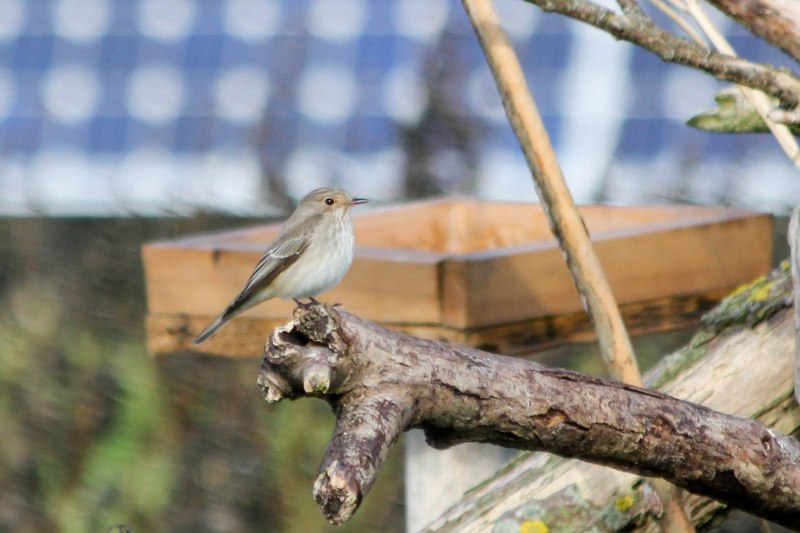
Spotted Flycatcher (Jamie Coleman)
Sunday 25th September comments: WHAT a day. It's been a quiet spell for the islands (despite the Curlew Sand and Long-tailed Skua's trying their best to cheer us up), as the westerly dominated winds have prevented very little migration though the islands. However today produced a flurry of birds with some noticeable highlights.
The morning had produced a reasonable movement of wildfowl past the islands whilst the first autumn Brambling dropped into Inner Farne. However, Brownsman was the place to be mid-afternoon, as the seasons first Icterine Warbler was discovered near the pond and remained until dusk, showing well to all the warden team.
However the day didn't all go according to plan, as the remains of a Peregrine 'kill' were discovered on the south end of Brownsman which proved to be a Corncrake. The 'kill' was very fresh and the bird must have arrived earlier in the day but sadly succumbed to the the resident raptor. Despite the disappointment of not seeing the bird alive, the wardens couldn't complain as it had proved to be a cracking day as the totals will show;
Today's sightings: Red-throated Diver 13N, Breant Goose 2N, Pink-footed Goose 93W, Shoveler 7N, Tufted Duck 4N, Wigeon 33N, Teal 68, Common Scoter 13N, Corncrake- 1 found dead - raptor kill on Brownsman, Wheatear 6, Whinchat 3, Robin 2, Icterine Warbler 1 on Brownsman, Blackcap, Chiffchaff 4, Willow Warbler, Spotted Flycatcher, Pied Flycatcher, Brambling 2 and Lesser Redpoll.
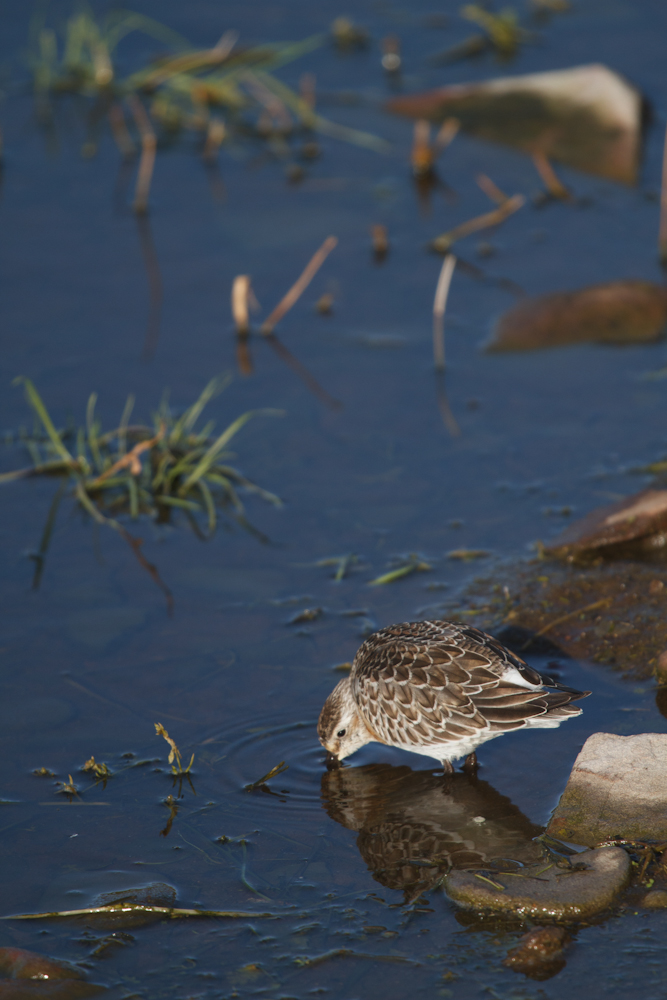
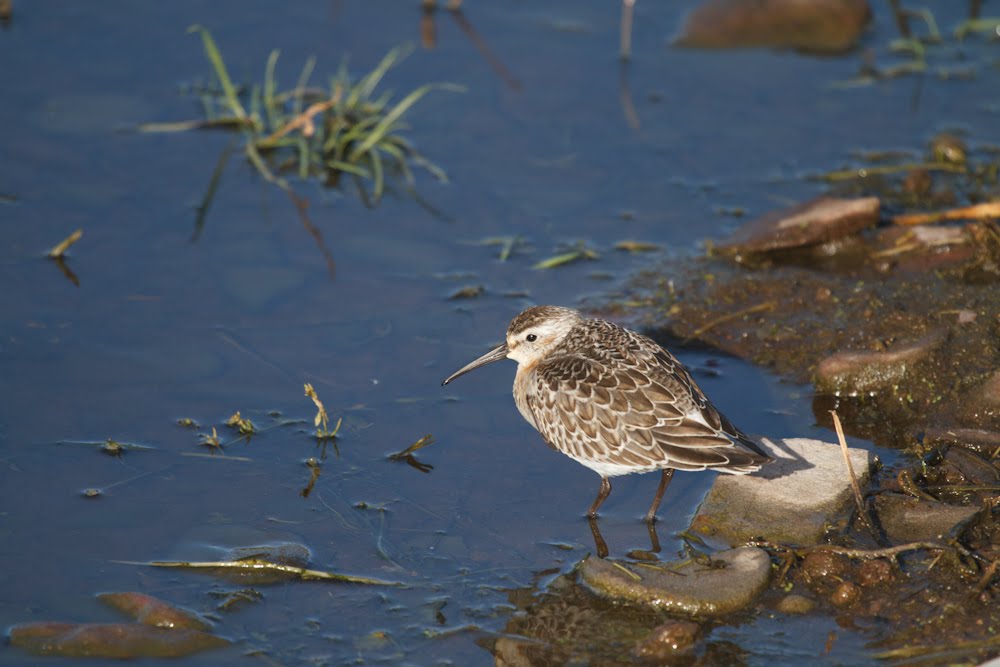
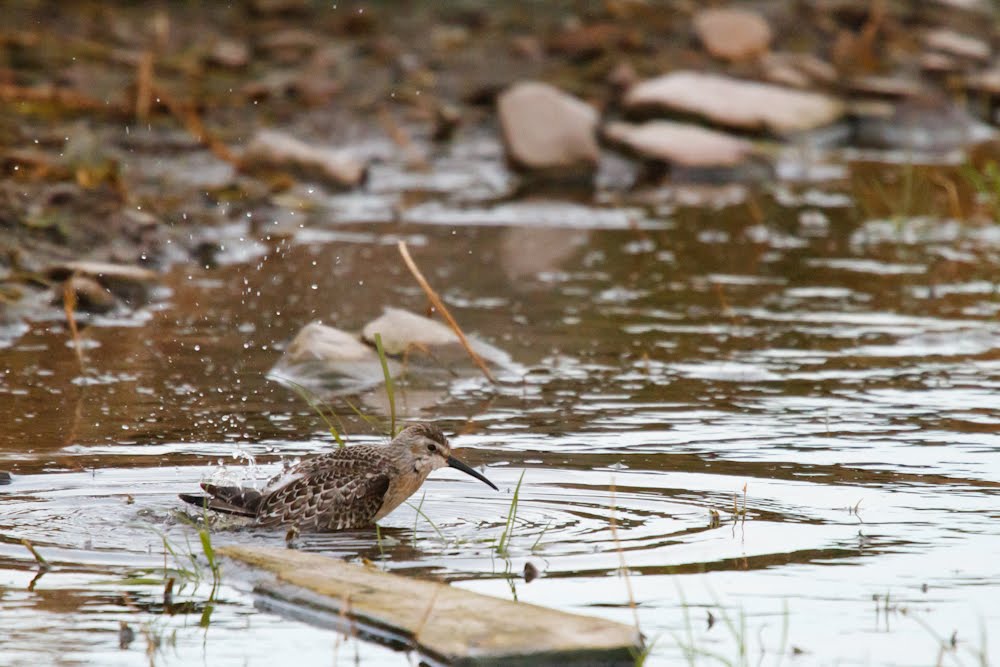
23rd September comments: The islands remain quiet and not much to report from today's observations. The most noticeable highlight was two juvenile Long-tailed Skuas, north, and it appears to be turning into a bit of a purple patch for them. The first autumn Pink-footed Geese moved west over the islands whilst the Curlew Sandpiper remains on Brownsman.
The team took on a full sweep of the outer group for Seal pups, but sadly no sign and we still await our first pup of the year. It won't be long before we have hundreds of the little white pups, but for now, nothing.
Curlew Sandpiper back on Brownsman (Graeme Duncan)
Showing well, the juvenile Curlew Sand (Graeme Duncan)
Bathing time (Graeme Duncan)
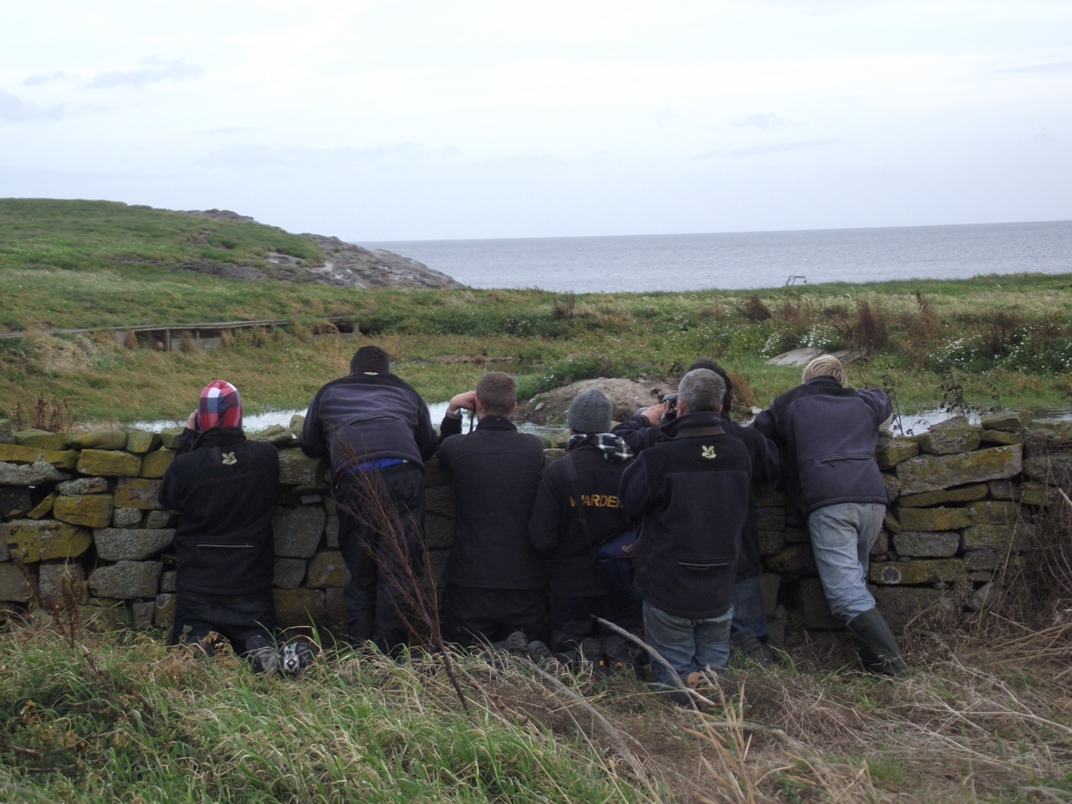
The team view it from the Brownsman veg garden wall (Wez Smith)
Thursday 22nd September comments: It was back (almost) to normal as the wind decrease as quickly as it had increased yesterday. Visitor boats returned to normal sailing and the team went about their business as normal (from painting to construction of a Tern terrace).
Although birding has been generally disappointing throughout September due to westerly dominated winds, we've still had a few noticeable highlights. Today the juvenile Curlew Sandpiper returned to Brownsman pond, having not been seen since the weekend, allowing the entire warden team to successfully twitch it (it was the first since 2003 after all). Otherwise we still await our first Grey Seal pup of the autumn (surely its just a matter of time) and life on the islands continues.
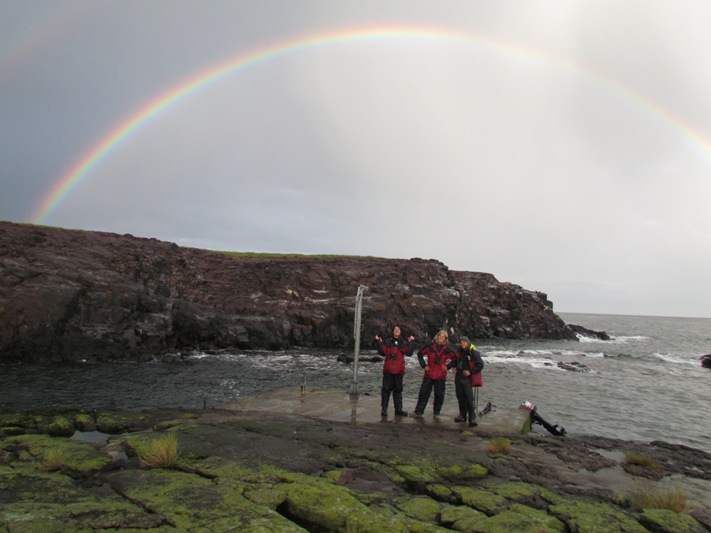
Rainbow team - another mixed weather day on the islands
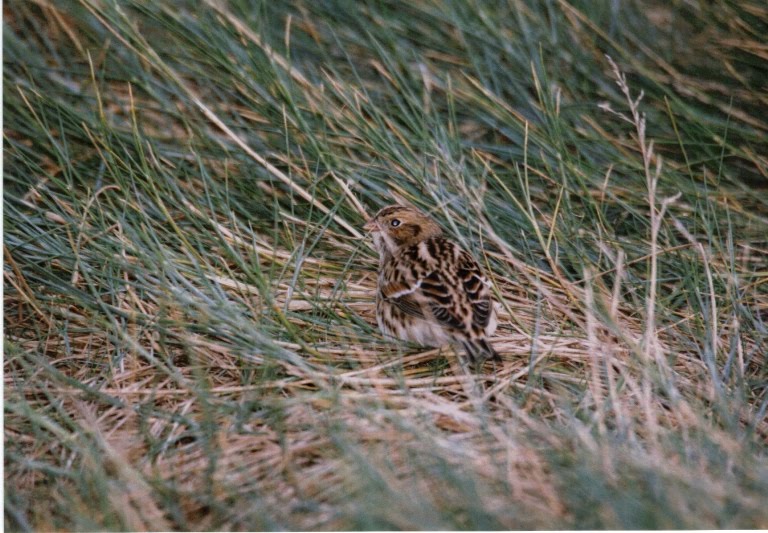
Wednesday 21st September comments: Its been a quiet start to the week as westerly winds have continued to dominate (nothing new there then!) bringing very few migrant birds. However the Farnes being the Farnes, we still have produced some highlights including two Lapland Buntings over on Monday, the first records of the year. Following last seasons impressive haul (unprecedented numbers across the UK), we're hoping this is a sign of another good year.
Today brought a major highlight as (unexpectedly) seawatching produced a stunning seven Long-tailed Skua's, the islands highest day total since 1995. The birds were seen within a two hour period (just after midday) and the passage all involved juveniles all heading north. The birds were split between Staple Sound and the south end of the islands, although one bird decided to fly over the Big Harcar, close to the observers on Brownsman. A cracking find on an otherwise uneventful day...
I mention uneventful day, the wind has once again kicked in and we're cut off from the outside world (which has been common place in recent weeks). It's hurricane season and don't we know it. Bring on some settled weather.
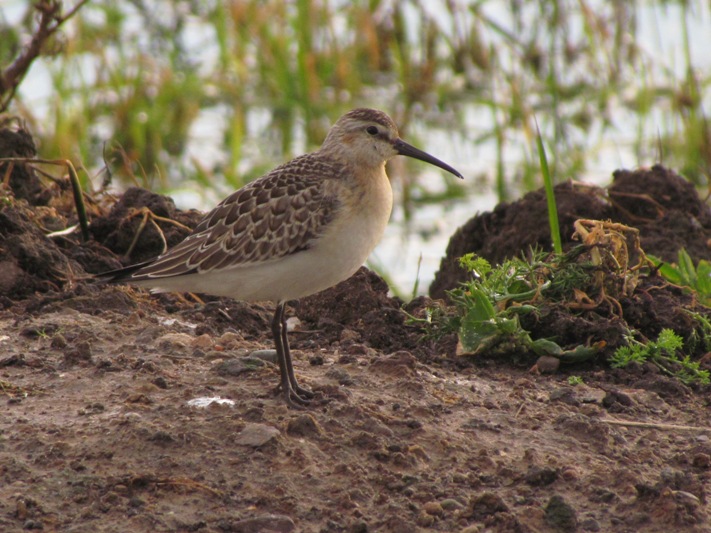
A cracker and our first since 2003; Curlew Sandpiper (Andy Denton)
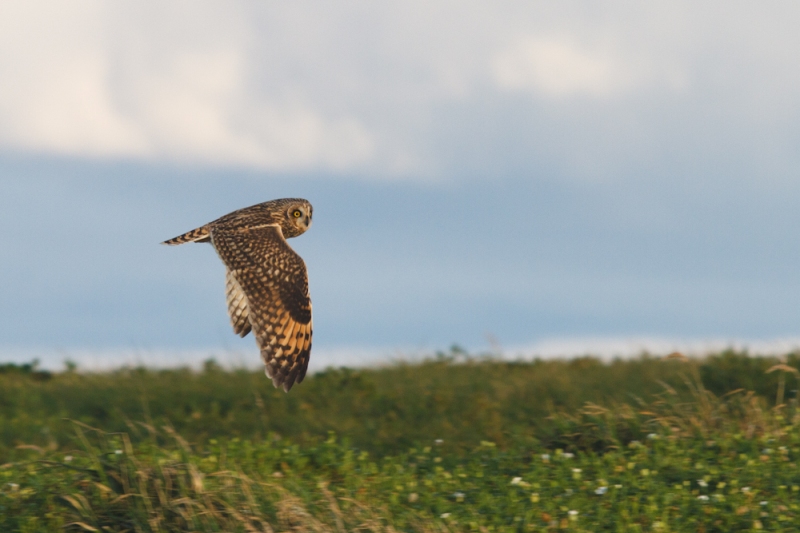
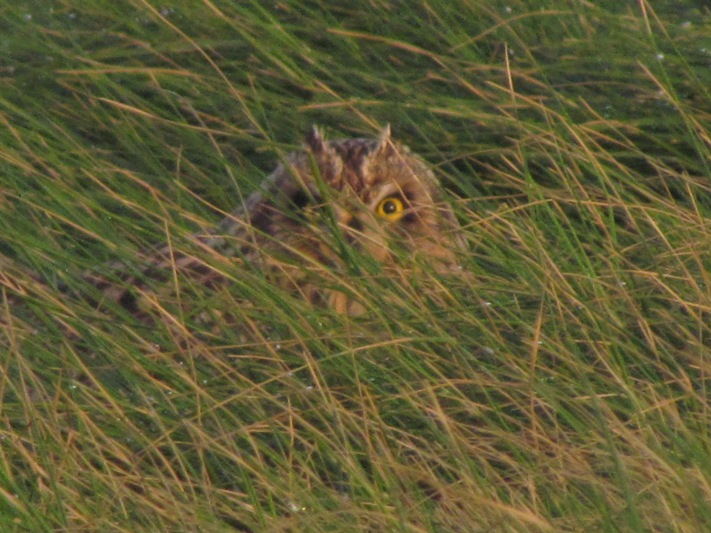
First of the autumn; Short-eared Owl (Graeme Duncan)
We can see you (Andy Denton)
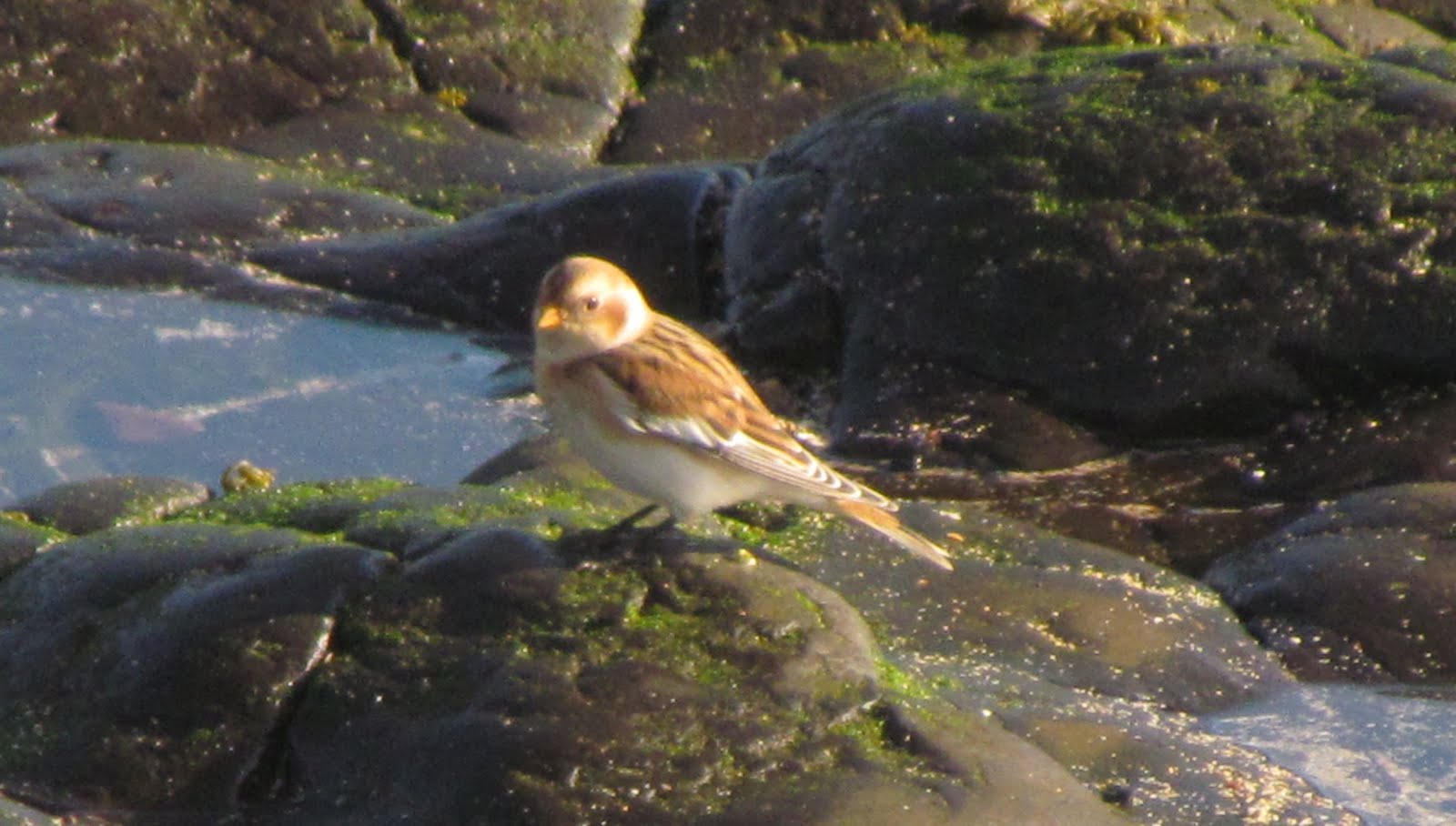
Back for the winter; a Snow Bunting (Andy Denton)
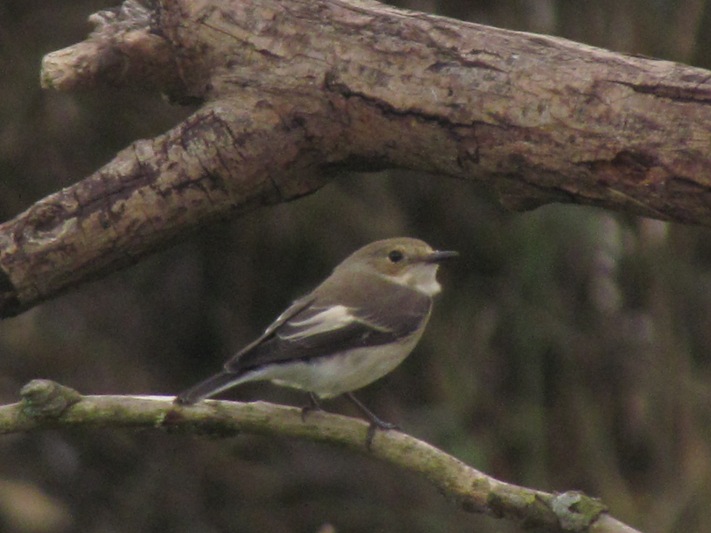
Pied Flycatcher on the move (Andy Denton)
Sunday 18th September comments: It's been a good weekend on the islands as the wind (at long last) switched to the east and produced a good scattering of migrants. Pick of the crop was a Curlew Sandpiper which was discovered on Brownsman pond - amazingly the first island record since September 2003 (remember that Ashy?). Why the species is so scarce on the Farnes is any one's guess as they remain an annual in the local area and were regular on the Farnes until 2003. However it was a welcome return and hopefully we'll have a few more to shout about by the end of the season.
Our first autumn Redwing (welcome back!) and Snow Bunting brought a distinct winter feel about it, whilst other highlights included a majestic Short-eared Owl and a scattering of migrants including Redstart, Pied Flycatcher, Whinchats and common warblers. Just outside the recording area, a Minke Whale and Grey Phalarope were recorded by a visitor boat, so the the islands still have plenty of potential.
A 19 year old London black cab, 3 friends, the British Red Cross and the Guinness Book of World Records -what do they all have in common? Normally nothing. But, in this instance – everything. Three friends decided to drive a London black cab from – you guessed it, London to Sydney, Australia – raising money for the British Red Cross and breaking the Guinness Word Record for the longest taxi ride. They broke the record and haven’t even reached Sydney yet.
What a lovely day. We landed a lock only minutes from the Columbus Marina. They aren39t quite as deep any more so the drop is quicker. Our first stop was the Bevill Museum and the Steam Paddle Boat The Montgomery. It was used to snag trees and limbs from the waterways. Beautifully restored mansion. Once again our next lock was only minutes away.Today we traveled 55 miles from Columbus to Sum
Why did I title my last blog as entry as Black Hawk Nearly Down Well China or more in this case Xian and the volunteering isnt quite what I expected. I went through a bit of a crisis of confidence in my first couple of days and Im still not completely enjoying it. First the thing that is killing me the most is probably the pollution. My school is located near Xians main power st
This weekend we had a short break to Perth catching up with family and taking in a little bit of culture.We drove to Perth via Mandurah a once quaint seaside village now a bustling metropolis devoid of any charm. Sadly that is what happens to many such coastal retreats once developers move in. Despite the lack of charm there are many lovely homes in the area and the estuary is still very p
after reaching our first destination what was only 15 km away from home and for me the first time ever staying in a 5 star hotel we got welcomed with a nice bottle of prosecco in a junior suite at the 12 floor of Manhattan Hotel Rotterdam after settling in we got to our dinner appointment and got spoiled by the kitchen and the wine selection Mr. Boudewine had to offer to us later completly s
After weeks of beautiful French sunshine the weather has suddenly taken a turn for the worse. On Friday I witnessed my second day of Alsacian rain which is worse than Welsh rain because at least when it rains in Wales it brings some warmth. But here it rains and the temperature dramatically drops yesterday it was 10 C On Monday we were enjoying temperatures of 27 C but I39ve been told it do
The final days in Bangkok were action packed we eventually got in to the Royal Palace after some 39confusion39.We were approached by a Thai man early that day whilst looking like tourists with the map open trying to find the Palace who was very pleasent and spoke really good English he asked us if we were going to the Palace. The man said he was a school teacher in Bangkok and that the p
Menghai Yunnan ProvinceYun cloud Nan south so the name of Yunnan province means south of the clouds. While this is constructed the same as many Chinese place names it is seems much more poetic than Hebei north of the river or Hunan south of the lake and the like. Be sure to pronounce the n in both syllables yun nan
Malaria sucks. Its as common as the flu but sadly especially for all those kids out there more deadly. And Africa suffers the most from this brutal disease. According to statistics 90 of malaria related deaths happen in subSaharan Africa with 1 million dying worldwide every year. 1 of every 5 childhood deaths is caused by it International Medical Corps 2011. If your older and catch it e