Vitamins and Mortality

The discovery of various vitamins – essential micronutrients that cause disease when deficient – was one of the great advances of modern scientific medicine. This knowledge also led to several highly successful public health campaigns, such as vitamin-D supplementation to prevent rickets.

Today vitamins have a deserved reputation for being an important part of overall health. However, their reputation has gone beyond the science and taken on almost mythical proportions. Perhaps it is due to aggressive marketing from the supplement industry, perhaps recent generations have grown up being told by their parents thousands of times how important it is to take their vitamins, or eat vitamin-rich food. Culture also plays a role – Popeye eating spinach to make himself super strong is an example this pervasive message.

Regardless of the cause, the general feeling is that vitamins are all good – they are not only important for health, they promote health. Many people take vitamin supplements on the idea that more is better, or for nutritional “insurance” to make sure they are getting enough of every vitamin.

The problem with deeply embedded cultural beliefs is that people make decisions based upon assumptions that everyone “knows,” rather than making evidence-based risk vs benefit decisions. This phenomenon is exacerbated when the industry is able to make aggressive health claims without requiring any scientific evidence to back up those claims (as is the case in the US since DSHEA was passed in 1994).

It is therefore important to shatter the pedestal on which vitamins have been placed, to bring them down to the level of scientific evidence. The good news is, there is a ton of research on vitamins, which continue to be the subject of much new research. Each year, therefore, the risks and benefits of vitamins become more clear. One recent study which is getting much press adds to this body of knowledge about vitamins.

In the latest issue of The Archives of Internal Medicine is a population based observational study looking at health outcomes and vitamin use as part of the larger Iowa Women’s Health Study. The authors looked at 38,772 older women and asked them to self-report their vitamin use. This is a long term study and their vitamin use was reports in 1986, 1997, and 2004, and mortality was followed through 2008. They found a small but statistically significant increase in mortality for those taking multivitamins, B6, folic acid, iron, copper, magnesium and zinc. There was also a small decrease in mortality for those taking calcium.

The strength of this study is that it is large with a long term follow up. There are many weaknesses, however. Vitamin use was self-reported. Further, this is a correlational study only. Therefore possible confounding factors could not be controlled for. For example, it is possible that women who have an underlying health issue that increases their mortality were more likely to take vitamins or to report taking vitamins.In fact, other studies suggest there is such a “sick-user effect” with vitamins.

It is therefore not possible from this study to draw any conclusions about cause and effect – that vitamin use increases mortality. But it does provide a cautionary reminder that it is not reasonable to assume that vitamin supplementation is without any risk. We still need to follow the evidence for the use of specific vitamins at specific doses for specific conditions and outcomes.

Conclusion

As is typical of observational studies, the results are somewhat mixed, depending upon the details of how such studies are conducted. There are also many variables to consider – which vitamins and which doses in which populations with what health conditions. There is therefore a great deal of noise in the data. I do not think we can conclude that the vitamins listed above actually increase risk of mortality. But neither can we conclude that there is any health benefit for routine supplementation. Years of research have failed to provide such evidence, and the mixed results we are seeing is consistent with there being no or only a small effect.

Based upon the totality of evidence the best current recommendation is to have a well-rounded diet with sufficient fruits and vegetables, which should be able to provide most people with all the micronutrients they require. There is no evidence to support routine supplementation. There is also reason to avoid taking megadoses of vitamins, as this can cause toxicity, and even short of toxicity the evidence becomes more compelling at higher doses of the risks of supplementation.

But there are also many situations in which targeted supplementation is evidence-based and appropriate. There is increasing evidence to support the use of vitamin D supplementation for many populations. Many elderly have borderline or  low B12 levels, which correlates with dementia. Pregnant women should take prenanatal vitamins. (To give just a few examples.)

Vitamins are just like any other health care intervention – they have potential risks and benefits and it is best to follow the evidence. For most people the best advice is to ask your primary health care provider which supplements, if any, you should take. Recommendations should be based upon specific health conditions and blood tests to measure levels of vitamins, so that specific deficiencies can be appropriately targeted.

FacebookGoogle BuzzDigg<!--<!--LinkedInStumbleUponLiveJournalShare

Pursued by Protandim Proselytizers

I’m fed up! In August 2009 I wrote about Protandim, pointing out that it’s not supported by good evidence. I thought I had made myself clear; but apparently I had only made myself a target. True believers have deluged the Internet with attacks on my article, calling it mere “opinion,” ignoring its main points, and denigrating me personally. I have ignored the Internet attacks, but I’m beginning to feel personally harassed: I have lost count of the e-mails I have received from Protandim enthusiasts trying to convince me that it works and that I should change my mind. I’ve spent hours trying to explain my reasoning in e-mails, and it’s becoming a repetitive chore, so I am writing this so that next time I get an e-mail inquiry I can simply forward this link.

What Is In It?

Protandim is a mixture of milk thistle, bacopa extract, ashwagandha, green tea extract, and turmeric extract (all of which, incidentally, can be purchased individually at much lower cost).

What Do They Claim It Does?

As described on Wikipedia:

The manufacturers of Protandim claim the product can indirectly increase antioxidant activity by up-regulating endogenous antioxidant factors such as the enzymes superoxide dismutase (SOD) and catalase, as well as the tripeptide glutathione, and by activation of theNrf2 pathway.

Nrf2 is a transcription factor that upregulates the expression of various genes that may regulate oxidative stress. Drugs to target that pathway might have benefits for diseases that are caused or exacerbated by oxidative stress. Such drugs are investigational at this point, but the makers of Protandim have skipped the investigational stage and are marketing a product that they think is effective for almost every ailment known to man and that they are promoting as an anti-aging supplement.

In the application for their second patent, awarded in 2008, they wrote:

The compositions of the present invention are useful to prevent or treat the following disorders and diseases: memory loss; Parkinson’s disease; aging; toxin-induced hepatotoxicity, inflammation; liver cirrhosis; chronic hepatitis; and diabetes due to cirrhosis; indigestion; fatigue; stress; cough; infertility; tissue inflammation; cancer; anxiety disorders; panic attacks; rheumatism; pain; manic depression; alcoholic paranoia; schizophrenia; fever; insomnia; infertility; aging; skin inflammations and disorders; alcoholism; anemia; carbuncles; convalescence; emaciation; HIV; AIDS; immune system problems; lumbago; multiple sclerosis; muscle energy loss; paralysis; swollen glands; ulcers; breathing difficulties; inflammation; psoriasis; cancer (e.g.; prostate cancer, lung cancer and breast cancer); pain; cardiovascular disease (e.g.; arteriosclerosis and atherosclerosis); ischemia/reperfusion injury; anxiety; attention deficit disorder; leprosy; arthritis (e.g., psoriatic arthritis; ankylosing spondylitis; and rheumatoid arthritis); hemorrhoids; tuberculosis; high blood pressure; congestive heart failure; venous insufficiency (pooling of blood in the veins; usually in the legs); sore throat; hepatitis; syphilis; stomach ulcers; epilepsy; diarrhea; asthma; burns; piles; sunburn; wrinkles; headache; insect bites; cuts; ulcers; sores; herpes; jaundice; bursitis; canker sores; sore gums; poison ivy; gastritis; high cholesterol; heart disease; bacterial infection; viral infection; acne; aging; immune disorders; dental caries; periodontitis; halitosis; dandruff; cardiovascular disease (e.g., hypertension; thrombosis; arteriosclerosis); migraine headaches; diabetes; elevated blood glucose; diseases of the alimentary canal and respiratory system; age-related physical and mental deterioration (e.g., Alzheimer’s Disease and age-related dementia); cardiovascular disease; cerebral vascular insufficiency and impaired cerebral performance; congestive symptoms of premenstrual syndrome; allergies; age-related vision loss; depression; Raynaud’s disease; peripheral vascular disease; intermittent claudication; vertigo; equilibrium disorder; prevention of altitude sickness; tinnitus (ringing in the ear); liver fibrosis; macular degeneration; asthma; graft rejection; and immune disorders that induce toxic shock; bronchpulmonary disease as cystic fibrosis; chronic bronchitis; gastritis; heart attack; angina pectoris; chronic obstructive pulmonary disease; kidney damage during coronary angiography; Unverricht-Lundborg disease; pseudoporphyria; pneumonia; and paracetamol hepatotoxicity.

Wow! Yet the website says it “does not market and sell Protandim® for the purposes of preventing, treating, curing, or mitigating any disease, including MS.”

So what purposes are we to think they do market and sell it for? Since oxidation is thought to be somehow involved in all the listed conditions, they are speculating that Protandim should prevent or treat those diseases by increasing the body’s production of antioxidants. They are promoting it for “anti-aging” because they are speculating that it will prevent or treat age-related diseases. They have no credible evidence to support their speculations.

An Update of Their Evidence

My original article only mentioned the 3 studies available at that time. As of this writing (October 2011), a query to PubMed brings up 8 published, peer-reviewed studies:

  1. A human study showing changes in TBARS, SOD, and catalase.(2006)
  2. A cell culture study showing increases in glutathione. (2009)
  3. A mouse study showing an effect on skin tumor carcinogenesis. (2009)
  4. A study in a mechanical animal model showing that chronic pulmonary artery pressure elevation is insufficient to explain right heart failure. (2009)
  5. Another mouse study showing that Protandim suppressed experimental carcinogenesis and suggesting that suppression of p53 and induction of MnSOD may play an important role.  (2010)
  6. A study of muscular dystrophy mice showing that Protandim decreased plasma osteopontin and improved markers of oxidative stress. (2010)
  7. An ex vivo (tissue culture) study of human saphenous veins, showing that Protandim attenuated intimal hyperplasia. (2011)
  8. An evaluation of the role of manganese superoxide dismutase in decreasing tumor incidence in a two-stage skin carcinogenesis model in mice. (2011)

Note that there have been no human clinical studies since the one in 2006. The newer studies are just more animal and laboratory studies, so they do nothing to change my previous conclusion.  If I were a mouse being artificially induced to develop skin cancer in a lab study, I might seriously consider taking Protandim.  But so far, the only study in humans measured increased antioxidant levels by a blood test but did not even attempt to assess whether those increases corresponded to any measurable clinical benefit, for cancer or for anything else.

My Assessment of the Evidence

This sounds like a promising area of investigation, but many treatments look promising in animal and in vitro (test tube) studies in the lab and then fail to translate to any useful clinical applications in humans. Much has been said about the benefits of antioxidants, but giving antioxidants as supplements has generally resulted in no benefits and even sometimes in harm. Protandim is trying another approach: getting the body to produce more of its own antioxidants. Even if it does that, it still remains to be seen whether those higher levels will correspond to any meaningful clinical benefits. And the tests they are using for antioxidant levels may not mean what they would like to think they mean. Sometimes the same substance can show either anti-oxidant or pro-oxidant effects depending on which test is used. And adverse consequences haven’t been ruled out. Free radicals play important roles in human health: they are essential for killing bacteria, cell signaling, and other functions. Raising antioxidant levels might interfere with some of these essential functions. Human biochemistry is complex, and changing one factor often has unexpected effects elsewhere in the web.

Conclusion

We simply don’t know enough at this point to recommend Protandim for treatment or prevention of any disease, for anti-aging, for making people feel healthier or more energetic, or for anything else. We need good human studies showing that people who take Protandim have better clinical outcomes than people who don’t. For instance, fewer heart attacks or fewer cancers…not just higher levels on a TBARS test. What we need is POEMS: patient-oriented evidence that matters.

I Get Mail

I heard from doctors working with the company, from company employees, from distributors, from customers, from relatives of customers, and even from people who were none of the above. Most of my correspondents completely failed to understand what I meant by human studies with meaningful clinical outcomes. Some of them thought I was not aware of the published evidence. Some of them wanted to insult me and the whole medical profession. Some offered testimonials. One wanted to revise the Hippocratic Oath. Others wanted to inform me that Protandim had been awarded patents and that its shares were doing well on the stock market. Some were more coherent than others. Here’s a sampling (errors in the original):

  • My wife has stage 4 metastatic breast cancer, a friend was telling about a natural supplement called Protandim. I was thinking about buying it after he showed me a study from LSU that says is maybe helpful in fighting cancer. I just ran across your blog and you say it is a scam. I am wondering if you are familiar with the LSU study
  • Did LSU not just present evidence that TBAR reduction with Protandim led to a meaningful clinical outcome?.. Regarding glutathione’s potential efficacy: go to youtube and search Dr. David perlmutter. Check out the before and after videos of Parkinson’s patients being injected with glutathione… Protandim is unique in having extensive scientific validation published in our most well respected, peer reviewed journals..
  • How do you feel about Protandim now that it has a clinical study?
  • I was impressed that Dr Perlmutter and Dr Colker both endorse protandim. What about the recent peer reviews on Cancer and Heart disease as well as the one on Glutathione?
  • Purpose of the email is to entice, I hope, you into taking a closer look at Protandim… Publishing a negative opinion will impact these people and if you are wrong and Dr. McCord is correct, there are a number of people who will not benefit from what is considered by a growing number of scientists to be cutting edge science in ageing and disease prevention.  My opinion is that you would benefit from getting up to speed in this arena.
  • You quackbusted on a Protandim back in 2005.  I’m wondering if you still feel the same about Protandim and Dr Joe McCord now that it’s 5 years later???  I was just made aware of protandim and wanted to know more because everything I am seeing is pointing me in the direction of yes you should be taking the stuff!!
  • Obviously there are 2 sides to what is going on here and I’m quite disturbed with the medical community and the belief that it’s their way or the highway and that the human body isn’t capable of fixing itself as Gerson explains it!!  I have been on the Protandim for 3 weeks tomorrow just 1 supplement a day and I feel a difference in my knees and ankles with a little more kick when going up the stairs…I’m actually bouncing a lot better than I was 3 weeks ago…I’m still on a 12,000 ORAC Unit intake so nothing has changed except the protandim supplements…it appears I’m experiencing the same thing I am seeing/hearing from the others!!
  • you stille hold that opinion after the new studies ?How can you explain the fact that many universities fundind their own research ?Is dr Pearlmuter that endors protandim will risk his reputation if it is not the real deal
  • Protandim was up 10% yesterday on volume of 177,000.  Another step in the right direction.
  • (paraphrased) My friend’s lipid peroxidase levels rose; here’s his lab report to prove it.
  • proven by peer reviewed, published scientific research to reduce oxidative stress by an average of 40%, slowing down the cellular aging process to that of a 20 year-old!
  • I accept your views and beliefs for they are yours, and who am I to disagree?  I do have a couple points to voice which may offer some advice on confirming whether a product is legitimate or fake….I notice that you mentioned because something is not FDA approved that it must therefore be quackery.  Again, this is your belief, so ok…. Herbs have been used in medicines around the world, successfully, and for thousands of years…prior to Western medicine.  The FDA and many doctors here in the ‘West’ are unsure of these remedies and this causes fear.  Ego, a human trait, can also get in the way.  It’s just our nature.” (this was from someone who has yet to try the product but plans to do so soon)
  • that’s the problem with modern medicine.  they are challenged by something, so incredibly, that they would rather eliminate it than find perhaps a new direction for health and medicine.   Ego?  Fear?
  • btw, you know an underlying problem in medicine today?  the hippocratic oath.   “First, do no harm.”    The reason this needs to be improved is because that oath has the words:  ‘no’ and ‘harm’ in it.   Modern psychology today will confirm that our brains really only focus on the key words, rather than a ‘no’ or ‘dont’ that precedes a statement.
  • Harriet, have you ever challenged any modern medicine, Lipitor as an example? Or any so called modern medicine?
  • I am not against allopathic medicine, however, I feel that our bodies work better with organic natural medicine.
  •  while I share some of your concerns, I feel that the house is burning and something must be done for our poorly aging population.
  • Just wanted to make you aware that Protandim received its 4th patent.”Compositions for alleviating inflammation and oxidative stress in a mammal
  • I have tons of them [clinical studies] , I have MD ‘s by the tons getting involved . I have clients getting of MEDs , cholesterol , Bp’s. Insulin cut in half , sleep apnea gone, chronic fatigue gone. Should I listen to results and MD’s and Using Godly wisdom or your bashing and other people see a nutritionist’s opinion as important. Thanks any way ms. Hall”
  • “It more than establish’s things when people’s lives have been changed. I didn’t see your name on the winners of the Elliot Cresant award hince , Joe McCord . Last time I checked all my clients were humans . All of them have been on for 4 months or more so there is no placebo affect. Oh and I trust the holy spirit more than all the above things. Thanks
  •  I have read some of your older write-ups about Protandim… it seems many are dated 2005.  Surely by now you have changed your mind about Protandim. The proof it works is now everywhere. I have seen many benefits myself and my wife has finally got her sugar levels under control by doing nothing other than take Protandim.  I do not sell this nor own stock in the company but I try to get as many people on this as I can… because it works. Are you on board or are you still against Protandim?

One Skeptical Message

I did get one message (only one) that was skeptical about Protandim. It pointed out further problems with the research:

Both Protandim and Mona Vie site numerous peer reviewed, published studies that support their claims. Upon basic investigation you will see that all the peer review studies are lead by the same shareholder / researcher (One for Mona Vie and One for Protandim). Shouldn’t this obvious conflict be a red flag for the peers that are reviewing? In addition for Protandim products most of the papers were published in one journal of which that lead researcher is also an editor. The only other journal they were published in is Plos One which appears to be an open access online journal with a very high publish rate per submission (I read 98%).

A message to Protandim supporters

I am not “against” Protandim. I would be very pleased if it turns out to improve people’s health. I await clinical research with great interest. I would not take it myself or recommend it at this time because I have seen too many initially promising treatments turn out not to work or even to cause harm.  I understand why some people are enthusiastic about Protandim and want to take it now rather than wait for better evidence, and I have no objection to their taking it. I am not “quackbusting;” I am only asking for the same kind of evidence that the scientific community requires before it accepts any new treatment. Please try to understand what I mean by clinical studies with meaningful outcomes and contact me again when such studies are available… and not before.


FacebookGoogle BuzzDigg<!--<!--LinkedInStumbleUponLiveJournalShare

Steve Jobs’ cancer and pushing the limits of science-based medicine

An Apple fanboy contemplates computers and mortality

I’m a bit of an Apple fanboy and admit it freely. My history with Apple products goes way back to the early 1980s, when one of my housemates at college had an Apple IIe, which I would sometimes use for writing, gaming, and various other applications. Indeed, I remember one of the first “bloody” battle games for the IIe. It was called The Bilestoad and involved either taking on the computer or another opponent with battle axes in combat that basically involved hacking each other’s limbs off, complete with chunky, low-resolution blood and gore. (You youngsters out there will be highly amused at the gameplay here.) Of course, it’s amazing that nothing’s changed when it comes to computer games except the quality of graphics. Be that as it may, this same roommate was one of the first students to get a hold of the new Macintosh when it was released in early 1984. I really liked it right from the start but only got to play with it occasionally for a few months. After using a Macintosh SE to do a research project during my last year of medical school, I have used the Macintosh platform more or less exclusively, and the first computer I purchased with my own money was a Mac LC back in 1990 or 1991. Today, I have multiple Apple products, including my MacBook Air, my iPhone, and my old school iPod Classic, among others. Oddly enough, I do not have an iPad, but that’s probably only a matter of time, awaiting software that lets me do actual work on it.

All of this is my typical long-winded way of explaining why I was immensely saddened when I learned of Steve Jobs’ death last week. Ever since speculation started to swirl about his health back 2004 and then again in 2008, capped off by the revelation that he had undergone a liver transplant for a rare form of pancreatic cancer in 2009, I feared the worst. Last week, the end finally came. However, there is much to learn relevant to the themes of this blog in examining the strange and unusual case of Steve Jobs. Now, after his death five days ago, which coincidentally came a mere day after the launch of iCloud and the iPhone 4S, it occurs to me that it would be worthwhile to try to synthesize what we know about Jobs’ battle with cancer and then to discuss the use (and misuse) of his story. Of course, this is a difficult thing to do because Jobs was notoriously secretive and I can only rely on what has been published in the media, some of which is conflicting and all of which lacks sufficient detail to come to any definite conclusions, but I will try, hoping that the upcoming release of his biography by Walter Isaacson in couple of weeks might answer some of the questions I still have remaining, given that Isaacson followed Jobs through his battle with cancer and was given unprecedented access to Jobs and those close to him.

In the meantime, I speculate. I hope my speculations are sufficiently educated as not to be shown to be completely wrong, but they are speculations nonetheless.

Jobs and pancreatic cancer

Back in 2003, Jobs was flying high. Ousted from Apple in 1985 and then brought back in 1997, over the last six years he had brought the company back from the brink of bankruptcy, first with the launch of the iMac and then a few years later with the wildly successful iPod. It was at this time that he received news that no one wants to hear. Having recently undergone an abdominal CT scan, a mass had been found in his pancreas, apparently at the head of the pancreas.

Now, for all the reports I’ve read of this initial diagnosis, it’s utterly unclear to me exactly what the indication for the scan was, and at the time Jobs’ diagnosis was shrouded in secrecy. It wasn’t until 2008 that an article was published in Fortune entitled The Trouble With Steve Jobs and described his diagnosis thusly:

During a routine abdominal scan, doctors had discovered a tumor growing in his pancreas. While a diagnosis of pancreatic cancer is often tantamount to a swiftly executed death sentence, a biopsy revealed that Jobs had a rare — and treatable — form of the disease. If the tumor were surgically removed, Jobs’ prognosis would be promising: The vast majority of those who underwent the operation survived at least ten years.

So, right from the beginning, SBM bumped up against how Jobs was treated, as even now, the indications for “routine” abdominal CT scanning in an otherwise healthy man in his late 40s are virtually nonexistent, as Sharon Begley points out in an article published last week:

He reportedly had the scan — which is seldom done, much less advised, as a routine part of a physical — because he had a history of gastrointestinal problems, but he also may have been experiencing symptoms, most likely gastrointestinal ones.

Whatever the reason Jobs underwent a CT scan, either “routine” (which is almost never indicated) or for vague symptoms (for which the indication might have been weak but not nonexistent). At the time, Jobs would appear to have been incredibly lucky in two ways. First, he was lucky in that his tumor was discovered by what would in the absence of clear cut symptoms normally be a very low-yield test that exposes patients to both the risk of intravenous contrast and radiation exposure. These risks are quite low, but difficult to justify without clearer indications. However, CT scans are frequently overused in this country, and it is not surprising that Jobs underwent one for “soft” indications; it’s just that this time he was the exception, with disease detected early, rather than the rule, where the scan usually finds nothing helpful. Secondly, a biopsy of the lesion demonstrated that it was not the much more common (and deadly) form of pancreatic cancer, adenocarcinoma, which arises from the ducts of the pancreas, is rarely cured, and generally produces a median survival of less than a year. Rather, he had the much less aggressive form of pancreatic cancer, a neuroendocrine tumor. These tumors are often indolent and slow-growing. Unfortunately, they also tend to secrete hormones, which also tend to be responsible for most of the symptoms they cause. In Jobs’ case, it was insulin and his tumor was an insulinoma. Although, again thanks to Jobs’ secrecy, we have no idea what symptoms he was experiencing at the time, insulinomas typically result in a profound drop in blood sugar, and this hyperinsulinemia can lead to symptoms of insulin shock, such as tremors, cold sweats, nausea and vomiting, blackouts, and neurological symptoms such as confusion, apathy, and irritability.

Whatever Jobs’ talents, it became obvious that one of them was not good judgment about medicine. Whatever his business and design savvy, when it came to medicine, he demonstrated critical thinking skills that, if applied to his business dealings, would bring Apple down from its heights to utter ruin. Neuroendocrine tumors of the pancreas make up less than 2% of all pancreatic tumors, and he was lucky enough to have gotten that form rather than the more common deadly version. Surgery would have a high probability of curing him.

Here’s more of the story:

But Jobs sought instead to treat his tumor with a special diet while launching a lengthy exploration of alternative approaches. “It’s safe to say he was hoping to find a solution that would avoid surgery,” says one person familiar with the situation. “I don’t know if he truly believed that was possible. The odd thing is, for us what seemed like an alternative type of thing, for him is normal. It’s not out of the ordinary for Steve.”

Apple director Levinson, who has a Ph.D. in biochemistry, monitored the situation for the board. He and another director, Bill Campbell, tried to persuade Jobs to have the surgery. “There was genuine concern on the part of several board members that he may not have been doing the best thing for his health,” says one insider. “But Steve is Steve. He can be pretty stubborn.”

If it was fear that motivated Jobs, I can understand it. Although he was fortunate enough to have an islet cell cancer instead of the more common and deadly adenocarcinoma of the pancreas, it was in the head of the pancreas, the part that is closest to the duodenum. Lesions in the tail of the pancreas can often be removed with an operation called a distal pancreatectomy, which involves removing only part of the pancreas. Because of the anatomy of the head of the pancreas, its attachment to the duodenum, and the blood vessels in the area, the only way to remove lesions in the head of the pancreas is to do a much larger operation known as a pancreaticoduodenectomy, or, as it is more commonly known, the Whipple operation. There are a lot of potential complications to a Whipple operation. Sometimes, we weigh those complications and how long they would keep a patient in the hospital, against how long a patient has left. If a pancreatic cancer patient has only a few months left, doing an operation that will have him spending a significant chunk of his brief remaining time left in the hospital is a real consideration. However, that wasn’t a consideration for Steve Jobs. He would very likely be cured by the surgery. Moreover, in competent hands, the complication rate from a Whipple is acceptable, particularly if the patient is otherwise healthy. Even though the article quotes a 5% mortality rate, that is usually in the case of patients with pancreatic adenocarcinoma, most of whom tend to be somewhat debilitated to start with due to the tumor. It would probably have been less in Jobs’ case. True, because the duodenum is removed, another expected sequela of the operation is, depending on whether the pylorus is spared, having to eat a diet like that of patients who have their stomachs (or large portions thereof) removed (more on that later)

This is not a controversial issue in medicine; there is no other effective treatment for these neuroendocrine tumors:

By the standards of medical science, it was an open-and-shut case: There was no serious alternative to surgery. “Surgery is the only treatment modality that can result in cure,” Dr. Jeffrey Norton, chief of surgical oncology at Stanford, wrote in a 2006 medical journal article about this kind of pancreatic cancer. It was Norton, one of the foremost experts in the field, who eventually operated on the Apple CEO, Fortune is told. (He declined to comment.)

Dr. Roderich Schwarz, chairman of surgical oncology at the University of Texas Southwestern Medical Center in Dallas, who has performed the procedure more than 150 times (but who was not involved in Jobs’ case), says that waiting more than a few weeks with this diagnosis “makes no sense because you don’t know what the potential for growth or spread is.” Schwarz says he knows of no evidence that diet can be helpful. “But the patient decides. If they believe an herbal diet can do miracles, they have to make the decision. Every once in a while you have somebody who decides something you wish they wouldn’t.”

I couldn’t resist including this quote because Rod used to be one of my partners back in the day when I worked at The Cancer Institute of New Jersey. In any case, even though insulinomas tend to be indolent, waiting nine months to undergo surgery was probably not the best idea. It might not have hurt him (or it might have), but it certainly didn’t help (more on that later). Nowhere have I been able to find a detailed description of how large the tumor was upon its discovery or by how much it grew during those nine months. Whatever the case was, the surgery was apparently a success, with complete removal of the tumor.

For four years, Jobs appeared to do quite well after that.

Complications of the Whipple operation or something more dire?

In June 2008, Apple introduced the iPhone 3G, its second-generation iPhone. When Jobs took the stage to dazzle the crowd with his usual aplomb, many in the audience were shocked at his gaunt appearance. Soon after, it was revealed that he had undergone a second surgical procedure to reverse some nutritional issues related to his first surgery.

At the time, I thought I knew what might be going on. Jobs underwent a Whipple operation, more correctly referred to these days as a pancreaticoduodenectomy. This is a huge operation, one of the biggest and most radical rearrangements of a patient’s anatomy that is done routinely. What’s done is that the head of the pancreas and duodenum are removed en bloc (mainly because their close proximity to each other and their shared blood supply make it virtually impossible to remove the pancreatic head alone). This tour de force operation then necessitates putting things back together thusly:

There are many potential complications of the Whipple procedure, because it’s a big operation and it’s an operation on the pancreas. There’s a famous saying in surgery that goes, “Eat when you can, sleep when you can, but don’t mess with the pancreas.” (Usually another, far less savory word than “mess” is used.) In any case, there are almost always long term nutritional consequences that derive from rearranging a patient’s anatomy in so radical a fashion. First off, patients almost always lose 5-15% of their body weight right off the bat, although that usually levels off fairly quickly. Jobs, however, was never exactly what you would call robust-looking. He was always on the thin side; so losing that much weight for him could be more problematic. Although it has been speculated that Steve Jobs was a vegan or vegetarian, apparently such was not the case (he was pescetarian, which is basically a vegetarian diet plus seafood). So post-surgical difficulties maintaining nutrition because of a special diet that might not have meshed well with Jobs’ new anatomy could have been the problem. Some other potential serious problems over the long term include glucose intolerance or even diabetes requiring insulin; malabsorption because of diminished production of pancreatic enzymes; delayed gastric emptying; the afferent loop syndrome; or the “dumping syndrome,” which is common after stomach resections and results from undigested food being “dumped” too fast into the proximal small intestine, which draws in fluid.

At the time, I speculated that perhaps it was afferent loop syndrome (ALS) that necessitated another operation. You’ve probably never heard of it unless you’ve been unfortunate enough to have it (or are a surgeon or gastroenterologist), but ALS is a potential complication after a certain type of gastrojejunostomy, which is when the stomach is connected to a loop of small bowel in an anastomosis. This leaves two “loops.” The efferent loop is the small bowel leading away from the anastomosis. The afferent loop is the loop proximal to the anastomosis, whose peristalsis runs towards the anastomosis. Bile and pancreatic juice dump into the afferent loop, as can be seen in the illustration above. If there is a mechanical problem with the afferent loop, it can result in symptoms soon after surgery or as long as many years later. That Jobs seems to be rather quickly looking worse nearly four years after his operation also suggests ALS.

There are two forms of the problem, acute and chronic. Acute ALS involves a high grade obstruction of the afferent limb, in which pancreatic juices and bile back up behind the obstruction under pressure, and is potentially life-threatening. The more common and chronic form is what can produce nutritional deficiencies over time. Usually, approximately 10-20 minutes to an hour after a meal, the patient will experience abdominal fullness and pain as the liver and pancreas pump bile and pancreatic juice into the partially obstructed afferent limb. These symptoms usually last from several minutes to an hour, although they occasionally last as long as several days. Pressure will build up and the obstruction will resolve by then, sometimes with vomiting. Prolonged ALS with stasis of digestive juices in the afferent limb can result in bacterial overgrowth of the digestive juices sitting there, fatty stools, diarrhea, and vitamin B-12 deficiency. The treatment is surgical, and if Jobs had ALS then his undergoing additional surgery made perfect sense.

Unfortunately, my speculation was wrong, as I found out a year later.

Pushing the limits of science-based medicine

The real bombshell regarding Steve Jobs’ health came in 2009. It’s a useful story to discuss because it demonstrates the limits of SBM and how sometimes they can be pushed in the cases of rare diseases for which there is little data. In early January, Jobs reported that he had been experiencing a “hormone imbalance” that needed treatment. In retrospect, even with all the secrecy, it should have been blazingly obvious that his insulinoma had recurred. All the signs were there, even through the veil of Apple secrecy, but somehow it was kept mostly out of the news until June, when the Wall Street Journal reported that Jobs had undergone a liver transplant:

In early January, Mr. Jobs said he had a hormone imbalance that was “relatively simple and straightforward” to treat. But about a week later, he announced that the issue was more complex than he had thought, and in a letter to employees he said he would be taking a leave and Mr. Cook would take over temporarily.

William Hawkins, a doctor specializing in pancreatic and gastrointestinal surgery at Washington University in St. Louis, Mo., said that the type of slow-growing pancreatic tumor Mr. Jobs had will commonly metastasize in another organ during a patient’s lifetime, and that the organ is usually the liver. “All total, 75% of patients are going to have the disease spread over the course of their life,” said Dr. Hawkins, who has not treated Mr. Jobs.

Getting a liver transplant to treat a metastasized neuroendocrine tumor is controversial because livers are scarce and the surgery’s efficacy as a cure hasn’t been proved, Dr. Hawkins added. He said that patients whose tumors have metastasized can live for as many as 10 years without any treatment so it is hard to determine how successful a transplant has been in curing the disease.

At the time, I looked into the issue, given that it had been a long time since I had finished my surgical oncology fellowship and I no longer took care of patients with neuroendocrine tumors, having specialized in breast cancer. In general, for neuroendocrine tumors metastastic to the liver, the first options to be considered are ablative options. These can include surgery, if the tumors are resectable, or ablation by various methods, such as radiofrequency ablation (RFA, or, as we like to say, “cooking the tumors”) or cryoablation (cryo, a.k.a. freezing the tumors). Surgery can be curative if the lesions are confined to a volume of liver that can be completely resected, and RFA is generally reserved when there are lesions in multiple lobes not amenable to surgical resection. For the consideration of a liver transplant, a patient must have multiple lesions in multiple lobes of the liver that are too numerous even to be cooked by RFA or frozen by cryo. Moreover, there can be no evidence of tumor anywhere other than in the liver. In addition, another indication is that symptoms must be such that they can’t be controlled by medical therapy. For an insulinoma, controlling the symptoms due to hypoglycemia can actually be quite difficult; so the type of tumor Jobs produced symptoms that are more difficult to palliate than the average neuroendocrine tumor.

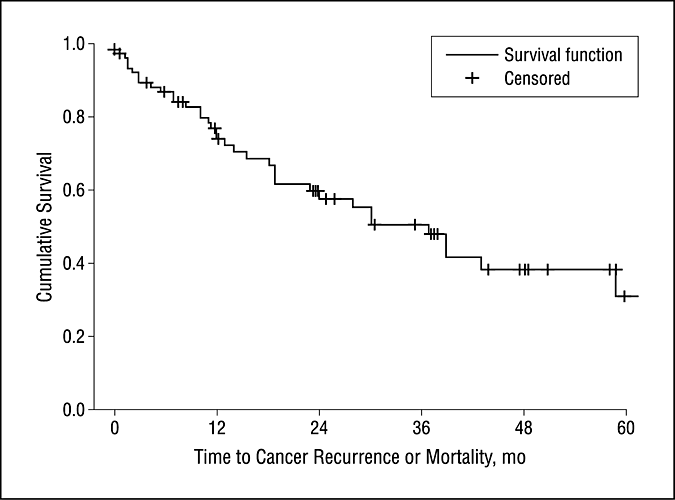
So what are the results of liver transplant for neuroendocrine tumors? Because these tumors are so uncommon, there’s never going to be a randomized clinical trial. All that can be found in the literature consists of small case series or retrospective analyses.The kindest and most generous characterization that can be made is that that the evidence for treating neuroendocrine tumors metastatic to the liver with liver transplantation is mixed at best. A recent retrospective analysis of the UNOS database produced this survival curve (click to embiggen):

A picture’s worth a thousand words, and based on this curve alone Jobs had a little better a 50-50 chance of living as long as he did (almost two and a half years). Unfortunately, he fell out on the wrong side of those odds. Jobs’ case aside, the authors conclude:

Although surgical resection still should be considered the treatment of choice in patients with liver metastases from NETs, transplantation for unresectable disease is indicated in patients with stable disease without disseminated metastases. A national database should be developed to better understand predictors of outcomes in this patient population and to help produce and standardize selection criteria to obtain better outcomes. We believe it is time to carefully revise this indication.

Who could argue with more research? Jobs’ case is, however, an excellent example of the difficulties in deciding on a course of action when the evidence available is sparse. For instance, if he had progressive disease (and in retrospect it sounds as though he probably did), he probably should not have undergone transplantation, given that immunosuppression would probably facilitate the growth of microscopic tumor deposits and also given that it is possible to provide prolonged palliation by other means. Yet, to Jobs and his doctors at the time, the picture was probably anything but clear, other than that things were getting worse.

The war to claim Steve Jobs’ narrative

Since the death of Steve Jobs, there has been a struggle to claim his narrative as “evidence” to support a world view. On the one side, there are quacks using and abusing Jobs’ memory, as they’ve used and abused those of so many other dead celebrities to “prove” that “conventional medicine killed them.” Predictably, first out of the box is the despicable crank known as Mike Adams. Adams has made a not-so-savory name for himself for ghoulishly (and gleefully) taking advantage of the death of celebrities in order to blame “conventional” medicine for having killed them. It’s a depressing and predictable pattern that continued with Steve Jobs. Indeed, Adams produced an article on Steve Jobs’ death so quickly (within hours of the announcement of Jobs’ passing) that I have to wonder if he had already had it written and teed up, just waiting for Jobs to die. Whatever the case, Adams entitled his article, again predictably enough given his past history, Steve Jobs dead at 56, his life ended prematurely by chemotherapy and radiotherapy for cancer, which begins with a typical charge (from Adams) that Jobs’ gaunt appearance was due to chemotherapy, not the progression of his cancer, blaming his death on the “cancer industry” and claiming that it was “toxins” that caused his cancer and that “natural” treatments could have cured him.

Just yesterday, Joe Mercola chimed in, apparently managing to interview Nicholas Gonzalez right after Jobs’ death to produce this video:

Gonzalez, you may recall, is the originator of the “Gonzalez therapy” for pancreatic cancer, a therapy involving various juices, dietary manipulations, coffee enemas, and many, many supplements, as many as 150 pills per day. Also recall that his therapy, besides having no biological plausibility, has been convincingly demonstrated not to work.

The truly ironic thing, of course, is that Jobs lived a lifestyle very similar to the one that Adams touts as an all-purpose cancer preventative. As I mentioned before, Jobs was widely reported to be a vegan but was a was in fact a pescatarian. Jobs did not eat meat and the animal rights group PETA has paid homage to him after his death for being a vegetarian and sympathetic to animal rights causes. The point, of course, is that Steve Jobs ate a diet and lived a lifestyle far more similar to the kind that Adams touts as a cure-all or prevent-all for cancer than the “typical” fat- and meat-laden American diet that Adams lambastes. Upon his initial diagnosis, as we have seen, he eschewed surgery for nine months, trying to treat his cancer with a “special diet.” It’s not clear just what, exactly, this “special diet” was. Oddly enough, Gonzalez hints that he knows something:

He wanted to see an alternative. In fact when he was first diagnosed, he got some dietary program — again, he was very secretive of that — So I don’t exactly know what he did at that point. But through his acupuncturist, there was communication. He was getting acupuncture, and he was doing some alternative things as far as I know. This acupuncturist actually talked to me, discussing the situation. She was really anxious for him to come and see me. But he chose not to do that.

You know, I always respect the patients’ right to choose the therapy they want to choose, so I would never dispute that. The patients have to make the decisions based on what they want to do. But she was very adamant; in fact, she knew about all my works in the alternative world. He had seen alternative-type practitioners. She really wanted for him to come and see me. He chose not to do that. From my perspective, it was unfortunate, because he was such a gift to the world in terms of his inventions and genius in the past 30 years.

Yes, that’s Gonzalez claiming that he could have saved Jobs if only Jobs had listened to an acupuncturist.

For as much as the quacks are trying to claim that they could have cured Jobs if only they had given them the chance, there is, however, the chance of taking the opposite argument, namely that Jobs might have died because of his embrace of non-science-based treatments, too far in the other direction. Unfortunately, there is a skeptic who should really know better who did just that, using Steve Jobs’ death as evidence of the harm that alternative medicine can do. Now, given my reputation as someone who relentlessly applies the cudgel of reason, science, and critical thinking squarely to the back of the head of woo on a regular basis, you just might think that I would heartily approve of this line of argument. You’d be wrong, and not because I have any qualms whatsoever about appropriately blaming alternative medicine when someone pursues alternative medicine and ultimately dies. (I have, after all, done it myself on several occasions.) The key word is “appropriately,” and the reason that I’m not so hot on using Jobs’ death as a “negative anecdote” against “alternative” medicine is because I’m not so sure how appropriate doing so is in Jobs’ case. While Jobs certainly didn’t do himself any favors by waiting nine months to undergo definitive surgical therapy of his tumor, it’s very easy to overstate the potential harm that he did to himself by not immediately letting surgeons resect his tumor shortly after it was diagnosed eight years ago. Unfortunately, Brian Dunning does exactly that in his post A Lesson in Treating Illness (also posted over at Skepticblog):

I’m sad that today I’m adding a slide to one of my live presentations, adding Steve Jobs to the list of famous people who died treating terminal diseases with woo rather than with medicine.

Except that Jobs didn’t; at least, he didn’t for the most part. Aside from the initial nine months, Jobs, as far as we know, relied on exclusively on conventional therapy to treat his disease. In fact, he underwent the most invasive, cancer aggressive operation (the Whipple pancreaticoduodenectomy), which is one of the biggest, if not the biggest operation, that surgical oncologists do. Then, after his tumor recurred in his liver, he underwent the biggest, mot technically complex type transplant operation there is, a liver transplant. When his cancer recurred a second time earlier this year, Jobs was seen going to the Stanford Cancer Center in Palo Alto, California, looking frail and thin.

Moreover, the other “alternative” therapy reportedly pursued by Jobs in Switzerland was a therapy based on radiation therapy, you know, the kind of therapy known to the likes of Adams as “burning” the cancer. In any case, Jobs apparently traveled to the University Hospital of Basel in Switzerland to receive a form of “hormone-delivered radiotherapy.” For some reason this is being portrayed in the press as somehow “alternative.” In reality, from what I can tell, it’s science-based, but experimental. Basically, in this therapy, radioisotopes are linked to a peptide hormone, receptors for which are found on the tumor being treated. The hormone then binds to the receptors, bringing the radioisotope close enough to the tumor cells to deliver a high dose of radiation. This therapy is not “alternative”; although it’s not standard of care, it’s definitely science-based.

All of this leaves the sole remaining question regarding the issue of “alternative” medicine and cancer in the case of Steve Jobs as: Did Jobs significantly decrease his chance of surviving his cancer by waiting nine months to undergo surgery? It seems like a no-brainer, but it turns out that that’s actually a very tough question to answer. Certainly, it’s nowhere near as certain as Dunning tries to make it seem when he writes things like:

Eventually it became clear to all involved that his alternative therapy wasn’t working, and from then on, by all accounts, Steve aggressively threw money at the best that medical science could offer. But it was too late. He had a Whipple procedure. He had a liver transplant. And then he died, all too young.

One has to be very, very careful about making this sort of argument. For one thing, it could not have been apparent that it was “too late” back in 2004, when it became clear that Jobs’ dietary manipulations weren’t working. For another thing, we don’t know how large the tumor was, whether it progressed or simply failed to shrink over those nine months, and by how much it increased in size, if increase in size it did. Again, I hope that information will be revealed in the Jobs’ biography; such data would go a long way in clarifying just how much, if at all, Jobs might have compromised his chance for cure by delaying. Right now, we just don’t know enough to make even a good guesstimate. Based on what we do know now, the thing that has to be remembered is that neuroendocrine tumors of the pancreas tend for the most part to be fairly indolent, slow-growing tumors It’s very much overstating the case to write, as Dunning does:

As he dieted for nine months, the tumor progressed, and took him from the high end to the low end of the survival rate.

We don’t know that this was the case, and we certainly can’t say that for sure — or even with a great deal of certainty. Dunning is massively overstating the case in his eagerness to attack alternative medicine. This is a mistake. Again, I would certainly agree that Jobs did himself no favors by waiting. If I were his physician or the surgeon to whom he was referred, I would have done my best to talk him out of such a course of action, but I would do so more out of the uncertainty of not knowing how fast his tumor would progress. So, is it possible, even likely, that Jobs compromised his chances of survival? Yes. Is it definite that he did? No, it’s not, at least it’s not anywhere as definite as Dunning makes it sound. In fact, based on statistics alone, it’s unlikely that a mere nine months took Jobs “from the high end to the low end of the survival rate,” as Dunning puts it. That’s just not how insulinomas usually behave from a biological standpoint. They’re too indolent, and that’s not even taking into account issues of lead time bias and other confounding factors that would make comparisons of operating early versus operating later not as straightforward as one might think. Remember, Jobs’ tumor was probably what we call an “incidentaloma”; i.e., a finding picked up incidentally on a diagnostic test done for another reason. Consequently, it might not have caused symptoms for a long time. Or it might have already been causing symptoms, just symptoms that normally don’t warrant a CT scan. We don’t know; there isn’t enough information. Be that at it may, I have no doubt that Jobs might well have compromised his chances of survival by delaying, but it’s just not scientifically supportable to leap to the conclusion, as Dunning does, that he compromised his chances so much that “alternative medicine killed him.” What is known about Jobs’s case and insulinomas do not support such a conclusion; at worst they support a conclusion that Jobs might have decreased his chances somewhat.

If there’s one thing we’re learning increasingly about cancer, it’s that biology is king and queen, and that our ability to fight biology is depressingly limited. In retrospect, we can now tell that Jobs clearly had a tumor that was unusually aggressive for an insulinoma. Such tumors are usually pretty indolent and progress only slowly. Indeed, I’ve seen patients and known a friend of a friend who survived many years with metastatic neuroendocrine tumors with reasonable quality of life. Jobs was unfortunate in that he appears to have had an unusually aggressive form of the disease that might well have ultimately killed him no matter what. That’s not to say that we shouldn’t take into account his delay in treatment and wonder if it contributed to his ultimate demise. It very well might have, the key word being “might.” We don’t know that it did, which is one reason why we have to be very, very careful not to overstate the case and attribute his death as being definitely due to the delay in therapy due to his wanting to “go alternative.” Finally, Jobs’ case illustrates the difficulties with applying SBM to rare diseases. When a disease is as uncommon as insulinomas are, it’s very difficult for practitioners to know what the best course of action is, and that uncertainty can make for decisions that are seemingly bizarre or inexplicable but that, if you have all the information, are supportable based on what we currently know.

FacebookGoogle BuzzDigg<!--<!--LinkedInStumbleUponLiveJournalShare

Incubators – Beyond Middle School Science Class

The first thing that comes to my mind when I hear the word “incubator” is my middle school science class. I can’t remember if we did a project or just read about it, but I am positive it was a point of focus for way too long. We learn about incubators as containers in which environmental conditions may be controlled and maintained to provide a suitable place for growth. In my middle school science class, incubators helped eggs embryos grow, develop and eventually hatch. When I heard the term getting thrown around in our offices, I was pretty confused.

As it turns out, incubators programs like Tech Wildcatters and TechStars do the same thing … only with startups (and fewer egg shells).

As Paul mentioned in Fueling Startups with TechStars, TechStars has a series on Bloomberg TV that follows a few startups in TechStars New York from the application stage through their 3 month program and Demo Day. While I understood the basic premise of the incubator programs, seeing the way they documented it was like a crash course … So much so that when I talk about it with family and friends (and see their confused faces), I just pull up the first episode:

Just like a science class incubator that provides an egg with light, movement and an environment to mimic conditions required for growth, startup incubators give young businesses seed money, opportunities to pitch businesses to investors, and access to mentors and sponsors who are all there to provide support. In the short program term, the companies get exposure, guidance about funding and access to every other service a they could need to succeed. Piecing together that experience outside of the dedicated incubator environment would require a lot more time, effort and capital.

These incubator organizations are also referred to as startup accelerators, and they’re like a golden ticket to entrepreneurial success … And that’s why it’s so difficult for a startup to get accepted to participate in one of them. The value a startup brings to the table is not just in the idea; it’s also in the people behind the idea.

Recently, I attended the kick-off party for the new class of Tech Wildcatters startups, and I got a chance to meet some of these passionate startup owners. Their energy is contagious. My first-hand experience immediately reinforced to my why SoftLayer is so interested in helping foster companies that could redefine and reinvent the future.

All of these comparisons between about incubators and eggs have made me pretty hungry … If you need me, I’ll be down the street getting an omelet.

-Rachel

Getting Started as a Server Build Technician

When I was interviewed for a job as Server Build Technician (SBT) in Dallas, I was a little concerned that I was getting in over my head. I let my potential manager know that I had very little experience with Linux but that I was willing to learn. I tried to show that I’d be a quick study, and the interview must have gone well because by the end of the day, I was offered the job. I was really excited to know that SoftLayer was willing to take give me an opportunity to finally start pursuing a career path in technology (which is what I was looking for out of school).

As it turns out, I was the only female SBT in SoftLayer’s Dallas-area data centers, so I felt a good amount of pressure to prove myself and step up my game. Luckily, my training took away a lot of those nerves, and it was also comforting to see that no matter where I was working (data center or office), I was welcomed by my coworkers. It didn’t hurt that I met some really cool people in the process, too. From day one, I realized that I’d been given an amazing opportunity to learn from some really smart folks who know their stuff when it comes to everything related to technology.

I have been here for around six months, and I can’t believe how much tech knowledge I’ve absorbed. I wouldn’t claim to be an expert in Linux or a MySQL guru (yet), but if my experience here is any indication, it won’t be too long before I know everything there is to know about every technology living in our data centers. When I run into a problem or a question I don’t have the answer for, I can rely on my coworkers to have the solutions and break them down into terms I can understand if they’re overly complex.

Would I recommend this job to others? Most definitely! This has been one of the best jobs that I’ve ever had. I’ve been able to take what I learned in school and actually apply it to my daily work life while continuing my real-world on-the-job education. If you have a server in DAL02 and need someone to check out the hardware or add some RAM, I might be the one jumping to get your request fulfilled quickly.

I’m proof that SoftLayer invests in its employees, so if you’re interested in an amazing job for a company who values you, I want you to be a coworker! We have positions in all departments available in Dallas, Houston, Singapore, Amsterdam, San Jose, Seattle and Washington, D.C. (and probably more location in the near future), so keep an eye on the SoftLayer Careers page for the perfect opportunity to join our team.

-Rochelle

A Manifesto: Cloud, Dedicated and Hosting Computing

We are witnessing a fundamental shift in the IT industry. It is forever changing the way technology is delivered and consumed. The pay-as-you-go model for everything you need in IT is shattering the old computing paradigms, from software licensing models and hardware refresh cycles to budgeting operating costs. This change is bringing about more control and transparency to users while accelerating the commoditization of IT by making it easily available through a new model.

This new model comes in three major “flavors”: Infrastructure-as-a-Service (IaaS), Platform-as-a-Service (PaaS) and Software-as-a-Service (SaaS) solutions. We incorporate and enable all three by offering a unified, fully automated platform to enable greater customer control over their IT environments. The key tenants of this emerging model for SoftLayer are innovation, empowerment, automation and integration. Here’s how we deliver against these four key tenants.

Innovation: We want to lead the industry by offering best of breed and proprietary cloud, dedicated, and managed hosting solutions, based on our own intellectual property. Currently, we have more than 252,000 hours invested and 2.6 million lines of code developed around these solutions. Customers can take charge of every aspect of their IT operations (servers, storage, networking & services) through our fully automated platform. Our Customer Portal and fully featured APIs give customer more control by providing direct access to more than 100 back-end systems and activities — every aspect of IT operations can be managed.

Empowerment: We turn IT operations into a predictable fixed cost. Customers can stay focused on achieving their business goals, not managing IT infrastructure. We offer expert planning and support from a certified, 24/7 support staff. Customers can deploy and scale when they want with one-day and on-demand automated provisioning. They can keep it as long (or short) as needed, with monthly contracts. In addition, customers can choose what they want to manage and what they don’t, with the ability to have hybrid IT self-managed and managed environments. This speaks to the flexibility of our platform!

Automation: This is an area that makes SoftLayer stand out from the pack. We automate deployment and management of all services, accelerating provisioning time, streamlining administrative tasks, and making it all on-demand, every day and night. With automation that mitigates the risk for human error, comprehensive security practices and options, and a 24/7 team of certified engineers, we provide greater stability, a 100% Uptime Guarantee, and around the clock support for any issues or service.

Integration: This is the final ingredient to making it ALL work. We seamlessly integrate hardware, software, and networking into a unified service, all conveniently controlled through our easy-to-use Customer Portal and robust APIs. We provide full information, full-time through our Customer Portal and APIs, for every service we provide; there is no data about a system that we keep from our customers, from usage statistics to network performance and beyond. We have complete transparency.

These four key tenets are what set us apart. When SoftLayer started back in 2005, the team’s goal was not to be Go Daddy on steroids. We set our sights on being the de facto platform for mainstream businesses to run all their IT operations. This means the complete gamut of applications and workloads with no compromise of performance, security, reliability and access. We are entering into a new IT era, where “connected everything” is the norm. It reminds me of the old phrase “the network is the computer” from Sun Microsystems’ slogan. We have the foundation in place, which will make for an unforgettable journey. Let us know what you think.

-@gkdog

Working on the SoftLayer Dev Team

This post is somewhat of a continuation of a post I made here a little over three years ago: What It’s Like to be a Data Center Technician. My career at SoftLayer has been a great journey. We have gone from four thousand customers at the time of my last post to over twenty five thousand, and it’s funny to look back at my previous post where I mentioned how SoftLayer Data Center Technicians can perform the job of three different departments in any given ticket … Well I managed to find another department where I have to include all of the previous jobs plus one!

Recently I took on a new position on the Development Support team. My job is to make sure our customers’ and employees’ interaction with development is a good one. As my previous post stated, working at SoftLayer in general can be pretty crazy, and the development team is no exception. We work on and release code frequently to keep up with our customers’ and employees’ demands, and that is where my team comes in.

We schedule and coordinate all of our portal code updates and perform front-line support for any development issues that can be addressed without the necessity for code changes. Our team will jump on and fix everything from the layout of your portal to why your bandwidth graphs aren’t showing.

Our largest project as of late is completely new portal (https://beta.softlayer.com/) for our customers. It is the culmination of everything our customers have requested in their management interface, and we really appreciate the feedback we’ve gotten in our forums, tickets and when we’ve met customers in person. If you haven’t taken the portal beta for a spin yet, take a few minutes to check it out!

SoftLayer Portal

The transition from exclusively providing customer support to supporting both customers and employees has been phenomenal. I’ve been able to address a lot of the issues I came across when I was a CSA, and the results have been everything I have expected and more. SoftLayer is a well-oiled machine now, and with our global expansion, solid procedures and execution is absolutely necessary. Our customers expect flawless performance, and we strive to deliver it on a daily basis.

One of the old funny tag lines we used was, “Do it faster, Do it better, Do it in Private,” and with our latest developments, we’d be remiss if we didn’t add, “Do it Worldwide,” in there somewhere. If there’s anything I can do to help make your customer experience better from a dev standpoint, please let me know!

-Romeo

Building a True Real-Time Multiplayer Gaming Platform

Some of the most innovative developments on the Internet are coming from online game developers looking to push the boundaries of realism and interactivity. Developing an online gaming platform that can support a wide range of applications, including private chat, avatar chats, turn-based multiplayer games, first-person shooters, and MMORPGs, is no small feat.

Our high speed, global network significantly minimizes reliability, access, latency, lag and bandwidth issues that commonly challenge online gaming. Once users begin to experience issues of latency, reliability, they are gone and likely never to return. Our cloud, dedicated, and managed hosting solutions enable game developers to rapidly test, deploy and manage rich interactive media on a secure platform.

Consider the success of one of our partners — Electrotank Inc. They’ve been able to support as many as 6,500 concurrent users on just ONE server in a realistic simulation of a first-person shooter game, and up to 330,000 concurrent users for a turn-based multiplayer game. Talk about server density.

This is just scratching the surface because we’re continuing to build our global footprint to reduce latency for users around the world. This means no awkward pauses, jumping around, but rather a smooth, seamless, interactive online gaming experience. The combined efforts of SoftLayer’s infrastructure and Electrotank’s performant software have produced a high-performance networking platform that delivers a highly scalable, low latency user experience to both gamers and game developers.

Electrotank

You can read more about how Electrotank is leveraging SoftLayer’s unique network platform in today’s press release or in the fantastic white paper they published with details about their load testing methodology and results.

We always like to hear our customers opinions so let us know what you think.

-@nday91

ICC Global Hosting: Tech Partner Spotlight

Welcome to the next installment in our blog series highlighting the companies in SoftLayer’s new Technology Partners Marketplace. These Partners have built their businesses on the SoftLayer Platform, and we’re excited for them to tell their stories. New Partners will be added to the Marketplace each month, so stay tuned for many more come.
- Paul Ford, SoftLayer VP of Community Development


Scroll down to read a guest blog from ICC Global Hosting’s Mark Moeller. ICC’s Hosted Virtual Desktop delivers full-featured Windows desktop computing environments, including Microsoft Office, anti-virus, and data storage to any device, anywhere, anytime.

More Information
Company Website: http://iccglobalhosting.com/
Tech Partner Marketplace: http://www.softlayer.com/marketplace/iccglobalhosting

Accessing Desktop Apps Anytime, Anywhere, from Any Device

The computing world is changing rapidly – driven by the consumerization of applications, the demands for employees to be in an “always on” mode, and the revolution of mobile computing. End users have become App savvy and with the advent of the “there’s an app for that” generation applications that have become very easy for end users to install and run on their own. The computing platforms they use have become self-service in nature and new applications are now easy to find and no longer require IT to research, purchase, install, and manage. In fact, IT departments have lost control over what applications run on these devices posing a huge support problem and security threat.

In today’s economy organizations demand their employees to do more with smaller staffs forcing employees to be “always on” with e-mail and other work data now delivered to their desktops, smart phones, tablets, and home computers. People on average now access work data and applications from three devices with new choices of mobile devices available almost daily.

VDI Sticker Shock – With all of these changes many IT departments have considered virtual desktops as a solution to provide access to multiple platforms, remote access, and secured network stored data. Consultants and vendors have been trying to sell organizations virtual desktops as VDI, but most organizations suffer from sticker shock facing huge start-up costs and little or no economies of scale. Most organizations fail to see any potential ROI with VDI solutions and end up tabling the decision for next year’s budget.

Hosted Virtual Desktops – Hosted virtual desktops are cloud desktop services provided in the cloud by a service provider. Unlike typical VDI deployments, with these cloud desktop services, all of the infrastructure is provided by the service provider, and the client organization can purchase virtual desktops as they need them and are not subject to uncontrolled costs or continually expanding infrastructure.

Hosted virtual desktops are purchased from the service provider as a simple operations expense that can be budgeted as a per user per month cost and can even reduce their overall costs of Microsoft licensing and data storage compared to more expensive VDI solutions. Beyond the infrastructure cost benefits, the cloud desktop services provider centrally manages these virtual desktops – including mundane tasks like Windows and anti-virus updates. With the expertise of managing thousands of virtual desktops for many clients, a cloud desktop service provider delivers a consistent end user experience and a very high quality of service. These cloud desktop services are then accessed anytime, anywhere, and from any device. Outsourced desktop management is also a considerable cost savings to organizations that varies based on their internal support structure.

Bring your Own Device, BYOD/BYOC – Many organizations have considered “bring your own device/computer” programs as an employee benefit. BYO programs allow employees to select their own computing device or bring their own computer to work while accessing their employer’s supported desktop environment, applications and data through use of a virtual desktop.

Some of these programs have been driven from the top by executives who want to access corporate resources from their iPad or other personal device. Other BYO programs have been developed to attract and retain technically astute employees by giving these employees a choice of computing platforms as an employee benefit for hiring the brightest and most qualified and sought after job candidates. And some BYO programs exist to essentially create a controlled, secured, and legitimate way to allow employees to connect to their corporate resources without having employees’ rogue devices accessing the network.

Just as with any virtual desktop solution, hosted virtual desktops are often a better approach than VDI. ICC Global Hosting has worked with Citrix to provide a Hosted BYO program which specifically provides a service for quick BYOD proof of concepts or smaller scale BYOD deployments. These cloud desktop services are then delivered to virtually any device including PCs, Macs, thin clients, iPads, iPhones, Android tablets and phones, and other mobile devices.

Virtual Desktops on SoftLayer’s CloudLayer Platform – SoftLayer recently announced the availability of cloud desktop services managed by ICC Global Hosting. This partnership combines the scalability and security of SoftLayer’s CloudLayer Platform with ICC Global Hosting’s hosted virtual desktop expertise.

SoftLayer clients benefit from the enhanced performance and security of applications running along with hosted virtual desktops on the CloudLayer Platform. This solution lets clients obtain the all the features and benefits of VDI without the overhead and headaches of VDI. Organizations may now access cloud desktop services Anytime, Anywhere, and from Any Device with ICC and SoftLayer.

-Mark Moeller, ICC Global Hosting

Fueling Startups with TechStars

One of the coolest things that we get to do as a company is support the growing and thriving community of technology entrepreneurs.

Programs like TechStars provide us with the perfect opportunity to directly plug into some of the best and brightest tech talent anywhere in the world. As the number one startup accelerator in the world, TechStars receives applications from thousands of companies each year, and they only select the best of the best to be members of the program. Member companies receive perks like top-notch mentorship, free hosting, funding and the chance to present their products to venture capitalists and angel investors at the end of the program.

Several SoftLayer executives serve as mentors for TechStars, which allows us to share some of the knowledge (and some of the mistakes) we’ve gathered along the way. In fact, the inaugural class of the new TechStars Cloud in San Antonio will have access to SoftLayer’s CSO George Karidis, our CTO Duke Skarda and me as Mentors. Not too long ago, SoftLayer was a startup, too — just a bunch of guys with a great vision, a few credit cards, and not much more. We understand how important it is to get good help and advice from others who have traveled the road before.

That’s why we created the SoftLayer Startup Program. Companies in our program receive more than just advice, best practices and industry insight from us; we also provide tangible resources. Every selected company gets a free year of hosting with SoftLayer. This includes:

  • A $1,000 per month credit for dedicated hosting, cloud hosting, or any kind of hybrid hosting setup
  • Advanced infrastructure help and advice
  • A dedicated Senior Account Representative
  • Marketing support

The selection process for the SoftLayer Startup Program is pretty competitive as well, but because Tech Stars member companies had to beat the odds to get into that program, they are granted automatic admission to our program. Several of the companies who’ve gone through TechStars and through the SoftLayer Startup Program have become loyal customers, and you can see many of them in our Technology Partners Marketplace, where we spotlight innovative ways members of the SoftLayer community are building their businesses on our platform.

Calling All Startups!

If you’re involved in a startup right now, and you’re looking to get the help you deserve, email me, and I’ll help you get your application submitted for the SoftLayer Startup Program. If you’re focused on Cloud Infrastructure or Cloud Tools development, you have an even bigger opportunity: Priority-consideration applications for the inaugural class of TechStars Cloud are due October 21. The first class will run in San Antonio Texas from January through April of 2012. If you need just a bit more time to apply, the final application deadline is November 2. Head over to TechStars Cloud to get more information and to apply to join the latest, greatest edition of TechStars … And you get guaranteed admission into our program where you’ll enjoy all of the SoftLayer-specific benefits above!

-@Teknowlogist

P.S. If you want some insight into what it’s like to work in a technology incubator, we recommend the TechStars series on BloombergTV that has documented the ups and downs of a few of the participants in TechStars New York.

Air Pollution Pictures

air pollution factory taiwan

The shot above was taken in a city called Linkou in Taiwan. It is in a industrial business park that my work sent me to for training. Linkou is a suburb of Taipei and has a lot of manufacturing facilities and factories around.

Taiwan smog pollution

This is a shot another shot of Taiwan that showcases the inherent problem with smog in the country. You can see the effect of industrial air pollution as well as smog issues from cars, motorcycles, and trucks. This city has got a serious smog issue.

Railroad Pollution

The shot above was taken when I was volunteering with Oregon Toxics Alliance. I was tasked with taking pictures of the railyard scene in Eugene, Oregon. This one is obviously my favorite snapshot that portrays the industrial portion of west Eugene, this railyard is owned and operated by Union Pacific I believe.

Utah Pollution Factory

The shot above is in Utah, it was taken on a road trip to Moab, Utah to see Arches National Park and Canyon Land National Park. I’m not sure what it is exactly, perhaps a coal power plant or some woody biomass plant.

If you just can’t get enough pics, check my other page, Environmental Pollution Pictures.


100% Renewable Energy by 2050?

solar power plant desert

The World Wildlife Foundation in Canada performed a study of renewable energy that reported that 100% of our energy needs could be met with renewable energy sources by the year 2050. If you’re a little on the younger side, like in your 20′s or 30′s, that means that we could live to see the day when the full transition occurs to 100% clean and pristine energy.

Transitioning to full renewable energy obviously seems like a daunting task, but doing so could relieve the world’s anxiety over greenhouse gas emissions or toxic air pollution contributing to health issues. Another great benefit to renewable energy is all in the name, it’s a renewable resource, meaning that it is not required to be mined, to be collected, nor to be extracted. Renewable energy also does not produce a dangerous byproduct, such as radioactive spent nuclear waste, that needs to be stored away from humans and the environment for thousands of years.

The Energy Report by the WWF, in collaboration with energy consultants Ecofys, rightly outlined the strategy that would be needed achieve the goal of 100% renewable energy. Part of that strategy requires everyone to adopt energy efficiency through buildings, energy efficient vehicles, and energy efficient industry. Renewable power would need to be delivered via a smart grid, a type of electrical grid which attempts to predict and intelligently respond to the behavior and actions of all electric power users connected to it.

Speaking of That Smart Grid Thing

The Smart Grid, according to smartgrid.gov, is a developing network of transmission lines, equipment, controls and new technologies working together to respond immediately to our 21st Century demand for electricity. Having a smart grid has the benefit of shedding the old way of logging people’s utility usage of physically sending a utility technician to log meters at individual’s homes, and instead sending monthly data usage via a secured wired or wireless network. This new method of collecting energy data will reduce vehicle miles traveled by utility companies worldwide if deployed as a global model.

Ultimately, having a smart grid system can benefit the consumer of electricity because such a system would be developed to allow the user to login online and analyze daily usage patterns of electricity. Google did a pilot project with IBM and the City of Dubuque, Iowa, which showed strong engagement by residents and energy savings of up to 11%. The conclusion that I drew from the pilot project is that users who actively engage in a system that reports energy usage leads to an awareness that reminds people to turn that light off after using it, or to shut off the printer when not in use, etc. I know this to be true in my own life, even though I don’t participate currently in a smart grid program due to lack of availability; I actively make sure that the coffee maker is unplugged, I unplug my cell phone charger from the wall, etc. I even purchased the latest energy saving gadgets like a smart strip, conserve socket, and led light bulbs to replace all my sub-standard CFL’s.

Facts

  • Energy efficiency and renewable energy can reduce our reliance on fossil fuels by 70 per cent by 2040
  • By 2050, we will save nearly $5.5 trillion per year through energy efficiency and reduced fuel costs
  • If 0.3 per cent of the Sahara desert was a concentrated solar plant, it would power all of Europe
  • By 2050, more than a third of building heat could come from geothermal sources

“The Energy Report shows that 100 percent sustainable, renewable energy is possible and economical by 2050 if we start the transition today. To protect the future of our planet, these are the steps we need to take.” Gerald Butts, President and CEO, WWF

Furthermore, the WWF Energy Report argues that switching to 100% renewable energy worldwide is not an option, it is the only choice. The three main fossil fuels used today: coal, natural gas, and oil are depleting and are finite resources. The world is expected to grow to over 9 billion people by the year 2040, and the demand of energy from that generation will likely be more than that of our current demand. The cheapest sources of oil have already been tapped, leading current oil giants to deep sea oil drilling, extraction of oil from Canadian tar sands, and expensive processes to extract natural gas, petroleum, or coal seam gas through fracking.

Global Mandate For a Successful Transition

Public entities all over the world and at all levels of government have major roles to play. Some sort of mandate for performance standards such as mandating utility companies to have renewable energy requirements by a certain year and innovative solutions such as Portland Oregon’s curbside composting plan. On the federal level, governments could do more to level the playing field with fossil fuel energy sources by cutting subsidies to oil and promoting subsidies for renewable energy sources. Governments need to utilize their vast resources to make serious investments in large infrastructure projects including public transportation, like national high speed rail networks, and power grid infrastructure to pipe in energy from far away solar plants and wind farms. They could also provide funds for early stage research and development projects to ensure continued sustainable innovations.

The private sector has its role to play in the transition as well. Buying green or energy efficient merchandise fuels demand and innovation by private companies to provide those types of end products. For example, once the hybrid electric vehicle came out as an efficient gas saver, environmentally conscious consumers and people wanting to save on gas chose to buy that vehicle over existing conventional automobiles. Consumers can vote with their dollars which can help spur the eventual transition to a sustainable economy. Now that the popularity of hybrid vehicles are a widely known phenomenon, the transition to full electric vehicles has already begun. Big car manufactures have put their money where their mouth is to promote EV technology with the Tesla, Nissan Leaf, and with the Mitsubishi i.

We are well on our way towards the transition, but no where near where we need to be. Help us move closer to the 100% renewable energy goal … the environment will thank you for it.

Download the Full Report Here: WWF Energy Report 2011(7.8 MB)


Examples of Biomimicry

electric eel
Photo: some rights reserved by chrisbb@prodigy.net

In over 200,000 years of his existence, man has conceptualized and created some of the most amazing and fascinating devices to make life easier and more comfortable for him. From fire to primitive tools, from wheels to the modern day motor, from paper to Microsoft word, man has outdone himself with every progression of his. Surely, man is the most intelligent animal to have populated this planet. Or is he?

Why Hornets and Eels Make Us Little Green Men

The very man that invented the motor-vehicle and the GPS to guide him on his travels, wasn’t farsighted enough to find a renewable, non-toxic, cheap and permanent fuel to power his vehicle, at least not until very recently. He erected nuclear power plants in his backyard to fuel his hunger for power, while the world’s largest nuclear power plant hovered over his head for 12 hours a day, every single day of his existence. He destroyed forests to mine coal but didn’t consider harnessing the wind blowing in his face. And today, he doesn’t even think twice before shelling out a huge chunk of his earnings to buy energy, a truly bizarre act considering that energy is the single most omnipresent commodity available in nature. So, when the question of man’s intelligence is posed again, it makes us wonder, is man really the most intelligent creature to have ever lived?

The Oriental Hornet, More Than Just a Fly on the Wall?

The oriental hornet, a bee of sorts found in western India, by virtue of its anatomical design, is most active during the brightest time of the day. Its body is designed such that it harnesses the sun’s energy instead of reflecting it. The next time you see an oriental hornet digging away in the scorching sun, don’t cover it with an umbrella.

The Electric Eel, Shockingly Out-of-the-Box!

Plants utilize the sun’s energy to carry out various bio-chemical processes. They were the inspiration behind the first photovoltaic cells, an example of biomimicry. The first documented instance of man’s interaction with electricity is found in ancient Egyptian scrolls. The Egyptian fishermen would often be shocked by electric eels swimming down the Nile. These slippery fish might not rank among the world’s most beautiful creatures, but what they lack in looks, they make up for in watts. Ionic exchange in the eels’ somatic or body cells leads to the generation of a range of voltages. Scientists are emulating these cells in labs to explore their potential as a future source of renewable energy. Perhaps eels could be the solution to all the pollution.

In the recent past, man has taken a cue from his animal brothers and come up with some great alternatives to the conventional, albeit limited, energy resources. Wind farms, solar power plants, geothermal plants, hydroelectric plants and tidal power plants are just a few of the more responsible and renewable solutions he has managed to come up with to prevent any quarrels among the future generations over the energy resources handed over to them. The progress made by him is truly commendable. From a solely fossil-fuel fed existence, man has managed to vanquish some of his lost pride by showing the world that he can explore greener avenues and still flourish without a compromise in sight. Today, man meets 18% of his energy needs from renewable sources.

Thoughts, comments, suggestions…

Written by Guest Blogger Kashyap Swaroop


Portland Joins the Ban on Plastic Bags

ban the bag - kitty
Photo by The Environmental Blog

Are You Ready For the Switch?

On October 15th, 2011 Portland, Oregon will join ranks to ban plastic bags with Californian cities/counties: San Francisco, San Jose, Palo Alto, Malibu, Fairfax, Santa Monica, Manhattan Beach, Calabasas, Long Beach, Marin County, and unincorporated Los Angeles County.

Many, many other cities (which you are welcome to let me know about via the comment section below) across the United States and across the world have existing bans on single use plastic bags, are in the process of banning, or are seriously considering banning the bag.

It all started when San Francisco lead the nation in 2007 stating that plastic bags lead to litter, increased demand on oil (needed to make plastic bags), and for not being able to break down in the environment including in landfills nor the ocean.

Plastic Industry Displeased with Movement

The plastics industry is starting to lose ground by every municipality that adopts anti plastic bag policies. The town of Fairfax, population 7,000, was threatened with a lawsuit by the plastics industry for unfairly implementing a ban on plastic bags saying that such an act could harm the environment by increasing paper bag usage. The city then made the ban voluntary which many supermarkets voluntarily follow.

Everyone knows that plastic bags are harmful to the environment. Environmentally conscious shoppers already carry around reusable bags when they head to the supermarket in cities and towns far and wide. Having a ban in place forces people to remember to bring their bags, thereby, reducing waste that does not easily decompose.

The ban in Portland targets supermarkets with $2 million or more in gross annual sales and stores with pharmacies and at least 10,000 square feet of space, such as Target and Walmart. Mayor Sam Adams considers those types of retailers the biggest source of disposable plastic bags in the city of Portland. Several chains that fall under the new rules, such as Fred Meyer and New Seasons, already don’t use plastic checkout bags in Portland. I’ve already noticed from shopping at Safeway that they’ve already begun transitioning out their usage of plastic bags and have substituted using more paper bags. It’s unclear if these supermarkets will start charging a fee for paper bags or not, but they are allowed to do so yet not required to do so.

Portland wanted to ban the plastic bag much sooner, but decided to wait and see if a statewide ban in Oregon would make it through the legislative process. When that attempt failed, Portland acted on its own and voted to ban the bag back on July 21, 2011. Now the ban will officially begin on October 15th. It will be interesting to read on twitter if people remember to bring their bags and if any snafu comes of it.

Plastic Usage

It’s estimated that 500 billion to 1 trillion plastic bags are used worldwide every year. 380 billion of those plastic bags are in the U.S. and governments have been slow to accomplish anything to remedy the situation.

Hopefully, people in these plastic bag banned towns will be the change that is necessary and lead by example to help with just one more thing the environment will thank you for in doing.

Does your city/county/state have a ban on the evil Plastic Bag? Post it in the comments section and let us know how that ban is working out.


Effects of Noise Pollution

concert - noise pollution

When talking about pollution in general people usually refer to air and water pollution neglecting the global threat of noise pollution. They seem to forget or are not aware of the fact that noise pollution is disturbing life of all biota present in ecosystem.

Generically, the term ‘noise’ is used to refer to any unwanted sound. This may range from the sound created when you hammer a nail into a wall, to the sound created by an aircraft overflying your house. Noise pollution describes any sound created by people, animals, and machines that disturbs the environment.

Urbanization, economic growth and motorized transport are some of the driving forces for environmental noise exposure and health effects. Environmental noise is defined as noise emitted from all sources except industrial workplaces.

The response of the human ear to sound depends both on the sound frequency (measure in Hertz, Hz) and sound pressure, measure in decibels (dB). The WHO guidelines for community noise recommend less than 30 A-weighted decibels (dB(A)) in bedrooms during the night for a sleep of good quality and less than 35 dB(A) in classrooms to allow good teaching and learning conditions.

The WHO guidelines for night noise recommend less than 40 dB (A) of annual average (L night) outside of bedrooms to prevent adverse health effects from night noise.

*dB Decibel ? units used to measure sound pressure levels on a logarithmic scale.
dB(A) A-weighted decibel ? a measure of sound levels as experienced by humans, calculated using a spectral sensitivity factor (A-filter) that weights sound pressure levels by frequency to correspond to the sensitivity of the human ear.

Decibel Levels of Environmental Sounds

Source–Dangerous Level*dBA SPL
Produces Pain 120 dB to 140 dB
Jet Aircraft During Takeoff (at 20 meters)130 dB
Snowmobile
Tractor Without Cab
120 dB
Rock Concert 110 dB
Die Forging Hammer
Gas Weed-Whacker
Chain Saw
Pneumatic Drill
100 dB to 105 dB
Home Lawn Mowers95 dB to 100 dB
Semi-trailers (at 20 meters) 90 dB

*Source: dBA SPL

Discomfort LevelAbove 80 dB
Heavy TrafficAbove 80 dB
Automobile (at 20 meters)70 dB
Vacuum Cleaner65 dB
Conversational Speech (at 1 meter)60 dB
Quiet Business Office50 dB
Residential Area at Night40 dB
Whisper, Rustle of Leaves20 dB
Rustle of Leaves10 dB
Threshold of Audibility0 dB

*Franks JR, Stephenson MR, Merry CJ. Preventing occupational hearing loss. A practical guide. DHSS (HIOSH) pub. No. 96-110. And National Institute of Deafness and Other Communicative Disorders: Noise Induced Hearing Loss.

Noise Pollution Health Hazards

Noise has become a very important “stress factor” in the environment of man. The term “noise pollution” has been recently used to signify the hazard of sounds which are consequence of modern day development, leading to health hazards of different type.

Continuous exposure to high decibel noise can result in some adverse effects on your health. One of these hazards is acoustic trauma to the ears caused when they are subjected to the sound of an intensity of 85 dB or more without respite.

The health hazards of noise pollution can be categorized into physiological and psychological hazards. While the former includes hearing loss, hypertension, disturbance in sleep patterns etc., the later includes problems such as annoyance, aggression and stress.

Noise induced hearing loss is one of the most harmful effects of noise pollution. More importantly, these harmful effects of noise pollution are not just restricted to human beings, even animals has to bear the brunt of the same. Studies reveal that the increase in the noise levels beyond a certain extent tends to interfere with the communication of the animals, thus resulting in disturbance in their various life processes which is also true for us.

It is generally accepted that the link between excess noise and hearing loss is obvious. But this fact is supported by epidemiological studies that compared the prevalence of hearing loss in different categories of occupations, or in particularly noisy occupations. Although other factors may also contribute to hearing loss, such as exposure to vibrations, ototoxic drugs and some chemicals, the association with noise remains robust after accounting for these influences.

Noise Pollution Effect on Public Health

  • Globally, more than 20 million people are estimated to have hearing difficulties.
  • More than half dozen people in EU countries are living in noisy soundings; a third expensive level that disturbs sleep.
  • In EU countries about 40% of the population is exposed to road traffic noise at levels exceeding 55 db (A); 20% is exposed to levels exceeding 65 dB (A) during the daytime; and more than 30% is exposed to levels exceeding 55 dB (A) at night.
  • Approximately 30 million Americans are exposed to high intensity noise above 85 db in their workplace in one in 4 of these workers (or 7.5 million Americans) a permanent hearing loss will develop, compared more than nine million people in 1981.
  • In Germany and other developed countries as many as 4- 5 million that is 12- 15 % of the employed people are exposed to noise level of 85db or more.

Although most developed nations have government agencies responsible for the protection of the environment, no nation has a single body that regulates noise pollution. Transportation noise is usually regulated by the relevant transportation ministry, health-related work noise is often regulated by health ministries and worker’s unions, and entertainment noise such as loud music is a criminal offense in many areas. Little is currently being done to reduce noise pollution in developed countries.

Impact of Noise on Aquatic Animals

Some scientists believe that noise pollution could have a negative impact on the entire marine food web chain. One of the latest studies by the Technical University of Catalonia in Barcelona showed that dolphins and whales are not the only marine animals seriously affected with noise pollution. It has been found that squids and octopuses are also experiencing massive acoustic trauma because of increased noise pollution in our oceans.

Impact of Noise on Birds

Some people just want some peace and quiet, and apparently, so do birds. The University of Colorado at Boulder has conducted a three-year study that proved in July 2009 that noise pollution affects birds and their habits. The biggest problem that birds face when there is too much noise is their ability to communicate. Birds that vocalize at lower frequencies are easily drowned out by noise pollution, affecting their ability to attract a mate and socialize with the other birds in their community. But finches and other birds that vocalize at a higher frequency appear uninfluenced by the hustle and bustle of noise pollution–apparently ignoring the mass exodus of their fellow, winged friends.

When bombarded by noise pollution, some male birds begin to sing higher tunes and that tonal shift makes them less attractive to females. It could very well be that noise pollution is interfering with reproductive decisions by females. Previous studies have shown that a variety of birds can suffer when they change their songs, according to Erin Bayne, an ornithologist at the University of Alberta. The new study is one of the first to explain why.

Writting by Naseem Sheikh


Deforestation Blamed for Pakistan Flooding in 2010

satellite photo of pakistan flooding

According to the United Nations Food and Agriculture Organization, 2.2% or about 1,687,000 hectares (about 4,168,667 acres) of Pakistan is forested. Pakistan had 340,000 ha of planted forest.

There has been a significant change in forest cover between 1990 and 2010. Pakistan lost an average of 42,000 hectares or 1.66% per year. In total, between 1990 and 2010, Pakistan lost 33.2% of its total forest cover or around 840,000 hectares.

Biodiversity and Protected Areas

Pakistan’s forests contain 213 million metric tons of carbon in living forest biomass. Pakistan has some 1027 known species of amphibians, birds, mammals, and reptiles according to figures from the World Conservation Monitoring Centre. Of these, 3.5% are endemic, meaning they exist in no other country, and 5.5% are threatened. Pakistan is home to at least 4950 species of vascular plants, of which 7.5% are endemic. 4.0% of Pakistan is protected under IUCN categories I-V.

Khurshid Ahmed, an environmentalist from Peshawar University, says most of the logs illegally cut from Pakistan’s forests have been washed away by the recent high speed rains that not only caused habitat damage but also hindered the smooth flow of rainwater in streams, canals, and the rivers.

“The same logs, when taken along in the flood waters, blocked the low clearance of concrete bridges and diverted the flow of water from the main stream towards the nearby population,” said Ahmed.

Illegal human encroachment onto river banks, and even into river beds, also hindered the flow of water, as did the houses built along the path by the river, which were blown away.

Pakistan lacks adequate resources and expertise for climate protection, so some experts have suggested the government to seek assistance from the Green Climate Fund for implementing climate change measures.

In August, the southern parts of the country received 270 percent above-normal monsoon rains. And in September, the monsoons rains were 1,170 percent above normal, says Dr. Qamar-uz-Zaman Chaudhry, Adviser Climate Affairs.

The Sindh province, where six million acres of land were inundated in current floods, had experienced severe drought conditions before the monsoon season and had not received any rainfall at all during the past 12 months.

Millions Affected by Pakistan’s Flooding

Almost 5.3 million people were affected by this year’s rains after the drastic flooding which began falling in late August.

  • 370,000 people estimated to still be living in camps in Sindh.
  • 200,000 people made homeless.
  • 300 people were estimated killed in three months
  • 1.7 million acres of arable land affected.

Government and relevant authorities need to take serious action to control the rate of deforestation. Without action, survival in Pakistan will become very difficult and possibly seen in the same light as poorer African countries like Ethiopia. Ethiopia has lost three quarters of its remaining trees in the last twenty-five years. Forest cover is now down to just 3% of its total land. This land, the birthplace of all humanity, has grown barren. (It’s the usual story: the greed of the former dictatorship; unwise land policies; the desperate poor cutting trees for fuel.) Since 1985, the year of the “Live Aid” concert, food production has declined by two thirds, and twice as many Ethiopians are going hungry.

Written by Naseem Sheikh


Columbia Gorge Wind Turbines

Whistling Ridge Site Location - Columbia Gorge Turbines Turbines

A controversial wind turbine project was recently approved by the Washington Energy Facility Site Evaluation Council and now requires a signature from Governor Chris Gregoire in Washington State for final approval. The site location is in the Columbia Gorge on private forest land in Skamania County. The wind farm project, called Whistling Ridge, originally planned for a total of 50 wind turbines, but was reduced by 15 to protect views in the Columbia River Gorge National Scenic Area.

The wind turbines would stand 420 feet tall and be visible from the Columbia River, I-84, the Lewis and Clark National Historic Trail, the towns of Hood River and White Salmon, and the Historic Columbia River Highway. At maximum capacity the project will produce 75 megawatts of energy, enough to power roughly 75,000 homes if you assume the average household uses 10,000 KW hours a year.

Nearby landowners have opposed the project since its application in 2008. Landowners are concerned about their view being obstructed and are also worried about the noise generated from the turbines.

I have a couple colleagues who live in Washington State, so I decided to ask them what their feelings and opinions were on the wind turbine project. One coworker who lives in Amboy, Washington in neighboring Clark County thought the project was a good idea for the region.

“I actually like the idea of seeing those turbines being put up around here – I mean why not? It’s a good place for them. I like knowing that they’re generating clean power” he said.

When asked about what he thought of the view obstruction, he replied that he didn’t mind how they looked and thought they aren’t that ugly.

Another one of my colleagues who lives in Vancouver, Washington said “my only issue with wind turbines in general is due to the fact they require a lot of subsidies and they never fully recoup the cost because of all the maintenance required for them…so I sort of just think its a waste of money.”

Friends of the Columbia Gorge were also opposed to the project because of their concerns over the northern spotted owl.

The proposal, located within a designated “Spotted Owl Special Emphasis Area,” would harm eagles, hawks, bats and the already endangered spotted owl.

They are also quoted as being concerned about the visual impact of the turbines. Friends of the Columbia Gorge are collecting names for a petition they’ve started although it’s unclear how many people have signed the petition.

The $150 million project was first proposed by a nearby lumber company, SDS Lumber Co. of Bingen and its partner, Broughton Lumber Co., in 2008. The companies proposed to develop the wind farm on 1,152 acres immediately north of the National Scenic Area boundary.

A final environmental impact statement paid for by the applicants and released in August said the Whistling Ridge project would provide a temporary boost to the Gorge economy of about $13.2 million during construction. Eight or nine permanent employees would be needed to operate the wind farm, which would have a projected life of 30 years. Skamania County would see an increase in its annual property tax revenue of approximately $730,000 due to the increased assessed value of the wind farm property.

It’s unclear if the project will receive tax credits or subsidies to build the project from the feds or state government.


Five Ways to Help the Environment

tree hugger
Some rights reserved by Thomas Guest

Everyone must have thought at some point of time of ways to help the environment. It’s easy to get confused or intimidated by all the advise out there online and in the news. Not to worry, it turns out there are so many simple things anyone can do to help the environment and your wallet too.

Cut Down on Junk Mail

Ever go to your mailbox and its overstuffed with junk mail and useless catalogs? And then you go through your mail and one by one toss it all in the garbage nearby. Well suppose you could do the environment a big favor by reducing the amount of junk mail you receive by 90%. Cut down on junk mail you receive today to save energy, natural resource’s, landfill space, tax dollars and a lot of personal time.

This is a very low cost solution, for the cost of an envelope and a stamp, you can reduce a lot of annoying junk mail and reduce your impact to the environment at the same time. Go to OptOutPreScreen.com and print the form and send it in.

Beware of Vampire Electronics

Vampire electronics are those electronic devices in all of our homes that we never turn off, thus sucking energy away. These are devices that we never usually turn off because they are in stand by mode but happens to make up a significant portion of our energy bills. Examples of vampire electronics would be the coffee maker, the microwave, the dvd player, or even your computer. These devices are not in use but something as simple as the the time display on your DVD player or old VCR player are sucking energy like a blood thirsty vampire. In fact, vampire electronics suck more energy than you think.

This is a no cost solution to you if you can remember to unplug some of your devices including your cell phone charger. Although, if you are too forgetful to remember to pull the plug on your devices, you can purchase a smart strip or a conserve socket to help you stop that vampire energy from running your electricity bills up.

Green Your Morning Routine

When you wake up in the morning and you are getting ready for school or work, people often follow a repeated pattern much like that of a robot. There are some easy things to green your morning routine and help you save a little green too.

  • Check your thermostat on the water heater. If you lower it to 120 degrees instead of 140, you could lower your electricity bill by as much as ten percent.
  • Use less water. If you make a point to take a 5 minute shower instead of a 15 minute shower, you’ve just scored eco points and if you can do it for a full month, you’ll save money on your utility bill too
  • If you’ve got long hair, consider letting your hair air dry instead of blow drying it. Blow dryers consume a ton of energy, so if you can get by without, more eco points for you.
  • Ditch the disposable razors. 2 billion disposable plastic razors are purchased each year. Eventually they get tossed into the landfill. A more permanent razor with changeable razor heads would be a better choice to help reduce waste.
  • Your cup of coffee – Fair trade Organic is the way to go. Carry a stainless steel mug with you to work or school.

Most of these things are pretty simple to do at no cost or low cost. If you set a goal of reducing your monthly electricity bill, it could be as fun as playing a game.

Energy Efficient Window Upgrades

Do you have single pane windows? Unfortunately, windows are the number one source of energy loss from buildings. Not to worry, a new startup in Portland called Indow Windows makes a thermal window insert that just presses into place on the inside of a window frame to upgrade the thermal performance of a single pane window to almost be equivalent to a standard double pane. If you live in a noisy neighborhood, the inserts also have the benefit of reducing sound transmission by up to 50%.

This moderate cost solution is cheaper than paying for the installation of brand new double or triple pane windows and will be a long term energy saver for your home.

Energy Efficient Light Bulbs

If you haven’t already done so, check ALL your light sockets and make sure they are energy efficient. I prefer the new LED light bulbs but they are kind of expensive. CFL’s have come down in price from a few years ago and are fairly inexpensive. Even a couple weeks ago I noticed that I hadn’t converted 4 bulbs that were all running at 65 watts. As soon as I noticed they were energy hoggers, I went online and bought LED light bulbs that run on 7 watts of energy, although they were $18 a bulb.

This is a low cost solution that will help you reduce your electricity bill and reduce demand from energy companies that are most likely burning fossil fuels to power your home.

And there we have it. We’ve listed five ways you can help the environment (actually a little bit more than five) that anyone can do with little to no cost.