Halfpenny Technologies Secures $2.25 Million in Capital Investment

 Funding Will Support Halfpenny's Continued Accelerated Growth as It Expands Its Lab and EHR Integration Offering for Hospitals, Labs, Physicians, Payors, HIEs, and Regional Extension Centers

BLUE BELL, Pa., Feb 22, 2012 (BUSINESS WIRE) -- Halfpenny Technologies, Inc., a leading provider of clinical data integration solutions specializing in laboratory, pathology and physician electronic health record (EHR) system interoperability, today announced that it has secured $2.25 million in venture capital funding co-led by Connecticut-based Vital Financial and Philadelphia-based Emerald Stage2 Ventures. Prior investors including Pennsylvania-based Osage Venture Partners, New York-based Milestone Venture Partners, and LORE Associates, a Philadelphia-based angel, also participated in the round.

"We are very pleased to have the backing of investors who share our vision of delivering innovative clinical data integration solutions to hospitals, laboratories, and payors," said Tim Kowalski, CEO of Halfpenny Technologies. "This round of financing positions the company to provide its Lab Hub platform to a broader range of clients."

The Lab Hub platform enables computerized order entry (CPOE) and results reporting interfaces between hospitals, laboratories and physician EHR systems. It also fulfills downstream requirements for viewing normalized, LOINC-mapped (Logical Observation Identifiers, Names and Codes) data for chronic disease management and other population health management goals.

For the past twelve years, Halfpenny's healthcare connectivity and integration solutions have been connecting physician EHR systems with hospitals and laboratories. In just the past two years, the company has connected EHR systems in over 1,500 practices to hospitals and labs. Halfpenny has successfully worked with EHR systems from more than 160 different vendors, enabling computerized physician order entry (CPOE) and structured laboratory results reporting. Additionally, the Company's solutions satisfy the HEDIS clinical data reporting requirements for health plans. Halfpenny's products and services are helping physicians and hospitals meet the laboratory related provisions of the HITECH Act's meaningful use criteria for CPOE, results reporting and quality reporting.

Halfpenny also offers a Web-based portal that enables physicians to order laboratory procedures and review results through a standard Web browser. The company's mobile results reporting solution is enabling hospitals and labs to provide physicians with critical value alerts and results reporting on mobile platforms including the Apple iPhone, iPad, Android and Blackberry.

"Halfpenny's proven cloud-based technology platform, deep domain knowledge, and real-world value proposition position the company for success in meeting the needs of the evolving healthcare market," said Craig Asher, partner at Vital Financial.

"We are excited to partner with Halfpenny as it extends its reach in the evolving healthcare market. Halfpenny's capability to facilitate information sharing among disparate clinical systems will improve efficiency, enhance care delivery and reduce healthcare costs," added Saul Richter, managing partner at Emerald Stage2.

About Halfpenny Technologies, Inc.

Halfpenny Technologies is a leading provider of healthcare connectivity and integration solutions for Health Information Exchange. The Company utilizes its depth of knowledge and real world clinical experience to meet the increasing demand for connectivity to physician electronic health record (EHR) systems. Through its proprietary Integration Technology Framework(TM) (ITF-Hub), Halfpenny Technologies delivers clinical data integration and connectivity solutions that enable hospitals and laboratories to receive, process and respond to physician-initiated requests for ancillary services. Halfpenny's targeted solutions cover the full spectrum of health information exchange to provide reliable, secure and efficient exchange of clinical information while also facilitating the flow of patient, financial and administrative data between physician practices, laboratories, hospitals and health plans. The Company has established a national reputation for delivering innovative integration and connectivity technology solutions for its clients. For more information, please visit http://www.halfpenny.com.

About Vital Fin

Vital Financial is an active early-stage venture investor in business-to-business SaaS software and in medical diagnostics and device companies throughout North America. We highly enjoy building long-term relationships with dynamic management teams. We aim to support the management teams with our operational and financial experience. For more information, please visit http://www.vitalfin.com.

About Emerald Stage 2 Ventures

Emerald Stage2 is a Philadelphia-based venture fund that invests in small financing rounds of early stage information technology companies that utilize emerging technologies to create compelling business opportunities. The Fund invests across the information technology spectrum but has a special focus on the healthcare information technology arena. The Fund's other verticals of interest include pharmaceutical information technology, financial services information technology and outsourced business services. For more information, please visit http://www.s2vc.com

About Osage Venture Partners

Osage Venture Partners, located near Philadelphia, PA, is a leading provider of venture capital to early stage technology and healthcare IT companies in the Mid-Atlantic region. Additional information is available at http://www.osagepartners.com

About Milestone Venture Partners

Milestone Venture Partners, located in New York City, is an early-stage venture capital fund with $70 million under management. Milestone invests in early stage, capital-efficient Digital Health and information services businesses. For more information about Milestone, visit http://www.milestonevp.com

SOURCE: Halfpenny Technologies, Inc.


Source:
http://feeds.feedburner.com/DigitalPathologyBlog

Teleradiology Solutions Celebrates its 10th Anniversary

Headquartered in Bangalore, Teleradiology Solutions (http://www.telradsol.com/) provides quality diagnosis to the world and much more.

Bangalore, India (PRWEB) February 24, 2012

Teleradiology Solutions, the #1 national teleradiology company in the United States, is happy to be celebrating the tenth anniversary of providing Teleradiology services to hospitals around the world. In a decade when a number of teleradiology vendors got sold or closed down, it is a matter of pride for TRS to still be standing and growing. It's special birthday gift was being awarded the title of "Best in KLAS" for Teleradiology Services in the USA 2011, by KLAS, a Utah-based research firm that specialises in monitoring healthcare vendors.

The company (http://www.telradsol.com) which started in a home office with 2 employees now has become a global group with radiologists based in Israel, USA, Europe and India. It covers over 150 hospitals in 20 countries globally. It recently started covering hospitals in Africa in Tanzania, Nigeria and Djibouti.

In 2005, the TRS became the first healthcare organisation outside Singapore to be accredited by the Ministry of Health of Singapore. In the same year it became one among the first teleradiology companies to be accredited by The Joint Commission, a U.S.-based organisation that accredits healthcare facilities. The Bangalore based company is growing and was showcased to US President Barack Obama during his visit to India in November 2010 as an example of innovation in action.

TRS not only provides teleradiology but is also involved in several other activities from training radiologists (http://www.radguru.net), to enabling teleradiology by other Radiologists/doctors by developing and marketing RadSpa, a new generation teleradiology workflow (http://teleradtech.com/), to helping poor patients in Asia get access to high quality diagnostics (http://www.teleradfoundation.org). The multispeciality clinic set up by it-RxDx (http://www.rxdx.in) uses Cisco's HealthPresence and provides telemedicine to poor patients living in villages in Raichur, located in North Karnataka in India. TRS has also become the managed service provider for Cisco's telemedicine in India in 2012.

Teleradiology Solutions is a company with a difference. It has evolved from being a pure nighthawk US teleradiology group to being at the forefront of several innovative technology and healthcare initiatives. For the coming decade, TRS aims at adhering to its new title -"Best in Klas" , innovating continuously, reaching needy patients around the world and widening its scope globally to include all facets of technology and health - teleradiology, telecardiology, tele-medical e-teaching, telemedicine and more.

Original PRWeb release

Read more

Source:
http://feeds.feedburner.com/DigitalPathologyBlog

Virtual Microscopy – Real Regulations


Nice read by Dr. Stacey Mills over at Pathology Network (Pn Blog). A recognized expert in surgical pathology and director of such at the University of Virginia, he writes, "It seems somewhat surprising, at least to me, that a technique based on standard light microscopy, with microscopes being essentially unregulated, Class I devices, should be given the "highest risk" class III rating." Vendors will have to speak to this at upcoming USCAP meeting.  I hope the word "surprise" is not in their vocabulary given statements made on this topic back at the FDA panel meeting in 2009 and inviting the FDA back to Pathology Visions for guidance on the subject.

The lead article in the January 2012 issue of CAP Today addresses the pending FDA regulation of whole slide imagers (WSI's). The FDA has concluded dthat these devices are "Class III" medical devices, and as such are subject to considerable federal regulation (compared to Class I and II devices).  Depending on your perspective, this is either a good thing for patient safety or the death knell for rapid development, certification and deployment of these devices in the United States, with many companies looking elsewhere for testing and validation).
 
By way of quick review, Class I devices are lowest risk and require no pre-market notification.  Your light microscope is, believe it or not, classified as a Class I device.  Class II devices are considered "moderate risk" and are usually based on modifications of prior approved devices or techniques.  Class III devices are considered "highest risk" and such devices require premarket FDA approval, quality controls, etc. Automated cytology screeners, for example, are Class III devices. The FDA has said that WSI's belong in this category as well.
 
It seems somewhat surprising, at least to me, that a technique based on standard light microscopy, with microscopes being essentially unregulated, Class I devices, should be given the "highest risk" Class III rating.  Although the rationale for that decision may be difficult to fathom, it has, in fact, been made and is highly unlikely to be reversed.
The fact that the FDA has even been reviewing WSI's and has decided to regulate them as "highest risk" Class III devices, may come as a surprise to most end-user pathologists since the topic of regulation is understandably not a major one at trade shows where vendors try to sell these devices.  It certainly isn't a topic the vendors themselves are likely to bring up, at least until now.
 
Although the FDA has been less than specific in discussing their thinking, they have indicated that they have concerns about image quality when compared to standard light microscopy, and the effect of navigating on a computer screen v. moving a slide on a microscope.  It is even unclear whether WSI's might be approved for a certain TYPE of specimen or group of diagnoses and not for other types or groups.  Might it be approved for small core biopsies and not for big tissue blocks?  Might it not be approved for hematologic malignancies, where the diagnosis often requires viewing large areas at relatively high magnification, something that is more difficult with a WSI?  At this point, no one knows.  Clinical trials comparing the accuracy of WSI's v. traditional microscopy will be difficult to construct and time consuming to perform, but will likely provide the data to answer these questions.
 
Given the FDA's pace of action in regard to other issues, it's now expected that it may take up to five years for the first devices to be approved in the United States, with Aperio likely to be among the first.  Some companies will most likely concentrate their efforts in Europe where the approval process (and subsequent sales) are likely to be much more rapid.
 
There are many unanswered questions at this early juncture, but it does seem clear that buying and using a WSI for clinical (not research) diagnosis would not be a prudent move at this point in time.  If you are currently using a WSI for primary clinical diagnosis, you had better have "state of the art" (whatever that is!) validation policies in effect, and even then your CLIA or CAP inspection is likely to be problematic.   Even when these instruments gain approval, their use for diagnosis at a distance will fall under the highly diverse state laws regarding telemedicine.  A topic I covered in one of my early blogs, "Down the Telepathology Rabbit Hole."

Published: 2/27/2012

Read more…


Mills

Stacey E. Mills, MD, a graduate of University of Virginia (UVA) and the UVA Medical Center, has authored nearly 230 articles, 20+ books, atlases and monographs—including the renowned Sternberg's Diagnostic Surgical Pathology. He has been a practicing Professor and Staff Pathologist at UVA for 30+ years and is Director of Surgical Pathology and Cytopathology. His clinical specialty is general surgical pathology with emphasis on neoplasms and neoplasm-like lesions. Dr. Mills is also Editor-in-Chief of The American Journal of Surgical Pathology.


Source:
http://feeds.feedburner.com/DigitalPathologyBlog

Ventana Obtains FDA Clearance for Ki-67 Image Analysis

TUCSON, Ariz., Feb. 27, 2012 /PRNewswire/ -- Ventana Medical Systems, Inc. (Ventana), a member of the Roche Group, received 510(k) clearance from the U.S. Food and Drug Administration (FDA) for the VENTANA Companion Algorithm Ki-67 (30-9) image analysis application used with the VENTANA iScan Coreo Au scanner running VIRTUOSO software. Ventana is currently the only company offering an FDA cleared Ki-67 image analysis algorithm for determining Ki-67 expression levels in breast cancer patients.

The Ki-67 protein is known to be an excellent marker for cellular proliferation. The Ki-67 (30-9) application may assist pathologists in achieving objective and consistent Ki-67 interpretation and can provide quantitative results for images with hundreds or thousands of cells.

When the VENTANA Ki-67 (30-9) algorithm is used with the VENTANA CONFIRM anti-Ki-67 (30-9) Rabbit Monoclonal Primary antibody, it may be used as an aid in the assessment of Ki-67 status in breast cancer patients but is not the sole basis for treatment. The 510(k) clearance covers all components of the VENTANA workflow solution used together including the company's BenchMark slide stainer, Ki-67 (30-9) clone, detection systems, slide scanner and image management software.

"Ventana is the only company to offer a 510(k) cleared Ki-67 image analysis solution to pathologists today," said Dr. Steve Burnell, Vice President, Ventana Digital Pathology and Workflow. "This most recent addition to our digital pathology portfolio demonstrates our continued commitment to our customers by providing them with the most advanced clinical pathology workflow solutions available to support the highest standards of patient care."

Ventana also received FDA clearance for the digital read application that allows the pathologist to interpret Ki-67 (30-9) stained slides as images on a computer monitor with the VENTANA iScan Coreo Au scanner and Virtuoso software.

About Ventana Medical Systems, Inc.
Ventana Medical Systems, Inc. ("VMSI") (SIX: RO, ROG; OTCQX: RHHBY), a member of the Roche Group, innovates and manufactures instruments and reagents that automate tissue processing and slide staining for cancer diagnostics. VENTANA solutions are used in clinical histology and drug development research laboratories worldwide. The company's intuitive, integrated staining, workflow management platforms, and digital pathology solutions optimize laboratory efficiencies to reduce errors, support diagnosis and inform treatment decisions for anatomic pathology professionals. Together with Roche, VMSI is driving personalized healthcare through accelerated drug discovery and the development of "companion diagnostics" to identify the patients most likely to respond favorably to specific therapies. Visit http://www.ventana.com to learn more.

SOURCE Ventana Medical Systems, Inc.


Source:
http://feeds.feedburner.com/DigitalPathologyBlog

Web applications and cloud hosting bring new affordable options to Digital Pathology

Web applications and cloud hosting bring new affordable options to Digital Pathology

Tissue Imaging is ready to go digital. In the last decade technology advances in hardware, computing, networking as well as declining storage prices have made storing and handling Whole Slide Images technically viable. The advantages of digital imaging are apparent and market size for pathology is significant, so a flock of companies from pioneers like Aperio and BioImagene, to established players like Leica, Zeiss, Olympus, Phillips and GE got busy working on innovative digital solutions for pathologists.

Today they have solutions that work well, but with the technical problem solved, the economic problem remains for typical pathology lab.  The Digital Pathology package usually includes a slide scanner, an image server and  software for handling and viewing digital slides, and will cost upwards of $150K for a typical installation. This price tag may be attainable for a large hospital chain with capital budgets and IT staff, but 80% of US pathology labs are small business employing staff of 10 people or less.  They are service providers that charge “by the drink” and have no capital budgets or IT support.  They cannot justify large IT investments or technical support staff.

For those who spent their careers in IT, this looks all too familiar: remember those old enterprise IT systems? If you wanted to have company email, share calendar and access your files remotely on the same server, you would have to spend hundreds of thousands of dollars on servers, software and IT support.  That is until cloud and web applications came along.  Now any small business can get big business IT for affordable monthly rate as long as it is connected to the internet, and every large tech company from Cisco to Microsoft is working hard to package their technology offerings for small businesses.

Serving the small business market economically is the inevitable next step and a challenge for Digital Pathology vendors. Number of industry innovators like Mikroscan, DigiPath, Objective Imaging, ViewsIQ and others are pushing technology envelope trying to bring the cost of equipment within the affordability range for a typical lab. They manage to bring hardware price under $30K. Yet, there is another challenge to overcome: small businesses have “0-0-0” expectation from technology. That means zero installation effort, zero learning curve and zero support. They need technology that “just works” and expect vendors to deliver it. The logical solution: cloud hosting and web applications. If done right, cloud software and web applications can bring the same benefits to pathology labs as they did to other businesses in other areas.

Image_gallery

Houston-based software company, Smart Imaging Technologies aspires to bring cloud computing and web applications for whole slide imaging to Digital Pathology with software called Simagis Live. The company experience offers insights for those who are considering whole slide imaging in the cloud:

Upload. Once you move imaging server from the local network, uploading digital slides becomes a critical issue.  Traditional remote upload methods like FTP or WebDav do not work well for large image files; they drop data packets and take forever to complete the job. Smart Imaging had to develop special Turbo Upload Utility that can take Whole Slide Image or folder with image tiles and move it to remote server at blazing speed of 1.5 GB/ minute on high-speed internet connection, all with just 3 mouse clicks, right from the web browser. 

Access and Sharing. Small businesses do not conform to unified corporate IT policies. They use variety of computers, operating systems and browsers. So, the web image browser should “just work” across all computers, operating systems and browsers too, period. And don’t forget tablets! “Just works” means nothing to download, install or update before you can view digital slide online, be it on Windows, Mac, iPad, or Android tablet. Sharing and collaboration process in general should be both easy and secure. Users can invite collaborators and share digital slides in a few clicks, but also they should be able to separate shared and private images and revoke access at any time.

Integration. This issue is absolutely critical to success. In order to meet “0-0-0” expectation, the software should work seamlessly with the imaging hardware, making connections and handling images behind the scenes.  Simagis Live software, for example, includes nifty integration feature called “MicroPlug”.  It adds additional menu option “Save and Share” to imaging device software. When user clicks it, the digital slide is saved to disk and uploaded to user workspace on cloud server at the same time, automatically behind the scenes. The Company does not mind if an imaging device manufacturer puts custom branding on top of the software, in fact it encourages OEM and custom branding solutions as they deliver the most cohesive experience to the end user.  

Business Model and PricingSoftware technology vendors have to structure their offeringsso that they are paid the same way that their clients are paid and make money when their clients make money. They have to give customers no-obligation trials and free-tier service to try the new technology. Cloud software and web applications can provide that flexibility. In the case of Simagis Live, anybody can sign up for free service and get 2GB of space on public application server. If they like the experience, they can get additional space, rent private cloud server or install software on-site.  Clients can pay for only what they, by month or by image, with no upfront capital investments, long-term commitments, installation or IT costs.

In the coming years tissue imaging will follow the path of other imaging modalities like X-ray, CT and MRI and turn digital.  Web applications hold a lot of promise for Digital Pathology and Tissue Diagnostics.  Cloud software can make digital solutions affordable and universally accessible and we should see a lot of interesting developments in this area in the near future. 

 ROI

Source:
http://feeds.feedburner.com/DigitalPathologyBlog

Webinar: PathXL Tutor – Build a Microscopy Course

Pathxl logo
PathXLTM Tutor: Digital Pathology Software for Education and Training

7th March 2012, 4.15pmGMT / 11.15amEST / 8.15amPST / 5.15pmCET

PathXLTM Tutor allows users to create and manage digital slides and other content, publish online, share and view from anywhere in the world. 

Customers include The London Deanery, The Pathological Society of Great Britain & Ireland, University of Giessen, Royal Liverpool University Hospital and Queen's University Belfast.

Webinar image

Guest Speaker

Dr Stephen McCullough, Queen's University Belfast 


Why Attend

Learn how you can build online teaching modules for large groups of students and trainees, incorporating virtual slides, X-ray images, gross images and other multimedia. Test students and trainees using PathXL Online Test. 

No Digital Scanner? No problem! We have virtual slide catalogues covering a wide range of human and animal pathology, histology and cytology. The digital slides can be pre-loaded to your account. This means you can immediately start to build modules and use the pre-loaded slides as cases.

Click here to register

Source:
http://feeds.feedburner.com/DigitalPathologyBlog

Digital Health NOW Spotlight Report: The Evolving Field of Digital Pathology

Research and Markets has announced the addition of the "Digital Health NOW Spotlight Report: The Evolving Field of Digital Pathology" report to their offering.

"Digital pathology is a disruptive technology; however, the consensus is that digital pathology is clearly our future. This iteration of Branham's Digital Health NOW Spotlight report takes a look at the emerging Digital Pathology market segment in health care. The report provides an overview and a general understanding of Digital Pathology rather than a detailed discussion of underlying technologies and vendors.

Digital pathology is rapidly gaining momentum as a proven and essential technology that is helping to reduce laboratory expenses, improve operational efficiency, enhance productivity and improve treatment decisions and patient care. It is used worldwide in drug development, reference lab, hospital, and academic medical centre settings. Applications include education, research, image analysis, archival and retrieval, LIS/LIMS integration, secondary consultations and virtual slide sharing. However, widespread adoption of digital pathology has been hindered not only by cost and technical factors but also largely by the mind set of technophobic pathologists.

Key Topics Covered:

What is Digital Pathology?

  • Steps in Digital Pathology
  • Scanning
  • Quantitative Analysis and Computer-Assisted Image Data Mining
  • Pathology Image Management and Storage

Benefits of Digital Pathology

  • Dramatic Reduction in Misdiagnosis
  • Remote Diagnosis and Support
  • Educational Benefits

Market Trends

  • Evolving Market
  • Validation is Still Incomplete
  • Archival and Retrieval Systems
  • Regulatory Challenges
  • Sluggish Growth
  • Lack of Standards
  • Telepathology
  • Vendor Landscape

Final Thoughts

For more information visit: 

 http://www.researchandmarkets.com/research/548166/digital_health_now


Source:
http://feeds.feedburner.com/DigitalPathologyBlog

Observatory's Anthropomorphic Taxidermy Class with Sue Jeiven in the International News!


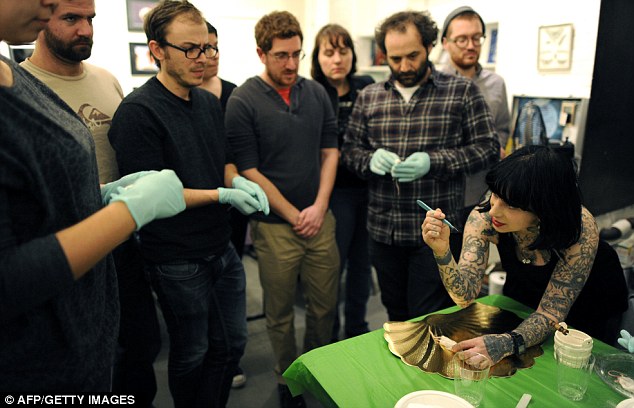
The one-day workshop, which teaches students how to stuff dead mice and pose them up as if they were humans, is becoming a popular pastime in New York.

White-haired mice styled in tutus and polka dot hair bows; their spindly paws strumming miniature guitars - even reading the New York Times - were photographed in Ms Jeiven's class

An educator and tattoo artist, [Sue Jeiven] begins the four-hour lesson handing out the lifeless little creatures, having sucked out their blood with a syringe beforehand. A statement on the class website warns only feeder mice are used for the arts and crafts session.

But strange or morbid as it might seem to some, anthropomorphic taxidermy – the practice of mounting and displaying taxidermied animals as if they were humans or engaged in human activities – has a long and storied history, beginning with the most privileged classes.

It was a popular art form during the Victorian and Edwardian eras; the best known practitioner of the art form being British taxidermist Walter Potter, whose works included The Kitten Wedding and The Kitten Tea Party, which the mind immediately wants to imagine.

--"Is this the most bizarre art project ever? Taxidermy class teaches students how to stuff dead mice and pose them up 'as if they were humans'" Jennifer Madison, The Daily Mail

For anyone looking for that extra-authentic flavour to their fireplace display, Susan Jeiven's anthropomorphic taxidermy class might just the class you're looking for.

At the Morbid Academy, as Jeiven calls it, about 20 students learn to transform the bodies of dead white mice into human-like pantomimes. In one example, a white mouse holds a miniature classical guitar. In another, a mouse wearing a pink bow on its head reads a tiny facsimile of the New York Times.

--"Would you buy or make dead mouse art?" Canadian Broadcasting Corporation News

There are mice and men and, thanks to a macabre hobby, there are also mice that look like men.

Bent over tables in a room in an industrial corner of Brooklyn, about 20 New Yorkers use scalpels to slice into dead white mice, the first step in the animals’ unlikely journey toward an afterlife spent in human poses and dolls’ clothing.

Anthropomorphic taxidermy is an art form that became hugely popular in Britain in the 19th century, with Queen Victoria herself a fan. Now, as with many odd activities, it has found new life in Brooklyn.

“It’s a little immortality,” instructor Susan Jeiven, 40, explains at the start of her latest sold-out class.

--"Morbid Anatomy 101: Macabre hobby gives dead animals new life" Sebastian Smith, Ottawa Citizen

Congratulations to Sue Jeiven--our amazing anthropomorphic taxidermy teacher--for the recent flurry of international press surrounding her oft-sold out class excerpted above. You can read the whole Daily Mail article--from which all of the images and first excerpt above are drawn--by clicking here, the CBC News article by clicking here, and the Ottawa Citizen article by clicking here.

I am also very pleased to announce that we just added five new classes to our roster, and four of those still have vacancies. If you are interested in learning more--or better yet, signing up for one of Sue's incredible classes--click here. To find out more about the "Morbid Academy" Sue refers to (we call it The Morbid Anatomy Art Academy), click here. To watch a short video about Sue and her work, click here.

All images from the Daily Mail Article; ©AFP/Getty Images.

Source:
http://morbidanatomy.blogspot.com/feeds/posts/default?alt=rss

Texas family turned to Bonita stem cell doctor, but 5-year-old died before ‘miracle’

Jason Bell

BONITA SPRINGS Jimmy and Jennifer Bell were scrambling to save their 5-year-old-son, Jason, last fall.

Shell-shocked with a diagnosis that their youngest child had primary pulmonary hypertension, a rare lung disorder, they decided to take a chance. If not, a heart-lung transplant would be their son's only chance.

They put their trust in a Southwest Florida cardiologist, Dr. Zannos Grekos, more than 1,000 miles from their Texas home. They learned Grekos performs an experimental stem cell therapy that possibly could help. That's despite a lack of clinical studies and scientific papers.

The U.S. Food and Drug Administration hasn't approved stem cell therapy despite a buzz of optimism of its potential for repairing damaged tissue.

"I was willing to do anything to give my son a fighting chance," said Jimmy Bell, 43, who owns a landscaping company in Keller, a suburb of Fort Worth. "When you are given no other option, you've got to try something."

The treatment would involve a trip to Bonita Springs where Grekos has his practice, Regenocyte; a trip to the Dominican Republic where the treatment would be done, and an up-front payment of $57,000.

"They looked at his medical records first. They didn't know if they could treat him," Bell said. "Once they agreed to treat him, I talked to Grekos. It was the greatest news in my life. I broke down. I just knew this was going to be the miracle to save his life."

* * * * *

The family wired the money in late October 2011 to a Regenocyte account in the Dominican Republic, according to a copy of the paid invoice furnished to the Daily News.

Originally posted here:
Texas family turned to Bonita stem cell doctor, but 5-year-old died before 'miracle'

Angiogenesis and Stem Cell Therapy Key to Treating Heart Patients: Dr Mukesh Hariawala

Cardiac cellular therapies are undergoing global clinical trials with "encouraging early results" and these economical options will soon be available in India which could bring relief to patients who cannot afford the currently available expensive surgical treatments, says Indian American cardiac surgeon Dr Mukesh Hariawala.

Delivering a special invited plenary lecture on the "Novel Cellular Therapies for Heart Disease" at the recently concluded Healthcare India 2012 convention in New Delhi, the renowned cardiac surgeon asserted that the new developments in cardiac cellular therapies would bring down the alarming healthcare costs globally.

Dr Hariawala is internationally acclaimed as a pioneer of cardiovascular surgical techniques using Therapeutic Angiogenesis. He said Therapeutic Angiogenesis is a fast emerging science of stimulating growth of new blood vessels in the heart which acts as natural bypasses to areas lacking in blood supply.

Dr Hariawala demonstrated angiogenesis along with bypass surgery, lasers and stem cell injections as a novel "Combo Therapy."

Like us on Facebook

The laser energy acts by creating channels in the diseased heart muscle which also triggers Angiogenesis. Stem cells are then injected directly into coronary arteries feeding the diseased territory or in the stimulated lasered muscle during the open heart surgery. This option could be very helpful in Indian patients with diffused distal small caliber coronary arteries and diabetes, who are not amicable to routinely offered current interventions, he said.

Dr Hariawala acknowledged that only a combination of these four therapies could give it the "Therapeutic Threshold Power" and bring about optimum results and relief of patients symptoms. Standalone, each of these therapies is weak to treat a large muscular pumping organ like the heart.

Stem cells have a therapeutic role and hold enormous promise for the future as they are harvested from the patient's own tissues. Currently, adult stem cell extraction is done from one's own hip bone and patients do not have to worry about rejection phenomenon occurring as they are native cells unlike transplanted from another donor. In the future, stem cell banks could proliferate allowing donors to freeze and store cells for family members who could be treated for many diseases, he added.

Harvard-trained Dr Hariawala's studies have been published in several scientific surgical journals and medical text books.

To report problems or to leave feedback about this article, e-mail: To contact the editor, e-mail:

Read more:
Angiogenesis and Stem Cell Therapy Key to Treating Heart Patients: Dr Mukesh Hariawala

Stem-cell pawns

To read Hard Cell by Mayrav Saar (PostScript, Feb. 26), one would think the only form of stem-cell therapy is the embryo-destroying kind. There wasnt a single mention of non-embryonic adult stem cells.

One attraction of embryonic versus non-embryonic research for some is political the chance to stick it to pro-lifers. But it grieves me to see ailing people used as pawns in this culture war and being denied the possible benefits of adult stem-cell research.

Flushing such an idea down the memory hole, as you help do with this article, is against the spirit of scientific inquiry.

Bob Hunt, Hillsborough, NJ

Wrong on the right

If social conservatives had won out in history, women would not be able to vote and we would still have slavery (Why Social Issues Matter, Jeffrey Bell, PostScript, Feb. 26).

Their thinking denigrates the role of science and promotes antiquated religious beliefs. Many of the causes taken up by social conservatives have been seen to be wrong in light of later progressive thought.

While social conservatives say some good things, history has shown that their views work against American freedoms an obscurantism that continues today.

Jeffrey Bell should balance his thought with facts and not be led blindly by evangelicals.

Eduardo Rodriguez, Corona

Visit link:
Stem-cell pawns

NY weighs expanding DNA bank to all criminals

ALBANY, N.Y. (AP) New York is again debating expanding its DNA database, this time to include samples from every person convicted of a crime. The debate pits what backers say is solid science and more solved cases against critics who raise the possibility of tainted evidence and a secret stash of information that favors prosecutors.

The scientist running New Yorks DNA crime laboratory said he cannot recall a single instance in 16 years when the lab produced bad genetic information that linked an innocent person to a crime. Instead, the work has helped police identify suspects in 12,000 cases, many of them previously unsolved, and exonerate 27 people wrongfully convicted.

Every step in the process is associated with scientific controls to assure the accuracy of the results, said Barry Duceman, a former Yale genetics researcher who was hired two decades ago to launch the state program. The lab repeatedly meets accreditation standards that require strict quality controls, he said.

Critics point to the potential for contaminated crime scene evidence and some processing errors in other states. They say the databank should at least be open to defense lawyers and at best be open to individuals who want to know if their DNA profiles are kept by police.

The problem, in my judgment, is that the library is secret, said Edward Blake, a genetic researcher who has produced DNA evidence that overturned several convictions. That secrecy of the contents of that library is contrary to the principles of a democratic society.

The Republican-controlled New York Senate recently approved and Democratic Gov. Andrew Cuomo is advocating the so-called clean bill to expand collections to lesser crimes, citing experience that shows many small-timers move on to robberies, rapes and murders that could be solved or prevented.

Since the addition of petit larceny to the databank more than five years ago, DNA collected from this minor crime produced leads in cases involving nearly 1,000 other crimes, including 53 murders.

(Page 2 of 3)

Pending legislation repeatedly passed by the Democrat-run Assembly would expand DNA collection while increasing database access. That bill also includes mandates to prevent coerced confessions and witness errors by requiring videotaped police interrogations and a system of looking at photo arrays where neither the officer nor the witness knows if the suspect is included, a technique known as double-blind.

Last year, both bills died with no negotiated compromise.

Continued here:
NY weighs expanding DNA bank to all criminals

Posted in DNA

Should all criminals go into DNA bank?

ALBANY, N.Y. (AP) - New York is again debating expanding its DNA database, this time to include samples from every person convicted of a crime. The debate pits what backers say is solid science and more solved cases against critics who raise the possibility of tainted evidence and a secret stash of information that favors prosecutors.

The scientist running New York's DNA crime laboratory said he cannot recall a single instance in 16 years when the lab produced bad genetic information that linked an innocent person to a crime. Instead, the work has helped police identify suspects in 12,000 cases, many of them previously unsolved, and exonerate 27 people wrongfully convicted.

"Every step in the process is associated with scientific controls to assure the accuracy of the results," said Barry Duceman, a former Yale genetics researcher who was hired two decades ago to launch the state program. The lab repeatedly meets accreditation standards that require strict quality controls, he said.

Critics point to the potential for contaminated crime scene evidence and some processing errors in other states. They say the databank should at least be open to defense lawyers and at best be open to individuals who want to know if their DNA profiles are kept by police.

"The problem, in my judgment, is that the library is secret," said Edward Blake, a genetic researcher who has produced DNA evidence that overturned several convictions. "That secrecy of the contents of that library is contrary to the principles of a democratic society."

The Republican-controlled New York Senate recently approved and Democratic Gov. Andrew Cuomo is advocating the so-called clean bill to expand collections to lesser crimes, citing experience that shows many small-timers move on to robberies, rapes and murders that could be solved or prevented.

Since the addition of petit larceny to the databank more than five years ago, DNA collected from this minor crime produced leads in cases involving nearly 1,000 other crimes, including 53 murders.

Pending legislation repeatedly passed by the Democrat-run Assembly would expand DNA collection while increasing database access. That bill also includes mandates to prevent coerced confessions and witness errors by requiring videotaped police interrogations and a system of looking at photo arrays where neither the officer nor the witness knows if the suspect is included, a technique known as double-blind.

Last year, both bills died with no negotiated compromise.

Cuomo said last week he will consider changes to the clean bill, but only if they are strictly DNA-related, telling supportive prosecutors and police he is optimistic about getting that measure passed this year. He said he doesn't want the bill freighted with the other criminal justice issues.

View original post here:
Should all criminals go into DNA bank?

Posted in DNA

Utah students put KSL technologists to the test

SALT LAKE CITY -- Several weeks from now, March 26- 29, will be a demanding time for 900 junior high school and high school students from across Central Utah, who have been selected to compete in the prestigious Central Utah Science & Engineering Fair at BYU.

Students were chosen from more 100,000 eligible project submissions across Central Utah territories including Alpine, Jordan, Nebo, Provo, Wasatch and private and charter schools.

David van Dijk, lead science instructor for Pleasant Grove High School and moderator for the Alpine School District Science Fair held at Pleasant Grove High School for the past nine years, said that only 75 out of more than 200 project submissions at the district level were selected to receive a medal, certificate of recognition and the opportunity to go on to compete at the regional level.

Winter Wester and Mina Park, both Willow Creek Middle School 9th graders in Lehi, Utah, were selected as a group project to move on to Central Utah Science & Engineering Fair, after winning over several other high caliber projects from competing 9th-12th graders.

Their project, The Impact in Spatial Recognition Between Virtual and Physical Environmental Dimensions, competed for the category of Behavioral Science, and was lauded by judges at the district level for their ingenuity in devising a research study around a problem that had not been previously evaluated at the academic scholarly level.

More particularly, their research study showed the effects of two dimensional top-down maps when used in a three- dimensional virtual environment by a sample population of 30 individuals who either had experience playing video games and/or board games, or had no experience with gaming.

The girls developed their own custom virtual 3D maze that users could navigate while being timed and tracked. Their sample population was selected from a group of top-tiered male and female technologists and sales/marketing/accounting executives for Deseret Digital Media, the technology group responsible for operating KSL.com and DeseretNews.com, among other high profile web sites.

While celebrating their hard-won victory over double scoops of ice cream from JCWs near Thanksgiving Point, Winter and Mina described how their science fair project enabled them to interact with professionals in an active workplace with whom they would otherwise never have the opportunity.

Winter said she and Mina were scared and nervous to test so many adults. However, after conducting the first couple of tests, they said they realized how enjoyable a process it was to perform scientific testing and discover new findings from the data.

Eric Bright

Read the original post:
Utah students put KSL technologists to the test

Light bulbs go off for science students

Printer-friendly version E-Mail This Story

By JUDY SHERARD

jsherard@dailynews.net

Some students proved their hypotheses, others didn't.

However, all of them discussed their findings with the judges Saturday at the Fort Hays State University Regional Science and Engineering Fair.

Each project is judged by three judges who are FHSU faculty, students and community members.

Project categories are biochemistry, medicine and health, botany, chemistry, consumer science, Earth and space science, engineering and inventions, environmental science, mathematics and computer science, physics and physical science, social science and behavioral science, and zoology.

There were 68 entries this year from students in fourth through 12th grade, said Ann Noble, director of the fair.

That number is the largest to date, said Paul Adams, FHSU physics professor.

"In the younger students, it's really exciting to see their interest," Noble said. "In the high school students, it's just amazing what they can do, and what they research. They're our next leaders, and I really like to see their ideas."

View original post here:
Light bulbs go off for science students

Anatomy of a Murdered Show: Creators of Carrie Talk About Musical's Second Coming

Anatomy of a Murdered Show: Creators of Carrie Talk About Musical's Second Coming

By Harry Haun 04 Mar 2012

Carrie writers Lawrence D. Cohen, Michael Gore and Dean Pitchford look back at their notorious musical's past and revel in its present revised revival.

*

Kelly and Moose Murders, which ran a total of two performances (collectively), and Breakfast at Tiffany's, which closed in previews at minus-2, were infinitely more infamous but poor Carrie is the one forever cursed as the bedrock of bad Broadway shows, no small thanks to theatre historian Ken Mandelbaum, who called his chronicle on 40 years of flops "Not Since Carrie."

One thing that has happened since Carrie might just warrant a re-titling: namely, her comeback easily the greatest since Nixon and, before that, Lazarus. Officially, this came to pass at Off-Broadway's Lucille Lortel Theatre on March 1 in like a lion, as they say, and mostly because of its own legendary, marinated awfulness.

Advertisement

Yes, after three years in the remaking and a full month of intensive, all-hands-on surgery in previews, Stephen King's telekinetic teen killer pounces anew, as vivid (and patched-up) as The Creature in Dr. Frankenstein's laboratory alive!

Still, there's something different about her like, say, the times: in the light of current events, Carrie White looms like a pioneer crusader against high-school bullying. So what if her strike-back has enough zeal and overkill to wipe out a whole student body? Much of that must be laid at the door of her religious-wacko mom, Margaret, who, too, is brought up to contemporary speed with her fanatical fundamentalism.

Piper Laurie and Sissy Spacek were the original mother-daughter act in Brian De Palma's 1976 horror-cult flick. Lawrence D. Cohen, who adapted King's 1974 novel into that movie, also wrote the book for the musical version, which premiered with Barbara Cook and Linzi Hateley in Stratford-upon-Avon, England, in February 1988.

Read the original post:
Anatomy of a Murdered Show: Creators of Carrie Talk About Musical's Second Coming

Off to Italy in Search of the Material History of the Human Corpus with Evan Michelson


I have some very exciting news to report! This evening, my very good friend--and Morbid Anatomy Scholar in residence/Oddities star--Evan Michelson and are absconding to Italy to collect images and data related to a long term project which has long obsessed us both. In Evan's (very eloquent) words:

We will be exploring the social, spiritual, philosophical and material history of the human corpus from the Early Christian period, through the Enlightenment and into the Early Modern Era. This trip will take us to medical museums, ossuaries, cathedrals and burial grounds in several different cities, and it is the culmination of a lifelong obsession on both our parts.

Italy seems like the logical place to start: home of the Roman Catholic Church and the greatest of the early anatomical artists, it is also the home of the Renaissance - the historical pivot point that brought us from the Dark Ages into the Age of Science. Death in all its mystery has the most profound lessons to impart, and the religious attempt to transcend decay through myth transmuted the body into an object of sensual luxury and splendor. Science reclaimed the corpse, and in doing so gave rise to a different kind of purely mechanical beauty. That transitional moment is the object of our pilgrimage.

So please excuse some predicted silences, and look for reports and updates here! And please, feel free to send suggestions for sites to visit, things to eat, etc. to morbidanatomy[ag]gmail.com.

Ciao for now!

Image: Ercole Lelli's anatomical waxworks, Bologna, Italy; photo by Joanna Ebenstein

Source:
http://morbidanatomy.blogspot.com/feeds/posts/default?alt=rss

Pat was Diagnosed with “CMT” Disease and was Given a Second Chance with a Stem Cell Treatment

Pat receive a life altering Stem Cell Treatment with the help of World Stem Cells, LLC. Pat went from couch bound to walking 1.5 miles on country dirt road, climbing stairs, gardening and playing piano all thanks to a stem cell treatment.

(PRWEB) March 03, 2012

Pats neurological disorder is hereditary, and the official position of the National Institute of Neurological Disorders and Stroke is that CMT has no cure. Decades ago, Pat had gone to a neurologist for electromyography, or EMG. The purpose of the procedure was to evaluate her muscle function, and it involved painful needles and days of muscle soreness after each session. Pats neurologist had refused to tell her the results because he said that she would just give up if she knew how bad they were. At this point, Pats symptoms were so crippling and unbearable that she contacted World Stem Cells, LLC worldstemcells.com to explore stem cell treatment as an option. She knew that the procedures were still being developed and experimental, and that they came with no guarantees. She remained interested in learning more and becoming educated on the options presented. At the time, she was unable to walk without a four-leg quad cane, and air and car travel were exhausting and caused unbearable pain. Pat has a long history of surgeries and was told that further surgeries would not assist her. She decided that she was not interested in any treatment that involved surgery with incisions, which is an aggressive approach and would demand recovery time. Stem cell therapy met her requirements of being minimally uncomfortable, requiring only hours for recovery and having a high level of safety, along with a good potential for changing her health quotient for the better.

Pat arrived in Cancun, Mexico, to the treatment site of World Stem Cells, LLC contract clinics, doctors, and hospitals. The first day, she met with physicians to be evaluated, discuss her course of treatment and learn what to expect. She had been corresponding with Dr. Alan Kadish, the President of World Stem Cells, LLC. worldstemcells.com

Dr. Kadish is an unusual physician as he has training and practiced integrated primary care medicine combining conventional and naturopathic diagnostics and therapeutics for 27 years. He has been recognized as one of the leading quality physicians, in his field. Dr. Kadish is an American Board of Anti-Aging Medicine diplomat and completed numerous training programs in Achieving Clinical Excellence, or ACE, which provided opportunities to improve his practical skills in diagnosing and treating people based on their individual needs, using functional medical testing and treatment. He has been an advanced level practitioner (Autistic Research Institute) for autistic spectral disorder children and adults, since early 2000 and is certified in chelation therapy. As a naturopathic medical physician he lecturers frequently and is a host and guest on radio and internet outlets along with appearing in a number of print media publications. At World Stem Cells , LLC in addition to his management duties, he is a primary investigator engaged in research and designs of stem cell therapeutic protocols.

In Cancun, Pat met with specialists at Advanced Cellular Medicine Clinic. The clinic is headed by Dr. Sylvia Abblitt, who has the exclusive distinction of being among the few physicians who are licensed to perform autologous and allogeneic stem cell transplants in Mexico. Dr. Abblitt is a board-certified hematologist and oncologist. She has 11 years of expertise as a laboratory director and head of the hematology department at the Fernando Quiroz Hospital. She is a member of the American Association of Blood Banks and the International Cellular Medicine Society (ICMS). The Cancun clinic that Pat visited is a contract clinic of World Stem Cells, LLC. It houses the state-of-the-art Advanced Cellular Engineering Lab. The high-tech lab is suited for providing patients with the most up to date stem cell treatments and for conducting stem cell research to improve future opportunities for health.

After her evaluation and discussion of treatment options, Pat decided to go ahead with the stem cell therapy. The procedure involved a needle puncture to harvest her bone marrow utilizing her own stem cells. Only a local anesthesia was necessary and though she described the procedure as uncomfortable, she added that it was livable. The procedure took less than half an hour, and she experienced no side effects.

Pats improvement was remarkable and rapid. In fact, she did not feel fatigued and overwhelmed with pain, as she had in the past, when she traveled back home from Cancun by airplane and car. Within days, she had regained her ability to play piano. Playing at church concerts had always been a passion of hers, but she had been unable to play before her stem cell treatment because of a lack of coordination. She had much more energy after treatment, and was able to garden, run errands and work, without feeling exhausted. Her sleep was more restful. Her husband and friends noticed that her agility and balance were better. She could climb up and down stairs more easily and walk around the house without clutching the walls. Her speed on the treadmill was increasing gradually and she now walks a mile and a half on country roads.

Pat is extremely grateful to World Stem Cells, LLC for changing her life and giving her hope. For the first time, she has reversed many of the negative changes that she had been experiencing for years due to her CMT and lack of effective treatment. Now, Pat and her husband are experiencing a bright future and thankful that Pat was given this second opportunity, following stem cell therapy. worldstemcells.com.

###

Here is the original post:
Pat was Diagnosed with “CMT” Disease and was Given a Second Chance with a Stem Cell Treatment

Heather Yakin: DNA databank bill good move for justice

Published: 2:00 AM - 03/03/12

Gov. Andrew Cuomo's plan to require DNA samples from people convicted of a broader range of offenses is a little closer to becoming law.

The state Senate has passed S 5560-A, a bill which mandates that people convicted of a felony under any New York law or any Penal Law misdemeanor (Class A and Class B) submit a DNA sample for the state databank.

The law wouldn't include youthful offenders or juvenile cases handled in Family Court. The estimated cost is $700,000 in 2012-2013 and $1.4 million annually.

The bill, which would expand the current requirement to collect DNA samples from people convicted of Penal Law felonies and any of 36 specified misdemeanors, must still pass in the Assembly.

Supporters of the measure as of this week that includes all 62 district attorneys, all 58 county sheriffs and more than 400 police chiefs as well as crime victim advocates note that DNA collected at crime scenes since New York's database started in 1999 has contributed to almost 2,900 convictions, as well as to the exonerations of 27 innocent people.

Crime survivors who've already gotten justice because of the DNA databank have spoken out for Cuomo's proposal, sharing heart-wrenching stories.

They include a mother whose 12-year-old daughter was raped in her bed by a stranger who broke into the family's home. The man went on to rape others, and was only caught a decade later, after he stole money from an employer and was required to give a DNA sample for the resulting petty larceny conviction.

The stats for petty larceny, added to DNA offenses in 2006, are worth noting: DNA samples from petty larceny convictions have been linked to 998 crimes, including 53 murders and 223 sexual assaults.

DNA hits have also helped solve local homicides. The 1986 slaying of John Roe in Bloomingburg, solved in 2004 by a cold hit; the murder of Town of Newburgh restaurateur Cosimo DiBrizzi was solved by a DNA match to a man who'd been convicted of grand larceny; the 1990 slaying of Elaine Ackerman in Deerpark, solved in 2009 after a match to a man who'd given a sample for an unrelated conviction.

Read the rest here:
Heather Yakin: DNA databank bill good move for justice

Posted in DNA

'Living fossil' trees in DNA studies

Published: March. 2, 2012 at 5:49 PM

BRISBANE, Australia, March 2 (UPI) -- Scientists say they are using cutting-edge DNA sequencing technology to protect living fossil trees in Fiji from the impact of climate change.

Peter Prentis from the Queensland University of Technology in Brisbane, Australia, said the findings would enable researchers to understand how biological diversity is generated.

"Fiji is a hot spot for biodiversity," he said. "Most of the species that occur in Fiji aren't found anywhere else in the world."

Prentis is using DNA sequencing to study the genes of living fossil tree species, all either endangered or vulnerable, a university release said Friday.

Living fossil is a term for any living species appearing to be the same as a species otherwise only known from fossils and which has no close living relatives.

"With climate change these species are going to have to respond to increasingly changing environmental conditions and an increase in extreme events, such as cyclones," Prentis said.

"We don't know if these living fossil trees have the potential to adjust to these future environments."

The DNA research would compare the vulnerable or endangered tree species with ones more commonly found in Fiji, he said.

"We'll analyze each of the species pairs to find genes that have been important in the process of becoming unique. We're interested in how these rare species evolve," he said.

See original here:
'Living fossil' trees in DNA studies

Posted in DNA