CAP ’12 Brings You Special Transformation Programming

Register Now

Home_page_header

Join us for breakfast and an early morning of free programming (for residents and daily, global, or networking pass registrants) specifically designed to provide you with information you can use now and in the future to continue your transformation!

Tuesday, September 11

TP200  Breakfast Workshop – Digital Pathology: Making a Difference in Your Practice 

 
6:30–7:45 am
CME/CE Not Applicable

This workshop focuses on digital pathology, highlighting the work of the CAP Transformation Program Office Module 4 Emerging Technology team. This session will describe current and emerging digital pathology applications. It will provide insights from current adopters and their reasons for adoption, which vary by practice setting. Additionally, workshop leaders will describe CAP resources for digital pathology practice adoption.

Presenters
Eric F. Glassy MD, FCAP
Eric E. Walk MD, FCAP

Home_page_header


Source:
http://feeds.feedburner.com/DigitalPathologyBlog

Journal of Pathology Looking for Manuscripts on Next Generation Sequencing

 
The Journal of Pathology
 
Call for papers: Next generation sequencing studies with relevance to the understanding of disease mechanisms
 
The Journal of Pathology

IMPACT FACTOR:
7.274

 The coupling of pathology with massively parallel sequencing studies provides a unique opportunity to further our understanding of the pathophysiological and pathogenetic mechanisms of human disease, a major interest of The Journal of Pathology.

The Journal is now soliciting submissions of primary research based on massively parallel sequencing taking advantage of novel insights into the genetic basis of human diseases, including but not restricted to, the identification of new genotype-phenotype associations and novel driver mutations, characterisation of patterns of genetic instability, and on the topic of intra-tumour genetic heterogeneity.

We have recently published a number of such studies:


A whole-genome massively parallel sequencing analysis of BRCA1 mutant oestrogen receptor-negative and -positive breast cancers Natrajan R, Mackay A, Lambros MB, et al., Volume 227, Issue 1, pages 29-41, May 2012

Integrated genome and transcriptome sequencing identifies a novel form of hybrid and aggressive prostate cancer Wu C, Wyatt AW, Lapuk AV, et al., Volume 227, Issue 1, pages 53-61, May 2012

Using next-generation sequencing for the diagnosis of rare disorders: a family with retinitis pigmentosa and skeletal abnormalities Schrader KA, Heravi-Moussavi A, Waters PJ, et al., Volume 225, Issue 1, pages 12-18, September 2011

Why publish your next generation sequencing study in The Journal of Pathology?

  • Impact Factor: 7.274
  • Your manuscript will be fast-tracked and expertly peer-reviewed
  • We aim to give a final decision within 14 days
  • We aim for an initial online publication within 7 days of acceptance
  • Your article will be made free to view online for 6 months, facilitating dissemination within the community.

Submission Process

Submissions should report studies that use massively parallel sequencing technology to address important questions in the pathobiology of disease. Manuscripts should offer new approaches to considering such data, clinically relevant findings and/or functional insights with validation. Timely reviews and perspectives would also be considered.

In your covering letter, please mention that the submission is a response to the “massively parallel sequencing studies call”. Please note that the massively parallel sequencing data included in the manuscript must be made publicly available by the time of publication, and full details of the analysis methods should be provided either in the main manuscript or as supplementary methods.


Submit your research for publication today at
mc.manuscriptcentral.com/jpath

Find out more in the author guidelines and use the manuscript submission checklist.

http://www.thejournalofpathology.com


Source:
http://feeds.feedburner.com/DigitalPathologyBlog

DIGITAL PATHOLOGY ASSOCIATION LAUNCHES WEBINAR SERIES TITLED “BARRIERS TO THE ADOPTION OF DIGITAL PATHOLOGY”

DPAsmallWhile the support and understanding of digital pathology is growing, there are still some cultural, financial, technical, and regulation obstacles that are limiting the adoption of digital pathology. All of these obstacles will be addressed in the Digital Pathology Association’s (DPA) upcoming webinar series entitled “Barriers to the Adoption of Digital Pathology”.

The topics addressed in this series of four webinars will act as a bridge to the workshops and discussions that will take place at the DPA’s annual conference, Pathology Visions. Pathology Visions will take place October 28-31, 2012 in Baltimore, Maryland. Aside from preparing for Pathology Visions, the DPA also wants to continue educating and generating awareness for the field of digital pathology. That’s why they’ve partnered with the Association for Pathology Informatics (API) and CAP Today to host the webinar series.

The first webinar in the series will take place this Wednesday, May 9, 2012 from 11 AM to 12 Noon EDT. The main focus of this webinar is “Cultural and Strategic Barriers to the Adoption of Digital Pathology”. President of the DPA, Dirk Soenksen of Aperio, will be a contributing speaker during the webinar, as well as Dr. Sylvia Asa and Dr. Keith Kaplan.

The remaining three webinars will take place at the same time, 11 AM to 12 Noon EST, on the following dates and focus on the following topics:

July 25 | Financial Barriers to the Adoption of Digital Pathology

September 19 | Technical Barriers to the Adoption of Digital Pathology

November 14 | Regulatory Barriers to the Adoption of Digital Pathology

Participation in each of the webinars is free, but advance registration is required. To register now, please click here. If you are unable to tune in live to the webinars they will be archived on the DPA website. However, these archives will only be available to DPA members. To learn more about what benefits a DPA membership offers or to join today please click here.

About the DPA

The Digital Pathology Association, located in Indianapolis, IN, was founded in 2009. DPAsmall Its mission is to facilitate education and awareness of digital pathology applications in healthcare and life sciences. Members will be encouraged to share best practices and promote the use of technology among colleagues in order to demonstrate efficiencies, awareness, and its ultimate benefits to patient care.


For more information about the webinar series and how to register for the Digital Pathology Association’s Pathology Visions Conference visit: http://digitalpathologyassociation.org/pathology-visions-conference.


Source:
http://feeds.feedburner.com/DigitalPathologyBlog

Ventana Receives FDA Clearance for p53 (DO-7) Image Analysis and Digital Read Applications

Ventana announces another FDA cleared image analysis application for use with their p53 clone, scanner and software to determine p53 expression levels in breast cancer. VentanaRoche_0

Ventana Medical Systems, Inc. (Ventana), a member of the Roche Group, received 510(k)clearance from the U.S. Food and Drug Administration (FDA) for the VENTANA Companion Algorithm p53 (DO-7) image analysis application using the VENTANA iScan Coreo Au scanner and VIRTUOSO software.  Currently, Ventana is the only company offering an FDA-cleared p53 image analysis algorithm for determining p53 expression levels in breast cancer patients.  Ventana is offering the p53 (DO-7) image analysis algorithm in addition to the company’s FDA-cleared algorithms for HER2 (4B5), PR (1E2), and Ki-67 (30-9).

“As a market leader and long-term innovator in anatomic pathology, Ventana is committed to improving the lives of cancer patients,” says Mara G. Aspinall, President, Ventana Medical Systems, Inc.  “We provide the most clinically-validated, FDA-cleared digital pathology algorithms in the market today.  When you combine this with our broad portfolio of instruments and assays, and our expertise in laboratory knowledge management and workflow, it is clear that Ventana is positioned to deliver the most comprehensive digital pathology solutions available globally.”

The p53 (DO-7) image analysis algorithm assists pathologists in the detection and semi-quantitative measurement of p53 (DO-7) protein in formalin-fixed, paraffin-embedded normal and neoplastic tissue.  When the p53 (DO-7) algorithm is used in conjunction with the CONFIRM anti-p53 (DO-7) Primary Antibody, it may be used as an aid in the assessment of p53 expression in breast cancer patients (but is not the sole basis for treatment).  The FDA clearance includes all of the components of the VENTANA laboratory workflow solution when used as a system, including the company’s BenchMark XT slide stainer, p53 clone DO-7, iView and ultraView DAB detection systems, VENTANA iScan Coreo Au slide scanner, and Virtuoso image management software.

Steve Burnell, PhD, VP, Ventana Digital Pathology and Workflow states, “As is the case for Ki-67, Ventana is the only company offering a 510(k)-cleared algorithm for p53 today. Our increasing Companion Algorithm portfolio of FDA-cleared products is evidence both of our unique capabilities in this field as well as our commitment to empower our customers to deliver the highest standards of patient care through the most robust digital pathology solutions available.”

In conjunction with this clearance, Ventana also received FDA clearance for the digital read application that allows pathologists to interpret p53 (DO-7) stained slides as images on a computer monitor using the iScan Coreo Au scanner with VIRTUOSO software.

About Ventana Medical Systems, Inc.
Ventana Medical Systems, Inc. (“VMSI”) (SIX: RO, ROG; OTCQX: RHHBY), a member of the Roche Group, innovates and manufactures instruments and reagents that automate tissue processing and slide staining for cancer diagnostics. VENTANA solutions are used in clinical histology and drug development research laboratories worldwide. The company’s intuitive, integrated staining, workflow management platforms, and digital pathology solutions optimize laboratory efficiencies to reduce errors, support diagnosis and inform treatment decisions for anatomic pathology professionals. Together with Roche, VMSI is driving Personalized Healthcare through accelerated drug discovery and the development of “companion diagnostics” to identify the patients most likely to respond favorably to specific therapies.

Visit http://www.ventana.com to learn more.

Source: Ventana


Source:
http://feeds.feedburner.com/DigitalPathologyBlog

“Cancer Flashlight” May Reduce Need for Biopsies

New technology could reduce or even eliminate the need for clinical pathology laboratories to utilize tissue biopsies in the diagnosis of certain cancers

“Cancer flashlight” is the nickname some have given to a system that uses novel spectroscopic techniques to detect pre-cancerous cells in the colon. Developed by bioengineers at Duke University, the device may offer an alternative to current biopsy methods for detecting cancer and pre-cancer by anatomic pathologists.

Read more: Duke University Researchers Demonstrate that Non-invasive Optical Biopsy Detects Cancer | Dark Daily http://www.darkdaily.com/duke-university-researchers-demonstrate-that-non-invasive-optical-biopsy-detects-cancer-50712#ixzz1uBpDybhf


Duke1

Full story.


Source:
http://feeds.feedburner.com/DigitalPathologyBlog

"Rogue Taxidermy Biennial Taxidermy Show;" La Luz de Jesus Gallery, Los Angeles, Through May 27th

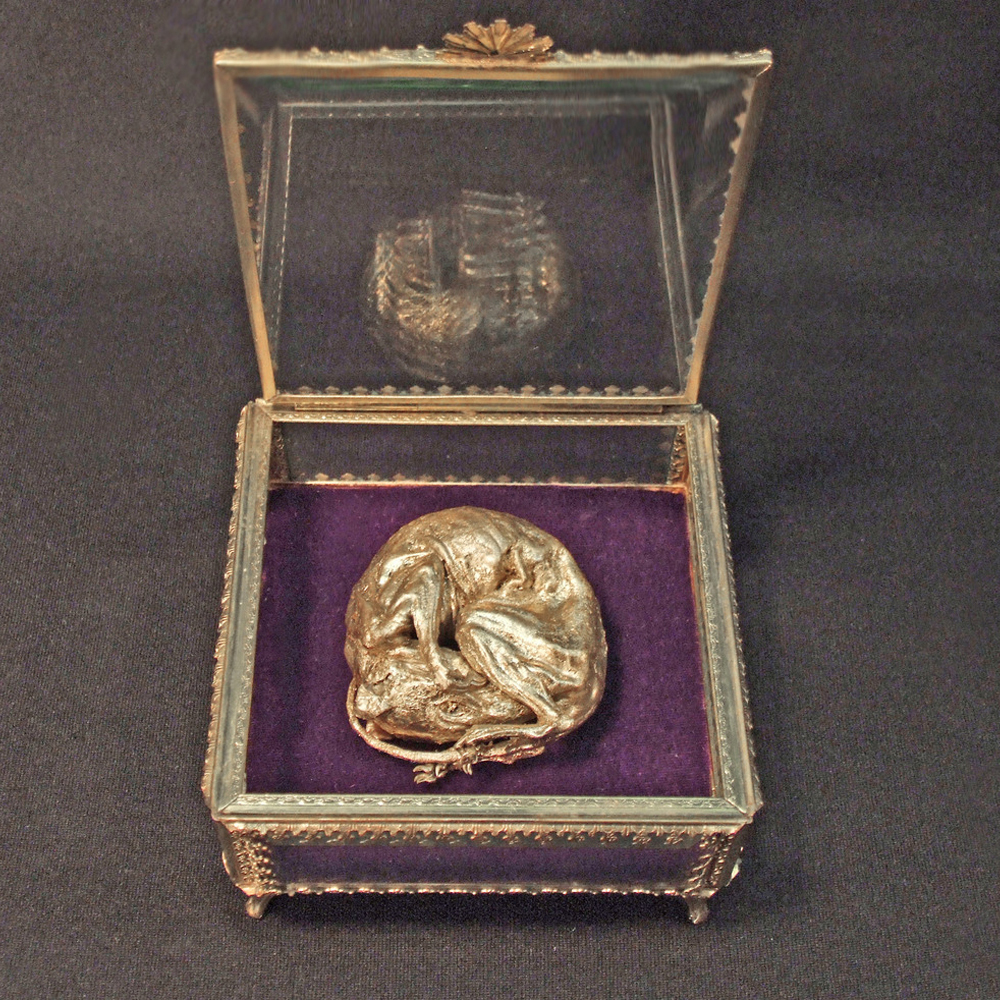
I am very excited to announce a wonderful looking new exhibition curated by friend-of-Morbid-Anatomy and Minnesota Rogue Taxidermist Robert Marbury. With the ever increasing popularity of taxidermy in the fine arts world, this "Rogue Taxidermy Biennial Taxidermy Show"comes not a second too soon, and features the work of such creative-taxidermic luminaries as Sarina Brewer (top, "Sweet Dreams"), Adam Wallacavage, Jeanie M. (center, "Arabian Squirrel on a Flying Carpet"), Jessica Joslin, and our own Daisy Tainton (bottom, "A Patient's Despair"), teacher of Saturday's Anthropomorphic Insect Shadowbox workshop (more on that here).

If I was in Los Angeles, I would be on my way to see this right now! For those of you in the area, full info follows:

ROGUE TAXIDERMY
Our Biennial Taxidermy Show
La Luz de Jesus Gallery
May 4th – 27th, 2012

The Rogue Taxidermy 2012 Biennial, curated by Robert Marbury, features 25 of the most interesting artists working in taxidermy today. Rogue Taxidermy, a mixed-media art utilizing taxidermy materials, is more closely related to surrealism than to mainstream taxidermy. The work in this show spans genres and materials to expresses the individual artist's approach to and love of natural history and preservation.

There are some great photos from the opening here.
All members of the MINNESOTA ASSOCIATION OF ROGUE TAXIDERMISTS implicitly pledge by merit of their membership to abide by the following ethical regulations:

1. All members pledge to continually strive to make efficient use of the animals and parts of animals employed in the creation of their art. Wastefulness is strongly discouraged.

2. Animals shall be procured in a manner that does not require their termination for the explicit purpose of mounting or displaying. Collecting road-kill, accepting, purchasing animals from supply companies and from grocery stores are all considered to be acceptable, ethical means of procuring animals. Recycling and re-use are primary tenets of the association.

3. Please note that it is your responsibility to check with your local Department of Natural Resources and fish & wildlife authorities regarding your taxidermy activities. Be aware that endangered, threatened and protected species (including, but not exclusive to, raptors and songbirds) can only be mounted for museums and educational institutions providing all necessary permits. Roadkill is not excluded from these regulations. Additionally, in accordance with state and federal law, anything utilizing waterfowl, crows, or other restricted birds can only be mounted for the client who provides the animal with all attending permits.

4. If approached to create a custom mount which is generally considered to be a specialty of another M.A.R.T. member, it is strongly suggested that you recommend the services of that member to the potential customer before accepting the commission.

5. Members are greatly encouraged to participate in the care and conservation of living animals.

6. M.A.R.T. seeks to create an open dialogue about the place of animals in our culture. Protests, slander, and admonitions shall be greeted with an attempt to foster conversation. Reacting to criticism in a cruel or indignant way is considered antithetical to the M.A.R.T. mission statement.

You can find out more about this exhibiiton by clicking here. If you are interested in signing up for Daisy Tainton's class, click here for more.

Source:
http://morbidanatomy.blogspot.com/feeds/posts/default?alt=rss

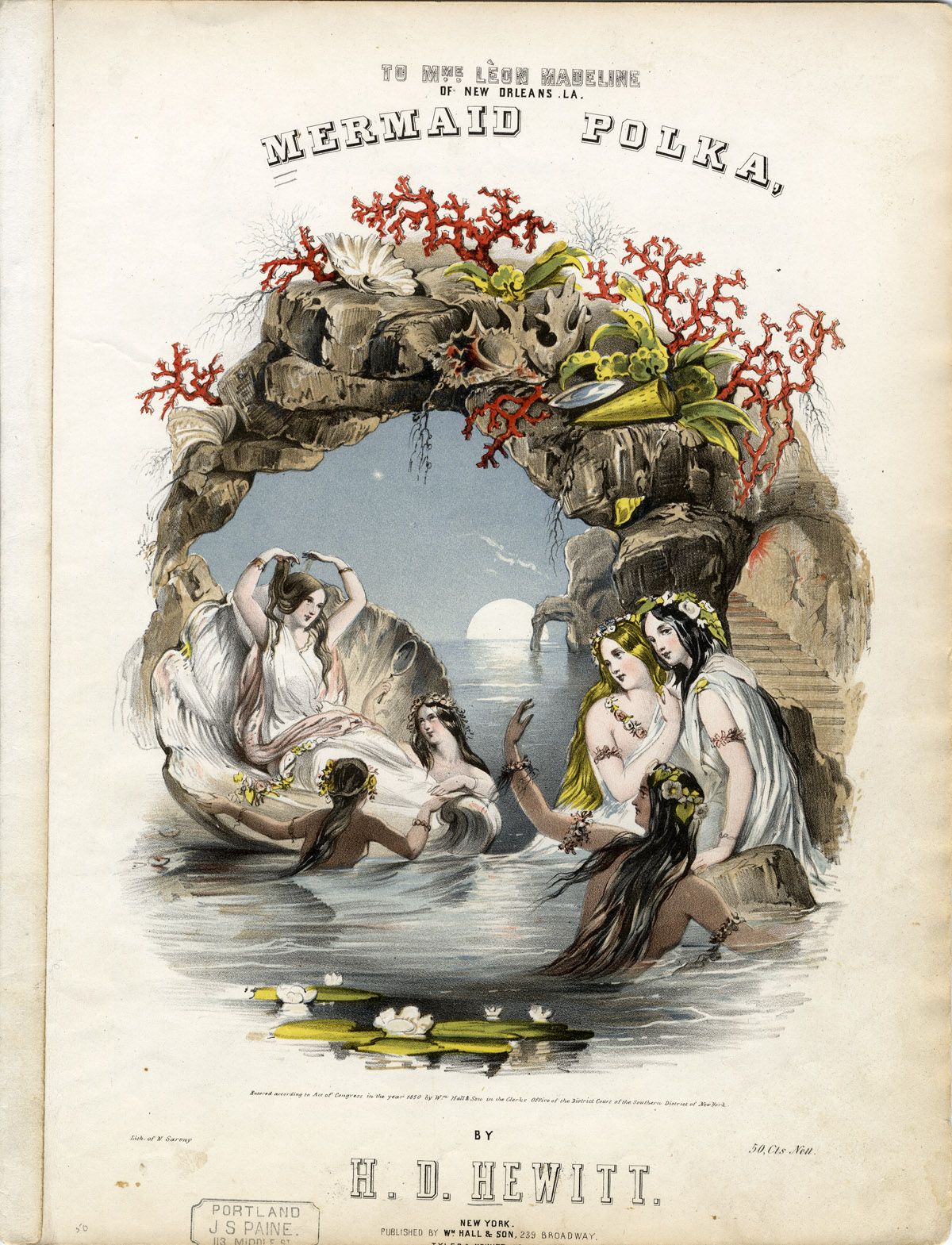
Mermaid Polka, Sheet Music,1850

I love these delectable creatures of the nautical sublime, especially their seaweed bracelets and headdresses. As described on the Beauty, Virtue and Vice online exhibit of the American Antiquarian Society website (from which the images is also sourced):

Mermaid Polka. Lith. of Napoleon Sarony, 1850. [H. D. Hewitt]

In the nineteenth century, informal musical entertainments were a very common American pastime, and the piano was a common presence in American parlors. The piano’s rise in popularity coincided with advances in printing technology, and a booming sheet music industry was one result of these simultaneous developments.

American consumers purchased particular pieces of music for various reasons. Certainly, popular songs of the American musical stage became bestselling sheet music, but it is clear that sheet music publishers recognized that American consumers would buy even unfamiliar music if the cover art was appealing enough. Pictorial sheet music covers did double duty within the household: displayed above a keyboard even when a piano wasn’t in use, they functioned as decorative art.

Nineteenth-century pictorial sheet music covers capitalized on an endless array of already popular subjects, ideas, and themes in order to capture buyers’ attention. Over the course of the nineteenth century, sheet music images of beautiful women remained the most consistently popular type of illustration. In Mermaid Polka, these nude and loosely robed young women are graceful, demure, and carefree. They embody various ideas about women’s nature, with a titillating erotic accent. This lavish visual fantasy of beautiful young sea nymphs frolicking in the moonlight was meant to appeal to a wide variety of potential buyers. While women and men alike might have enjoyed this image for its pictorial beauty and expression of innocent romantic pleasure, men might also have associated it with antebellum dancing-girl performances (which were enjoyed by overwhelmingly male audiences) and European paintings like Botticelli’s celebrated fifteenth-century work, The Birth of Venus.

More here. Click on image to see much finer, larger version.

Source:
http://morbidanatomy.blogspot.com/feeds/posts/default?alt=rss

Anthropomorphic Insect Shadowbox Workshop with Former AMNH Senior Insect Preparator Daisy Tainton at Observatory: Open Slots for This Saturday's Class!

Anthropomorphic Insect Shadowbox by Daisy Tainton, teacher of Saturday's workshop

I am very excited to announce a few open slots in this Saturday's long sold-out Anthropomorphic Insect Shadowbox Workshop with Former AMNH Senior Insect Preparator Daisy Tainton, part of The Morbid Anatomy Art Academy at Observatory. Full details for the class follow; send an email to morbidanatomy [at] gmail.com to be added to class list. First come, first served!

Anthropomorphic Insect Shadowbox Workshop with Former AMNH Senior Insect Preparator Daisy Tainton
With Daisy Tainton, Former Senior Insect Preparator at the American Museum of Natural History
Date:
This Saturday, May 12
Time: 1 - 4 PM
Admission: $65

***Must RSVP to morbidanatomy [at] gmail.com to be added to class list
This class is part of The Morbid Anatomy Art Academy

Rhinoceros beetles: nature's tiny giants. Adorable, with their giant heads and tiny legs, and wonderful antler-like protrusions. If you think they would be even more adorable drinking tiny beers and holding tiny fishing poles, we have the perfect class for you! In today's workshop, students will learn to make--and leave with their own!--shadowbox dioramas featuring carefully positioned beetles doing nearly anything you can imagine. An assortment of miniature furniture and foods will be made available to decorate your habitat, but students are strongly encouraged to bring any dollhouse props they would like to use. 1:12 scale is generally best.

Daisy Tainton was formerly Senior Insect Preparator at the American Museum of Natural History, and has been working with insects professionally for several years. Eventually her fascination with insects and  love of Japanese miniature food items naturally came together, resulting in cute and ridiculous museum-inspired yet utterly unrealistic dioramas. Beetles at the dentist? Beetles eating pie and knitting sweaters? Even beetles on the toilet? Why not?

You can find out more about this class here, and more about The Morbid Anatomy Art Academy by clicking here.

Source:
http://morbidanatomy.blogspot.com/feeds/posts/default?alt=rss

Tonight at Observatory: The Odditorium: The Architecture and Allure of Extremes, Illustrated lecture and booksigning with Melissa Pritchard, author of "The Odditorium"

Tonight at Observatory! Hope to see you there.

The Odditorium: The Architecture and Allure of Extremes
Illustrated lecture and booksigning with Melissa Pritchard, author of The Odditorium
Date: Monday, May 7
Time: 8:00
Admission: $5

Presented by Morbid Anatomy

Tonight, please join--Melissa Pritchard, award winning fiction writer, essayist and journalist--for an illustrated lecture on some of the more extreme and unusual historical personalities and architectures featured in her highly praised new collection of stories, The Odditorium. From the enigma of the German feral child, Kaspar Hauser, to St. Pelagia, Russian "holy fool," to Robert Ripley of Believe it or Not fame and the Wild West Show's sharpshooter Annie Oakley, Pritchard will discuss her own fascination with the bizarre, the haunted, the fantastic and the grotesque, including short excerpts from several stories while asking of herself and her audience the bigger question: What lies behind our cultural obsession with extremes, from the tragic to the sublime, from the monstrous to the transcendent?

Melissa Pritchardis a Flannery O’Connor, Janet Heidinger Kafka, and Carl Sandburg Award-winning author. She has also been an embedded journalist in Afghanistan, where she befriended Ashton Goodman, a young soldier she memorialized for O, The Oprah Magazine, and authored a biography of Virginia Galvin Piper that US Supreme Court Justice Sandra Day O’ Connor called “a delight to read.” Founder of the Ashton Goodman Fund and a member of the Afghan Women’s Writing Project, helping to promote literacy and education for Afghan women and girls, she teaches at Arizona State University.

More here.

Source:
http://morbidanatomy.blogspot.com/feeds/posts/default?alt=rss

Travel Postcard: 48 hours in Warsaw

WARSAW (Reuters) - Got 48 hours to spare this summer in Warsaw, the capital of Poland for more than 400 years? Reuters correspondents with local knowledge help visitors get the most out of a 48-hour visit. Located in central Poland, Warsaw is easily accessible by train and plane. The airport is conveniently located within the city limits and only a 15-minute drive or 30-minute bus ride from the ...

Go here to read the rest:

Travel Postcard: 48 hours in Warsaw

CEO of HotelPlanner.com to Speak on Group Travel Trends next week in Las Vegas

WEST PALM BEACH, Fla., May 11, 2012 /PRNewswire/ --HotelPlanner.com, the number one online group travel company, CEO, Tim Hentschel will be speaking on a group travel panel addressing hotel owners from around the world gathering in Las Vegas for an annual convention. Tim Hentschel will be speaking about the growing importance of the online group travel market for hotel owners and management. Some exciting trends in the group travel industry that he will be addressing are:

Online group leads are up through HotelPlanner.com 120% YOY.

Top 5 domestic US group travel markets are shifting order of importance as corporate group travel rebounds. Top 5 group destinations are Las Vegas, Orlando, New York, Chicago, and Anaheim.

Corporate group travel is up 30%, YOY while leisure group travel demand holds steady.

Group hotel rates climb by on average 6% nationwide and over 18% in key markets from a rebound in corporate group travel.

Customizing group contracting terms by group market segments; leisure vs. corporate.

HotelPlanner.com is the leading provider of online services to a global group hotel sales market.Currently, HotelPlanner's system processes over 30,000 group hotel booking requests per month completely online with assistance from regional planners all around the world with over 10 years of hospitality experience.

CONTACT: Emily Pierce, 1-888-300-3647, ext. 210, emily.pierce@hotelplanner.com

Read the original post:

CEO of HotelPlanner.com to Speak on Group Travel Trends next week in Las Vegas

Travel: Robots highlight ocean-themed technology expo in South Korea

In this April 20, 2012 photo, robots perform at Marine Robot pavilion of the EXPO 2012 Yeosu Korea site in Yeosu, South Korea. More than 100 nations are expected to participate in the expo that will open from May 12 to Aug. 12 under the theme of "The Living Ocean and Coast." (The Associated Press )

A robot fish on a scientific mission shoots lasers from its nose, its tail swinging as it swims around a tank.

It's part of an effort to showcase technology at Expo 2012, which opened Saturday and will continue for three months in Yeosu, South Korea, with a theme focused on the ocean.

Organizers have coined the term "seavilization" to promote the event in this southern coastal city.

It's the first expo to be held in South Korea since 1993, and millions of visitors from around the world are expected to attend. Its formal theme is "The Living Ocean and Coast: Diversity of Resources and Sustainable Activities."

It's also being billed as the biggest gathering of robots in the history of expos, and South

In this Friday, April 20, 2012 file photo, a fish robot swims at the Marine Robot Pavilion of the EXPO 2012 in Yeosu, South Korea. The Expo 2012 will open for three months on May 12 in Yeosu with a theme focused on the ocean. Its formal theme is "The Living Ocean and Coast: Diversity of Resources and Sustainable Activities." (The Associated Press )

In addition to the robot fish with the laser-shooting nose, there is a humanlike robot that smiles, cries, frowns and winks at visitors; and at another booth, a group of robots the size of schoolchildren that dance in perfect harmony to the beat of Korean pop music.

Another robot that looks like a starfish crawls inside a water tank as it demonstrates its ability to detect and analyze underwater resources.

Organizers hope the expo will capture visitors' imagination while showcasing South Korea's eminence as a technology powerhouse.

Continue reading here:

Travel: Robots highlight ocean-themed technology expo in South Korea

World War II vets travel to DC to see memorial

PORT ST. LUCIE, Fla. (AP) - A group of World War II veterans from Florida are en route to Washington to see the national monuments.

Eighty-five veterans from the war gathered at Port St. Lucie City Hall on Saturday to share stories and eat breakfast before catching a flight to Washington, D.C.

The Honor Flight organization and the Port St. Lucie City Council have been working together to raise funds to send the veterans to see the World War II Memorial.

The veterans will also have the opportunity to see other national sites. They'll return late Saturday evening.

Copyright 2012 The Associated Press. All rights reserved. This material may not be published, broadcast, rewritten or redistributed.

See the original post:

World War II vets travel to DC to see memorial

Joseph Estrada defies age, shares how he did it: Stem cell therapy

By Cathy C. Yamsuan Philippine Daily Inquirer

Former President Joseph Erap Estrada had always maintained that giving generously to friends and forgiving opponents are the secrets to staying young.

But time has a way of catching up with even the most formidable leading men.

Since he entered national politics 25 years ago, Estrada has struggled with the attributes of old ageweight gain, a painful knee here, a cataract there.

He needed some kind of elixir of youth to put to right what nature has put asunder. And to get back on his feet in time to serve the people, he said which has no age limit.

So he did it, and is very open about it. What is it?

At the prodding of friends, the 75-year-old Estrada flew to Frankfurt, Germany, last month to undergo fresh cell therapy (also known as stem cell treatment), an innovative albeit controversial procedure where fresh cells from donor animals are injected into the human body to treat diseases or reverse the aging process.

Fresh cell therapy operates under the principle of like heals like.

The fresh cells from a donor animals organ are infused into the human counterpart.

Substances in the donors blood are supposed to reactivate the human bodys immune system and defense mechanism, a reaction that would eventually rebuild and revitalize aging tissues.

Read more from the original source:

Joseph Estrada defies age, shares how he did it: Stem cell therapy

Using Stem Cell Therapy For Neck And Head Cancers Avoids Salivary Gland Damage Caused By Radiotherapy

Editor's Choice Main Category: Ear, Nose and Throat Also Included In: Radiology / Nuclear Medicine;Cancer / Oncology;Stem Cell Research Article Date: 11 May 2012 - 10:00 PDT

Current Article Ratings:

The researchers note this finding could enhance the quality of life of 500,000 individuals with head and neck cancer each year worldwide.

The team found that the stem cells needed for regenerating the parotid gland (the largest pair of salivary glands) were primarily located in the major ducts of the gland. According to the researchers, these cells could be easily avoided during radiotherapy or given a minimal radiation dose.

Dr. Peter van Luijk, a research associate at the University Medical Center Groningen, The Netherlands, explained:

Findings from the study were presented at the 31st conference of the European Society for Radiotherapy and Oncology (ESTRO31).

Dry mouth syndrome is a condition in which there is not enough saliva in the mouth. The condition can occur when the parotid gland stops functioning properly after radiation damage.

Symptoms of dry mouth syndrome include difficulty sleeping, eating, tooth decay or loss, and bad breath. These symptoms lead to poorer quality of life and difficulty working, as well as social isolation.

The majority of treatments to treat the condition and its consequences are insufficient and can cost hundreds or even thousands of Euros per patient each year.

Dr. van Luijk said:

The rest is here:

Using Stem Cell Therapy For Neck And Head Cancers Avoids Salivary Gland Damage Caused By Radiotherapy

Stem Cell Study Shows Promising Results Against Heart Failure

By Denise Mann HealthDay Reporter

THURSDAY, May 10 (HealthDay News) -- A new treatment that involves spinning bone marrow stem cells to enhance their healing potential may help people with advanced heart failure feel and function better, a small study suggests.

Researchers developed the treatment by culturing a patient's own bone marrow for 12 days. This process helped increase the amount of immune cells and stem cells that can differentiate into several different cell types, including heart cells. Those cells were then injected into heart muscle. The study was funded by treatment manufacturer Aastrom Biosciences.

According to the findings, this treatment was safe, helped repair the damaged heart muscle and reversed some heart failure symptoms, when compared to a placebo injection. The findings were to be presented Thursday at the Society for Cardiovascular Angiography and Interventions annual meeting, in Las Vegas.

The U.S. National Heart, Lung, and Blood Institute reports that about 5.8 million people in the United States have heart failure, a condition that occurs when the heart can no longer pump enough blood to meet the body's needs. Symptoms include shortness of breath, fatigue and swelling in the ankles, feet, legs and abdomen. There is no cure; treatment typically includes a cocktail of medications aimed at reducing symptoms and improving quality of life.

"A number of people with heart failure have slowly progressing disease despite medication and/or device therapy. If we could have a therapy for this group that would slow the progression of heart failure, it would be economic and change the disease process tremendously," said study author Dr. Timothy Henry, director of research and an interventional cardiologist at the Minneapolis Heart Institute at Abbott Northwestern Hospital in Minneapolis. The treatment would not be used for people who need a heart transplant.

Calling it the next generation of stem cell therapy, Henry said the treatment process helps enhance the potency of existing stem cells. "It gives a more functional product," and when injected these stem cells may promote the growth of new blood vessels, he added.

Further study is ongoing, and if the results are positive a product could be available within two years to treat inadequate blood supply to the legs, and soon thereafter for heart failure, he said. According to Henry, six or seven new products that enhance bone marrow stem cells are being developed. "Ask your doctor if you are a candidate for any of the clinical trials," Henry advised.

The new study included 22 participants with advanced heart failure and an enlarged heart whose current medication regimen was no longer effective. They either received an injection of the stem cell therapy treatment into their heart muscles or a placebo shot. After 12 months, there were no complications and no difference in side effects among those who received the stem cells and the control group. That said, individuals who received the novel stem cell therapy did have a lower number of major heart-related events and were more likely to see improvements in their ability to walk without growing breathless. Those who received the stem cell treatment also showed marked improvements in their ejection fraction, which is a measure of how much blood leaves the heart with each pump.

"This study tells us that injecting stem cells into the heart muscle of a patient with chronic heart failure may be beneficial," says Dr. Sandeep Jauhar, director of the congestive heart failure program at Long Island Jewish Medical Center in New Hyde Park, N.Y. Typically, these individuals are treated with multiple medications, put on a low-salt diet and encouraged to get some exercise.

Originally posted here:

Stem Cell Study Shows Promising Results Against Heart Failure