Science and Morality

I have frequently said that science can only provide data to inform our decisions but can’t tell us what we “should” do; that it can determine facts but not values. I stand corrected. A persuasive new book by Sam Harris, The Moral Landscape,  has convinced me that science can and should determine what is moral. In fact, it is a more reliable guide than any other option.

The Moral Landscape

Several recent books have looked at morality from a scientific viewpoint. Animals have been shown to exercise altruism and to appreciate fairness. Human cooperation has been shown to offer a survival advantage to individuals and groups. Game theory has demonstrated the success of the tit-for-tat strategy. In The Science of Good and Evil,  Michael Shermer argues that evolution has produced in us a moral sense that is not a reflection of some “absolute” morality but that constitutes a worthy human project that transcends individuals. He posits a pyramid of morality that becomes more advanced as it is applied to larger in-groups, from self to family to community to all living creatures. He amends the Golden Rule to specify that we should treat others not as we want to be treated but as others want to be treated. 

Harris goes much further. With a background in both philosophy and neuroscience, he is qualified to do so. He points out that questions about values — about meaning, morality, and life’s larger purpose — are really questions about the well-being of conscious creatures. He says we know enough about the human brain and its relationship to events in the world to say that there are right and wrong answers to the most pressing questions of human life. He shows that it’s as senseless to claim morality is relative as to claim it is absolute. Morality cannot be understood as some Platonic ideal; it cannot be understood as whatever the preferred deity of one’s society has commanded; it cannot be dismissed as meaningless and varying with culture. Cultural relativism is stupid: we should never accept slavery or female genital mutilation as moral even in the societies that practice them believing they are moral. It is immoral and irrational to accept such practices out of political correctness and unwillingness to offend.

Harris has honed in on what we all believe, no matter what we might say we believe. He defines an action as moral if it increases the well-being of humans and other conscious beings, and immoral if it decreases well-being. We all accept that a good life is preferable to a life of suffering and that things like kindness to children are desirable. We all accept the Golden Rule: it’s not that we accept it because religion so dictates, it’s that religions have adopted it because we all know that it is valid. 

Religion has long claimed that morality is its province, but this is clearly untenable. Different religions have different standards, religious commandments have encouraged immoral behaviors, non-religious societies are as moral as religious ones. Guidelines are inconsistent: the Catholic church excommunicates women who try to become priests, but fails to excommunicate priests who rape little boys. Religious morality also values human well-being, but with a difference. Most religions give priority to well-being in some imagined life after death. This often leads to unnecessary suffering in this, the only life we can be sure of.

Just as people are often wrong about science (i.e. rejecting evolution) people are often wrong about what is moral, but Harris sees signs of progress.  Slavery is now universally condemned. Racism has diminished. But some societies mistreat women and deny them education, and our fear of offending the beliefs of others has prevented us from improving the lot of humanity by fighting certain clearly immoral practices. If morality can be established as a science, it will facilitate rational progress. 

Science can have a great deal to say about morals. It can examine whether making women wear a burqa improves the well-being of a society. It can test whether corporal punishment has the beneficial results envisioned by those who prefer not to “spare the rod.” It can test whether abstinence-only education achieves its stated goal of reducing pre-marital sex. It can try to measure well-being. Well-being will be difficult to quantify, but not impossible. The environment and the individual’s response to it can be objectively studied. The important thing is to be willing to look at these issues and to try to evaluate moral questions through rational inquiry. It is no longer acceptable to claim that slavery would become moral if a society chose to practice it or to claim that homosexuality is an absolute evil.

It would be easy to reject Harris’ ideas as simplistic and impractical or to mistake hedonistic “happiness” for true well-being. If you think he is wrong, I would urge you to read the book to appreciate the subtleties and nuances of what he is actually saying. 

Harris sees the moral landscape as one with valleys of suffering and peaks of well-being. He accepts that there can be different peaks with similar magnitudes, so there need not be one single prescription for all societies.   

He sets us three ambitious projects:

  1. To explain why people tend to follow certain patterns of thought and behavior (many of them demonstrably silly and harmful) in the name of “morality.”
  2. To think more clearly about the nature of moral truth and determine which patterns of thought and behavior we should follow in the name of “morality.”
  3. To convince people who are committed to silly and harmful patterns of thought and behavior in the name of “morality” to break these commitments and to live better lives.

These may be phenomenally difficult, especially the third, but they are indisputably worthy goals to aim for. There must be something to know about meaning, morality and values in principle, if not always in practice. And Harris believes that merely admitting this will transform the way we think about happiness and the public good.

This is one of those books that can stretch the reader’s mind to new dimensions. Even the eminent Richard Dawkins was altered by reading it. He says, 

I was one of those who had unthinkingly bought into the hectoring myth that science can say nothing about morals. The Moral Landscape has changed all that for me. Moral philosophers, too, will find their world exhilaratingly turned upside down, as they discover a need to learn some neuroscience. As for religion, and the preposterous idea that we need God to be good, nobody wields a sharper bayonet than Sam Harris.


[Slashdot]
[Digg]
[Reddit]
[del.icio.us]
[Facebook]
[Technorati]
[Google]
[StumbleUpon]

Oprah’s buddy Dr. Christiane Northrup and breast thermography: The opportunistic promotion of quackery

Fibrocystic breasts

As many readers know, October is Breast Cancer Awareness Month. What that generally means at our cancer center and in the rest of the “real world” is that, during the month of October, extra effort is made to try to raise awareness of breast cancer, to raise money for research, and promote screening for cancer. Unfortunately, what Breast Cancer Awareness Month means around the Science-Based Medicine blog is that a lot of breast cancer-related pseudoscience and outright quackery will be coming at us fast and furious. There’s no way, of course, that I can deal with it all, but there’s one area of medical pseudoscience related to breast cancer that I just realized that none of us has written about on SBM yet. Actually, it’s not really pseudoscience. At least, the specific technology isn’t. What is pseudoscience is the way it’s applied to breast cancer and in particular the way so many “alternative” medicine and “complementary and alternative medicine” (CAM) practitioners market this technology to women. The technology is breast thermography, and the claim is that it’s far better than mammography for the early detection of breast cancer, that it detects cancer far earlier.

I’ve actually been meaning to write about thermography, the dubious claims made for it with regard to breast cancer, and the even more dubious ways that it’s marketed to women. In retrospect, I can’t believe that I haven’t done so yet. The impetus that finally prodded me to get off my posterior and take this on came from what at the time was an unexpected place but in retrospect shouldn’t have been. You’ve met her before quite recently when SBM partner in crime Peter Lipson took her apart for parroting anti-vaccine views and even citing as one of her sources anti-vaccine activist Sherri Tenpenny. I’m referring, unfortunately, to one of Oprah Winfrey’s stable of dubious doctors, Dr. Christiane Northrup. Sadly, Peter’s example of her promotion of vaccine pseudoscience is not the first time we at SBM have caught Dr. Northrup espousing anti-vaccine views. We’ve also harshly criticized her for her promotion of “bioidentical hormones” and various dubious thyroid treatments. However, Dr. Northrup is perhaps most (in)famous for her advocating on Oprah’s show the use of Qi Gong to direct qi to the vagina, there apparently to cure all manner of female ills and promote fantastic orgasms in the process. This little incident ought to tell you nearly all that you need to know about her. Even Oprah looked rather embarrassed in the video in which Dr. Northrup led her audience in directing all that qi goodness “down below.”

What brought Dr. Northrup to my attention again was my having joined her e-mail list. As you might imagine, I’m on a lot of e-mail lists, ranging from that of Mike Adams, to Generation Rescue, to Joe Mercola and beyond. I do it all for you, in order to have the blogging material come to me rather than my having to seek it out. True, the price is that my e-mail in box is frequently clogged with quackery, but it’s a small price to pay. This time around, Dr. Northrup’s e-mail brought my attention to a post of hers, Best Breast Test: The Promise of Thermography. It was truly painful to read, and I consider it inexcusable that someone who claims to be an advocate of “women’s health” could write something that reveals such ignorance. But, then, I suppose I shouldn’t be surprised after her recent flirtation with anti-vaccine views. If it isn’t already complete, Dr. Northrup’s journey to the Dark Side is damned close to complete. You’ll see what I mean right from her very introduction:

Every year when Breast Cancer Awareness Month (October) comes around I am saddened and surprised that thermography hasn’t become more popular. Part of this is my mindset. I’d rather focus on breast health and ways to prevent breast cancer at the cellular level than put the emphasis on testing and retesting until you finally do find something to poke, prod, cut out, or radiate.

Let me take a moment to note the framing that Northrup uses. She’s all about “prevention,” or, at least, that’s what she wants you to think she’s all about. This is no doubt meant to be a stark contrast to us reductionistic, “Western,” “allopathic” physicians who, according to typical “alt-med” tropes, don’t give a rodent’s posterior about prevention but only care about, as Northrup so quaintly put it, “poking,” “prodding,” “cutting out,” and “irradiating.” The only alt-med trope Northrup left out of her attempt to don the mantle of prevention is “poisoning.” (I suppose I should be thankful that she managed to restrain herself that much.) But what does it mean to “prevent breast cancer at the cellular level”? That’s just a scientifically empty and meaningless buzz phrase, especially coming from her.

How would thermography achieve “prevention at the cellular level”, anyway? Thermography is just another test. In intent the use of thermography is no different than mammography in that its advocates claim that thermography can find breast cancers at an early stage. Its advocates also use thermography in damned close to exactly the same way that we use mammography. They use the test on asymptomatic women periodically to try to detect cancer early. There’s zero “prevention” involved. Even if thermography worked as well as its proponents (like Dr. Northrup) claim, there would still be zero prevention involved. Northrup’s use of the term “prevent breast cancer at the cellular level” is as empty as her head is apparently of knowledge about breast cancer and as empty as her handwaving about thermography.

Yes, it’s utter nonsense, but Dr. Northrup’s blather does echo many of the claims made for thermography. For instance, if you go to BreastThermography.com, a site that is clearly pro-thermography, you’ll find a whole bunch of similar claims, such as that thermography detects cancer earlier, that it can provide an “individualized breast cancer risk assessment,” that it’s better for younger women, and that it can detect “thermal signs of hormone effects” that can be used for breast cancer prevention. It ends up including the groundless recommendation that “every woman should include breast thermography as part of her regular breast heath care.” Pointing out that the “incidence of breast cancer is on the rise” (it isn’t, by the way, and hasn’t been for years; in fact, it’s decreasing), the website then makes the completely baseless recommendations that every woman should have a baseline scan at age 20 and then be scanned every three years between ages 20-30 and every year after age 30.

BreastThermography.com also has a quack Miranda warning on its front page:

Disclaimer: Breast thermography offers women information that no other procedure can provide. However, breast thermography is not a replacement for or alternative to mammography or any other form of breast imaging. Breast thermography is meant to be used in addition to mammography and other tests or procedures. Breast thermography and mammography are complementary procedures, one test does not replace the other. All thermography reports are meant to identify thermal emissions that suggest potential risk markers only and do not in any way suggest diagnosis and/or treatment. Studies show that the earliest detection is realized when multiple tests are used together. This multimodal approach includes breast self-examinations, physical breast exams by a doctor, mammography, ultrasound, MRI, thermography, and other tests that may be ordered by your doctor.

All of which would be fine as far as it goes, except that thermography shouldn’t be considered anything more than an experimental technique and the above paragraph does not describe how Northrup is promoting thermography.

thermography

Thermography: The Data

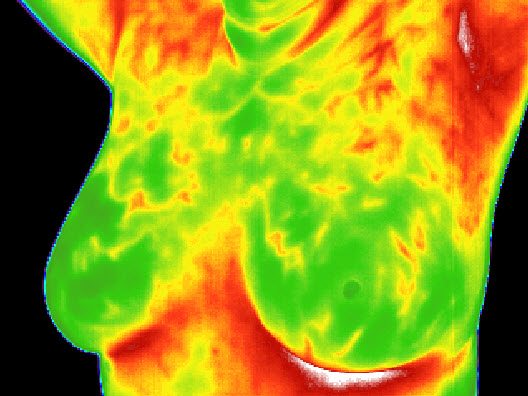
What is thermography and how is it used to detect breast cancer? As its name implies, thermography measures differences in temperature. Most systems use infrared imaging to achieve these measurements. There’s nothing magical about it; the technology has been in use for various applications for decades. The rationale for applying thermography to the detection of breast cancer is that breast cancers tend to induce angiogenesis, which is nothing more than the ingrowth of new blood vessels into the tumor to supply its nutrient and oxygen needs. A tumor that can’t induce angiogenesis can’t grow beyond the diffusion limit in aqueous solution, which is less than 1 mm in diameter. These blood vessels result in additional blood flow, which results in additional heat. In addition, the metabolism of breast cancer cells tends to be faster than the surrounding tissue, and cancer is often associated with inflammation, two more reasons why the temperature of breast cancers might be higher than the surrounding normal breast tissue and therefore potentially imageable using infrared thermography.

Although thermography is scientifically plausible, unfortunately its reality has not lived up to its promise, Dr. Northrup’s claims notwithstanding. Let’s take a look at those claims:

I understand that mammography has been the gold standard for years. Doctors are the most familiar with this test, and many believe that a mammogram is the best test for detecting breast cancer early. But it’s not. Studies show that a thermogram identifies precancerous or cancerous cells earlier, produces unambiguous results (which cuts down on additional testing), and doesn’t hurt the body.

No, studies do not show anything of the sort, other than that thermography probably doesn’t hurt the body. In particular thermography does not produce unambiguous results—far from it! That’s the problem, and that’s the reason why thermography has not caught on. It’s unreliable, and it doesn’t provide much in the way of anatomic information that allows a better localization of the breast cancers it does find. You’ll note if you look at Dr. Northrup’s article that the most recent article she cites that directly addresses the use of thermography to detect breast cancer is from 1982. There are more recent reviews and studies, as you might expect, but, oddly enough, Dr. Northrup doesn’t cite them.

One aspect of thermography for breast cancer detection that its advocates almost always mention is that it is FDA-approved for the detection of breast cancer. That is true, but not in the way it is often implied. Yes, thermography is FDA-approved for the detection of breast cancer, but what they don’t tell you is that thermography is not approved alone for screening women for the detection of breast cancer. It’s approved to be used in conjunction with mammography. What thermography boosters also fail to tell you is that the reason why thermography fell out of favor 30 years ago was as a result of a study by Feig et al in 1977 that found thermograpy to come in dead last among existing screening modalities of the time in finding breast cancers. Mammography detected 78% of breast cancers. In contrast, thermography only detected 39%, and in all 16,000 women in the study thermography was interpreted as positive in 17.9%. This is not a stellar record. In a separate trial in the early 1970s, the Breast Cancer Detection Demonstration Project (BCDDP) planned to compare thermography, mammography and clinical examination. However, BCDDP investigators decided to drop thermography early in the project due to a high false positive rate and low sensitivity.

Of course, technology was a lot more primitive back then, both in its ability to detect differences in temperature and its ability to produce images; it’s not at all surprising that thermography would not perform as well. Add to that the problems of bulky equipment, some of which required liquid nitrogen to work, and the lack of computational power to analyze images, and it’s not surprising that, compared to mammography, thermography never really caught on. Indeed, in a 1985 review, Moskowitz analyzed the data from the BCDDP trial. Of the 1,260 patients with more than one positive thermogram from 1973 to 1976, 1.9% subsequently developed breast cancer from 1977 to 1983. That finding was not statistically significantly different from the 1.3% of patients who developed cancer and never had a positive thermogram. His review of the literature supported the dismal record of thermography for detecting breast cancer.

That was 30 years ago, though. What about now? Computing power has increased almost ridiculously since then, and newer thermal sensors can detect temperature differences of 0.08° C. Has technology evolved to the point where the shortcomings of the original studies that buried thermography as a viable competitor to mammography for breast cancer screening no longer apply?

Maybe. Maybe not. That’s exactly the problem. As pointed out by Gregory Plotnikoff, M.D., M.T.S., and Carolyn Torkelson, M.D., M.S. in a 2009 commentary in Minnesota Medicine entitled Emerging Controversies in Breast Imaging: Is There a Place for Thermography?:

The biggest question concerns the efficacy of thermography to detect breast cancer. Despite various studies that suggest positive results for thermography, there has never been a major randomized controlled trial to determine baseline measurements of sensitivity and specificity. It is hard to imagine thermography being accepted by the conventional medical establishment without such data or evidence of cost-effectiveness.17 In addition to questions about the effectiveness of thermography, research needs to be conducted to determine the cost of using it for widespread cancer screening.18

Even two naturopaths reviewing the thermography literature in 2009 in one of the most woo-friendly journals imaginable, Integrative Cancer Therapies, conclude:

In light of developments in computer technology, and the maturation of the thermographic industry, additional research is required to confirm and/or continue to develop the potential of this technology to provide effective noninvasive early detection of breast cancer.

Even though the naturopaths tried very hard to spin the data into as favorable a view as possible, they just couldn’t bring themselves to recommend routine thermography. Meanwhile, virtually every reputable professional organization whose purview includes breast imaging and breast cancer does not recommend it. Here is a typical position statement, this time from cancer organizations in New Zealand.

That’s not to say that there aren’t “positive” trials of thermography. The problem is that they don’t rise to the level necessary to justify recommending thermography to all women, as many of these chiropractors and naturopaths are doing. There was a recent study of 92 women in 2008 that, using a technology called Digital infrared thermal imaging (DITI), found a sensitivity of 96% and a specificity ranging between 12-44%, depending upon the setting of the machine. While this is promising, it’s not possible to justify the widespread use of this technology on the basis of such a small clinical trial. One also has to remember that thermography also has downsides relative to mammography. For example, women have to let their skin temperature equilibrate to the room temperature of the thermography suite by sitting naked from the waist up in the dressing room for 15 minutes before the examination can be done:

For the scan, the patient is asked to stand about 10 feet in front of the camera with her arms raised over her head while three views of the breast (anterior and two lateral views) are taken. The next step in the process is a “cold challenge” where the patient is asked to place both hands in cold water at 10°C for one minute; then these same three images are retaken.43,44 The breasts exhibit thermal patterns that are captured by the infrared camera. It is these thermal captured image patterns that are interpreted by a trained thermographer.

Other protocols I’ve read about include blowing cool air on the breasts to speed the equilibration.

There is also considerable opportunity for subjectivity in the interpretation of thermograms. This is because, in marked contrast to mammography, there aren’t any widely agreed-upon standards for the performance and interpretation of breast thermography. Plotnikoff and Torkelson described the state of the industry quite well, with one huge blind spot:

In its current state in the United States, thermography is a balkanized industry. Although thermography never took root in mainstream medicine, it has begun to flourish in alternative settings as a breast cancer detection service offered by some physicians, chiropractors, and naturopaths. In lieu of any industry or professional standards for thermography, a variety of practices and protocols have emerged among practitioners and equipment manufacturers. As one practitioner described it, the industry is in its “Wild West” days.19 This fragmented state weakens the credibility of the entire field because consumers have no way to distinguish credible from inferior thermographic techniques. As thermography emerges as an alternative screening tool, consumers are led to believe that it has been validated for efficacy and compared with mammography. This misconception could raise public-safety concerns.

“Misconception”? Have Plotnikoff and Torkelson been reading the ads for breast thermography on the web? These go far beyond simply claiming that thermography has been validated for efficacy and compared with mammography.

Thermography--The-Science-of-Breast-Screening1-kitchener-tvfc1

The marketing of thermography by CAM practitioners

Thermography has become very popular among chiropractors, homeopaths, naturopaths, and a wide variety of “alternative practitioners.” Indeed, many are the ads that claim that thermography is safer than mammography and that it can replace mammography for breast cancer screening, particularly for younger women. Typical of such marketing and propaganda is this article by Joe Mercola entitled Revolutionary and Safe Diagnostic Tool Detects Hidden Inflammation: Thermography as a means of marketing the test at Dr. Mercola’s Natural Health Center in the Chicago area:

In this ad, Mercola claims that mammograms cause breast cancer, that the compression used during mammography can lead to “a lethal spread of any existing malignant cells,” and that thermograpy can identify inflammation that leads to cancer that can be treated—all using diet and Mercola’s supplements, of course—to prevent breast cancer. He also claims that thermography is good for more than just breast cancer detection. If you believe Mercola, it can also detect a whole panoply of conditions, including arthritis, immune dysfunction, fibromyalgia, carpal tunnel syndrome, irritable bowel syndrome, diverticulitis, and Crohn’s disease.

Geez, is there anything thermography can’t do?

Well, if we’re to believe Dr. Northrup, this is another thing breast thermography can do:

The most promising aspect of thermography is its ability to spot anomalies years before mammography. Using the same ten-year study data,2 researcher Dr. Getson adds, “Since thermal imaging detects changes at the cellular level, studies suggest that this test can detect activity eight to ten years before any other test. This makes it unique in that it affords us the opportunity to view changes before the actual formation of the tumor. Studies have shown that by the time a tumor has grown to sufficient size to be detectable by physical examination or mammography, it has in fact been growing for about seven years achieving more than twenty-five doublings of the malignant cell colony. At 90 days there are two cells, at one year there are16 cells, and at five years there are 1,048,576 cells—an amount that is still undetectable by a mammogram. (At 8 years, there are almost 4 billion cells.)”

Of course, even if this were true (and no evidence is presented to show that it is), as I’ve pointed out time and time again, ever earlier detection of cancer is not always a good thing because not all early lesions progress to become cancer. In other words, detecting breast cancer earlier is in general a good thing most of the time, but there clearly exists a point of diminishing returns and a point beyond which detection that is too early has the potential to cause harm. The very issue in the recent rethinking of recommendations for mammography (most recently discussed just two weeks ago) hasn’t been that mammography is not sensitive enough, but rather its potential to detect too many breast cancers that would never progress to endanger the life of the woman.

Let’s put it this way. Even if everything Northrup says or cites is absolutely accurate and thermography can detect inflammatory states that lead to cancer several years before mammography, that would not necessarily save even a single life but would have the potential to cause even more harm through overdiagnosis and overtreatment, particularly given that as many as one in five mammographically detected breast cancers might never progress—and some might even regress. Detecting such lesions five to ten years earlier could only exacerbate the problem of overdiagnosis and overtreatment. It might also lead to the perfect situation for CAM practitioners. They could find breast “lesions” with thermography; prescribe “treatments” in the form of dietary manipulations, supplements, or whatever; watch the lesions either disappear spontaneously or not progress; and then claim credit for having “cured” or “stopped the progression of” the cancer. Even if the cancer progresses to where it requires surgical removal and other treatment, the quack can claim credit for having detected it “before mammography.”

If you want evidence that Dr. Northrup has truly gone completely woo, look no further than this next passage:

As with anything, I suggest you let your inner guidance help you in all decisions about your health. If you feel it’s best to get an annual mammogram, then by all means continue with them. Just be aware of the drawbacks and risks associated with the test. One helpful way to assess your risk for breast cancer—which in turn can help you decide how often you want to have mammograms—is to use the National Cancer Institute’s Breast Cancer Risk Assessment Tool, available online at http://www.cancer.gov/bcrisktool. After you answer seven simple questions, it calculates both your risk of getting invasive breast cancer in the next ?ve years as well as your lifetime risk, and it compares each to the risk for the average U.S. woman of the same age and race or ethnicity.

You would be surprised by how many women tell me their doctors make them feel guilty for not having a mammogram. Women who just know they have healthy breasts. Don’t be intimidated if you prefer to forgo annual mammography.

If Dr. Northrup truly tells her patients that it’s medically acceptable for them to forego mammograms and use thermography instead for their routine screening for breast cancer, she is guilty of gross malpractice, in my opinion. If she doesn’t tell her patients that but writes articles like the one I’m citing, she’s guilty of hypocrisy. Her statements are scientifically unjustified, profoundly unethical, and potentially dangerous to patients. Many are the women whom I’ve met who “just knew” they were fine until their family persuaded them to undergo mammography, which then found real, invasive cancers. I don’t have much faith in anyone’s “inner guidance” with regard to asymptomatic disease. In essence, Northrup is urging women to base their health care decisions on intuition rather than science.

The bottom line

Thermography is a technology that has some degree of scientific plausibility but has not been validated as a diagnostic modality to detect breast cancer. The studies from 30 years ago showed it to be markedly inferior to mammography for this purpose, the claims of naturopaths, chiropractors, and various other quacks notwithstanding. While it’s true that advances in technology and computing power might have brought thermography to a point where it might be a useful adjunct to current imaging techniques, large randomized clinical trials have not been done to define its sensitivity and specificity and determine its utility when added to routine mammographic screening. In addition, thermography doesn’t provide any information that breast MRI can’t provide—and provide better. MRI measures in essence the same thing that thermography does (blood flow, which is what the heat maps that thermography produces are surrogates for) and adds to it detailed anatomic information that can guide biopsy and excision. That’s something thermography can’t do.

Currently, my take is that thermography might be useful as an adjunct to mammography. Indeed, I’ll make a confession. Back when I worked at The Cancer Institute of New Jersey, I became involved with a project that was testing a thermography-like machine. (I can’t say more than that about it.) A startup company was testing its new device to determine if the combination of mammography plus this technique could improve the sensitivity and specificity of breast cancer detection. I don’t know what ever became of the company or the device, but I still view thermography basically the same way now as I did then. It’s a test that might be useful as an adjunct to mammographic screening. In order to determine whether thermography is useful as an adjunct to other imaging techniques, however, its proponents need to do the proper scientific validation and clinical testing first, which haven’t been done yet and will require large clinical trials. Until that testing is done, thermography should not be offered to women outside of a clinical trial, and it should never be offered to women in lieu of mammography to detect breast cancer. Science does not support the former indication, although I have to concede that it might one day. More importantly, science most definitely does not support the use of thermography instead of mammography, a use that I doubt any clinical trial is likely ever to support because clinical equipoise demands that thermography be added to mammography in any clinical trial, not tested instead of mammography.

The ironic and sad thing about thermography is that it is not per se quackery itself. The concept of breast thermography is based on a reasonable and scientifically plausible idea, namely that tumors produce more angiogenesis, which leads to more blood flow, which leads to more heat that can be detected and imaged. However, the way it is marketed and promoted as a replacement for mammography is quackery, and Dr. Northrup is buying into such highly dubious promotion, coupled with a condescending appeal to “women’s intuition.” Unfortunately, the tight embrace of quacks to thermography contributes to the unsavory reputation the technique currently has in the medical community and continues to hinder its development in mainstream scientific medicine. On the other hand, maybe the quacks like it that way. If mainstream medicine were ever to validate thermography scientifically, then it would become science-based medicine, and the quacks can’t have that. It’s too profitable to market the test through fear and misinformation.


[Slashdot]
[Digg]
[Reddit]
[del.icio.us]
[Facebook]
[Technorati]
[Google]
[StumbleUpon]

Reflexology. Insert Nancy Sinatra Reference Here.

In the last post on acupuncture, I noted that the University of Maryland offered reflexology along with other supplements, and complementary and alternative medicine (SCAMs). I was uncertain as to the particulars of this SCAM, and this post is a result of those investigations.

Although messy in reality, science is a tool that gives us an idea as to how the real world functions. People will observe some aspect of nature, often for a lifetime, and from those observations discover a pattern in the data. Tycho Brahe spent a life carefully measuring the orbits of the planets; the data was used later by Kepler to determine that the planets orbit in an ellipse with the sun at one of the foci. If you have knowledge of the history of science, you realize what an amazing feat this represents, both in the measurement of the orbits and the analysis of the data. Careful observation, analysis of the data, then conclusions.

This is in contrast to SCAMs, where so many of the interventions are discovered by revelation, and then developed independently of data and observation. Palmer and chiropractic, von Peczely and iridology, Usui and reiki are examples. These geniuses discovered aspects of existence unseen by anyone before or after.

In that time honored pantheon is Dr. William Fitzgerald who, at the turn of the last century, “discovered” that the human body is divided into 10 longitudinal energy zones that end in the hands and the feet. By massaging these zones, you could heal disease and alter bodily functions. These are reminiscent of the meridians of acupuncture, and will soon be illustrated in the New England Journal of Medicine (see posts Aug 4 and 13). Fitzgerald named it Zone Therapy, and it went by that name until the 1960’s, when Eunice Ingham decided that, since all the energy zones ended in the feet, that it was the terminus of the energy zones that was the important aspect of Zone Therapy.

The body, it turns out, is far more crowded that we could ever have expected from our understanding of gross anatomy and histology. There is so much packed into our bag of meat, I am surprised that we do not explode, although perhaps we do have a potential explanation for spontaneous human combustion: the friction of all the projections and energy channels described by various SCAM’s rubbing together in a tight space.

There is the map projected on the iris with iridology, the maps on the ear, the tongue, the head, the hand, and the feet of the various acupuncture styles. There are the meridians of acupuncture and zone therapy, the energy flows of reiki and chiropractic. And there is the map of the body projected onto the feet and hands by reflexologists. The feet must be particularly crowded as the maps for foot acupuncture are different than the maps for reflexology; no wonder my feet ache at the end of the day.

Reflexologists are of the opinion that by manipulating the feet, hands and/or ears that correspond to body parts they can induce changes in those body parts. Touch the liver zone on the foot, alter the liver in the abdomen. Alexander Pushkin could vouch for the veracity of a subset of those interventions. Others are of the opinion that the manipulation of the feet, hands and/or ears alters the qi balance in the patient. However, as the Reflexology Association of American notes, “no one definition that will work in all situations and yet, because of the multi dimensional affect [sic] of Reflexology, all are true at [sic] defining the work we do. ”

And it is true, these definitions are limiting, as they do not encompass … well, let’s be nice and call them the curious concepts describing reflexology:

The purpose of the nerves is to carry messages and instruct the body. When the nerves improve that instruct the body, the instruction has to improve, the body has to improve. Every nerve in the body begins and ends in the hands and feet. By applying this specialized exercise pressure on the foot, the outcome is improved instruction to each and every part of the body, resulting in a re-educating, a re-patterning, and a re-conditioning of the nerves& instruction through the reflex/neutral electrical system of the body…also every lymphatic vessel begins and ends in the hands and feet.

The hands and feet are crowded indeed. Safe to say that the basic premises of reflexology have no bearing in reality. There are not projections of the body onto the hands and feet. As I have mentioned in the past, when I was a child I thought the Broadway in Portland was the same Broadway in New York and that if I kept walking I would end up on the Great White Way. It is true, in a way, that the two Broadways are connected in the same way that the nerves in the foot are connected to the liver, but it takes more links to get from one to the other than to get to Kevin Bacon.

What can reflexologist treat? Near about anything; it depends only on the claim of the reflexologist. Like many SCAMs, reflexology can help all illnesses. I would not deny that it is relaxing and pleasant to have one’s feet massaged — er, reflexed? (Reflexologist emphasize they are not doing massage.) But does reflexology have any real effects on any pathological states? Besides sore feet? And, while we are on the topic, why doesn’t walking have the same effect as reflexology?

Reflexology has been tested in clinical trials. Here is an issue that really gripes my cookies, or maybe a severe case of jealousy re: alt med.

In the world of infectious disease, getting to test an intervention for human use is a long process. First they have to find a potential antibiotic, discover the chemical structure and mechanism of action. Then the antibiotic is tested against numerous strains of hundreds of pathogens to see if it works in the test tube. Then there are a variety of animal studies looking for safety and efficacy. Then graduated clinical trials, phase 1, phase 2, and, finally, phase 3, before the antibiotic is declared non-inferior to vancomycin in human soft tissue infection.

Reflexology, and all other alt med interventions, bypass all these steps and go straight to clinical trials. Someone can pull a therapeutic intervention out of, well, this is the SBM blog, let’s say thin air, yeah, thin air. They can pull an intervention out of thin air and the next thing you know, good money is being spent to see if it is effective, when, evaluating it on the basis of reality, it should have the same chance of being effective as more common substances found in, well, ‘thin air.’

So, ignoring the fact there is no reason to test the efficacy of reflexology, what has reflexology been found to be effective in treating? Almost nothing of note. It is not effective for post operative cortisol levels, head ache, asthma, post operative pain, cancer anxiety, irritable bowel syndrome, pregnancy edema, low back pain, ovulation, and multiple sclerosis. It seemed to help pre-menstrual syndrome — so says the abstract which, I’m sure, accurately represents an unbiased and flawless experiment — but it did not even seem to help menopause symptoms.

What a hodgepodge of diseases. I thought aspirin was the wonder drug that worked wonders. The alleged near universality of reflexology, and other alt med interventions, is staggering. Imagine an antibiotic that not only treated all viruses, bacteria, fungi, and parasites but also infertility, headache, dementia and post op pain. Only alternative interventions have that kind of power. I am stuck looking for the underlying cause of a disease and targeting it with a specific intervention. How Western and reductionist of me.

While almost all individual studies show no benefit of reflexology, what would a systematic review reveal? The summation of nonsense, unfortunately, does not lead to validation of reflexology. Put all the small piles of nonsense together, you get one big pile of nonsense. The studies of reflexology are poorly done, with small sample size, and, not mentioned in the review, had no reason to be done in the first place.

Studies in breast cancer patients suggest to me that human contact is what it important, not the specific modality.

PATIENTS AND METHODS: One hundred and eighty-three women were randomized 6 weeks post-breast surgery to self-initiated support (SIS) (comparator intervention), SIS plus reflexology, or SIS plus scalp massage (control for physical and social contact). Reflexology and massage comprised eight sessions at weekly intervals. The primary end-point was 18 weeks post surgery; the primary outcome measure was the Trial Outcome Index (TOI) of the Functional Assessment of Cancer Therapy (FACT-B) – breast cancer version. The secondary end-point was 24 weeks post surgery. Secondary outcome measures were the Hospital Anxiety and Depression Scale (HADS) and the Mood Rating Scale (MRS).

RESULTS: At primary end-point, massage, but not reflexology, was significantly better than SIS on the TOI. Reflexology and massage were both better than SIS for MRS relaxation. Massage was better than reflexology and SIS for MRS easygoingness. At secondary end-point, reflexology, but not massage, was better than SIS on the TOI and MRS relaxation. There were no significant differences between reflexology or massage. There were no significant between group differences in HADS anxiety and depression. Self-reported use of out of study complementary therapies indicated that this was unlikely to have a significant effect on findings.

Or this one:

…significant decrease in anxiety observed in this sample of patients with breast and lung cancer following foot reflexology suggests that this may be a self-care approach to decrease anxiety in this patient population.

Or in the demented:

The findings demonstrate that when receiving the reflexology treatment condition, as compared to the control condition, the residents demonstrated significant reduction in observed pain.

All groups whose underlying disease leads to less human contact. Have you hugged your demented, cancerous nursing home patient today? I didn’t think so.

Monkeys, and other animals, groom each other often with a marked reduction in stress. Touch is good, and one doesn’t need to wrap it up in pseudoscientific nonsense for it to beneficial. Well, maybe you do. Strange people offering to massage your feet because it feels good may be off-putting for some and could lead to the authorities being involved.

One doesn’t need the woo of reflexology (projected maps and altered qi) to recognize that people need and benefit from physical interactions. Like in the NEJM recently, demonstrating the tai chi was of benefit in fibromyalgia. Exercise helps fibromyalgia, and tai chi is a gentle form of exercise, so it’s no surprise tai chi was of benefit; so is yoga. The mystical magic adds nothing.

Oddly, no one seems to have tested reflexology as an intervention for foot pain, a common complaint, and reflexology could not decrease foot edema in pregnant females. One wonders, if reflexology can’t even help a foot problem, what good is it?

The irritable bowel syndrome study concludes

I want to conclude with a note of caution. Although the results of this study are quite clear, they should not be used to dismiss reflexology as a treatment option across the board, nor indeed to argue against the effectiveness of CAM as a whole. The simple fact is that we know very little about the effectiveness of very many treatment options in relation to very many conditions. Reflexology in particular remains not just under-researched but almost unresearched, something that is quite startling given the extent of its use.

This is somewhat mirrored in the systemic review:

…the paucity and the poor quality of the existing studies prevents definitive judgement about the value of reflexology.

Well, technically, that’s true. But there is more than sufficient understanding about the workings of the human body to render a definitive judgement on reflexology. It won’t work because it can’t work, in much the same way that we know that a perpetual motion machine won’t work because it can’t work. And yet people keep inventing perpetual motion machines. Just because the rules of the universe say something is impossible doesn’t stop them from trying.

The great majority of studies demonstrate reflexology had no effects that could not be replicated by beyond picking fleas off your mate (am I over sharing?). And it has no anatomic or physiologic justification.

Years ago I was at a conference and one of my attendings was being detailed about a new antibiotic. The rep concluded with “and it’s very popular in Europe” to which my attending responded “so was fascism” and strolled off. Popularity is not a good justification to spending money and wasting patient’s limited time with nonsense.


[Slashdot]
[Digg]
[Reddit]
[del.icio.us]
[Facebook]
[Technorati]
[Google]
[StumbleUpon]

Pat Schroeder’s endorsement of Rage Reduction Therapy: The Cult of the Celebrity Strikes Again

We all know that misguided celebrities, such as Jenny McCarthy, Oprah, Prince Charles, and Arianna Huffington, pose considerable public health threats. Few know that arguably the most vile form of quackery has been getting the thumbs up from a celebrity hailing from the most rarified heights of power and influence — Representative Patricia Schroeder (D-CO, 1973-1997).

The practice I’m referring to is “Rage Reduction.” This practice, popular for decades in adoption and foster care circles, claims to help children develop the capacity to love and become attached to their new caregivers. Practitioners believe these children suffer from “Attachment Disorder” because of early abuse and neglect. Typical of quackery, this unrecognized diagnosis consists of an absurdly long catch-all list of signs used to ensnare any child. (Even good behavior is interpreted as sneaky manipulation of parents.)

In a Rage Reduction therapy session, a child is restrained by a therapist – usually a licensed psychologist or social worker – plus one or more assistants. The therapist “activates” a child by yelling, belittling, threatening, relentlessly tickling, bouncing the child’s head, covering his mouth, and painfully knuckling the child’s rib cage and sternum. Such sessions typically go on for two or more hours, until the child is exhausted from struggling and becomes, as one psychologist observed, “a whimpering little puddle.” Children, even teenagers, are then swaddled and given a baby bottle by their adopted mother for “bonding time.”

The rationale for Rage Reduction consists of several thoroughly discredited notions: the need to regress children back to infancy so that “repressed” memories of abuse can be recovered and repressed “infantile anger” can be drained out through “catharsis.”

There is no reliable evidence that indicates that Rage Reduction would be anything but harmful. To critics, Rage Reduction is indistinguishable from literal torture, i.e. the infliction of severe pain or suffering, whether physical or mental, for a purpose. The purpose here is apparently not the creation of loving relationships, but rather grinding down children until they are grateful and unquestioningly obedient. Think “Stepford Children.”

In one particularly brutal form of Rage Reduction called “Compression Therapy,” therapists claim to provoke repressed memories of rape by lying on top of the child and licking the child’s face. Along with violating just about every ethical code in the mental health book, Compression Therapy puts much pressure on the child’s abdomen, making breathing difficult. At least two children have died from suffocation in Rage Reduction sessions; and survivors tell of “seeing stars,” and even of passing out during therapy.

Many criminal child abuse and death cases have been linked to Rage Reduction and its harsh parenting methods. For those with a strong stomach, there is a blogsite that has published several survivor accounts.

Rage Reduction got its start in Colorado back in the 1970s, when psychologist Robert Zaslow came to the state claiming he could cure blindness. Zaslow had served as consultant on Elvis Presley’s last movie, A Change of Habit (1969). In this film, “Dr.” Elvis cures a girl of autism in just one Rage Reduction session.

When Rage Reduction failed to cure blindness, or autism off screen, Colorado followers of Zaslow turned to treating “attachment breaks” in children. The practice really took off in the late 1980s when adoptions from Eastern Europe opened up – and when Rage Reduction got a big celebrity bump from none other than US Representative Patricia Schroeder.

Schroeder was the long-time Democrat Congresswoman representing the Denver area who took a stab at the presidency in 1988. Chairing the US House Select Committee on Children, Youth and Families, Schroeder billed herself as “Friend of the Family.”

At the peak of her influence, Schroeder also wrote the foreword for a book promoting Rage Reduction entitled High Risk: Children Without A Conscience by Ken Magid and Carole McKelvey (Bantam, 1987). Today, after one author has surrendered her therapy license (the other is dead), this book is still in print.

High Risk

US News & World Report later took note of Schroeder’s “promotion” of High Risk:

High Risk has a foreword by former Colorado Rep. Pat Schroeder, who thanks the authors for their “gift” at a time when inadequate day care, rising divorce rates, and teen pregnancy threaten to inflate the numbers of unattached kids.

A Dead Child, A Troubling Defense” by Miriam Horn)

Shortly after High Risk was published, HBO aired a documentary about a child being treated by Magid. This film, Child of Rage, was followed up with an HBO drama by the same name. Both films, like the book, portrayed “unattached” children as murderous psychopaths, a danger to parents and society at large. This sensationalism fueled Rage Reduction ascendancy into a fad therapy, with cult-like followings all over the country, and in Britain and Australia, as well. Without Schroeder’s endorsement, Rage Reduction might have otherwise died a quick death — from lack of research, from moral outrage, and from compassion for children.

Today, High Risk is considered by critics to be the worst book of its kind. If a therapist recommends High Risk, you’ve pretty much got him pegged as an adherent of coercive restraint therapies. No one else would likely want to be associated with it.

High Risk contains one photo that nearly says it all. It is a photo of psychiatrist Foster Cline, MD knuckling the sternum of a young boy.

image-1

The caption says:

Dr. Foster Cline illustrates how a Rage Reduction Therapy session is conducted….Cline stimulates subject toward rage reaction. Child is being held by “holders.” …[the] child screams how much he hates the therapist.

When a boy with a bruised chest escaped Cline’s center a few years later, Cline was ordered by the Colorado Board of Medical Examiners to stop using Rage Reduction. Cline opted to leave the state instead.

This extreme treatment, which High Risk likens to an “exorcism,” is justified by demonizing children with “Attachment Disorder.” The same US New & World Report article explains:

A cartoon in the book Schroeder promotes depicts a spectrum of well-being: from the securely attached like “Mother Teresa,” illustrated with a haloed saint holding a cross, to the severely unattached like “Charles Manson,” depicted as a horned devil holding a bloody knife. Paula Pickle says of the kids her center [Attachment Center at Evergreen, Colorado] treats that “there often doesn’t seem to be a heart or soul.” [Thais] Tepper [of Parents' Network for the Post-Institutionalized Child] explains in chilling terms the effort by Russian orphanages to get rid of their most troubled charges: “Who are you going to send abroad, the healthy kids or the little minions of Satan?”

image-2
image-3

The banality of this diagram is almost unworthy of being pseudoscience. It’s not junk science. It’s just plain junk. (But do note, Ms Schroeder, where “Some Politicians” rank on this scale.)

High Risk does dabbles in other pseudoscience, as well, e.g.:

What Ted Bundy’s Handwriting Reveals..His manipulative tendencies are indicated by the “hooks” in some of his “c’s.”

Rage Reduction, repackaged with the less explicit name of “Attachment Therapy,” flourished through the 1990s. A welter of child welfare workers, CASA volunteers, judges, and adoptive/foster parents were sucked into the pseudoscientific solutions offered by Attachment Therapy.

With Schroeder’s imprimatur firmly in place, government agencies at federal, state and local levels funneled money into Attachment Therapy, paying for treatment and to house children in special “therapeutic foster homes” versed in Attachment Therapy’s uber harsh parenting methods, aka Nancy Thomas parenting.

(Nancy Thomas, a Colorado layperson trained by Foster Cline to be a “co-therapist” in Rage Reduction, will be keynoting at an adoption training conference in Tennessee Nov 5, 2010, for which social workers can receive continuing education credits. The sponsoring organization of this conference, which receives funding from the Tennessee Department of Children’s Services, advertises that Thomas’ “work was highlighted in an HBO special in 1990 titled, ‘Child of Rage.’”)

In Iowa, Vermont, Colorado, Virginia, New Hampshire, Utah, and Georgia, public funding paid for training therapists in Attachment Therapy. Adoption Subsidy Funding for “special needs children” could pay for any treatment parents wanted, evidence-based or not, including Attachment Therapy.

By 2002, numerous high-profile deaths and child abuse prosecutions resulted in growing professional condemnation of Attachment Therapy. It was at this time that I wrote Schroeder, on behalf of Advocates for Children in Therapy, (ACT) fully expecting she would retract her support.

When Schroeder did not respond, ACT picketed a pricey speaking event in Denver where Schroeder had been chosen to speak because of her “compassion.” Hoping the protest got Schroeder’s attention, I wrote her again:

You obviously did the authors of High Risk (still in print) an enormous favor by writing a foreword, in effect helping to legitimize the message of their book by lending them your well known name and your reputation as a humanitarian. That is viewed by the public as an endorsement of what is said in the book. Do you presently stand by your decision to have written the foreword for the book High Risk?

This time Schroeder responded, albeit briefly:

I am not a doctor and can’t endorse.

When I pressed the issue, she responded:

Writing a foreword and endorsing a medical authority are two different things. I believe books are to stir thoughts, debate, ideas, etc. The more the better. Different theories on everything are detailed in books. That is the best way to vet them.

With such a rationale, it is unclear whether there would be any book Schroeder wouldn’t write a foreword for. Schroeder’s response prompted Wallace Sampson, MD, to comment:

A book is not for discussion or debating. That is what journals are for.

Some years later, when the American Professional Society on the Abuse of Children released its “Task Force Report on Attachment Therapy” (in the journal Child Maltreatment Feb 2006) denouncing Attachment Therapy, its parenting methods and the Attachment Disorder diagnosis, I again wrote Schroeder, hoping that some high level dissing of the practice might make her reconsider her position. She didn’t respond.

Some suggest that Schroeder might not have been aware of High Risk’s contents, and that she is now taking the politically expedient route, hoping the whole issue goes away with time. But while Schroeder has been evasive, she is clearly not regretting her promotion of High Risk. If she was duped, why not jump ship while the jumping is good? While High Risk allowed her to pontificate about her own agenda in the foreword, I have a hard time coming to any other conclusion than that Schroeder may actually approve of this “therapy.” Would someone with presidential aspirations write a foreword for just any book?

At any rate, I think we can assume that Schroeder will not be asking Bantam to remove her foreword from future editions of High Risk, nor will she be calling for legislation that requires federal funding only go to providing evidence-based therapies for adopted children — or any of a dozen other things to help save children from Attachment Therapy.

Schroeder has good reasons to believe her endorsement of Rage Reduction will not tarnish her reputation. She continues to be feted as one of America’s great humanists. Last year, no less than the Center for Inquiry honored her at their 2009 World Congress and highlighted her participation in their Travel Club Adventure Caribbean cruise. CFI officials were not only unconcerned by Schroeder’s association with Attachment Therapy, but accused critics of “nastiness” towards a “defender of good science.”

But it gets worse.

Irony of ironies, Schroeder is now scheduled to keynote for that bastion of evidence-based medicine: The Joint Colloquium of the Cochrane and Campbell Collaborations in Keystone, Colorado, on October 18, 2010.

(As keynoter, Schroeder is billed as the leader of a “multi-year study for the Institute on Civil Society.” But according to ICS, this study produced “no formal document” or publication.)

Last March, I gave a heads up to colloquium organizer Robert Dellavalle, MD, about Schroeder’s unrepentant support of Attachment Therapy. When this yielded no response, I did a broad-spectrum emailing to Cochrane and Campbell officials about this brewing scandal, which prompted Dellavalle to respond:

The leadership discussions so far have noted that invitations to speak at the Colloquium do not constitute an endorsement of any views of the speakers positions past or present. And the topic of your concern is not the topic of Ms. Schroeder’s talk at the meeting.

On learning the title of Schroeder’s keynote is: “Can we keep this Democracy going?” I responded:

We fail to see how this topic is not relevant to the rights of children to be free from actual torture (using the definition of the UN Convention on Torture).

In the same way that world seemed upside down when Bill Maher received the Richard Dawkins Award for scientific integrity, so now do things seem topsy-turvy with CFI and the Cochrane/Campbell Collaborations honoring Schroeder as a defender of science and ethics. This is, alas, not the most shining hour for these otherwise esteemed organizations. Once again, the cult of celebrity scores a bullseye.

See childrenintherapy.org for more information on Attachment Therapy.

See childrenintherapy.org/practitioners for claims made by Attachment Therapy practitioners and proponents.

Linda Rosa, RN, works in home health care in Colorado. She has written about pseudoscientific practices in nursing, such as Therapeutic Touch, and works with Advocates for Children in Therapy to oppose unvalidated and abusive psychotherapy. She currently is Executive Director for the Institute for Science in Medicine.


[Slashdot]
[Digg]
[Reddit]
[del.icio.us]
[Facebook]
[Technorati]
[Google]
[StumbleUpon]

Do you have low T?

If you google “low testosterone” you’ll see lots of ads for testosterone replacement.  Some are from pharmaceutical companies that sell testosterone, others from obvious snake-oil salesmen.

Both types of ads list vague sets of symptoms, encourage you to believe that they are pathologic, and want to sell you something to make you better.  For example, the pharmaceutical company Solvay gives you a handy guide for speaking to your doctor, and a quiz to see if you have “low T”.  The quiz asks some questions that may be useful, but also asks very general questions about your sense of well being, and includes this gem:

I don’t feel sick, I just don’t feel like myself anymore. Could I have Low T?

The ad then gives this advice:

Because Low T signs and symptoms may not be clear and apparent, they may seem to be a normal part of aging or assumed to be caused by other health conditions. But talk to your doctor if you have symptoms of Low T. And ask to get tested. All it takes is a simple blood test that can be done during a routine checkup. If you do have Low T, your doctor may recommend treatments that can help bring testosterone up to normal levels and keep them there.

If you have diabetes, you should ask your doctor for a Low T test. The Endocrine Society recommends that all men with type 2 diabetes have their testosterone levels checked. Patients who have been diagnosed with diabetes have an increased chance of also having Low T.

Let’s step back for a moment.  What is being claimed is that low testosterone levels in males is a common cause of certain symptoms, and that testosterone replacement therapy can alleviate these symptoms.  To evaluate this claim from the perspective of science-based medicine, we need to ask specific questions.

  1. Is there a plausible connection between testosterone levels and certain symptoms?
  2. What is a normal testosterone level?
  3. Are there specific symptoms that correlate with lower levels?
  4. Does replacement therapy correct these symptoms?

Testosterone is an important hormone in males, and the effects of complete testosterone deprivation are easily observed.  Castration has different effects on males depending on whether it is done before puberty or after.  Given the effect of total androgen (testosterone) deprivation, it is plausible that partial deficiency may lead to physiologic problems.

Defining normal testosterone levels is problematic though.  Most studies show a decline in testosterone levels with age.  What is “normal” at 30 is not “normal” at 70.  Does this decline correlate with symptoms?

Decline in testosterone level with age

Decline in testosterone level with age

The answer isn’t clear.  Studies have shown that low testosterone levels are associated with different symptoms at different ages.  In older men with sexual dysfunction, low testosterone levels were associated with severe erectile dysfunction and decreased frequency of intercourse.  In younger men, low testosterone levels were associated with a decrease in nocturnal erections and reduced libido.  In the middle of the studied age  range, there were no significant associations between testosterone levels and sexual symptoms.  What this may tell us is that in older men, low levels of testosterone likely contribute to severe symptoms of sexual dysfunction.

The answer to question 2 is that normal testosterone levels vary with age, the type of test used, and the time of day the blood is drawn. Testosterone decreases with age, and this decrease correlates with certain symptoms.    Because of these and other data, the recommendation of the Endocrine Society (the most comprehensive and authoritative source) is to restrict the diagnosis of testosterone deficiency to men who have consistent symptoms and an unequivocally low testosterone level.

Question 3 has a difficult answer.  As we’ve seen, in certain age groups, certain sexual symptoms correlate well with low T levels.   There are some weak associations between less specific symptoms and testosterone deficiency (symptoms such as fatigue, loss of vigor, depressed mood, decreased physical performance).  Most of these less specific symptoms can be caused by a variety of problems or by none at all.

So, the data support a connection between certain symptoms and low testosterone levels.  Can testosterone replacement therapy (TRT) improve these symptoms?

The evidence is mixed.  There seems to be good evidence that testosterone replacement improves libido, but has little effect on erectile dysfunction (especially in younger patients).  There is a paucity of placebo-controlled studies of TRT, but non-placebo-controlled trials show some improvements in energy and sense of well-being.

Several medical conditions are correlated with low T. Obesity fairly strongly correlated with low testosterone levels, but there are no consistent data that show an improvement in obesity with TRT.

In sum, testosterone deficiency is a real problem that may affect a small but significant number of men.  The symptoms most consistent with low T are sexual problems, especially with age.  Replacement therapy seems to help with these symptoms in some men.  The ads for testosterone replacement therapy are, in my opinion, very problematic, nearing the point of deception.  They seem to link all manner of vague and common symptoms to low T, and imply that the use of their product is likely to fix these problems.   These ads explicitly instruct patients to ask for testing that may not actually be required. They shift the focus from a careful, methodical analysis of a difficult problem to frank disease mongering, encouraging the pathologizing of what may be normal symptoms, and offering up a costly therapy that may be no better than placebo, but with additional risk.

References

Corona, G., Mannucci, E., Ricca, V., Lotti, F., Boddi, V., Bandini, E., Balercia, G., Forti, G., & Maggi, M. (2009). The age-related decline of testosterone is associated with different specific symptoms and signs in patients with sexual dysfunction International Journal of Andrology, 32 (6), 720-728 DOI: 10.1111/j.1365-2605.2009.00952.x

Spetz, A., Palmefors, L., Skobe, R., Str??mstedt, M., Fredriksson, M., Theodorsson, E., & Hammar, M. (2007). Testosterone correlated to symptoms of partial androgen deficiency in aging men (PADAM) in an elderly Swedish population Menopause, PAP DOI: 10.1097/gme.0b013e318057786b

Allan, C., Forbes, E., Strauss, B., & McLachlan, R. (2008). Testosterone therapy increases sexual desire in ageing men with low–normal testosterone levels and symptoms of androgen deficiency International Journal of Impotence Research, 20 (4), 396-401 DOI: 10.1038/ijir.2008.22

Reyes-Vallejo, L., Lazarou, S., & Morgentaler, A. (2007). Subjective Sexual Response to Testosterone Replacement Therapy Based on Initial Serum Levels of Total Testosterone The Journal of Sexual Medicine, 4 (6), 1757-1762 DOI: 10.1111/j.1743-6109.2006.00381.x

Bhasin S, Cunningham GR, Hayes FJ, Matsumoto AM, Snyder PJ, Swerdloff RS, Montori VM, & Task Force, Endocrine Society (2010). Testosterone therapy in men with androgen deficiency syndromes: an Endocrine Society clinical practice guideline. The Journal of clinical endocrinology and metabolism, 95 (6), 2536-59 PMID: 20525905

Araujo, A., Esche, G., Kupelian, V., O’Donnell, A., Travison, T., Williams, R., Clark, R., & McKinlay, J. (2007). Prevalence of Symptomatic Androgen Deficiency in Men Journal of Clinical Endocrinology & Metabolism, 92 (11), 4241-4247 DOI: 10.1210/jc.2007-1245


[Slashdot]
[Digg]
[Reddit]
[del.icio.us]
[Facebook]
[Technorati]
[Google]
[StumbleUpon]

Some Flu Vaccine Updates

It is always flu season somewhere in the world. As Australia’s flu season comes to a close, we are getting ready for ours in the Northern Hemisphere. This is a good time to start thinking about getting the flu vaccine, and as always there is a lot of flu vaccine news to sort through.

Mark Crislip has already reviewed the evidence for the efficacy of the seasonal flu vaccine. Like most questions in medicine, the evidence is deceptively complex, and Mark does an excellent job of sorting through it, so I won’t repeat it here.

This year the H1N1 pandemic flu virus will be incorporated into the seasonal flu vaccine, so there will not be two separate vaccines as there was last year. H1N1 remains the dominant strain of seasonal flu, and as predicted the pandemic has simply been incorporated into the seasonal flu pattern.

Here are some updates on flu vaccine news – first the good news:

Flu Vaccine Efficacy

Two recent studies demonstrate the efficacy of the flu vaccine in improving outcomes. Mark Crislip discussed two weeks ago a recent study that shows that the flu vaccine (but not the pneumococcal vaccine) is associated with a decreased risk of heart attack. This makes sense as getting the flu can be a significant physiological strain and can plausibly provoke a heart attacks in those who are susceptible. This study emphasizes the importance of getting the seasonal flu vaccine early in the flu season.

Another recent study looked at the effect of maternal flu vaccination while pregnant and the subsequent risk of flu for their infant children. Angelia Eick et al studied 1169 mother-infant pairs among Navajo and White Mountain Apache Indian reservations and found that getting the seasonal flu vaccine while pregnant was associated with increase anti-flu antibodies up to 2-3 months old and a 41% reduction in the risk of flu in the first 6 months. This is important because young infants are generally not given the flu vaccine – they depend upon passive antibodies from the mother.

These two studies add to the body of evidence that clearly demonstrates that the flu vaccine is effective in preventing the flu and reducing morbidity. The media, however, also like to report about every flu vaccine side effect scare, whether legitimate or not.

H1N1 Vaccine and Narcolepsy

Over the summer it was reported that there were a cluster of cases of narcolepsy in Finland and Sweden. Narcolepsy is a sleep disorder characterized by excessive sleepiness. It is caused by a combination of genetics and environment, and can be triggered by infections with high fever. The appearance of narcolepsy in about a dozen children and adults was thought to perhaps be associated with the Pandemrix flu vaccine, and Finland promptly suspended use of this brand of flu vaccine. The possible association was widely reported – but the follow up investigation was not.

Sweden’s Medical Products Agency (MPA) investigated a possible association between narcolepsy and the flu vaccine, specifically Pandemrix, and found no association.

The agency’s report said six narcolepsy cases in Stockholm were in children, two of whom had not received the Pandemrix vaccine, according to the YLE report. Of 10 narcolepsy cases reported in adults, half had received the vaccine.

The CDC did their own review of the vaccine adverse events reporting system (VAERS) and found no pattern of reports that would be concerning for a link between vaccines and narcolepsy.

It is perfectly reasonable, as part of the precautionary principle, to take apparent clusters of diseases and investigate them to see if they are real or are just statistical clusterings (as Carl Sagan said – “randomness is clumpy”). It is also reasonable, and this happens often, to suspend use of a drug or medical product until a potential risk can be investigated. So there really was nothing unusual about the narcolepsy episode. Most apparent clusters like this turn out not to be real, and so it is no surprise that this was the case with narcolepsy.

The more difficult problem is the media response to these episodes. I would not say that such cases should not be reported, but rather that special care should be taken to put such reports into a reasonable context and to not prematurely and unnecessarily fear-monger. Further, when later investigations find that there was no risk, that should be given equal reporting – perhaps even more, as it is more difficult to quell fears than to stoke them. In addition, there is a subculture that is anti-science-based medicine, and also anti-vaccine. Such episode are exploited for propaganda purposes. It is likely that narcolepsy will now be added to the list of fears used against vaccines by such groups.

Flu Vaccine and Convulsions in Australia

Recently in Australia there has been a real cluster of fever and seizures in children who had received a particular brand of flu vaccine, the Fluvax. New Scientist reports:

Last week the Australian Department of Health and Ageing reported that flu vaccination was “causally related” to fever and convulsions in 99 Australian children this year. Of those, 74 had no other possible cause, and Fluvax had been given to all 66 of those where the vaccine’s name was known, CSL says it is trying to identify the problem.

Unlike the narcolepsy episode, this appears to be a real cluster, and the association with a particular brand of flu vaccine statistically solid. Fever with flu vaccine is a known risk, and in young children a high fever can sometimes trigger what is called a febrile seizure. Febrile seizures, while scary for the parents, are most often benign and to not result in any permanent damage or long term seizure risk. Rarely, however, there are neurological complications.

The baseline risk of febrile seizures from the flu vaccine is about 1.4 per 10,000 doses. This is much less than what would be expected from the flu itself, and so getting the vaccine actually decreases the risk of developing febrile seizures. The Fluvax, however, was associated with a 50 fold increase in risk of febrile seizures from that normally associated with the flu vaccine. Even with this increased risk there was still more statistical benefit than risk from this vaccine, especially since the H1N1 flu (which is included in this year’s seasonal vaccine) had such a high mortality rate (1% of those children admitted to the hospital with confirmed H1N1 flu in Australia died.

But of course this is an unacceptable side effect from the Fluvax, and since it is dramatically greater than other brands there must be something wrong with this particular batch. It is not yet known what that is. This is precisely the reason for careful post-marketing surveillance of drugs and vaccines – if unexpected side effects emerge then steps can be taken to quickly remove the offending agent from the market until the risks can be sorted out.

The same company that makes Fluvax, CSL, also makes a product for the Northern Hemisphere called Afluria. The CDC is recommending that this brand not be given to children under 5 years old, as other brands are also available. It is not known if Afluria carries the same increased risk as Fluvax, but again this is a reasonable application of the precautionary principle.

Conclusion

This latest evidence supports what is already known about the seasonal flu vaccine – it works, but it is not without risk. All medical interventions have risk and it is important to always consider risk vs benefit. When considered in this context, the evidence clearly shows that the benefit of receiving the flu vaccine far outweighs the small risk. The flu is a serious illness and preventing it carries significant benefit.


[Slashdot]
[Digg]
[Reddit]
[del.icio.us]
[Facebook]
[Technorati]
[Google]
[StumbleUpon]

Skepticamp: Invading the Great White North on October 23

skepticamp

Are you frustrated by the prevalence of pseudoscience in medicine? Are you interested in critical thinking and science? Is SBM your rational refuge?  Want to meet like-minded science advocates? On October 23, 2010 four Skepticamps will take place across Canada. If you enjoy reading this blog, you’ll probably enjoy Skepticamp.

Happily, Skepticamp involves no actual camping. It’s a flexibly organized, collaborative conference on science and critical thinking. Skepticamp is not your typical medical conference with high fees, bad PowerPoint, long talks and little interaction with speakers. Skepticamps are open, collaborative, interactive, and FREE.

Here are the four events, and a few of the SBM-related highlights.

  • Vancouver: ear candling; dopamine as an explanatory model for superstition; and SBM copy editor Paul Ingraham speaking about his first year as an alternative medicine apostate.
  • Winnipeg: fad diets and detoxes; homeopathy; and the continued relevance of vaccinations
  • Ottawa: self-help cults; genes and inherited diseases; science denial; and forensic science
  • Toronto: I’ll be speaking about natural health product regulation. Other talks include a guide to the medical literature; the cognitive underpinnings of sympathetic magic; and naturopathy.

If there’s one near you, consider attending Skepticamp on October 23. Given it’s free, Skepticamp offers tremendous value-for-money. We invite our American colleagues to grab their passports, make a break for the border, and keep driving until there are Tim Hortons everywhere. And if you’re attending the Toronto Skepticamp, be sure to  say hello.


[Slashdot]
[Digg]
[Reddit]
[del.icio.us]
[Facebook]
[Technorati]
[Google]
[StumbleUpon]

Mayo Clinic on Home Remedies

I write a lot of critical articles. It’s nice to be able to write a positive one for a change. I received a prepublication proof of The Mayo Clinic Book of Home Remedies: What to Do for the Most Common Health Problems. It is due to be released on October 26 and can be pre-ordered from Amazon.com. Since “quackademic” medicine is infiltrating our best institutions and organizations, I wasn’t sure I could trust even the prestigious Mayo Clinic. I was expecting some questionable recommendations for complementary & alternative medicine (CAM) treatments, but I found nothing in the book that I could seriously object to.

It is organized alphabetically, starting with acne and airplane ear and progressing through bedbugs, boils and bronchitis, dandruff, depression and diabetes to warts, wrinkles and wrist pain. Each entry consists of (1) a description of the problem and its symptoms, (2) treatments you can try at home, and (3) when to seek professional medical help. It concludes with a short section on emergency medicine that covers anaphylaxis, bleeding, burns, CPR, choking, fracture, heart attack, poisoning, seizure, shock and stroke.

Nowhere does it mention acupuncture, chiropractic, energy medicine, or homeopathy. It gives good, clear guidance about when a health problem should not be treated with home remedies. Its recommendations about diet and exercise are solid. It doesn’t recommend anything that can’t be supported by published studies and common sense. When it recommends herbal remedies and diet supplements, it is cautious about what it claims. For instance, glucosamine and chondroitin are listed for osteoarthritis, but they point out that further study is required and they say “because the supplements may help and appear to be safe, it may not hurt to give them a try.” Not exactly a strong recommendation!

For elevated cholesterol, it recommends weight loss, diet, exercise, limiting alcohol, avoiding tobacco; and then it says “Experiment with natural products. Although few natural products have been proven to reduce cholesterol, some may be helpful. You could consider…” artichoke, barley, psyllium, flaxseed, garlic, oat bran, and plant sterols. I can’t really argue with that, especially if the patient is monitored by a doctor (which of course would be required to get blood tests that would tell if the natural products have had any effect).

For gout, they recommend against megadoses of vitamin C and their mention of cherries is fair and balanced:

Studies show an association between cherries and lower levels of uric acid in your blood, but it isn’t clear if the cherries have any effect on the signs and symptoms. Eating cherries and other dark-colored fruits, such as blackberries, blueberries, purple grapes and raspberries, may be a safe way to supplement gout treatment, but discuss this strategy with your doctor first.

It includes appropriate warnings. For instance, in the article on bladder infections, it says that for prevention you can try cranberry juice (“though still not proven in rigorous study”), but don’t try it if you’re taking Coumadin, since it may lead to bleeding. In the cholesterol section, it warns against red yeast rice because it contains lovastatin and there is no way to determine the quantity or quality of the drug.

The book recommends a few things that a rigorous scientist might hesitate to recommend because of insufficient evidence. But unlike many less trustworthy sources of medical advice, this book will not tell a patient to try anything that might be dangerous, anything that has been tested and found not to work, anything that is based on belief rather than on evidence, or anything that might delay or interfere with needed medical treatment. It is safe, sensible, and woo-free.

It isn’t perfect, but it’s pretty good. I would feel comfortable recommending it to a layman who wanted to know “what home remedies can I try?” or who wanted a home reference book about what can be done instead of calling the doctor and when calling the doctor is the more prudent course.


[Slashdot]
[Digg]
[Reddit]
[del.icio.us]
[Facebook]
[Technorati]
[Google]
[StumbleUpon]

I’m not worthy! I’m not worthy! (For the Lorne Trottier Public Science Symposium)

Trottier Symposium 2010

In two weeks, yours truly will be participating in the 2010 Lorne Trottier Public Science Symposium at McGill University in Montreal. This year, the theme is Confronting Pseudoscience: A Call to Action. I’ll be speaking with Ben Goldacre and Michael Shermer on Monday, October 18 from 5 to 7 PM on the Threat of Pseudoscience. On Tuesday, October 19, the ever-amazing Randi will speak on investigating paranormal claims. Unfortunately, the organizers couldn’t get Randi on the same stage with us because he couldn’t make it to Montreal from TAM London in time for Monday night; so this is the next best thing. Randi deserves the stage to himself anyway.

Obviously, I can’t wait, although I must admit that I’m rather nervous. To share the stage with Michael Shermer and Ben Goldacre and to get to hang out with them plus Randi, well, that’s more than I could have hoped for or imagined. It leaves me feeling like Wayne in this clip, with Shermer, Goldacre, and Randi as Alice Cooper (very appropriate, given Randi’s history of having done the effects for Alice Cooper’s stage show back in the 1970s):

So, if you happen to be in the Montreal area or can get there on October 18 and/or 19, come on over to McGill. It’ll be a rousing good skeptical time. I don’t yet know what Ben Goldacre and Michael Shermer will be discussing, but I’ll be speaking about cancer quackery (although I probably won’t be able to resist a brief commentary on quackademic medicine). I’ll also be on Dr. Joe’s radio show on CJAD 1010.


[Slashdot]
[Digg]
[Reddit]
[del.icio.us]
[Facebook]
[Technorati]
[Google]
[StumbleUpon]

The Guatemala syphilis experiment and medical ethics in science-based medicine

Several of the bloggers here at SBM have repeatedly criticized various clinical trials for so-called “complementary and alternative medicine” interventions for various conditions and diseases (or should I say dis-eases?) for being completely unethical. Examples include the misbegotten clinical trial for the Gonzalez protocol for pancreatic cancer, which — surprise, surprise! — ended up showing that patients undergoing Dr. Gonzalez’s combination of 150 supplements a day, dietary manipulations, and coffee enemas, actually did much worse than those undergoing standard of care, despite how depressingly poor the results of standard of care are; clinical trials of homeopathy in Honduras and other Third World countries, which both Wally Sampson and I lambasted; and ongoing clinical trial of chelation therapy for cardiovascular disease. I’ve also criticized the “autism biomed” movement, that amalgamation of parents who believe that vaccines cause autism and yet are willing to subject their children to all sorts of quackery to “cure” the “vaccine injury” of uncontrolled and unethical experimentation on autistic children. As valid as all these criticisms are, it is important to recognize that science-based medicine is not free of its own abuse of ethics.

A couple of weeks ago, I wrote about the concept of clinical equipoise. Clinical equipoise is a critical concept in any clinical trial. Basically, a state of clinical equipoise exists when there is genuine scientific uncertainty over which of the options being tested in/on living, breathing human beings is better, and any clinical trial in which a state of clinical equipoise does not exist is at the very least ethically dodgy and probably downright unethical. For example, when the occasional anti-vaccine activist argues for a randomized controlled clinical trial comparing vaccinated children and unvaccinated children, it’s easy to shoot that idea down as unethical because there is no clinical equipoise. The children receiving placebo vaccines would be put at a much higher risk of suffering harm compared to the vaccinated children because they would be left unprotected against life-threatening diseases. In the realm of conventional medicine, the reason that few cancer clinical trials involve a placebo control group anymore but instead test a new therapy either against the standard of care or with the standard of care is because in many, if not nearly all, cases placebo use in a cancer patient is unethical when there exists effective therapy, even if the therapy is not all that effective. What all this boils down to is that science is only part of the basis of science-based medicine. Medical ethics must take precedence. After all, arguably the most efficacious way to test a new antibiotic would be to infect people with the bacteria the antibiotic treats and then divide these people up into a placebo control group and a group receiving the antibiotics to see how each group does. After all, this is the sort of thing that the Nazis and Japanese did during World War II, and the same sort of dehumanization and abuse of research subjects that every ethical precept regarding human subjects research that has been developed since then, such as the Helsinki Declaration of 1964, has been designed to prevent.

Unfortunately, medical scientists in the U.S. have not always lived up to these precepts. The most famous example is arguably the Tuskegee syphilis experiment, in which poor black men with syphilis were studied and the control group denied effective therapy for syphilis even after it was known that penicillin was an effective treatment for syphilis. This study spanned 40 years, from 1932 to 1972, and is justifiably held up as one of the worst examples of research misconduct in American history, if not the history of the world. The shock the revelation of this study to the American public in 1972, when it learned of men dying of syphilis, women contracting syphilis, and babies being born with congenital syphilis, all unnecessarily, led to Belmont Report and the establishment of the Office for Human Research Protections (OHRP).

It turns out that there was an even worse atrocity against medical science perpetrated by U.S. investigators in Guatemala over 60 years ago that only now has come to light in stories in the New York Times, MSNBC, and elsewhere. So bad was the offense that Secretary of State Hillary Clinton and Secretary of Health and Human Services Kathleen Sebelius have issued a formal apology to the Guatemalan government for the experiments in which Guatemalan prisoners were intentionally infected with syphilis and then treated with antibiotics, an apology that President Obama reiterated in a personal telephone call to Guatemalan President Alvaro Colom on Friday.

Experimenting on Guatemalans

The Guatemala syphilis experiment might have remained lost in the depths of history, unknown, records of its having taken place buried in archives at the University of Pittsburgh, were it not for the efforts of Wellesley College Professor of Women’s Studies Susan Reverby and medical historian, who unearthed the notes of John C. Cutler, who, ironically enough, later spent some time as an important member of the team carrying out the Tuskegee experiment and continued to defend the study 20 years after it was closed. What she found was horrifying, and she has recently published a manuscript describing her findings. Because I always like to go to the primary source wherever possible, I will refer you to the manuscript, available on Dr. Reverby’s faculty web page and entitled “Normal Exposure” and Inoculation Syphilis: A PHS “Tuskegee” Doctor in Guatemala, 1946-48 (synopsis here). The HHS response can be found here, including the statement issued on Friday by Clinton and Sebelius in both English and Spanish.

The background behind Professor Reverby’s revelations is important. As she states in the advanced synopsis:

Perhaps the most infamous of American research studies is the “Tuskegee” Syphilis Study in which the U.S. Public Health Service (PHS) watched, but did not treat, hundreds of African American men with late stage syphilis for forty years (1932-1972).1 Much of the folklore surrounding this study assumes that the doctors actually infected African American men in Macon County, Alabama with syphilis by inoculating them with the disease. Historians of the Study, the author included, have spent years now explaining why this was not true and why this myth persists. Part of the explanation is that the spirochete-shaped bacteria that cause syphilis cannot be cultured and grown in a laboratory, easily put into a syringe, or transferred from the blood of one infected person to another.

The inoculation story that is part of the Tuskegee myths did, however, go on elsewhere. In 1946-48, Dr. John C. Cutler, a PHS physician who would later be part of the Syphilis Study in Alabama in the 1960s and continue to defend it two decades after it ended in the 1990s, was running a syphilis inoculation project in Guatemala, co-sponsored by the PHS, the National Institutes of Health, the Pan American Health Sanitary Bureau (now the Pan American Health Organization), and the Guatemalan government.

It was the early days of penicillin and the PHS was deeply interested in whether penicillin could be used to prevent, not just cure, early syphilis infection, whether better blood tests for the disease could be established, what dosages of penicillin actually cured infection, and to understand the process of re-infection after cures. Many scientific questions remained to be answered.

Now you see why the Guatemala syphilis experiment is arguably worse than the Tuskegee experiment, although the Guatemalan experiment only lasted two years and every man infected with syphilis was given penicillin. On the other hand, as the full manuscript describes, although researchers did obtain permission for their studies from the prisons and other institutions with which they worked, they did not receive permission from the inmates or their families. Indeed, deception was part and parcel of the entire process. In return for cooperation, researchers offered supplies to the institution, such as anti-seizure medications like Dilantin, refrigerators to store medications, and a “motion picture projector that supplied the sole recreation for the inmates, metal cups, plates and forks to supplement the completely inadequate supply available.” Individual subjects were plied with cigarettes, “an entire packet for inoculation, blood draws or spinal taps and a single cigarette for ‘clinical observation.’”

Researchers also went to ludicrous extremes to infect the men with syphilis. First, they took advantage of legalized prostitution in Guatemala and the fact that Guatemala allowed prostitutes to pay regular visits to men in penal institutions by locating prostitutes with syphilis:

With the cooperation of officials at the Ministry of Justice and the warden of Guatemala City’s Central Penitentiary, which housed nearly 1500 inmates, prostitutes who tested positive for either syphilis or gonorrhea were allowed to offer their services to prison inmates, paid for by U.S. taxpayers through the funds of the PHS. In yet another set of experiments, uninfected prostitutes had inoculum of the diseases placed on their cervixes before the sexual visits began. Serological tests were done on the inmates before the prostitutes were invited to the prison and then afterwards to see if infection had occurred. The men were divided into groups and various chemical and biological prophylaxis techniques were tested after presumed infection. If positive, the men were then provided with enough penicillin to produce a cure.

Your tax dollars at work in 1946. This method soon ran into problems:

Not enough of the sexually well-serviced men (the researchers actually timed how long they spent with the prostitutes and thought they acted “like rabbits”), even when plied with alcohol, seemed to getting syphilis. The prostitutes were not easily controlled either, and one researcher lamented, “unfortunately our female donor is leaving her profession for marriage and is no longer available.”

Due to the unreliability of the serological tests used to diagnose syphilis in the 1940s, the researchers soon went beyond these methods. It turned out that there were too many positive blood tests even before the men were exposed to syphilis, which posed a huge problem given that the research protocol required men who had never had syphilis or who’d had it and been cured. This led to a trial examining the serum of children in an orphanage, where they found that indeed the false positive rate of the serological test for syphilis was quite high. This problem also meant that the researchers couldn’t yet answer whether penicillin could prevent syphilis.

So Cutler and his team went beyond using prostitutes and isolated syphilis to directly inoculate inmates with. Their sources were the gumma (syphilitic growths) on the testicles of infected rabbits or scraping the penile chancres of infected men, from which they had to isolate the spirochete that causes syphilis. This was difficult, because the spirochete could not survive more than 45 to 90 minutes outside the body, during which time it had to be isolated, centrifuged with fresh home-made beef heart broth, and then delivered to the subjects:

With the men, the inoculation was often much more direct after what soldiers for generations had called the “short arm” inspection. They chose men with “at least moderately long foreskins [to keep the mucus membranes moist]” and who could “sit or stand calmly in one spot for several hours.” In the experiments, a doctor held the subject’s penis, pulled back the foreskin, abraded the penis slightly just short of drawing blood by scraping the skin with a hypodermic needle, introduced a cotton pledget (or small dressing) and dripped drops of the syphilitic emulsion onto the pad and through it to the roughed skin on the man’s penis for at least an hour, sometimes two.

This was also compared with other methods of introducing the spirochete, including scraping of the forearm, ingestion of syphilitic tissue mixed with distilled water, introduction into the spinal fluid, and direct injection into the bloodstream.

It turns out that even back in 1946 many of the officials who knew of or participated in the experiment knew it was unethical. Even Cutler was reported to have said, “As you can imagine, we are holding our breath, and we are explaining to the patients and others concerned with but a few key exceptions, that the treatment is a new one utilizing serum followed by penicillin. This double talk keeps me hopping at times.” Even more disturbing is the general attitude among several researchers seemed to view law breaking as sometimes necessary for the advancement of medical science, as Thomas Rivers, who led the Rockefeller Institute for Medical Research Hospital in New York, made clear in his memoir in 1967:

Well, all I can say is, it’s against the law to do many things, but the law winks when a reputable man wants to do a scientific experiment. For example, the criminal code of the City of New York holds that is a felony to inject a person with infectious material. Well, I tested out live yellow fever vaccine right on my ward in the Rockefeller Hospital. It was no secret, and I assure you that the people in the New York City Department of Health knew it was being done….Unless the law winks occasionally, you have no progress in medicine.

It is against this attitude that ethical standards and laws have evolved. It is also as a result of these abuses that many minorities and underprivileged groups of people are mistrustful of physicians and science. Supporters of SBM can’t deny that there have been serious ethical violations committed by overzealous scientists who came to value the study of their scientific question more than they did for the rights and dignity of their human subjects, because the evidence of such violations of human rights are incontrovertible. The questions remain: What to do about them and how to prevent them?

The Belmont Report, The Common Rule, and CAM

After the horrors of Nazi medical experimentation and the abuses during the Tuskegee syphilis study (remember, the Guatemala syphilis experiment was not widely known until now), it was clear that rules were needed to protect human research subjects from such abuses. First came the Nuremberg Code in 1947. This code, drafted in the wake of the infamous Doctors’ Trial at Nuremberg set forth ten principles to govern human subjects experimentation, many of which regular readers of SBM will be familiar with. Examples include the requirement for informed consent; that unnecessary pain and suffering be avoided; that the experiment should be designed based on the results of animal experimentation and knowledge of the natural history of the disease that justifies the performance of the experiment (prior plausibility, anyone?); the requirement that subjects can refuse to continue at any time; and that no experiment should be conducted where injury, disability, or death can reasonably be expected (clinical equipoise). The Declaration of Helsinki, introduced in 1964 by the World Medical Assembly, is based on the same principles as the Nuremberg Code but takes them even further, for example, stating that “the interest of science and society should never take precedence over considerations related to the well-being of the subject.” The Helsinki Declaration was last updated in 2008. It is ironic that at the time the Nuremberg Code was being written and approved that the U.S. government was engaging in the same sort of abuse of human research subjects that the Nuremberg Code was designed to combat.

In the U.S., the Nuremberg Code and the Helsinki Declaration notwithstanding, the Tuskegee debacle was the impetus that led to the Belmont Report on Ethical Principles and Guidelines for the Protection of Human Subjects of Research finalized on April 18, 1979. This report identifies three essential and fundamental ethical principles for human subject research (respect for persons, beneficence, and justice) that form the basis of all Department of Health and Human Services human subject protection regulations to this day. It is essential reading for anyone doing human subject research in this country. In 1991, these regulations were — finally! — codified into what is now known as The Common Rule. All institutions doing federally funded research are required to adhere to The Common Rule.

A key aspect of The Common Rule is the Institutional Review Board (IRB). The IRB is in essence a committee that oversees all human subject research for an institution and makes sure that the studies are ethical in design and that they conform to all federal regulations. Basically, IRBs are charged with weighing the risks and benefits of proposed human subject research and making sure that (1) the risks are minimized and that the risk:benefit ratio is very favorable; (2) to minimize any pain or suffering that might come about because of the experimental therapy; and (3) to make sure that researchers obtain truly informed consent. I’ve written extensively about The Common Rule before in the context of how certain CAM trials violate the Common Rule and how, for example, Mark and David Geier created a sham IRB packed with their cronies (as so ably documented by Kathleen Seidel) to rubber-stamp their unethical studies of using Lupron to treat the “vaccine injury” they believe to be the cause of autism. What is important (and embarrassing for proponents of SBM) to note is that The Common Rule only first went into effect in 1981 and reached its current form in the 1991 revision to the U.S. Department of Health and Human Services Title 45 CFR 46 (Public Welfare) Subparts A, B, C and D. Subpart A. What that means is that, in the United States at least, the current government regulations mandating a baseline standard of ethics have only been in effect less than 30 years and only in their current form for less than 20 years.

Ethics: The difference between CAM and SBM

Not surprisingly, CAM proponents have jumped all over these revelations. For example, even quackery promoter Mike Adams has a grain of a valid point when he writes hysterical headlines like Guatemalan STD medical experiments were just one crime in a long history of medical-government collusion to use humans as guinea pigs. Unfortunately for him, he can’t resist taking a valid criticism and running right off the rails with it. Most of the examples he mentions date back at least 50 years and are now commonly known. Few of them are more recent than the 1970s. Most of these are either problems that couldn’t reasonably been foreseen (for instance, the observation that 30% of the participants of a trial for a vaccine against hepatitis B were found to be HIV-positive in 1983) or that are questionable pseudoscience at best, such as ranting against the clinical trials of Gardasil or labeling vaccine mandates as being the equivalent to the Tuskegee or Guatemala syphilis experiments. This is a point that Anne Dachel, Media Editor for the anti-vaccine propaganda blog Age of Autism, predictably parroted yesterday in a post entitled Valid Concern for 60 Year Old Medical Travesty: What About Today’s?, in which she attacks bioethicist Art Caplan for alleged hypocrisy in his refutations of anti-vaccine misinformation in “contrast” to his justifiable outrage over the revelation of the Guatemala syphilis experiment, even going so far as to write:

Increasing exposure to mercury is having a dramatic impact on our lives. “Nonetheless, officials knew it was wrong” also means that there’s a great incentive to cover up the damage at all costs. There is a real lesson from the Guatemala and Tuskegee experiments. Let’s hope it doesn’t take 60 years before officials admit what mercury exposure in vaccine has done to our children.

Never mind that the concept that mercury in vaccines causes autism is a long-discredited hypothesis, a failed hypothesis even more discredited (if that were possible) than the hypothesis that vaccines cause autism. The difference is important; in the case of vaccines science is on the side of those defending the clinical trials studying vaccines and their efficacy, not on the side of anti-vaccine activists like Anne Dachel. Odd, too, that she failed to mention Mark and David Geier’s and Andrew Wakefield’s completely unethical experiments.

Not really, actually.

Yes, charges of hypocrisy go both ways, which is why one of the reasons I wanted to write about the Guatemala syphilis experiment is that it is a stark reminder to proponents of SBM (like myself) that SBM does have a history of not always being as ethically pure as we should be. Indeed, the U.S. Government was right, albeit late, to apologize to the Guatemalan government:

The sexually transmitted disease inoculation study conducted from 1946-1948 in Guatemala was clearly unethical. Although these events occurred more than 64 years ago, we are outraged that such reprehensible research could have occurred under the guise of public health. We deeply regret that it happened, and we apologize to all the individuals who were affected by such abhorrent research practices. The conduct exhibited during the study does not represent the values of the United States, or our commitment to human dignity and great respect for the people of Guatemala. The study is a sad reminder that adequate human subject safeguards did not exist a half-century ago.

Today, the regulations that govern U.S.-funded human medical research prohibit these kinds of appalling violations. The United States is unwavering in our commitment to ensure that all human medical studies conducted today meet exacting U.S. and international legal and ethical standards. In the spirit of this commitment to ethical research, we are launching a thorough investigation into the specifics of this case from 1946. In addition, through the Presidential Commission for the Study of Bioethical Issues, we are also convening a body of international experts to review and report on the most effective methods to ensure that all human medical research conducted around the globe today meets rigorous ethical standards.

Reparations to survivors and families would be entirely appropriate in a case like this, as is the investigation ordered by the U.S. government into what happened. It is also entirely appropriate to point out, as Robert Herriman does, that at the time Dr. Cutler’s experiments were being carried out, the U.S. government was passing judgment on the Nazi doctors who carried out the same sorts of experiments, such as purposely infecting prisoners with tetanus and other agents to test the effectiveness of the antibiotic, sulfonamide? What was done in Guatemala in the name of public health was, at its core, different only in that the U.S. didn’t actually round up prisoners and throw them in concentration camps to do its experiments. In other words, little different.

The difference, however, is that proponents of SBM must be (and, for the most part, are) advocates for ethics in all medical experimentation, be it animal or human research. SBM depends upon science and rigorous clinical trials, but never at the expense of violating clinical equipoise, subjecting subjects to risks without true informed consent, or violating patient autonomy. All too many CAM advocates and anti-vaccine advocates use ethical misadventures and abuses as nothing more than a tu quoque argument; they delight in pointing out the gross ethical violations that are committed from time to time by science-based investigators while ignoring those committed by “their side,” such as Nicholas Gonzalez and the investigators performing the Gonzalez trial, Mark and David Geier, Andrew Wakefield, and the investigators performing the TACT trial. (Ironically, except for the Geiers’ trial, all of these trials were funded by our tax dollars — every bit as much as the Guatemalan or Tuskegee syphilis trials.)

I have long argued that there should be no such thing as “alternative” medicine. Rather, there should be one scientific standard for medicine regardless of where it comes from, and that includes all of what is commonly referred to as “CAM.” Similarly, there should be one ethical standard for all research involving human subjects. Unlike Adams and Dachel, when I condemn ethical atrocities in CAM trials that does not mean I will turn a blind eye when such lapses occur in trials of ostensibly science-based medicine and nor should anyone else. The Guatemalan syphilis experiment was indeed a gross failure on the part of SBM to live up to ethical precepts and police its own, but, as shocking as this incident is, it does not validate Mike Adam’s quackery and conspiracy theories or Anne Dachel’s anti-vaccine pseudoscience any more than it invalidates science-based medicine. What it should do is to strengthen the resolve of anyone involved in SBM never to let something like this happen again, regardless of the kind of medical study.


[Slashdot]
[Digg]
[Reddit]
[del.icio.us]
[Facebook]
[Technorati]
[Google]
[StumbleUpon]

Chiropractic Vertebral Subluxations: Science vs. Pseudoscience

A 1997 publication by the Foundation for Chiropractic Education and Research, supporting the vertebral subluxation theory, noted that “…we [chiropractors] have successfully distanced the concept of a chiropractic subluxation from that of an orthopedic subluxation.”1 When discussing “subluxations” or misaligned vertebrae, however, chiropractors often fail to point out the difference between an orthopedic subluxation and a chiropractic subluxation. Reference to subluxations in medical literature is often presented as support for the practice of chiropractic as a method of adjusting vertebral subluxations to “restore and maintain health.”

In the eyes of the public, the chiropractic vertebral subluxation theory has confused the definition of the word “subluxation,” a common medical term. Unlike the mysterious, undetectable and asymptomatic chiropractic “vertebral subluxation complex” alleged to be a cause of disease, a real vertebral subluxation, that is, an orthopedic subluxation, can be a cause of mechanical and neuromusculoskeletal symptoms but has never been associated with organic disease.

Subluxations: Real and Imaginary

An orthopedic subluxation, recognized and named as such since the days of Hippocrates, is a painful partial dislocation. Simple misalignment of a vertebra, also referred to as a “subluxation,” is commonly caused by disc degeneration, curvatures, spondylolysis, and structural abnormalities. Such a subluxation may or may not be mechanically symptomatic and can be seen on a plain x-ray image. In the absence of pathology such as disc herniation or osteophyte formation, these common vertebral subluxations or misalignments rarely affect spinal nerves and have never been associated with organic disease. Spinal nerves supply musculoskeletal structures. The body’s organs are supplied primarily by autonomic nerve ganglia and plexuses located outside the spinal column and by cranial and sacral nerves that pass through solid bony openings, providing overlapping nerve supply independent of any one spinal nerve that passes between two vertebrae.

An orthopedic subluxation, a true vertebral misalignment, or a mechanical joint dysfunction that affects mobility in the spine is not the same as a “chiropractic subluxation” that is alleged to cause disease by interfering with nerve supply to organs. Such a subluxation has never been proven to exist. There is no plausible theory and no credible evidence to support the contention that “nerve interference” originating in a single spinal segment can cause an organic disease.

Unable to provide evidence that commonly occurring vertebral misalignment can cause organic disease, advocates of the subluxation theory have reasoned that there must be some other type of joint dysfunction that can affect general health. They have chosen, by consensus, to call this undetectable lesion a “vertebral subluxation complex,” which “embraces the holistic nature of the human body, including health, well-being, and the doctor/patient relationship as well as the changes in nerve, muscle, connective, and vascular tissues which are understood to accompany the kinesiologic aberrations of spinal articulations.”1

Some chiropractors claim to be able to locate these elusive subluxations by using surface electromyography, thermography, vibratory instruments, leg length checks, or by palpating the spine.

A largely ignored landmark review of the literature by a Ph.D. and a chiropractor (Nansel and Szlazak), published in 1995, concluded that there is not a single appropriately controlled study to indicate that any dysfunction in structures of the spinal column is a cause of organic disease.2 The review noted that pain and other symptoms referred from a spinal segment can “create overt signs and symptoms that can mimic, or simulate (rather than cause), internal organ disease,” lending no support to the vertebral subluxation theory. Spinal nerves are commonly irritated or compressed, causing pain and other symptoms in the musculoskeletal structures supplied by the affected nerve. But even the most severe compression of a spinal nerve does not cause organic disease.

A review of the current evidence on the epidemiology of the subluxation construct (Mirtz, et al, 2009) also failed to find any credible evidence supporting the chiropractic vertebral subluxation theory. This paper, authored by three chiropractors and a Ph.D., concluded that “No supportive evidence is found for the chiropractic subluxation being associated with any disease process or of creating suboptimal health conditions requiring intervention. Regardless of popular appeal this leaves the subluxation construct in the realm of unsupported speculation. This lack of supportive evidence suggests the subluxation construct has no valid clinical applicability.”3

While there is justification for use of the word “subluxation” when referring to a mechanical-type spinal problem, there appears to be no justification whatsoever for suggesting that a “chiropractic subluxation” can affect general health.

A Chiropractic Subluxation by Any Other Name…

If the chiropractic profession dumped the subluxation theory and took the steps needed to become a physical-treatment specialty in the care of mechanical-type neck and back problems, it could remain open to future research that might reveal evidence that spinal manipulation benefits general health?a finding that would be a bonus for use of manual therapy. Until then, the theory that adjusting a “vertebral subluxation complex” will restore and maintain health is too implausible to warrant support by the scientific community.

Unfortunately, the chiropractic profession in the United States continues to be defined by subluxation theory. Too few chiropractors are willing to “step out of line” and announce that the theory (more accurately defined as a belief) is scientifically indefensible and should be dumped. Failure of chiropractic associations to publicly disagree with subluxationists who identify chiropractic as a method of adjusting the vertebral subluxation complex keeps chiropractic marginalized and subject to ridicule by the scientific community. Without some identifying label or degree that distinguishes science-based chiropractors from subluxation-based chiropractors, medical physicians will continue to be reluctant to refer a patient to a chiropractor, lest they deliver a patient into the hands of a pseudoscientific practitioner whose philosophy embraces an anti-medical approach and endangers the patient. Science-based chiropractors who are properly specialized should openly announce their limitations if they are to earn the recognition and trust of medical professionals who can provide the referrals needed to sustain a specialized practice. 

In May of 2010, the British General Chiropractic Council (GCC) advised members of the British Chiropractic Association (BCA) that “The chiropractic Vertebral Subluxation Complex…is not supported by any clinical research evidence that would allow claims to be made that it is the cause of disease or health concerns.”4 Chiropractors were advised to provide evidence-based care that “incorporates the best available evidence from research, the preferences of the patient and the expertise of practitioners including the individual chiropractor her/himself.”4 In response, the British Chiropractic Association advised its members to “refrain from making any reference to Vertebral Subluxation Complex in media to which their patients or the general public may have access,” adding that “this advice has no bearing on scope of practice.”4

While the action of the GCC and the BCA in avoiding reference to the Vertebral Subluxation Complex is an important and unprecedented move in the right direction, it appears that the door was left open for British chiropractors to continue treating a broad scope of health problems. Such leniency would not restrict use of a variety of unproven treatment methods (originally based on the vertebral subluxation theory) promoted by individual chiropractors and preferred by indoctrinated patients.

Although many chiropractors are now backing away from the chiropractic vertebral subluxation theory, many continue to use the theory to justify treating a broad scope of health problems by “adjusting” the spine. They simply point to legal and dictionary definitions of chiropractic to support their claims. Some who do not use the word “subluxation” simply substitute another word or words, such as “joint dysfunction,” in support of their belief that some kind of segmental spinal “lesion” can affect overall health.

Spinal Manipulation Stigmatized by Subluxation Theory

The basic definition of chiropractic provides opportunity for pseudoscientific spinal manipulators who treat a broad scope of health problems with a myriad of implausible and unproven treatment methods, alienating an informed public along with the scientific community.

According to a study published in 2005, the percentage of the US population seeing chiropractors annually for various reasons decreased from 9.9% in 1997 to 7.4% in 2002.5 Using data from a 2002 National Health Interview Survey, a study published in a 2010 issue of The Journal of the American Board of Family Medicine reported that about 6% of the US population used complementary alternative medicine (CAM) to treat their back pain. About 74% of this 6% (about 4.4% of the population) went to chiropractors; 22% went to massage therapists.6 Since conventional medical practitioners traditionally refer back-pain patients to physical therapists, physiatrists, or orthopedic surgeons, physician referral to CAM practitioners remains low.

The chiropractic profession would be well advised to make the changes needed for recognition as specialists in the care of mechanical-type back pain, “the second leading reason for ambulatory office visits” and the most common reason for use of CAM in the United States.6

Science-based chiropractors who do not subscribe to the chiropractic vertebral subluxation theory, who specialize in the use of manipulation and other physical treatment methods in the care of mechanical-type neck and back problems, will use manipulation more appropriately. Unfortunately, there is no recognized label, degree, or association that distinguishes such chiropractors from subluxation-based chiropractors. Without a clear choice in selecting a good chiropractor, few physicians will risk referring their patients to a chiropractor, making survival difficult for properly specialized chiropractors.

As Sir James Frazer wrote in 1922, “The ablest man is dragged down by the weakest and dullest, who necessarily sets the standard, since he cannot rise, while the other can fall.”7

Belief System Perpetuates Status Quo

Since my graduation from a chiropractic college in 1956, arguments and opinions about chiropractic have changed very little. No one seems to know what chiropractic is or what it does. No two chiropractors can agree on how to treat a specific ailment or which vertebrae to adjust. There are at least 97 named antithetical adjustive techniques,8 all based on a nonsensical, nonfalsifiable chiropractic vertebral subluxation theory. The chiropractic profession as a whole has yet to be properly defined and specialized so that diagnosis and treatment methods are uniformly consistent and interchangeable among chiropractors. Subluxation-based chiropractic continues to be at odds with mainstream health care.

Although the public generally thinks of a chiropractor as a “back doctor,” societal suspicion keeps utilization of chiropractic low. In a cycle perpetuated by the definition of chiropractic, science takes a back seat to standards that allow some chiropractors to follow a 19th century philosophy formulated by a magnetic healer 115 years ago. So far, the chiropractic profession has failed to take a stand and draw a line that separates sense from nonsense in chiropractic care, keeping the profession on the fringe of health care and in the realm of alternative medicine. The Chiropractic Paradigm formulated by the Association of Chiropractic Colleges (ACC), representing North American Chiropractic Colleges, proposes that “Chiropractic is concerned with the preservation and restoration of health and focuses particular attention on the subluxation.”9,10 The purpose of chiropractic is to “optimize health.” This vague and untestable ACC paradigm has been endorsed by the American Chiropractic Association, the International Chiropractic Association, and the World Federation of Chiropractic. The ACC notes that “Because of the emphasis on holistic health care, chiropractic is associated with the field of complementary and alternative medicine.”11

Until chiropractic schools and associations draw a line (with the fanfare of a clarion call) and take a stand on the side of science as a properly limited specialty, uniformly defining and limiting chiropractic in state laws, the credibility and the status of chiropractors will remain low. Physicians will continue to refer their patients to physical therapists, physiatrists, and orthopedic surgeons rather than risk a bad outcome with inappropriate treatment provided by a chiropractor. With an increasing number of physical therapists and orthopedic manual therapists now including spinal manipulation in their treatment armamentarium, it may eventually become unnecessary to search for the manipulative services of individual science-based chiropractors who are “not like the other chiropractors.”

It seems likely that subluxation-based chiropractic, like homeopathy and other belief systems, will be perpetuated to some degree by true believers. It remains to be seen whether chiropractic will eventually split into two camps?one for science-based chiropractors and one for subluxation-based chiropractors. Hopefully, the science-based camp will eventually prevail as a majority in defining chiropractic in state laws, forcing subluxation-based chiropractors to practice surreptitiously. This may never happen. But in the archives of science, the “chiropractic subluxation” will be filed away under the label of dogma.

Nonfalsifiable Subluxation Theory Still Alive

Despite the general consensus of scientific and academic groups that the chiropractic vertebral subluxation theory is not a viable construct, the National Board of Chiropractic Examiners continues to define chiropractic as subluxation-based: “The specific focus of chiropractic practice is known as the chiropractic subluxation or joint dysfunction. A subluxation is a health concern that manifests in the skeletal joints, and, through complex anatomical and physiological relationships, affects the nervous system and may lead to reduced function, disability, or illness.”9

Such a definition continues to allow routine manipulation of vertebrae anywhere in the spine to “restore and maintain health” by correcting “subluxations” or “joint dysfunction.” This approach allows frequent manipulation of the cervical spine, a treatment that has been associated with stroke caused by dissection of vertebrobasilar arteries. It’s important to remember that the chances of injury are multiplied when chiropractic neck manipulation is routinely used many times on every patient in a misguided attempt to improve health, as opposed to occasional use of neck manipulation by physical therapists and other manual therapists who are concerned only about restoring mobility in a stiff spine.

In June of 2010, the Connecticut Chiropractic Board, denying that neck manipulation can be a cause of stroke, issued this statement: “After a careful and thorough review of all the testimony and documentary evidence admitted at the hearing [January 2010], the Board concludes that there is sufficient evidence to establish that a stroke or a cervical arterial dissection is not a risk or side effect of joint mobilization, manipulation or adjustment of the cervical spine.”12 It seems unlikely that any group or organization outside of chiropractic will agree with this observation.

Because of apparent concerns that chiropractic neck manipulation based on subluxation theory involves more risk than benefit, the Kaiser Permanente Mid Atlantic States and Mid-Atlantic Permanente Medical Group recently revised their Chiropractic Manipulation Medical Coverage Policy to exclude cervical Chiropractic Manipulative Treatment (CMT). The revised policy states: “Given the paucity of data related to beneficial effects of chiropractic manipulation of the cervical spine and the real potential for catastrophic adverse effects, it was decided to exclude chiropractic manipulation of the cervical spine from coverage.”13 In response, the American Chiropractic Association “…sent a letter to Kaiser outlining the extensive data that supports cervical spine manipulation as both beneficial and safe.”14

Until the schools and associations of the chiropractic profession totally abandon the vertebral subluxation theory, and state and federal laws defining chiropractic are changed, it is not difficult to understand why there might be some justification for blanket condemnation of chiropractic, despite evidence that spinal manipulation can be useful in the treatment of uncomplicated mechanical-type back problems. It does not appear, however, that the chiropractic profession might be willing to voluntarily reduce its scope of practice by renouncing the vertebral subluxation theory. At the present time, “…the 50 state chiropractic practice acts essentially define chiropractic as the detection and correction of subluxations and assume their significance to human health, allowing a broad scope of practice. Because the chiropractic profession seems unwilling to abandon these discredited concepts, reform of the state chiropractic practice acts to eliminate subluxation-based chiropractic practice may be the only viable solution to the perpetration of unscientific and unproved healthcare practices.”15

The subluxation is the yoke of the chiropractic profession. The “chiropractic subluxation,” under one name or another, continues to find shelter under the umbrella of chiropractic. Good science-based chiropractors who do not subscribe to the vertebral subluxation theory and who use manipulation appropriately can offer a service of value. Unfortunately, such chiropractors are not easy to find.

References

  1. Rosner A. The Role of Subluxation in Chiropractic. Des Moines, IA: Foundation for Chiropractic Education and Research; 1997.
  2. Nansel D, Szlazak M. Somatic dysfunction and the phenomenon of visceral disease simulation: a probable explanation for the apparent effectiveness of somatic therapy in patients presumed to be suffering from true visceral disease. J Manipulative Physiol Ther. 1995;18:379-397.
  3. Mirtz TA, Morgan L, Wyatt LH, Greene L. An epidemiological examination of the subluxation construct using Hill’s criteria of causation. Chiropractic & Osteopathy. 2009;17:13. http://www.chiroandosteo.com/content/17/1/13 (Accessed August 24, 2010).
  4. Brown R. President, British Chiropractic Association. BCA Statement on Vertebral Subluxation Complex. May 24, 2010. General Chiropractic Council Guidance on Claims Made for the Chiropractic Vertebral Subluxation Complex. http://www.gcc-uk.org/files/page_file/guidance_on_claims_for_VSC_May_2010.pdf (Accessed August 24, 2010.)
  5. Tindle HA, Davis RB, Phillips RS, Eisenberg DM. Trends in use of complementary and alternative medicine by US adults: 1997-2002. Altern Ther Health Med. 2005;11:42-49.
  6. Kanodia AK, Legedza AT, Davis RB, Eisenberg DM, Phillips RS. Perceived benefit of complementary and alternative medicine (CAM) for back pain: a national survey. The Journal of the American Board of Family Medicine. 2010;23(3):354-362.
  7. Frazer J. The Golden Bough. New York, NY: The Macmillan Company; 1956.
  8. Peterson D, Wiese G. Chiropractic: An Illustrated History. St. Louis, MO: Mosby; 1995:260-261.
  9. Christensen M, et al. Practice Analysis of Chiropractic. Greeley, CO: National Board of Chiropractic Examiners; 2010.
  10. Chiropractic Paradigm. Association of Chiropractic Colleges, 2010. http://www.chirocolleges.org/paradigm_scope_practice.html (Accessed August 24, 2010.)
  11. What Is Chiropractic? Association of Chiropractic Colleges. 2010 http://www.chirocolleges.org/whatis.html (Accessed August 24, 2010.)
  12. Connecticut Chiropractors’ Informed Consent Standard Upheld. American Chiropractic Association. June 11, 2010. http://www.acatoday.org/content_css.cfm?CID=3978. (Accessed August 28, 2010.)
  13. No Evidence of Benefits, Health Insurer Excludes Neck Manipulations. PR Web. August 28, 2010. http://www.prweb.com/pdfdownload/4432714.pdf (Accessed Aug 28, 2010.)
  14. American Chiropractic Association responds to new Kaiser policy excluding cervical manipulation. Chiropractic Economics. August 20, 2010. http://www.chiroeco.com/news/print-this.php?id=10075. (Accessed August 28, 2010.)
  15. Bellamy JJ. Legislative alchemy: the US state chiropractic practice acts. FACT. 2010;15(3):214-222.


[Slashdot]
[Digg]
[Reddit]
[del.icio.us]
[Facebook]
[Technorati]
[Google]
[StumbleUpon]

Chelation: Compounding Pharmacy’s Problems

Chelation is the provision of a substance to increase the body’s excretion of heavy metals. In poisoning situations (lead, aluminum, iron, etc.), chelation is medically necessary, objectively effective, and approved for use. But the same term has a completely different meaning in the alternative medicine universe, where proponents often believe heavy metal toxicity is the “one true cause” of disease, and chelation can undo microvascular inflammation, atherosclerosis, and even aging itself. From early days as an unproven treatment of coronary artery disease, its use has expanded to include autism, Alzheimer’s disease, cancer, and dozens of other diseases. Today, chelation is widely available. Regrettably, my own profession, pharmacy,  facilitates this pseudoscience by manufacturing and selling chelation products.

Provoked urine tests are a common entry point to chelation therapy. Patients are given a product to provoke heavy metal excretion. The urine is tested and the patient is informed that they’re “toxic” and require chelation. Unfortunately, these results are meaningless and provide no evidence that chelation is medically necessary. But that’s the justification used for advocating a treatment regimen that will be useless at best and fatal at worst. A recent Medical Letter review concluded:

Medical Letter consultants believe that the use of chelation therapy in non-standard protocols for unsubstantiated indications should be discouraged. The results of provoked urine testing are not an acceptable basis for such treatment.

Providing chelation to patients isn’t a straightforward matter. It’s typically an intravenous infusion (though there are some oral products). Unless you’re part of the dubious TACT trial, which has administration centres across the United States and Canada, there are few products commercially available. For example, edetate calcium disodium (EDTA) is approved for sale in the United States but not Canada. Edetate disodium (also called EDTA) is not approved for sale in either country. But these products are widely available: they’re manufactured by pharmacists in pharmacies.

Not that many decades ago, almost all prescriptions were custom manufactured, or compounded. The pharmacist combined raw chemicals into dosage forms like capsules, tablets, liquids and creams. Compounding allows complete customization of a prescription — from a new strength of a capsule, to a liquid form of a tablet, to creams with combinations of ingredients that can be completely individualized. With the proper equipment, even sterile injectables can be made.

These days, commercial manufacturers supply most drug products, and the need for in-pharmacy compounding has dwindled. At the same time, regulatory oversight, by agencies like Health Canada and the FDA, ensure product uniformity, purity, potency, efficacy, and safety standards for consumers. However, any pharmacy is still capable of providing compounded prescriptions, and some specialize, calling themselves “compounding pharmacies” and aggressively promoting the service. In compounding pharmacies, the same level of regulatory oversight and scrutiny does not exist. Professional Compounding Centers of America, provides training, formulations (recipes), and raw ingredients to compounding pharmacies. To pharmacies and pharmacists, compounding is a business opportunity, and an ideal way for independent pharmacies to compete against large chain stores, which typically do not offer these services.

The relationship between compounding pharmacies that prepare chelation treatments, and the practitioners that prescribe these products, is a symbiotic one — each group needs the other to offer these treatments. Consider this article in a pharmacy publication, entitled, Chelation for Antiaging: The Pharmacist’s Role, which touts the benefits of chelation:

Removing toxic metals from the body is one of the most important antiaging therapies available. The results from many scientific studies indicate that an increased accumulation (body burden) of toxic metals—such as mercury, lead, cadmium, and arsenic—increases the risk for common diseases, including cancer, cardiovascular disease, diabetes, Alzheimer’s disease, and attention-deficit/ hyperactivity disorder.

And:

Serious toxic-metal problems must be managed by an experienced physician. It is becoming increasingly recognized, however, that virtually everyone has a chronic accumulation of toxic metals in the body, which contributes to health problems and accelerates the aging process. Pharmacists who take the time to become knowledgeable about the correct use of OTC detoxification products can provide a much-needed service. At the same time, guiding customers on detoxification protocols also can become a new source of income for pharmacists who charge for their consultation time.

It’s a huge, burgeoning, evidence-free marketplace that pharmacies have stepped in to fill. College Pharmacy in Colorado has a “Hot List” of chelation protocols including the DAN! protocol — all of which can be ordered. Dallas-based ApothéCure offers a huge list of intravenous chelation options. Quantum Pharmacy in San Francisco touts a long list of benefits from EDTA infusions. Smith’s Pharmacy in Toronto offers chelation among a number of biomedical treatments for autism.

If there’s no evidence to support its use, why the persistent interest in chelation? Despite anecdotal evidence of success, my sense is chelation is simply another manifestation of sympathetic magic: specifically, contagious magic. Patients remove these non-existent “toxins” and become “cleansed” through a sciencey-looking purification ritual that is repeated dozens of times. With no objective measurement of efficacy, protocols and treatment measurements vary widely, but typically lack a defined endpoint. According to the Medical Letter, regimens of 20-50 infusions are common, at costs of $100-$300 per treatment.

Regulators have had difficulty finding a balance between allowing the legitimate practice of individualized compounding of products to meet unique patient needs, and the desire to limit pharmacy compounding as a workaround to prepare products that are pointedly not approved for use, or are used as a means of commercially selling products that require FDA evaluation and approval for sale. The FDA has taken action against a number of pharmacies who have been alleged to contravene federal food and drug regulations. There’s been little action from pharmacy regulators themselves against these practices.

Unfortunately for patients, a network of pharmacies continues to facilitate the provision of compounded chelation therapies, in the absence of any persuasive evidence to support their use. That state and provincial pharmacy regulators ignore these activities is an embarrassment to the profession of pharmacy, and consumers quite literally are paying the price.


[Slashdot]
[Digg]
[Reddit]
[del.icio.us]
[Facebook]
[Technorati]
[Google]
[StumbleUpon]

When (Anti-Vax) Politics Intrudes

Over the last decade there has been a needed discussion about the relationship between politics and science. This has mostly been spawned by the perceived “Republican War on Science,” at the center of which is the global warming debate. In reality, both ends of the political spectrum (as evidenced, for example, by the Huffington Post) tend to trump science with ideology. That is the nature of politics. But at least the issue has been raised.

Briefly, defenders of science have pointed out that science should inform politics, not the other way around. Ideologues should not be allowed to put their thumb on the scale of science in order to get the result their ideology demands. Further, the optimal policy emerges from an honest assessment of the relevant science. Values still come into play for many issues, so science alone is not enough, but the science has to be right.

Within medicine this issue often involves the regulation of the standard of care and public health policy. An example of the former is the law passed last year is Connecticut that essentially exempts professionals who treat “chronic Lyme disease” from the standard of care – the department of health cannot act against their license for treating this controversial condition with unproven therapies.Rather than allowing experts to determine the standard of care, which is an ever moving target, this law locks into place a very controversial, and in my opinion dubious, practice.

Another issue that frequently is caught between politics and science is vaccinations – and just such a conflict is heating up in Florida. Penn Bullock and Brandon K. Thorp report in the Miami News Times that a wealthy chiropractor, Gary Kompothecras, is using his political connections, earned by generous campaign contributions, to promote his apparent anti-vaccine agenda. Kompothecras has two children with autism and he blames thimerosal in vaccines for their condition. Readers of SBM know that thimerosal (which contains ethyl mercury) has not been connected to autism. The scientific evidence overwhelmingly shows that vaccines are not to blame. Most notably with regard to thimerosal specifically, this preservative was removed from most childhood vaccines over 8 years ago in the US, and autism rates have not plummeted as proponents of the thimerosal hypothesis predicted. Yet some, like Kompothecras, still cling to this discredited notion.

A year ago Kompothecras (who calls himself the “rainmaker” – a reference to his political connections) was pushing for a law that would have weakened Florida’s vaccine requirement for public school. Such measures are always sold as parent choice or health freedom, but they are really just anti-vaccine. The bill, which is still languishing, would outlaw certain vaccines with thimerosal and would allow parents to space out and delay vaccines.

This is a good example of the disconnect between science and politics – there is no evidence that delaying or spacing out vaccines has any health benefit, but it does leave children vulnerable to preventable diseases for longer. So delaying vaccines has risk but no benefit.

This is therefore an example of one man who is using political connections to push for legislation that is not based upon science and runs contrary to the consensus of expert opinion.
Kompothecras is now at it again, using political pressure to “bully” the Florida department of health into releasing confidential vaccine records. Kompothecras is a friend and contributor to governor Charlie Crist, and was appointed to the governor’s task force on autism (a scary thought in itself). He wants the DOH to give this confidential information to the infamous father and son team of Mark and David Geier.

We have written extensively about them as well – most significantly their recent trial of lupron (a chemical castrating agent) and chelation therapy (a risky procedure) for autism. The Geiers have been publishing research alleging to show a connection between vaccines and autism, but their results are at odds with other researchers and seem highly flawed and dubious on review. Bullock and Thorpe summarize their career thusly:

Since Mark Geier embraced the autism theory, his appearances in federal courts have led judges to label his testimonies “intellectually dishonest” and “not reliable.” The Institute of Medicine has called his work “uninterpretable.” The American Academy of Pediatrics said one of his studies exhibited “numerous conceptual and scientific flaws, omissions of fact, inaccuracies, and misstatements.”

Now, I am always in favor of transparency of information. As we learned with climate gate, keeping data from those who you perceive to have an anti-scientific agenda can backfire. But confidential medical records are not temperature data. There is an issue of confidentiality that needs to be dealt with. Medical information can be released for legitimate research that is in the public interest – but there’s the rub.

The Geiers have a dubious scientific history of misinterpreting data, apparently to serve an anti-vaccine agenda and to support their lucrative practice of treating alleged mercury poisoning. No one has a right to perform medical research, or a right to privileged medical information. You have to earn the privilege of access by being an ethical and legitimate researcher. In my opinion, the Geiers do not meet these criteria.

Apparently the Florida DOH agrees, but the normal process of assessing the legitimacy of requests for information is being subverted by political pressure from a wealthy and connected chiropractor with an apparent anti-vaccine agenda.

This is a bit of a no-win scenario for the DOH – whether or not they release the data it can be used for anti-vaccine propaganda purposes. Perhaps one compromise would be to release the data to an independent panel of researchers with no conflicts of interest to do an independent and transparent analysis.

Conclusion

Unfortunately, this example of using political pressure to subvert science is not isolated. In many states there are laws to subvert the vaccine program, or to protect dubious practitioners from being held to the standard of care.

The bigger issue is that “alternative medicine” is an industry that has learned to use the political process to advance their interests over that of the consumer and the public health.


[Slashdot]
[Digg]
[Reddit]
[del.icio.us]
[Facebook]
[Technorati]
[Google]
[StumbleUpon]

Eric Pearl “Reconnects” with Hands-Off Healing

I first became aware of chiropractor Eric Pearl through the reprehensible movie The Living Matrix. Several months ago I reviewed that movie and described its segment featuring Pearl as follows:

A 5 year old with cerebral palsy was allegedly healed by “reconnective healing” by a chiropractor who is shown waving his hands a few inches away from the child’s body. Problem: There was no medical evaluation before and after to determine whether anything had objectively changed, and video of the child after treatment shows that his gait is not normal.

I have since learned that Pearl is far more than an eccentric oddball. He is a whole industry. He is teaching his “reconnective healing” methods to others worldwide through seminars in several languages, he engages in aggressive marketing, he offers practice-building advice to his many disciples, and he even foists his beliefs on groups of impressionable young children. I use the word disciples intentionally because there are strong religious overtones to this healing method. 

What is Reconnective Healing? 

“The Reconnection” is similar to therapeutic touch, but goes much farther. He does not need to physically touch patients because they can feel his touch without any contact. They close their eyes and he moves his hands around their bodies but several inches away. They feel a presence, see colors unknown on Earth, and often see angels (one particular angel is George, a multicolored parrot). Afterwards, they report miraculous healings of “cancers, AIDS-related diseases, epilepsy, chronic fatigue syndrome, multiple sclerosis, rheumatoid and osteoarthritis, birth disfigurements, cerebral palsy and other serious afflictions.”

How Did He Learn to Do This?

He discovered this new ability after a “Jewish gypsy” (!?) read his cards at Venice Beach and “Almost as an afterthought she said to me, ? [sic]There’s a very special work that I do through the use of axiatonal lines.   It reconnects your body’s meridian lines to the grid lines on the planet that connect us to the stars and other planets.” She told him he could read about it in the Book of Enoch.   (I couldn’t stand to read that book, but I skimmed it and didn’t notice anything that seemed pertinent to healing; if readers can find the pertinent sections, I’d appreciate it if they would point them out to me.) He returned for a couple of healing sessions; her fee was $333. Later, at home, a light by his bedside turned on by itself and he thought there were people in his home, that he was not alone and was being watched. He began to have other unusual experiences such as strange sensations and vibrations in his skull and legs, and he started hearing music and sounds. (In psychiatric parlance, the word for this is “hallucinations.”) Then his chiropractic patients started reporting similar unusual experiences, seeing angels and experiencing miraculous healings. 

He learned that “God is the healer.”

Not only did the energy know where to go and what to do without the slightest instruction from me; the more I got my attention out of the picture the more powerful the response. Some of the greatest healings occurred when I was thinking about my grocery list.

Then he discovered he could transmit these abilities to others.

He teaches you how to activate and utilize this new, all-inclusive spectrum of healing frequencies that allow us to completely transcend “energy healing” and its myriad “techniques” to access a level of healing beyond anything anyone has been able to access prior to now!

So what is it? Something he does, or something that a mysterious energy spontaneously does when his attention is elsewhere? A spectrum of healing frequencies, or God, or angels, or axiatonal lines connecting us to the stars, or what? It doesn’t appear that he has even tried to think this through or form any coherent hypothesis.

What About Evidence?

His website is full of miraculous testimonials. These amount to what the courts call hearsay. For all we know, he or his patients could have made these stories up. He offers no medical documentation. The only attempt at any objective evidence is a ridiculous, meaningless pair of Kirlian photos of his hands during and prior to healing mode. He has never even tried to do a properly blinded, controlled test to see if patients really can sense his hands without contact. He’s not about evidence, he’s about belief.

Conclusion

According to the philosopher David Hume’s guidelines for determining whether reported miracles have really occurred,  it seems more probable that Pearl’s testimony is misguided than that the phenomena he reports are real. It is far more likely that his claims are explainable through a number of well-documented human foibles: delusion, illusion, hallucination, imagination, fantasy, suggestion, misperception, misinterpretation, and inaccurate reporting. If he wants us to believe there is anything more substantial going on, the burden is on him to test his abilities and offer meaningful evidence. He’s not likely to do that: he has no motivation to test the reality of something he believes in, and he’s garnering far more fame and fortune than he ever could have as a chiropractor. It’s ironic that the etymology of chiropractic implies “hands-on” and that he is now practicing “hands-off.” I’m guessing he’s not a deliberate fraud, but merely self-deluded and lacking in critical thinking skills. His intellectual level is revealed by his own statement that

Books and I never got along. By this point in my life I had maybe read two books, and one of them I was still coloring.

He offers his patients false hope: he is probably harming at least some of them by keeping them from getting real help with their medical problems. Buyer beware!


[Slashdot]
[Digg]
[Reddit]
[del.icio.us]
[Facebook]
[Technorati]
[Google]
[StumbleUpon]

The mammography wars heat up again

PRELUDE: THE PROBLEM WITH SCREENING

If there’s one aspect of science-based medicine (SBM) that makes it hard, particularly for practitioners, it’s SBM’s continual requirement that we adjust what we do based on new information from science and clinical trials. It’s not easy for patients, either. To lay people, SBM’s greatest strength, its continual improvement and evolution as new evidence becomes available, can appear to be inconsistency, and that seeming inconsistency is all too often an opening for quackery. Even when there isn’t an opening for quackery, it can cause a lot of confusion; some physicians are often resistant to changing their practice. It’s not for nothing that there’s an old joke in medical circles that no outdated medical practice completely dies until a new generation of physicians comes up through the ranks and the older physicians who believe in the practice either retire or die. There’s some truth in that. As I’ve said before, SBM is messy. In particular, the process of applying new science as the data become available to a problem that’s already as complicated as screening asymptomatic people for a disease in order to intervene earlier and, hopefully, save lives can be fraught with confusion and difficulties.

Certainly one of the most contentious issues in medicine over the last few years has been the issue of screening for various cancers. The main cancers that we most commonly subject populations to routine mass screening for include prostate, colon, cervical, and breast cancer. Because I’m a breast cancer surgeon, I most frequently have to deal with breast cancer screening, which means, in essence, screening with mammography. The reason is that mammography is inexpensive, well-tested, and, in general, very effective.

Or so we thought. Last week, yet another piece of evidence to muddle the picture was published in the New England Journal of Medicine (NEJM) and hit the news media in outlets such as the New York Times (Mammograms’ Value in Cancer Fight at Issue).

Before I discuss the study, let’s look at the background. As I’ve written about over the last couple of years, evidence has been accumulating that is muddying the picture regarding the benefits of screening mammography, So let’s be clear on what we are discussing here: screening mammography is different from diagnostic mammography in that it is performed at regular intervals in asymptomatic women in order to detect cancer at an earlier stage and thereby allow earlier intervention, resulting in the saving of more lives than if we waited until breast cancer produces symptoms (such as a lump) that lead to diagnosis. If a woman feels a lump or some change in her breast and undergoes mammography, that is not screening. In that case, mammography is being done for diagnostic purposes. We are not discussing diagnostic mammography. We are discussing screening mammography. I can’t emphasize that distinction enough.

What we’re discovering is not that screening mammography is ineffective, but rather that it is probably not as effective as advertised in preventing death from breast cancer, which, let’s face it, is the primary reason we subject women over age 40 to mammographic screening. The reason is that phenomena such as overdiagnosis and overtreatment, coupled with lead time and length time bias, conspire to confound what conceptually is very simple but in practice is very complex indeed, catching breast cancer at an earlier stage and thereby saving lives. Overdiagnosis, for instance, is the diagnosis of cancer that, for whatever biological reason, would never threaten the life of the patient because it either progresses so slowly that the patient dies of natural causes before it ever reaches the point of endangering the patient’s life, never progresses at all, or possibly even spontaneously regresses. Because we do not yet have reliable methods to distinguish indolent tumors from those that will grow and metastasize, we as cancer doctors have the moral obligation to treat all tumors discovered by screening as though they could potentially kill the patient. These treatments are often not benign, and can include surgery, radiation, and even chemotherapy. Overdiagnosis leads to overtreatment, and overtreatment is not a benign thing either. Unfortunately, until recently we haven’t always taken into account the potential harm from overtreatment into account or the biology of the various cancers and the very nature of screening itself, which preferentially detects more indolent disease.

As a result of the accumulation of evidence suggesting less benefit from mass screening programs than we had hoped and more potential harm than we had feared, the oncology world has been rethinking screening for cancer, in particular for prostate and breast cancer. Clearly, the most problematic cancer to screen for has been prostate cancer, because the common blood test used to detect it, prostate-specific antigen (PSA) is fraught with false positives, leading to morbid surgery (prostatectomy) or somewhat less morbid radiation therapy to treat early lesions that probably would never develop into life-threatening cancer. After all, autopsy series have shown that approximately 75% of men over the age of 80 have small foci of cancer in their prostate glands, but nowhere near 75% of men die of prostate cancer. In other words, more men die with prostate cancer than from it, and most are asymptomatic. That is why the American Cancer Society no longer recommends routine PSA screening.

Screening for breast cancer is less problematic, because mammography has a lower incidence of false positives, but, as we have been discovering, it’s still problematic. As many as one in three breast cancers may be overdiagnosed by mammography; as many as one in five mammographically-detected breast cancers in asymptomatic women might spontaneously regress. As a result of accumulating evidence, last fall the United States Preventative Services Task Force (UPSTF) revised its recommendations for screening mammography to recommend that it begin at age 50 rather than age 40. The resulting kerfuffle led to emergency meetings at various cancer centers regarding how to reassure women. From my perspective, it was depressing how much we seemed to concentrate on “damage” control and protecting the current recommendations, rather than explaining the new recommendations.

Enter this new Norwegian study, hot off the presses.

DECREASED BREAST CANCER MORTALITY: DUE TO SCREENING OR BETTER TREATMENT?

I first became aware of the new study from a Google News Alert that led me to a NYT story by Gina Kolata entitled Mammograms’ Value in Cancer Fight at Issue:

A new study suggests that increased awareness and improved treatments rather than mammograms are the main force in reducing the breast cancer death rate.

Starting in their 40s or 50s, most women in this country faithfully get a mammogram every year, as recommended by health officials. But the study suggests that the decision about whether to have the screening test may now be a close call.

The study, medical experts say, is the first to assess the benefit of mammography in the context of the modern era of breast cancer treatment. While it is unlikely to settle the debate over mammograms — and experts continue to disagree about the value of the test — it indicates that improved treatments with hormonal therapy and other targeted drugs may have, in a way, washed out most of mammography’s benefits by making it less important to find cancers when they are too small to feel.

Previous studies of mammograms, done decades ago, found they reduced the breast cancer death rate by 15 to 25 percent, a meaningful amount. But that was when treatment was much less effective.

It should come as no surprise to regular readers that the commonly accepted estimate of how much mammographic screening of a population reduces the death rate from breast cancer is around 20-25%. These numbers are based on randomized clinical trials, most of which were carried out more than 20 years ago. Based on these trials, many countries instituted mass screening programs using mammography. Because it would violate clinical equipoise, given that it is generally accepted that screening mammography decreases deaths from breast cancer, there will likely never be another randomized, controlled clinical trial of mammography, even though technology has progressed and we have better treatments that may affect the outcome. That leaves observational studies, a less rigorous form of evidence, to investigate the issue. However, it is still quite possible to obtain useful data from such studies, and that is what this Norwegian group did when they examined the effect on breast cancer mortality of introducing mammographic screening programs. The results, published in the September 23 issue of the NEJM, provide an unexpected, even startling, answer.

This study, Kalager et al, was performed in a very clever manner. To understand how it was carried out, it’s necessary to know a bit about Norway first. Norway is a nation of 4.8 million people that, because it has a centralized public health care system, has records far more complete and centralized than anything we have in the United States. In brief, this is a study that could never have been done in the US:

Norway, with a total population of 4.8 million, has a public health care system. Patients generally receive treatment in their county of residence, and there is no private primary care for breast cancer.8 The nationwide Cancer Registry of Norway is close to 100% complete.9,10 Patients are identified in the registry by their individually unique national registration number, which includes the date of birth. The registry runs the Breast Cancer Screening Program, which began as a pilot project in 4 of the 19 Norwegian counties in 1996. Two years later, the government decided to expand the program, and over a period of 9 years, the remaining 15 counties were enrolled in a staggered fashion11 The rollout of the program followed no specific geographic pattern. Since 2005, all women in the country between the ages of 50 and 69 years have been invited to participate in screening mammography every 2 years.

Before enrollment in the program, each county was required to establish multidisciplinary breast-cancer management teams and breast units.12 As a result, breast-cancer management became centralized for all residents within each county, and dedicated teams of radiologists, radiologic technologists, pathologists, surgeons, oncologists, and nurses managed the care of all patients, regardless of age.

The study followed, in essence, a staggered cohort design. The authors compared rates of breast cancer deaths based on incidence in four groups: one group of women who during the years of the rollout of the mammography screening program (1996 to 2005) were living in counties with screening (the screening group); one group of women who were living in counties without screening during that time (the nonscreening group); and two groups of historical controls who from 1986 to 1995 mirrored the screening and nonscreening group. They then analyzed data from 40,057 women with breast cancer during that period of time. In order to try to isolate the effect of the breast cancer screening program, they calculated mortality in the screening group including only deaths from breast cancer in women who had received the diagnosis after the screening program was implemented. This avoids inclusion of breast cancer deaths that occurred after the implementation of the screening program that were actually diagnoses that were made before the screening program.

In addition, the authors divided up Norway’s 19 counties into six regions, chosen for having entered the screening program at approximately the same time. Death rates were then compared separately for each region, allowing similar followup times for each region. In addition, this strategy allowed for the comparison of trends in mortality from breast cancer over time. They then performed these analyses:

First, we compared women in the nonscreening group with their historical counterparts to determine the temporal change in mortality that was not attributable to the introduction of the screening program and that was likely to reflect improved treatment and earlier clinical diagnosis. Then, we compared women in the screening group with their historical counterparts to determine the change in mortality after implementation of the screening program. In this second comparison, the difference in the rate of death between the two groups can be attributed both to the screening program and to temporal trends in mortality that were unrelated to the screening program. Thus, the reduction in mortality that was related to the screening program was the difference between the rate ratio for death among women in the screening group as compared with their historical counterparts and the rate ratio for death among women in the nonscreening group as compared with their historical counterparts.

To boil it down, using this method, the authors could come up with two numbers for improvement in breast cancer mortality over time, an improvement not attributable to screening, which is therefore attributable to better treatments, and a number that is attributable both to screening and better treatments. The result is a graph (click to enlarge):

Fig1

As can be seen, the estimate for how much of the improvement in mortality due to breast cancer between the two time periods in Norway is due to mammography is attributable to screening mammography is approximately one third of the overall improvement (10% out of an overall improvement of 28%). Moreover, statistically, there is enough uncertainty in this estimate that it could be as little as 2% of the decrease in breast cancer mortality that is due to mammographic screening. Most of this improvement in survival was observed in women with stage II tumors:

Among women between the ages of 50 and 69 years in the screening group, those with stage I tumors had a relative reduction in mortality of 16%, as compared with their historical counterparts (rate ratio, 0.84; 95% CI, 0.63 to 1.11); among women in the nonscreening group, the corresponding reduction was 13% (rate ratio, 0.87; 95% CI, 0.62 to 1.23). Among women with stage II tumors, those in the screening group had a marked 29% reduction in mortality, as compared with their historical counterparts (rate ratio, 0.71; 95% CI, 0.58 to 0.86); among women in the nonscreening group, the reduction was 7% (rate ratio, 0.93; 95% CI, 0.76 to 1.12).

Among women with more advanced tumors (stage III and stage IV), there was no effect attributable to screening. Although there was still a 30% reduction in mortality in this group, none of it could be attributed to screening. Intuitively, this makes sense; stage III and stage IV tumors are generally detected clinically because of symptoms, not in a screening program. It also intuitively makes sense that the death rate from stage I tumors would be less affected than that from stage II tumors because (1) stage I tumors would be much more likely to be overdiagnosed by screening and (2) the followup time in this study is relatively short (8.9 years for the group with the longest followup), which may not be sufficient time for the full benefit of screening to show for earlier stage tumors; and (3) stage II tumors can still be detected mammographically in asymptomatic women but, because they are more advanced, have already shown themselves to be potentially deadly. It should also be conceded that, because of improvements in imaging and in detection of lymph node metastases (such as sentinel lymph node biopsy), this result might also be partially due to selective stage migration among those who undergo screening. If that were the case, part of the improvement in survival among those with stage II disease could be apparent rather than real.

Being retrospective, this study is, of course, not bullet-proof. As the authors themselves concede, the maximum followup time of only 8.9 years may be too short for a full benefit to have been seen. In addition, because the screening program was rolled out gradually in the counties, diagnoses were made more recently in the screening group, which may actually overestimate the benefit associated with the screening program. Finally, it’s possible that, because the multidisciplinary breast cancer teams were established before the screening program was rolled out, it’s possible that some of the women in the nonscreening group might have undergone mammography associated with this, thus “contaminating” the nonscreened group and lowering the apparent benefit of screening. The authors offer several reasons why they think this latter problem is unlikely to have been significant, including how limited access to mammography was before screening programs were implemented, the fact that there was no financial incentive to providers to order mammography, and because, as expected, the implementation of the screening program in the various counties resulted in a substantial increase in the number of diagnoses of breast cancer, with no similar trend in counties that had not yet joined the screening program.

Overall, because most of the more recent observational studies of mammographic screening use historical controls without an attempt to control for the confounding variable of temporal downward trends in breast cancer mortality, the authors conclude that the benefit of screening in terms of decreasing a woman’s odds of dying from breast cancer is smaller than previously estimated. In aggregate, they estimate that, in Norway at least, approximately one-third of the decrease in breast cancer mortality is due to screening, and two thirds to other factors, which (we hope) includes better treatment.

MAMMOGRAPHY: A LONG RUN FOR A SHORT SLIDE?

Not surprisingly, there was an accompanying editorial. I was, however, rather surprised at who was chosen to write the editorial, namely Dr. Gilbert Welch, a long-time critic of screening mammography, who entitled his article Screening Mammography — A Long Run for a Short Slide? Personally, I was expecting that any accompanying editorial would be written by an advocate of mammographic screening. The crux of his argument is in this paragraph:

The juxtaposition of such a charged medical debate in the face of such an exhaustive scientific investigation is in itself instructive. For context, one trial involving fewer than 150 men who were followed for less than 2 years was sufficient to convince physicians of the value of treating severe hypertension.1 That physicians are still debating the relative merits of screening mammography despite the wealth of data suggests that the test is surely a close call, a delicate balance between modest benefit and modest harm.

Dr. Welch is referring to this study from 1967, which found a marked difference in morbidity and mortality over a relatively short followup period in men with diastolic blood pressures ranging from 115 through 129 mm Hg. The results were so clear-cut that after that study no one could argue against treating someone with a diastolic blood pressure that high. Personally, I viewed this comparison as a bit of a cheap shot by Dr. Welch in that the study he chose looked at men with a severe health condition known to predispose to stroke, myocardial infarction, and other complications. He compared this clinical situation to the screening of an asymptomatic population, where it’s known going in that it will be harder to show benefits, requiring a lot of patients and a lot of followup. That aside, though, Dr. Welch is correct that more recent evidence suggests that the benefits of mammography are more modest than we have traditionally been taught.

That brings us to the question of why this study found results different than the results cited by the USPSTF when making their recommendations. Dr. Welch offers two possibilities. First, this study could be wrong. That is, of course, always possible given that it is not a prospective randomized trial. However, situations change with time, and it is no longer possible to do a randomized trial to determine whether mammography saves lives. Clinical equipoise again. So all we are left with are studies like this Norwegian study, where investigators do the best they can to reduce confounders. Looking at the design of the study, I tend to agree with Dr. Welch that it is unlikely that these confounders would be enough to account for the difference between the much higher reductions in breast cancer mortality observed in early randomized studies (the ones cited by the USPSTF) and Kalager et al found. Most likely, Kalager et al is correct, or at least not too far off. That leaves several questions.

First and foremost, is a 10% reduction in mortality from breast cancer adequate to justify mass screening programs? Whenever I am asked a question like this (for example, about Avastin), my tendency is to respond that this is not a scientific question. It is a moral question that asks us to make a value judgment as a society. Think of it this way. It is estimated that approximately 40,000 women will die of breast cancer in 2010. If Kalager et al is correct and its results are applicable to the U.S., that means that, without screening, approximately 44,000 women would die of breast cancer. What are 4,000 lives worth? I can’t answer that question. Dr. Welch frames it a bit differently, to make the benefit seem even more modest:

If we assume that mammography screening is associated with a 10% reduction in the rate of death from breast cancer (making the optimistic assumption that all the benefit comes from screening mammograms), the 10-year risk of breast-cancer death for a 50-year-old woman in the United States is now about 4 per 1000 women.6 If we assume that this risk already incorporates the benefit of screening mammography, the risk estimate without mammography would be about 4.4 per 1000 women.

Benefits that look very modest when looked at as a risk per 1000, however, can produce fairly large absolute numbers when applied to millions of women. I tend to view Kalager et al’s results as the lower bound of estimates for the benefits of screening mammography. It wouldn’t surprise me if the true benefits are higher. Remember those 4,000 women, who are all someone’s mothers, wives, and/or daughters. However, so are the women potentially harmed:

Because we are all subject to framing effects, it is important to consider the reverse frame. The number of women who will not die from breast cancer rises from 995.6 to 996 per 1000 women with the addition of screening mammography. Although readers may each respond differently to these frames, both reflect the same absolute benefit: 0.4 per 1000 women. In other words, 2500 women would need to be screened over a 10-year period for 1 to avoid death from breast cancer.

What happens to the other 2499 women who had to undergo screening to achieve this benefit is also relevant. Estimates of harm vary considerably. In the United States, more than 1000 women would be expected to have at least one false positive result,7 a number that would be considerably lower in Europe.8 Less frequent but more worrisome is the problem of overdiagnosis. Somewhere between 5 and 15 women would be expected to be needlessly treated for a condition that was never going to bother them, with all the accompanying harms.9,10

Another estimate that I discussed came from an article last year by Laura Esserman, who estimated that to avert one death from breast cancer with mammographic screening for women between the ages of 50-70, 838 women need to be screened over 6 years for a total of 5,866 screening visits, to detect 18 invasive cancers and 6 instances of DCIS. That’s roughly three times the benefit estimated by Kalager et al.

Whatever the true benefit of mammographic screening, how we balance the potential benefits of mammographic screening with the potential harms is more of a philosophical and moral question. Science-based medicine can inform us regarding the values of mammographic screening, but it can’t tell us what we value.

A MIDDLE GROUND?

Figuring out the benefits of screening for cancer, be it with mammography or by other means for other cancers, is by its very nature a difficult issue, full of scientific and ethical confounders. Unfortunately, this scientifically muddy issue, to be applied successfully to a mass population, is often sold uncritically and with far more confidence than the data support. Mammography is represented uncritically as pure good, and women are told that every woman should start having mammography religiously at age 40. That’s why, when the USPSTF recommendations were released last fall, which stated that screening should begin at age 50 and be offered every two years instead of every year (which, by the way, is what Norway does), the reaction against them was so vociferous, particularly given that the recommendations were released right in the midst of the debate about President Obama’s health insurance reform bill and its opponents were raising the specter of arbitrary government rationing of health care. It was science-based medicine reexamining an existing accepted belief about breast cancer and running right into the perfect storm of resistance from advocacy groups, politics, and physician practice patterns. It turns out that all too often both patients and physicians want certainty, not the ever-evolving recommendations based on new science.

Moreover, there are a lot of issues at play here, as Dr. J. Leonard Lichtenfeld of the American Cancer Society points out:

We have moved to a different age, but I have to admit that I have a bias that we run the risk of going back in part to that future. Today, with screening mammograms we find more cancers that are smaller than can be detected by physical examination and no amount of self-awareness or physician awareness is going to change that. Patients and physicians have not suddenly become more astute in their diagnostic skills. If anything, they have become less effective in that arena.

There is also downsides of our success:

  • We do find breast cancers today through mammography that years ago would never have been discovered and may never have caused a woman any difficulty.
  • We do treat more women than benefit from that treatment, but we don’t have tests that can tell us which breast cancers don’t require any treatment as compared to those which are lethal.
  • We have studies that show us formal, structured breast self examinations don’t appear to save lives.
  • We have ethnic groups in this country that have had significant reductions in breast cancer mortality and others that have not, in part because too many don’t have access to quality medical care.

In short, this is a complicated issue. I am not certain that all of the relevant facts and considerations applicable to the circumstances in the United States are necessarily reflected in this particular study. Yet I suspect the headlines will be that mammograms don’t work or that they make little difference.

We must find our way out of these dilemmas. Messaging to the public has become garbled and confusing. The sad fact is that if we make the wrong decisions about the value of screening mammography, it will be years before we find out if we were mistaken.

“Dr. Len” has a point. However, he, too, is a bit guilty of black and white thinking here. He seems to think that we either preach the benefits of mammography or not. There is, however, a third way, and this was described by Drs. Kerianne H. Quanstrum and Rodney A. Hayward, M.D. at the University of Michigan in an NEJM editorial published two weeks before Kalager et al entitled Lessons from the Mammography Wars.

After describing the violent reaction to the USPSTF guidelines, Quanstrum and Hayward pointed out two very simple things. First:

In reality, this independent panel, the Preventive Services Task Force, simply recommended that routine screening mammography begin at the age of 50 years, whereas women between the ages of 40 and 49 years should make individual decisions with their doctors as to whether their preferences and risk factors indicate screening at an earlier age. The panel also recommended that screening mammograms be performed every other year, which they suggested would reduce the harms of mammography by nearly half while maintaining most of the benefits provided by annual imaging.5 In short, the panel concluded that we had previously overestimated the value of mammography: that mammography is good, but not that good; that it is necessary for many women, but not all; and that it should be performed at some frequency, but perhaps not every year, for every woman.

And second:

Behind the panel’s conclusions regarding mammography lurks an unwelcome reality that our profession has often failed to acknowledge. Every medical intervention — no matter how beneficial for some patients — will provide continuously diminishing returns as the threshold for intervention is lowered. Mammography is just one case in point. For women between the ages of 40 and 49 years, the false positive rate is quite high, and the expected benefits are quite low: more than 1900 women would need to be invited for screening mammography in order to prevent just one death from breast cancer during 11 years of follow-up, at the direct cost of more than 20,000 visits for breast imaging and approximately 2000 false positive mammograms. Conversely, for women between the ages of 60 and 69 years, fewer than 400 women would need to be invited for screening in order to prevent one breast-cancer death during 13 years of follow-up, while accruing approximately 5000 visits and 400 false positive mammograms.6 In short, as the risk of breast cancer increases, the benefits of mammography increase, whereas the relative harms become progressively less significant.

Which strikes me as exactly correct. If there’s one rule of screening for any disease, it’s that the more you screen the more disease you will find, but much of it will be subclinical and much of it would likely never have killed the patient. Another rule is the law of diminishing returns. This leads to an observation, namely that for any screening test, there will be a population for whom the benefits clearly outweigh the risks, one for whom the risks clearly outweigh the benefits, and one for whom the answer is not so clear. What we have now is a model in which a threshold is set and there is in essence a binary system: Screen or don’t screen. What Quanstrum and Hayward argue is that there should be three options, which they represent thusly (click to enlarge):

model

And, it seems to me, that’s all that the USPSTF was suggesting: That for women without other risk factors for breast cancer between the ages of 50 and 70 the benefits of mammography clearly outweigh the risks. For women without other risk factors for breast cancer under age 40, the risks outweigh the benefits. For women between 40 and 50, the answer is unclear, and these women should discuss the issue with their doctors and come to a decision based on a frank discussion of the benefits and risks, acknowledging that screening may not be right for some women under 50, while for others it is. The problem is, binary decision-making is easier than more complicated models.

In the end, that’s probably what drives me the most batty about debates over screening for breast cancer. It’s not a black-and-white question, but advocates and physicians who become invested in the status quo sell it as such. Evidence and the science change, but policy recommendations become fossilized because certainty is perceived as being better than nuance. I will admit that three or four years ago I probably would have been one of the docs circling the wagons in the face of these new studies. No longer. I also detest the “other side,” who represent mammographic screening as useless because the benefits appear to be more modest than we originally believed. I believe that patients are far more capable than we give them credit for of understanding and acknowledging that there are gray areas in medicine. We should not be selling certainty when there is none.


[Slashdot]
[Digg]
[Reddit]
[del.icio.us]
[Facebook]
[Technorati]
[Google]
[StumbleUpon]

Short Attention Span SBM

The bar on this blog is set high. The entries are often complete, with no turn left unstoned. Yet, not every topic needs the full monty with every post. The blog has extensive evaluations on many topics, and new medical literature doesn’t require another complete analysis. Many new articles add incrementally to the literature and their conclusions need to be inserted into the conversation of this blog, like a car sliding into heavy traffic. My eldest son just received his driver’s license, and car metaphors are on my mind. As are crash metaphors and insurance metaphors.

So in response to this need, a need only recognized by me, I give you Short Attention Span SCAM. Occasionally I will summarize a few recent studies and their key points as they relate to prior posts at SBM.

Influenza

…any man’s death diminishes me, because I am involved in mankind, and therefore never send to know for whom the bells tolls; it tolls for thee. — John Donne

Influenza season will be starting soon. There are multiple misstatements made about influenza and its treatment in the SCAMosphere. The first concerns death. Flu does not kill, or so it is asserted, or it only kills a thousand people a year. During last year’s H1N1 season I took care of a pair of patients who died of acute influenza, not its complications. Direct deaths from influenza are always a fraction of the deaths from indirect causes: worsening of heart failure or lung disease or a secondary infections. I try to never use the word ‘only’ when discussing direct flu deaths; perhaps I take it too personally. Not patient of mine was ever an ‘only’ and it annoys me no end when the deaths of others are diminished.

How influenza deaths are calculated was discussed in the past, but the CDC released new information on influenza deaths from 1976 to 2007. Calculating flu deaths is not easy. The number lies somewhere between direct deaths from flu, and the deaths from other acute, but related causes:

Deaths from pneumonia and influenza causes are highly correlated with the circulation of influenza and can be considered a lower bound for deaths associated with influenza. However, a diagnosis of influenza virus infection often is not confirmed with sensitive and specific laboratory diagnostics, particularly among older persons, and even when identified is rarely recorded on death certificates (5). Many deaths associated with influenza infections occur from secondary infections such as bacterial pneumonia or complications of chronic conditions such as congestive heart failure and chronic obstructive pulmonary disease. Therefore, estimates using underlying respiratory and circulatory mortality data (which include pneumonia and influenza causes) can provide an upper bound for influenza- associated deaths.

The striking result is that, on average, there is no average flu season. Deaths vary from year to year and depends on the circulating strain of influenza.

Over 31 consecutive flu seasons, on average there were about 23,600 deaths a year linked to the flu varying from a low of 3,349 deaths in 1986-1987 to a high of 48,614 in 2003-2004.

When H3N2 predominated, deaths were 2.7 times higher than compared to other strains. As a comparison, 8,330 to 17,160 are estimated to have died from H1N1.

The ‘classic‘ number given is about 36,000 deaths a year, but the number is an average and, like so much in medicine, it depends. As the CDC says,

A single estimate should not be used to summarize influenza-associated deaths; a range of estimates should be described in the context of circulating virus strains and underlying causes of death among age groups.

Death is often a bad outcome and it is better to not die of the flu or its complications. A recent case controlled study compared flu vaccinated vs unvaccinated and found that the receipt of the flu vaccine decreased the risk of heart attack.

We included 78 706 patients, of whom 16 012 were cases and 62 694 were matched controls. Influenza vaccination had been received in the previous year by 8472 cases (52.9%) and 32 081 controls (51.2%) and was associated with a 19% reduction in the rate of acute myocardial infarction (adjusted odds ratio [OR] 0.81, 95% confidence interval [CI] 0.77-0.85). Early seasonal influenza vaccination was associated with a lower rate of acute myocardial infarction (adjusted OR 0.79, 95% CI 0.75-0.83) than vaccination after mid-November (adjusted OR 0.88, 95% CI 0.79-0.97).

The authors do not speculate on the mechanism of the protection, but that will not stop me. Infections are pro-inflammatory and pro-thrombotic. Myocardial infarctions, strokes and pulmonary embolisms are increased during and after acute infections, perhaps in part due to increased stress on the heart, but also, perhaps due to the pro-thrombotic state. It is reasonable to suggest that flu leads to increased inflammation and thrombosis which leads to MI. No flu, no pro-thrombotic state, no MI. If one could “boost the immune system“, and you can’t, what you would get is a inflammatory/thrombotic state that should lead to more vascular events: strokes, MI and pulmonary embolism.

Vitamin D

Dont get the vaccine, many a site will say, all you need is vitamin D to prevent and treat flu. I am not going to deny the importance of having sufficient vitamin D to keep immune function optimal.

Having higher vitamin D serum levels does decrease the risk of a viral infection, although the effect is modest.

During 114 days of the fall and winter in a temperate zone a serum concentration of 25-hydroxyvitamin D of 38 ng/ml or higher was associated with a two-fold decrease (p<0.0001) in the risk of developing acute viral infections of the respiratory tract.

A modest decrease in risk, and enough to keep me drinking milk shakes all winter to keep my vitamin D levels elevated.

The question is, if you supplement vitamin D in patients, can you treat or prevent influenza? There is zero data for influenza. But there is data for viral upper respiratory tract infections. In Finland they they did a placebo-controlled double-blinded study in 164 young Finnish men (1828 years of age) who were randomly assigned to 400 IU (10 mg;) vitamin D3 daily or placebo.

The treatment and placebo group had the same initial levels of Vitamin D and a difference in levels at the end of the trial.

Intervention (78.7+- 14.9nmol/L) and placebo (74.4+- 20.8 nmol/L groups (P p .35)…after daily supplementation with 400 IU vitamin D or placebo for 6 months, the mean serum 25(OH)D concentrations were 71.6 +- 22.9 nmol/L in the intervention group and 51.3 +- 15.5 nmol/L in the placebo group.

Let’s see: moles to molecular weight to Avogadro’s number to … it’s late and I am tired and do not have there intellectual wherewithal to convert nmol/l to mg/ml. I must have a homeopaths understanding of concentrations. I will leave that as an exercise for the comments (yes, it is also fun to whitewash a fence) to see if they started at the 38 ng/ml that was effective to decreasing risk. Hey. I can’t be expected to do everything can I?

The results were, again, modest.

The main outcome variable, which was the number of days absent from duty due to respiratory tract infection, did not differ between groups. Mean number of days absent was 2.2 +-3.2 days in the intervention group and 3.0+-4.0 days in the placebo group . There was an effect during the first 6 weeks of the study, with a mean of 0.7+-2.1 days of absence in the intervention group and 1.4 +- 2.6 days absent in the placebo group. After the first 6 weeks, there tended to be no difference between groups. Nevertheless, the proportion of men remaining healthy throughout the 6-month study period was greater in the intervention group (41 [51.3%] of 80) than in the placebo group (30 [35.7%] of 80).

Not impressive, but something, and when it comes to avoiding illness, something is better than nothing. Better still, being replete in vitamin D will increase the response to the flu vaccine, so taking vitamin D, especially if you are deficient, may increase the antibody levels after the flu vaccine, still the best way to avoid the disease.

So would I suggest vitamin D? Yes, as part of a healthy breakfast and if you are deficient. It is one of a number of interventions you can use to prevent getting ill in the viral season. But is vitamin D the be-all and end-all of flu prevention and treatment. No. Not even close.

Acupuncture

Man is the only animal that blushes. Or needs to. — Mark Twain

Acupuncture is all placebo effect, what ever that is. This was re-confirmed in “A randomized controlled trial of acupuncture for osteoarthritis of the knee: Effects of patient-provider communication“.

In this trial, patients had real acupuncture or sham acupuncture (as if there is a difference) and they had neutral or enthusiastic acupuncturists. Those that had an enthusiastic acupuncturist had a better decrease in reported pain, whether the acupuncture was real or sham.

TCA was not superior to sham acupuncture. However, acupuncturists styles had significant effects on pain reduction and satisfaction, suggesting that the analgesic benefits of acupuncture can be partially mediated through placebo effects related to the acupuncturists behavior.

This result is of no surprise. Expectations will often color people’s perceptions. More expensive wine is rated higher than the same vintage labeled as cheaper. An expensive placebo is more effective than an cheap placebo.

But does perception of reality mean reality was altered?

I play golf with my kids almost every night in the summer and towards the end of the season I get right elbow tendinitis. As I make my downswing the pain fibers fire and can mess up my swing if I am not focused on hitting through the pain. If I take 400 milligrams of ibuprofen before I play, I have less pain and my swing is unchanged. Not enough to beat my son, but that is another matter.

Decreasing pain leads to improved function when pain limits function. If you have a musculoskeletal problem, you usually have a reproducible limit to your function due to the pain. If the pain is decreased, the function should improve.

As I have discussed at length, I do not think there is really a placebo effect. Certainly for objective endpoints, there is no placebo effect. Buried in the acupuncture paper were two objective end points: range of motion and the Timed Up and Go Test. For objective endpoints there were no changes in any of the groups. So it makes me wonder just what improvement these patients ‘really’ had. Subjectively better, objectively no change.

Is the placebo effect no more than a patient convincing themselves they are better when in fact nothing has changed? That is my interpretation. If function is not improved, if they are still limited by pain, is the pain really gone? Is this response a milder example of the same cognitive processes that can lead to hysterical blindness or not seeing tumors the size of a large mushroom? Man is the only animal with the ability to convince themselves that the tangible is unreal or that the unreal is tangible.

“Always keep your words soft & sweet in case you have to eat them!”

I have said numerous times that I was envious of SCAM practitioners as they live an essentially never-changing world. Once the ideas of homeopathy, reiki, acupuncture were codified, there is no change. Learn once … use forever.

Not so, it turns out, thanks to a report in Medscape (COI warning: I am a paid Medscape blogger).

New acupuncture points have been discovered! Acupuncture advances.

We generally modify acupoints to make them effective and more appropriate for cancer patients…For example, the acupoints which are predetermined places on the body where needles are inserted for therapeutic effect for hot flashes for normal menopause are “not necessarily the same ones for early menopause due to chemotherapy”.

Unfortunately, this breakthrough in acupuncture has yet to be published, although this pioneering work was done at Memorial Sloan-Kettering Cancer Center. Evidently, the only way you can learn this incredible clinical breakthrough is by paying $495 dollars and taking the online acupuncture class offered by Sloan-Kettering. I guess there are some medical cures they really dont want you to know about unless you pay first. It worked for Kevin Trudeau, it works for Sloan-Kettering.

When this phenomenal pioneering work is finally published, I suppose in the NEJM, I will have a second helping of words.

So ends the first SAS SBM.


[Slashdot]
[Digg]
[Reddit]
[del.icio.us]
[Facebook]
[Technorati]
[Google]
[StumbleUpon]

Testosterone: Not an Anti-Aging Panacea

On the car radio, I have several times happened upon “infomercial” programs touting the benefits of testosterone replacement therapy for men, broadcast by doctors who specialize in prescribing the drugs. They have lots of wonderful stories about men who feel younger, happier, and more vigorous because of their macho remedies. It’s a tribute to the power of the placebo.

I have been reviewing John Brinkley’s goat gland scam for a presentation on medical frauds. In an era before the isolation of the hormone testosterone, Brinkley transplanted goat testes into human scrotums in an attempt to treat impotence and aging. We are more sophisticated today … but not much. Longevity clinics and individual practitioners are offering testosterone to men as a general pick-me-up and anti-aging treatment. Their practice is not supported by the scientific evidence.

Men’s testosterone levels drop as they age. According to a review article in the New England Journal of Medicine

the decrease in testosterone in men occurs moderately and gradually over a period of several decades. The serum total testosterone concentration decreases from a mean of about 600 ng per deciliter (20.8 nmol per liter) at 30 years of age to a mean of about 400 ng per deciliter (13.9 nmol per liter) at 80 years, although the range is wide at all ages. In one study, approximately 20 percent of men older than 60 years of age had total serum testosterone concentrations that were below the normal range for young men.
An essential but still unanswered question is whether this decrease in the testosterone concentration is physiologic, perhaps conveying a benefit, or pathologic, causing harm.

Other things happen as men age, and a simplistic, hopeful approach is to blame many of the consequences of aging on decreased testosterone levels and to use replacement therapy to bring the levels back to those of healthy youth. That approach is not science-based. Science only supports raising testosterone levels in patients who have specific problems attributable to abnormally low levels.

A recent article in JournalWatch reviewed the subject with reference to three new studies.

A July 2010 article in the NEJM by Wu et al. found that the only symptoms that correlate to low testosterone levels are poor morning erection, low sexual desire, and erectile dysfunction. Other psychological and physical symptoms correlated poorly with low testosterone levels. Total testosterone levels were sufficient for diagnosis; free testosterone levels did not add to diagnostic accuracy.

An article in the Journal of Clinical Endocrinology and Metabolism by Krasnoff et al.  found that total testosterone was not associated with mobility limitation, subjective health, or any physical performance measures, whereas free testosterone was associated with subjective health and some (but not all) physical performance measures. Low baseline free testosterone levels were associated with subsequent decline in mobility but not in subjective health. JournalWatch editor Dr. Alan Brett comments that this study

shows correlations between free testosterone and some measures of physical performance; however, findings were mixed, and significant associations in observational studies do not necessarily indicate cause-and-effect.


A third study by Basaria et al. published in the New England Journal of Medicine  studied older men with limitations of mobility to see if testosterone supplementation would improve mobility by increasing muscle mass and strength. This trial was stopped early because of a higher rate of cardiovascular events in the testosterone group compared to the placebo group.

The JournalWatch editor comments:

These studies — considered alongside other recent studies in which testosterone supplementation did not yield impressive results in frail older men or in healthy older men — argue against indiscriminate use of testosterone as an “anti-aging” drug. This conclusion is supported by a new practice guideline from the Endocrine Society.

Testosterone is not harmless. The Mayo Clinic website lists several adverse effects of testosterone: sleep apnea, elevated red blood cell count, heart disease, acne, benign prostatic hypertrophy, breast enlargement, reduced sperm production, and shrinkage of testicles. Mentioning a risk of testicular shrinkage in the infomercials would put quite a dent in sales, I imagine.

Meanwhile, Suzanne Somers recommends testosterone for everyone: both men and women. On the Oprah website, readers provide testimonials:

Just ask my husband who take [sic] testosterone daily thanks to Suzanne’s books.

The unsupported opinions of celebrities and longevity opportunists versus the evidence of science-based medicine: take your pick.


[Slashdot]
[Digg]
[Reddit]
[del.icio.us]
[Facebook]
[Technorati]
[Google]
[StumbleUpon]

“Integrative” oncology: Trojan horse, quackademic medicine, or both?

One of the main topics that we’ve covered here on this blog over the last couple of years is the relatively rapid, seemingly relentless infiltration of pseudoscience into what should be bastions of science-based medicine (SBM), namely medical schools and academic medical centers promoted by academics who should, but apparently don’t, know better. From the very beginning, we’ve written numerous posts about this infiltration and how it has been facilitated by a variety of factors, including changes in the culture of medical academia and our own culture in general, not to mention a dedicated cadre of ideologues such as the Bravewell Collaboration, whose purpose is to blur the lines between science and pseudoscience and promote the “integration” of quackery into science-based medicine. Certainly promoters of what Dr. Robert W. Donnell termed “quackademic medicine” wouldn’t put it that way, but I would. Indeed, promoters of quackademic medicine scored a major victory last month, when a credulous piece of tripe about acupuncture passing as a review article managed to find its way into the New England Journal Medicine, a misstep that was promptly skewered by Mark Crislip, Steve Novella, and myself. It’s rare for more than two of us to write about the same topic, but it was earned by a mistake as dire as the editors of the NEJM allowing rank pseudoscience to sully its normally science-based pages.

Today, I want to riff a bit on one aspect of this phenomenon. As a cancer surgeon, I’ve dedicated myself to treating patients with cancer and then subspecialized even further, dedicating myself to the surgical treatment of breast cancer. Consequently, the interface of so-called “complementary and alternative medicine” (CAM) in the treatment of cancer both interests and appalls me. The reason for my horror at the application of CAM to cancer patients, as you might expect, is that cancer is a disease that is highly feared and can be highly deadly, depending upon the specific kind of cancer. Cancer patients deserve nothing less than the best science-based evidence that we have to offer, free of pseudoscience. Yet in even the most highly respected cancer centers, such as M.D. Anderson Cancer Center and Memorial Sloan-Kettering Cancer Center, there are departments or divisions of what is increasingly called “integrative oncology.” The claim behind “integrative oncology” is that it is “integrating the best of science-based and ‘alternative’ medicine,” but in reality all too often it is “integrating” quackery with science-based medicine. I have yet to hear an explanation of how “integrating” pseudoscience or nonscience into science-based oncology benefits cancer patients, but, then, that’s probably just the nasty old reductionist in me. Let’s find out.

“Integrative oncology”

I was reminded by the level of “progress” in integrating woo into oncology last week when the July 25 issue of HemeOnc Today showed up. Right there on the front page I saw a story Integrative oncology combines conventional, CAM therapies, with a subtitle reading “This growing medical discipline incorporates methods such as yoga, acupuncture and stress management.” And so it does. But I worry that that’s just the beginning:

The National Center for Complementary and Alternative Medicine defines integrative medicine as treatment that combines conventional medicine with complementary and alternative therapies that have been reported to be safe and effective after being studied in patients.

Lorenzo Cohen, MD, PhD, of M.D. Anderson Cancer Center is conducting a phase 3 trial of the effects of yoga on women with breast cancer.

“Integrative medicine is a philosophy based on treating patients by focusing on the whole person and using both conventional and complementary therapies in a multidisciplinary care fashion,” Lorenzo Cohen, MD, PhD, director and professor of the Integrative Medicine Program at The University of Texas M.D. Anderson Cancer Center, told HemOnc Today.

“It is similar to complementary medicine, but one key difference is that there is an open communication between practitioners of the different traditions,” he said.

“Between the traditions”? Note the clever use of language that Kimball Atwood is so fond of pointing out. Note how Dr. Cohen equates “conventional” and “alternative” therapies (the latter of which he calls “complementary”) as though they had equal validity and equal efficacy. It’s just two different traditions! What’s the problem with bringing them together, and integrating one into the other? It’s the best of both worlds, right?

Also notice another thing. I’ve referred to certain aspects of CAM, sometimes called “integrative medicine” (IM) and, in this case called “integrative oncology” (IO), as a “Trojan horse” to bring woo into medical schools and academic medical centers. Most — but not all — academic medical centers do not use hard core quackery like homeopathy, although many appear to be using a modality just as bad, reiki, which happens to be Dr. Mehmet Oz’s favorite modality. In any case, whenever you see discussions of “integrative medicine” and in particular “integrative oncology,” chances are, the modalities discussed generally include yoga, various dietary modalities, exercise, and, quite frequently, acupuncture. Sometimes, they include various herbal remedies. In other words, “integrative oncology” rebrands modalities that have no reason not to be counted as part of science-based medicine as “alternative” or “integrative” and points to them as having some promise. They then lump together pseudoscience like reiki and acupuncture with the rebranded modalities, such as herbal therapies. This story demonstrates exactly what I mean in this passage:

According to Cohen, integrative medicine includes a plethora of therapies and methods but can be most easily classified into five categories: biologically based therapies, mind/body medicine, manipulative body-based practices, energy medicine and whole medical systems.

Biologically based therapies include ingestibles such as herbs and supplements, megadoses of vitamins or specialized diets. Mind/body medicine consists of techniques that typically help with stress management. These techniques include meditation, yoga, guided imagery and other forms of relaxation, according to Cohen. Manipulative body-based practices include therapies such as massage, medical acupuncture and chiropractic work.

The most controversial area of integrative medicine, according to Cohen, is energy medicine, which includes techniques such as healing touch, Reiki, a Japanese form of energy healing, or the use of magnets for healing. Healing touch techniques such as Reiki and Qigong, an ancient Chinese healing therapy, are based on the theory that human beings are energetic bodies and certain individuals with specific training can emit energy into another person for therapeutic purpose.

I realize that HemeOnc Today isn’t the NEJM, but on the other hand, given how the NEJM recently fell for the pseudoscience that is acupuncture, maybe they aren’t so different after all. In any case, this entire article is the sort of credulous treatment that drives me crazy, particularly the last paragraph quoted above. Energy medicine isn’t just “controversial”: it’s quackery, pure and simple, and Dr. Cohen should know that. The best that can be said about so-called “energy medicine” is that it is religion, not science, or that the various modalities that fall under the rubric of “energy medicine” are based on a prescientific understanding of how the human body works and how diseases attack it. Some of them are not even “ancient.” Reiki, for instance, only dates back to 1922. It was invented by a man named Mikao Usui, who wanted to find out how Jesus healed the sick. His answer, reiki, is no more than faith healing; the only difference between it and what Benny Hinn does is that reiki is based on Eastern mysticism instead of Christian faith. None of this discussion of “energetic bodies” and the claims that practitioners can either channel some form of “universal energy” or manipulate the flow of human “life energy” for therapeutic intent belongs in science-based medicine, at least until someone can characterize the claimed energy and actually show that these practitioners can actually do anything other than wave their hands over patients.

Cohen also speaks of “whole medical systems.” In other words he refers to ancient medical systems, such as traditional Chinese medicine and Ayurvedic medicine, characterizing them as having “their own methods and techniques for diagnosing patients, prescribing treatments and following patients over time.” That much is certainly true, but none of these techniques were based on science, either. They were based on much the same thoughts that early “Western” medicine was based on. After all, when you come right down to it, “balancing” or “adjusting” the flow of qi is not that different than the idea that the four humors must be balanced or that disease comes from “contamination” due to miasmas. As Ben Kavoussi has pointed out, there isn’t that much difference between the concepts used to justify blood letting as a treatment for disease. Yet, somehow “integrative medicine” and CAM love modalities based on Eastern mysticism. Where’s the love for black bile, yellow bile, phlegm, and blood, which make just as much sense, from a science-based standpoint as the concept of qi? In fact, they make more sense, because they, at least, exist and can be observed.

The Trojan horse

Time and time again, when I observe integrative oncology programs, I notice that many of them heavily emphasize modalities like diet and exercise. Indeed, in the HemeOnc Today article, the various advocates and “experts” in integrative oncology emphasized time and time modalities like yoga:

Karen Mustian, PhD, MPH, assistant professor of radiation oncology and preventive medicine at the University of Rochester Medical Center, discussed the findings of a yoga study at the 2010 ASCO Annual Meeting, held in Chicago in June.

Researchers enrolled 410 survivors of non-metastatic disease who participated in the Yoga for Cancer Survivors program. Survivors reported suffering from moderate or severe sleep disruption 2 months to 24 months after completing adjuvant therapy.

The participants were assigned to breathing exercises, 18 gentle Hatha and restorative yoga postures and meditation for 4 weeks with twice-weekly sessions.
Patients practicing yoga had greater improved sleep quality (22% vs. 12%), decreased incidence of clinically impaired sleep (31% vs. 16%) and less daytime sleepiness (29% vs. 5%) compared with those who did not practice yoga.

Adding to these findings, a study of the effects of yoga on women with breast cancer is also in the works. In April, Cohen received a $4.5 million grant to conduct a phase 3 trial in women with breast cancer to determine the improvement in physical function and quality of life during and after radiation treatment.

The results of the study presented at ASCO described above are, of course, utterly unsurprising. Would anyone expect that gentle exercise and meditation would harm quality of life and sleep quality? My guess is that substituting gentle exercise and prayer or non-yoga meditation would likely produce the same result. But yoga is “Eastern,” so it’s automatically way more cool than “Western” exercises. In any case, I bet I could save the NIH $4.5 million by predicting the results of Dr. Cohen’s study. Yes, yoga very likely will be found to improve physical functioning and quality of life, because, by and large, it is relatively gentle, low-impact flexibility exercise. In fact, in women who have undergone axillary dissection (removal of the lymph nodes under their arms), I would predict that yoga probably will decrease the incidence of impaired range of motion. The reason I make this latter prediction is because I already prescribe gentle stretching exercises to women who have undergone axillary surgery because it does decrease the incidence of impairments in range of motion. In fact, I would go so far as to predict that virtually any low impact exercise, be it yoga, Tai Chi, or simply low impact “Western” forms of exercise, such as walking and stretching, would produce the same results.

Oddly enough, I have been unaware of any investigators being awarded $4.5 million to study whether walking preceded by some gentle “limbering up” has all these effects in cancer patients. Why is that? This is the sort of stuff that is well-within the purview of science-based medicine, leading me to ask: Since when did exercise become “alternative” or “integrative”? Dr. Cohen’s study compares yoga versus “stretching/relaxation” (which is what I thought much of yoga was; so I’m not sure what the difference is) versus a wait list control group. So my being unaware of such a study is at an end, because apparently that’s just what Dr. Cohen will study. But does anyone think that the NIH would have funded such a study if it were about exercise and relaxation rather than yoga? My prediction for the outcome: the first two groups will both do better than the control group in terms of the outcome measures. I also wonder why on earth it will take $4.5 million and five years to answer this question. In any case, given the copious science already demonstrating that low impact exercise results in better quality of life outcomes for cancer patients, I would question the value, the “bang for the buck,” of spending $4.5 million in order to study an “alternative” or “complementary” therapy that is nothing more than a fancy form of stretching exercises and relaxation, the former of which is already known to be of benefit in cancer patients undergoing chemotherapy, surgery, and radiation. Surely such a study could be done for $1 million? Heck, for $4.5 million, I could start up a multi-investigator P01 with teams of investigators doing heavy duty basic science.

I know, I know. Sour apples. I really am in the wrong business.

The HemeOnc Today article, as credulous as it is, though, is merely an indication of just how far the concept of “integrative oncology” has gone. To appreciate just how far it has gone, I thought I’d peruse the websites of what are commonly accepted as two of the most respected institutions devoted to cancer in the United States, if not the world.

“Integrative oncology” invades and metastasizes

“Inspired” by the HemeOnc Today article, I decided to peruse the “integrative oncology” website of one of the two premier cancer centers in the country, that of the M.D. Anderson Cancer Center, as well as to take a peak at what the National Cancer Institute website says about various “alternative,” “complementary,” or “integrative” modalities. What many readers may not know is that the NCI has an Office of Cancer Complementary and Alternative Medicine (OCCAM, perhaps the most unfortunate acronym ever, given what it stands for). Moreover, OCCAM has a budget that is of approximately the same magnitude as that of the National Center for Complementary and Alternative Medicine (NCCAM), in the range of $121 million a year. Thus, OCCAM is potentially as large a force in studying and promoting CAM as NCCAM has ever been.

Let’s start with M.D. Anderson first. On its website, it has a webpage called Complementary/Integrative Medicine Education Resources (CIMER). On the CIMER webpage, perhaps the most telling and useful “resource” is a page on therapies. On this page are links to several review articles authored by CIMER staff and physicians in the Integrative Medicine Program of the M.D. Anderson Cancer Center.

Whenever I take a look at a cancer center’s website, I go straight for the most hard core quackery to see what it says about it. Usually, I go straight for homeopathy. If a website concludes anything other than that homeopathy is pure quackery and that there is not a single molecule of active substance in most true hemopathic remedies (the dilution and succussion process having diluted it to nothing), then I know I’m dealing with quackademic medicine. Here’s an excerpt from what the great M.D. Anderson says about homeopathy:

The practice of homeopathy is based on its “law of similars” which proposes that “like cures like”. That is, a substance that causes specific symptoms in a healthy person is believed to ultimately relieve those same symptoms in a sick person. A few homeopathic physicians treat cancer by prescribing minute doses of tumors and carcinogenic substances.

The intent of homeopathic medicine is to help the body begin the healing process. Rather than focusing on a specific diagnosis, prescriptions are tailored to an entire set of symptoms and may vary between individuals with the same disease.

Significant reduction of some side effects of cancer treatments has been reported in two randomized controlled trials justifying further research with larger trials.

Current research includes a National Cancer Institute (NCI) clinical trial of a homeopathic substance for chemotherapy induced mucositis in children.

So far, not so good. The passage above is completely credulous, without the least bit of skepticism about the very basis of homeopathy. It reports homeopathy as a homeopath would report it, which makes me wonder if it was written by a homeopath. Particularly disturbing is the “detailed scientific review” of homeopathy. I’ll give the author credit because he at least mentions Avogadro’s number, but then credulously parrots the typical homeopath claim that water has “memory.” The article also cites primarily articles from that journal of pure woo, whose editorial standards I’ve lambasted here and elsewhere time and time again, the Journal of Alternative and Complementary Medicine, as well as homeopathy journals, such as the British Homeopathic Journal. It is beyond the scope of this post to explain why such journals are generally not good sources (perhaps I’ll do a post on that someday), but they aren’t. The only “real” journal article I saw was the infamous TRAUMEEL S study from 2001 looking at whether homeopathic TRAUMEEL S can alleviate stomatitis in children undergoing treatment for lymphoma and leukemia. (I shudder at the unethical nature of testing magic water in a clinical trial with children as the subjects.) In any case, this study reported a positive effect; however, one might also note this from the study itself:

TRAUMEEL S® is a homeopathic-complex remedy that has been sold over the counter in pharmacies in Germany, Austria, and Switzerland for over 50 years. It contains extracts from the following plants and minerals, all of them highly diluted (10?1–10?9 of the stem solution): Arnica montana, Calendula officinalis, Achillea millefolium, Matricaria chamomilla, Symphytum officinale, Atropa belladonna, Aconitum napellus, Bellis perennis, Hypericum perforatum, chinacea angustifolia, Echinacea purpurea, Hamamelis virginica, Mercurius solubilis, and Hepar sulfuris. Information from the manufacturer indicates that TRAUMEEL S is used normally to treat trauma, inflammation, and degenerative processes.

In other words, this is an herbal remedy in which there is still ingredient, given that even a 10-9 dilution is not enough to dilute away what’s in there. Why it’s even called homeopathic, I have a hard time figuring out, given that there are many herbs and minerals in there, with no rationale of “like curing like” obvious for them all. If TRAUMEEL S “works,” it’s not any sort of validation of homeopathy; all it shows is that maybe some of the herbs or minerals in the concoction have a beneficial effect. One also notes that this is a small study (N=30, 15 per group) and that the distribution of disease in the two groups was very different and that this study has never been replicated. Both Edzard Ernst and the Cochrane Reviews note this study but conclude that there is no evidence that homepathy is any better than placebo for cancer side effects.

But apparently not M.D. Anderson. M.D. Anderson appears to believe in magic. If you don’t believe me, just take a look at its review on reiki, including the “scientific evidence” for its efficacy in cancer patients, or its review on healing touch, which is more or less reiki shorn of explicit Eastern mysticism. Particularly nauseating is this introduction to “energy therapy” methods, which divides the very concept of energy itself into “Western” and “Eastern” notions of energy. (Silly me, I thought that energy was energy, and it was defined scientifically.) The author then postulates the “blending” of “Eastern” and “Western” concepts of energy thusly:

Modern physics has shown that light can exist as two interchangeable forms: a particle (form and structure) and a wave (movement and vibration). The rest of nature can also be experienced in the form of a particle and a wave. For example, water in the ocean is both particles of water and movement of coastal currents, thermal layers and tides. As in the ocean, the human body contains and is affected by energy that can be blocked, flow freely or vary in frequency. Various forms have been postulated:

  • An all-pervasive background frequency without form that extends beyond the limits of the body structure
  • Vertical energy flows that serve as conduits to external energy
  • Additional currents of energy with identifiable paths and patterns

The extent to which a background field extends beyond a person reportedly varies with each individual. Some people have said that they are sensitive to these fields – seeing or hearing these projections. Heat emanating from a body is one form of energy and one expression of that person’s energy field8.

Notice that no evidence is presented showing that these claims are valid.

The introduction concludes:

Contemporary energy therapies are only recent manifestations of a larger and more ancient body of energetic and spiritual concepts that are beyond the scope of these reviews of a few contemporary energetic healing practices. MD Anderson recognizes that physical healing is only part of the cancer treatment process and also offers spiritual support through many different programs such as the Chaplaincy Services — representing a wide range of faiths and spiritual beliefs — and the Place … of wellness — where people touched by cancer can enhance their quality of life with activities that help to heal the mind, body and spirit.

Remember, this is the website of the M.D. Anderson Cancer Center, which is widely viewed to be one of the top two or three cancer centers in the United States, if not the world, and its Integrative Medicine Program appears to be based on magic more than anything else. Quackademic medicine, indeed.

Unfortunately, the NCI’s OCCAM website isn’t all that much better. Because I spent longer than anticipated going through the M.D. Anderson website, I’ll wrap it up fairly quickly. OCCAM has some fairly disturbing pages itself. For instance, its Categories of CAM Therapies is a simple list of CAM therapies with little discussion at all other than defining what they are in the way any woo-meister would be happy with. OCCAM is superior to M.D. Anderson’s CAM pages in that it does from time to time throw in passages like this:

Biofield therapies are intended to affect energy fields that purportedly surround and penetrate the human body. The existence of such fields has not yet been scientifically proven.

If there is no good science to show that these fields even exist, then why study trying to manipulate them? I never understood putting the cart before the horse like that. There’s a lot of that sort of stuff going on in the list of CAM therapies referenced by OCCAM, although a lot of the articles are in fact NCCAM articles. One article on a CAM therapy that is hosted by the NCI and apparently was written by NCI staff is entitled Questions and answers about acupuncture. Depressingly, it begins with a credulous discussion of qi and meridians that is credulous and full of magic. It also contains statements like:

Scientific studies on the use of acupuncture to treat cancer and side effects of cancer began only recently. Laboratory and animal studies suggest that acupuncture can reduce vomiting caused by chemotherapy and may help the immune system be stronger during chemotherapy. Animal studies support the use of electroacupuncture to relieve cancer pain.

And:

Human studies on the effect of acupuncture on the immune system of cancer patients showed that it improved immune system response.

One wonders just how critically the studies to which this article refers were evaluated. Certainly, the lists mix “electroacupuncture” (which is not acupuncture at all — as Mark says, where were those batteries in ancient China to hook up to the acupuncture needles?) with acupuncture studies. One wonders if this is another case of accepting the authors’ misinterpretation of their own results, as I discussed for one such study a couple of months ago. As for the effects of acupuncture on the immune system, the physician’s version of the review points out that all these studies were conducted in China, and, unfortunately, it’s well known that acupuncture studies from China tend to be overwhelmingly positive, in marked contrast to acupuncture studies from other countries, leading some writers of meta-analyses to question how to handle these studies. In any case, it would appear that the NCI, although its material on its website is not as credulous as that of M.D. Anderson, is not exactly a bastion of science when it comes to some “alternative” medical modalities.

Indeed, let me tell you a brief anecdote. Two years ago, at the AACR Meeting, I visited the NCI booth on the convention floor because I knew there was going to be a representative from OCCAM there. My confidence in the scientific rigor of the entire OCCAM enterprise was not boosted by the conversation I had there. In brief, after a brief (and neutral) conversation about what OCCAM does, I gently challenged the OCCAM representative regarding alternative medicine by pointing out that there really isn’t that much evidence for much of it and asking him if he could point me in the right direction. In particular, I asked him why one would think that a mixture of herbal medicines would do better than pharmaceuticals. He then began to pontificate about “royal herbs” and couldn’t provide a good rationale why anyone should conclude that impure mixtures of compounds would be more effective or reliable than pharmaceuticals. When he started going on about “emperor” herbs, “minister” herbs, and “assistant” herbs, I couldn’t take it anymore and looked for an opportunity to politely excuse myself.

“Integrative oncology”: The quackademic oncology that’s here to stay?

I first became aware of the phenomenon of quackademic medicine several years ago. Before then, I was blissfully ignorant. Over the last several years, in particular the last couple of years, I’ve become increasingly alarmed at just how much pseudoscience is finding its way into medical academia in general and into oncology in particular in the form of “integrative” oncology. When the websites of what have in the past been a bastion of science-based oncology, M.D. Anderson Cancer Center and the NCI, become infiltrated with this sort of pseudoscience, I become alarmed. But it’s far, far worse than that. I only picked two websites. There are many more out there, thanks to promoters of woo like the Bravewell Collaborative and others. I only picked on M.D. Anderson and the NCI because of their reputation for being much better than this, a reputation they are endangering by their embrace of woo. Cancer patients, as I say frequently, are among the most vulnerable of patients. Many of them are facing a very unpleasant death without treatment; seeing that they receive the most effective medicines and treatments we have, free of quackery, is a moral imperative, and I fear that we will soon be failing our patients. We now even have a Society of Integrative Oncology promoting the “integration” of pseudoscience into oncology.

The Trojan horse of herbals, diet, and exercise in the form of yoga may have breeched the walls of academia, bringing with it pseudoscience like acupuncture, reiki, and even homeopathy, but still I see reason for hope. Val Jones once coined the term “shruggie” for health care professionals who have seen the infiltration of pseudoscience into medicine and in essence shrug their shoulders, dismissing it as not being important or as not being their business if people choose quackery instead of science-based medicine. However, as the infiltration of pseudoscience reached a critical mass, it started to alarm even some of the shruggies. There has been pushback. We here at SBM like to think that we have been a significant part of that reaction, but we also know that there are many others, such as Edzard Ernst, Ben Goldacre, and Simon Singh. Even though a disturbing number of skeptics seem to have a blind spot when it comes to quackery, the broader skeptical movement appears to be taking more and more notice. I only hope that it’s not too late. When an admired and esteemed institution like M.D. Anderson goes woo, we have an uphill battle to reverse that.


[Slashdot]
[Digg]
[Reddit]
[del.icio.us]
[Facebook]
[Technorati]
[Google]
[StumbleUpon]

Dr. Gorski to be speaking at the Chicago Skeptics on Saturday

The week is finally here! Believe it or not, I’m heading back to my old stomping grounds in the 1990s to appear as a guest of the Chicago Skeptics.

This Saturday, August 21, I’ll be giving a talk co-sponsored by Chicago Skeptics, Women Thinking Free Foundation, and the Center For Inquiry-Chicago at the Black Rock Pub & Kitchen. My talk will be on a topic near and dear to my heart (or a topic that fills me with alarm–the two are not mutually exclusive), mainly the infiltration of pseudoscience into medicine. I’ll be sure to touch on a number of issues, and you can be sure I’ll have something to say about the recent acupuncture review that appeared in the New England Journal of Medicine and perhaps a bit about the sort of pseudoscience that’s being practiced at some of our largest and most respected cancer centers. Afterwards, you–yes, you!–can ask me about anything you want if you show up. Anything, including vaccines, skepticism, and even Bill Maher!

If you live in Chicago and want to harass me (not the way Age of Autism harasses me), head on over to the Chicago Skeptics event page and click on the link to RSVP!

ADDENDUM: Holy crap! Someone just informed me that Chicago Comic Con will be in Chicago the same weekend as me. Even worse, William Shatner will be there on Saturday, which is when I’m giving my talk. How on earth can I possibly compete with the Shat?


[Slashdot]
[Digg]
[Reddit]
[del.icio.us]
[Facebook]
[Technorati]
[Google]
[StumbleUpon]